

Dinner with Yasuto Kamoshita
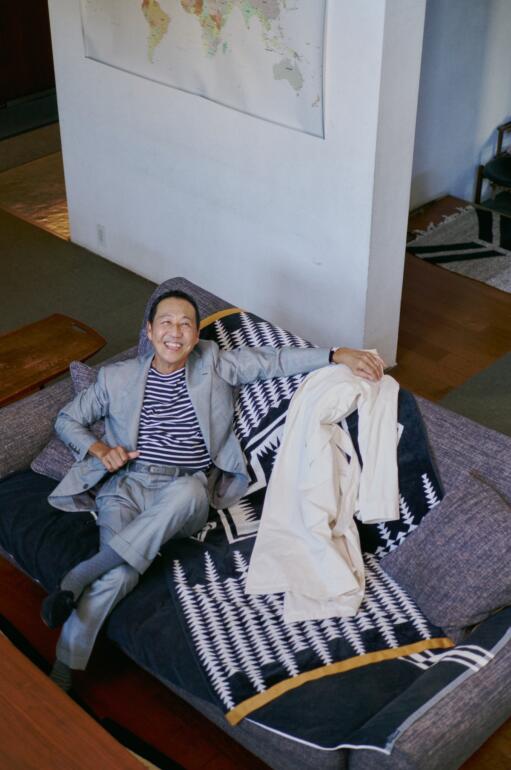
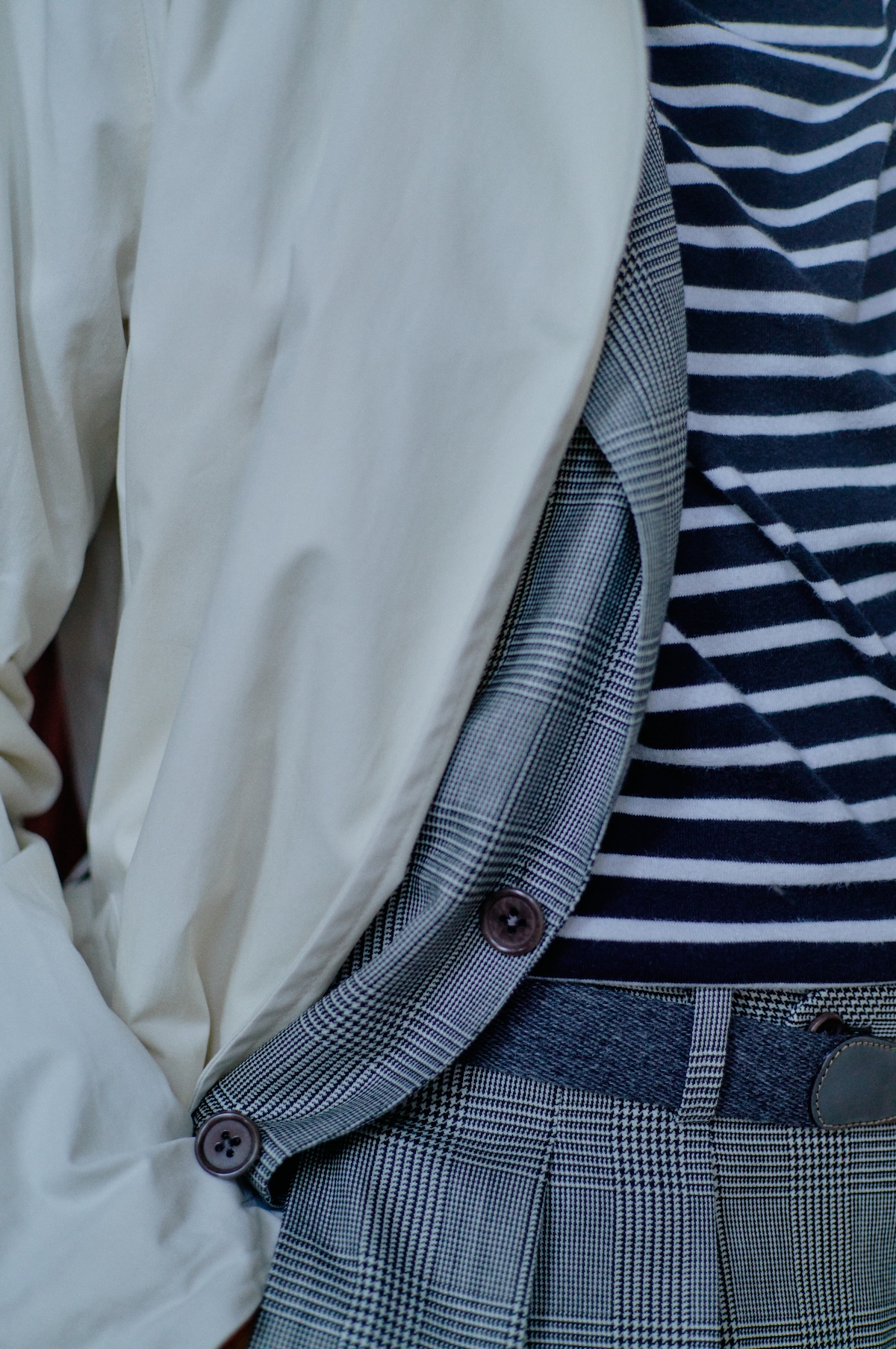
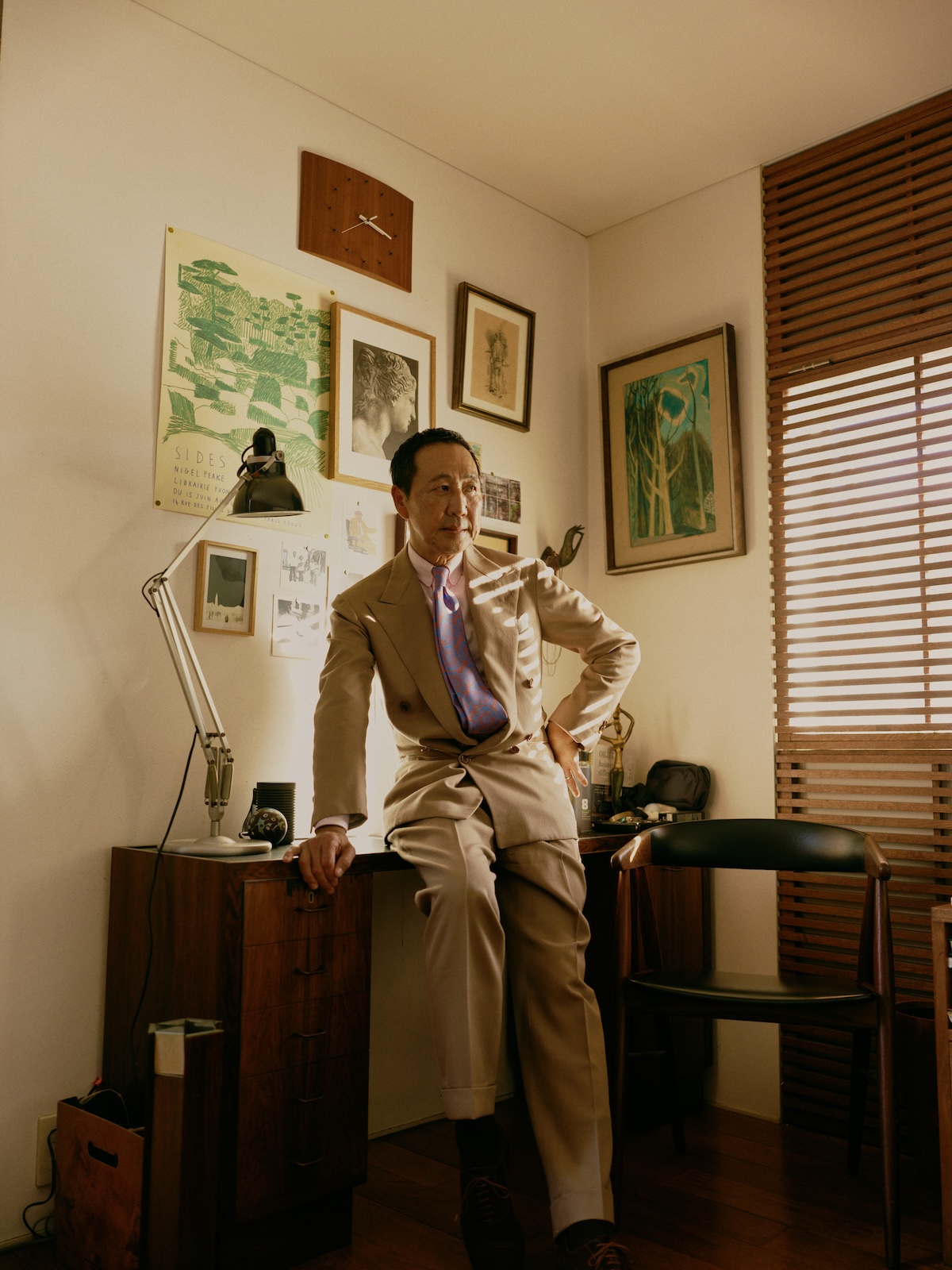
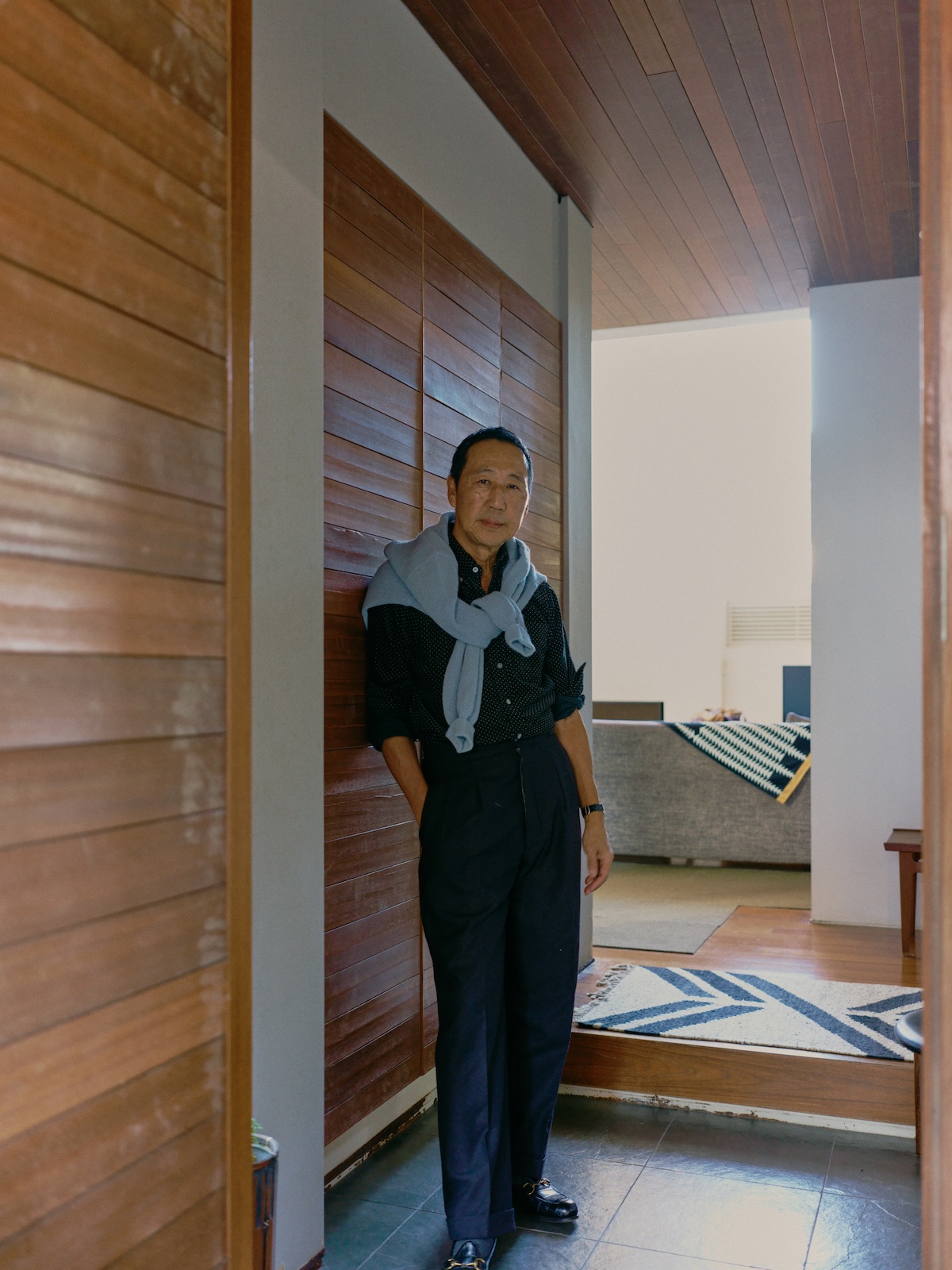
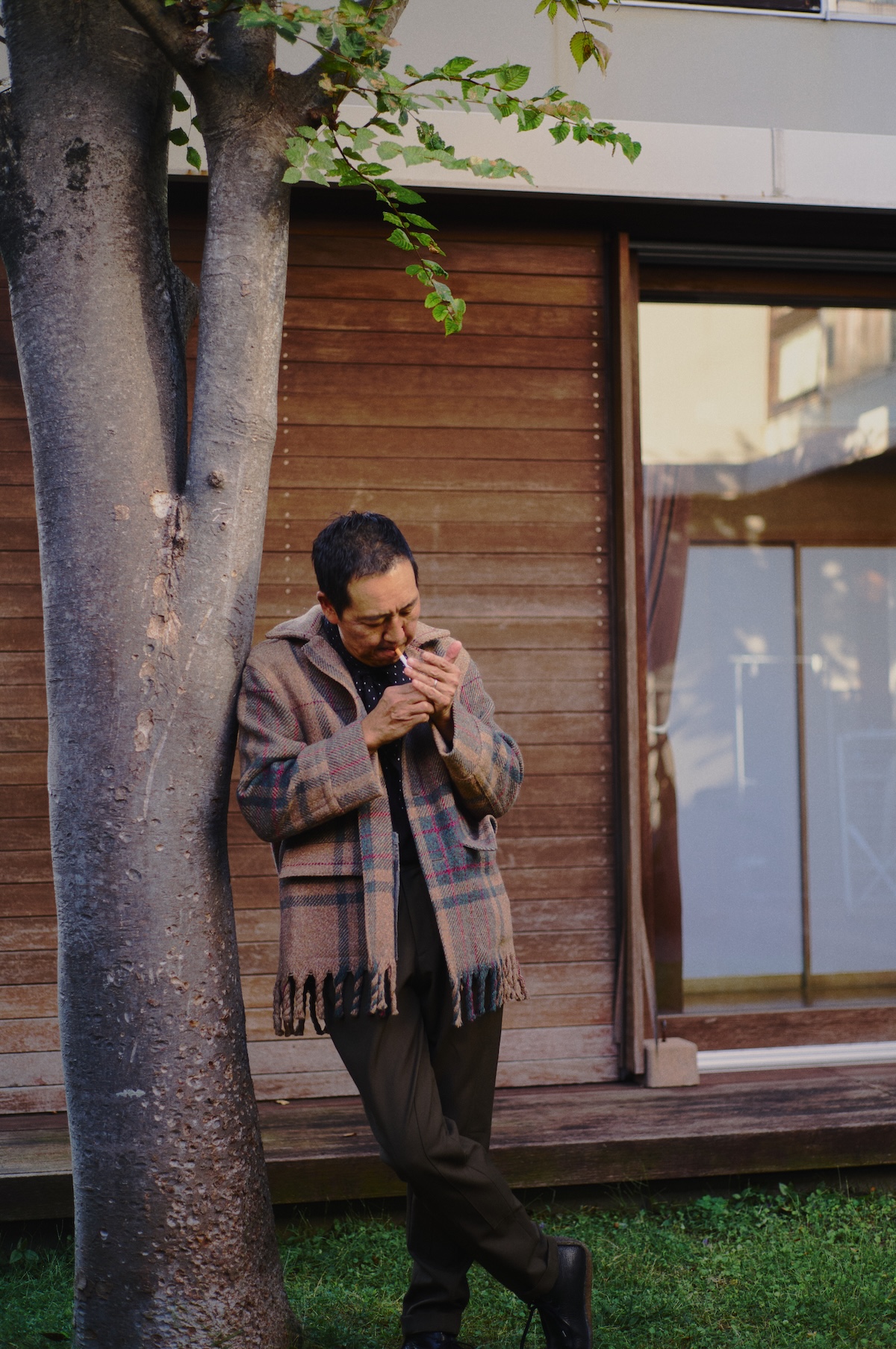
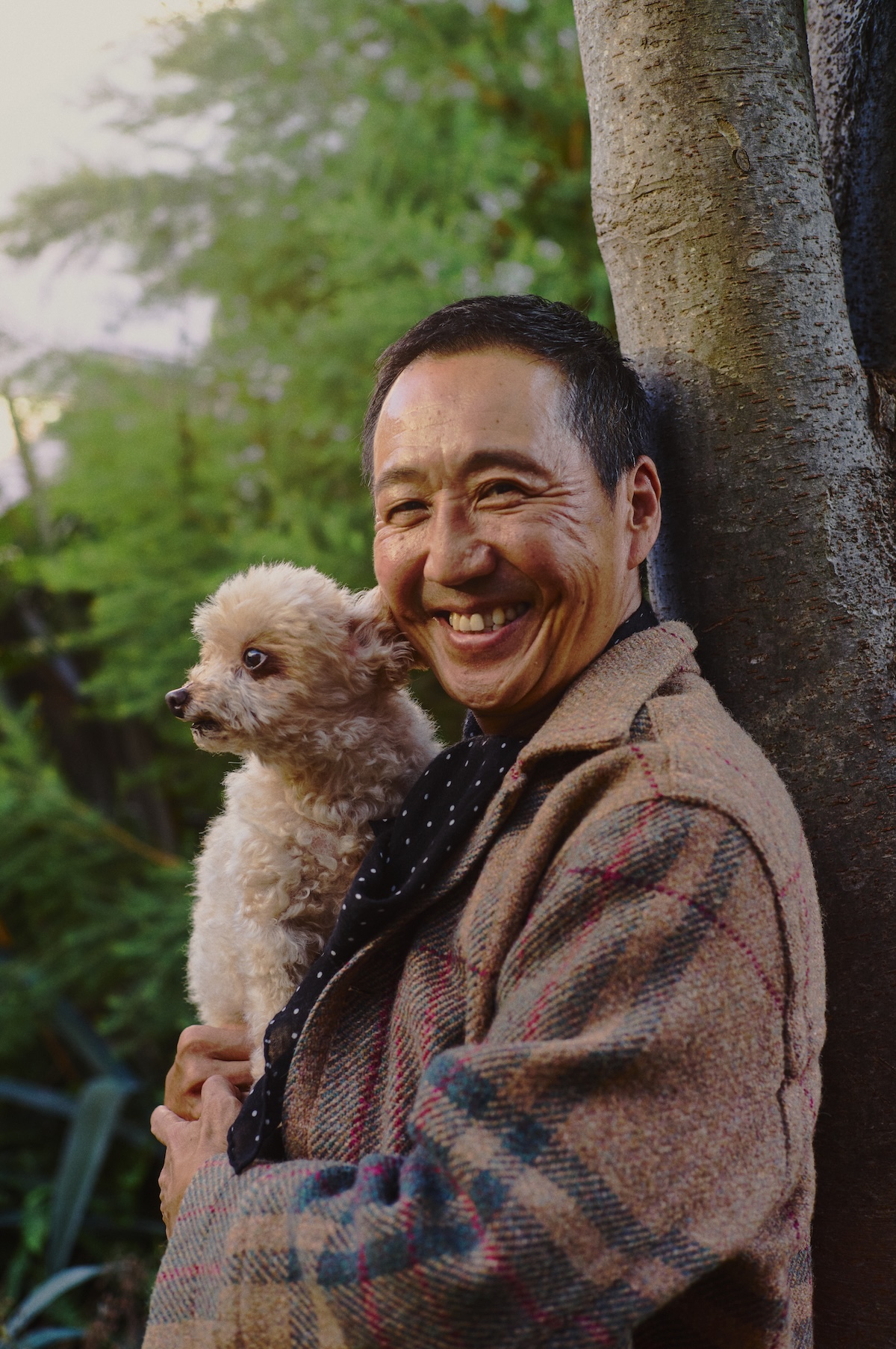
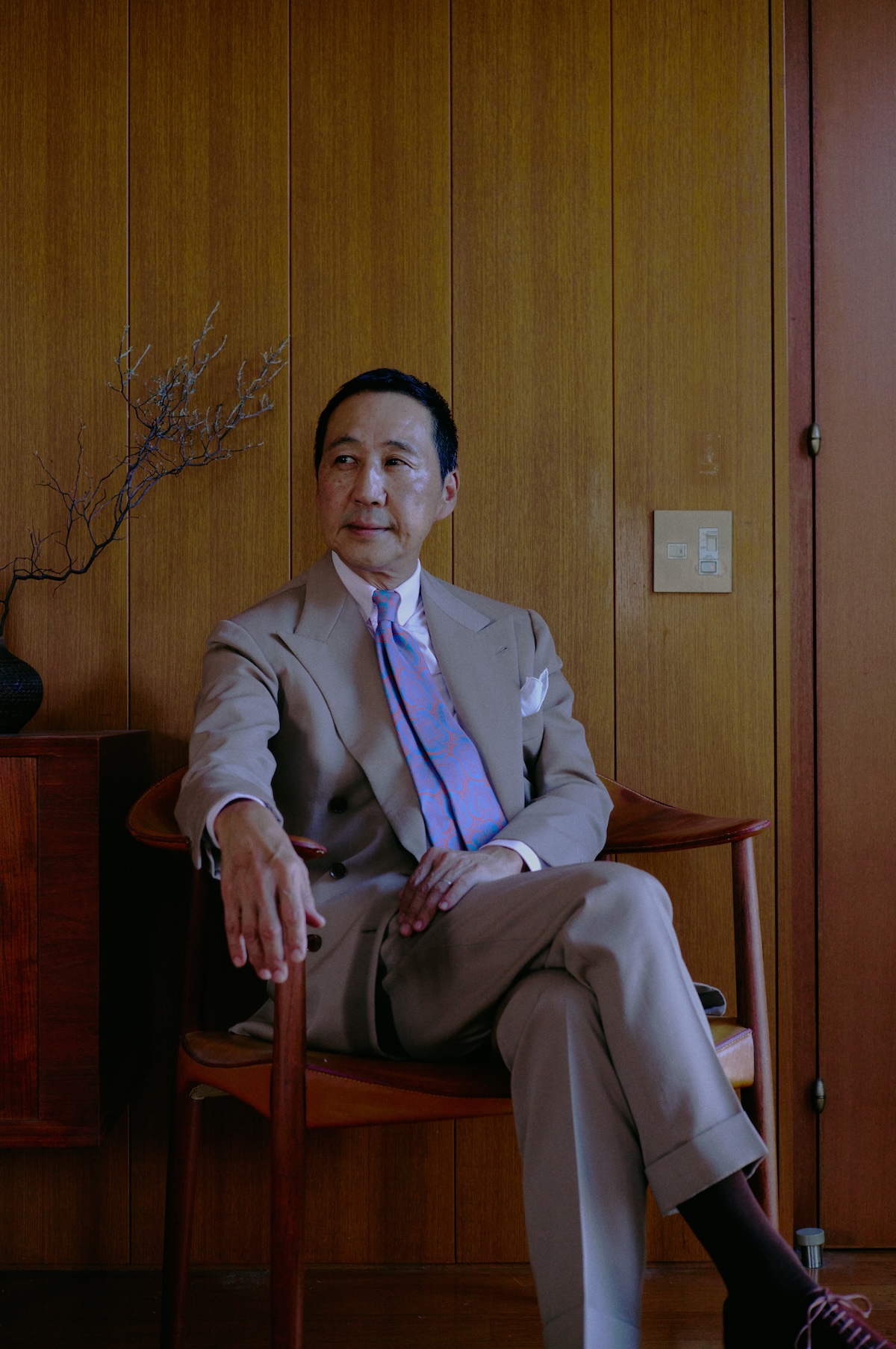
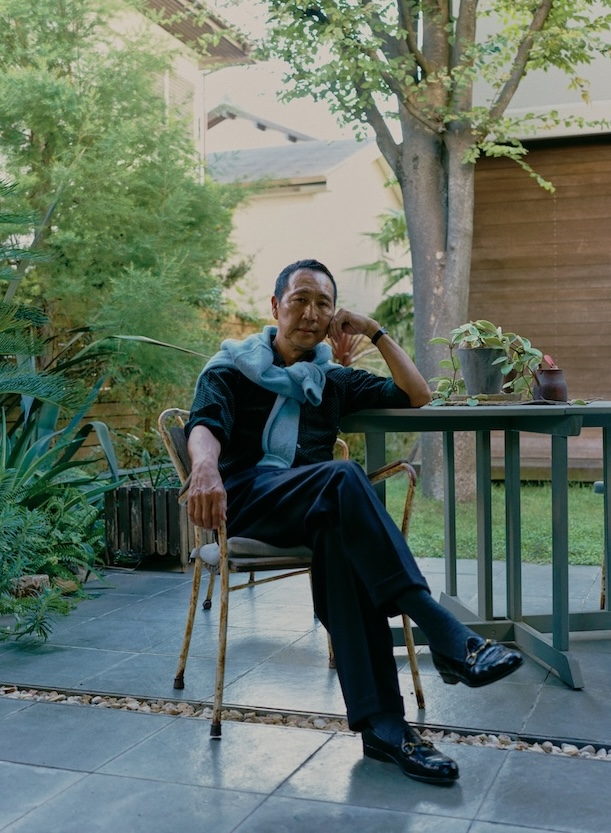
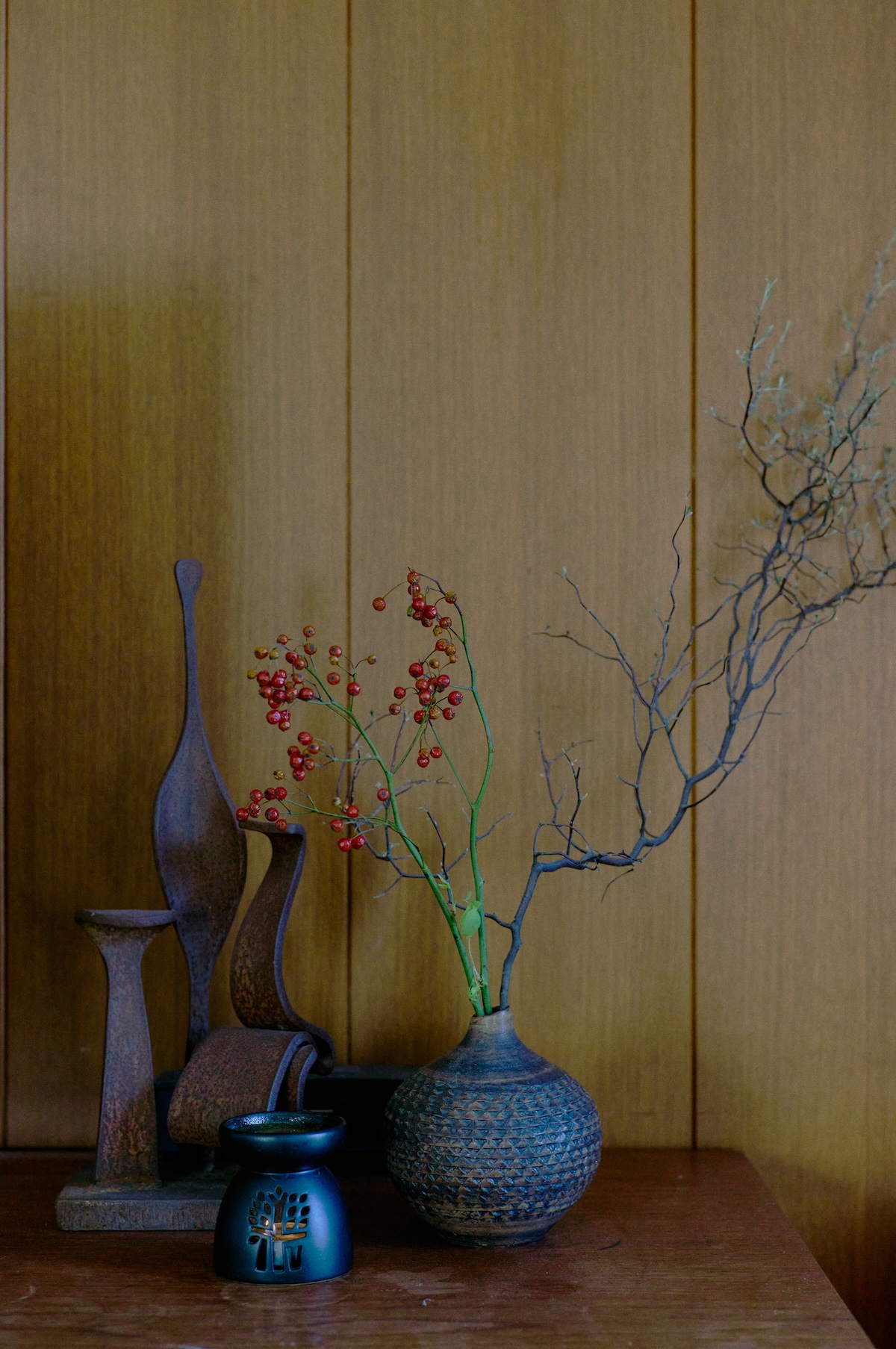
Note: The images shown are mostly from Kamoshita’s house in Tokyo, where we sent a photographer, to illustrate his style and wardrobe. The interview took place on a separate occasion, in Milan.
When we arrived, Kamoshita-san and Hasegawa-san were already there. Or to be more precise, they were across the street, peering through the window of Officina Antiquaria. “It's my favourite furniture shop,” Kamoshita said. “Vintage, mid-century.” Through the window we could all see – as we peered together now – some low tables, a set of cabinets, a rather elegant leather recliner. Nice stuff.
Kamoshita had picked the restaurant, so it shouldn't be surprising that it was close to a favourite store, as well as, in fact, round the corner from his hotel. He's been coming to Milan for a long time. The first time was buying European brands for Japanese department store Beams in the nineties – and there is naturally a set of favourites.
Oh, also it was 37 degrees. Milan had been throbbing with heat that day, and so we did little more than glance in the window before scuttling across the street to the restaurant. Inside Kamoshita suggested beer – just a little glass, ice cold – before we looked at the menu. Everyone enthusiastically agreed and after receiving that, as well as equally cold mineral water, we could relax.
Kamoshita and colour
We means four. Myself and Lucas Nicholson from Permanent Style, Kamoshita and Yoshimi Hasegawa sitting across from us. Hasegawa was there to translate: Kamoshita’s English is good, but like many Japanese I've interviewed, he prefers to speak through a translator. It rules out any possible mistake, and provides more thinking (or eating) time.
Indeed, Kamoshita would give rather long, thoughtful responses to each question during our dinner, as if he had used that extra time to reflect. For example – I’ve always admired Kamoshita’s sense of colour, and remembered that he studied interior decoration at university – were the two possibly connected?
“No, I don't think so,” said Kamoshita, or rather Hasegawa. Fortunately, we’d heard Kamoshita's long reply in Japanese, so we knew there was more to come. It wasn't a stupid question.
“We studied the history of decoration and of architecture, so it was not that relevant. But, I loved art and I loved artists, that was why I studied it at university, and that has always been an influence. Particularly colour, particularly artists like David Hockney. The way he combined colours – you could see it in the paintings and then in what he wore.”
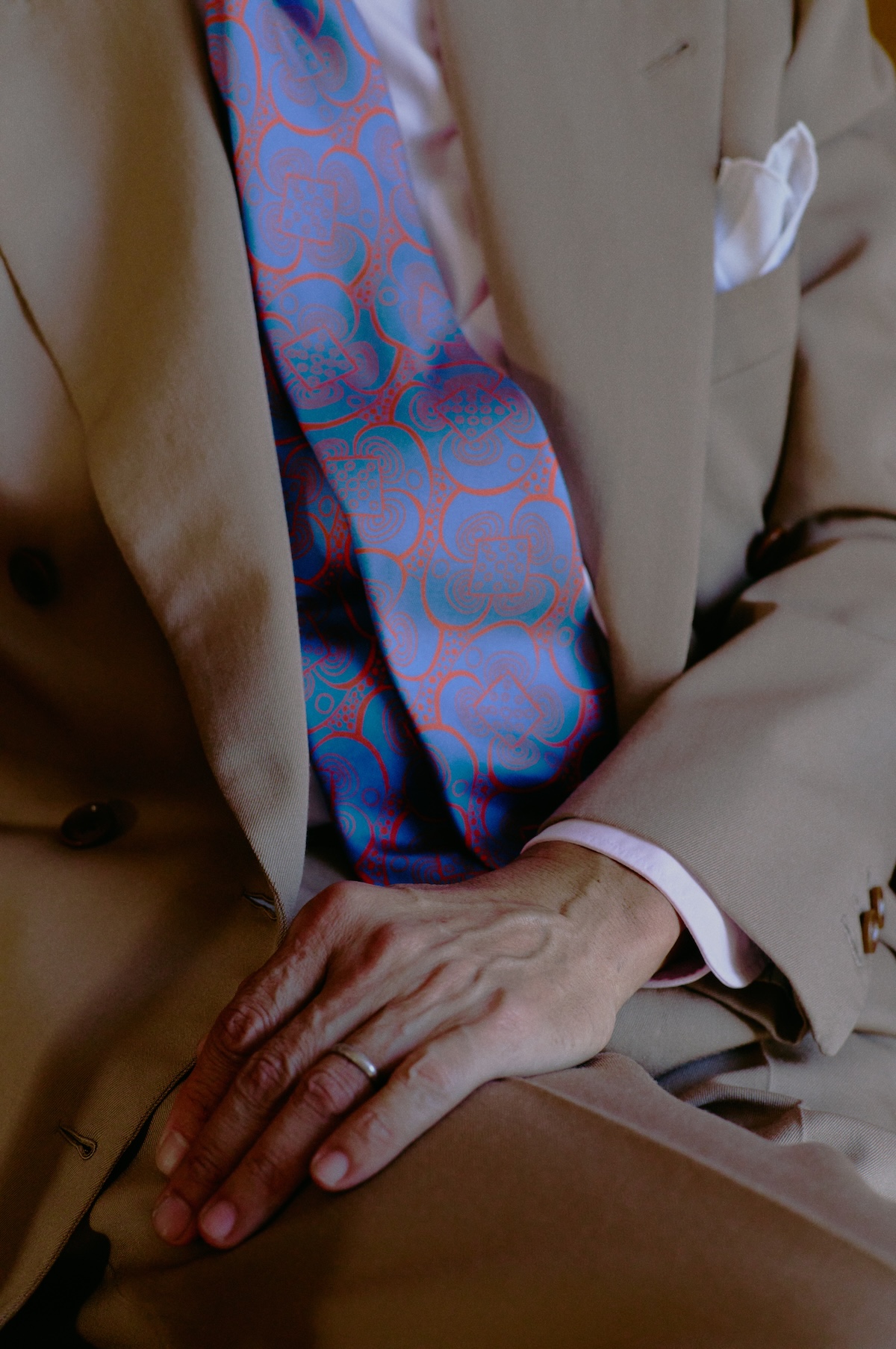
Kamoshita, by the way, is wearing a tan-gabardine suit, with a mustard-striped shirt and a jazzy Charvet tie of red, cream and purple. No one meeting him would be in any doubt that he likes a splash of colour.
But, I asked, doesn’t this make it hard to work in classic menswear, given it’s so dominated by sober tailoring, by black and blue and white?
“Yes, there has always been a tension there,” Kamoshita replied. “But, I appreciate the traditions of menswear and why they exist. I appreciate the elegance of sober dressing and everyone dressing in a similar way. I appreciate the respect that comes with dressing for a particular occasion.
Then, after a pause: “At the same time I think there is a responsibility for me to express myself. Once you know how to, I think there is just as much responsibility there to yourself as a person.”
Menswear moves with re-interpretation
I was interested whether some of that passion of colour came from Kamoshita’s love of Italian style? After all, Italian tailoring was a huge trend in Japan in the late nineties and early noughties, when he was building up United Arrows.
“No, not particularly. A lot of people talk about colour in relation to Italian style, but I think you see it everywhere – in American Ivy style, in British style. When I was growing up American casual style was the big trend, and they have their own strong colours. Then it was French style, then Italian, and always in the background a British influence.
“Of these, the most influential for me was the French, particularly their take on Ivy style. Shops like Hemisphere, Old England and Arnys. All of them were beautiful men’s shops in Paris, all of them are now sadly gone.
This, I suggest, illustrates one of the great drivers of men’s style in the past 50 years, and one often underestimated: interpreting and re-interpreting traditions. Classic menswear can seem fairly static, but often it’s the interpretation of one culture by another that keeps it relevant. Like Hemisphere being a French person’s take on American clothing, which then got re-interpreted when it came to Japan.
“Yes, and it’s interesting being a Japanese person, because we are always last in this chain. We don’t have our own menswear, so from the beginning we had to learn from others – from the Americans, from the French. This is what makes us great students of other traditions, of other cultures. We want to understand everything.
What is Japanese style?
Then after a pause again, that incisive additional thought: “And under all of it, I think we want to understand what is the best combination – what is the best style – for Japanese people. Today, I think we have found it, I think Japanese people have reached that point.”
OK, so obvious question next – what is that style? Kamoshita has one of those faces that can turn from serious to smiling in an instant. He is either pondering or grinning broadly. Without wishing to be patronising, I find it very endearing.
At my question he shrugs, his face breaks open, and he laughs. It’s infectious – we all start laughing.
“It is very difficult, very difficult to say.” I can see why. Ask a British person to describe British style and he might mention a few specific things – suits, ties, maybe cricket or tennis – but he can rarely define it satisfactorily. A lot of it is subconscious; it often takes an outsider to see it clearly.
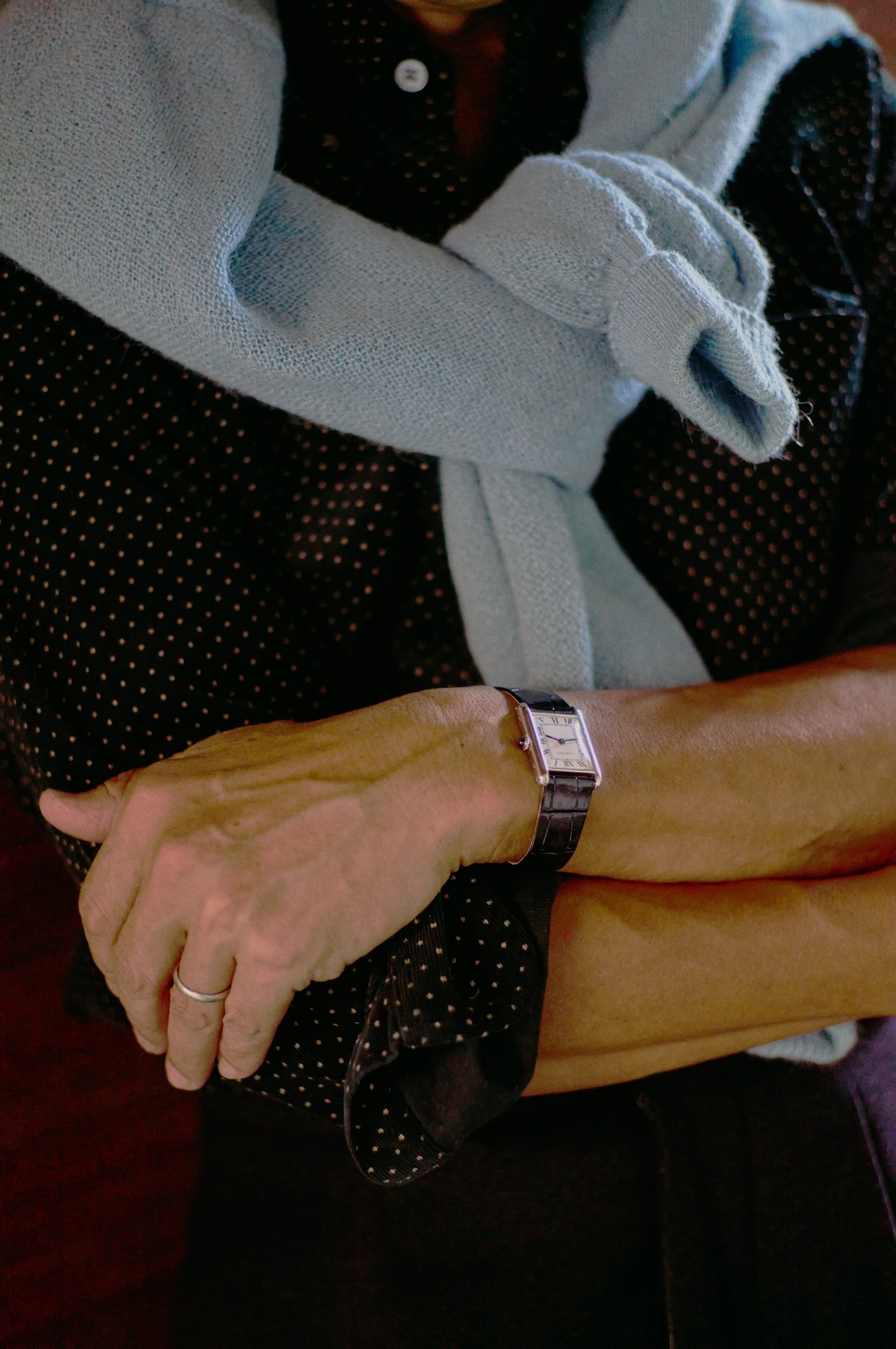
“Perhaps you see it best in the clothes themselves. For example, this suit I am wearing is by a rising star of Japanese tailoring. But the style of it is a combination of English and Italian style, through a Japanese eye,” Kamoshita says.
“I never thought it would be possible to establish a Japanese style, particularly when it comes to colour. But people say I have a particular take on colour, so perhaps this Japanese style is being expressed by what I wear, what I design – it is those on the outside that have the perspective to see that best and describe it.”
I guess that’s people like me. As I mentioned, I have always found it inspiring how Kamoshita uses colour, and if I had to describe it I’d say it has all the energy of Italian dress, with a control and precision that’s very Japanese.
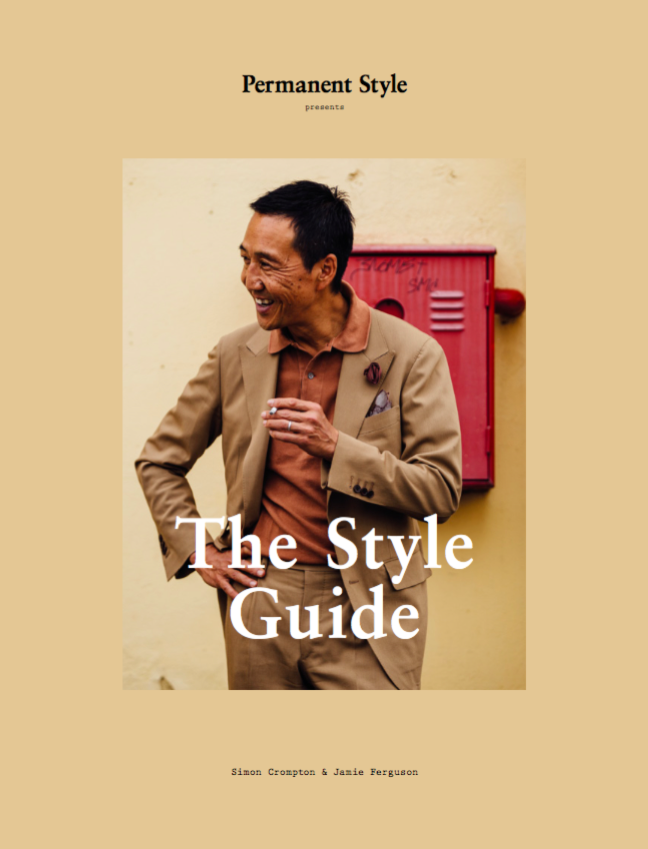
Kamoshita has appeared on the cover of one of our publications before, for example – The Style Guide in 2018 (below). In that image he wears a tan suit with a burnt orange polo shirt, similarly coloured boutonniere and brown/white handkerchief. It’s colourful, but also restrained.
A lot of Italians I know would combine those warm colours with a pop of yellow or of green, but the earthy tones he goes for are much more satisfying. Even the shirt and tie he’s wearing today are within a similar tonal bracket.
What’s the next new colour?
“The way we wear clothes is very influenced by what we see around us,” Kamoshita continues. “Our environment, the buildings, the weather – and of course the people.
“In my case, I’ve always wanted to be different from what others are wearing. It’s still very Japanese probably, but because everyone I saw was wearing navy and grey, I wanted to wear brown. Now many years later, brown is popular too, so I have to find something else!” This remark is followed, predictably and delightfully, by a giggle.
“I’m not sure what is the new thing for me – perhaps beige. I can’t wear a purple suit and there aren’t many other options.” Perhaps white, I suggest – he could become the Japanese Tom Wolfe? “I’m not so sure, a white linen suit is beautiful but I think it works better on a white person with blond hair – Asians can’t compete with that,” he says.
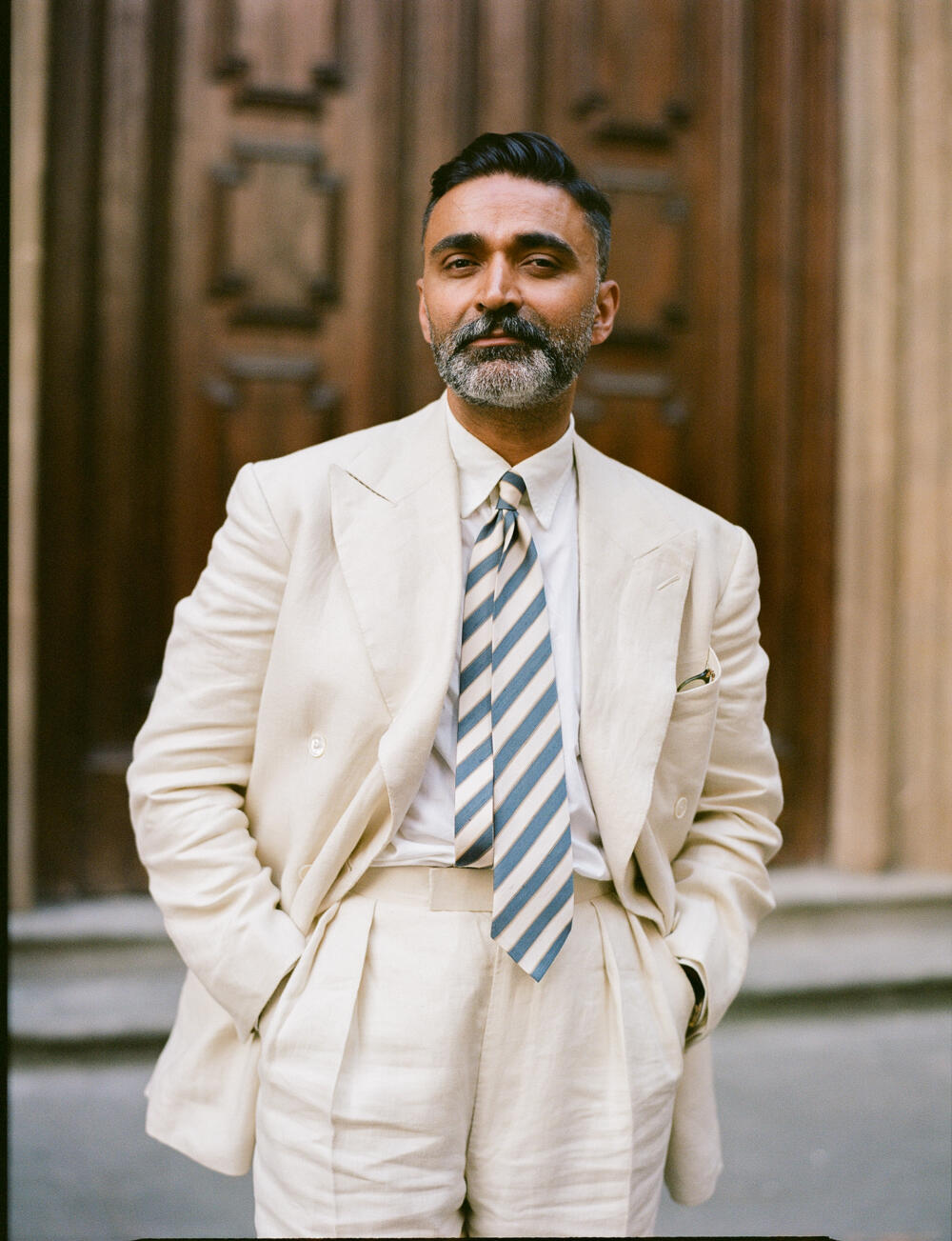
Associations play a role as well of course. Permanent Style contributor Manish Puri was showing off a cream double-breasted linen suit earlier that day (below) – but it looked rather different on him, being of Indian ancestry, than it would on the very white and English Lucas or myself. Kamoshita nods sagely, just as the main course arrives.
Why do PS readers worry so much?
The restaurant, Antica Trattoria Della Pesa, is one of the oldest restaurants in Milan and deliberately continues a long tradition of Lombardian cuisine: ossobuco, often with risotto, hot zabaglione for dessert. It has also scrupulously kept its old furnishings.
There is a lull in the conversation for a good 10 minutes while everyone tucks in. Mention is made of the recent elections, but nothing else. Proper menswear talk is reserved for the end of the course.
I begin by raising a point about that urge to dress differently from others: is that a hindrance when you’re designing clothes for other people to buy and wear? “Fortunately no, I don’t think so. I design what I like and want to wear, and it has always worked,” he says.
“However, it does vary with the size of the brand you are working for. If it is my old collection, Camoshita, then it can be more just what I like – but if it’s a bigger brand, you need to have the broader customer in mind.”
This is interesting, because I feel Permanent Style readers all exist somewhere along this spectrum – from those that want to dress quite simply and conservatively, to those that are keen to express themselves.
This point brings a question from Kamoshita back at us: “Why do Permanent Style readers ask about what they should wear so much?” he asks. “Why do they worry about it rather than just doing what they want?”
It takes me a while to formulate an answer. I wish I had a translator to give me some thinking time. In the end I say: because, I think, a lot of men want to dress well but they don’t have the understanding of clothes to do it. They don’t have the cultural inheritance of fathers or brothers or friends who dressed in an elegant way, and they haven’t spent much independent time thinking or researching it.
Clothes are what you eat
“But I think most people know what they want to wear – they just don’t have the confidence to do it,” argues Kamoshita, serious now. “It’s instinctive, they know what they like. Just like eating – you eat food, you know what you like to eat.”
I like the metaphor, but I think clothes are different in at least one way – they are social, cultural. They communicate something about you to everyone around you, so they’re more complex. Most of the time people don’t see what you eat.
Lucas chips in here to extend the analogy: you can’t always eat what you want, like McDonald’s every day, because it would make you unhealthy. In the same way, you can’t wear exactly what you want because you live in a society, where different clothes communicate different things.
(It occurs to me, as the conversation switches interlocutors, that that’s maybe why so many people turn up to McDonald’s in sweatpants.)
“And just like healthy eating, dressing well requires a certain level of education,” says Hasegawa.
“I agree,” nods Kamoshita. “Ever since I was a young boy I was interested in clothes and wanted to know about them. I couldn’t understand people who didn’t care. I think today I have the same problem: I find it difficult to understand that some people may not know how to wear clothes because they’ve never thought about them – rather than it being a definite decision to dress that way.”
It’s also much easier to learn when you’re a teenager, I say. You’re learning everything else, so you absorb it all very readily, and there are no expectations. When you’re a 40-year-old it’s a lot harder to learn and also to experiment, to find your style.
“Yes – I always say that if you never try you never learn. You need to try lots of different things. Same with food,” says Kamoshita.
This is true. The big problem is that good clothes are expensive – trying a lot of them takes a lot of money.
“And, it’s a reason bespoke is not for everyone,” he says. “Not only is it the most expensive thing to experiment with, but it requires a certain level of knowledge and experience because you’re buying something you can’t even see – you have to imagine it.”
Hasegawa chips in again, going back to the point about how much money people spend on clothes: “It’s interesting to compare Europe with Japan, because in Japan people spend a lot more money on clothing. They may have a tiny flat and they won’t own a car, but they do spend a lot on clothes.
“So they might earn £30,000 a year, but they’re still happy to buy Yohei Fukua bespoke shoes [which cost over £3,000]. Perhaps that’s one reason the standard of dress is higher – they’re buying more, and so experimenting more.”
Are there other reasons for that different attitude to spending money, I ask?
“One reason I think is that there hasn’t been any kind of class system in Japan, so people buy things more to show their status. And it’s cheaper to do that with a suit than it is with a car.”
At this point everyone sits back, as if we’ve solved something knotty and profound. I’m not sure we have, but it certainly made the meal go quickly. At the waiter’s suggestion, we retire outside for dessert.

It’s always shoes
It’s still steaming hot outside, at 10pm. Still, with a cold glass of wine and a little wind coming up the street, it’s a lot more pleasant than it was during the day. I kick off with a favourite and regular question: what was the most expensive piece of clothing Kamoshita remembers buying when he was young?
“I always like golf,” he says, “I’ve played regularly ever since my twenties. Back then, Jack Nicklaus was my icon, both for his golf and for what I wore. He had some real style. Well, I wanted the same club as him but also the same shoes, from Johnston & Murphy. I remember buying those shoes and they cost me more than my month’s salary. That’s stayed with me!”
It’s interesting, I think shoes are the answer to that question about three quarters of the time. There’s something about them that appeal uniquely to men – like they’re an object that can be fetishised, in a way that a suit isn’t. “For me, they’re a complete product,” says Kamoshita. “A bag is like that too – it exists on its own, without the need for a shirt, tie, even a person wearing it.”
And what does he wear to play golf today? “Ah, no costume, no knickerbocker!” he says. Slightly disappointing – if anyone could pull off that look, with a Fair Isle vest and a pair of saddle shoes, he could.
Frankly, after this, the conversation turns to food and reminiscing. The dessert menu prompts a debate as to the origin of île flottante – many foreigners assume custard-based desserts like this are English, even though English people have rarely heard of them. And then there is talk of the heat – what is the highest heat and humidity people have had to live through? Nice chat, but probably not worth reporting in a feature on menswear.
Trousers over time
There is a last question that prompts an interesting answer. As grappa arrives, we ask Kamoshita what he has on his wishlist, in terms of menswear purchases. Turns out, it’s a whole new set of trousers.
“It’s hard, because I have a lot of suits and trousers, but fashions have slowly changed over the years,” he says. “Most of my suits are 18cm at the hem, but now trousers are 20cm, even 22cm. I’d like to change them but that’s often more than is possible. And you can’t get the same cloth any more.”
He has managed to maintain the same body size over the years, so the jackets are OK. (We tell him this is very impressive – it draws a trademark laugh, which is always satisfying.) But the silhouette with the slim trousers looks wrong today.
We have a few suggestions – turning them into flares with a nice paisley insert; adding Adidas stripes all the way down the leg. Admittedly these are not serious – the grappa may be starting to take its toll.
The subject is saved by Lucas, who makes the practical suggestion of wearing separates instead. Kamoshita nods, and takes out his phone. We’re shown a picture of him wearing an old suit jacket with wide Bernard Zins trousers – naturally, he makes it work.
Lucas also suggests that the trend will come round again. “Mmm, maybe after 20 years,” projects Kamoshita. “And by that time I’ll be dead!”
The photo had been taken outside Kamoshita’s home, and that is one reason the location was chosen for the photos accompanying this piece. It looked so stylish but also, of course, an extension of Kamoshita-san and his personality.
The evening as a whole has felt like a wonderful insight into that. Not so much about his career, with all its twists and turns, but about a man reflecting on his relationship with clothes and how he sees things today.
“If there is one thing I would like to do in the next few years, it is help Japanese craftspeople – particularly tailors,” concludes Kamoshita, returning to the theme of establishing a Japanese style. “There is such talent there, but not always the confidence or awareness to create an identity. I feel a responsibility to do this any way I can.”
All I can say is, lucky tailors.
Footnote: Biography
Yasuto Kamoshita has been one of the most influential figures in Japanese menswear for many years. Born in 1957, he joined the department store Beams after graduating from Tama Art University, moving from a salesperson to a buyer over the years. In 1989, he made waves by being part of the team that broke away from Beams to set up a new store, United Arrows.
Originally intended to be its own luxury Japanese brand, United Arrows eventually became a multibrand store too, albeit the biggest in the country. Kamoshita was a buyer from the start, focusing on Europe – for many years he hadn’t visited the US, despite his fondness for their style.
In 2007 he launched his own line within United Arrows, Camoshita (the ‘K’ being swapped for a ‘C’ to sound more Italian, less Japanese). Today he continues to run his own brand as well as being a director for other brands, including Paul Stuart in Japan for example, which has a separate collection to the United States.
Throughout it all Kamoshita has been recognised for his easygoing, Ivy-influenced style and mastery of colour, which have made him a style icon quite apart from his role in the direction of these stores and his personal designs.
This article was the cover story of the Spring/Summer ‘25 issue of PS magazine











Delightful, dense and well-paced. Worth reading a few times to take in the nuance. I enjoyed the frank lack of certainty and pondering, which makes a nice change from the normal facile certainties prevailing in today’s world.
Nice to hear Richard, it’s a lovely thing to be able to do in longer format like this
An incredibly astute representation of this piece. Agree!
I think Kamoshita’s question about PS readers was absolutely spot-on : why are they always so worried about what to wear , why are they always asking advice/approval Evan for the colour of their underwear ? That has always amazed me …I find it sort of sad , thinking about legions of men putting whole looks together in their wardrobes , embalmed forever, probably accompanied by an excel file so they don’t change a single element , forever . Everyone is very polite ,and often quite erudite , but so many are so insecure.
A few are even borderline autistic I suspect .
I think that’s abit unfair, if I may. In my case, I have gradually developed my knowledge of menswear and what works for me by reading sites such as PS, and through Simon’s guidance. That’s not about outsourcing what I wear to Simon (or others), but gaining advice from someone with much greater knowledge than me. I have avoided expensive buying mistakes because of it.
With the greatest of respect to Kamoshita-san, he is a leader in this field, and clearly has always had an eye for design. That’s not the case for me, and for many PS readers I’m sure, so asking for advice is surely better than going it alone. I’d also add that the best way to learn is by challenging your own ideas, such as by asking the opinions of others.
Of course, I would draw the line at asking what colour of underwear! White, right?!
Personally, I think John nails it pretty well here. I too ask Simon, and others, plenty of questions and view it more as ongoing education in a lifelong journey because I enjoy it and care. While I’m reasonably confident in how I choose to dress, I’d also like to think I have the awareness and humility to learn more and feel fortunate that there’s seemingly no end to this rabbit hole!
I’ll also add that I think some have a natural gift or instinct for personal style (colors, pairings, fit, accessories, etc.) that others may lack and therefore need to learn and this exists in many facets of life
I think there is a male tendency to want to „it“ right when starting out. Doesn’t matter if it‘s mountain bikes, or cameras or clothes or collecting wine. Many men, once a hobby becomes „serious“ yet don’t have a feel for it yet, tend to obsess about doing it correctly.
And then of course if you have done „it“ long enough you realise that a lot is done not because you can name the formal rule, but because it feels right. And perhaps even because it breaks a rule.
I very much appreciate PS for providing all this guidance, in particular because lately it‘s more practical again and moved away from very expensive commissions. But I would also urge everyone to take it easy. Pick what feels nice, dont obsess about shades of navy and lapels. Sometimes you’ll get it wrong, but surely the sun will still rise the next day, even if your trousers rise was off
Nicely put Pietro
Could I just say that using the word “autistic” as a slur to mock someone’s social awkwardness is deeply hurtful for people who are on the spectrum. Using the word to demean someone’s behaviour stigmatises the very existence of individuals who naturally experience the world differently. Not related to clothes, but I hope one day we will grow as humans and come to accept all of us with all our differences.
Kamoshita-san asks us:
1. Why do PS readers ask about what they should wear so much?
2. Why do PS readers worry about what they should wear rather than just doing i.e. wearing what they want?
Kamoshita-san whose native tongue is Japanese and who lives and works in Japan and prefers to speak Japanese needs to have a translator for English when interviewed might consider the difference between his own mother tongue Japanese and Indogermanic languages, in particular English, the language family used by PS and its readers, and its close relative German.
In the Occident, English dominates the outer world in and German, which prior to two world wars in the 20th century was the leading scientific language.
In regard to the English language consider Owen Barfield, History in English Words about how the development of vocabulary is dependent on evolution of human consciousness.
Yoshiko Oshima, native Japanese speaker who told me and others in Freiburg i. Br. where she moved to meet and study Heidegger that the Japanese language is poetic, but unsuited to express philosophical thinking.
Counter questions for Kamoshita-san:
1. Have you considered the meaning of the polar concepts “critic” whose etymology is rooted in ancient Greek krinein and “naive”? See Heidegger, Die Frage nach dem Ding, and R. Sreiner, Wahrheit und Wissenschaft.
2. What is the value of human consciousness, the encounter of both elements concept and observation and their weaving together? See R. Steiner, Die Philosophie der Freiheit.
Really good point.
Thank you, That Alex.
How on earth is this a good point?
I read it twice and am still confused.
No offence but I think a better question would have been about trouser break in flannel vs linen pants.
I liked the opinion that finding one’s style is harder to find in your forties compared to one’s teenage self.
For me, I’ve changed more in my fifties than I think at any time before as I’ve gown more knowledgeable, possibly more comfortable in my own skin and certainly becoming a father (now with 3 boys under 14) later in life has probably been the greatest impact.
I’m looking far more at workwear and relaxed fits than the tailored look I spent so long striving to achieve in my mid-20s and after (with mixed results I realise now on reflection). More recently, my slim fit trousers do not get any time now. I would certainly not wear anything from my teenage years. That thought makes me shudder!
My financial circumstances have also reduced (see 3 children!) so I’m looking at combinations of clothes that I might not have considered before to get the most out of what I have and PS, with articles like this, has definitely played a part in educating me in what works and why/how it works.
Really loved reading this. Gently philosophical without being too strident.
On the culinary front, if it’s helpful, Osso Bucco is more often eaten with saffron risotto, less frequently with polenta and, sometimes (lord help us!) with mash. Iles Flottantes, poached meringue on creme anglaise with dripped caramel and flaked almonds, which is I guess what you ate, is definitely French. There was an English version, but this was more akin to a triffle.
Concur, I’m pretty sure Île Flottante is French in origin dating back centuries and modernized by Escoffier
Kamoshita is truly a style sensei but hopefully those cigarettes are just props !
Style is ultimately about comfort in one’s skin and wearing the clothes rather than the clothes wearing you. Simon don’t take this the wrong way but when you publish articles like how to roll shirt sleeves it can make the beginner nervous and reflects your bias to the technical aspects of dressing. Not surprising to me then that a readership that enjoyed that article (127 comments btw) might ask which is the best color linen overshirt. This is why the reader profiles are my favorite articles because the best of them look comfortable in their skin.
Thanks Raj, and no I agree, those more basic pieces can be useful but it has to be mixed with lots of other things, and I always say knowledge will not get you that far – personal style is too creative
I remember an article where it was discussed that certain rounded toe penny loafer was more casual than another rounded toe penny loafer because the last was wider. Which in and of itself is not wrong, but it’s probably the fourth thing anyone would notice after type of shoe, colour and material, and even then the perceived width will be in relation to the rest of your body and the width of your trousers. And if you don’t have 30 pairs of shoes or whichever amount is needed to justify having two almost identical pairs, you’ll probably be fine. I see it this way, but someone might interpret that they *need* to have those two pairs.
If fourth observation or not, if I correctly understand the significance of width to toe shape it must be factor which deserves consideration, even if one is only able to own two “identical” pairs of single-strapped monks but admires the evolution of the Bass Weejun Logan in its many inrerpretations by other shoemakers.
It amazes me how influencers accumulate 30 plus pair of shoes and act “normal” as they discuss their collections on Utube.
Dear Mr Kazak
I can’t speak from my own experience as shoe wearer, but I’m moved by the beauty of the iconic Bass Weejun Logan and in my humble opinion its refinement in course of time, so that if I could afford a penny loafer I’d probably chose a later shape or design.
Really nice article, and some really good questions are asked there. If I may offer my own experience, I only started to care about what I wear and how I look in my early twenties, after I graduated.
At that point, it’s not about that I don’t care to look for things myself, but I want to know what is “safe” and what works so that I don’t look like a joke. Having a resource such as Permanent Style, where I can refer to a look, a colour combination, or even looking up what goes with a specific item, is a great place to start, because then I know that that look, or that colour palette works.
Although, now that I have some experience, I am starting to branch out more, and starting to think of clothes as an extension of myself, and starting to look at items that I feel are more “me”
The shoes are such an interesting topic. A very close friend of the family is getting married In November and has given me the freedom to design and fit the groomsmen for the bridal party. Together we narrowed down the color palette for the wedding and after she handed me the reins for cut, fit, and finish for the suits, shirts, ties and accessories. I was so relieved and honored that someone would trust me with such an endeavor for such an important day. But I know, in my heart of hearts, that no matter how perfectly the suits fit, no matter how correctly the ties are knotted, or the collar spread correct for the face shape of each groomsman….. I’m going to show up on that wedding day and at least one of those guys will have a pair of god-awful high street shoes that will destroy the entire ensemble.
It really is quite remarkable how a single pair of leather shoes (or “vegan leather” in my case, perhaps) can make or break an outfit.
Hi Simon,
Growing up in the 70s, I couldn’t have cared less about clothes. My mum bought everything on trips into Leeds. She’d drag me around Schofields or across the street to Lewis’s, as well as those traditional little independent menswear shops that used to be everywhere. It was not enjoyable. I just wanted to get out of there as fast as possible so I could get back home, climb trees and ride my bike.
You had your school uniform, jeans and wool trousers for the weekend, and a few nicer things kept strictly for “best”. You wore heavy things in the winter to stay warm and T-shirts in the summer. Nobody was thinking about designer labels, Clothes were worn, washed, and after some years, eventually handed down. We were active, slept well and, at that age, had a total lack of self-consciousness.
Today, it’s difficult to escape the constant noise about what you’re supposed to wear, even if we like to think we’re oblivious to it.
But now, well into my sixties, I’ve realised, (in the nicest possible way), that I don’t think I care much about other people’s opinions anymore.
Over the past year or two, I’ve gone through my wardrobe and had quite a cull, getting rid of everything I thought I should like and keeping only the pieces I actually enjoy wearing, which most of the time means things which keep me warm or cool and which go with each other.
It’s no panacea, and doesn’t bring back my youth, but I do feel that, in a way, I’ve come full circle. As a boy, I dressed without giving it a second thought because I had better things to do. After umpteen years, I’ve arrived, I hope, back at much the same place.
Beautifully put.
Lovely article, but I don’t think I can treat clothing like food. I’d end up just wearing my comfortable gym clothes all the time!
I thought it was interesting asking what is Japanese style?
Good question and it was never answered becaues there is no Japanese style.
Wonderful article, thanks Simon!
My favorite line ” “Why do Permanent Style readers ask about what they should wear so much?” he asks. “Why do they worry about it rather than just doing what they want?” — it won’t stop me reading PS but I think probably a good reminder to remove the noise and consider, and then wear, what we naturally like.
Yes, we all need that from time to time
Great article. Your background as a professional journalist really shines through.
As to the question of why men care, my maternal grandfather, Charles Branson Morris, was a master mason. Not a mere bricklayer, but a true craftsman. He was one of a very few masons who knew how to lay a particular type of firebrick used in making munitions, and consequently spent World War I in Galveston Texas building and relining furnaces. Until his dying day, Grandfather wore clean, starched and pressed khakis on the job. You could cut a steak with the crease, as the saying goes. Blue jeans and t shirts were for common laborers. He obviously cared. Why? One of the mysteries of our existence. I thought of this as I was ironing a workshirt to wear while gardening today. I remarked to my wife while I was ironing that some might think it pointless, since it will be soaked with sweat within minutes, and she reminded me of my grandfather’s requirements.
Lovely
I have been found of his pattern matching style and his suits are always so sharp! By the way do we know his tailor(s)?
Wonderful article with a very unpretentious man: I lived in Japan in the late 1980’s and took away many styling tips as well as a lot of CDG and YY clothes. His notes on colour are spot on.. having never worn brown for 40y I bought brown wide legged light wool trousers from a Korean tailor on Savile row, an olive cotton bespoke suit and a few Italian brown shorts from santillo all in the same year. There is far too much angst in most male fashion pages and far too little self confidence.
Nick,
can I ask who the Korean tailor on Savile row was? Or is?
Men do want to dress well, but we live in a world where mass manufacturing ends up deciding the selection of available clothes. We are at the mercy of the industry. Unfortunately, the industry does not care about what fits well or what makes men look respectable — profit is King.
Before clothes were mass-produced, men had to go to tailors who understood how a piece of clothing fit an individual. These tailors set the standard. Not all tailors in those bygone eras were good, of course, but even a mediocre tailor was at least trying to fit one person. That’s more than a factory ever does.
Today, people buy off racks so the onus is on us to educate ourselves. However for men, there are lots of obstacles. We grew up hearing that real men don’t care about how they look. It’s the interior that counts, not the exterior. There is a built-in stigma for any men to start their journey to understand clothes or even to think and research about it.
Many just buy what currently is on sale without giving much thought whether a piece of clothing accentuates the shape of their bodies or not. And once men have bought, they rarely revisit. They just know something is not quite right, but have no clue what it is. Many men I know still wear the clothes they acquired in their twenties even though their bodies have, perhaps, changed drastically.
Lots of useful, thoughtful content here and good to consider the philosophical, motivational side of what to wear and why. I wonder if ‘worry’ is the correct word in Mr Kamoshita’s question and I disagree with the food analogy. Could ‘interest’ or even ‘concern’ be more appropriate to the question? Do PS readers suffer actual anxiety about their choices?
Food is ultimately a 1 occasion only choice, fast moving consumable goods, whether fine dining or a quick bowl of ramen. Your food choices over months and years will affect your physical and mental well being yet a shoe purchase is a longer commitment, hopefully lasting years, purchased when you don’t know what your evolving style preferences will be in 5 or 10 years time. I can try 20 or more different foods each week. I cannot do that with shoes. To go back to Mr Kamoshita’s question, perhaps part of the answer involves quoting V Westwood. “If you have to wear clothes, why not wear the nicest clothes possible?” Begging the question, “What are the nicest and where do I get them?” Let’s read PS to find out.
The monochrome striped t-shirt is classic MHL, I fancy?
He still runs his own brand? I thought Camoshita United Arrows was gone. What brand does he mean?
Referring to other projects like the designs with Decorum
whats the japanese tailoring company he’s wearing and mentioned but not named?
We did ask but he wouldn’t say, art
how mysterious!
He mentioned Sartorial Lucolt as an example of a Japanese tailor that he can confidently wear in front of Italians working in menswear (in the video, he’s wearing a suit made by said tailor for hisTuesday outfit, where he introduces a hypothetical wardrobe for a week) https://www.youtube.com/watch?v=lsDbJNZ6-HQ&t=495s
What is that red box behind your guest on the front cover of your magazine and why is something written on it?
Do Japanese share the Asian tradition of wearing the colour white at funerals and would this not influence Asian men’s fashion in regard to choice of any white suit including white linen like Tom Wolfe?
I think that’s just some kind of pipework with graffiti on it Peter
I don’t know about white though, interesting question
Interesting question, Peter. I’m Vietnamese, and having been born and raised in Vietnam I’ve worn my fair share of white at funerals in the past. From what I can remember, white is generally reserved for the family/relatives of the deceased, while black is still the default for everyone else. Coincidentally, I’m wearing a white linen jacket today, so I wouldn’t say the association is strong enough to put me off wearing white in general.
Perhaps fewer Asian men would wear a full white suit, but I suspect that’s more because it’s quite a showy look and can be difficult to wear, rather than because of any explicit or conscious funeral association. I also agree to an extent with what Kamoshita-san mentioned about skin complexion playing a role. That said, white jackets and trousers worn as separates have become quite popular in recent years, at least from what I’ve seen.
Ciao Simon,
A good, thoughtful article.
Kamoshita-San is an interesting and very Japanese man, in that reserved, thoughtful manner
that the best medical consultants carry about them.
He mentions knowledge and freedom of choice and why men who attempt to possess both carry such a burden, almost a style millstone , no ? This is my interpretation.
I think many men are simply shy and this is good, fertile ground for exploration.
However, attempting to mingle with the style holloi polloi is trap if all you have is money to spend on expensive clothes as this perhaps ends up feeding the beast of insecurity.
Grazie, JR.
Yes I think you’re right JR. I also find generally that this is only a stage on people’s journey, and often a helpful one, but it’s easy for some to assume they’ll stay in that stage forever
I think some men spend too much time studying others , it becomes a fixation, to be that person.
This has the Style Cadaver effect. Too stiff, maybe too much grey and beige, blood needs colour.
I agree with you that style is a journey, at some point a fork in the road arrives.
Always fascinating.
Grazie Simon.
Great to have this article online as well. Thanks for that. Also I was always wondering who is the maker of this scarf/jacket hybrid (picture 8). It looks so stylish
I can try and ask Kamoshita-san, but it’s not always easy to get hold of him. Certainly I can add it here when I do!
Lovely. Please do 🙏
Interesting piece which I will re-read, thank you. Would be great to know who the author is (maybe there’s only one writer these days and I expose myself as a casual PS reader..)
No, not at all. There are a few but where it doesn’t say it’s always me