

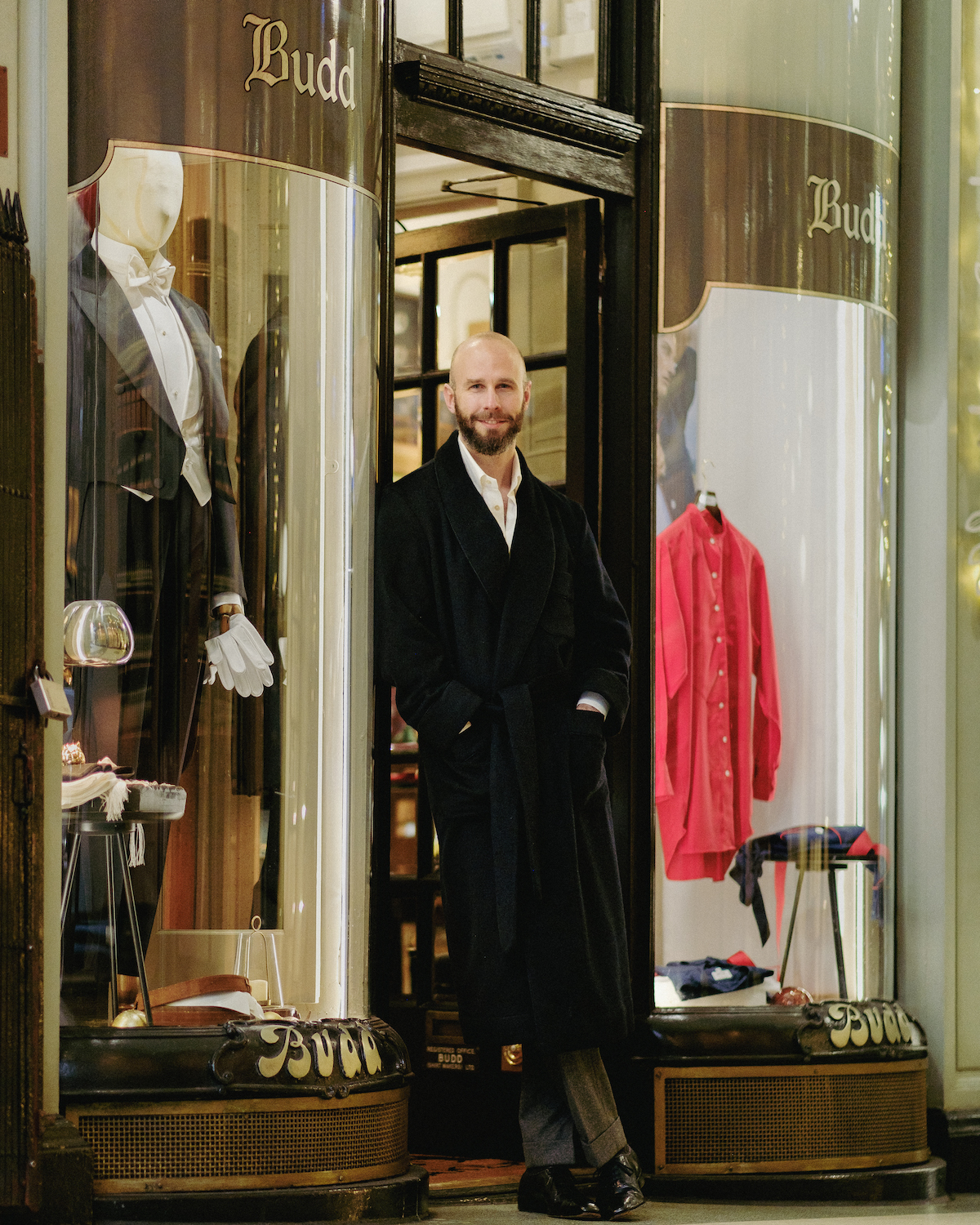
Last winter, I spent a good few weeks looking for a dressing gown that would be worth investing in - something luxurious, to last many years but also enjoy at every stage.
My existing gown was a towelling model from Anderson & Sheppard, which while lovely and a comfortable, reassuring material, wasn’t that warm during the colder months.
I tried on the gowns from Budd, but they were mostly silk or flannel (which I found too hairy). I tried Turnbull & Asser, which did a cashmere but with contrast piping.
I went through the showy patterns at New & Lingwood, tried the lightweight Gownsmith, and the paisley of Emma Willis. I also went further afield to the likes of John Lewis and Derek Rose. But I couldn’t find anything that was simple and dark, yet both classic and luxurious in make.
It wasn’t until the end of the winter that I realised I could have had something made at Budd, New & Lingwood and others. I could have picked the most luxurious cloth I wanted, and the specifics of piping, length and pockets.
Unfortunately by that point it would have taken too long to make it - perhaps 3-5 weeks. By which time it would be March and I would have had little opportunity to wear it.
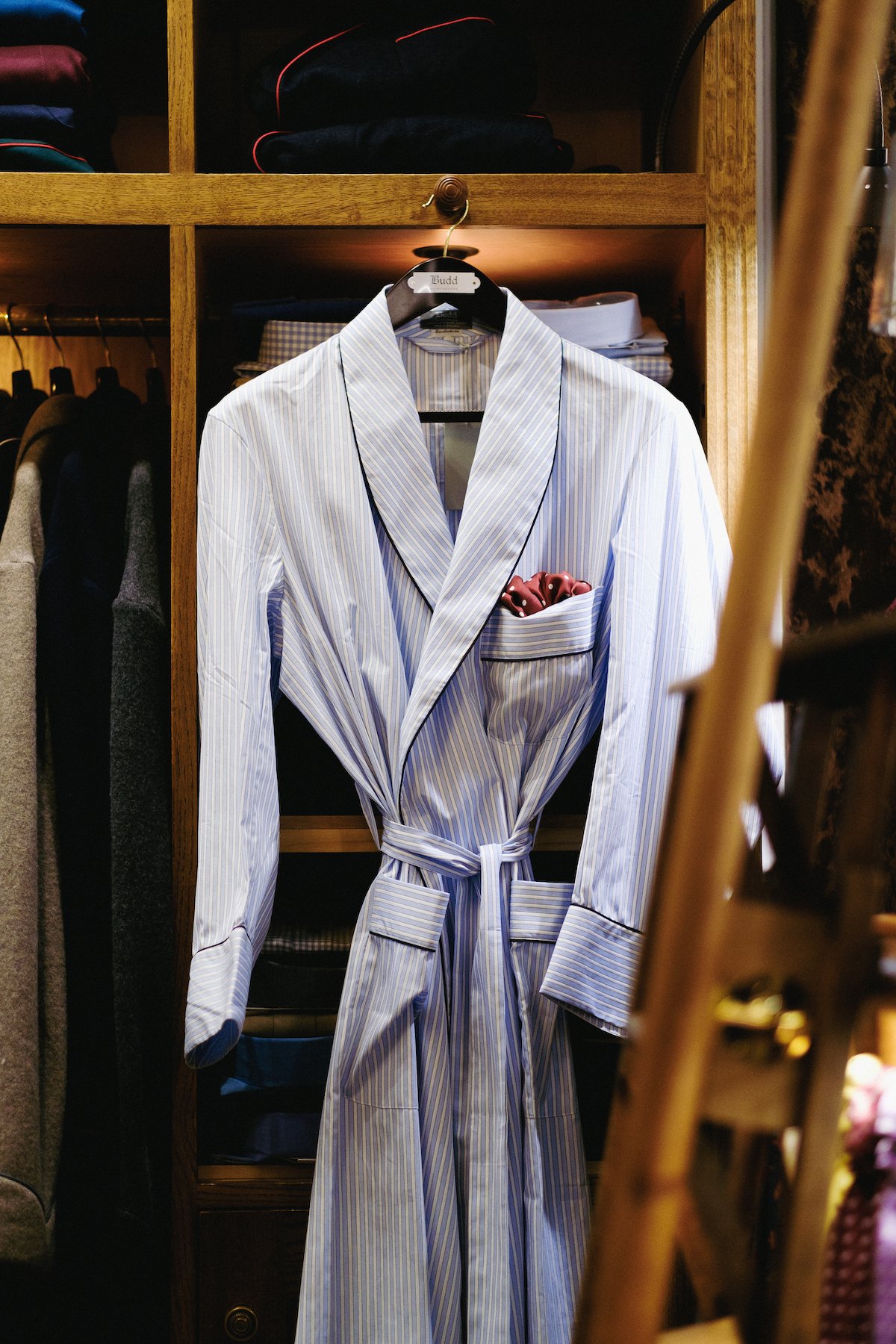
So, this past autumn I was more organised and talked to Budd early about options.
There isn’t much of a difference in the make and quality of the gowns from these various Piccadilly houses: I chose Budd largely because of the relationship I have with Poppy, James, Kieran and everyone else.
I also had a flannel gown from them previously, but that had been a little hairy and was viciously attacked by moths. It was one of the things that prompted my better fight against the little pests, which we covered here.
At Budd you can pick from a range of cloths, as well as supply your own, with prices roughly £150 more than the price of the ready-made options.
You pick a body size and can then specify body length, sleeve length, and design details like piping, pockets and embroidery. There isn’t a fuller bespoke option though, where you start re-designing things like the lapel shape.
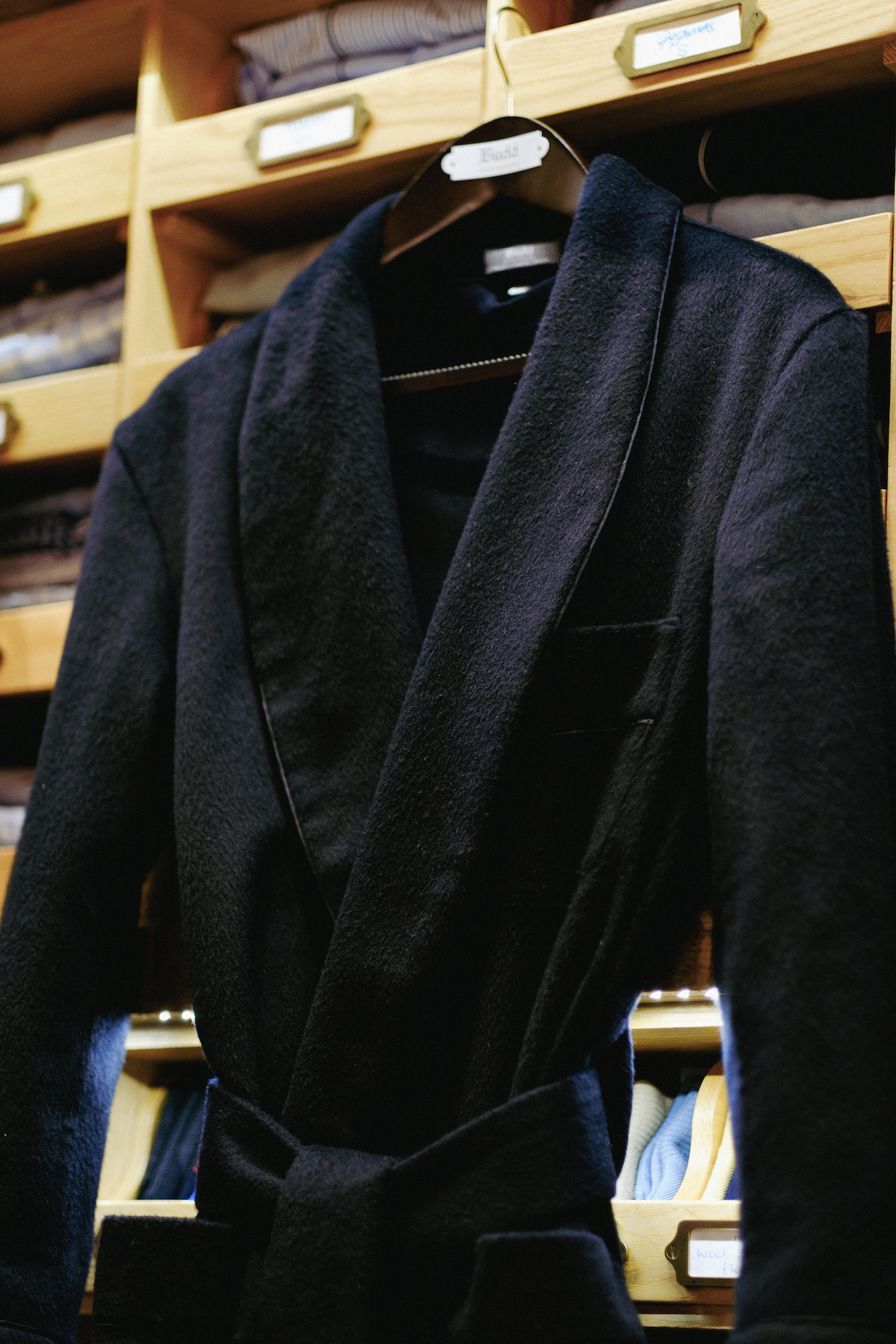
That didn’t bother me, because I knew and liked the Budd lapel - it’s pleasingly wide without being over the top, and has more belly towards the bottom, which for some reason always looks more elegant.
And while, as I said, there isn’t much difference between the make of a Budd, Emma Willis, T&A or N&L, I do think the Budd gowns have a nice, clean finish. They’re made by a woman who works from home, and actually trained at Sulka originally.
Such makers are few and far between these days. As Andrew Rowley at Budd joked, she’s been trying to retire for years but her clients just won’t let her.
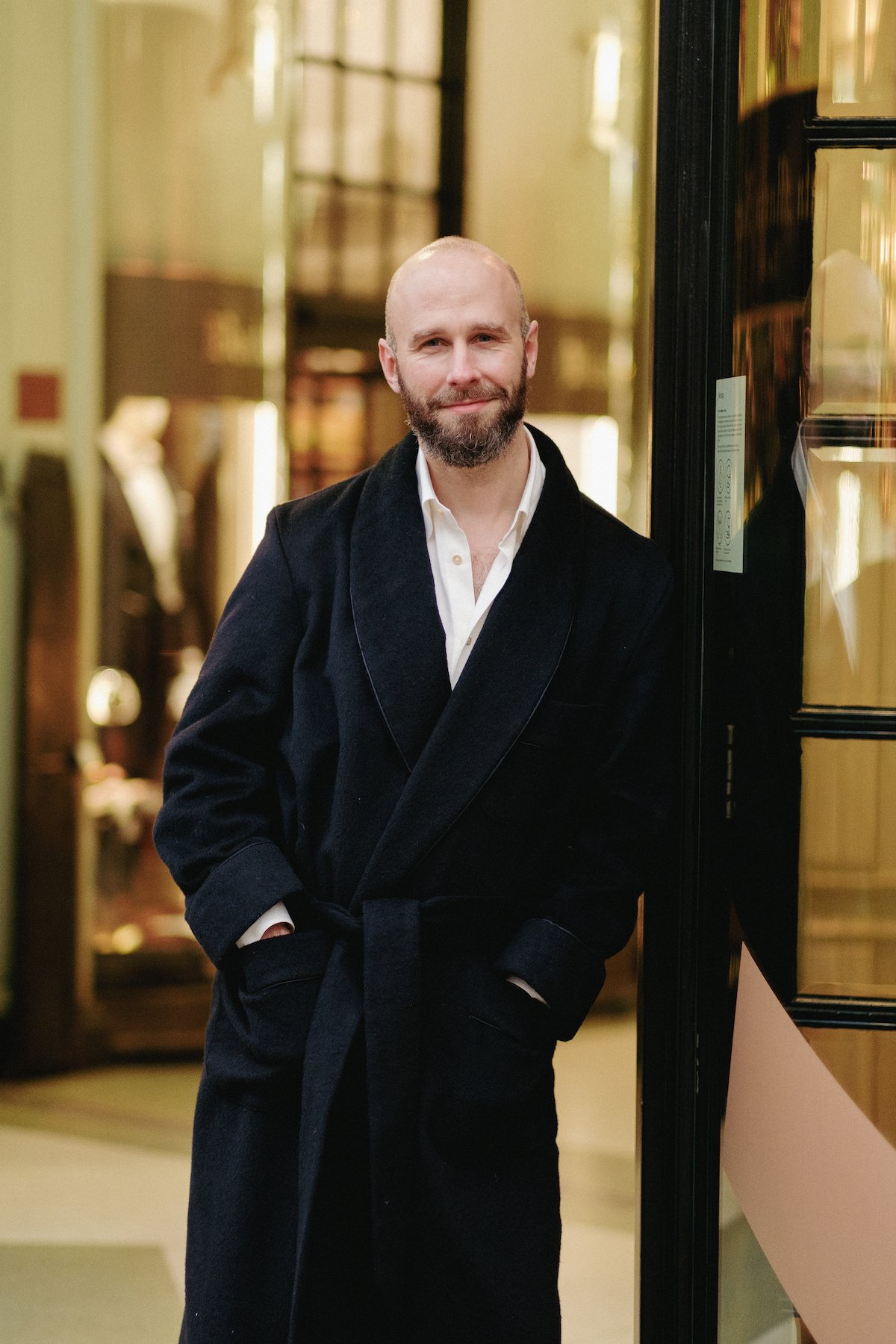
A medium size at Budd fits me pretty well, so the only thing I changed on the proportions was the length, adding a couple of inches to make it firmly below the knee.
The other design choices were all characteristically simple and subtle: three patch pockets, with no initials or embroidery.
I’m not dressing up as a man from another era, nor do I feel an urge to remind members of my family what my names are. I just want a beautiful, indulgent gown that I can wear with everything.
And as is the case with a lot of menswear, when you keep other things subtle, the details shine out - like the wide, pointed loops cut on this gown, the width and rigidity of that belt itself, or those sweeping lapels.
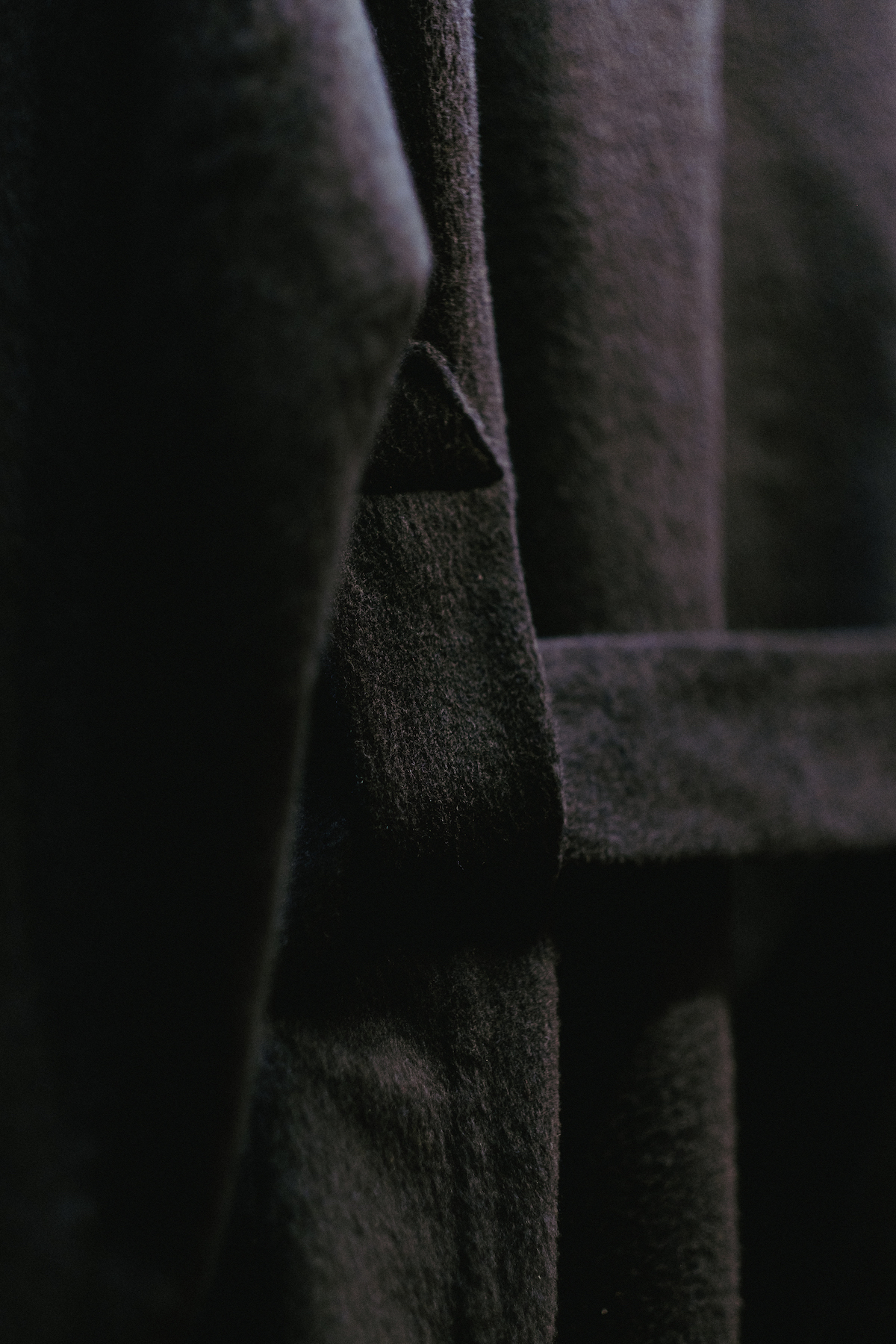
We took some quick pictures of the gown when I picked it up, which is what you can see here.
It was late afternoon on a wintry Thursday, and the light was going, so apologies that the shots aren’t the best. It’s also hard not to feel a little silly standing on Piccadilly in a dressing gown. I’ll try to take some better ones at a later date.
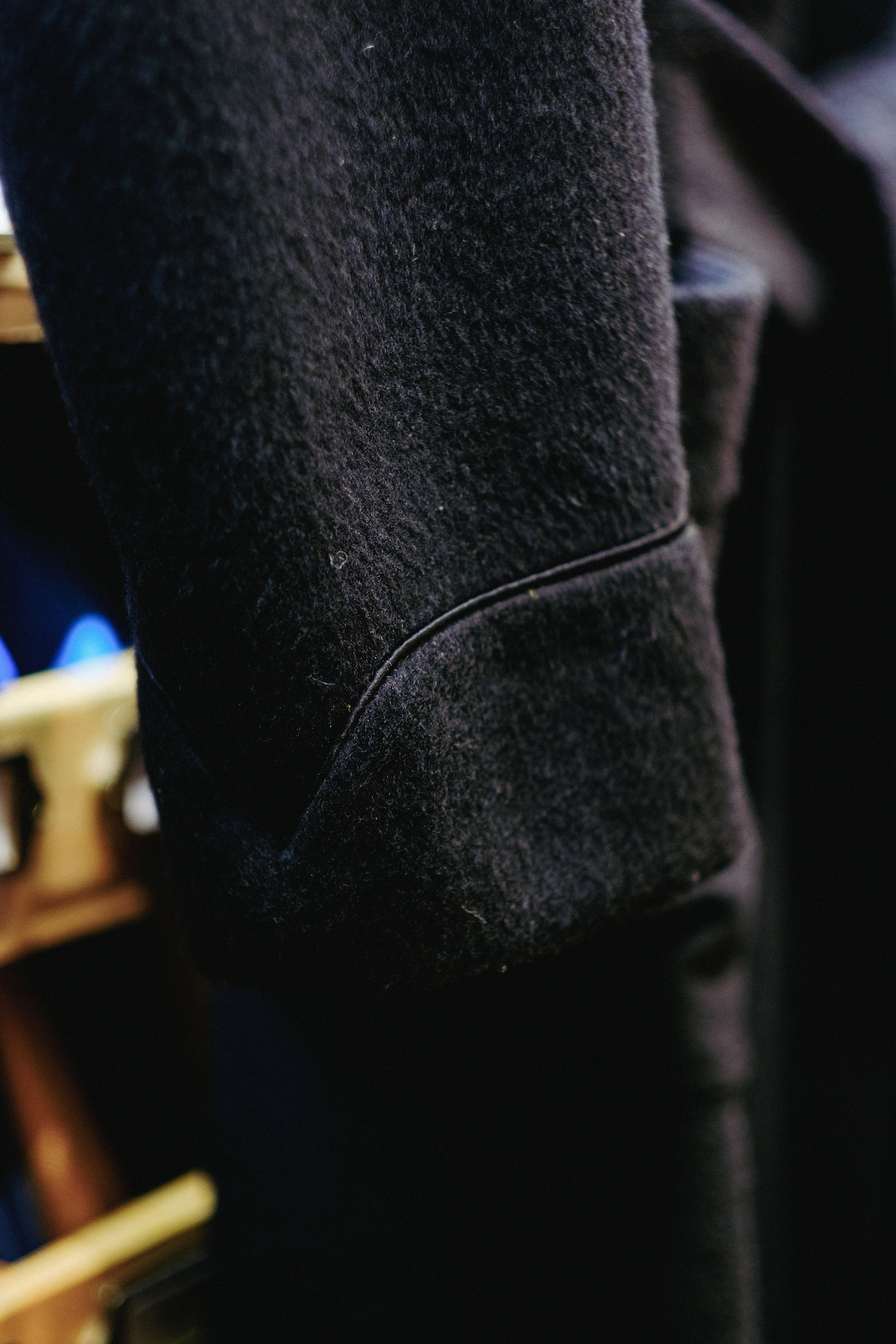
I think you do get a sense of the cloth here though - and as with an overcoat, the great expanse of that material is the most pleasurable thing about a gown.

With the aim of warmth and versatility, I sourced a (very) dark navy 18oz wool/cashmere from Holland & Sherry.
In retrospect, I should have gone for something lighter (in weight).
I knew the flannel gowns from Budd were 17oz, and I liked both a 15/16oz and this 18oz from H&S. I erred on the side of heavy, given I already had another lighter gown.
The result is absolutely gorgeous, with a body to it but a beautiful drape, and a cosy brushed finish. But it is warm. I can wear it fine around the house now, and leave it open if needs be. But when we come to spring, I might have to swap to the towelling earlier than expected.
Interestingly, I wondered during this process why I do need a heavier dressing gown in winter.
After all, we have central heating and the thermostat should be able to keep the house’s temperature the same all year until summer comes.
I think it must be that we instinctively keep the temperature a little lower in winter - after all, I wear knitwear inside much more often then than in spring too.
Plus we don’t keep the heating on all day, so there are points in the middle of the day when it’s colder. And I get up earlier than most people in the house, so there are times I’m up before the heating comes on.
It’s not something I want to start trying to optimise - and of course I always like opportunities to wear more clothing. But still, I’m interested to hear whether other readers find the same.
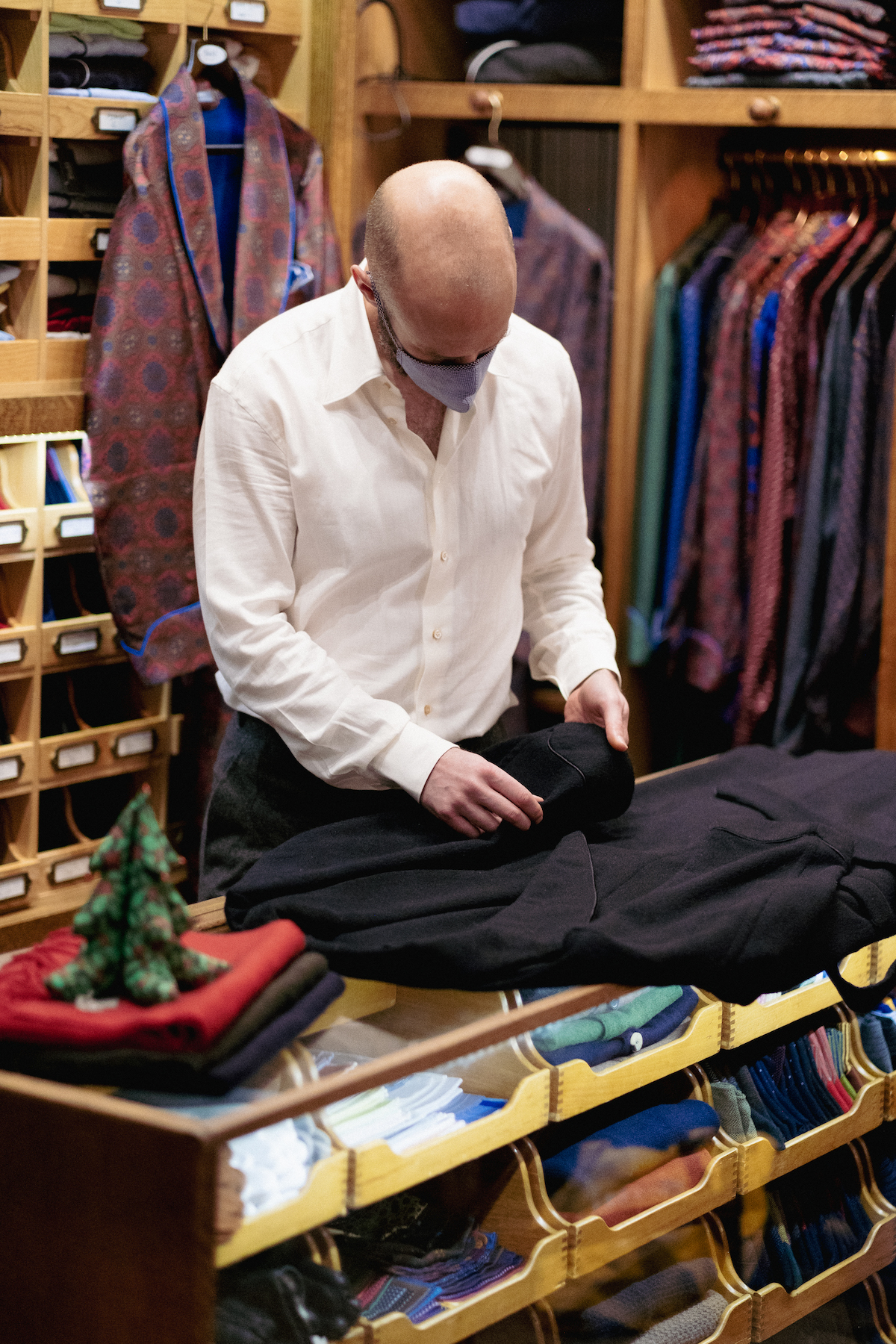
I can certainly recommend Budd’s MTO programme based on this experience, whatever weight and style of gown you’re after.
As mentioned, MTO cost is £450, if you bring your own cloth as I did. If not, then the MTO charge is £150 on top of the ready-made gown in the same material, which ranges from £350 for cotton to £1750 for cashmere.
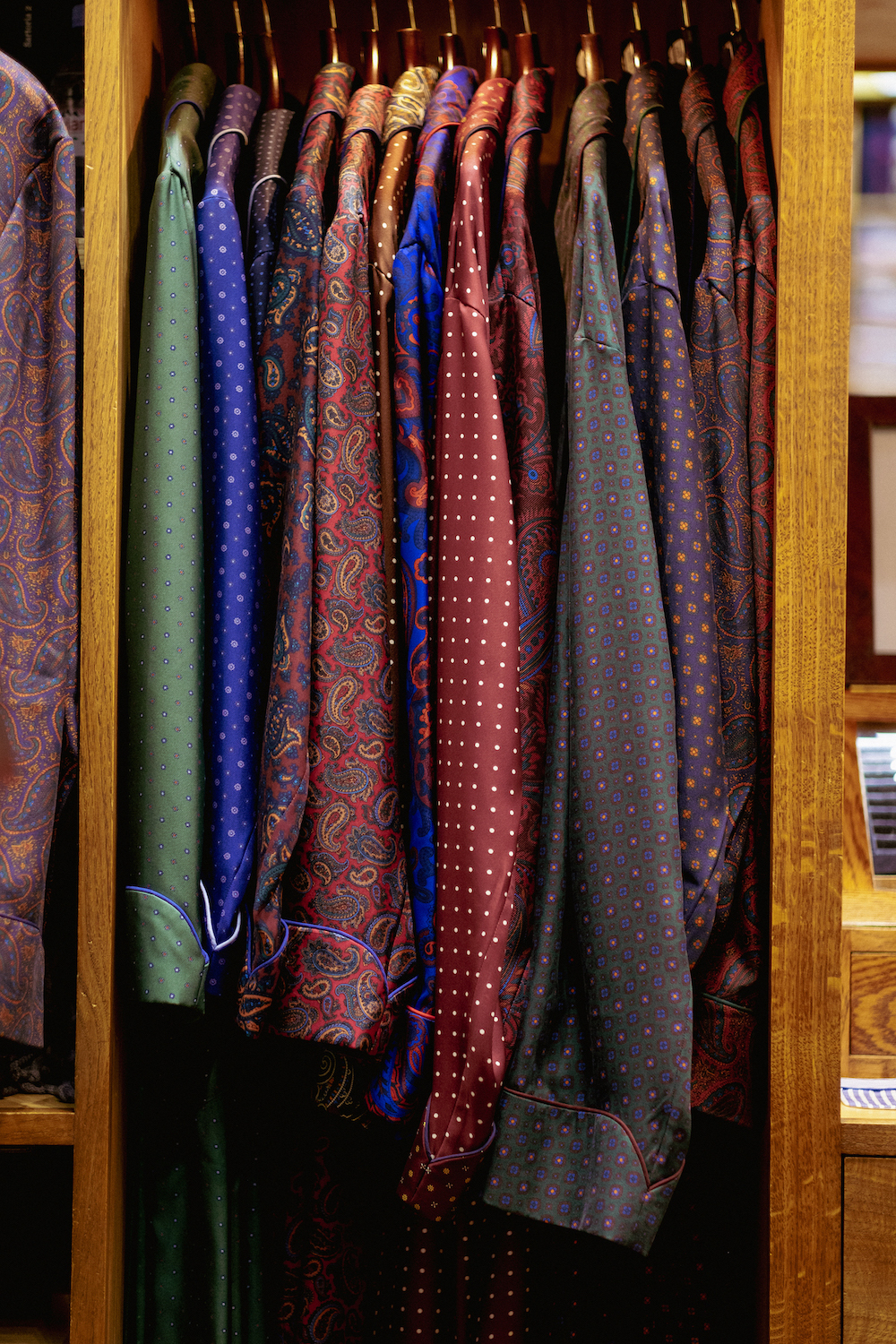
Those RTW gowns are great too, if you like Fox flannel or various more decorative silks.
Photography: Mohan Singh










I do find the same. Though I also find either cardigans or dressing gowns are the best – my house seems to vary in temperature. When I’m at my PC, possibly playing games, I find I get quite warm but if I go downstairs, particularly in the sitting room, it’s considerably cooler and the ability to close a cardigan or gown at the front is a much needed option!
I do also like having the indoor temperature be cool enough to wear indoor layers. It just feels right. It’s comfortable and cosy and contrasts with the bleakness of much of our winter.
I don’t understand understand the pricing as explained in the last paragraph (“XX”). So if a client would bring their own cotton, the MTO gown would cost 500 GBP, but if they supply their own cashmere, it would be 1900 GBP? That doesn’t seem plausible, I doubt it’s so much more complicated to work with the cashmere cloth?
There’s no XX in the last paragraph Ferdinand – perhaps you have a cached version of the site? Try refreshing.
The MTO cost is £450, so add that to whatever the material is costing you.
Should it maybe be “As mentioned, MTO cost is £450, if you bring your own cloth as I did. If not, Then the MTO charge is £150 on top of the ready-made gown in the same material”? (If this guess is not correct, please feel free to delete this comment).
Sure, that’s a bit clearer. I’ve updated it now
Funny thing is I haven’t had a dressing gown since I left boarding school, which was probably before you were born! I’ve never seen the need for one.
My wife, on the other hand, seems to have a never ending supply of gowns. Silk, cashmere, cotton, linen; every colour under the sun!
Hope you enjoy yours.
Thank you Henry
A little so. I never had a dressing gown, but five years ago my mother gave me a bamboo bathrobe. I wore it two or three times, just to see what it was like to wear a dressing gown/robe. I prefer to put on trousers (sweatpants), a T-shirt and a sweater right after a shower. But now my wife wears it almost every day) Autumn-winter is a great time for layered wool knitwear indoors and outdoors.
Lovely piece Simon and I agree with Henry’s wife, as I have a cotton Budd for summer, fox flannel Budd for winter and now have the Emma Willis paisley for the in between time. Seems I am always looking out for the others as the more we are working from home the more this seems less indulgent and more practical.
I’m feeling warmer just looking at it.
Slightly disappointed you didn’t have the sleeves embroidered to match your pea coat?
Ha! Yes I think that reflects my changing tastes as well. I wouldn’t have as much embroidery, if any, on a pea coat today I don’t think.
That’s is still one of my favourite pieces on PS. I enjoyed the whole saga. Is it to big a job to replace? Would it require new sleeves?
Yes it would, and the cloth is unlikely to be exactly the same unfortunately
With the possible exception of suits, I do really struggle with the concept of an “investment” item of clothing. Seems fairly unique to the clothing industry to call something an investment when the only return on investment is the enjoyment of using the product… you don’t hear people talking about an “investment TV”. There is the argument that a suit can land you a job etc but increasingly thats becoming outdated.
Certainly looks a great dressing gown, certainly was expensive but an investment?
Yes in one way the term is certainly misused Bob. It’s not going to gain in value or return dividends.
I think it’s more used to mean something that is expensive but will give you that enjoyment for a long period of time, because of the quality, because of how much you will use and wear it. In contrast to something that won’t last very long or won’t be used much.
Given I enjoy putting it on every morning at the moment, it’s certainly doing that job so far. I wear it more than probably any other item of clothing.
That depends on the degree of one’s fame Bob.
The prince(s) of wales’ dressing gowns could portentially fetch a high price if ever offered at auction. Idem for Prince (the musician).
My house in UK is very very old and the period charm includes period temperatures. Dressing gowns are a must in winter, I may take a look at Budd’s offerings in a week when they allow me into Blighty again.
Maybe this is a cultural thing, or generational, but when/why do you wear this instead of throwing on the PS cardigan for instance? Over PJ’s, or over regular clothes? I assume the cardigan would be equally warm (safe for the legs) but less in the way.
I do have a toweling robe myself, but it sees very little use, possibly between showers and getting dressed if for some reason one doesn’t follow the other.
Just a curious thought. It does look very cozy.
Enjoy the weekend.
Thanks.
I could wear something like the PS cardigan, certainly, but I do like a dressing gown in the morning.
I wear a gown every day when I get out of bed, and then for the next two hours or so, as each of the three children go off to schools or daycare. It’s worn over pyjamas, and then finally all taken off when everyone has gone and I get to have a shower.
I actually only really started wearing both pyjamas and a dressing gown when I had children, just because I’d spend so much longer in that state between getting up and getting dressed.
Simon, I can relate to your point about waiting for the children before you get yourself ready for the day.
I have a cotton dressing gown but I tend to wear it in the evening after showering to avoid getting dressed again before bed.
In the morning some knit or sweatshirt does the job. With young children I would fear for such a beautiful cashmere gown!
Not necessarily in the same vein, but we just had our third and final child and I finally nailed down the perfect hospital/helping with birth uniform. There doesn’t need to be one but it is sometimes fun to do the same sartorial analysts for everyday activities. The hospital uniform is as follows:
-Anderson and Shepherd merino wool cardigan (bc they keep hospitals cold)
-The Armoury/Nigel Caborn Loopwheel T-shirt
-Well worn in BlackHorse Lane Jeans
-Alden Shell Cordovan Indy Boots (traction needed and cordovan is easy to clean)
It may sound silly but I was disproportionately happy to figure out a wardrobe that could serve all of the needed purposes from the utility necessary of the event to looking good enough for the inevitable pictures that stay with you for life.
Great article, thanks! Could you say a little more about what you mean by the flannel being to hairy? Is it to hairy for comfort, look, practicality or something else? I’m curious since I’ve been thinking of ordering a gown like this and then going with the flannel version, but this makes me wonder if I need to look closer at other options as well.
For comfort. It’s fine over a shirt or long-sleeved pyjama, but I didn’t find it comfortable over a T-shirt for example.
This thing about heating is one of my issues with winter clothing… Come October all the menswear accounts on Instagram start talking about the “essential” flannels, but working in a shared office with people who insist on keeping the temperature on 24 degrees (looking at the thermometer as I write this), I find myself wearing lighter fabrics all year round and layering with other things that are warm enough to walk in the cold outside, but then I can take off.
Even at home I barely use the heating, yet I don’t really need to wear any warm clothes most days. Probably the apartment below is using the heat really high.
About the gown, it’s a lovely piece! I would really enjoy something like it in a colder home.
I know how it feels to be in such a hot office in winter. The problem comes with walking half an hour to work, and any trousers that keep me warm enough outside in sub-freezing temperatures are too warm indoors. My apartment gets to be too warm as well, since if I leave the radiators on it’s too hot and my wife gets mad if I turn them off.
Excellent timing Simon for this topic now that the news is full of stories of people complaining about their rising heating bills. However, I am surprised to see how often people sit at home in winter in just a t-shirt or a shirt and how often flats or houses are overheated. For me the charm of the colder months is indeed the need to adapt to colder temperatures. In winter typically this means an undershirt, shirt and a jumper – from merino to cashmere depending on the temperatures. On the coldest days I add a cardigan on top in the evening. Maybe I should be looking into a dressing gown as well. The expectation that one should be able to heat any flat or house to t-shirt temperature is simply untenable given the cost both to one’s purse and to the environment.
That being said, I have also noticed recently that some offices are no longer heated to the same level as a number of years ago. That is certainly valid for my office and I now keep a mid-grey cardigan that goes with all my suits for when I feel chilly late afternoon/evening; a welcome evolution as far as I’m concerned.
Well said Willem, it’s amazing how much people can take for granted in that respect.
For me (in a cheap rented apartment) it’s a case of, every year as soon as outside is less than +10* on average, the only way to prevent mould is to set heat to 23* or more (or buy dehumidifier, which would still cost electricity to run…)
All year round through the day (with the exception of rain/snow/big wind days) the back door of my house seems to be open to allow the dogs to run in and out as they please which means inside is always a reflection of outside temperatures…. heating becomes pointless and jumpers/cardigans/dressing gowns become essential. Like you I look forward to dressing cozy for colder days
Hi Simon
I love Budds flannel gowns but a moth attack worries me and the fact they can not be washed is troublesome
Paul
I wouldn’t have any concerns about moths, given the regimen I now follow.
And dry cleaning is effective, but it is good to get good at spot cleaning the wool too.
Beautiful!! Any particular reason you are opposed to contrasting piping (i.e., the T&A one)?
Also, just as a reference, do you know/remember how much would a meter of this cashmere be at H&S? I don’t think they sell direct to end users, do they? Thanks!
Yes, I just don’t like contrasting piping. It seems a bit showy and a bit old-fashioned in a way I don’t find appealing. Like embroidered slippers and initials on pockets
Would you have Budd make you a gown in the de Le Cuona paisley? Or did you fall out of “love” with that fabric?
I wouldn’t, I’d buy that from Emma if I was going to get it anywhere.
I really do love that fabric, but it’s more in the abstract. I don’t think I’d wear it, at least in the colourways I’ve seen
Lovely piece, Simon. I think it’s important to emphasize to the skeptics that a dressing gown is not only something practical to wear, but also something that gives great pleasure and even dignity. I’ve been wearing the same RTW silk gown for forty years, and it’s still as elegant (and surprisingly warm) as the day I bought it – discounted something like 85% of its original price (!) at the very end of the winter sales at Ungaro in Paris. They had it only in my size, shawl collar and cuffs in black velvet, the silk a paisley pattern with a background that changes, according to the light, from chocolate to aubergine. I picked it up mostly out of astonishment – certain that some zeroes were missing from the price – but the cashier didn’t bat an eyelash, and I certainly didn’t ask whether there was a mistake. At the time – I was in my mid-twenties – it seemed a terribly grown-up garment, but it’s one I’ve gladly grown into, worn more often in the evening than the morning, to accompany a glass of armagnac.
The dressing gowns/robes offered by Connolly are worth mentioning. Available are a 95% wool/5% cashmere version, and, as well, to my mind, the 100% cashmere ones that are called “CASHMERE ROBE DE CHAMBRE,” are especially appealing (thick, warm and luscious). Although certainly worth considering, the MTO types, at least from British firms, can be considered too involved to be worth the extra effort and expense for those of us in the USA. The RTW CASHMERE ROBE DE CHAMBRE fits quite well; the representative from Connolly emailed me that this is her favorite piece of all those that they offer.
Simon, Great article about a very important and practical aspect of one’s clothing. There was a time when dressing gowns were de rigueur: in sleeping cars on trains, in hotels with shared bathrooms, etc. I am glad to see as a modern dad, you share in the morning’s preparations. The timing of one’s transition within the day from robe to full dress changes as one gets older and the kids are off – I often write in my study until noon in a bespoke robe – a fleece lined wool one that I had made with a shawl collar. What do you wear on your feet? There are elegant slippers, fuzzy boots, etc. With such a nice robe, I would like to see your suggestions for footwear. Here in New England, we keep our houses at 65 degrees (18 C) so warmth is important – and for walking the dog in the early morning hours. And do you have a robe for summers – a silk or cotton one – for lounging in the cool mornings over coffee?
Jack
Hey Jack,
I don’t have a summer one actually, that would be an interesting thing to explore
On my feet I usually wear B&L Lunes – covered here
I thought you owned an A&S linen robe. Maybe I was thinking of someone else?
No I did, a while back, but I bought the wrong size there and ended up giving it away. You often need to go small with A&S!
I think my Budd Fox Flannel (off the peg, not MTM) may be my favourite item of clothing. It has a decadent luxurious feel about it…
Hi Simon, The dressing gown looks beautiful and luxurious. I tend to be very classic and conservative in my colour choices for suits, jackets etc but I would think having a dressing gown made would be an opportunity to have a bit of fun with fabric design and given that you only wear it at home being a little more adventurous and perhaps even over the top !
It certainly is Thomas. I think it’s just my character that I prefer this kind of style, even at home
I guess this type of purchase comes down to personal habits and routine. Although the dressing gown looks very comfy I wouldn’t get one myself as it would get little use. I don’t feel awake until I shower and usually shower as soon as I’m out of bed. Lounging around in my pajamas holds no appeal for me; seems like a relic of a bygone era.
Yes I think you’re right. It can seem odd until it fits specifically with your daily habits
I replaced my green Budd wool robe last year with the identical one. It had become worn after a number of years, especially some of the piping. I just purchased one of theirs in cotton as well.
For the temperature thing, I think it’s to do with the radiant temperature of the walls in your house more than the air temperature. My kitchen is on top of my own garage and the floor is cold even though the air temperature is a warm spring day. It just sucks the heat out through your feet.
Unrelated I am beginning to read posts on your more indulgent clothing as if you were Hedonism Bot from Futurama: https://www.youtube.com/watch?v=WoO7z3OTVTI
Love it!
Great piece, thanks. I long wanted a gown with that something extra and now I know where to get one. This looks great. I may get exactly the same thing, if that isn’t slightly creepy.
No that’s fine Phil. Just don’t be like the guy who wanted to get the same tattoo as me…
What is interesting is what you mention in passing: Your aversion to initials. I grew up first in my grandmother’s house, later that of an aunt. Both houses were maintained by domestic servants. And because I was not the only occupant besides my grandmother and aunt respectively, all my clothes, especially the underwear, had initials. Even my towels and servants; to ensure that I received my washed clothes back in my wardrobe, or in bathrooms and at the table. For 40 years I have lived alone, without staff – and of course none of my clothes have initials. What would be the point?
Exactly.
Unfortunately the point is only really to show off. To show that you’ve had something made.
Very nice! I have one of the more subtle (in my opinion) coffer madder silk ones, the navy and green. I love it. I think the word investment is appropriate, just because it is so expensive, you need an excuse. And enjoying something daily for many years is profit in my mind. I absolutely love it and wear it almost every day for the first hour or so. Works all year round here in Hong Kong. Any tips on cleaning it? A gentle soak with a tiny bit of baby shampoo? Or dry clean only? Have asked Budd a couple of times but they haven’t replied.
Cleaning your silk one? I’d do just dry cleaning unless you can get some specific advice from the maker/weaver
Yes, my madder silk one. Thanks. Much appreciated.
How much cloth did you need for the robe? Should you 2x your normal jacket requirement as a simple rule of thumb
It was 4.5 – a lot!
I do love a Budd dressing gown! My own is RTW, cotton in the navy Budd stripe.
Whilst you and some others have commented on the joy of wearing a dressing gown in the mornings, I find my enjoyment from changing into one in the evening, over pyjamas. Sitting in a favourite chair, a glass of wine and a nice book or film, whilst wrapped in a soft gown, is there a more wonderful way to spend those few hours before bed.
Sounds wonderful Richard
Hi Simon,I wondered if you have come across Daniel Hanson of Nottingham in relation to dressing gowns?Quite a few of them are quite showy and probably not your style but are certainly luxurious.
I haven’t, no. But thank you for the recommendation
I wear my dressing gown in the morning mostly (Morgenmantel in German) Over PJs or just underwear. I add a silk ascot for an elegant look. It is made from a cotton linen mix in marine blue. No piping – notched lapels, full bespoke made by KNIZE. It is an important piece of my wardrobe. I wear it all year and own it since 2008.
Last autumn my wife and I had gowns made using Fox flannel half lined with bemberg which have been perfect for cold Beijing winter evenings and mornings. Of course there’s a steep upcharge on the lining (Fox quoted an additional GBP500) but makes it much easier to get on/off, provides an extra layer of insulation and helps to protect the underside of the flannel from friction with our pyjamas.
Nice idea Chris
Hello Simon,
That gown looks superb so congratulations are in order!
We keep the house cool as well and I like it that way so I can layer indoors. Having said that, sometimes my Wife can crank up the heating and either way every room heats and cools differently. To combat this variability I either wear cardigans or gowns as they can be opened or closed (fully or partially), as required.
Re “fabric” what is the best way to source fabrics to give to Budd and ones tailor? Will all the mills supply individuals or are there fabric merchants that you can go to? And the same questions for shirting fabric as well. Can someone source their own or best to let the shirt makers show you?
And finally, the gown – is that particular fabric Holland and Sherry’s Navy Solid from the overcoating range.
As an aside, I wrote here a while back about where to source a madder silk cravat. I managed to buy one before Xmas from Budd on a London walk about and picked up a gorgeous knitted silk scarf they do in Navy (white out of stock and not wearable). Superb shop.
Many thanks in advance.
Yash
That’s a good point on keeping it open Yash, it’s a nice way to vary the warmth.
With fabrics generally, you’re nearly always best having them sourced by the maker, rather than yourself. Most mills and merchants don’t deal directly with individuals. Someone like Fox is an exception in that regard, and Holland & Sherry don’t – I only had mine through my working relationship with them.
And thanks for keeping us up to date on the cravat
Hi Simon,
Thanks for the response.
Noted re sourcing the fabrics.
Going back to my comment then, if I were to go to Budd (or any bespoke gown maker), is the Holland and Sherry cloth that I mentioned having looked at online the one you had? If not, would you be able to point me to the correct one as I would really like the maker to get the right one. The other colour I saw online, in the same fabric (if correct) was dark grey so may change the colour element, although my preference is the one you have. It’s gorgeously easy on the eyes for the long term. Less glam and more subtle points of design and feel.
If you can help that would be great!
In the meantime, enjoy the gown.
Yash
OK sure, no worries – mine is 986009 from the overcoating bunch
Brilliant. Thanks Simon! Really appreciated. Will work on this later in the year ready for Winter 2022 and update you once done.
I agree, I’d never crank the heating to T-Shirt temperatures indoors. It feels unpleasant to have the house filled with hot air. I don’t like saunas for the same reason, I find it quite claustrophobic. Beside I enjoy knitwear too much to miss the opportunity! I’m not sure our ancient boiler would manage it anyway.
On the rare occasions I do find myself stripping down to shirt sleeve in the winter months, I’ll turn the heating down: savin money and reducing environmental harm while indulging in a chunky knit is surely a no brainer?
Oddly I’ve never quite clicked with gowns. I’ve had cotton towelling gowns before and never wore them much so passed them on. I tend to run pretty hot any way and I also have very mild psoriatic arthritis so wear Toms slippers with thick fleecy soles at home. I too will get the kids up and out before I shower and dress but I tend to pull on cotton flannel pajama trousers and whatever knitwear is too worn for smart casual wear but not enough for the DIY clothes pile!
Simon, would you wear this gown over your “regular” clothes (i.e . Not pjs), say at the end of the day? If so would you Care that it is a good pairing ( formality and color wise)? Thanks
I wouldn’t, no. That would feel a little odd to me. I’d wear a shawl-collar cardigan instead
What do you think of Connolly dressing gown, and will they be considered a step up from Derek Rose?
They’re beautiful, and yes certainly a big step up
Strong Arthur Dent vibes on those outside shots.
Not sure that’s that complimentary, but love the Hitchhiker’s reference anyway! I was just recommending it to my eldest daughter at the weekend. I can always hear Zaphod so clearly in my head…
Brilliant – the same thought immediately popped into my head. All Simon needs to complete the look is a towel and cup of coffee…
A good choice of cloth, and well worth the extra cost. I once bought a beautiful silk dressing gown from Budd around 2007, I’m sure that Andrew Rowley advised me, but I never wore it because I was afraid of soiling it with boiled egg stains; a dark wool/cashmere gown would have been much more practical.
Interesting that they are made by a lady formerly of Sulka; if there’s one store I really miss visiting in London, it’s Sulka.
Yes it’s nice that a little bit of that heritage continues, isn’t it? Though not for much longer by the sound of things
Simon, tangentially related question. I am looking for a bath robe (i.e., toweling dressing gown), to wear after a bath. What do you think sets the A&S version apart and justifies it’s hefty price tag of USD$500 (for a toweling robe). Thanks.
I haven’t tried that many other towelling ones, but I think the material is a noticeable step above, as you’d expect. It’s also more thoughtfully made, particularly the double breasted version
Dressing gown looks great, and excited to see a focus on something like this. Love the topic so much it printed me to comment for the first tim. I’ve found something like this is a great way of adding easy sophistication to your average day to day wear, especially as someone who works from home and doesn’t have a lot of personal opportunities to wear tailoring (despite a fondness for it). I’ve a Target robe that I’ve worn almost everyday for the last three years and found it to be very practical, especially given my preference for things to be cooler inside the house, no matter the season. Been looking to upgrade recently, and this is been a great source of inspiration.
Also, a practical question for you, Simon. I’m a big fan of the donegal overcoat, but being located in New England I wonder if it’s substantial enough at the 720 oz weight for a real winter. Would the prior year’s weight standup to that, or is that still insufficient for real cold?
Thanks for the comment John.
I haven’t been through a New England winter, but I suspect either weight wouldn’t be enough for a really cold winter, temperatures below zero every day. Sorry
Sorry to double down on this, but do you have rough idea of the temperature range each of the 720 and 820 oz works well at? And I suppose you meant zero Celsius. I’ve been trying to figure out a wool overcoat that can do a decent job at keeping me warm out down to -6C with gloves and maybe a sweater. Honestly just trying to avoid a parka since I think an overcoat just looks that much better. Appreciate the advice either way. As for the gown again, I plan to copy those turned back cuffs on my next robe, it’s a great detail I could never justify on a suit coat/actually buying a tux so happy to find a case that’s relevant for me.
It’s really hard to say John on temperature, because people vary so much. But I’d say maybe roughly down to 3 or 4 celcius. And at that point not a huge difference between them.
If you want something for that keeps you cold at that temperature, you want a more fitted, double breasted overcoat, ideally with some cashmere in too.
That’s great to hear, thanks Simon!
Informative Article!!!!!!!!!!
Hi Simon, I am inspired by this article to commission my own bespoke gown and wondered if you have any recommendations for a 13-15oz version of the wool cashmere HS overcoating with the same lovely color & texture which you found too heavy. Thank you
Hey Bernie,
Not off hand, but most of the mills we talk about would be good. I’d look in English jacketing books, or perhaps Italian overcoatings – they often run pretty light
Thank you
I’m curious about what your Anderson & Sheppard robe size was. Between single and double designs, which one do you prefer and consider more valuable?
The double, and medium
Very good. This would make an excellent Christmas present for the man who does not yet have anything. A shorter length would make a good “smoking-type jacket,” not necessarily for smoking but rather for elegant wear around the house. Come home from work, take off jacket and tie, put on “smoking gown” from Budd. Why not be elegant around the house?
Ooops, In the first sentence,I meant to write “… present for the man who does not yet have everything.”
Smoking gown, pipe or cigar not needed