

How hand-loomed madras is made: A visit to OMTC, Chennai
We’ve written about Original Madras Trading Company before. Manish did an article last year explaining the history of the company - including its much larger manufacturing parent - and how it has resurrected hand-loomed madras in India.
But there’s nothing quite like seeing it in person for the significance to come home.
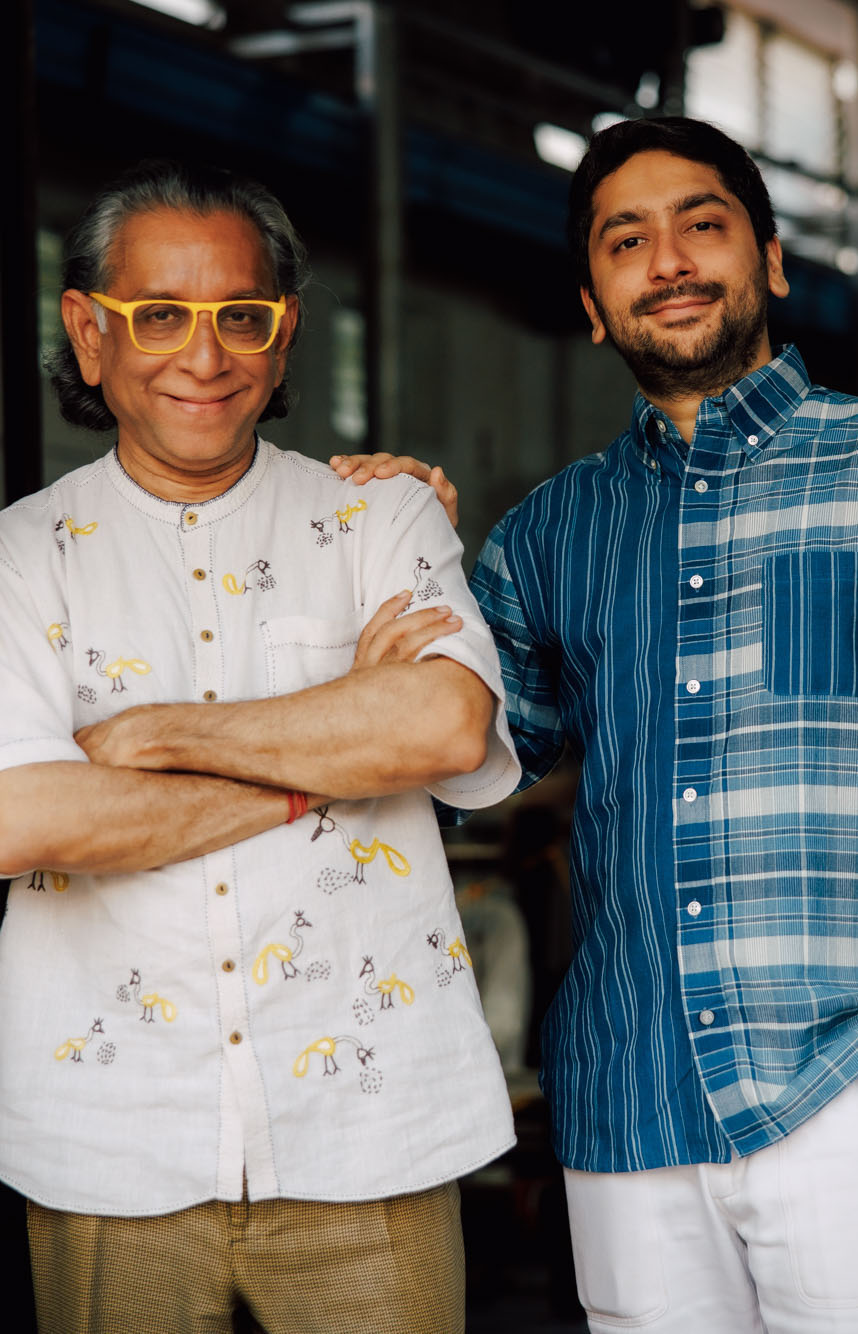
I’m writing this on a Wednesday evening, sitting on a balcony of my hotel in Chennai (previously Madras) having spent the day at the company’s campus with the founder Prasan and his father, Ranvir (above). We spent the day touring the archive, seeing the weaving, but most significantly talking to the people involved.
The gentleman below is Pasupathy. He was the technical specialist Prasan hired to get the hand-weaving project off the ground back in 2016. Pasupathy knew hand-weaving because he was raised in a village where everyone wove at home - about 300 homes. They wove in the winter when they couldn’t farm, in a similar way to those weaving Harris Tweed thousands of miles away.
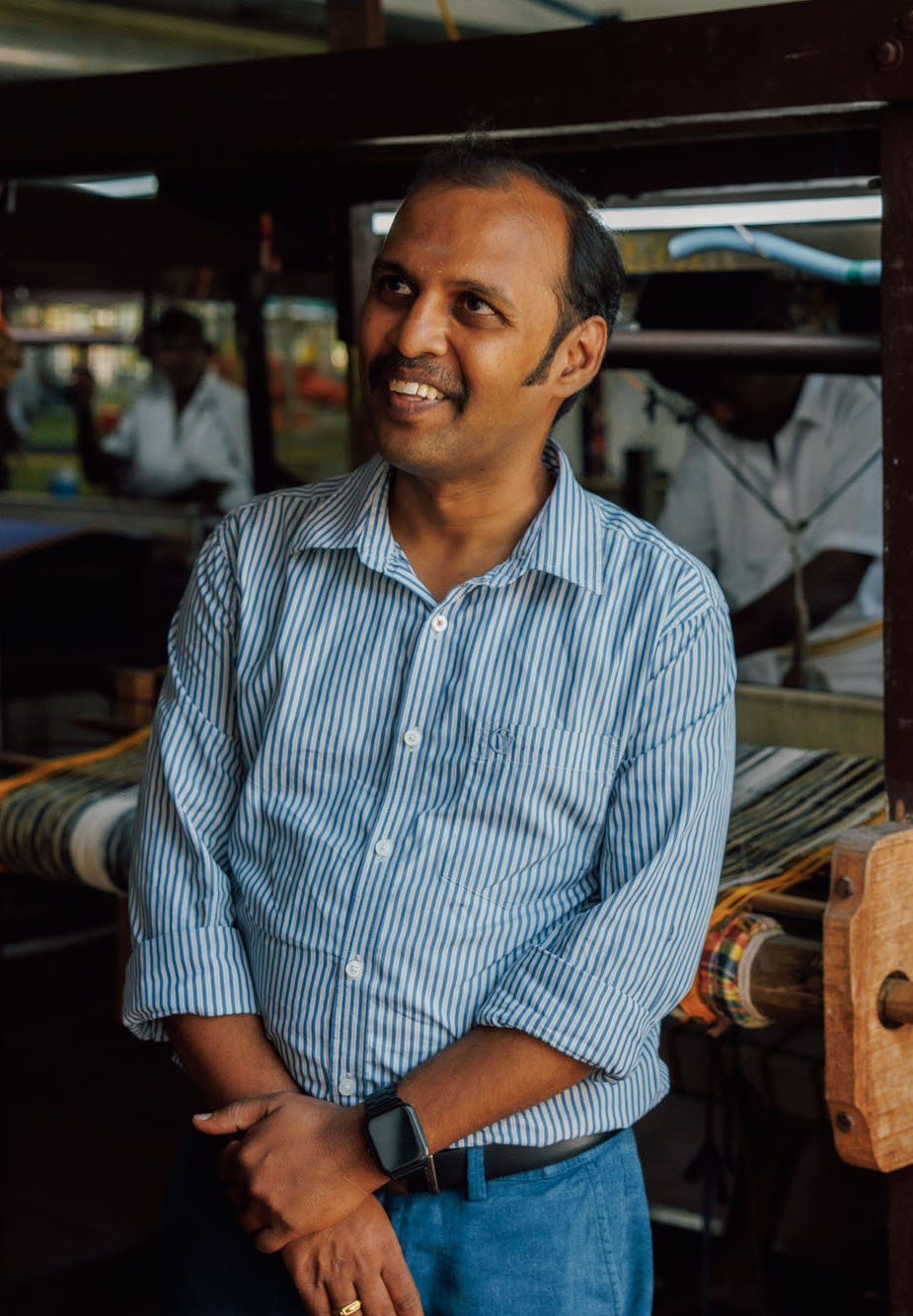
Pasupathy was raised by his grandfather, who was one of those weavers. But the trade was dying out and Pasupathy went away to study textiles, before becoming a fabric supervisor at a big clothing factory.
When he was approached by Original Madras, almost 20 years later, the number of active weavers in the village was down to one. The idea of bringing back this craft in a more organised setting was therefore something Pasupathy was excited about.
“The issue at the beginning was people,” he says. “We could get the looms - they were still around - but we couldn’t convince anyone to come and work for us because it seemed like a risky thing to do. Who was trying to start up this old trade again?”

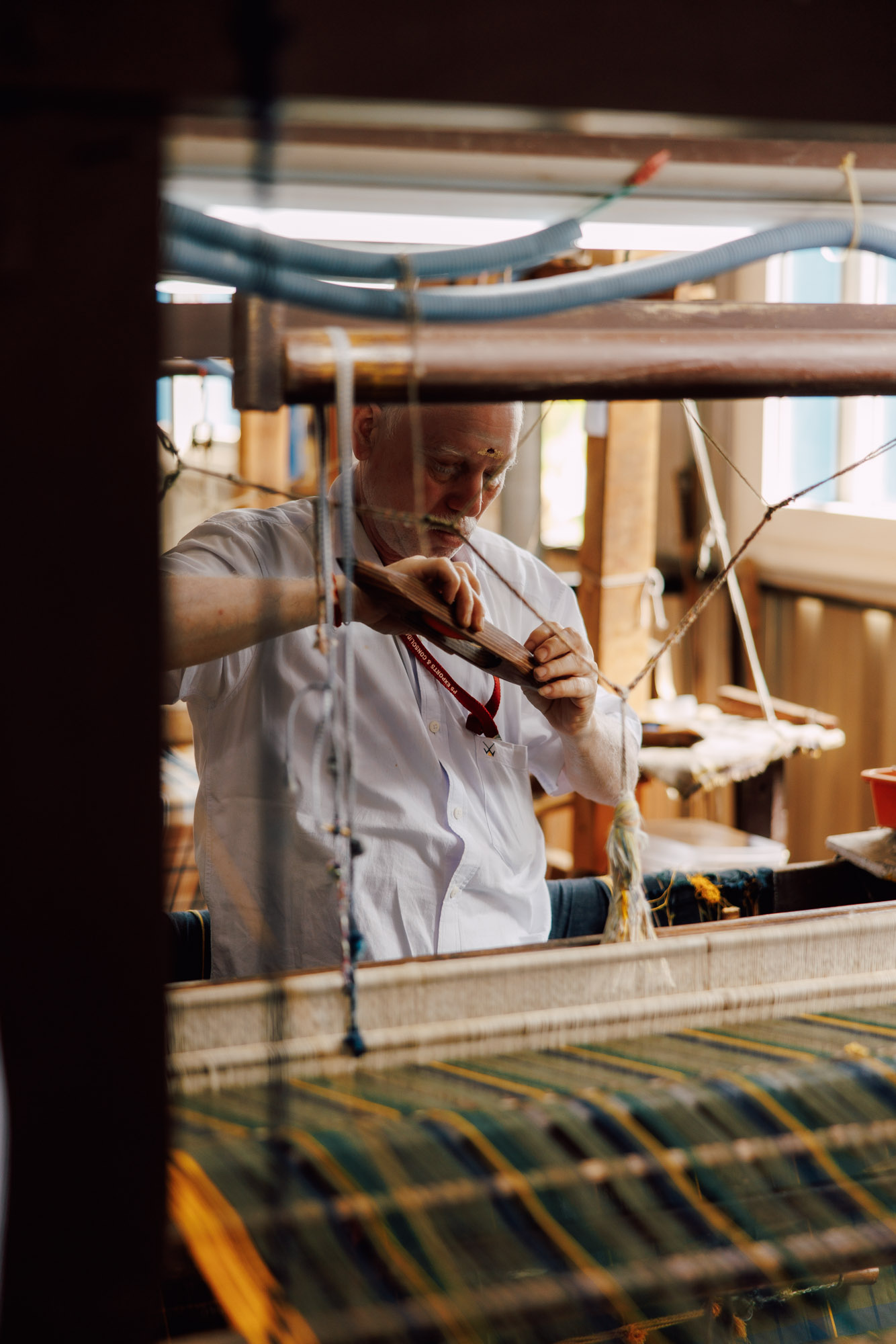
Pasupathy and Prasan eventually convinced two women from the village to come work for them, and once it was started, it was easier to convince others.
“The problem then became one of consistency and speed,” he says. “It took so long to get people used to the rhythms and the patterns.” Their first order was for 400 metres and it took them 150 days. Now they make 150-200m a day.
“My family come down and see what we’re doing here, and they’re so proud,” Pasupathy says. The operation is still tiny compared to the shirt manufacturing next door, but it has expanded to 30 people.

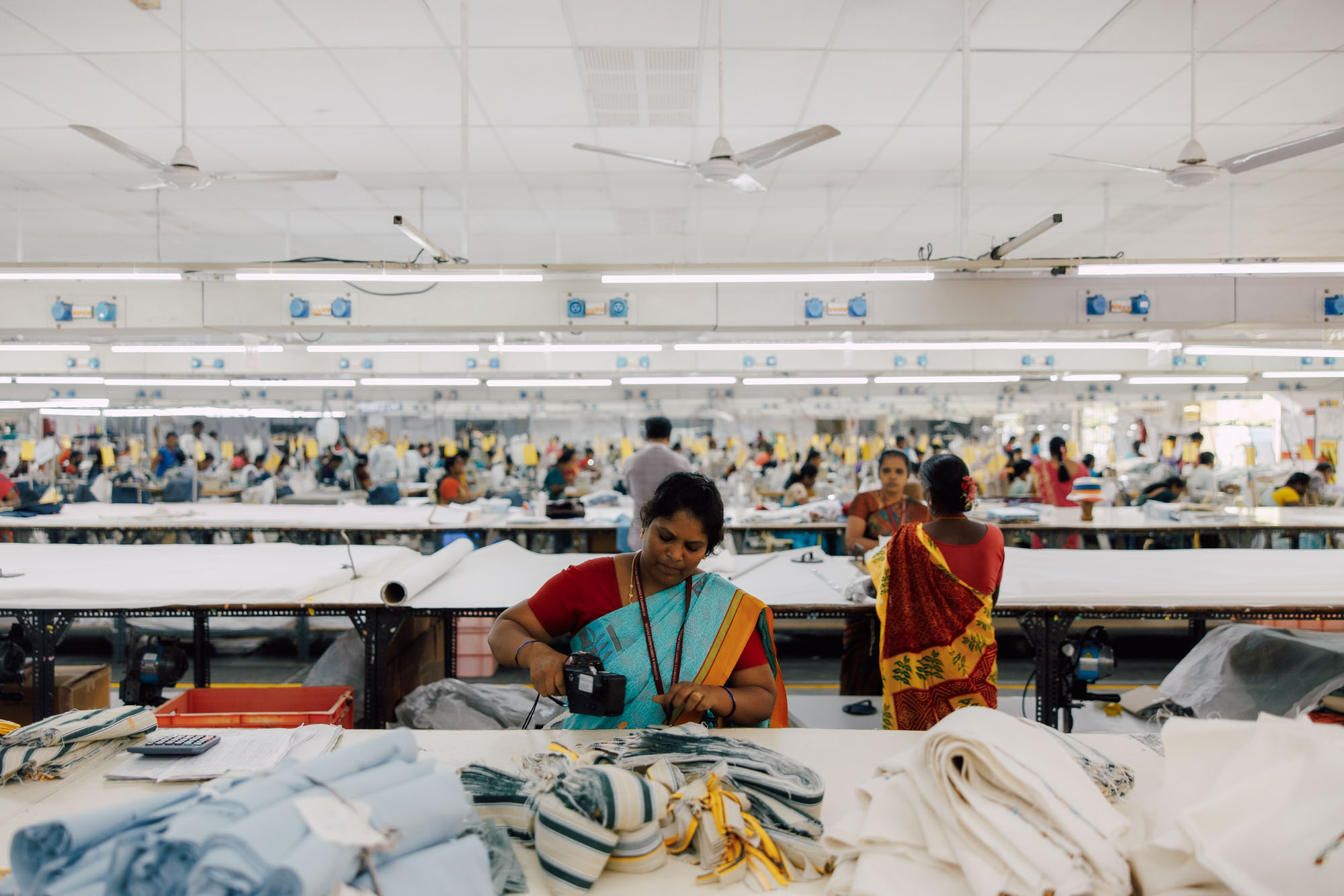
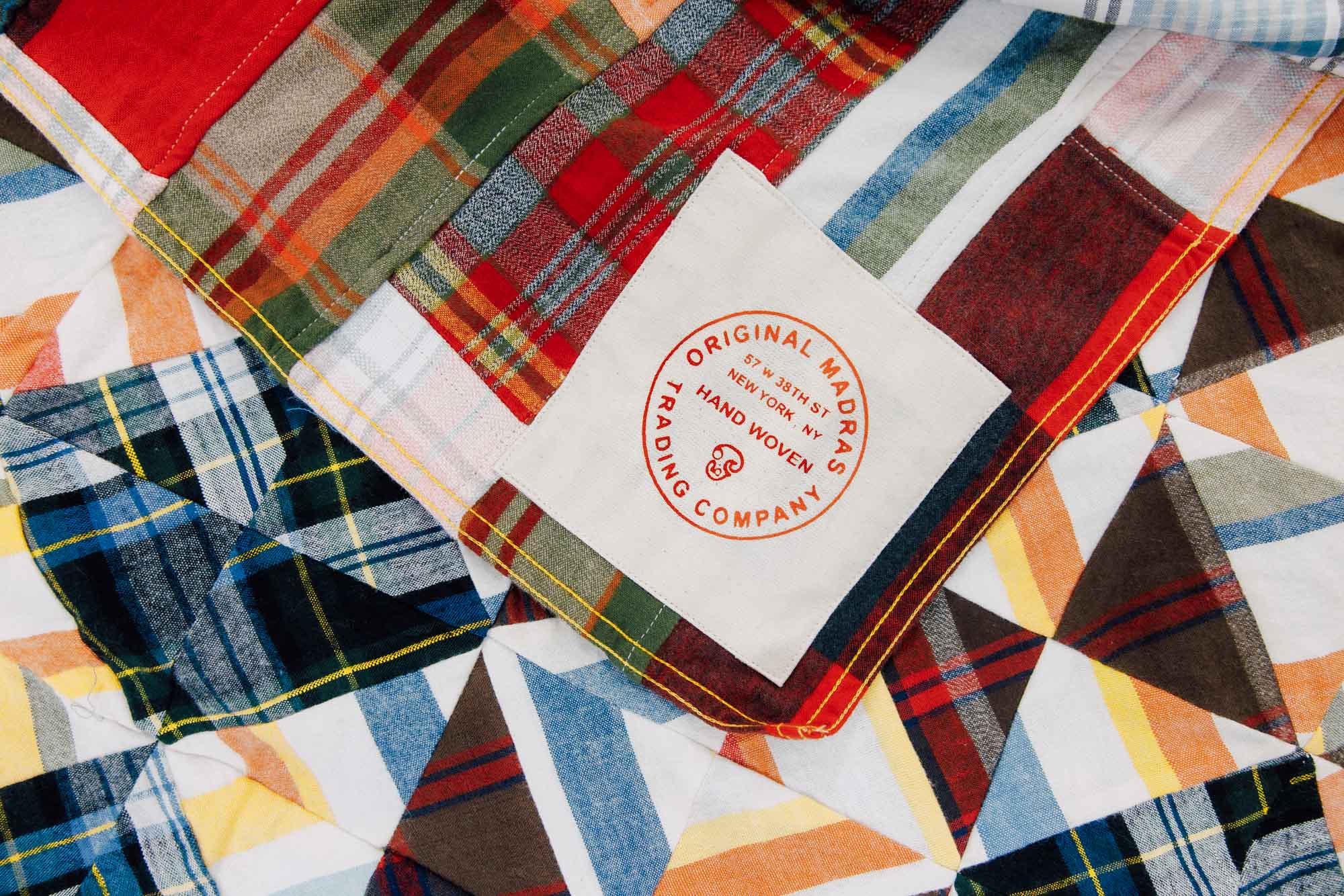
As Manish explained in that original article, the family company (called PS Apparel, ironically) has been around for 50 years and historically made shirts for a lot of household American names - Ralph Lauren, Brooks Brothers etc.
It’s smaller now, but it’s also become more specialist, making more varied and interesting shirts for smaller brands. We can’t mention any current clients, but there’s a lot of embroidery and pattern going on, and a lot of newly fashionable names.
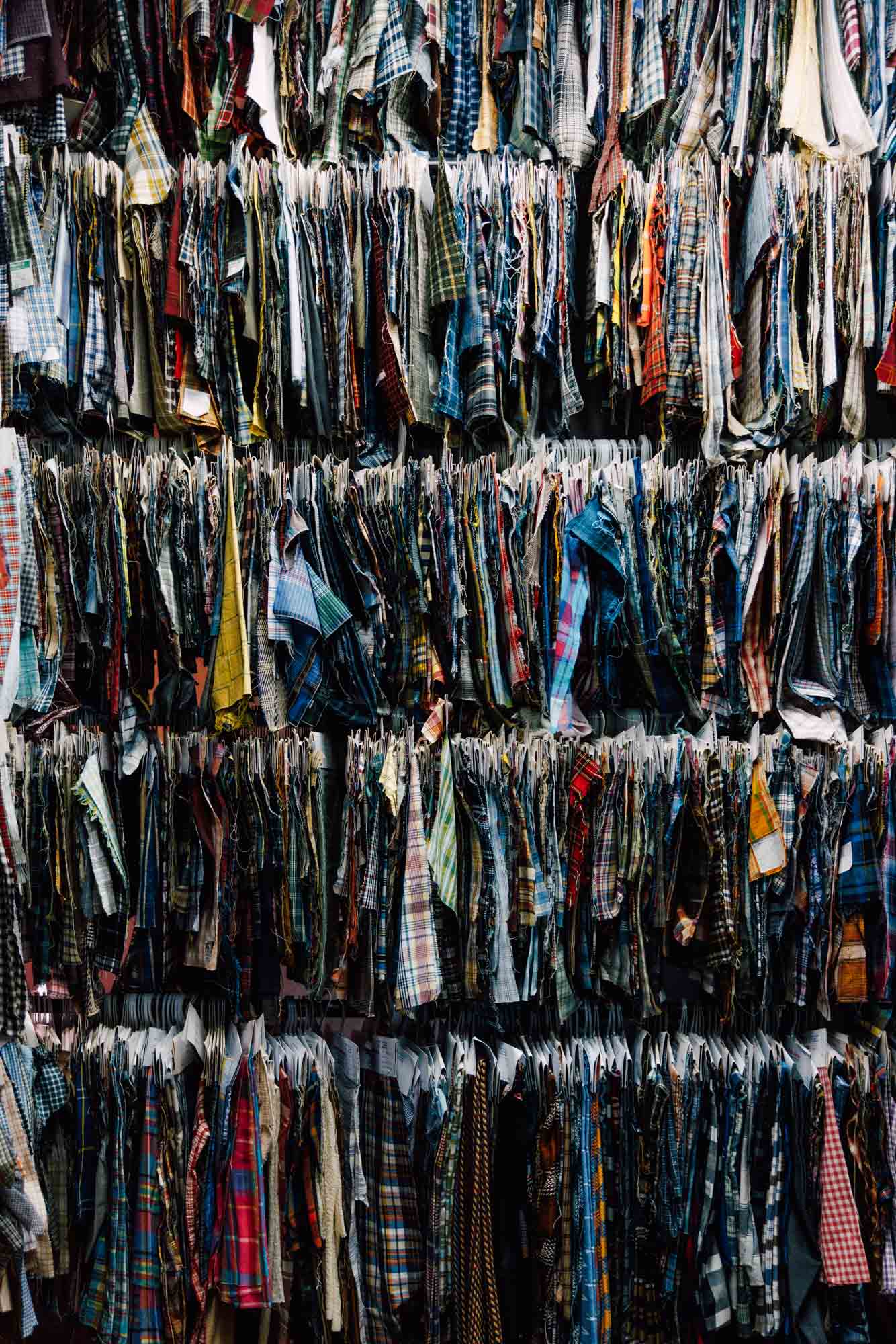
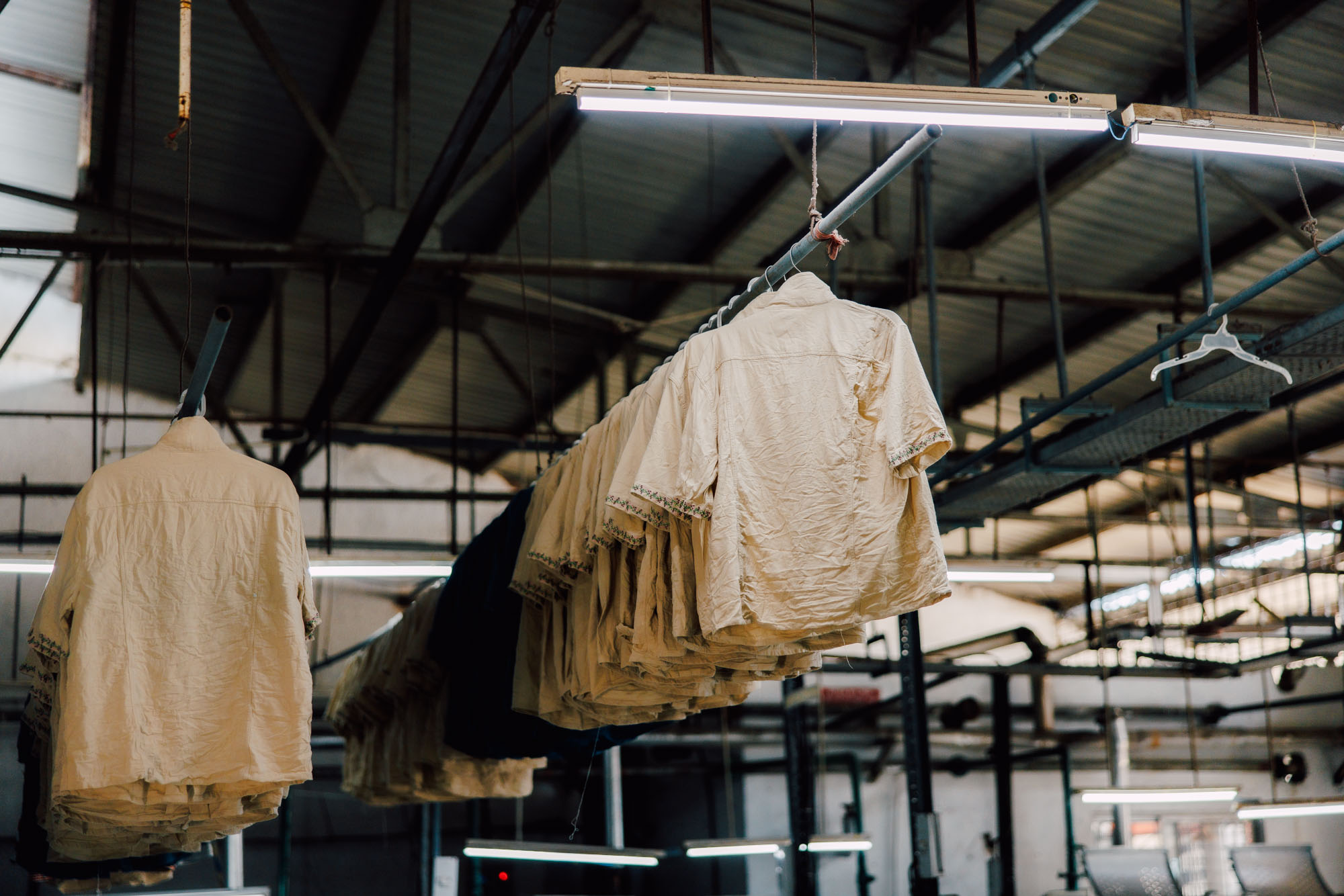
The archive (below) is huge, with triple-stacked racks looping in corridors of shirts and cloth around a big warehouse. They’ve been good at preserving designs over the past 50 years, and quite a few designers come to trawl it for inspiration.
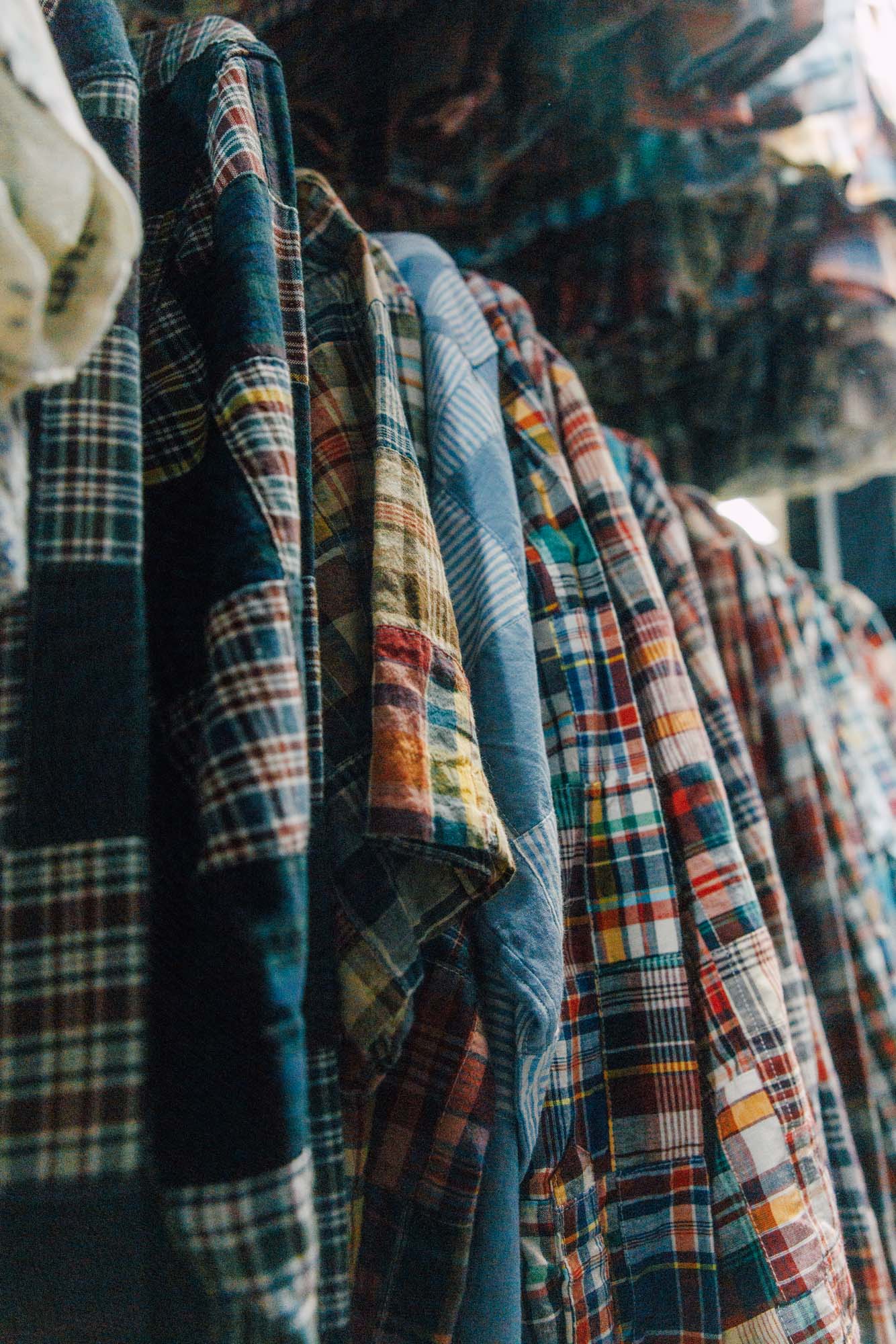
The campus employs over 300 people and includes a creche, gardens, plus its own Saturday song-and-dance night. It’s 90% women, and the company helps a lot of them with financial independence - insisting on paying into personal bank accounts, for instance, and helping employees set those up.
In fact the family’s various projects probably deserve a story all of their own, given they include a large pickle business (run by Prasan’s older brother), a theatre festival started by Ranvir, and various other projects.
Ranvir is also a collector of traditional crafts, including textiles - while we were there he agreed to take on a small collection of Ganesh statues (negotiated in the car while giving us a tour of the city) and showed us his latest acquisition, an ancient ‘tree of life’ illustration (below).
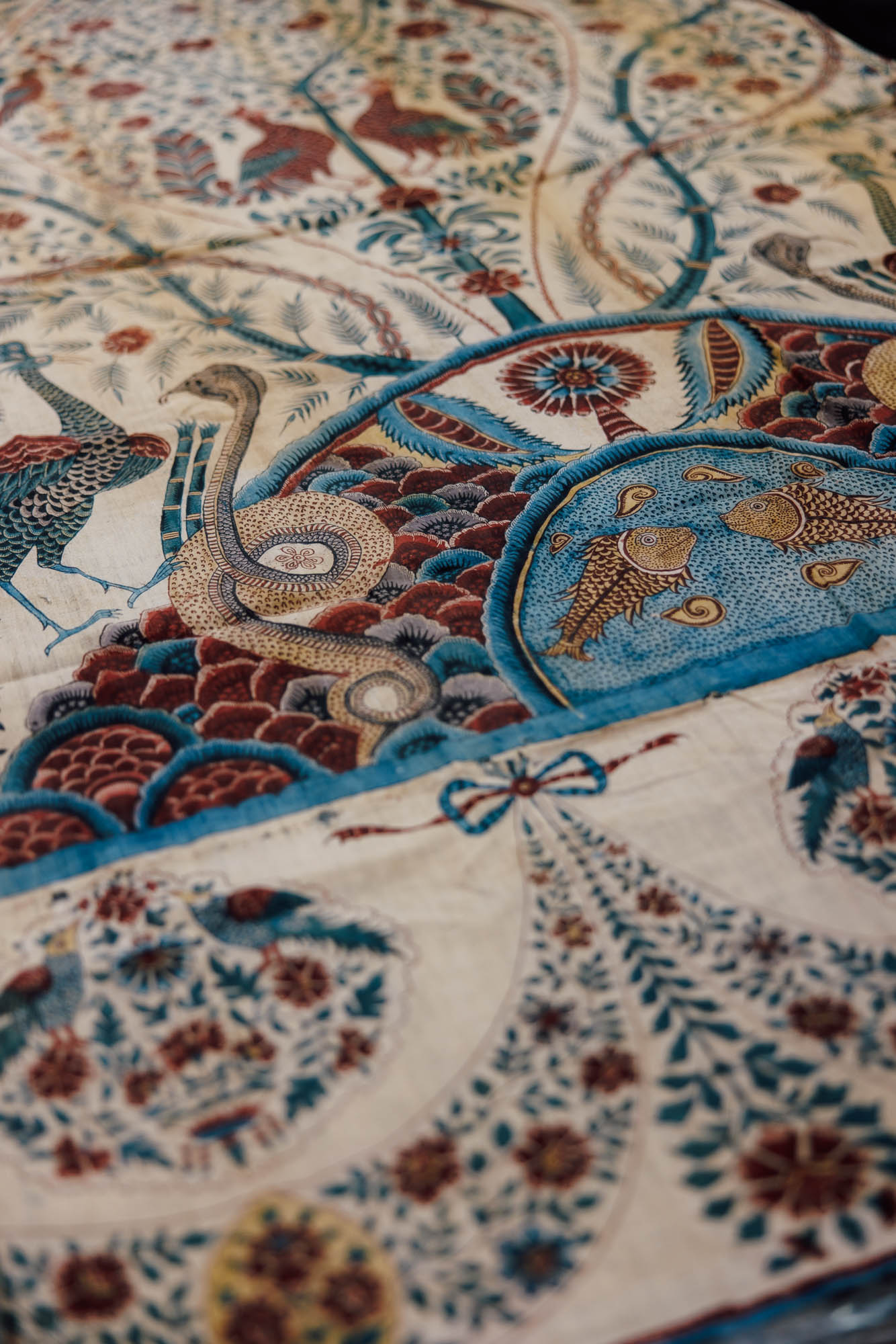
From a Permanent Style reader’s point of view though, the real action is over in the hand-looming shed. That’s where a product is being produced that’s truly beautiful, a menswear tradition, and increasingly rare.
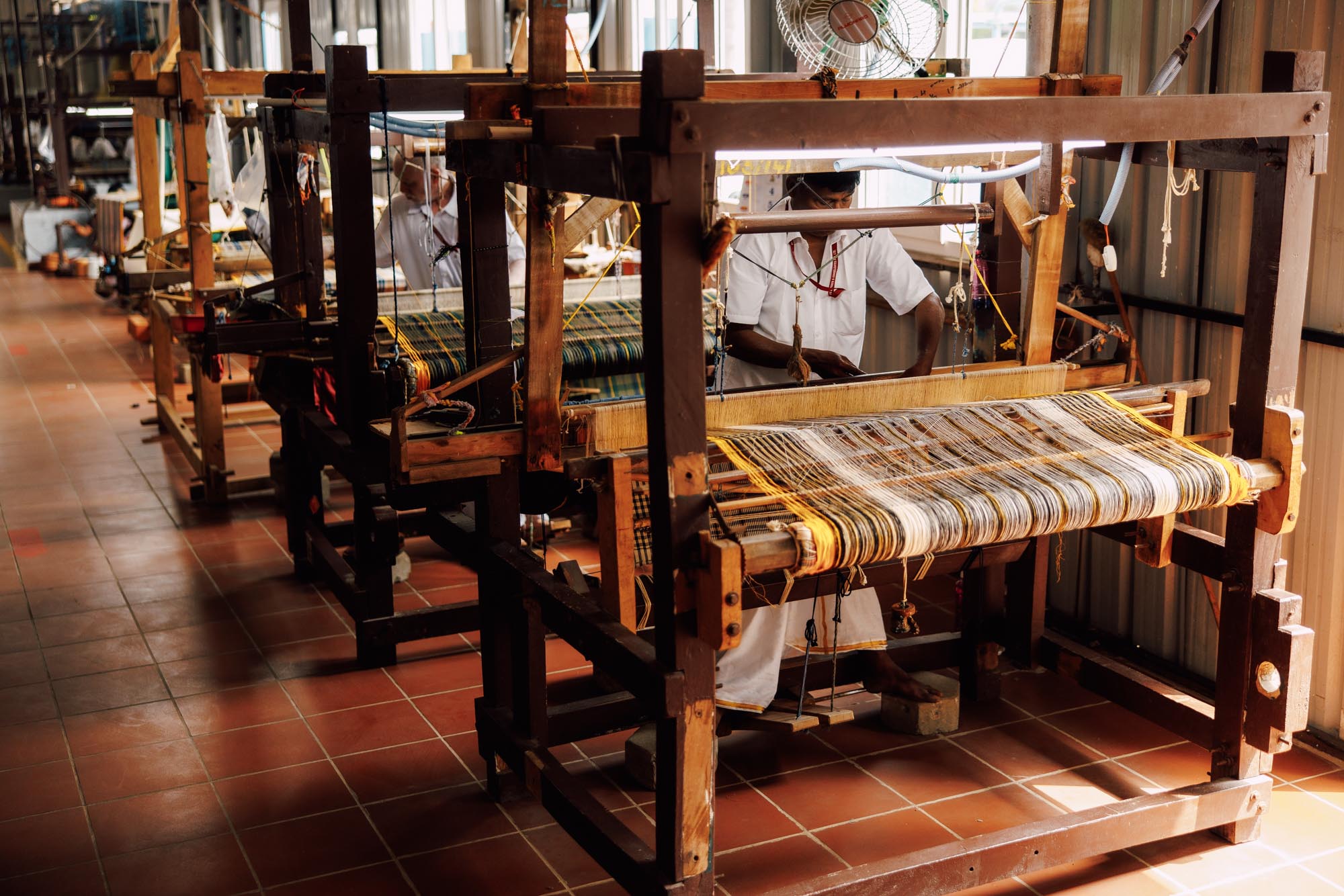
The first thing you notice is the sound, a loud clacking created by each weaver pulling down the wooden bar on their loom. Each of the weavers has their own rhythm, and they’re subtly different, both in terms of speed and consistency.
The result is trails of sound that weave in and out of each other - not quite random noise, but not quite conscious rhythm either.
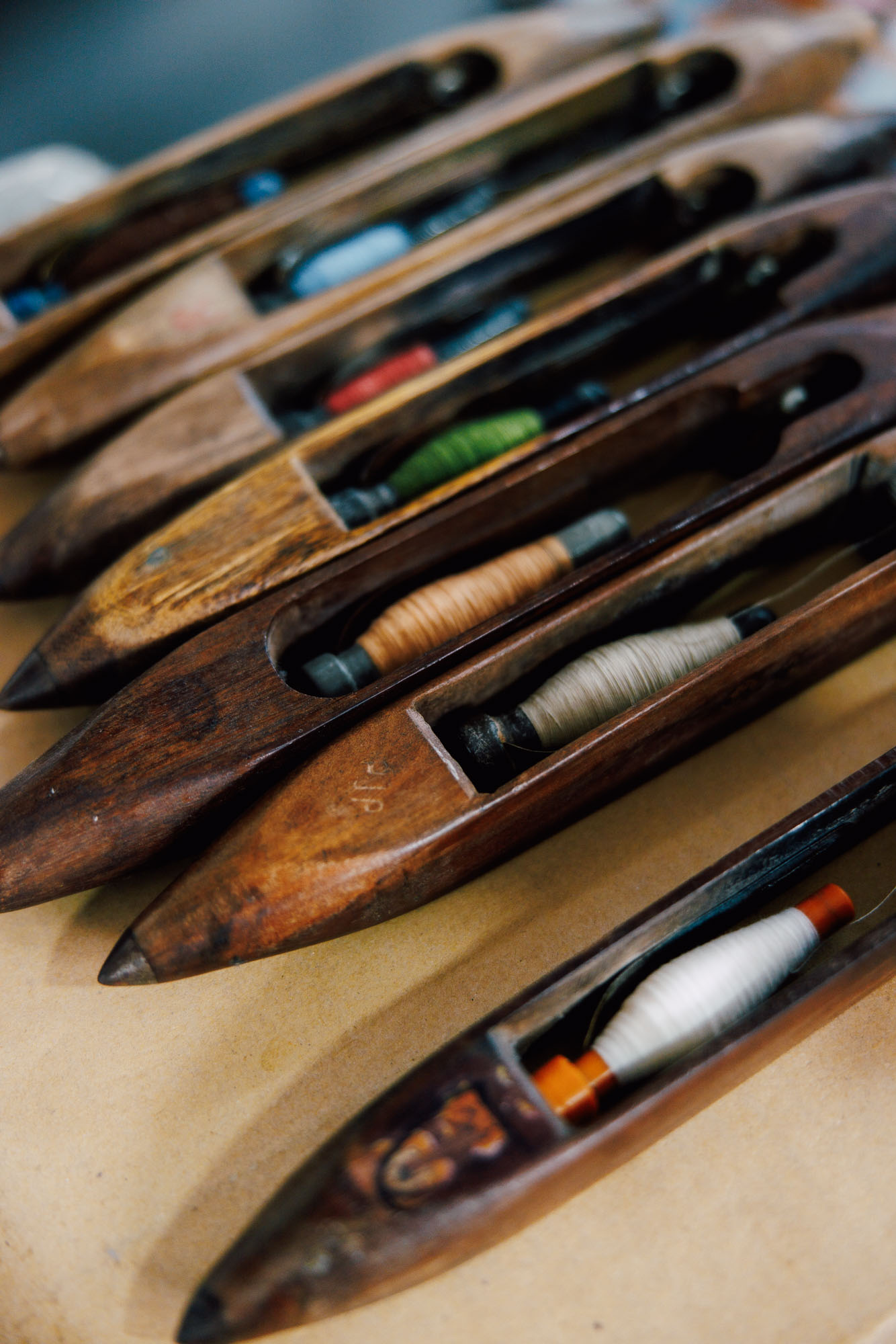
These are pit looms, so called because each sits in an artificial pit, with the weaver then able to use both their feet and hands. The hands control the bar and the shuttle; the feet create the power.
The last time I saw this hand-weaving was 13 years ago, at Breanish Tweed. That wasn't a pit loom, but the principle was the same. The weaver was Karen and the loom was called Bertha.
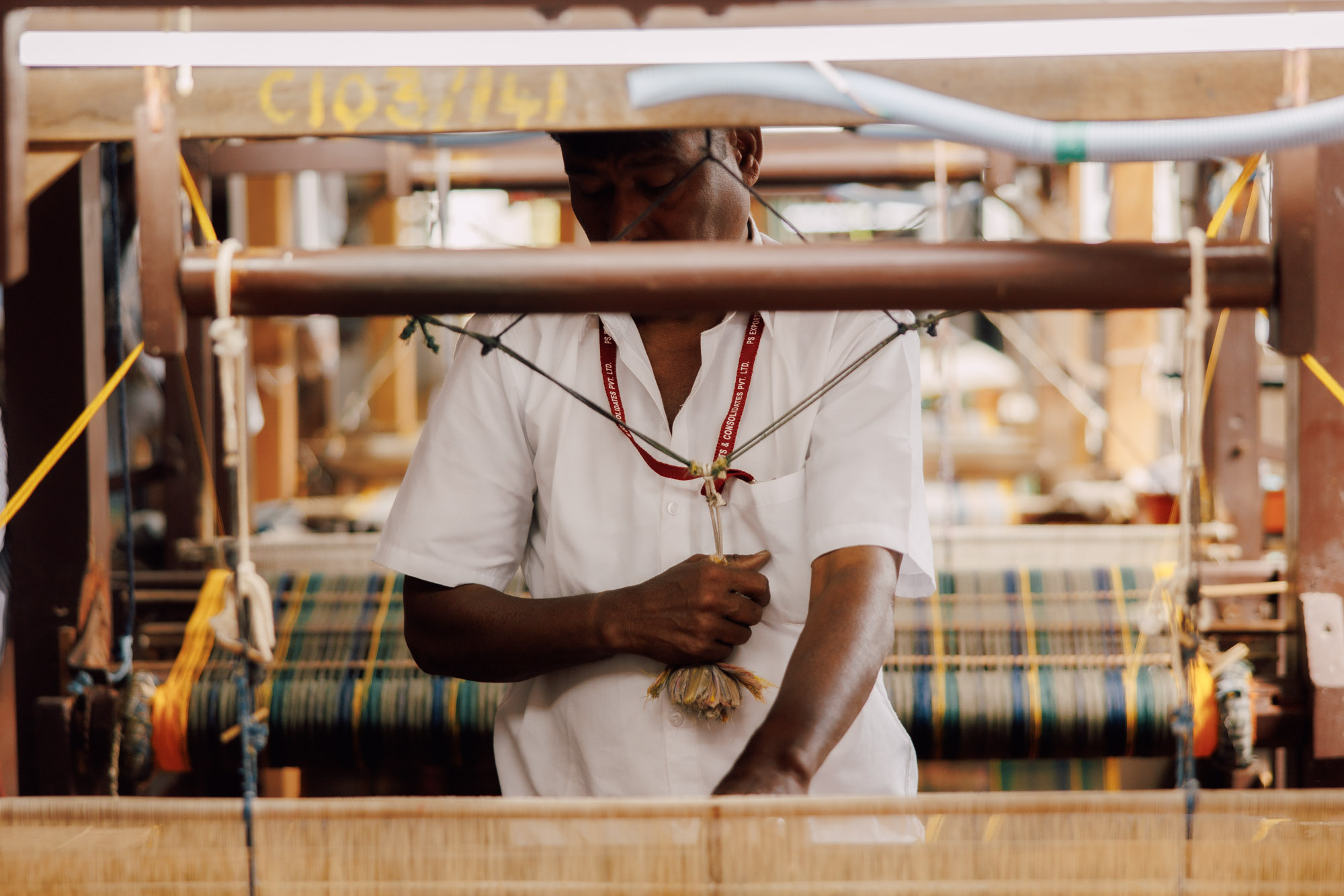
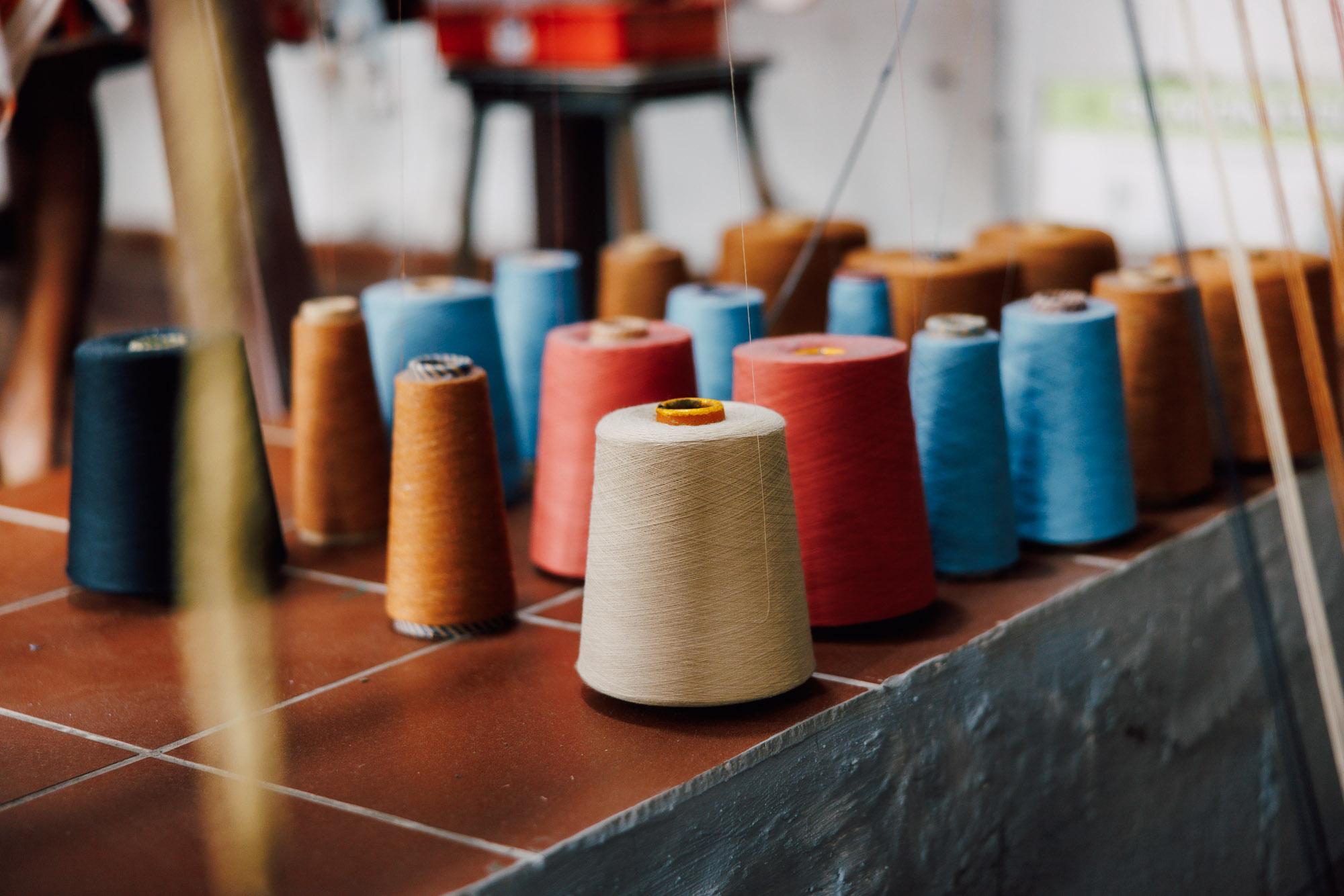
There are a few different benefits to hand-loomed cloth, but the main ones are the way its speed puts more space into the fabric, giving it a unique, soft feel, and being done by humans gives it natural variation, meaning there are slubs and individual texture to the cloth. It’s laborious and expensive, but distinct.
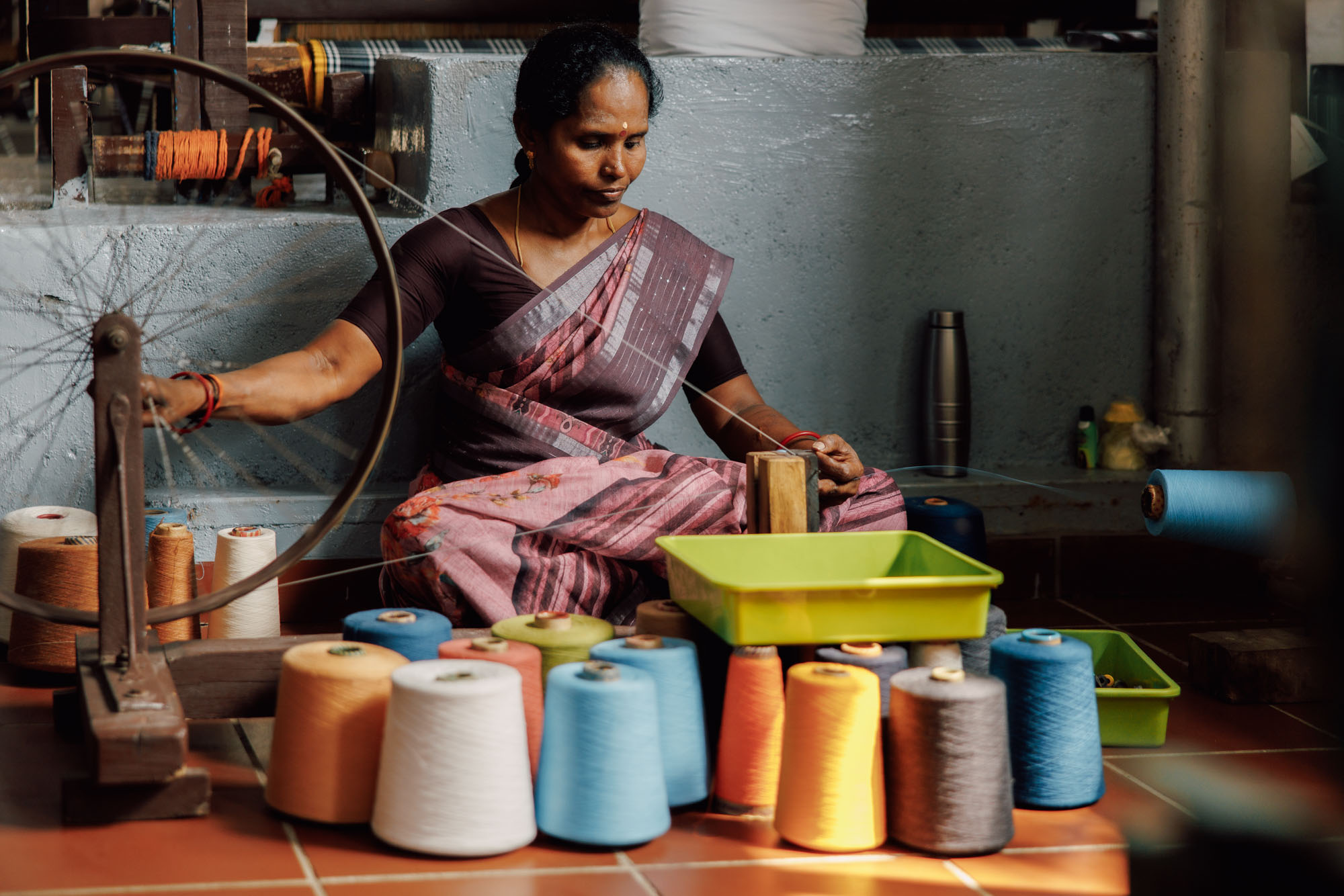
Prasan has been doing this for a few years, and he’s now in the process of taking things further, by hand spinning the yarn before it is woven. That’s what the lady is doing above. To me, a spinning wheel like that is reminiscent of fairy tales like Sleeping Beauty, which says something about how long it's been since the practice was common in Europe.
In India, hand spinning has more recent and particularly political significance. Gandhi made it a symbol of emancipation from Britain because spinning in India meant independence from the Empire's domination of production. Pre-independence versions of the Indian flag even had a spinning wheel in the centre.
“Doing the spinning this way means we can produce traditional Khadi cloth, which uses undyed, hand-spun cotton,” says Prasan. “That feels quite special.”


Other new things Prasan is working on include a range using undyed (but machine-spun) yarn, and ones with natural indigo dyes that will fade (in much the same way original ‘bleeding’ madras did).
He is also planning to offer cloth for sale online, but that’s not ready yet. A lot of readers asked about this after our first article, apparently, so he does want to make it happen at some stage.
In the meantime, Original Madras cloth is available through the brands they supply and through their own brand. We’re also working on something for PS, which should be available this summer. That will include both finished shirts (made by Luca Avitabile in Naples) and cloth lengths.
Thank you very much to Prasan, Ranvir and everyone at OMTC. Photography by Jamie Ferguson.












All very inspiring. Great to see traditional methods brought back to life and expanded.
Lovely article! Two questions:
Understand that OMTC is still exploring selling cloth online. Do they sell (even on an ad hoc basis) in person in Chennai itself, for any travelers to India?That cloth being held up by two men (white background with square tiles) looks magnificent! Is it a blanket, and where would one potentially purchase that?
– No they don’t
– It’s a blanket they make with leftover parts. No pieces like that are not for sale currently
Thanks Simon. How does one buy their products then? Is it mostly MTO? The selection of RTW available on the website seems to be extremely limited.
They sell wholesale to a few places, and supply cloth to brands that do collaborations with it. But there own retail is a lower priority than making the cloth, and that is a tiny operation compared to parent shirt-making company
Fantastic! I wonder, do they have any plans for a European storefront? Purchasing in dollars from an American storefront does not seem all too appealing, these days
They don’t have their own storefront in the US either. Was that unclear?
Sorry, perhaps I was unclear, I was referring their online storefront, which you link in the article. For finished shirts, that is. The website seems to charge in dollars, and the shipping information primarily refers to the US. Not to mention the reference to NYC in the domain name.
Ah, I see. Yes the online store is based there. No, no plans to have another based anywhere else currently
As an American, who greatly disagrees with our current governing party, this is a genuinely difficult comment to read. In spite of my feelings though, this line of thinking (avoiding our storefronts, even if imagined) may be the only way to send enough of a signal to actually end up resolving this catastrophe.
I may misread your comment but I certainly wouldn’t punish the “Mom and Pop” stores of the world for ones political differences with the leaders of various countries.
If I purchase something from England, I don’t think for a minute that I’m sending some message, pro or con to Starmer, or influencing UK politics. I’d buy as soon from a shop in Ukraine or Russia, despite my views on that conflict. Quite obviously, I’m not buying directly from Putin or Zelensky.
What a fantastic article, Simon. Pieces like this inspire me to wear products made by companies and craftsmen like these. Strongly based on tradition with an innovative mind-set. Being one of the readers asking about your collaboration with OMDC, may I ask you whether you could share more details about the fabric you are going to sell? When, how many designs etc. Thank you.
I don’t think so, sorry – whenever we do it only begs more questions! It’s also better to explain these things fully, with imagery etc as well
I see. Understood. No problem.
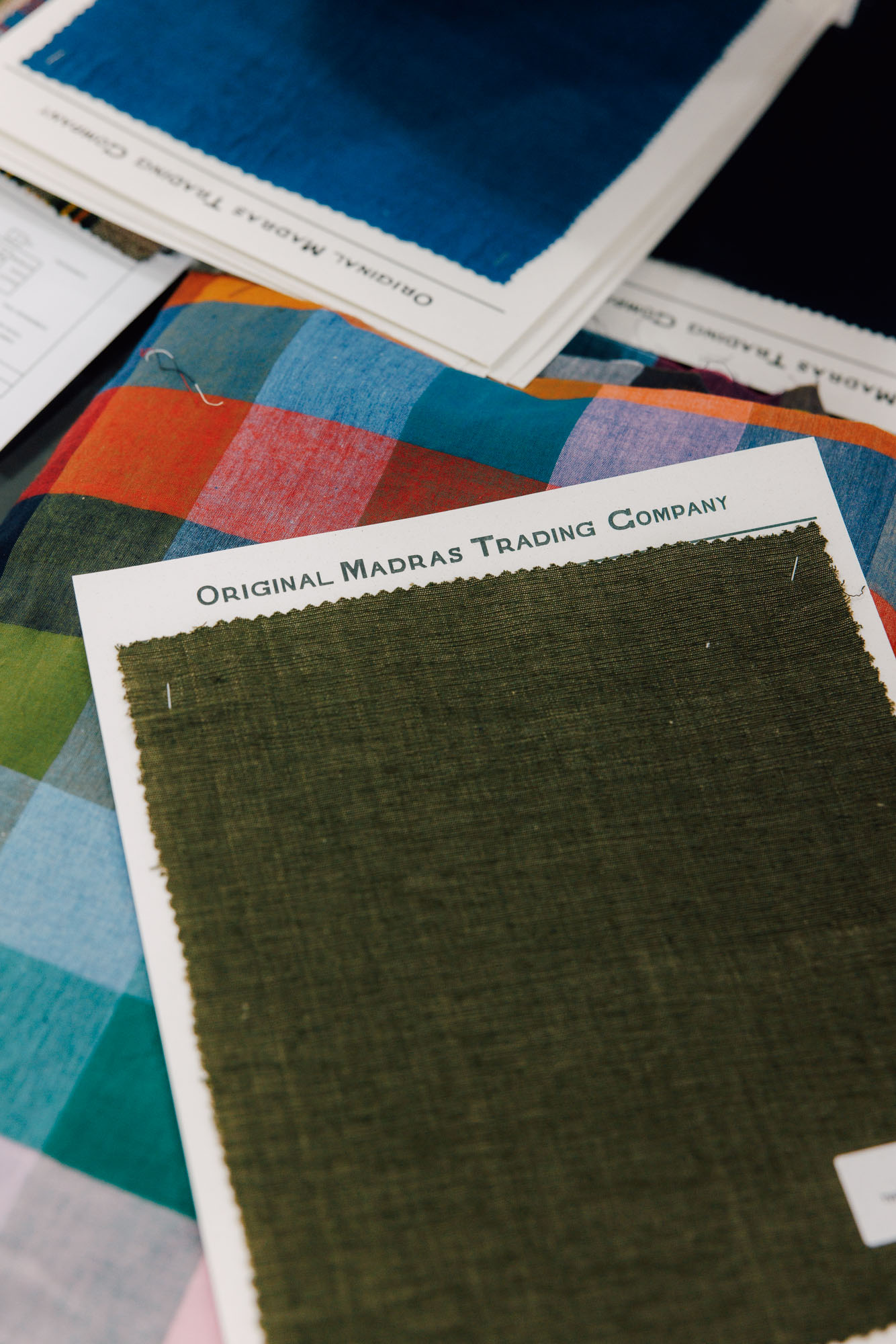
Sorry to be so mundane, but it’s in the service of a credible enthusiasm: are you going to be making shirts out of that green cloth the picture of which you featured in the article?
No
Well, I wish you were! But I’ll look forward to whatever you do!
I looked through their website and noticed that they don’t sell their products in the indian market. Did they give a reason as to why? Asking cause i am slowly but surely getting into preppy outfits and would like to own one from them, a “real” madras shirt and importing one from overseas would get costly
Their retail isn’t really based there Ven, which makes sense given there’s a bigger market in the US for this type of product
True that. I really doubt anyone here knows or applies ivy/trad/prep style. But hey! I could be wrong!
I like it really since it makes one dress up or down in a nice way.
Great article. Btw, it’s “Gandhi” not “Ghandi”.
Thank you! Corrected now
Very interesting article and good to read about the company rejuvenating traditional skills as well as providing independence for its staff.
Look forward to the release of the madras shirt in the summer.
– Gandhi, not “Ghandi” please
– the Indian flag’s centre piece is the Ashoka chakra; versions of it used pre-Independence had the loom featured- not anymore
Ah, thank you Kartik, I must have misunderstood that reference. Thanks for the correction, I’ll clarify in the piece. Though I assume it had a spinning wheel historically, not a loom!
Thank you. I stand corrected re- the loom vs spinng wheel reference.
Is there a way to stay up to date with them? I.e. when they will start selling cloth directly?
I’d imagine following them on Instagram and/or sign up to a newsletter. I think there’s one on their website
We will likely cover it on PS here too of course
Really interesting, and definitely some beautiful cloths to be seen.
I like the idea of madras but I never find one that’s quite right – colorful without being garish, so interested to see what you’ve chosen if it is indeed a plaid.
The aesthetic of Madras is interesting. It’s not the overly “easy on the eyes” traditional plaids of the Western world. There’s something just a bit different, a bit exotic without leaving one confused, color combinations I’d never have imagined. That’s its beauty.
Thank you for a very interesting article, Simon and Jamie.
Funny timing: I just bought my third OMTC shirt yesterday. They have such a beautiful hand feel and colour.
(If anyone is on a budget like me, there are good deals on eBay by searching ‘Sid Mashburn madras’.)
There was a certain store in Bermuda, which ran from 1842 to 2005, that sold some lovely, authentic Madras shirts.
My Gant and Ralph Lauren Madras shirts were probably made by PS Apparel and the quality is excellent. Why did you choose to have your finished shirts made in Naples rather than by PS Apparel? It’s probably more expensive to ship the cloth to Naples to be made up and then onto London. There is the additional environmental cost to consider too.
It’s a much higher make Kent, with considerable amounts of hand work. Nothing wrong with the PS Apparel make and it’s a lovely place, but it’s not a sartorial shirt. Luca’s make is the kind of shirt a reader would expect from us and also wear with tailoring – hand sewn and shaped collar, hand-inserted sleeve with more fullness into a smaller armhole, hand-sewn buttons and buttonholes etc.
The environmental cost is pretty negligible to go from Italy to the UK when divided between hundreds of shirts, given those shirts will be shipped individually everywhere from Canada to New Zealand.
I was not expecting Madras to be made up into a “sartorial shirt” with lots of handwork. I would therefore guess that PS shirts will have long sleeves. For me, it’s a hot weather cloth, the colourful alternative to the ubiquitous plain linen. My Madras shirts have short sleeves and are worn with shorts or lightweight chinos. I just can’t imagine an occasion when I would wish, or need, to wear them with tailoring.
Thanks Kent. They will have long sleeves, yes, and I like wearing shirts like these both with tailoring and without. It sounds like you prefer something much more casual
I prefer to dress casually (if possible) in hot weather. Seersucker is ideal for business casual suits if it’s humid and sticky. For more formal occasions in summer, I tend to wear an end-on-end poplin shirt with lightweight wool tailoring. As much as I love Madras, it just wouldn’t feel right under a smart jacket or suit. It’s just my personal taste or preference.
Let’s get Luca to open up the sizing on these shirts to get a little taste of the Ivy fit. Add a box pleat and we are ready to go!
We are doing them a touch more roomy Joel, but no box pleat I’m afraid
Scottish Madras is still being woven at Newmilns, Darvel, Ayrshire by Morton Young and Borland (MYB).
I wish OMTC produced Madras shirts in the more “traditional” combinations of red, yellow and blue, and if not, then if the PS Madras shirt could be restocked.
Greatly looking forward to the cloth Simon.
Hello Simon, is there a definite date for the Madras cloth yet? I am about to commission a batch of shirts and just wanted to know if I should hold out a little bit longer….
I’m pretty sure it will be two weeks’ time, Raj
Thanks Simon