

Two weeks ago, I was looking to get a new storage trunk for our bedroom. So I phoned a friend who knows his antiques and asked his advice.
He recommended a couple of dealers, said he was happy to look at any pictures and information I received. (Apparently the biggest danger is wood filler being used on cracks - which won’t last long - and non-original handles.)
I shortlisted a few that fitted the dimensions, and with his help, picked out a lovely old Camphor-wood piece.
I’ve asked this friend, Tom, for advice before, and he’s always happy to give it. He doesn’t work in antiques, but he’s a discerning consumer and has learned a lot from buying over the years.
For him, it’s just nice talking about them - because antiques are a primary interest. They are one of a few things in life he is truly passionate about.
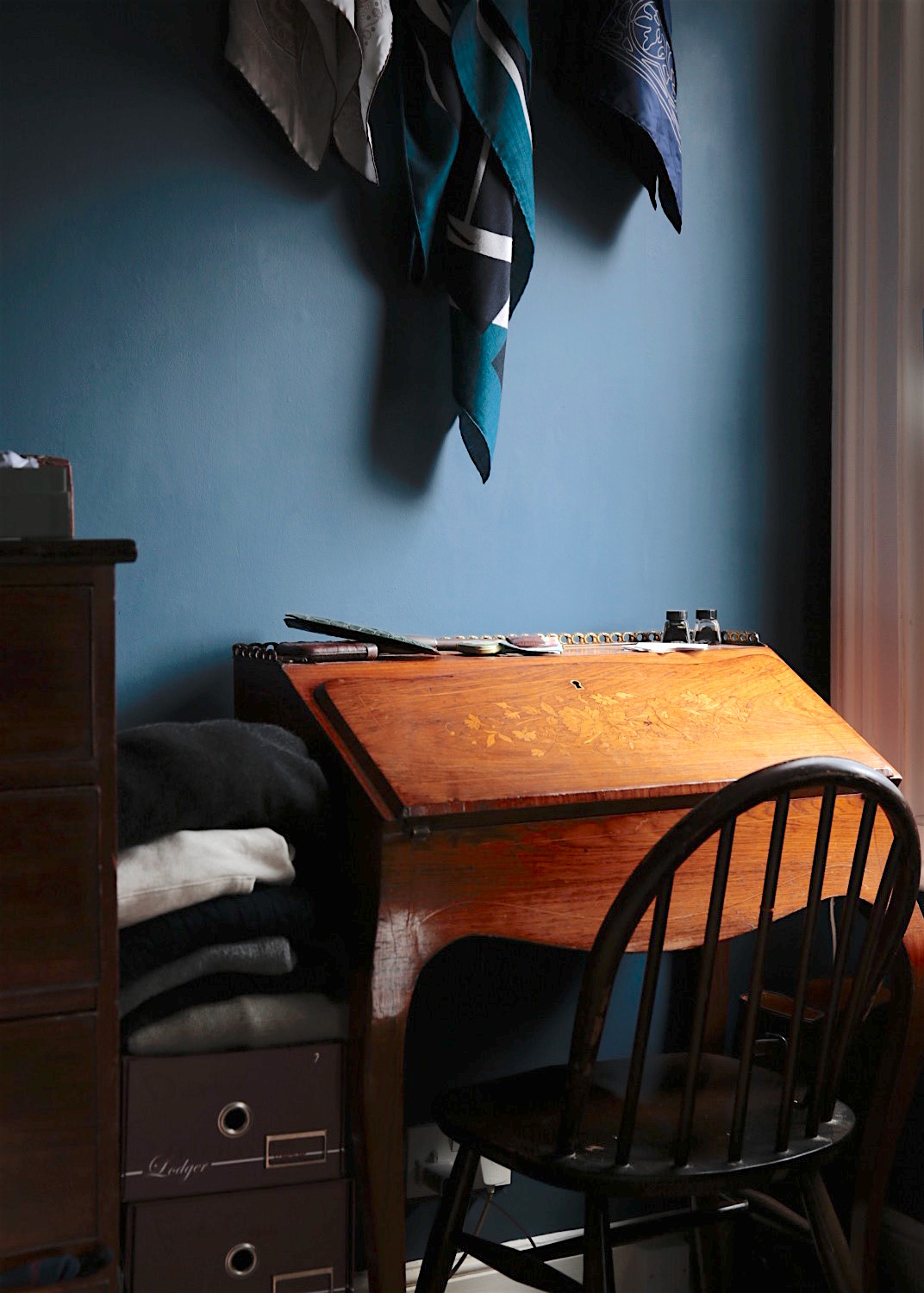
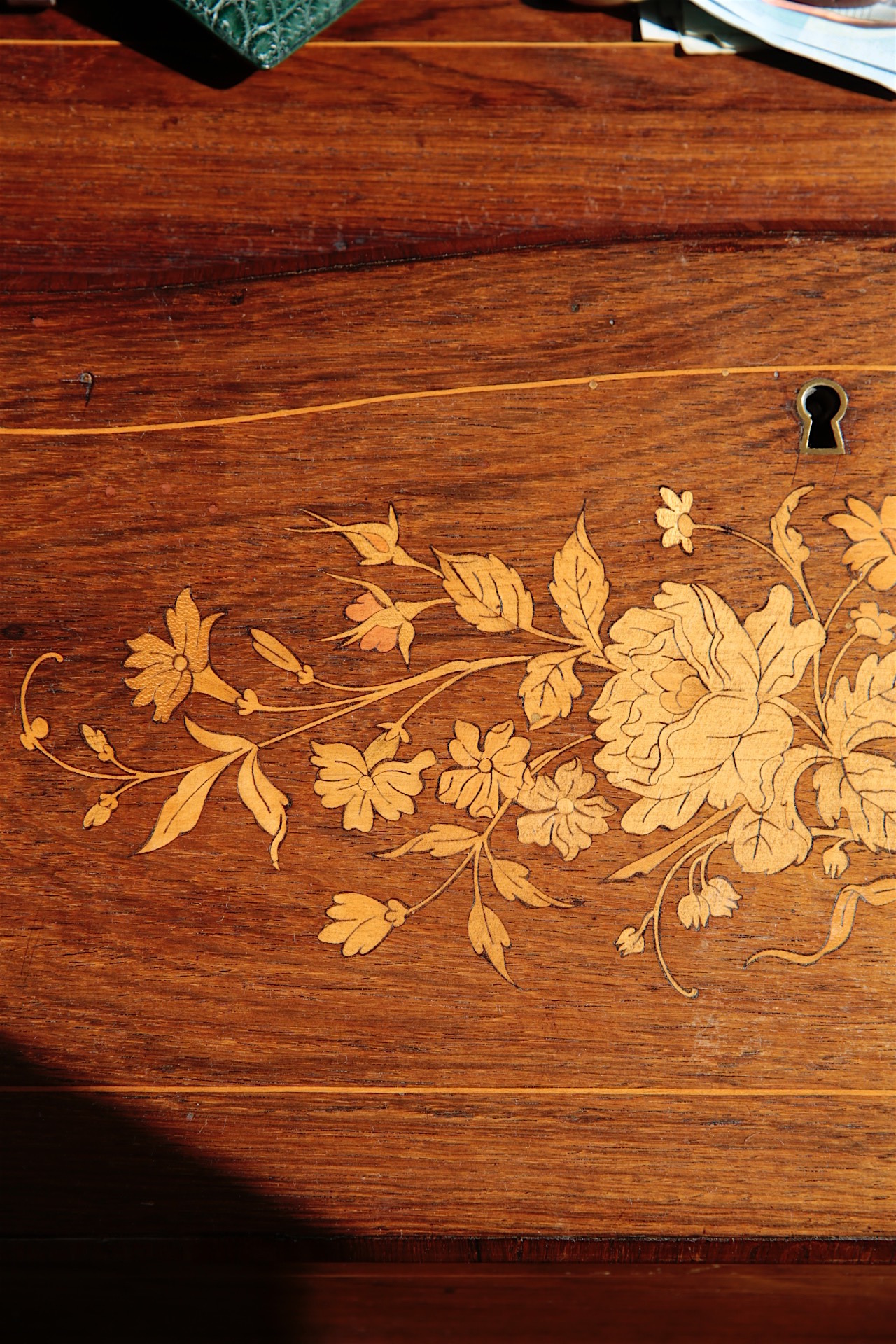
For me, they are a secondary interest. I appreciate and enjoy them enough to want to make intelligent, tasteful choices (an example being my beautiful rosewood desk, covered before and pictured above/below). But not enough to spend my leisure time reading about or researching them.
A primary interest of mine - you’ll be shocked to hear - is clothes. Friends and family often ask me for advice in the same way I asked Tom about antiques.
I’m equally happy to give it. Even though readers ask me every day, I enjoy working out what a friend wants, what his budget is, and what will suit him. It’s a nice exercise.
Most readers, I’d imagine, would also list clothes as a primary interest. They are probably regularly asked by friends or family for advice - usually something like ‘I’m getting married next month, where can I get a good suit?’
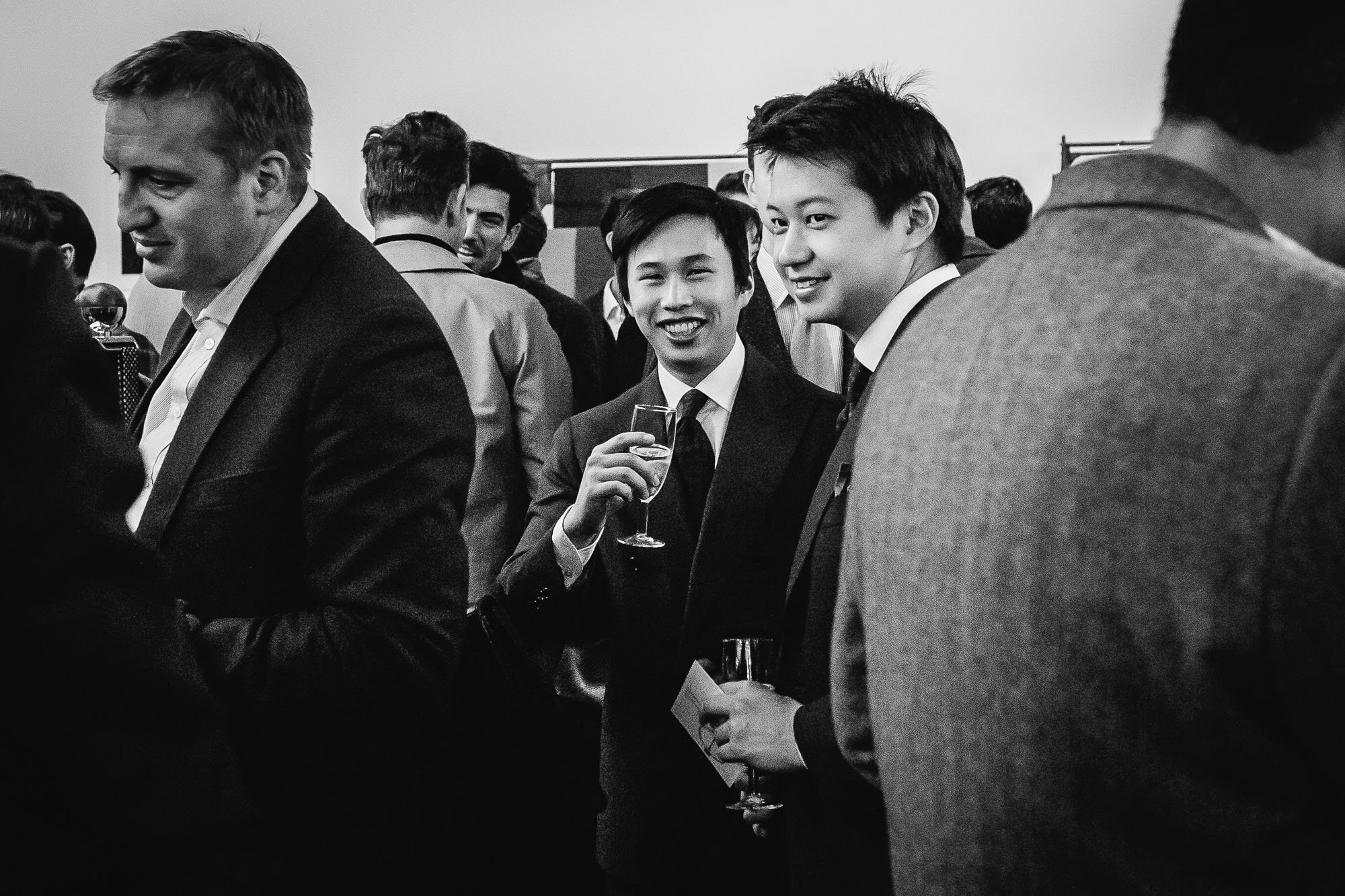
In fact, I’ve often met these friends-of-readers, and always find it interesting talking to them.
It might be at an event, or perhaps in the workspace I use. The friends know PS - usually because the reader won’t stop banging on about it - but they don’t really have the time to read it. Instead, they rely on their friend to filter everything.
Often, those friends-of-readers spend more money than the readers. Or at least, they spend quicker. They want some advice, so they feel they’re making an informed decision, and then they want to complete the purchase and move on.
Why is this distinction between primary and secondary interests important?
I think makes you value the enthusiasts that you know. It’s really useful having friends that can give expert advice on which camera to buy, which play to see, or which watch to buy.
Watches for me, for example, are definitely a secondary interest, and I have benefitted a lot from advice over the years.
I have four great pieces, all bought in the space of six years, with the help of two friends that knew a lot more than I do.
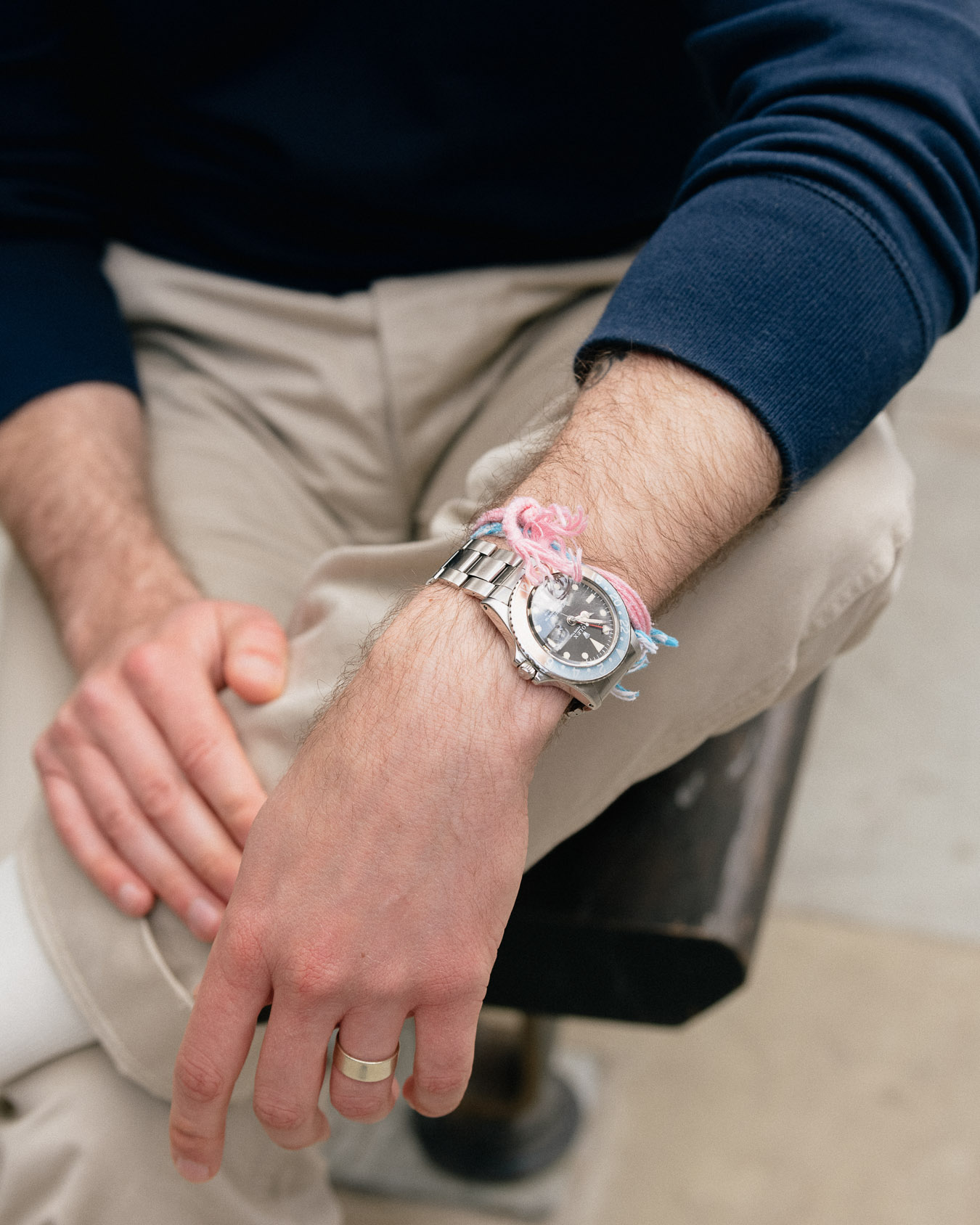
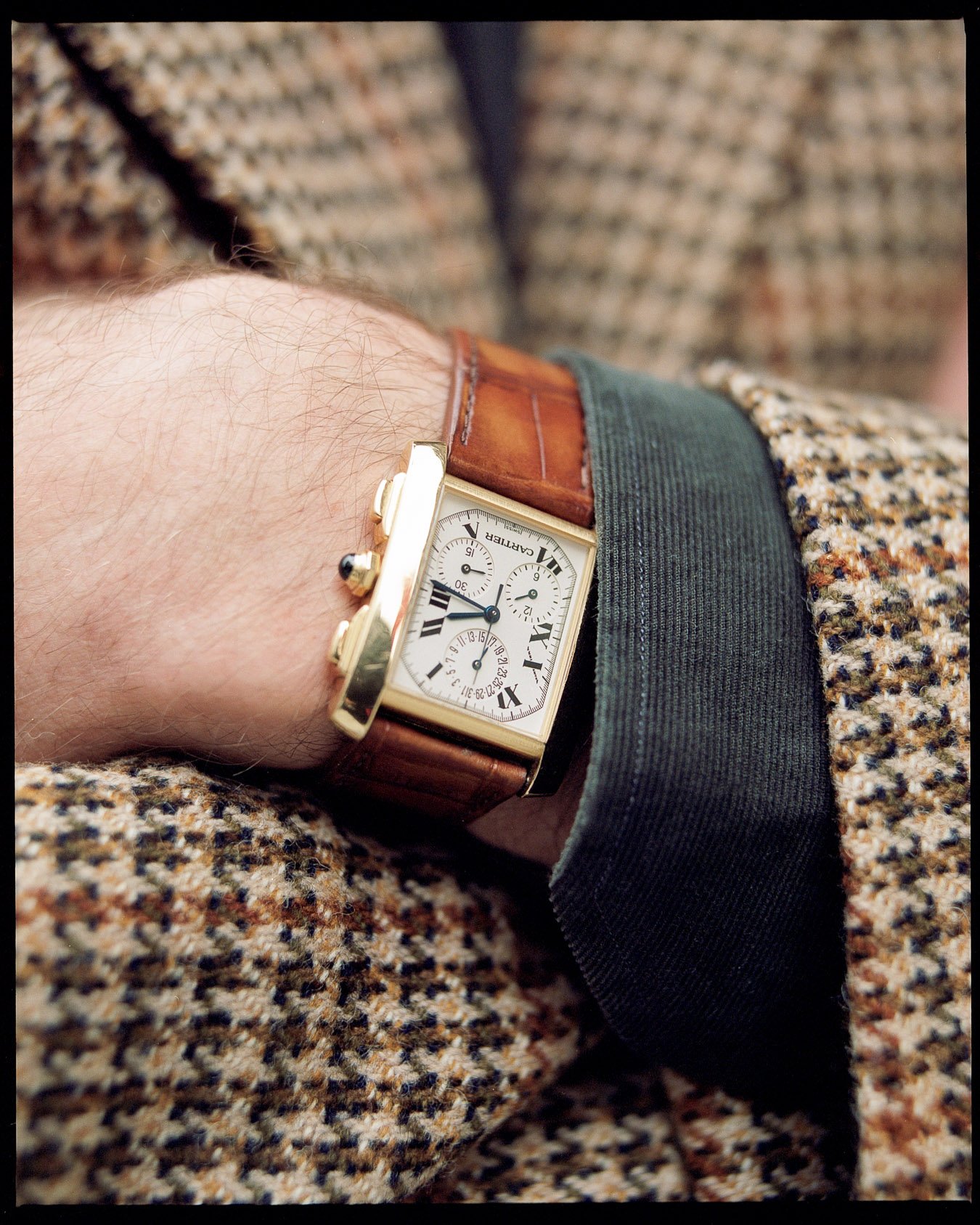
Currently, the Rolex GMT (below) and Cartier Chronoflex (bottom) are my favourites. They are the default whenever I’m dressing up (Cartier) or down (Rolex).
I haven’t bought a watch for seven years, and have no plans to. At the most, I can see myself selling the other two, an IWC Portuguese and a JLC Reverso, if they’re not really being worn.
I have no interest in owning watches that aren't used. Because I’m not a collector. Because it’s not a primary interest. I appreciate watches, but I don’t particularly want to spend time reading about them or talking about them.
A lot of other things fall under my secondary interests: wine, food, theatre. But I’d include music and literature under primary ones: I don’t just listen to music, I read reviews; I don’t just read books, I have a book club (or did, before lockdown).
Your primary interests are also limited by how much time you have.
I remember our friends playing a game when we were all starting families. We had to predict which hobbies we’d still make time for when we had kids, and which would fall away. In my case, I was surprised that literature survived easily, music just, and film didn't. I had predicted the opposite.
Or perhaps it's just a limit of our personality. When people are retired and have more time, I find they tend to double down on their passions. Whether it’s travel, gardening or tinkering with cars, hobbies tend to grow to fill whatever space is available. So perhaps no one can have more than three or four.
It’s a fun exercise to consider which are your primary passions, and which your secondary.
I also think it helps remind us to make discerning choices - whether it’s buying quality clothing that will last, or quality antiques that will do the same.
Don’t lose contact with the friends that help you, and always be ready to help others. You’re Permanent Style readers after all - you have a lot to give.










Interesting read Simon; where does cycling fit for you, primary or secondary, as I know there is also a clothing angle there?! I find my primary interests are mainly restricted by time and when time occasionally allows, what would usually be a secondary interest moves to a primary interest (photography being an example for me)
Cycling is secondary for me. Even when I was out three times a week and doing sportives, I was never the kind of cyclist who tracked their power threshold or read about new chainsets
Interesting article! Could another article related to the theme be weather or not to pursue a career of a hobby or not? Is it best to dvelve deep into it or keep it as a hobby where you only see the fun aspects of it outside work while working with it as well, then it becomes mixed with musts and fun.
Nice idea, yes. I guess there might be some overlap with these pieces. Not sure if you’ve seen those
https://www.permanentstyle.com/2020/09/how-permanent-style-works-as-a-business.html
https://www.permanentstyle.com/2014/06/how-permanent-style-started.html
Hi Pierre,
I have coached people on developing a passion to a profession. Simon is a clear example of doing so.
The issues involved are manifold.
The primary questions I ask are about whether you are doing it to make money? Normally there is little or no money especially to start.
Is it a true passion, would you do it if there was never going to be money, this is a question I ask my 14 year old.
And what do you bring to the party, What is so different about you being involved. If there is very little then you would probably be better off enjoying as a primary interest.
Not trying to sell anything, in fact quite the reverse, the struggle is rarely worth it unless you have a real passion and that passion is appreciated by others.
I’ve been reading a lot about this recently, and the very strong idea around at the moment seems to be that one should try to make a business, if that’s what one wants to do, out of what one is good at, not what one is passionate about. They aren’t always the same thing.
It‘s an interesting distinction to think about.
My primary interests are:
Real Estate, finance, clothing
My secondary interests are:
Cars, wine, watches
I also read and research a lot about those categories too. Even though not as much as in my first category. Mabye that‘s because my real estate & finance interest yields in a lot of disposible time.
Therefore I‘d say I even have a third category.
Food, cigars, interior design, music
I‘m curious to read about other readers categories!
A great exercise, Simon, and something I’d not thought about before in quite these terms. For me I think primary interests would be: clothes, books, wine, food, sport and interiors. Secondary would be music, film, television, travel. As you say, the second list are all things I greatly enjoy but not what I spend a huge amount of my time reading about or keeping absolutely up-to-date with, and not things I’d necessarily feel that comfortable giving advice on.
Reading those lists back surprises me, as I’m not sure they would look the same, say, ten years ago. Music, for instance, would definitely have been in the first category but, while I still love and listen to it every day, I’m less up on new releases, don’t go to gigs much anymore (even pre-Covid) and rely on friends for recommendations. Conversely, clothes, wine and food have become increasingly major interests over the last decade, and things I read about endlessly. Friends and family sometimes, very occasionally, ask me for thoughts on clothes, but I find wine – which wouldn’t even have featured when I was 30 – is the thing I’m asked about the most, and it’s always great fun to try and suggest something someone might like, work to a budget, occasion, etc.
And while my current lists look different from how they might have done ten years ago, I’m not sure they will in another ten. Maybe we spend our earlier years refining our interests and working out what’s going to define us as we get older. Some stick for good (sport and books), others wane (music, film), and new things come along (wine).
I like to think of primary and secondary interests arranged as a Venn diagram. The overlap is where, for example design and style, informs another area.
Fascinating! I’ll have to give that a try sometime. Thank you!
Primary interests –
Music, cars, design / architecture, clothes – difficult to put in order of preference, they vary I guess and design / architecture is allied in part to my profession (Chartered Surveyor).
I take a great interest in all of these, background reading, discussing at length (in Anglo Italian and other shops like Trunk and No Six in Chelmsford – they are trying their best to champion well fitting menswear in Essex – a rarity – where they can and deserve a mention).
I have more time for music (listening and now DJing) as my children have got a bit older, but I have always tried to get to concerts / gigs.
Secondary interests –
Food, wine and some travel, watching sport, and an interest in watches but again not a collector.
I love food but am a hopeless cook (apparently Giles Coren is the same and has made a career out of it)
I have two wine buff friends who are quick to applaud or query my wine choices.
I enjoy watching sport rather than participating – football and motor racing, my school report explains – “Matthew’s enthusiasm for sport is unfortunately not matched by his ability” – a genuine quote.
Luckily, I am partially retired, so have plenty of time to pursue interests. My primary is certainly photography, which has plenty of reach across to other areas-industrial archaeology being one and it’s opened new friendships and knowledge. Secondary would certainly be fashion and many things historical.
I
i always think it’s too easy, and antisocial, to lose yourself within interests….perhaps it’s the shed culture beloved of many men. I walk away from any photography discussions involving focal length and aperture.
Fine Art, Clothes, Design/ Interiors would be primary for me. Secondary would be Horticulture, music, Food and Drink.
Interesting you list Theatre Simon. Could you elaborate on this? Any recommendations? I saw The Brothers Size at the Young Vic a few years ago and would highly recommend.
I’m afraid not George, it’s actually a while since I’ve been – for the last 18 months because of Covid, and before that because of the birth of our youngest. Not much going out at all!
An interesting topic.
I’ll share with you one primary interest…… Shaving with Artisan Shaving products.
I principally use Artisan Shaving Soaps, some far more superior than some of the ‘mainstream luxury products’ one finds in London for instance. I have two Synthetic Shaving Brushes, the Ultimate G4 and the Wee Man travel G4, the best shaving brushes I have ever used, both from Executive Shaving in Glasgow, a great UK source of shaving products. Also the English Shaving Company.
Shaving Time and Slick Boys specialise in Artisan Shaving Products in the UK. I also used Maggards Razors in the USA. They have thousands of shaving products, over 900 shaving creams and soaps for instance. I use Ariana and Evans, Noble Otter, Barrister & Mann, Wet Shaving Products & Stirling Shaving Soap among others, all fantastic products.
My razor is a humble Mach III cassette. I find the Double Edge, DE, razors quite difficult to work with.
So there you have it, Simon.
Lindsay McKee
Blimey Lindsay, I didn’t think there would be enough for anyone to have that as a primary interest! Nice work
Blimey here too! Lindsay, just how does one fit 900 shaving creams inside the bathroom cabinet if I manage to get my hands on all of them! (Really enjoyed all the recommendations which I will certainly try) Thanks
Very interesting and something different to reflect on which is appreciated. I’m a bit OCD about exercise, I have to get my 45 minute fix in at least 5 days per week or I don’t feel great The next grab at my time is menswear, typically a trawl on new PS posts, a flick through Instagram and any deep dives into areas that those two activities might open up. Again typically 45 mins a day. After that I will read and then any TV time is typically sport. These four activities are regular so they must be primary I guess. Passing interests which are less regular include gardening and music.
I agree with your sentiments.
There is little more satisfying than seeing a friend looking great in a suit you helped them buy. In turn, I love watching films and reading books my friends recommend. It builds friendships and certainly allows me to discover things I wouldn’t have otherwise.
There is an important element of trust in that process. While I know my friends may read many more books than I do, that they only recommend the ones they think I’ll like (and often get it right) is surely a feature of really knowing someone well! There is a big difference between being told in conversation that something is great, or I should read/watch/listen to something and a recommendation from a person who really knows you and their subject.
In terms of clothes, I find it very satisfying to make informed recommendations for friends which push them out of their comfort zone, but are informed by who they are and their other tastes.
Although I know you have written about it before, it would be interesting to learn more about how you recommend clothes to people Simon….
OK Fred, will do.
Good point on the trust angle by the way. I think that’s so valuable these days, when there’s so much choice on music apps, streaming TV etc, but so little good curation.
A great article Simon.
I have been pondering on the same question recently. Being in my early twenties my primary interests have already matured (if I can say so): clothing, art, literature, and the social sciences. However, what keeps occupying me is that I can hardly share these pastimes with close friends. Most of them are not interested in clothing, for instance, or art. Thus, I often find myself dwelling on these subjects without company. Of course the PS community makes up for some of this deficit, although I am a first-time commenter.
As you say, dispensing and receiving advice, being receptive to the interests of others is gratifying. But being able to pursue those interests together with like-minded people seems equally important to me.
Coming to think of it, I believe that my interests did change during my studies and maybe don’t align anymore (or not as closely) with the interests of my friends. Therefore, I feel that my (primary) interests increasingly define how I value and approach friendship.
I’m in the same situation all be it a decade or so on from you. Kids will frustrate things further. Seek out those likeminded people now and hold onto them. Don’t let it continue to be a private passion.
I am also a first-time commenter but Noah’s thoughts hit too close to home for me not to contribute.
Many of us 20-somethings struggle to balance pursuing personal interests on one hand and not appearing detached or even elitist amongst friends and colleagues on the other.
When I started to wear tailored jackets regularly, for example, I often perceived a negative behaviour change (e.g. insulation) in whomever I was having a conversation with. The only gentlemanly response in my opinion was to dress down, but this not only deprived me of my passion but also of my opportunity to encourage my friends to wear more flattering clothing.
I agree with LJ about seeking likeminded people outside your regular circle of friends. I would like to add that us young people really should not feel compelled to only hang around people our age: I have gained genuinely rewarding and insightful relationships at my golf club, classical music circles and local literature society with people much wiser and more mature than myself.
This is really interesting Simon. Has your passion for clothes changed at all since you’ve started doing PS full time as a job? I work in journalism and I know from colleagues how an interest in politics or sport, for example, can change from a very particular passion for a party or a team, say, into something broader and detached. And in fact that change is fundamental to doing something professionally. Does that makes sense?!?
I think it does Rik, yes.
I don’t think my passion for clothes has changed much though, probably because I continue to live it and write about it, if that makes sense. It’s always going to be something personal and professional, because I’m writing about what I wear day to day. I think that’s different from being a journalist covering something you don’t actually do yourself.
It’s actually quite relaxing when a primary interest becomes a secondary one. I’m still interested in wine and watches for example, but no longer spend hours researching them. All that time reclaimed!
I very much like that last sentence Simon – you have a lot to give. Yes we do, thanks to you!
Like others, I too have not been thinking about my interests in primary and secondary ones. But now that I do, it is obvious to me that my two primary interests are clothing and music. And I like to think that those two have something in common – diversity.
I like many different clothes and aspects of cothing – workwear, refined casualwear, tailoring, … even contemporary activewear (cycling and running clothes). And the same goes for music, I like many genres – from very delicate classical music to jazz, folk, rock to the most severe metal.
With clothing, it really helps that I work in an office where there is no dress code at all. I can wear whatever i want. As for the music, it comes in handy that I have an apartment on my own, especially when I’m in the mood for the heavy stuff.
Love this one. For me definitely:
-Music, clothing, and sometimes one of the secondaries bumps up to primary for a bit
-Followed by nature/hiking, food, journalism/reading
I think this is also an important exercise when considering your own wardrobe/life choices. To me, a big part of being true to yourself (as per Wednesday’s profile of Gianluca) in how you dress and carry yourself is being honest with yourself and aware of how you really spend your time and energy. It definitely can inform your purchases (of whatever) differently if you give it some thought.
I’d be interested in your definition of primary and secondary interests?
I personally would be slightly more granular and split interests into three… I have interests that I will spend my spare time reading about, others will come to me on etc but I dont put my hand into my pocket in a material way to invest in them.
Clothes fit in that category for me, the history and techniques are interesting, I get asked about things by colleagues, friends and family but 90% of what you write about these days is too expensive for my tastes.
Food and beer probably fit into primary interests,
Home cinema/movies/music are on the cusp
Secondary interests are vast, clothes, wine, cars, technology, woodworking, weaving, travel
Tertiary interests theatre, art, finance etc
I think the definition is about how much you’re interested in something, which normally translates into time taken on it. It’s not really related to money.
In fact, if you still read PS but don’t buy anything mentioned, that might even prove you’re more interested, if that makes sense.
Simon, I am still waiting for the friends and fans of PS bash at your home to happen. What’s the status? JK. Did you buy the Rolex new or used?
In any event, it looks like I am one of the few PS readers that has women as a primary interest, haha. Other interests are clothes, guitars, music amps, and travel (prior to the Covid lockdown).
Pleased you were JK. Much as I love all PS readers that would be a bit much!
I bought the Rolex used. It’s from 1966.
Don’t sell your IWC though! You’ll only end up buying another one at a later date.
Do you think? I love the design of it, but it feels so big on me, perhaps even a little showy
Definitely don’t sell unless you really have to! You might come back to it in a while. Watches are like that in my experience. Plus it will definitely go up value. The watch market has been going crazy
True. All of those have at least doubled since I had them. Though of course with any market that is also an incentive to sell!
The interest for me that’s stuck most permanently has been wood working and making furniture. Clothes are nice and all but there’s no feeling for me quite like finishing a piece and admiring it.
I seem to go through interminable phases of finding new things to be interested in and right now it seems to be fragrances so we’ll see how long this one lasts.
My primary interests were in university research and teaching (cognitive neuroscience), and even in retirement, I have continued to be active in the laboratory I founded and directed starting in the late 1980s. I have also written fiction and poetry for a long time, and since retirement ten years ago, this writing has become my primary interest. Two completed novels, both focused on British colonialism in Malaya durng WWII and the Malayan Emergency — I grew up in Malaya during the insurrection and my dad survived the Japanese Occupation. I am also working on four other novels on very different subjects. Looking for an agent in Britain, actually, since the topics of the finished books are of greater interest in the UK than in the US.
So clothes are a secondary interest. I also collect stamps seriously, build and ride bicycles, and collect Thinkpad computers as part of an interest in retrocomputing.I don’t travel much anymore at 70, but have seen life in several continents and countries, and used to enjoy travelling before air travel became painful, LOL. A full life, no complaints!
Awesome Peter. Good to see you are still going at it at your respectful age. What do you use for writing? A fountain pen? Or laptop?
I would be interested to know the titles of your books on Malaya. My late father who died this year was on active service as a policeman in the Federation of Malaya Police Force during the crisis and subsequently worked in the Kinta Valley Defence Force, and also as a Major heading a private Chinese defence force guarding tin mines.
Great read. Made me realize I did not find or develop primary interests yet, just a lot of secondary ones. I am constantly searching and looking for the big passion / primary interest in life. Great thing about it is that it made me try so many things. I just hope that searching itself will not become it 😉
Intriguing topic, never thought to prioritize my interests.
First tier: Food, travel, vintage sports cars, contemporary art and clothing.
Second tier: Music (although I must admit for me it offers the most emotionally) watches, architecture and finance
Having studied art and design I’m very much influenced how things look and feel. There’s real joy in finding beauty in simple things like how a shadow falls across an asphalt path at dusk or how the sun highlights an object in my house at a certain times of the year or day. A joy that costs me nothing. Of course on the other hand I also find that joy in a piece of clothing cut a certain way or with beautifully detailed stitching. These joys usually come at a considerable price, something which ironically my father could never really appreciate.
Great post.
I’d say my primary interests are music (I played in bands most of my life and still keep writing and recording when I can), literature and writing, maths and science via my tutoring job and of course clothes!
Secondary interests would be food (used to be primary but my wife isn’t working so does all the cooking these days), cycling, running, fine art, politics, films & TV. Wine, as well as quality beer and spirits would have been in there too but I quit drinking about 18 months ago.
I like to think of passions and enthusiasms. Enthusiasms come and go, passions can be lifelong. Some enthusiasms develop into a passion. And both can change as you mature.
I hated gardening as a child and youth, seeing it as just another chore my parents foisted on me. Now it is a passion.
Another passion is Brazilian Jiu Jitsu,a martial art. This one is surprising as I started it later in life (age 54), and have never been physically combatative (verbal is another matter). I discovered it through my children’s involvement in the sport, gave it a try and was hooked.
Clothes were always a source of interest but only became a passion in the last 6 years or so.
Alpine skiing was a passion but I stopped when the children were young. Now it is an enthusiasm again and likely to become a passion in retirement.
It’s fun to look back and think about what has had staying power and why.
Very cool reading what interests other PS readers enjoy. I am in my late 20s and it has been interesting how my hobbies have changed in the last 10 years. When I was 16-22 all I cared about was riding my bicycle. I raced for a few years and then my engineering studies took over and now I just ride for fun and for exercise. In the past year I have picked up tennis, and the challenge of learning a new sport has been quite fun.
I also have been learning to fly and am nearly done with my private pilot’s license, and as my father and I fly together often, I have little doubt flying will be a lifelong passion.
My other interests include cars (which is also the field of my profession, I am an engineer at an automaker), woodworking, clothes (obviously), watches, and reading.
Another fun exercise is to think of what one would like to pursue if given the time/money/opportunity. For me I would really enjoy learning how to sail…
Each of us with his/her interests. Mine would be antiques too. I passionately collect them for my son, now a teenager which loves them and is interested in them too. His primary interest are antique books. We are even thinking to start an online concept-store which could be a nice beginning for developing a profession for a young generation…I like people which are passionate about clothes, fabrics, cuts. It is usually a great pleasure to look at them nowadays and get a good advice.
Good article, thanks Simon. I have thought along these lines before and have noted that I have two main hobby interests which take alternate turns to wax and wane: watches and audio visual equipment (with which goes music and film although I know some see it as an end in itself).
My secondary interests are clothing, travelling (like you, not so much with young children and Covid obviously).
So in a way I think of it more as primary (books, music and film), secondary (watches or AV equipment) and tertiary (clothing and travelling).
A rule I’ve gone by for a while has been “You can’t be all the things”. There is only so much time/money/energy/space/etc available. You can either know how to spell your huge list of interests correctly, or you can actually get good at one or two.
If your profession just happens to be a primary and/or secondary interest, it works out pretty nicely (but don’t try to make an interest your profession if, as others have mentioned, you don’t “bring something to the table”). However, with a primary interest as your profession, the secondary ones are critical to provide a breath of fresh air at times. Sometimes you just have to step away for a minute and think of something else to clear your head. It helps to go back to your primary interest with a blank slate from time to time.
Since everybody is chiming in with their primary/secondary…
Primary interests – Technical drafting, math, lifting, cooking/grilling, chess.
Secondary – Archery, fishing, birdwatching, IT… and I suppose dressing well.
I’m on the engineering side of a custom fabrication shop, so my lifelong passion for technical prints and design became largely what I do (with IT as a secondary function). As I stare at a computer enough at work, I try my best to avoid them at home these days. Fortunately, I do most of the cooking for the family so I spend a lot of time messing around in the kitchen, and I also have my home gym and large backyard for an escape.
Since we’re a custom fabricator, I do actually get to use my antique drafting tool collection from time to time. Not everything translates well directly to computer, and sometimes I have to start the process the old-fashioned way.
I thought it would be fair to update my previous shaving comment.
I have since acquired, after discussing with the wife of course…., a fantastic razor, the Rex Ambassador XL. This is their long handled version. This is a prestigious razor, made by the Rex Supply Co in the USA and distributed in the UK by The Executive Shaving Co. In Glasgow and maybe one or two other venders also in the UK..so check first. The Rex Supply Co to razors is approximately what Rolls Royce is to cars. It is a DE ( double edge) razor which takes the older double edge razor blades. The razor itself is built like an armoured tank, is made of Marine grade stainless steel, not pot metal like the cheaper razors. It has a lifetime guarantee and is laser engraved with an individual serial number. You can register the razor with the Rex Supply Co and all spare replacement parts,if needed, can be ordered from them.
Now the crunch bit…the price. Not cheap……..£245!!!!, from Executive Shaving in Glasgow.
The absolute best place to obtain DE blades is Connaught Shaving here in the UK. They sell sample packs and also bulk packs of blades at very keen prices.
Slick Boys, Shaving Time, Agent Shave, Shaving Station in the UK and of course Maggard Razors in the USA are the places to go for shaving soaps and creams. Maggard Razors have the cheapest postage to Europe from the USA but be prepared for a three week wait.Their website is outstanding.
Happy Shaving folks!!!
Lindsay
Interesting article. Speaking from experience, I suggest (beg you!) to think hard before you sell your IWC and JLC watches. What will you get with the proceeds that’s better? I sold my JLC Master Control in the ‘90’s and regret it to this day. I wasn’t wearing it much at the time and thought selling it was a “smart” financial decision. It wasn’t. I realized I let go of something unique; no one else had one. I don’t remember what I replaced it with. That says it all. Your JLC Reverso and IWC are timeless. You may not be wearing them now, but they may be your daily, “go to” a year (or 5 years) from now. Enjoy them!
Thank you Gerard. I’m not planning on selling the reverso, to be clear. And on the IWC, I would replace it with something around the same price probably, because I know that otherwise I’ll never spend that kind of money on a watch again.
My non-professional interests include the following:
– Philosophy, political theory, sociology, anthropology, history, international relations
– Writing
– Music
– Travel
– Clothing
– Watches
– Architecture