

Niwaki Japanese tools and knives: Levels of quality
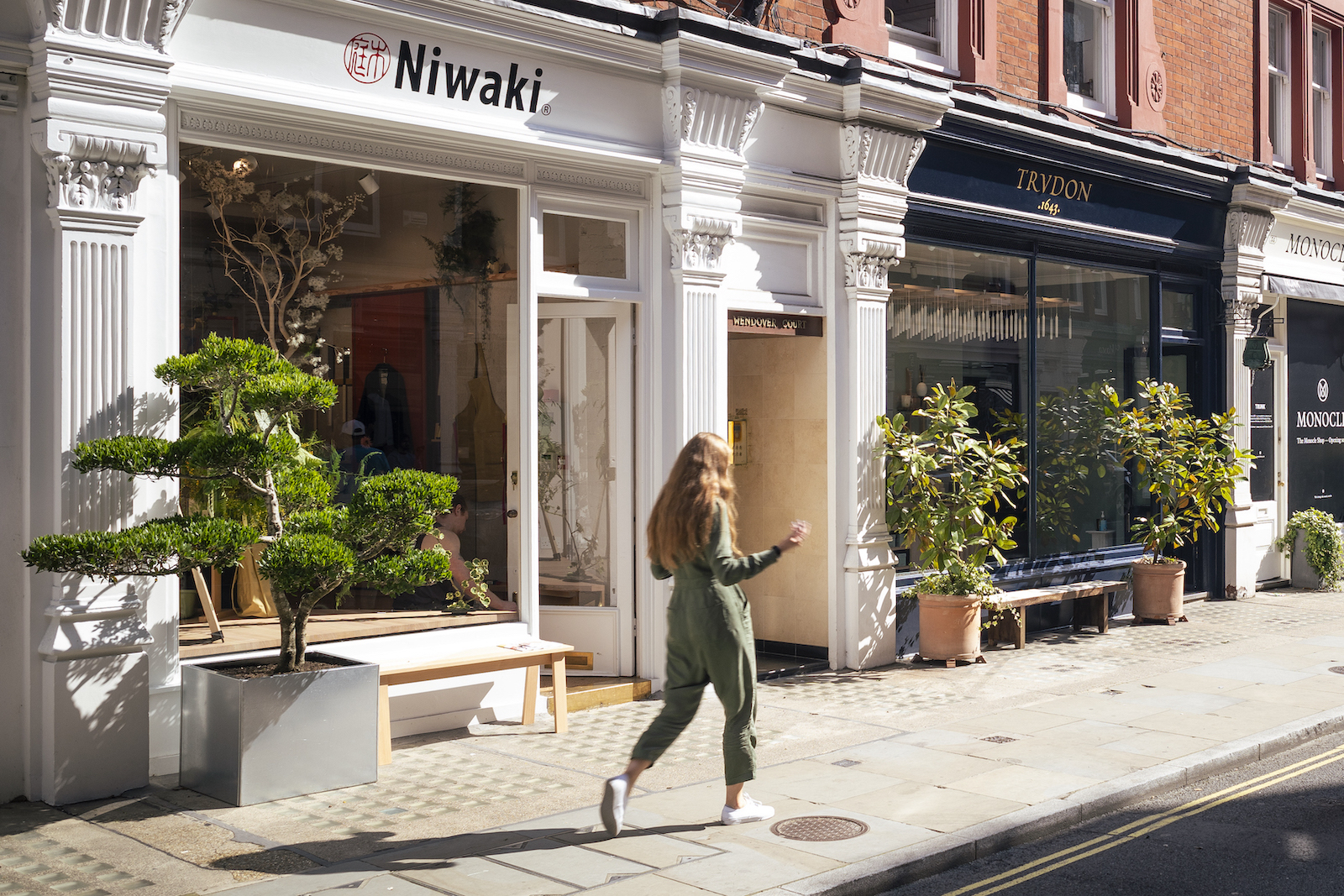
You might be forgiven for wondering why a luxury Japanese gardening shop opened last year on Chiltern Street - I mean, who buys axes and ladders in Marylebone on a casual Saturday afternoon?
The explanation lies in the history of that store, Niwaki, and I think in some aspects of modern retail.
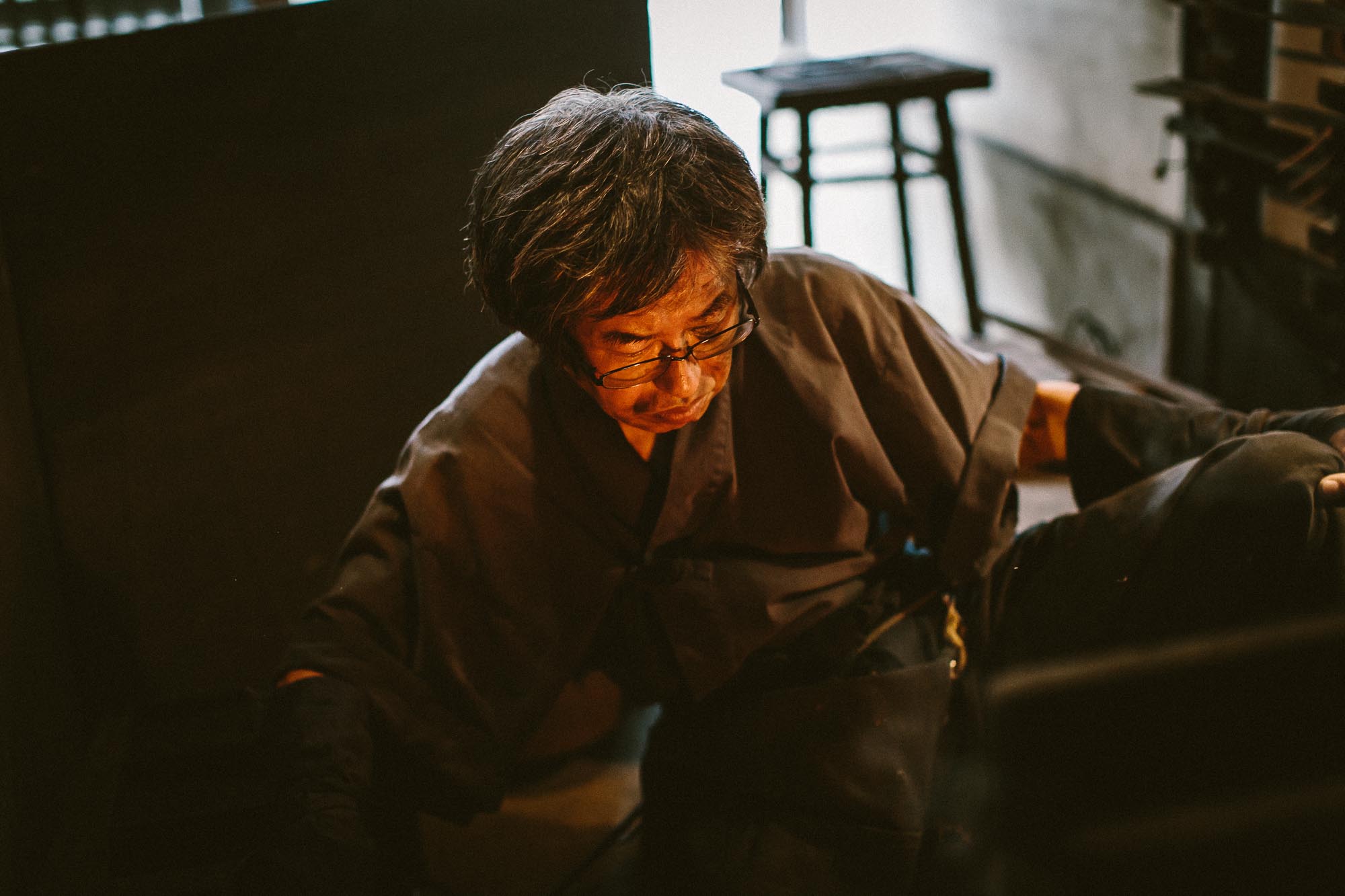
Niwaki started as the hobby of Jake Hobson (below), a sculptor turned gardener who fell in love with Japanese techniques, and then found on his return to England that few people appreciated them or the tools required.
He began importing things like secateurs and three-legged ladders, and selling to gardeners. “It wasn’t easy at the beginning,” Jake says. “No one had websites, and people would still ask for documents over fax.”
This wasn’t that long ago either - the company has been going 15 years. But Japan was (perhaps oddly) a very late adopter to the internet.

Over time, Niwaki grew to the point where Jake could do it full time. There was then a slow evolution from being a reseller to a brand.
It's become a fairly familiar story in the past 10 or 15 years, which I think is testament to how much easier the internet and social media have made it for businesses to find a customer niche. (Something I should keep in mind every time I’m bemoaning their downsides.)
Jake’s wife (who’s Japanese) then joined the team and Niwaki continued to grow, becoming a regular at specialist events like the Chelsea Flower Show. “This is the vast majority of our business today - online selling to gardeners makes up about 75%, and most of the rest is wholesale,” says Jake.
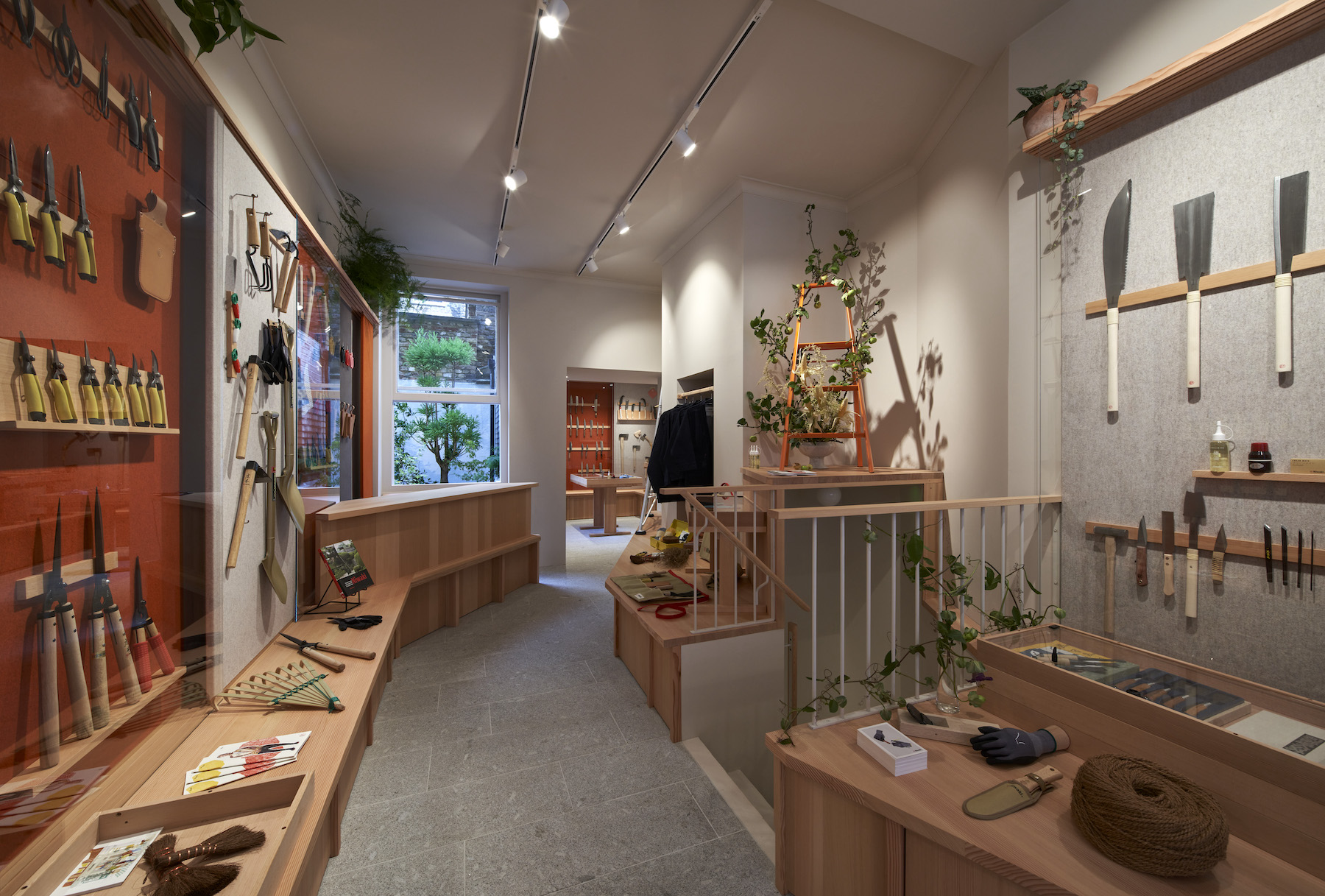
In other words, very little is people randomly browsing Marylebone on a casual Saturday afternoon. So why open a store at all?
“It’s nice to have a focus point,” says Jake. “We have lots of people come through who don’t know us, but at least half are existing customers that just want to visit in person.
“We have quite a few Americans who come in, for example. There was a couple last week from LA who were long-time customers, and made sure they came in while they were in London. It’s a destination.”
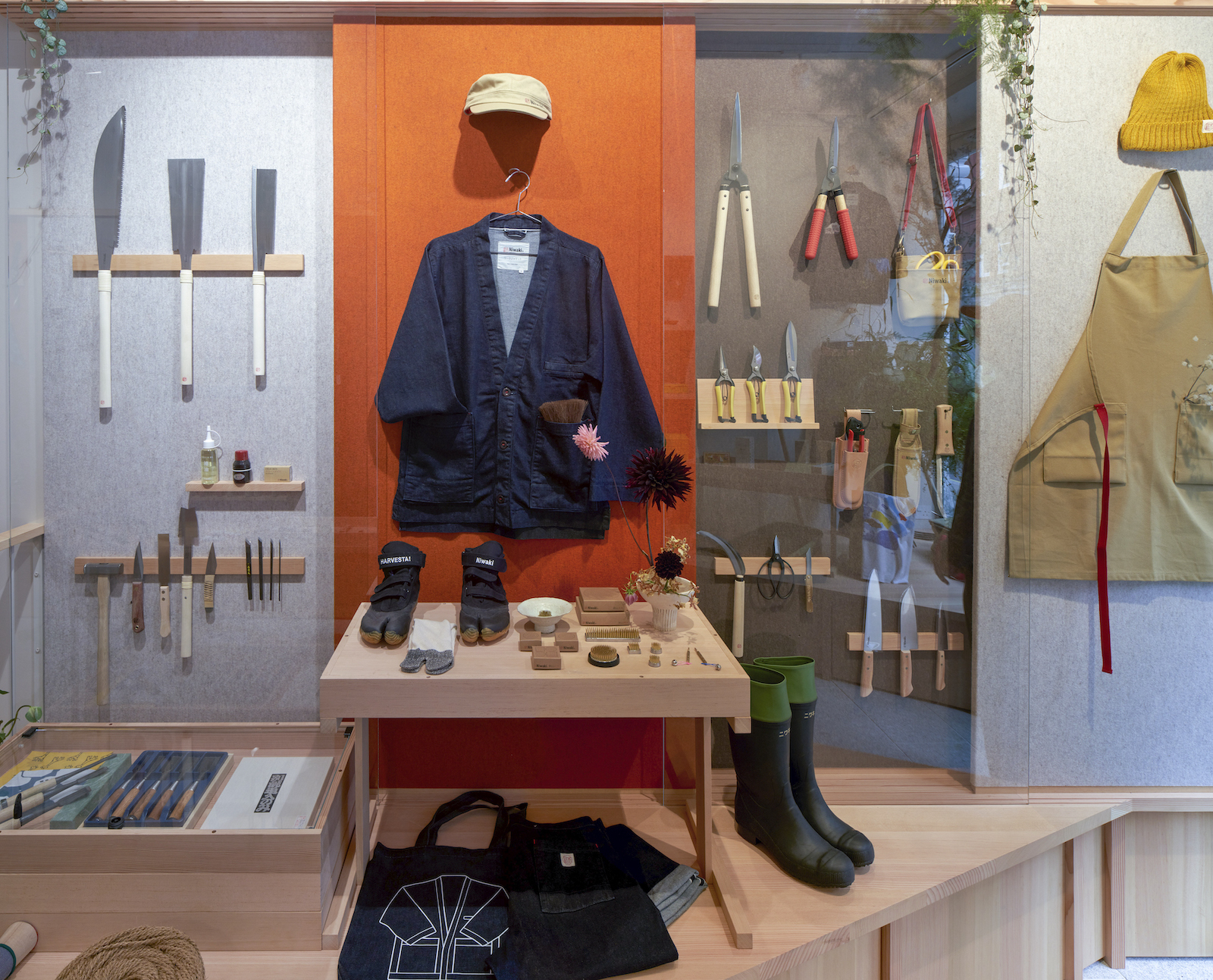
This, I feel, is the direction many brands are going. You don’t need multiple stores to run an international business today, and it’s a lot cheaper to just have one, and then perhaps do trunk shows like Anglo-Italian or Saman Amel, or events and trade shows like Niwaki.
This might seem like a niche point, but it's interesting how many people have asked me - in the year since Niwaki opened - what such a seemingly specialist shop is doing there. There’s still an assumption that a physical store must be funding itself through physical custom, rather than just being part of the business - the tip of the iceberg.
“There are lots of little benefits to having a store in London too,” says Jake. “It’s effectively our buying office, which is easier to do there than down in Dorset. And you get a different kind of customer interaction - often longer, often deeper.
"Someone is much more likely to suggest a tool they would like to have but we don’t sell.”
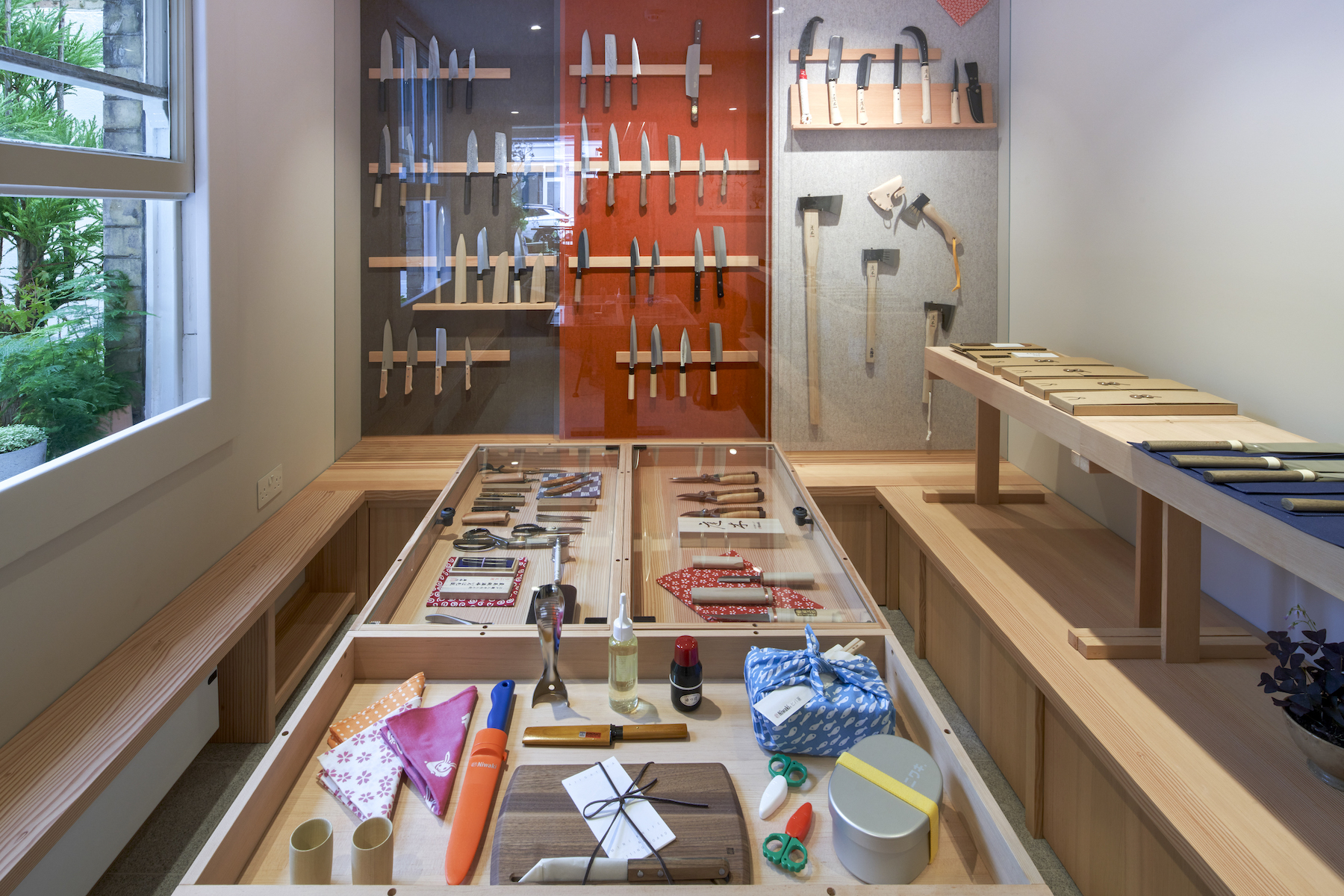
Having gone through all of this, I do think Niwaki is worth visiting, even if you're not a gardener let alone an existing customer.
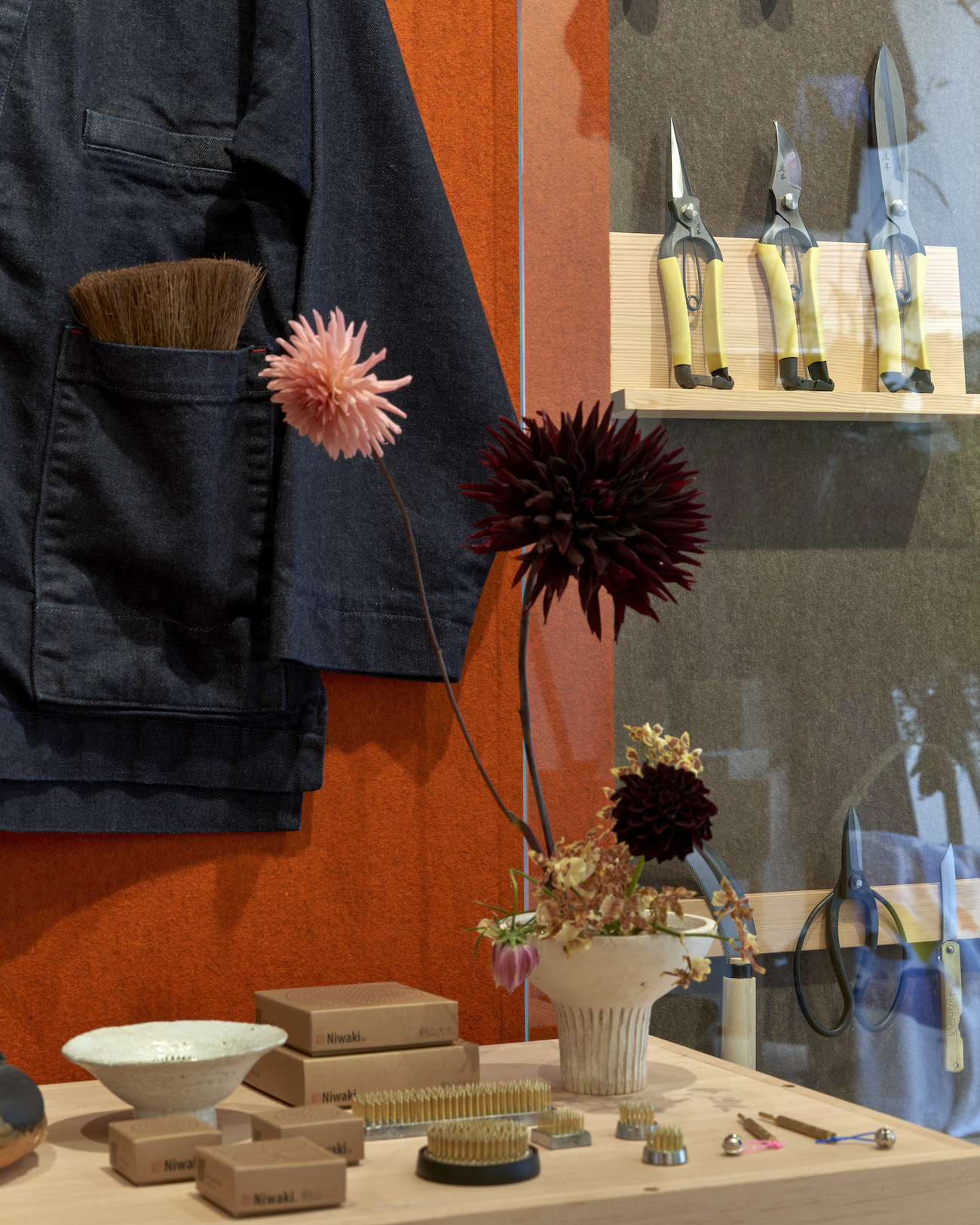
First, it's not all axes and ladders: they also sell Japanese stationery, a little clothing, and a wide range of kitchen knives.
I got some advice on looking after an object that is very precious to me - the knife I bought from Japanese maker Sasuke (below) when I visited his forge in Japan (reported here on PS).
And I like the fact that Niwaki always has a range of prices - from everyday items to the really special.
“We try to offer three different tiers of products like knives,” says Jake. “So you have a starter one for £39, which is equivalent to the normal German chef’s knife. Then something around £100-200 where you get all the refinements of Japanese knifemaking. And finally the top end around £300 or £400.
“The difference between that second and third level will be little things like the fact it’s made by one person, or the Damascus decoration.”
The refinements of Japanese knifemaking, by the way, are things like using a carbon-steel edge, sandwiched between two other layers of steel. The carbon-steel retains its sharpness for longer, but is more delicate (too delicate to make a whole knife out of).
I can testify to both the effectiveness of this type of knife and the care it requires, having used several over the years. The edge can even chip if you’re rough, but as the Niwaki website says, the key is to think of it more like a fine wine glass than an everyday, every-job tool.
I also have a pair of Niwaki secateurs that I use in our garden, and am reasonably good at looking after. Like the knives, they come in levels of quality, but I noticed a huge difference (and satisfaction) in the mid-level Higurashi (£59).
The approach extends to stationery too. Niwaki sell Cray-Pas crayons for £8.50 (“every Japanese person will remember these from their school days”) as well as Tombo artist’s pencils, £179 for a set of 90.
Jake says Niwaki does get a fairly regular stream of browsers, simply interested in anything that is interesting and well made - even if they don’t necessarily buy an axe.
“There’s also a very particular customer who comes in just before Christmas, looking for a present for his wife. They want something different, but special, and that’s often a niche we can fill.”
Jake's biggest problem today is supply. Most of the makers Niwaki works with are small and family run, and if the father or son are ill production just stops. They also have little interest in growth.
“It was particularly hard during Covid,” he says. “There was a boom in hobby gardening - with everyone stuck at home - but a lot of workshops shut down.” Fortunately things are now back on track. Though if you do want a present for a gardener in your life, I guess it would be a good idea to not wait until just before Christmas.












Thanks for a wonderful article! A lovely shop we discoverd this summer, full of eye-watering objects and tools. There is something little fetishistic with this small specialized shop, its really amazing! We also have a gardening alotment, a bit dangerus for your wallet when you discover this one….. I got the same feeling from the Anatomica shop, not super much things in it, but everything well made, artistic and very stylish.
I really like when these type of texts pop-up at Permanent Style!
//Fredrik
And it’s lovely to hear that Fredrik, thanks. Nice to mix things up a bit with craft from other areas
Interesting article. I’ve had a few knives made and the choices of handle materials / blade shapes and materials, handle lengths and shapes is almost as bad/ good as tailoring!!
https://www.instagram.com/richardharrisknives/?hl=en
Hi Simon,
A great article that will prove to be useful.
I bought some knives from Eric Chevalier from the original article you did and they are works of art. Yes they do need to be minded and things like sharpening stones and camellia oil are now regular accompaniments in the kitchen. But my word the quality is superb.
Eric! Of course, fantastic. Thank you Joe, I’d forgotten he was on his own now
As a long time admirer of Japanese craftsmanship this article is very timely and useful. Finding an English speaking source of quality Japanese products is fantastic!
Hi Simon, I have known Jake for a number of years and I can testify that he is a very nice man and has made a study of Japanese gardening culture. I particularly admire that he went over to Japan to learn their traditions, skills and tool manufacture before returning to the UK. This is similar to the way that a number of Japanese shoemakers have travelled to the UK and Italy to learn the shoemaking skills practiced in Europe and then returned to Japan and adapted and perfected this knowledge to suit their home markets.
Can definitely see the rationale for physical retail: brand building via physical experience, neighborhood association, attracting press (e.g. PS), etc. Question is if it works. There’s been no shortage of suspended physical expansion experiments lately. Will check back in a few years.
A rather small point but, for the sake of accuracy, the very top end Japanese knives, called Honyaki, are actually made from a single piece of carbon steel, just like samurai swords used to. The construction you refer to, called San Mai, in which a carbon steel core is clad with softer and less reactive steel, is of course much more common. Japanese knives can absolutely be used on an everyday basis, but you have to learn how to use them and care for them.
What is it with us westerners and Japanese design? I don’t even cook but I still love to buy expensive Japanese knives and kimonos! I think it’s the orientalist in me.
Simon may i ask something very irrelevant ?
What do you think of the heavy wool cashmere sweater from the real mccoys ?
https://therealmccoys.com/collections/tops/products/heavy-wool-cashmere-sweater-chale
I haven’t tried that I’m afraid
I’ve bought from Niwaki via mail order for several years. Every item is superb and will last a lifetime – my last purchase was the Hori Hori weeding blade. But then, I love gardening, and I love cooking too (I already have a range of Shun Kaji kitchen knives so can’t justify buying more, sadly) .
I’m delighted you’ve featured this shop, Simon, as a departure from your clothes reviews. Yet it’s not really a departure: it’s an adjunct, because the joy of possessing an item of clothing of the highest quality, that one wears repeatedly and that, well cared for, ages well (gaining patina and character as it does so) is the same joy one gets from bringing out a tool that gets better and better with wear. I can see you now at a far future date, pottering round with your Japanese secateurs like a Monty Don of yore , in a thirty years old very worn bespoke jacket, maybe long overdue for retirement (but ‘hey, it’s Anderson & Sheppard and still has my name and date in it!’)
I can’t wait for that day Russ…
Good morning!!!!!! This article represents a different change of pace…..I enjoyed it..thanks..enjoy your day and week..peace and cheers!!!!!
Niwaki is overpriced crap. Had their loppers twice and both snapped inside a year. Go with proven Japanese brands.
Thanks for the experience Dan, but let’s keep it informative and not aggressive please. It’s one reason people come to this forum