


When is it worth buying the best possible quality, and when can you economise?
This, of course, was part of the subject of my book The Finest Menswear in the World, which examined what constitutes ‘quality’ in various categories of clothing.
But what about when you’re not looking at the finest things? When it’s a choice between buying a £100 sweater from the high street, or saving for a £250 Scottish one?
Are you better saving money on underwear and other basics, or are those precisely the things you should be spending on, given you wear them every day?
In order to give concrete, if partial answers to these questions, I thought I’d conduct an experiment. I spent a happy couple of hours wandering around Massimo Dutti on Regent Street, and working out what I would and wouldn’t buy.
I picked Massimo Dutti because while definitely a high-street brand, they have a good classic-menswear aesthetic: brown-suede shoes and stone chinos, blue shirts and navy knitwear.
It’s somewhere I used to shop from when I was starting my career. When I could afford most things in there, but sought out deals on luxury brands whenever I could. I know that applies to a lot of readers today.
Not leather or shoes
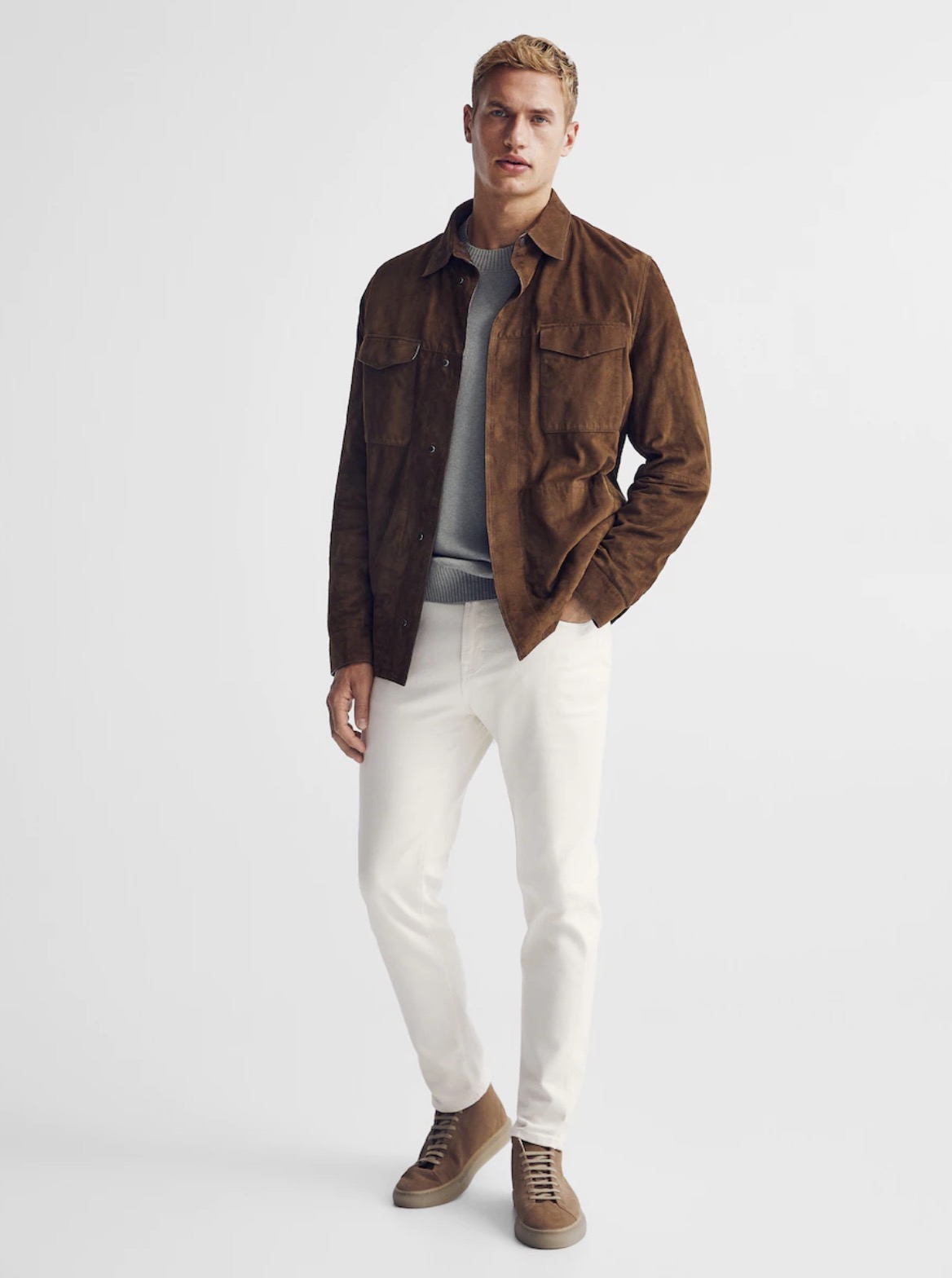
Given the ‘Italian Smooth’ aesthetic at Massimo Dutti, it’s no surprise that there is a lot of leather and suede outerwear.
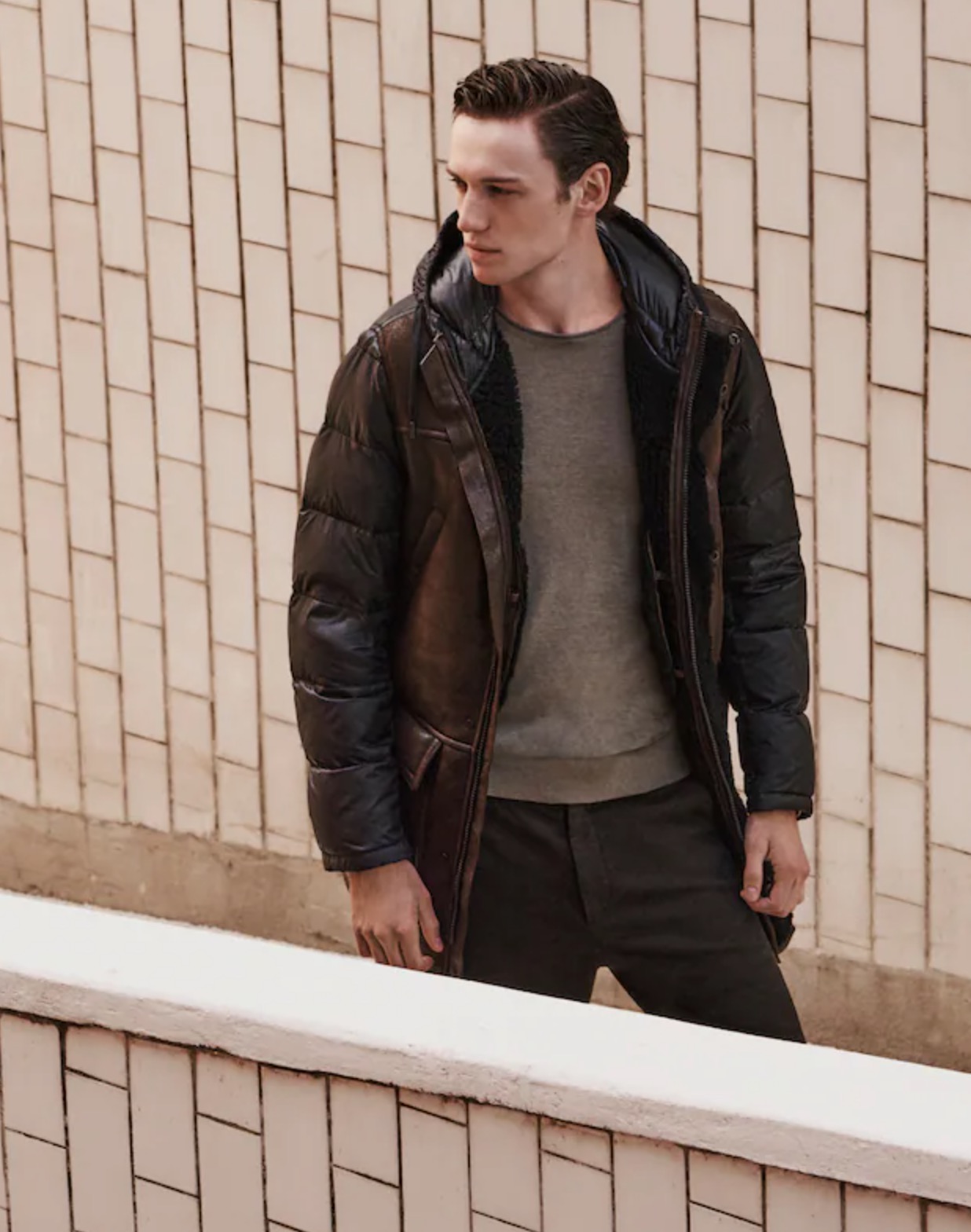
The current range includes black and brown quilted jackets, as well as a suede overshirt with a detachable vest, with prices £269-£299.
Having worked on a few suede and leather products (at Connolly and Cromford) I would avoid these pieces, because I know how much good leather - such as the nappa referred to here - costs.
More importantly, rather like leather shoes, cheaper skins often involve compromises on the integrity of the skin, such as splits rather than full grain. The Massimo Dutti overshirts are soft, but they also lack body - they feel flimsy. This is also often a reason such leather pieces are lined, to cover up the rough suede of the split. Luxury pieces usually aren't.
It is possible to buy quality leather that’s cheaper, but then it will be thicker - a bigger, coarser hide. Which can be great for workwear, for example, but less so for these smooth, chic looks.
Another point worth considering is that, unlike shirts or underwear, you really don’t need many pieces of leather outerwear. Really one or two should be fine, particularly if you’re on a limited budget. I would save up therefore, for something like the Mr P range on Mr Porter, or a heritage maker like Dehen.
That same logic applies to shoes, especially today. As people need fewer dress shoes, it should be a lot easier to invest in quality ones.
Some of the Massimo Dutti shoes are cemented, rather than even Blake stitched or Goodyear, and use split suedes. Plus, they’re £89, and that’s not a lot of money for a leather shoe.
If you only need two or three good leather shoes in life, it’s worth spending on something like Crockett & Jones in the UK, or a Carmina or TLB from Spain.
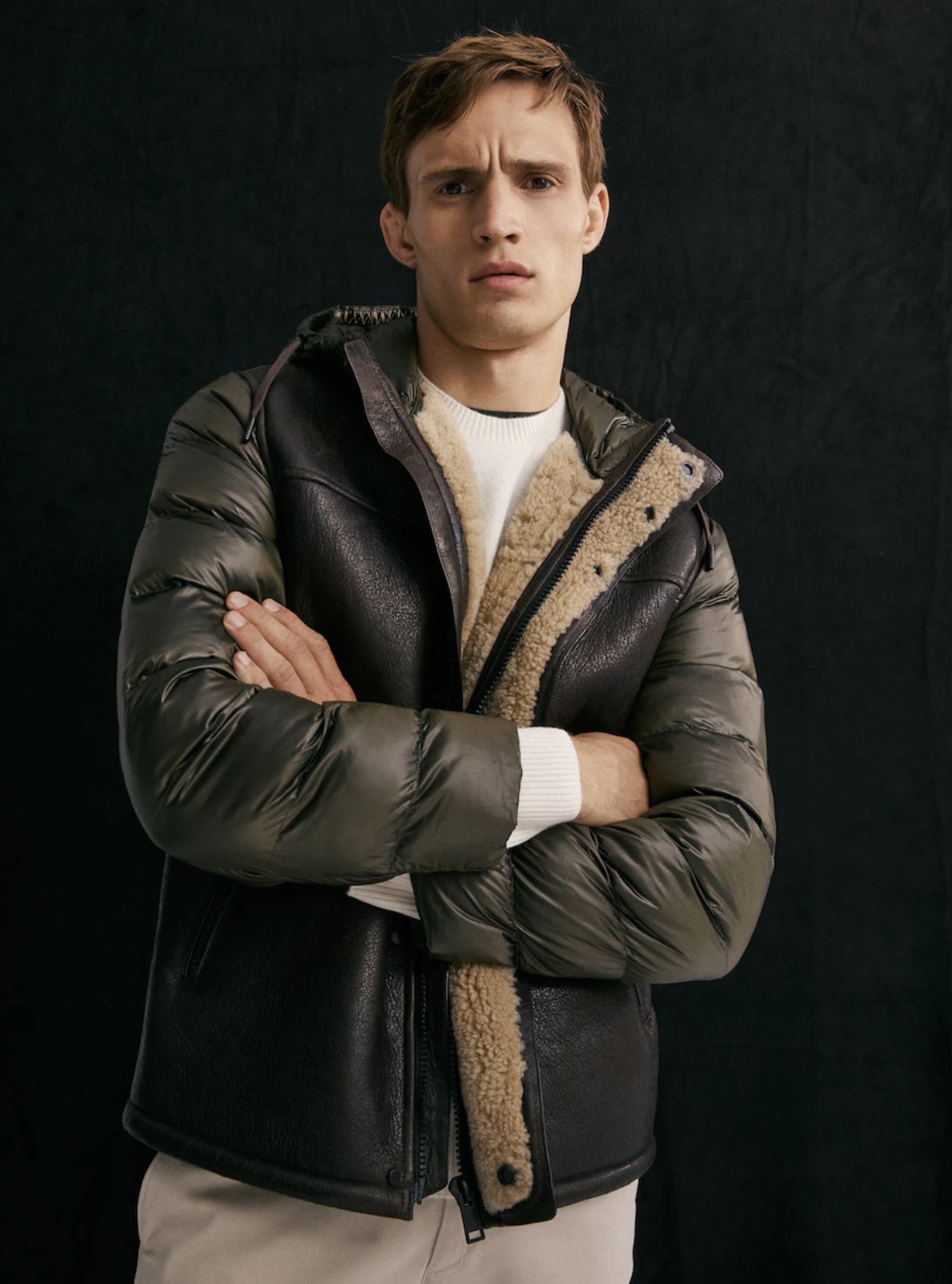
In some ways this is unfortunate, because the designs of the Massimo Dutti shoes are good - simple and classic, unlike some of the leather jackets, like the sheepskin fronting a polyamide quilt (above).
Yes, shirts and knitwear
The design point is important, because it’s often easier to economise on basics, where the design doesn’t vary that much.
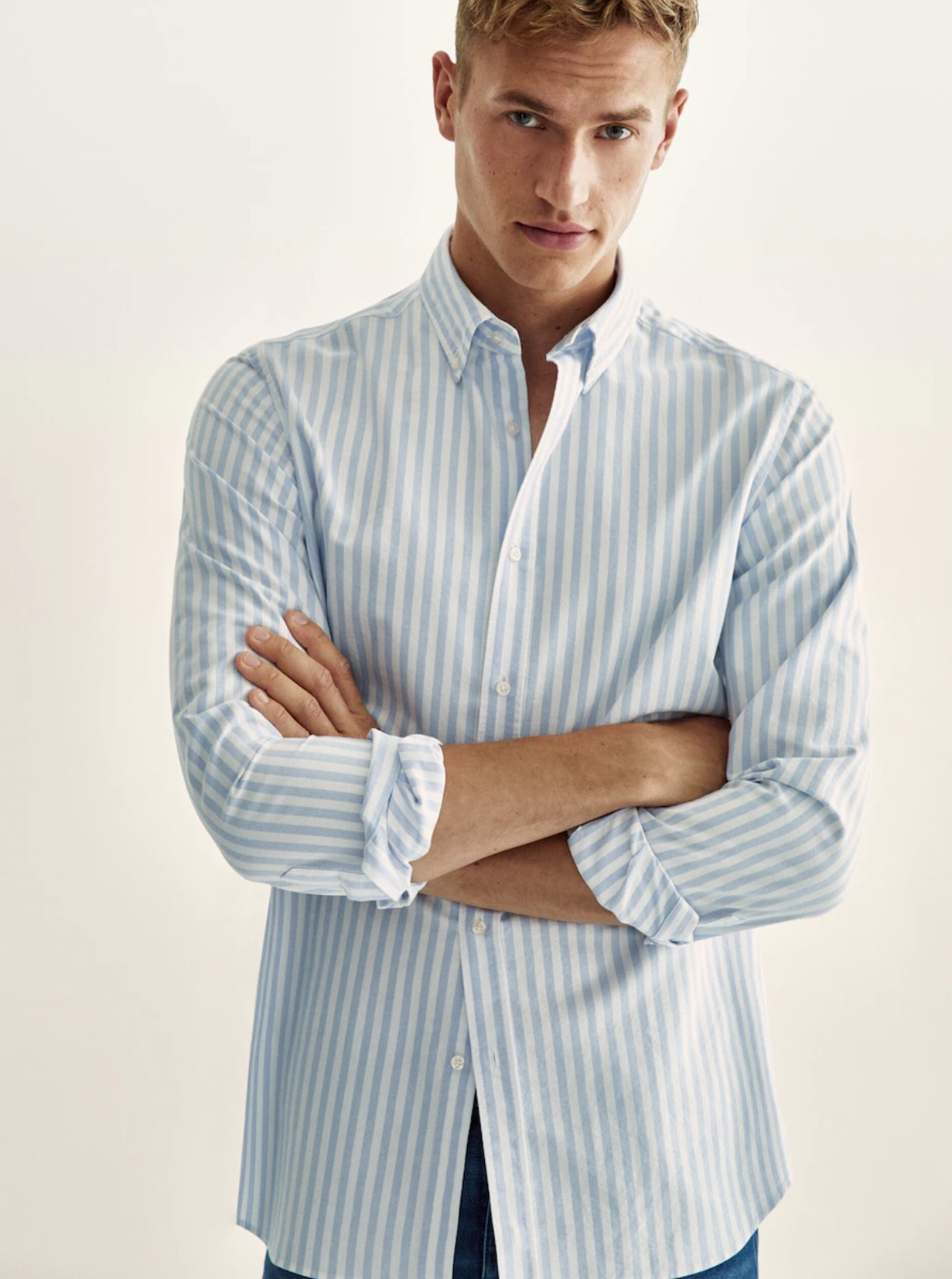
Shirts and knitwear are good examples. You might not like the fit of a navy crewneck, but it’s unlikely you’re going to take strongly against the knit pattern or the ribbing at the neck. They’re going to be pretty standard.
Shirts are a little trickier, because the collar is so important to the look it creates. But if you like the smaller, softer collars that mainstream shirts often have, then this is also somewhere you can economise.
That’s particularly true with casual shirts, because expensive dress shirts tend to use finer and finer cottons, which is not necessarily a look you want, let alone a quality you need.
(Inevitably, all these points are generalisations, but there are some more detailed articles on them around PS - eg here on superfine cottons.)
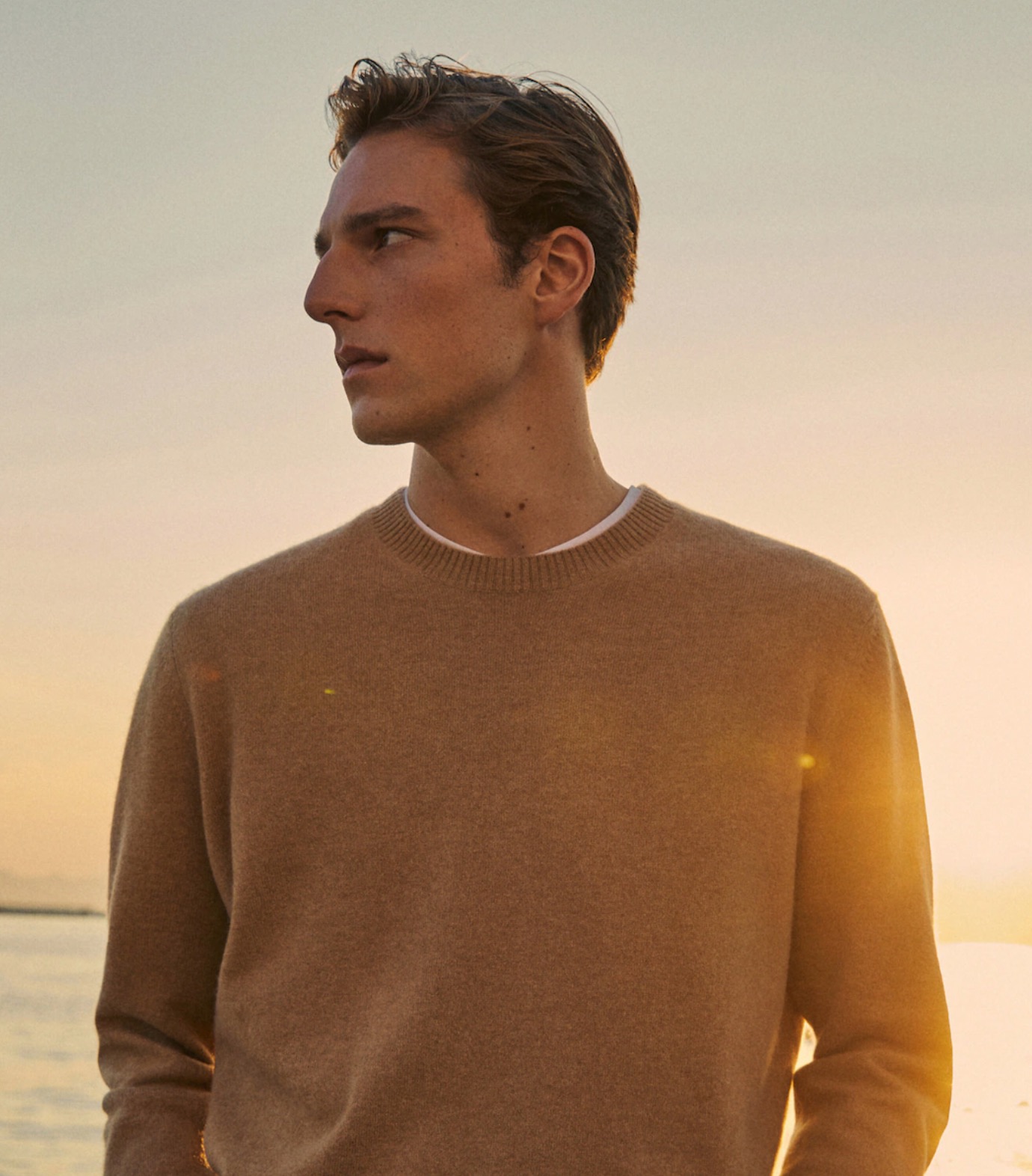
A roughly similar argument applies to knitwear: if you’re buying less luxurious fabrics, you’re likely missing out on less as regards quality.
So among the knits I looked at and tried at Massimo Dutti, the cottons and then the merino wools seemed the nicest. There are definitely finer versions of both - in terms of material and make - but the difference between this cotton and the most luxurious I have is less.
Cashmere is the tricky one. The demand for cheap cashmere has been so great in recent years that quality has dropped everywhere, often with corners being cut - as we covered in this piece on Uniqlo.
The Massimo Dutti cashmere is more reassuringly priced, at £149 rather than £89 at Uniqlo; and while it’s made in China, it doesn’t have the treated feel the Uniqlo did. But still, I think here you’re better off investing in one or two pieces slowly, and buying lambswool in the interim - which is often very well-priced for the quality and longevity, like £125 at William Crabtree, or £150 from Rubato.
Yes to underwear, no to tailoring
To answer a question posed higher up, I do think underwear is somewhere you can save.
Underwear and socks in finer cottons can certainly be more comfortable. But they can be more fragile too, and despite them being next to the skin, they’re not often the quality piece you notice and appreciate.
Plus, those pieces can get away with a little synthetic fibre in the mix, to add a little stretch (underwear) or a little strength (socks).
I love the Zimmerli underwear I’ve had, but it’s too much to justify regularly (£85 a pair) and so I usually buy Sunspel (£32). Someone on a lower budget could happily buy Massimo Dutti (£15). Like Sunspel, they unfortunately always have the brand name on the waistband now, but at least it’s tone-on-tone.
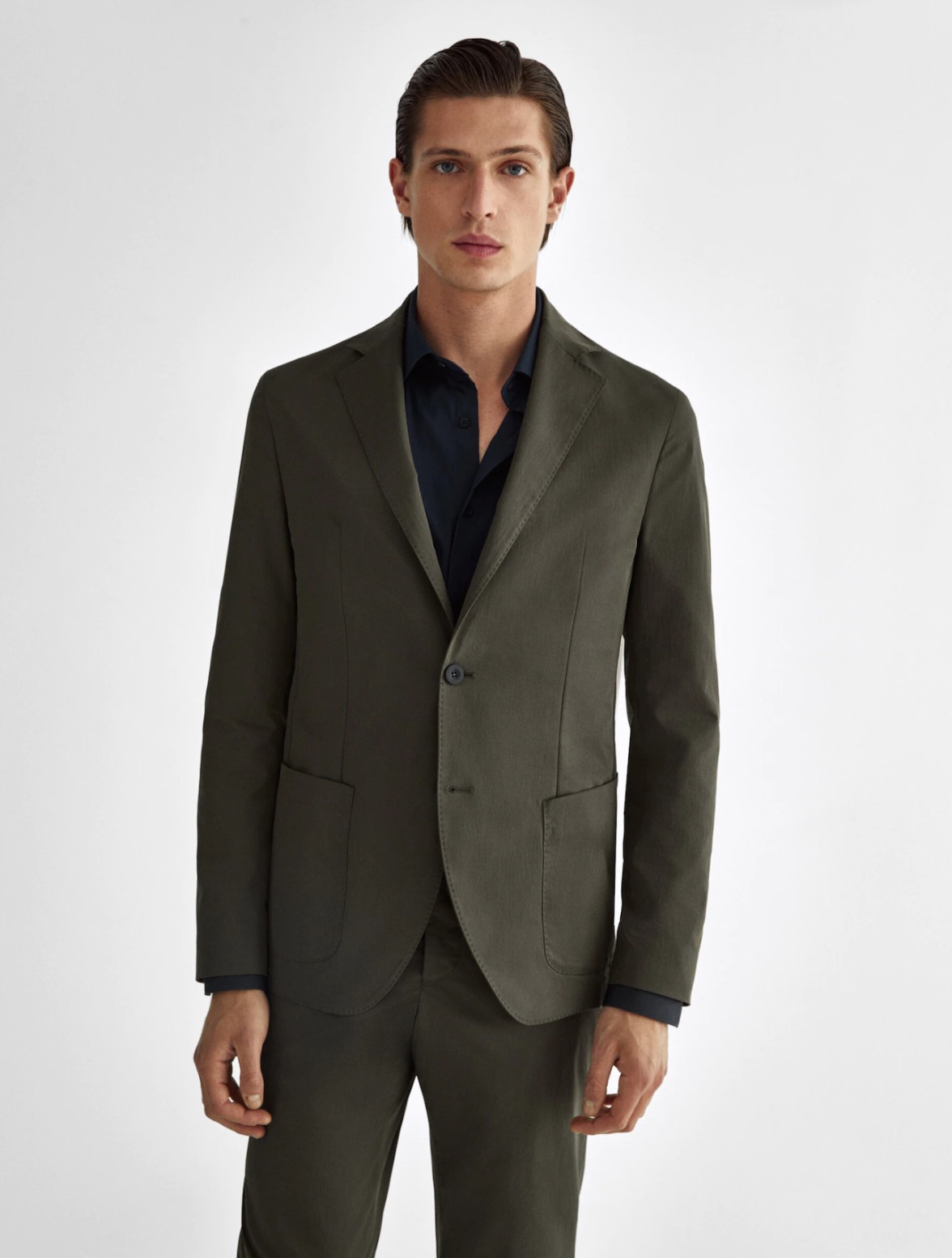
As to tailoring, I’m sure no one will be surprised that I suggest investing good money here. But certainly, you shouldn’t be buying suits that are fused, or those that have polyamide or polyester in the fabric.
Yes to sneakers, no to jeans
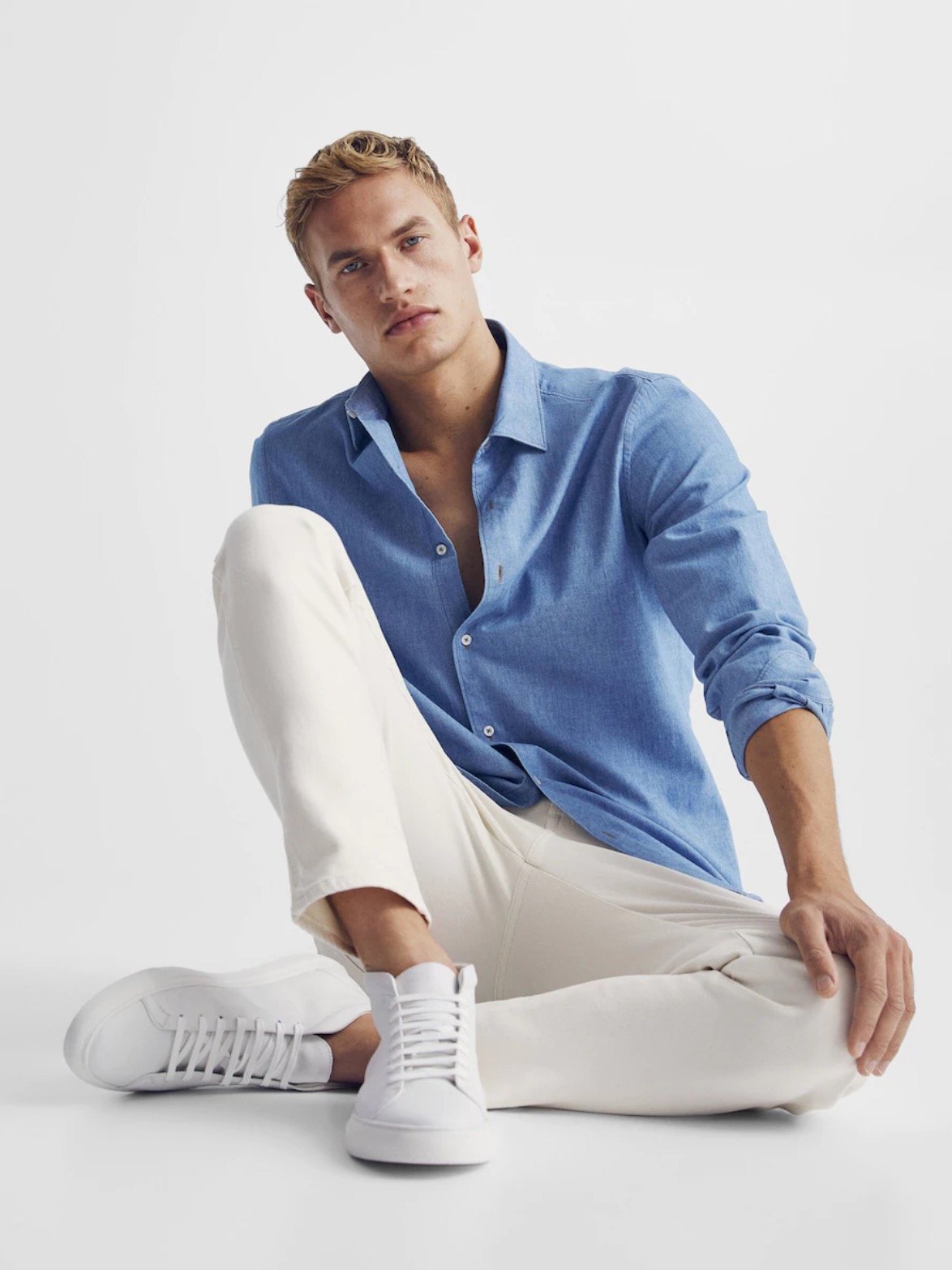
I wouldn’t buy jeans or chinos, because they’re slim, low rise and have 2% elastane. So both quality and design reasons.
With sneakers, the quality of most of the market is so poor, that actually Massimo Dutti looks good. The actual trainers have a cleaner make than Nike, and the clean models that are similar to Common Projects are decent too. There’s even a range that looks a lot like Loro Piana.
I won’t try and cover absolutely everything, but in general synthetic pieces and sports clothing are often good value, because you’re unlikely to need anything actually high performance unless hiking or running.
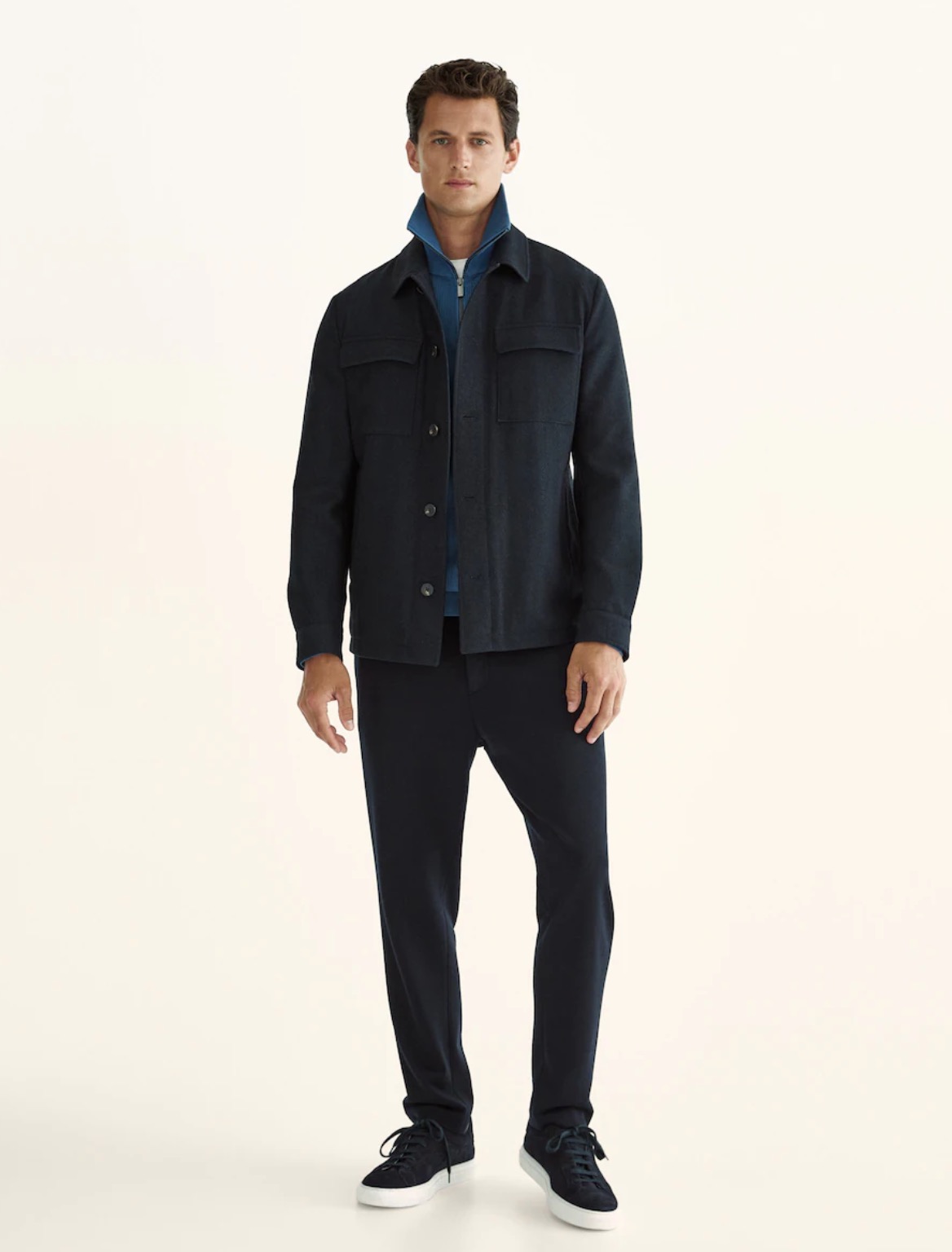
And I’d put overshirts in the same category as shirts and knitwear - as something that is so simply made that a version in a casual material could work well. Although it would be nice if versions like the one below were more than 65% wool.
I hope this gives some perspective and insight for readers that are constantly trying to work out what they should invest in, and what they should save money on in order to invest.
I also don’t want to appear too harsh on Massimo Dutti. They do a good job of providing good clothing at this price point, and most of the designs are solid - including some evidence of menswear trends, such as mock necks - with a good taste level.
It’s not uncommon for me to walk past their window on Regent Street and take inspiration from a combination of taupe suede and white cotton, or an olive overshirt worn over denim. I couldn’t say the same for a lot of other high-street brands, and that’s why I picked them to look at.
The important thing, I think, is to recognise that difference categories of clothing present different trade-offs. It's not just about how much you have to spend on everything.
There are differences because of what you get at a higher price point, and because of how things fit into your wardrobe. You’re unlikely to need more than a couple of good overcoats - but you’re going to need somewhere reliable to stock up on shirts.
As mentioned, many of these points are quick and simple, as necessitated by a piece this length. If you’d like to talk more about details, please do ask in the comments below.










Massimo Dutti is unlikely to reflect “Italian Smooth”, given that it is a Spanish brand. Could it be “Spanish Sleek”?
As I hope I made clear in the original article, Martin, Italian Smooth is a style that encompasses the whole world. It started there, but it’s now the dominant menswear look the world over. Including Spain.
Thanks Simon. I’ve just re-read the article, which names umpteen Italian labels, but says nothing about Italian Smooth encompassing the whole world.
Rather than cite a Spanish chain brand, whose big brother is Zara, why not an Italian one, such as Boggi?
Apologies, perhaps that came across more in the comments and subsequent articles. But the point of the article is that these are styles that categorise most modern casual clothing in the world. There would be little point if it was just about what you get from Italian brands.
The reason I cite a Spanish chain brand is that it is a good example of this aesthetic, and it’s bigger and so more relevant to readers than Boggi.
The fact that a Spanish company picked an Italian name is a clue that they’re selling an Italian-inspired look.
Good point
Providing clothes manufactured primarily in Spain and Portugal…………a Spanish company using an Italian name. Truly cosmopolitan!
Reasonable deduction but a miss. MD was launched more than 30 years ago by a Spanish entrepreneur. There’s a not so interesting story about how the italianized name came up, but the driver seems to have been that its current competitor was named Milano. So both likely looked for an Italian association, but it was for tailoring. At the time, those were the places you went to procure your conveniently priced RTW office wardrobe, which was pretty much all they offered. So more like a RTW Suit Supply of old.
But fun fact: the cuts were really English structured, so the association only held for the clueless.
Over time, Inditex bought MD out and threw in additional casual in the mix. The tailoring saw an attempt to upgrade to MTM under the Personal Tailoring label, which discretely failed (not so bad make but awful delivery times, oddly Inditex strength). The label is today straight RTW with just supposedly higher quality fabrics, steadily losing shop floor presence as they likely lose faith.
I worked for some years in the field of classic, high end italian menswear (selling Brioni, Canali, Marol, Stefano Ricci etc) and now have a limited budget. Athough older than Massimo target market find a lot of their cloths ‘modern classic ‘ which I like to wear. I have a number of items such as linen and cotton blazers also a casual jacket and recently purchased another linen one with matching trousers to make a suit
I think the best way about “whether I should save for or buy cheap” is to ask yourself, whether the piece you’re thinking about is designed to withstand the stress you plan to subject it to, and whether you plan to take care about it the way it should be done. For example if you’re a contractor, buying cashmere cardigan to wear at work would be foolish (extreme example)
More moderate example, if you’re one of those people that has one pair of shoes, wears it daily for 30k steps and polishes it once a lifetime, 1000£ Goodyear shoes would be a waste of money. (and no, I don’t believe that a pair of Edvard green worn daily would last longer or look that much better 5 years from now than 5 pairs of meermin worn once a week each assuming care is the same)… for me this means I have developed 2 layers of wardrobe. more expensive one that I take care the best I can, and cheap one where I don’t have to worry much about care…
Well put Martins.
I only have to put in a small defence for Edward Green. Which is that they will look better than the Meermin every time they are worn. Which is why you buy good shoes in the first place. And the difference will become bigger the longer the two are worn.
Of course, the problem is that you shouldn’t be wearing the EG every day. They need at least a day in between to dry out.
but that kind of was my point. you need shoes every day. so 1. if you buy 1 pair of EG and wear them every day for 8h.. 2. you buy 5 pairs of meermin and wear each pair once a week for 8h… i find it REALLY hard to believe that EG will look better than meermin after exponentially more wear. On the other hand if you have a choice between 5 meermins and 5 EG sure! EG is a much better shoe and will look better.
Yes, I guess it’s just not a good comparison in that way – because treating Edward Green well would mean having two or three pairs for that kind of use.
A better comparison might be something like 5 Meermin vs 2 or 3 Crocketts, or Crocketts Handgrade. And yes, in all those cases they would look better throughout their use, and the difference would be more apparent over time. I’m not sure if they’d last as long, with say 50% more wear, but they might do given they’re better made as well as looking better.
There you’re probably right. But is a bit of a lottery. Get 5 perfect pairs of meermin vs 3 bad pairs of c&j, and meermin might very well come on top. But of course there is quite a bit less chance to get a bad c&j than meermin.
given that each manufacturer tries to waste as little leather as they can, the cheaper you go, you always can get unlucky cut shoes.
ive read enough posts on forum where guy buys 3 pairs of same model, same leather shoes, same manufacturer and one is creasing completely terribly compared to others.
Interesting, I hadn’t thought of that. I also haven’t experienced it, but perhaps I’ve been lucky, at least in recent years, that I’ve mostly been shopping at a higher price point. It’s certainly true that ‘speed through the factory’ and lack of quality control is an often underappreciated cost of a cheaper shoe.
If I could pick up on this – is this about Meermin perhaps being poor quality or Edward Green just being much higher quality? By which I mean: if your budget is realistically never going to stretch to EG and is more in the <£200 range, is Meermin a decent choice, or are there better alternatives?
No it is a good choice. Have a look at this piece for detail on that part of the market
Thanks!
as long as you accept shoes can come looking like a factory seconds (very inconsistent quality control) and you have to pay return shipping yourself, meermin, I’m fairly sure is THE best value shoes there is.
I have 3 pairs, and leather quality is not noticeably worse than loake or trickers. in fact meermin ilcea museum calf is my second favourite leather in all the shoes I have. after looking at more shoes in their trunk show, the only leather I didn’t like was black boxcalf.
Thanks for all you do Simon. I appreciate the importance of good shoes for a wardrobe, and yet my 6 EEE/HHH feet preclude an EG or Cleverly purchase. Any suggestions on high quality RTW footwear in super-wide widths?
Thanks and Cheers,
I’m afraid I don’t know the options there, no sorry Laz
You raise an interesting point, I found the leather on meermin creases a bit differently as it’s very stiff, my C&J hand grades certainly look better after prolonged wear, while the value proposition in meermin is good i’d actually say I prefer loake 1880 in the sale. Alternatively I’d rather have 3 Carlos Santos to 5 meermin. Where meermin don’t get a lot of attention (where I think they should) is the linea maestro line, the difference is significant and the leather quality is much better.in short again, 3 meermin linea maestro > 5 mainline meermin
I think quality control aside it’s close enough to be “lucky pair vs unlucky pair” and “I like vs I dislike opinions”
In my case I don’t see noticeable difference in leather quality but I do see a noticeable difference in build quality and consistency between meermin and the rest.
and somehow the only stiff meermin I’ve seen was boxcalf. My pairs we’re not noticeably stiffer than loake or trickers…
loake 1880 on sale, certainly. But not lower grade lines.
I had to a bit of a double-take with this, Simon, as I was just looking at Massimo Dutti’s website and pondering many of the same questions. It’s a brand I’ve been interested in for a long time, for the reasons you say: some of it isn’t my style but some of the basics are very solid. My conclusions were rather similar to yours, though I might be inclined to plump for cashmere from them anyway because it’s still a rather reasonable price point and there’s the comfort value from it, too. But it is very useful to have it all laid out here so clearly and articulately, thank you.
I’m so pleased it’s so relevant Jeremy.
We’re never going to cover this level regularly, because it’s not what we focus on and we can’t cover everything, but often some of the same lessons can be applied to different levels.
And it’s much appreciated!
On your point about the dreaded logo band on underwear, while I’ve found Uniqlo’s jackets and trousers and a lot else pretty dire in terms of fit (boxy, baggy and cheap-looking), I bought a pair of very simple supima cotton boxer briefs from them a few months ago and they are the best underwear I’ve ever had. Over the years I’ve tried everything from high street brands (including M&S, H&M and Massimo Dutti) to designer ones, to the likes of Björn Borg and Bread and Boxers and smaller brands marketing themselves as extremely special and usually costing a fairly silly amount. But these from Uniqlo look very much like expensive, minimalistic boxer briefs (I got mine in a very nice light grey), but are a very comfortable material and fit, have no branding on the waistband, no annoying itchy seams – and are cheap. As underwear isn’t really something you can try on in the shop, it’s always frustrated me when you buy some fancy ones that look nice but then the fit feels slightly wrong or you’re between sizes, so if I find something like this that works and is reasonably priced to boot, I stock up. I expect we’ve all been taken in by lovely packaging or branding or marketing at some point or other, and I think part of being well dressed and stylish is recognising value for money.
Absolutely, and thanks for the recommendation, that’s great.
The thing I notice with underwear is that more specialist brands often use finer cottons, or better synthetics like good lyocell etc. But guys don’t really notice the difference.
I have both Uniqlo’s supima and CLP’s lyocell. No expert on cloth, but the difference is clear, the lyocell is so much softer and they actually feel a bit more comfortable in the seams. And yet… They cost 30-20€ each pair (depending on bulk discounts), which is a lot vs 5-6€ from Uniqlo, and the fact is that while you can feel the difference when handling them, you kind of forget it after you put them on. So I am actually still debating whether to buy more of the expensive ones or not.
Hmm, interesting. Thanks
I meant CDLP btw
Thanks
My experience as a cyclist with Lycocell in everyday use is more than underwhelming. Compared to normal cotton, the pants wear through extremely quickly. We are talking about commuting, not sporting use. Although I prefer natural fibres in everyday use, I switched to blended fabrics with man made fibres or even to Uniqlos full-synthetic Airism.
I think a review of a high street chain like this to be very valuable.
Looking back over the last 30 years or so, names which were once held out to be purveyors of the highest traditional standards (think Lewin, and Hawes & Curtis etc in their original Jermyn Street guise) have become shadows of their former selves. Tyrwhitt and Boden offered exceptional quality when they started out, but have now morphed into style over substance. Pink made excellent shirts using Irish poplin. Look at them now. H&K have gone down the fashion route.
The saddest thing from my perspective is that it is now impossible to tell them apart; they all offer pretty much the same thing and there is little or no personality.
In the late 80’s/early 90’s, chains like Blazer and Racing Green offered “sort of Brit with a bit of Ivy thrown in” which made them interesting places to visit. Gone now.
So I think a business like Dutti, with it’s “med” heritage, has made a niche for itself as an accessible chain selling a well designed range of clothes at reasonable prices which could, if you wanted it to, provide you with your complete wardrobe.
Incredibly useful.
I’m sure I’m not the only one to use Massimo, Reiss and Cavallaro for inspiration, but I do shop at all three-mainly because they all have physical stores(and regular sales). Of the three, Massimo seem to have the most useful staples.
We really are spoilt now for rtw shoes. PWVC are an easy choice for outwear.
I imagine trousers fall into your category of tailoring, as it’s so very difficult to find quality on the high street. Bespoke trousers will be the next step on my quality path.
Thanks for this, Simon. I also admire Massimo Dutti’s design sense and styling and it’s refreshing to read an article on PS covering a brand accessible to all. Taking this one step further, perhaps this is an opportunity for me to ask what you wear when cleaning the gutters, mowing the lawn, or walking the dog – and where you shop for those clothes.
Sure. For anything like that, which often includes going to a muddy park with the kids, I would wear workwear that nearly always looks better with age and washing. Eg:
– Canvas chinos. An old Armoury pair, or for a cheaper option, Carhartt.
– A sweatshirt. An old Merz b Schwanen one, or my old college jersey.
– Canvas trainers. Like my Doek ones, or again for a cheaper option, Converse. Or oiled boots.
All of those have been dirtied, worn and then washed perhaps 50 times plus. And they only look better for it.
This is what good workwear should be: good for work, whether you want to use it for that or not.
And even the most expensive ones only seem so until you’ve worn them 50 times. They they’re better value per wear than anything else you own.
Thank you for the wonderful article. On the Carhartt recommendation: Do you have any specific model in mind?
Something classic like the double-front duck work pant
Thank you!
Hey,
Could you explain why chinos with 2% elastane is bad?
Some of it is subjective, but there are several connected issues with it.
One is that cotton with elastane added will not age in the way that good, traditional chinos do and always did in the past. They will never have the same character as good 100% cotton ones. Like my beloved Armoury ones for example.
They also won’t soften in the same way, so won’t feel as nice after a year or two of wear either. The elastane is basically accelerating that softening – as is the garment washing they often come with too – but it also freezes it. It won’t change.
A big issue is how the trousers look because of the way they hang. Something with elastane in it doesn’t have the same drape, and it never has the same look as a result. If you want skintight chinos, then fine, but that’s not really the look we’re going for here.
The last one is more personal. Elastication seems great because it allows you to move more easily, and stretch in the trousers. But it also means that every time you move, you’re being pulled at. The elastic is pulling you back again to where it wants to be. Again, unless you want leggings, this can be uncomfortable. Personally I think people have just got used to that pulling sensation.
Overall, stretch chinos are simply easier – easier to fit, easier to wear – but sacrifice a lot of what great trousers can be. And at the least, I want people to realise what they’re missing out on.
Thank you for the explaining.
Hi Simon,
I’m a bit late, sorry about that.
Regarding elastane, I remember once you talked about Incotex chinos. Do you still wear them? As far as I know, Incotex chinos have a percentage of elastane. Please, I’d like to know your current opinion about Incotex trousers? Occasions you would wear them, durability, style and so on.
Generally, I also prefer trousers without elastane for the reasons you explain.
Thank you,
I don’t wear Incotex anymore I’m afraid. I find them too slim, too low in the waist, and dislike the elastane.
I can usually identify a stretch chino or jean from across the room, and it’s not a great look. It’s often too tight in some places, too smooth in others, or strangely proportioned since it hugs rather than covers (and gives structure to) the lower body. It often looks oddly feminine.
Hi Simon,
Thank you for this article, it will be useful for many readers.
I agree in most points. However, I think the knitwear from MD made in wool/silk/cotton is poor quality. From my experience, lambswool from Uniqlo is a good option for a low budget.
Please, let me ask you where to buy chinos and jeans 100-150€ with a regular fit and preferably 100% cotton?
And finally, any recommendation for basic polos and t-shirts for a low budget?
Thank you,
Hey Nico,
Thanks, good to hear from someone that has worn and compared the two. Those two are made from different fibres though? I would imagine wool/silk/cotton will always be more delicate than plain lambswool. Also worth reading the article I link to on Uniqlo.
I’m not that good on recommending other brands I’m afraid, as it’s not what I shop for most of the time. But I’m sure other readers will be able to help there.
Nico.
it’s a boring answer but Levi 501s (look for those branded originals) fit into this price point and are 100 % cotton.
On the budget, I think it depends what your budget is, specially for the polo’s and t-shirts. I have bought som knitwhere from Cavour and they were nice, and I expect their other clothing to be at least a good ROI for their price. But I think it is worth waiting them to be on sale, as they can get up to 40% discount, then I think they become quite worth
They have some cotton trousers and chinos in 100% cotton too, and they get to 150 euros on sale. I can say about the quality though since I haven’t purchased their trouser, but they do look good
Hi Nico, I don’t know what your style is but you could try John Simons.
I have heard that Uniglo’s t-shirts are decent. I have had good luck with polos from Spier and Mackay, a Canadian online clothing store.
Polo Ralph Lauren might be another good choice for polo shirts.
I wouldn’t go for the Polo polos to be honest. The quality is famously inconsistent
Completely agreed on Ralph Lauren polo inconsistent quality. Get a good one and wear for a decade. Get a bad one? Navy will turn to medium blue in a season, get holes quickly and stitching comes apart.
Asket is good for basics. I can recommend the T-shirt’s and especially the boxer briefs. For polos Trunk’s own label version is worth a look. They keep their shape well, including the collar, after repeated normal machine washes.
Hi Nico,
Just thought I’d have my piece here.
I’ve been looking for a pair of chinos similar to Simon’s Armoury chinos ever since the ‘How great things age’ article came out.
I have been struggling a lot, since I didn’t want slim fit chinos, nor elasthane, and because I didn’t want to pay more than 150€ for a more classicaly fitting pair that’s made 100% cotton, as it will be treated roughly.
For those with limited budget such as myself, Uniqlo released a vintage fit chinos with high rise, wide leg, 100% cotton, jetted back pockets, in a nice medium weight twill that looks like it will age nicely. I just acquired a pair, and I think they look great in casual (t-shirt and sneakers) and semi-casual (Oxford shirt, knitwear and brogues).
Simon, let me know if you’d rather want me to post this comment on the ‘How great things age : Armoury chinos’ article.
Cheers
P.A.
Hey. If you could do that as well, that would be great
Really interesting, thanks Simon.
I’d be interested to hear you expand slightly on elastane in jeans (sorry, couldn’t resist). While I used to assume I disliked it and would stick to pure cotton, I have gradually found that it is much more comfortable to have a small amount of stretch. Does it necessarily indicate inferior quality? My jeans from APC with a small amount of stretch have far outlasted more expensive jeans from the likes of Anglo Italian and LVC.
I agree on shirts: the problem is always the styling of the collar. I’ll never understand the short collar point fad, particularly on button downs. I don’t understand why the high street keeps pressing it.
Hey O,
See above for reply on elastane in chinos, and in general.
With jeans, if anything, it’s worse. Because a big part of the pleasure of jeans is the way they age. That’s why everyone wants ones that look five years old already.
On quality, it depends whether you associate longevity closely with quality. Things that are partly made of plastic, like any synthetic, will often last longer. But if that was your only criteria, you could buy all plastics. Bear in mind, also, that those synthetics won’t biodegrade.
I’d be interested to hear how your Anglo and LVC jeans didn’t last. Because another part of the appeal of jeans is that they can be repaired – stitched, patched, and often look better for it. There are few other pieces of clothing that are like that.
S
“With jeans, if anything, it’s worse. Because a big part of the pleasure of jeans is the way they age. That’s why everyone wants ones that look five years old already.”
I don’t.
To clarify, I’m not talking about jeans that are ripped and sandblasted. But that 99.9% of the market is for jeans that are already very washed, a very different colour from their original indigo and already faded too.
Even with denimheads that wear their denim raw, they usually want jeans that look worn in like this. It’s just that they want to have done that fading themselves.
Thanks – the problem I particularly have is holes at the crotch, between my legs. Pure cotton runs very thin there and tears. I have thought about repairs, but given how quickly it seems to happen and how costly the repairs are I worry it won’t be worth it. I’m also not sure a patch repair would look especially great. If you have any recommendations I’m all ears! I have been tempted to try Son of a Stag’s repairs service.
The same thing happened with both the LVC and Anglo. The Anglo was particularly bad in that it happened very quickly – within a year, wearing them 2-3 times a week. I have to confess, it has made me question shopping there again, as much as I love their style and products.
I do think longevity is a big part of quality, though not to the point of suggesting everything be plastic. Looking and feeling great is also really important, but it should last. £250 for a pair that lasts less than a year doesn’t equate to value for me.
Really interesting discussion- thanks!
No worries.
With longevity, it is important to remember what you’re buying – the type of product is much, much more important than the quality.
A fine dress cotton, intended to be smart, will not have that great a longevity no matter what the quality of it is, if it’s worn heavily or not treated well. If you buy it too tight, cycle in it, don’t let it dry out between wears, stuff it in drawers or shelves, or dry clean it lots, then it will not last very long.
On the other hand, a tough thicker cotton, like you get on expensive Son of a Stag chinos but also on say Carhartt ones, is going to wear much better with any kind of treatment. Again, regardless of price.
This relationship is a very interesting one to me, because people so often expect greater expense to mean greater strength, and its usually the other way around.
Articles like this are very useful. Lots of times I see brands like this which I have no idea if they’re worth buying or overpriced for the quality. It’s also useful because practically every else I follow is very US orientated.
Thank you for delving into this less rarefied market! While many PS readers certainly gravitate towards bespoke, made to measure and other higher-end offerings, there are also some of us, who have had to evolve our style with a healthy dose of high street alternatives mixed in. Your impressions and initial assessments on the products of Massimo Dutti are bang on and extremely useful. How I wish I could have benefited from this kind of guidance 5-10 years ago, before I plunked €300-350 for MD sportscoats, when I could have gone for 2-3 from Boglioli or even Ring Jacket instead (though I justify these now as ‘knockabout’ wear suited for the more casual and zoom-enabled work we are caught in). Over the years, I have also favoured without much regret, shirts, polos, knitwear, and casual shoes like moccasins from MD. I think their outerwear, ie, casual jackets, can be classically stylish options too, but I’m also now mindful of your observations on their leather offerings. I hope you can write about other shops or products which can be reasonable alternatives like Massimo Dutti in the future.
Thanks Julian, and yes I certainly can. The observations here apply to most brands at this level, not just Massimo Dutti. But perhaps a similar piece every year or so that reiterates the points and assesses a different aesthetic would be interesting?
Hi Simon,
Interesting read, as always.
Maybe an unrelated question though with regard to the comparison of boots with shoes: I noticed that you generally wear more shoes than boots, is it a personal habit or you think shoes are just more fundamental?
I know some guys preferring boots than shoes for two reasons: first, aesthetic. They argue that boots give a more holistic feel for the overall silhouette, while elongating the legs which is just so flattering. Second, function. A pair of snugly-fitting boots are more comfortable than shoes and give more protection in rainy and wintry seasons. What do you think of that? Any hints would be helpful, thanks!
Hey Chuyu,
Well, the biggest difference is formality. A boot will never be as smart as a nice oxford with a suit, for example. If you’re dressing smartly in a suit of jacket for the office, shoes rather than boots are likely to be more appropriate.
A second consideration is heat. I adore boots, but I couldn’t wear them through the Summer or my feet would overheat.
But the biggest is probably just style. While I love the look of boots too, I find shoes (particularly loafers) are a more versatile choice for different looks.
What about dress boots, e.g. Balmoral boots? Too anachronistic?
Yes, I think so
Hi Simon,
If one needs to economize, wouldn’t it be better to shop at a “budget” menswear brand (Spier & Mackay, Suitsupply), rather than sorting through the fashions and picking out classic pieces from a high street brand with a “good classic-menswear aesthetic”? I have items from all 3 brands, and the quality is probably the same (I did not notice any obvious differences) but at least SM and SS are meant to be “classic menswear” (as shown by the proportions and fit of their clothes), whereas I see MD as high-street fashion brand, while who definitely leans towards the classic aesthetic, not all their items can pass as decent menswear (mainly due to the fit and proportions).
I do definitely agree with the latter paragraphs that their combinations have a good taste level!
I know what you mean Edric, but for many of the things I talk about there, I don’t think Massimo Dutti really are a fashion brand. The knitwear, shoes, T-shirts, underwear etc are simple and classic. There’s no need to sort through things.
Spier & Mckay also doesn’t have shops over here, while SuitSupply is dominated by tailoring.
Also, bear in mind that the point here was to talk about this price level as a whole, with MD just an example. The same rationales would apply to most brands at this level.
Point taken Simon. Thanks
I would not characterize suit supply as “classic menswear.” The overall aesthetic is very”fashiony.” If you look at the marketing material, the trousers are all tight fitting and short, the jackets tend to be short, and the styles tend to be loud. Not to mention the fact that the marketing material is generally in poor taste (e.g., pictures of an orgy to in celebration of the end of the lockdowns).
Admittedly, it’s possible to find some low budget basics at a reasonable price (e.g., a half-canvassed navy blazer for $350 or so) if you pick and choose and know what you’re looking for, and if you get the sizing right, you can get trousers that aren’t too tight, there are much better alternatives within that price range if that’s what you’re looking for.
I agree that the SS marketing strategy is tasteless, but their trousers and the jacket fit me well, although perhaps its because I’m relatively short and lean, rather than big and tall. It’s a much better fit than the half canvass suits at brands like T.M. Lewin or Charles Tyrwhitt. For me the best value within that price range goes to Spier & Mackay, especially since they’ve been doing a lot of sales during the pandemic.
A useful article. Here in the USA, Massimo Dutti is not as well known as other Inditex brands like Zara. MD’s only USA store, here in New York on Fifth Avenue, closed a few years ago. But when I think of what I have purchased or wanted from them over the years, it has been what you recommend, shirts and knitwear. Shirtjacket-style light outerwear can be good as well, just not in leather or suede.
isnt banana republic the US equivalent? different style, but both carry affordable staples
I’ve always felt a bit conscious when shopping there since I’ve started upgrading my wardrobe: how is the quality rated? is there a difference between MD and their somewhat lesser brand sisters?
I’m glad to see that you’ve confirmed my own thoughts, i.e., no leather, no tailoring, shirts and knits are decent for the money.
Good article, Simon. I agree with your takes. For this type of brand, I think that Massimo Dutti is probably the best in class. I was in Florence last year and had my eye on a nice knit from Aspesi. But given how often I would wear it, it was a bit pricey for me and ended up buying a cotton knit at Massimo Dutti that is better value to bang around in with the kids on a weekend. I also have a bathing suit from them which is great. I personally find spending on bathing suits very upsetting to my soul.
Wonderful piece, Simon. There is an old linen sports jacket from MD hanging in my closet which, long after everything around it has been “upgraded”, still remains. I suspect many of us have economical purchases like this that have had surprising longevity. And, all the more joyful (and sustainable), when a piece that really is not supposed to last, actually does.
True. I find it’s often when the fabric and cut work very well. They are both as important as quality, and if quality garments fail on either score, they may end up being sold or otherwise given away.
I think I speak for many when I say that we , PS readers of limited budget, wanted to know how we achieve the ‘PS effect’ without going hungry.
So articles like this are very welcome.
Whereas we can’t buy the bespoke suits (yet!) we need your help in knowing what to do in the meantime.
Having hit 50 I now see the ‘light’ and don’t need another ‘cheap’ shirt so I go MTM .
Shoes are sourced from sample sales , Loake or Cheaney (please give these a mention as very often EG and Crocketts are beyond reach and Cheaney is a great family run British brand).
Trousers and woollens are from Mr Porter or Trunk when heavily discounted.
Jackets are Boglioli …. Again heavily discounted (Hoping to move to MTM).
I suppose for me the hardest shift in mindset is illustrated as follows ….. it’s not the £300 Cheaney that are a ‘rip-off’ but the xxxx(choose brand) for £xx/xxx !
Whenever I try to save money on clothing, I don’t buy from highstreet chains, but instead simply buy stuff from decent brands that’s already a few seasons old; I don’t think I’ve ever paid more than €180 for a Boglioli jacket, or more than €50 for a pair of PT05 jeans. Most classic menswear brands release basically the same stuff season after season anyways, so no one is going to notice that a Cornelani overcoat is actually from AW19.
Massimo Dutti has always had an unpleasant „Mango“ aftertaste for me. (Not sure if that chain exists in the UK though.) Tight white pants and a „Cucinelli on a very tight budget“ color palette.
In general, I think consumers can benefit from more precisely determining what matters to them and educating themselves on what gets them what they want. This is the value of PS.
For me, it’s all about how items appear to others and how well they hold up. I don’t really care about comfort or fabric feel as most things meet my basic threshold—or about the cleanness of stitching as no one in my world notices stuff like that. Shopping for a pair of black oxfords recently, I found Crockett and Jones’ offering surprisingly weak. Their sole is open-channel and upper surprisingly weak, cracking and creasing more than cheaper alternatives with equally pleasing lasts in several head to head comparisons on menswear forums. (Second-hand market sites can also provide useful references for how items actually age.) Yet their reputation is sterling. The point is, of course, no to disparage C&J but that people rely too much on heuristics such as brand or “don’t buy leather under $X.”
I have purchased a couple of unstructured summer weight MD sport jackets for my son at a deep discount. If I remember correctly they were both made in Italy. They seemed to be of a similar quality of diffusion brands such as ZZegna or Armani Xchange. They were both very slim fitting in the shoulders and waist but long in the sleeves. They were worth the discounted price of less than $100 each but I would never pay anywhere near full retail for MD tailored clothing.
Simon, thanx for the new article. I have a leather jacket from massimo duti summer collection that i wear 4-5 times a year the past 5 years. Its not an investment piece but its also not something i wear all the time so for me its not so bad. I also have a scott pilot jacket and the difference in quality is obvious but i also dont weat that much. i quess im not the leather jacket person. Could you suggest a t-shirt and a socks company in the same price range as massimo duty or slightly more expensive ?
Hey George,
As mentioned above, recommending sellers in this kind of price area is not my strength I’m afraid.
I would go to Sunspel, Hamilton & Hare or Trunk
Great article Simon – very helpful view on the “non-luxury” market. Points you make can easily be applied across other similar brands – with Massimo Dutti as an example.
At risk of sounding “holier than thou”, a real challenge for me is the whole business of fast fashion – of which Massimo Dutti is “guilty”, being part of the Inditex conglomerate.
I don’t have much disposable income to spend on clothes – I was an avid MD customer once – but I’d now save and spend eg £250 on one sweater rather than £30-£50 on a number of sweaters – driven by quality not quantity, consideration of the supply chain and working practices and a wish to support smaller businesses. All informed in no small part by your articles!
I know this wasn’t the point of your article – but I think it’s important to mention.
Absolutely Alex, thank you. I think that should drive people up the market as much as anything else
Thank you Simon.
To add to the discussion about shoes for those on a budget. Its entirely possible to buy a pair second-hand Churches for £90 on e-bay, while an entry-level goodyear welted shoe such as a Loake can be as little as £50. I began my shoe collection this way and am now slowly upgrading pieces based on what I wear most.
While I absolutely agree in buying the best quality one can afford, the second-hand market is a wonderful place to begin a journey into good quality clothing. The make of the pieces is higher (if you know what your looking for and are prepared to be patient) and its much better for the environment.
Beyond shoes, I would much rather buy a second-hand Drake’s tie from e-bay than a new one from suitsupply, even though they can be at a similar cost.
Good point Fred, thank you
Interesting idea, but how do you know they will fit you? I don’t think I’d ever risk buying shoes without trying them on, whatever the price.
Hi Jeremy, there’s only one real menswear store where I live, so 90% of my shoe collection has been bought online and shipped from abroad, and I’ve never had a problem with fit. I’m lucky enough to fit well in a true to size in a Medium width (despite my feet are relatively wide), so if the manufacturer says true to size, it’s good enough for me. It’s worked well for Allen Edmonds, Church’s, Loake, Tricker’s, Carmina and Meermin. Admittedly, not everything is as exact as to my liking, but my fit “issue” isnt worth going up or down the size, and I notice it less and less once broken in. I think the only issue with remote ordering is if your feet fit odd in one extreme or the other.
Also, a lot of shoe websites/forums have threads on comparative sizing, where someone lists their sizes across different brands/lasts. Lastly, an email to the manufacturer about fit advice is always an option.
Hope this helps.
Thank you for writing this Simon. Younger readers like myself benefit hugely. Massimo Dutti has the aesthetic we want without breaking the bank: brown suede, white/cream trousers, light blue shirts. A similar look to Cucinelli, but without the eye watering price tag.
I don’t have too much to add, save for one observation about leather jackets, which you say you would not buy from there: I have a brown one I bought around 10 years ago and it is still going strong and serving me well. I have no doubt it hasn’t aged as well as a really good one would, but it has been more than acceptable relative to its price in that regard. A navy linen bomber jacket I have from there looked beautiful for a while, but has lost a fair amount of colour across the shoulders where the sun hits it. The shoes as you mention are pretty bad, you can feel that immediately in a quick inspection.
PS. On a completely unrelated note, I was lucky enough to get an impromptu, private tour of the Alfred Sargent factory by Paul Sargent recently. What a lovely man. Won’t expand unless you want me to as it’s completely off-topic.
I have to admit I never saw this article coming but it’s likely one of my all time favourites on PS. This piece broadens out the audience quite significantly whilst also adding value for existing and new readers. I don’t normally buy much from high street shops, except for a few Uniqlo things, but I can certainly appreciate the work that has gone into today’s post. I suspect it will attract high traffic for a while.
Thank you for a very interesting article.
On a related note, I have a small conundrum. I was recently choosing between some C&J and Tod’s loafers where I went for C&J despite feeling that these will get less wear as a little more formal. The Tod’s seemed overpriced for cemented shoes although perhaps I am underestimating other elements. Loro Piana is the next level where I have a similar issue. Aestheticically, Massimo Dutti may fit the bill or am treating Tod’s unfairly?
For underwear, you may also be interested in Derek Rose, particularly during the sale.
It’s likely the Tod’s are slightly worse value for money, yes. Or rather, more of the money is spent on design and marketing than with C&J.
The same goes with Loro Piana, though their quality is always the absolute best, and they spend less than comparable designer brands.
I’ve been a fan of MD for quite a while, obviously as noted in the blog, you need to be selective, as some categories are better than others, but arguably that’s the case with a lot of brands regardless of price point.
On the tailoring point, I read an interesting article yesterday that said that suits sales volumes in the UK were 2 million for Jan – July this year, down from 4.3 million for the same period in 2017. This shows how menswear trends are changing. Would be interesting to see if this drop was mirrored in sales of bespoke suits.
On the suits sales, I think like anything the story ignores historical trends and exaggerates the current one.
Suits have been falling off as uniform wear for decades, as was regularly evident before the pandemic.
No one is going to buy a suit in the middle of a pandemic when they’re not going to the office, regardless of any long-term trend.
That long term trend is, that suits are becoming less of the office uniform. But that doesn’t mean they will stop being worn. They just become more special, less everyday, which really how most readers of sites like this look at suits anyway.
The same thing happened with books and kindles. Books haven’t gone anywhere. People that like them still read them, and the books themselves have become more special and celebrated.
I was thinking about this the other day and you raise some very good points, especially for pieces such as knitwear or leather jackets, you don’t need that much so it’s better to spend more for higher quality. I have a leather jacket I bought 10 years ago and it’s still going strong and looks very good, I’m glad I spent more. That aside I have purchased stuff from MD at very reduced prices and in their sales they can be a good affordable option especially for someone starting out.
Many thanks, Simon, for another insightful article.
I am also a selective MD buyer. They are never the absolute best of class, but IMO offer very decent value for the money (and thus allow me to save for the C&Js I have).
Their neo-classic aesthetic resonates with me. Their styles do not zig zag from year to year; rather they constantly update fairly classic styles with contemporary cuts (e.g. slim but not overly skinny pants) and colours (e.g., somewhat monochromatic tones).
I am particularly happy with the linen shirts and overshirts I have bought. I have a few such shirts that have held up well over several years. Yes, the collar points are too short; yes, they are made from Chinese rather than their finer and softer Irish linen counterparts. Yet they have softened up over time and still go quite well with the newer MD chinos I have bought.
I went through a short Italian Smooth style phase. The only element I’ve retained is the breezy unstructured blazer, which goes nicely over a t-shirt for a casual night out or over an OCBD for a wedding cocktail hour. Could see dipping my toe back into some slick suede loafers but even those are too “smooth” for my current casual taste.
Great Article Simon, I can relate to most things you mention. I have always considered MD to be stylish, continental and having greater selection of stylish classics. Although, having recently “taken the plunge” and switched from “high street” to bespoke, I wish I had done it years ago for tailoring and shirts etc. in fact a rough guess I most likely would have saved money longterm from doing it. As for underwear, I totally agree, I have expensive and cheap and while wearing it I really do not feel much of a difference. I disagree with you slightly on shoes, I tend to find my Chelsea boots very smart and have warn them with suits for decades. I tend to think about clothes in three ways.
1: Work (Mostly Bespoke); Work is very conservative and since changing to bespoke it has made a difference on peoples perception, also I find it gives me more confidence and is easy to wear. Even when social events the level does not drop below smart, even when we are in an exotic location. In the past MD would have been a safe place to buy.
2: Leisure (Some Bespoke); A mix between bespoke and premium brands, but I am currently switching to bespoke as the comfort factor, fit and ability to have something unique to me again makes me feel better and more relaxed. Again this could also be lifestyle as I get older, I tend to go for a more timeless classic style and care less about the “current” trends, I also find that I draw inspiration from MD etc when picking new bespoke pieces as I like the “continental” look.
3: Home (Mostly High Street); A few bespoke pieces, however mainly high street, but then I am only running errands, shopping or cooking. So I don’t mind if they get damaged on the BBQ or in the garden. This is wear I tend to utilise older MD pieces more as I replace them, still looks stylish when on dash but nothing to be concerned with.
Anyway great article, one of these every so often would be great as I think we all find them insightful and interesting for a comparison.
.
I picked up a Navy suede overshirt from Massimo Dutti (made in India) this past sale season for a silly price of about 200$ and though the sleeves and upper back are lined the rest of the garment is unlined and has decent finishing and comparable to the Grey suede overshirt ‘Barron’ model from Purple Label (made in Albania) which usually cost 4x the price or more on max sale. Though the hide is lighter and lacks the depth of the Purple Label garment.
Both pale in comparison to the Mr. P black suede overshirt (made in Italy) in terms of the weight of the hide and exacting on all aspects of finishing. It’s a pretty stunning garment from a house brand which also cost 4x the price of the Massimo Dutti Garment.
Given all of that I’d be super quick to recommend someone grab the Massimo Dutti suede as it’s a fraction of price of both full retail or during sale season. Here’s a shabby pick of all three 🙂
Great comparison, thanks James. I’d put good money on the RLPL being better quality despite that, but that might translate into, for example, a finer skin which might not be what you want from the sounds of things. Mr P does sound like good value
Hi Simon
A nice change of focus in looking at a high street brand. If you are doing future articles on other high street brands, may I suggest adding into your considerations their approach to social responsibility and transparency. Many high street brands, and luxury ones for that matter, state very lofty ambitions but rarely live up to them. Checking out the 2020 Fashion Transparency Index Massimo Dutti scored 44%. The average for the 250 brands assessed was a disappointing 23%, so in context MD are doing well, whilst still some way behind the leading brands at 70%+. An influential blog such as yours can certainly raise awareness and consideration for discerning buyers to spend their money with brands that take their wider responsibilities to their employees, suppliers and the planet seriously.
Thank you Richard, and that’s a good point.
We will do more on this going forward, though it’s likely to look more at the kind of brands we cover more often.
Dear Simon,
A long-awaited article for me! As my budget is truly low, I am a regular customer of MD (especially when on sale). I can admit that their products are indeed great-value-for-money, although often not high-quality. As regards chinos and cotton pants, I own around 10 of the ones having the highest prices (no MD bars, better cottons, no low-rise, no very narrow hems), most of which have a little elastan (2-3 are cotton-linen or pure-linen ones). Perhaps their drape is not at the level of first-class RTW, but they behave quite well (and are quite robust too). As regards leather blousons/bombers, they have worn well after 5-7 years of moderate use (~15-25 times/year). Jeans on the other hand are often problematic because of their nearly skinny fit and low-rise.
Thank you, very useful
On the topic of Common Projects, do you ever wear yours anymore, Simon? I recall a pair of them being dissected by a cobbler on YouTube recently, who was fairly scathing about the quality at their (admittedly steep) price point. Speaking for myself, I have two pairs which receive no care and still look remarkably good after five years of wear. Thanks as always for the content.
I do wear them Michael, though I tend to favour canvas shoes in a similar style these days, like my Doek or 45R.
The leather is not the best in the world, and they were decent value when they started out, but have almost doubled since then.
The quality point will probably tell in how the surface of the leather behaves – for example, the top layer coming off quite easily where it wears or gets scuffed. And a little in how it creases.
Bought a wonderful ‘looking’, pair of green chinos from them online, a few years ago, and they instantly faded, unbelievable! I have never wanted to try them since. I doubt l ever wiill. Seams came off, fit is crazy. Went bespoke and have never looked back.
Fantastic article Simon, well done. In Spain, Zara has virtually wiped out competition, There are at least 1000 Zara stores in Spain alone. I found it fascinating how 1 brand alone has dominated the female category. Besides Mr Arnault, Mr Ortega understands how women think. I have always wondered if they could pull same trick with Massimo Dutti.
I feel Massimo dutti, has not dominated the male category, because thank god, fine men´s categoy is about style , technical quality, and aesthetic. Just in the same way at a young age we love our renault clio but we all aspire to have a Porsche. I think Massimo Dutti are doing a fantastic job in educating many people a fine sense of lifestyle, and provide a stepping stone into the world of style and sartorialism. I do not think it will be a threat to quality brands. So… to conclude, Simon, keep wearing that lovely scottish jumper.
Simon, you couldn’t have picked a more appropriate label to illustrate the key buying decisions you discussed above. I, too, like other PS readers have been attracted by MD’s windows in past seasons, and toyed with picking up a few items in the sales, though never did eventually. They were some of the basics: socks, underwear, etc.
My go-to sources remain: Uniqlo, Trunk, Clutch Cafe and Mr Porter. Between them I can get all the quality I can afford without any regrets. Perhaps you could also cover M&S and why we’ve fallen out of love with this great British institution. I still get a lot of food there but sadly no fashion.
Something on the online shops (Mr Porter, Matches, Browns, Farfetch, etc) too will be helpful as they have continued to exert a lot of influence on our purchasing choices now. What is the relationship between them and some of the high-end RTW labels? Is it more ethical/sustainable to buy from them or traipse to bricks-and-mortar stores?
I picked up a basic dark brown leather belt from Massimo Dutti in Bangkok maybe 6 or 7 years ago. For many years it was my only belt, and even now it’s my favourite and most used. For whatever it cost (30-40 quid if I remember correctly) it’s paid for itself 10 times over.
On the topic of leather jackets, is there a company you’d recommend for MTM/bespoke that falls into a lower price range than Cromford?
Not really Tom, sorry. I have tried one or two others, eg here, but not sure I’d recommend them
Simon, I have purchased several item from them over th years and found them quite servicable. As I spent many, many days traveling I thought they were good value for the hotel laundries! Question: I am travelling to Italy, Turin, in 2two weeks. Are there any good shops in Turin or as I am considering driving up to Bielle, there? Thank you
I don’t know Turin well I’m afraid Rob. I remember there being one or two nice shops, but that was many years ago.
As to Biella, most mills don’t really take tourist visits I’m afraid.
Thank you Simon,
Will maybe not visit Biella and enquire of friends in Turin about shops there. I thought possibly there would be a few high end shops in Biella to take advantage of proximity? But from a marketing view point it is not “on the beaten path”!
No exactly, there isn’t really. Even in Huddersfield, you don’t get that. It’s mostly just the cheaper outlets for cheaper cloths, if anything
I think you are confusing about split and full grain, Simon. Full grain refer to the top surface of the grain being untreated, uncorrected. A thinner full grain with rough suede surface is still a full grain.
Ah yes, good point Hank, thank you. In this case I meant a split
Hello.
“Massimo Dutti”, as said in other comments, it’s not “italian”. It’s “spanish”.
Now owned by “Inditex”, the mogul of fast fashion. Zara it’s the “big Brother” of their brands.
But “Massimo Dutti” was founded in Barcelona, Spain, in the mid-eighties by Armando Lasauca, not by Amancio Ortega (the “Inditex” Owner).
The reason he names “Massimo Dutti” it’s that when he was in school, all their friends call him “Armandutti”. When he starts the brand, (I still remember their first tiny shop in Via Augusta Street, in Barcelona, and the fabolous quality of the shirts tehy sell a t the very beginning.), he decides to use their scholl nickname, “Armandutti” to their new project. He only add “Massimo” in a effort to look more “italian”.
Massimo Dutti starts ONLY selling shirts. 3 or 4 years laters, they stars to sell jumpers, ties, etc… But only when “Inditex” buy the brand, they starts to sell shoes, trainers, etc…
In that years, ALL the spanish brands hope to look like “italian” brands, specially the man’s brands.There are a lot of examples of this tendende, like “Emidio Tucci”, (a sub-brand of the high street malls called “Corte Ingles”, or the shoes “Martinelli”, that are from Valencia, Spain).
It’s odd you “wouldn’t buy jeans or chinos, because they’re slim, low rise and have 2% elastane.” This is exactly why I do buy them; plus the fact the fit is perfect. Just because your body type isn’t correct for this Massimo Dutti product is not a reason to slag off a well made good value-for-money product.
It might be worth reading comments at the beginning of this thread about elastane, David.
My reasons for disliking it are not to do with my body type. They are because of the way elastic materials behave, and the way it changes much of the fundamental nature of denim.
Being slim and low rise, by the way, is also not about body type, but about style. There, of course, your style may well be different to mine. Though I’d be surprised if you like tailoring and this site, yet prefer very slim low-rise trousers.
Are the „Made in Portugal“-Coats recommendable?
What do you think out of interest, Doogie, given what I’ve said in this piece?
I’m not trying to be condescending, but I’ve tried to explain what’s behind the pieces here
I am afraid, Sir.
Sorry for this short question without any substantial content.
I was just looking for a short-termed period alternative for a Private V.C-Coat.
Thanks you for your reply.
No problem. If you want any more specific advice on a coat, let me know
Regards tailoring. Full price I’d rather pay more and get something much nicer. However lately tk maxx has been quite flooded with their jackets, and honestly, for under 30£, there was about 3 jackets I would grab if I could only get my size. One was navy, one was grey herringbone and one was linen-ish prince of whales check.
I’m quite late to the party here, but I was reminded of this post by the deluge of sale offers from so many online retailers over the past week or so.
For me, the more relevant question is what it makes to consider from J. Crew, but my bottom-line is quite similar. I skip right over the tailoring and cashmere knitwear, but I have a few cotton sweaters that still get worn regularly. Some of their casual shirts are fine as well — though their dinky button-down collars are a deal-breaker from a style perspective. I’ve also had decent luck with their more casual outerwear.
There’s also a related but distinct question that I find interesting: Where does it make sense to spend more for higher quality once you’ve excluded options that are disqualified on the style front? I’ve actually found that knitwear can be the most satisfying upgrade for me, because (1) the better stuff really is noticeably nicer, and (2) I get a chance to wear it frequently.
On the first point, I’d contrast with jeans: For me, basic Levi’s 501s work from a style and fit perspective, and although the quality isn’t great it doesn’t make that much difference for me. But I really notice the difference when comparing real Shetlands, Scottish cashmere, Inis Meáin, etc. to their analogues from somewhere like J. Crew. They feel nicer, they’re warmer, the texture adds interest to an outfit — it’s just better.
On the second point, the natural contrast is with tailoring: The level you cover here is amazing — envy-inducing, to be honest — but I’m in a suit or jacket so infrequently that it’s hard to justify spending more than SuitSupply or Spier & Mackay. On the other hand, I’m wearing knitwear just about every day, so the expense of the upgraded options seems far more reasonable there.
SIMON, thank you for the well thought out advise and feedback. Hard for a label to be all things to all people…I do agree, choosing certain items from brands like Massimo can be a positive…..especially the items that they do well. Be careful of the items that might be their best. Cheers M
Hi simon, I recently tried the chambray shirts at uniqlo and really liked them. This is the first time they tweaked the fit in their shirts and its really great (e.g. wide in shoulder and chest. I fit a medium while in the past I usually wear large or X-large). I’m wondering do you have any experience with brands which are wider in fit especially in workwear/chambray type shirts? Japanese brands are often very slim and when you size 2 to 3 times up to accomodate the body, the neck is all wrong.
Good point, and no, not particularly I’m afraid. I find a similar issue, and often narrow the body but have the same issue with the collar.
Hi Simon. I’m just starting with focusing more on quality than on quantity when it comes to fashion. Could you please advice me on which brands would be the best for winter, classic coats? I say right away that I’m a woman and I suppose your blog is more men-oriented, but I ended up here trying to find information about Massimo Dutti (whether is a good brand etc) after I saw one of their coat in online store. It’s a coat made of 77% wool and 23% polyamide. For comparison there’s a similar coat from Ralph Lauren made of 50% wool, 40% polyester, 5% viscose, 5% other fiber and it’s twice as expensive. It’s not clear for me which one would be better in this case.
I’m not the best on women’s clothing Kinga, but neither of those fibre mixes sound great. I’d want a much lower percentage of synthetics in a coat if I could
I see, thanks for advice!
In your casual chic article you mention knitted tees. Based on this article would you recommend their knit tees? How do they compare to say Anthology knit tees? Who else would you recommend for knit tees?
I can’t really recommend them that much, because I haven’t owned them – this post was more about the kind of things I would consider from a high-street brand, you’d need to try them out yourself.
But at the higher end that I know better, there are lots I’d recommend. Rubato, Connolly, Drake’s have also done some, Thom Sweeney but they’re expensive
Hi Simon,
i know this is an old thread but do you think Manish or yourself can expand on this, and do something similar for other stores pitching the same style at a slightly higher level of make? Boggi and Pini Parma come to mind.
Also, would there be English brands which would qualify?
With the continuing slide away from suiting up, towards more ‘smart casual’ outfits like sportscoats, blousons and knitted polos with odd trousers and chinos, these more reasonably-priced stores and brands seem to deserve more consideration.
Many thanks!
Hey Julian,
The point with this piece was more to indicate how I would approach different categories of clothing at this high-street level – what types I would buy. It should apply to many others other than Dutti
On those other brands, we can cover them a bit more but really it’s not the thing we cover and unfortunately we can’t cover everything
We bought clothes in the store in Brussels. Got the VAT receipt as we returned to home (outside Europe).
We got the stamp in Brussels airport and then used Vattfree.com to receive the VAT back as the counter for receiving the money back on the airport was closed.
Despite several messages from both Vatfree and myself there is no reply/positive reply from Massimo Dutti.
They keep sending standard messages that we can buy online or go to the shop.
When I finally got in touch via WhatsApp with the customer service in Spain, the answer was that I had to go back to the shop to get my money back.
I informed him that this doesn’t work like this and that they are according to EU regulations are obliged to refund the VAT. He then said to write an email, I did and off course no answer apart from the stupid standard answer.
When I approached them again the answer was that I had to go get my money in the shop.
The communication from customer care Massimo Dutti is absolutely outrageous and stupid.
Vattfree is starting now a legal procedure against Massimo Dutti.
Anyway their behaviour stinks and is fraudulous.
This is a Spanish brand born in the end of the XX century. It chose an Italian name just to sell better abroad, convinced that even iniciated fashionists think that good taste is only Italian. Today, there are so many good Spanish fashion brands that this assumption might have changed. Cool, casual men fashion is also Spanish. So Spanish sleek is a good suggestion.