

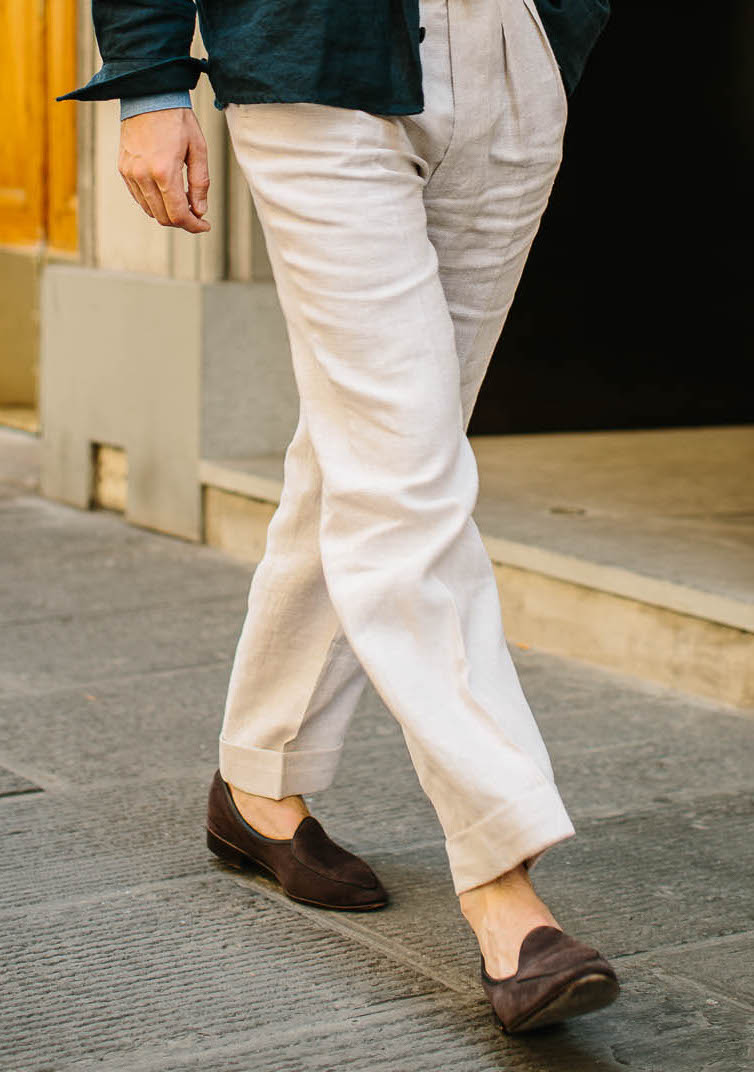
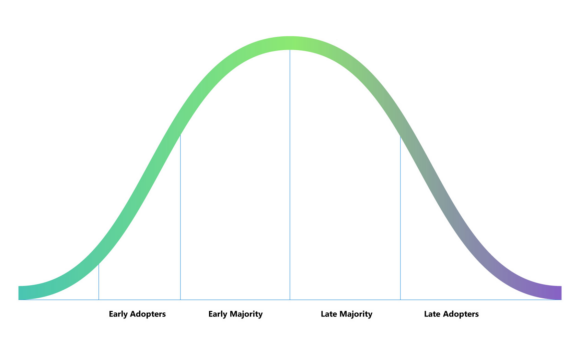
An old school friend of mine recently told me he now only wears wide-legged trousers, moving on from the skinny ones he’s probably worn for 20 years. This, for me, means we’ve reached the top of the bell curve.
Fashions always have early adopters and late adopters, and the media often get their predictions wrong. All it takes is for two fashion designers to put Oxford bags down the runway, and they scream that wide legs are back.
In fact, it takes years from menswear designers pushing something to general adoption by the public. Most men don’t care, or only change when enough of their mates change. Hence why you need to get to the top of that bell-curve distribution.
There are plenty of other signs that the pendulum has swung.
Suit Supply, which made its name offering skinny tailoring, introduced its first wide-leg fit, the Duca, in 2022. Uniqlo, which makes its money from offering universal basics – so sticking as close to the middle of the road as possible – introduced its first wide-leg fits in 2023.
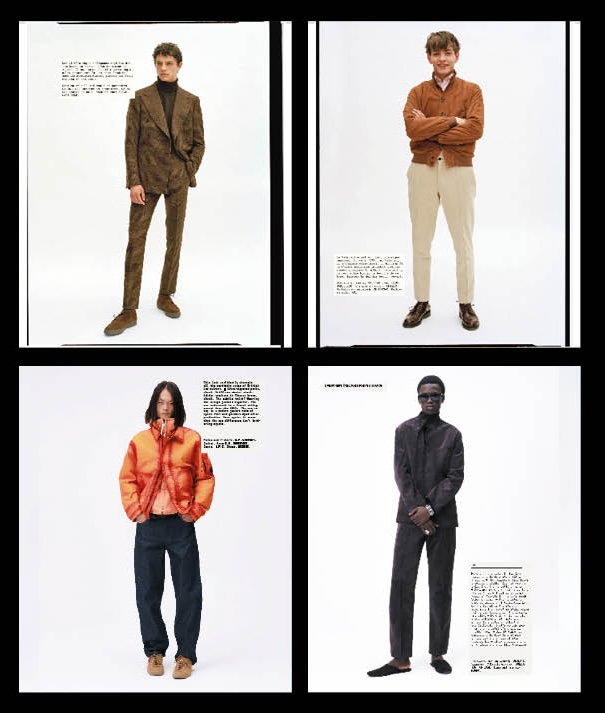
Good visual data comes from a magazine like L’Etiquette, which publishes a fashion shoot or two every issue. Over the almost 10 years they’ve been running, you can see from issue to issue how trousers got wider.
This was something we discussed in particular in the cover story of the latest Permanent Style magazine.
So should you follow suit and switch to wider trousers? My philosophy has always been that you should follow these trends, but slowly and conservatively.
After all, menswear trends move very slowly – perhaps a cycle of 15-20 years – and it’s foolish to pretend that styles last forever. It’s over 25 years since Hedi Slimane first made skinny suits a thing, and that’s a long time ago – the same as 1960 to 1985.
I’ve been letting out my trousers consistently in recent years, partly because I’ve gained a little weight, but also because a fuller cut felt better. I’ve been a good couple of years behind others I know in that respect, but I think that reflects my natural conservatism (and perhaps, that of PS readers).
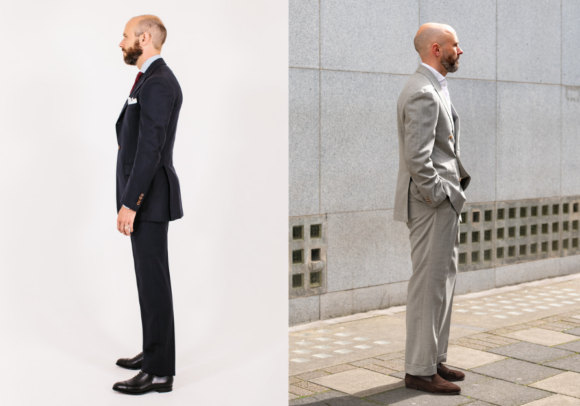
My suit trousers historically were around 19-20cm at the cuff. Go back to my first suit from Cifonelli 13 years ago, and you can see in our breakdown that the cuff measurement was about 19.5cm. Something more English, like my Richard Anderson tuxedo, was around 21cm.
It’s weird to think that the trousers of that tux felt wide to me at the time. It’s almost like cognitive dissonance: in my head I am certain of two contradictory things, both that the trousers were wide, and that they’re narrower than what I’m wearing right now (some Whitcomb trousers measuring 22.5cm).
Today, 22 or 22.5 is usually what I have with tailored trousers – it’s what the Assisi ones above are, for example. As always happens with good brands and tailors, I’ve been influenced by some of them too, such as Assisi and Bryceland’s. (The difference between jeans styles is often around this 2cm mark - Bryceland's 133 and 133S are 2cm different on the hem.)
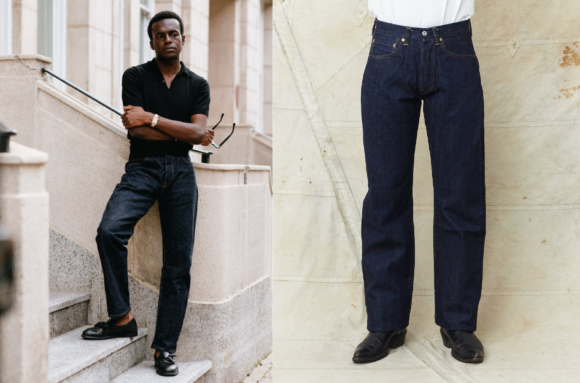
The nice thing about bespoke trousers is that this level of alteration is roughly the amount of inlay a tailor leaves inside them. My Whitcomb ones could be expanded by a maximum of 2.5cm in width, for example, with that amount on the back of the leg on both sides. And if any trousers are taken in, I ask for that kind of amount to be left.
Contrast this with someone more fashion-led, like Japanese designer Yasuto Kamoshita. In his interview with us, he mentioned that most of his trousers are slim – 18cm – and he now wants to let them out to 22cm. That’s a bigger swing.
(Remember that these widths are relative to things like height, width and shoe size, rather than being absolute. So 22cm is wider proportionally on him than it is on me.)
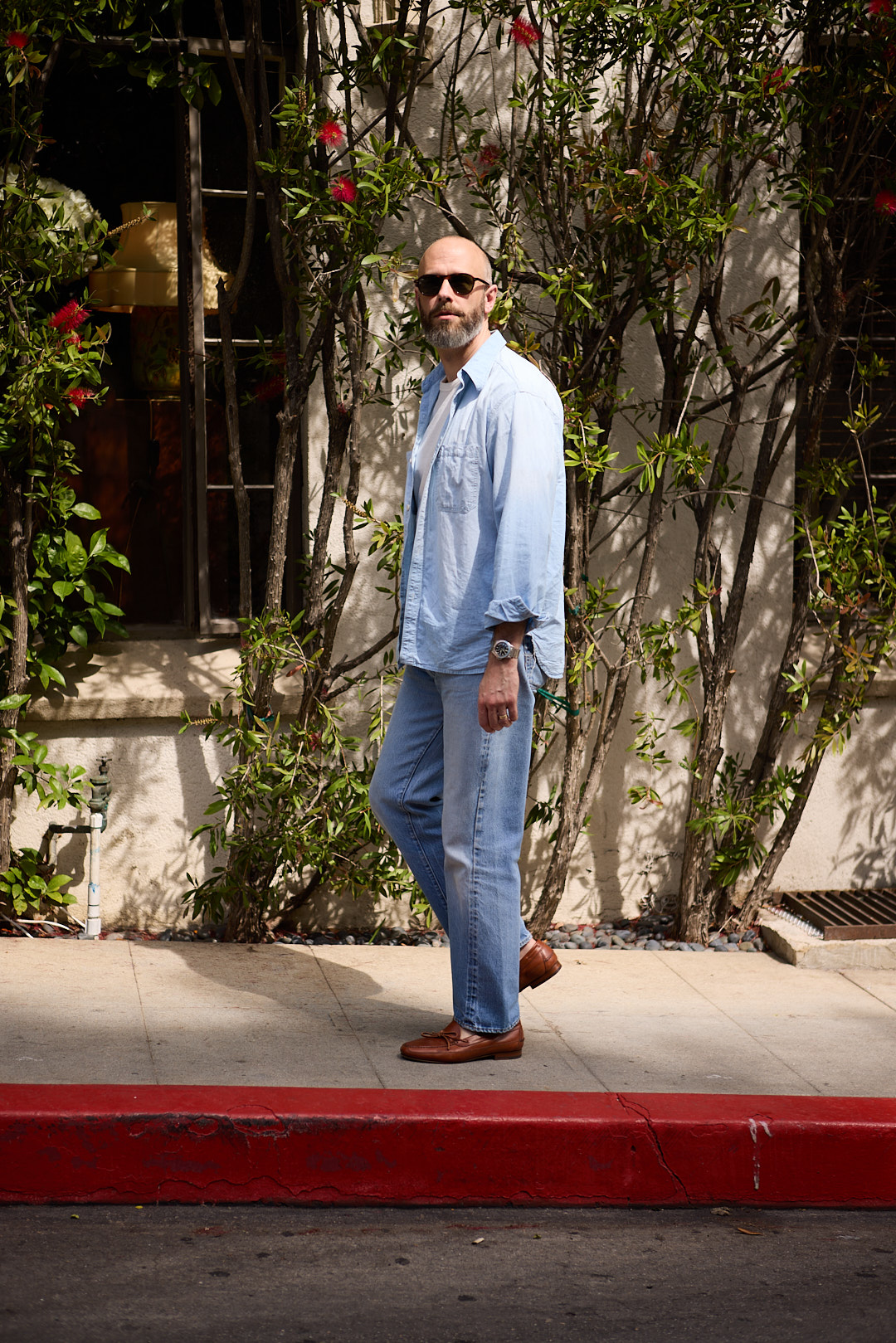
The bigger problem with altering tailored trousers like this is that the desired rise often gets higher along with the width. There’s nothing we can do about this unfortunately – while there is usually some inlay in there, raising the front at all requires several new things, including a longer zip.
It’s also much harder on casual, ready-made trousers and jeans. Here there’s little you can do except stay as conservative as possible, and accept that a pair of jeans might last you 10-15 years rather than a lifetime. But 15 years really isn’t that bad for a pair of trousers.
(Personally I’ve always felt this is one of the biggest fallacies of bespoke – saying it lasts a lifetime, even generations. If it does, at the very least the fit won’t be the same one you obsessed over at the start. And that longevity will largely be due to the ability to have it altered.)
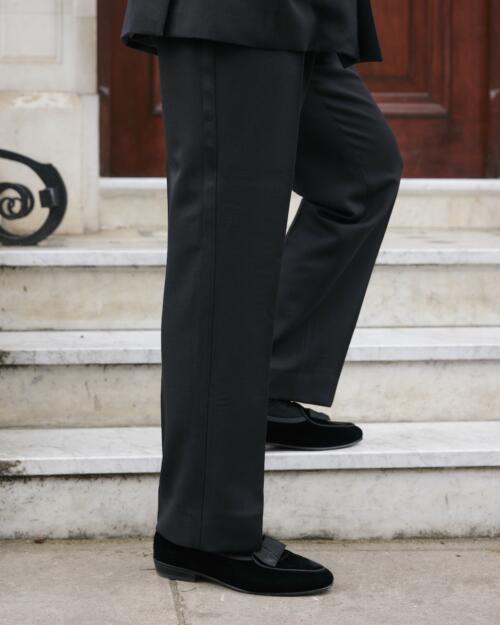
If you’re in doubt, I’d recommend letting out a pair of your tailored trousers and seeing how they feel. Maybe something casual that could suit it, like some flowy linen ones. It might even bring a fresh sense of enjoyment to wearing them, of the type you get when you polish a pair of old shoes, for example. They get a new lease of life, and are exciting again.
Some have predicted these trends won’t happen any more. The fragmentation of media and general atomisation of society would mean there was no dominant narrative, no society-wide trend.
The trends certainly are less universal than in the past. But in menswear at least, they survive. Men like to wear what other men are wearing, and right now most men I see are in wide-legged trousers – internationally online, or locally in the playground. The Dads wear elasticated trousers from Gramicci or Service Works; the teenagers wear 90s Levi’s or Carhartt.
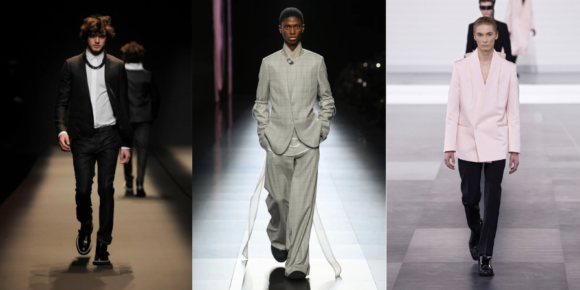
And as if a final sign were needed, some designers have already started rebelling against the mainstream, including Dior, Prada and Thom Browne, who both showed skinny trousers this year. But don’t worry, it’ll take another 10 years at least before that comes anywhere near us. Plenty of time to let those flannels out.
What do you see where you live, and have you altered your trousers in the past few years? Let us know below - everyone loves it when we share.
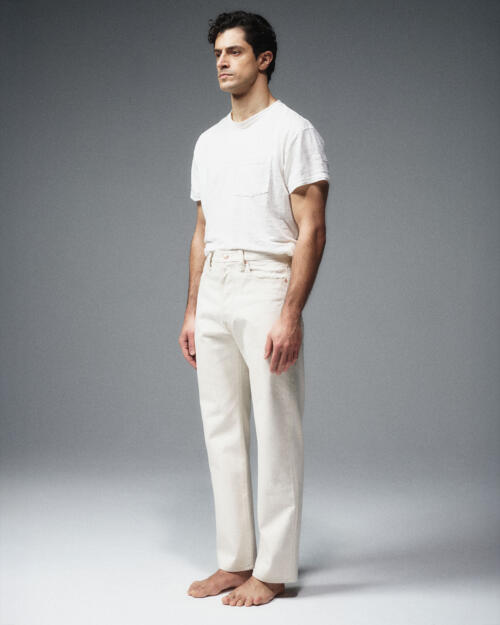
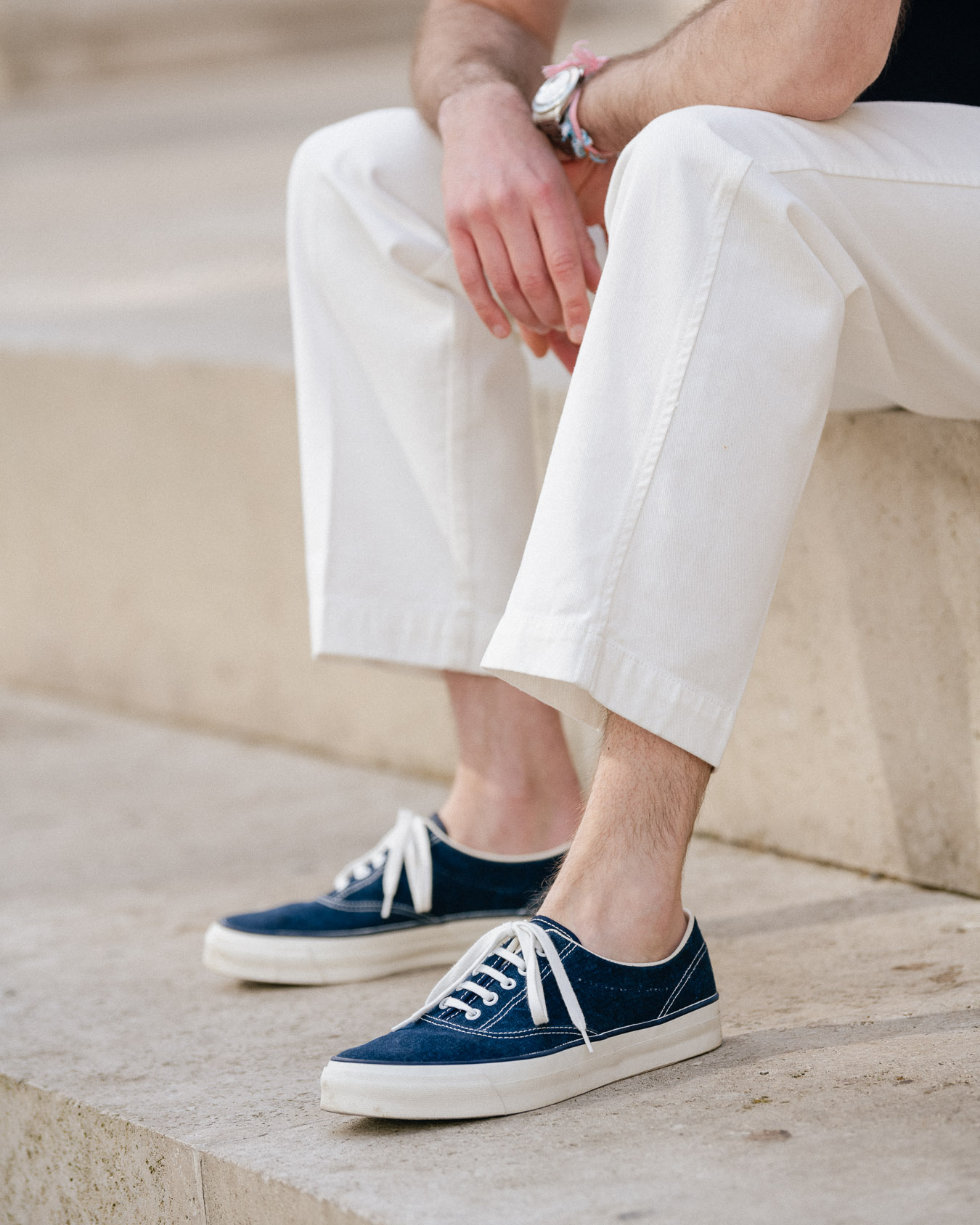
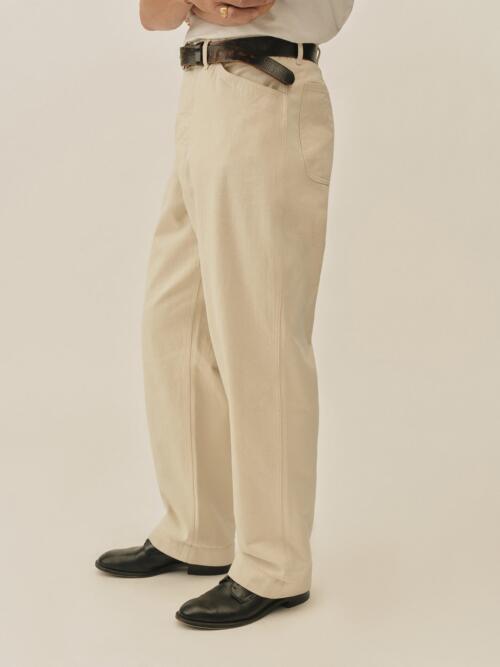
Here are some other examples of wide-legged models from brands we cover:











Hi Simon, can you advise on length for wider trousers? I too have gone for wider trousers recently; not due to style, but that I have reached an age (40) where I want more comfort. However, I’ve found that if they are too long then they can look baggy (a look I aspired to 25 years ago), and if they are short then they flap around a lot. Should length be adjusted alongside width?
Good question Rob, and perhaps something we can address separately in a post.
Generally, with a wider leg you want to go slightly longer. The trouser drops naturally down a little further on the shoe, and if it is short then it flaps around more.
Whereas with a narrower leg I might have trousers that only just touch the shoe, with a wider leg I’d want one that has a decent break, if not a full break necessarily. (Where the back of the trouser is as long as it can be without getting a break itself)
This is with tailored trousers. With casual ones that are usually stiffer, flapping is less of an issue and it’s more a personal style choice as to how long you have them. I tend to have casual wide ones a little shorter.
Simon this is interesting but incomplete. Trousers have above all else to have proportion. So I don’t think you can talk about hems being wider or narrower without talking about two other key measures; thigh and knee.
Traditionally trousers were cut in what has always been known as a cone shape, where the proportion between waist, thigh and knee was in important measure. Moving to a tighter thigh/knee/hem relationship became something or a trend (on normal) over time, which may or may not be to individual taste. But the key is that they retained a relationship.
Simply widening the opening on its own runs a risks of that relationship changing.
Just a thought.
Thanks Jasper, and yes you’re right it’s certainly incomplete, but also talking about knee and thigh would be too much for one article. Perhaps we can talk about it in another.
In general, hem width remains a good proxy, largely because the amount of taper the trousers we discuss have, does not vary a huge amount. As I note with the jeans image, it certainly makes a difference, but as a starting point hem width is fairly effective because of that lack of wide differences in the rest of the relationship.
And then the width of the trousers also should be proportionate to what you are wearing on top. A wide trouser call for a slightly roomier jacket. I guess we can see the same trend there to some extent.
Hello Simon,
I always loved room in my thighs, along with double pleats, but I used to go for a tapered leg toward the calves.
Nothing extreme of course, it’s funny because I used to go for 21cm leg opening and found it rather “slim”.
For my last commission (a tan cavalry twill trouser) I kept the rise and width of thigh, but naturally gravitated towards 22.5cm of leg opening, coming with a centimeter more in length to continue properly hugging the shoe.
I don’t believe I’ll change my previous trousers though. That’s the advantage of swinging close to a middle line, your tastes evolve but your previous ones don’t stop being relevant enough.
And it’s a nice memento of a journey started a decade ago, which makes me feel inappropriately old now, considering I’m clearly what everyone in my office would call young.
Thanks Jean, yes that’s certainly the advantage of staying moderate, though happily it sounds like current trends favour you in having less of a taper than a few years ago
Hi Simon,
Many thanks for this article. Do you think that the increasingly warmer weather has also contributed to wider trousers being seen more often? I always associate them with heat, as opposed to colder climates
I don’t think so to be honest Vik, as people in warmer countries embraced the skinny look as much as elsewhere.
However, I do think there are other factors that could have contributed, such as everyone lounging at home in pyjamas or sweats for much of Covid
Thank you – I hadn’t factored in home working, but it makes sense as people seem to be moving to more athlesiure type of clothing.
As someone with quite large calves I’m very pleased to see wider trouser hems become more easily available. 20cm is the absolute minimum for me and even then it can be uncomfortably slim. I also find due to my calf muscles a slimmer trouser leg has a ‘pulled back’ look on me as the back of my calf sticks out several cm beyond my heel. Acceptable with jeans but looks much worse on smart trousers.
Yes good point Aaron, slim trousers are harder to get the cut right in that respect, they’re less forgiving.
Perhaps we’ll also have fewer people asking about how to cope with trousers sticking on over-the-calf socks
H Simon,
I’ve always worn the slightly wider version in trousers. For me the extra width enables them to hang properly and not tend to hug legs when walking. I think it’s useful to walk around rather then stand still when trying on as it’s more natural to test for movement. Same for looser jeans. I think it’s simply a personal preference. A bit like tighter shoulders which I don’t like at all. .
I remember when Rishi Sunak taking a bit of stick over his trousers- unfairly IMO – from some commentators, which I think was a bit politically driven.
I would venture fit in particular is a personal preference, when that is driven by fashion it just looks uncomfortable.
I know what you mean Stephen. There’s obviously a big element of this that’s about dressing for yourself or others – as we covered here.
I’ve always thought that it’s some mixture of both for everyone, even if only subconsciously. You want your own view and personality and style, but context always plays some role too.
Good tip on walking around when trying trousers on. Good to sit down for a bit too
This is one trend I’ve genuinely welcomed.
As a tall, broader than average guy, I’ve never found RTW trousers that fit me properly, and now I finally feel comfortable. I’m not particularly keen on the exaggerated ‘wide trousers’ currently being marketed, but as I enter my forties, I’m fairly confident that my preferred trouser width won’t change much from here.
It’s a bit like lapels, I’ve always preferred 3.5-4-inch because they suit me both physically and stylistically. Ten years ago, they were considered very wide, now they look fairly average.
I’ve also always admired older men who can carry off these mid width silhouettes. I can’t imagine myself returning to slimmer trousers over the next twenty years as I approach 60 and beyond. For me, this width is just perfect!
P.S – just received my Bruce Chinos – my only regret is not buying more. Perfect example of a width I’ll carry to my death bed. They’re amazing – great job! Perfect rise, width and style. I’ve spent years searching for RTW chinos in this fit and colour – first pair that ever work on me. Thank you, thank you!
So nice to hear Chris, thanks, and that the pre-order system worked well for you. We will have some stock in a few weeks from that too
I have never followed fashion or trends since. I wear what I like and not what other men are wearing. In my part of London, most men look scruffy. They, especially the Dads outside the school gates, wear denim jeans and trainers, often with t-shirts. Why would you wear them if you have a wardrobe full of quality clothing?
My suit and formal trousers have always had a high rise, a single forward pleat and a tapered leg. My casual trousers (chinos, moleskins and cords) are similar but have a flat front which makes them easy to iron. Why change a fit or cut that you love just to follow fashion?
And who really cares what Prada, Dior, Thom Browne or any other over-hyped brand showed this or any other year? Probably those who are fascinated by “celebrities” with lots of money but terrible taste, e.g. the Beckhams, Taylor Swift and the ironically named Harry Styles.
As ever nice to have the view Kent, though a few things squished together there. You can have very high quality in denim and T-shirts too, and worn better than probably the Dads you see at the school gates. It’s just that you prefer a different style.
It’s relevant what designer brands are doing because it still actively shapes what most brands do, including the more traditional and high-quality ones we highlight in this article. It’s got nothing to do with celebrities.
I went with slimmer trousers when it was fashionable to do so. But, I was happy to see the resurgence of a wider profile. To my eyes, the looser fit is far more flattering (to men of different sizes) and reminiscent of the classic styles of the 1940s epitomized by David Niven, Cary Grant, The Duke of Windsor and so many other style setters depicted in films of that era. It was that look I think that inspired Armani’s success in the 80s and early 90s. i’ve always associated that look with some elegance and if not quite louche, definitely a bit rakish. Glad it’s back.
I think more than following trends you should have trousers cut for your body and your style. I feel that if there is real coherence and confidence then it overwrites expectations from fashion, people will accept it. If you look better in outfit that harmonises with slimmer cuffs, then why go for wider ones? I guess the real issues arise when the extremes meet.
For most people I think the body size makes less difference, and is separate from their personal style. When suits were slim, everyone said they were flattering because they made you look slim/in shape. Now they’re bigger, people say they’re flattering because they make you look bigger/stronger. There’s a lot of cultural change there that it can be easy to miss when trends take up to 20 years to change