

Should you dress for yourself or for others?
Unsurprisingly, the answer is both.
Anyone that dresses without any regard for people around them is probably being rude, and certainly inconsiderate.
Dressing purely to conform, other the other hand, is just sad. Whether the result is natty or sloppy, you shouldn’t spend all your time worrying what other people think.
As with many style spectrums we cover, the best option is somewhere in the middle, with nuance that depends on both culture and personality.
Yet that doesn’t stop people on social media from shouting things like ‘Dress for yourself!’ or more ridiculously, ‘A gentleman dresses for himself!’
It’s not true and it’s not helpful.
Clothing is social. Always has been. There’s nothing wrong with being unusual or rebellious in what you wear, but don’t pretend it doesn’t matter what impression it gives.
In fact, usually rebellion depends precisely on the contrast with the clothes everyone else is wearing.
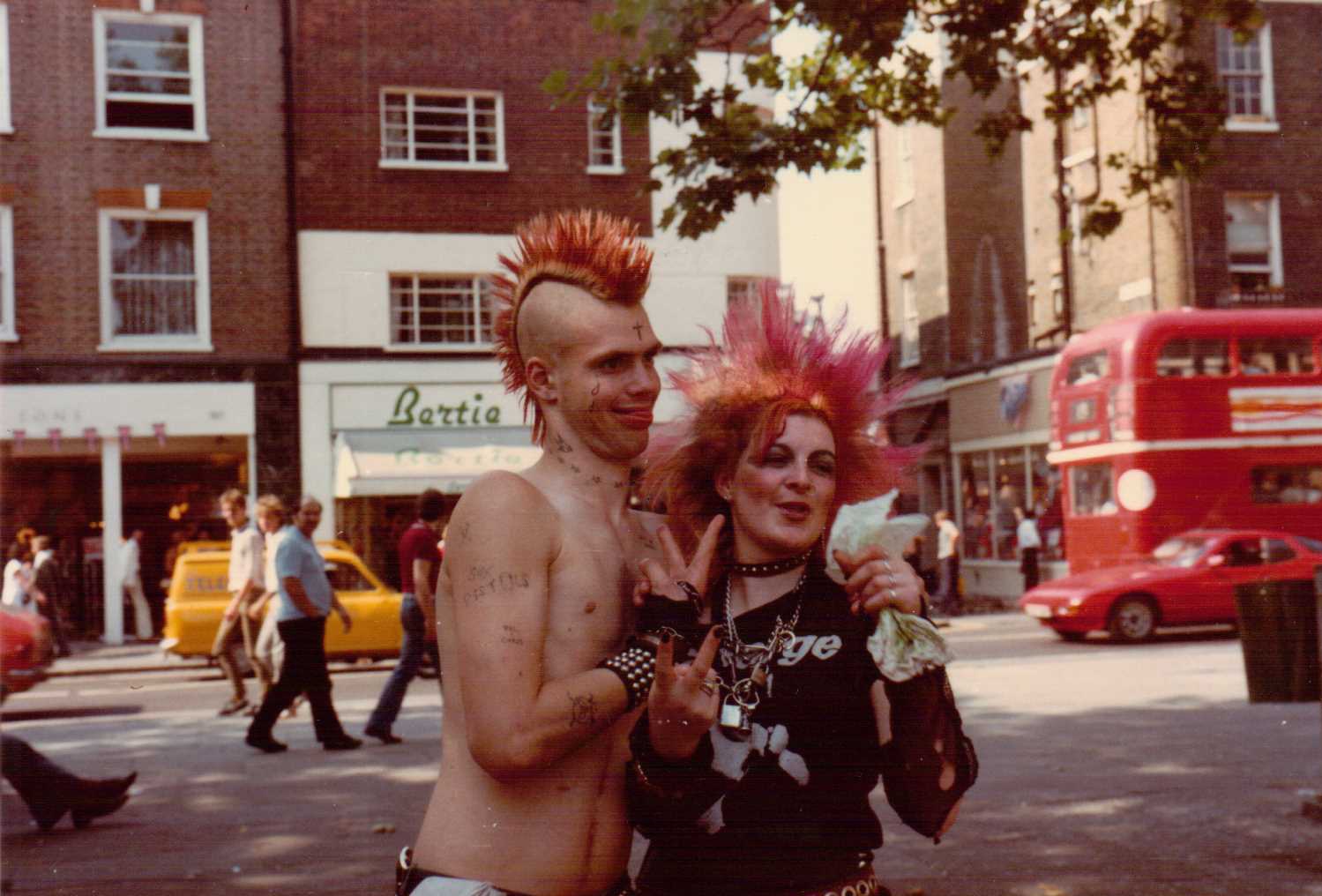
A punk striding down Regent Street in the 1970s - complete with mohican and studded jacket - is only saying something because he’s different. If his bank manager dressed the same way, the effect would be lost. He's not actually dressing for himself.
Indeed, were someone to be dressed that same way today, they would have much less impact. There may still be few punks around, but the look has long since become familiar, rehashed and commercialised.
Today - as readers often point out - looking smart or simply dressed-up is more likely to be unusual.
I also think classic menswear enthusiasts - perhaps even some PS readers - forget that even the concept of elegance is social.
Something elegant is refined, simple and effective. Clothing that rubs the wrong way against its surroundings, that looks out of place, rarely has grace or elegance.
This is particularly true with the idea of a 'gentleman'. The reason it’s ridiculous to say that a gentleman dresses for himself is that the core idea of gentility is being considerate, and respectful.
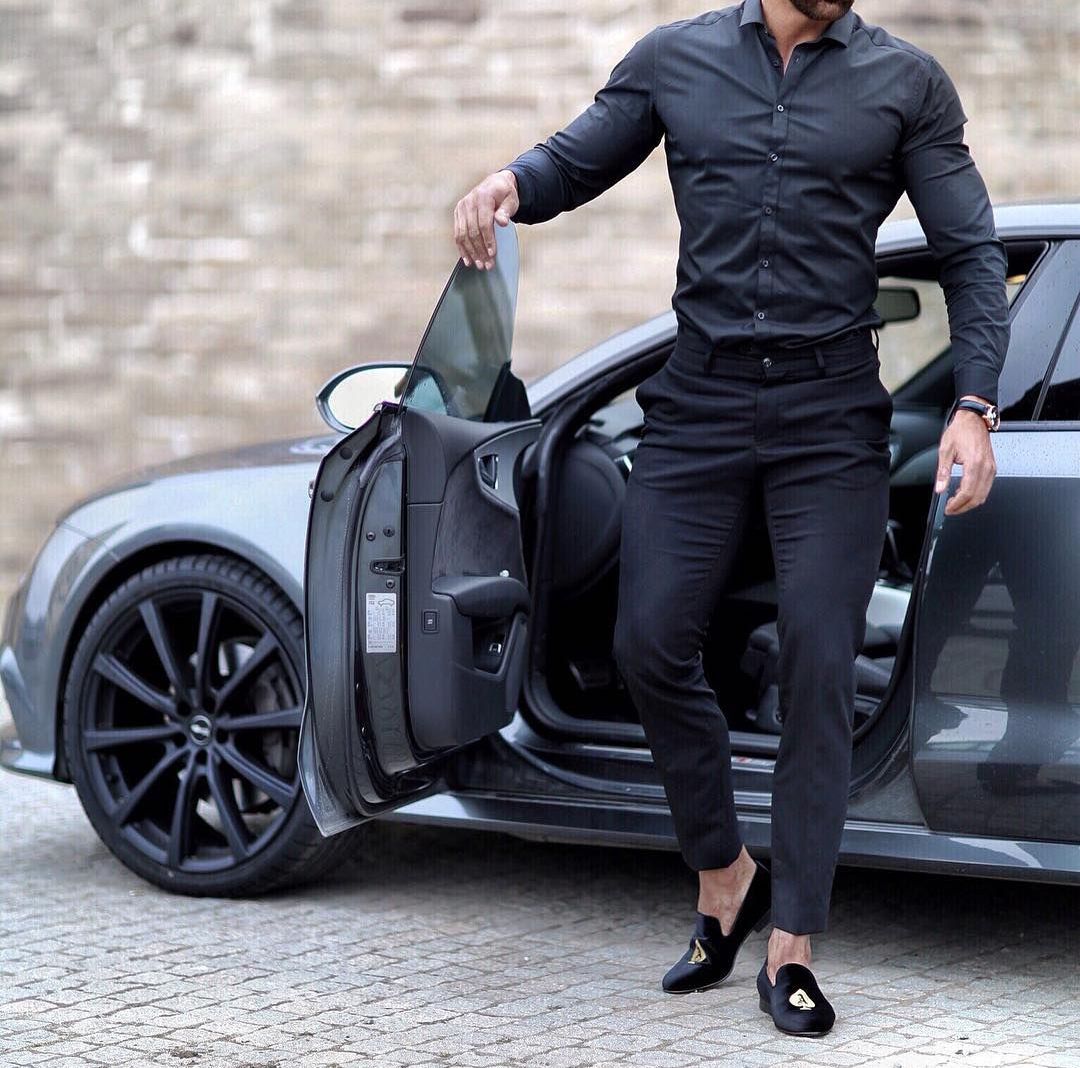
A gentleman doesn’t necessarily wear a suit, and he’s actually unlikely to drive a flash car or wear a flash watch. But he is certainly polite and thoughtful - and that includes dressing appropriately.
So, both extremes are nonsense.
What about the subtleties in between? How much should we go against the grain?
For example, if everyone else is wearing jeans and a T-shirt, can I wear a jacket and tie? No tie? A jacket and jeans? Just a shirt and jeans? How far do I slide?
Here’s how I think about it. The choice is personal - it’s up to you. But that choice is measured in society’s terms, not yours.
So society sets the norm. It is a measure of what people usually wear, the average, and it determines how much your outfit stands out.
This varies between countries, between cultures, and between town and country. But the point is you have no control over it. This is why to some extent you are always dressing for other people.*
Then you decide - based on your own circumstances and personality - how far you want to veer away from the norm.
I like to find a balance where I look well dressed, but stand out as little as possible. This is the little area I play in, just to the left of centre. It means I’m often a little bit smarter than the average, but not much.
Usually the difference is in the quality and the cut of my clothes, rather than the category: my shirt and chinos will be very different to someone else’s shirt and chinos.
I might look a little unusual when I’m waiting at the bus stop, wearing a jacket, flannels and loafers. But others are there in dress shirts, suit trousers and oxfords. The jacket puts me one notch smarter, not 10. The bigger difference is mostly cut, not category.
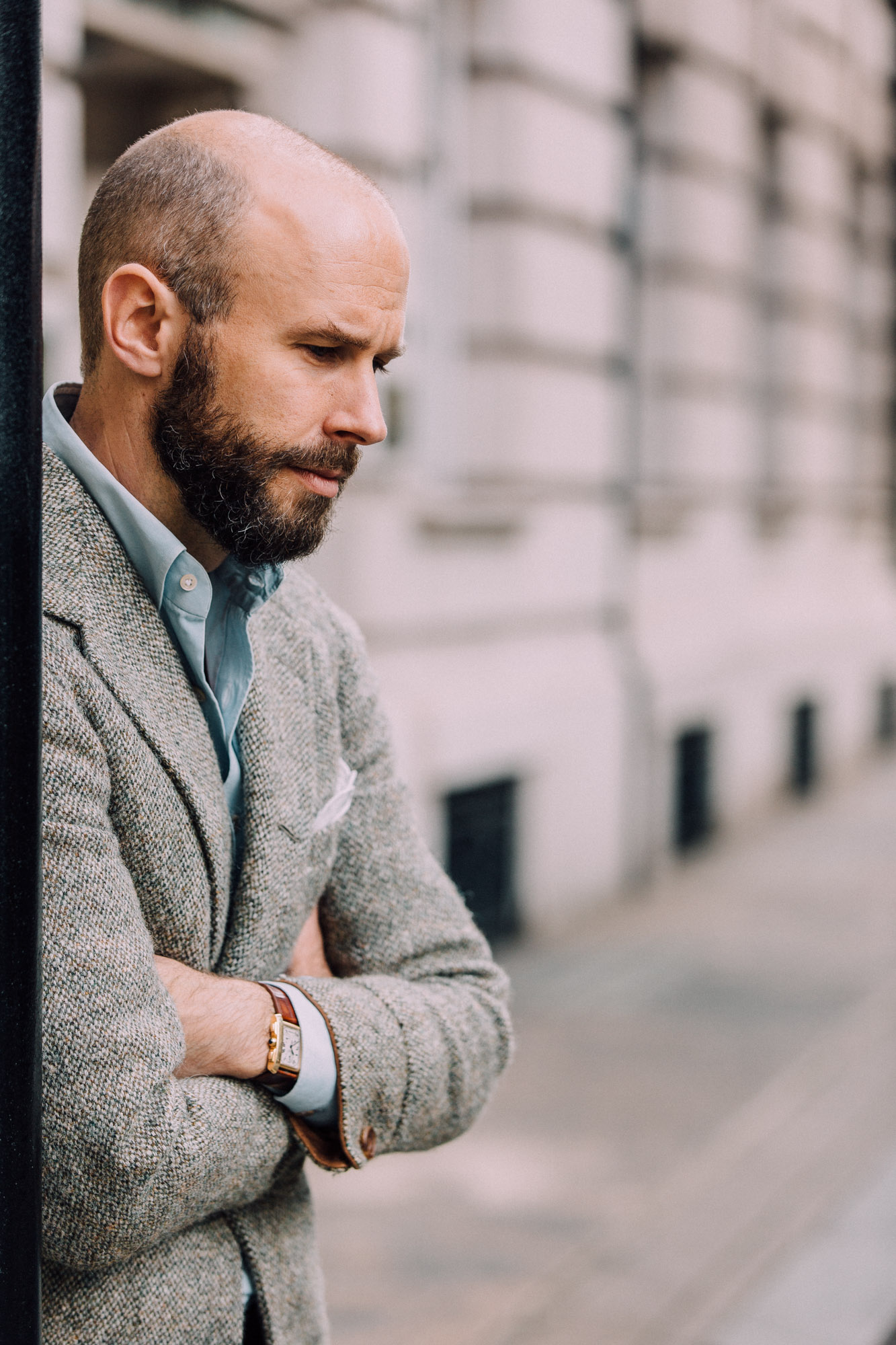
This is only my preference. I happily enjoy seeing others dressed as intelligently, but veering further from the norm.
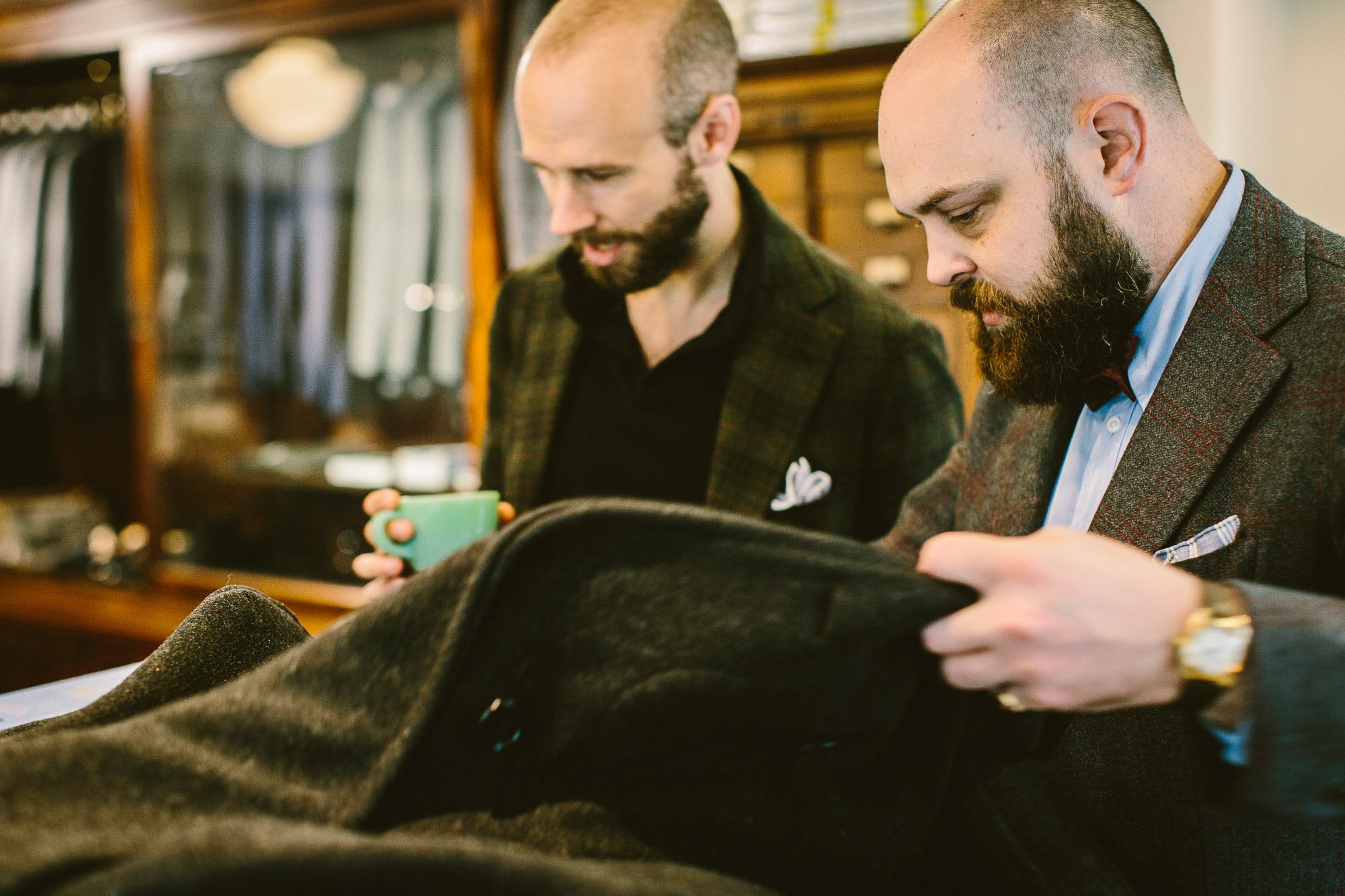
If my buddy Ethan (below) were there in a towelling shirt or bow tie, he would stand out more. But that’s him, and he’s no less aware of the social context than I am.
His context is also different. He's often commented that nothing real feels odd if you spend your time around Harajuku in Tokyo. And no one has any expectations of gaijin, as they’re seen as separate from Japanese conventionality.
Plus of course, he runs a menswear shop. As Ethan said to PS here, he sees it as his job to push the style in every interesting direction he can think of, so customers can take little pieces of it they like.
If you talked to him and learned he was a menswear designer, everything would make much more sense.
The only thing I struggle with sometimes, is whether it’s foolish to change clothes based on context.
For example, I could feel self-conscious wearing a pocket square in the suburb where I live, but wouldn’t when I got to the end of my commute, in Mayfair.
I go back and forth on this, but in the end I think the most important thing is to feel comfortable. So if I don’t, I take it out.
No one really just dresses for themselves, or just for others. It’s a false dichotomy.
Everything and everyone is somewhere in between. That’s where it gets interesting.
*This is also why there's nothing wrong with dressing differently as long-term fashions change. As people dress more casually - and they have been gradually for over 100 years - the average changes. So if you stand still, you drift further from the average and stand out more.
I personally think it's better to maintain your distance - how unusually you dress - rather than a particular style. A good example being wearing handkerchiefs less.
I'm sure there's a mathematical way to phrase this - if there is, please let me know!
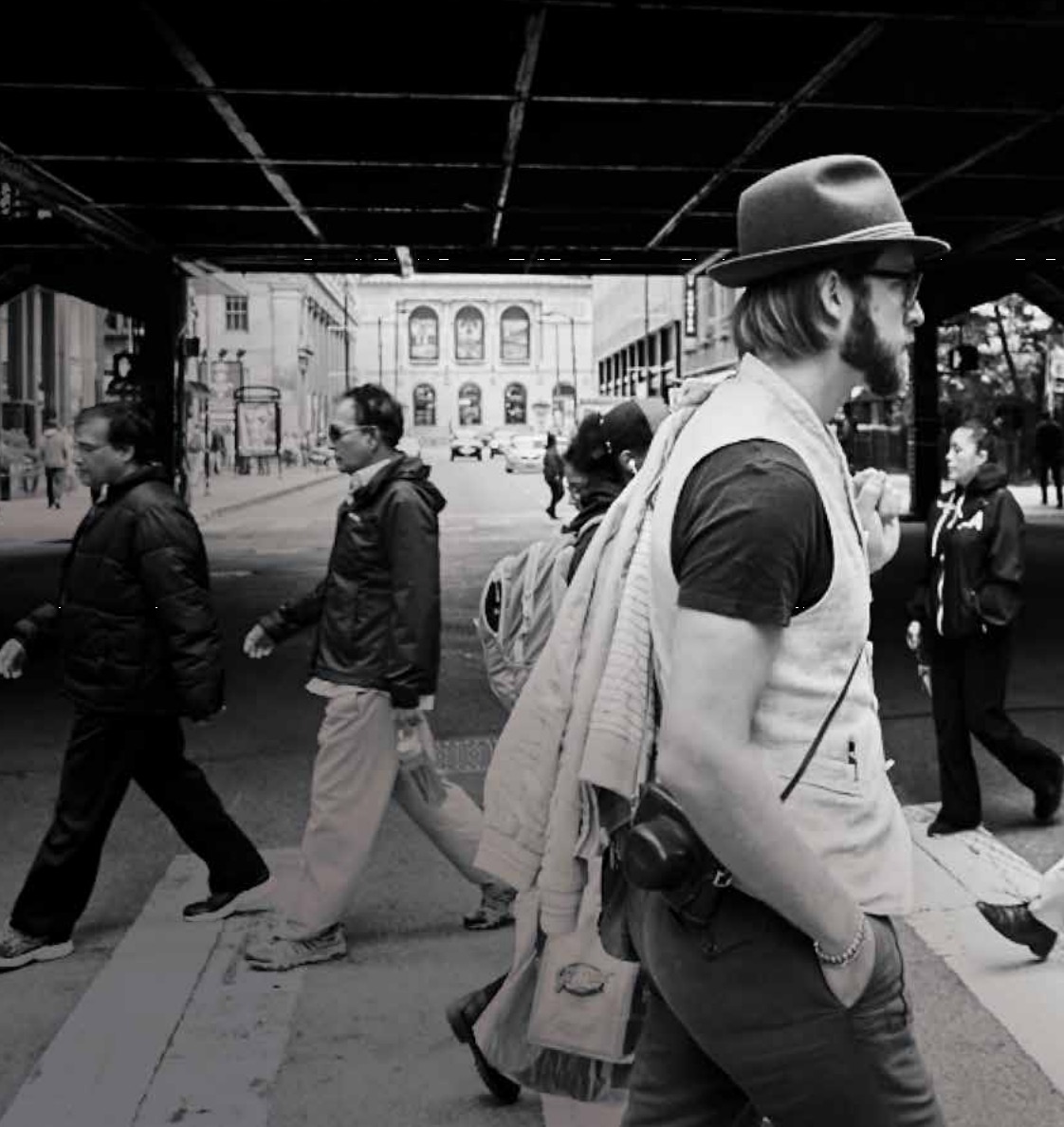
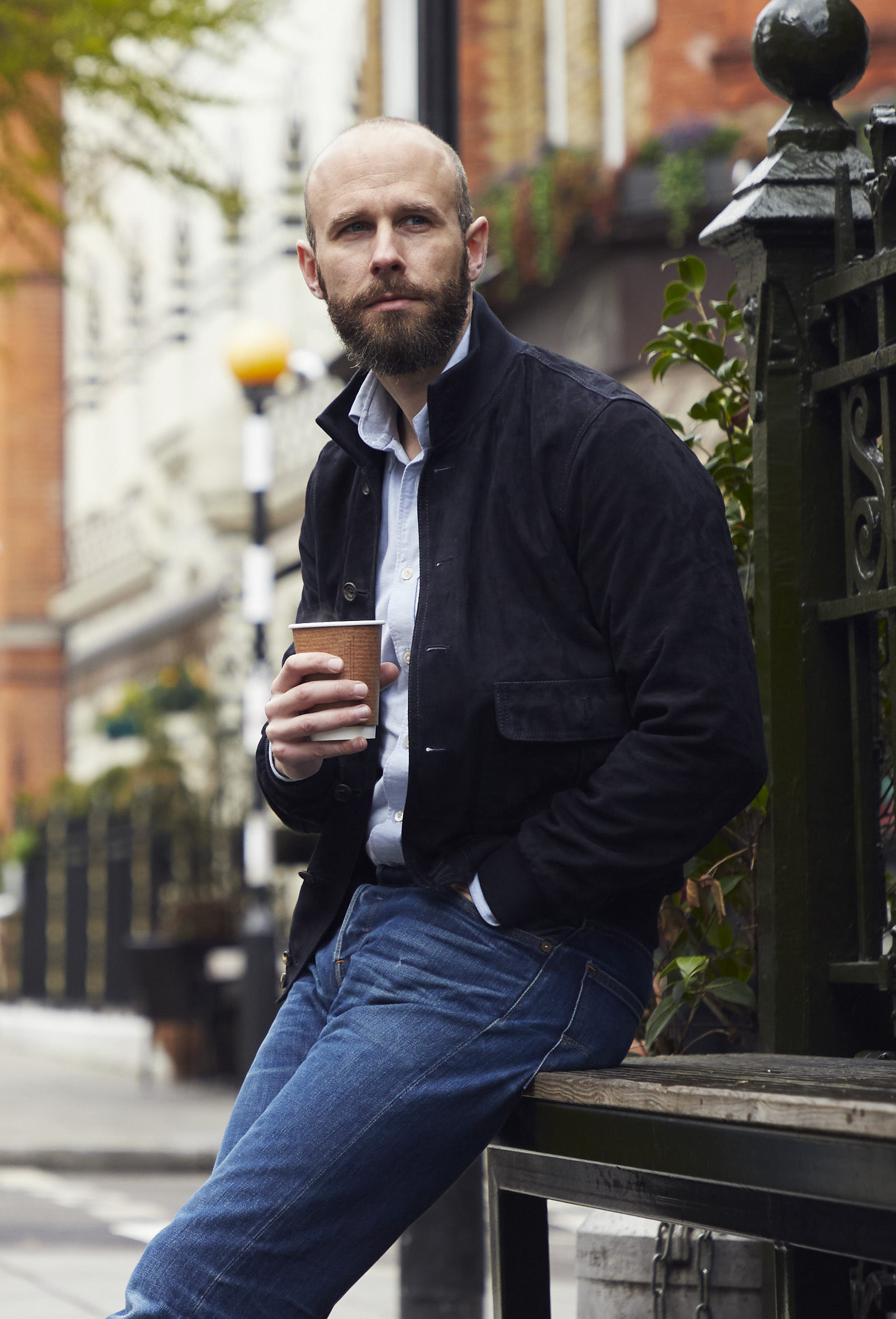
The top image is courtesy of Optimo Hats. Interestingly, Optimo specifically talk about their hats as being for individuals - for those that don't dress like others. Unlike most hat companies I know, who emphasise getting everyone to understand and wear them.










I agree, its a balance of both but sometimes one is needed more than another…. I turned up at a meeting in Delhi in a suit when all others wore open neck shirts. Later I was asked why I wore a jacket and tie on such a hot day? I told them I had a definite conundrum on dressing that morning; on a previous trip someone had made a passing comment that ‘We know you British chaps always wear suits and ties’ and so, it being an important meeting decided on a suit because I did not want people thinking, ”Hmm, he normally wears a suit but he does not think we are important enough” Strange how our minds work sometimes…. My questioner looked at me, and then said, ”You know you are correct, a British chap turned up last month and we all assumed he thought the meeting was not important to him because he wore no tie or jacket….. Sometimes it pays to dress for others and sometimes for ourselves, it is indeed a balance.
Lovely story Gary. I like how it shows that even if you try to dress for others, it’s easy to get it wrong
A lot of wisdom in this piece. Cannot agree more.
great article Simon. I confirm to dress mostly for others, at least if I am honest. In the female realm, it is quite common to hear that one dresses for “herself, to feel good”. What is interesting is that if nobody watches, say on a Sunday staying inside, a woman never has a lace bra or high heels, hence by definition they dress for others, but it seems to be frowned upon nowadays to say so. In the male realm this certainly applies, but perhaps less so, an interesting question…
Thanks, always nice to have a female voice on here.
I would add an emotional dimension:
To dress according to one’s own need. Sometimes you have the desire to have the feeling of being seen by others. Accordingly, you dress somehow “for others”, but still in the end for yourself and the feeling that the clothing triggers in you (feeling seen, feeling attractive, feeling part of a social group, feeling special, etc.). Accordingly, it is not contradictory to dress for yourself and be at home in sweatpants (need here is feeling for Comfort).
In addition, clothing also serves a certain fantasy, such as being able to represent someone who you are not 100% or who you would like to be. And since the self-image is determined to a not insignificant extent by how you think others perceive you, you dress for others here as well, but somehow in the end for yourself – that is, the feeling (not visible to anyone else).
So I think the question is not whether you dress for yourself or for others, but which (emotional) needs can be satisfied with the help of clothing.
By the way, I absolutely do not assume that men and women differ here.
PS: I’m not sure if “need” is the right word in this context.
Just lovely put, Jeldrik. I think this emotional dimension is central, and that just about every marketing agency would agree!
Hi Simon – nice post as usual. Perhaps the most mathematical term that you are after is standard deviation? I understand that in the totality of the distribution you do not want to be in the tails and aim to be relatively close to the median (in the context of the population’s behaviour).
Aha, yes good point.
So society sets the mean, and you decide how many standard deviations you want to away from it?
Or variance, since the mean changes over time
As always an interesting article.
That said, most people dress to be attractive to others and to gain authority.
The way you look determines how you will be received and has consequences. Everybody likes to be liked – especially by members of the opposite sex.
I was recently obliged to change my barber and the man proposed was covered from head to toe in ink, had everything body part pierced and looked like he’d inherited Sid Vicious’ wardrobe. He was probably a very nice guy but he didn’t get the job and I was never going to let him within a million miles of my crowning glory. How he looked had a direct commercial consequence.
Secondly, I’m firmly of the opinion that the way you dress effects the way you behave. Not too many smart people go around littering , parking irresponsibly, dropping the ‘F’ bomb or behaving in an anti-social manner. When dress standards decline so do standards of behaviour.
Thanks David.
There’s certainly a different angle when you are in a service role and need to put across a certain impression. Though I guess how much other people judge you by that impression is based on them. Others might prefer someone that looked like that; others still wouldn’t judge either way.
I think I disagree more on the second point. When those two things do occur in the same person, it’s because that’s their personality. The things come from a common cause, rather than causing one another.
More importantly, the much bigger proportion of the population fit into neither category. They don’t necessarily dress that well, but neither do they behave irresponsibly.
The issue of dress affecting behaviour does have some validity (but doesnt of course guarantee it). When I used to work with some of the most disadvantaged people in society, enormous changes could occur in their self esteem, attitudes and behaviour, simply by their being clean and relatively well dressed; and it certainly affected the behaviour of other towards them.
Good point, thanks Darryl.
Simon,
We are all in a service role – wether you are giving or receiving and every study I’ve ever seen shows that we subconsciously make our mind up about people within sixty seconds of meeting them. Appearances are crucial.
Regarding my second point, of course Darryl is completely correct and this is why, in no small part, the military have uniforms.
Regards,
David
It’s rather different, David, if you are a customer rather than someone providing a service. One is a question of showing normal respect. The other is about being part of the service provided.
You haven’t really addressed either suggestion I made regarding the second of your points, but interested to hear anything you have to say there.
This alleged “fact” “we subconsciously make out mind up about sixty seconds of meeting them” does not consider karma and reincarnation.
There’s the old saying: Don’t judge a book by its cover. Look at Trump, Putin or other leaders such as Johnson. They dress smart, etc. However, if they had personality tests I think their applications for leadership would be denied.
Regards,
Andrew
Do they dress smart ?
I’ve always thought Trump and Johnson where their suits with the air of sullen schoolboys who’ve been caught trying to skive off.
And I’ve clearly spent too much time skiving off school if I can’t spot that I’ve written “where” instead of “wear” before hitting the post button.
I disagree with your use of President Trump in your example for leadership. Seventy five million people voted for him. There’s your personality test. He was the best U.S.A. President.
62,984,828 for Trump
65,853,514 for Clinton
sorry for taking the bait
Wrong election though, presumably? I’m guessing MLS was referring to the election Trump lost
75 Million gave him a chance and he failed by not working well with others and making it all about him.
Also the degree of how much I want to stand out changes drastically by each situation. When I am going out, I have no problem with standing out a lot. At work I am happy to stand out a little bit to separate myself from the lazy and sad business outfits. In other situations (funeral, or also a wedding) it would be just rude to stand out more than maybe by quality and cut, which you (hopefully) cannot avoid at some point.
‘So if you stand still, you drift further from the average and stand out more’
I was having this very discussion with my wife in the context of how denim has become culturally acceptable . Now the discussion is more about how smart it looks, not it’s use. Even here, the boundaries shift, for example, the very faded chambray shirt is now both stylish and average – I still wouldn’t wear one to go visit my mother, but she would be happy if I wore Ivy, whereas, my wife would regard that as little more than a cultural uniform -so not stylish.
Simon,
Thanks for the article. Which of your jackets is the oatmeal one? Thanks
You mean the shot of me with my arms crossed? That’s my green tweed Cifonelli – more here.
A most relevant topic. I find myself at a new job with a less formal environment, where even sneakers on men seem to be ok. Having built up a nice wardrobe of italian suits and fine shoes, I have no plans on starting to dress down for the sake of fitting in with a way of dressing I dont like. Also, some have pointed out that dressing down is connected to “less prestige” and thus seen as more desirable. For me, its the other way around, dressing well is mostly for others and thus signals less prestige rather than adapting to a lazy standard that promotes a way of acting that is just not real. I have found that dressing well gives people a better feeling about themselves and thus contributes to their surrounding.
This of course doesnt mean that all men need to wear suit and tie. But the alternative now where anything goes, isnt helping any of us. So I prefer to set the standard a bit higher and see how that affects the people around me.
Thats it for my ramble this Wednesday afternoon 🙂
I agree – be the change. It’s like driving on the motorway: people (usually men who drive too fast) often say that you should adapt to the general (= too high) speed of the surrounding cars. But then I heard an interview with a policeman who said: ‘Your own car defines the general speed as much as the other cars.’
That was a small epiphany to me, and I find applicable to other parts of life as well. So instead of feeling forced to dress down, inspire others to dress up. It takes some extra courage sometimes, I must admit.
Indeed. I am faced with that now and must say I shall enjoy the ride and see where this goes. 🙂 cheers lads.
Here, here. +1
Hi Simon,
A thoughtful, insightful and elegant article. Nothing I would disagree with.
I tend to think (along the lines of your articles) that how you dress to some extent is showing respect for those with whom you are interacting.
Wearing a suit to meet my CEO (prior to my retirement!) and jackets and trousers day to day and of course there was dress down Friday! Remember those! Also dressing appropriately for a restaurant and occasions.
I really like the way you give words to something intuitive. Nice one.
What a nice compliment. Thank you Stephen.
Nice piece, as ever. My wife always makes the point of environment. If I travel to one place, I stick out. My dress hasn’t change, but my location has. It’s not as simple as “I look stupid”, it’s about where I am. I’m personally a little more formal than others in dress, but it’s not to set myself apart from others, it’s just who I am, and I’d rather be overdressed than underdressed.
I find these “philosophical” pieces very interesting, especially if I do not necessarily agree with every single proposition.
I have often been asked for advice, explicitly or implicitly, by men who, like Simon, are really quite aware of even small differences in dress (take, as an example, Simon’s comments about a pocket square in London suburbs vs. Mayfair).
It seem sensible to take that aspect very much into account. Some people (like myself) do not mind standing more clearly apart from the norm, some even seek it, but that is clearly a minority.
Hi Simon,
Funny thing, just thinking to ask you something in regard with the principles in this article , opened the website and the article popped in.
I will spend few nights out with friends at some beach bars,where the formality is low ,such as shorts and t shirts but I do see and like to wear some trousers. I am not looking at some more formal ones not only because it will be misplaced but also because on a beach everything gets messy.
What do you think I could wear as a trouser? I was looking at some fatigues perhaps? Do you recommend any brands?
Thank you Simon!
Nice! Anticipating a reader’s every need.
How about some loose linen trousers, if it’s on the beach? They could even be drawstring ones. I wouldn’t wear those with something tucked in, as noted here, but that’s up to you. A T-shirt on top would be pretty casual still; a knitted T-shirt would be smarter; and a knitted polo shirt a step further.
De Bonne Facture do linen trousers like that, as do Informale.
A very interesting article. Simon, while moving away from the two absolute positions at the extremes (Dress only for yourself, Dress only for others), you have actually taken another absolute position in the middle, LOL. To wit: “Everything and everyone is somewhere in between.” My italics.Faintly ironical, isn’t it?
Broadly speaking, I agree. But I would tweak your position just a little, personally speaking. I dress mostly for myself, but I also dress for the occasion. Now this might seem like dressing for others, but it actually is not. For example, I will wear a jacket and tie to a funeral, even when I know that, out here in the midwestern heartland of the US, almost no one wears a jacket or tie to a funeral any more. Dress codes are close to non-existent, the joke is that if you wear a jacket and tie to a funeral, the only other person similarly attired is the person who is in the casket.
But generally paying heed to the culture and society in which you find yourself is polite and well-mannered. The exception is when you try too hard to fit in, and are seen as arriviste, or reaching. Elegance is often well-defined by circumstance, not just by personal style, and is not absolute.My favourite example is Mahatma Gandhi, whose single homespun loincloth was perfectly elegant for his particular set of circumstances, although in an earlier life he had worn fine suits and ties during his lawyer days in Pretoria.
Thank you, lovely points about circumstances.
I don’t think the position I’m suggesting is really an absolute, given it covers everything between one extreme and the other. At least that wasn’t what I meant. It would certainly include your examples, for instance. There are many reasons you might be at different points on that spectrum, one being personality, another being occasion. I hope that makes sense.
It does, Simon. Thank you for your response. I was, to be quite honest, being a bit tongue-in-cheek when I made my suggestion about your position. I do understand that you meant a middle path, rather than the extremes, of course.
Ah ok. Always hard to get tone across online!
I know. One way I try to convey a sense of light-hearted persiflage (as I tried this time) is to use “LOL” in the vicinity of my weak attempts at humour. I’ll just try harder next time,LOL.
A thoughtful piece Simon.
There is also a third dimension and that is the personal associations that an item might have. For example, I might wear a particular jacket that I tended to wear with my parents for dinner because it reminds me of them (specially now given the pandemic limits contact). Of course, that jacket would still be worn in a social context so I would be dressing for other as well as myself. But there would be some internal meaning that is only accesible to the wearer.
True. I guess there could be a variety of those – ways in which you’re dressing for yourself that others don’t see. They’d include some elements of make and quality probably as well
Good point. People usually don’t use quality to describe a garment they like on the wearer. It simply looks good. A chino from H&M has the same level of formality than one from Rubato or the Real Mccoy’s but there’s a huge gulf in quality. Only the wearer might know why it looks so nice (or be aware of construction details).
No reader of a site like this dresses entirely for himself.
Great article! I find that at least 95% of people dress to conform, and it is sad. What I find most sad is when people use their clothes to rebel against conformity, but instead simply conform to what another group is wearing. There’s certainly value in dressing to conform to a specific rebellious subculture, but people confuse that with individuality. If we’re dressing smarter than the typical person, are we dressing to rebel against today’s casual conformity? How much difference is there in trying to dress with individuality versus trying to dress differently from others?
This is so hard to do in tech. Everyone is in jeans (year-round), t-shirts (spring/summer), and flannels (fall/winter). That’s it.
I tried even wearing OCBDs and chinos and even that got me remarks.
So has it really come to that – just wear the nicest jeans and t-shirts with the most casual patterns for button-ups? White sneakers and maybe the most casual of loafers (boat shoes?).
Blimey. Sorry to hear that Adam.
When you say you get remarks for wearing an OCBD, though, does that matter? It’s not as if it’s that far from the average, right? And it’s not inappropriate either. Just a very small touch of personality
hi Adam, I have had the same thing happen, getting remarks for dressing slightly different from others. I just stuck to my guns and later on noticed that more of the (younger) guys started slowly to follow suit, wearing a jacket instead of just a shirt etc. I mean, in tech the golden standard would be a nice pair of jeans (flannels), casual shirt and italian sport coat 🙂
That’s so sad to hear. And I often hear from these people that wearing anything resembling classic business dress is conformist. But the tech fashion culture is ironically more conformist than anything else.
Thank you, Simon. Great piece, as always, and it really made me think about is again. I tend to neglect the average by wearing suits with ties more than everyone else in my office (I work for an English law firm in Moscow) simply because I like them, and with some justification that my profession allows me to be more formal. But I also do it on the other side of the spectrum – it’s boiling hot in Moscow these days and I wear shots to the office, which again I do for myself (for comfort). But I think I simply find it ok that people might look at the way I dress and think that I’m a bit unusual.
My wife has just quoted the old adage “of course I dress for myself, if I dressed for you, I would walk around naked!
Some great points here. I generally tend to dress a bit more formally than the baseline not so much to show off but for aesthetic reasons. For most people these days, particularly pandemic, comfort is the number one priority and although sweatpants might be comfortable, they’re also ugly.
One important lesson that I’ve learned from PS is that it is possible to avoid straying too far beyond the baseline simply by paying attention to materials and cut. So for instance, if the baseline at my office is trousers and open collar shirt with or without a sports jacket, I would look out of place if I wore a suit and tie or even if I wore a formal silk tie. However, by going with a linen or wool or knit tie, and by going with an unstructured sports jacket rather than a more formal navy blazer, I can dress more formally and enjoy my tie collection without looking completely out of place.
The biggest change in the past few years is that I rarely wear a suit anymore, and outside the courtroom, most attorneys don’t wear suits either. My navy suit and tuxedo get occasional use, but that’s it. I’ve given away most of my shirts with double cuffs, and I’m thinking of downsizing my suit collection. But I still wear sports coats quite a bit, and my “casual ties” still get a lot of use.
In a way, this makes it easier to focus on quality. E.g., if you only really need 1 or 2 suits, it’s easier to go bespoke than if you have a full closet full…
Thank you for the sound advice. I particularly value the thoughts on what are a gentleman’s qualities.
What a interesting post. Society does judge howver you get those people who dress with respect for there enviroment. Or people who dress for themselves. I say never judge a book by its cover. Superb post one of the best ive ever read thankyou.
I like your rationale. Well argued.
This might be off topic and dumb. But have you covered t shirts on this blog?
Yes Tim, a few times. Did you try a search?
Theres more than a 1000 results and i dont see the ones related to t shirts.
Can you recommend s couple of articles? Appreciate you.
I imagine you searched for ‘t shirt’ and so found lots on shirts.
If you search for ‘t-shirt’ with the hyphen, you’ll see a bunch of articles near the top.
I liked Dr Peter’s comment about wearing clothing that is appropriate for the occasion. If, for example, you go to a wedding dressed in Crocs and cargo shorts you might be dressing for yourself, but it really does not show much respect for the event or the participants. In that sense, dressing is for others. The same is true, I think, for a funeral, where dressing shows respect. On the other hand, when one dresses appropriately and well for an occasion it also shows personal pride, elevates you, and in that sense is about dressing for yourself. Should you dress for yourself or for others? The answer does not seem to be clearly one way or the other.
Exactly Rogey, that was kind of the point of this article. I hope that came across.
It’s a false dichotomy, it’s never just one or the other. It’s always in between, and it’s the in betweens that are interesting.
You are getting increasingly philosophical, Simon!
Or do we only dress to be cool?
What is cool?
It’s the clothes you wear, the cars and bikes you drive, the general ‘been everywhere seen everything done everything’ laissez-faire attitude. Or it’s none of the above. Is it simply being cool in yourself or is it how you appear to others. Being called ‘cool’ by someone because of the ‘cut of my jib’ means little if anything when the internet is full of guys (in fairness many are only fashion peacocks) falling over themselves working non-stop in their bedroom mirrors to achieve that ‘I don’t really care and I have spent hours preening to prove it’ (is my collar sticking up at the perfect angle and have I forgotten to fasten the right cuff button) Or is it the James Dean/Steve McQueen/Elvis brand of cool? Were they ever cool with their copying of Brando, their petty demands on set, their cat suits and burger eating habits? I mean, they wore make up to work, how can that be cool? Or do we base ‘cool’ on a photograph or a song?
We climb out of our expensive car in our beautifully cut suit worn in that oh so relaxed manner, we stand, pause, look about, don the Persols… uber cool….and then you trip over the curb, stand up with a tear in your jacket and maybe they then see the ‘dribble’ stain on your pants, hero to zero in a moment. Is the over demanding media star that demands only to be photographed from the left side really cooler than the factory worker who does not even check the mirror before going out rain or shine to look after his family? Nah, ‘cool’ is as indefinable as it is unachievable on a permanent basis, yes we all have our moments were we feel, look, or indeed are cool but its fleeting and can’t be bottled. Some have more than others of course, I dress well, drive well, have fought in wars and represented my country in sport, pretty cool really but I’m sure Mr Justin Bieber in all his youthful diva style will get more attention from the worlds teenage girls (and maybe boys) and so I won’t be announcing myself as ‘king of cool’ anytime soon, at least not until they can guarantee I will never trip up in the street or dribble in my pants.
I work for a government agency (in Sweden). To wear a suit in my workplace is a bit unusual, but wearing a jacket is somewhat the norm. However, I like to wear a tie and that is very unusual. Off course I don’t wear a shiny satin tie with my jacket and flannels but rather woollen, cotton, linen, shantung or knitted silk. I don’t wear it to impress anyone, I wear it simply I like ties and the look. Frankly I struggle a bit with this… Some days I just think that I dress for my own pleasure and that it probably won’t offend anyone. Other days I tend to feel a bit self conscious and like “that tie guy”.
Been there as well, at no less than 3 swedish government agencies 🙂 I say stick with what gives you joy. Hopefully it will rub off on some colleagues 🙂
Thak’s for the support, I’ll stick with my ties! Mayby “that tie guy” is really who I am = something that defines my personal style?
On a different note. When it comes to shoes I never ponder on being overdressed. I always wear nicely polished welted shoes or boots to work. Not many others do. It’s not that my colleagues tend to wear sneakers, they just wear cheap and plain ugly shoes… That doesn’t concern me one bit, I just feel that it’s their loss. I my mind nice shoes doesn’t convey the same things that a tie does, but I could be wrong?
I’d imagine that’s true Martin. Probably more important, though, is that you’re wearing a better version of something they’re already wearing, rather than an extra item. It’s much harder to find fault in that
Very interesting post, thank you!
I come across this dilemma a lot. Average Newyorkers that you see on the streets are anything but elegant (the exception is a few neighborhoods in Manhattan). I refuse to dress in this unflattering fashion, but I don’t want to stand out too much. In the summer, polo shirts, chinos, and leather sneakers are my uniform. It gets more interesting when I need to dress up for an event or work and travel by public transportation. In such cases I often take the tie off when going back home. Somehow, wearing a jacket and tie in New York subway, when literally everyone around you is in gym shorts feels uncomfortable. It seems like the only people who still dress up don’t ever use public transportation and don’t really walk the streets…
I live in Africa where being dressed differently gets me pointed at, shouted at, giggle at but strangely more respect it seems…. Don’t be uncomfortable, just smile at them with the smile that says ‘yup, I know you now feel underdressed’ One of my young staff in UK once said “why do you dress bizarrely”? (him dressed in his tracksuit bottoms) and I asked ”does it never occur to you that I always think the way you dress is completely bizarre”? “err… no” he said, but then walked off scratching his arse and saying ”I never thought of it that way but now….”
A healthy compromise is to conforme with the inconsiderate people who dress without any regard for those around them.
Its a very relevant question this and one i – and i assume most on here – battle with regularly. I definitely land on the more formal side than the average although only marginally [love wearing a sports coat, never wear flannels].
However, even then i find it can often be a barrier between myself and those around me. I have young children and therefor regularly meet other parents for the first time in social situations and often have the feeling of being judged for looking ever so slightly different. It sometimes feels that this erects a barrier as often people perceive dressing more formally as being a negative trait, something that represents a world they do not want to associate with. It seems that the wearing of a tailored jacket, leather shoes or tucking in a shirt can be seen as representing something elite, posh, corporate, uptight, old fashioned, uncool or inaccessible. Getting the balance right to make ones self both socially attractive and accessible as well as staying true to ones own sensibilities can be very tricky indeed.
I know exactly what you mean WN.I was told by a relative that a barrier could be erected between me and other people simply because of the clothes that I wear which are similar to Simon’s.It even felt that way today when I went for a walk in a pair of nice jeans,dark brown chukkas and a PS Oxford shirt.I just looked too smart for people.I guess you cannot win whatever clothes you wear.
Out of interest, Oggi, what are you basing that last feeling? It seems hard to think people would really feel that strongly about so simple an outfit.
@WN It may be psychological on your part (may- of course I don’t have your experience or expectations). I dress in suits surrounded by sportswear wearing folks. And even when I’m working (I’m a portrait photographer) in offices I’m sometimes met by managers and CEOs wearing smart casual or very casual clothing. I’ve never felt awkward and always meet people with a warm handshake, a smile and an openness that means I have never had a problem with anyone else social or otherwise. I’ve only been treated extremely well and much better than when I dressed casually myself. And women are especially appreciative of a well dressed gentleman. Dressing well in my personal experience has only led to positive interactions.
I think for most people, if they put any thought at all into how they dress on a particular day, it’s to conform. In other words, I don’t think the average person puts much thought into what they’re wearing. Ironically, when I look at old photographs I think the same, how everyone looks the same. The exception, of course, is people who gravitate to sites like Permanent Style.
Met Ethan a few months ago though I’ve been living in Tokyo for a few years, and his style paralyzed me the first time I saw him. I’ve since commissioned a few things from Brycelands and everytime I pass through I leave with a little motivation to “show out” more the next time I leave the house.
Superb article, Simon!
As I get older (now early 60’s), I tend more and more to understated. For example, 10-12 years ago, pocket squares went in every jacket, even those worn with jeans. Now, they’re a suit-and-tie accompaniment, and in TV fold only.
Some of this is my East coast Ivy League upbringing, but a lot of it is what I, personally, think to be appropriate for my setting and age.
Someone once said of Cary Grant that he was always well dressed, but they could never recall just exactly what he was wearing. This is an ideal I now strive for.
Best wishes!
A wonderful motto to live by Dave
Simon, I follow Enrico Libani, who works for Cesare Attolini. He posted this photo today of his son’s wedding in Capri. Given the event and the location I think he looks very elegant. Both his son and the brides father are in my opinion very casually dressed for the occasion. Perhaps he is taking attention away from his son, but from my perspective I think he did what he felt was appropriate and I like his choice.
Hi Thomas,
Interesting point, and nice photo.
I think weddings are a little different from day to day dressing. As a formal event, it is up to the host (usually the bride’s family) to determine what the dress code is, and it’s only their opinion that matters as to whether the outfit is appropriate. So if here the host approved of the outfit, that’s absolutely fine and it’s nothing to do with us.
However, if in doubt I would always defer my dress to be close to that of the wedding party. The event is not about me. Personally, therefore, at a wedding I would not dress in such a different way to everyone else. I would be closer to the mean. Perhaps a jacket at the most, no tie or pocket square. Even closer to the mean would be just a shirt and trousers, as everyone else has. I would stand out only on quality, taste and fit.
S
I agree one must take a stand against the modern trend towad solvenliness. Here in the Land of Grunge (Seattle), simply wearing clean, ironed, color and pattern-cooridinated garments and polished leather shoes (not the ubiquitous dirty nylon hiking boots) makes you stand out. And while I get a lot of hostile, resentful stares, I also get smiles I interpret as subconscious flashes of relief and gratitude on seeing taste and civility in the midst of our decline.
It’s an interesting concept dressing for others, as I have become (what most would consider) more formal as time has gone on in my office, following my growing interest in classic styles. I started with just the standard, black suit with a blue or white shirt, no tie unless I was at a particular meeting, and even then it was a George special – Shinny polyester.
The only thing I had going for me at the time was the blue 3 piece suit with a red check pattern that I bought from House of Fraiser. The funny thing is I would wear that with an open-collared shirt, now I realise the informal and the formal 3 pieces must have looked a bit odd.
As I developed in my job, and found sites and Youtube channels like yours Simon, I then switched it up, first with a white cotton pocket square I bought in the local shop for a fiver. I was so nervous when I put that in the first time.
Now I have numerous ties and cravats, several pocket squares, multiple suits and shirts in a range of colours, all because I enjoy it, but I also do it because it does feel sometimes that it is expected of me to be the one with the pocket square, the cravat. I don’t know of anyone else, barring the lawyers, that I work with that walks around in a 3 piece, or even owns a waistcoat for that matter.
Men have been here 250 years before now: ‘To be truly elegant one should not be noticed’ – Beau Brummell. But the whole point is indeed to be noticed: not that is, in a flash ‘Pitti Uomo’ way, but rather for the subtle elegance of the cut, the cloth, the combination. That is indeed dressing primarily for oneself, but giving some quiet pleasure at the same time to others who notice such things.
For me, the saddest manifestation of selfish dressing is seeing some of today’s young couples. So often one sees a pretty girl who has taken trouble to do her make up carefully, wear a nice outfit and have her hair done, yet out with some young chap who has thrown on a dirty pair of jeans and a T-shirt. That is, as far as I’m concerned, truly selfish behaviour by a lot of today’s young guys.
I’m a first generation American; most of my family are immigrants from Glasgow Scotland. We lived in northern Montana, a very cold location in the winter. My father always dressed in suits and or sport jackets with a white shirt and tie. His outlook was that it showed respect to other people.
After I received an engineering degree, I immigrated to Southern California to search for alternate employment; to that point, I was employed as an underground miner in Butte, Montana.
Weather is a very important factor in dress, especially when temperatures are well in excess of 100 degrees Fahrenheit; dress shirts, ties and suits and or blazers are deemed very uncomfortable, except for winter wear, but viewing this site, I do admire the sponsor of this site and his dress mode.
Rob Grant
Hi Simon.
Another nice piece. Personally I think fit and fabric are the key to whatever you are wearing, rather than style or fashion. I used to wear suits and ties when I was working but they were all solids – navy blue suit, pale blue shirt, solid navy tie, black oxfords. Think Sean Connery’s James Bond.
I looked far from adventurous but got many comments – the simpler I looked the more I seemed to get. The difference is the suits and shirts were all MTM and the shoes Crockett and Jones or Edward Green.
Now I dress casually but the same approach applies. I will wear stone or navy twill chinos and a light blue shirt but they are tailored. I will probably wear sneakers but they may by Ghoud or a high end brand in solid brown or navy suede without any designs. Then a navy cashmere crew.
Jeans are not tailored but fit well and are varied in colour – denim blue, deep navy, grey, bone.
Again, as understated as you could be. You still stood out but nobody seemed able to figure out why.
I was dressing for myself but you really couldn’t tell.
Style to me always equals simplicity but add quality and you go to a different level without looking different.
Nicely put Rob
Interesting article, especially for me, as a more extreme introvert. I hate standing out and that’s why I rarely wear tailoring nowadays since I don’t need it for work anymore. I’m still passionate about it and I got to wear my stuff a lot this summer as events were permitted again in my country. I don’t mind at these events when I get compliments on the fit of my jackets/suits (that’s what stands out most in a sea of ill fitting designer or fast fashion brands suits). But generally people in my small social circle don’t care much about tailoring so when just going out to a bar even wearing a jacket with jeans and a knit polo gets a lot of reactions.
I live in Shanghai where almost every man, from adolescent to retiree, wears sports clothes, Nike, UA etc. or more expensive brands like Lulu Lemon for the well heeled, but almost exclusively sportswear, especially when it comes to footwear. It’s just not possible for me with my taste for classic menswear, in particular suits, to even come close to the norm. But as you mentioned vis-a-vis Tokyo as a Lauwai I’m almost expected to be different and I get occasional stares anyway. But sometimes you just have to dress the way you are comfortable with no matter how much you stand out form the norm.
It’s really simple: A (well dressed) gentelman, dresses for himself (and his significant other) AND the occasion period!
Hjerl, I appreciate the comment but that’s exactly the kind of simplistic view I was arguing against.
It just doesn’t make sense. Both because you do dress for society as a whole, for all the reasons mentioned here, and because a gentleman does that even more than most. There’s no reason someone with gentility would necessarily dress smart.
Simon, you made a good point about punk dressing only holding its power to shock when everyone else dressed more conventionally – in later decades, no one blinked at teenagers wearing studded accessories or having brightly coloured hair, and in the present day plenty of elements of the punk look (ripped/shredded jeans/tops, dyed or shaved hair, jewellery, leather, spikes) are practically conventional in some age groups, Vivienne Westwood’s made an absolute fortune off various versions of the look.
Speaking as a woman, I feel quite acutely the combination of both – dressing for myself and for others. Clothes are a tool of communication for us as much as just something to cover your body and please the eye, because like it or not, that eye is influenced by the perceptions of others. And even when what I really want to communicate is “F__you!”, that is as much an assertion addressed to another person as an expression of my thoughts or feelings (those feelings have a subject, that “F-you!!’ still involves a “you” who needs to get the message and who I would be pleased to offend).
Nicely put Nisha, thanks.
And again, nice to have a female contribution to the topic. I do find pretty universally that women have thought about this more. Perhaps because there is a little more pressure around dress for women generally?
That’s something of an understatement, but I agree that being made aware of other people’s expectations and opinions on how we dress/should dress from quite a young age, whether directly (family, friends, office dress codes, catcallers) or indirectly (most women’s fashion media), does lead to more consideration of the issue. It’s almost set up to go that way, given the plethora of clothing and accessory options available to women, albeit often of very poor fit and poor quality even at high price points (polyester dresses designed to look like silk).
There’s simply more weight attached to our appearances (in my experience, magnified by the cultural dimension – I’m Indian), taking some kind of stand about what to wear or reacting to it, is almost inevitable. It’s impossible to confine that to the sphere of “just my personal taste”, when that taste is shaped by particular events and circumstances.
Very interesting, thanks Nisha. It’s easy to forget in menswear quite how much women think or sometimes have to think about clothing and appearance.
In fact I was thinking that this morning, when I overheard two separate conversations between mothers at the playground talking about outfits. I don’t think I’ve ever heard two fathers talking about clothes at all.
I’ve always interpreted “dress for yourself” differently. To me it’s not that you pretend society doesn’t exist. Rather that _you_ should be deciding how to present yourself to society instead of letting others dictate the appropriate way to do so. For some people the ideal is to be understated – people should notice they are well dressed but they don’t want to stand out. Other people want to be noticed, they want people to stop them in the street to comment on their clothes. I’ve found it can also be cultural – some subcultures tend to encourage that sort of interaction and others tend discourage it.
How one comports oneself in public, especially the clothes you wear, use to be the mark of a civilized community.
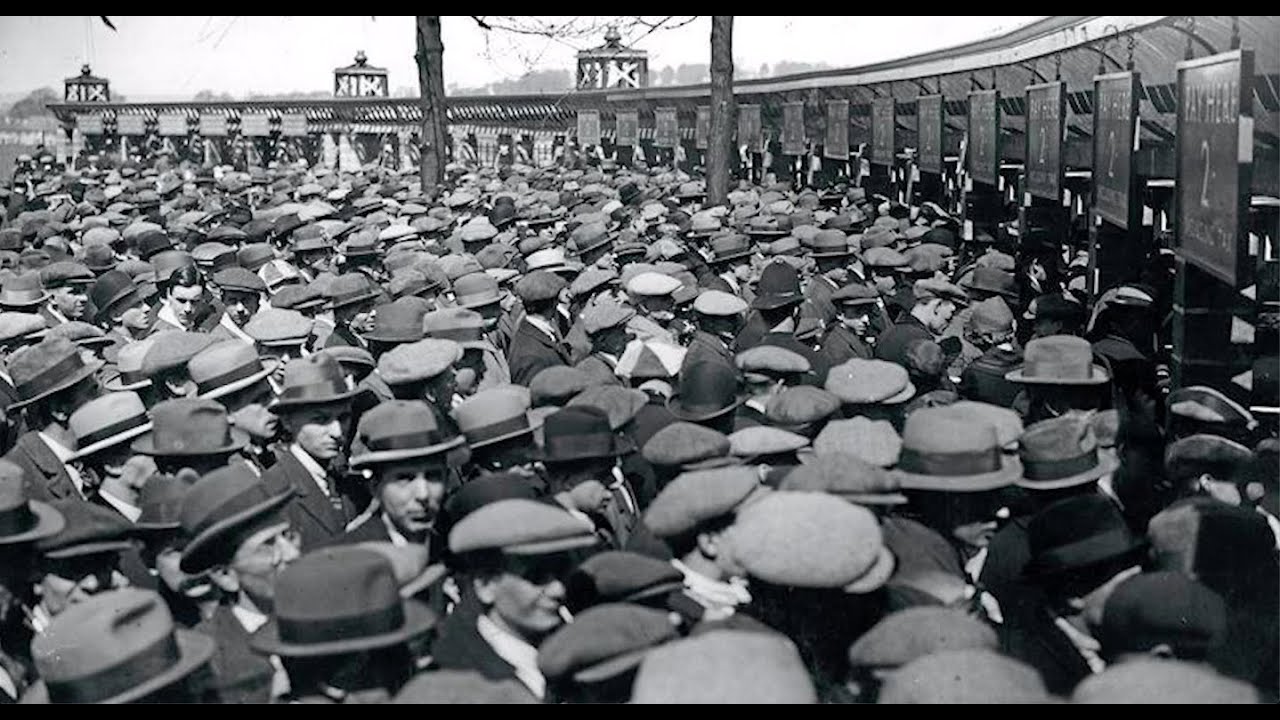
Take a look at photographs and movies of people on city streets and public spaces from 1860 to 1960 or so. You will see most of the men are wearing suits and hats, the women in dresses and hats, even children look tidy and well clothed. Even the obviously working classes and tradesmen are wearing the best they had. Back then it was considered disrespectful to one’s self and others to appear before your fellow citizens dirty and badly attired.
What you wear in public presents not only your opinion of yourself but also your courtesy toward others. The punk shows his contempt for normal society, the slob shows his lack of esteem for himself and the rest of us.
In a classic episode of “Seinfeld,” Jerry comes across George who is wearing sweatpants and a t-shirt. He takes in the pathetic sight and says, “You’ve just given up, haven’t you?”
Funny but also well observed.
Ah what a box of dynamite!
I am a big fan of this website and congratulate you Simon on what you have done.
Now. Who is ready to tackle class, identity politics, social status and style all in one go? (!)
Who has ever faced society as a whole? Hint even if you are the most famous person in the world your audience is limited and particular. People’s attention is limited. You are with whom you are with and often you do not even know who they are (around you). If you are simply out with people you know, friends, family, then your choice. They dress badly and you like to dress better, your call. They probably know you and appreciate or still resent you.
I once wore a tweed jacket and tie to the beach (it was winter) and my friends knew that was just me. How did the locals feel, no clue. Show up to a wedding in shorts you are taking the piss, wear full black to a funeral in some places, overdressed.
Offices, heaven knows the number of advice books. “Dress for the position you want”, yeah guess what your immediate and hapless peers say. (Nasty comments under breath). Underdress, you are a bit not ready for promotion in the eyes of your seniors. Who is society? Or better, who is your immediate audience?
There is also a strong political/cultural element. in America total strangers have stopped me in the street or in an airport lounge to tell me how they love the way I dress. Maybe coloured trousers (i.e. not tan or grey or jeans) with a jacket. Such an approach by strangers unheard of in Europe where, in any case, it is just a middle class style, and people either hate you or relate to it, but certainly no one will comment in earshot let alone come up to you to tell you.
Take away: dress for who cares that you care about. If its just you, do what you like. Friends who won’t be bothered, do as usual, others or strangers that you don’t want to discomfit, well, then consider how.
A considered post. Thank you, Simon. It’s a curious one, to be sure. A murky divide between dressing to conform and dressing for yourself, or the extreme ‘to hell with socio-cultural norms’. The social media reference was well placed, as style groups seem to be full of young men seeking advice, or validation, for their style choices / experiments. Nothing wrong with learning-by-doing, but your position i.e. style like pocket squares has its place, is very valid.
Great read. Personally I dress for myself most of the time. I work in an environment where being well dressed is mostly an anomaly. I really don’t have to try to get noticed, which is sort of a shame. I do, however, absolutely dress to garner the attention of the female of the species, most specifically my wife. Other than that I am to old to care whether or not I fit “in” as long as I am not offending anyone I will wear what makes me feel like me which means I am frequently overdressed. Not because I want to stand out, but because I still embrace an archaic sense of what is appropriate for specific situations.
This is quite heavy stuff, there is lots of psychology going on in this and if i may i will throw in my unqualified opinion.
When you dress you have considered what it looks like and mirrored that with what you are trying to express to your potential audience, yes audience.
Or you have not done this at all, which is not considering and is unlikely, but if you have totally ignored why you are dressing and is it appropriate, you are making serious societal mistakes.
If you have considered what it looks like at all, you are dressing for others even if it is in the case of the original punks, effectively telling others where to go. I was there, there was lots of consideration about what others thought, in the peer group or those you were trying to shock. Whether you shocked enough to get noticed, but not so much you got punched.
Whatever you wear, you have had an internal dialogue about what it looks like, to yourself and others and have used this as a reference in your decision making.
Even your sweatpants, are they Primark or Loro Piana Vicuna gusseted. You have considered others in your thought process. It is not purely about how it feels to you.
You are signalling to your environment, to those you want to be associated with and those you don’t.
By not considering, you are still signalling something, e.g. ignorance or disregard for others.
The question is “What are you signalling?” and is it what you intended and what others consider appropriate.
Everything is situation specific and each situation has societal norms.
I once took an ordinary pencil onto a golf course because I did not have the regulatory short one. The hilarity that ensued was quite remarkable.
Some people dress so they are the centre of attention, which can be fun and appropriate if they should be the centre of attention, but inappropriate at someone-else’s wedding.
In business you should dress to reassure people of your competence in a situation, you don’t want a plumber in black tie nor a lawyer in dungarees.
I had a friend who would dress for work the same way he would dress for a nice meal out with his girlfriend. It made him look attractive, but not trustworthy as a business person.
However, we do want to know the other person is a real person. We trust people, not automatons, and so we want a level of self-expression, but not so as to drown out our role in the situation.
As Simon says, this is a balancing act, which is something one should consider every time you put something on, that includes, watch, haircut, car etc. Nobody buys a car to get from a to b, the same with clothes.
You are expressing yourself, you have considered it or even dismissed it, but is it situation appropriate. Are you expressing what you intended?
Totally off this subject, question: re buttons.
When choosing buttons for a sort coat…….matt, matt center w/bright edge, full bright button…………..what fabric, it’s finish, color do you consider for the button finish and it’s color?
Hey Guy – have you seen this article on buttons?
That guide, on Suit Style, is worth a browse whenever you have questions about commissioning a new suit. Do shout if you think it’s missing anything
“Dressing purely to conform, other the other hand, is just sad. Whether the result is natty or sloppy, you shouldn’t spend all your time worrying what other people think”…I am a little confused on this statement?
The point is that you can be smart, and purely conforming with none of your own personality, or sloppy, and conforming in the same way. It’s not dependent on formality.
Does that make sense?
You always dress for yourself or for an occasion. You never dress for anyone else including your partner. I never wake up in the morning thinking i hope the general public will like this shirt im about to put on.
No one does that Dan. It’s always subtler than that.
Apparently, Dan does. And so do I, for that matter.
This whole bit about gentility and concern about the general average is bizzare to me. For one thing, being a gentleman has very little to do with Victorian ideals of fine behaviour. For another, of course anyone will feel odd in their own style when it deviates from the average – so long as their social lens is being filtered through others’ opinions. Elegant people don’t consider the (very low) aggregate outside when they dress for the opera, and they certainly wear ties at weddings.
I think that’s an example of the slightly simplistic thinking that usually surrounds this kind of conversation, as I describe in the article.
It’s never a question of deviating or not, it’s all about degree, for everyone.
Perhaps I was being a bit on-the-nose, but I wonder how much of the discussion really depends on how we define what is standard. If we look to everyone else for style cues, we’ve none of our own to offer.
I wonder if you’ve heard of Quentin Crisp? A very flamboyant man, he was often asked during interviews if he presented himself in that way to get some kind of reaction, and he always said no – that he was just being himself because it didn’t occur to him to try to be someone else. I can’t think of a better example of what I consider stylish.
Thanks Jason. I just feel that this debate is always presented as an either/or, and it’s not. I don’t think it’s true that if we look to others for our style cues, then we have nothing of our own to offer. Everyone does both, and I think it’s important to recognise that.
You don’t walk around in Victorian dress because it’s not the norm any more, but you also don’t have to sink to the lowest common denominator. You can exert a lot of your own character while still being very aware of what’s around you, and dressing more appropriately as a result.
There is an event at Pitti, where one or two certain people always dress up in black tie, even though it’s not a black tie event. They do it because they want to, because they want an excuse and they like the clothes. But they are inappropriate, in my view. This isn’t directly relevant to your point, as it’s an event, but I do think it shows what happens when being appropriate isn’t really considered any more, and it’s all about dressing for yourself.
On Quentin Crisp, I do know him and I certainly admire his individuality. But I don’t know anyone that wants to dress like him. I think he can inspire you to push a little further into your own expression, but dressing as he does, as a character, shouldn’t be a model to copy I don’t think.
Dear Simon,
You may have read this already, but if not, it’s a brilliant piece by Derek Guy that in places touches on these themes with a different angle. It’s certainly relevant to all of us I think who enjoy tailoring.
https://putthison.com/put-on-a-happy-suit/
Thank you Chris. I have – I think I’ve read all of Derek’s writing, though I might be wrong – but it’s great to have the reminder, and the recommendation to others. Thanks
If an average crowd in a cafe is dressed in t shirt, jeans and sneakers and I go out dressed in polo, chinos and suede loafers then would the outfit be too unusual as against the crowd? Would the outfit be too smart?
Kallis, you really need to judge things like that for yourself I think.
You are correct! I would be a better judge to it.
If I may ask, what do you generally wear to a cafe where you would be going to sip a coffee and some cookies?
Your outfit would be a good guide to start with.
Thanks for your advice. Your article has helped me a lot to discover my own style. Would definitely refer your articles to my friend who wants to dress better.
Thanks Kallis.
I don’t think saying what I would wear is that useful to be honest. It’s about you judging what’s appropriate, and what you’re comfortable in. And also the rest of your lifestyle, your job and so on.
Thank you so much for the advice.
Just one last question on this matter.
When I wear t shirt with linen pants and suede loafers then does the formality of my outfit increases because of linen pants and suede loafers or does it decrease because of a tshirt?
Both!
Hi,
Enjoyed this article about the everyday practicalities for those of us who love clothes.
I often like to cycle into town as it’s infinitely more pleasant than the tube/bus, but often lack the ability to shower or extensively change at the other end.
How to handle this predicament? Can you cycle in flannels and nice shoes? Or do you have harder wearing trousers and find somewhere to change on arrival?
I always change on arrival. I don’t think there’s a way to do it in smart clothes unfortunately
Very interesting! Could make for a nice article on how to manage it in style?
For me, a compact pannier means I can take flannels, loafers and a jacket with me while wearing hard-wearing chinos, a technical jacket and old trainers for the ride. Underneath the jacket a nice shirt/knit, makes it easy to change anywhere on arrival that has a clean washroom. Some panniers might also then be elegant enough to carry for the day
Truly find your articles quite griping and most importantly helpful. Your idea of elegance and gentlemen is quite simple and easy to follow. Since we are on that subject I would like to ask for an opinion.
Do you think using discount codes being offered by applications while dining at restaurant could be a little inelegant?
I have particularly found that whenever I use such discounts while dining in, I particularly do not fell a 100% confident and it just feels more cheap if I am out with someone.
The question could be completely off topic or it may be possible that it could be outside the scope of your website, but still I am taking a chance.
Yeah, it’s not really something I’d cover I’m afraid Joshua
You need to dress for yourself. When wearing something you need to be honest with yourself if you look good in it. If you like, enyoy and look good in the outfit, then you will feel confident wearing it. Other people will see your Confidence more than the clothing your wearing and if you feel confident with clothing option, then nothing else matters.
I feel I am more confident an comfortable when I am dressed a bit more elegantly and that does not mean that I wear a suit or a jacket all the time but mostly it is a tucked in casual shirt with jeans and chinos and some nice slim leather shoes even on a weekend and anything even a bit casual to it and I do not feel very comfortable and confident which is a bit more elevated than my counterparts who are probably dressed in t shirts, jeans and sneakers. How does someone tackle situations like these where there is a possibility that other people might get a feeling that I am looking down on them by being a bit better dressed but rather it is my uncertainness to pull off an outfit of t shirt and jeans which some people can so stylishly pull off which makes me a bit overdressed?
Look to ways to make that shirt, trousers a little more casual. Eg denim or work shirts, older or more worn-in trousers or shoes etc
Hello Simon! Does this overall outfit look non corporate and more like going out for good dinner?
Yes I’d say so
I hope you don’t mind a comment on an ‘old’ article. Fascinating topic, nicely addressed Simon. I am mid 60’s and spent my entire career ‘suited and booted’ as we used to say. But I started my working life on the shop floor in engineering. Overalls, jeans and tee shirts. Your piece reminds me of when I first moved into an office environment. I asked a senior manager for advice on how to dress and what he said formed the basis of my approach for the next 40 ish years. “ look at how others dress, but remember we (the management team – but replace that with whatever is relevant to you) generally only notice the top 10% – those who take pride in their appearance and the bottom 10% those who really don’t care. If you want to ‘get on’ and stand out for the right reasons you know what to do. But don’t over do it, don’t be a peacock…” In the early days I got all of the usual comments from my peers about ‘oh got an interview today have we’ etc but I smiled and played along and soon it was accepted that this was just how I chose to dress – smarter than most but not ‘over the top’ Later in my career the comments became compliments and jokes turned into genuine requests for advice on how people (generally men but occasionally women) could improve the way they dressed at work. You might say the clothing was part of my ‘personal brand’ part of my professional image, part of the gravitas I became known for. Dressing for others most certainly, conforming but always being myself and how much joy I got from the beautiful clothes I wore, the confidence I gained from the image in the mirror (don’t mistake that for vanity) and how easy it seemed in those days. I don’t envy you younger guys (and girls) in this ‘anything goes’ world we live in today.
Wonderful, thanks Stewart. No I certainly don’t mind, and that was a great addition to this conversation