A few months ago I had my first British bespoke suit made. Time, I thought, to repeat the experience in shirts – so I toddled off to 23 Bury Street, home of Turnbull & Asser’s bespoke service.
I’ve been a fan of Turnbull & Asser’s shirts for a while, and wrote a while back about the vast improvement that has been made in the block for their ready-to-wear shirts. How many men with a 15-inch neck wanted that big a waist on their shirt I’ll never know. The new line is much slimmer, and fits better than some made-to-measure I’ve had done.
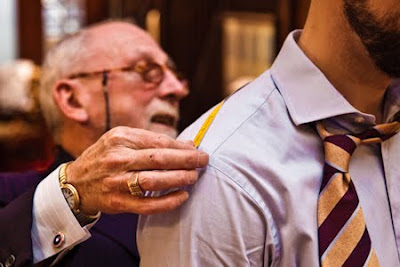
Bespoke is made in almost exactly the same way as ready-to-wear, and all in the Gloucester factory. But the difference is the fit. I have to say being measured by master shirt maker David Gale was an eye-opener for me. The attention to detail in body and personal habits was greater than any other tailor I’ve had.
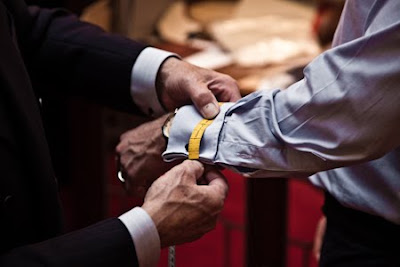
Take the width of the cuff, for example. Obviously this is dependent on the width of the man’s wrist. It should be tight enough to that wrist such that the cuff stays at the base of the thumb and does not slip further down. That allows the shirtmaker to build in around an inch of excess material in the sleeve length, above the wrist, so that when a man’s arm is extended the shirt goes with it. However, some men wear large watches on their wrist, making it impossible to keep the cuff tight enough to prevent slipping down the hand. So instead, the cuff is made larger but there is no excess in the sleeve length. To still allow for movement of the arm, a slight excess is built into the back of the shirt, rather than the sleeve.
The same process would be used for a man that prefers to put in his cufflinks before he puts the shirt on. The cuff is made a little wider and the sleeve a little shorter, without that excess material. Equally for a man with particularly thick wrists in proportion to his hand. I do wear large watches, but I also have slim wrists – so it balances out.
It also makes a difference what type of cuff link you wear. A silk knot keeps the cuff very tight; a bar is rather looser; and a chain is looser still – even if they are the same length, the looseness of the chain means it forms a bigger circle than a bar. This is as important as the thickness of your wrist. My first commission was for a white dress shirt, in Sea Island Quality cotton. This is not actually from the islands off Georgia and South Carolina, as Sea Island cotton originally was, but from the same plants transported to Egypt. I was told that the cotton you get today from the area is monopolised and thus overpriced. In T&A’s opinion, Sea Island Quality feels better anyway. I’ve felt true Sea Island cotton and it is heavier and silkier. Whether that is better is really a question of taste.
The first, draft shirt will be ready in three to four weeks. This will be made slightly on the conservative (wide) side in terms of fit. For example, the excess of cloth in chest, waist and hips can be as low as two inches each. Mine will be five-four-four, with the presumption that it will be taken in. Better too much than too little, as you can’t make a shirt bigger. (Or not easily anyway. You can add side panels but it is a lengthy and costly process.)
The shirt will then be worn and washed two or three times, before being presented to David for a fitting. Then the adjusted paper pattern goes back to the factory to be made into a final shirt. Watch out here for reports on both stages.
From around £185 and up. Damn good value if you look at the price of designer shirts – most of which are made in China and none of which will fit.
The biggest hurdle really is the minimum size for your first order, usually six. That makes the first bunch an investment on the scale of a bespoke suit. But one still worth it in my opinion.
Like many things bespoke, it is an investment. The shirts can be altered, looked after and have their cuffs and collars changed over time. Without dry cleaning, they should last decades.
Lovely Blog, very informative. Quite an investment, minimum of six initially, indeed yet one that is worthwhile given the shirts’ quality and projected longevity.
That price is the right combination of quality and brand name…there is no comparison between a bespoke shirt and an Armani shirt…of course I prefere the first 🙂
hi, simon i was wondering if you had any advice on tailors in london who are able to adjust shirts (esp at the waist to avoid bunching of material)? are there any you are able to recommend? thanks, david
Graham Browne is the only one I’ve tried, but like pretty much everyone they send it out
Albert Huang
12 years ago
I have tried Hilditch & Key and Budd and I have come to the impression that Jermyn St shirtmakers are hugely overrated much like their English football team. Try the Neapolitans or Alexander Kabbaz. Jermyn St bespoke shirts are hyped up made to measure shirts
There’s nothing made to measure about English shirtmakers. If anything, the fault is the opposite problem: a lack of any handwork whatever, which produces functional differences in shoulders, sleeve heads etc
I have moved on to Neapolitans since this article – Satriano Cinque and D’Avino
Richard
9 years ago
Simon, it is a few years since you wrote this article and I note that you have moved onto the neapolitan shirt makers in this time. Based on the fact that most British shkrtmakers do not do fittings on their bespoke shirts and there is very little hand stitching, do you think there is much value of bespoke over made to measure? Jermyn street makers such as Harvie & Haddon offer both, and I am wondering whether it is worth paying for the bespoke option when, especially for the first shirt, the fit is unlikely to be spot on?
Simon, I know you’ve moved on to Neapolitans since this article was first published but as a more general question – I’m looking to have my first bespoke shirt made but am a cautious buyer and would rather take this step with a shirtmaker who put no minimum on their first orders (though I do understand and appreciate the reasons behind minimum first orders). I’ve heard smaller shirtmakers such as GuyField have no minimums but have no idea about their quality. Would you have any suggestions?
Joe Weeks
6 years ago
Hi Simon!
Fantastic post. I am off for my first fitting at Turnbull and Asser at the end of the month, and as an avid reader of your blog, I turned to you for information about the process.
I’ve read your articles with interest (and am aware that you have now switched shirtmakers), but can’t seem to find a post with any pictures or updates on the final T&A shirts after alterations to your pattern. Would you be so kind as to tell how you enjoyed the shirts in the end, any tips for getting the most from your fitting, and if you do have any pictures of how the shirt fits, perhaps to share one or two of them?
Hi Joe, lovely to hear from you.
I like my Turnbull & Asser shirts – they were well made and a good fit.
The only issues I had were requiring six for a first order, which I think is too much for someone that hasn’t made lots of shirts before, and might easily make some mistakes with the things they ask for – and to a certain extent the style, which was smart and formal, while I’ve found over time I prefer a slightly more casual shirt and collar, which can still work with a suit but can also work with chinos or jeans.
Finally, I would perhaps question the price of T&A shirts, given they have none of the handwork that lots of the Italians have.
Thanks for your reply, Simon. T&A have now reduced their minimum to four, which is good news for newbies as you say.
Yes, now starting at £295 does seem steep. Do you take any view on whether this is sustainable or whether prices will ever decrease? It seems that most of the internet matter on bespoke is only five or six years old, and yet there is talk of bespoke shirt makers that now charge over £240 having not too long ago charged £175.
I don’t think prices for the same products will ever decrease, no. They might offer cheaper lines because they use different cloth or are made somewhere else, but that’s about it.
Most of the increases in prices, I find, are either because cost of materials or rent goes up (eg with shoes in recent years, or tailors with rent) or it’s because a young artisan or brand has started too low, thinking they could make a sustainable business on a cheaper price than they actually could
Piers
4 years ago
I like their shirts very much.
The weekend ones are perfect – once you have found your size.
Less is more.
The fact they are Made in England is also very appealing.
Thomas
2 years ago
Hi Simon, can you say something about the longevity of these shirts? Will they last longer than say an Eton shirt? How many wash cycles before they break down?
I wouldn’t say they would last that much longer, no. The point of a bespoke English shirt is the fit and ability to play with the design, rather than longevity. In fact if you use a finer cotton than an Eton one has, they’ll be more delicate and last a shorter time













Can you give us a cost approximation of a T&A bespoke shirt?
From around £185 and up. Damn good value if you look at the price of designer shirts – most of which are made in China and none of which will fit.
The biggest hurdle really is the minimum size for your first order, usually six. That makes the first bunch an investment on the scale of a bespoke suit. But one still worth it in my opinion.
Like many things bespoke, it is an investment. The shirts can be altered, looked after and have their cuffs and collars changed over time. Without dry cleaning, they should last decades.
Simon…Nice piece…do you know if the outfit in NYC can provide the same level of service…in terms quality and expertise.
Taylor
You should check, I believe Turnbull has a New York location.
I’m afraid I don’t Taylor, no.
Best to contact T&A yourself – number’s on their website.
Lovely Blog, very informative. Quite an investment, minimum of six initially, indeed yet one that is worthwhile given the shirts’ quality and projected longevity.
This comment has been removed by a blog administrator.
That price is the right combination of quality and brand name…there is no comparison between a bespoke shirt and an Armani shirt…of course I prefere the first 🙂
http://www.bespokelab.blogspot.com
hi, simon i was wondering if you had any advice on tailors in london who are able to adjust shirts (esp at the waist to avoid bunching of material)? are there any you are able to recommend?
thanks, david
Graham Browne is the only one I’ve tried, but like pretty much everyone they send it out
I have tried Hilditch & Key and Budd and I have come to the impression that Jermyn St shirtmakers are hugely overrated much like their English football team. Try the Neapolitans or Alexander Kabbaz. Jermyn St bespoke shirts are hyped up made to measure shirts
There’s nothing made to measure about English shirtmakers. If anything, the fault is the opposite problem: a lack of any handwork whatever, which produces functional differences in shoulders, sleeve heads etc
I have moved on to Neapolitans since this article – Satriano Cinque and D’Avino
Simon, it is a few years since you wrote this article and I note that you have moved onto the neapolitan shirt makers in this time. Based on the fact that most British shkrtmakers do not do fittings on their bespoke shirts and there is very little hand stitching, do you think there is much value of bespoke over made to measure? Jermyn street makers such as Harvie & Haddon offer both, and I am wondering whether it is worth paying for the bespoke option when, especially for the first shirt, the fit is unlikely to be spot on?
Most do do fittings for bespoke in my experience?
Simon, I know you’ve moved on to Neapolitans since this article was first published but as a more general question – I’m looking to have my first bespoke shirt made but am a cautious buyer and would rather take this step with a shirtmaker who put no minimum on their first orders (though I do understand and appreciate the reasons behind minimum first orders). I’ve heard smaller shirtmakers such as GuyField have no minimums but have no idea about their quality. Would you have any suggestions?
Hi Simon!
Fantastic post. I am off for my first fitting at Turnbull and Asser at the end of the month, and as an avid reader of your blog, I turned to you for information about the process.
I’ve read your articles with interest (and am aware that you have now switched shirtmakers), but can’t seem to find a post with any pictures or updates on the final T&A shirts after alterations to your pattern. Would you be so kind as to tell how you enjoyed the shirts in the end, any tips for getting the most from your fitting, and if you do have any pictures of how the shirt fits, perhaps to share one or two of them?
All the best,
Joe
Hi Joe, lovely to hear from you.
I like my Turnbull & Asser shirts – they were well made and a good fit.
The only issues I had were requiring six for a first order, which I think is too much for someone that hasn’t made lots of shirts before, and might easily make some mistakes with the things they ask for – and to a certain extent the style, which was smart and formal, while I’ve found over time I prefer a slightly more casual shirt and collar, which can still work with a suit but can also work with chinos or jeans.
Finally, I would perhaps question the price of T&A shirts, given they have none of the handwork that lots of the Italians have.
Thanks for your reply, Simon. T&A have now reduced their minimum to four, which is good news for newbies as you say.
Yes, now starting at £295 does seem steep. Do you take any view on whether this is sustainable or whether prices will ever decrease? It seems that most of the internet matter on bespoke is only five or six years old, and yet there is talk of bespoke shirt makers that now charge over £240 having not too long ago charged £175.
I don’t think prices for the same products will ever decrease, no. They might offer cheaper lines because they use different cloth or are made somewhere else, but that’s about it.
Most of the increases in prices, I find, are either because cost of materials or rent goes up (eg with shoes in recent years, or tailors with rent) or it’s because a young artisan or brand has started too low, thinking they could make a sustainable business on a cheaper price than they actually could
I like their shirts very much.
The weekend ones are perfect – once you have found your size.
Less is more.
The fact they are Made in England is also very appealing.
Hi Simon, can you say something about the longevity of these shirts? Will they last longer than say an Eton shirt? How many wash cycles before they break down?
I wouldn’t say they would last that much longer, no. The point of a bespoke English shirt is the fit and ability to play with the design, rather than longevity. In fact if you use a finer cotton than an Eton one has, they’ll be more delicate and last a shorter time