At the end of last autumn, I asked Steven Hitchcock to make an overcoat - it was a little late to start thinking about it, but I hoped to be able to wear it by the end of the winter. Unfortunately my travels and Steven’s got in the way, at it was only a few weeks ago that we had the second fitting, shown here.
I was interested to get an overcoat from Steven because I had seen a couple of English-drape coats on friends over the past couple of years, and really admired the style. They looked smart and elegant, without the drama of pieces I’ve had from the likes of Cifonelli or Edward Sexton.
Also, this was one of the few coat styles I hadn’t covered in our Style Breakdown series, so there was a usefulness beyond the personal. I chose Steven because, as described in my piece on my favourite-ever tailors, he has proved to be the best and most consistent in terms of fit and finish among those cutting this style.


The cloth is Fox Tweed, which is heavy for tweed (17/18oz) but light for an overcoat. I still picked it because of how useful I’d found my Liverano tweed coat, in an even lighter tweed (the PS Harris Tweed), and because I knew how much I liked the quality.
(When talking about cloth, ‘quality’ refers not to how good it is, but the particular combination of yarn, weave and finish - everything except the colour basically.)
I had also seen the same cloth used as a jacket on our friend, the editor Paul Croughton, and the yarn colours were the same as the PS houndstooth tweed, so overall this tweed was a pretty safe bet. As I’ve mentioned recently, I increasingly make cloth choices on this basis. It can seem boring, but I definitely make fewer (expensive) mistakes than I did in the past.
An example of this is using De Le Cuona cloth for recent commissions, which worked out well for this cream jacket but less so for this orange one. The issue with the latter was that it proved to be bolder than expected, so it still gets worn but only in quite particular circumstances (both warm and slightly dandy TPO (time/place/occasion)).


The first fitting with Steven was good, and this second one had almost everything nailed. It was what I expected from Steven, basically, which is always nice.
In the image above you can see the distinctive combination of a soft, natural shoulder but definite sleevehead and full sleeve. One of the ways in which Steven differs from Anderson & Sheppard, where he originally trained, is that he likes a cleaner finish to aspects like the sleeve, while retaining as much fullness as possible. The same goes for the drape in the chest.
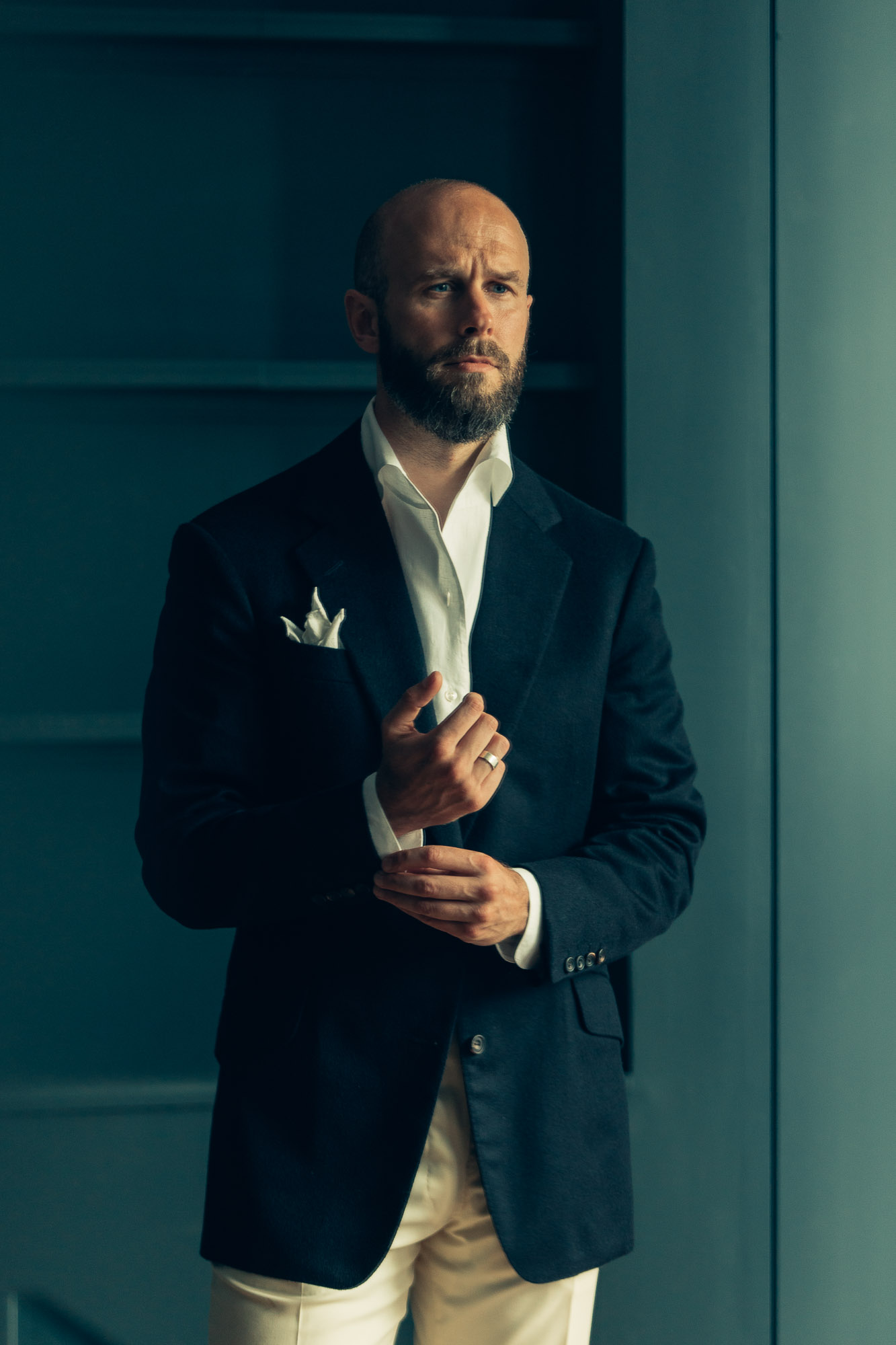
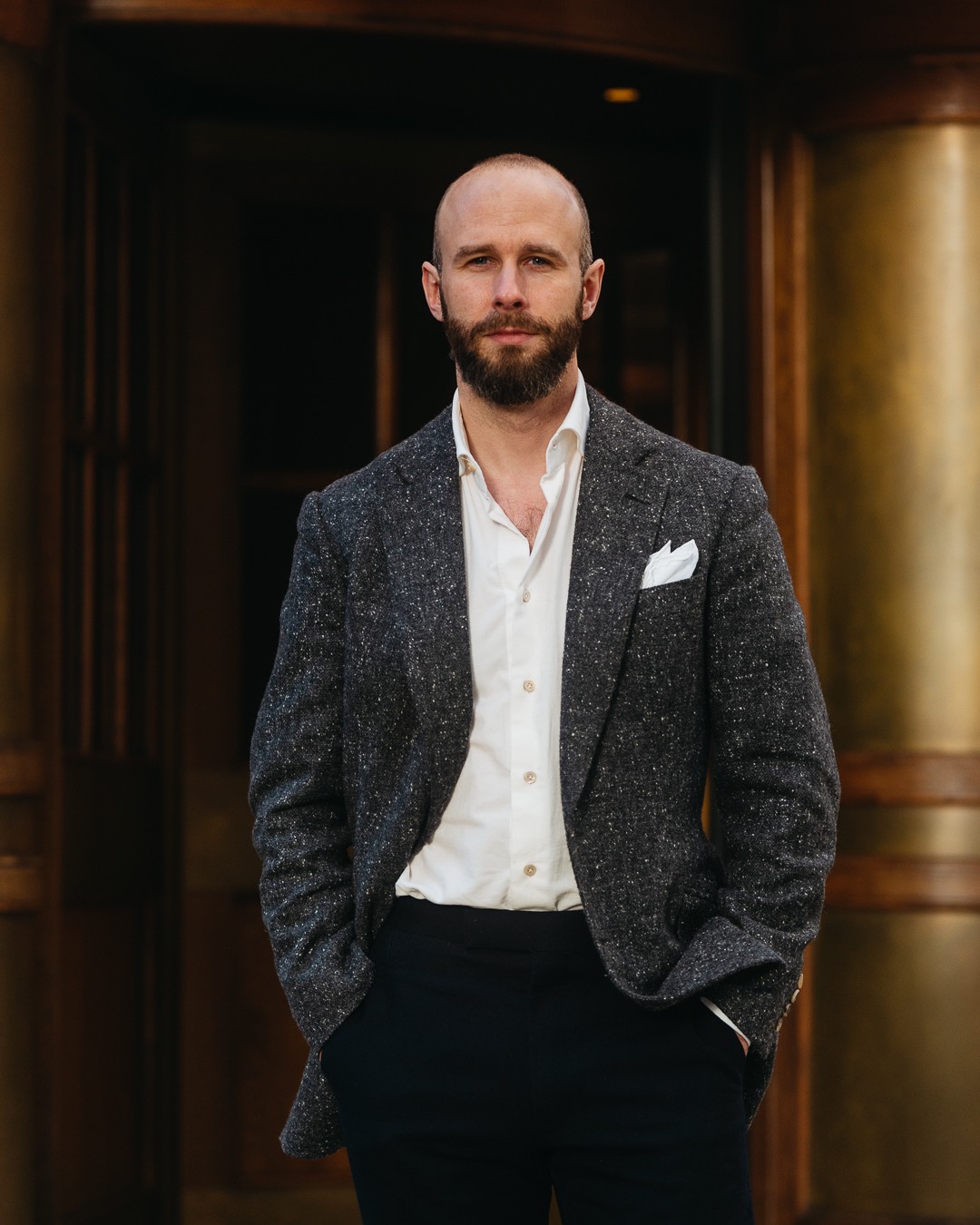
It’s now 26 years since Steven set up on his own, and I’d only refer to A&S to those that don’t know him at all, for immediate context. To others I’d describe this combination of comfort and cleanliness, softness and elegance, which is he has refined over that time. You can see it in the jackets below he has made for me over the years - and of course all examples can be seen on his dedicated page, like all brands/makers.

The coat is a classic 6x2 double-breasted (six buttons, of which two on the outside can be fastened) with turnback cuffs and what Steven calls a guardsman’s back. I’ll go into more details in the full review article in a few weeks, but the turnback cuffs were the one design detail I allowed myself (and even then, because they could be so easily removed).
One of the things you often learn slowly with bespoke is that ‘style’ is more about the overall outfit than the individual piece, and that therefore it’s good not to get obsessed with lots of design details. If all of the clothes have that, they’ll be a mess when all put together.
I’m actually working with a consultancy client at the moment who’s coming to tailoring for the first time, and it’s interesting to see how buried he has quickly become in the details - despite being middle-aged, rich and successful. I don’t think we ever learn these lessons unless actually pointed out to us, or we go through the process ourselves.


Fittings with Steven now take place in his flat/workroom in Fitzrovia, as he and Celia live outside London most of the time. It works well - the place feels personal but professional, and he has control over it, unlike using a cloth merchant’s premises or hotel suite. It’s also five minutes from our showroom.
Steven now effectively closes his books each year when he has as many orders as he can take, and I think this is generally a good approach for bespoke artisans.
It’s always tempting to take more cash, but this approach means they have security in what isn’t necessarily the most reliable profession, and they can pass that onto the coatmakers, finishers and others that work for them.
It also rewards repeat customers, who often have the chance to re-order before the book is opened to new customers. And it means all customers get a consistent product, without delays caused by fluctuations in demand. After all, unless there are makers sitting around doing nothing (very rare these days) the only way for small operations to deal with extra demand is to extend waiting times. Which nobody wants.

The cloth is TD20 from the Fox Brothers ‘Fox Tweed’ bunch. The coat cost £6500 plus VAT; the starting price for an overcoat is £5900 plus VAT.
The finished coat will be reviewed in a few weeks. I'll talk about aspects like the back and the button choice then.