

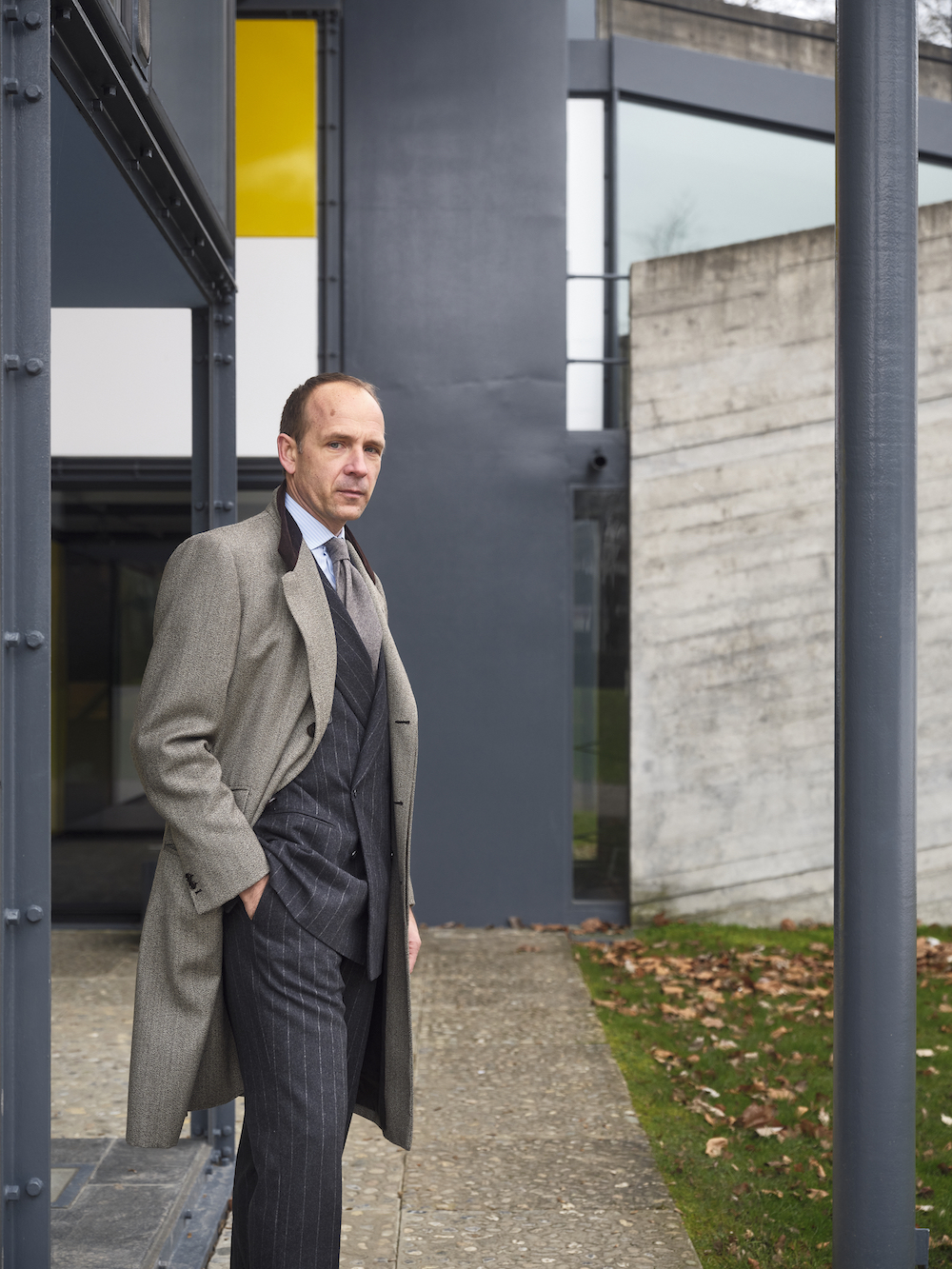
Our regular reader Andrew has contributed to many PS discussions over the years about bespoke, and given valuable advice to readers on both cloth and tailors. So I asked him to rewind a little and describe his whole experience from start to finish, with all the advice he could think of for other readers in the same situation.
By Andrew Borda.
I have been commissioning made-to-measure and bespoke tailoring since 2007. During this period I went through three discernable phases in the types of tailors I used, made a lot of mistakes, and have now found a tailor and other makers that I am very satisfied with.
I hope sharing my experiences and what I have learned along the way can be helpful for other readers, whether they are just starting in bespoke, are seasoned pros, or are perhaps looking for a new tailor.
The first phase of my journey was MTM, which lasted for around five years. My choices in this phase were mainly driven by the necessity of dressing for the office (I run an investment firm based in Zurich) and overall it was very satisfying since I was fortunate to find a good MTM option in Isaia that was cost effective and fulfilled what I then needed from a tailor.
This was followed by my Neapolitan bespoke phase, which lasted another five years. This was less satisfying, as I lost the reliability of my MTM experience without a major improvement in the fit, quality or style of the clothes I was wearing.
The current phase is my bespoke Caraceni phase, which has been going since around 2017 and which is once again very satisfying, as I think best reflects my vision of how I want to present myself to the world.

Tasteful grandmothers
I have been interested in clothes since I was young, which I think must have been influenced by my grandmothers. Both were elegant women and were always nicely dressed, and my maternal grandmother was very interested in decorative arts.
Considering none of the men in my family were particularly interested in clothes, and that growing up in the mid-west of the United States I was far from any bespoke tailor, I can only guess that my interest in clothes and art in general came from observing my grandmothers.
Like many people, my first foray into tailoring was driven by a need to buy some suits that I could wear to the office for my new consulting job. I had owned a copy of Bernard Roetzel’s Gentleman for at least 15 years at that point, but most of the makers listed were either too expensive for a recent graduate or impractical for me to visit, so I took to the internet to figure out where I should get my new suits.
There, I discovered the late oughties world of Style Forum and A Suitable Wardrobe, both of which I read religiously. I also started reading a new upstart blog called Permanent Style just as it was getting started, and I think I have read every article since then.

MTM is often the best way to go
My wife is from the Puglia region of Italy, and as PS readers will know, many reasonably sized towns in Italy have at least one good independent menswear shop. Luck would have it that Martina Franca, the town where we went suit shopping, has two and there I started the first bespoke phase, which was actually MTM.
Ivano Chirulli, owner of the very nice boutique Chirulli, stocked Isaia suits and Finamore shirts, both brands that made the cut on Style Forum, which was of course a very important criteria for me.
At this time, Isaia had not yet expanded to its current extent and prices were lower. Taking advantage of the arbitrage between Swiss salaries and Southern Italian “mates’ rates”, I ordered a blue and a grey single-breasted suit and some blue and white shirts, guided by Ivano’s good advice to start with the basics.
Ivano used the standard Isaia and Finamore blocks, to which he made slight modifications based on my measurements. Overall, the fit was good, the prices were reasonable and the orders were delivered on time. Back then I didn’t have any plan or idea about building a bespoke wardrobe, and MTM fulfilled exactly what I needed.
To this day, I still think that for most customers who don’t have easy access to a bespoke tailor, or who have not found one they are happy with, MTM is a great option.

Be wary of globetrotting tailors
I stuck with Isaia and Finamore MTM for around five years, ordering one new suit a year and a few shirts. Despite my satisfaction, curiosity got the better of me and I decided that I needed to try “real” bespoke.
A Suitable Wardrobe was writing very positively about Napoli Su Misura (NSM) and considering the style seemed pretty similar to my MTM suits (Neapolitan, but with some structure in the shoulders and not too short or tight) I decided to give it a try the next time they did a trunk show nearby.
I am not sure if NSM is still going, but for the benefit of readers who are not familiar with them, NSM was a bespoke Neapolitan outfit that was very popular on the forums in the early 2010s at the peak of the Neapolitan #menswear craze, and did trunk shows almost anywhere imaginable. Their prices were at the low end of the spectrum of Neapolitan tailors, which contributed to their popularity.
My relationship with NSM didn’t last long, as I quickly got frustrated by quality control issues (eg trousers with stitching that came undone) and frequently delayed delivery times. This is the source of one of my major lessons in bespoke, which is general hesitance to use tailors who travel frequently.
I do not have a problem with travelling tailors and trunk shows per se and some large houses have been doing it successfully for decades. But for this to work I believe that the tailor’s “machine” needs to be well-oiled.
In my limited experience, in smaller houses where there is no division between front-of-house and cutters, the more time the owner/cutter spends outside of the workshop, the greater scope there is for quality control problems and delayed orders.
As a result, I would advise anyone who is considering using a travelling tailor to take some time to understand how much experience they have with overseas trunk shows and how they ensure quality and delivery.
You must like the tailor’s style
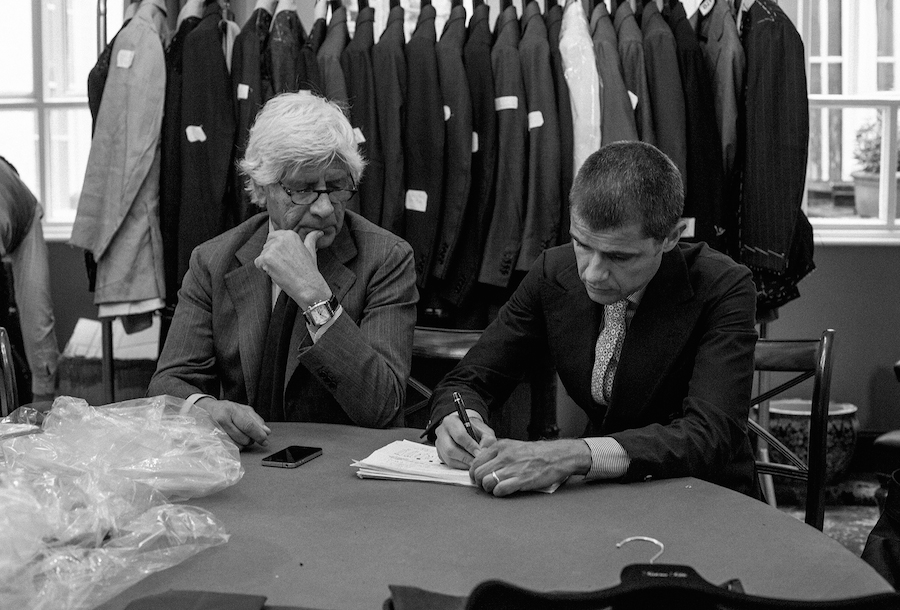
Following my unsatisfactory experience with NSM, I jumped to Solito. I had read a positive review on PS and they came frequently to London, where I was then living.
At the start, Luigi Solito’s father Gennaro was also travelling to London for trunk shows and they are both lovely people. I was immediately reassured by their experience, and I happily did not have any quality control issues or delays.
However, my experience was unsatisfactory for reasons that were entirely of my own making. On the spectrum of Neapolitan tailoring, Solito’s jacket (especially Luigi’s) tends to be less structured, shorter and tighter than tailors like Ciardi or Ciro Zizolfi. This style was not compatible with my vision for myself and how I wanted to dress, and I constantly felt like I was wearing somebody else’s clothes.
This is not at all Solito’s fault; rather, it was my mistake in choosing the wrong tailor. This leads me to my second main lesson of bespoke, which is not to ask a tailor to deviate from their house style. Tailors are good at making their house style because they do it all the time, and usually struggle to do anything different.
Therefore when choosing a tailor, it is important that the customer has a clear picture of the style they want for themselves and chooses a tailor who is compatible with that style. For example, if you want to dress like an Italian industrialist, go to a tailor in Rome or Milan that has that clientele. A tailor in Naples or London will rarely succeed in replicating something that is not their house style, even if they agree to try.
Ferdinando Caraceni clears the low bar
After five years of frustrating bespoke experiences, I was considering going back to MTM as I continued to wear my Isaia suits even after I sold or gifted what I ordered from NSM and Solito. Before doing so, I decided to give bespoke one last try.
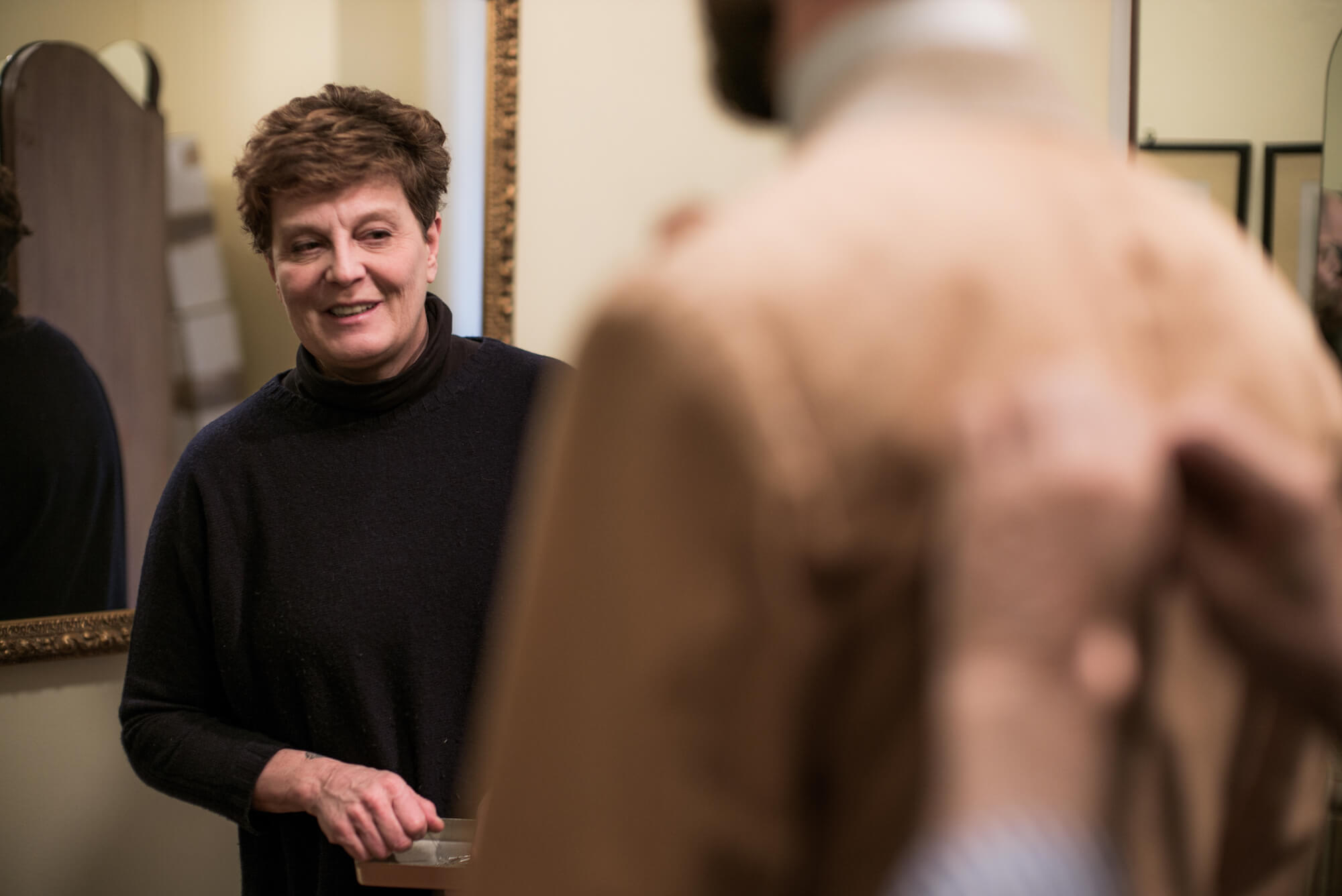
I had started to travel to Milan frequently for business and I decided to make an appointment at Ferdinando Caraceni. As I commented in PS’s recent review of Tommy & Giulio Caraceni, I have always been most attracted to Central Italian tailoring, of which Ferdinando Caraceni was an offshoot.
(For those that are interested, Simon has written on the A Caraceni article about the history of the various Caracenis.)
Despite being my preference all along, I didn’t go to the Caracenis earlier because I rarely travelled to Milan or Rome, none of them do regular trunk shows, and because I could not afford them.
I decided to shoot straight down the middle of the fairway with my first order, selecting two classic business suits: a navy herringbone DB and a medium-grey birdseye SB. I needed them for the office and I figured that, considering their clientele, if Nicoletta Caraceni couldn’t do those well there was no hope of prolonging our relationship.
From the first fitting onwards, it was clear that the tailoring stars had finally aligned, which for me is a combination of: a style that fits how I wanted to look in my mind’s eye, convenience, reliable quality, and on-time delivery. It sounds like a very low bar to clear, but as Simon can attest, mainly tailors do not achieve even this seemingly low threshold.
Relationship; convenience; quality
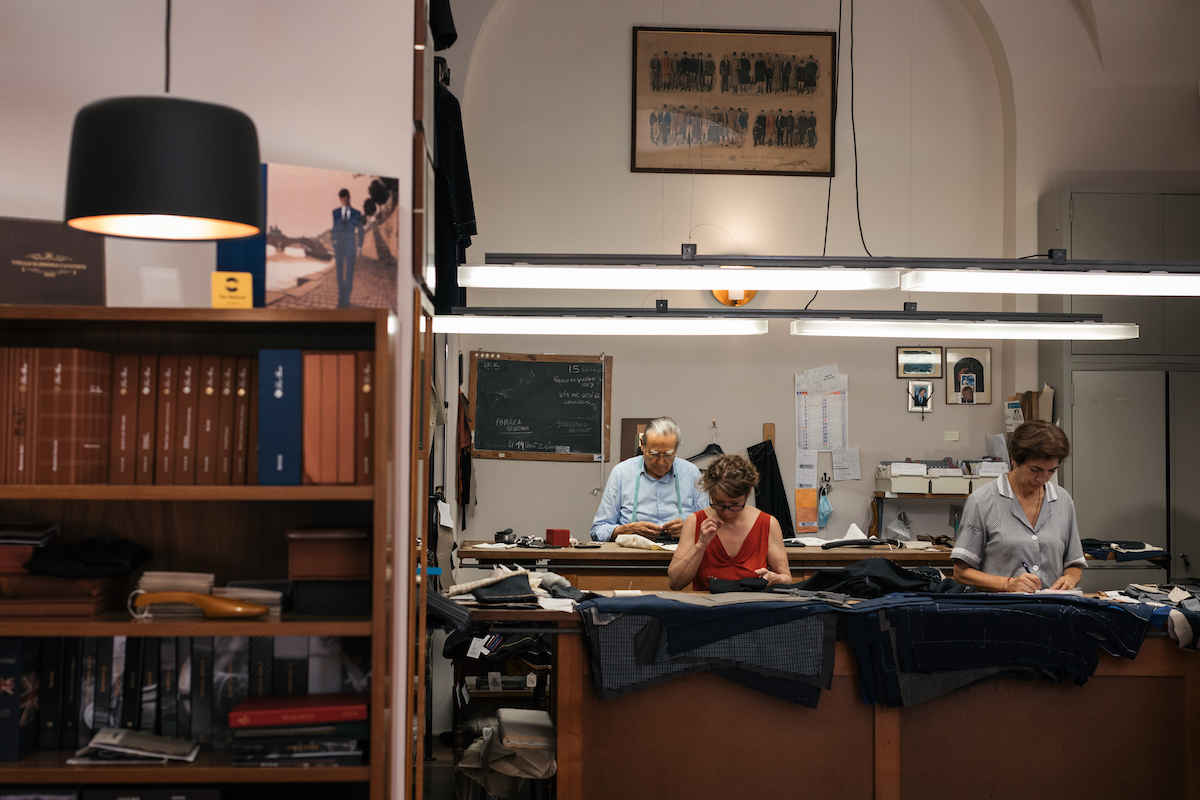
Nicoletta sadly decided to close at the end of 2023, and I found myself once again in search of a tailor. I asked her for advice on where to go, and the only name she immediately suggested Tommy & Giulio Caraceni in Rome. As luck would have it, I started to visit Rome frequently, so going there also worked logistically.
I won’t write extensively on my experience with Tommy & Giulio because it was extensively covered by Simon in an article last year, but I will summarise by saying that my experience with them has been even more positive than Ferdinando Caraceni. The factors I commented on above are all fulfilled, but on top of this I prefer T&G’s house style (a little longer and less boxy than Ferdinando) and I like the fact that Andrea Caraceni is close to my age and hopefully has many years ahead of him in running the business.
This current phase of my bespoke experience feels like one that will last for many years, and I really hope it does because I am very satisfied and don’t have the energy to start building a relationship with a new tailor.
This leads me to my final two lessons from my bespoke journey. The first is that as I become more experienced, factors such as my relationship with the tailor, convenience, and quality control matter as much to me as style.
This should not come as a surprise to regular PS readers, as Simon has written similarly over the last few years. I am a 44-year old business owner with three young children, so time is a very precious commodity. (The same age and position as Simon in fact, though his children are older.)
For any relationship with a tailor to work, they have to be easy for me to visit and commissions need to be delivered on-time without problems. This was a major reason for me to stop patronising tailors in the past and it is even more important to me now. Fortunately, Tommy & Giulio Caraceni fulfill these criteria well.

Bespoke requires a big investment of time
The final lesson is that building a relationship with a bespoke tailor is a significant investment of time and energy if you want to get the best results.
At their best, a tailor is stylist for men in addition to a specialised artisan who cuts and sews clothes. To give the best advice and guide the customer to make the right choices, he or she needs to understand the customers’ life, work, preferences, style and ultimately culture.
This requires that the customer invests time in talking to and building a relationship with the tailor over a long period of time. If a customer is not willing to make that investment or looks at a commission as a one-off, I would advise that they think twice about whether it makes sense to go bespoke and to consider MTM instead, which is a somewhat more transactional purchase.
I have deliberately focused here on my experience in each of those phases of my bespoke journey, what has and hasn’t gone well, and lessons learned rather than elements of style. Style has been extensively written about in my reader profile and other articles on PS. I enjoy replying to comments and try to do so promptly, so if readers have questions on style or on anything else, I am happy to answer them.










Very informative, and beautiful article again here and it’s always good to revise and assess what tailor is right for you.
If three important things stand out for me to look for it is fit, consistency and finish.
Others may differ???
hi Lindsay. I agree with you on fit and consistency. I didn’t mention fit in the article because that is almost table stakes for me. If the fit is not spot on, then nothing much else a tailor delivers for me matters too much. I am less obsessed about finishing — I want to see neat and accurate finishing, but I don’t need Cifonelli or Michael Brown levels of perfection to be satisfied. Of the tailors mentioned above, NSM was on the low end of the rough and ready Neapolitan finishing spectrum. The Caracenis are equally good. Both have very neat finishing but not at Cifonelli levels.
I forgot to add …and IMO, this is very important!
Another, VERY IMPORTANT, issue is COMMUNICATION!!!
I cannot, repeat, CANNOT, emphasise this enough!
When I embarked on my first bespoke commission with Steed, I typed up a “cheat sheet” table of what I wanted from my tailor and handed this to him and took it from there, but that doesn’t substitute for verbal communication…sans language barriers if the tailor is foreign and his/ her command of English is limited or non existent, and I think you can concur with that Simon!!
Dear Mr McKee
Reading is more difficult than speaking, how can one know if another has for example dyslexia? However speaking involves emotion, which can block clear understanding.
One notices which speakers (and here writers) favor illustrations, which are said to be worth a thousand words.
So too a teacher who never uses the blackboard. In mathematics symbols are mostly used without illustration.
Yes for sure communication is very important. It helps a lot that I speak Italian well so at least there is no language barrier. I never took a table like you prepared, but I didn’t spend an hour or so talking to Andrea Caraceni about what I like and dislike, my business, etc when I first went so he could start to get to know me and my expectations.
Really interesting Lindsay, would tou be willing to share your cheat sheet at all please? As someone new to bespoke would be helpful to see. Thank you
Hi Andrew,
Many thanks for your kind request but I probably don’t have that now. I was generated as a Microsoft Word table and while I plan any future commissions meticulously be they tailoring, shirts or footwear, I generally delete them afterwards.
Sorry about that.
Kind regards
Lindsay
An excellent write up, thanks for sharing, Andrew.
An observation I have is that if the photo of Andrea is anything to go by, it confirms what I have come to suspect, that in today’s world, it’s far more likely that a tailor will produce a great result if they themselves have great style and a strong sense of their own personal style. The same is said about others like Fred Nieddu. This I think is the future of tailoring.
Yes Andrea is indeed looking very cool in that picture.
Brilliant article . I really enjoyed the honesty of the experience . I think some tailors appear to behave like ‘celebrity chefs’ telling the customer how it is rather then listening and guiding the customer .
My key takeaway is Andrew’s advice to go to a tailor whose cut you like rather then get him to do something outside that .
A few questions for Andrew…..
1. You recommend MTM but was RTW ,altered to fit you , ever a serious option ?
2. There is alot of ‘noise’ on social media around ‘online bespoke’ and ‘online MTM’ . Is this something you would ever advise anyone to consider ? Maybe for shirts or trousers if not for suits ?
Simon, I think we need more articles like this.
Hi Robin
Chirulli advised me not to go for RTW altered because the drop (the difference between the size of the chest of the jacket and the waist of the trousers) of the standard Isaia block they carried didn’t work for me. So they advised me to go MTM. I never considered RTW after that.
I haven’t thought about online options. I really value the personal relationship o have with Nicoletta and Andrea Caraceni and that adds a lot to my satisfaction and the experience.
Really good article Andrew, thanks for sharing. I’m just starting out and will certainly need to learn from my own mistakes along the way, but I’d like to hope that pieces like this will help me to make fewer of them!
hi W, mistakes are unfortunately inevitable but hopefully those you make are partially reversable. It can be hard to sell bespoke tailoring, but thanks to websites like Marrkt you can sell RTW and even some MTO purchases that don’t work out as you hoped. I have sold quite a bit on Marrkt over the last few years. For example, they took most of my GG MTO shoes once I went bespoke. I didn’t get much money for them, but something is better than nothing and certainly it is a better alternative than throwing away your clothes.
Thank you for sharing your journey, Andrew. I’d love to hear about your experience with bespoke shoes as well, perhaps in another article
I’d be happy to do it if Simon would like.
In brief, I started with Stivaleria Savoia around 2018 or 2019. The results were pretty good but not great. Still an improvement over my MTM from Gaziano Girling which did some serious damage to my feet because they were too small. Savoia closed for a few months in 2023 because Marinella (the former owner) decided to get out of the shoe business.
I was left without a shoe maker and discovered Mercurio in Rome when reading Arbiter, the Italian magazine, one day while sitting in a hotel lobby. I liked what I saw because the style is pretty conservative and similar to Gatto, the famous Roman shoemaker who he collaborated with for many years.
Since I go to Rome almost every week for business I decided to stop and have a look. I liked what I saw and decided to order a pair. The results have been very good and I can’t recommend them highly enough to anyone who goes to Rome regularly (they don’t do trunk shows.)
Savoia later reopened under different management and with different makers, but by then I found Mercurio and decided to stick with them.
When you commissioned your first two suits from Caraceni in Milan, you went for two right away rather than starting with one. Did you feel confident you’d be satisfied with the result?
Yes I immediately had a good feeling from Nicoletta which was why I was wiling to take the risk of ordering both. Nicoletta said that the most she allowed first time customers was one DB and one SB. She didn’t allow a customer to order multiple suits with the same pattern until the pattern was finalised.
In other words: why not play it safer with one? Why two?
Mainly because I really wanted to try a Caraceni DB, which they were most famous for, and didn’t want to wait for them to perfect the SB pattern before moving onto the DB. I wouldn’t advise someone to do this normally though.
Dear Mr B
I was born and raised in the Midwest, too – in the city of Chicago, where my joy was looking at Lake Michigan. Your narrative of experience is very interesting and
I notice you don’t like pocket flaps on your double-breasted and add sleeve buttons on your covert coat without cuff stitches. That’s wonderful you learned Italian, presumably with help of your spouse.
The Caracenis don’t do flaps on suit jackets, only on sport jackets pockets. Even those I tend to push into the pocket.
The buttons on the cuffs rather than the four rows of stitching is how Andrea Caraceni said they have always done the Covert coat. I am aware that is not the 100% traditional English style but it isn’t a detail that really made much of a difference to me.
Dear Mr B
Your clothes look very elegant,
and I find such alternatives as pockets with or without flaps and cuffs with buttons or stitches themes for culturgeography and history of fashion.
I don’t actually know why they do it this way. I will see Andrea on Wednesday and ask him the history of this.
A very honest and informative article, thank you. I think I now realise that the odd (or a few mistakes) when commissioning tailoring is actually unavoidable, if disheartening / expensive. But that journey is important. I am still l travelling, but over the past few years feel like I am getting there!
My journey has been mainly on MTM I would add, my foray into bespoke was many years ago with Mark Powell – the style of the jacket and trousers may not be relevant now, but I realise they did fit very well indeed. In recent years I have had great experiences with Anglo Italian, The Local Merchants and Trunk / Ring Jacket.
Hi Matthew
I think mistakes are inevitable and part of the learning process. I still make them though fewer than before because I know my style and what I like. For example, I have a few suits that I ordered from Nicoletta that I rarely wear because they are a bit too much for regular wear like a DB royal blue (bluette as the Italians call it) flannel and a SB brown price of wales flannel. Both are beautiful suits but not the most versatile. I would have been better off for example going for the DB chalk stripe you see in the pictures before those two as I wear it much more frequently.
Great article!
On a somewhat unrelated note, I think it would be very helpful to better understand the implications of the new US tarrifs on international makers. To the best of my knowledge some of the most prominent tailors and brands rely heavily on a solid US customer base and are currently in limbo due to the US tarrifs. Similarly to Covid there is a risk here of seeing many makers go out of business or severely harmed by this disruption. It would be very helpful to get some sort of damage assessment as well as guidance of how American PS readers can help those makers weather the storm.
It’s a good question and one Simon should answer. Andrea doesn’t travel to the US, so any American clients he has pick up the suits in Rome. Therefore tariffs shouldn’t be much of an issue.
Hi Shaoul,
Yes, we will actually be writing about this on Friday, as to specifically how the PS Shop will change and adjust to these duties affecting goods under $800 (the so-called ‘de minimis’ rule).
But in terms of how you can help brands and tailors, it’s just a question of carrying on buying from them, even though prices will go up. There is basically a new tax on everything you buy from outside the US, and if you’re happy to pay that tax to support the brands you like, they will be relatively unaffected.
Let me know if there was anything else specific
Dear Simon
What about reciprocity – I thought the US administration seeks to equalize, why should there be US tariffs on goods like tailoring if the exporting country has no tariff on US tailoring?
Well, that’s a big question about whether the US is actually doing that Peter, but not one for this forum.
To be clear though, there are duties on US products coming into the UK. Not often as big as the US ones that are being imposed, but it was a good deal for US consumers that they didn’t pay anything on purchases under $800 threshold
Quite right, US customers have had it very good for very long. Little sympathy for them I’m afraid. No doubt this will be a short lived episode.
Thanks Charles. I’d still say I have some sympathy – I’d be annoyed if prices were going up for me!
As someone who purchased bespoke pre-tariffs, US customs made sure to charge me for importing bespoke to the US.
Thank you Andrew for such a well-written and honest article. I did not see any mention, nor in your reader profile, of your watch. May I ask what type of watch and band it is? Many thanks and please keep contributing to PS.
Hi Howie. It’s a Patek 5196g. The band was also made by Patek in a sort of cognac coloured alligator skin. It wore out and I’ve since replaced it. I now have my bands made by Huit Cinq in Rome. They are a small producer of bespoke watch straps and I’m quite happy with the two or three they’ve done for me.
Thank you for this thoughtful article. For someone that loves clothes there is no greater joy than the bespoke process. I think it is best viewed as an experiment. Sometimes the result is a fantastic success, but sometimes the project does not work out as you had hoped, and you move on. From a small swatch you imagine how the garment will look, but often, in larger scale, the color or the pattern or the texture of the jacket look and feel different. For me, the first fitting is usually disappointing because the jacket is a strange, unfinished hodge podge without buttons or details. You don’t know if you’ve succeeded until the finished product arrives, and even then the success of the project can only be evaluated from a distance of years. What got worn and enjoyed, what didn’t? For me, the most successful commissions have been inspired choices, a bold gun club check, a houndstooth. The things I got that I thought I “should” have, because of their versatility, have not sparked the same joy.
After decades of only getting bespoke, and thinking I would never do anything else, I recently tried MTM at a Ring Jacket trunk show at the Armoury in New York. It was a smashing success. The Japanese tailor, Tani, absolutely nailed it. The jacket arrived in two months, perfect and spectacular. A tailor might be able to identify differences in bespoke and this MTM jacket, but I can’t.
I definitely agree that you really only know if an order is a success once it is done and you’ve had some time to wear the garment. I’ve had a few orders I was a bit nervous about at first but have turned out to be some of the favourites in my wardrobe, like my Russell Check jacket and my DB Solaro suit you see in the picture.
I don’t really mind if I make a mistake and end up with something that I don’t wear very often. That is part of the bespoke journey and I still get enjoyment from suits or jackets I don’t wear more than once or twice a year. I would be a lot more frustrated if I ordered something that I later turned out to dislike and never wore it
Wonderful summary of your experience. I live in Ottawa, Canada. We dont have much options in Ottawa or Canada as a whole. MTM options are available such as Suitsupply or Atelier Munro. Both are not in Ottawa.
Anmar, I know a bespoke tailor who travels to Toronto multiple times a year. Hit me up if you are interested. I don’t get any commission; I am just a client. My email is [email protected]
Hi Anmar. Thank you for the comment. I have never tried suit supply myself but friends who have and have also used other MTM options tell me that it is great value for money. maybe Simon has more insight on them.
Wasn’t spier and Mackay in Canada? I like their clothes choices better than Suitupply…
Yes, Spier & MacKay is based in Toronto and their goods are far better than SS, and more affordable. RTW is fairly good (usually) and MTM is reasonable although I have a small sample size of a few items. Surmesur (Toronto) is another good option.
Dear Bryan
I subscribe to Spier & Mackay’s newsletter and admire their goods, but shipping abroad with import tax and administrative fee charged by customs results becomes too expensive for my limited budget.
If i may, Andrew, how many bespoke items do you tend to buy, e.g. on an annual basis? I am starting on the journey myself and have how often people buy (or if i am being irresponsible…!!). Of course those who work in the industry such as Simon, Manish, are not often the best barometer given, well, they work in the industry, so curious to hear of others’ experiences!
I buy around 4-5 things from T&G. That could be a suit, coat or jacket and trousers. This has been pretty consistent for a few years now. I have for sure more suits than I need but for me tailoring is one of my major passions in life so I keep at it.
I order 1-2 shirts. Mainly because I have a lot and don’t wear them out fast. I certainly appreciate my shirts but they don’t give me the same pleasure as tailoring.
And 1-2 pairs of shoes.
Dear Andrew, in the 5th image of this article https://www.permanentstyle.com/2025/02/tommy-giulio-caraceni-bespoke-tailoring-review.html
you are showing quite a lot of shirt cuff. Some might say the sleeves of the jacket appear a bit short, despite the jacket itself being rather long in the body. Would you say this was on purpose and in line with the house style? Thanks
They are a little too short. I actually had the sleeves lengthened a bit after the shoot because they were too short.
I find sometimes during a fitting, when the jacket is perfectly ironed and your are standing still with your arms more or less straight, sleeves that are a little short can look about right. It isn’t till I take the jacket home and it wrinkles a bit and you move around that I notice they are too short. That was the case here.
I have enjoyed Andrew’s contributions since his reader profile, so thank you very much for this. Using this opportunity, I would like to ask, what are you excited to wear/commission this Autumn/Winter?
I haven’t commissioned anything for fall/winter yet because Andrea normally tries to deliver everything for the summer before they close in August. So even if I put in my order before they don’t start working on it till September.
I have planned a sport jacket made from a moss green heavy Dugdale tweed and a DB overcoat made from a Harrison’s grey herringbone from
their cashmere over coating bunch (if memory serves I think Simon may have commissioned something from a similar cloth lately).
What I am excited to wear? That covert coat in the pictures. Seeing the pictures again made me want to put it on. A pair of taupe cavalry trousers that I took home before the end of last winter but I only managed to wear once or twice. And my DB flannel suits.
Dear Andrew,
I have also been on the hunt for a pair of the classic taupe coloured cloth for trousers. I saw a couple in the tropicalair bunch by Dugdale, and HFW classics, do you have any recommendations for the cavalry twill?
Kind regards
Roberto
My Cavalry was one that Andrea Caraceni had in stock. I don’t remember the mill. There are a few nice options for cavalries in the W Bill Whipcords and Cavalry Twill bunch. There are also some nice, and very heavy, ones in the Dugdale Invincible bunch.
It’s also nice that Andrew provides such detailed and considered responses where relevant on the comments. It adds so much to the feature.
It does indeed, we’re very grateful for that. Perhaps we could also look to bring in other bespoke enthusiasts who have experience and considered approaches to talk about their journey
Simon–I was just thinking the same. I’m the same age as Andrew, minus one kid, but plus one tailoring chapter.
One might think these personal style arcs aren’t of much interest, but, as it happens, they seem to be rich ground for likeminded enthusiasts.
Who’s next?
(Happy to volunteer my own rather nuanced history if no one else does!)
Thanks Fred, I’ll definitely start to put together a list!
Twenty+ years ago Isaia off the rack suits and sport jackets sold in the USA were affordable, especially on sale. When the brand became more popular the prices went up and they now cost as much as bespoke!
That’s consistent with my experience in Italy. When isaia got popular and started opening their shops in London and Milan the prices went up a lot and it stopped making much sense.
Fantastic piece. Thank you for sharing. I am a business owner so there is no such thing as free time. Boston is the nearest city for traveling tailors but that’s over an hour drive. I have had several pieces MTM from different tailors with a mixed bag of results. I love the selection you get with MTM (versus off the rack) but quality control is lacking. I had several pieces made by Steed and one arrived with a stained lining (in the coat). I couldn’t believe it left the tailor looking like that.
Oh dear. Thanks Doug
Dear Doug, did you consider sending it back to have the lining changed before you paid? Changing a lining is certainly doable and Steed should have done so if it were stained.
At their next visit to Boston, I brought it to them. They seemed surprised but did agree to fix it. However, I was out of a jacket for another 5 plus weeks. I was frustrated.
An interesting read, thank you Andrew 🙂
Since you lived in London for a while, have you ever considered British tailoring?
Has your approach ever changed after all those years? E.g. perhaps more casual pieces? Or put in another way what bespoke pieces are you looking forward to now?
Thanks!
hi Burt, I never considered British tailoring as the style never has really appealed. While the Caracenis have a stronger shoulder than many Italian tailors, the construction is very light. The combination of structure and heavier construction that is characteristic of British tailoring has always been a bit of a turn-off for me. The other reason is that Savile Row tends to be more expensive than Italian tailors (when bought in Italy). I understand that some Italian tailors, like Liverano, charge a significant premium for commissions made at trunk shows.
I concur with your sentiment “to shoot straight down the middle of the fairway with my first order.” The ability to execute a classic navy or gray business suit speaks volumes to a tailor’s talent and consistency. If they can’t nail the classics then go elsewhere.
It is like cooking a simple dish where the chef can’t hide behind a lot of ingredients or showy techniques.
hi Bob, I definitely agree. I would also add a Blazer to that.
Although I’ve been reading PS for quite a while, this is my first time commenting. Thank you for sharing your journey—I couldn’t agree more. Really great advice.
Always a pleasure to see you on PS, Andrew. Love your style. If you don’t mind me asking, when you first commissioned a suit from T&G, how many fittings were there, and how much time was there between the fittings? I’d love to commission something, but live in New York and rarely make it to Rome – not sure how many trips it would entail. I have mostly relied on Savile Row trunk shows for my wardrobe thus far. I haven’t heard of any Roman/Milanese tailors who travel.
hi Tom,
Early on, T&G often prefers to do three fittings. The first is a basted fitting, the second is a more advanced fitting, and the final is a jacket that is done except for the button holes. They do the button holes when everything is done and normally deliver the jacket the next day. Now we do only two fittings as the pattern is working well. We skip the basted fitting.
The only Roman tailor I know of that travels frequently is Aloisio, but I am not sure if they go to the US.
Thanks Andrew – yes Aloisio do, see article on them by Bruce Boyer here.
Really enjoyed this. Thanks for sharing your reflections Andrew, it was nice to be able to think of my own journey in light of yours. I fully empathise with other priorities/time scarcity but at the same time always feel a tension between having found something that works well and being curious to try other options (particularly if to be honest they are more convenient).
I am in Rome pretty much every week now for work and Zurich has no tailors, so T&G and Mercurio are much more convenient for me than any other options. That is not the main reason I use them by any stretch, but it certainly helps. I can understand how you would be tempted to try something new if your current tailor is not very convenient for you and there are other options closer by.
Have you had a similar journey with shirt makers? You’ve settled on Siniscalchi, right?
I have tried fewer shirtmakers than tailors. After using Finamore, I started with Luca Avitabile when I was going to Solito. Luca and Luigi Solito did trunk shows together in London when I lived there. I stopped with Luca when I stopped going to Solito. I started going to Milan more frequently on business and tried Siniscalchi and was very happy with them so I switched. I have now landed on them and haven’t tried anything else.
An excellent and honest article. I also used NSM during the 2010s and while I found Mina and Dino to be lovely people, my commissions were never quite what I wanted (a looser drapier Neapolitan style) and over time became tighter and shorter. It was partly my fault as NSM’s house style wasn’t to my taste and I was trying to recreate the style of jacket that I’d seen them make for Igents like Vox Sartoria.
Hi Ash, my impression is that NSM got too big too fast. They got very popular on the forums and started travelling all over the place. I noted that the quality started to suffer when they started travelling all over the globe for trunk shows. I don’t think their production and quality control were equipped to deal with the volumes that came in from those trunk shows. Does anyone know if they are still going?
I have a >10yr relationship working w NSM here in nyc. Mina still visits every three months and does a very nice job for me. I use them mostly for my “casual tailoring” needs, if that makes sense (mostly shirts and trousers). However, I have also had a good number of jackets made, and the best ones are from dead stock lots of fabric that Mina sources. These fabrics are a strength for NSM, as is Mina’s communication and taste in fabrics more generally. While the level of finishing is not at the same level of my best bespoke items, I’ve found the quality to be high for the relatively more affordable price point. And I value the consistency of the long term relationship. There are merits The other reference points in my wardrobe are bespoke from Liverano and Ciro Zizolfi, and MTM from Orazio Luciano and Ring Jacket via the Armoury
hi Raja, I am happy that NSM is still going and they are working out for you.
Raja said it thoroughly but I have also been using NSM for ~10 years now (in NYC) and Mina has made me many beautiful jackets, trousers and suits of high quality and excellent fit – I am overall very satisfied. I value the relationship and Mina’s advice.
I found this article interesting and relatable because it’s clear that you are passionate about clothes but your wardrobe is built for a professional office job that has nothing to do with style or fashion. I have a couple of questions if I may:
1. What made you decide to move from MTM and bespoke Neapolitan tailoring to Milanese / Roman tailoring? Did you consider trying a Neapolitan with a drapier house style like Ciardi, or did you want a more structured style altogether?
2. How do you balance getting something that feels special but is wearable in your professional and social spaces when you commission suits and jackets? To contextualise the question, I don’t like clothes to feel boring but most of the time I don’t want to stand out. I haven’t worn a plain navy worsted suit in years because they just feel too ubiquitous in London, whereas my charcoal Donegal tweed suit is lovely but too bold for the office. A charcoal covert suit in winter and grey high twist suit in summer strikes the right balance for me, but finding that balance when commissioning something can be tricky and result in pricy mistakes.
Thank you for all the answers you have given already, which have been just as interesting as the article.
Hi Alan
I loved Central Italian tailoring since I was young. I was a teenager when Pierce Brosnan was James Bond dressed by Brioni, and that got me on to the idea (rightly or wrongly) that Central Italian tailoring was the most stylish there is. This is described in a bit more detail in the review of Tommy & Giulio Caraceni. So in some respects, going to the Caracenis wasn’t a departure but more of an arrival in my long-standing destination. My choices have always also been heavily driven by accessibility of the tailor, so I they had to come to London or I had to go frequently enough to Rome or Milan to make it manageable. I rarely went to Milan before 2017 and Rome before 2023, so that ruled out the Caracenis. I didn’t go for more structured Neapolitan tailoring because I had never heard of Ciardi (Simon’s first article was written in 2017, just around the time I started going to Milan frequently) and he didn’t come to London. So, long story short, the choice was a combination of my long-standing preference and practicality.
The question on wearing something special is a good one, and the answer has a few layers. Firstly, I don’t work in a large corporate environment, so my choices are not as constrained as someone who works in a City law firm or bank. My business is an investment firm that currently owns two SMEs – one based in Zurich and one based in Rome. They are relatively small companies without the rigid rules on dress that can apply in larger institutions. This gives me considerably more flexibility than someone who works in a large institution. Secondly, given the climate and sunshine, the range of what is acceptable in business attire in Italy tends to be broader than in London. (I won’t comment in detail on Zurich, as it is a sartorial desert.) For example, a Solaro suit is perfectly acceptable business attire from April till October in Italy, when it isn’t too hot. So are linen suits in the summer. I never tried to wear either to the office when I worked in London, but I don’t think it would really work. Thirdly, I reserve some of the more unusual choices (e.g., some shades of linen or cotton) to days when I am in the office but don’t really have any important external meetings. Finally, I sometimes take the view that I own the company, so I wear whatever I want. If that means I wear a tobacco linen suit on a sunny day to the office, then so be it. Neither my colleagues nor our clients have complained yet.
All the best, Andrew
My next suit will be a solaro, it just looks too good ! ~N
I was a bit worried at first that it would be too difficult to wear but it’s actually really easy. I love that suit, it is easily one of my top two or three favourites. I am planning to have a SB made next year too, in the Smith’s “grana di riso” (I guess in English grain of rice though not sure if the translation is direct) solaro.
Andrew, thank you for sharing. If you are in Rome regularly, I can wholeheartedly recommend Gabriele Corvino
Thanks Valentin. I’ve never come across that name. For me a tailor is a bit like a dentist. Once I’ve found a good one I stick with him.
I didn’t make that analogy up myself. Pierluigi Loro Piana said that to Simon about losing his shoe maker in an interview in PS many years ago. I thought the comparison is a good one and didn’t forget.
Thanks for sharing Andrew, refreshingly straight and concise summary of your journey, easy to internalise and build upon. I get the impression that you have things pretty much figured out for yourself so can I ask what do you think will be next for you, do you see yourself continuing on current path until retirement scaling orders down as things pile up or do you think you might start getting more experimental with your orders?
I normally split up my annual orders between relatively conservative “useful” business attire and more “fun” or experimental orders. Those include, for example, a suit in a vintage yellow cotton pretty similar to Simon’s Caraceni jacket, a green solaro SB, linen in various colors, etc. They just haven’t come out yet in the articles on PS, though you can see a bit more of that if you look at the recent profile done on me in Arbiter (the Italian magazine). Their website is quite bad, but I think you can see some of the pictures on their IG. The reason is that the photos were taken at the end of June, when I had brought my summer wardrobe up from the basement, whereas the pictures for PS were taken in late September and January.
My personal and economic situation permitting, I will probably continue on this path but who knows what will happen in life.
Some of the smaller Savile Row tailors who do both cutting and travel, do a superb job and standards are absolutely maintained. They do this by being organized and communicating with their clients, and by using the same, very competent out-tailors for construction. It also helps that the demands on the time of the smaller houses are less because of a smaller client list. I also think there is another benefit that the small traditional houses get from their size, which is that they don’t do much marketing and get their customers primarily through the recommendations of existing customers, who (speaking for myself) would never refer a problematic customer to them.
Great article! Your tailor journey was enjoyable to read and informative. I live in the US and there are no bespoke options close by. I have used MTM as my option since I was 21. At 58 now it’s worked for me. I too believe in building a relationship with my clothier and I can see now from your writing that building that trust over a period of time in the bespoke game is imperative.
I like the advice Andrew gives regarding MTM being a great option. As someone who is not near cities that these bespoke tailors visit in the USA, I have decided to go with local MTM. I did try a Neapolitan bespoke tailor once. However, I was not satisfied with the finished sportscoat, and I did not see how it was better than my MTM. It was also a pain to have to fly for fittings, get a hotel and take time off not to mention the added cost. Also, I got hit with a large customs bill by the USA which the tailor was no help with. They basically said it was my problem. I ended up appealing the customs bill and it was significantly decreased from $3500 to $200 after having to explain to US Customs it was just a sportscoat. This bespoke experience was just a hassle and killed any further desire for it. And now with Trump’s tariffs, who knows how much we in the USA will get charged by customs.
Hi Dan. I can definitely understand your reason for going MTM. As I mentioned above for me accessibility has always been important. I don’t think I would last long with a solution that required me to make dedicated trips to a different city just to visit my tailor. All the best. Andrew
Re the point about tailors as celebrity chefs a key point is also mutual listening: explaining to the tailor what you want and then listening to his advice and opinion as to its suitability for you. Rudolf Popradi of Montreal excels in my opinion because he listens and then advises centering on what makes the client look his best.
As a recent master’s graduate in the first year of my consultant job, this article falls close to home. Of course, suits are no longer a requirement in the profession, but I hope to be dressing even a fraction as well over the coming years.
Thank you for the kind words Ale.
Very well said. One point you mention that I think is worth highlighting is convenience of location.
I live in a small city in the Southern US. I like it. It’s comfortable, and I do the same work for the same clients I did when I lived in a much larger US city.
But two things my city doesn’t have are bespoke and MTM. As you point out more eloquently than I can, getting in front of the person measuring you and checking your fittings is really important. While online MTM has progressed tremendously, a hands-on fitting helps in ways an entirely remote fitting cannot.
I travel to DC, London, and New York regularly, so it’s not inconvenient for me to meet the companies I’ve selected. But if I didn’t, I’d have to think hard about whether the juice was worth the squeeze.
Others’ mileage may vary, of course, depending on several factors like body shape and availability of funds.
Thanks so much for the time you put into your thoughts. They’re very helpful. -j
There is another element of the in person relationship with a tailor that is important for me that cannot easily be replicated online: being able to touch and feel fabric before making my selection. I have been quite surprised in the past on how different fabrics can look on screen compared to in person.
It seems to me that bespoke is not worth the time and effort when MTM is an available option. Too much work for a marginal return in my opinion.
I think that is true if you haven’t found a tailor that meets your expectations or is located where you are able to visit easily.
Since I starting going to the Caracenis I have never considering going back to MTM. In addition to the better product, I value the relationship and interaction too much to go to a different way of working with my tailor.
All this mucking about with ” tailors” brings my blood to boiling point. Getting clothes made is not nuclear physics and there is far too much blather devotrd to this basic masculine task. I first began to relate with tailors having uniforms fitted prior to graduation from an Officers academy. The tradition was British, being in the Commonwealth. Further advice from an instructor who had served on exchange with the British Army was valuable. The key points were;
; ” Off Saville Row and no Italians”. Look for good but less expensive tailors not in usual locations. Italians cannot make suits ( or uniforms) in the English style and generally are uncomfortable fits.
* Ensure three fittings, but don’t accept long lead times – put a deadline for delivery.( this became unnecessary with some final choices).
* Give explicit orders to the tailors and discard those who don’t do as they are told. Beware those who push styles or features, YOU are the customer – the tailor works for you.
* Get a clear idea of what aspects of presentation best accord to your physiognomy – we all have ” fugure faults”.
* Preference style over fashion ( the lapel width samba is one example). A traditional style will last a decade or more. With this, eschew Italian fabric and stick with Huddersfield. ( for instance, at a Melbourne Cup function, where I’d pulled on a few items some well over 10 years old, I won the ” Best Dressed” prize to my surprise and to that of three dandies wearing outfits bought specifically to win, in a relatively high society bun fight. Delicious)
* Follow recommendations from other canny dressers. This led me to a brace of Hong Kong tailors steeped in the English style and construction from decades of being kicked in the bum by demanding Officers of the British garrison. Sadly they are dying out in that location, but my two still survive.
Know what you want, express it clearly and firmly and don’t make a career out of good turn out, just do it and get on with life.
At the end of a fitting I ask Andrea Caraceni when he will be ready for the next fitting. I have a lot of clothes, so normally one month more or less to receive an order doesn’t really matter for me.
Unless you need the order for a specific event that you know the date of in advance (which you should tell the tailor about in advance), did you find there was any specific benefit of setting a deadline that was different than when the tailor told you he would be ready?
On pushing a specific style — my advice would be that if you don’t like the tailor’s house style, don’t go. As per my comment above, going to a tailor and asking them to do something that they do not know is like going to a Japanese restaurant and asking them to cook Italian food. Why would you do that?
Very much enjoyed reading this.
A lot of what is written encapsulates why I am yet to go down the bespoke route – it seems you truly get out what you put in. Bespoke clearly takes time, effort and perseverance (and a hefty cash buffer).
As much as I appreciate, with the little knowledge that I have, good tailoring I can’t afford any of the above for what I still perceive as a marginal gain overall; maybe that’s somewhat disingenuous…. but the quality diseconomies certainly aren’t unique to tailoring.
I know there’s a tendency when one first goes bespoke to “wow and dazzle” with something too unusual due to the novelty of the extensive customisations on offer and MTM seems to provide another benefit in this regard; limited options prevent one going too far off the beaten track.
Thank you CJ. I agree with your statement that you get out what you put in. I have invested a lot of time with my tailors building a relationship and I think it has helped the results. I do this because it is something that I genuinely enjoy. I like stopping in to see Andrea Caraceni and spending an hour or two there when I am in Rome, talking to him, Carlo and the other staff, and just chatting. Much of the time with talk about tailoring, but we also talk about all sorts of other things.
I think to some extent you also get what you pay for. There will be an element of larger houses charging more because of the famous name, but I don’t have the impression that this is the main factor. My impression is that the higher prices are driven by significantly higher costs — more staff, renting more space, and for travel (for those who do it). If managed well, that larger structure should bring a more reliable product.
I have never gotten too carried away with lots of customizations, like linings, buttons, or pockets, because I don’t care very much about that kind of stuff. Where I did go a bit crazy at first was on selecting fabrics that I liked but were hard to wear frequently. I think that is the biggest area where restraint is needed for people who are new to tailoring — selecting items that are a bit boring but will get a lot of wear.
Hello all,
Great post. While I am younger, I have had a similar journey into tailoring, I especially understand the challenges of time and distance when it comes to Neapolitan tailors if you don’t live in a major city that they visit regularly. That said, I saw several names listed here for the Neapolitan style. I have tried Solito and have a wonderful summer jacket from him. I am looking to expand from the MTM navy blue suit I have from a NYC tailor into a bespoke Neapolitan one (the motivation for the splurge is a wedding). I was considering Ciardi but I see his prices have gone up quite a bit since Simon first reviewed him. Simon, do you have any recommendations for tailors in Naples with suit prices starting under $3,000. I very much want a traditional Neapolitan navy blue suit.
An enjoyable article. For me the most important qualities are convenience and consistency. I live in Washington DC which does not have any distinguished local t wegmor, I ended up trying and sticking with Whitcomb and Shaftesbury because they travel regularly to Washington DC and the fit is consistent. If you live in London it’s was st to visit a tailor for multiple finishings. But I don’t have that luxury. W&S nailed my fit on the first outing. We’ve made very minor adjustments over the years but when they come to DC can visit with confidence I can make an order with the confidence that it will be ready on their next visit and will likely require no alterations.
It is great when you get to that point where you have the confidence that what you order will come out well, without errors or needs to adjustments. T&G Caraceni has been great in that regard. Nicoletta towards the end was a bit less so, I think given the fact that she lost a lot of staff and had trouble replacing them. The consistency and meeting deadlines started to suffer near the end.
A very fine article… It strikes all the right notes with me. One of the best things about this piece is it strikes me that, at the end of the day, this writer is really on a journey. This gentleman is taking that journey and has learned along the way as all of us do. My experiments with bespoke have been uneven over many years of business travel to London and Europe. Whether it be shoes, or suits, or jackets… It has been a difficult and expensive journey and the older I get the more I realize that MTM is the way to go in terms of quality, ultimate satisfaction, and price point. One last thought if I may… Beware of house style considerations, as this writer makes clear. Anyone thinking about bespoke needs to start first with an understanding of that firm’s house style. I learned many years ago that you could end up with a very suit that you thought might work and ultimately didn’t, because the house style snuck in to replace any of the customer’s personal preferences. This is an important point…and it makes MTM many times a wise choice. Simon…this is great article…More of this kind of writing, please!
Although those of us who like tailoring often have a tendency to romanticise it, there is another reality which is that tailoring is a specialised craft and job like any other. And people who do any craft or job tend to get good at what they do over and over again.
For a tailor that means making suits and jackets in their house style, which is based on their “sistema taglio”. (I’ll use the Italian tailoring term because I don’t what what this is called in English)
The sistema taglio is the set of proportions they use to translate a client’s measurements into the pattern that makes a jacket in their house style. So when a client asks a tailor to make material changes to their house style, they are (usually unknowingly) asking them to make changes to their sistema taglio. This puts tailors in difficulty because most have only ever used their own system. While they may have notions of other systems from tailoring school they may have never used them in practice. So for that reason they often really struggle to do anything different.
An analogy could be a doctor. I use this one because my mother was a radiologist. She got very good at reading x-rays because she spent 35 years doing it, but when we got sick as kids she took us to the pediatrican. Even if she probably had a course in general medicine and pediatrics in medical school 20 years earlier and could have tried to make a diagnosis, she preferred not to hazard a guess at what was wrong.
While the role of a tailor in society may or may not be as important as that of a medical doctor, they are both specialist fields. Therefore if you want a specific type of jacket go to the specialist, rather than asking someone who has never worked in that way to give it a try.
Andrew
this analogy is very apt. Choose the radiologist or surgeon who has seen the most cases. There are far fewer things that can catch them out. Within reason.
Presumably therefore choose the tailor who has cut the most suits; Although in a normal way, and not trying to make a suit in a day.
But in a tailor’s case how he appears to you in person does matter.
hi Andrew
i wonder whether you have any experience of the Ralph Lauren purple label jackets and suits? i know they are not strictly bespoke but just wondered.
hi Joners, no I have never tried them. I think Simon has more experience with Purple Label and may be able to comment.
I’ve had Purple Label before and can certainly attend to the quality, though the value is harder these days. I haven’t had anything MTM there though
Just found this absolute gem, Andrew! Thank you so much, as it answers a question I have been grappling with lately.
I have also made the mistake of being intrigued by the very low prices of a traveling Neapolitan tailor – Antonio Pastena of Pastena Elegance.
Rates are cheap, it’s unclear what’s done by whom in the „workshop“ (maybe even not done in house entirely…) and he’s traveling everywhere. I took me until your article to understand where the catch was: low prices and high quality hardly go together – problems with finishing abound.
Back to MTM for me and for those interested: I also cannot recommend those frequently traveling tailor myself.
hi Florian, thank you very much. I think a travelling tailor can work well, but I would suggest anyone who is interested in that to go with one who has a lot of experience travelling and getting good results for clients with that model. Some of the big UK tailors travel frequently to the US for example, and Simon has written about others (many Asian) who seem to work well. If it isn’t possible to go to a travelling tailor who is sure to deliver good results, I agree with you that MTM is a better option.
This article explains the bespoke tailoring process very clearly. The emphasis on proper consultation, accurate measurements, and multiple fittings is important and often overlooked. Highlighting craftsmanship and long-term wearability instead of speed is a valuable point. Thank you for sharing such well-structured information.