

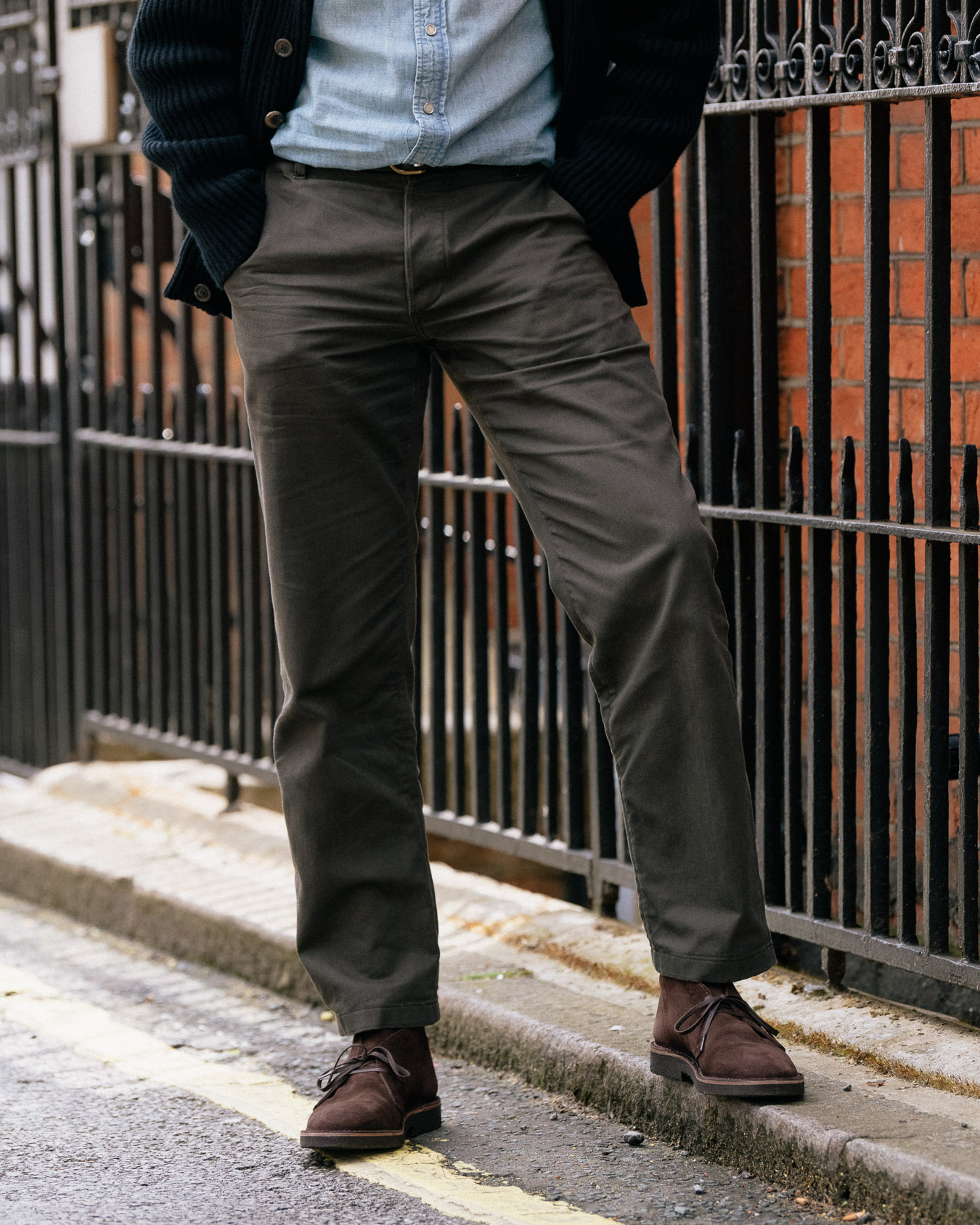
This review of Blackhorse Lane Ateliers (BLA) chinos might serve two purposes.
First, it covers the London maker as part of our ongoing series on chinos - which you can see all chapters of here.
And second, it reviews Blackhorse Lane's made-to-measure service, which they only properly introduced a couple of months ago.
Because while I like the leg line and general style of the BLA chinos, the rise is too low for me and the seat a little too tight in relation to the waist.
The RTW chino is made in what's called the W11 model whereas I prefer their NW1 style, which is much higher in the rise. (Front rise of 30cm rather than 24cm.)
Even then, when I've had NW1 jeans from BLA I've asked them to take the waist in a little. Although I guess for some people that's something they might just cinch with a belt.
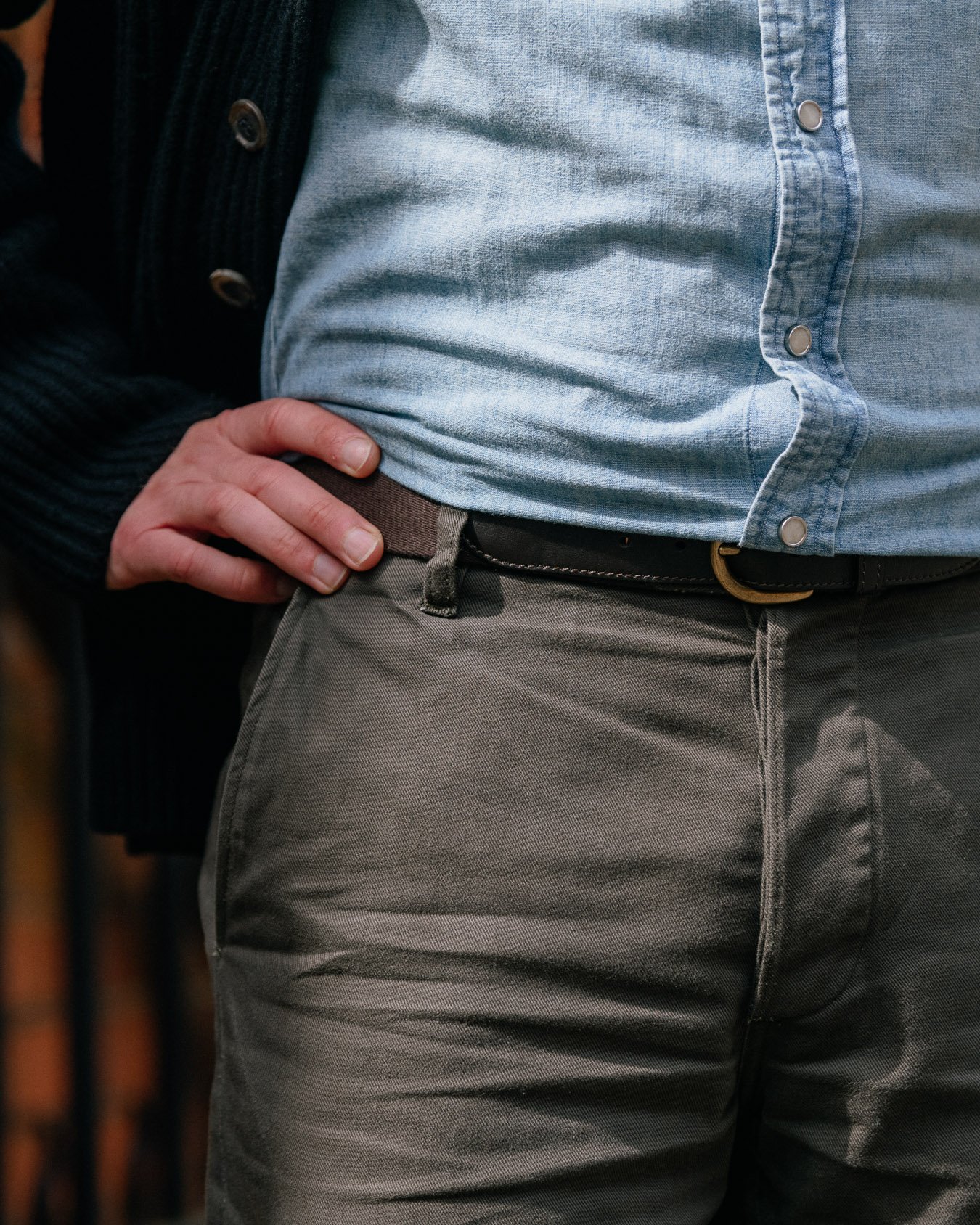
These chinos are made from a Japanese left-hand twill cotton.
As discussed previously in our article reviewing The Real McCoys, the left-hand twill means they are more immediately soft than a right-hand twill, and more similar to most mainstream chinos in that regard. The downside is they don't hold as good a line.
The cotton is heavy compared to anything mainstream though, even if not quite as much as the Real McCoys pair or similar repro brands. It's more on a par with Rubato (covered here) in that regard.

Blackhorse Lane like to improve parts of the product where they can. It's their USP when it comes to jeans - as we've covered in detail here.
In most areas I welcome this, but not all. For example I find their pocket bags rather heavy on the chinos and lighter weight denims.
The material lasts longer that way, but it isn't as nice to use and sometimes feels quite bulky. Plus pocket bags are pretty easy to replace when they do wear through.
That's something I requested to change on my MTM pair, and I know they're looking at it for future iterations of the chinos too.
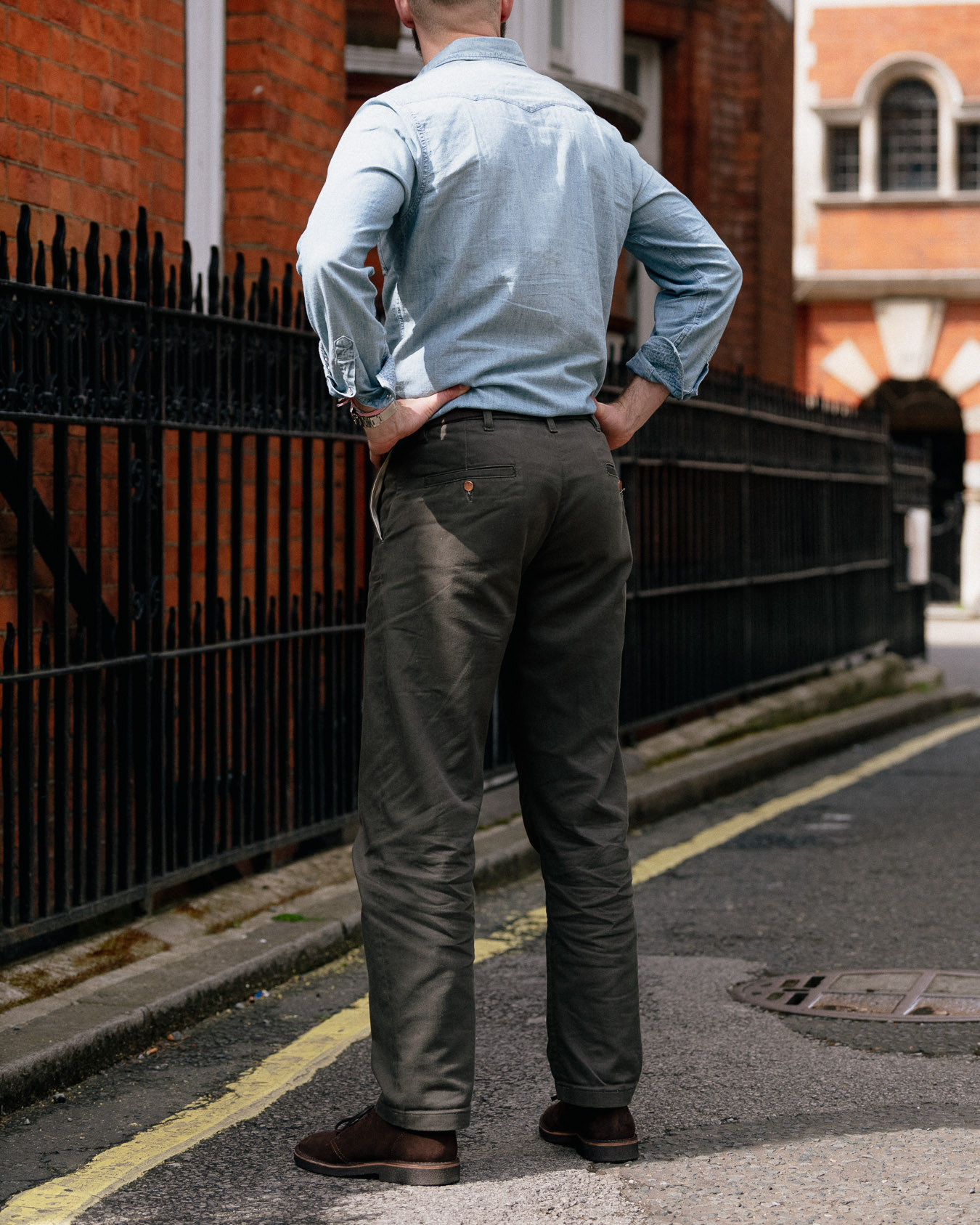
I also asked to swap the buttons on the chinos for rivets, which was a mistake.
My beloved old Armoury chinos have a riveted fly, like jeans, so I thought I'd try that on this pair. It seemed sensible to do the same with buttons on the back pockets as well.
I wish I hadn't, because the brass rivets don't go that well with the grey/green cotton - to my eye - and stand out too much. Even a silver metal would have been a mistake I think, and I noticed afterwards that my Armoury pair just had jetted pockets.
Otherwise, though, the MTM changes I requested were perfect: the rise of the NW1, plus an inch taken out of the waist.
In terms of fit, these were a vindication of the Blackhorse MTM service.
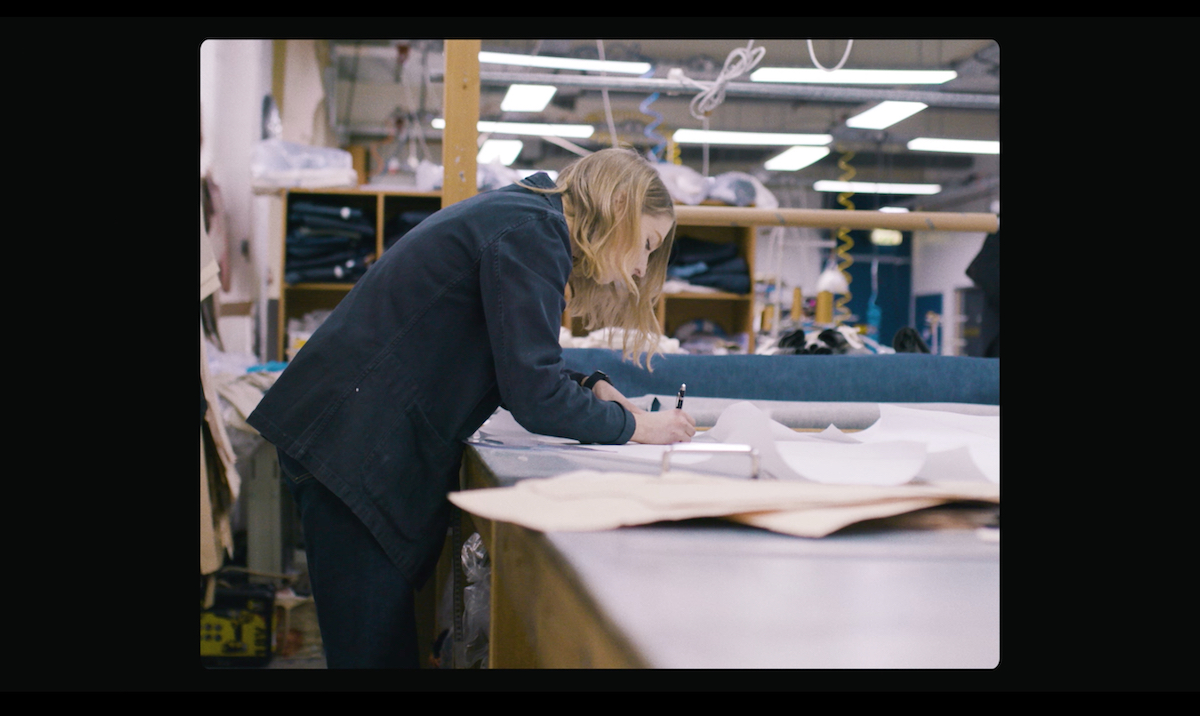
In terms of make, there are small points where you would say the finishing isn't as precise as Rubato or Real McCoy's.
This isn't as important as with smart clothes, but it is noticeable here and there.
I'm also not much of a fan of the diagonal buttonhole BLA uses at the top of the fly. It's meant to be easier to fasten, but I find it harder. That might be a little subjective though.
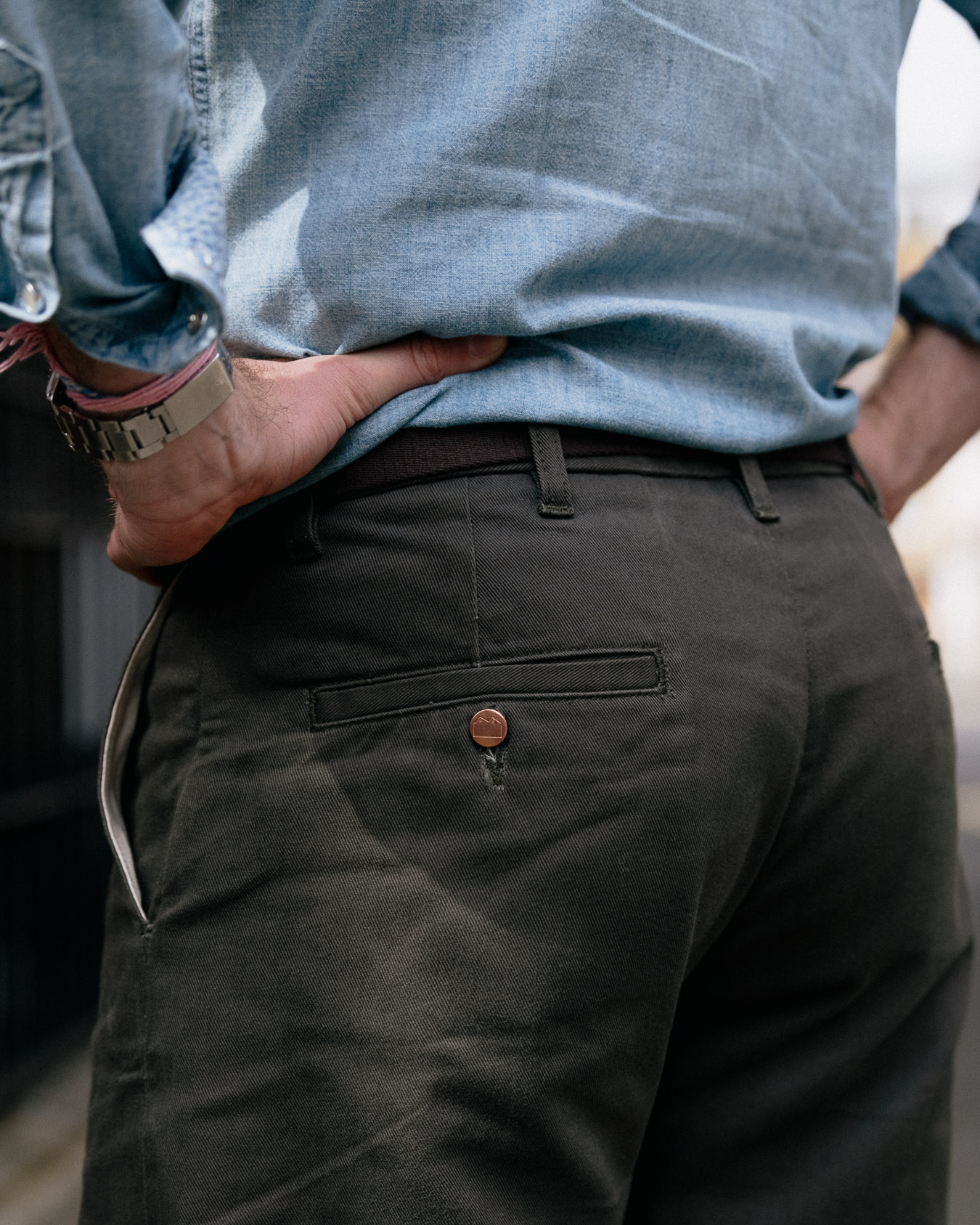
I'd make one point on fit here, given a couple of readers were asking recently about the fit of RTW clothes.
It's generally worth having the waistband of trousers as tight as is comfortable. The tighter they are, the less likely the trouser is to slip up or down, and the more likely a shirt is to stay in place. Both things are annoying and feel like poor fit, functionally.
You can often have the waistband tighter than you realise. Try it with side adjustors on tailored trousers: cinch them in and see whether you stop noticing the tightness after a few minutes.
I find men often have trousers too loose at the waist, and then complain about them slipping down or shirts coming untucked.
The exceptions are belts, which are harder and bulkier than trouser material and so more likely to become uncomfortable. And real high-rise trousers, which can be less comfortable when tight because they're gripping onto your stomach rather than your hips.
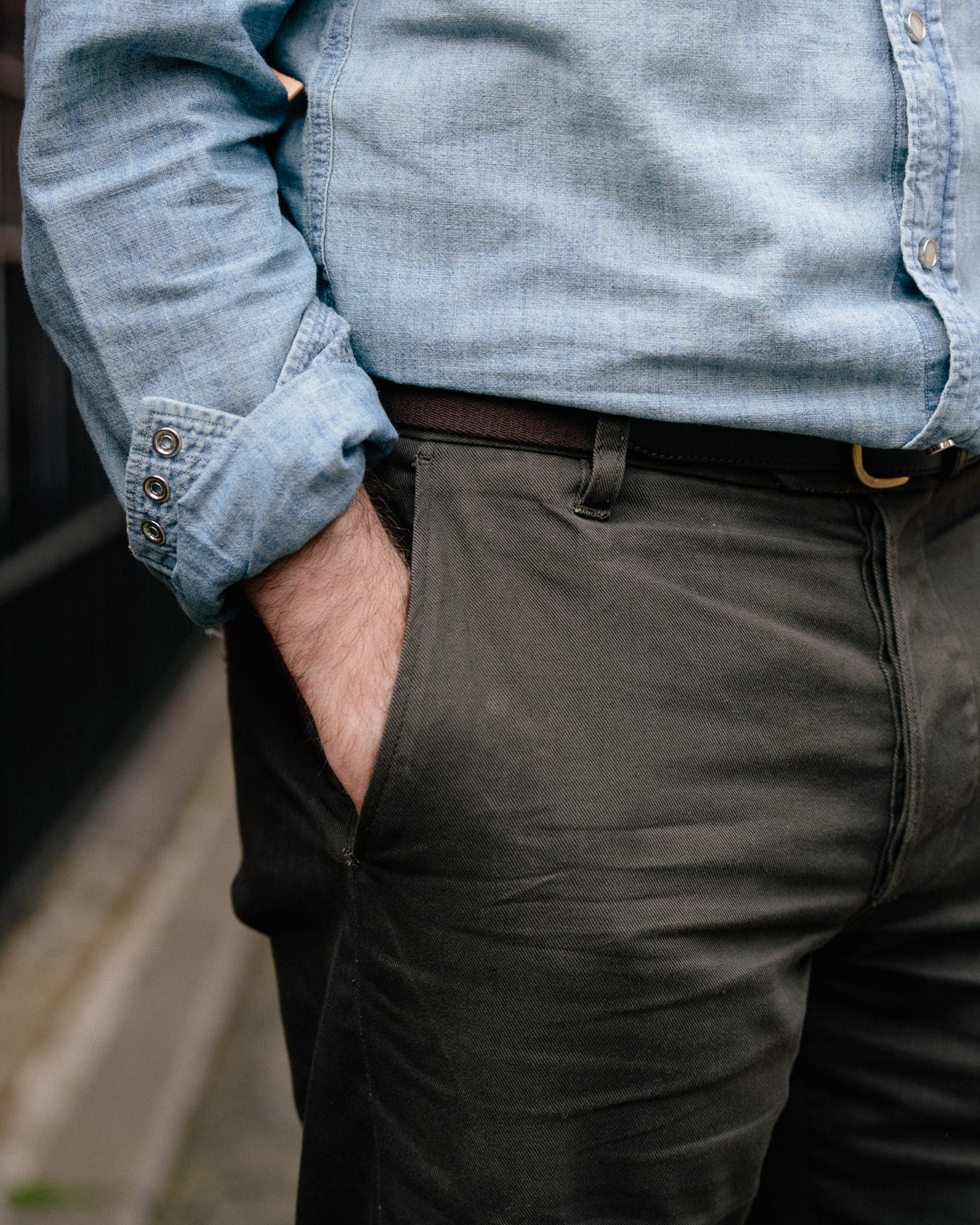
The dark green colour of these chinos is unusual, but I've found it surprisingly versatile.
Greys often look a little strange in casual materials like cotton (corduroy is an exception), yet we all know how useful the colour can be in trousers.
This dark green almost works as well. It's good with white or blue shirts, light grey knitwear or navy. And black, brown or white shoes.
It fits very well into a cold-colour capsule too, and I find myself wearing it often with black knitwear, as shown above.
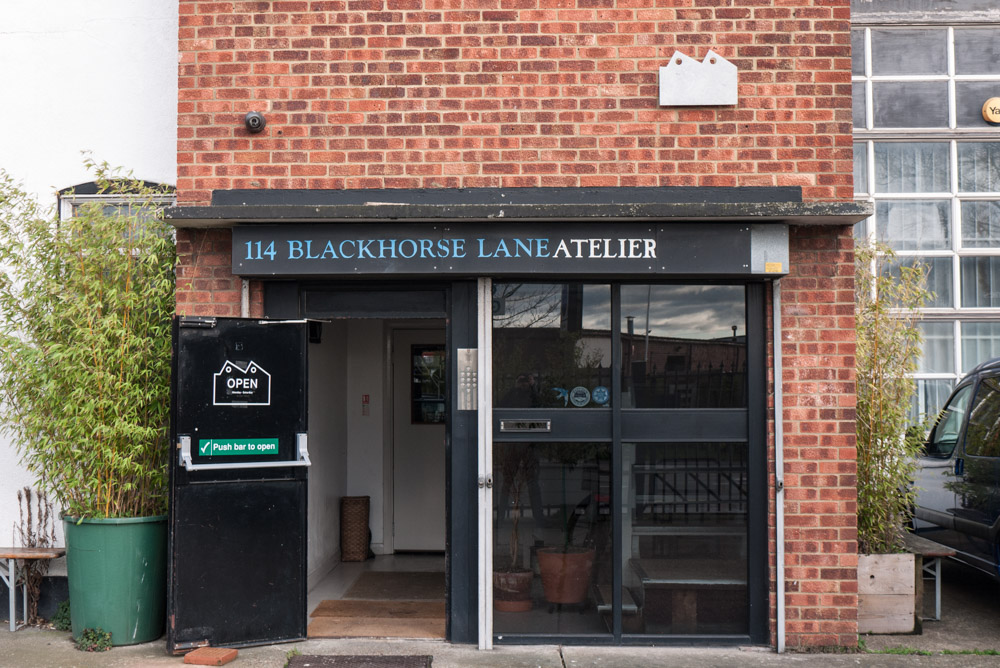
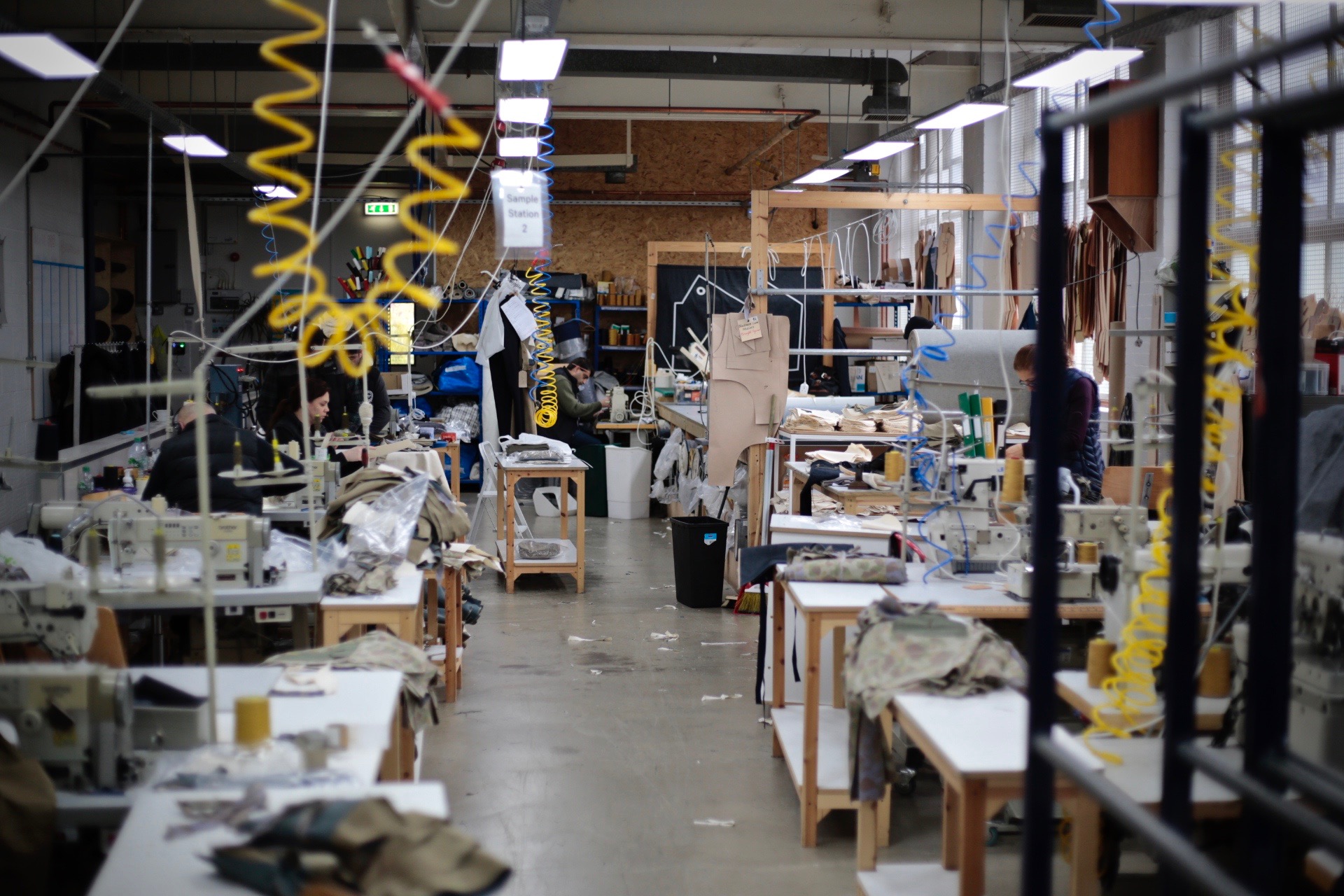
Overall, the BLA chinos are a great, solid option, and have the advantage of an effective MTM route.
They're not cheap, at £280 for ready-made and £450 for the MTM. But they are made in London, if that's something you like to support.
I don't tend to iron my chinos, by the way, except after washing, but if you prefer a cleaner look than that shown here, you can do so every few wears.
That will also lead to more fading around the edges and seams, which you may or may not like. If you want to minimise fading on cotton, you can always dry clean instead.
I would also never iron a crease into chinos like this, because they're not intended to be that smart.
The only style I would do that with would be smarter chinos like those from Rubato. But even there I tend not to. The look veers between old man and hipster, for me, and I usually prefer to be someone more average.
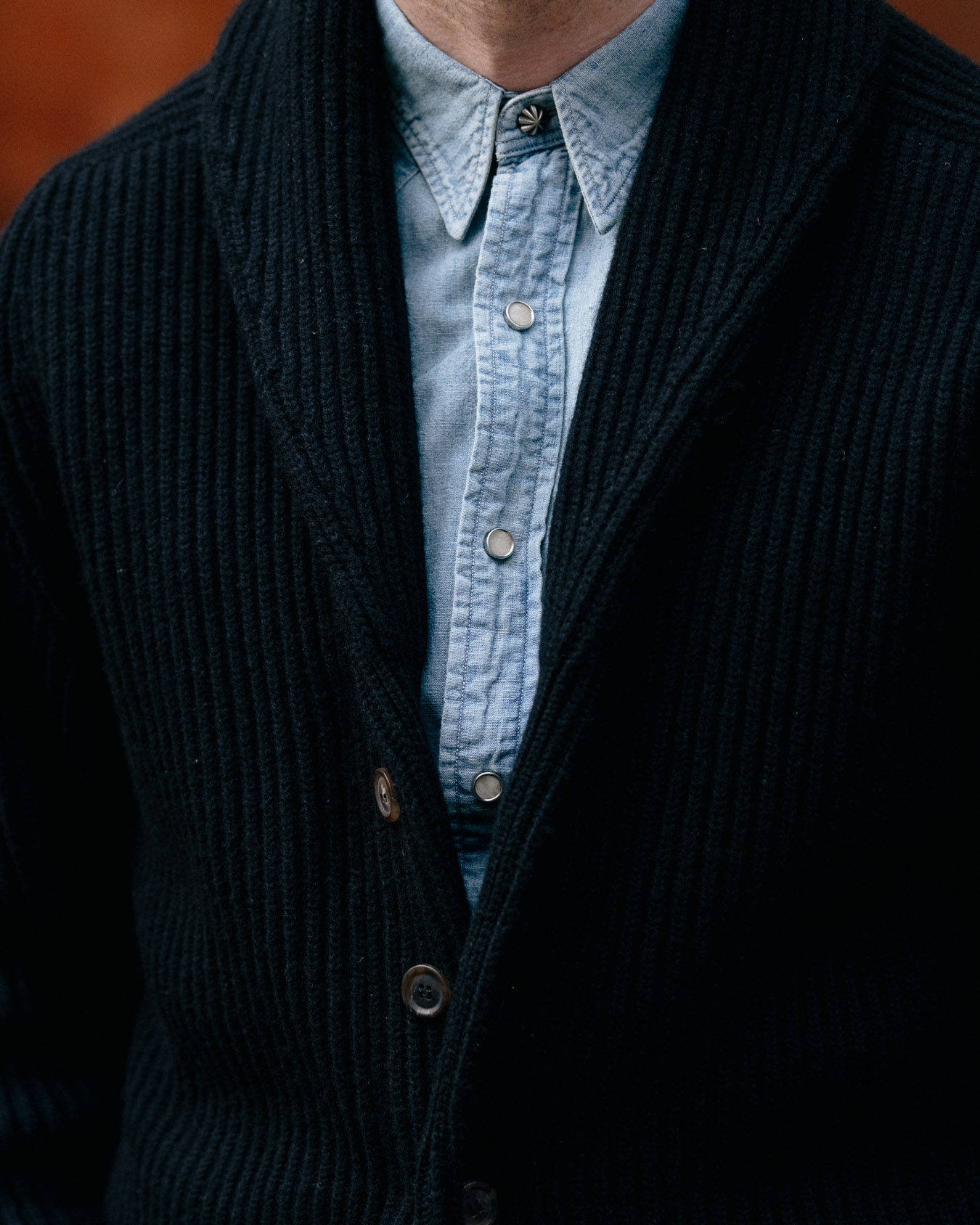
You can see the rest of the top half of this outfit in this article, covering the Begg & Co cardigan and RRL denim shirt.
The desert boots from Anglo-Italian are covered here. The webbing belt is from Anderson & Sheppard.
https://blackhorselane.com/collections/chinos-trousers
Photography: Alex Natt @adnatt
*Update: I've just been told that Blackhorse Lane are switching supplier for the cotton, as the Japanese mill has discontinued that line. All current chinos are still from that Japanese twill though, and any new material used in future batches will stay as close as possible to the current one*










Hi Simon,
The rear pocket looks rather low. Is this the case or is it just misrepresented in the picture? I also hope you don’t mind me saying that the photo of you indoors in an overcoat and hat looks rather odd. Were you not inclined to remove these once indoors?
Hi George,
I just checked and it is a little lower than some of my other chinos, but not by more than 1cm.
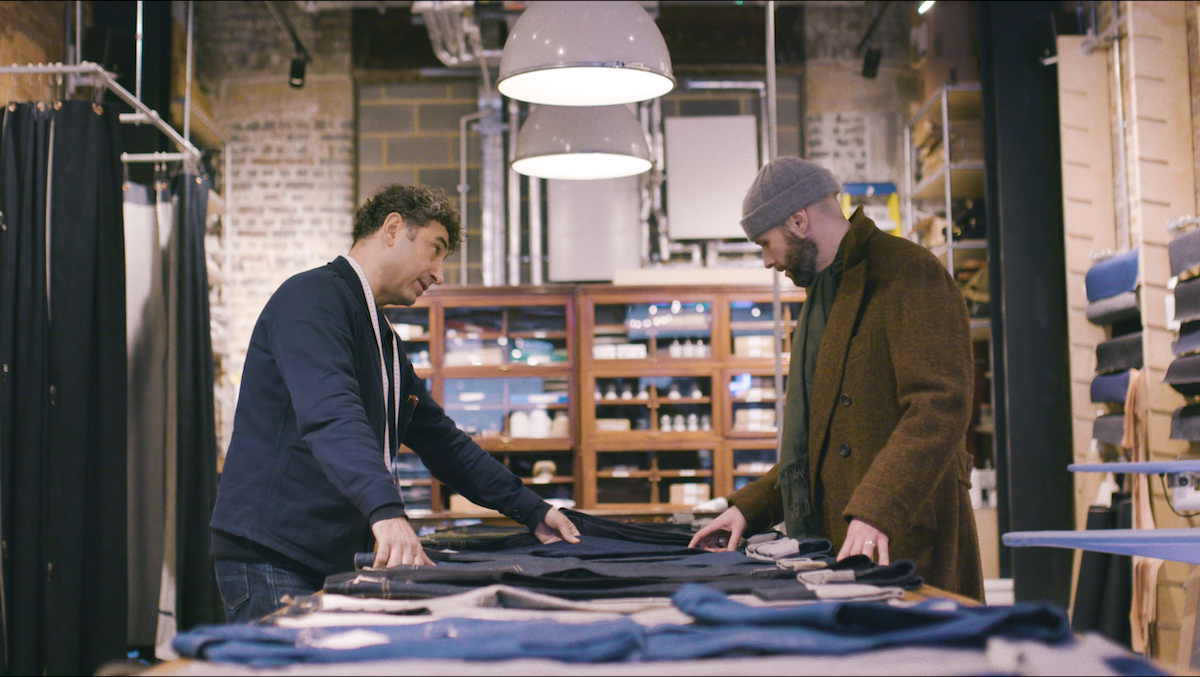
I was just wearing the overcoat and hat because I’d just come in and started chatting immediately. They weren’t retained for much longer!
Hi Simon,since you have tried a few high end chinos lately do you still like Incotex as a maker?
Not really, no. It’s mostly design rather than anything else – they just tend to be too low in the rise, and have too much stretch in them too.
Rise aside, Incotex are very fabric dependent, ranging from bomb-proof to very flimsy. It’s very hard to tell unless you handle them in person before buying
Thanks. Maybe we only get the flimsier,.stretch models here, or mostly
Hi Simon, I know there’s a lot of discussion about value, and that quite a lot is subjective. Nevertheless, I really do question whether something that is going to last 2 or 3 years in still- presentable condition (after all, they are worn in summer so will need a lot more washing or cleaning than something worn just in winter) is good value at, as RTW, 2 or 3 times the price of a comparable mainstream item.
Hey Triskel,
Sorry, are we talking about the chinos? If so, these will last a lot longer than two or three years.
They will probably wear a touch, perhaps fray a little at the pockets, but these are working chinos and that is part of the charm. See for example my Armoury ones here, which are almost 10 years old, and how much more loved they are now after so much use and wear.
Interestingly, the key point with ideas of value is often that people instinctively place such high priority on robustness, when finer things are usually less robust, not more. If you bought a light cashmere jacket would you expect it to last as long as a heavy tweed one? Even though the former is much finer and more expensive.
That’s not the point with your question about these chinos, as they are made to be tougher, but it is often the one this kind of discussion founders on I find.
Do let me know if you were talking about something else!
S
A much appreciated review. Been looking at these chinos for a while now but BLA never seem to have my size so haven’t been able to pull the trigger.
On a side note, I notice that the images on the website can now be zoomed in to (not just clicked on and enlarged)…is that a relatively recent feature. Either way, it’s a nice touch on the website, allowing closer look at detail, like the button holes on the chino covered in this article.
Thank you, yes we recently changed the image feature. The changes were:
– The pictures no longer start playing in a carousel, which I know people found annoying
– You can zoom into the pictures more easily
– The pictures should fill all the available space, which they weren’t doing previously
If you have any feedback, do let me know
Will do if I spot anything else worth mentioning. I personally think all those changes you’ve listed for the photos do help the website generally (well they do for me).
Oh good, nice to hear it
I’m completely sold when it comes to the “wow, that’s worth it” factor with your shoe reviews and suits, but I’m just not convinced any chino is worth north of £200. Mine get destroyed, often quicker than jeans, through a combination of wear at the knees, at the hem, and maybe a pen mark or two. I think this price point, along with the £100+ t-shirts you write about, are just a step too far. They are more of a disposable utilitarian purchase than a luxury one.
Hey Charles. Yeah I know what you mean, and you can get cheaper versions in many ways, most obviously by not making in the UK, then by not using tougher Japanese material like this, and finally without doing some finesse of work.
Still, I really don’t think trousers like this are disposable at all. As noted in the comment above, it’s perfectly possible to wear and love good ones for 10 years. Even ink you can get out if you want to.
I think that goes for £100 chinos as much as for £200 ones.
By the way, a reader just highlighted this old piece from 2012 which I think was a bit prescient:
https://www.permanentstyle.com/2012/06/clothes-should-be-worn.html
Today, I’d add that almost nothing should really be disposable, for me.
Interesting that you had too many shoes back in 2012! How is the show count now? Have you managed a disciplined prune?
Ha! Good point. More have been bought since then, but almost as many have been given away or sold, fortunately.
Admittedly it’s partly because I’m in the process of losing weight, but I always seem to find with jeans and chinos I can buy them so I’m only *just* able to do them up but after a few wears they become too loose in the waist. Is there anything to be done about that bar washing frequently or wearing a belt/getting side adjustors?
It probably doesn’t help that my beer belly prevents me from wearing mid rise trousers properly also.
Hey Aaron,
If it’s from losing weight, then no there isn’t anything you can do about it. You just need to get to a stable weight before you spend money on things. It’s not really possible to shrink them reliably.
Do you mean that it is not reliable to ask a tailor to take in maybe 4-5 cm in a pair of chinos? I am thinking about buying a pair of BLA chinos (they have finally arrived) but I think that I am between 36 and 38.
4-5cm is quite a lot Carl – if you take in that much, it’s certainly possible but things start to look a little odd like maybe the back pockets get a little close together.
5cm is 2 inches, so if you need that taking out shouldn’t you just go for the other size?
I thought wrong, maybe 2-3 cm. I am probably perfect for the 38 without a belt. But I know that chinos (like jeans) should be a bit tighter than “perfect” at the beginning. 37 would probably be the best but BLA doesnt have that.
In that case I wouldn’t worry, 2-3cm is a fine adjustment
Hi Simon,
Thanks for the review. When it comes to suppliers of good ‘chino’ cottons like this Japanese one, I am pretty clueless, having bought mostly RTW trousers and been blissfully unaware about the origins of the cloth.
Which mills would you suggest, please? For casual trousers, I have come to prefer the meatier, matte stuff with some texture in the weave, trusting that it will age well. I am also reminded of (and completely agree with) your advice elsewhere about lighter cloths and the ‘old man’ issue.
Jonathan
Hey Jonathan,
I don’t know the specific Japanese mills well enough to say which ones to look out for, but in any case often brands won’t say where the cotton is from anyway. I think you need to trust in feeling the material yourself, or looking for heavier weights
Hello Simon, nice article, but in the end of the day what is your favourite chinos from what you tasted here? Thanks
So, I’d say my favourites are the Rubato ones, but with the big caveat that ‘favourite’ is not that useful a guide to go on I don’t think.
It’s very subjective, and includes things like a style I don’t already have (eg I already have a workwear pair I love – the Armoury ones) and knowing the guys that made them, and caring a lot about having the right rise, and making some wrong decisions on the MTM commissioning here etc.
At the very least, it’s important to understand why something is someone’s favourite, otherwise it’s pretty useless as a description.
Thanks Simon, good point
By coincidence I just bought my first pair of serious chinos this weekend, made with a fabric described as white selvedge (actually stone coloured) from the Kuroki mill. BLA uses the same mill for other products so quite possibly the same one here.
Hi,
Whilst MTM is not a route I would go down for chinos which I see as a utilitarian type of clothing where imperfections add something to the overall effect – in my view.
On a non related point joined-up only by the western denim shirt. I was looking for something on ways to wear western denim shirts or straightforward denim shirts and if / how they can be worn with jeans without looking OTT. Can you please post any relevant links.
Once again thanks for the articles.
Hey Stephen,
Such ‘double denim’ is not an easy thing to do and not look forced. But look to people like Ethan Newton for good examples, and try to keep the jeans and shirt as different as possible if you want to avoid the issue.
Such as light denim shirt (not Western) with less fading and wear than you’d typical get on jeans, together with dark jeans.
Also, breaking up the two with knitwear or a jacket works well. There will be an example of that on Wednesday this week…
45rpm makes a pretty good chino. I bought a pair a few months ago. They have a pretty high rise and the construction and fabric is really good.
Thanks Mike. Could you provide a link to the model?
https://www.45r.uk/okome-chino-908-pants-0421.html
They seem to be out of most sizes though.
Cheers
Hi Simon, thanks for this review. A couple of pieces of information that I learnt from BHL a few weeks ago:
1) khaki colored chinos will not be available for a few months, as they have changed the mill they get the fabric from.
2) they can finish them to a 34 inch inseam, but has to requested from them.
Can I ask what you think of these chino in their RTW form? In particular, are the front/rear rise well off the mark for you? Or rather, would you wear the RTW ones? Thanks
Thanks John.
I wouldn’t wear the RTW ones, no.
Thanks Simon.
I do agree that 450 GBP for this MTM is probably worth it, and I don’t understand some people’s concern with spending this on chinos, when many of us would happily spend 800 GBP for a pair of bespoke flannels from W&S (and call it good value). A solid pair of chinos like this is abundantly useful, especially when they fit well.
Just one additional question: were the chinos in good shape during the first fitting, and you just finalized the length? I will hopefully visit the UK next year and am trying to see how realistic it is to have an MTM pair made. Cheers.
Yes they were, the fitting worked very well in that respect
I suspect that I am a little like you Simon,in that I would’nt dream of buying a pair of RTW trousers or jacket/suit and yet I persist in this idea that I can purchase RTW chinos or corduroys.My chinos and corduroys have all been altered to fit my taste and sometimes I think sod it,I’m just going to go bespoke or MTM now for chinos , linen trousers or cords because I am tired of the vagaries of RTW.
Another informative and comprehensive review Simon!! As regards this green, it is indeed versatile and nice. Shades of grey rarely work well on cotton, perhaps except for light and stone greys for summery chinos, don’t you think?
Yes I think you’re right. I think often the thing that makes the difference is having something else mixed in, like a little green here, or the little brown you get with stone. So not just a straight grey as you get with flannels and suits
Hi simon, I think it would help if you have more shots of the product you are reviewing. E.g. full body shots, side profile shots etc. which can help establish the silhouette of the trouser in addition to your close ups.
I don’t do those so much with RTW products like this Shem, because they exist on the brand’s website as well?
Hi Simon — In the past, you’ve commented that made-to-measure chinos are difficult because you don’t get the garment-washing that one tends to associate with a ready-to-wear chino. Did that present an issue here? Or no, because this style is meant to be sold raw anyway?
Good point, yes they’re sold raw anyway, not garment washed
Great review Simon, was looking forward to this one.
I’ve purchased two pairs now of the rtw W11 pattern chinos (green and navy). The price is high, very high for me but the reason I felt justified is that this is the only chino purchase I’ll be making this decade, longer probably given how much wear they’ll get. Frankly, I just don’t wear chinos all that much, but I do like to have them as an alternative to the default: denim. I am tempted to go down the MTM route with BLA for denim next year with a few tweaks to their NW1, given it’s part of the default daily uniform, I can justify the price. Just about.
At first, I thought the rises were just shy of the mark, a little too low. But I’ve come to realise that perfection doesn’t really exist, and contrasted to most off the shelf chinos available these days, relatively speaking, I’d say these are bang on the mark of a mid rise. So I pulled the trigger – and I’m glad I did. All the positives and negatives you’ve pointed out.
You make a very important point regards waistbands Simon. Part of why the BLA rtw chinos work for me, I think, is that I don’t need to wear a belt. The waistband off the shelf is absolutely perfect, which is surprising because their denim isn’t, needs an inch out. With a belt, they felt a bit rough on the hips, because they do sit lower than I’m used to. without it, after a few wears, perfect. Stay in the same place.
Ck
“Needs an inch out”? Does that mean an inch more or an inch less?
Less. As in taken out. Sorry
Dear Simon! Have you tried the RTW chinos from RRL? Thanks!
Once or twice, yes. I usually find the rise too low on those too unfortunately
Hey Simon!
I had a question concerning the tightness of a trousers waistband. I typically enjoy my trousers’ waistband to be on the tighter side, but I find that usually it ends up affecting the fit of my shirt, making a shirt almost “poof” near the waistband. Have you had the same problem, or do you think this would be more of an issue with the fit of my shirts? I typically wear my shirts on the slimmer side.
Thanks as always,
Preston
I think it’s more likely the shirts. There’s more danger of a loose waistband affecting a shirt fit than a tight one. You don’t want the shirt to move around.
Hey Simon,
Great to see this review as been seriously thinking about a pair of BHL chinos… for some reason i find there is no harder item to buy than good RTW chinos.
I had a fit question for you though – i find the fit you seem to go for to be straighter and less tapered in the leg than i choose myself. Its something i’ve noticed before in other articles – for example, you got on well with the BHL NW1 fit, but did not get on with the anglo italian jeans fit. This has been the exact opposite to my experiences on fit in these two models.
I am a bit shorter than you (5″9) and overall a bit squarer, with wider hips, but am i curious – do you think it is just taste that guides how differently we view the leg of a trouser, or is it our differing physiology?
There is a little physiology in it, for example a very tall guy can look silly in quite narrow trousers, and a short guy in wide ones. But that’s really only at the extremes. If you’re a little short or a little tall, you just want to aim for moderation – not very wide or very narrow, and the place in between being determined by your taste and current fashions
Hi Simon. Hope all is well. Is the NW1 fit wide, but not too wide? I have a couple of jeans in the E5 style, which is a little more tapered. I am curious to try the NW1 as well. But from the description and pics on the website I thought maybe it might be too wide or baggy for me, with a large leg opening. But maybe I am wrong on that and it still fits in that description of moderation you mentioned above.
I guess it’s hard, because those terms are pretty subjective. I don’t think they’re wide, but then most jeans I see on guys on the street look like leggings!
Best is probably to look at the measurements and compare them to a pair you own.
These still looks too tight. I’d be embarrassed to wear trousers with those deep creases in the middle of the seat. They make it look like you’re… clenching.
Thank you for noticing Ben.
The fit isn’t too tight I don’t think, but the fork could be lowered a touch. Bear in mind this is a fairly thick cotton, so shouldn’t be compared with a tailored wool that would sit more cleanly. And it’s bespoke it’s MTM
Hey Simon, what’s the leg opening on those?
8 inches. The measurements are the same as on the Blackhorse website in the bottom half
It’s always surprised me who difficult it is to buy the classic chino-high rise, heavy cotton canvas, loose fitting but slim at the ankle. My wife has several pairs, all recently purchased, which fit the above criteria . Most rtw manufacturers don’t seem to realise they are different to cotton trousers in a Jean cut.
Hi Simon, thank you for this article. Please, let me ask you a couple of questions.
I. Which are the main characteristics a chino should have to be considered as such? How to distinguish from cotton trousers in general?
II. Regarding ironing the crease, would you do it in a pair from Incotex (e.g.)? And in case you don’t iron the crease on pair of chinos, can yyou wear it with a jacket? (unstructured with less formal fabrics like tweed or linen).
Thank you and best regards,
I. There is no easy definition. Most obviously because people just use the term in different ways. Coming up with our own definition only goes so far if others don’t use it.
But in general, a chino uses a coarser cotton than a smarter cotton trouser, and has various style details that make it more casual, like overlapping seams
II. No, I don’t do it on any chinos and I certainly wouldn’t do it on the normal Incotex, which are soft and stretchy and wouldn’t hold that crease.
I don’t wear chinos with jackets much, but the reasons for that are a whole other discussion!
Re: the color… I agree that grey, for some reason, often doesn’t look “right” in chinos. Maybe it’s the association with more formal clothing. Mixing another color in, as you do with green here, works well. I usually go for brown to get the same effect. A nice, dark, cold brown, with a touch of grey, is one of my favorite colors for trousers. Rota has a good example of it in their MTM fall/winter cotton fabrics.
Love the colour and fabric on these. If anyone knows where I can get something similar in North America (I’m in Canada) please do chime in. Looks like the rtw version won’t be a good fit for me, either
Good read – very much enjoying this series on chinos.
Simon, would you include army trousers/chinos such as the ones you bought at Le Vif in the same category as these and if not do you plan to extend the series to that type of trouser and also to some of the trousers by brands such as Pherrows, Jelado, Warehouse, Toys McCoy, to name a few?
Asking since chinos form a major part of my uniform/wardrobe and would be very interested to hear your thoughts on them.
Admittedly some of the styles such brands produce lean towards the combat/utility end of the scale with extra pockets here and there but a few I’ve seen lately here in Hong Kong have sat neatly between the two styles, that is to say, a wider leg and higher waist, heavier but without the thigh pockets.
Thanks,
Matty
Nice to hear Matty.
I probably wouldn’t on the army trousers, just because they’re not filling the same need as the other chinos in this series. They’re a different style and function really. But I will certainly look at some of those other brands in the future.
S
Hello Simon
Have a look at Kiton and Loro Piana.
Both make very good chinos, although they are both expensive.
Then again as the old saying goes, “you pay for what you get.”
Regards
Gohar
Hi Gohar,
I’ve tried both over the years, and to be honest I wouldn’t wear either. Mostly it’s a style thing – those are both low rise and slim, often with some stretch. It’s more similar to Incotex, an upgraded version of that.
I’d also dispute the point about getting what you pay for with both those brands, particularly Kiton. Both are very inflated, even if as with LP, the quality is very good.
Hi Simon, do you happen to know the cotton fabric brand that Blackhorse Lane used. I would love to commission a pair, but I live no where near England to do so! Thank you.
Actually, as mentioned the cotton has been discontinued anyway, so I’m afraid that won’t help.
Also, the fabric is only one difference between chinos and tailored cotton trousers. There are others (article coming soon on that)
How do you like AI’s in snuff? is it a good version of the color?
I have a pair of chukkas in dark brown and I’m thinking of getting desert boots in snuff. Seems like a good second color to have, and the more casual color tone also fits with the more casual design / construction of the desert boots.
True. I presume you’ve read my piece on the AI boots generally? Here
I did and should have posted there. Was just wondering if you’ve seen the snuff color in person and whether you think they got the color right. The reason I ask is that it’s hard to judge what a color looks like from a computer screen. So much depends on calibration of the monitor, etc. And over the years I’ve seen various shades of brown being described as “snuff.”
True. But no, sorry, I didn’t look closely
Hi Simon,
I have a pair of BHL chinos but need to shorten them. Do you recommend a plain hem or keep it a little longer for a one fold hem?
Thank you!
I’d recommend plain, if by that you mean without a turn-up on the outside.
However, the style on chinos is to have the cloth turned up on the inside, and a visible stitch on the outside securing that, between 4cm and 5cm from the bottom
Given that these chinos are no longer available, do you have any other recommendations for good olive chinos?
No, sorry. As far as I’m aware Blackhorse Lane are planning on bringing them back though
Alright, I’ll keep an eye out for them on their website. On another note, what are your thoughts on this shade of olive (which you said is a bit more unusual, but still versatile) versus the more typical army green? To me, this shade of olive seems a bit darker and more muted compared to the army green. Which do you prefer and recommend?
I think they’re different rather than better or worse. The army green is more casual and goes with colour better elsewhere – a blue shirt, a yellow, a red. The dark olive is a touch smarter and is better with tonal, more muted colours – a white shirt, a brown, a black.
How much wear would you say you get out of these olive chinos? You said they very versatile, but do you find yourself grabbing a pair of olive chinos regularly or do you mostly just go for your khaki chinos? How useful do you think a pair of olive chinos would be?
I think they are useful, and more versatile than most people would think, but you’re right, I wear khaki and beige more. If you didn’t already have good examples of both of those, I’d suggest you might get more out of them
I do already have a pair of beige and khaki chinos. The beige ones based on your recommendation from The Real McCoy’s. In my research I haven’t been able to find a pair of good quality olive chinos, but I’ve come across a lot of fatigue pants in various shades of olive, specifically from Engineered Garments and OrSlow, which are both apparently very widely regarded for their quality (often in the same conversations as The Real McCoy’s). What are your thoughts on fatigue pants?
I think that’s a nice option too, yes, if you want another pair. (I wouldn’t say EG or OrSlow are the same quality by the way, though still good)
Do you own a pair of fatigue pants yourself? I was a bit on the fence just because I wasn’t sure if they were going to border on being a bit too costume-y for regular wear? What are your thoughts on the timelessness of fatigue pants? Are they something that you think would be considered a classic style?
I think they’re pretty classic, yes. They don’t have any of the unusual design touches of pockets on the legs, or hammer loops, that you might get on other working or military trousers. I have a pair, shown here
AAR
Have a look here. They might be what you are looking for.
https://statement-store.com/collections/chinos
I’ll have a look, thanks!
I was just initially a bit hesitant because fatigue pants have the flap/patch pockets at the back. How much wear do you get out of the fatigue pants and what would you typically wear with them?
I wouldn’t worry about that, it’s a fairly small detail.
I don’t get that much wear out of mine, but that’s because they’re very light in weight – so only good for warm weather – and they’re very high waisted
Upon searching for a pair of olive chinos, I came across a pair from a brand that I’ve seen you mention pretty often on here before, Bryceland’s Co. It seems that they have a pair of “Army Chinos” in olive. I’m not sure if you’ve gotten a chance to see them or try them on for yourself, but I wanted to see what you thought about them? If you have, what are your thoughts on them? If not, maybe they could be a good pair to look into for this great series you’ve got on chinos?
The Brycelands ones are great, but they are very high rise and wide leg – the more traditional styling that I don’t really wear
Would you say that the Bryceland’s are even higher-rise and wider than the Rubato?
Yes, though you can see that from the measurements too
Any thoughts on the new chinos they are selling?
https://blackhorselane.com/collections/chinos-trousers/products/w11-straight-tapered-stone-japanese-twill-mens-chinos
No, I hadn’t seen those. I’ll try and check them out in person soon – and reply here
I tried the olive pair on in their shop yesterday. I was wearing your old brown aero horsehide leather jacket I purchased via Marrkt a while ago, Simon, and was looking for something to go with it. These fit very well and the colour was spot on, but the materiel was perhaps just a bit too ‘shiny’; a bit too smart for horsehide. I was going to head to the Real Mcoys after to see how theirs compared but ran out of time. I’d be interested to hear your thoughts on the new BLH chinos along with Mahmoud when you get a chance to check them out, many thanks!
Incidentally, Will in BHL, someone working in Son of a Stag (recognised the brand on sight) and Scott Fraser all commented positively on the Aero Jacket yesterday…interesting that it was appreciated straight away by people in the clothes world but I rarely get a comment in my day to day world. Regardless, I always enjoy it when I wear it so thanks for letting it go!
Whilst their jeans are great, over a year on I’m not completely convinced with these chinos (I have pairs in khaki and green/grey). They have certainly started to soften and wear in nicely in some ways, but actually have worn in less well in others – the knee area and pockets having lost shape and being a bit “baggy”. I can’t really wear them in the office now.
Of course that may work for some and maybe highlights the workwear/smart distinction you have made before. They make a nice weekend option I suppose.
Interesting, thanks Rob, useful
I bought the beige version of these chinos three years ago. Unfortunately they developed light streaks in the first wash, which I think wasn´t my fault because I have been washing a great variety of chinos (from Calvin Klein in the nineties via Incotex to RRL and Japanese brands today) without any problems. After the second wash it was worse and I gave up wearing them.
Now I am considering dyeing them black but am unsure if the stitching will take up the colour. On their website the thread they use is described as polyester core with cotton outer. What would you do, Simon? (I emailed BHL but received no answer.)
I’d only dye them if I knew the thread would take, or that I wouldn’t use them otherwise, so there was nothing to lose
Surely it’s worth picking up the photo to BHL first?
Greetings, Simon. If you wanted a chino to wear with loopwheel sweatshirts would these BHL chinos be better or the Officers chino from Rubato (in a khaki, rather than a formal color)? Have you worn both in this way?
I have the Real McCoys ones that you reviewed, but the rise has always been abit low, and after some growth in the thighs from cycling they are uncomfortable now.
Thank you!
Hey Rob,
I think either would be good. I’d personally probably go for the Rubato ones
Thanks Simon, much appreciated. Presumably the khaki option would be more useful than dark khaki?
Thanks again.
Yes probably
Simon,
A slightly esoteric question, I like the versatility of navy blue chinos but I find they lose colour quite quickly and look more worn out than worn in. Any brands, in your experience, that are more resistant to that fading?
Thanks
I don’t think so to be honest Misbah, it will happen with all navy at some point.
However, the smarter the make of trouser, often the deeper the dye will be and the less fading you will get
Are you familiar with their straighter W12 chino with the 9oz Brisbane moss fabric?
How might it compare to the Rubato?
I’m not I’m afraid Jeff
A bit curious myself on this – would the change in fabric to the Brisbane Moss (from the previous left hand Japanese twill), with all other things being equal, turn this into a smarter chino or does it remain more of a working piece?
Hard to say, but perhaps a little smarter, yes
Thank you. Would you put it closer to the Bruce or more so the Anthology or something like that?
Probably closer to the Anthology