

A very modern cut: Kotaro Miyahira of Sartoria Corcos, Florence
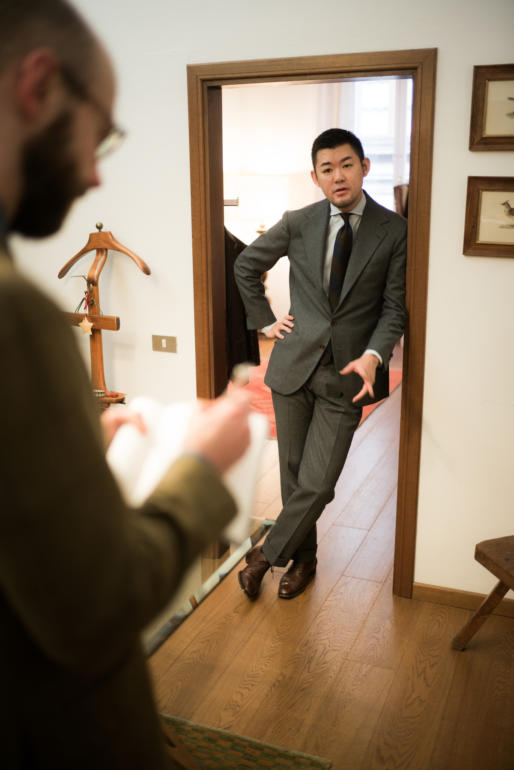
One young tailor I’ve been meaning to cover for a while is Kotaro Miyahira of Sartoria Corcos, in Florence.
Kotaro is not taking on new clients at the moment, having just had his first child and not wanting to expand the workload of him and his wife. But several friends have had pieces made by him, which display an interesting and decidedly modern combination of styles.
Kotaro started in tailoring in Osaka, Japan, where he worked in the Ring Jacket factory. He was there for four years, and also trained a little with a local bespoke tailor before attending a tailoring school.
Eleven years ago, he moved to Italy. This was driven by a love of Italian and English tailoring, and a desire to learn from the masters.
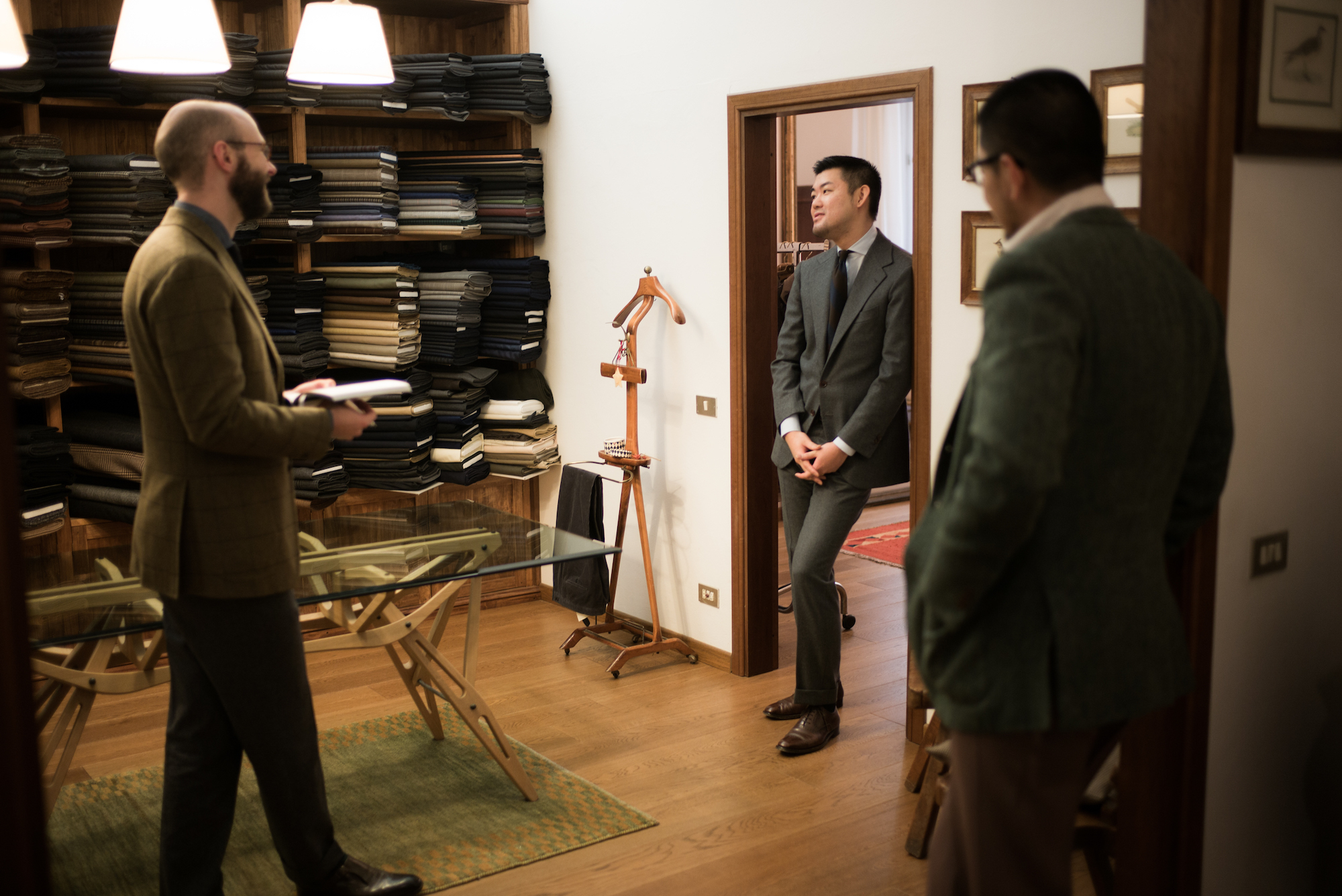
Most such visitors head to Naples, which has a far larger number of houses and therefore a greater likelihood of finding somewhere to learn and work. But Kotaro went to Florence, which he partly knew from seeing images of Pitti.
Once there, he worked with several masters, including Seminara and Francesco Guida. He also travelled regularly to Naples, and worked there with Franco Ordine (who has since passed away). So there was a mix of influences, the soft south and the hard(er) north.
“I also visited Savile Row at one point, which I was impressed by,” he tells me. “But I knew big houses were never going to be for me, and of course the style was stiffer than what I naturally make.”
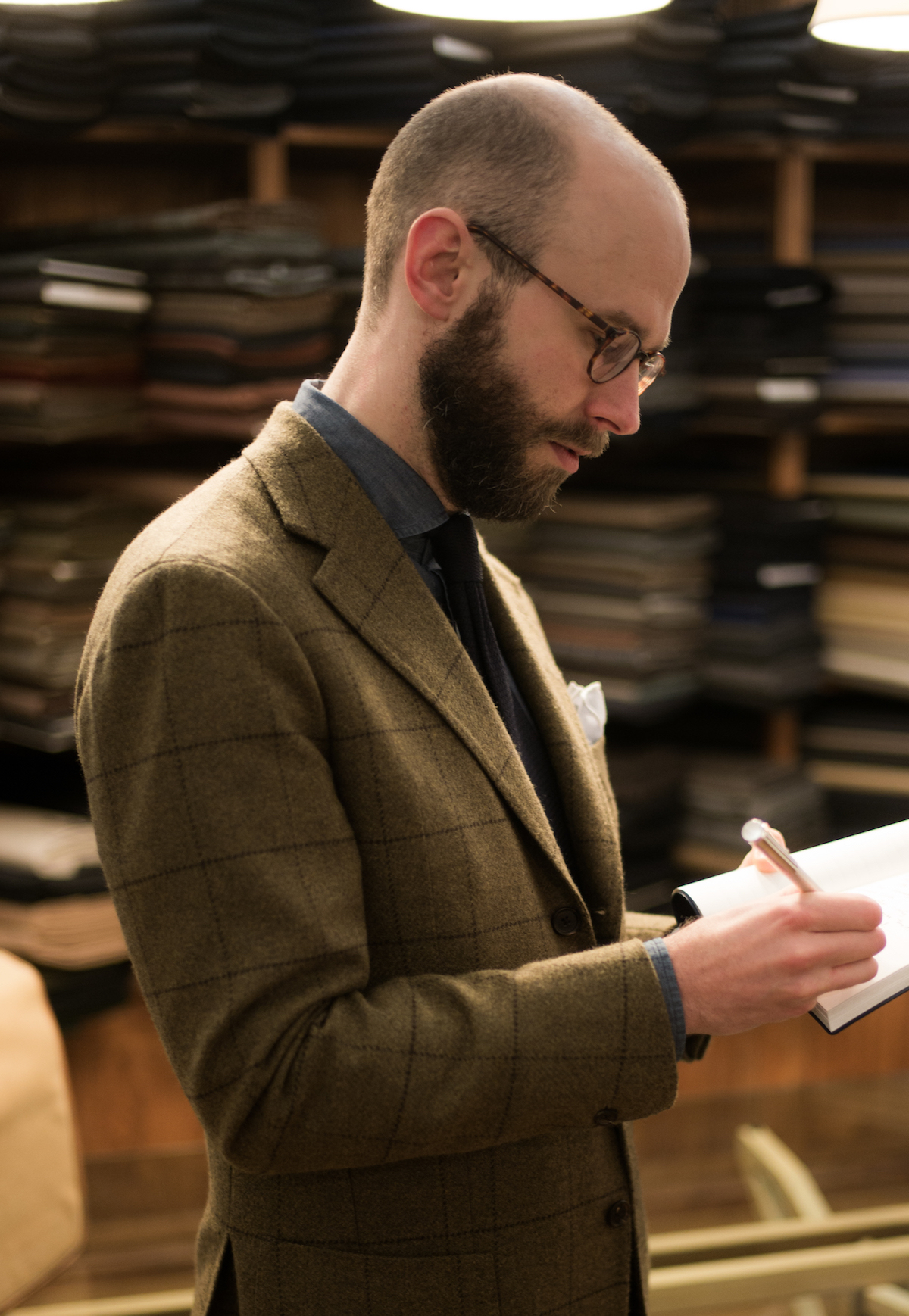
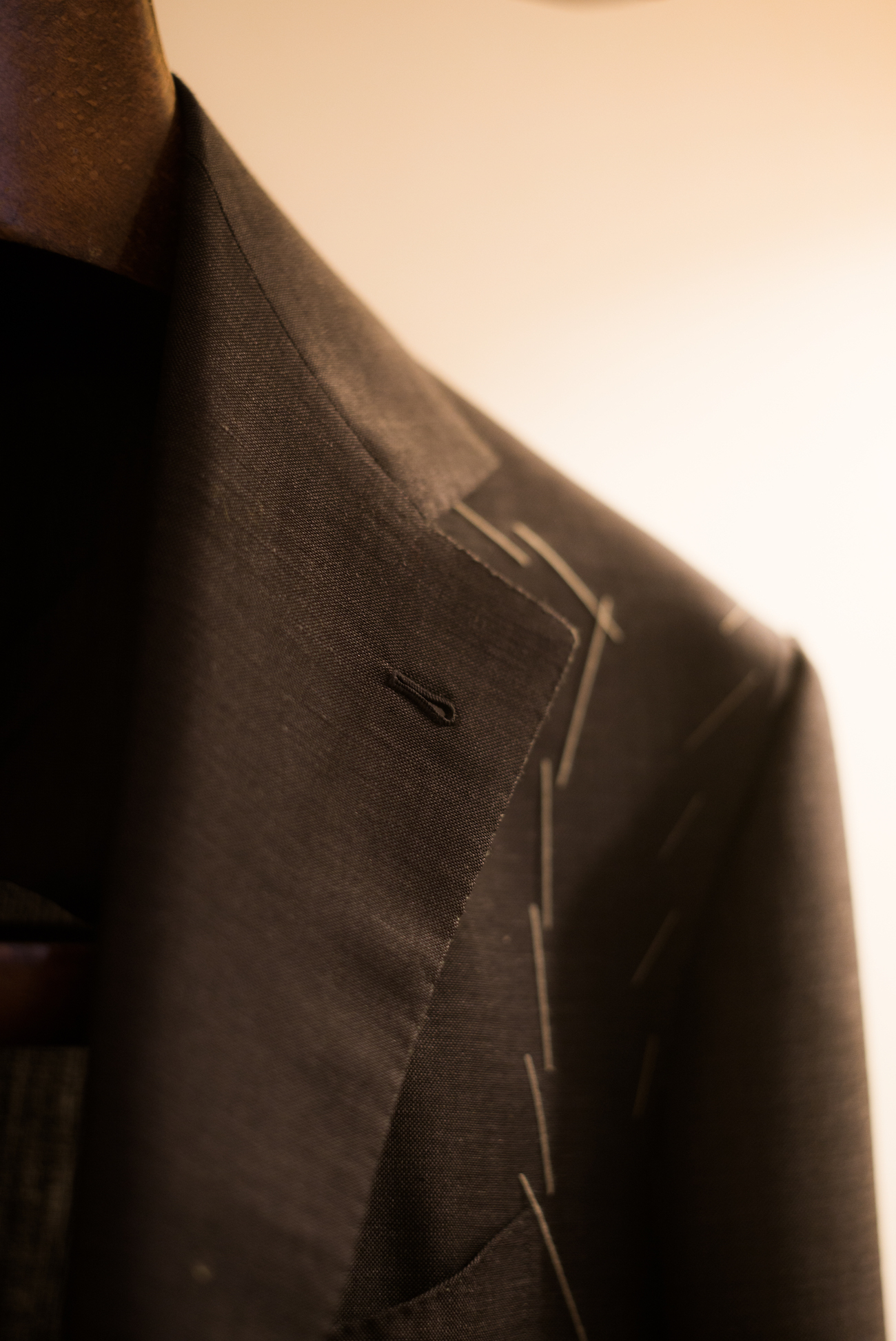
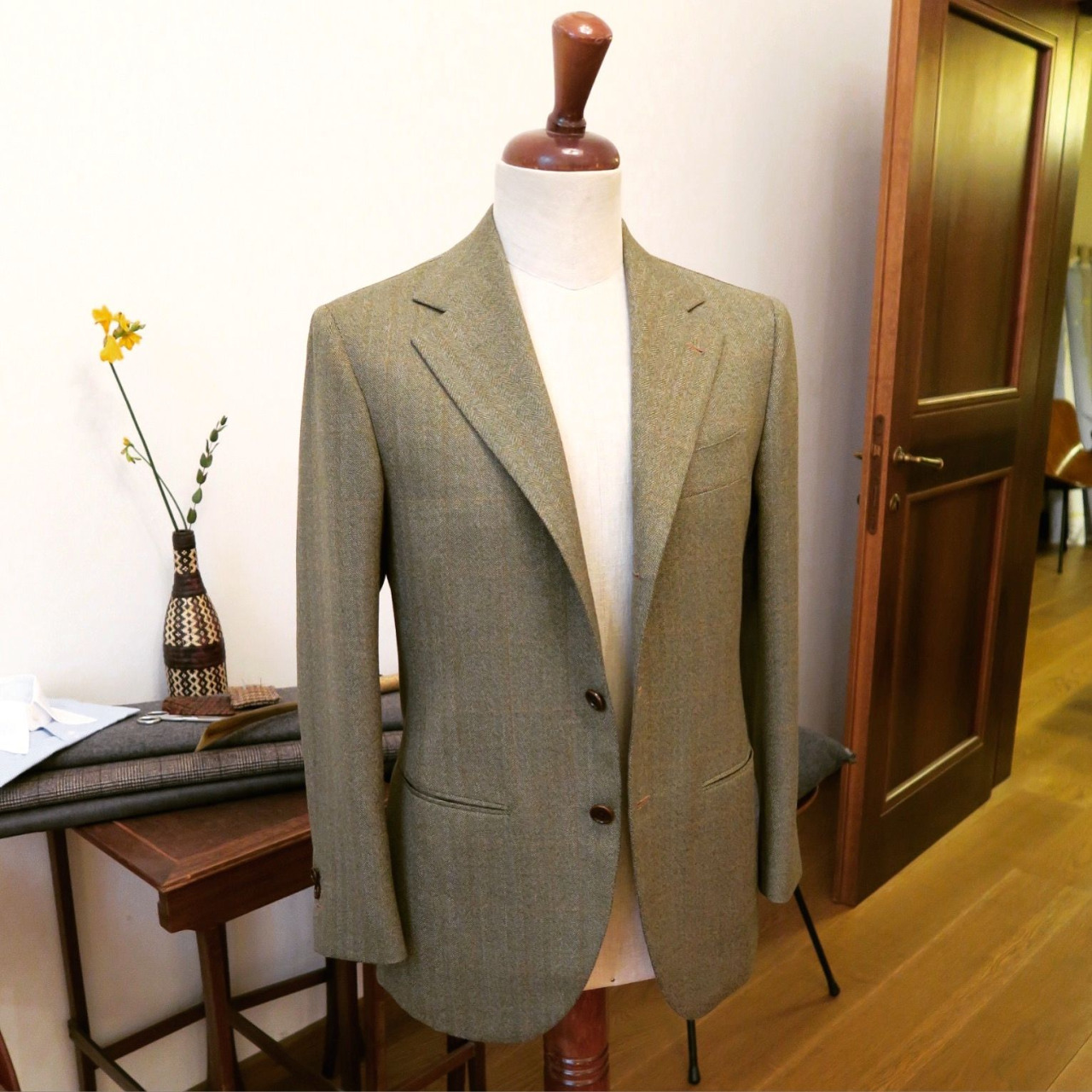
Kotaro set up on his own seven years ago, and quickly began to evolve his own personal style using these various influences. The shoulders of his jackets are much softer than anything else in Florence, for example, but the fronts also sweep back from the waist, in a not dissimilar way to Liverano.
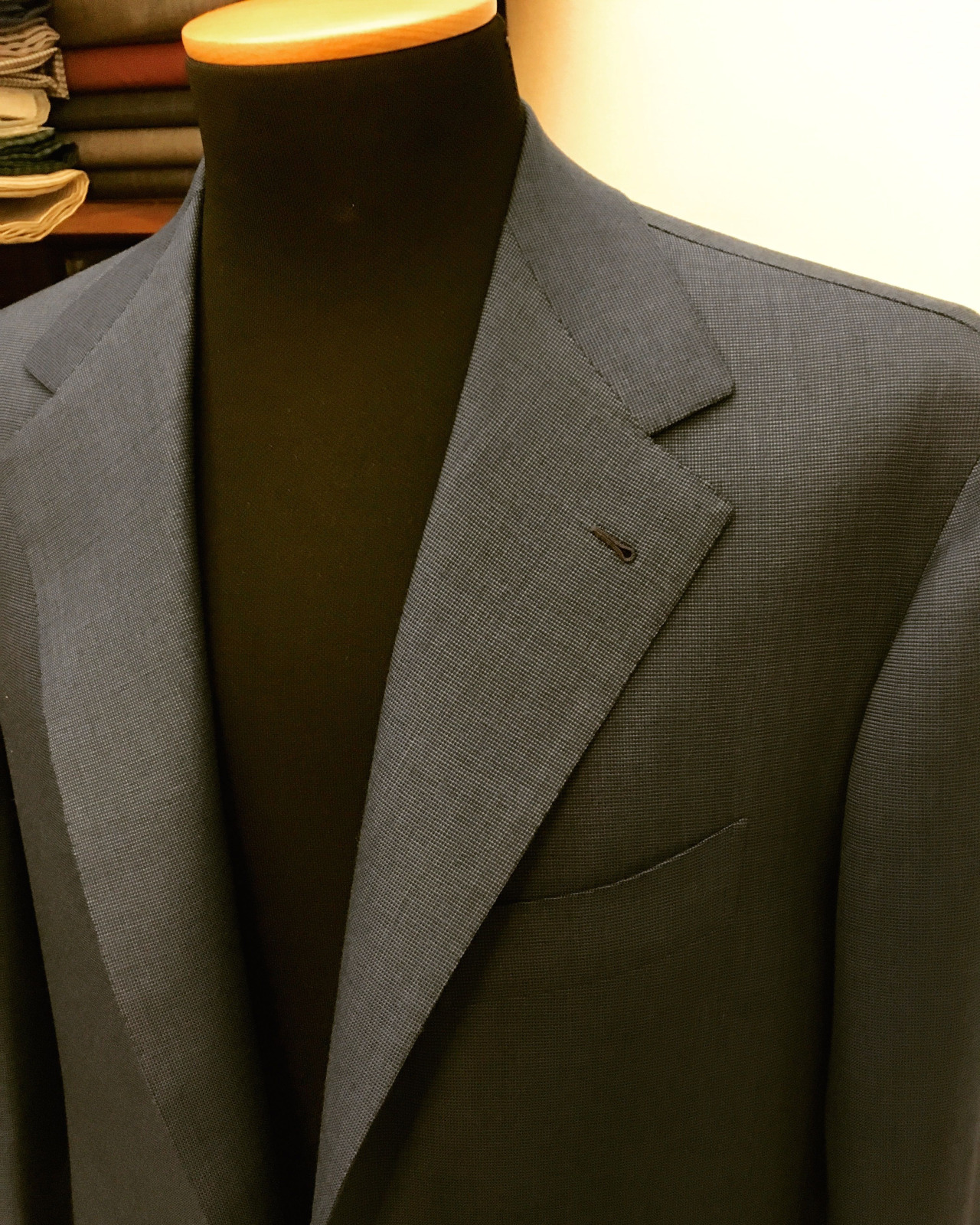
“I like a wider lapel, with a straight line to a lowered buttoning point,” he says. “That lower button stance is actually an older, traditional Florentine style.”
If there is one term that could characterise the whole style it is ‘modest’ - something that reflects Kotaro himself as much as the work.
When he contrasts his cut with Liverano, Kotaro uses this word in reference to the shoulders of his jackets, with their Neapolitan softness but slightly extended line. Despite the lack of English-style padding, a Liverano jacket can be quite strong and square, given its shoulder line and high notch on the lapel.
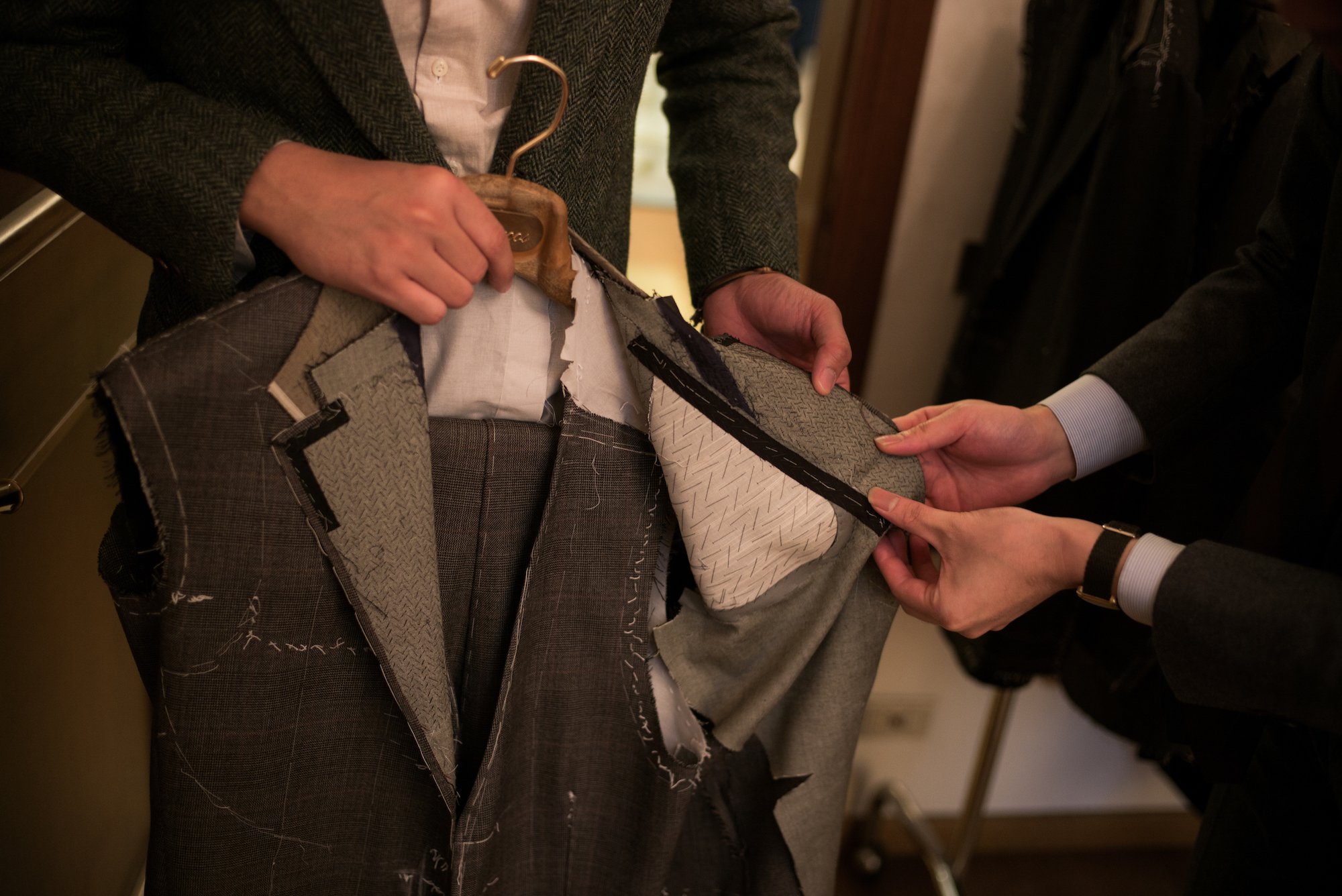
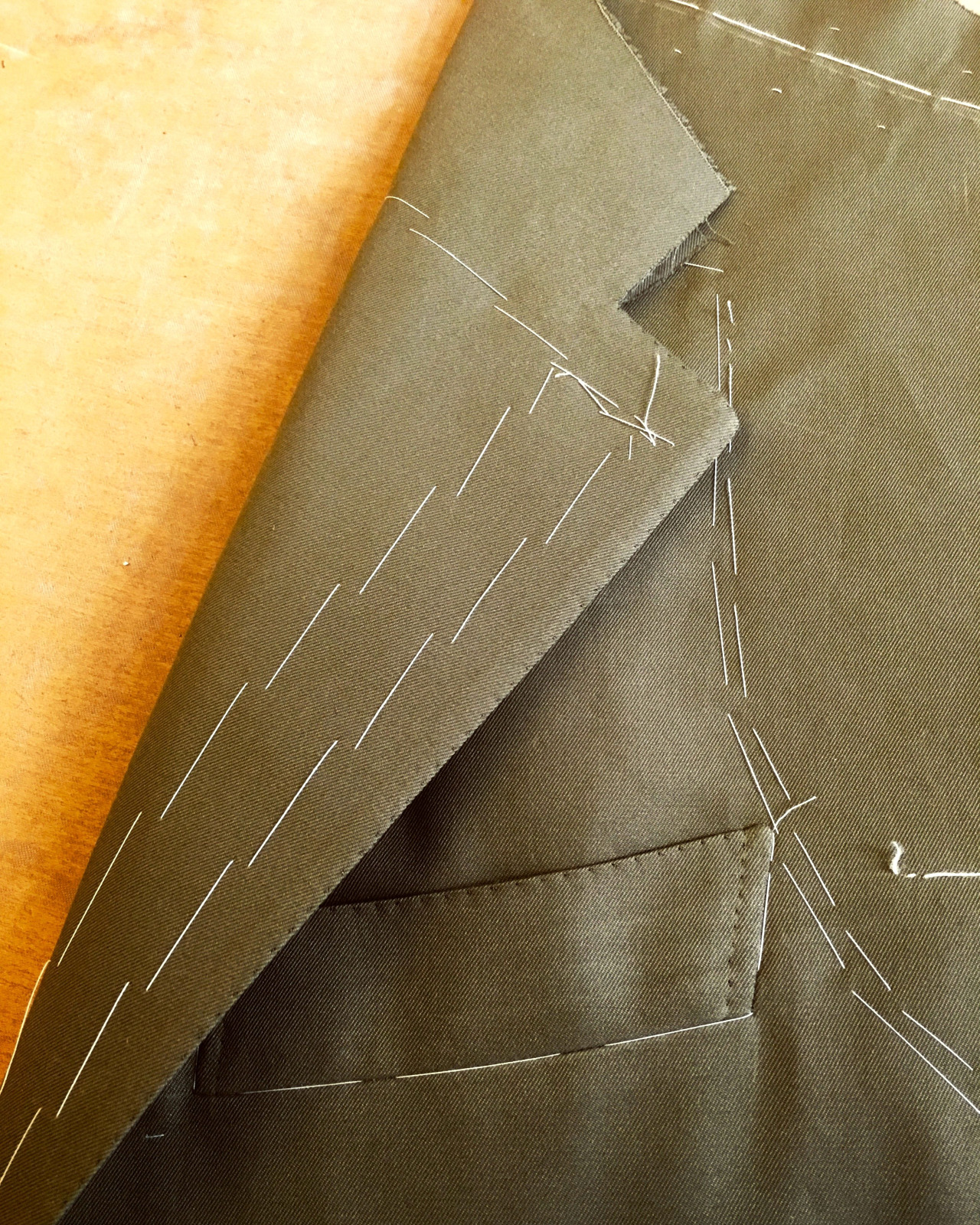
Elsewhere you notice fine finishing and tight pad stitching on the chest (typical of Japanese tailors), and interesting styles such as pea coats and hunting jackets.
“Finishing is very important to me,” says Kotaro, “as I am at heart a coatmaker rather than a cutter. The attitude to making is at the heart of everything I do.”
This focus on craft is typical of a lot of Japanese artisans, but many do so at the expense of fit or style. And what style there is is simply a copy of traditions elsewhere.
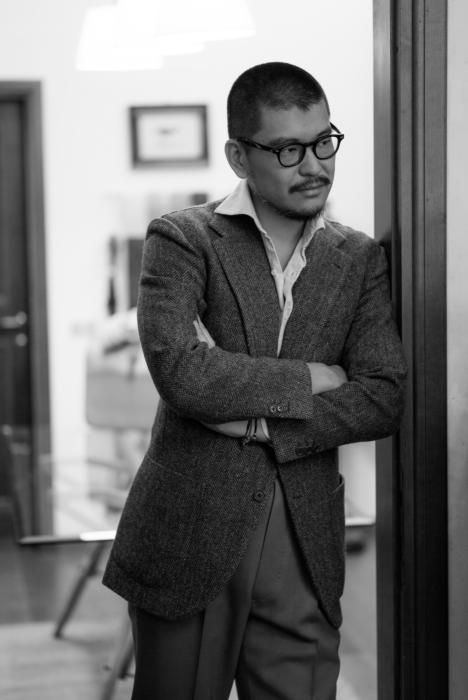
What’s most striking about Kotaro, therefore, is how flattering and modern his self-evolved style is. (Something George Wang of Brio, pictured below, has had much to do with since he became a Corcos customer six years ago.)
If you were to create a perfect modern style, it would be soft in shoulder (for casualness as well as comfort), long in the lapel (to flatter the chest) and sweep away from the waist (to emphasise that waist). And yet be subtle about all of it.
Kotaro’s popularity is helped by his prices: 3000 euros for a two-piece suit. And he does occasional trunk shows in Tokyo, Munich, Stockholm and Hong Kong.
But as I said, no new customers. The best you can hope for is a reservation for 2018.
For details on my outfit, see this post on the escorial jacket.
Photography by Luke Carby
Images below from Kotaro's Tumblr account










Really like the colour/cloth of this shirt in this post (from what i can see) but it does not look the same as the grey shirt in the Jacket post. What cloth is this one?
It’s a denim from Luca A. I’ll get the number
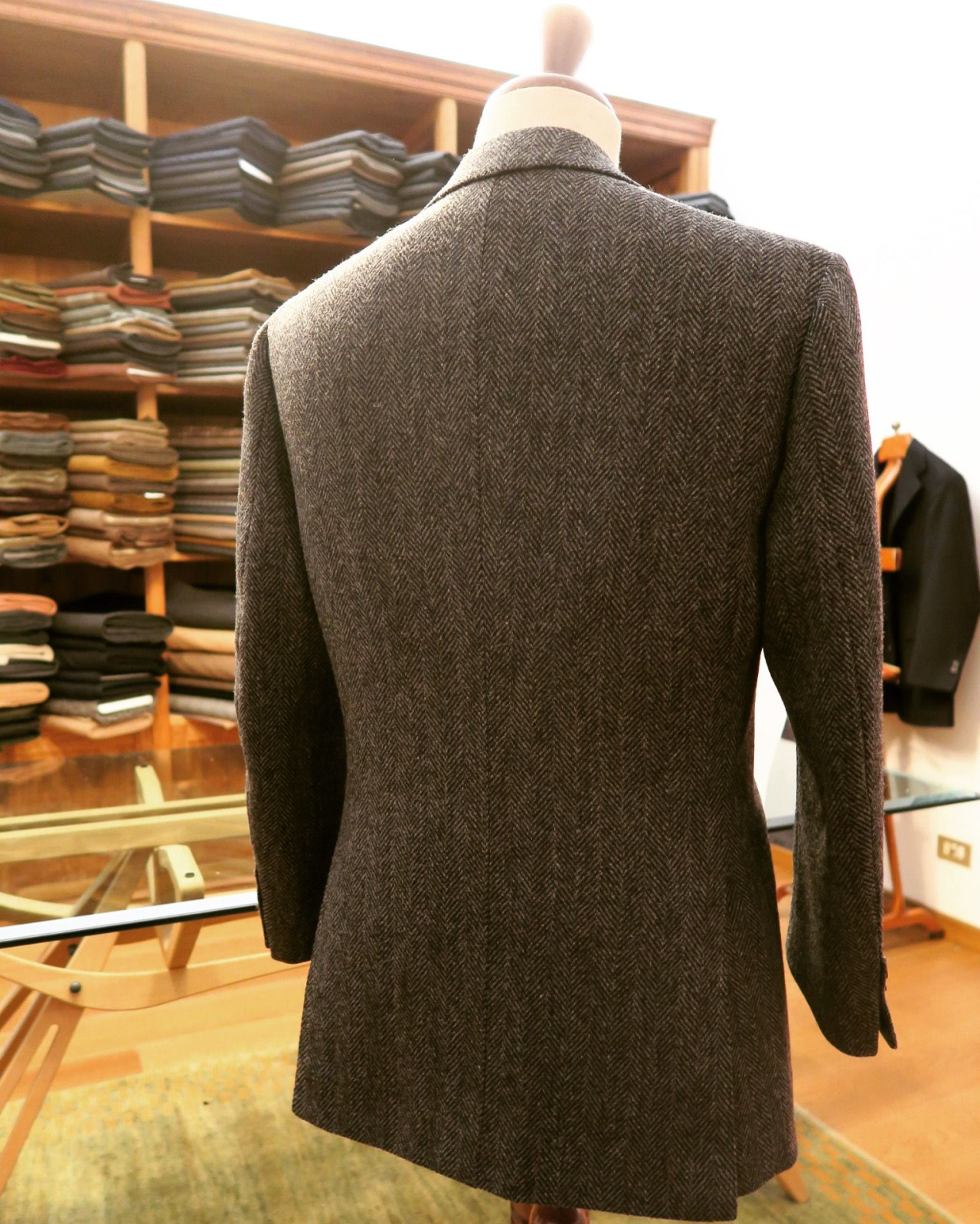
The finished jackets appear to have a very flattering style to them; quite casual but fitted at the same time. I particularly like the brown one with dark buttons. Is it my ignorance or inexperience but that diagonal stitching stitching at the gorge seems unusual. I was also admiring Mr Wang’s jacket – do you know any details, Simon?
No, but I can ask
It’s a vintage tweed, made by Kotaro
Thank you.
Hi Simon
How does this type of jacket compare with Solito or Caliendo in terms of style and make?
Both are fairly typical Neapolitan, and as I mention, this has some of those elements like the soft shoulder, but differs in several ways elsewhere, like a lower buttoning point, the curve of the fronts and the slightly extended shoulder. Make is similar to or slightly better than Caliendo
Simon what is the attraction behind all this unstructured Italian tailoring (and A&S too). I get its supposed to be more comfortable but I can help but think it makes guys look like they are wearing an old sack, why not just be done with it and wear a cardigan and slacks instead? Do you think this trend for easy to wear, crumpled unstructured clothing will pass?
I wouldn’t think so… largely because it is still pretty formal compared to most modern clothing. And it’s a long long way from looking like a sack
Soft tailoring is less structured, but it’s not shapeless. Your average knitwear is more or less quite sack like as you say, but, takes up your shape when you wear it. Even the most unstructured sports jacket however, has a lot more shaping than knit wear.
HI Simon
Why is the extended shoulder favoured by so many people wearing neapolitan jackets? Why not go the whole way and have a very structured jacket made if you want a more defined ‘v’ shape? Also, does the lower buttoning point actually do anything for the overall look?
An extended shoulder is rather different from a padded one – the latter can often create a stronger physique without any extra formality, which is something many would aspire to. And yes, a slightly lower buttoning point often gives the impression of a leaner torso
Did you mean the former rather than the latter?
yes, apologies
Hi Simon,
Thanks for introducing Kotaro to us. From what you have written and what I have seen seen so far, Kotaro seems to me to be really sophisticated in taste and craftsmanship. But between now and … 2018, one could easily change his mind in many respects!
John
Thank you for featuring Kotaro, his work is very impressive and as you point out seems to marry the unlikely pairing of structured lines (especially through the lapel) with a sense of casual ease. The Japanese sense of dress has always been very stylish with rising profiles (via the internet) of bespoke shoe craftsmen such as Yohei Fukuda and Hiro Yanagimachi. I don’t know much about Japanese tailoring but, as with Italian tailoring, I suspect that there is a another world to discover.
We will actually be travelling there later in the year to go into it in greater depth. Although Japanese tailoring isn’t as deep as influence as Italy – most of the tailors were trained in Italy or the UK.
Agree re. training, the influence is clearly European. The world of discovery I refer to is the one of rising talent – one that has little profile here. The Japanese aesthetic approach is often to simplify and perfect (a Zen ethos) – how this then expresses the influences of Western tailoring and shoe design will be interesting to see. Great that you are going this year – I look forward to your articles.
Hi Simon! I’ve since taken to following both Sartoria Corcos and George Wang on instagram and tumblr. I find their sense of style absolutely amazing! Had a question about Kotaro’s cut though, is it as soft as the Neapoliatan cut, or maybe a little more structured? Also, does he always do extended shoulders?
Thanks!
It is not as soft as some of the Neapolitans, but still very soft. And yes, the extended shoulder is his style
Simon, who would you say makes the softest suits? Among the tailors you’ve tried of course! Or even from the young tailors that you’re keen about. Also, would you happen to know how skilled one would have to be to become an apprentice for the Neapolitans or even Mr.Miyahira?
The Neapolitans are pretty similar in terms of softness, so almost any of them. Have a read of my piece on Japanese tailors for how welcoming they’ve generally been – though those are the fairly big houses
Simon, I’ve been hassling poor Kotaro for a couple of years without success about taking on new customers. Can you suggest any other tailors who manage to blend softness with elegance in a similar way. I’m totally stumped!
Did you end up commissioning anything?
No, not yet
Hi Simon. Hope all is well. In the future when Sartoria Corcos takes new clients, I would be interested in maybe making an order. Nice style and I guess relatively good value for bespoke at this level. . How wide are the lapels of his jackets? And in general, do wider lapels work for guys with shorter heights? I am 5 feet 9 inches. Is lapel width always adjusted to a person’s height and build? Are his jackets also shorter in length like Neapolitan style or a bit longer?
The lapels are fairly generous, but I wouldn’t say over wide.
Lapel width is generally in proportion to chest size, but not necessarily height. You could suggest a slightly narrower lapel to emphasise long lines perhaps.
The length is a bit longer than Neapolitan
Hi Simon. In order to de-emphasize my shoulders, would this style with the extended shoulder not be a good choice? Or is the look still soft enough and not at all as strong in the shoulders as having padding?
It emphasises shoulders in a different way – width rather than height. There are definitely reasons to prefer one over the other, but if you want to de-emphasise in general, you might be better with something smaller shouldered like a Neapolitan maker
Hi Simon. Just one more question about Sartoria Corcos. Is the house style a good choice for a casual knockabout suit in corduroy? Or is it slightly too formal?
Personally I’d say a little formal – I’d be more likely to go for Neapolitan
Has anyone worked with Coccinella in Osaka? From their IG I can tell the jackets they make kind of resembles Corco’s
Did you find out about this LP? I’m much more likely to make Osaka than Florence.
Simon, are there any other tailors in this price bracket? I would like to commission two suits and this looks like the right price and style for me. Style wise, I would go a little more structured.
On a side note – love your work and approach to style. I have devoured your articles since pandemic started and have learned a ton.
Thank you, that’s lovely to hear.
Have you seen my summary article here of all the bespoke tailors I’ve used?
Would you say that a Sartoria Corcos jacket could work as well with denim as a jacket from the typical Neapolitan makers? Or best to stick the latter for pairing with denim
I can’t say from personal experience, having not used Corcos, but I would say probably just Neapolitans
Do you have any plan to try corcos simon? I think it will look good to you just my opinion
Not currently. I’d love to, but I’m just not in Florence often enough at the moment, and there’s often a queue. It’s hard to try anyone when they don’t travel and there are that number of fittings
I see how’s the estimation by people close to you who did corcos please to know that
It’s the lapels that are very distinctive and beautiful. A very courteous man when I emailed him. Comes to London but will not be taking on more clients on this trip. A sign he’s in big demand which is actually positive. I would love to commission something with him in the future.
Simon
I know many of your readers probably wonder about sartoria corcos. it looks like someone on styleforum gave a review
https://www.styleforum.net/threads/bespoke-tragedies-crooked-sartoria-corcos.808315/
Jojo Corcos thank you for carrying that name lot of my uncles were super tailors and u brought it back to life wonderfully with your talent 🙏🙏