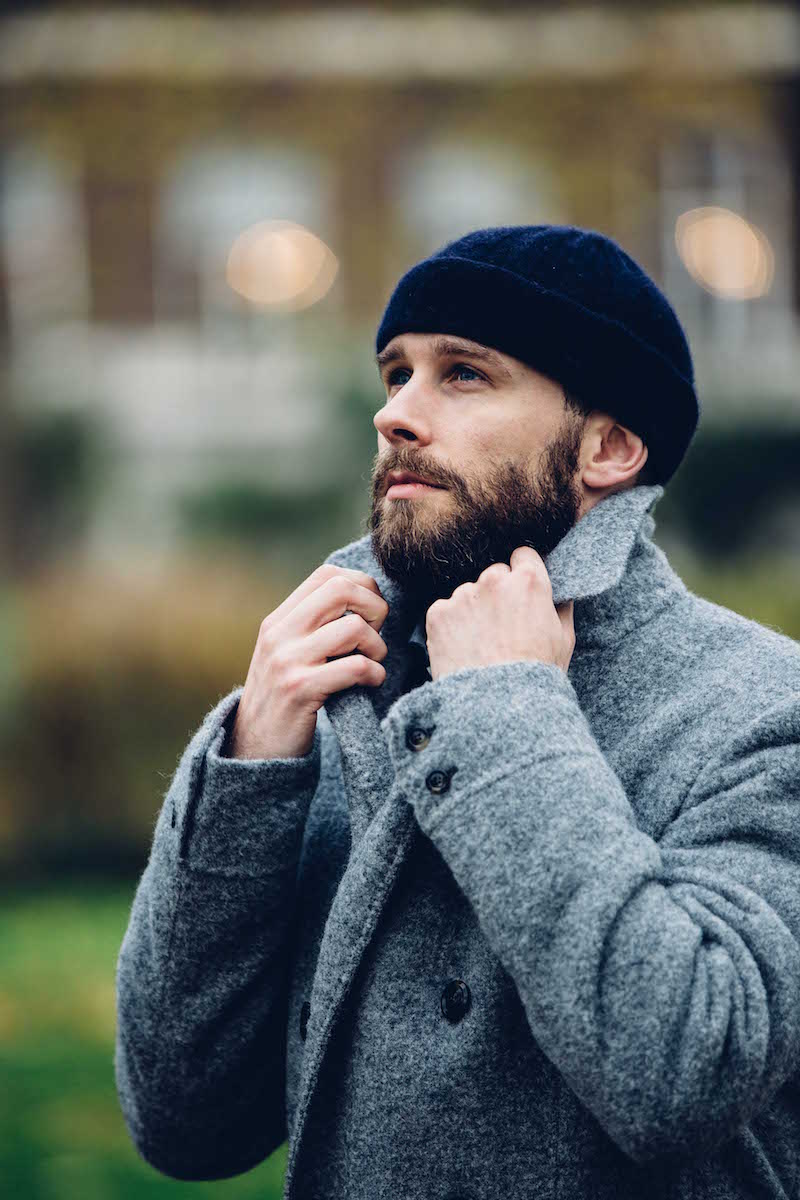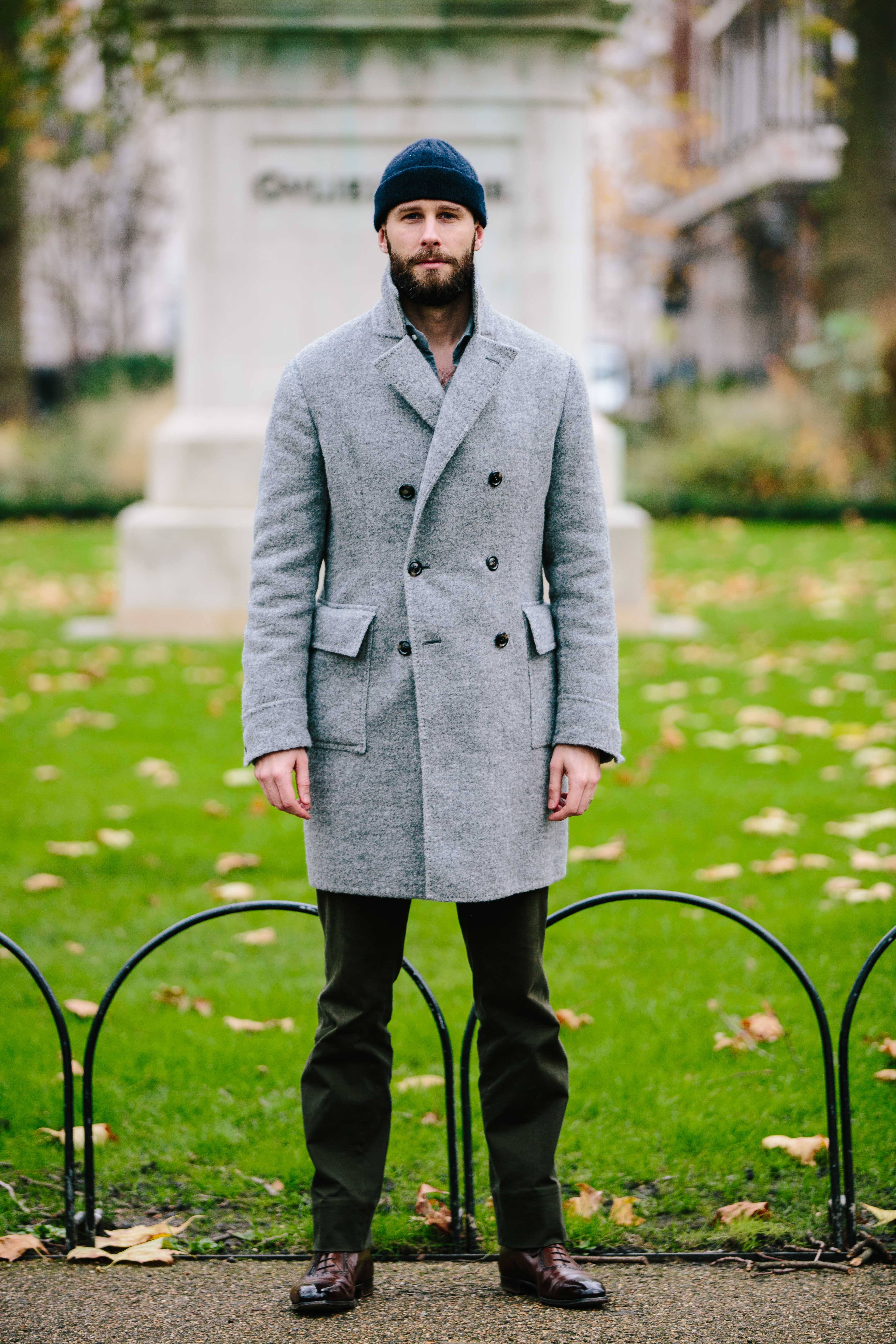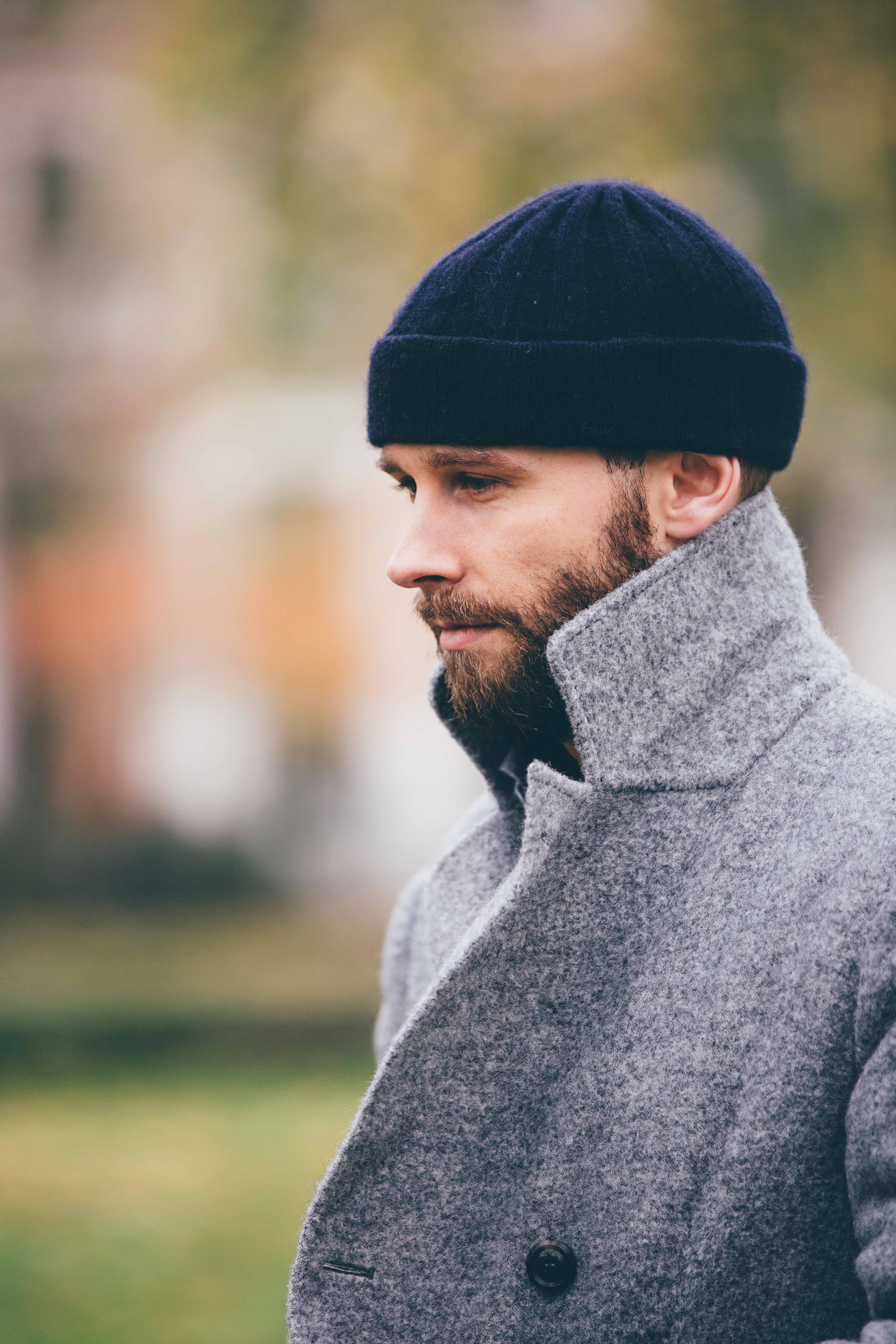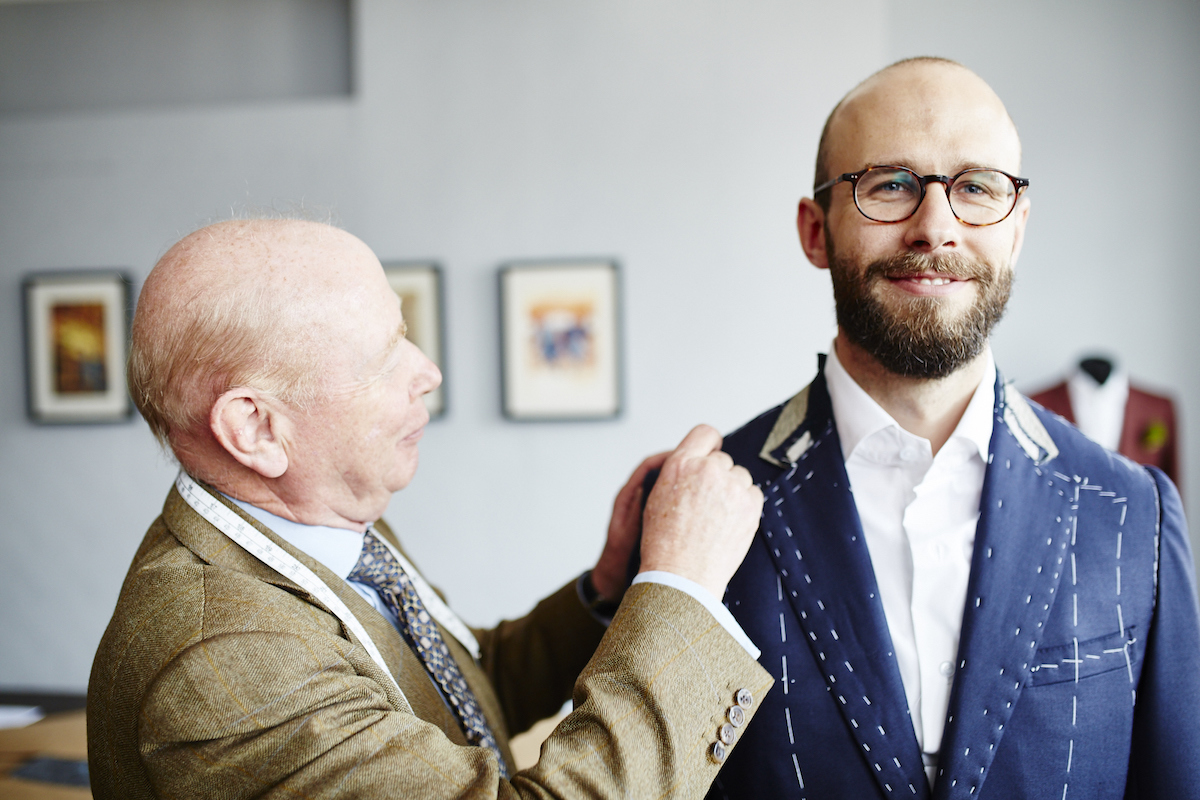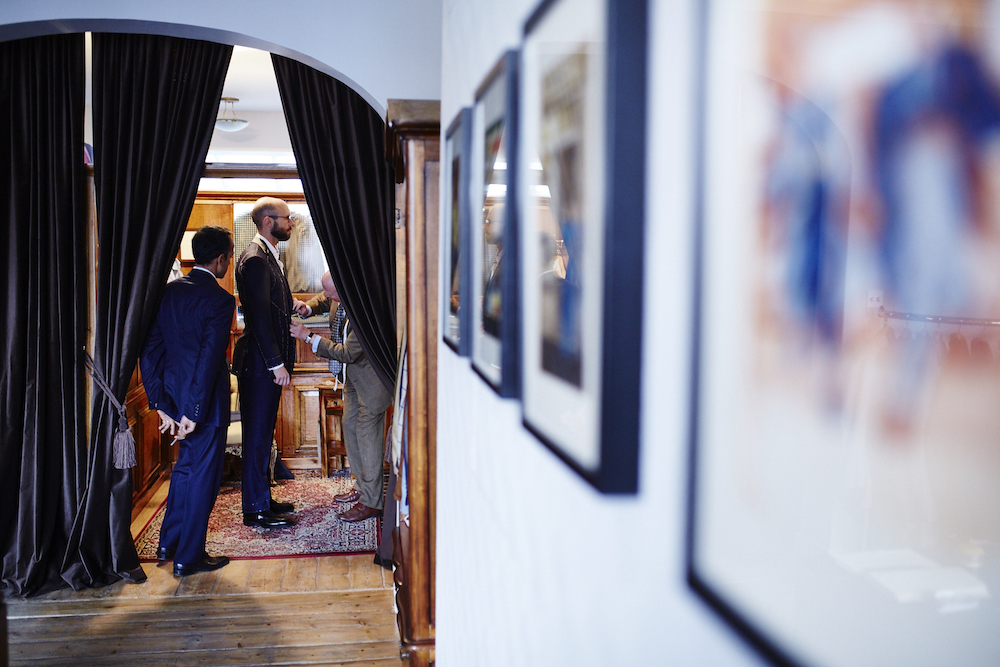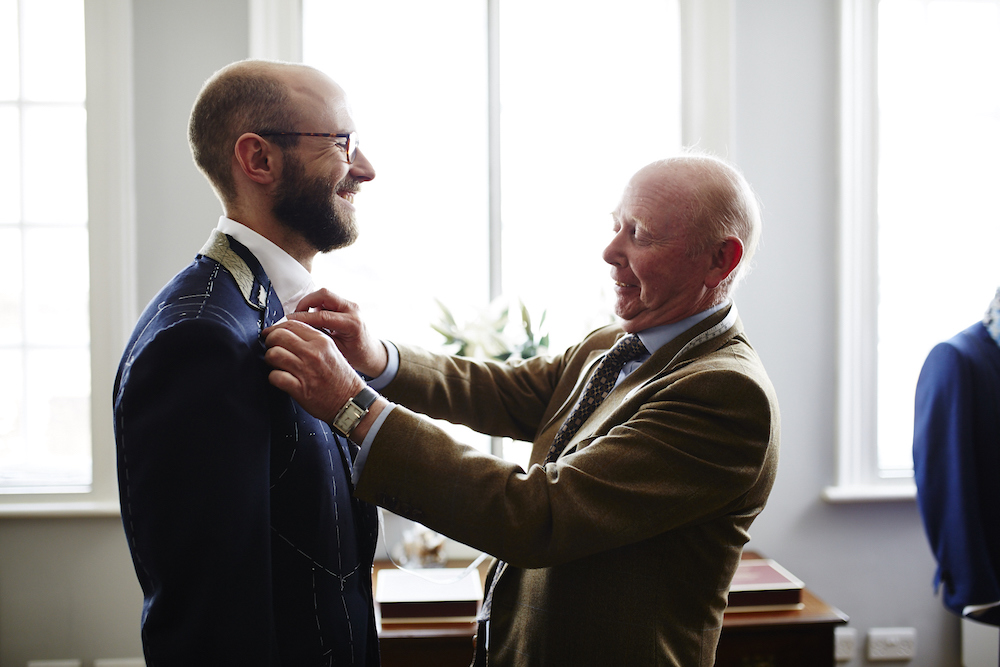
Stile Latino grey double-breasted coat

grey double breasted overcoat notch collar

  
For men who – for reasons of economy or laziness – want a coat that will go with everything, this might be the perfect candidate. But that doesn’t necessarily mean I’d recommend it.

It was made for me by Stile Latino, the Neapolitan brand founded by Vincenzo Attolini. Vincenzo is part of the famous Attolini tailoring dynasty in Naples, being one of the three sons of the founder, Cesare Attolini. He left the company to create his own, younger and more innovative brand 10 years ago. (Full details in the interview with Vincenzo here.)

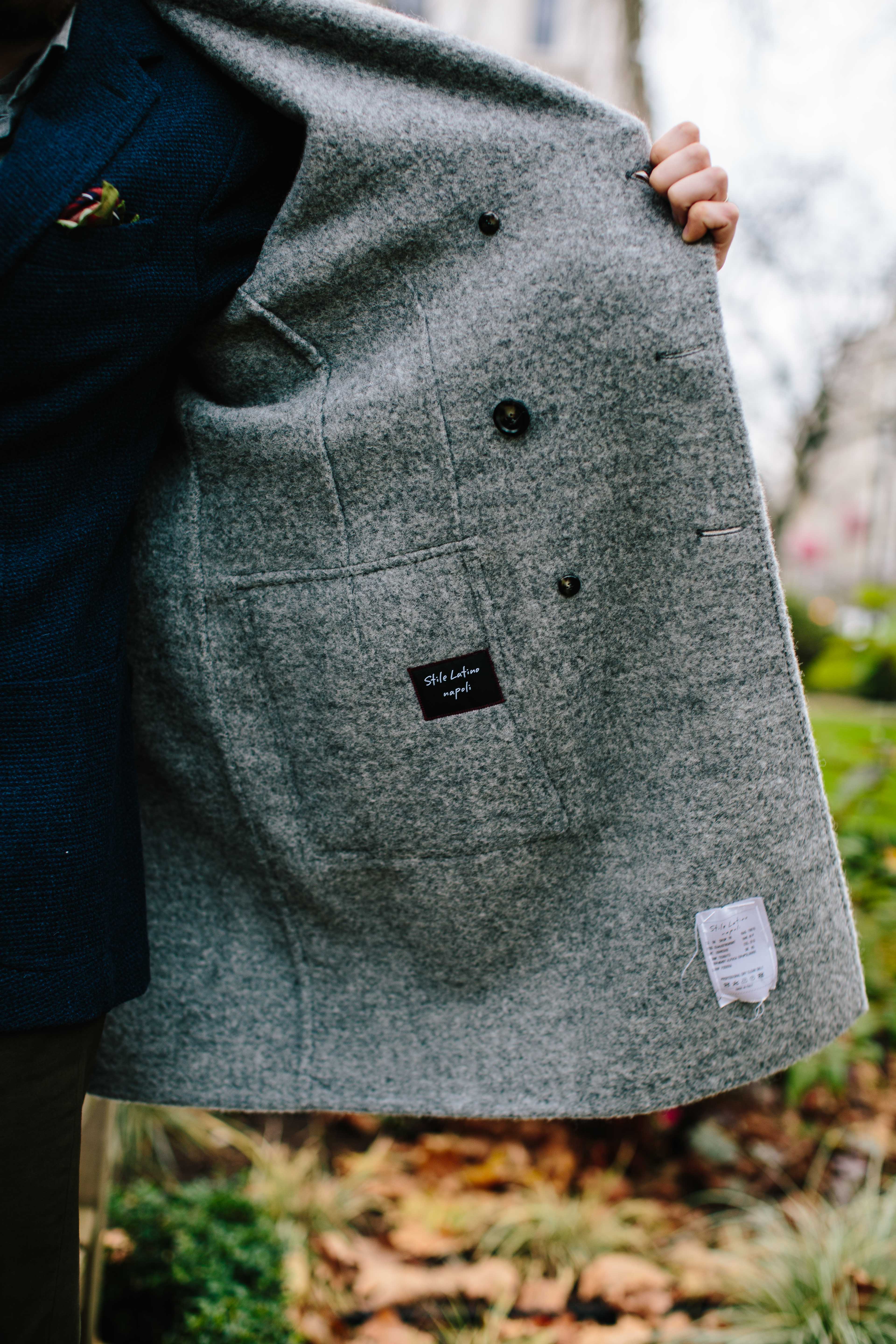
The coat was made to measure, based on a design you can see pictured in that original post. Like the original, it is entirely unstructured. Not just no lining, but no shoulder padding, no chest canvas, nothing. It is just stitched cloth.
  

unlined grey overcoat

  
The design of the original was a little too loud for me, being an enlarged black-and-grey houndstooth. Those coats look great on their own (as a reader commented at the time) but mean everything else you wear has to be toned down. Not what you want in a coat.

Most of the 40-odd cloths I could pick from for my coat were also unusual, but often in their texture, rather than pattern. The strength of Stile Latino (and, to be fair, several other Neapolitan ready-made brands, such as Salvatore Piccolo) is their variation of texture, colour tones and finishings.

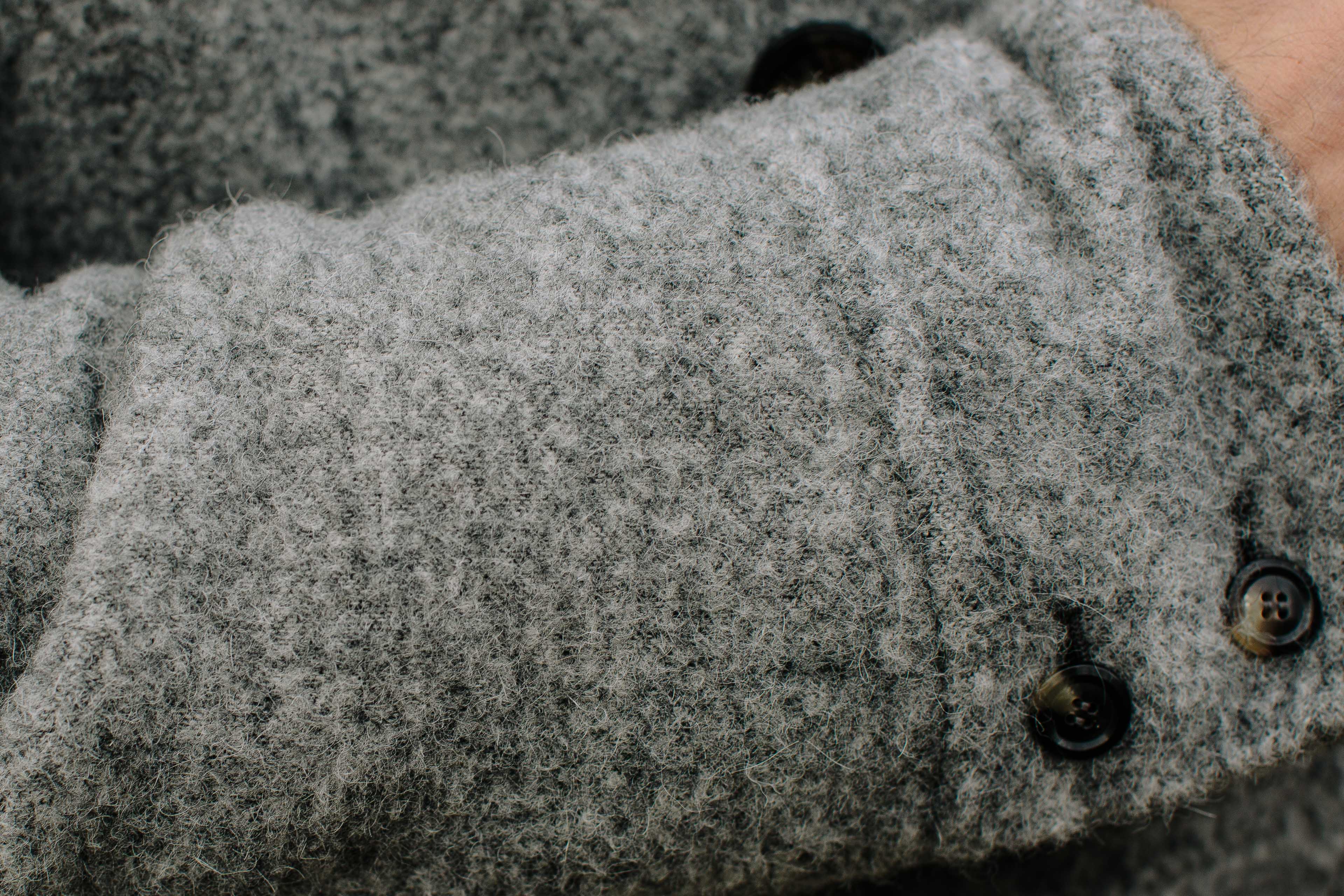
The grey wool I selected is unusual for its extreme milling. Most cloths will go through a milling process as part of their wet finishing, which explodes the fibres and often binds them together. It is a key part of the character of flannel.

But this wool has been milled in such a way, and then steamed off, that the surface is pretty much just fuzz. It creates a very soft, spongy effect – and a casual style. People who touch it instantly say how soft it feels – although it’s a very different softness to cashmere.
  

milled grey wool coat

  
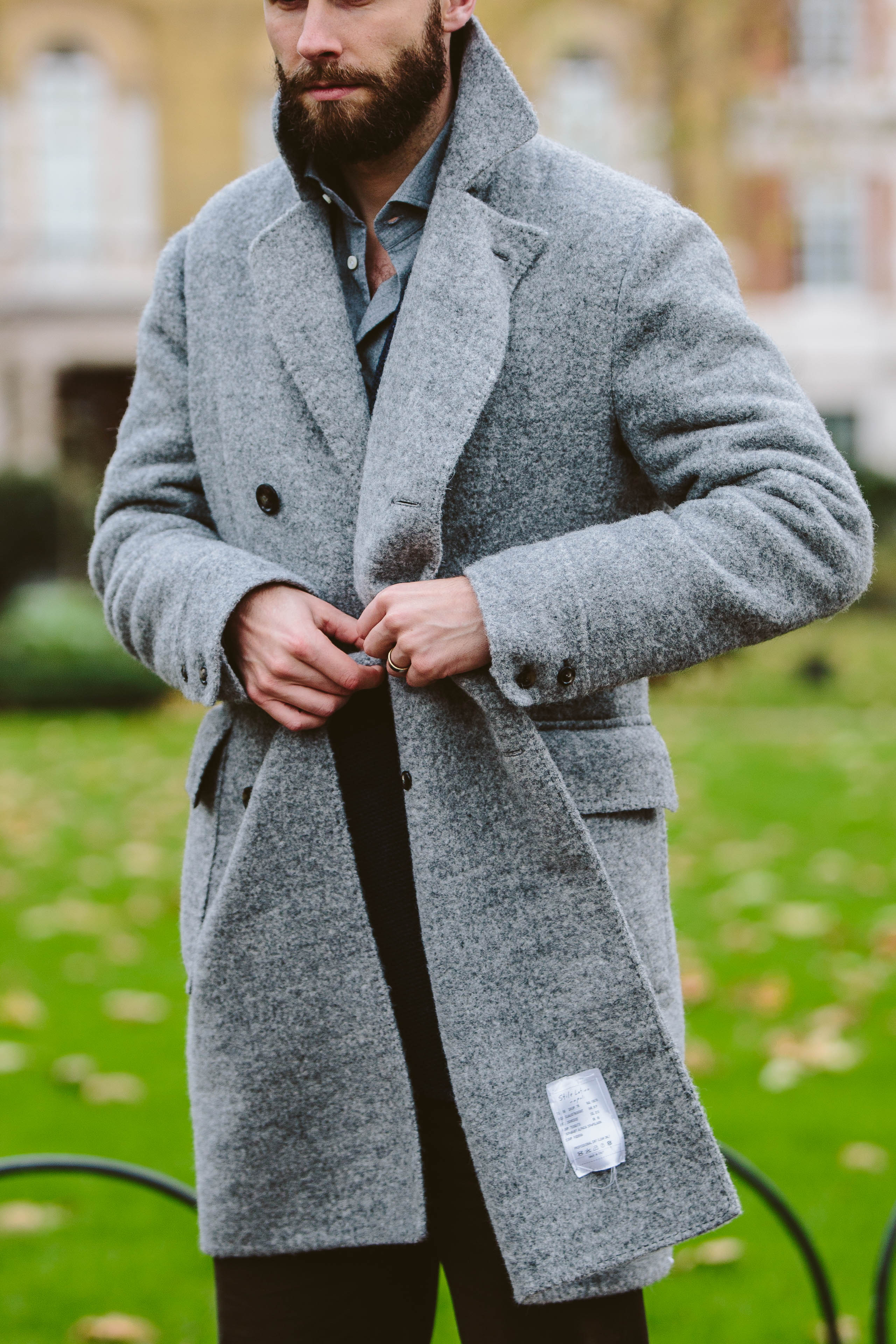
The spongy material and unstructured make are the main reasons it bridges formal and casual clothing. It’s also helped by the combination of styles: double-breasted, but patch pockets; great-coat lapels, but slim.

It could work with both jeans and a suit, and I’m sure this casual, knitwear-like style is a reason I’ve had so many compliments when I’ve worn it.
  

stile latino grey overcoat

  
But if I was going to recommend a coat that bridged casual and formal wear, it wouldn’t be one that stripped out all the structure.

Better to completely change the style of the coat (like a pea coat); to pick a cloth and cut that sits between the two (like a tweed raglan-sleeve); or to retain the structure but at a light, Neapolitan bespoke level.  

The problem with a complete lack of structure is that the coat loses all drape and line. It’s more sweater than coat. I understand the appeal – it looks sartorial but feels very relaxed, lightweight and comfortable. But I’d make that casual/formal bridge in other ways. (It is also likely not to age well – is already turning up at the cuffs.)

The fit, by the way, was fine but not perfect. It is a touch too big in the back and the sleeves are an inch too long. I deliberately asked Vincenzo to pick the length, as I thought this was a fundamental part of his style, but I would have it a good two or three inches longer.

Interestingly, it has a very high, small armhole. Usually a good thing in tailoring, but combined with the lack of structure, it makes it very difficult to get on.  
  

Stile Latino grey double breasted overcoat

  
Price: €1900 ready made, €2400 made to measure.

I will review the jacket – also from Stile Latino – on Friday.

Both are worn with:

  • Grey shirt from Simone Abbarchi
  • Green chinos from Incotex, at Trunk
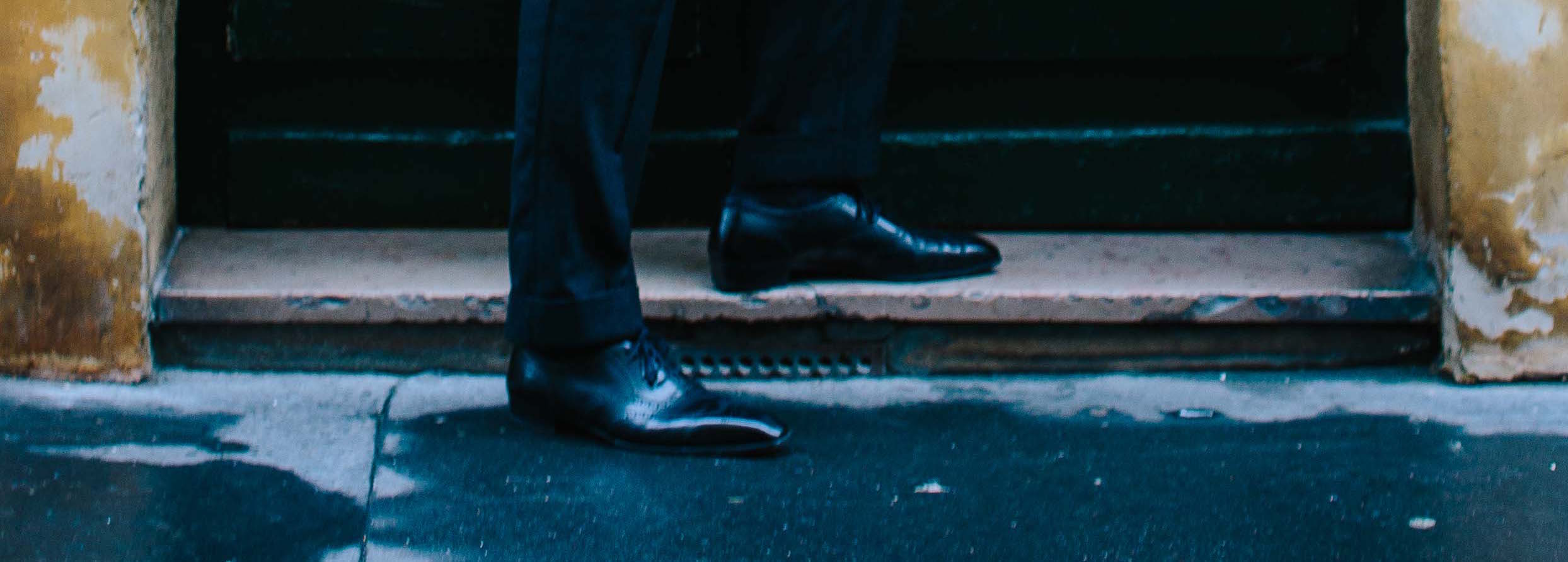
  • Brown bespoke oxfords from Gaziano & Girling
  • Navy cashmere watch cap from small shop in Naples (I forget the name)
      

grey double breasted overcoat

Photography: Jamie Ferguson @jkf_man

Nineteen of our squares left… (and the virtues of pale-grey flannel)

shetland sweater and neckerchief begg

  
There are just 19 of our cashmere squares left – the beautiful collaboration we started a few weeks ago with Begg & Co. The colours have sold pretty evenly, with 9 navy and 10 ‘natural’ (pictured above) remaining.

The squares are likely to go into Begg’s full collection, but won’t be available through retailers until next Autumn/Winter, so this is your last chance to get them until the end of 2016. 

More details on the squares in the original post – as well as a piece on how to wear them. They can be bought on Begg’s website here.
  

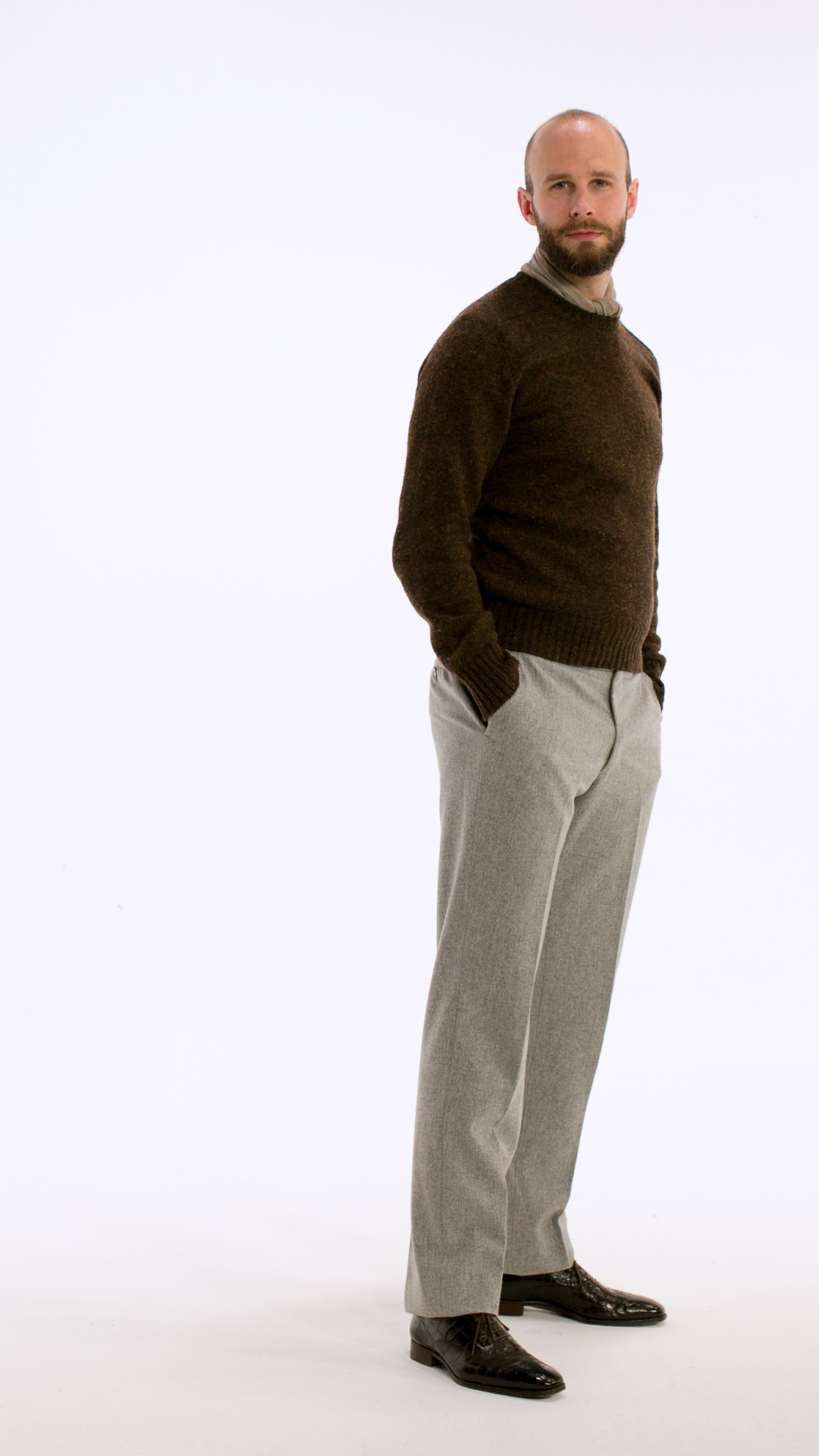
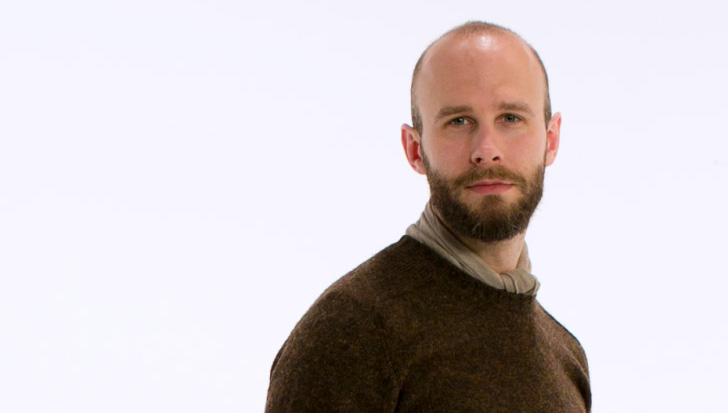
These pictures are from a video Begg and I have put together on how to wear a scarf.

The natural-coloured square is worn with a brown shetland sweater (from the Anderson & Sheppard haberdashery), light-grey flannel trousers (bespoke from Hardy Amies) and dark-brown alligator shoes (Gaziano & Girling). 

  
I love pale-grey flannels. They might be the most versatile colour of trouser around, going with pretty every colour imaginable, including the kind of greyed or mid-tone colours that sometimes struggle with a classic mid-grey flannel. 

In that way they are a modern alternative to cream – which was one of the most popular colours of casual trouser in the 1930s and 1940s. Both derive their versatility from their paleness and lack of saturation, but pale grey feels rather more modern. 

shetland sweater and neckerchief begg

Interview: Pier-Luigi Loro Piana

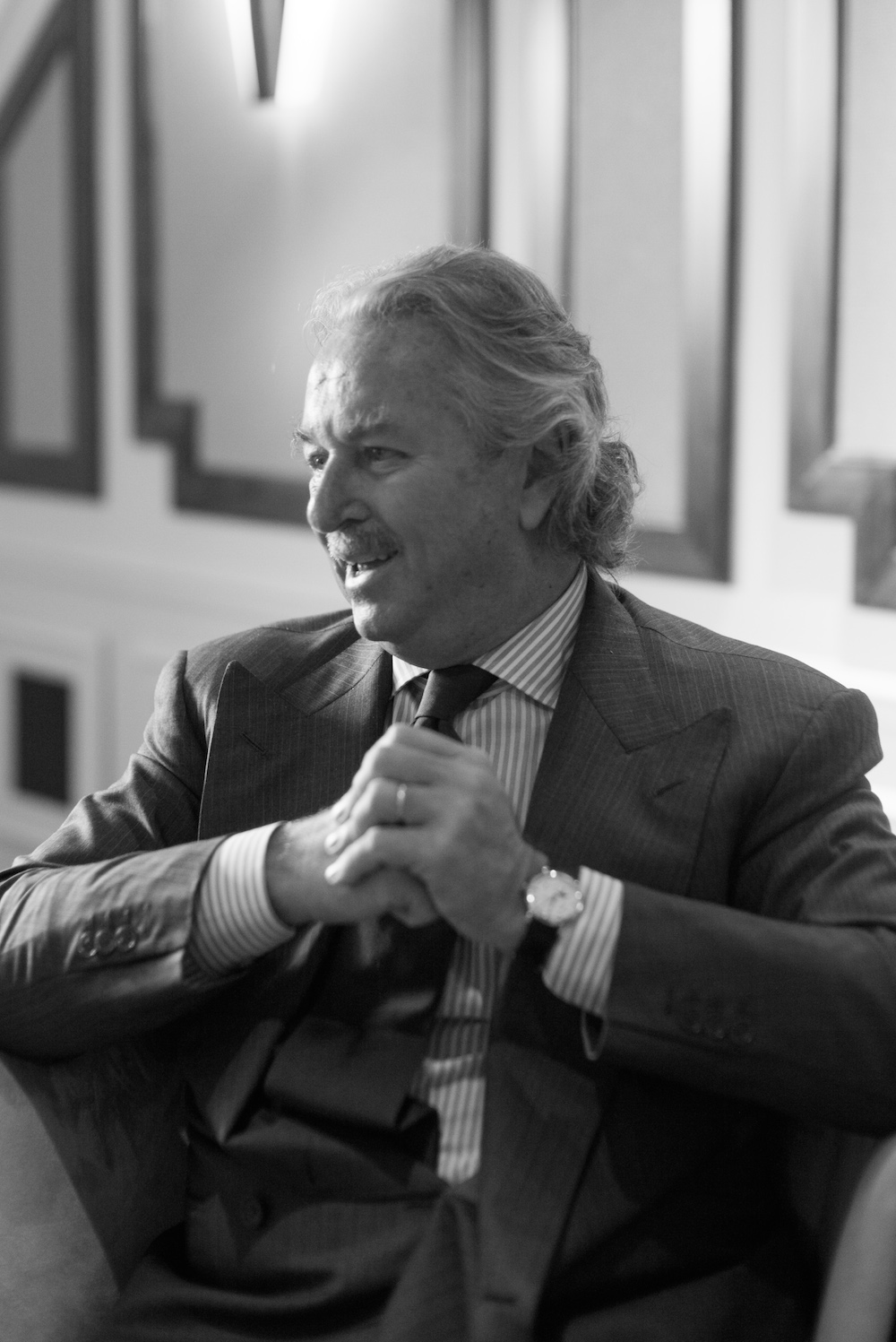
Pier-Luigi Loro Piana

 
Long-time readers will know how much of a fan I am of Loro Piana. In particular, of their marked commitment to quality compared to other designers – even if that comes with the same big-brand prices. I’ve worn their blousons, gilets and made-to-measure knitwear (an old piece in The Rake) for many years.

However, I had only met the brothers Pier-Luigi and Sergio Loro Piana (the latter now sadly deceased) a couple of times, and that fleetingly. So when Pier-Luigi expressed an interest in getting a copy of my book, The Finest Menswear in the World, I took the chance for a fuller interview.

Loro Piana are of course featured in The Finest Menswear for their knitwear, and it was nice that Pier-Luigi remembered our factory visit for the Loro Piana chapter, despite being almost four years ago.

He was typically affable as we talked, only turning serious when discussing points of quality or cloth. He clearly has firm views on both things and the direction Loro Piana needs to go in this respect, although interestingly his personal items weren’t the most luxurious – prized for their fit or sentimental value rather than quality.
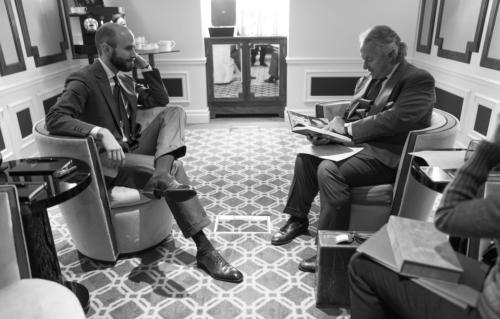
  

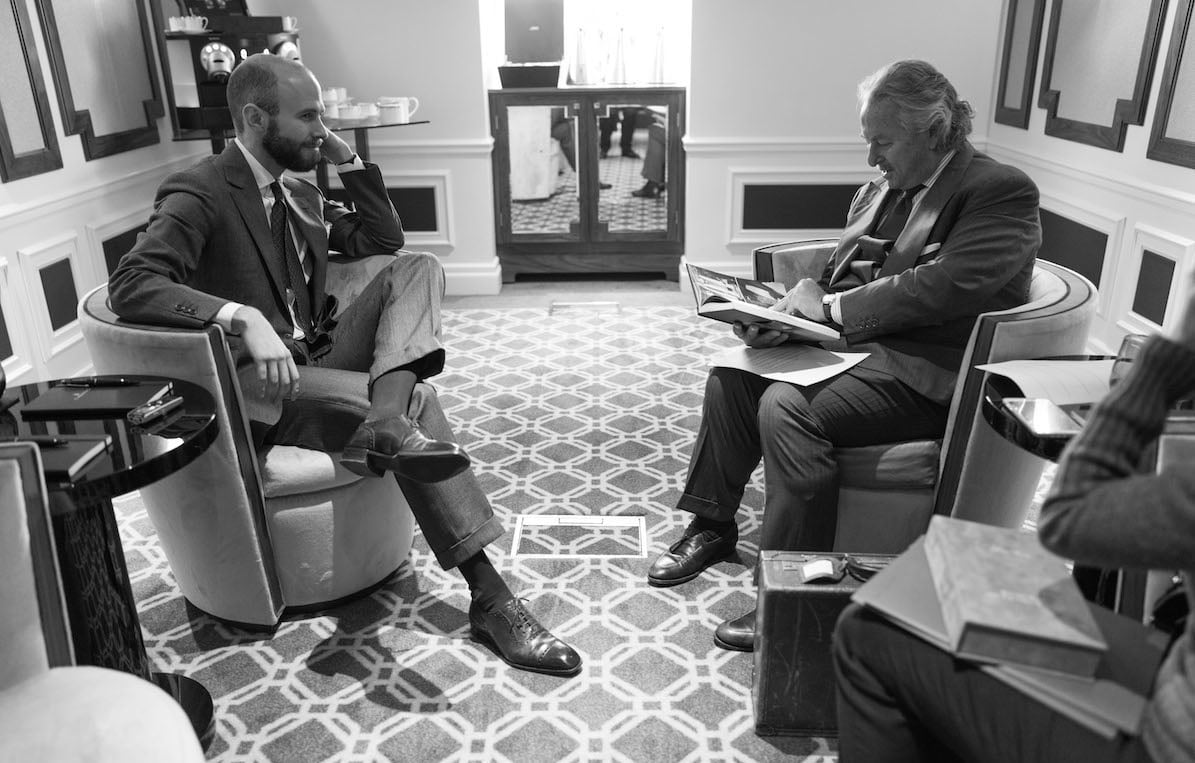
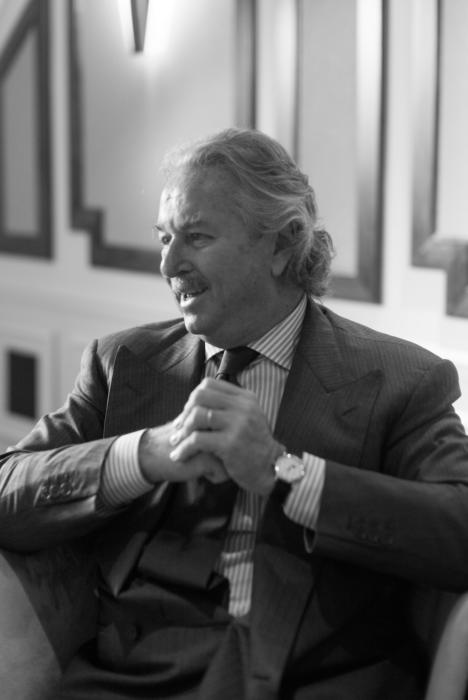
Simon Crompton with Pier-Luigi Loro Piana

  
Permanent Style
: In The Finest Menswear we talk about quality in some detail – what creates it, what doesn’t. Do you think people today more interested in this level of detail when it comes to quality?

Pier-Luigi: Yes, absolutely, we see this a lot at Loro Piana. There is a new generation of customers that will ask continuous questions about what they are buying. They care about quality and about provenance, particularly when they are spending more than they would otherwise. Also about sustainability, interestingly.

How much they care also depends on the brand though. If the brand is clearly about quality, then they will ask about it. If it’s more about fashion and the look, they won’t. Women shop far more in this way – if something looks great on them, they will buy it. They’re less interested in the quality side.

Have you seen this trend in your children too?

Yes, although it’s been happening for a while. I remember my kids used to be happy with Nike trainers. That’s all they wanted and all they’d ask for – which is fine, they’re comfortable and they’re not expensive.

But then one day my boy Franco said to me, ‘Papi, what do you think about Church’s?’ That took me by surprise – that he wanted to dress more like my generation. Although it was a disaster from a budget point of view – they’re six or seven times more expensive than Nike!
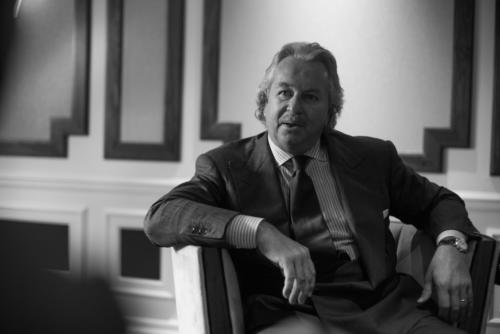
  

Pier-Luigi Loro Piana3

  
Where do you have your shoes made?

I like Loro Piana shoes of course – they’re great for travel. But for dress shoes I used to use Stivaleria Savoia. Then he stopped taking orders, and I went for a couple of years without a shoemaker. It’s awful, a bit like losing your dentist! Hopefully he will start making again.

In the meantime I have used Riccardo Freccia Bestetti. The ones I’m wearing today are an old try-on pair he made for me. It’s just waste leather but they’re very comfortable. I have rather difficult feet, very wide, so they really need to be made.

What tailor do you use?

I use the tailor that makes custom suits at the Loro Piana store in Milan. He might take care of me particularly, I couldn’t say! But it’s a great service.

Have you ever looked at expanding Loro Piana’s tailoring into full bespoke? Berluti are obviously expanding the reach of luxury brands in this respect, using the old Arnys workshop.

We were looking at it before the acquisition by LVMH, and it’s something we’d still like to do if we could.

But I also like our custom approach to suiting. There is a lot of handwork, and we deliberately don’t sell many ready-made suits in the shops. Our suiting is all about cloth, and we want customers to take the time to really get into cloth, to understand it and pick out something that is right for them.

Also, we have a strong style in our tailoring. If you offer bespoke, it is often more about making anything the customer wants, in any shape and any style. We want people to buy into our style, and if they like it they can have a suit made in it. We don’t want to waver from that.
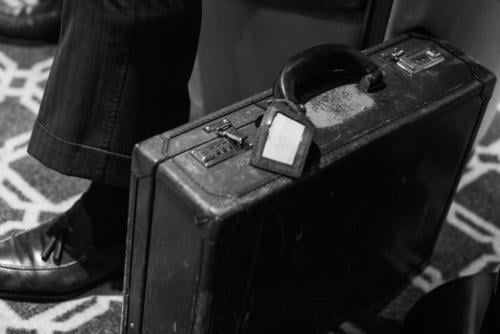
  

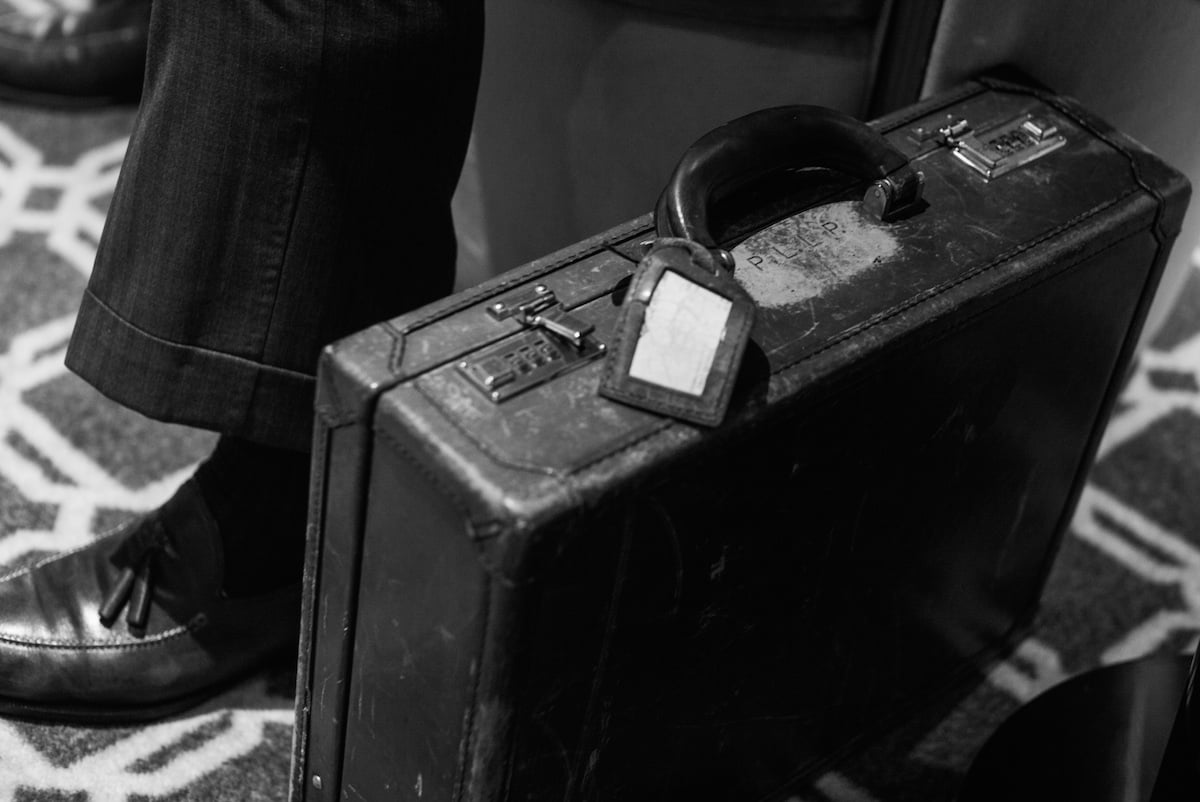
Pier-Luigi Loro Piana suitcase

  
What other clothing do you cherish? Your briefcase looks well-worn, for example.

It’s very old, a gift from my father 40 years ago. He had the same one and gave this to me when I was 24, back in 1975.

Were you into classic style back then?

Yes, but then we all were. There wasn’t much variation. We were more used to ties, to blazers. It didn’t change so much.

My style today is probably a little old-fashioned, although the nice thing is tailoring is pretty consistent. I like your suit, it’s a little sharper and more contemporary [I was wearing my grey Camps de Luca] but it’s just about small changes – an inch in the trouser, half an inch in the lapel. If you look back at the 1930s and 1940s, the lapel was wider and the notch lower, but not by much.

Some of the pieces in the current Loro Piana collection seem to be cut a little slimmer, which is great for me and I’d guess for other younger guys. How deliberate was that?

It was certainly something we wanted to do, but more to cater to the changing sizes of our customers. Most 40-50 year olds are much healthier than they used to be, for example, and are slimmer as a result. It’s about wellness rather than youth.

We’ve always tried to know our customer well, and then cater to him. I always think that a Loro Piana customer could probably wear 80% of the things in our shop. They would all be to his taste; it’s a consistent look and style.

   

Pier-Luigi Loro Piana4

  
Do you like the way clothes age?

Absolutely. People come up to me and show me a Loro Piana suit and say, ‘Look, it’s 30 years old!’ I say ‘So what?’ That’s how things should be, that’s how clothes should last. It would be an insult if you threw out a Loro Piana piece after 10 years, unless your body changed shape a lot.

Suits don’t always age that well – or don’t look better with age. But a sports jacket can, it can become a little distressed in the fabric and the fit, and there is a chicness to that. A little like jeans.

Do you like denim?

Yes – I used to wear Levi Strauss all the time when I was younger. Those great heavy denims that stood up on their own.

Levi’s now does a bespoke service in London and the US.

Really? That’s interesting. I don’t wear my Levi’s any more, but we do some nice jeans and I find the material fascinating. Cotton is a wonderful fibre, and denim pushes it to its limit.

I did a great trip a few years ago to California, seeing organic cottons we were going to work with, and travelled to Japan looking at the natural indigo dyes.

In fact, the reason I went to Japan was a famous Kimono maker wanted to buy some of our lotus flower cloth to weave into a kimono design. It was beautiful, the way she worked it in on an old hand-operated loom.

Finally, what do you think is the biggest misunderstanding about Loro Piana?

I dislike the word luxury. The word has been so misused over the years, and of course it’s all relative. Our clothes are just about quality – quality which creates value. We make a product with a high value – obviously it’s something very few people can afford, but it’s quality we’re striving for.

People always make mistakes – a button can come off in the making. But the important thing is what you are aiming at, and I think customers need to be able to understand that. Most will pick up two cashmere sweaters, one five times as expensive as the other, and have no idea why there is that difference. We have to help – as do you, in your writing.  
  

Photography: Luke Carby

Heurtault umbrellas, Paris

Michel Heurtault umbrella Paris

  
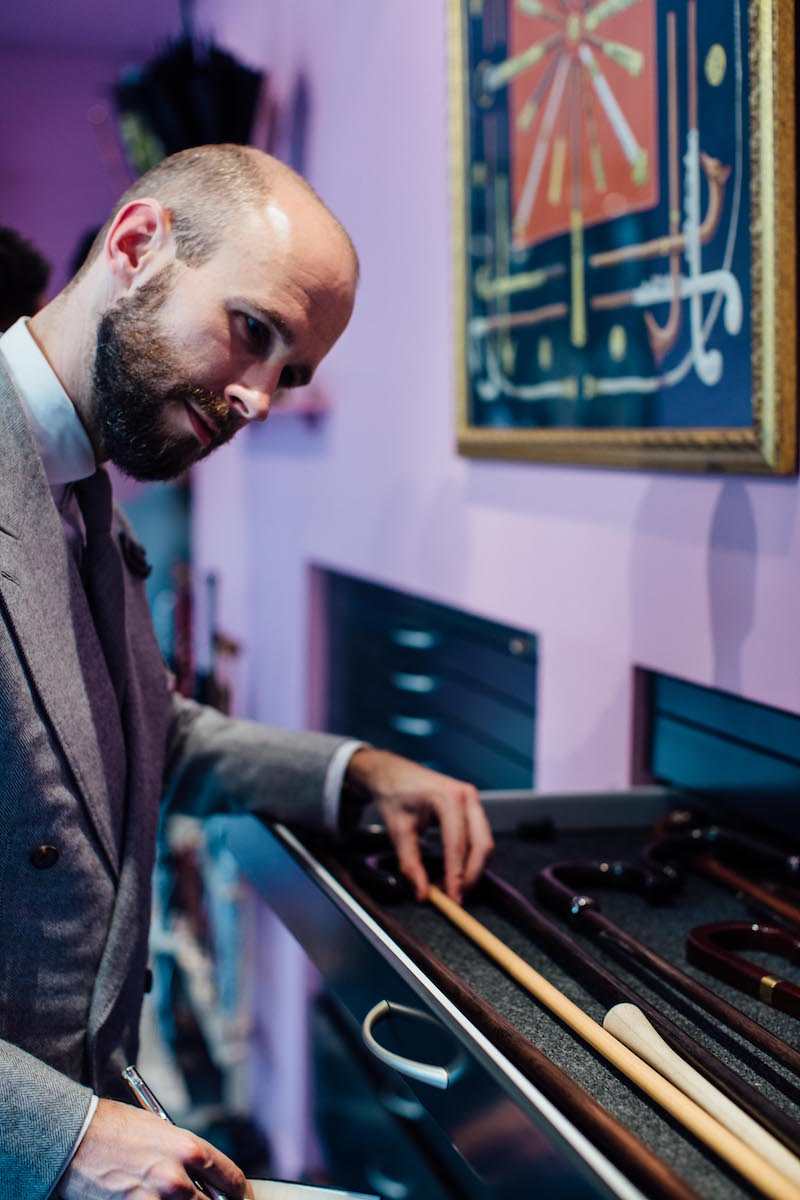
“The opening of the umbrella should sound like a car door,” said Michel Heurtault, looking me meaningfully in the eye. I didn’t get the connection immediately, but he slowly pushed the umbrella open, and as it locked open there was a satisfying ‘thunk’ of metal sinking into wood. The resemblance was marked, and very satisfying.

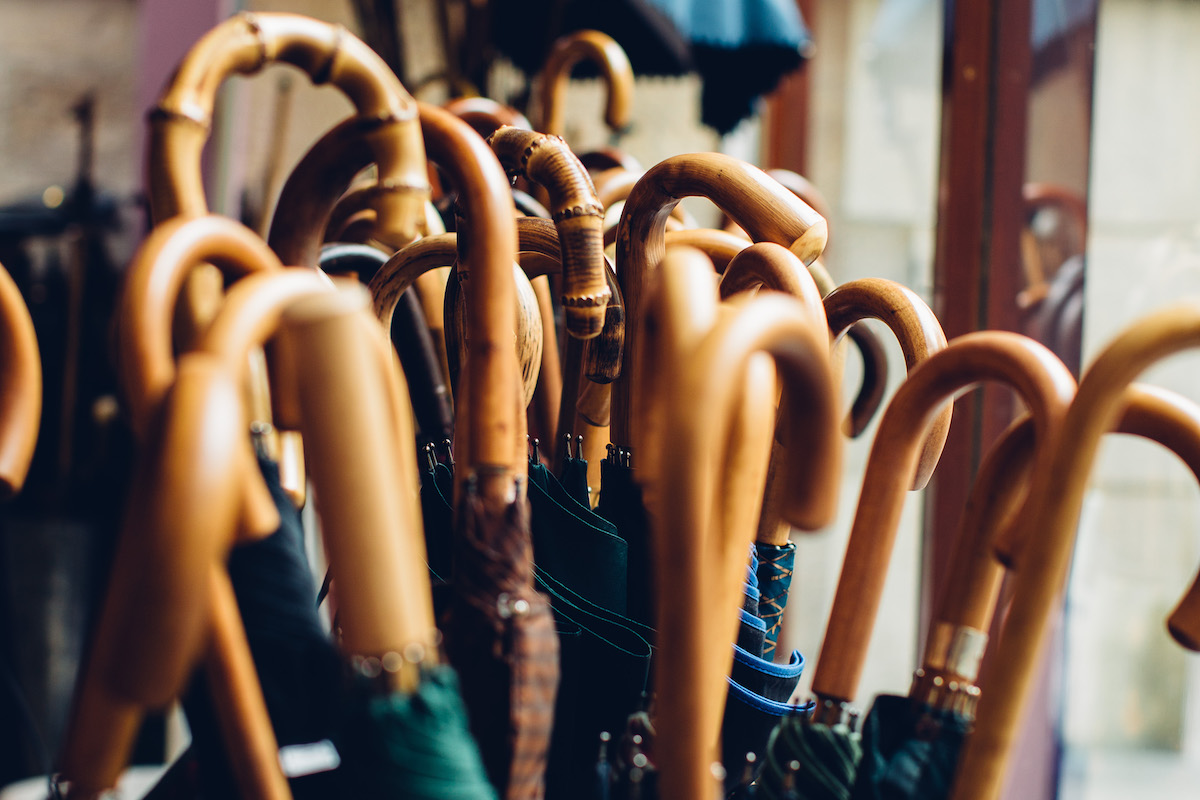
Umbrellas are potentially beautiful accessories. The range of woods that can be used in the shafts is very broad, even today when so few ‘coppiced’ woods are kept for the purpose. The canopies can be made of any cotton, polyester or silk – with the latter having the most potential. And precious materials are often used in the handles and ends, with buffalo horn being the most common but also gold and silver used.

But men rarely get any of this. Men’s umbrellas are nearly always black, with a dark wood or metal shaft, and a fairly non-descript handle. Only a handful of European makers go any further and make single-stick pieces (where the shaft and handle are one piece of wood) or use unusual materials.
   

Simon Crompton Michel Heurtault umbrellas Paris

  
We’ve covered most of those makers on Permanent Style before, the most notable being Mario Talarico in Naples and Francesco Maglia in Milan. The UK has James Smith & Sons and Fox, though neither have quite the artisan detail of the Italian makers.

Michel Heurtault, however, takes things to a whole new level. The Paris-based umbrella maker has only been in business for seven years, having come from a background of restoration and film work. But he brings a fine, couture level of work to even everyday umbrellas.

For 20 years, Michel worked with restoring old costumes, outfits and corsets for period dramas – including a stint in 1996 making haute couture for John Galliano at Dior. Then in 2008 he decided to set out on his own, bringing that vintage and couture experience to new creations.

So what does he do that’s different? Well, he doesn’t bend and manipulate his own woods, which is one highlight of work at Talarico or Maglia. These are all bought in. But the work he does with the finishing, canopy and sewing is exceptional.

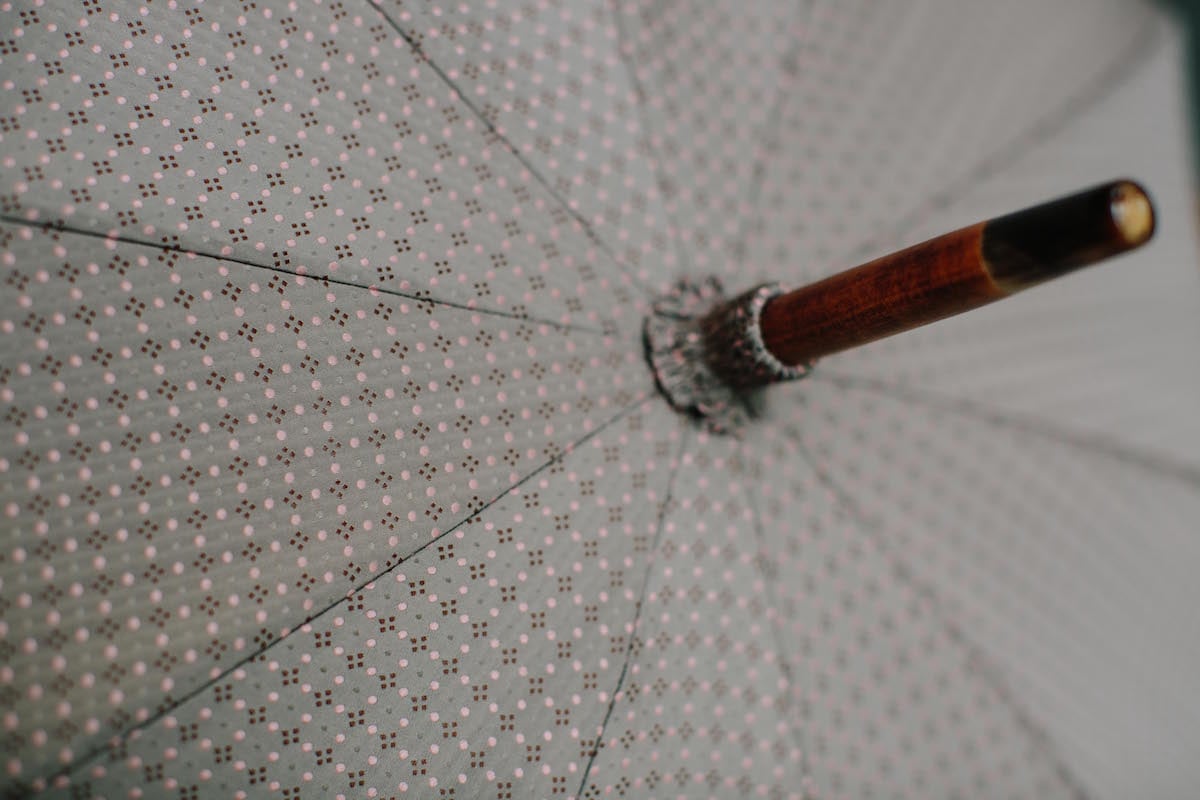
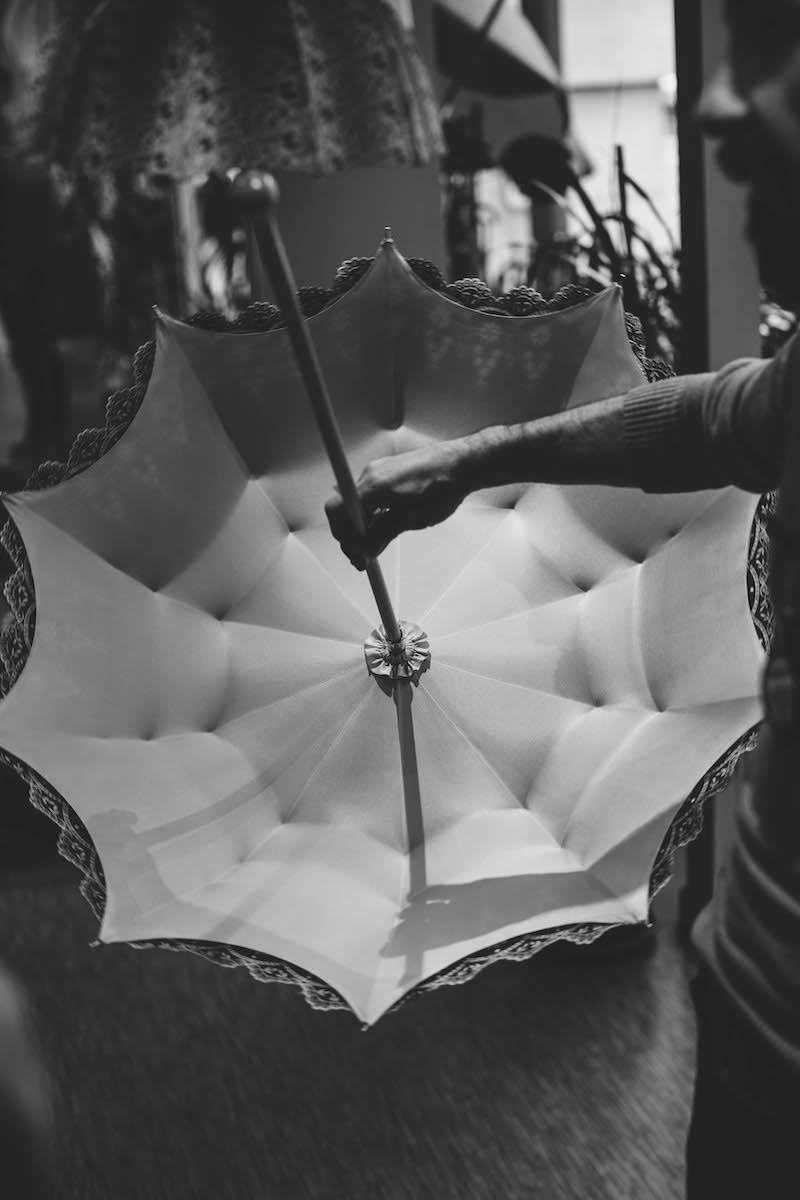
Each piece of the canopy (always silks, never synthetic) is cut by hand so that the patterns match perfectly – like the shoulders on a shirt. The circle of silk that sits inside the canopy, against the shaft, is cut with serrated scissors into a ring of points – creating a flower-like piece of silk origami.
  

Heurtault umbrellas Paris

Michel Heurtault umbrella

  
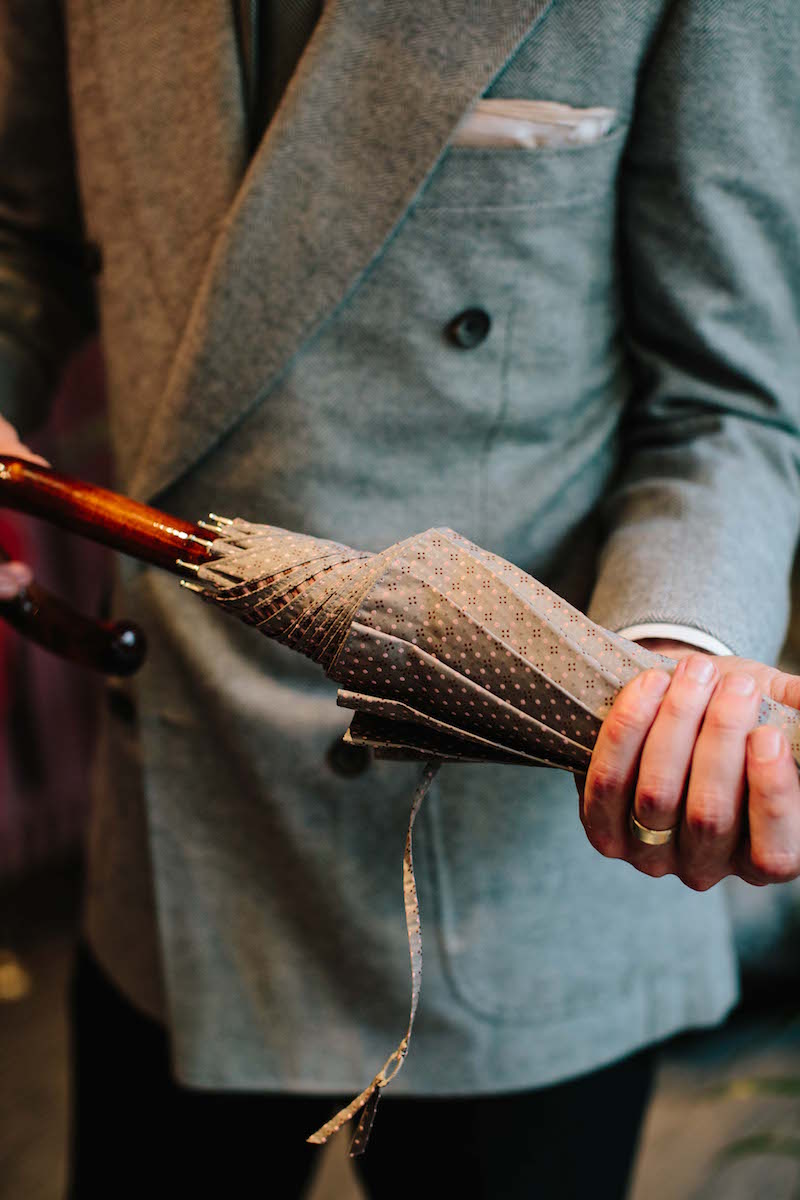
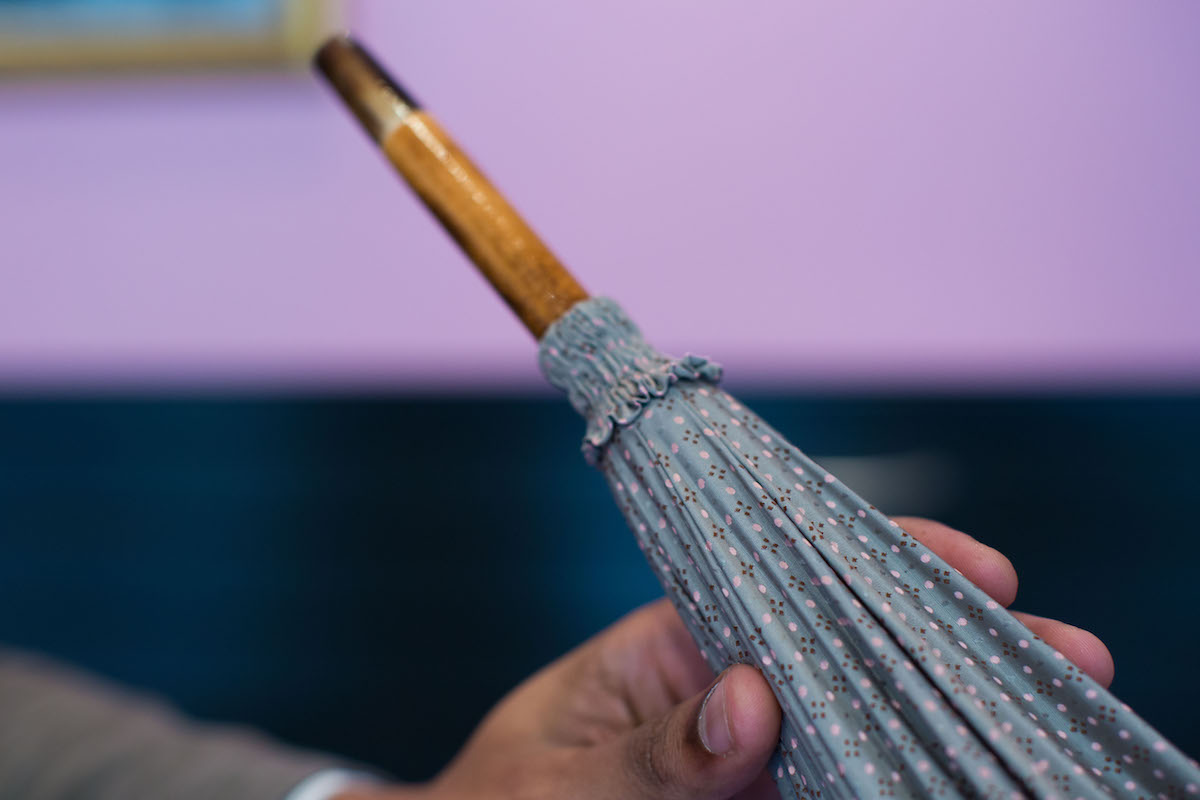
On the top of the canopy, again where it sits against the shaft, a circle of silk is ruched up against the wood (see image above) creating a lovely transition. “I used to just nail a collar on at that point, but it seemed so abrupt,” Michel says. “It was nice to be able to add that little touch of couture instead.”

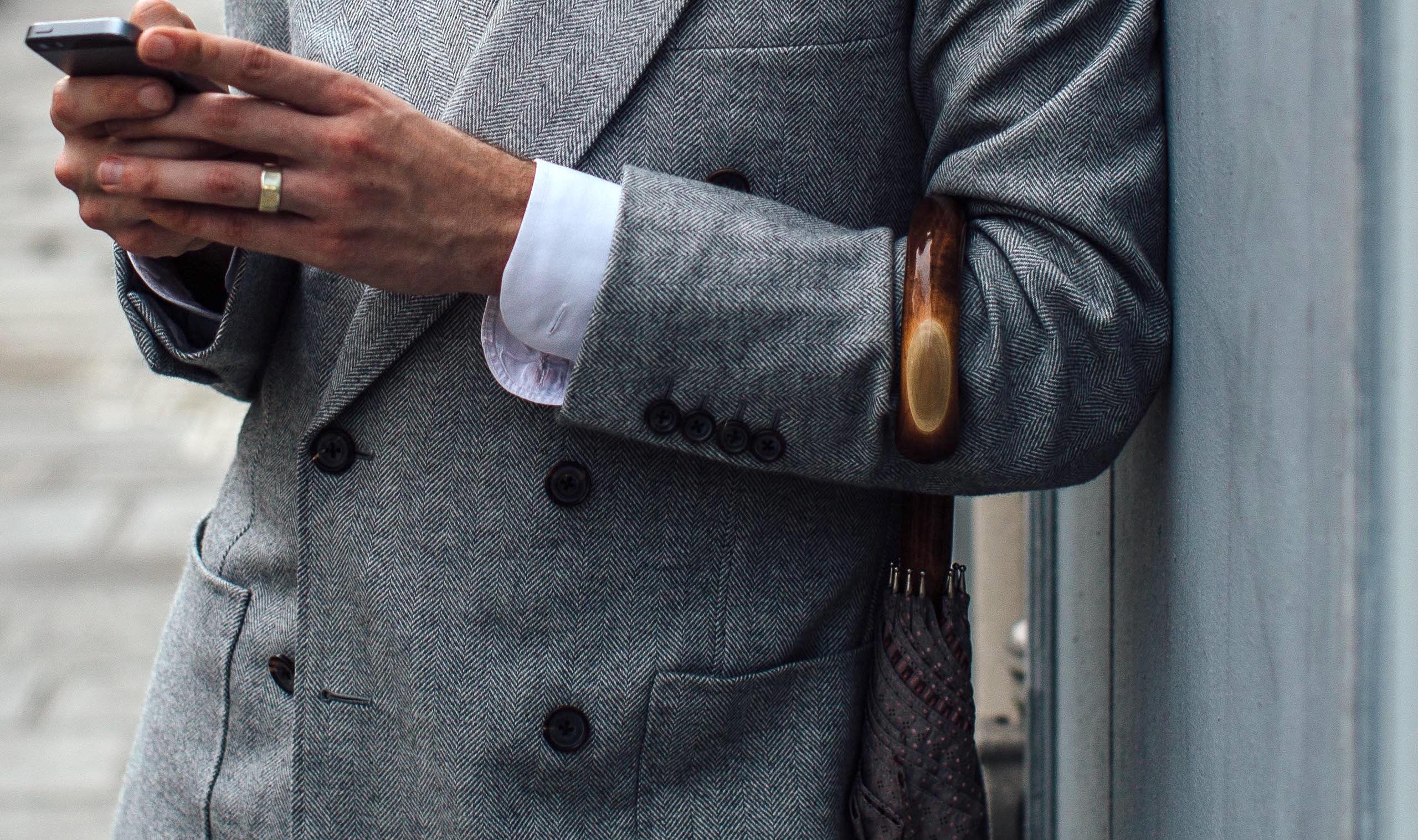
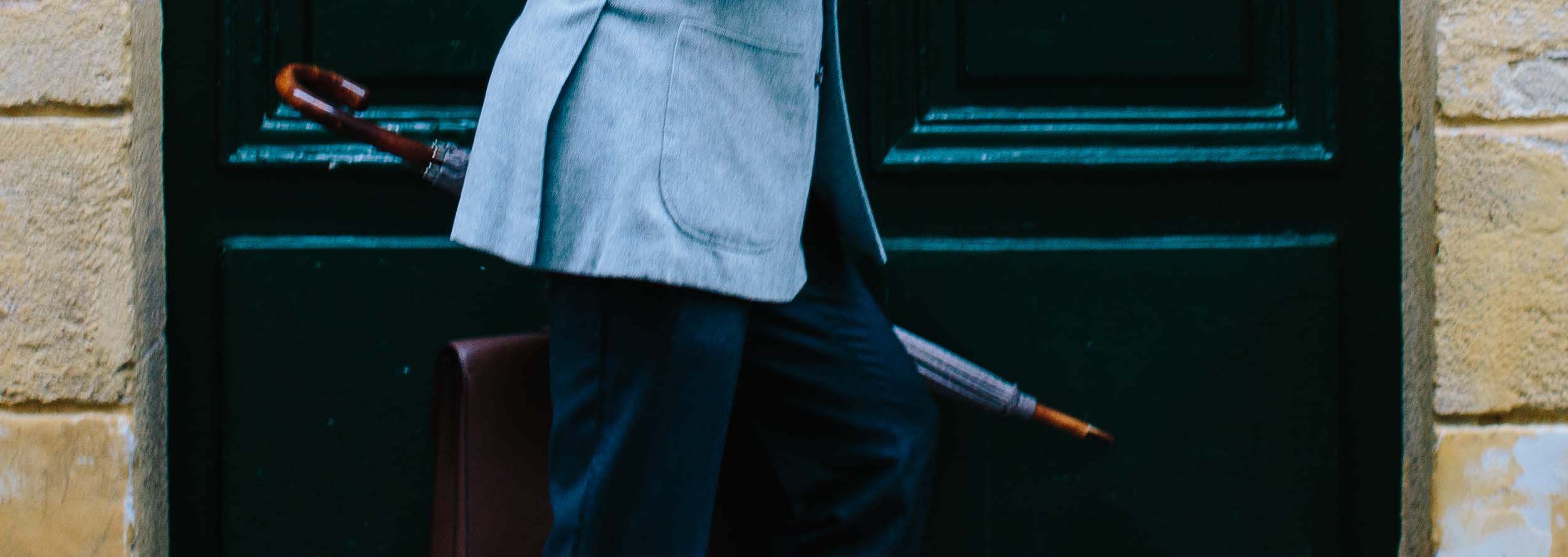
In common with other top-end makers, Michel usually uses horn to tip the umbrellas. But he also inserts it in other places, such in the curve of the handle (see image below). This is typical of his luxurious and inventive approach to design – one which also involves precious metals and skins. He recently incorporated a jade handle made by Fabergé for a female client.
  

Heurtault umbrella handle

Michel Heurtault umbrellas Paris2

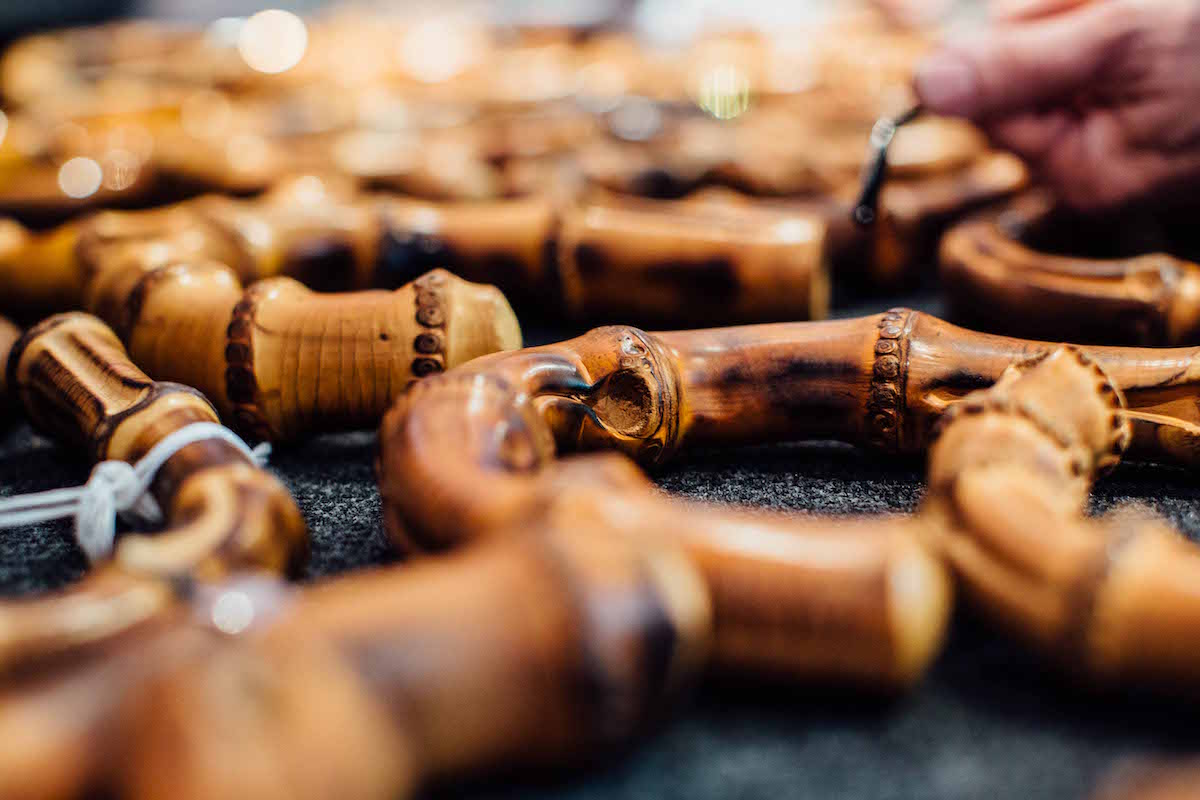
Michel Heurtault malacca handles  

“I learnt pretty much everything I knew in the years of collecting and restoring old pieces,” he says. “There used to be such experimentation and creativity in umbrellas and parasols, nearly all of which has been lost today. Women’s parasols in particular were absolute works of art.”

Most of Michel’s work is for women or costume, and it is these elaborate pieces that really show off his abilities – such as in the lace or hand-embroidered canopies, some of which are pictured here.

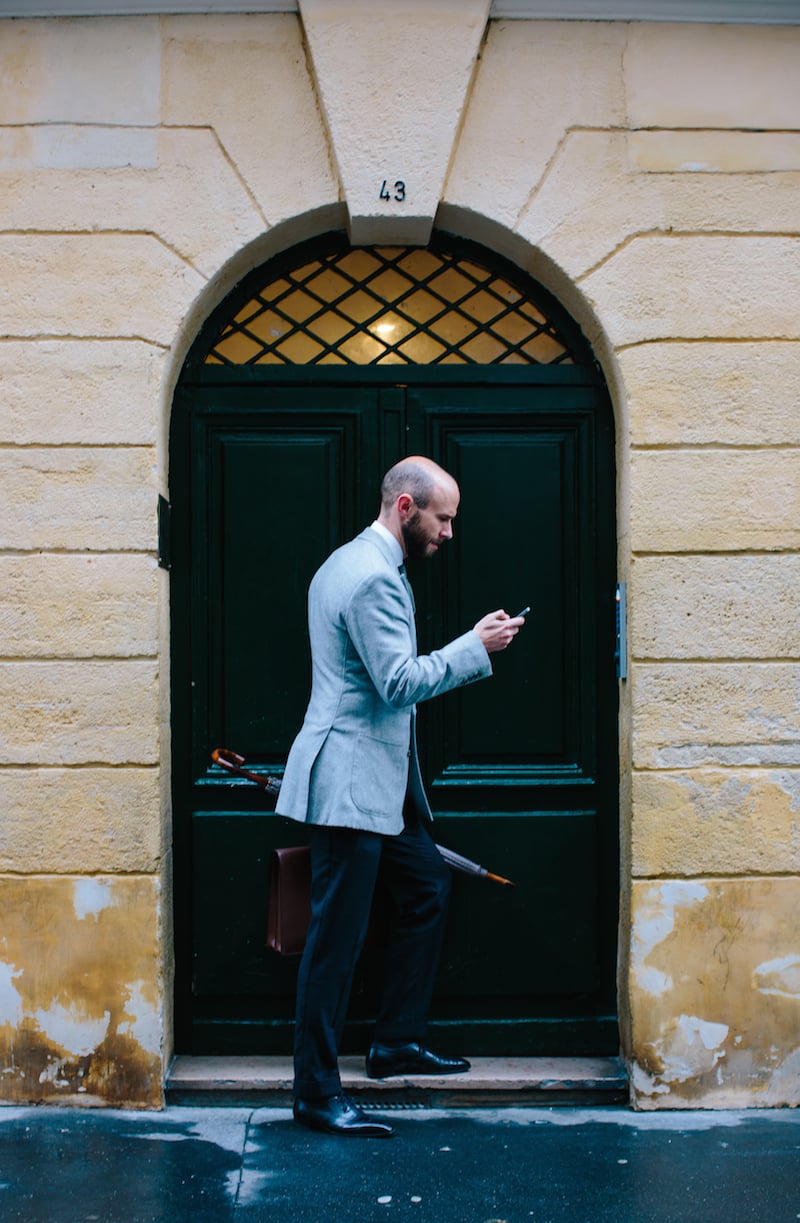
But his men’s pieces rarely seem effeminate. With a dark silk canopy, the little touches described above become very subtle. And many silks, like the grey-and-silk one pictured on the umbrella I’m holding, come from tiemakers, so are quite formal and geometric in their patterns.

There are many other craft points. The canopies usually have a slight wave to them, curving up as they leave the shaft and then running down towards the edge. Linings to the umbrellasAnd there’s the way the mechanism is lined up with the shaft, creating that car-like clunk we opened with.
  

Michel Heurtault Paris Michel Heurtault

  
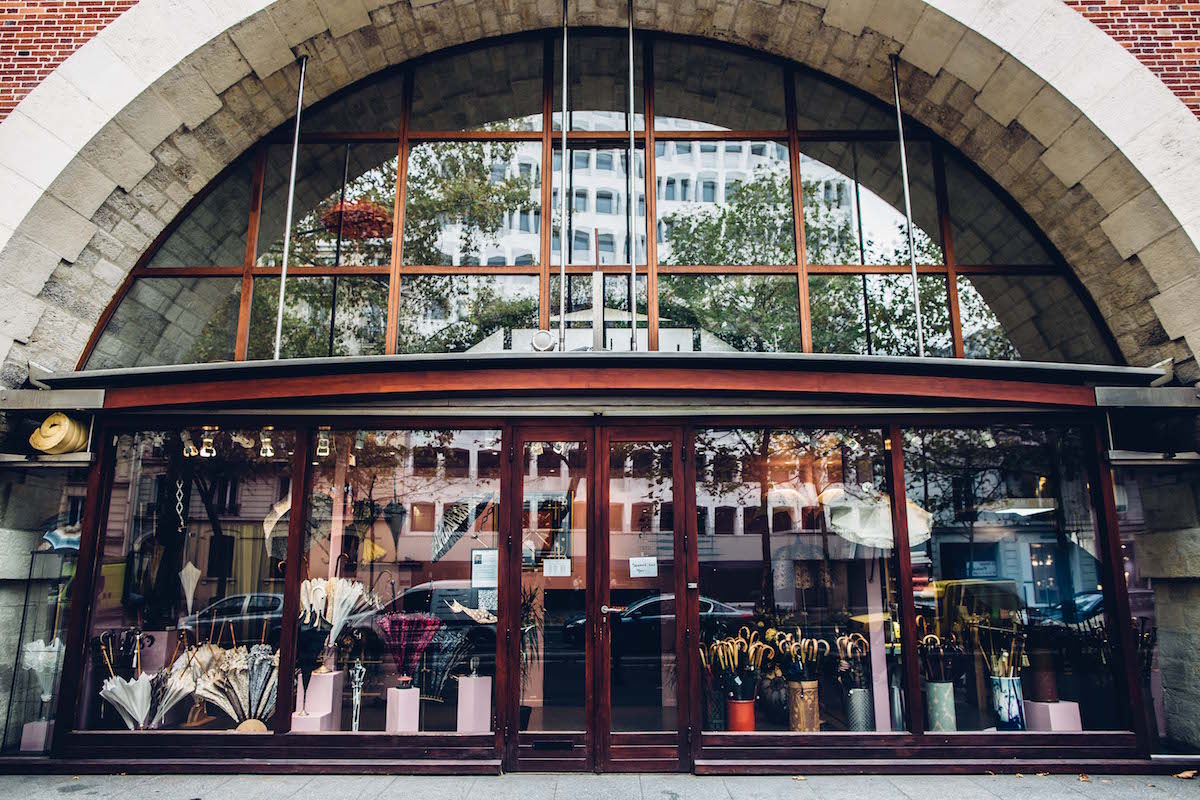
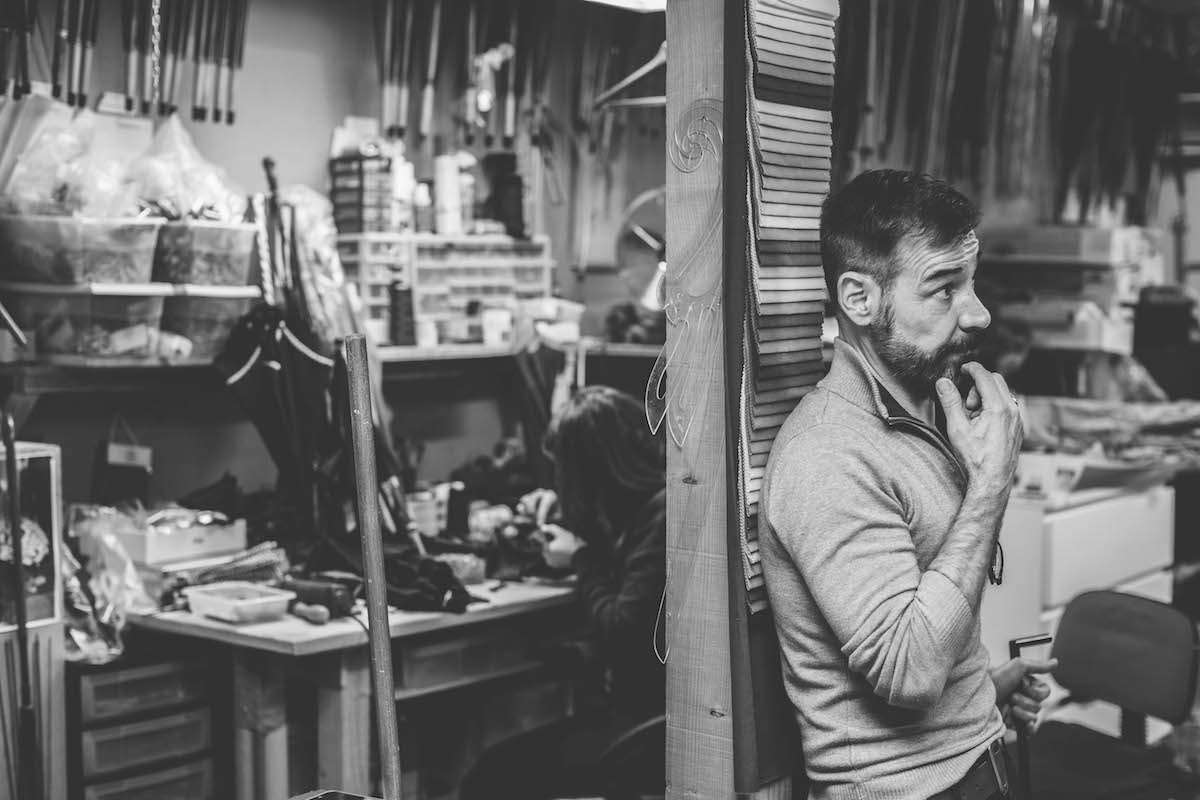
Michel (above) is reopening his shop in Paris’s 12th arrondissement – under an archway – in January. It’s a nice space, with the back half a workshop for him and his apprentice Andrea. He points out that handing down his skills is an explicit requirement of the Master of Arts award he holds from the French government – it requires ‘mission et remission’.

Most of Michel’s work is made to order, but there are always a handful of men’s and women’s umbrellas lying around to either buy or be inspired by. Most men’s models are around €490 and take anything from 3 days to 3 weeks to make, depending on the materials. Those involving precious woods are usually between €1000 and €2000.

This is, of course, extremely expensive for an umbrella. But it feels good to know there is a top-end to the spectrum of makers, from Fox through Maglia to Heurtault. And the level of work is a suitable accompaniment for a Camps de Luca suit or an Hermes briefcase.

www.parasolerieheurtault.com
   

Michel Heurtault umbrellas Paris


Photography: Jamie Ferguson @jkf_man

The Accessories Symposium: Drake’s, Begg, Simonnot-Godard…

Symp invite 2  
  
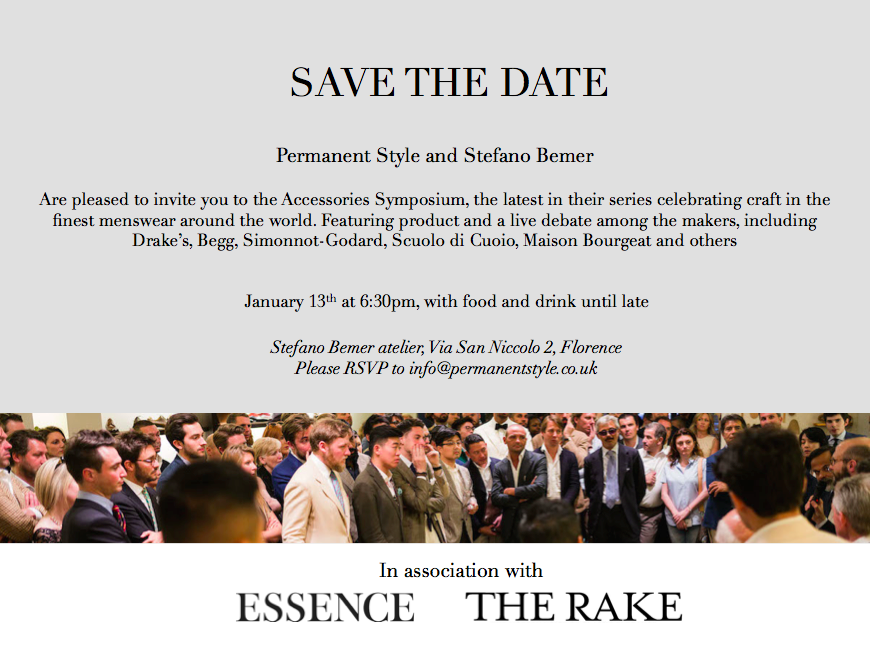
Following our last two events during Pitti Uomo – the Shoemakers Symposium and the Tailors Symposium, we are following up with an event in January that will bring together some of the finest accessories makers in the world. 

On stage will be: Michael Hill of Drake’s, Benjamin Simonnot of Simonnot-Godard, Guillaume Clerc of Maison Bourgeat and others. The brands will also all have product on display around the Stefano Bemer atelier before and after.

If any PS readers are in Florence and would like to come along, please email [email protected]

Are you for sale?

Cifonelli grey jacket

  
“Dear Simon. We are big admirers of Permanent Style here at Luxit PR and think that several of our brands would be a great fit. Could you let me know what your rates are for articles on the site, and what other options you have for sponsored content?”

I get this kind of email more and more these days. Random inquiries from PR companies are always a nuisance, but they used to ask about coverage and advertising. Now the majority inquire purely about ‘advertorial’ or sponsored articles.

The fashion industry has always been like this. Advertising contracts with the big magazines usually include a guaranteed number of pages of editorial throughout the year. Brands that advertise complain that they don’t get enough ‘support’ when they’re not in one piece or another.

But blogs used to be different. Indeed, many used to proudly carry a badge declaring ‘Ad-free blog’. I’ve always had advertising on Permanent Style, but I feel (and readers have told me they agree) that this is the most transparent way to fund it. There is no advertorial. There are no sponsored links. There are no affiliate programmes.
  

140A8563 copy

  
PRs themselves often find the new world frustrating. “There used to be lots of little blogs run by enthusiasts, who wrote what they thought and loved being involved with the brand,” a PR at a Jermyn Street company was telling me last week.

“Then at some point they get big and decide to monetise it. That’s fine I suppose – but they have no clear policy on anything. It’s not clear if brands are paying for content, what product is provided for free, how advertising works. It’s confusing for me and I’d guess it’s confusing for readers. I just want to sit down with them and ask: are you, or what is, for sale?”

I have a lot of sympathy with such bloggers. (Or indeed Instagrammers – which is generally worse; there are no ads on Instagram). It’s hard when you’re starting out, to turn down money or free things when they are offered. But at some point you have to decide on a business model and communicate that clearly.

“I often get to know these guys quite well – it’s a very personal relationship,” says a PR at a mid-size tailor (I asked a few). “One day they’ll phone me up and say ‘Guess what! I’ve decided to make the leap and quit my job.’ I have to stop myself from sighing. Everything gets more complicated from then on.”

“Things are particularly hard as media and platforms merge together,” she adds. “When every shop has a magazine and every magazine has a shop, it’s hard to know where content is coming from.”

I believe there can be a better model. One that sits between brand-led magazines and ad-free blogs. Where opinions can be open and honest, independent and substantial.
  

140A8563 copy 2

  
I’ve always been clear that no one can buy content on Permanent Style. We have some great advertisers that fund everything we do – from clothing to photography to travel. The fact they’re advertisers makes no difference to how much I write about them.

(You’re free to disbelieve that of course, but at least you know who the advertisers are. There’s no way to tell that a link is sponsored.)

We have collaborations with brands, which obviously make money. So do the books – though they often, like Permanent Style 2015, involve a good deal of investment and risk.

And finally, we often get discounts on clothing. But as I have said many times, that’s never going to make a difference to what I write about. The blog’s income means I can afford anything I wish to cover, and I have far far too much clothing to accept things just because they’re free.

As many of you know, I also have a regular job as the product manager for a FTSE 250 publisher called Euromoney. Which helps to not worry about where and how fast the blog is growing.

This is a lovely position to be in. But hopefully it has benefits for readers too. It means I can write about all products equally, and from personal experience. It means I don’t have to listen to people saying I should have a Permanent Style clothing line. And it means I can write bad opinions as well as good ones. (I never understand people who think just not writing anything is the same as writing a bad review.)

Thank you.
  

Image: Outside milliner Pauline Brosset in Paris, photograph by Jamie Ferguson @jkf_man

Stockholm: A sartorial shopping guide

simon crompton with daniel dannefalk of skoaktiebolaget

  
Swedes may be the best-dressed men on earth. At their best, they combine the classicism of the English with the flair of the Italians – without the stuffiness of the former or showiness of the latter. 

(Don’t let it go to your head guys. That’ll ruin everything.)

Although young Swedes today are heavily influenced by Italy – soft tailoring, turn-ups, sprezz – they usually avoid that extra touch of flamboyance, or gaudiness, that the Italians are so susceptible to.
  

Stockholm is a wonderful city to visit and in which to shop. It’s never had the range of menswear stores of London, Milan or New York, but what’s there is always very tasteful and well done.

There have also been good signs in recent years (in common with many capitals around the world), with openings of new, sartorially focused boutiques. 
  

simon crompton with patrik lof of skoaktiebolaget.jpg

  
1 Skoaktiebolaget
www.skoaktiebolaget.se
Humlegårdsgatan 4

Don’t worry if you can’t pronounce it. A great little shoe store, selling Saint Crispin’s, Gaziano & Girling, Carmina, Edward Green, and Enzo Bonafé. Founded by Patrik Lof (above, with me) and some great staff (eg Oliver Dannefalk, with me at top). The name basically means Shoe Inc, by the way. 


2 Gabucci
www.gabucci.se
Nybrogatan 14

Founded in 1994, Gabucci is a multi-brand store selling both casual and formal Italian brands – Attolini and Caruso alongside Boglioli and Aspesi. It also has own-brand tailoring, and is one of the best places in the city for suit advice. They moved location two years ago, into a bigger and much more spacious store. 


3 AW Bauer
journal.awbauer.com
Brunnsgatan 4

The only bespoke tailor in Sweden, pretty much. Founded 150 years ago, it was run by Borje Moberg until recently, when two young guys, Fredrik and Martin, took it over. Fredrik is the cutter, and they now have five tailors working for them (two off site). No set style, but some great experimentation, with an increasingly young client base. Suits start at €4000. 


4 Lund & Lund
www.lundochlund.se
Sturegatan 12

Like many smaller European cities, Stockholm’s high-end menswear used to mostly consist of stores selling high-end Italian tailoring (Kiton, Brioni) and some very English knitwear or accessories. None of them used to have stores of their own, and in a place the size of Stockholm they still don’t – although more such brands open every day.

Lund & Lund was the most famous of these stores, founded as a tailor in 1949 and branching out into RTW clothing in 1963. It is still owned and run by the same family, and the internal decor hasn’t change much. Stocks Belvest, Cucinelli, with a MTM service from Caruso, Corneliani and others.

5 Hans Allde
www.hansallde.se
Birger Jarlsgatan 58

Similar to Lund & Lund, with a history going back to 1949. Stocks Zegna, Corneliani, Belvest and Kiton among others. Also has an in-house bespoke tailor, Annika Hedh, on site alongside made-to-measure from the Italian brands.


6 Herr Judit Sibyllegatan
www.herrjudit.se/sibyllegatan
Sibyllegatan 29

A great vintage menswear store, with everything from Rubinacci to Hermes to Incotex. Nice accessories, bags and ties.

7 Rose & Born
www.roseborn.com
Grevgatan 2

Not a brand we can recommend on quality of clothing, but an interesting young, sartorial store with a good level of taste. If only the jackets weren’t quite so short. 

8 Tweed Country Sports 
www.countrysports.se
Odengatan 98

Reminds me of the odd store you find in Italy that is clearly obsessed with English style and English product. Stocks mid-range Dent’s gloves, Corgi socks and the likes of Magee and Chrysalis. 


9 A. Marchesan 
www.facebook.com/amarchesanstockholm
Odengatan 74

Another vintage men’s store, with a large selection of 1940s-50s suits, hats and accessories. A rather different atmosphere to Herr Judit, but certainly worth a visit. 

In the photos I am wearing:

  • Prince-of-wales flannel jacket, Anderson & Sheppard
  • Denim shirt, Luca Avitabile
  • Navy grenadine tie, Drake’s
  • ‘Smoking’ cotton handkerchief, Simonnot-Godard
  • Charcoal worsted trousers, Chittleborough & Morgan
  • Dark-brown crocodile shoes, Gaziano & Girling
      

Whitcomb & Shaftesbury – first fitting

Whitcomb & Shaftesbury fitting suit

   
I recently had the basted fitting for my two suits from Whitcomb & Shaftesbury – the tailor that runs a workshop in India but has all the suits cut by the same person London. 

They had offered to make me two suits – one put together in Chennai and one in Savile Row – in order to be able to compare them. There is a big price difference: £1360 for the former and £3040 for the latter (ex-VAT).

Of course, as soon as you know there are differences, you seek them out. You notice that the waistband of the trousers on the Indian suit is just canvas at the baste, where the London one has cloth over the top. It makes no difference at all to the final suit, but you focus on the differences rather than the similarities.
  

Whitcomb & Shaftesbury bespoke suit fitting 25

  
And there were a lot of similarities – pretty much everything was the same. The same hand-padding of the chest, the same canvas and horsehair, the same hand-sewn buttonholes.

This is no coincidence, as Whitcomb & Shaftesbury’s coatmaker – Bob Bigg – has been going back and forth to India for years, slowly training the local women to sew in the same way he does.

“The biggest challenge was consistency and clean finishing,” he told me over dinner that evening (with owner Suresh and cutter John McCabe, pictured here). “Their hand-speed was excellent, but they weren’t used to having to sew with such precision. It had been more about volume, in the absence of any machinery.”
  

Whitcomb & Shaftesbury bespoke suit fitting 2

  
Bob, who has been a coatmaker on and around Savile Row for decades, wasn’t sure he’d like India to start with, but has slowly taken to it.

“I just had to get used to the heat – and then the food,” he recalled. “A lot of the locals found it surprising how I’d wear my jacket all the time, even when it was scorching hot, but I always find it cooler.”

A lot of Bob’s stories echoed things tailors have been telling me for years – in the UK, Italy or anywhere. How the hand holding the cloth is more important than the one sewing, as it sets up the cloth and maintains the tension. How it’s always surprising how many ways there are to do the same thing, and usually one is no better than the other, just easier.

It’s the same challenges, whether you’re training an ex-fisherman in Chennai or a graduate in London.

It’s still early days for the two suit, but signs are good that the Indian suit in particular (Whitcomb & Shaftesbury called it Classic Bespoke) will be a great value option for anyone looking to try bespoke for the first time.

Photography: Jack Lawson

More on Whitcomb & Shaftesbury, such as John’s background at Kilgour, in the first post here
  

Whitcomb & Shaftesbury bespoke suit fitting mccabe

A 2015 Christmas list

WA-Prototype-Sample-LTD-5_CashSilkVicuna-StraightRib_151_MF-BF-12.05.15

  
Last year I did a Christmas list around this time, collecting together some of my favourite things offered by the advertisers on Permanent Style. We don’t do much to shout about these brands that fund everything on PS, so I thought nice to do so again.

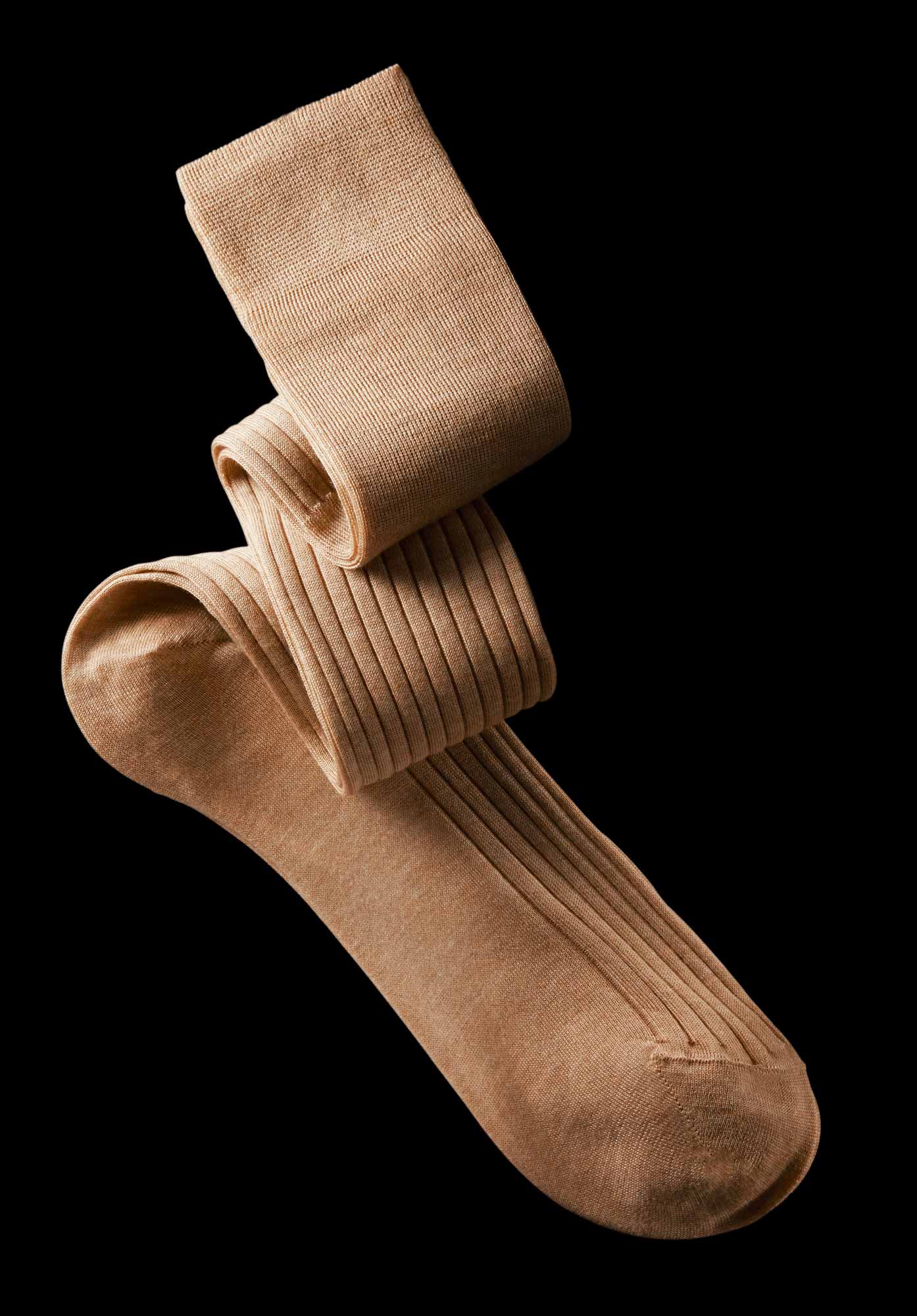
First off is some luxury on the cheap(ish). William Abraham, maker of the most luxurious and expensive socks in the world, has been prototyping some new vicuna-cashmere socks (pictured above). The prototypes (perfect in every way) are available for PS readers for $125, rather than the original $425. Only in a (sock) size of 11 and 11.5, but if that’s your size they’re worth considering. 

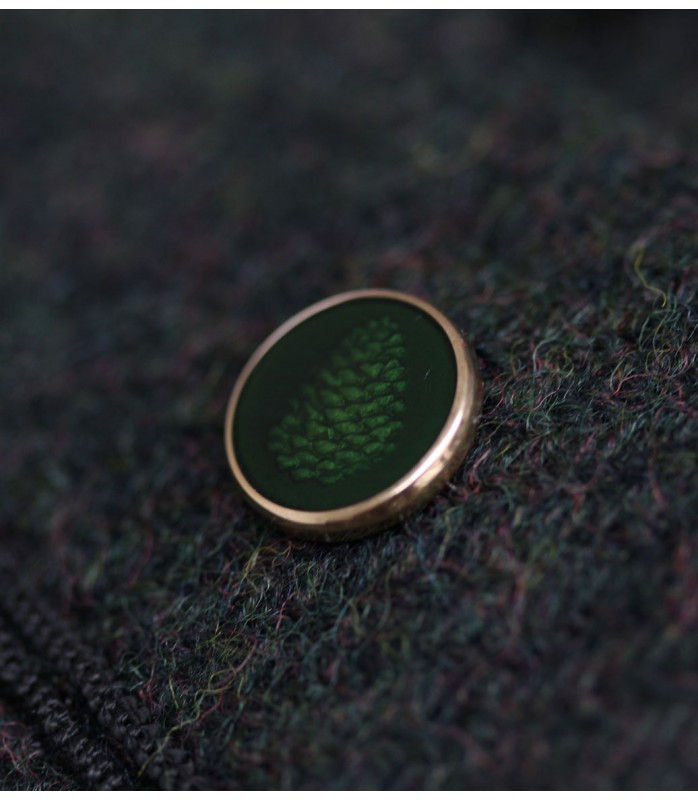
Drake-s-Pine-Cone-Lapel-Pin-LPIN.CM001.001-34Among the nice things on the spanking new Drake’s site, I’d pick out the pins – Mike’s being wearing one around for a while and it’s delicate and subtle.

If that’s an unexpected selection for a tiemaker, equally surprising is the Simonnot-Godard handkerchiefs at Mes Chaussettes Rouges, which come in a fantastic range (grey is my favourite). Exquisite Trimmings is also the best source for Rubinacci ones.

And at The Merchant Fox, I’ve always loved their leather goods. Bridle leather and brass hardware, just like English accessories should be. Check out the wash roll.

At The Hanger Project I’ll return to two previous recommendations: the laces, which I said were a great way to change the look of a shoe, and the Permanent Style 2015 book (still available!)

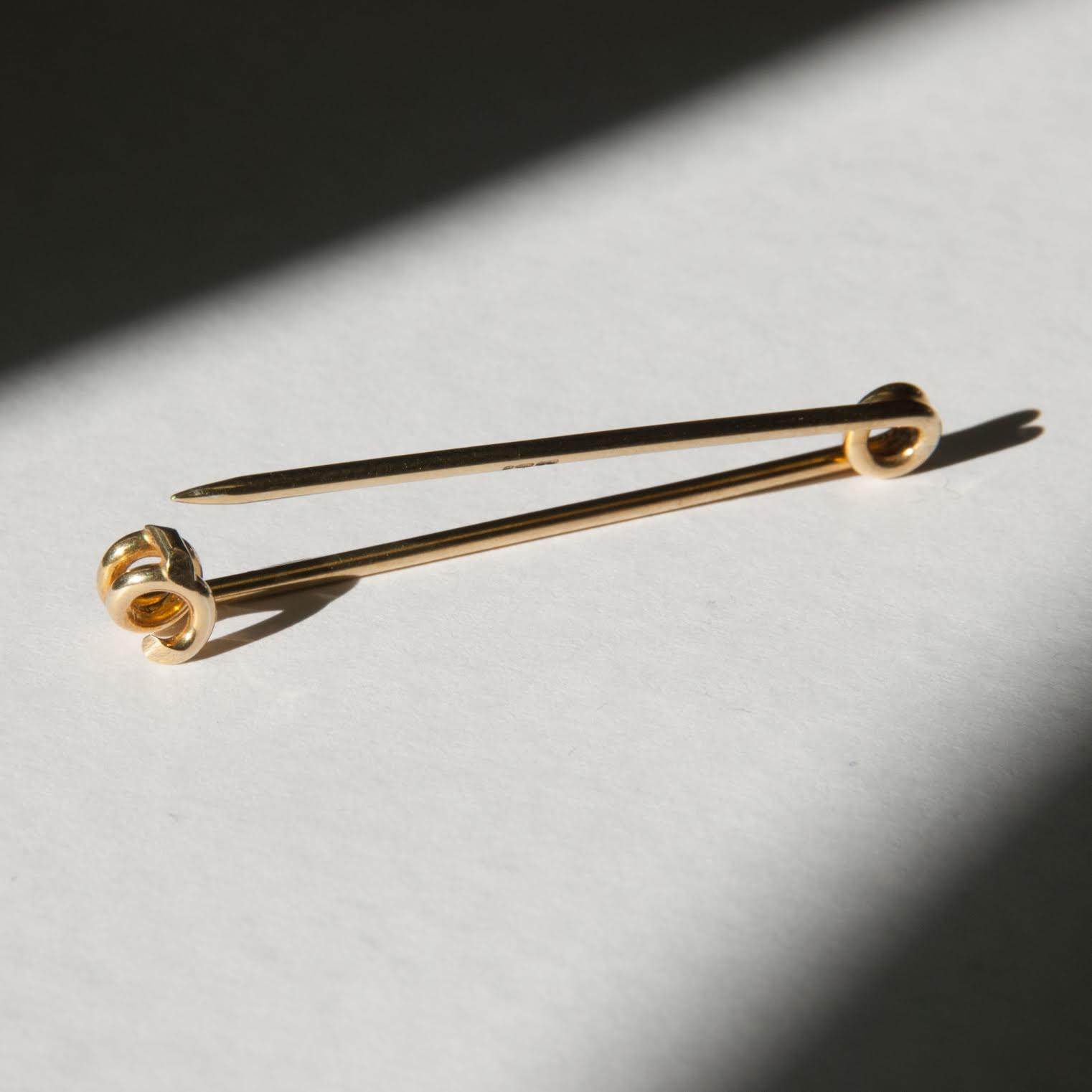
unnamed (1)Edward Sexton has a small line of nice accessories, among which I have the gold collar pin – a key part of Edward’s look, and they sell shirts with the appropriate collar as well. 

I’ve always said that Alice Made This offers a great alternative to traditional cufflinks, and my favourites are the Alexander links in brass. Modernist look, precision-turned finish. 

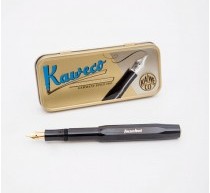
Equally apsportfountainblack2_2pealing in their simplicity are the Kaweco fountain pens at Trunk. Light, stylish and write incredibly well.

Viola Milano have recently relaunched their site and I’d pick out the white silks. White is not a common colour for a tie, but it is actually quite subtle and yet characterful. Wear with a blue shirt and navy suit.

Tom’s friends at Pauw Mannen, meanwhile, have an amazing collection of luxury outerwear, everything from Attolini to Real McCoy’s leather jackets.

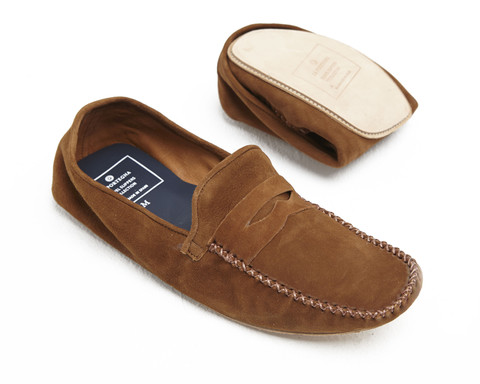
LA_PORTEGNA_ABRIL_2014_1119_largeFurther down the list, there are my Portegna slippers, which I wear every day, the Ruc Tote at J Panther, which again has worn very well, and my own Begg-collaboration scarves, which I have worn almost every day since we made them. They’re just so practical!

What else? Private White is great for workwear or casual jackets made with that touch more design thinking, and better materials. Case in point: the waxed cotton jacket, like a Barbour but better.

It’s been nice to welcome back a couple of old advertisers to the site recently. Dent’s gloves, who advertised for several years previously (always buy the Heritage Collection, particularly cork peccary) and Lissom & Muster, 40243_cowho have a good selection of slightly more unusual British products, like the Cherchbi bags and bridle accessories.

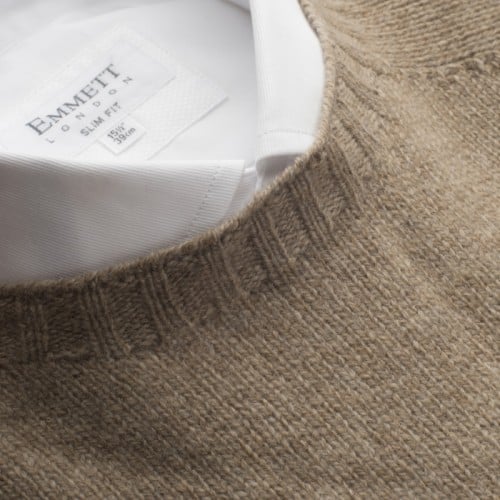
And last but not least, lovely to have Emmet on the site, particularly given how the knitwear and accessories are expanding. I’d point people towards the lambswool crewnecks, which are great value (£145) and come in nice biscuity colours.

Edward Sexton flannel – When to wear a suit

edward sexton flannel suit best of british

  
Apparently people are becoming more casual. There are now such things as luxury jogging bottoms.

But I’ll put my money on the fact that – even as the fashion wheel turns – the suit will remain the formal attire of choice. There are just no other contenders. 

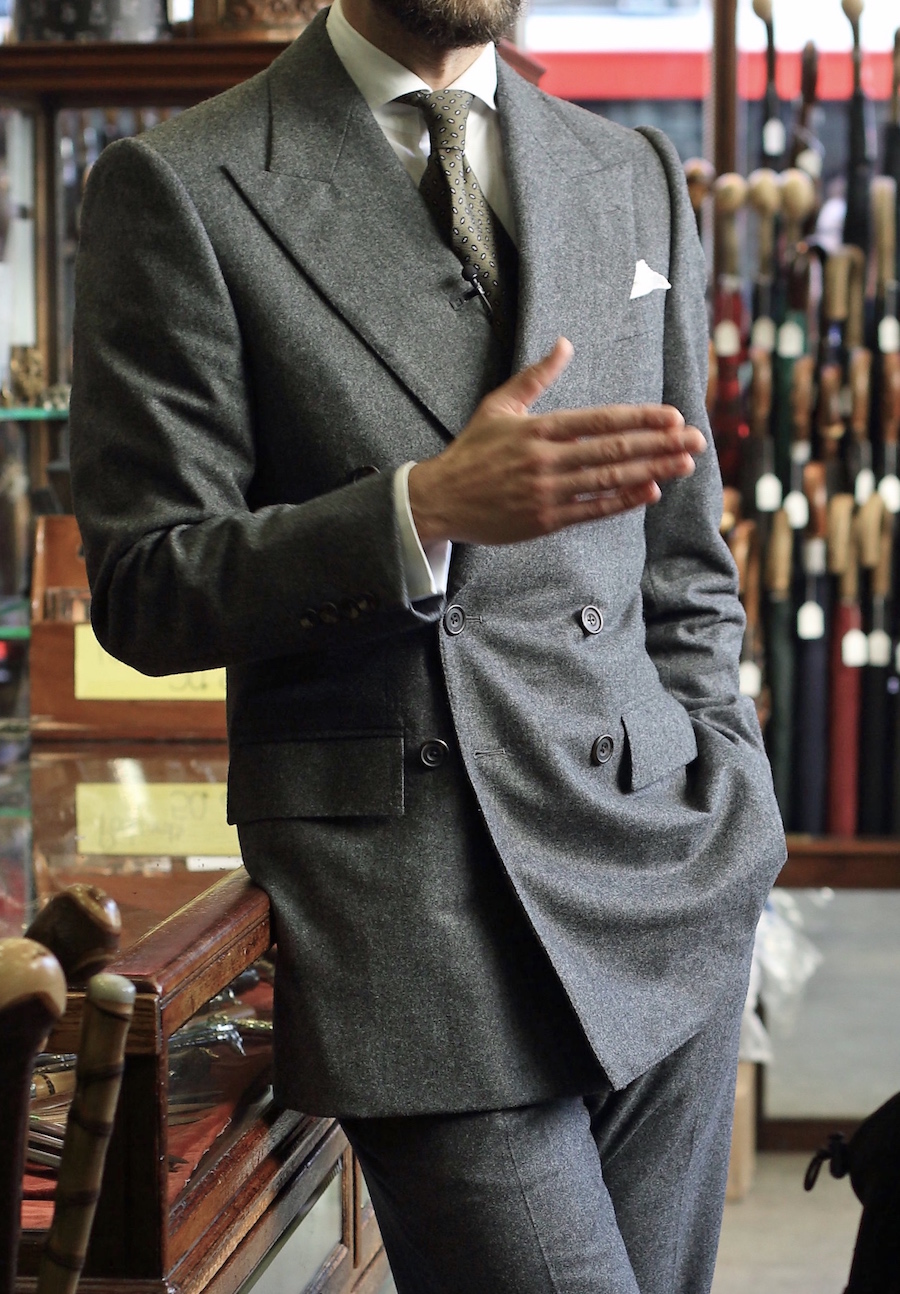
For those that understand – hopefully, those that read this blog – there are also grades of formality to the suit. At one end of the spectrum are Neapolitan linens. In the middle are Milanese and drape cuts. And at the other end are super-sharp English suits like this, from Edward Sexton.

When do you wear the different things on that spectrum? It is a consideration of people and place.

In the office most days, I wear a Neapolitan jacket and trousers. But when I’m on show, it’s more than often a suit. And when I really want to feel put together, it’s a structured, roped piece of double-breasted flannel.
  

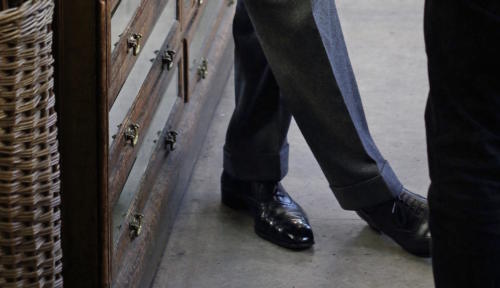
Cleverley black bespoke brogues

  
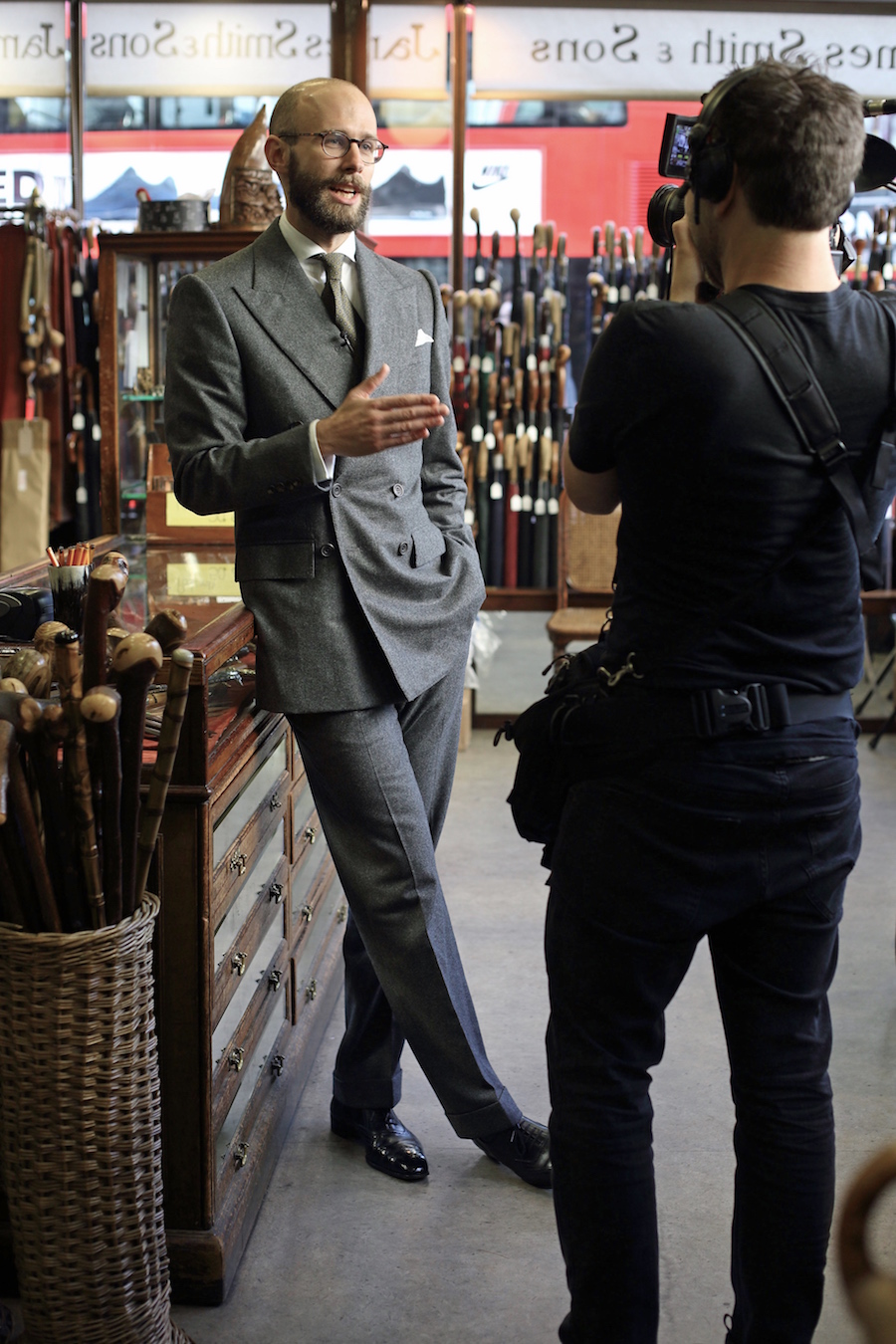
Here, I was on TV. Being interviewed by a German television station about my latest book Best of British: The Stories Behind Britain’s Iconic Brands.    

I’m on display. I am representing myself and even British menswear – with all its history, craft and tradition – for this German audience. 

Clothing for people and for place. 

So a double-breasted grey flannel suit, with Edward’s broad lapels and fantastic roped shoulders, his long legs and slim sleeves.

White shirt (most formal colour) with double cuffs (most formal style). Muted grey/green tie. White linen hank.

And beautiful GJ Cleverley bespoke city shoes. With their thin uppers, thin sole and waist that disappears under the foot. Lending delicacy to the tread.

Dressing up makes you feel good. It makes you feel pointed, ready, prepared. Which is exactly what you need when someone puts a camera in your face.
  

double breasted grey flannel suit

Best of British book launch – at Anderson & Sheppard

best_of_British_highres-40 copy

  
So, everyone knows how much I love the Anderson & Sheppard haberdashery. Expensive as it is, they are doing something almost unique around the world – creating genuinely innovative versions of classic menswear  without resorting to the any of the tomfoolery of fashion. 

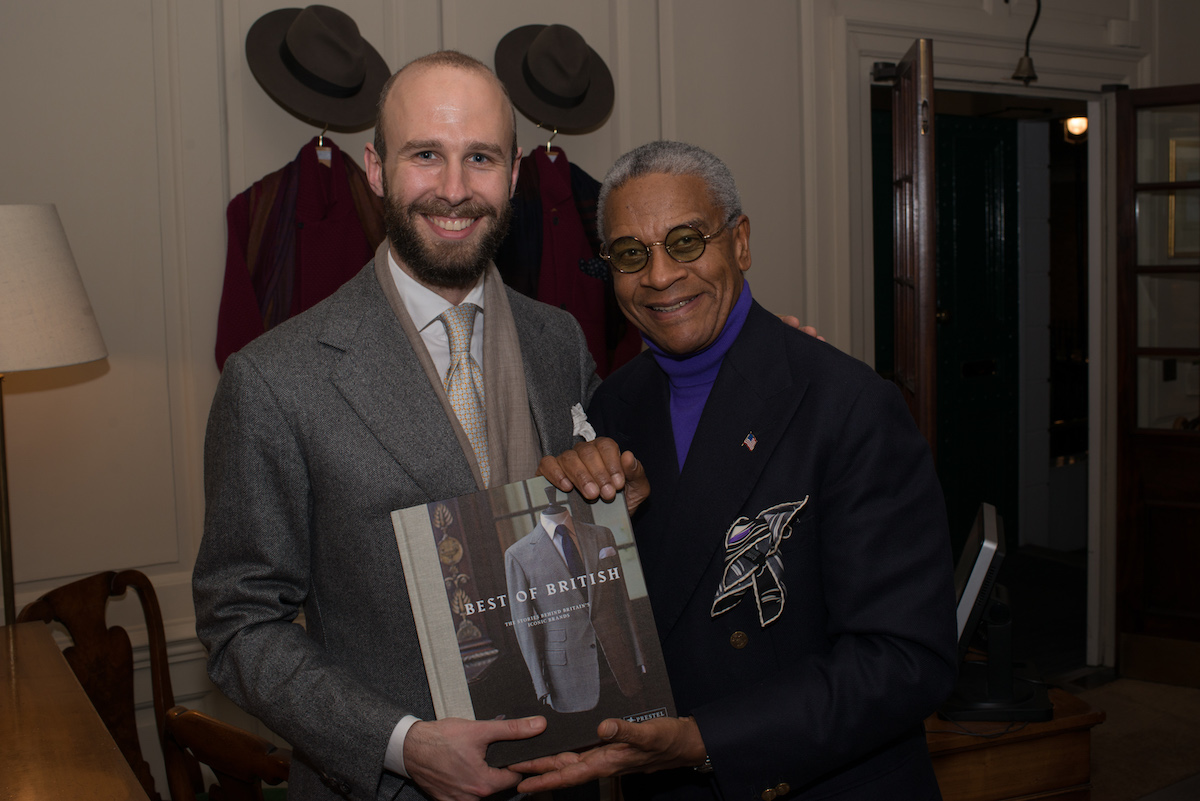
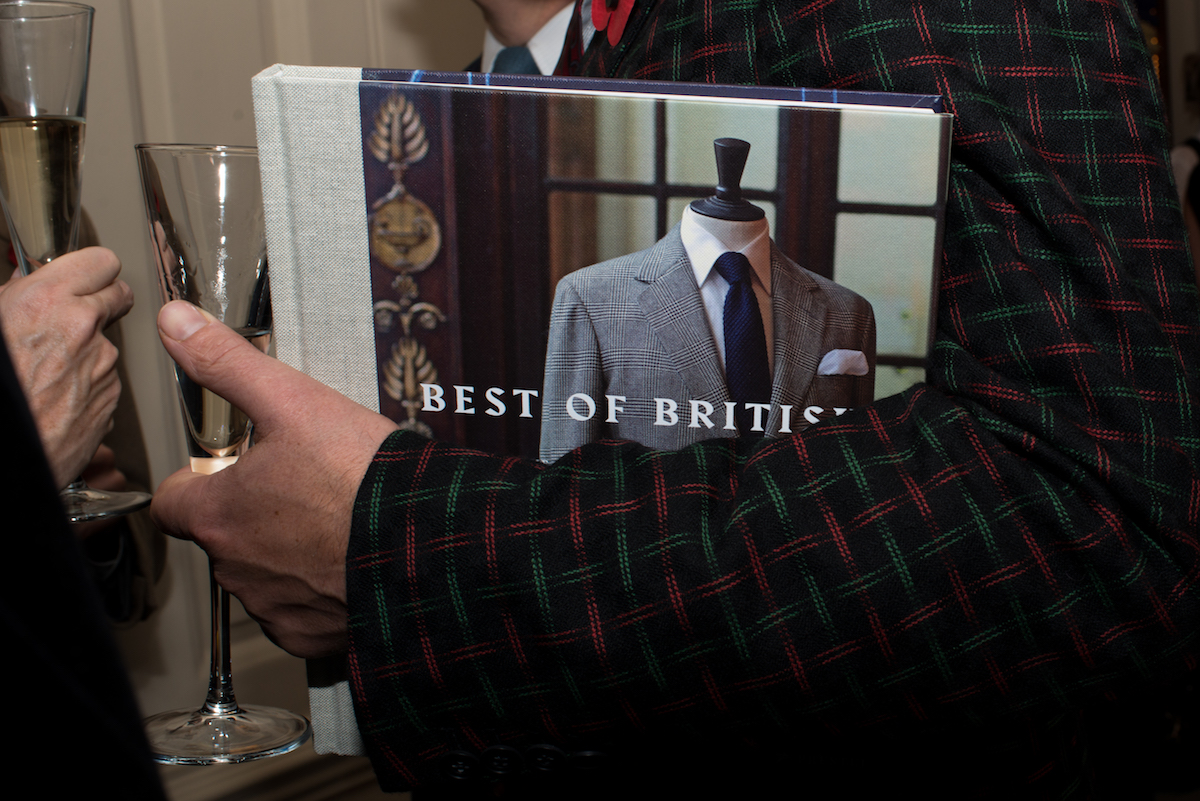
There could therefore have been no lovelier place to hold the launch of my latest book, Best of British: The Stories Behind Britain’s Iconic Brands

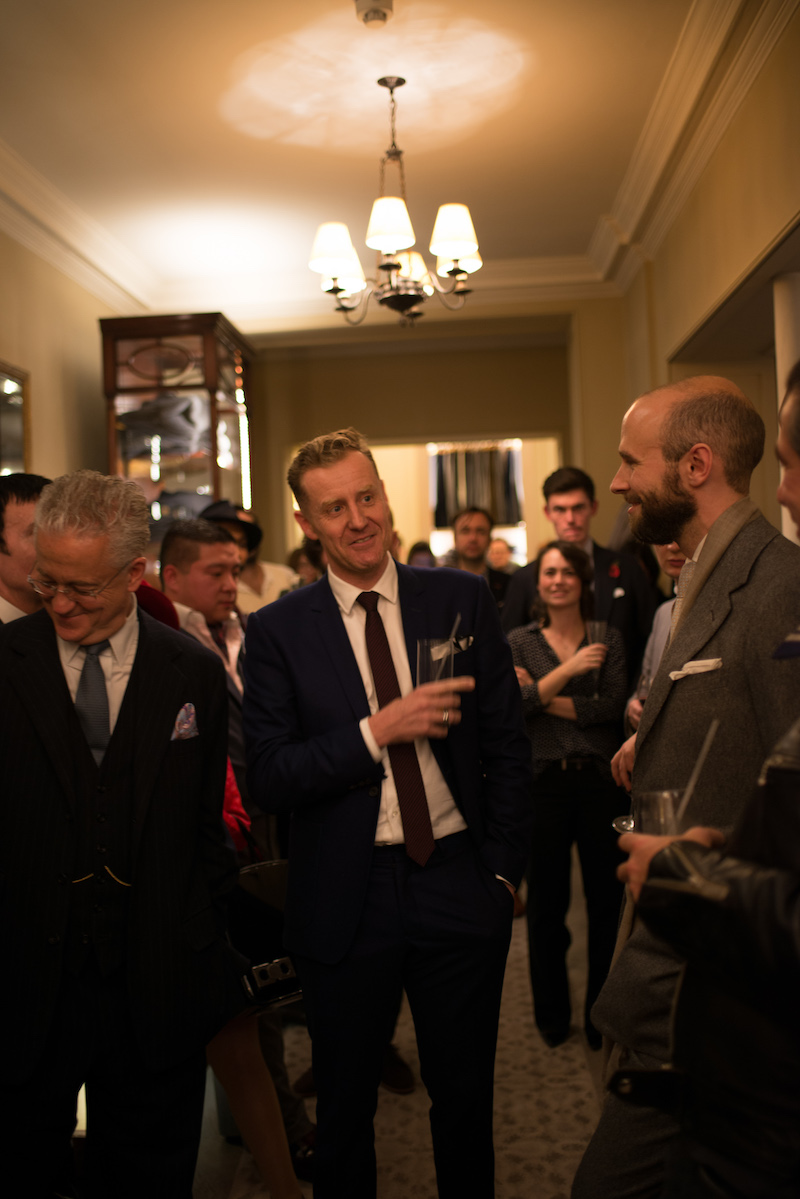
It was a lovely evening. The shop feels so warm and comforting even when empty, but packed with 100 or so representatives of the makers included in the book, plus friends and clients, it was positively festive. 

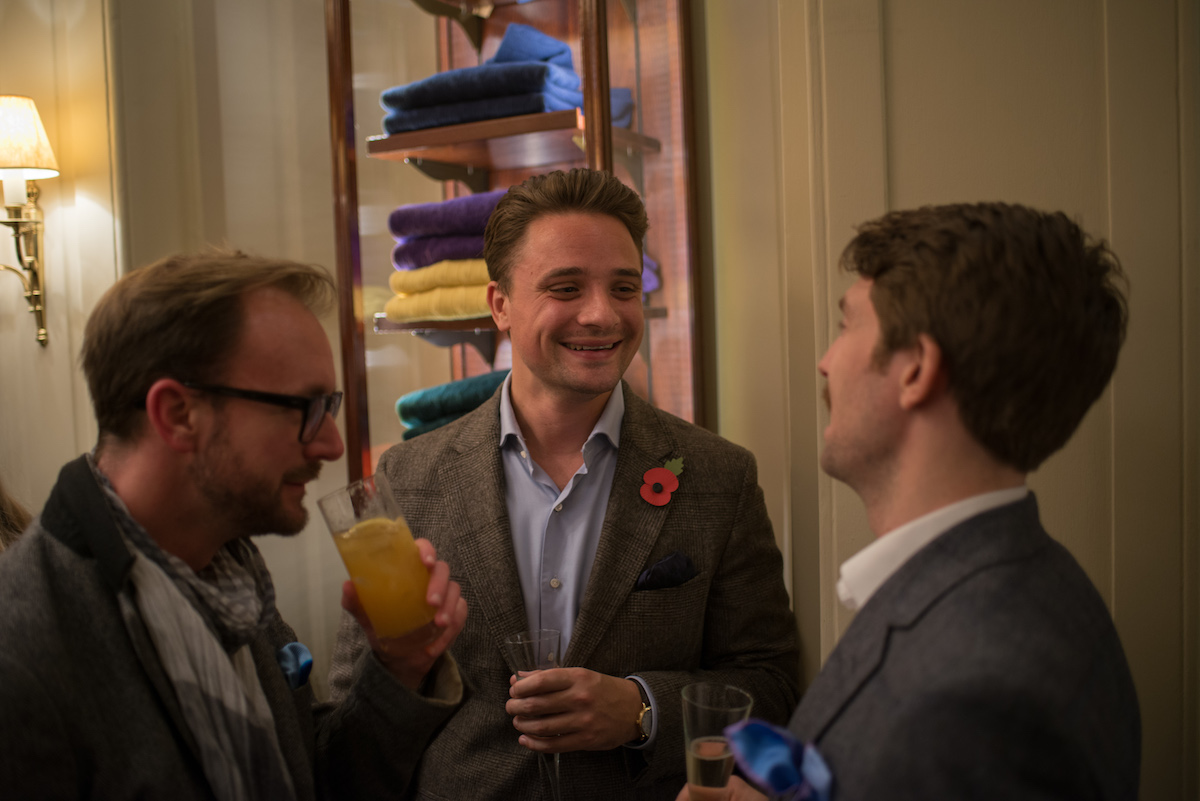
Above, Toby Egelnick is giving his part of the speech – explaining the conception of the book – before handing over to me and Horst (Friedrichs, photographer – just visible on the right).

Toby is part of the wonderful design team Egelnick & Webb that produced this book as well as my Permanent Style 2015 annual earlier in the year.
  

best_of_British_highres-14 copy

best_of_British_highres-15 copy

best_of_British_highres-4 copy

  
I am wearing:

  • Grey flannel suit, Anderson & Sheppard (obviously)
  • Silver tie with small yellow and blue pattern, Bulgari
  • ‘Natural’ cashmere scarf, Begg
  • White spread-collar shirt, Luca Avitabile
  • On the feet, black Cleverley imitation brogues
      

best_of_British_highres-59 copy

best_of_British_highres-18 copy
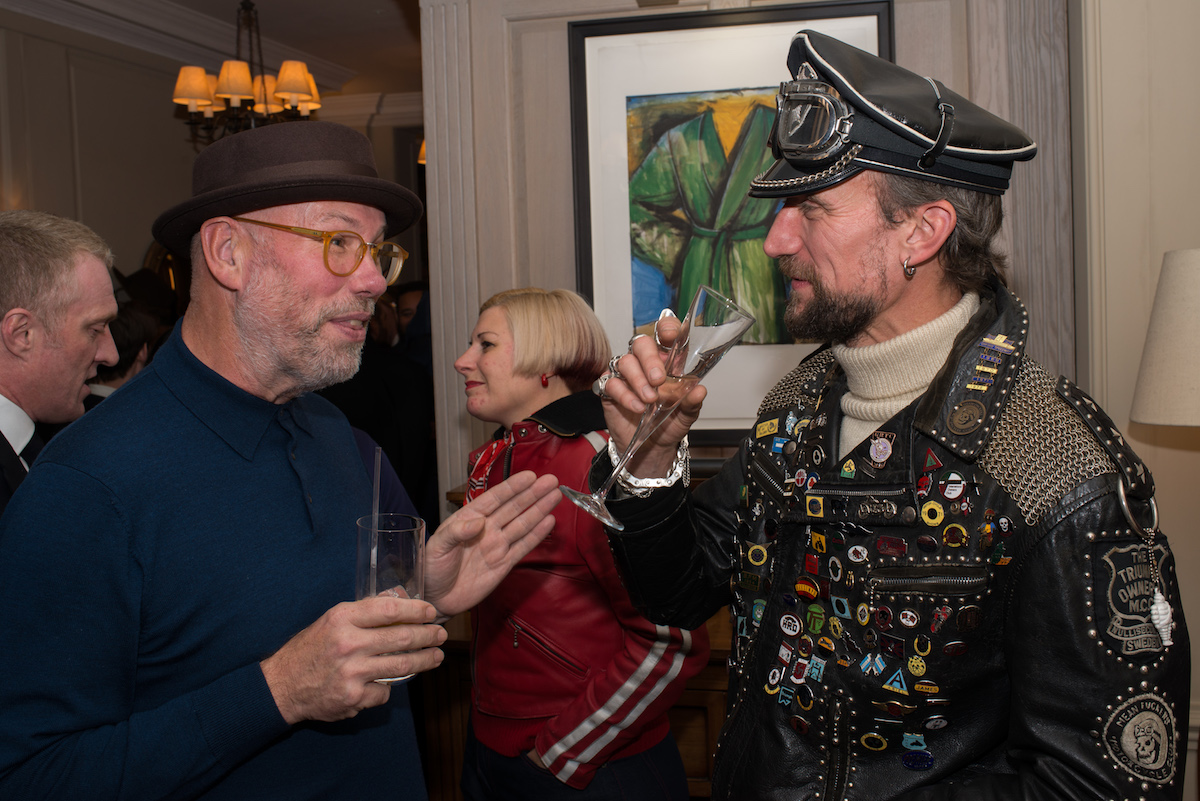
Lewis Leathers made a colourful addition to the company

best_of_British_highres-27 copy

best_of_British_highres-11 copy
With the very lovely Eggert, furrier

best_of_British_highres-29 copy

best_of_British_highres-13

Paris, Mr Porter, and Dalcuore visiting London

Screen Shot 2015-11-27 at 14.42.42

  
A round-up of different notices today – three separate posts seems like overkill. 

First, I had the pleasure of putting together Mr Porter’s lead journal story last week – featuring some of our favourite craftsmen in London. We gathered together (above, left to right):

  • Mario Valery, Drake’s
  • Eithen Sweet, Thom Sweeney
  • James White, Emma Willis
  • Nicola Pozzani, Floris
  • Davide Taub, Gieves & Hawkes
  • Adam Law, Cleverley; and

We had a good time discussing the pleasures of craft, bespoke and special client requests. And each craftsman brought along an item that was special to them – which was a nice touch.

You can read the full article here. I wouldn’t have called them ‘London’s finest craftsmen’, but there you go.  

  
CIfonelli store Paris launch2 finest menswear

simon crompton with lorenzo cifonelli paris

CIfonelli store Paris launch with Romain

  
Second, we had the final book launch a couple of weeks ago for The Finest Menswear in the World, as the opening event for the new Cifonelli flagship store in Paris. 

The Rake covered the event, and you can see all the imagery in the article here.

The Cifonelli store is beautiful and it’s nice see how readily the bespoke look translates to high-end ready to wear. Great knitwear with a semi-slim cut as well. 
  

Dalcuore Napoli FOTO DA INVIARE corretto

  
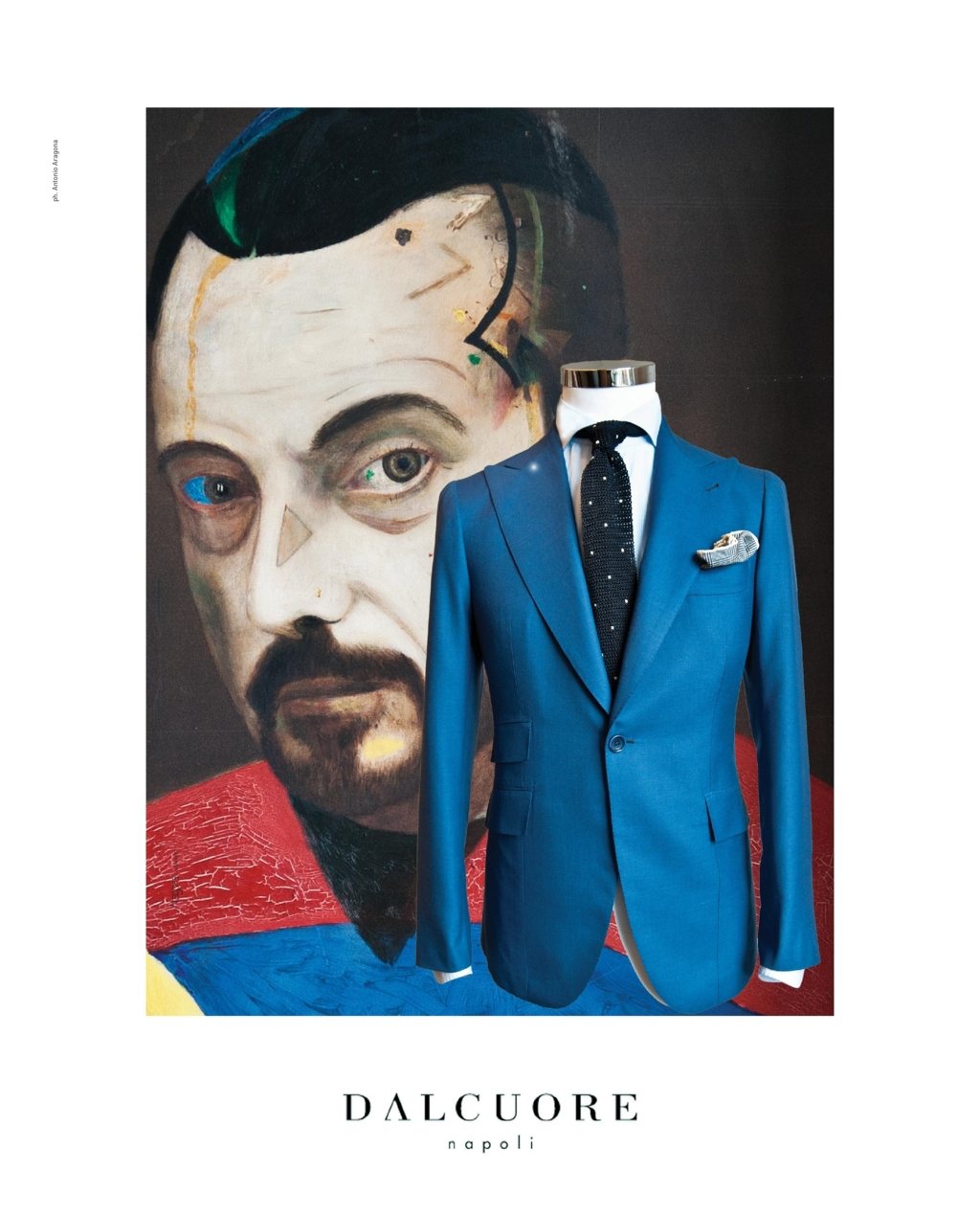
And finally, a notice that Neapolitan tailors Dalcuore will be in London next week for the first time. 

I wrote about Dalcuore briefly when reviewing the Brio store in Beijing earlier in the year. They do a great level of ready-to-wear as well as bespoke, and it’s interesting to see how easily the two sit alongside each other. So much easier for the Neapolitans to do with their local manufacturing and its level of handwork. 

Dalcuore are here December 10-13, at 157D Holland Park Avenue W11 4UX. For appointments please contact [email protected] and +393458404232.
   

16-32 (FILEminimizer)

Making a bespoke suede jacket

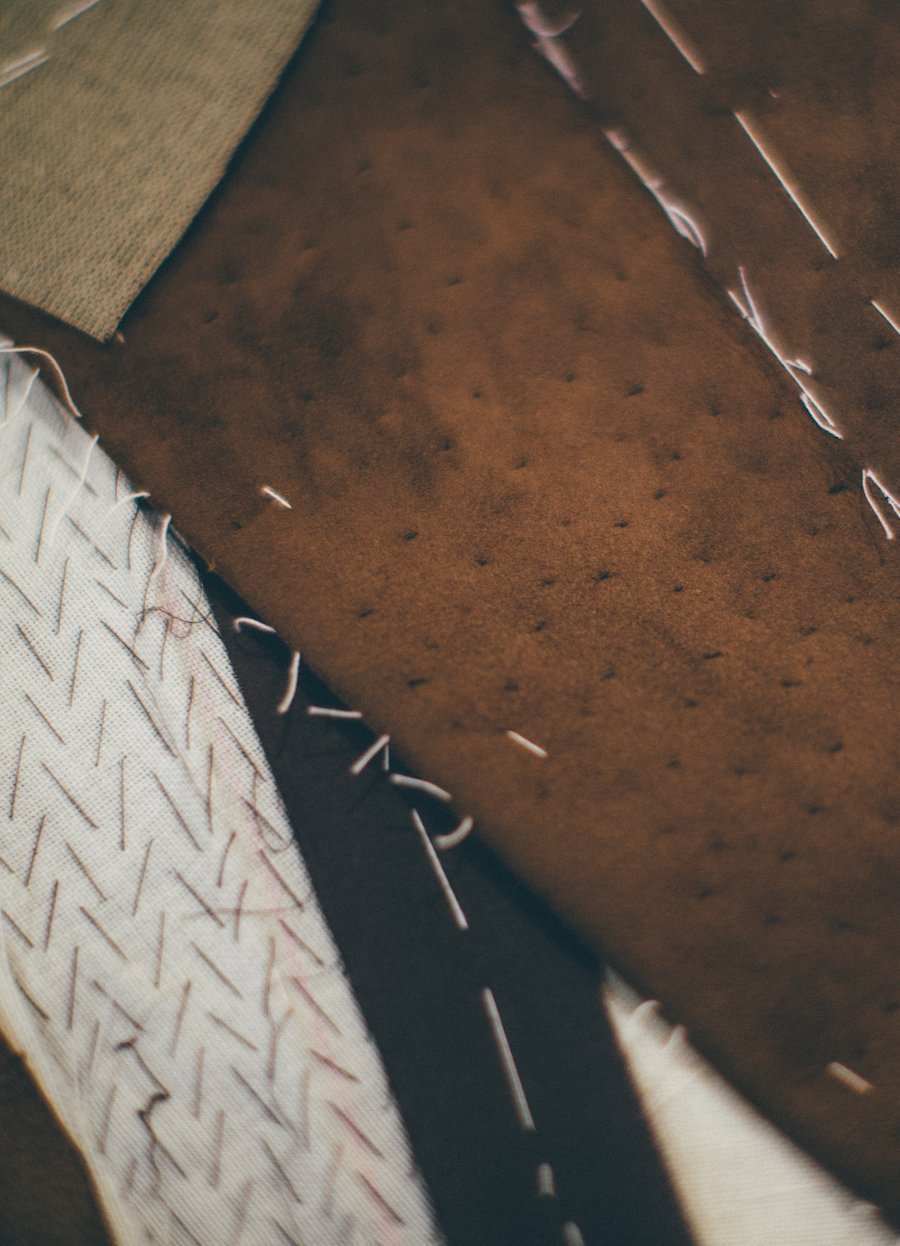
suede pad stitching

  
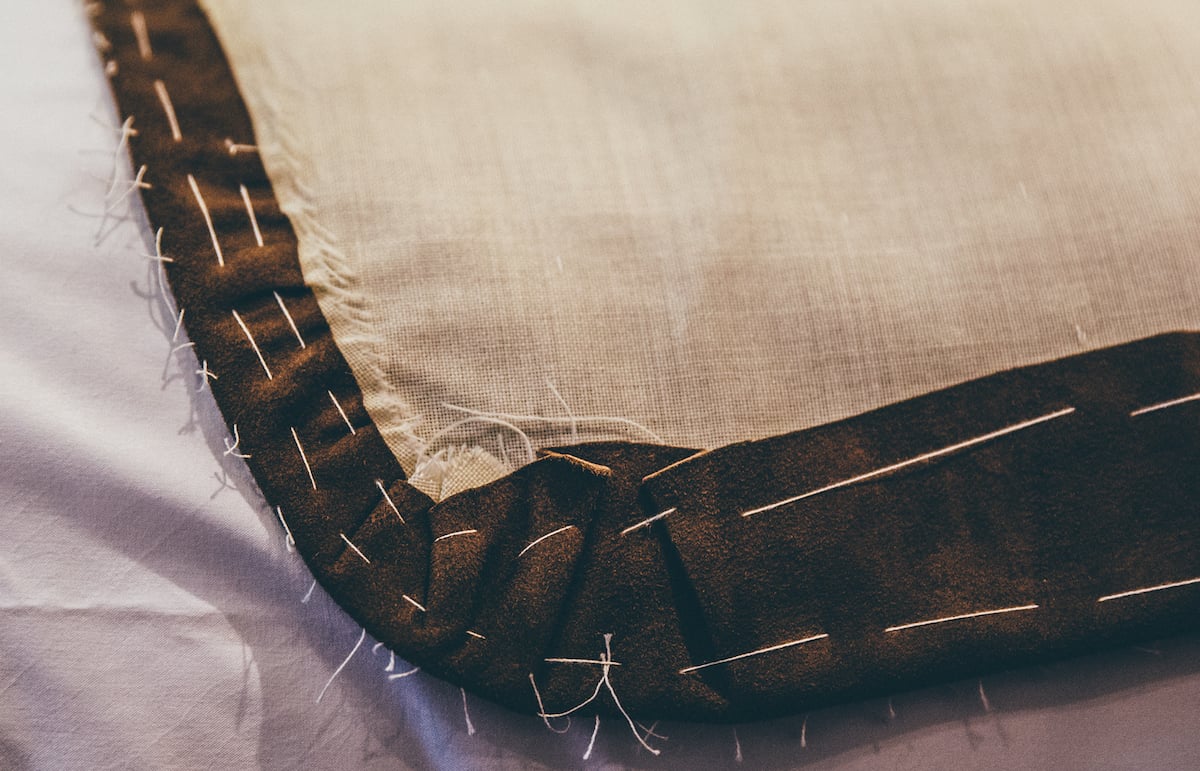
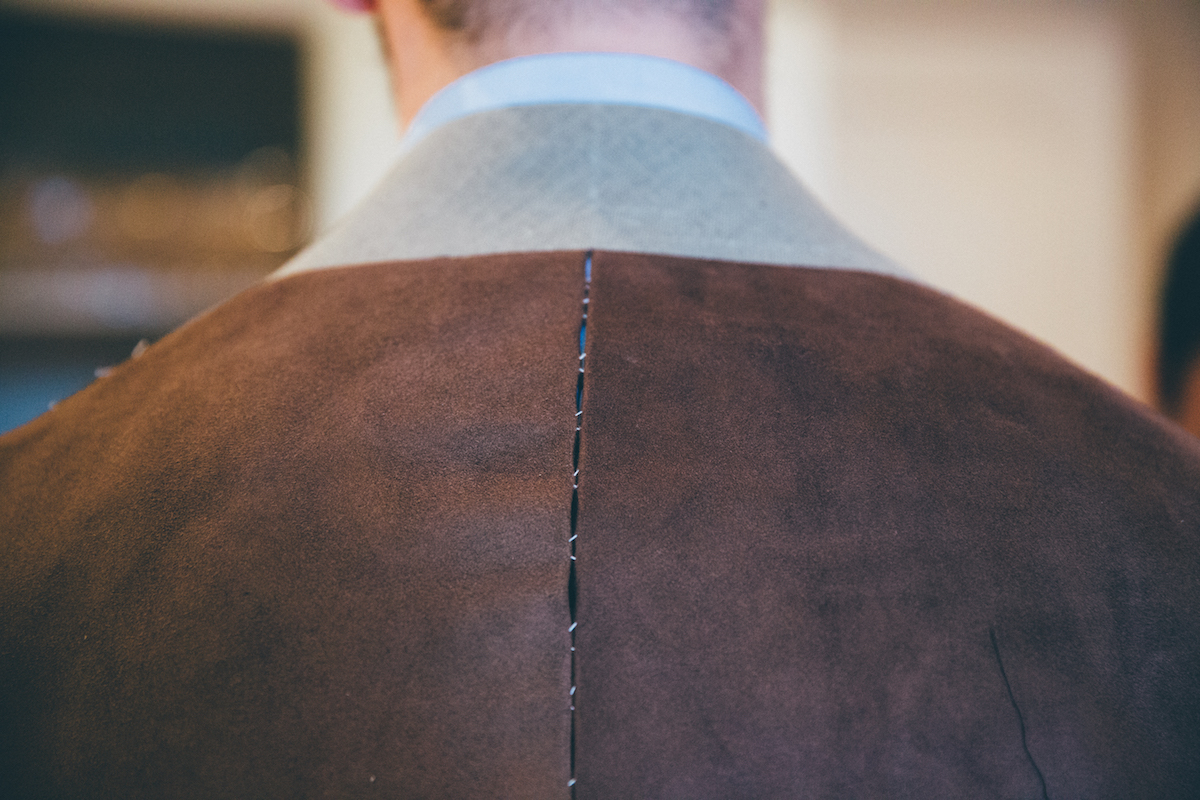
Quite a few people asked how my suede Cifonelli jacket was being made – on the blog, on Instagram, on Facebook. And by email, with two separate tailors asking for advice to make one for their clients. 

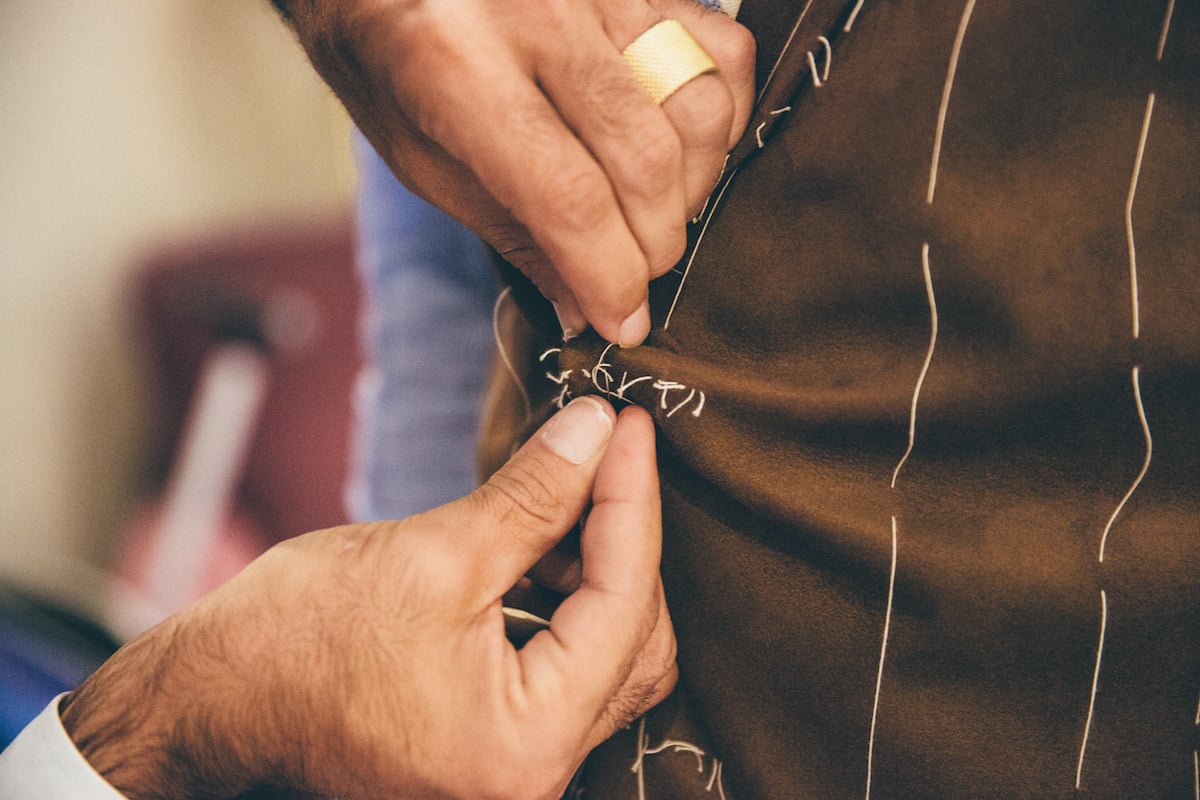
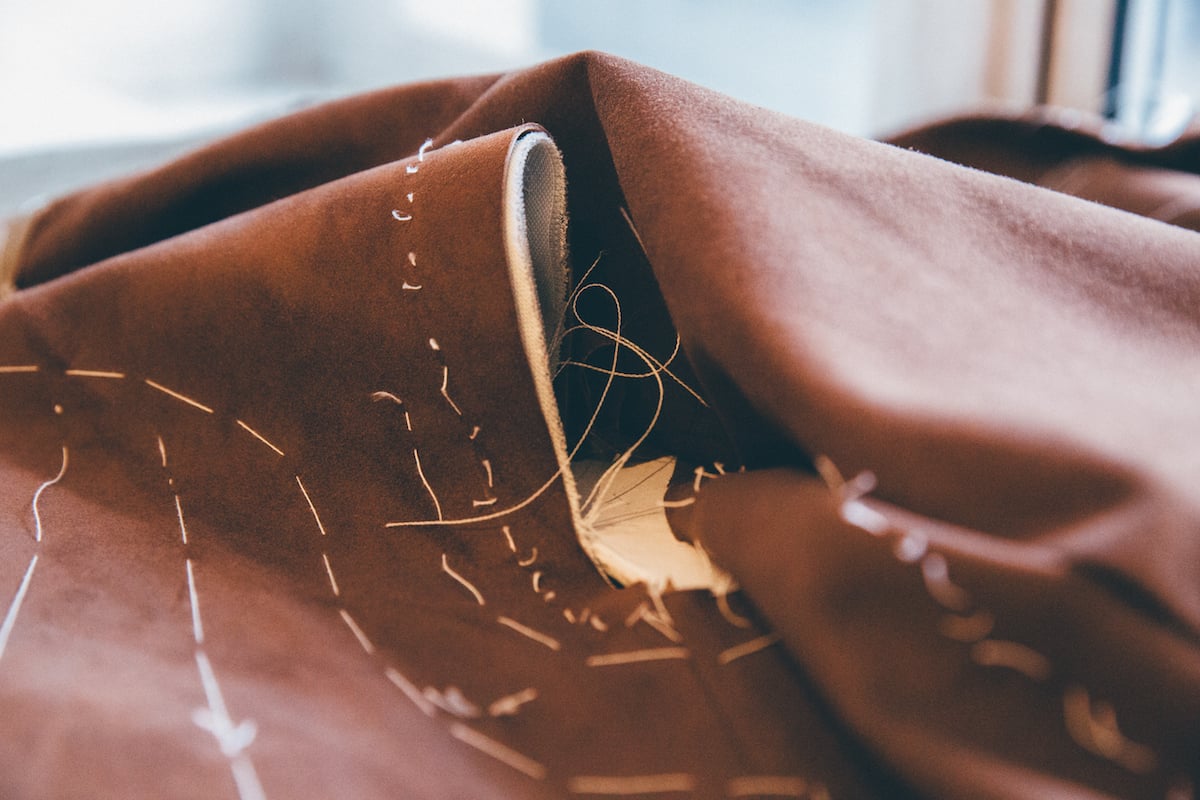
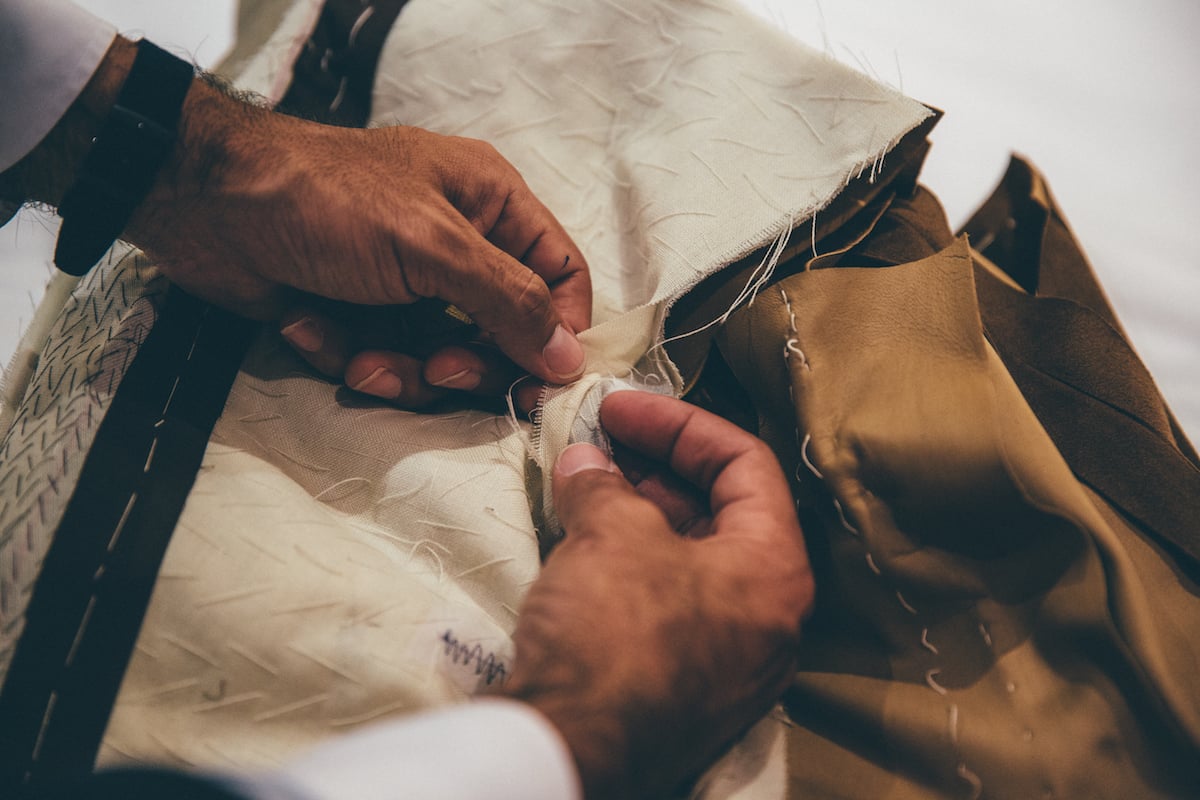
Key to the questioning was how you could sew basting stitches into suede without leaving holes. Even velvet has to be treated very carefully, after all, to stop it bruising. 
  

Suede jacket bespoke cifonelli

Suede jacket armhole

  
It’s perfectly possible to sew into most fine suedes, and then rub the hole out afterwards. If the suede is fine enough, you can use a regular tailoring needle, rather than the thicker one normally used for leather. That would leave too large a hole.

In this case we were also helped by the suede we used – a particularly fine lambskin. Normally suede jackets are made in goat, but we chose lamb because the skins are bigger.

That meant we could make the back and front in just two pieces, rather than having a horizontal seam at the waist. Most leather jackets have this, but it would have been a shame in a piece of bespoke tailoring.

A nice side effect was that the lamb was slightly thinner, making the stitching easier.

Other things aren’t so easy. For example, you can’t use steam as much to shape the suede, as you can with wool. But then no other material is quite as malleable as wool, and we were still able to get a nice high armhole by working in the excess of that fine suede of the sleeve.
  

Suede jacket

Suede jacket basting stitching

Suede jacket back

  
Lorenzo has made a few leather and suede jackets over the years. Suede is a lot nicer than leather, both because it is easier to work  and because its softness means you can see the handwork of the tailoring – in the swelled edges of the lapels, around the pockets and so on. 

When I visited Paris recently for the second fitting, he showed me a few leather pieces they’re working on – some of them patinated by a local shoemaker. But leather never really looks like tailoring, whereas suede does.

“My father made a lot of suede bespoke jackets in the 1970s,” Lorenzo told me over breakfast. “The style was very different of course, but it was a lovely material to work. It’s so soft – you really feel you are forming it around the body.”
   

Suede jacket vent

  
Photography: Jamie Ferguson, @jkf_man