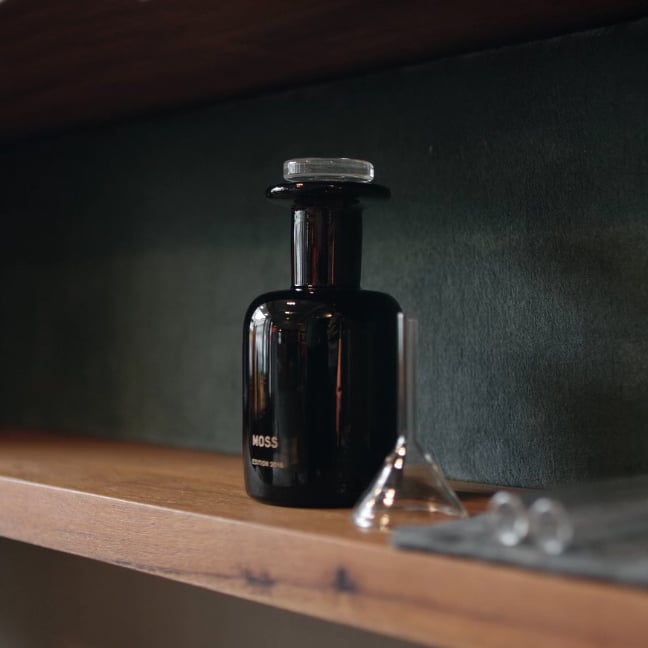
Christmas gift list 2018

It’s that time of year again. The TV adverts that started a month ago should have been a warning.

Below is my Christmas gift list for 2019.

It is not a comprehensive list of the best menswear gifts right now. It’s certainly not related in any way to sponsors, promotion or advertising.

Rather, it is a highly personal, idiosyncratic list of things I’d like to get for Christmas. If I didn’t already own them.
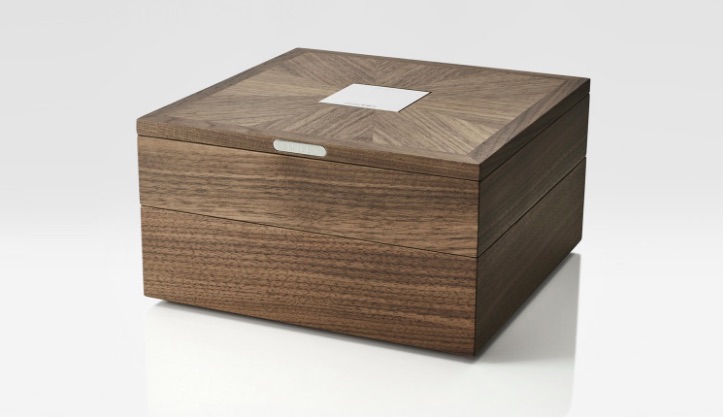
1 Linley starburst trinket box

£495

www.davidlinley.com/store/starburst-stacking-trinket-box

Marquetry is a craft I’ve always admired, but never managed to cover. The natural textures of woods have a deep appeal, as does the artistry of putting them together, and the result is something with a very subtle beauty.

Everyone needs a box to put cufflinks, collar bones and other jewellery in. They probably already have one. But if it’s not that luxurious, they could upgrade.
2 Perfumer H: Leather, Patchouli or Ink

£150 for 100ml (hand-blown glass bottles £350)

perfumerh.com

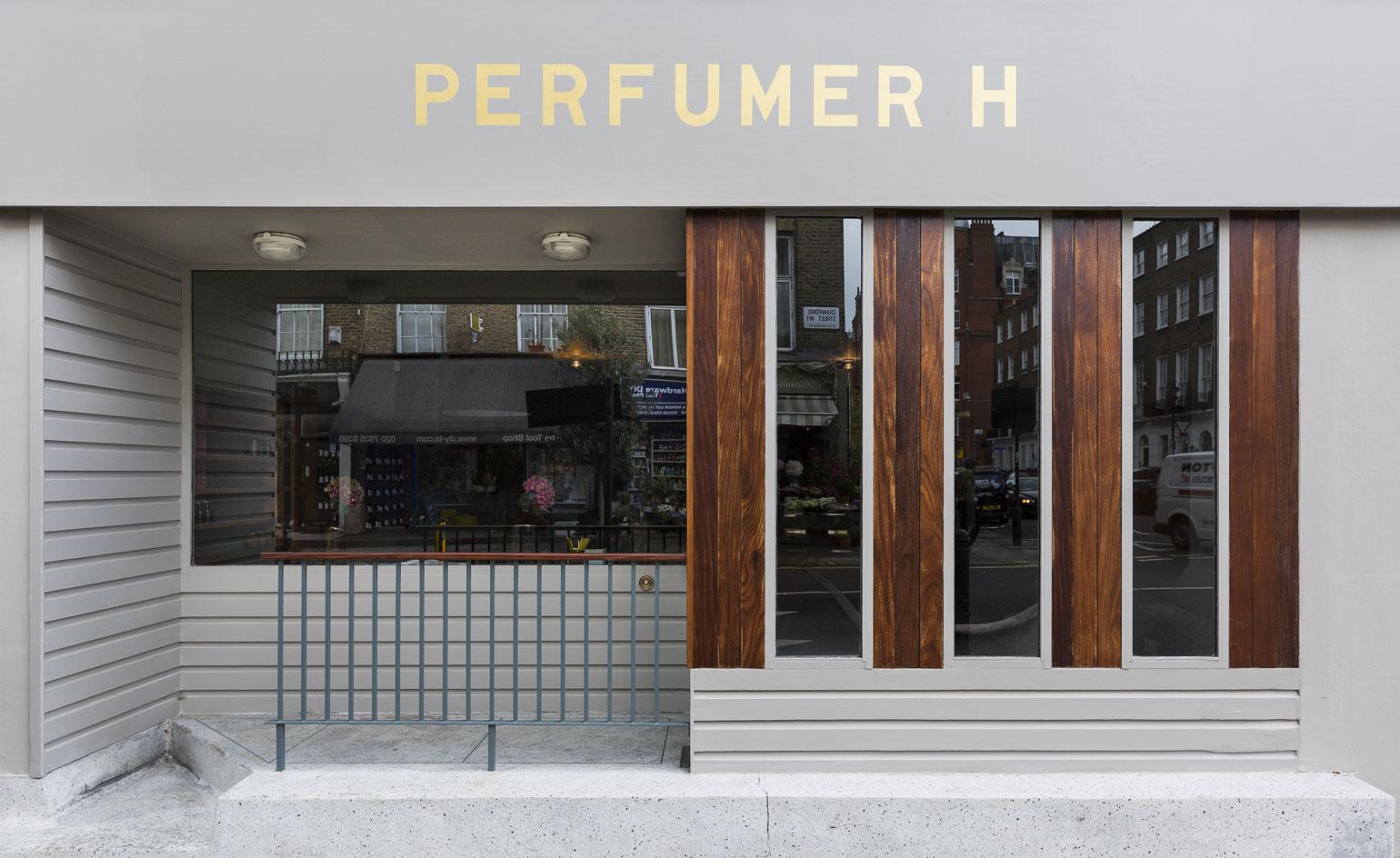
The Perfumer H shop on Crawford Street is one of my favourite retail spaces in London. It’s the kind of quiet, sheltered space where you feel you could spend an entire day sampling fragrance, and it’s nice that the lab is on site.

Lyn’s versions of Leather or Patchouli manage to be softer and more sophisticated versions of anything else in the category, while Ink is surprisingly distinctive. I wear Charcoal. Perfume is a very personal thing to give as a gift, but samples are always available.
3 Sunspel vests and deep V-necks

£30 and £40

https://www.sunspel.com/uk/mens/underwear/underwear-t-shirts-and-vests.html

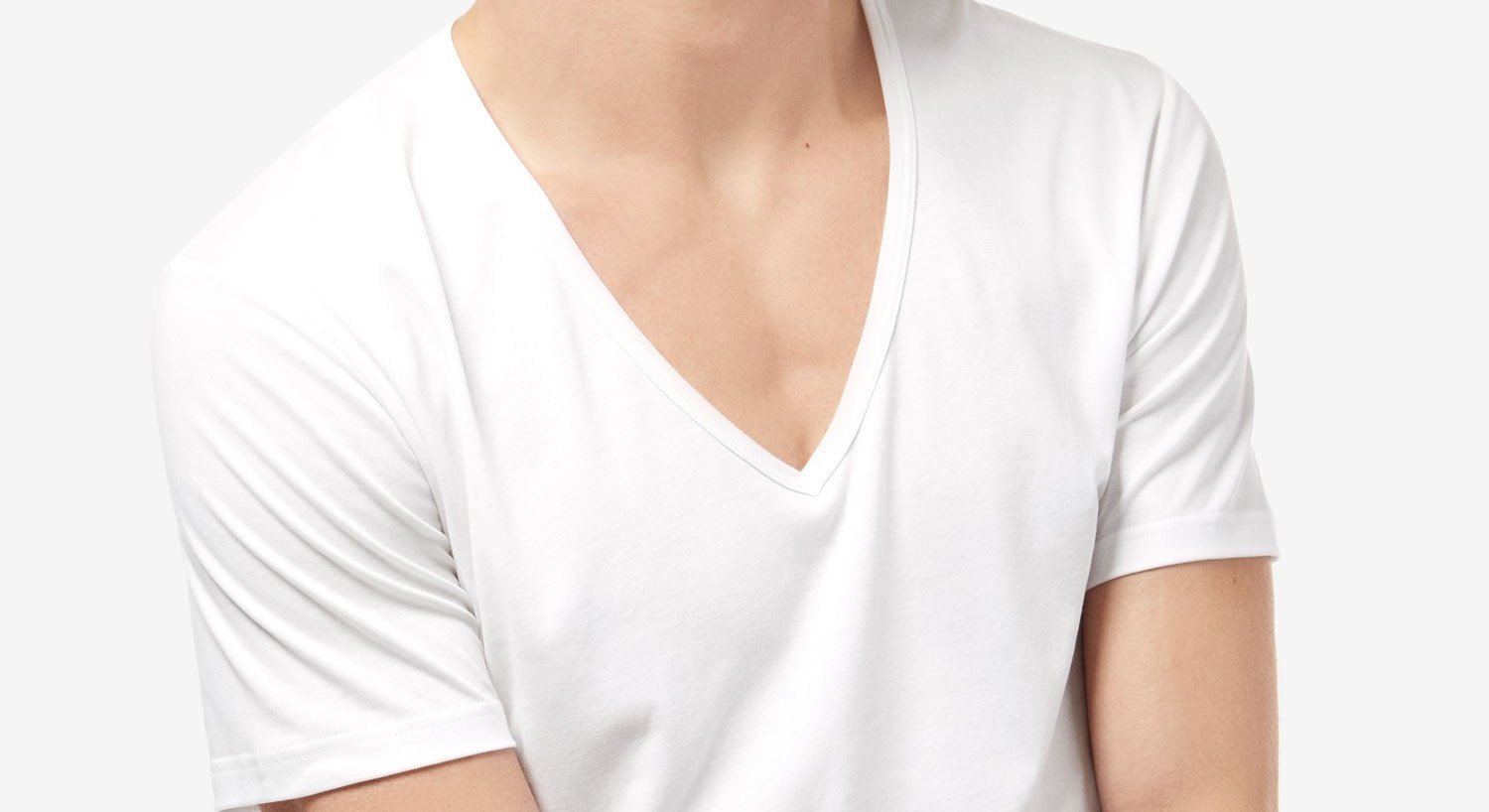
Nothing wrong with getting interesting basics - like socks - for someone at Christmas. Sunspel is usually my starting point for such wardrobe staples, and I recently picked up a deep V-neck T-shirt and a vest, both for specific purposes.

The deep V is to wear under polo-collar sweatshirts such as those from John Smedley or Luca Faloni (even our old Dartmoor - which should hopefully be coming back next year). The vest is to wear under heavier shirts such as my Bryceland’s Sawtooth, or Niche denim shirt.

Few people are buff enough to wear either piece as anything but underwear - and I’m not one of them. They do come up a little large though; I bought Small.
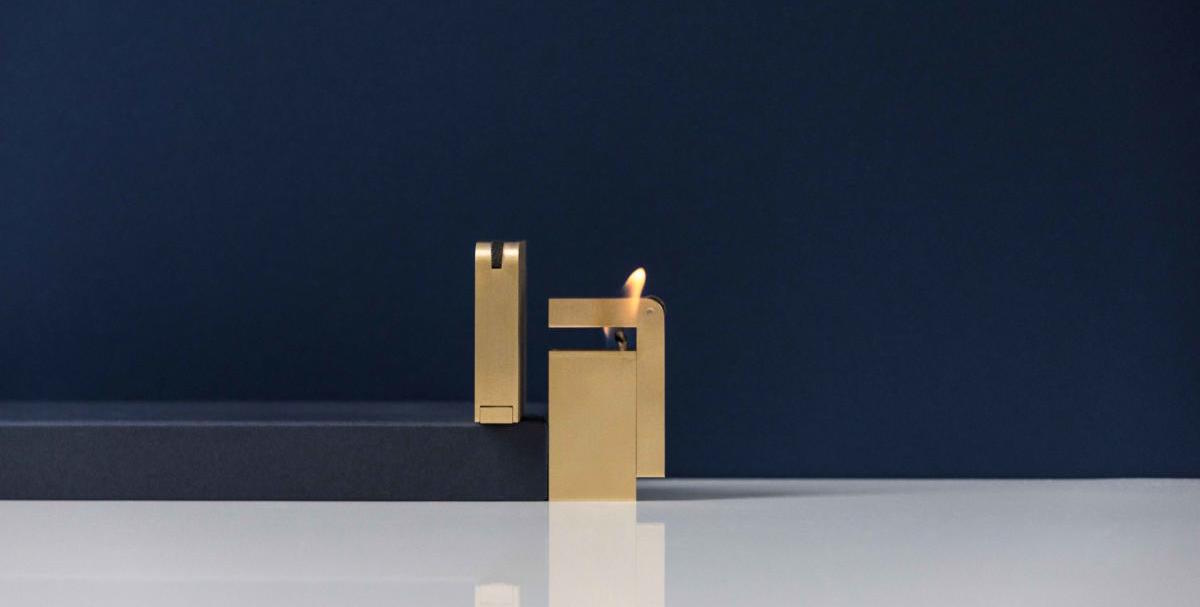
4 KNNOX lighter

£270

www.knnox.com

I don’t smoke and I don’t really need a lighter. But the design of this solid-brass lighter really appealed. It’s simple, functional and unusual, and if I only ever use it to light candles, I’ll be happy.

The flip-out mechanism isn’t the easiest to work the first time, but once you’re used to holding the body while working the flint, it’s very satisfying.
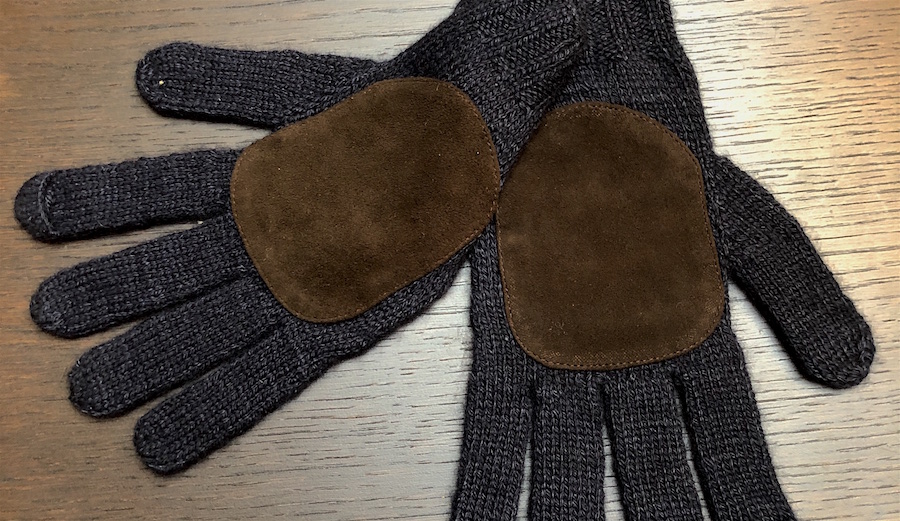
5 Anderson & Sheppard musk/suede gloves

£225

shop.anderson-sheppard.co.uk

These aren’t on the website currently, but they’re my favourite gloves from A&S. The main body is a mix of musk ox, merino and silk, which feels like cashmere but is a little more robust. The palm is suede, which feels lovely, is a subtle look, and again helps make them more able to handle carrying bags etc.

They come in navy and grey, and there are also nice short scarves in the musk ox (brand name: Qiviuk, £295) that are loosely woven to give them a pleasing stretch.
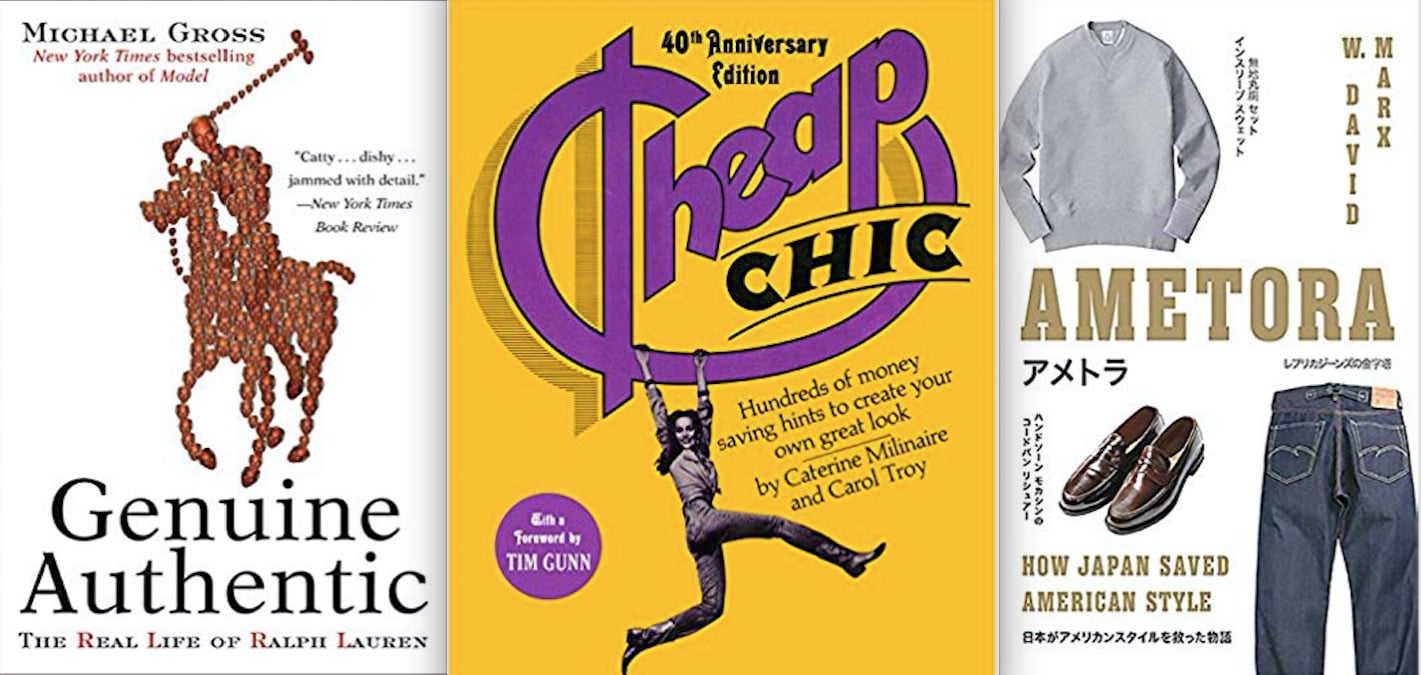
6 Books

Genuine Authentic: The Real Life of Ralph Lauren, £11.50

Ametora: How Japan Saved American Style, £15.45

Cheap Chic: 40th Anniversary Edition, £11.99

Three great books I’ve read recently on style and the clothing industry - yet perhaps unusual enough that the man in your life hasn’t already read them.

Michael Gross started to write Genuine Authentic as the official bio of Ralph Lauren, until he was chucked off the job. Fortunately he’d had a lot of access by then.

Ametora is the story of how Japan created its own clothing industry from scratch after the Second World War, beginning by copying the Americans, then superseding them, and writing a lot of ‘how to’ magazines along the way.

Cheap Chic is mostly about womenswear, but has lessons for everyone - and is centred around a philosophy of good-value clothes, no matter what their price is. Practical and entertaining.
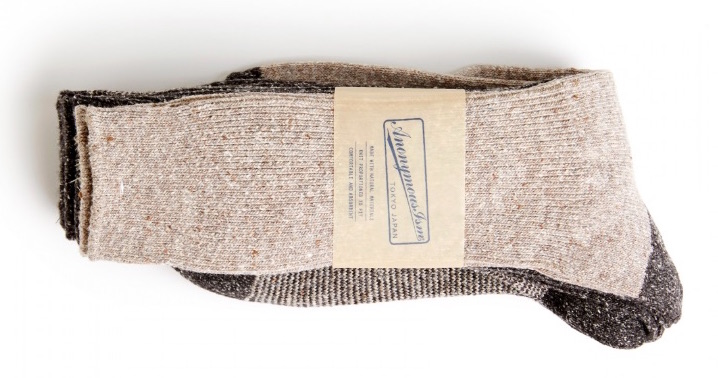
7 Anonymous Ism socks

£30

www.trunkclothiers.com/brands/anonymous-ism

Sold at Trunk among other places, Anonymous Ism is a Japanese knitter that does robust socks in some really nice patterns - somehow traditional and modern.

They are quite chunky though, and I wear them with boots or just around the house. And they’re always at least partially synthetic, which again makes them hard wearing but not great if you’re feet are apt to overheat.
8 Leffot T-fold cordovan wallet

$110

leffot.com/shop/accessories/wallets/the-fold-wallet-small

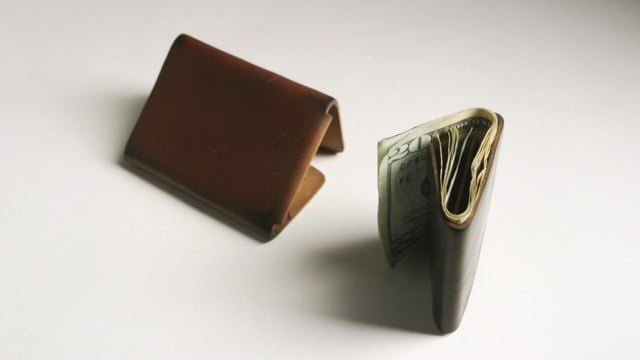
One for guys that love their cordovan. Great for shoes, it’s also very satisfying in a wallet because of the way it moulds around the contents and ages over time.

It’s a simple T-shape that the user folds up, puts cards or cash inside of, and becomes that wallet shape as it moulds. Thin too, as there’s absolutely no excess leather.
9 Drake’s lambswool sleeveless cardigan

£175

www.drakes.com/apparel/cardigan

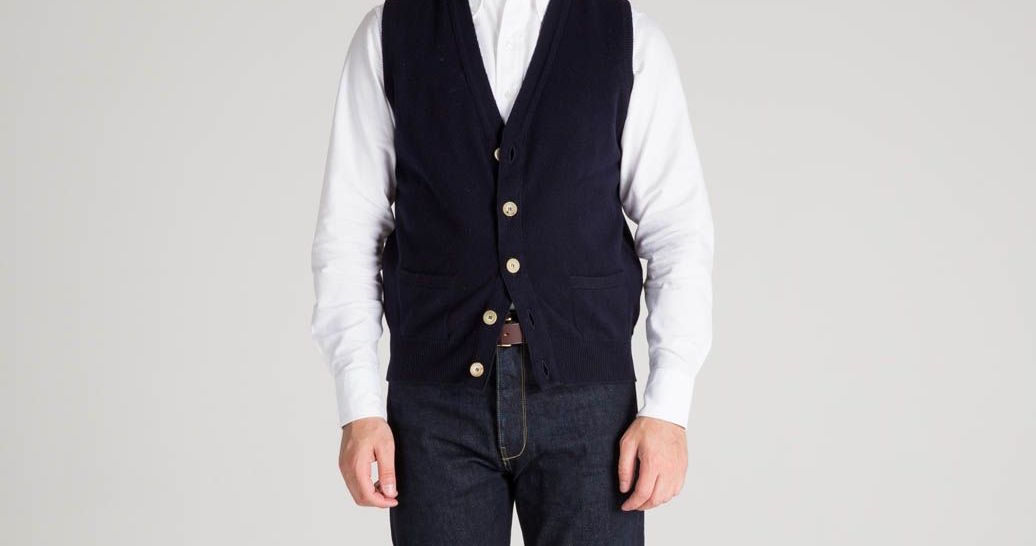
I find these particularly useful for a type of dressing we discussed recently: being dressed-up without wearing a jacket. Personally, I find the lambswool too thick to wear under a jacket, but the cardigan on its own is great with a pair of jeans and a button-down shirt.

It’s warmer than most sleeveless cardigans, and has the texture to go well with casual things like denim. My favourites are the navy and a natural colour from last season (some left in the factory shop last time I was there).
10 Hermes ‘Clochette’ key ring

£385

www.hermes.com/uk/en/product/clochette-cles-charm-H076195CJ37

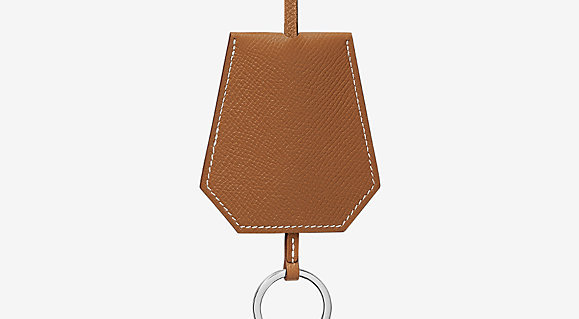
Very expensive and very indulgent - but if you have a minor-grade obsession with Hermes, as I do, this is one of the more practical things to buy.

I’ve used an orange one in plain calf for the past four years for my keys. It functions very well, able to be looped through itself around a bag handle. But I think a printed calf, in not so bright colour like light-brown Epsom, would have aged better.

The Armoury trousers: Osaku, Pommella, Ring Jacket, Rota

The Armoury trousers: Osaku, Pommella, Ring Jacket, Rota

Wednesday, November 28th 2018
||- Begin Content -||

Several readers commented on the post highlighting pieces from No Man Walks Alone that articles on other shops would be helpful, if objective and analytical.

If there’s any area that needs this most, it’s trousers.

Once men find a model that works for them, they’ll stick to it almost exclusively. The problem is trying to work out which model that is, online.

The Armoury carries more brands than most: Osaku, Pommella, Ring Jacket and Rota.

This variation makes it particularly hard to tell the trousers apart, as so many things vary between them.

It’s different to someone like Anderson & Sheppard, which although it has 11+ styles, is consistent in finishing, materials and so on. It’s a coherent range with a smaller number of set variables, and therefore permutations.

The Armoury brands vary most obviously by price, with Pommella (above) the most expensive at $800. Osaku is the next level down, around $500, with Rota a touch cheaper and Ring Jacket closer to $350.

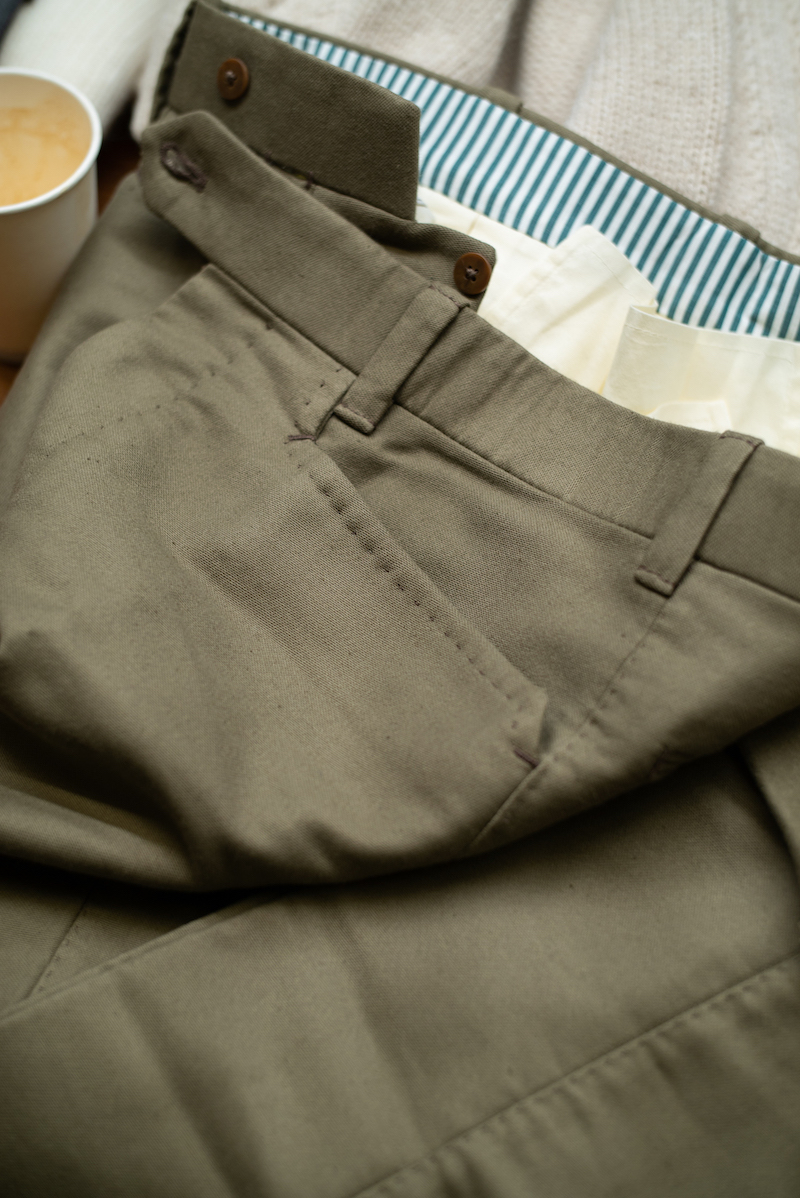
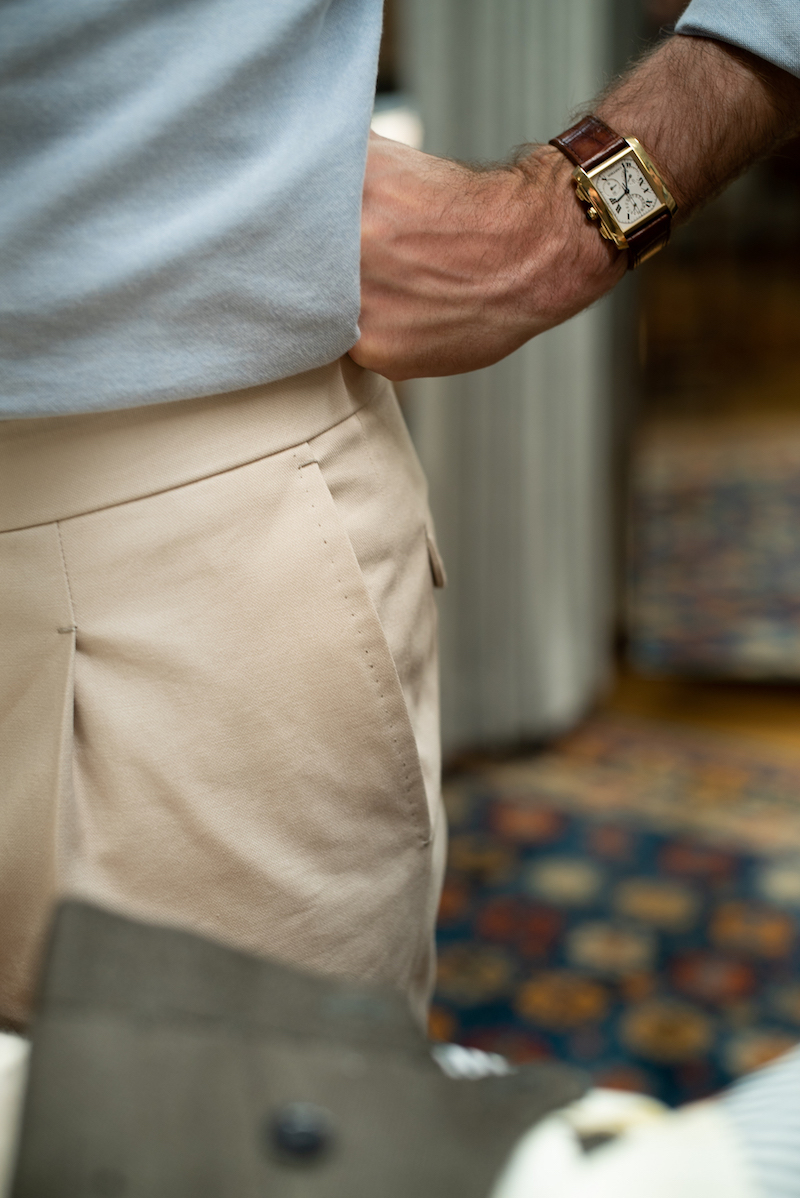
Pommella’s high price is basically down to hand work. These are bespoke-level trousers for those that want the make of bespoke, but not the fit.

So the buttonholes are hand-sewn, as is the skirt on the inside of the waistband, and there is visible pick stitching around the edges.

Personally I’d prioritise fit over finishing, but I know there are men that love that level of finish, and don’t want to wait for trunk shows and fittings.

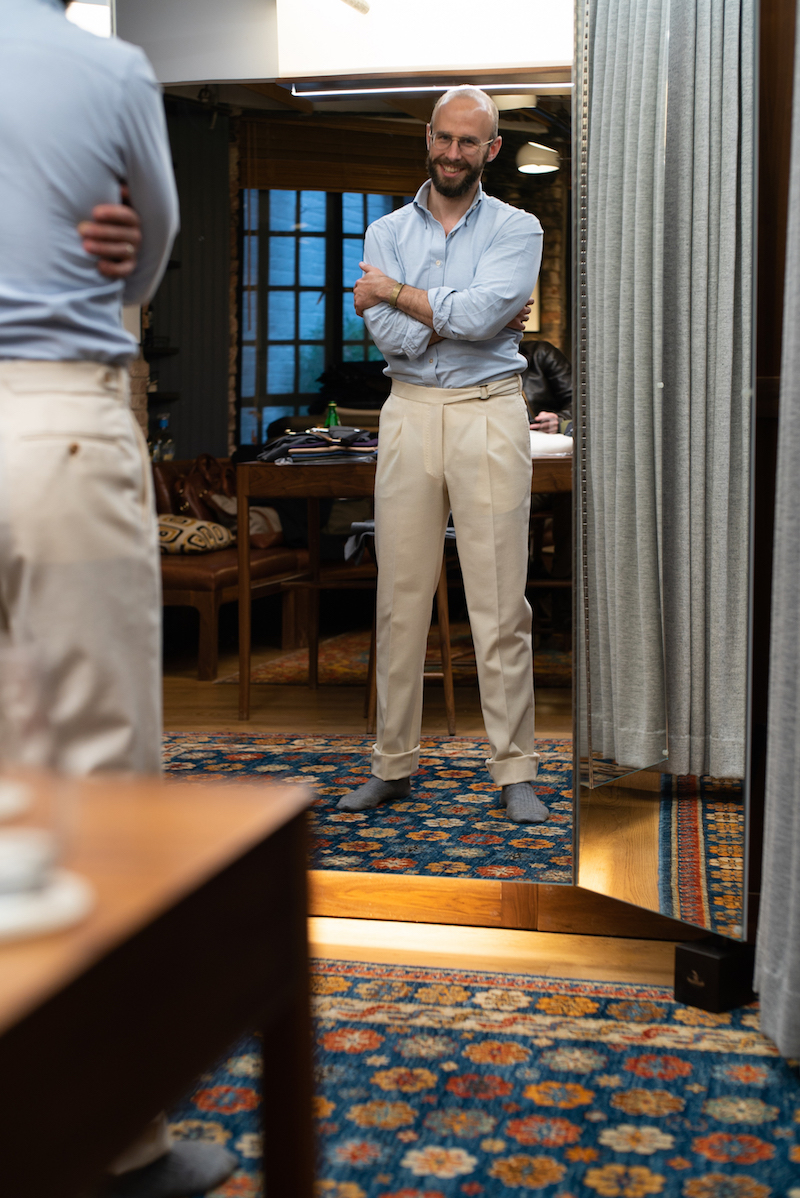
The cut is also a pretty good fit on me - as you can see below.

However, hand sewing is only one way Pommella differs from the other brands.

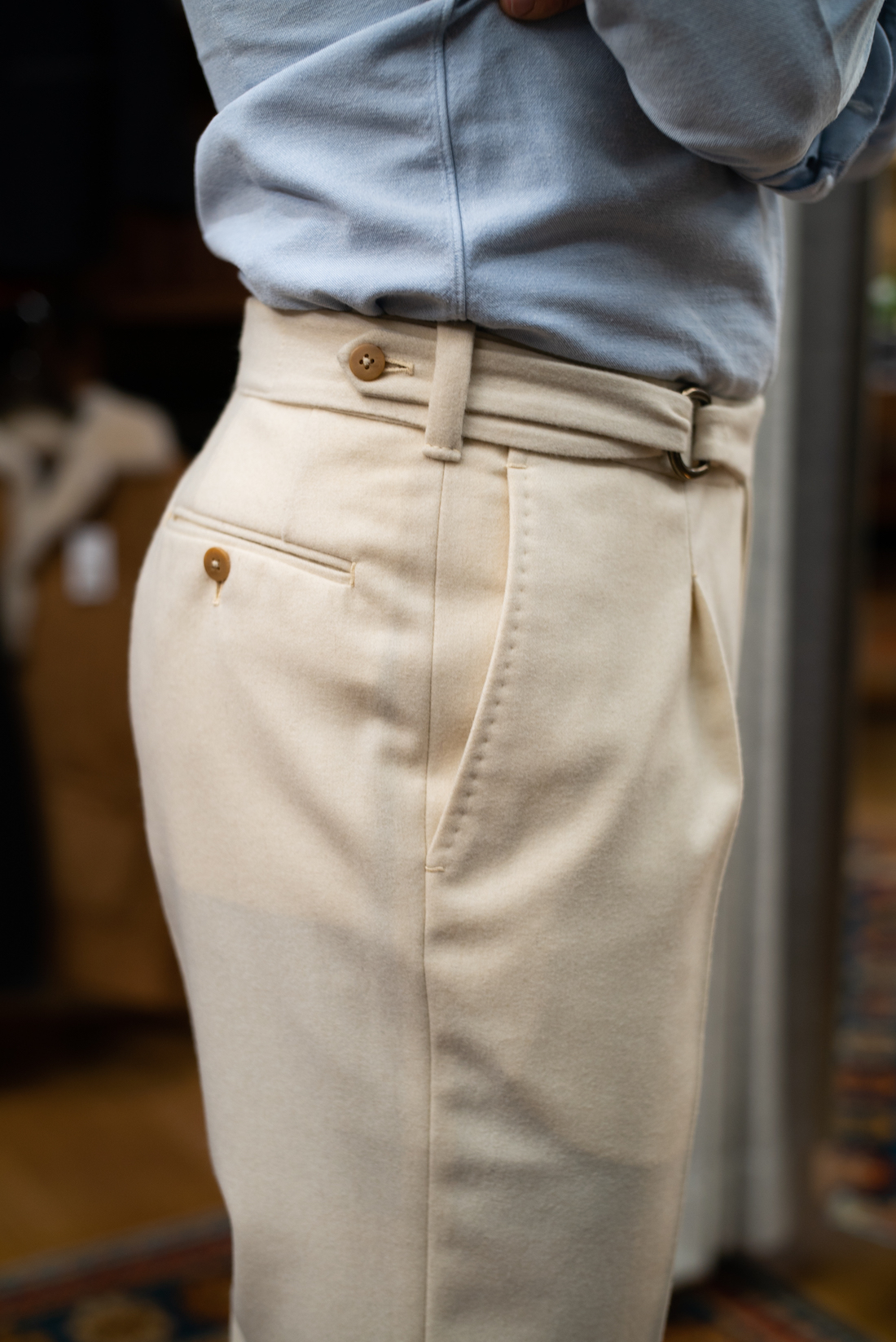
It also has a higher rise, and a variety of different fastenings: belt loops, side adjustors and metal rings.

These design details will be pretty obvious from the website, but I'd add that I found the ring fastening subtler than I expected. This might be down to the fact it's often pictured against high-contrast cream flannel or cotton (above and below respectively).

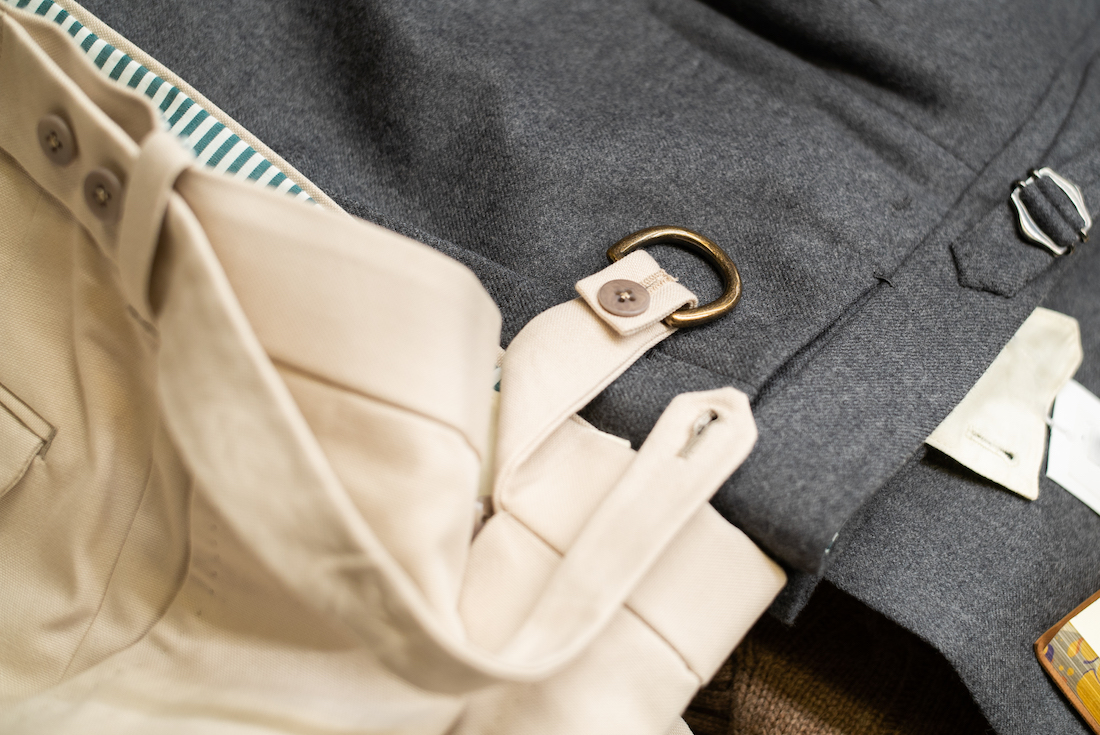
Also, what’s not obvious is that you can unbutton the ring and swap it for a range of others - either to vary the look, or to have something less showy (below).

Among the fabrics used for Pommella, the only one that it’s hard to get a sense of online is the reversed moleskin.

This is an unusual cloth, with the moleskin's brushed exterior used on the inside rather than the outside. It's something found more in Australia, and considered very much a workwear material. 

It feels lovely, with the warm brushed cotton against the skin. But it doesn't drape or hold a crease - indeed, I might even press the crease out of it.

There is also a flecked texture that doesn’t come across well in pictures. I’d suggest trying it in person if possible.

Osaku was my favourite of the four brands.

It’s still expensive for trousers at $500, but the make is very good. All by machine, but precise and clean, with nice materials including the shirting on the inside of the waistband.

The leg line is similar to Pommella - slim and slightly tapered - but pretty much everything else is different: a mid-rise, a thin waistband, and just belt loops for the fastening.

So while the high rise was a good fit for me (with my hollow lower back) the Osaku would have to be taken in. It also came up slightly larger than Pommella in the waist (I'm wearing a 48 in both).

On materials, note that the tan and stone cottons from Osaku also have an unusual texture, with short irregular lines running down the leg. This is just about visible in the pictures online.

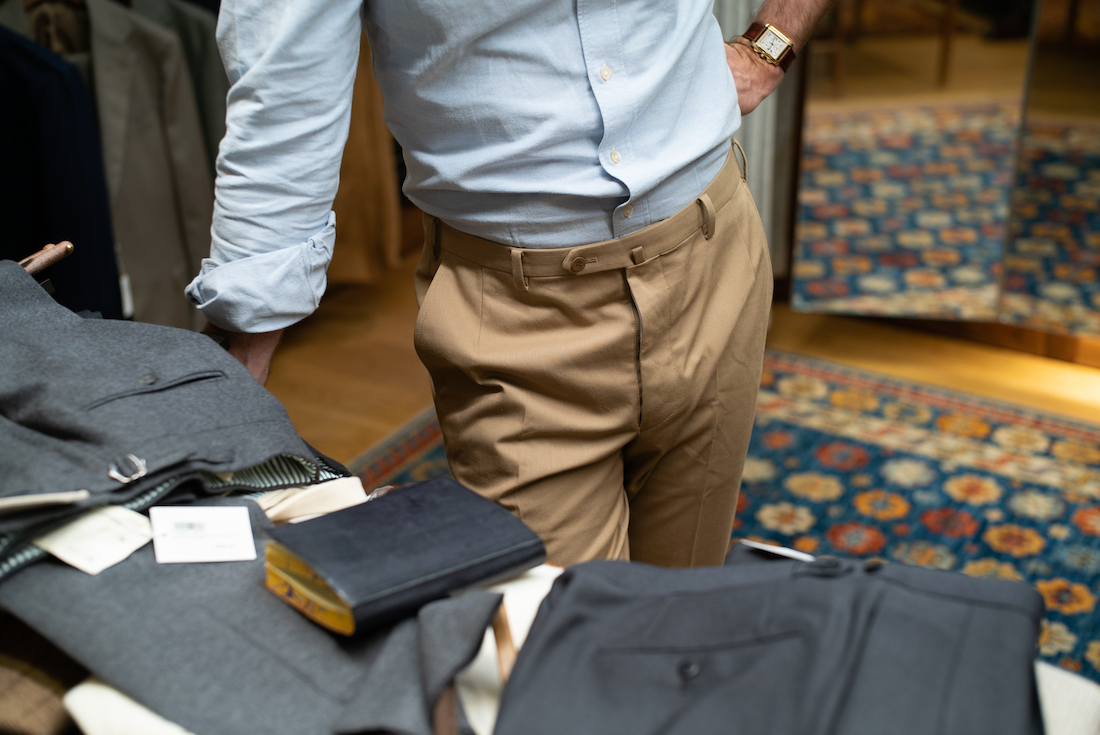
However, that texture actually adds some nice variation, and the cotton has an effective stiffness, with a sharp crease. I'm wearing the tan cottons below.  

The other two brands, Rota and Ring Jacket, aren't that different in make, though Rota is a little more expensive. The fits do vary, however.

Rota will be familiar to many, and is a fairly standard modern cut, perhaps best described as mid-rise. Ring Jacket, on the other hand, is carried in a 'Model A' cut developed with The Armoury, and is rather higher in the rise. Similar to the Pommella.

Rota is also slimmer in the leg, and this is something I struggle with in terms of their fit. It took a while for Drake's to get their trousers made with Rota right in that regard.

Of the two, therefore, I'd suggest more sartorial dressers err towards Ring Jacket. It also comes in a greater range of materials, including cottons, flannels and corduroy.

Overall, The Armoury has a great range of trouser brands. It’s hard to think of someone with a bigger one of high-end, well-made formal trousers.

But the range is also evolving, with this only their second batch of Pommella and first from Osaku. Over time, the design options and cuts will become narrower and more consistent.

In the meantime, hopefully this piece helps a little tell them apart - and find which of the various models is right for you. 

Photography: Elliot Hammer

Pommella also offers bespoke through trunk shows at The Armoury in New York, which starts at $1100. 

Rota offers a narrow made-to-order service for $595, which is good value for them, and a fuller range of options on design and fit for $950. 

Liverano & Liverano purple jacket: Style Breakdown

Following our last piece of bespoke tailoring to be analysed in this series – Ferdinando Caraceni in Milan – we now turn to the most famous of the Florentine tailors: Liverano & Liverano.

Liverano has received such attention in recent years that this style will be familiar to many.

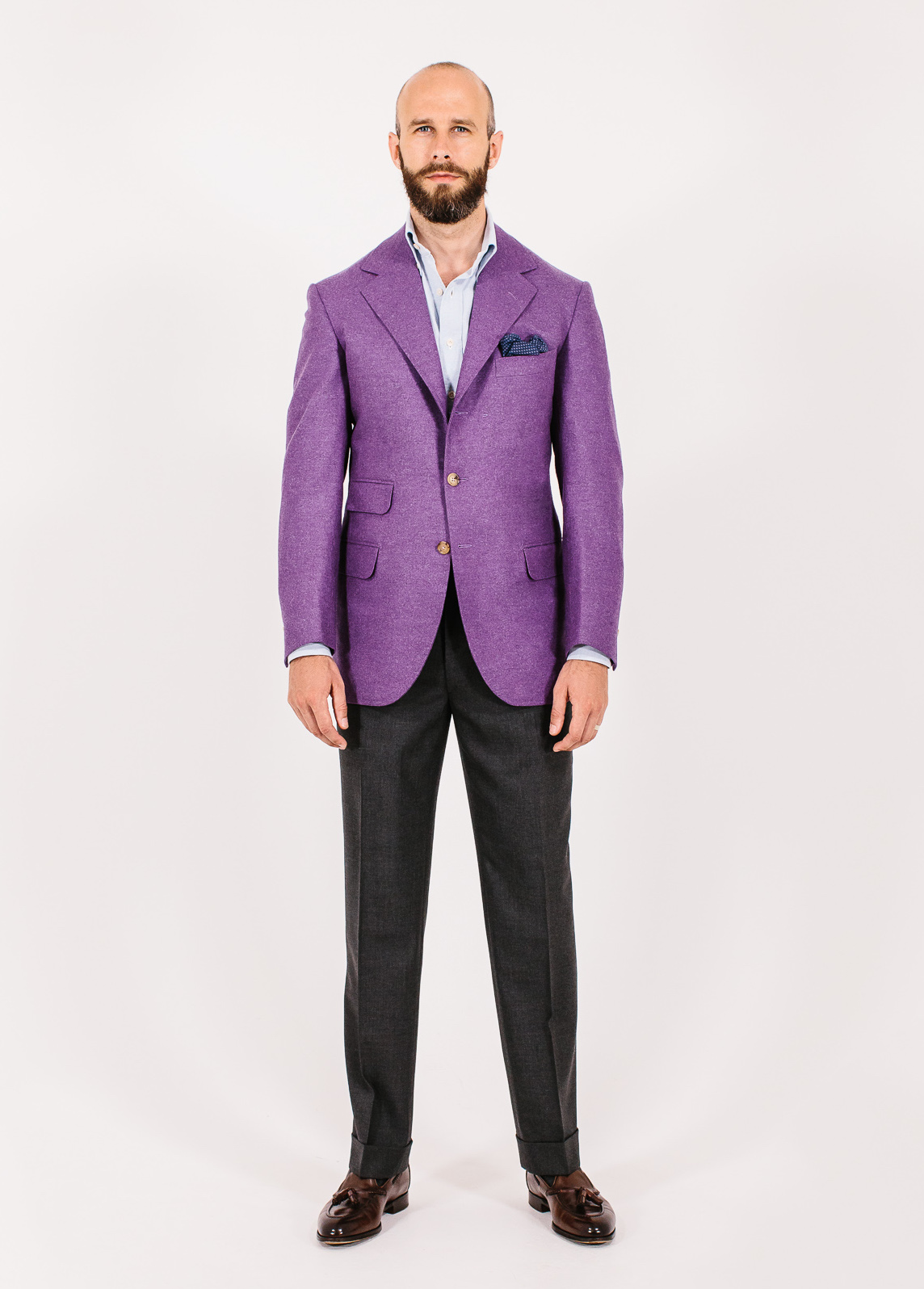
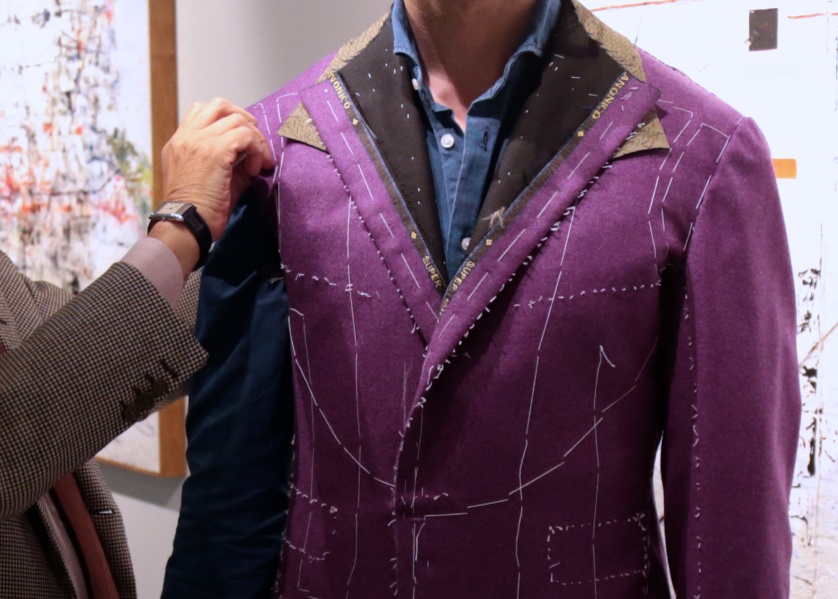
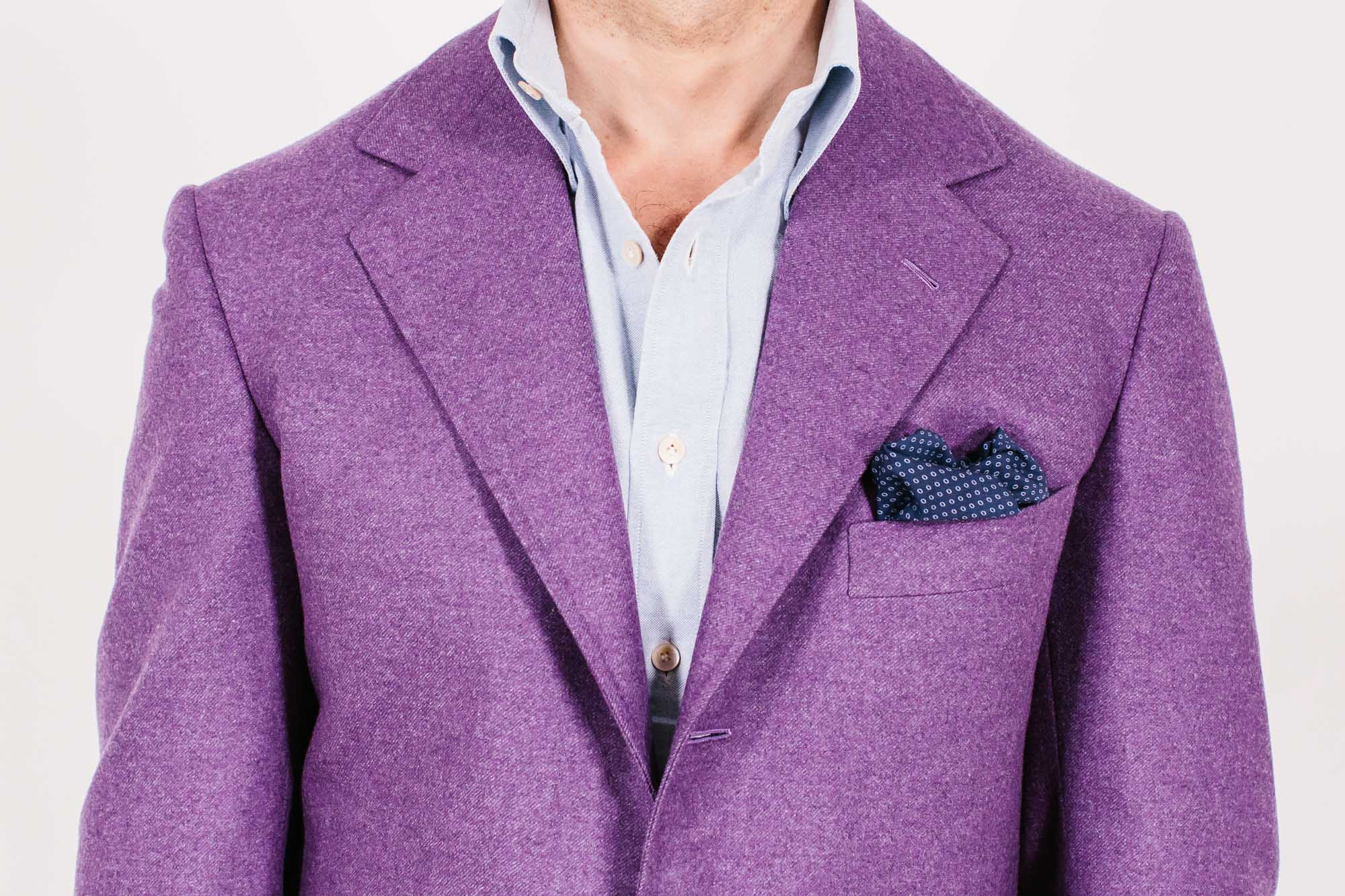
Its most distinctive features are an extended shoulder, a wide lapel that is cut straight (so it appears to roll outwards) and a relatively high buttoning point. All three combine to give emphasis to the top of the body.

That is reinforced in the lower half, with a shorter jacket than most outside Naples, and quite open, curved fronts (below the waist button).

It’s curvy, open but strong.

House: Liverano & Liverano

Address: Via Dei Fossi 43R, Florence

Siteliverano.com/en

Cutter: Antonio Liverano

Price of the jacket (at time of writing): €4910

Starting price of a two-piece suit (at time of writing): €5730

The jacket was made and cut for me by Antonio Liverano, during a trunk show in London (though he sadly no longer visits). I then had subsequent fittings in Florence.

I would never, ever have picked this material if Antonio hadn’t recommended it. The cloth was dead stock, and something he clearly loved. It is a bright purple woollen, with a pronounced twill.

Others I know have had a similar experience. Antonio has such a passion for cloth, and interest in colour, that they trust him with unusual choices.

In my case, the colour has certainly worked out. I love wearing the jacket, and I’ve never seen anyone else wear anything like it.

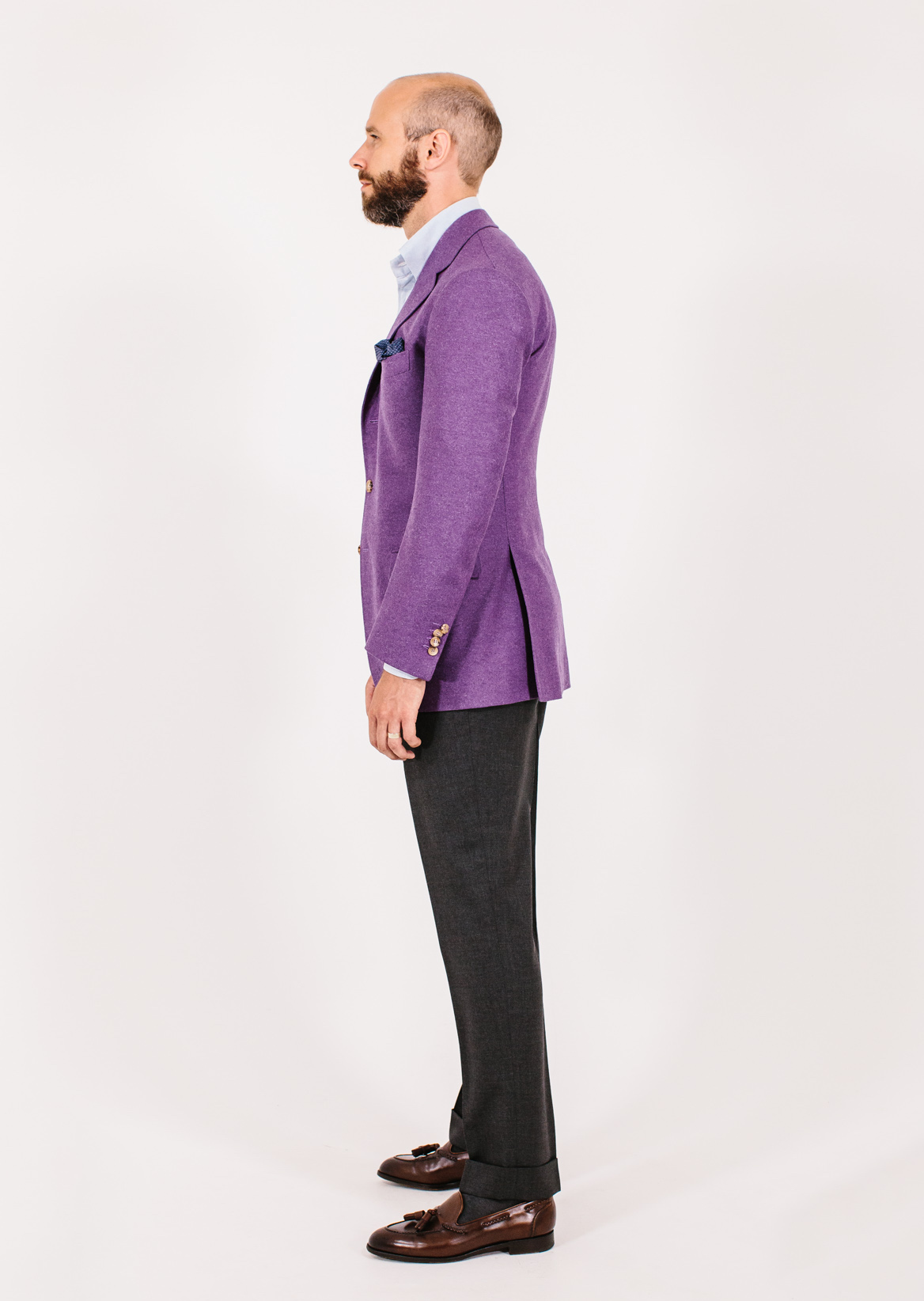
However, it is pretty restrictive. The only way I really like wearing it is with dark-grey trousers, dark-brown shoes, and a blue shirt, either open-necked or with a navy tie.

So not the most versatile piece in the wardrobe, and certainly not something to commission until you’re a long way into your sartorial journey. But it’s never been a choice I regretted.

In the front-on image at the top of this post, that distinctive cut with the extended shoulders and wide lapel is plainly evident. 

However, the shoulders are actually not as wide as they appear. They measure 6½ inches along the shoulder seam, from where it joins the collar to the end at the sleevehead. 

That’s the same as my Huntsman jacket, less than my Anderson & Sheppard, and even a tiny bit less than the Caraceni jacket. (As with everything in this series, full measurements are available on those articles.)

I think the Liverano looks wide, however, because of the rather short, wide, square lapels – and because of the second point above, that the jacket is short and the buttoning point high. 

In fact, the buttoning point (18 inches from shoulder seam to waist button) is the highest of all of the suits we’ve looked at in the series

The lapel also looks wider itself because it is so short and square. 

It measures 3¾ inches across, which is wide, but the same as both Caraceni and Anderson & Sheppard.

The difference is that the roll only really starts around the top button (see image above), making it shorter. And it’s a straight lapel, making it thinner than anything English (which will usually curve inwards).
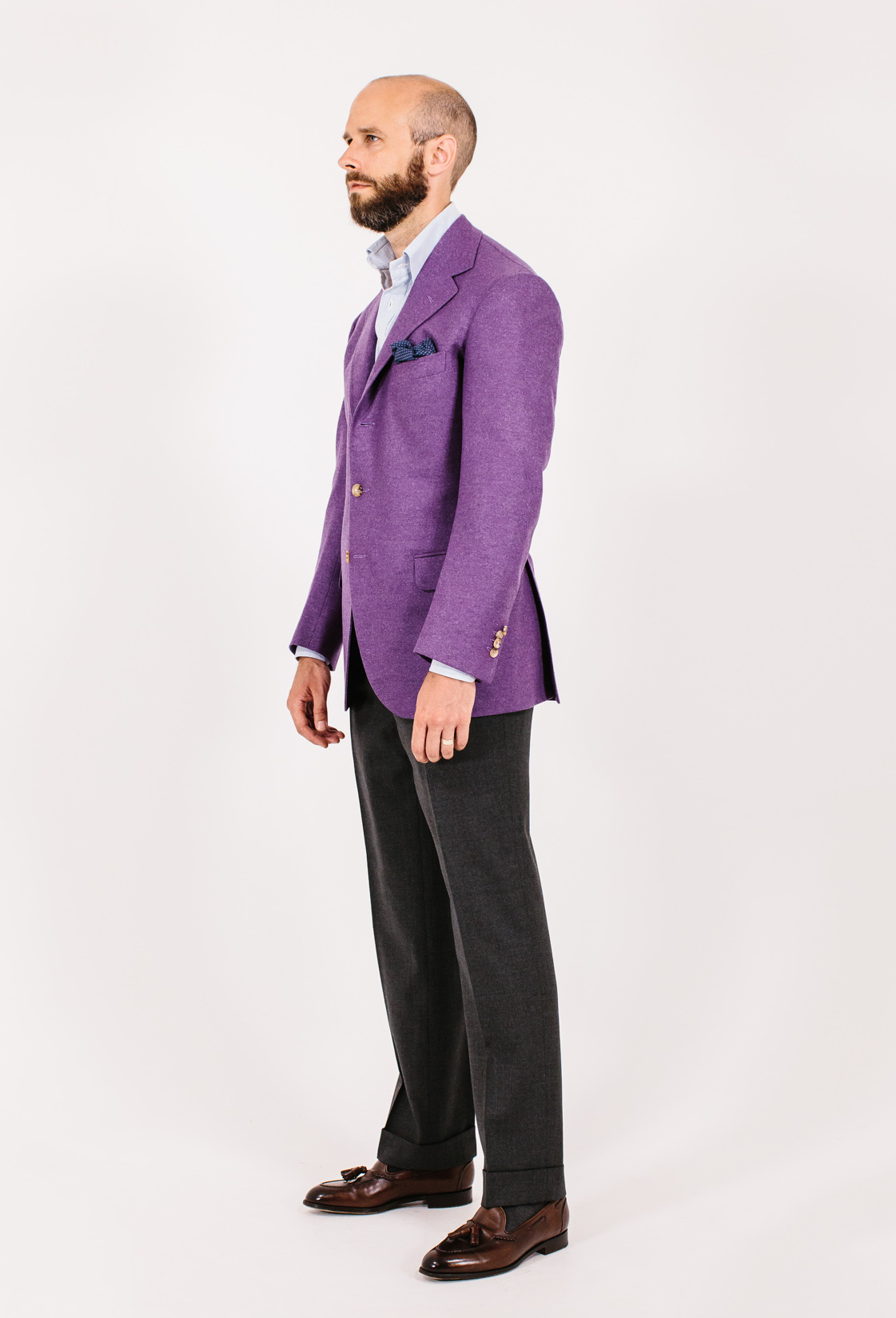
There’s also a very subtle point at work here. The cutter I work with to analyse these suits pointed out that the notch in the lapel is almost a perfect right angle. 

This is a small point, but I’m sure it adds to the impression that the shoulder is wide and square (despite actually only having thin padding). 

That tailor (who would rather remain anonymous) was also very enthusiastic about the finishing. 

Everything is just very precise. That’s not an easy thing to communicate about a jacket. It’s certainly harder to talk about than Parisian top stitching or buttonholes, for example.

But it’s often the kind of thing a tailor will most admire: not more work, but better-executed work. Jettings on pockets that are precise and identical; finishing around internal pockets that is sharp and exact. 

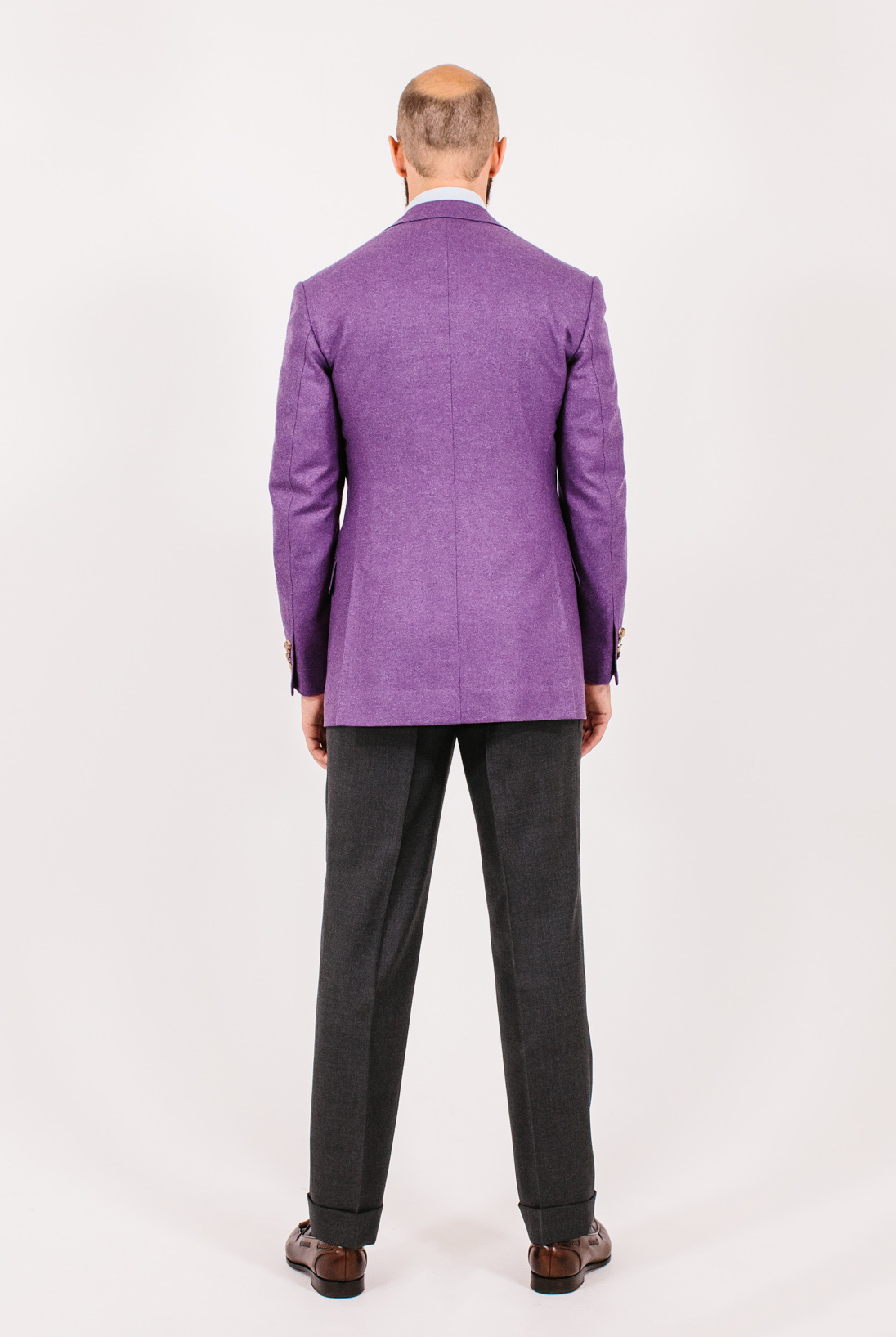
That extends, of course, to the making aspect Liverano is best known for: the single dart in the waist of the jacket, which curves forwards into the hip pocket and stops there, leaving everything below clean and seamless.

How easy or useful such a construction is depends on the customer’s shape. But it’s nearly always harder than using two seams, as every other jacket we’ve featured in this series has. 

It’s also something a lot of tailors can do. Panico, for instance, did it on his suit for me just because he thought it was ‘more English’, even though he wouldn’t normally. 

Tailors just generally don’t because it’s harder – and having that lower part of the jacket clean is not seen as a priority.

I entirely understand customers who think it’s beautiful, and those that think it’s irrelevant.

Elsewhere on the jacket, there is a little drape in the chest, but not much. More than other Italians or French. The armhole is particularly high.

The sleeve and cuff are pretty standard: not as slim as the French or most Neapolitans. 

The pockets are interesting. The welt of the outbreast pocket is deeper than most, at 1¼ inches, while the flaps on the hip pockets are small, barely 2 inches. It’s hard not to see one more thing that adds weight to the top half of the jacket. 

On the finishing, it should also be noted that the seams are top stitched all around the jacket, and the edges swelled by stitching that is a ¼ inch from the edge.

Both give an impression of thickness to the lines of jacket, and casualness that would be more relevant were the cloth not so overpowering.

As ever, the articles in this series are not intended to discuss fit, or the images intended to show it accurately.

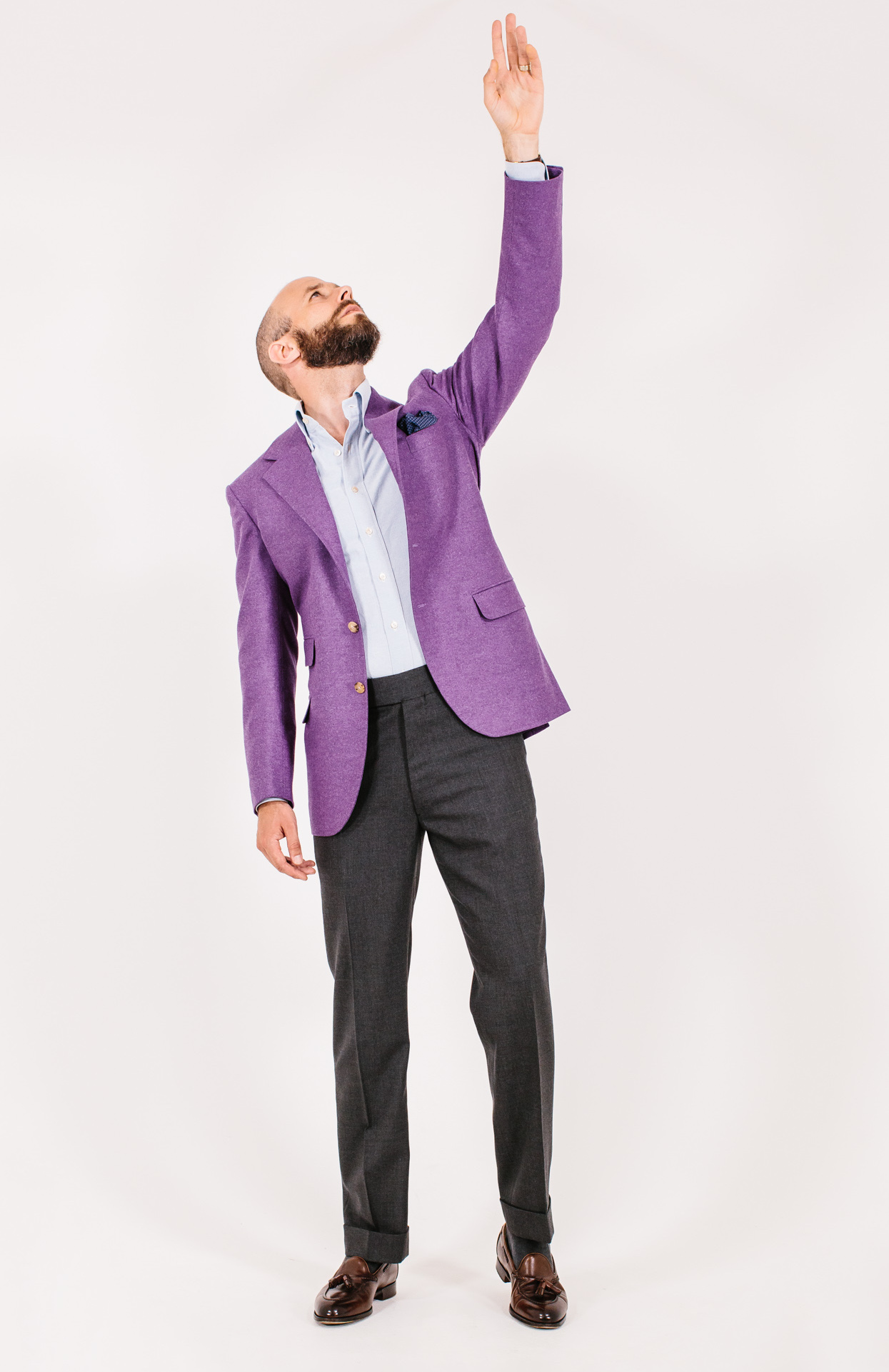
The chest is a good, clean fit, for example, despite a couple of stray wrinkles in the front-on shots. The pitch is also good, despite what the sleeves might suggest above.

One thing that is true, however, is that those high armholes are catching me, and could have been lower.
The trousers shown with the jacket were not made by Liverano, but by Luxire in Crispaire 337051 (9/10 ounce).

The shirt is made by Luca Avitabile in Permanent Style Oxford fabric, and the spotted silk handkerchief is from Anderson & Sheppard.

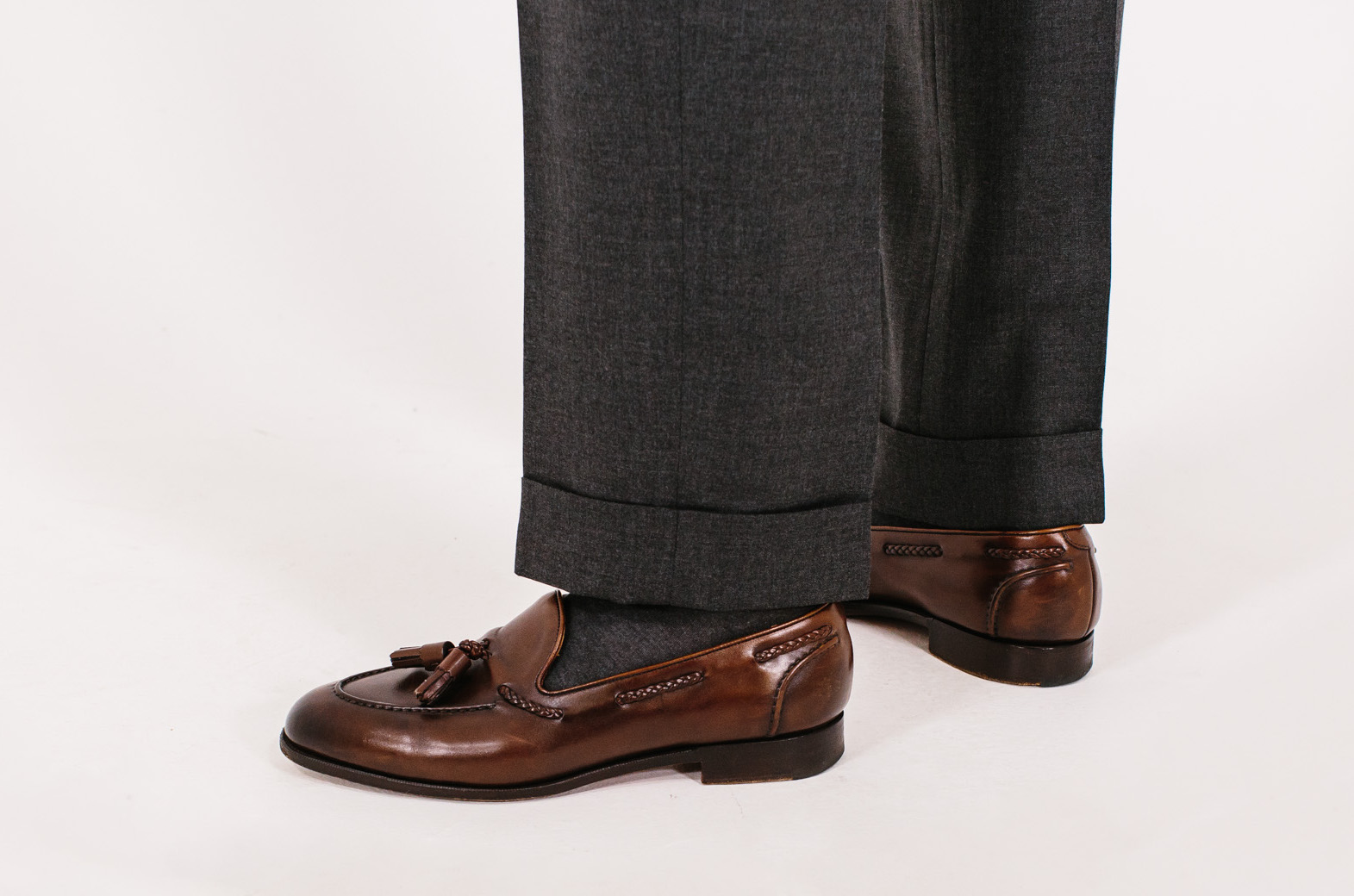
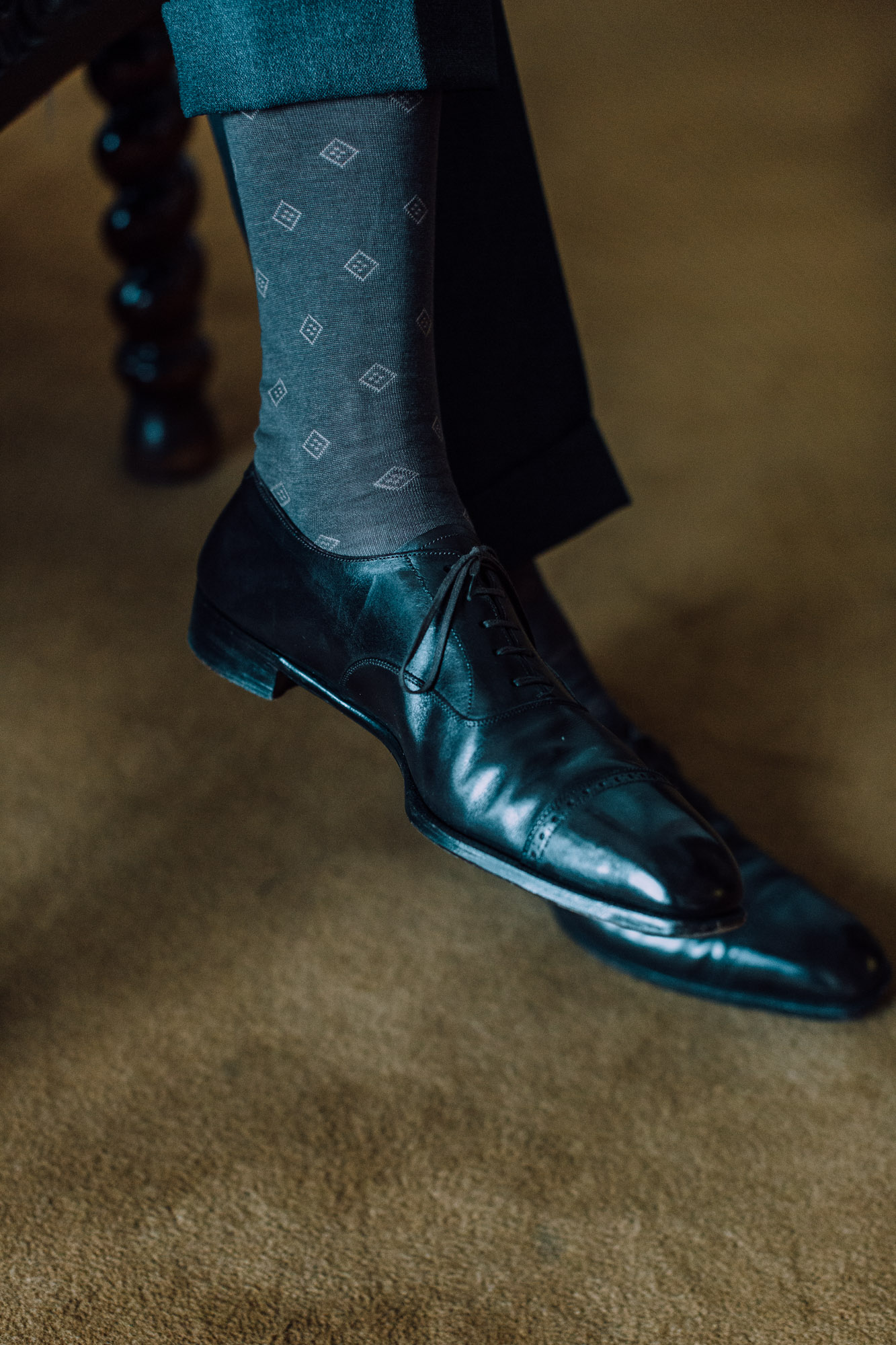
The loafers are the Belgravia model from Edward Green, with EG’s distinctive burnishing on the toes and heels. The trousers are being held up to better show the loafers off; they’re not actually that short.

Style breakdown:

  • Shoulder width: 6½ inches
  • Shoulder padding: Thin
  • Sleevehead: Slight roping
  • Sleeve: Moderate, regular cuff
  • Lapel: 3¾ inches
  • Gorge height: 4¼ inches
  • Drape: Moderate
  • Outbreast pocket height: 10 inches
  • Buttoning point: 18 inches
  • Waist suppression: Slim
  • Quarters: Open, cut away from waist button
  • Length: 31¼ inches
  • Back seam: Suppressed
  • Vent height: 9¾ inches
  • Trouser circumference at knee: 19¾ inches (not made by Liverano)
  • Trouser circumference at cuff: 15¼ inches

For more articles in this series, see menu at the top right (or below on a mobile device). Also available here

Photography: Jamie Ferguson

The PS square scarf: available again

The PS square scarf: available again

Friday, November 23rd 2018
||- Begin Content -||

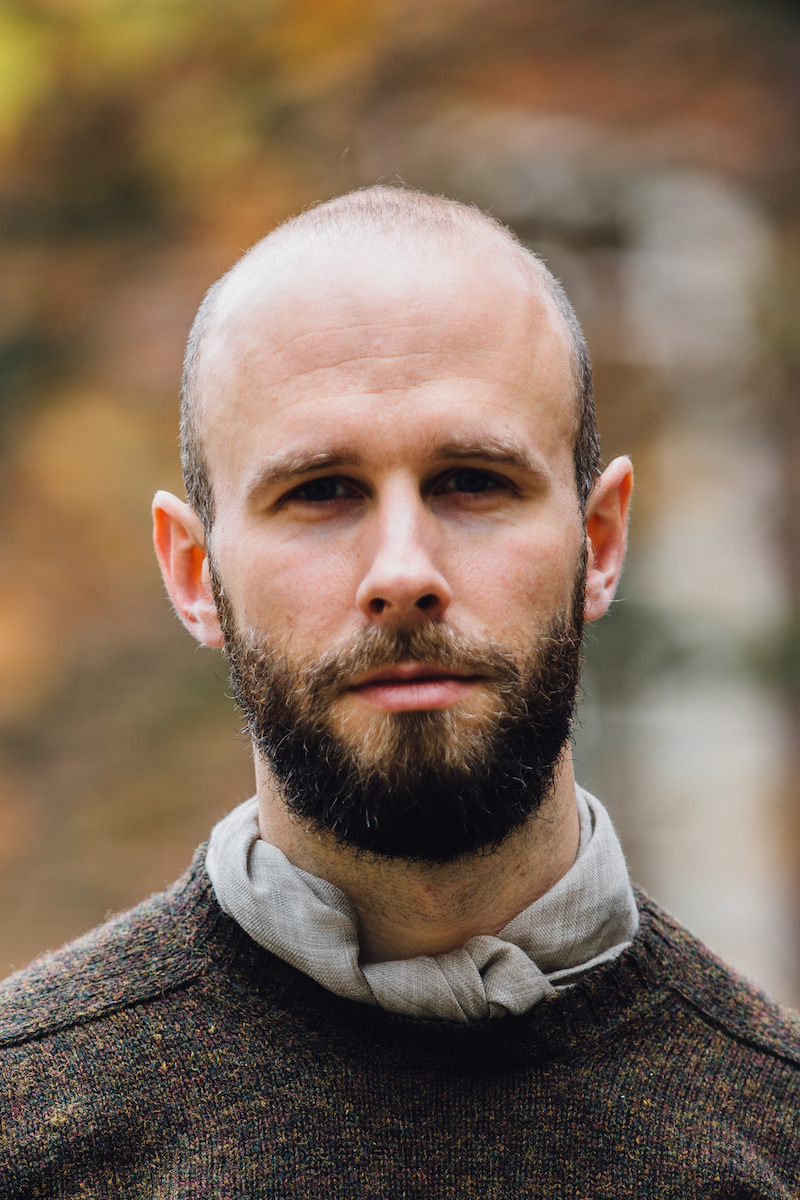
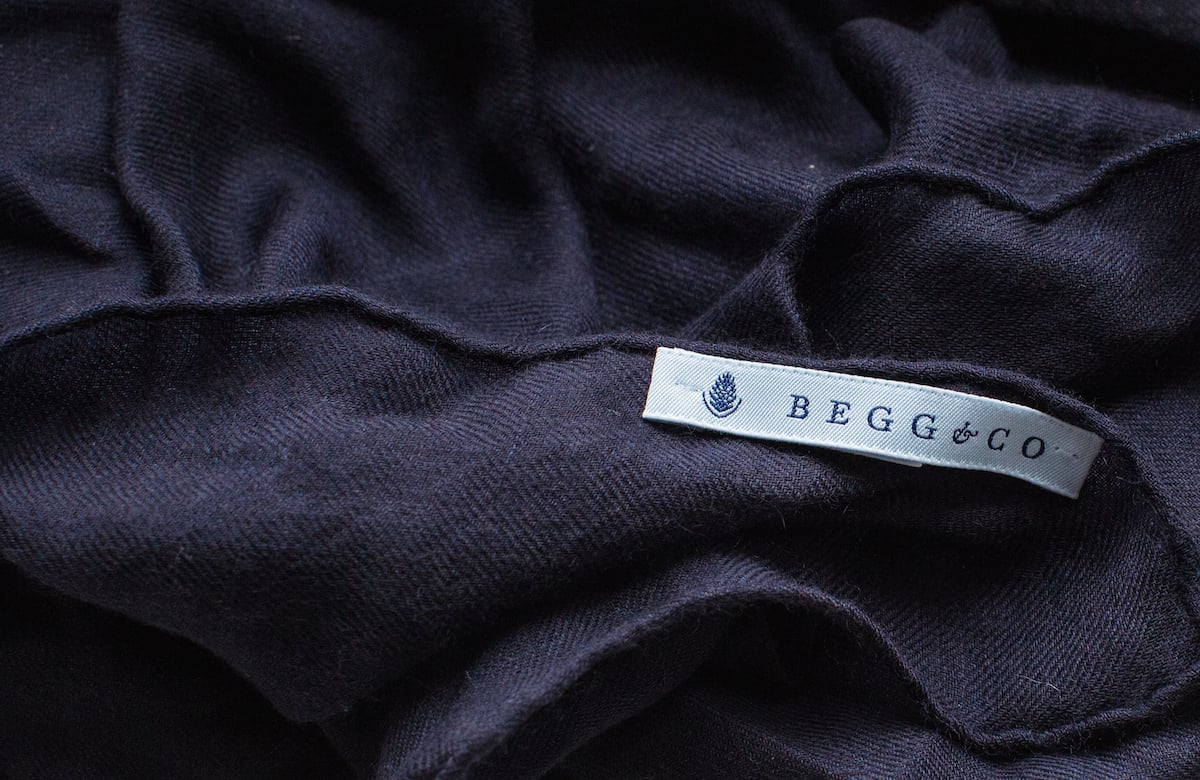
The small, fine cashmere scarf I designed three years ago with Begg & Co - intended to be worn on cold days tucked into knitwear - is available again.

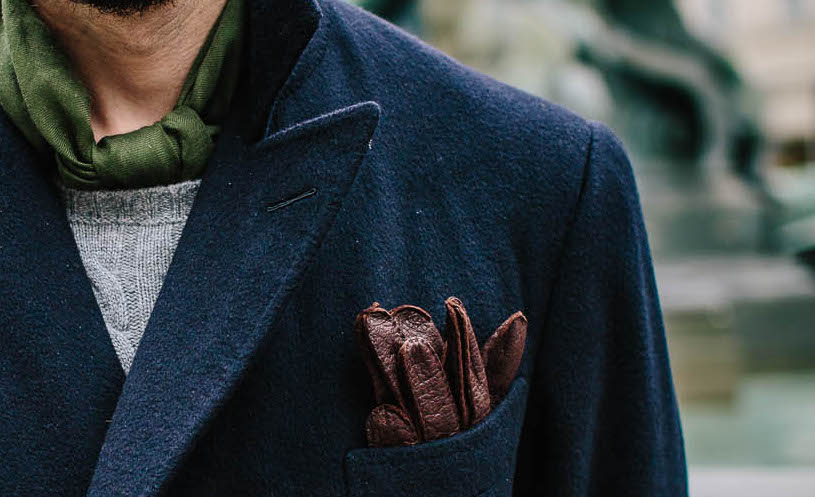
It's on the PS Shop now, in grey, navy and green.

I've reproduced some of the description from November 2015 below, with the original thought process and product details.

If anything, it seems more relevant than ever, and the experiences more true for three years of consistent wear.
[Do note, though, that the top image and tying images show the 'natural' colour of scarf, which is not in the current range.]

Men have historically always worn something at the neck – if it wasn’t a tie, it was an ascot or a workman’s neckerchief. Such things are practical, for work and for warmth.
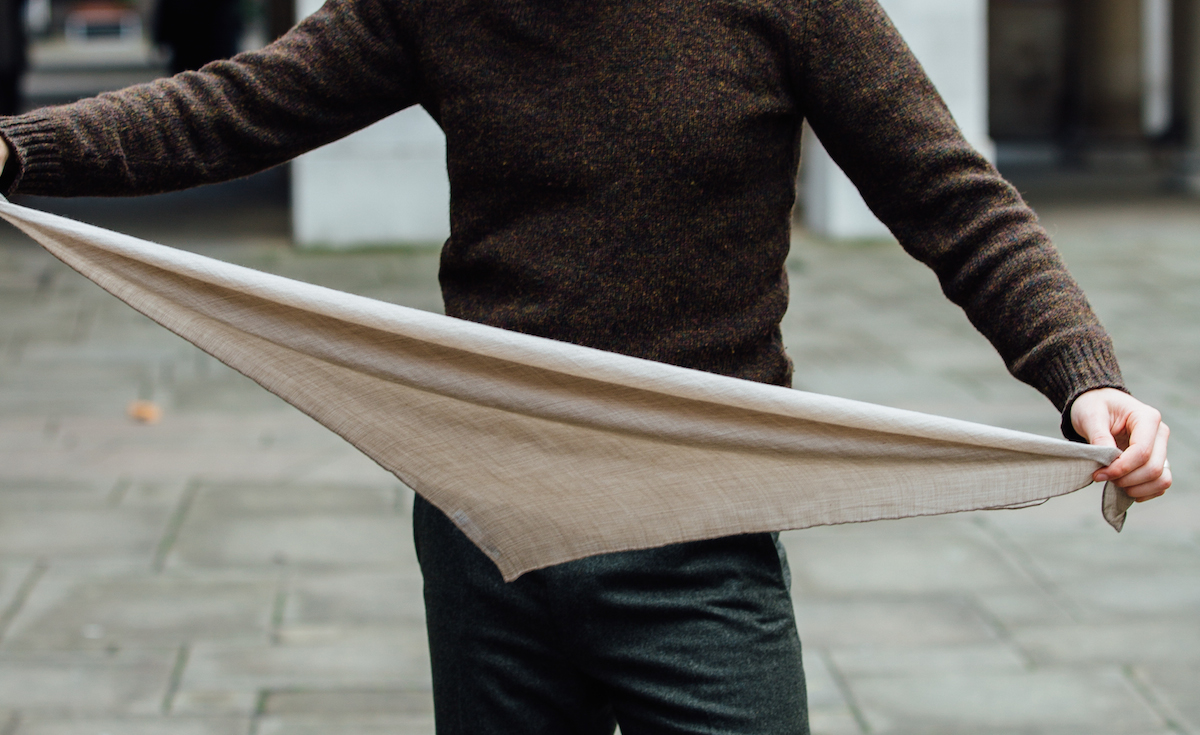
We worked with weavers Begg & Co on our own, modern equivalent. It's a square scarf in ultra-lightweight cashmere, beautifully soft and luxurious, that is designed to be tied and tucked into a sweater.
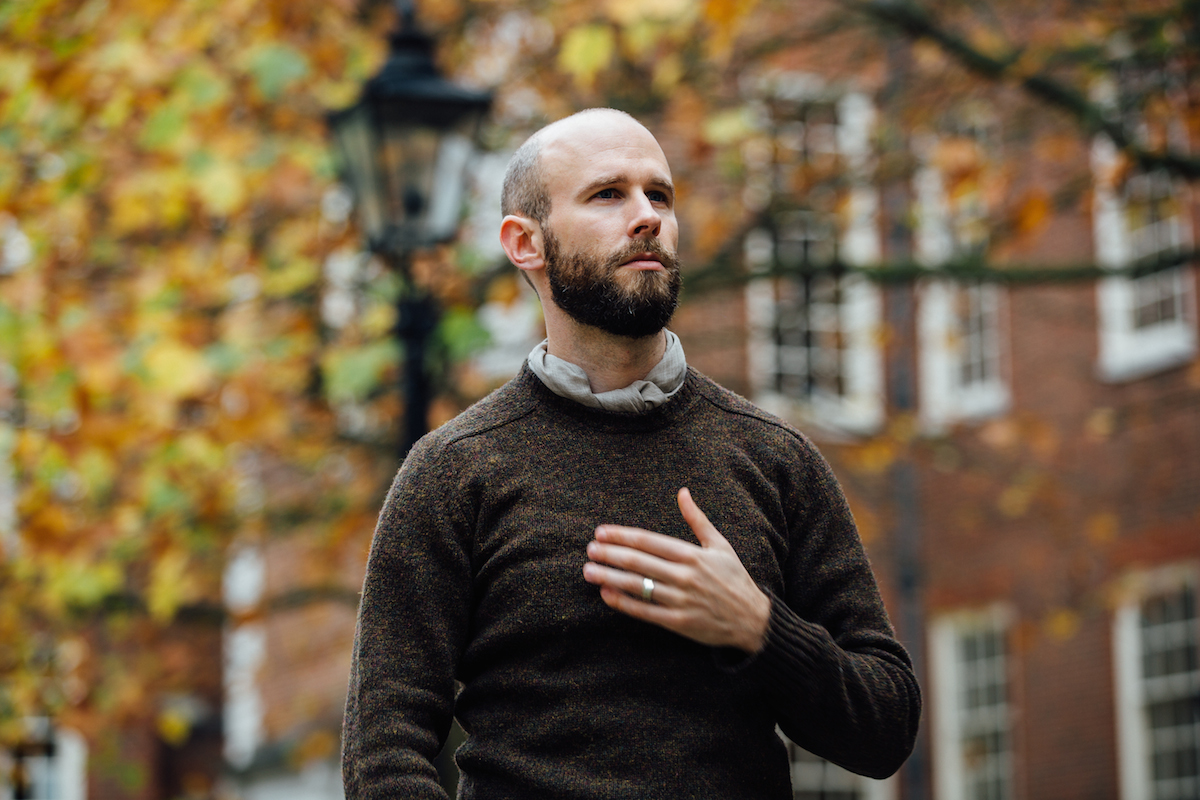
I’ve been wearing mine regularly, and find it particularly nice when a big, long scarf feels cumbersome - but having something against the neck is great to keep out the morning chill.

The three colours - navy, grey and green - go with the whole range of knitwear, just some of which is shown here.

If one thing sets the squares apart, however, it is the Wispy cashmere they are made of.

Begg developed the Wispy with an ultra-fine white cashmere fibre. It’s so fine that it would normally snap under the tension of a loom, but they use a patented coating on the cashmere to allow it to be woven, and then wash the coating out afterwards.

The scarves are woven in Begg’s Scottish factory, on the west coast in Ayr. Begg has been the premier scarf manufacturer in the country for decades, but until recently only made for other brands (including some of the biggest designer houses).

You can read more on our visit to the Begg factory here.

We also decided to give the scarves hand-rolled edges, like a good handkerchief.

Of course, hand rolling adds considerably to the time of production and cost of the product. But I wanted to produce the absolute finest piece I could – and the wispy cashmere deserves it.

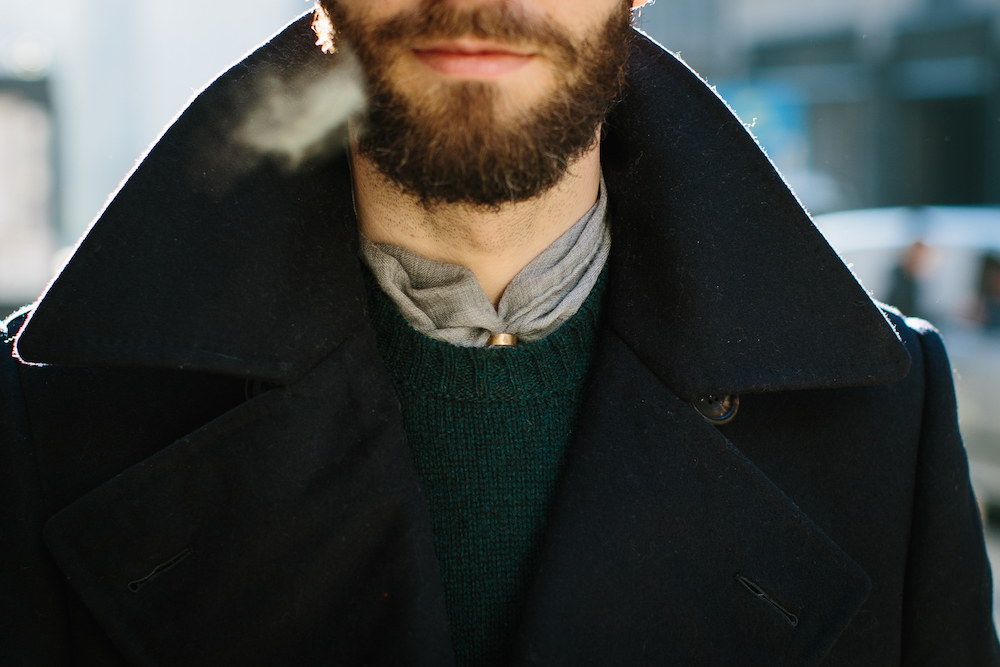
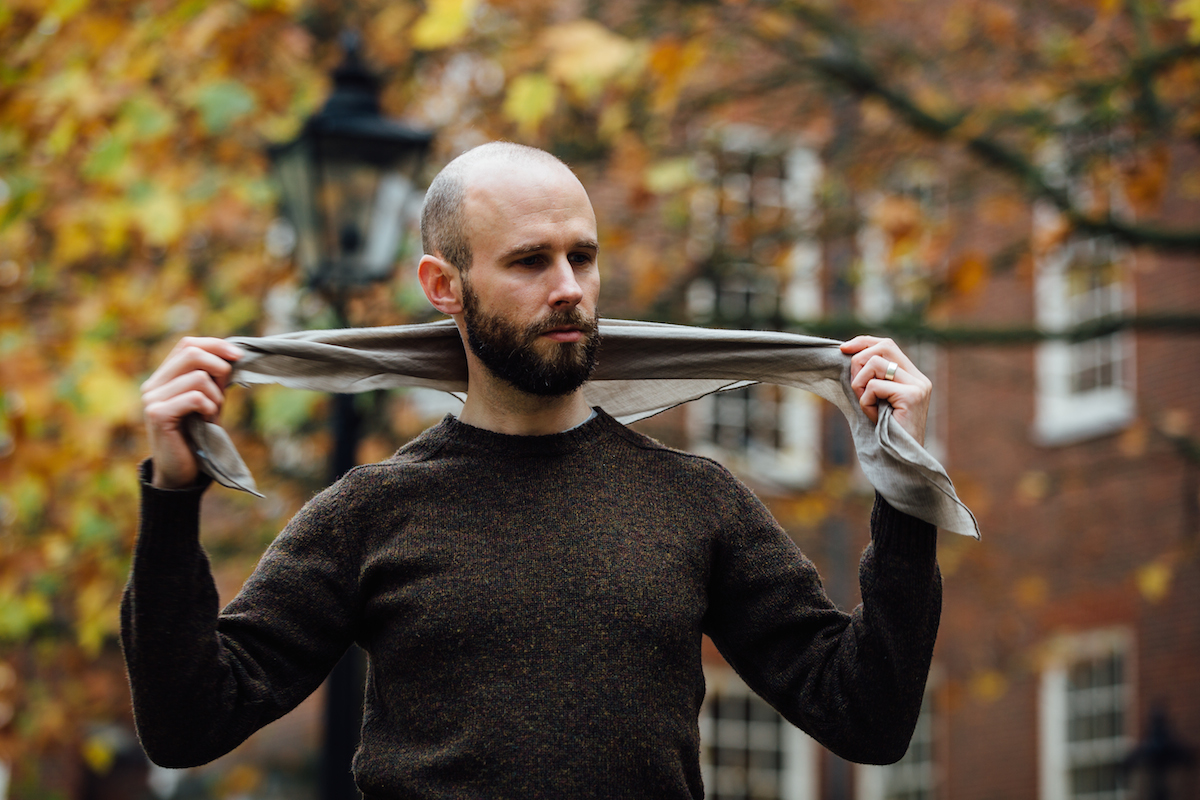
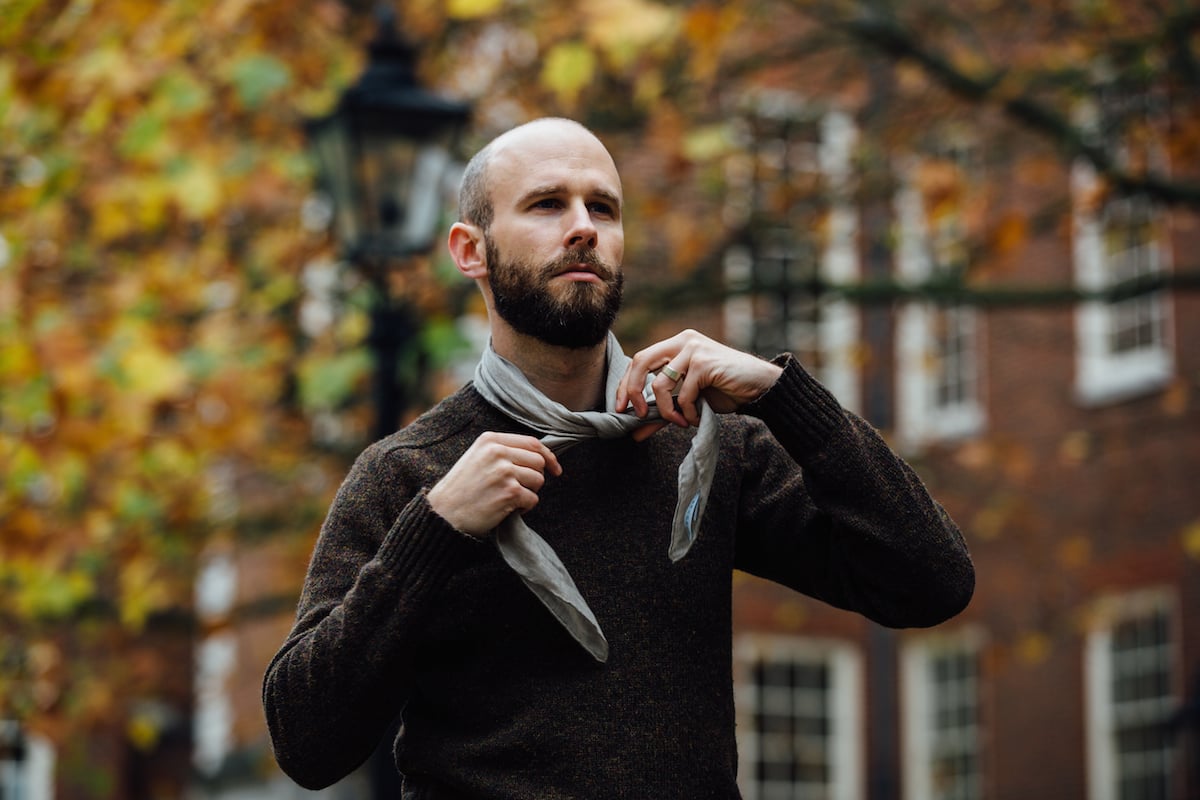
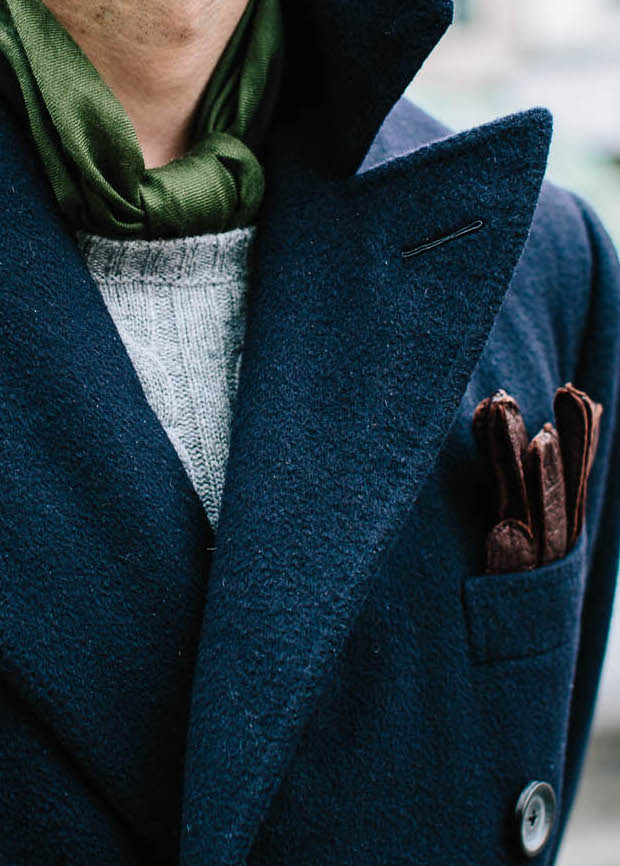
The scarf is designed to be folded along its diagonal, creating a triangle, and then tied at the front (as shown above).

The great thing about folding this way is that the point extends down the back, preventing the scarf from riding up and exposing the skin to the cold.

The knot can be a simple over-and-under (like an ascot), a square knot, or even a four-in-hand. Personally, though, I prefer a simple over-and-under, as it's the easiest and least fussy.

It can also be nice to wrap the scarf around twice before knotting. This creates a thicker band of cashmere, and is chunkier but warmer.
The shop also has a very small number of PS scarf rings available, which were designed in conjunction with Alice Made This.

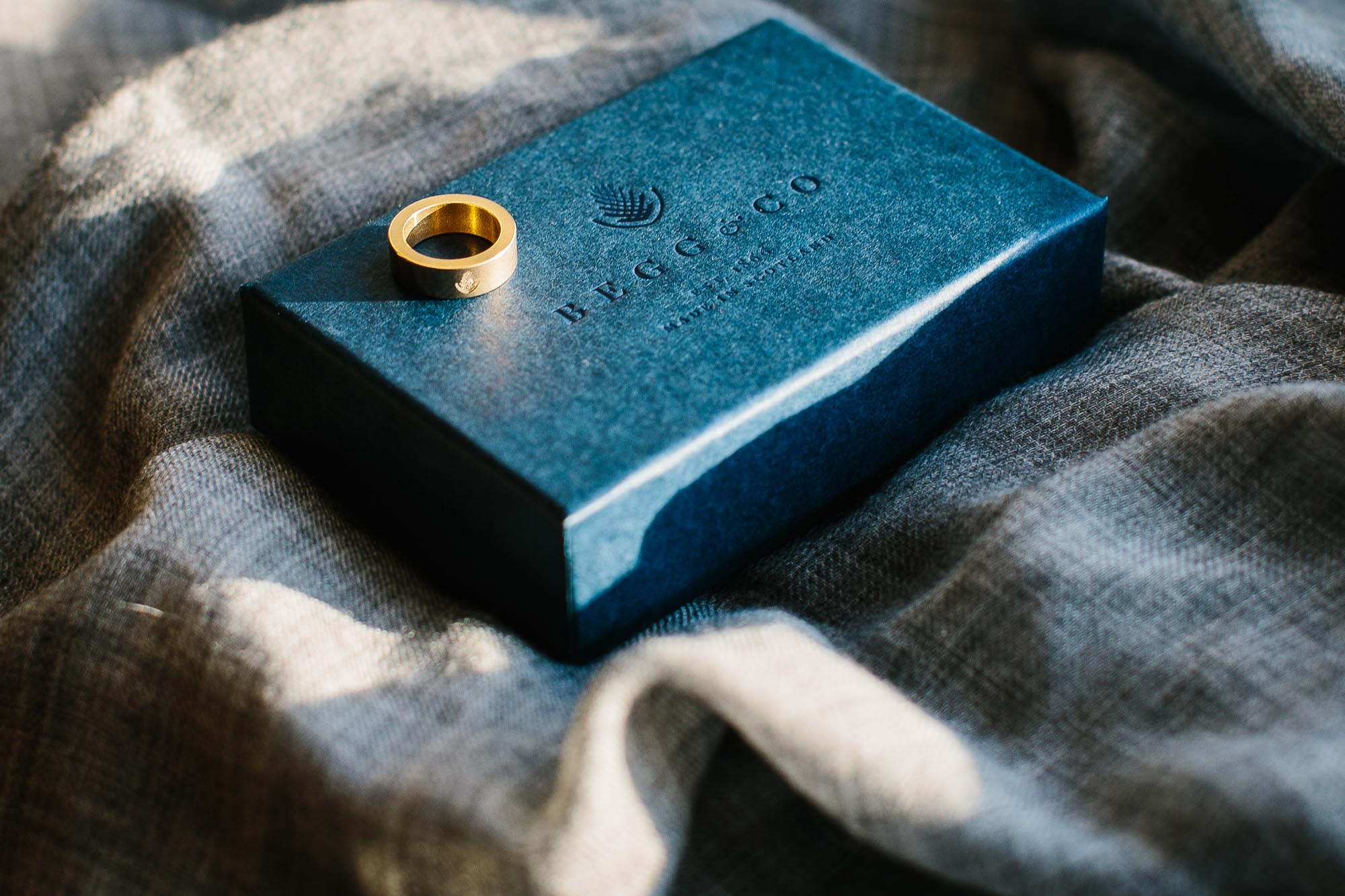
The problem with most scarf rings is that they are usually decorative and fancy, often gold-plated. To counter this, we used solid brass (which looks substantial), tumbled it (which looks worn and matte) and made it highly practical.

The brass is uncoated, so it will tarnish over time (or can be polished to bring it back). The inside of the ring also naturally polishes with the action of pulling the scarf through repeatedly, creating a nice contrast.

Other details on the products:

  • The cashmere squares measure 70cm on each side
  • Dry clean only. Scarves can be pressed lightly, using a cool iron
  • Cost is £145 plus VAT for the scarf, available here
  • Rings are £54 plus VAT, here

Photography: Jamie Ferguson


How I dress now: The jacket/trousers uniform

How I dress now: The jacket/trousers uniform

Wednesday, November 21st 2018
||- Begin Content -||

Eight months ago I quit my day job as a financial journalist in order to dedicate myself to Permanent Style. (Many heartfelt thanks for all the messages I’ve received since then.)

This prompted an interesting question from readers: How would I dress?

I'd written previously that I thought working in an office every day kept me grounded. I was an editor with a team to run. I had to be professional. I met lawyers and bankers in their glass offices every day.

I couldn’t indulge in the sort of historical fantasy that leads young fans of tailoring to wear loud checked suits, sock suspenders or bowler hats.

So how would I dress now - with no constraints, no colleagues, and only the need to meet fashion brands, rather than lawyers?

At the beginning, I have to say I went a little crazy.

Out came the Liverano purple jacket, otherwise reserved for special occasions. On a Wednesday - just because I felt like it - I’d wear battered canvas sneakers and a kimono-style sashiko jacket.

I was experimenting. Often thinking the night before about what I could play around with the next day, and laying it all out, ready.

I also wasn’t cycling to work all the time, as my new workspace doesn’t have room to keep clothes in a locker. So that restriction was gone.
But after two or three weeks, things began to settle down.

There were a few long days in the office, and some early mornings trying out the free gym classes. There wasn’t time or quite the motivation to experiment every day.

I also got a little tired of making sure whatever I wore would suit the next day's appointments.

That might be a fitting with a tailor, where I’d want to be wearing at least a shirt and proper shoes. Or it could be a new brand, where it was important to project the right image of Permanent Style.

Everyone has some kind of uniform - men in particular - and I think it’s often for these two reasons: that it suits the various things the day might throw at you, and that what you wear is not always the most important thing on your mind.

For both these reasons, I began to fall back to the same rough uniform I’d worn in my old office: a jacket, trousers, open-necked shirt, smart shoes and sometimes a pocket handkerchief.

It’s a combination that still has plenty of room for expression. The shirt can be a Friday Polo or a polo-collared sweater, rather than a dress shirt. The trousers can be cream cavalry twills or just charcoal flannels.

And there’s also a large spectrum of formality – from a white shirt, navy jacket and black shoes, to a chambray shirt, tweed jacket and suede boots.

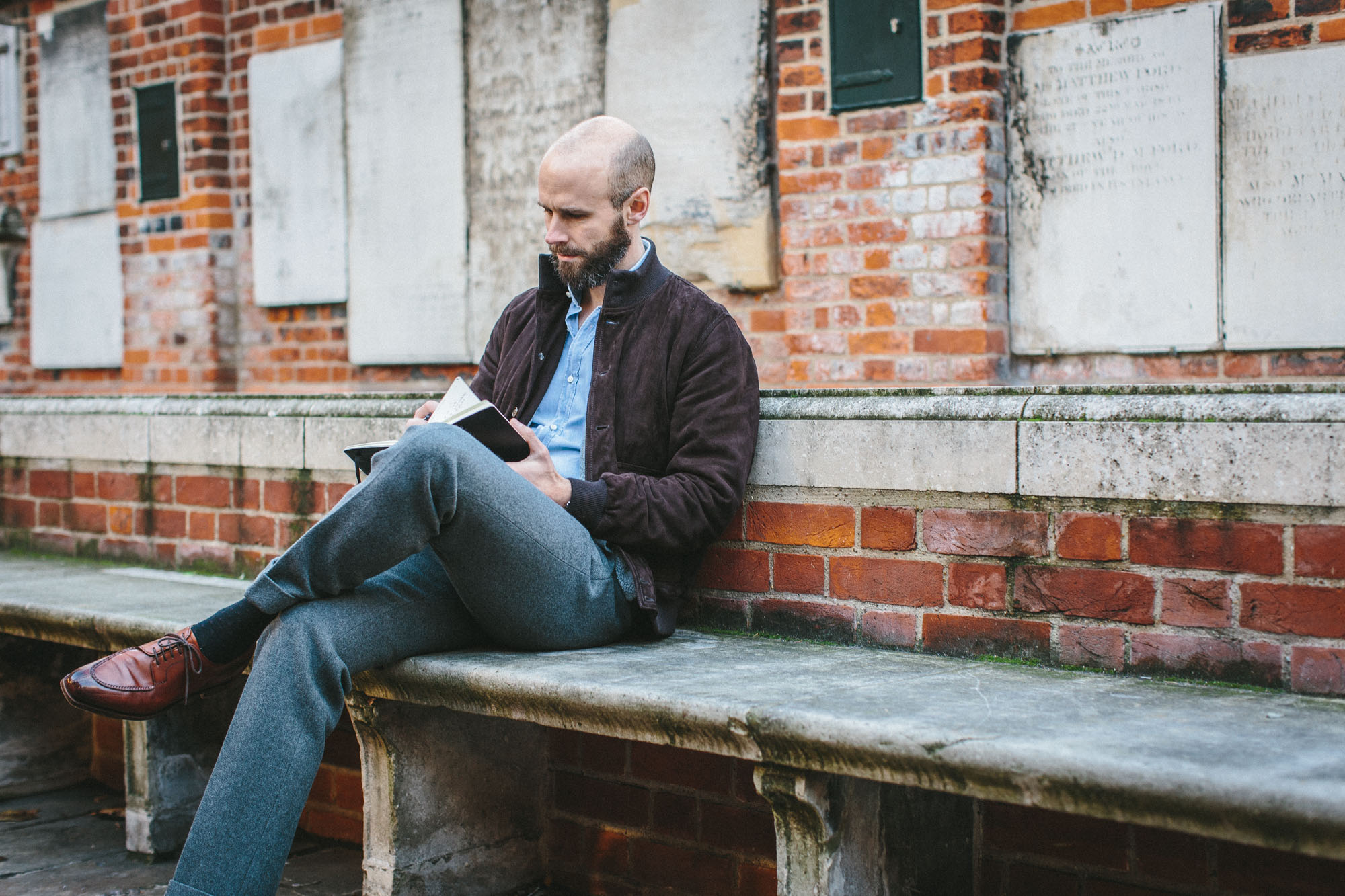
But most importantly, on a day when I’m getting up at 6:30am to go to Pilates - and everyone else in the house is still asleep - I can quietly grab a blue button-down shirt, grey flannels, any jacket and any brown shoes, and tip-toe out of the door.

It takes no thought.

I also find that it’s helpful to work within a uniform or fairly narrow wardrobe in order to slot slightly experimental things into it.

For example, a first consideration with a piece of suede outerwear will be whether it works with the standard shirt, flannels and shoes, just replacing the jacket - so nothing else has to change (example below).

A new shirt must have sufficient collar to sit up and proud inside a jacket. Most knitwear has to be thin enough to go under the jacket, or thick enough to replace it. And outerwear usually has to work over it all.

The result is that you can decide between the conservative navy overcoat or the extravagant Edward Sexton one, but you don’t have to start changing everything else underneath.

It’s a similar principle to a capsule wardrobe, which I know always make popular posts. Just with bolt-on extras.

While this is the default uniform, I will still wear a suit and tie on days when I’m seeing somebody important, or going to a nice dinner.

It remains – in my view – a compliment to the host and the occasion; and it helps that I really enjoy wearing those things.

It’s also nice that after perhaps two long days in buttoned-up tailoring, I have the freedom to come into the office on a quiet day in jeans, sweatshirt and leather jacket. Before enjoying tailoring again the next day.

It’s similar perhaps to working at home. I couldn’t do it every day - I’d go stir crazy. But it’s lovely as a break from the routine.

The office/club I now use - in which I have a shared workspace - is full of entrepreneurs in everything from property to health.

They can largely wear anything they want. But if anything is lacking I feel it’s a uniform like this that feels comfortable yet presentable.

Some say that without the dress code of an office, it’s easy to default to the most comfortable and casual thing. Which is usually jeans, a shirt and trainers.

Partly, I think this is because for decades, men have either worn a suit and tie, or this very casual attire at the weekend. There’s been nothing in between.

There is little awareness of what a sports jacket or an odd jacket might be - let alone the conventions around combining it with other things.

Hopefully that’s the kind of thing Permanent Style can help with, in its small way.

And for those that would never need or want to wear tailoring, there’s still plenty in understanding how much better jeans, shirts or knitwear can look with better fit and quality.

Interestingly, I find my old/new uniform gets compliments from both ordinary and menswear people alike, I think because of its versatility.

A young tailor might be interested in how someone else wears bespoke tailoring without it looking stuffy.

And a friend might be equally interested in how clothes can look well put-together without being too smart.

Perhaps another post similar to ‘Which office are you’ would be good, showing the range of looks within this uniform.

And it might be interesting to do something similar showing how good outfits can look without (shock, horror) a jacket all day.

As ever, I’m interested (and I’m sure other readers are too) in what you find becomes your uniform every day. Thanks.

Photography: Jamie Ferguson, except Liverano fitting

The guide to Superfine shirtings

 
There has been a lot of debate in recent years as to what should be called a Superfine cloth for suiting.
As wools got finer and finer, and more and more expensive, it looked increasingly silly to focus on a single attribute like fineness, when so many other things contribute to good cloth.
Those other things include the length of the fibre and its natural crimp, as well as broader points like sustainability. Today a lot of mills try to combine these in their top-end or Superfine cloths.
Shirting fabrics are much simpler. The fineness of the yarn drives everything else: achieving it means a certain cotton, a certain spinning method, and a certain construction.
There is no room for other attributes. It’s just too hard to make a Superfine shirting at all.
There are also disadvantages as well as advantages to a Superfine shirting. It feels wonderfully light and silky to wear, but is prone to wrinkling.
Superfine shirtings are precious, but probably not for everyone.   


It’s just hard to do
 
A Superfine shirting is generally defined as one with a yarn count of 160 or higher. (Yarn count measures the fineness of the yarn – a count of how much you get, in terms of length, in a particular weight.)
 
Today Superfines range from 160/2 (the two indicating it is two-ply yarn) up to 330/4, and most round numbers in between.
 
But while the first Superfine on this definition has been around for a while – since ‘Zendaline’ from D&J Anderson (now Thomas Mason) in the late 1960s – it’s only in the past 15 years that the count has got that much higher.
 
That’s because a Superfine shirting is hard to make (certainly harder than equivalent suitings), and it’s only recently that mills have worked out the best way to do it.


First, you need a particular fibre – not just extra long staple, but specifically Giza 45 from Egypt. Which is only harvested every second or third year.
 
Second, you need to spin it with an extra high twist, to make it stable. Next, you need to weave it very densely: a lot of ends (yarns in the warp) and picks (yarns in the weft). A 300/2 shirting has 15,000 yarns across its 1.5 metre width.
 
You also need to set the warp in a particular way – more like a silk. And you can only weave slowly. A modern loom is fine, but it needs to be working at half speed. Otherwise the yarn will snap.
 
Even the shirtmaker’s job is tricky. Shirts in Superfine fabric need tight stitching in good yarn, and some sewing machines simply reject it as too fine.


The appeal
 
So what do you get for all this effort? Well, a shirt that feels like no other. It’s extremely light, feels lovely and fresh when you put it on, and has a smooth, silky touch.
 
One friend likens it to the feeling of getting into a bed with new sheets.
 
The downside is that it wrinkles quickly, and is not easy to iron. That’s unavoidable: adding an anti-wrinkle treatment or finish would mask the Superfine’s feel, and therefore the point of having it.
 
As a result, it tends to be worn on special occasions, or by people that can easily take extra shirts when they travel (and probably don’t iron them themselves…).
 
I have a white spread-collar shirt from D’Avino in a Superfine shirting, with a covered placket and double cuffs. I wear it with black tie or on similar occasions. It feels special and the silky sheen is fitting. But it is a pain to iron.


A last, and lesser-known attribute of Superfine shirting is that it wears warm.
 
Because it is has to be woven densely (all those ends and picks) it isn’t very porous, and keeps warm air next to the skin.
 
So even though it feels very light and fine, it is arguably better in colder weather – even the Winter – than in the warmer months. Which of course is unlike Superfine suitings, which are more associated with lightweight summer suits.


I would describe Superfine shirtings as a matter of taste, and a luxury. As with many fine materials, it takes more looking after and is therefore a luxury in anyone’s wardrobe.
 
And it’s a question of taste, because not everyone will like the silky look and feel – and the points about care and ironing are then irrelevant.
 
Superfines are an indulgence, and only for those that really understand what they are getting.

The Blackhorse Lane haberdashery

The Blackhorse Lane haberdashery

Friday, November 16th 2018
||- Begin Content -||

Blackhorse Lane Ateliers (BLA) opened their first store a couple of months ago, and I’ve been meaning to write about it since.

Partly because it means customers can see the full range of BLA jeans, and try them on in person (always particularly helpful with denim, even if it’s raw).

But also because the concept is bigger than just a shop, which is interesting.

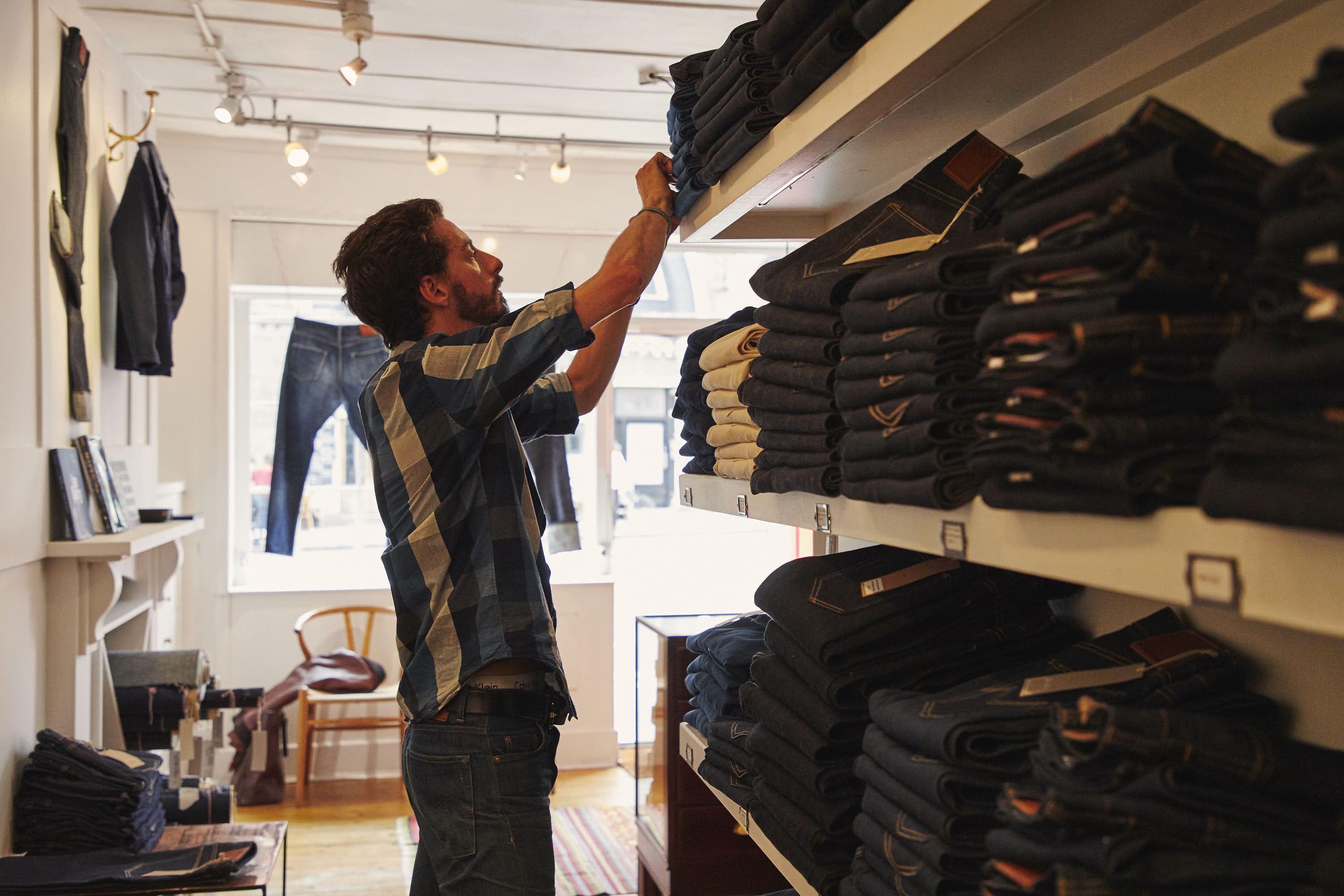
They've called it a ‘denim haberdashery’, and Han Ates, who runs BLA, wants to make it a destination for people that make jeans as much as buy them.

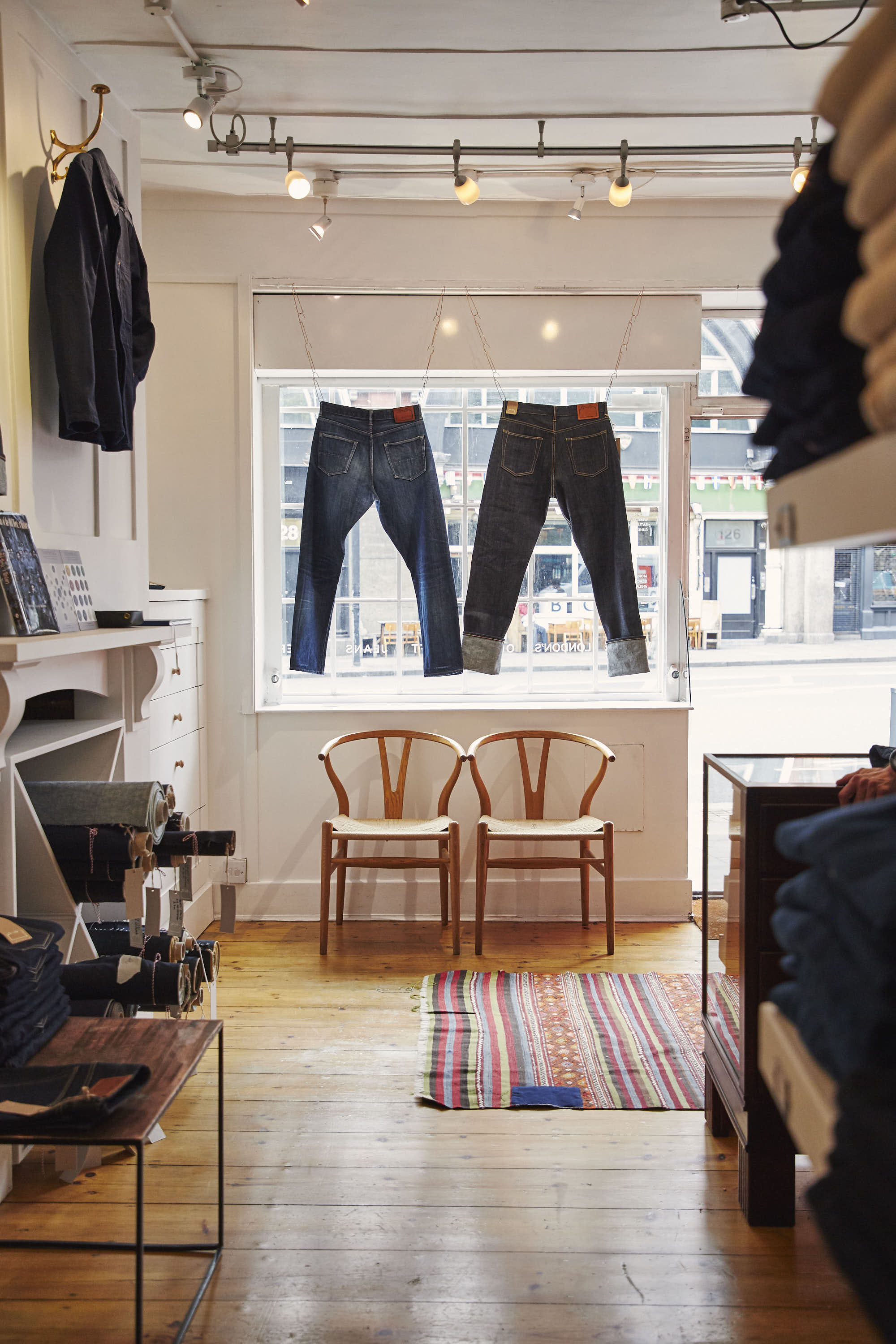
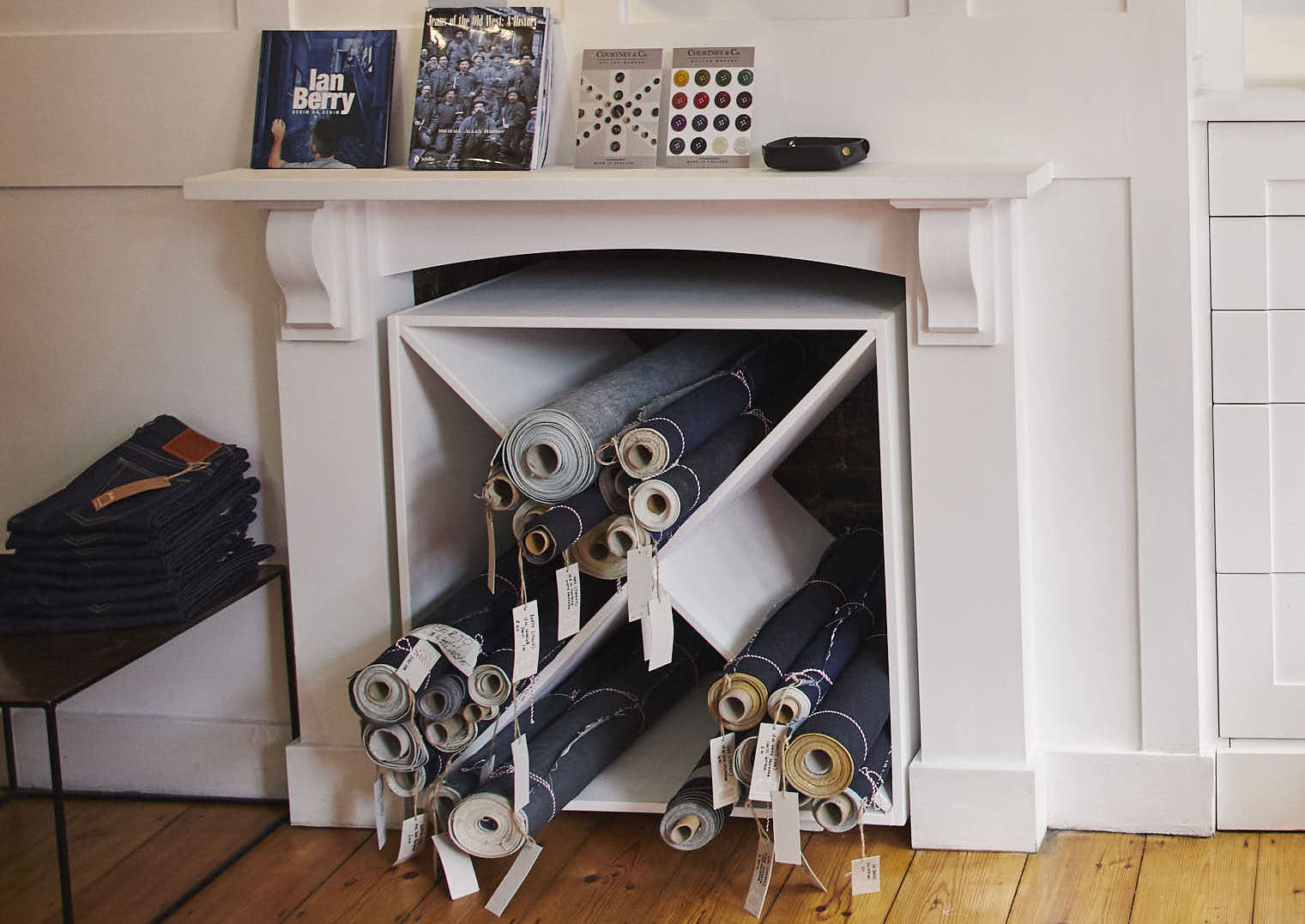
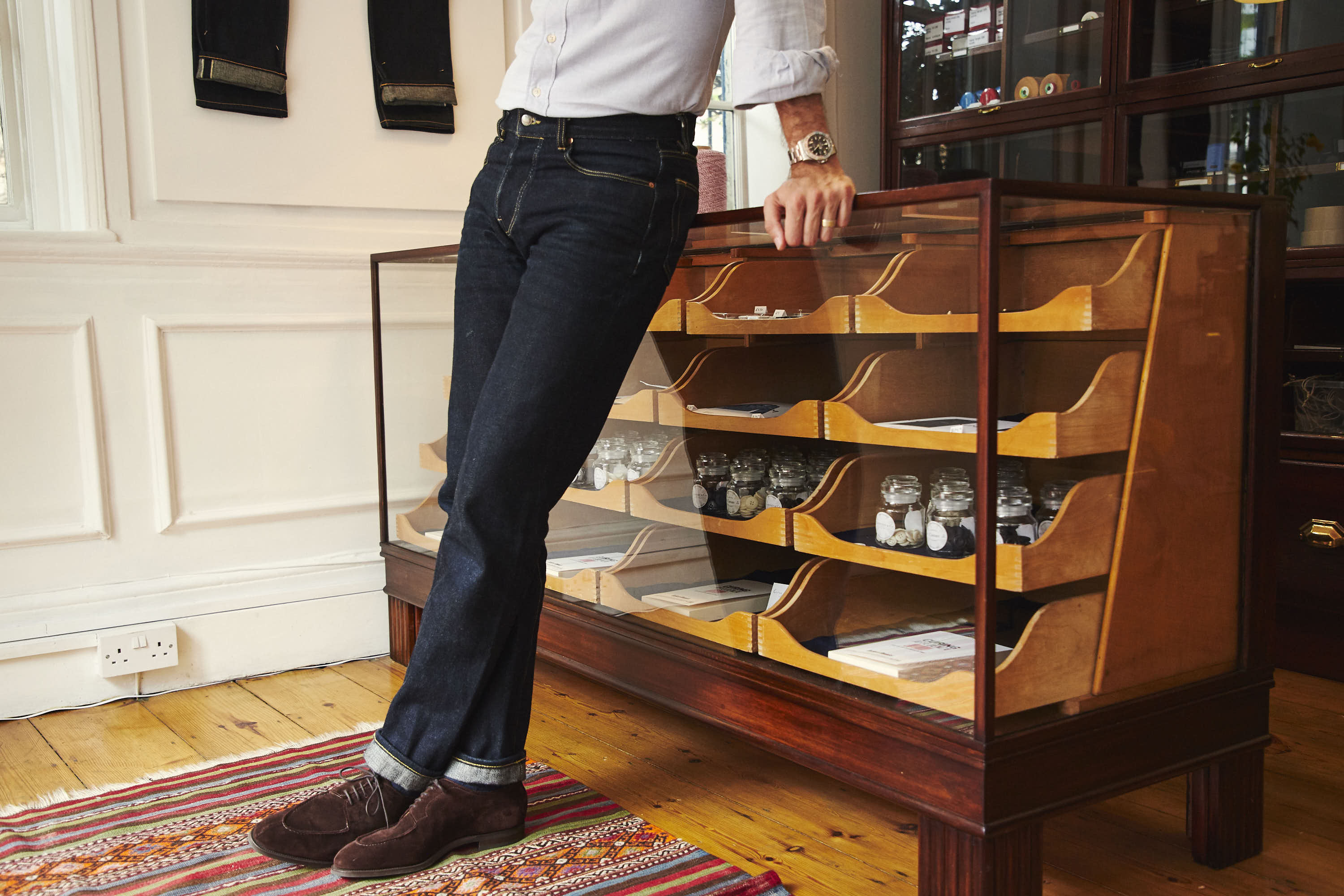
So while the back of the shop has the shelves you’d expect - stacked with BLA jeans - the front is dominated by buttons, rivets and denim itself.

Indeed, there is everything you would need to make a pair of jeans yourself - and this is the point.

The haberdashery seems like an odd thing to prioritise over selling jeans until you see it as an extension of BLA’s denim masterclasses. These teach people how to make their own jeans over the course of a weekend, and have been running up at the Walthamstow factory for a while.

Those students, and anyone else, can now visit the shop in Shoreditch to buy their shears, their thread, or their pattern books.

Frankly, I think Han is often too generous with this stuff.

Not only helping everyone and anyone learn about jeans - trying to foster a 'denim revolution' in London - but the BLA policies around repair and pricing.

Jeans should be for life, in Han’s view, so lifetime repairs are free. The pricing is very good for the quality of the product and time that goes into it. (See my comparison here to other jeans.)

But as the detailed work still makes them expensive (up to £290), there are entry level versions. The NW3 jean, for example, comes in a Turkish denim that puts it at £175. Sign up to the newsletter and you save 17% - so £145.

That makes them (for a luxury product) very affordable. Hopefully enough people will buy them to justify Han's approach.

When I went in there last month (when these pictures were taken), one customer was having a pair of jeans shortened with the lockstitch machine. Another was having a small repair done.

And hanging out in the front of the store was Mohsin Sajid, teacher of the denim masterclasses and all-round jeans guru. Customers were asking him questions too.

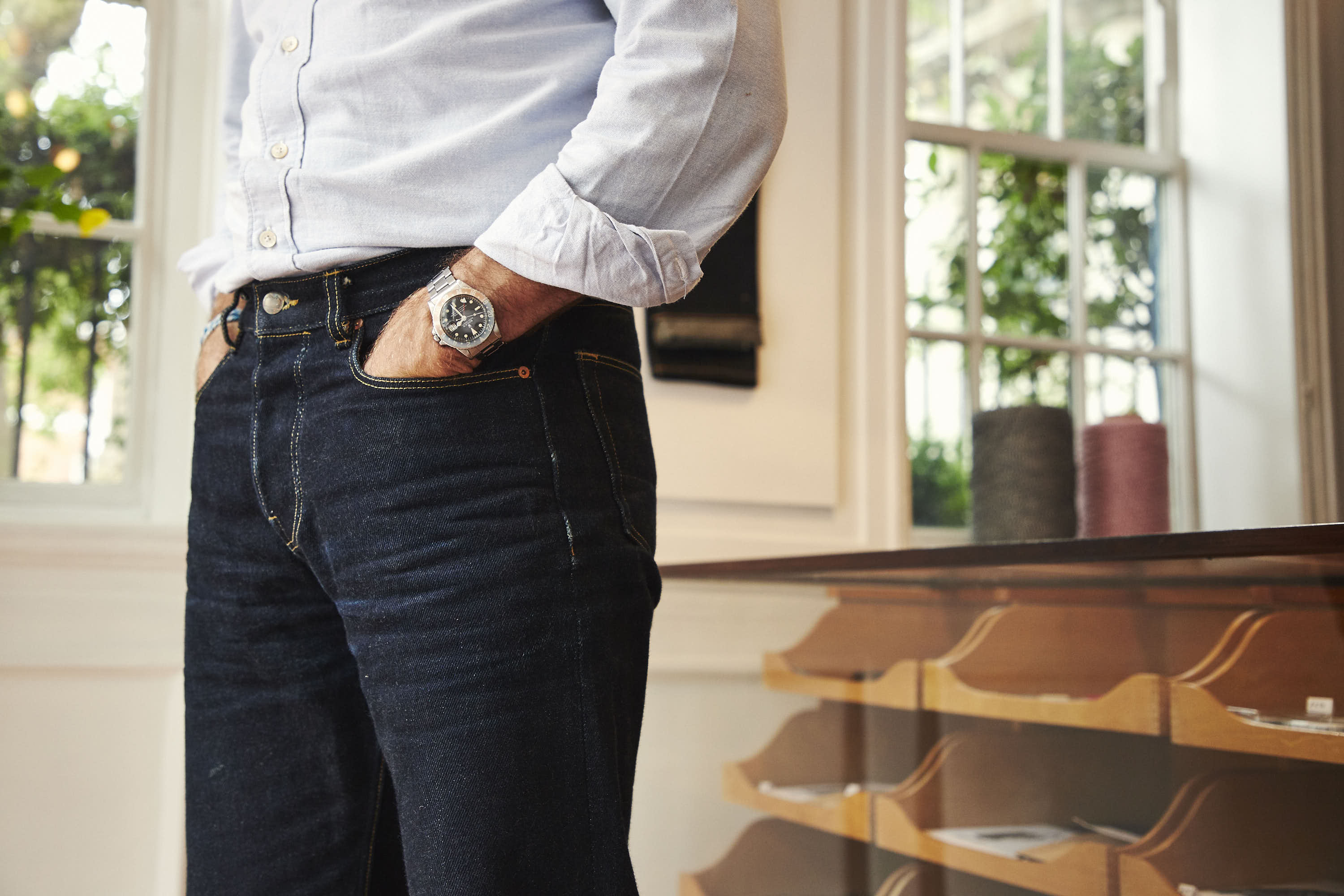
It was a nice atmosphere. Into which I wandered about, asked my own questions and took pictures of my legs.

These are my NW1 jean in 18oz denim. The cut is described as ‘straight and relaxed’, which means that it isn’t tight through the thigh (relaxed) and doesn’t taper much from the knee (straight).

Most of the rest of the BLA styles are best thought of in terms of these two variables, plus the rise. The NW3, for example, is slimmer through the leg, but still doesn't taper; the E8 is slim and does taper. 

Personally I find the relaxed or slim point is more a question of body shape, while the tapering is one of style.

The NW1 also suits me because it is high in the back but has a mid-rise at the front.

I like a high rise because it’s a better balance with jackets, and I like the way it lengthens the leg (both principles taken from tailoring).

But a high rise in the front is uncomfortable on the stomach, particularly in a heavy denim. So mid-rise is great there.

These have been worn perhaps 30 times and washed once.

I managed to wear them 5 or 6 times without washing them, but eventually the 18oz denim was just too heavy and hard. They’re now fine after a single wash, and I plan to wear them as long as possible before washing again.

The denim is probably only wearable 5-6 months of the year in the UK, but I have enough jeans to have one pair that isn’t year-round.

(Although of course, nothing is really ever year-round. I always find it odd when people complain that jeans are too hot in the summer and too cold in the winter: what other trouser is perfect in all those conditions?)

Most of BLA's distinctive construction details are on the inside of the jeans. (Again, post with details here.)

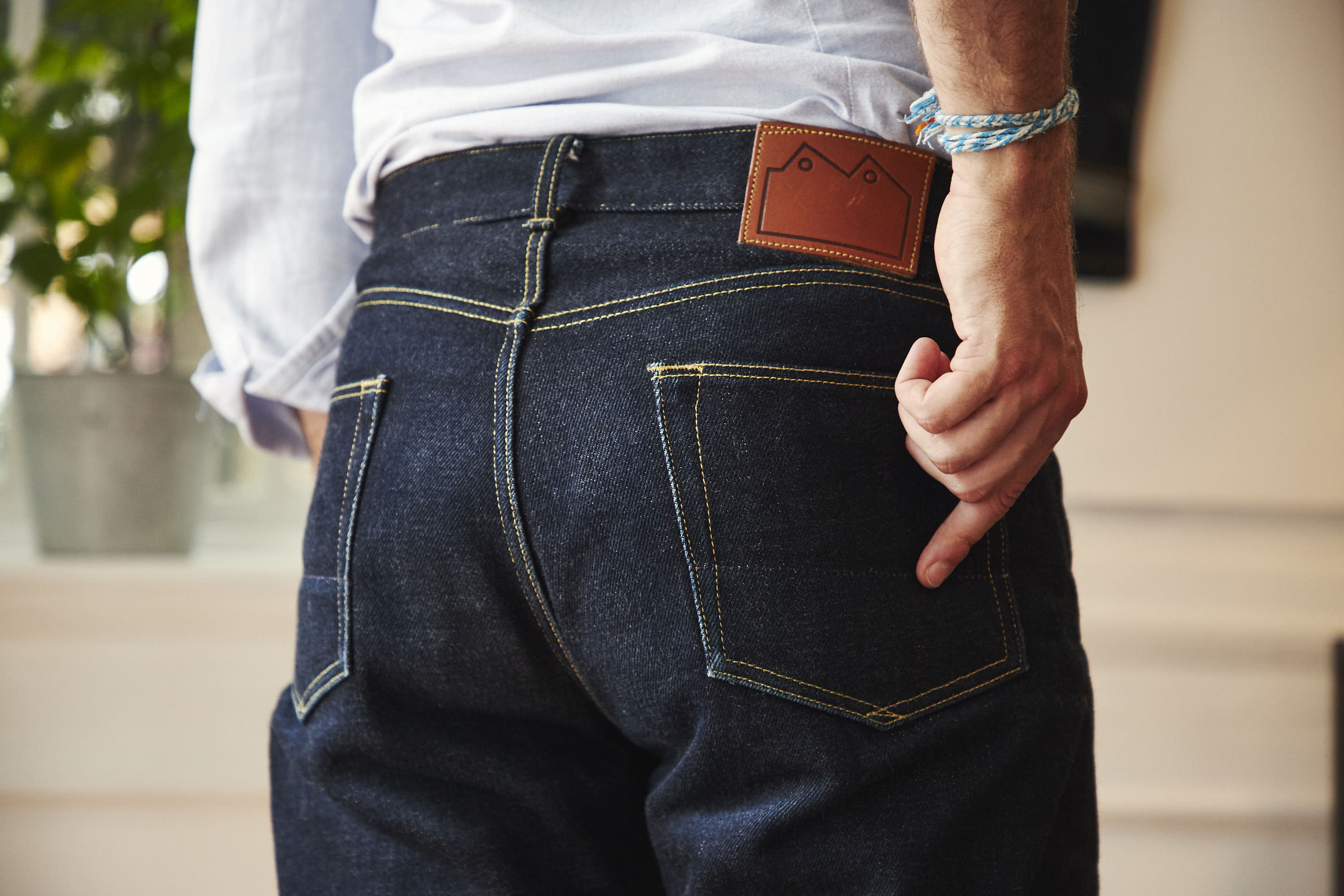
But you can still see some of them here. There is the lining on the bottom of the rear pockets for example (betrayed by that stitchline above).

There’s the way the (one-piece) waistband is sewn onto the leather patch on the back as part of a continuous stitch (below).

And lastly the belt loops that are sewn underneath the waistband (below) rather than just on top of the denim.

BLA jeans are not perfect - there are one or two small things I dislike and I know they are changing, such as the labelling inside the waistband, which is a little uncomfortable against the skin (when not wearing a shirt).

But they’re very well-made, good value, and most interestingly very progressive.

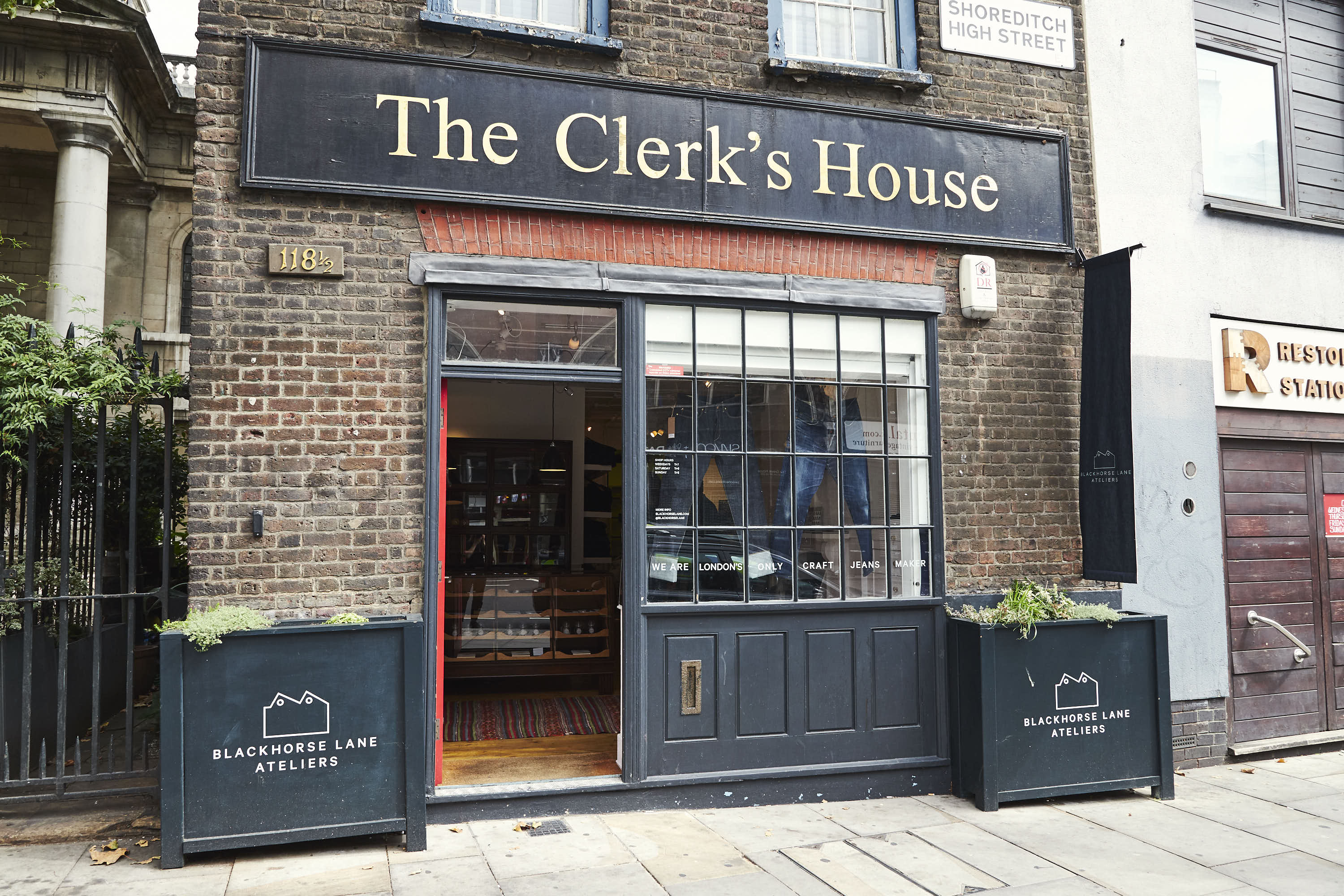
The BLA shop is in Shoreditch, in the storied ‘Clerk’s House’ building at the end of the High Street. The full address is 118½ Shoreditch High Street, E1 6JN.

You can see the range of haberdashery products available on the website here. I also recommend the book Curing Affluenza, which they sell in the shop.

Information on the denim masterclasses here.

Pictured with the jeans are my Edward Green unlined mink-suede Dovers, and Rolex GMT. The shirt is made my Luca Avitabile in PS Oxford cloth

Photography: James Holborow

Bespoke v Made-to-Measure: Eduardo de Simone jackets

Bespoke v Made-to-Measure: Eduardo de Simone jackets

Wednesday, November 14th 2018
||- Begin Content -||

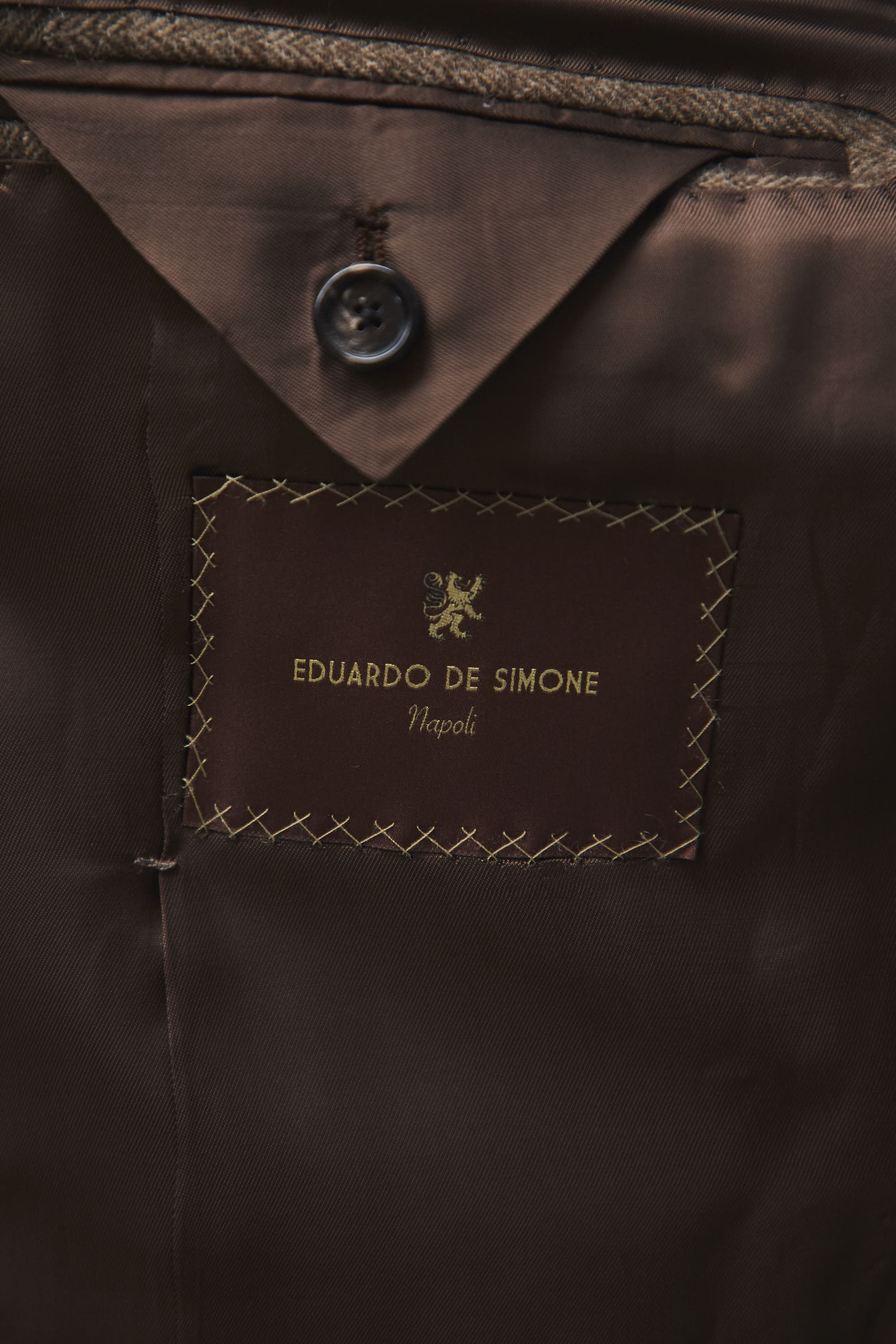
When Eduardo de Simone and I met at his factory last year, we spent a long time talking about the advantages and disadvantages of bespoke and made-to-measure (MTM) tailoring.

As a result of them, Eduardo proposed an experiment. He offered to make me two jackets in the same cloth - one bespoke and one MTM - in order to physically compare the differences between them.

Those two jackets are shown here, side by side.

Before going on to discuss the differences, though, I feel I should repeat my standard warning about reading too much into photos.

Static imagery can be misleading. You only have to see a model in a freshly pressed RTW suit to realise that. It looks sharp and clean, but the fit is still poor: just wait til he turns or raises his arms.

This issue is more acute when comparing bespoke and MTM, given that so many of the advantages of bespoke (curved neck-hugging collar, small armhole with big sleeve) are not visible in photos.

Nevertheless, imagery is useful to illustrate some points. So here it is. 

The first thing to note - and discount - is that there are style differences between the two jackets.

The bespoke (on the left) has curved tops to its hip pockets and a curved 'barchetta' breast pocket. The MTM (on the right) does not.

There's no reason you can't have those style points on an MTM jacket, it's just that Eduardo doesn't do it as standard.

The bespoke also has hand-swelled edges, most visible around those hip pockets. This is something you can also get on MTM, though it's not common. It is more likely to get as standard on bespoke.

Also, I feel a quick definition would be helpful.

The major differences between these two jackets are that the bespoke was cut using a unique paper pattern, extensively refined during the fitting process, and had structural handwork such as a hand-padded chest, lapel and collar.

The MTM, on the other hand, was made to a standard pattern with only small subsequent changes. It has none of the handwork.

Those are the most important differences between bespoke and MTM, and they are what separate these two jackets.

As mentioned, the bespoke jacket's small armhole and large sleeve affords much greater freedom of movement. And although you can't see the size of the armholes in these images, you can see the sleeves.

The top of the sleeve is noticeably larger in the bespoke jacket (left) than in the MTM one (right). This is partly because a bespoke jacket can afford to have a larger sleeve here, as it makes less of a difference to the resulting armhole size. All that excess can just be worked in.

The bespoke jacket is also evenly proportioned in its fullness around the sleevehead (where it joins the shoulder), while the MTM one is tight on the back side.

However that point, and the fact the MTM sleeve is a little too tight for my arm along the whole length, is more down to lack of fittings and adjustments with MTM, rather than anything structural.

Because the bespoke jacket has a hand-padded chest and lapel, it also has more shape in the top half - a curvature caused by that hand sewing creating a slightly domed effect.

This can't really be seen in the photos, but you can see how long and smooth the roll of the lapel is on the bespoke jacket (above).

The MTM version lies a little flatter, and the edge of the lapel angles into the waist button rather than running smoothly down to it.

The collar on the jacket also hugs the neck a little better on the bespoke version, partly due to its shaping.

However, I must say that it is not perfect on the bespoke one, and it does sometimes stand away a little.

This perhaps illustrates another point about bespoke: it creates greater potential for a perfectly fitting jacket, but doesn't guarantee it.

The fit is very dependent on the cutter - more so than with MTM, where the system tends to be set up to ensure consistency, and be less reliant on the fitter or salesman.

This is a good bespoke jacket from Eduardo, but it's not the best I've had made. There is also a small (impossible to see) issue with the balance.

Which of course illustrates one more point about bespoke: that the second jacket will often be better than the first, and the greatest benefits of it come over time as a relationship and the pattern develops.

Looking at the back of the jacket, the bespoke (left) is certainly cleaner than the MTM version (right).

But even the MTM is pretty good. This is a very soft cloth (quite loosely woven cashmere) and it is always going to wrinkle, never hanging as smoothly as a tight worsted, for example.

Most of the wrinkles on the MTM should be ignored, save for that tightness under the arms mentioned earlier.

Equally, the pitch and position of the sleeves is identical, despite the appearance of more wrinkling on the bespoke version.

Overall, I'd say this a good MTM product, which perhaps reflects Eduardo's focus on RTW and MTM in his factory. And it's an OK bespoke piece, with potential to improve in subsequent commissions.

However, Eduardo is probably not the first person readers would think of for bespoke tailoring anyway. MTM is perhaps therefore the better call here - even though the bespoke is definitely a better product in terms of fit, make and finish.

Eduardo's factory largely makes its MTM and RTW for other brands (which he would rather are not named) but he does also offer a little of his own tailoring under the brand Edesim.

Bespoke tailoring is in a small section of the Naples factory, but is available to anyone that wants to travel there (it is also a little out of town in an industrial zone - not like other Neapolitan tailors).

You can read about the overall outfit I am wearing - and why I think this is such a great jacket with jeans - in our previous post here.

Photography James Holborow 

The appeal of workwear, and my favourite pieces

The appeal of workwear, and my favourite pieces

||- Begin Content -||

Although tailoring is my primary passion, I’ve always worn clothing that these days would be grouped under the term ‘workwear’ on the weekend.

Good denim, obviously, but also sweatshirts, waxed boots and canvas trousers.

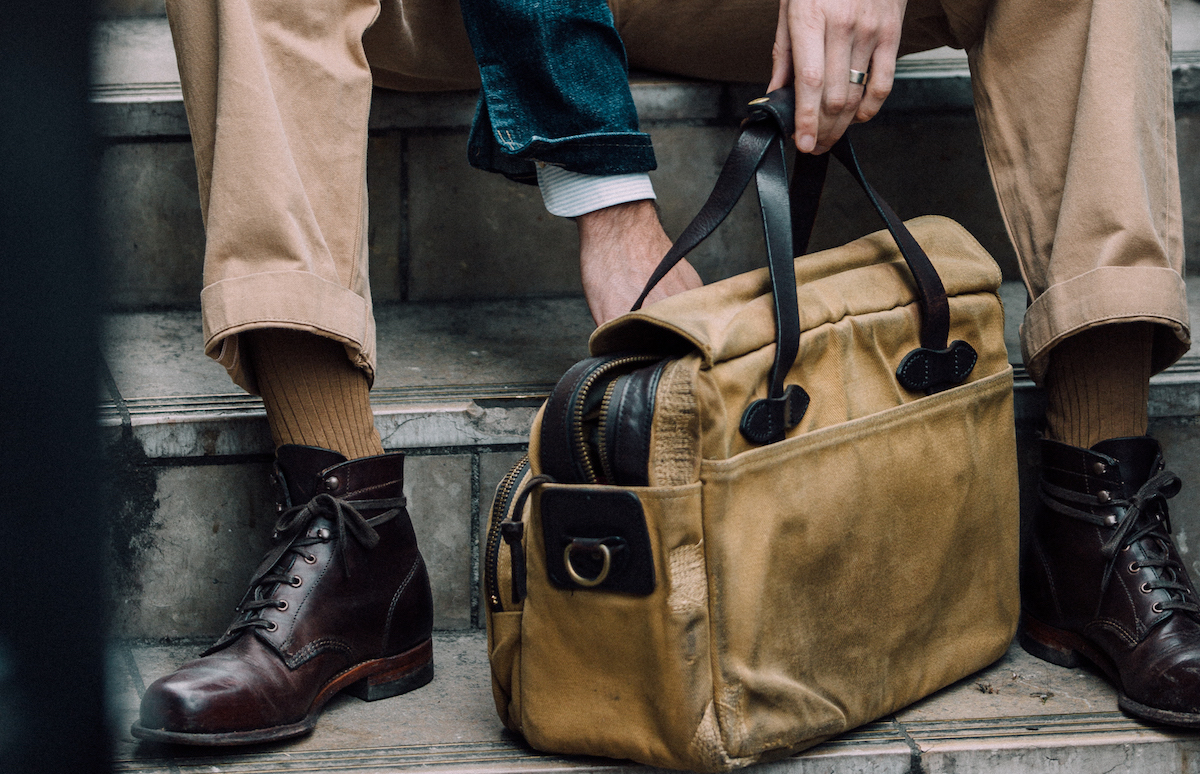
Some of the best-loved have been a pair of Wolverine 1000-Mile boots in Chromexcel leather, a battered Filson briefcase, and The Armoury’s Army chinos.

For me they’re a way to wear high-quality clothing but with a more practical, rugged feel – something stylistically removed from bespoke tailoring, but with other aspects in common.

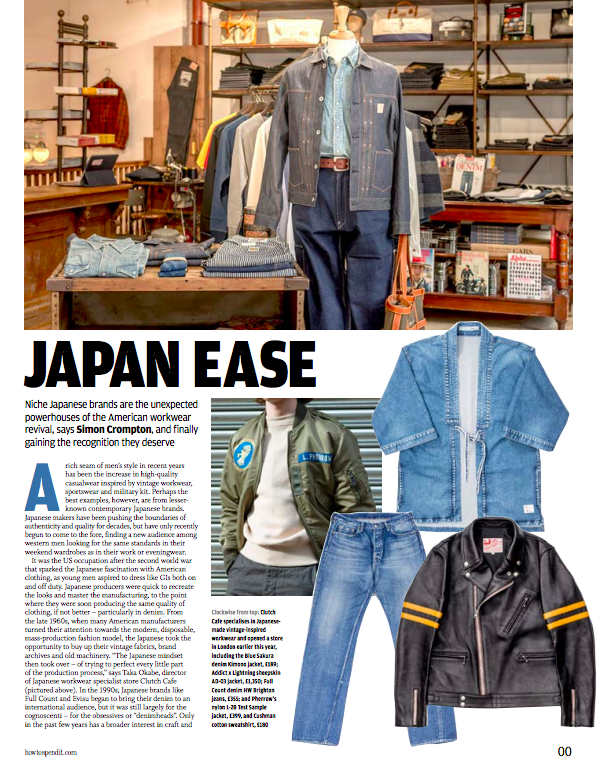
I had the opportunity to write about this recently for How to Spend It, the luxury supplement to the Financial Times here in the UK. You can read the article here.

The piece focused on the rising popularity of high-end Japanese workwear; but while the Japanese probably lead the way, there has also been growth in popularity of American brands like Filson or Red Wing, and the occasional local brand around Europe as well.

It’s an area I’d recommend to any readers. Although workwear is never going to take up much space on Permanent Style, I do believe that to be well-dressed you need to be able to wear knitwear and jeans just as well as a shirt and tie.

Workwear rarely involves the same mastery of a skill, or investment of time as bespoke.

But there are many other common themes, among them investing in quality, seeking timeless style, and supporting traditional manufacturing.

I've included some examples of my favourite pieces here by way of illustration.

One is the Wolverine boots above, which I bought at Leffot around seven years ago and have done great service since. The waxed leather makes them very weather-resistant (despite having a single leather sole with a regular welt), and they’re really comfortable.

The only downside to Chromexcel is that the wax clings ferociously to dirt, and the vamp gets big, broad creases. Keeping them looking smart at all is not easy.

I’ve written consistently about leather outerwear over the years, including recently how vintage pieces are repaired at Cromford.

One of my all-time favourite items of clothing is a vintage horsehide jacket, which has a beautiful repair-patchwork lining. It’s something that will feature in the ‘How Great Things Age’ series at some point.

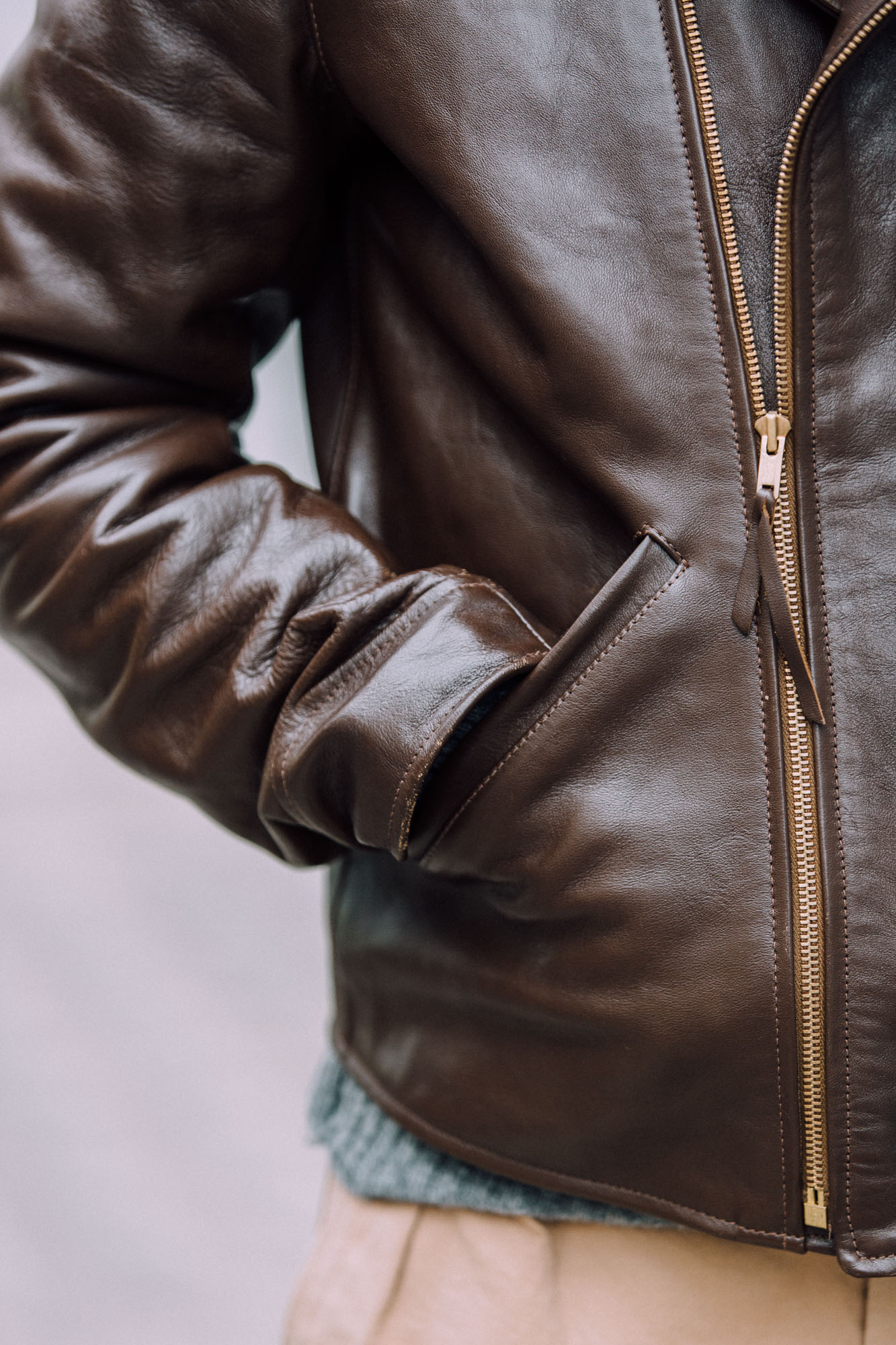
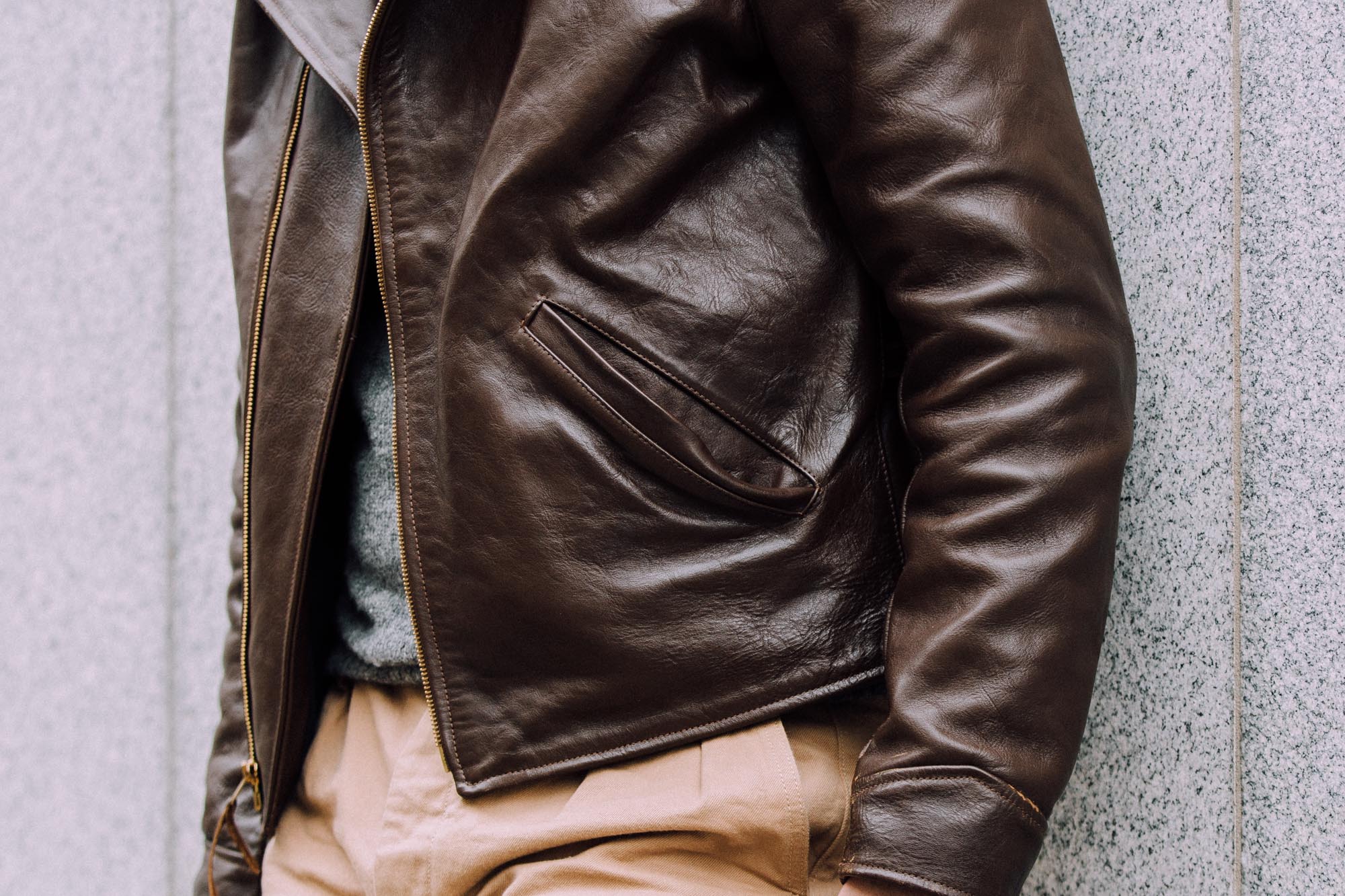
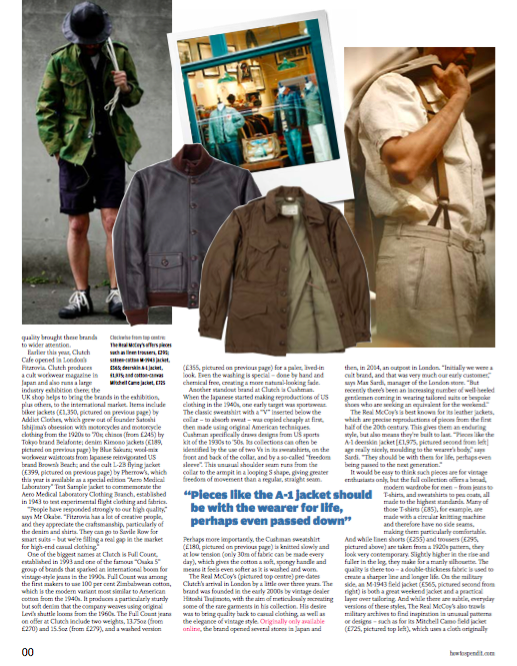
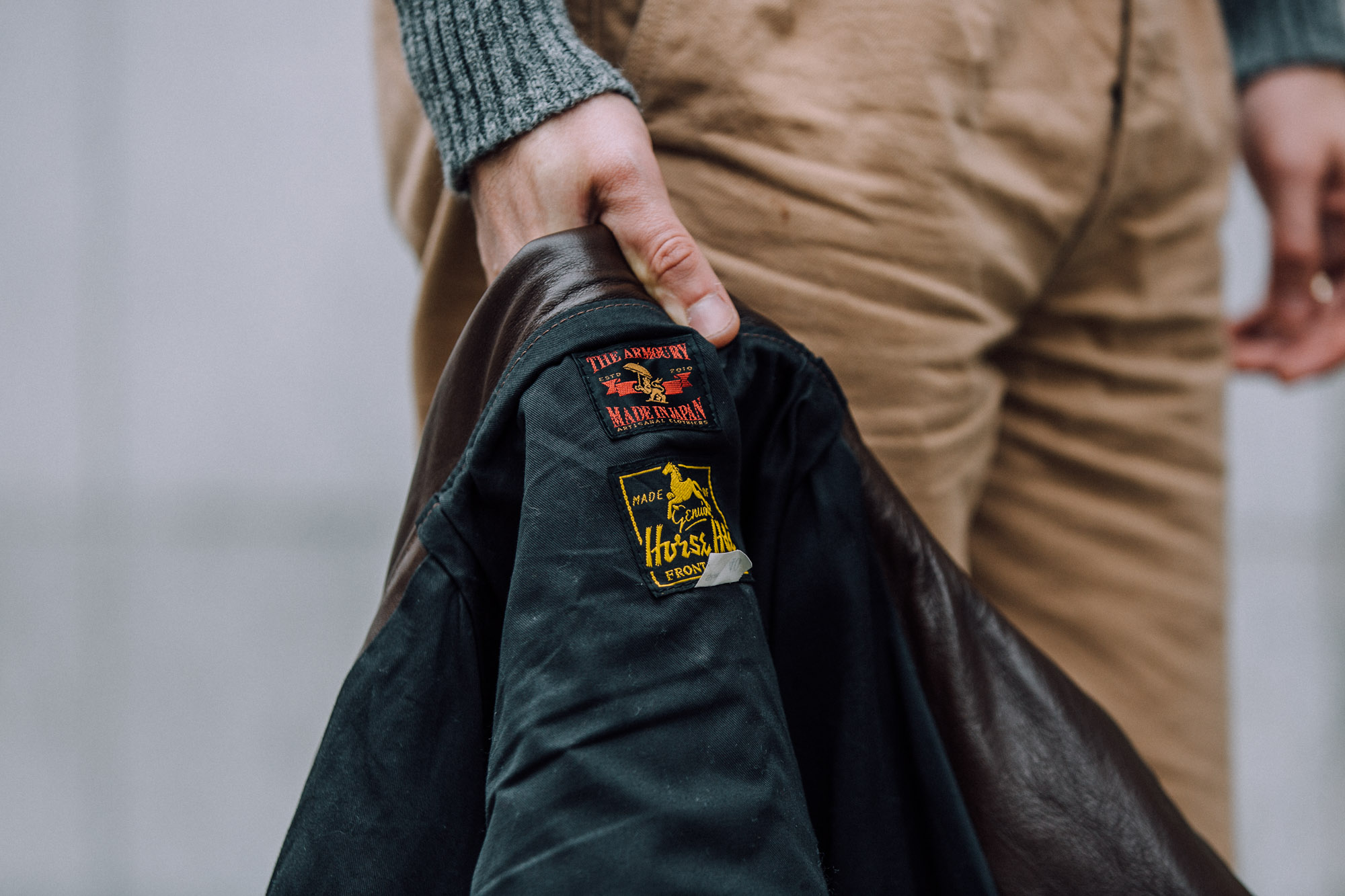
Earlier this year I also got an asymmetric horsehide jacket that The Armoury made with The Real McCoy’s (above). I've loved how that has moulded to me, and I'll do a full article at some point.

My Filson briefcase is a large twill model – bought second-hand with extensive repairs, but subsequently also hauled all over the world.

It’s very practical, and a good accompaniment to other casual clothing (it's shown above with the Wolverines).

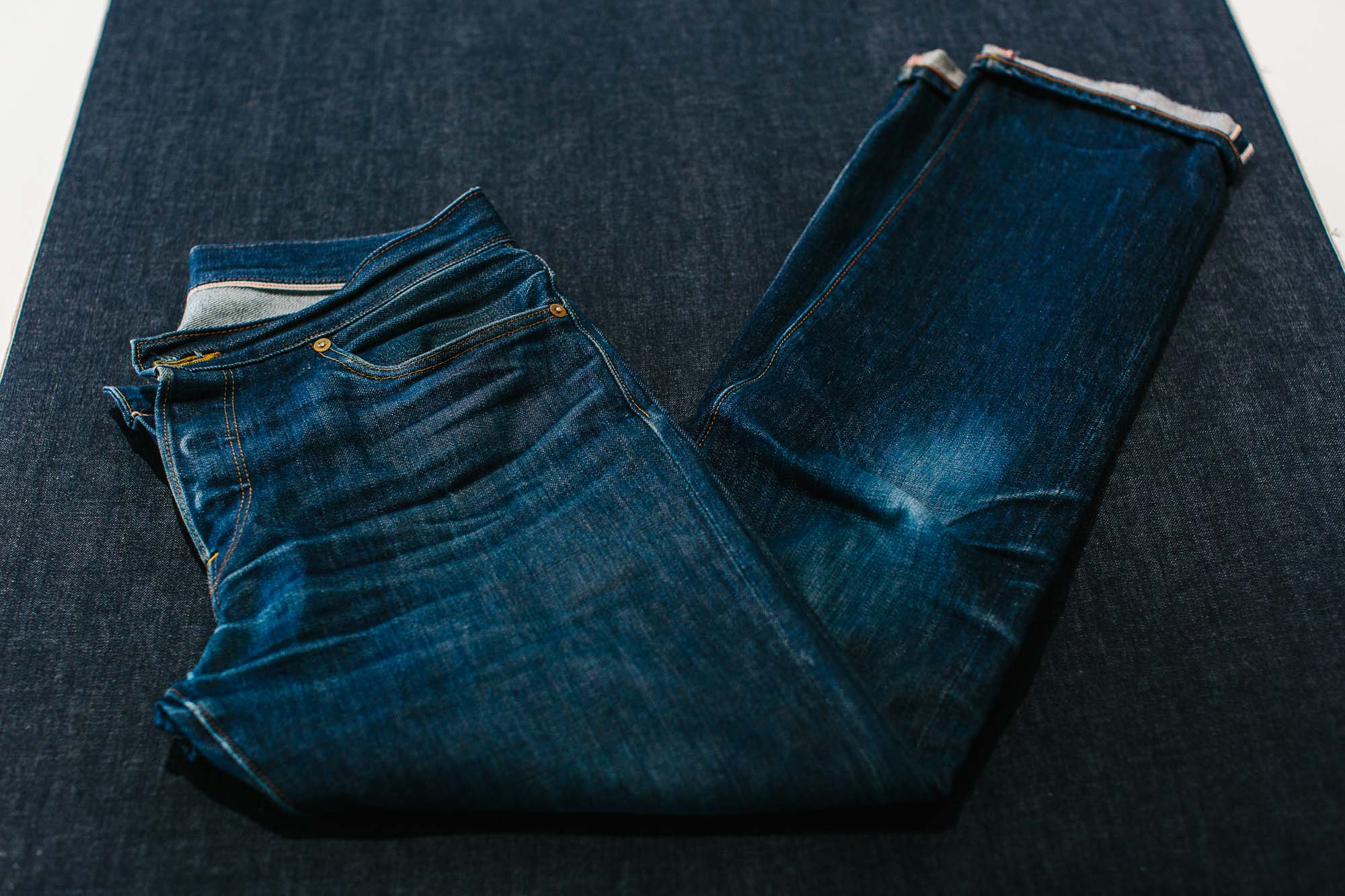
Jeans of course I’ve covered consistently too. From Levi’s bespoke (above) and more recently from Blackhorse Lane.

I don't think I've ever talked about The Armoury’s 'Army' chino though, which is the only chino I’ve ever had that wears in like denim. My pair are also in that shot above with the Filson and Wolverines.

The Army model hasn’t been available for a while, but I’m told The Armoury are working on a new version.

Loopwheeled sweatshirts are wonderful, and the ones I wear most are from Merz B Schwanen (above). But I also have models from Loopwheeler in Japan (pictured bottom) and The Real McCoy’s here in London.

Real McCoy’s T-shirts are lovely and thick, but they are rather square, having no side seams.

I recently got hold of a Flat Head one that is better - via Rivet & Hide - as it is circular knitted but then cut and tapered, before being re-sewn.

For anyone that's interested in this type of clothing, several shops in London are mentioned in the article.

They include Son of a Stag, The Real McCoy’s, Nigel Cabourn, Rivet & Hide and the recently opened Clutch Café.

They’re in three clear groups, in Shoreditch, in Covent Garden and near me in Fitzrovia, so easily visited in batches.

My last thought on the topic would be that I find it’s easiest – certainly at the start – to concentrate on one genre of casualwear.

Horsehide jackets go great with raw chinos, cotton sweatshirts and canvas trainers. Common Projects-style trainers are better with slim, washed chinos and buttoned suede jackets.

Nothing wrong with mixing them up in time, but I think casual wear should not just look relaxed, but be casual and easy to throw on as well. More on that here.

And whatever you wear, it's all better than athleisure.

Photography: Jamie Ferguson, for Plaza Uomo, Levi's and The Workers Club; except Merz B Schwanen shot, James Holborow.

Video: Maintaining and caring for your suit

Video: Maintaining and caring for your suit

Friday, November 9th 2018
||- Begin Content -||

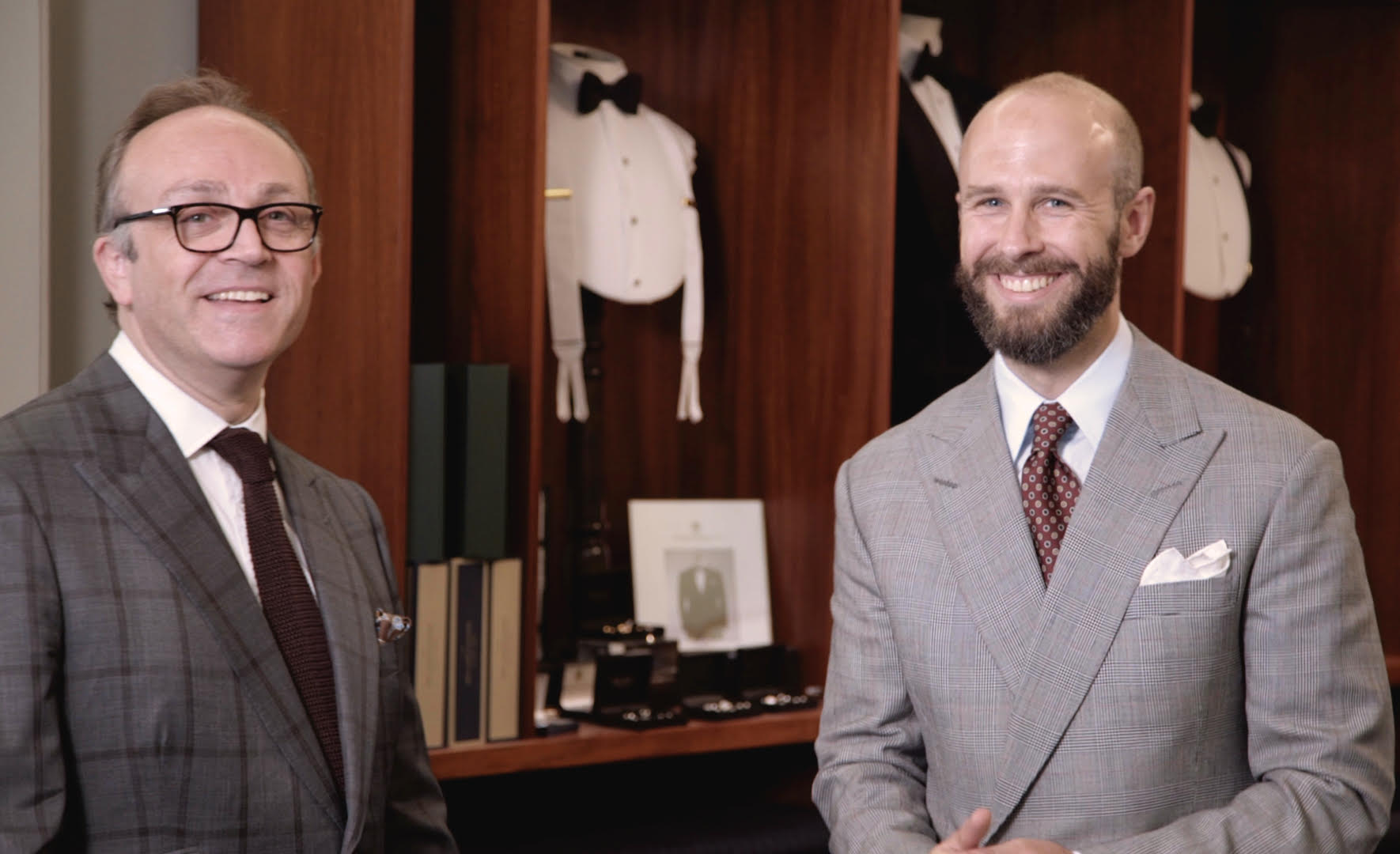
The Campaign for Wool recently asked me to help them with a series of videos educating people on caring for wool products.

Chaired by HRH Prince Charles, the Campaign is a charity that communicates how environmentally friendly and sustainable wool is (particularly compared to plastics).

Wool Week took place last month, with a stand in Covent Garden showing how wool can be washed and deal with stains. I spoke for a while on stage, as well as Patrick Grant, Jeremy Hackett and others.

You can read about the Campaign and wool's attributes here.

Our plan in the series is to cover different aspects of caring, cleaning and repairing - of both tailoring and knitwear.

The first, above, was filmed at Henry Poole a few weeks ago. There is a fair amount of overlap with the video we did with Richard Anderson a few years ago, but beyond this the films will cover new territory.

As ever, comments and questions welcome below.

Thanks.

White tie and blue shirt: Sunny formal in Sartoria Ciardi

White tie and blue shirt: Sunny formal in Sartoria Ciardi

||- Begin Content -||

Wearing a white tie with a blue shirt is something that makes perfect sense in Naples.

To a certain extent, wearing sugary-pink jackets and lapis-blue tailoring makes sense too. It's just sunny so much of the time, even in winter - and that sun is strong.

Bright colours seem most congruous on bright days, and there are far more of them in the south of Italy.

In the UK, you need to wait for the sun - and then take your chance. For me that means getting out bright jackets, cream trousers or - as here - a white tie.

When I first saw this colour combination, I think it appealed most because it was unusual yet subtle (a running theme through many of my preferences).

I'd never seen anyone in the UK wear a white necktie like this, and yet it didn't seem out of place in a professional office.

Indeed, some might be happy to wear the combination any day of the year. I just like waiting for particularly bright, sunny days.

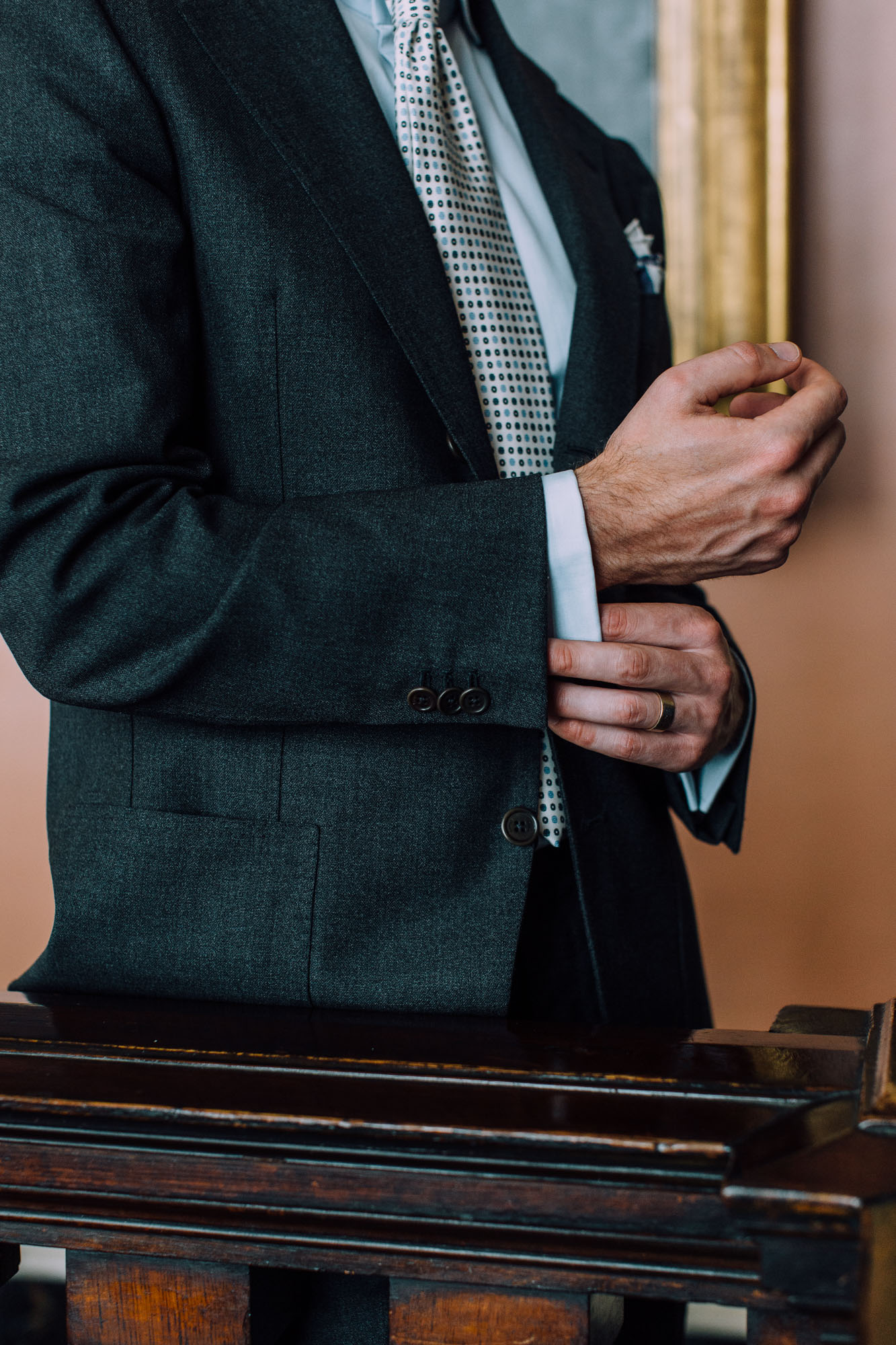
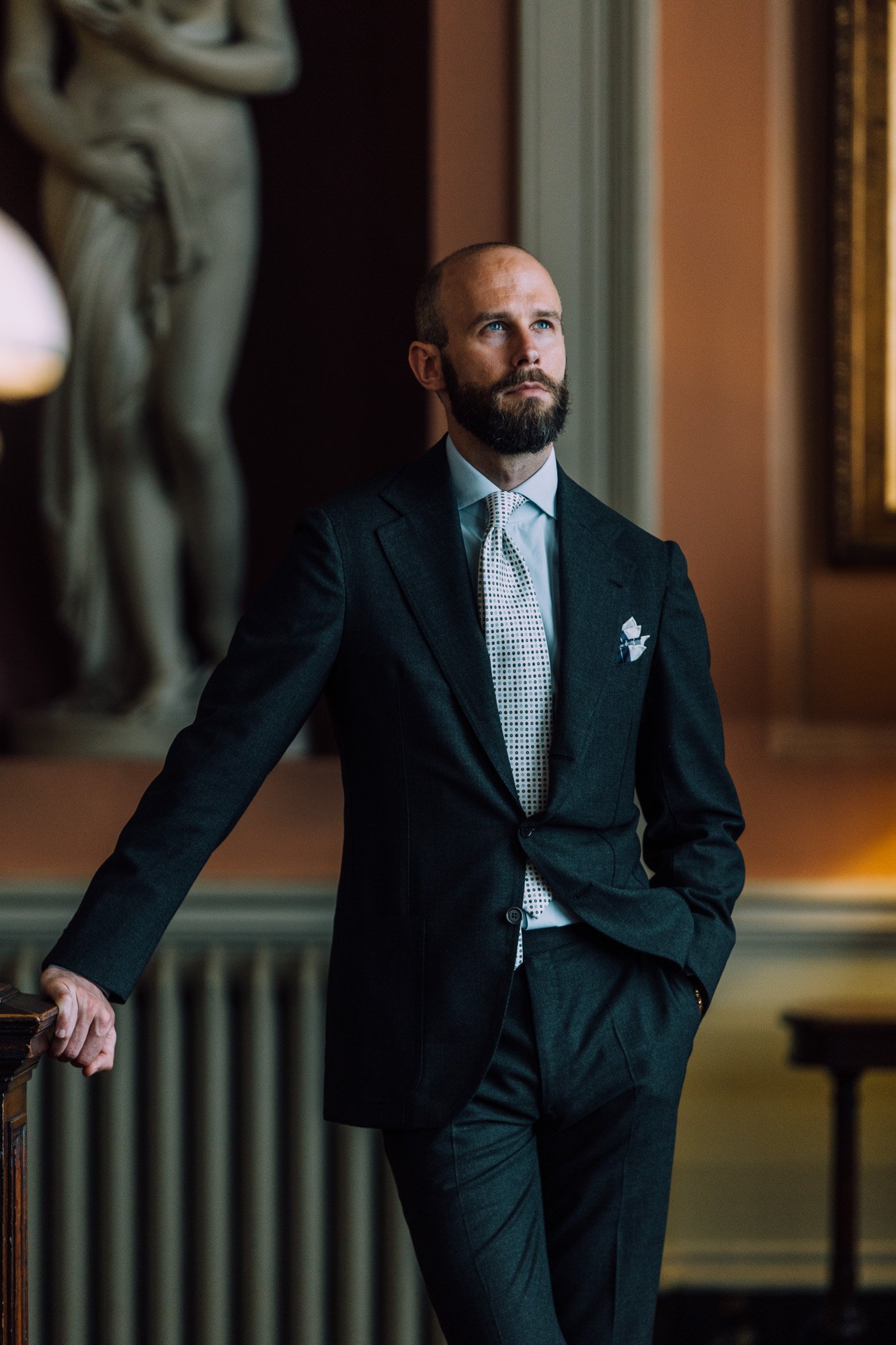
It took me a year or so to buy this one (from Marinella) and then a couple of experiments to decide I liked it best with grey suits - particularly dark grey, as pictured.

It's a printed silk, with the print a regular geometrical pattern in pale-blue, black and navy - colours which also make it easy to combine with formal tailoring.

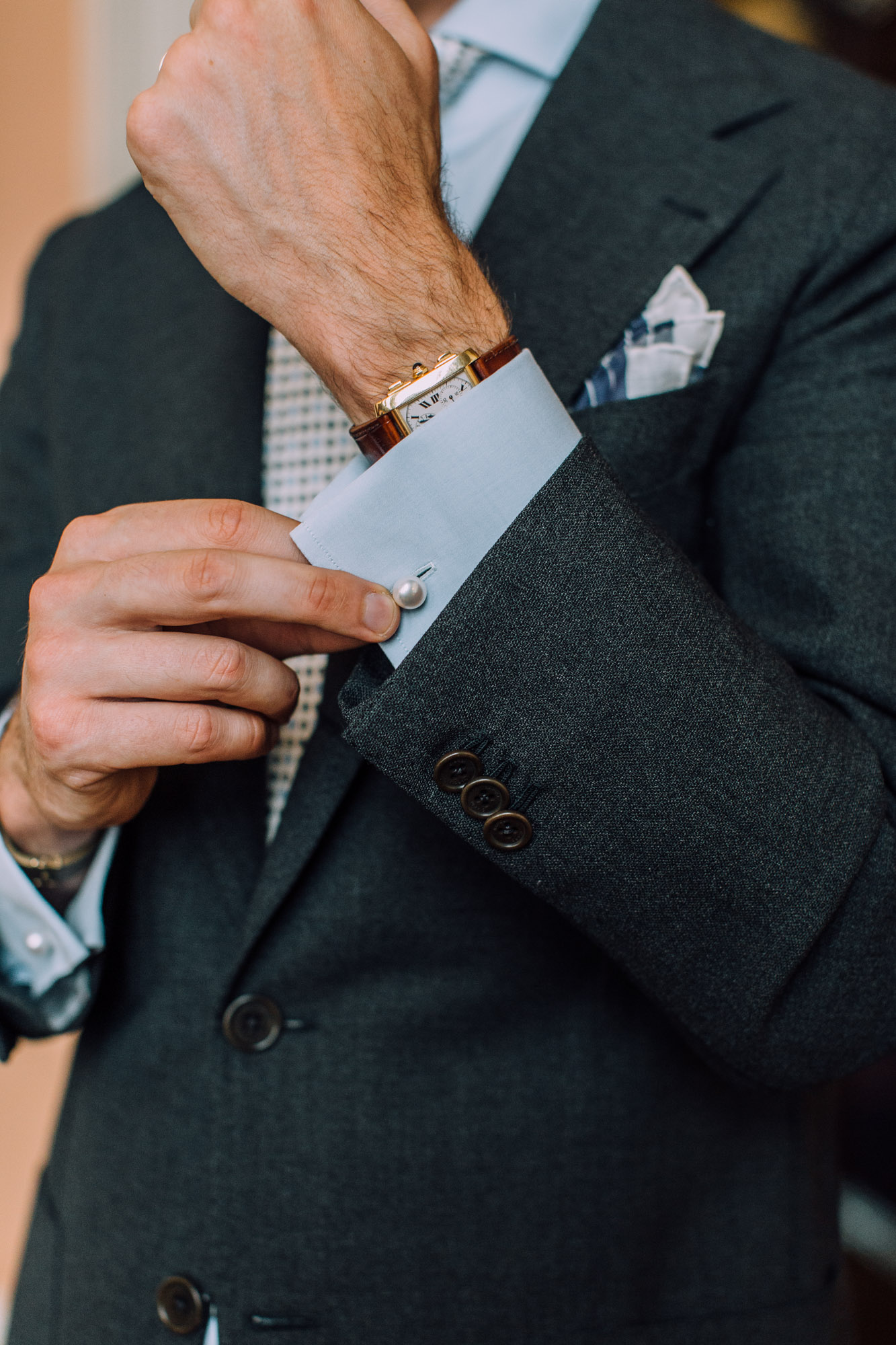
Those colours are reflected in the cotton handkerchief from Simonnot-Godard, which is white with navy bands around the edge.

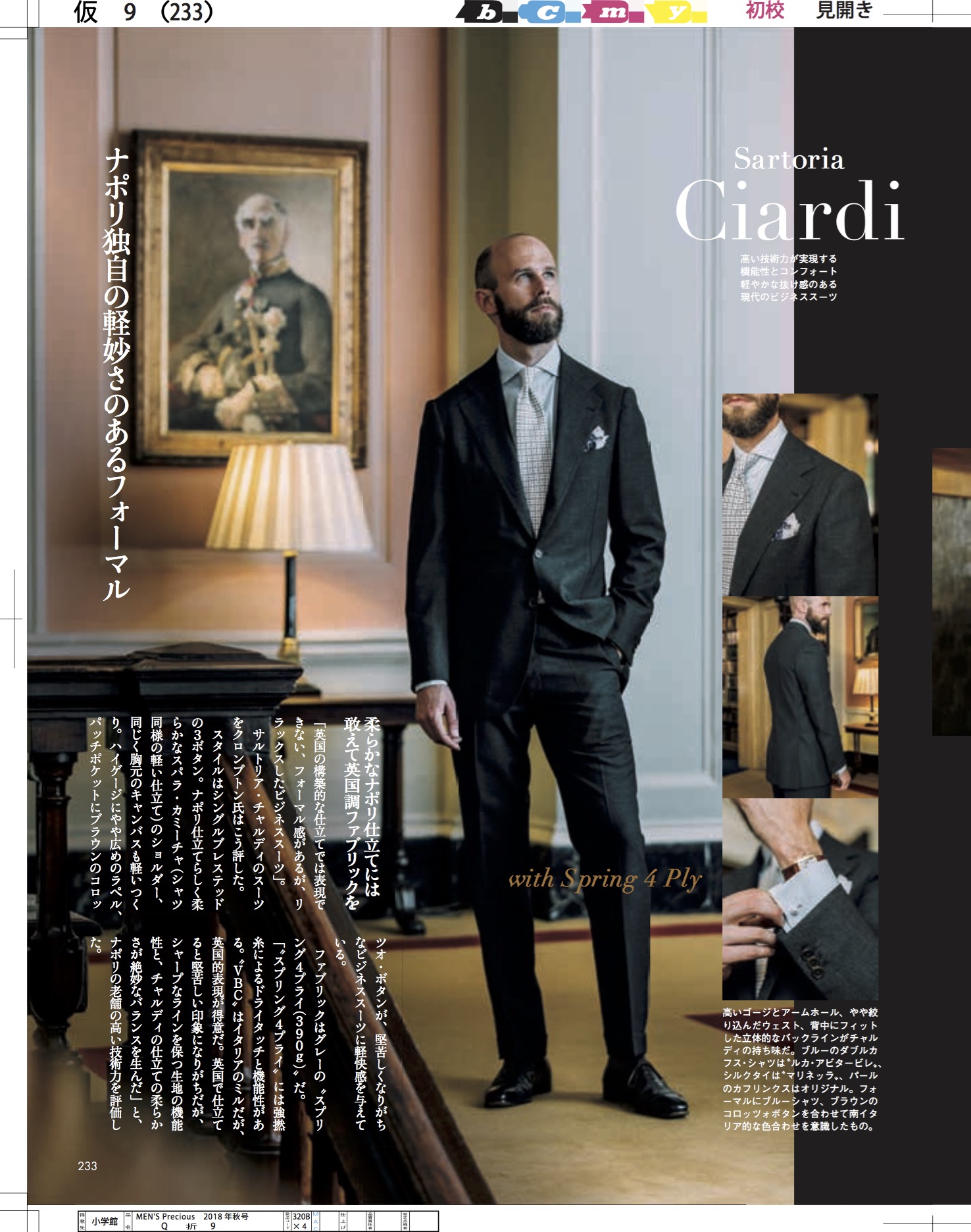
The suit readers will probably recgonise as my first from Neapolitan tailor Sartoria Ciardi.

It has become pretty much my default dark, professional suit, and I think this is largely because it combines the soft Neapolitan cut so well with a sharp, formal cloth.

In fact, I was conducting a personal consultancy session with someone last week - discussing investment in a new wardrobe - and this was the suit we ended up circling around.

He wanted something light and soft, Italian and rounded, yet still suitable for any client meeting or official engagement. This ticked all the boxes.

Since having this made, Sartoria Ciardi have started coming to London more often - and are here next December 12-14, at 9 Hertford Street. Contact [email protected] for details. Suits start at €3200.

The cloth has become one of my favourites for high-twists, and I plan to use it for some trousers for the summer as well.

It's a four-ply worsted in 21 micron wool from Vitale Barberis Canonico (853.601/56, 390g). I've found it has performed well, hardly creasing and feeling light and airy to wear.

At 390g it's a good deal heavier than most high-twists, but I found it fine even on hot days in Italy.

For those that want something lighter, there is a two-ply option which I mentioned I'm using for my Sartoria Cornacchia pale-grey suit here.

Although it's not that important to me, some readers also mentioned that they like vertical integration. For them, VBC is (like most big Italian mills) highly integrated, doing all the spinning for this cloth themselves as well as the weaving.

That's particularly challenging on a heavier high-twist like this, as two two-ply yarns have to be created, before both then being twisted together again to make the four-ply.

The shoes are my (very) dark-brown oxfords from Cleverley: the first shoe I had made bespoke, and a nice match the dark-brown buttons of the suit.

[There is a full series on the stage-by-stage making of these here.]

They've worn well, except for their tendency to throw up a salt stain at the first sign of precipitation (something I largely put down to the thin soles).

You can also see above how there was too much fullness through the arch of my foot initially - subsequently changed for my next pair, black imitation-wingtips.

The other accessories are socks from Bresciani, Permanent Style cufflinks in white pearl, and my Cartier Chronoflex watch on a bespoke strap from Jean Rousseau.

The suit was part of a recent feature for Japanese magazine Men's Precious looking at three recent Italian suits of mine - thank you Yoshimi Hasegawa for your help there.

Photography by Jamie Ferguson at the Traveller's Club in London.

I couldn't find the same tie online from Marinella, but let me know if you spot it anywhere.

In the meantime Viola Milano seems to have the biggest range of printed silks with a white ground.

George the Presser

George the Presser

Monday, November 5th 2018
||- Begin Content -||

*Note: George has now combined with Celebrity Dry Cleaners and The Jaunty Flaneur shoe care, to form The Valet, offering all three services*

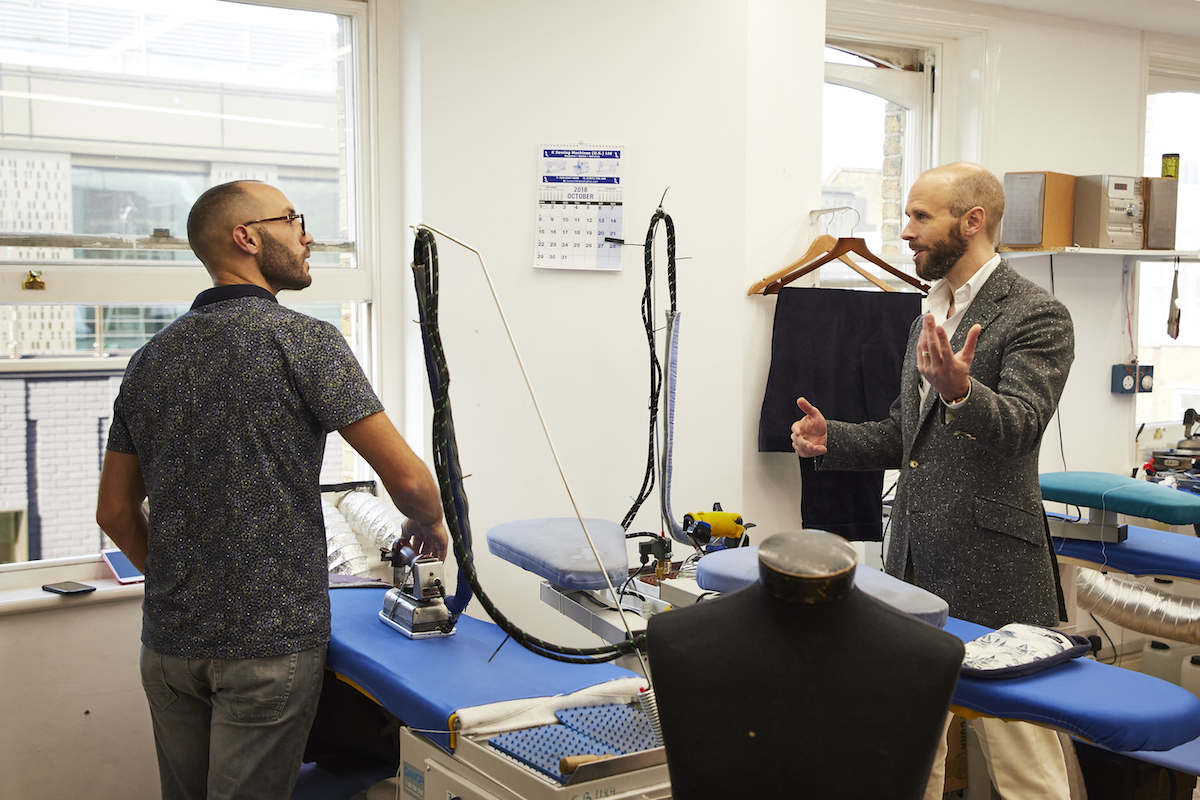
There are many unsung heroes of bespoke tailoring, but one of the biggest has to be the presser.

Frankly, a jacket can look awful once a coatmaker has finished with it - dragged all over the place and wrinkled to hell. It’s the presser that gives it life again, bringing out the beautiful shape of bespoke.

Pressing is also almost as good as shoe polishing for making something feel new. (Or better than new, given how you’ve now broken in and shaped the canvas.)

The steam relaxes the fibres and helps them recover their original shape. And it cleans - surface dirt taken off and odours washed out.

Unfortunately, this kind of service is not something that’s easy to get unless your tailor is local.

A Savile Row tailor will happily take in your suit and give it the once over (often, these days, for a fee) but they usually won't with the work of others.

So what to do when you use tailors like Ciardi, Solito, Cifonelli or Caliendo, who visit here from Europe?

It’s a lot of fuss to go see them at a trunk show, give them a few pieces, and then go see them again at the next show just to pick them up.

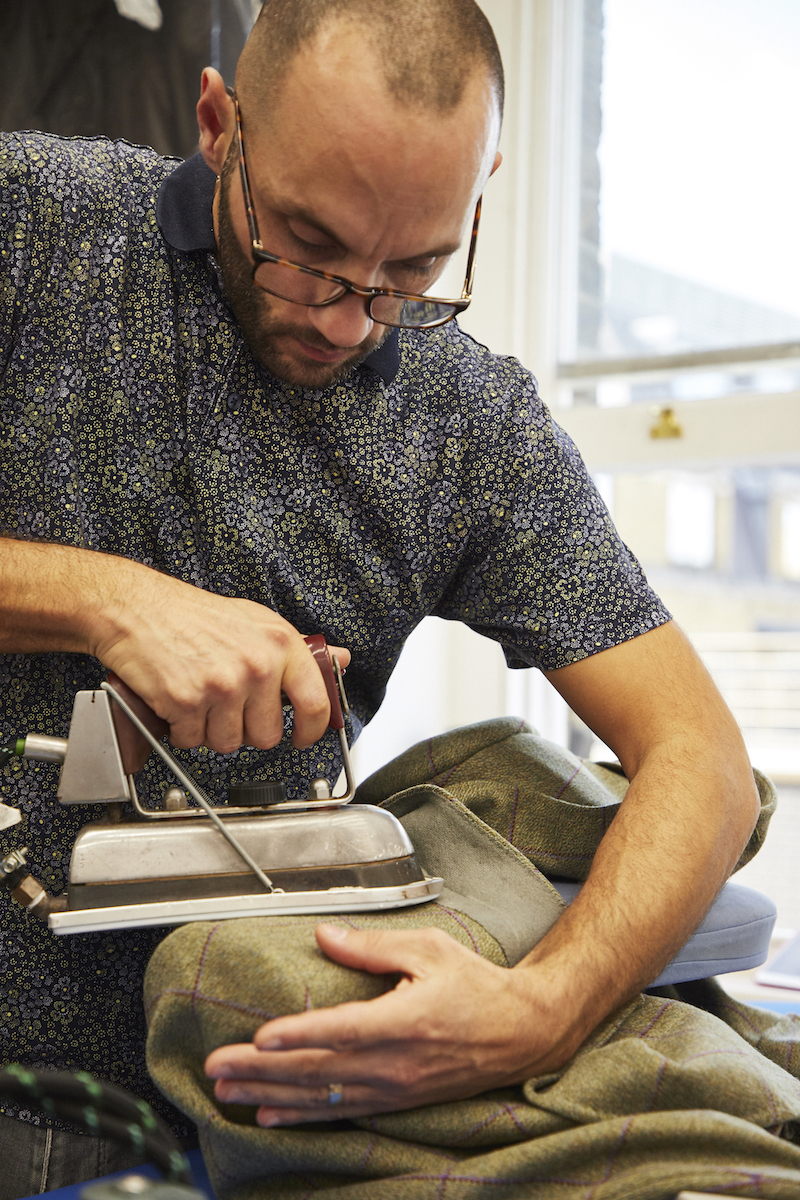
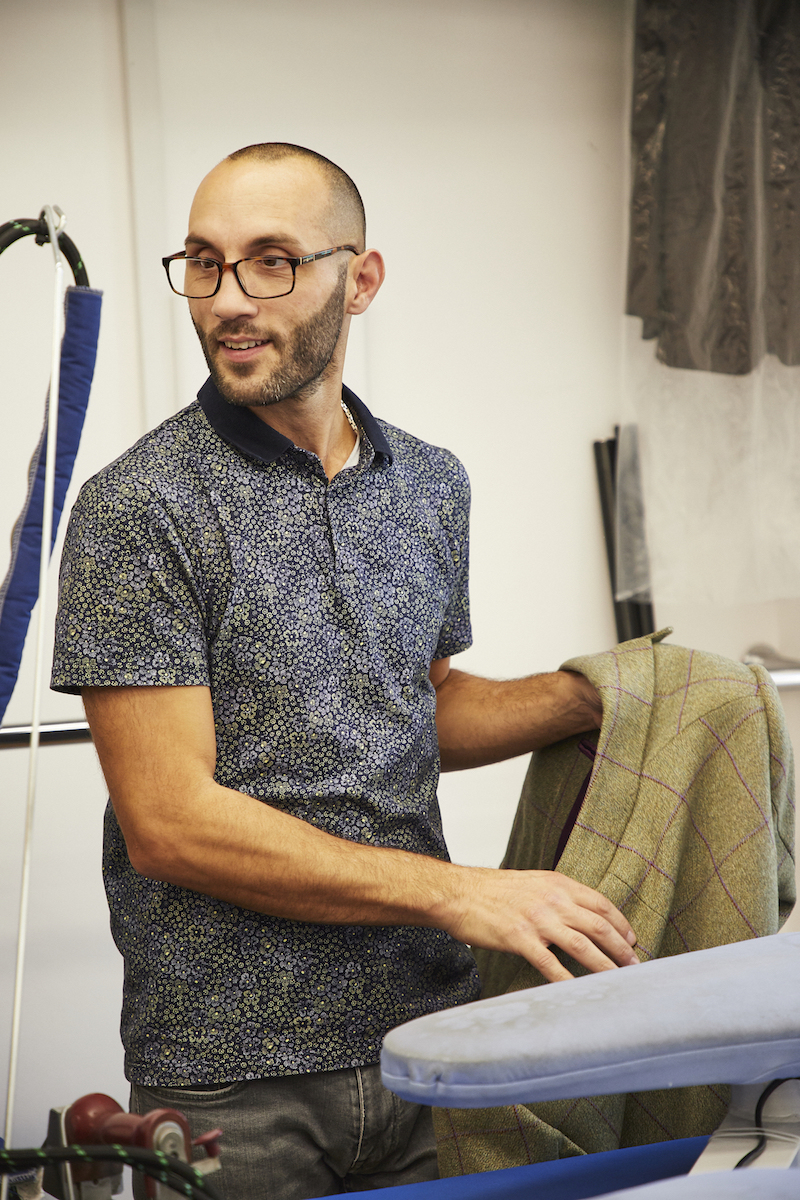
I’d looked for a presser who would take outside work for a long time, and many people recommended George Varnava (pictured), who does pressing for many of the Savile Row houses.

For years George was based in some of those houses, latterly Huntsman (although being independent) and therefore couldn’t take on private customers.

But last year he set up on his own - on the top floor of 59 Brewer Street in Soho, under the name The Pressers. 

George now has three people working for him in this space, and is taking on an increasing amount of private work.

I’ve used him for several things, including all the suits and jackets from foreign tailors featured in our Style Breakdown series.

He also said he’d done several suits of mine over the years from various Row tailors.

George’s work is great, as you would expect.

There was a risk that an English presser wouldn’t have much experience with foreign tailors, and wouldn’t get the roll quite right on the jacket, for example.

But George got that spot on. He even explained how he alters the roll very slightly up or down, for different customers. Another likes a harder crease on his jackets because he thinks it looks sharper.

Of course, the roll of a lapel is carefully set by the tailor; its intended place can be seen by the position of the seam on the front edge; and it is held to a certain extent by the tension in the collar. But some small variation is still possible.

The only thing George didn't quite got right is the vent design on my Camps de Luca suit.

The overlap on a Camps jacket is large, and folded back so the vent looks more like a pleat. George pressed this flat, but it was easily fixed.

It’s important to emphasise that George is only a presser, and won’t do the various other services a tailor would, such as tighten buttons, repair linings, or spot clean.

If you need those things, it’s best to take it to a tailor (original or other). George also has a local repair tailor he works with, who things can be passed onto.

George has some people send him pieces that have been dry cleaned, but not pressed yet. So that’s an option if the suit needs a clean.

“When things come from the dry cleaner they’re not in bad shape, because the cleaner will normally have put them in a steam room and taken the wrinkles out that way,” says George.

“But the suit will have no life in it. It won’t be shaped or three-dimensional. Most of the beauty of bespoke tailoring, basically.”

Another good option that I’ve recommended before is Michael Norman, who cleans and presses tailoring well. (www.mnbespoke.com)

Michael’s slight disadvantage is that he doesn’t have a physical location, but rather comes to pick things up.

George will pick up pieces from anywhere in London, but some clients do also send things in by courier from around the rest of the UK.

“One client has his driver come over every couple of weeks, with a dozen pieces hanging up in the back,” says George. “He likes things very sharp. All the time.”

When I visited most recently, to take these images, it was nice hanging around and actually watching George at work for once.

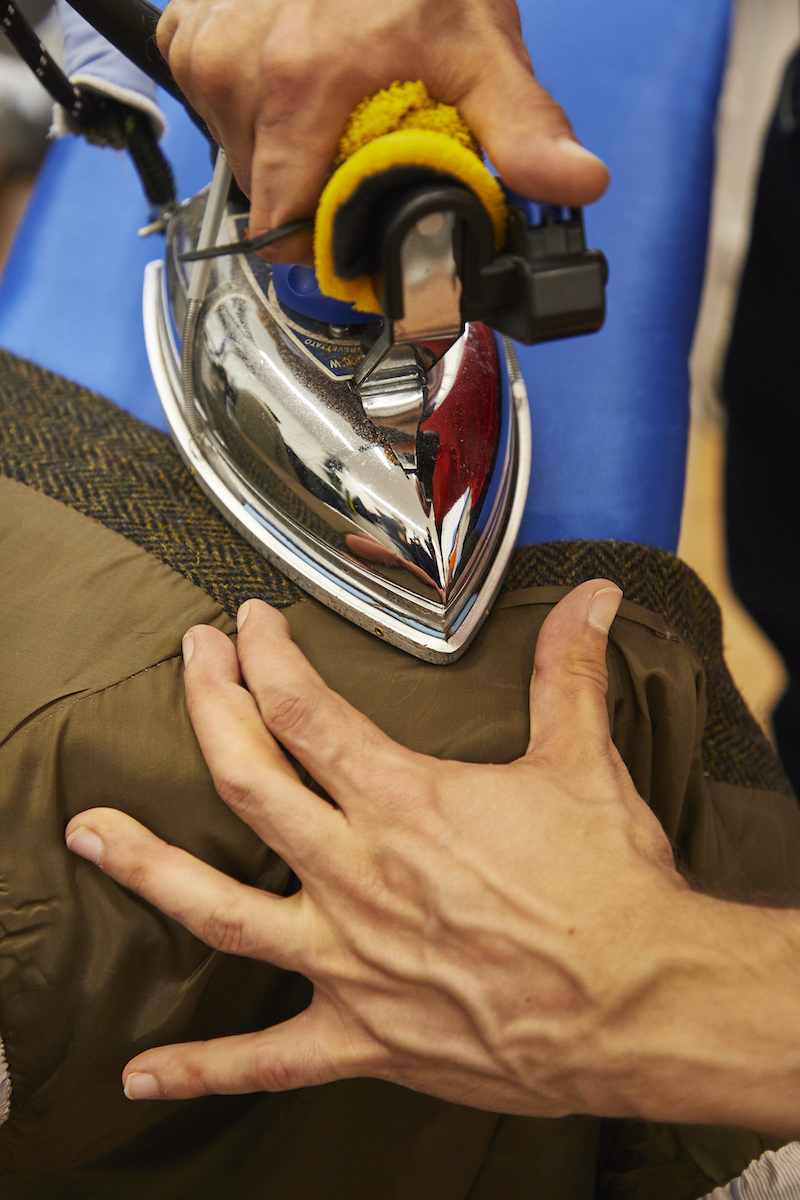
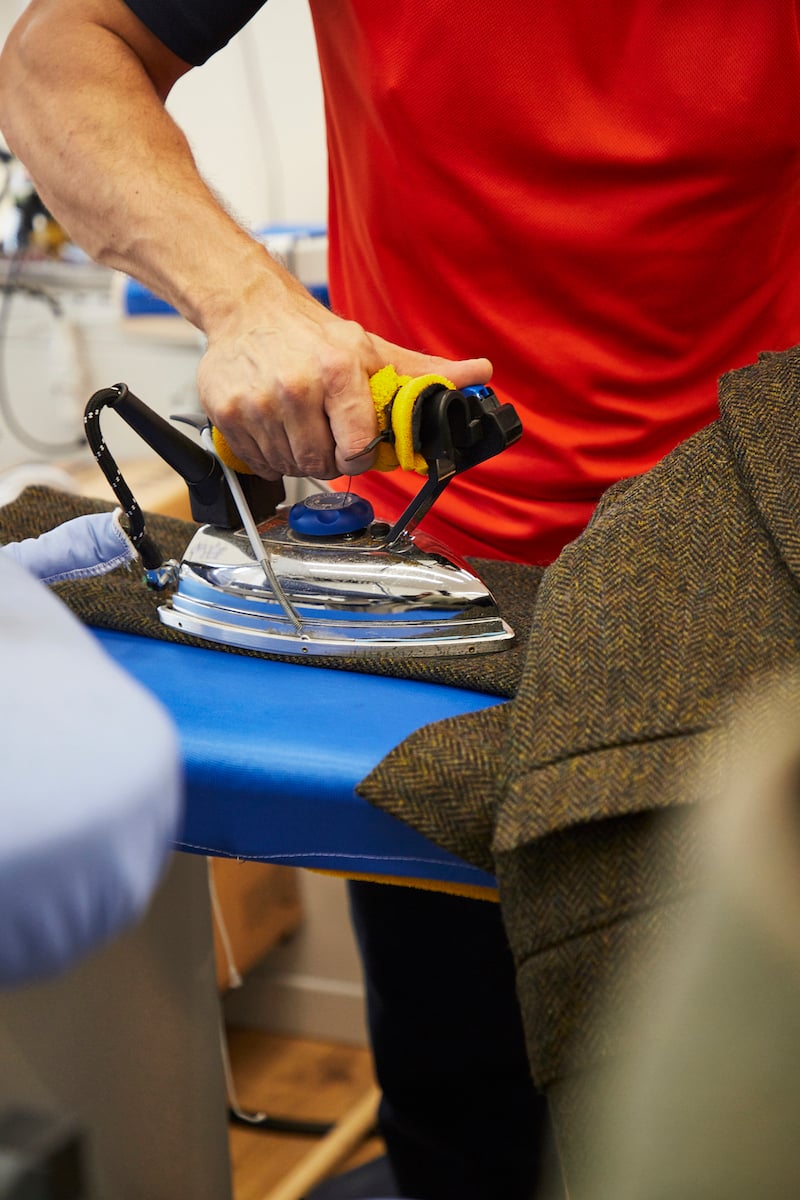
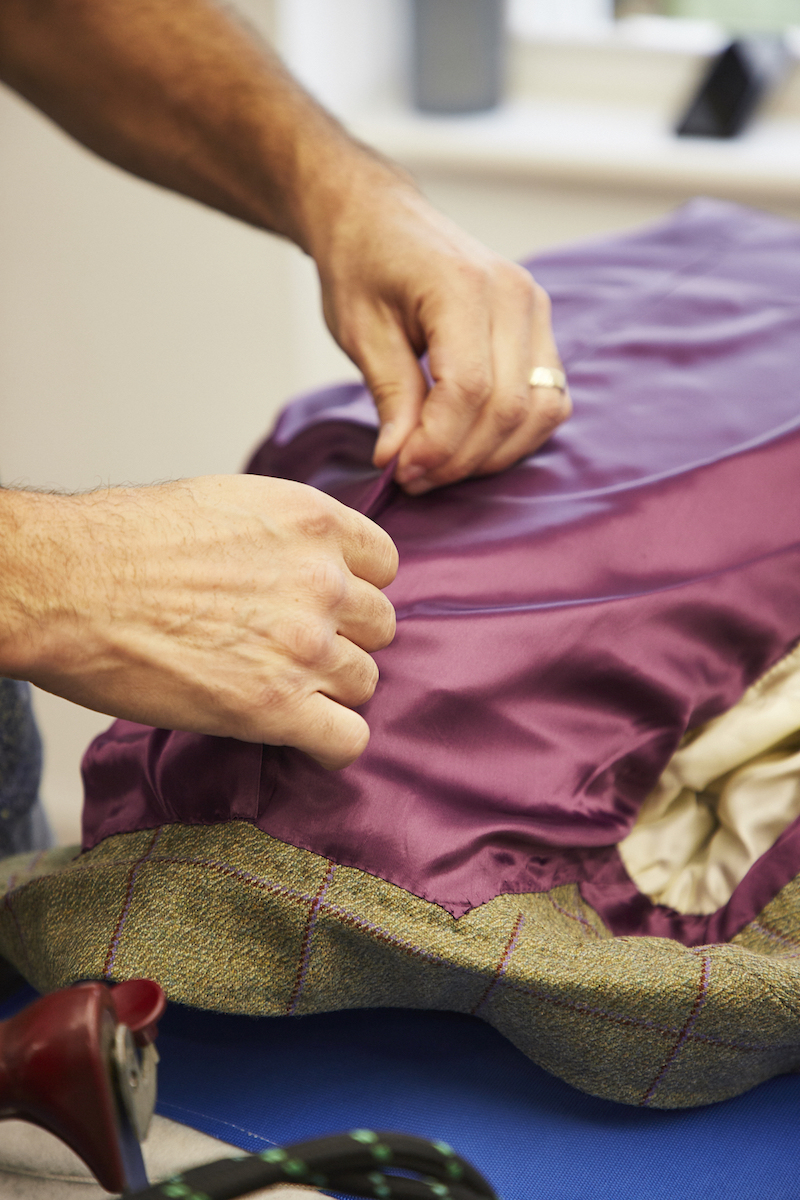
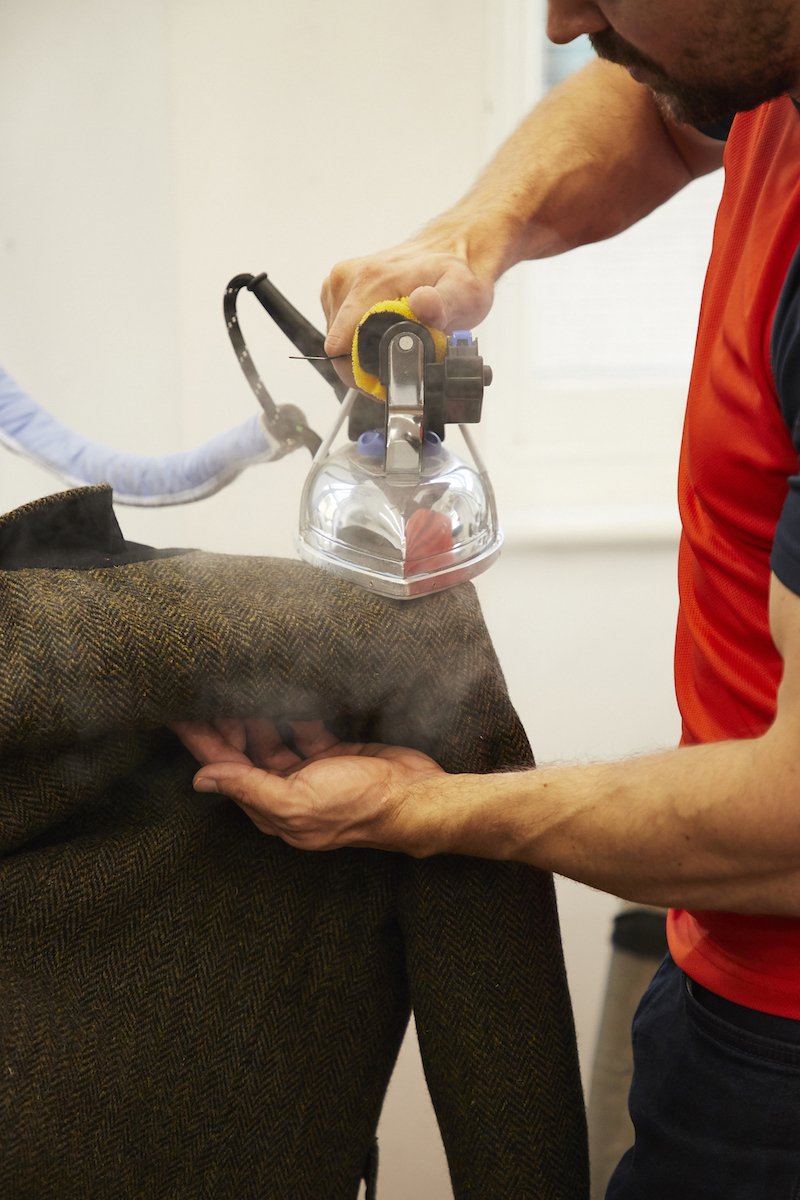
Good pressing is so labour-intensive. The lining, for example, has to be pressed into shape before the outside can be done (to avoid distorting the outside). In the image above George is doing that on the pleat down the centre of the lining in the back.

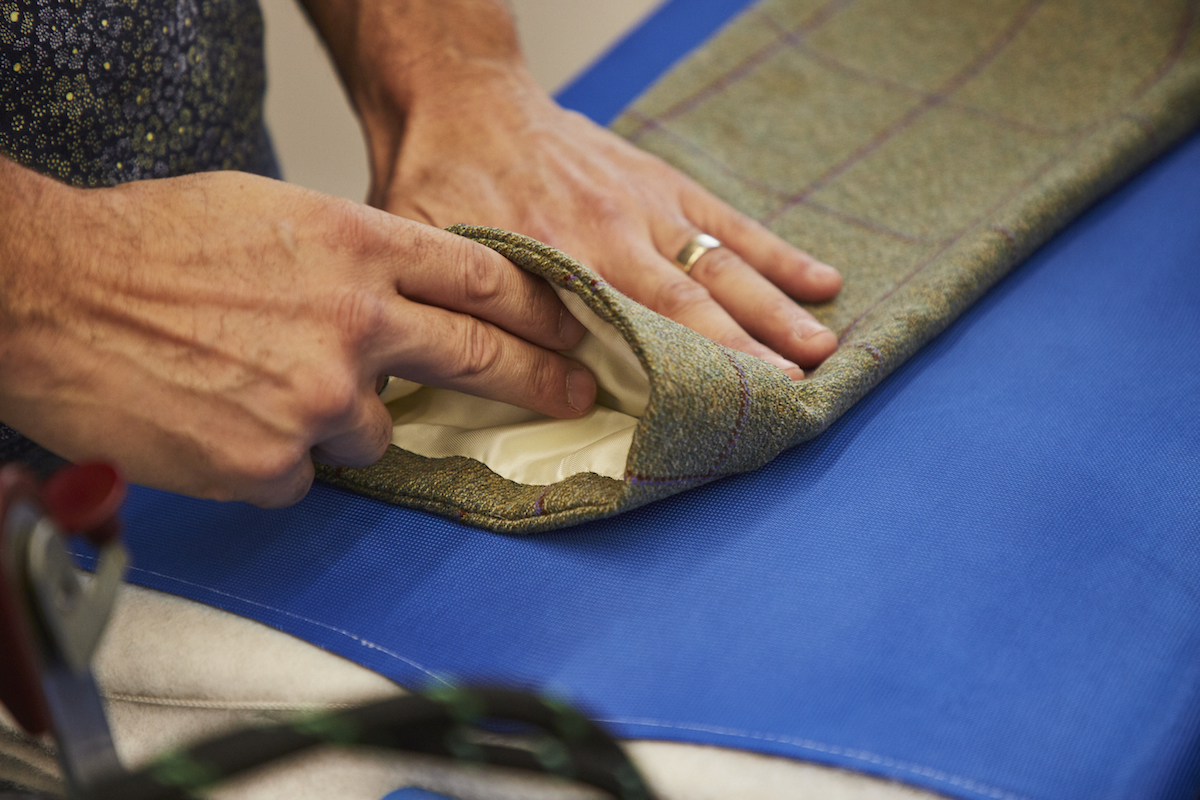
But then, once the outside has been done, the lining has to be finished again, because it will have become slightly wrinkled while working on the outside. Below, George is finishing off the end of the sleeve lining.

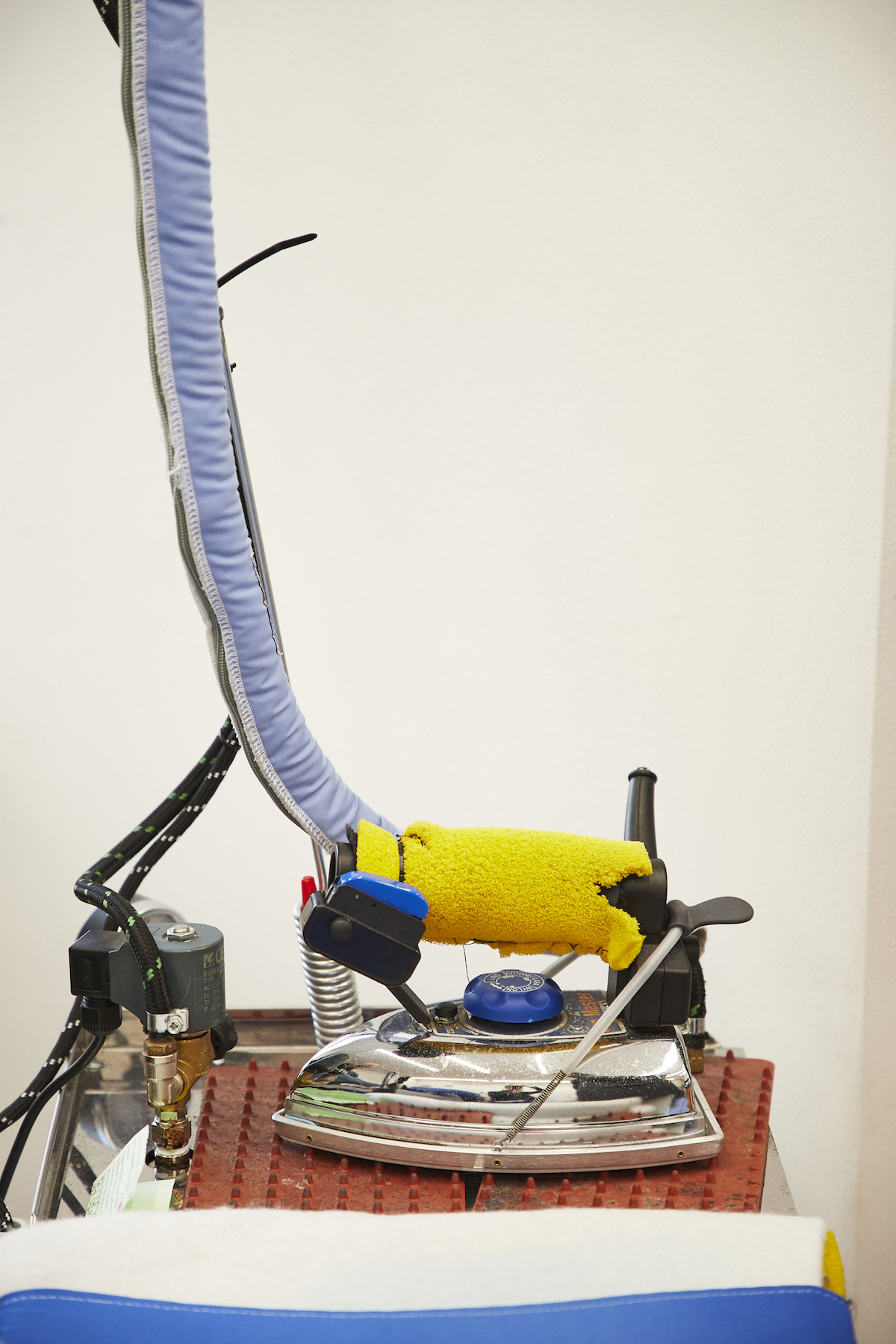
And then there's the shape put into the chest and shoulders, which involves manipulating the jacket around a board, and applying a surprising amount of pressure.

George doesn't have a website, but can be contacted on [email protected] and 020 3370 4068.

Address is 59 Brewer St, 4th Floor Room 4A, Soho W1F 9UN.

Pressing a two-piece suit starts at £50, a jacket £28.

For more recommended places for clothing care and alterations in the UK, see post here

Photography: James Holborow

Video: The New York Symposium – Dressing up and down

Video: The New York Symposium – Dressing up and down

Friday, November 2nd 2018
||- Begin Content -||

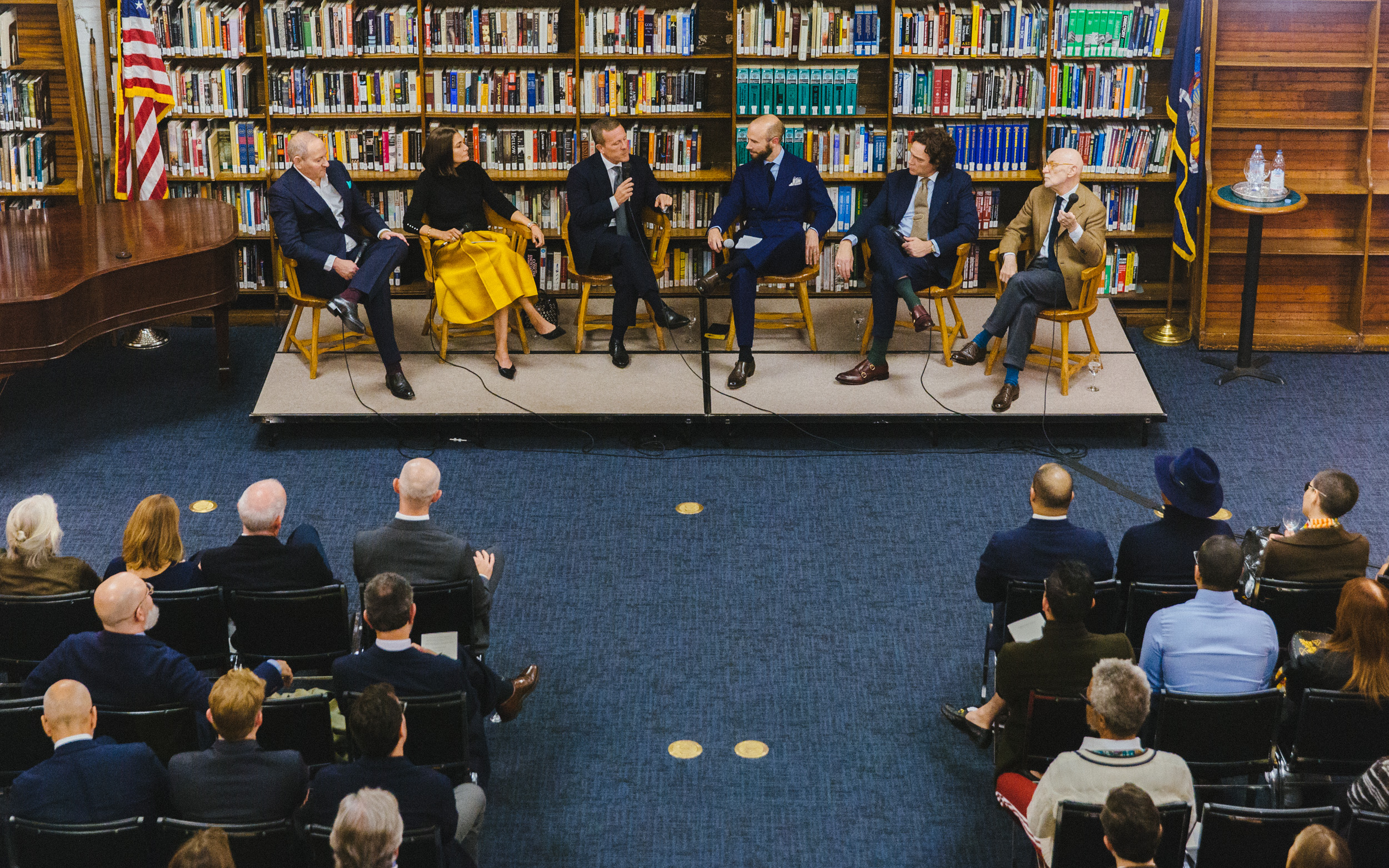
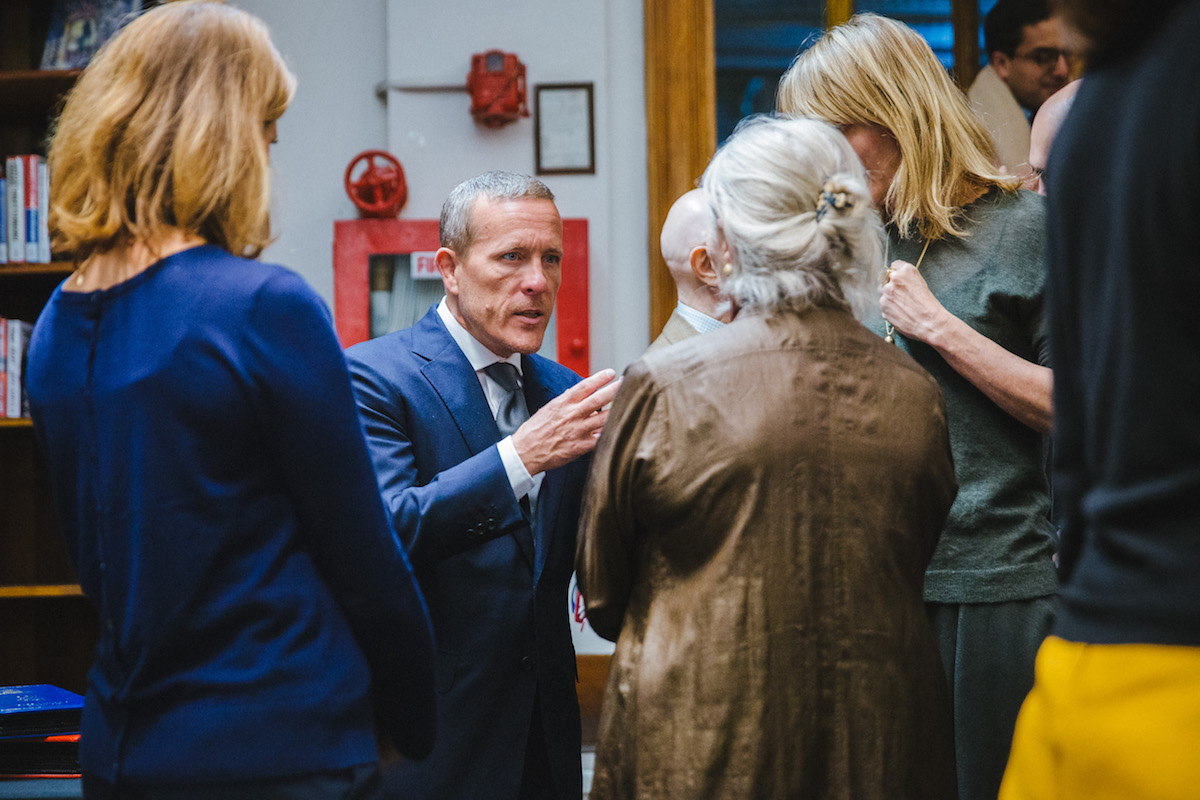
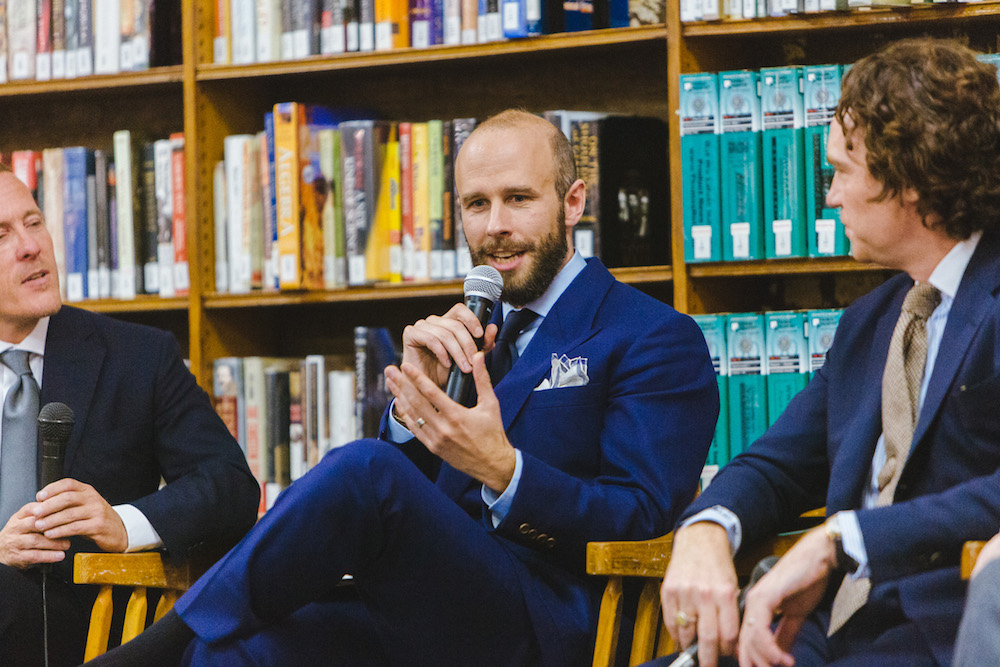
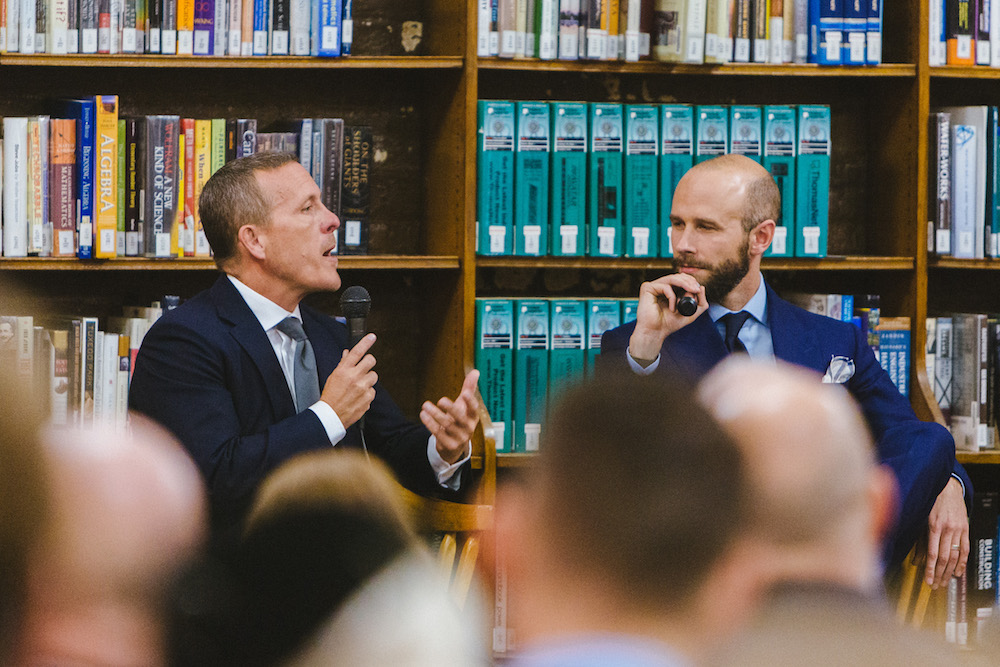
'Dressing up in a Dress-Down World' felt like a very timely subject for this Symposium, our first in New York.

And particularly relevant in the US, perhaps, where there has always been a cultural aversion to dressing too smartly - in the so-called 'classless society'.

It clearly hit a nerve with the attendees, who filled every one of the 200+ places, and were talking about it before and after.

Although we all had prepared questions (eg. Is dressing up still considered a compliment to the host of an event?) the talk quickly swung to other areas.

Such as the difference between public and private selves. Or whether anyone should ever dress like their son.

Scott Schuman criticised menswear fanatics for snobbishness.

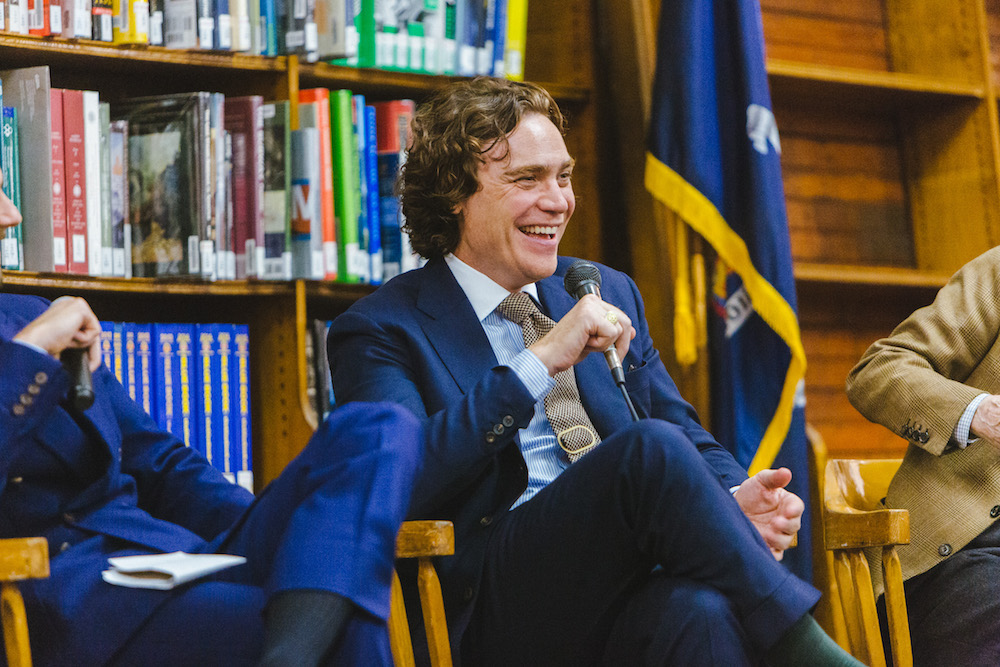
Jay Fielden complained he got thrown out of a country club, despite being better dressed than anyone else.

And Bruce Boyer explained why he's similar to a corpse. It was quite entertaining.

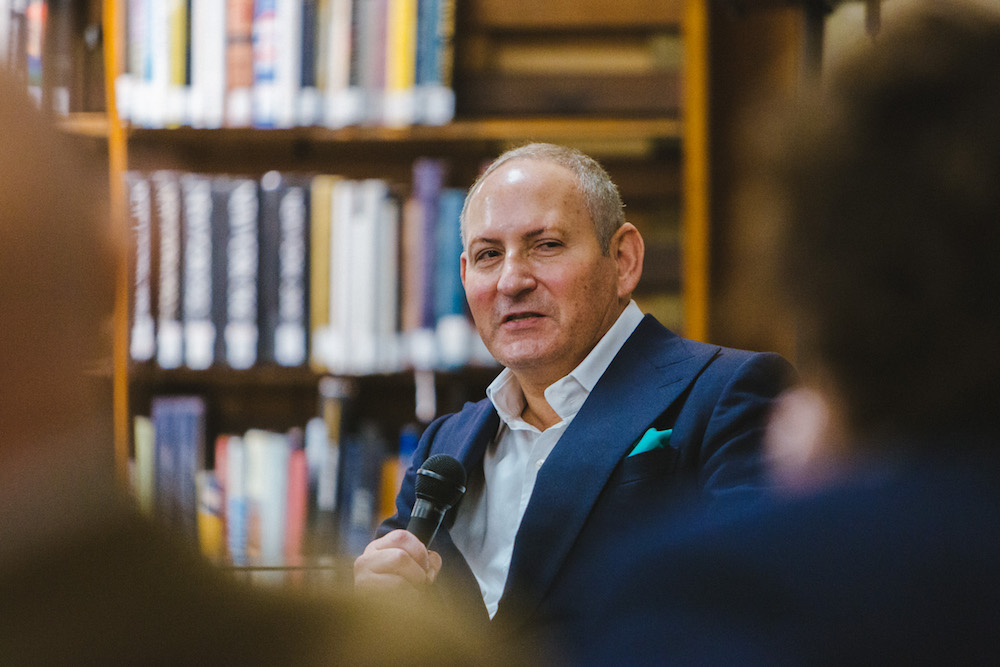
I was particularly glad to have such a range of speakers - to break out of the menswear bubble. Averyl Oates was particularly effective there, given her fashion background, as was Scott given his coverage of men's and women's. John Demsey was very personal and insightful.

As I say at one point, the best news I heard all evening was that Estée Lauder is finding that quality and information is the best way to sell cosmetics today.

If it's happening with beauty products, there's hope for everyone.

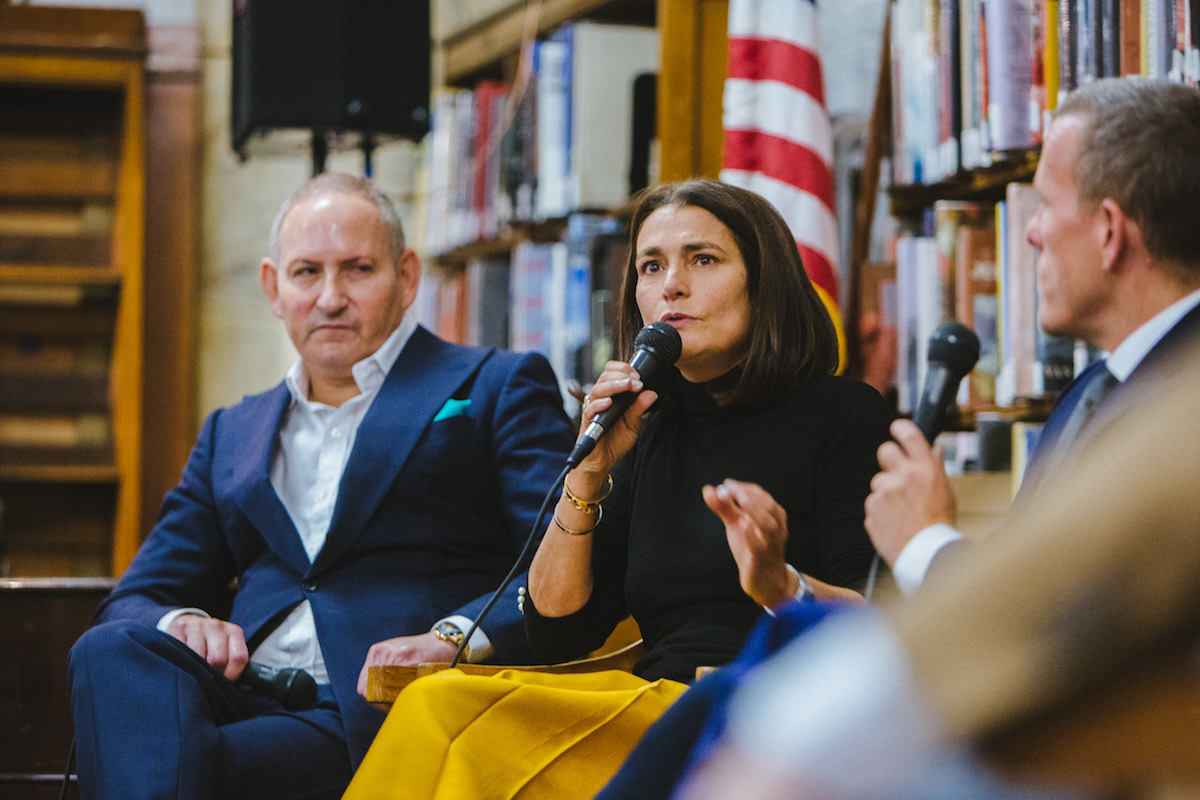
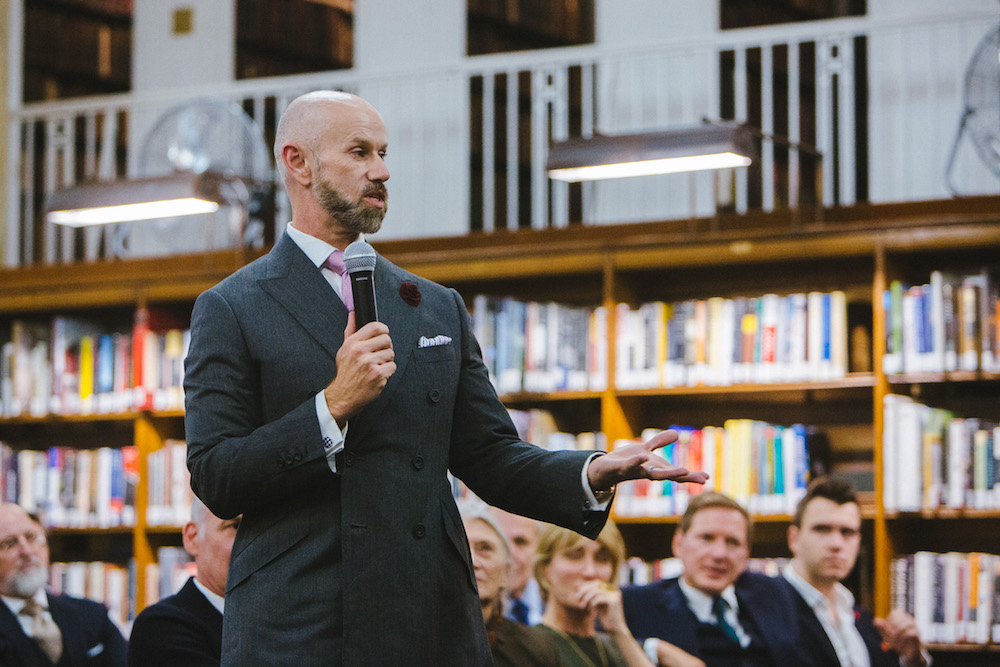
Below are our lovely speakers and their titles. Thank you everyone for coming, and particularly to Budd and Anderson & Sheppard, who made the whole thing possible.

Enjoy the video.

Myself, Simon Crompton
John Demsey, Group President, Estee Lauder (and an A&S customer)
Jay Fielden, Editor in Chief, Esquire
Scott Schuman, The Sartorialist photographer
Bruce Boyer, author
Averyl Oates, Managing Director, 10 Corso Como
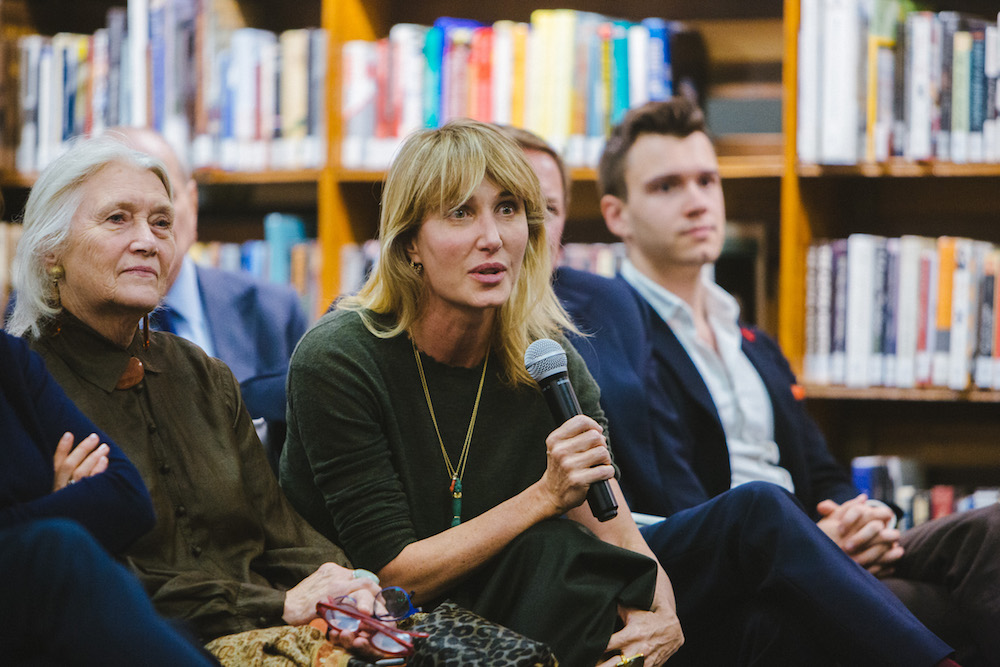
A reader asks a question from the floor
Anda Rowland of Anderson & Sheppard asks a question

Photography: Fred Castleberry