Tonal dressing – with new Indulgent Shawl Cardigan

Tonal dressing – with new Indulgent Shawl Cardigan

||- Begin Content -||

Our Indulgent Shawl Cardigan doesn’t need much introduction. 

Indeed, since this new grey colour was released to the waiting list yesterday, half have already sold. Quite a list had built up. Thank you everyone for your patience, and for riding out the delays last year. 

All sizes in the grey are still available, though, as well as smaller ones in the original navy. You can see them here, and I’ve included a summary of what makes the Indulgent Cardigan different from other shawl collars at the bottom of this article, for anyone that’s unfamiliar with it.

In the meantime, I wanted to use this photo shoot of the cardigan - at Rockhill House in Ireland - to talk about tonal looks and pops of colour. 
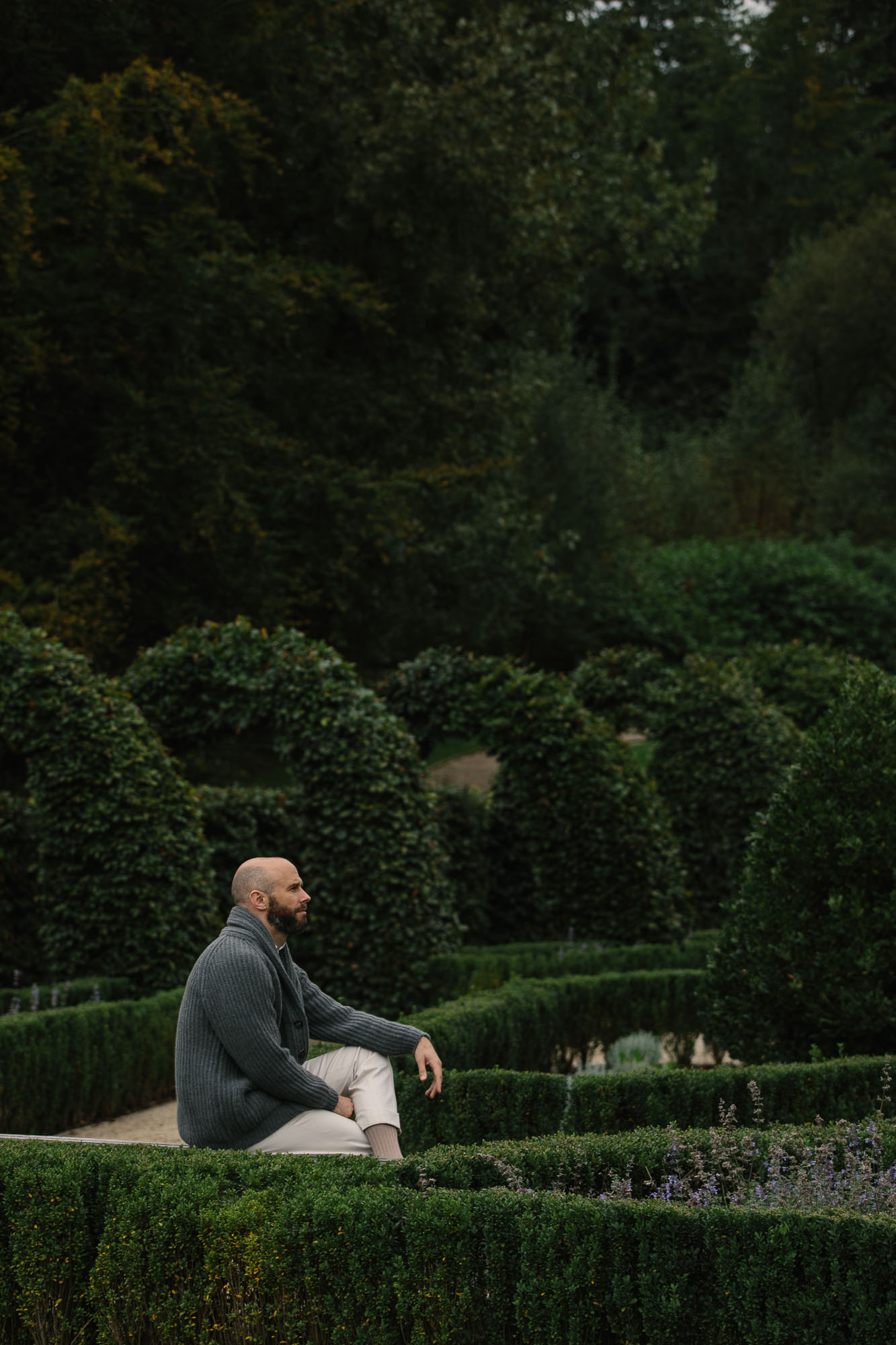
Anyone that has worn a navy polo under a navy jacket will know that a tonal look can be both elegant and unusual. Non-corporate but non-showy. (For me, perfect.) 

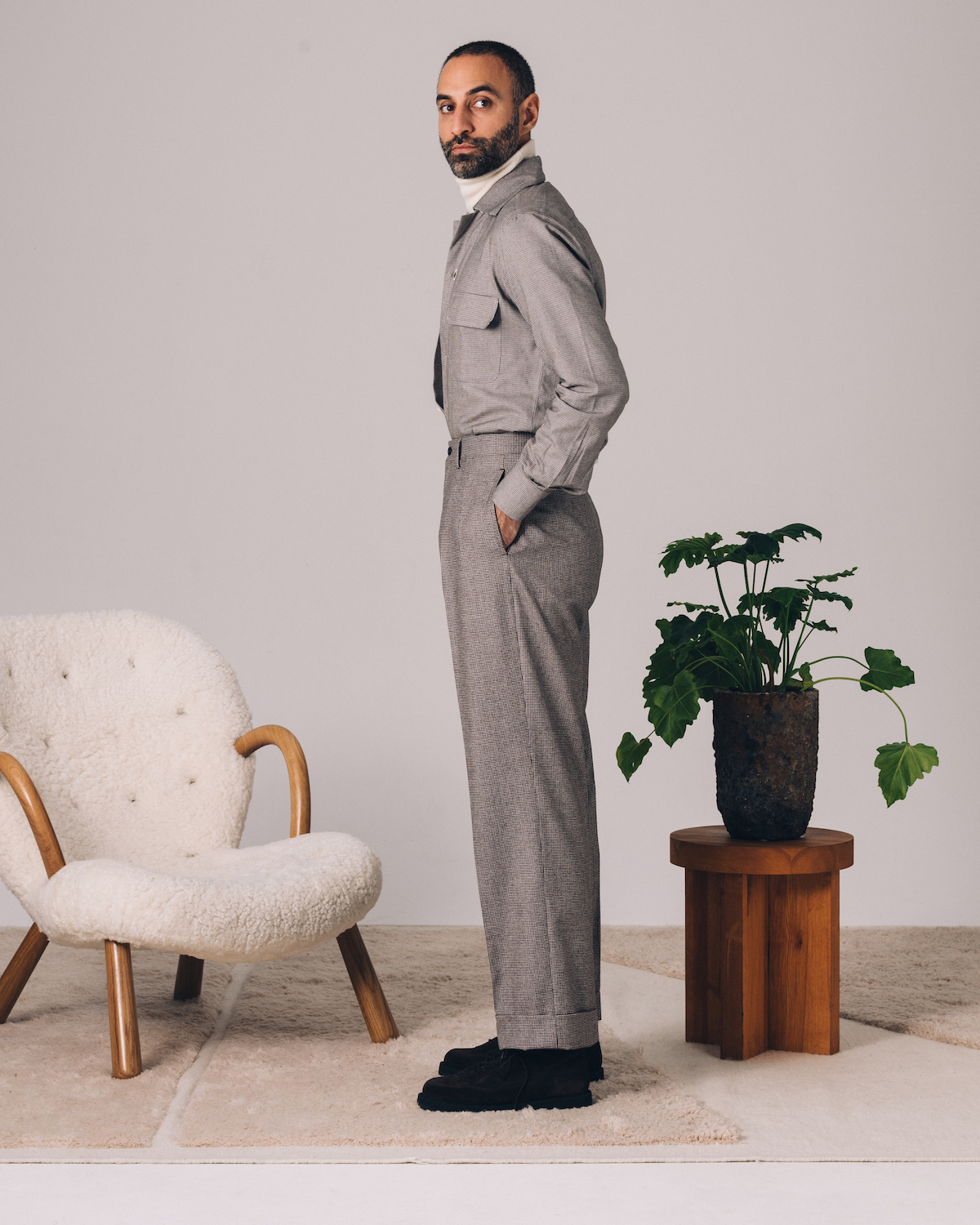
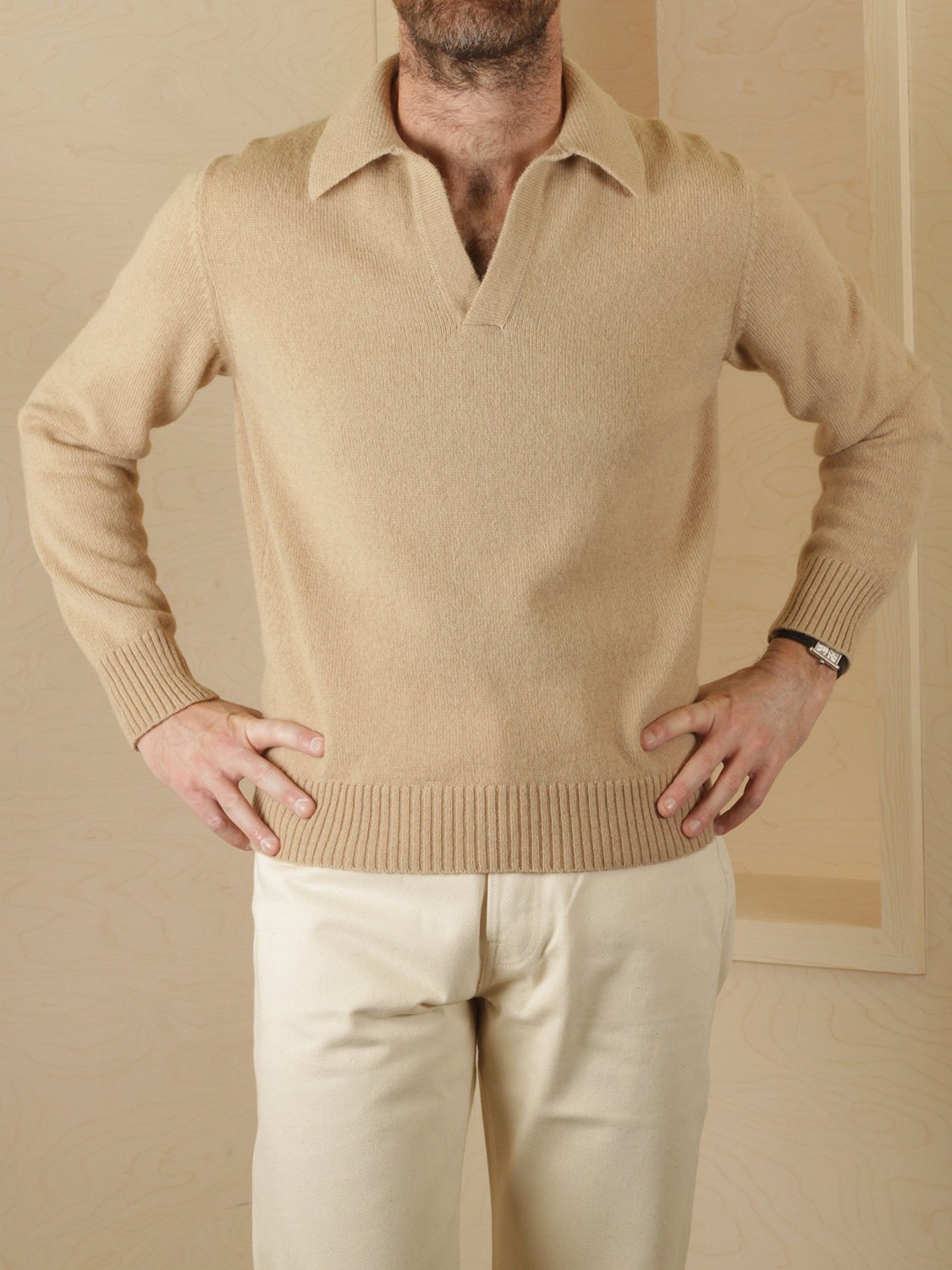
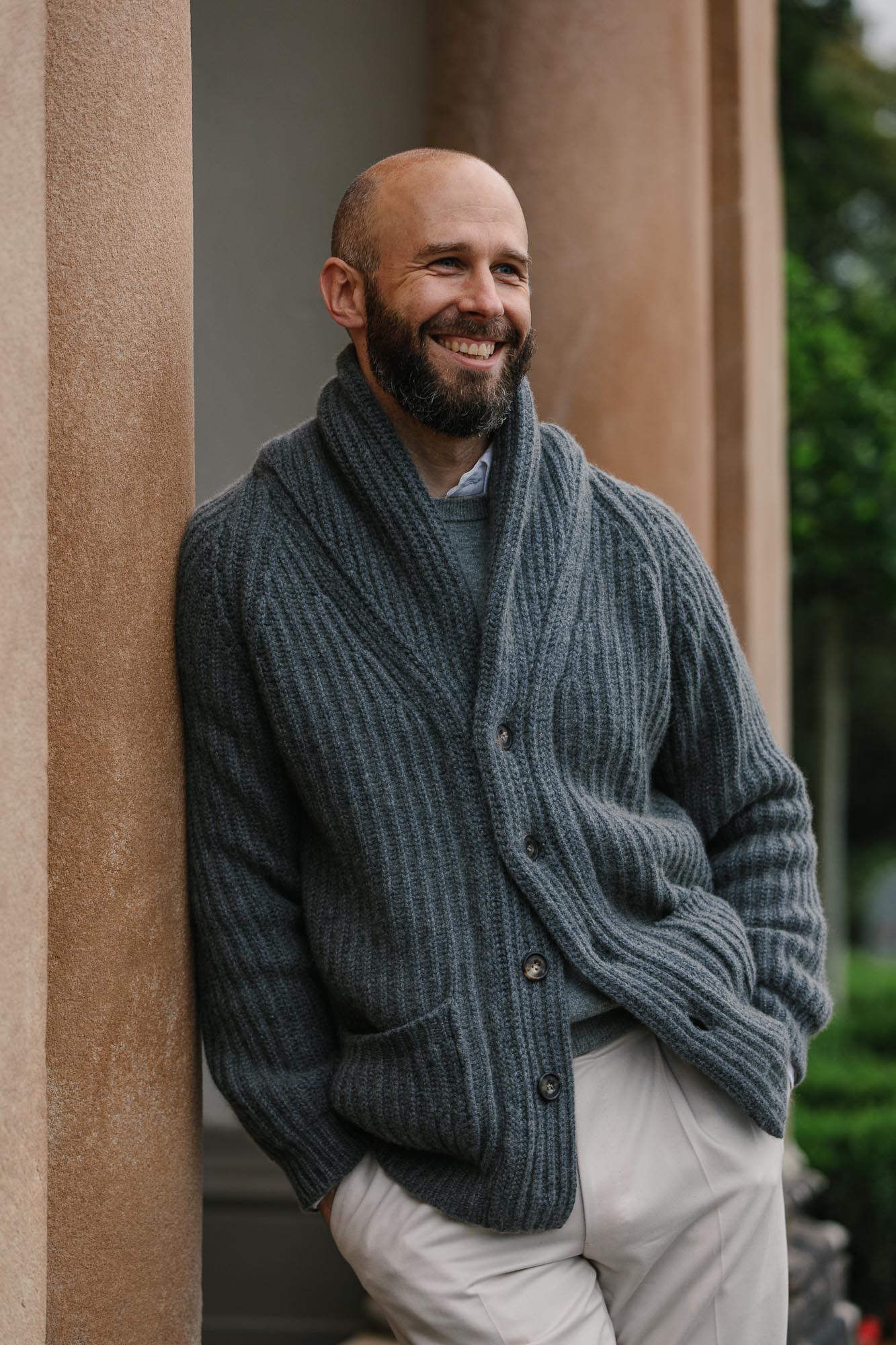
Grey on grey can be just as nice. In the outfit here, I’m wearing a slightly lighter grey crewneck under the new flannel-grey cardigan. A white shirt sits in between the two, which makes it less striking, but it would still look good without. More casual and relaxed, but also more characterful.

Other tonal colour combinations are harder - shades of green, brown or beige - because it’s difficult to find tones that work well together. It’s not impossible (lovely RL look here) but you will probably end up buying one piece of clothing just to complete the look. The opposite of versatility.
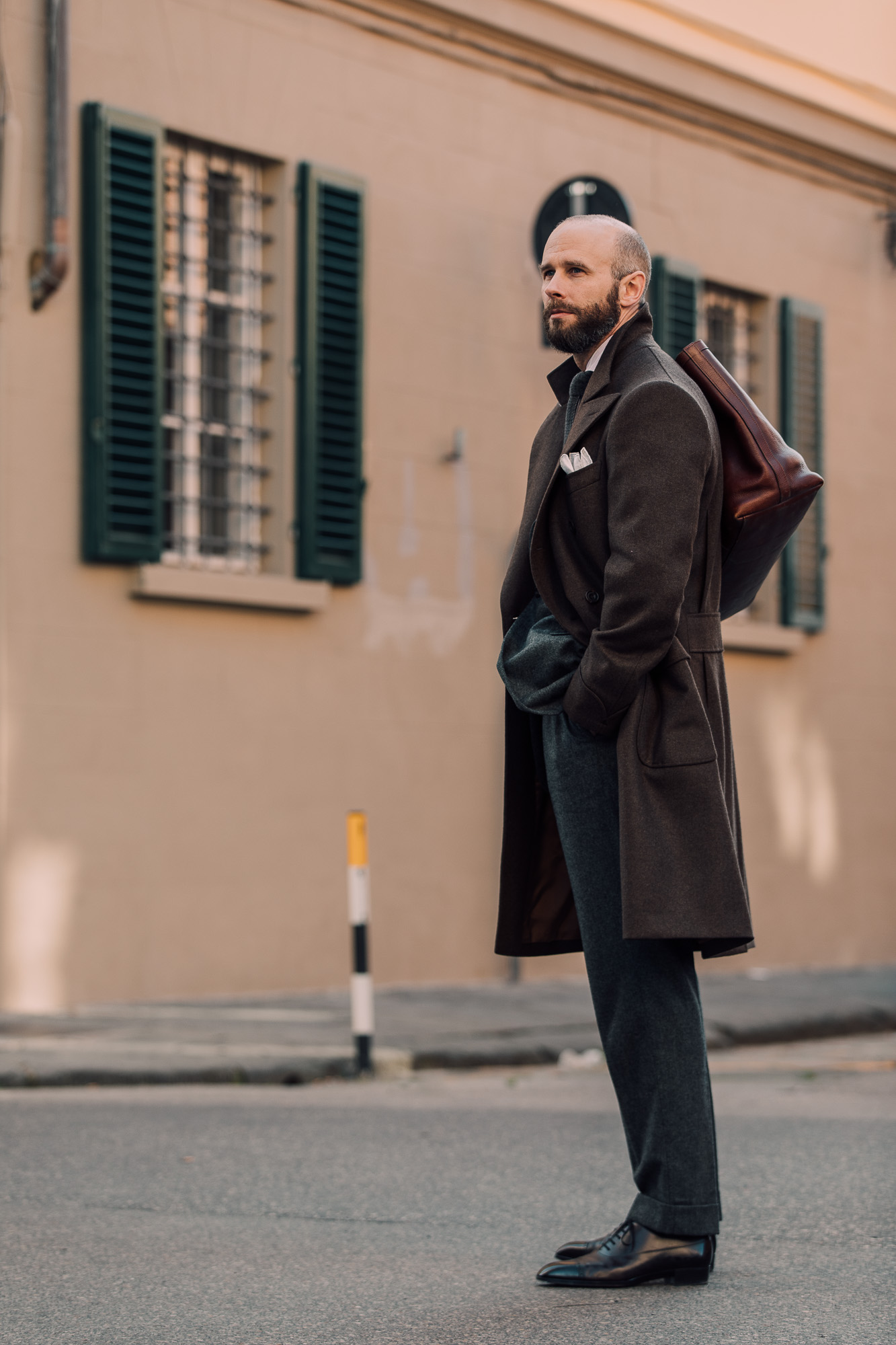
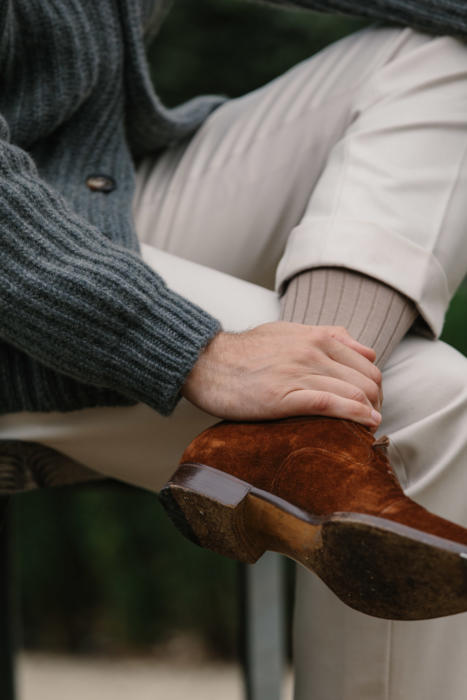
My grey-on-grey look would have been great with brown-suede shoes, and indeed still very classic with paler colours of shoe, given the white shirt and the lightness of the trousers. 

But given how much of a blank canvas it is, I really like adding a touch of strong colour. 

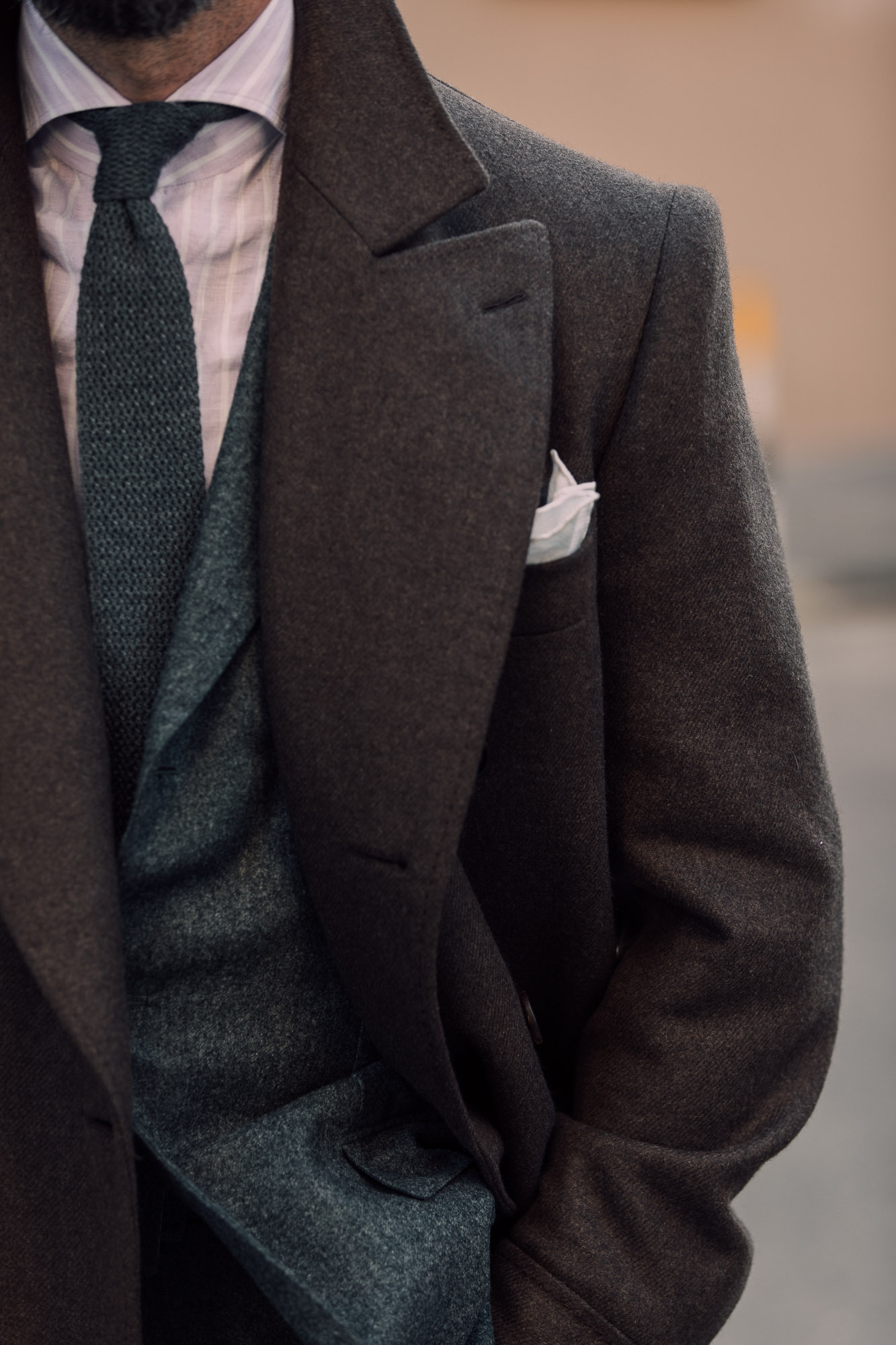
It’s something I showed in a look last year, with tailoring (above). In that combination a blue-striped shirt would have looked great under the grey-on-grey of tie and suit. But it was also an opportunity to use a more unusual colour, such as lilac. 

That shirt is pretty pale too. The colour could easily have been stronger or it could have been a brighter colour entirely - a yellow or green perhaps. 
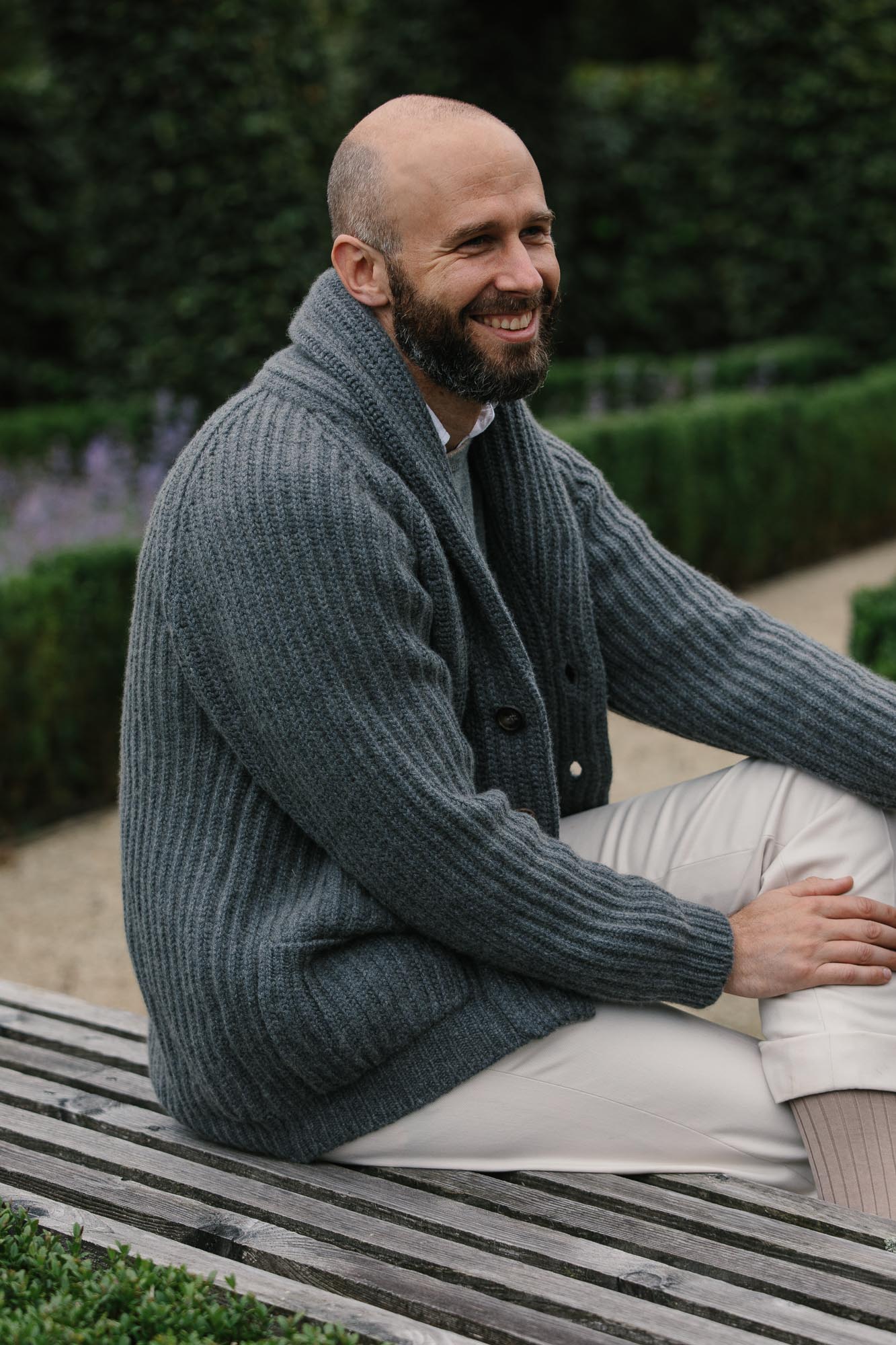
With the Indulgent Cardigan outfit, I thought I’d wear my tobacco-suede oxfords from Stefano Bemer to add a similar touch of colour. 

I find the result quite satisfying. It’s far from ostentatious, but also not what a classic-menswear guide would normally recommend.

I’m sure I’ve seen Ralph Lauren doing a similar thing with a suit and tie, adding strongly coloured suede shoes beneath otherwise tonal grey. When I looked for the image this morning though, I couldn’t find it. 

Of course, it’s easier to do the look with knitwear, given how few opportunities there are today for a chalkstripe suit. It’s arguably more relaxed and comfortable too. 
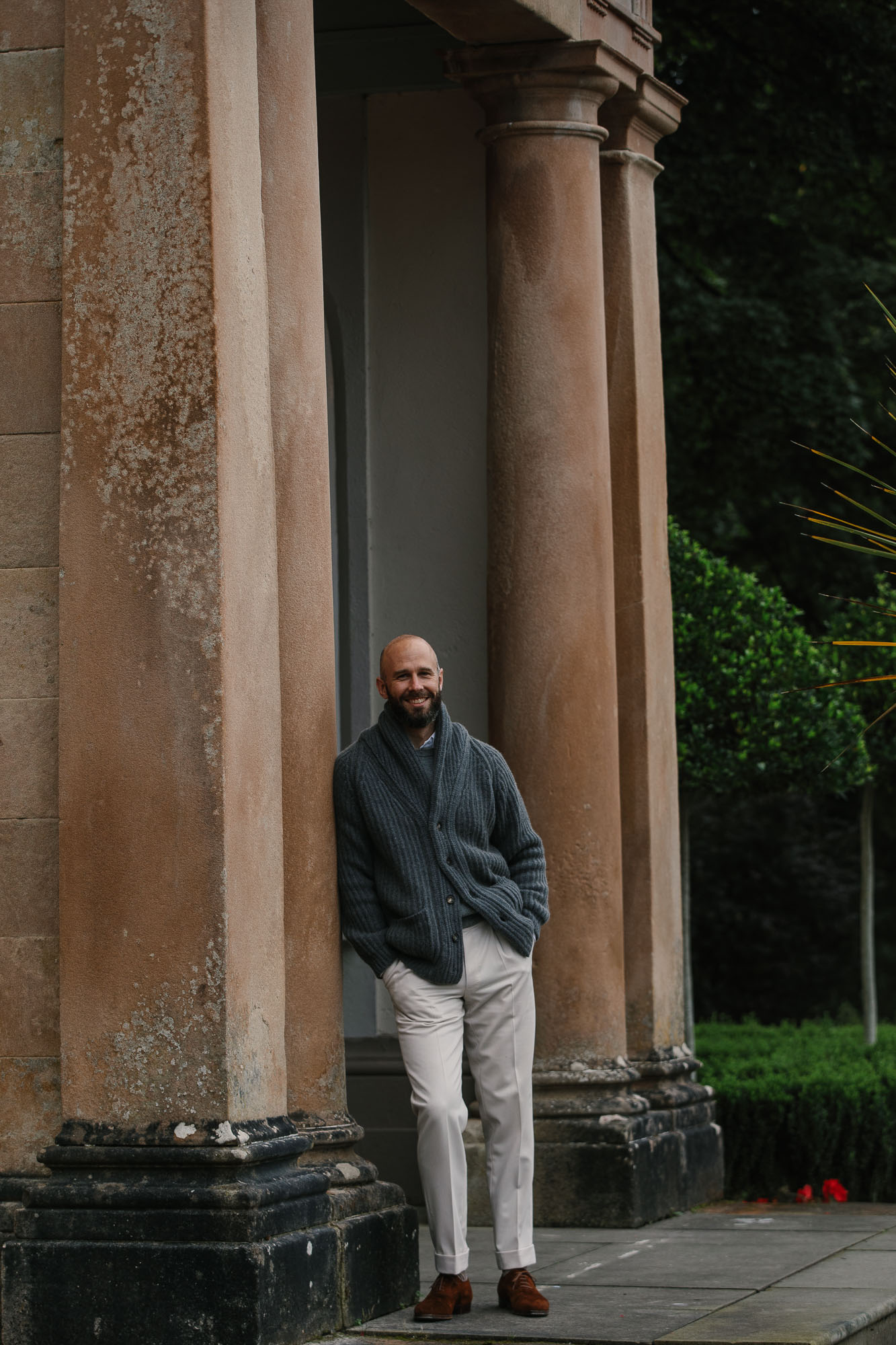
Personally, I think part of the effectiveness of this is using just one colour. As soon as you add more than one - a bright tie and bright shoes, for instance - it becomes too much. 

The same goes for using textured materials. Suede shoes are better than leather, because bright leather is so much stronger (and can look cheap). Flannel, linen or cord is better than superfine cotton, superfine wool, or silk. 

When an outfit is described as ‘tonal’, by the way, it usually means more than just a similar shade of shirt and jacket, so my navy-on-navy example above isn’t quite right.

But today’s grey-on-grey is closer, because the white shirt is also a similar tone to the bone-coloured trousers. (And to the socks, though of course socks usually make a tonal combination with trousers anyway.)

That shirt is a PS white oxford, and the trousers are from Pommella in Zegna Woollen Denim, also shown here. That material isn’t available normally by the cut length, but I know Gianluca has his own roll of it if anyone is interested.
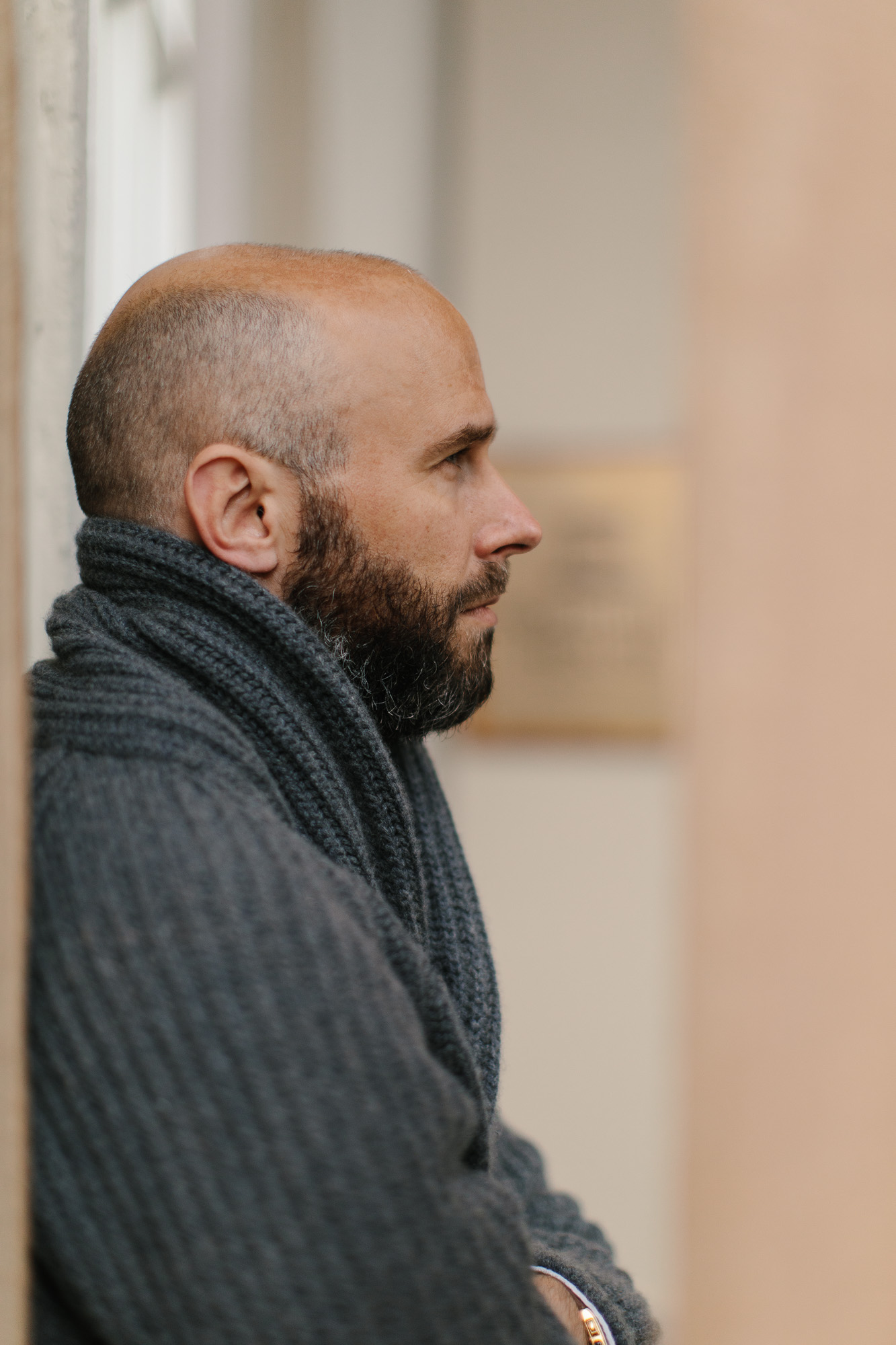
So, after that brief style tangent, let’s return to the Indulgent Shawl Cardigan. 

If anyone wants to read the full genesis of the knit - made in collaboration with Anderson & Sheppard - it is on the original launch article. For everyone else, here’s a brief summary. 

The cardigan is a piece A&S used to sell in their Haberdashery shop, but discontinued. I had one, and loved it so much that I asked if we could bring it back, together. 

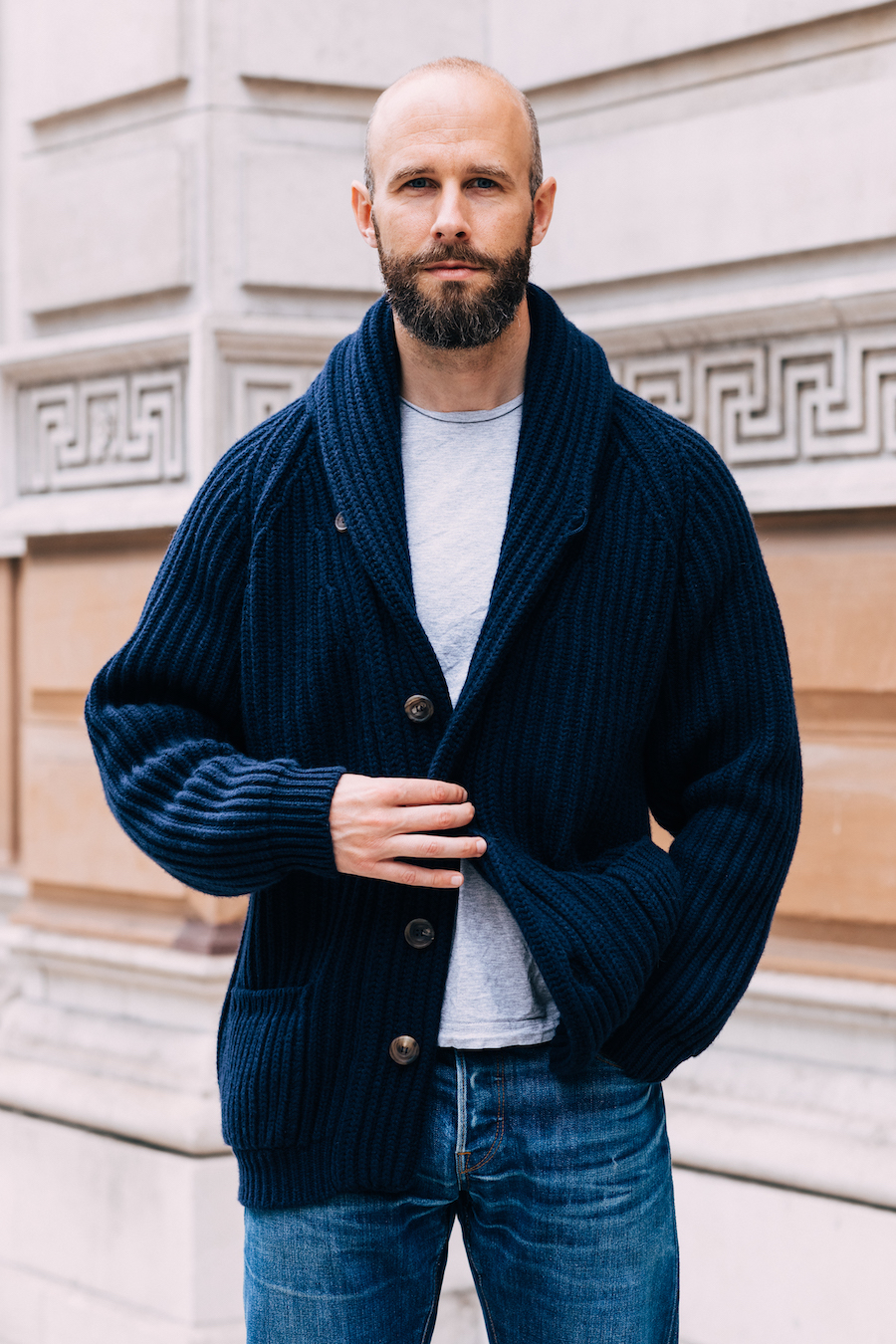
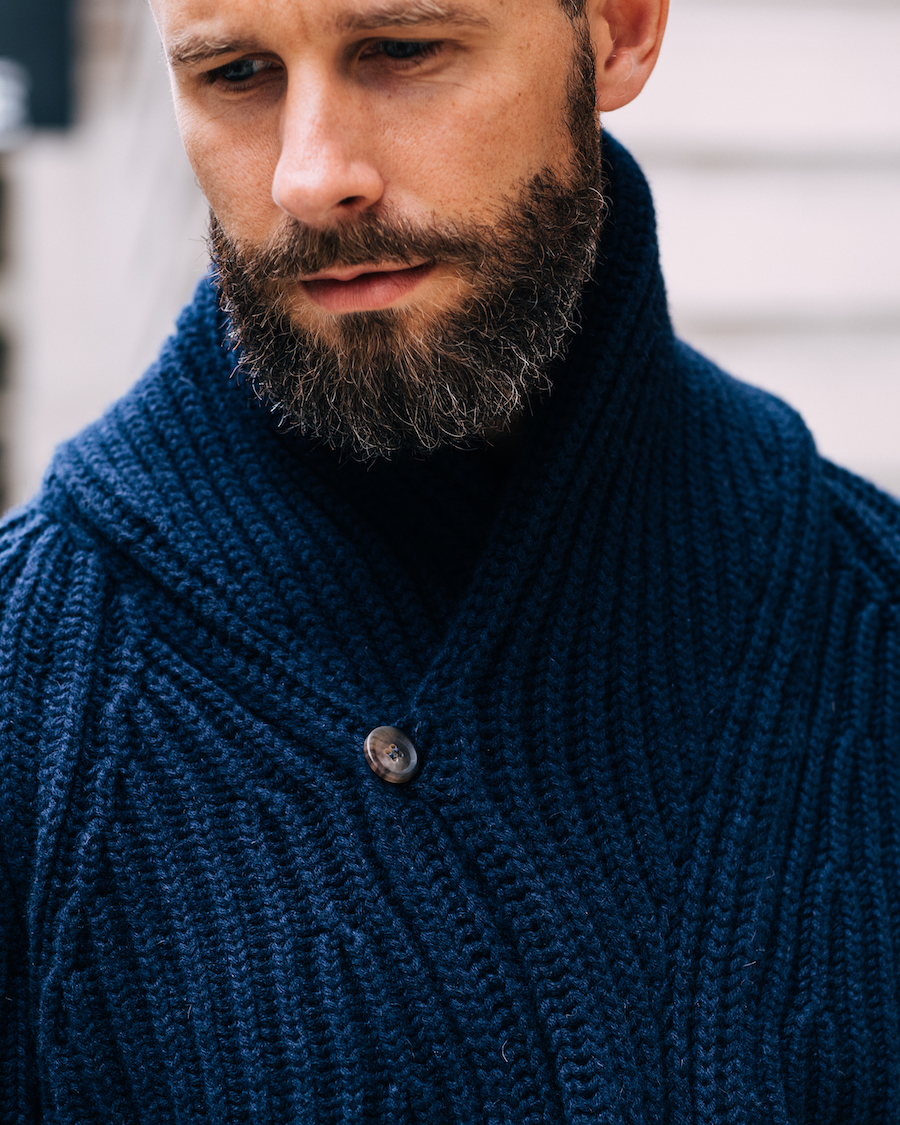
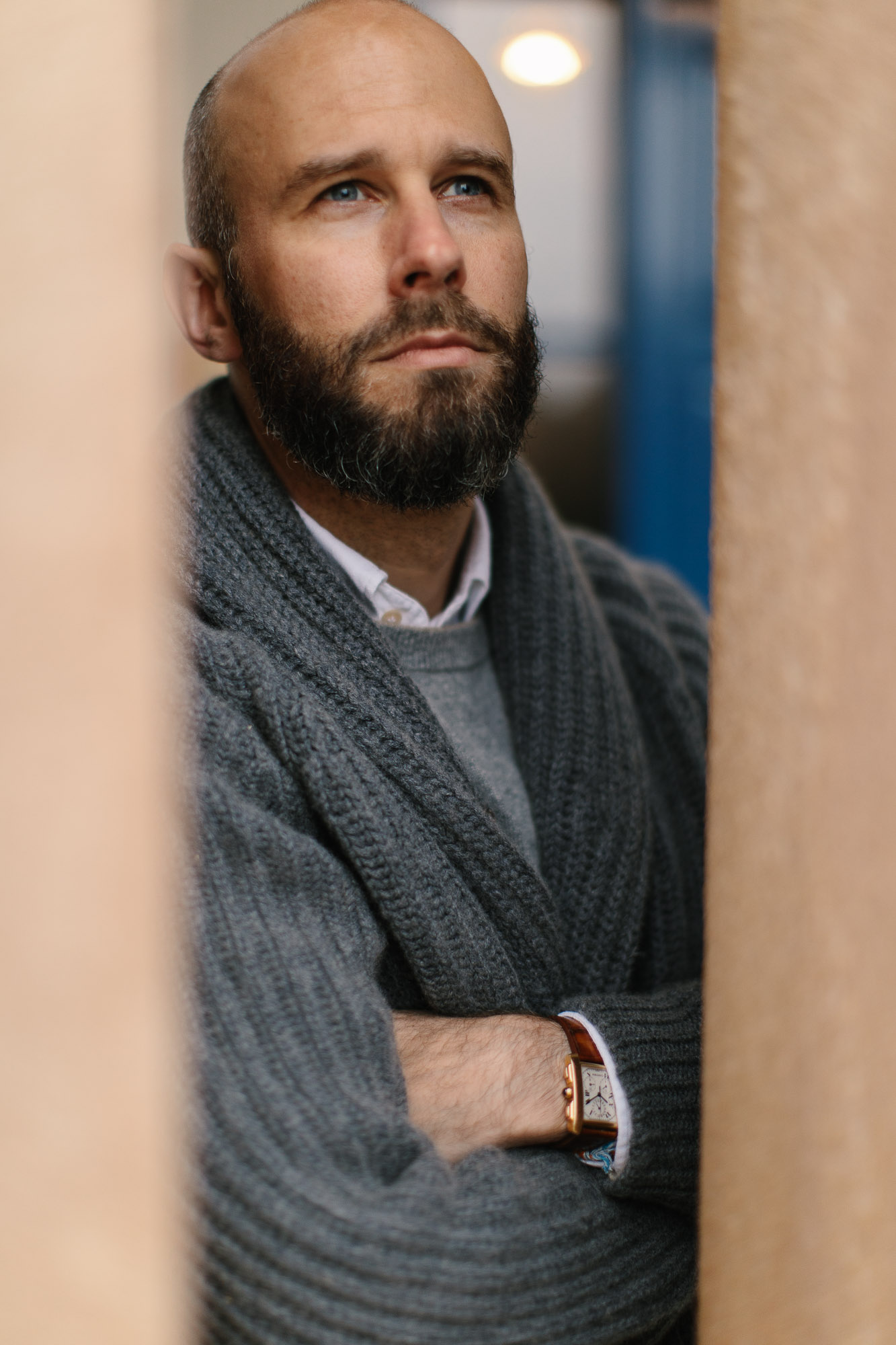
It is different from other shawl-collar cardigans by virtue of its indulgent volume of cashmere - 12 ply of it - still knitted in the dense manner preferred in Scotland. Hence the name. 

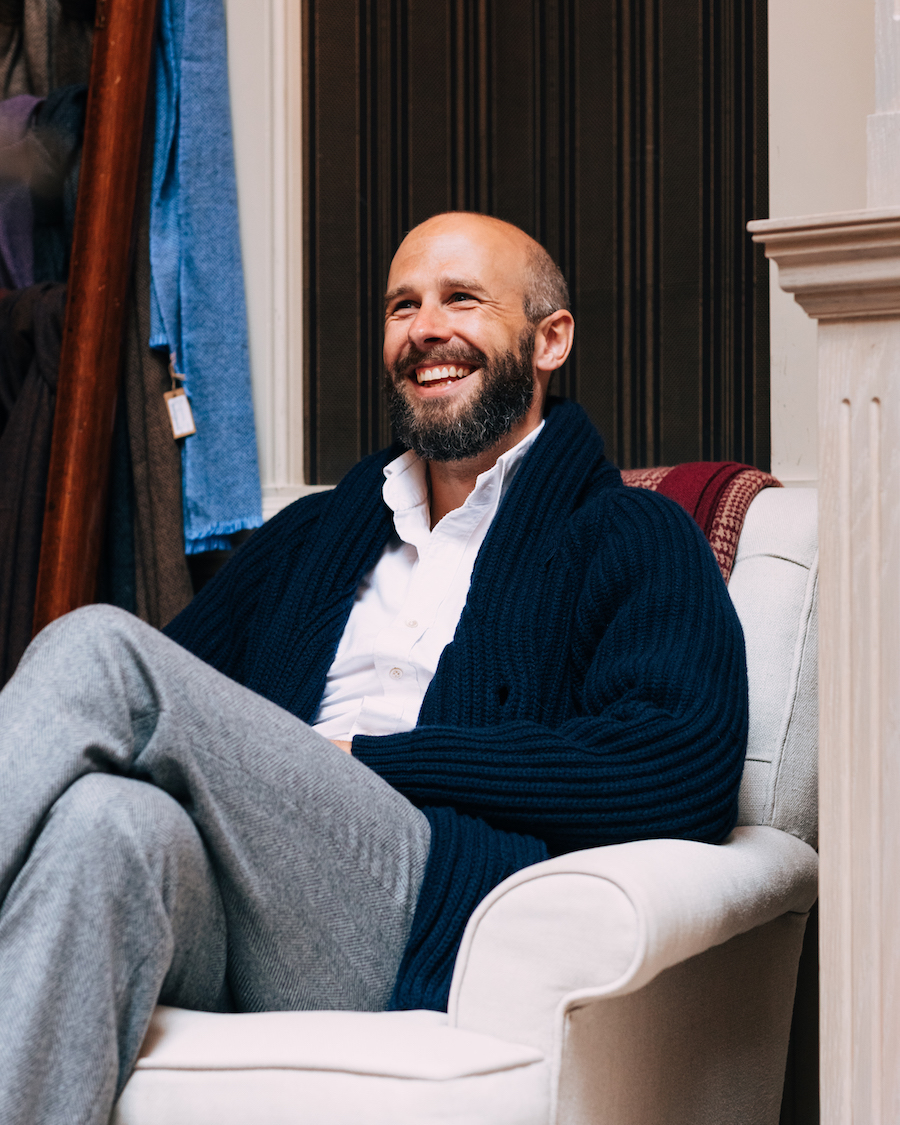
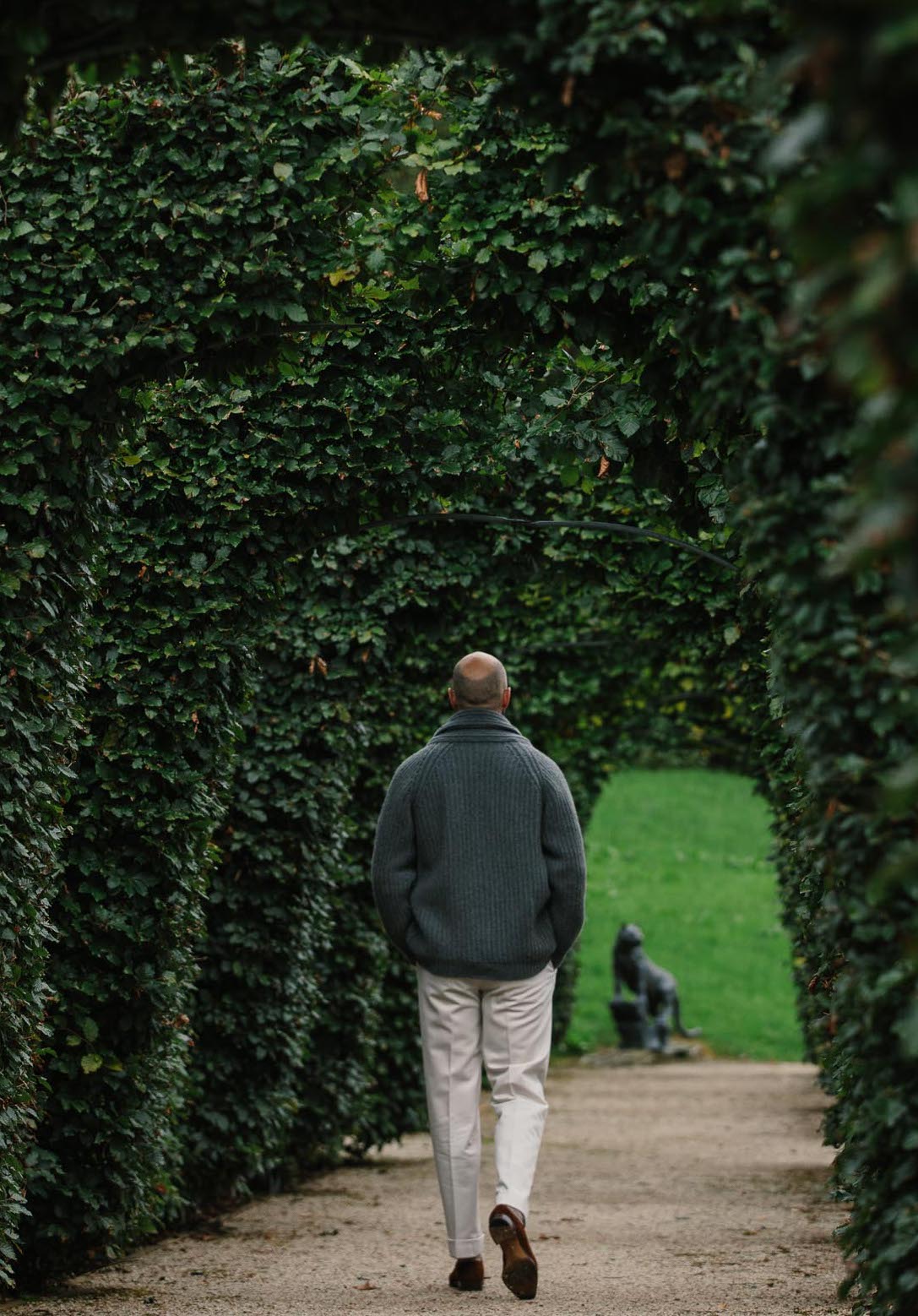
It is also large in size, in body and length, requiring more cashmere still. I’m wearing a Small in these images, but I have the original navy colour in Medium (below). You can compare the fits if you look at the grey in this article and the navy and in the launch article here

Other details:

  • The cardigan is knitted in Scotland, from the finest 12-ply cashmere, also spun in Scotland
  • Uses unpolished horn buttons (always my favourite)
  • Has a button on the chest, and a hidden loop, in order to enable it to be buttoned up to the chin
  • Doesn’t have the last button at the bottom of the placket many do. Because no one does that one up. It looks weird
  • Has two hip pockets, but they come loosely sewn up, so you can keep them closed if (like me) you prefer them not to become baggy. But just snip out the thread if you do want to use them
  • Can be worn open or closed, collar up or down, casually or formally (see above)

Anderson & Sheppard sell several other shawl-collar cardigans, but not this one currently. 

It is available in flannel grey and dark navy, price £785 plus taxes. Size chart below.
Measurements

Extra Small Small Medium Large Extra large
Chest 51cm 53 55 57 61
Length 63 65 69 70 71
Sleeve 76 78 79 83 85

(Chest is pit to pit; length is centre back neck to hem; sleeve is centre back neck to end of cuff. Do bear in mind that sizes might seem a little large as well, given the thickness of the material.)

Photography: Jamie Ferguson (grey) and Milad Abedi (navy)
Double denim – in new Anthology tweed jacket

Double denim – in new Anthology tweed jacket

Wednesday, January 19th 2022
||- Begin Content -||

Denim shirts can often be the saviour of classic menswear - adding an obvious casual, even democratic touch to tailoring

But when should you wear a denim shirt with jeans? When put on what is sometimes snidely, sometimes admiringly, referred to as double denim?

As with most topics we discuss, I think the first thing is to understand what effect you are trying to achieve or avoid. 

So, with double denim the risk is that it can look too fashion-y, like trying too hard. Perhaps - worst of all - that you’re striving very publicly to look cool. 

The biggest reason it can look like this is that the shirt and trousers are matching, and this is not normally how one dresses. You don’t wear a navy worsted shirt with navy worsted trousers, or a white T-shirt with trousers in the same material.

Even though railroad workers may have worn a denim shirt with denim overalls historically, no one is doing so today. Because it’s not normal, it stands out.

So the way to reduce that effect - if you want to - is to reduce the extent to which top and bottom match. 

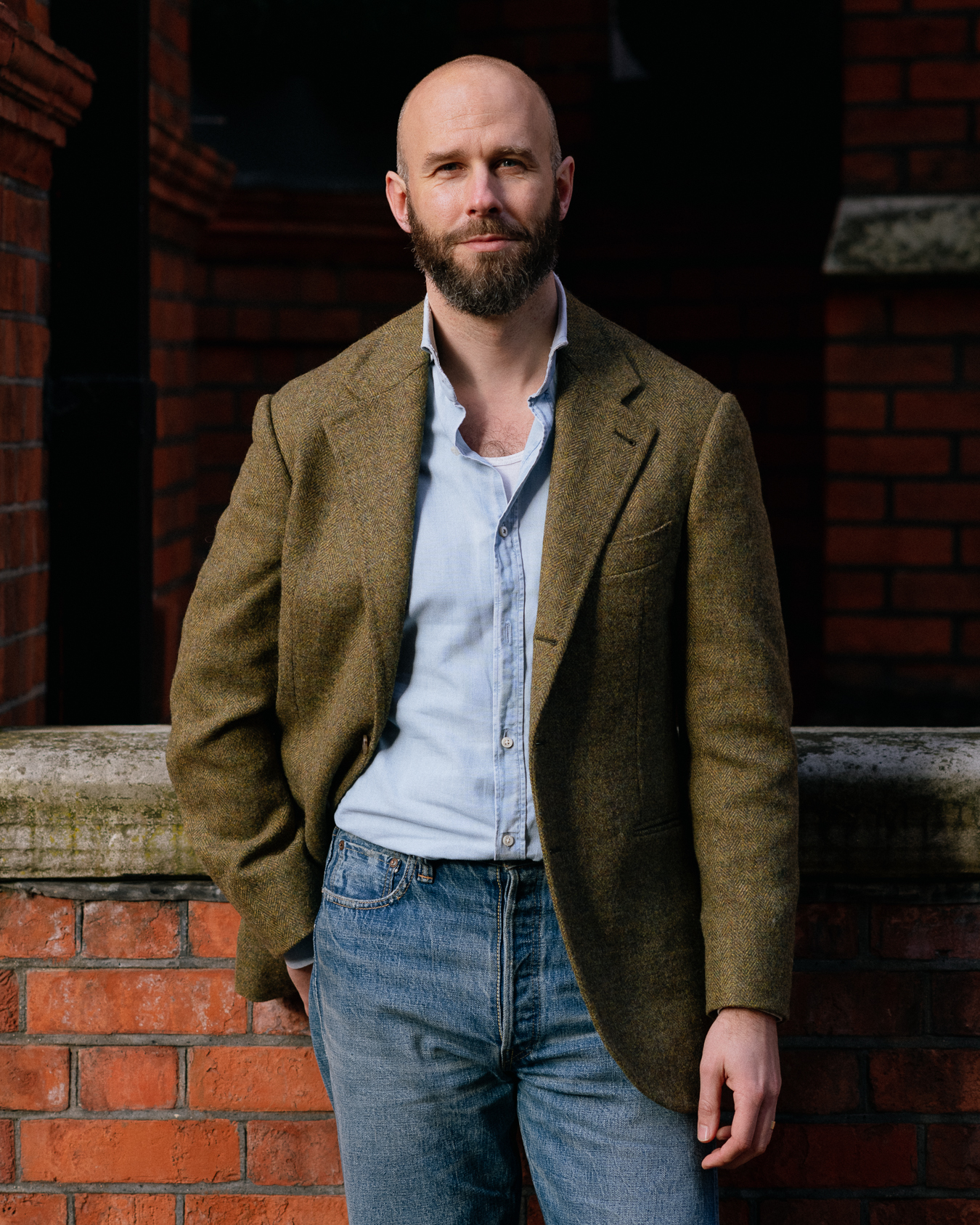
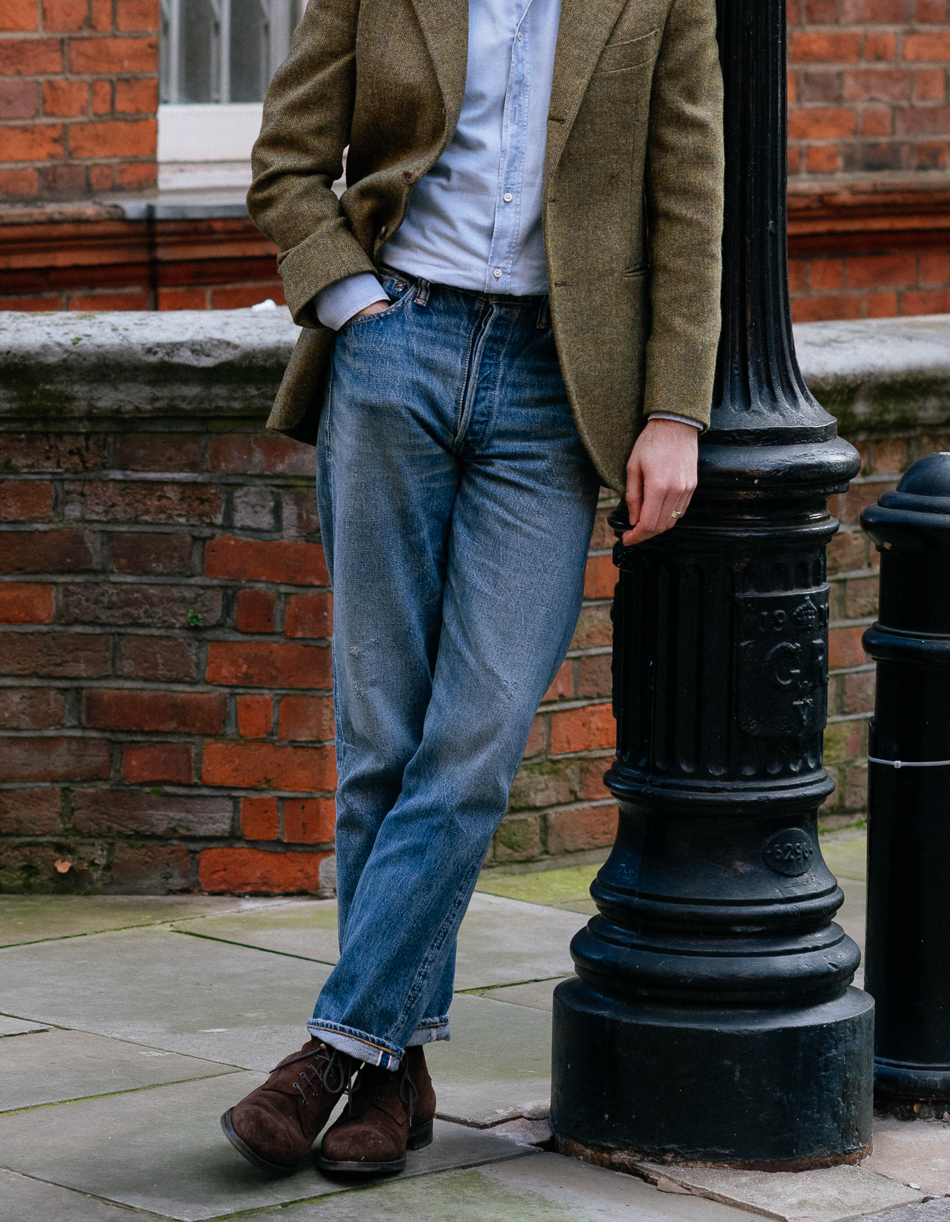
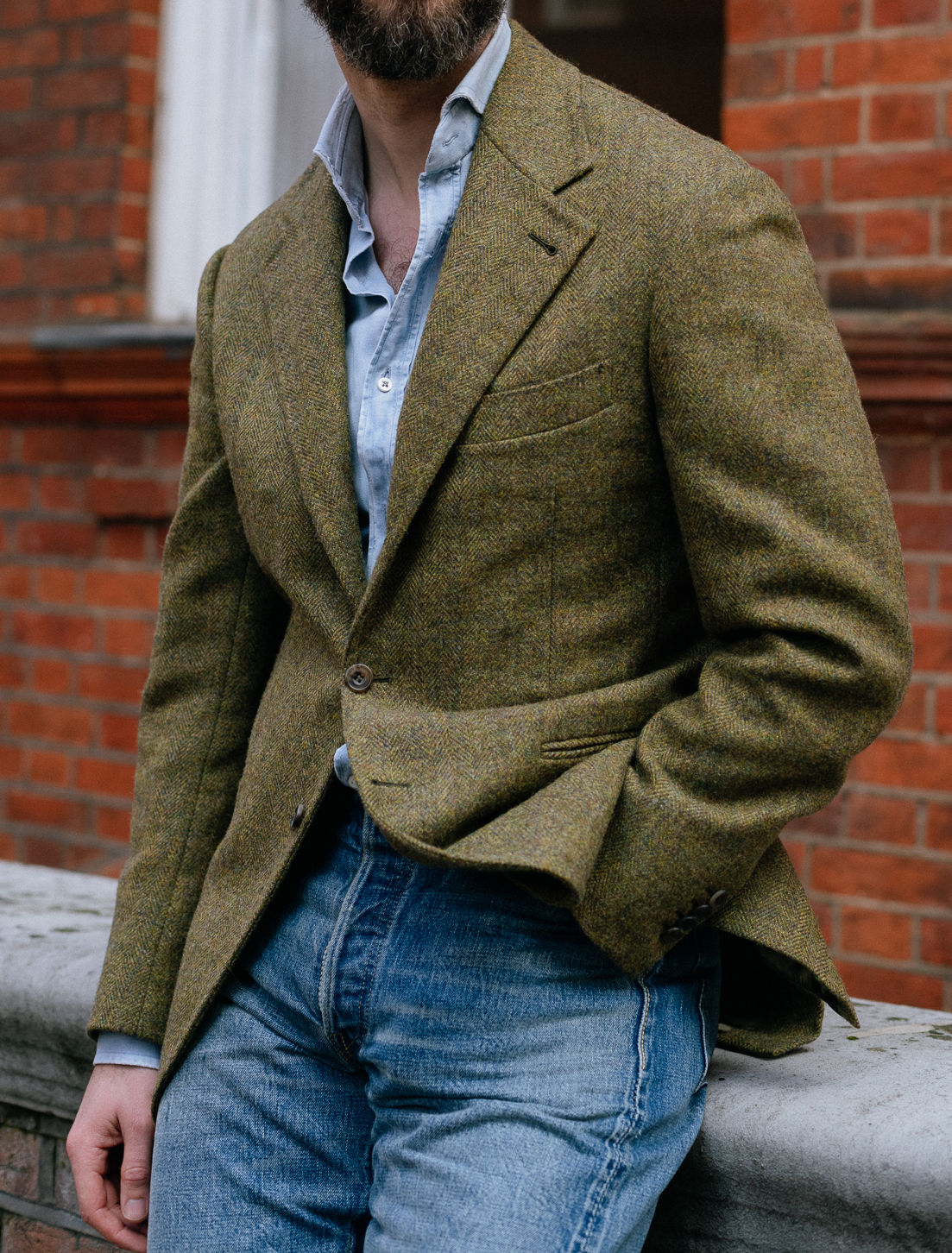
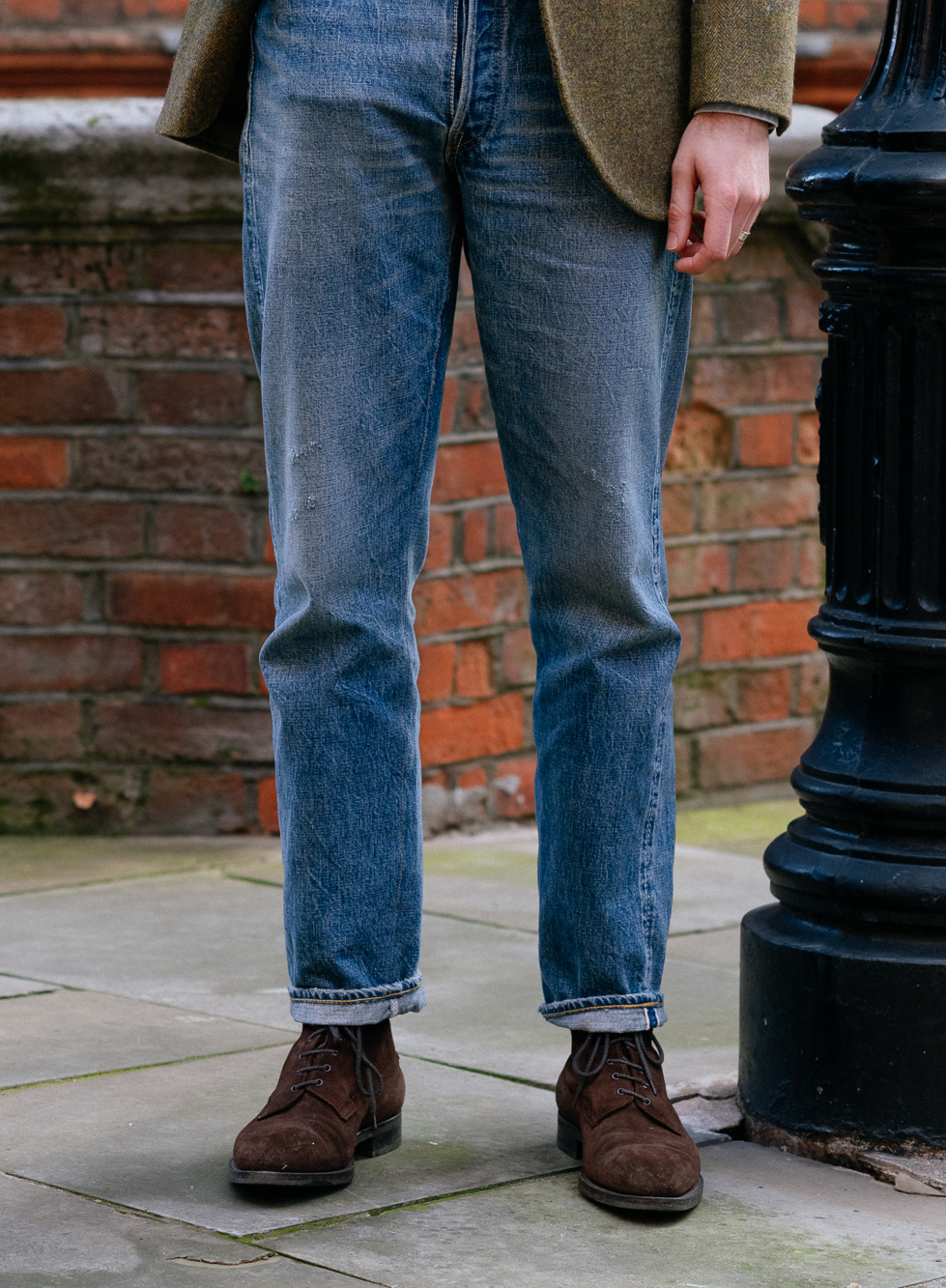
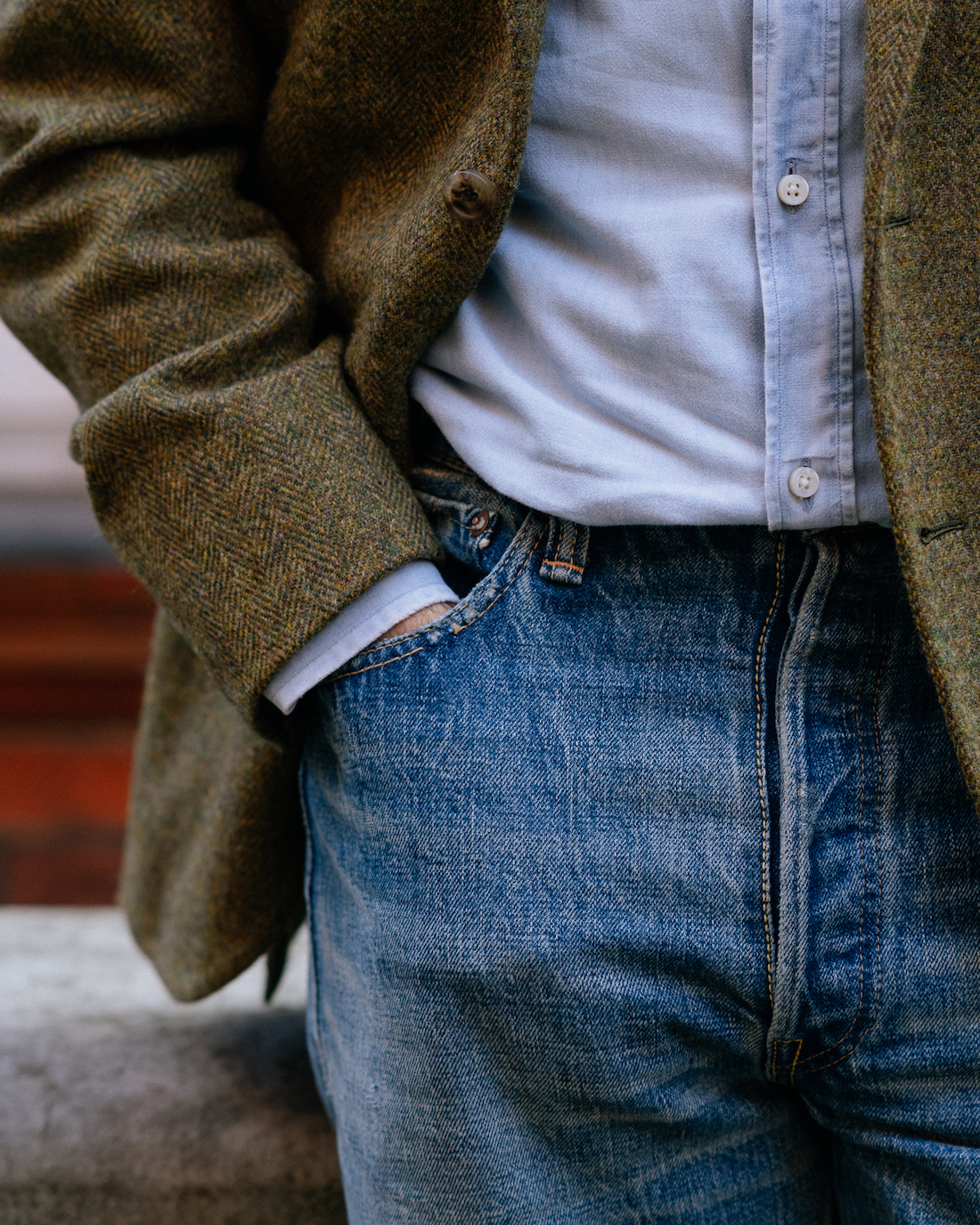
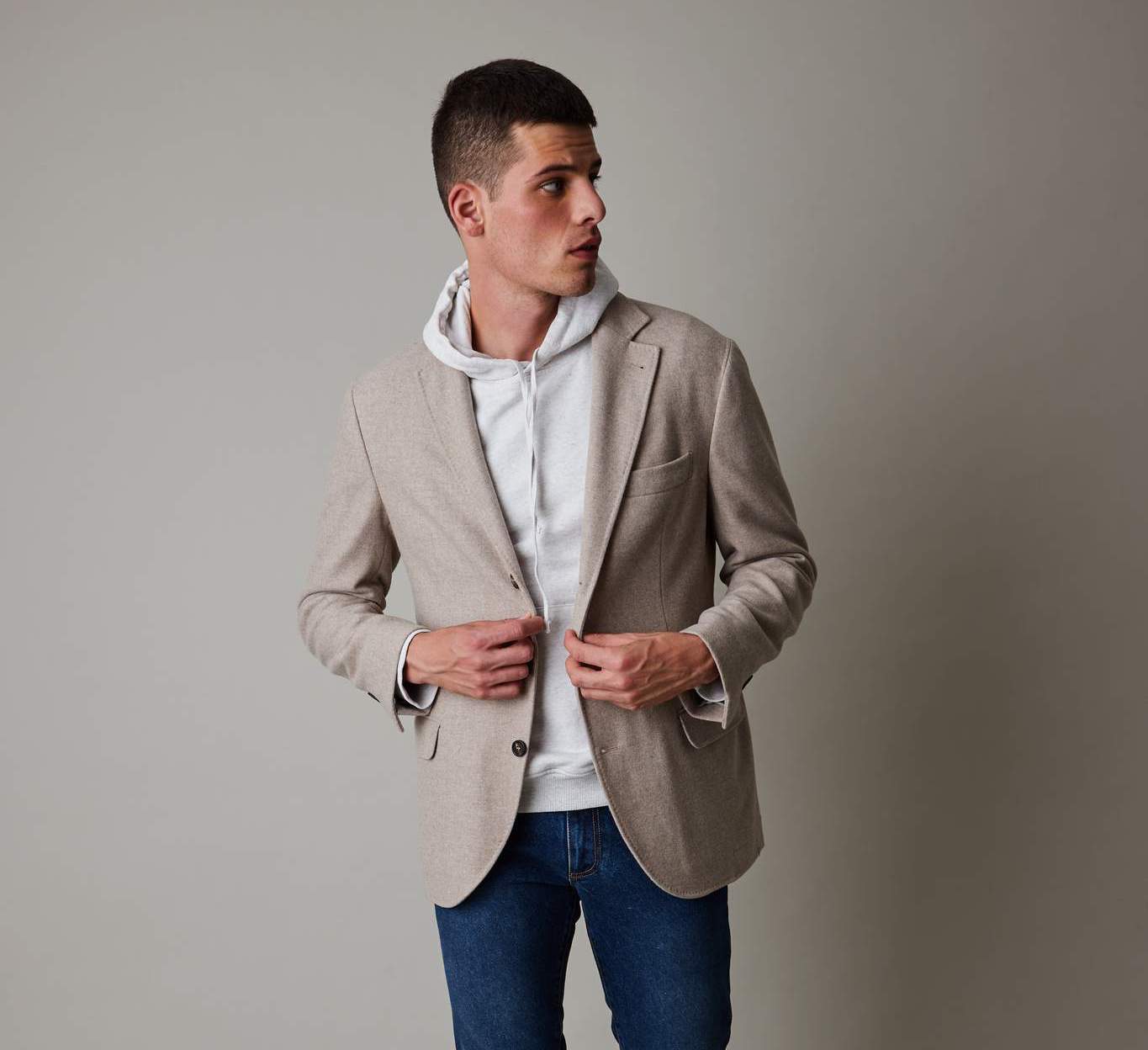
In the shots here - with a great new jacket from The Anthology - I am wearing a denim shirt with jeans. But the shirt is clearly a different shade from the trousers, and is lighter in weight, creating a different texture. 

Had I worn something like my Niche western shirt there would have been less contrast. That shirt is closer in colour and weight to these jeans. The same would apply to combining my Bryceland’s Sawtooth with darker indigo jeans

I like the fact that my combination is double denim, but subtly so. It’s a nice change from my default blue oxford, and a slightly more interesting choice.

Sometimes I do want more of a look, and then I wear that Niche shirt. But usually I don’t. The point is to be aware of the effect, understand how it is caused, and then choose your style.

Don't just say you simply do or don’t like something or - worse - that it is bad or wrong. 

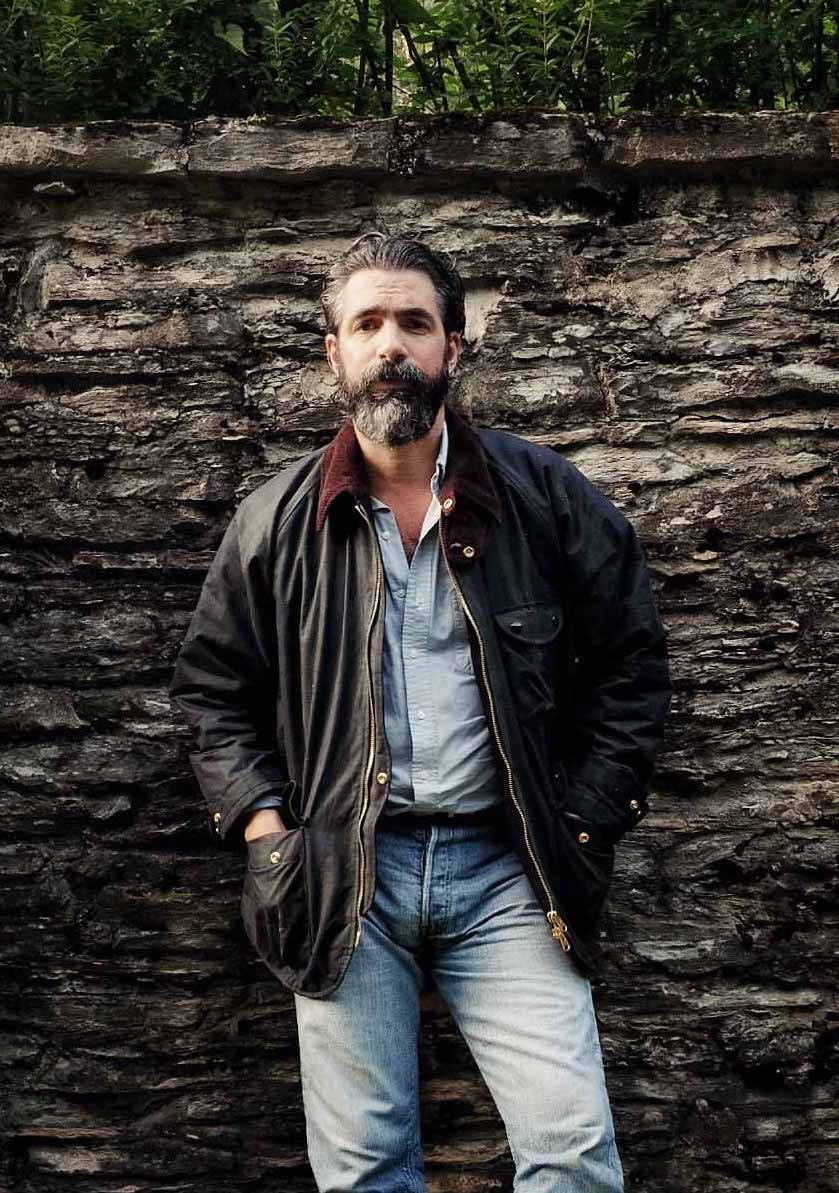
Aaron Levine - top image above - does a good line in double denim. In that example, it’s effective in making the waxed jacket look a little more playful, less rural. 

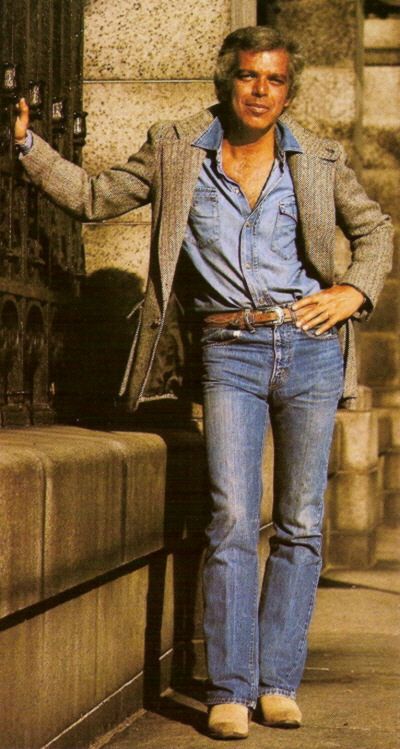
Most of the time when Ralph Lauren does it - second image above - the look is over the top. Not just because of the belt and cowboy hat, but because the shirt is more similar in texture to the jeans as well. But then that's what he wants - he's Ralph Lauren.

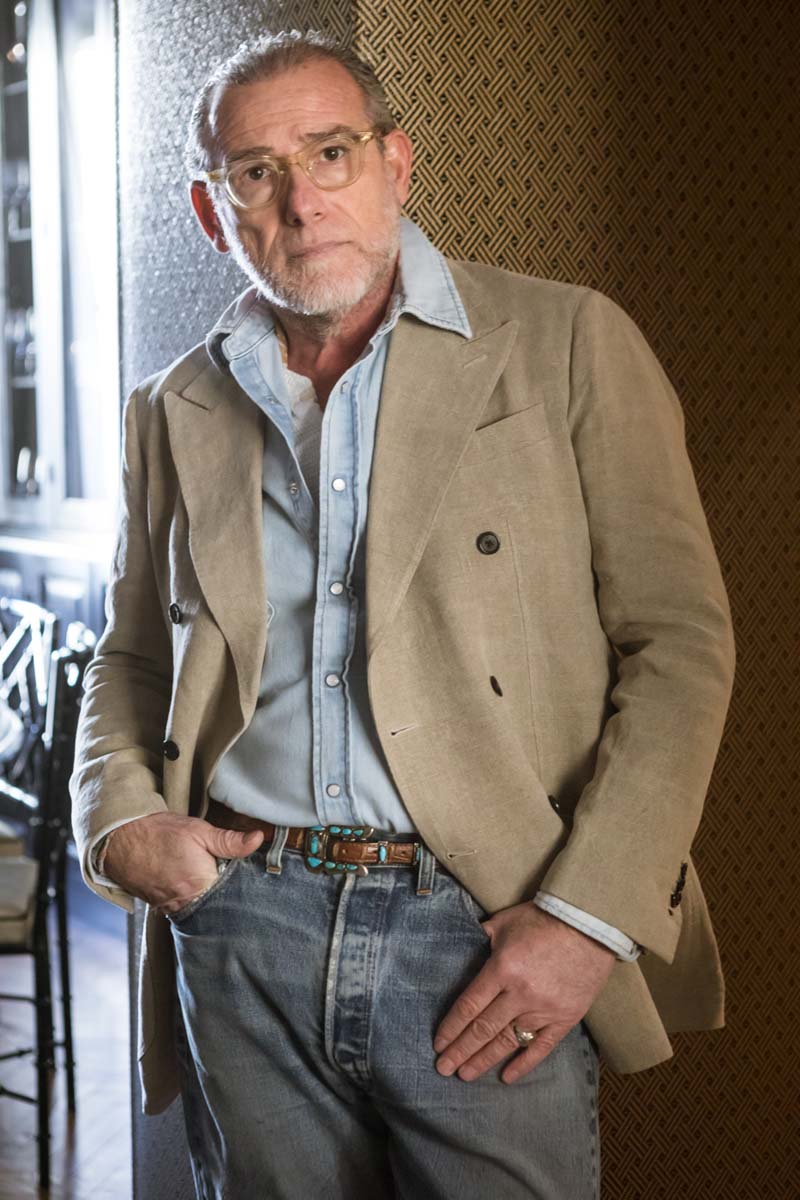
Alessandro Squarzi, in the third image, would be fairly subtle in his combination were it not for the southwest belt buckle, and shirt collar over the lapel. 

Of course, the effect of double denim is much greater when the jacket is taken off. 

Actually this could deserve its own post: to what extent looks work in the configuration photographed, but not when layers are removed. As they inevitably are in real life. I find it particularly the case with roll necks, as we discussed here

That’s probably not worth going into now, however, as I still want to talk about the jacket and jeans. 

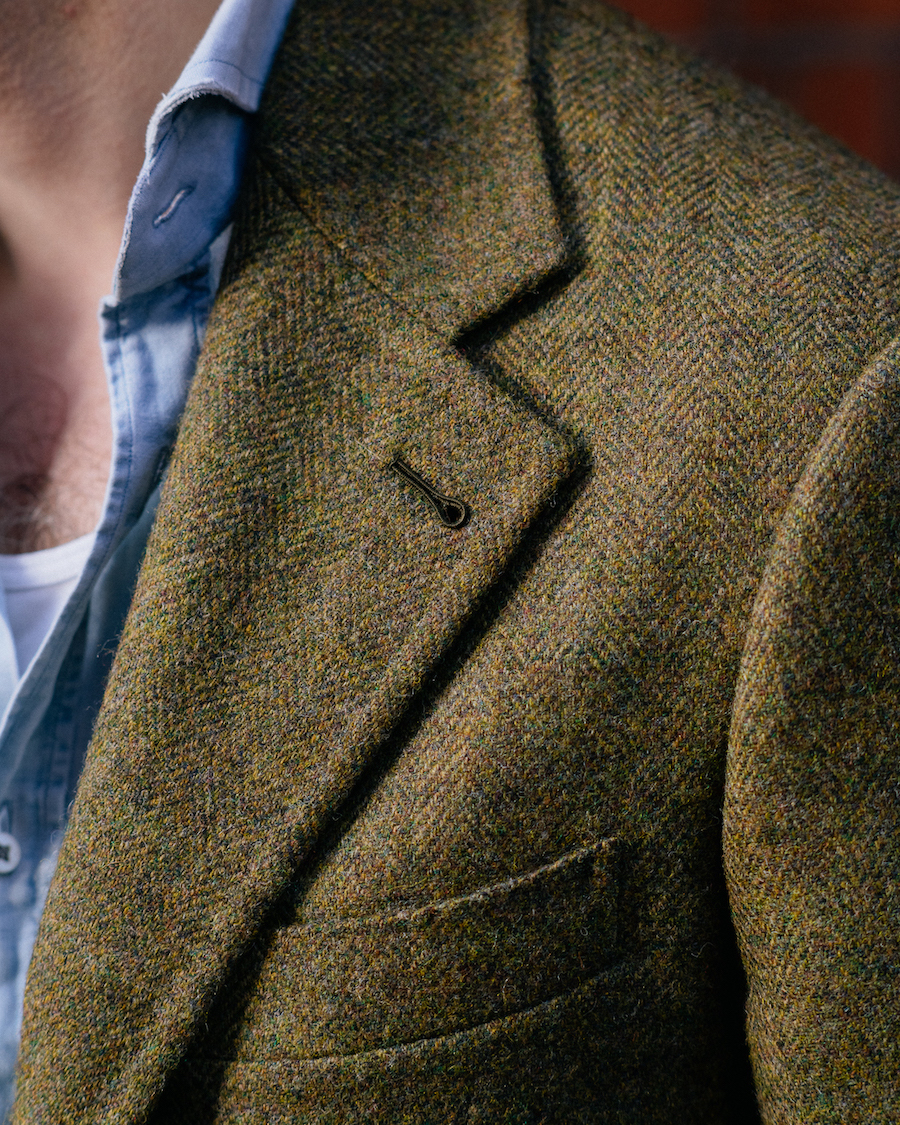
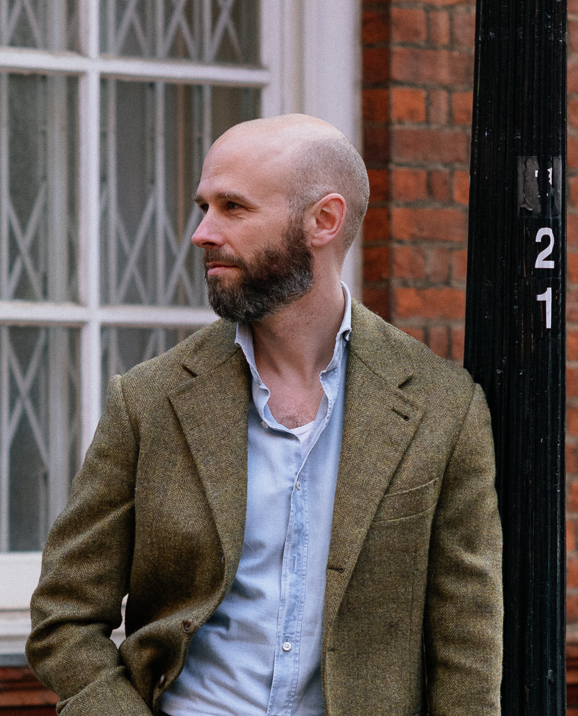
The jacket is my second from The Anthology, made in 17/18oz Fox Tweed (TD14). 

It is a direct copy of my beloved grey herringbone from them, and in a material that is intended to make it a direct replacement for this green tweed.

I did make a green-cotton suit with The Anthology between these two which didn’t work out, but that was mostly my fault. I didn’t realise the cotton had stretch in it, and didn’t make it clear how much I disliked stretch in materials. Buzz (Tang, Anthology co-founder) and I have moved on. 

In fact, I think the new jacket is a good example of how seriously Buzz takes the customer service side of his business. 

He was reticent about making a new jacket for me without the cutter being able to travel to London, even though my pattern was so well established. And he was very keen to make sure every aspect of the new one was correct. 

Of course, I only have my first-hand experience to go on, but I have also heard similar praise from PS readers who are customers. 

Reflecting that level of service, the jacket was precisely the same style and fit as my previous one (only worth mentioning because so many tailors fail to do that) and it’s a style I’ve come to love. 

The slightly dropped shoulder I find flattering, and it compliments the drape in the upper body. The fronts are rounded and open, which makes it more casual and easy to wear with jeans, as here. 

And while the finishing might not be at the level of the most expensive tailors in the world, that’s something I find I care less about. 

The tweed, meanwhile, is a beautiful colour - not as strong as it appears on the Fox website, and with all the wonderful flecks and variation I love in a tweed. 

The jeans are the Dartford 0105 model from Full Count, bought from Clutch Cafe. 

I had been researching light-washed quality jeans for a few months, looking for something that could be an alternative to my vintage Levi’s, given how often I wear those. 

It was proving hard to find something in a good wash, medium rise, with a comfortable but slightly tapered leg. Not skinny and not big. 

The fit, wash and quality on this Full Count style was perfect, but too wide. Then it occurred to me to have the leg tapered, and I did, with Soldier Blue. I narrowed the leg from the knee downwards, to mimic my vintage pair. 

The result is nigh on perfect. Great fit through the top block, easy style, and with make that means they look much more like a pair worn from raw, rather than a more commercial wash. 

That’s down to Full Count's hand washing and distressing, the quality of the cotton, and little things like cotton thread, which after a few years will also need its own repairs here and there. 

The only thing I’d say about the Full Count is that they give quickly - I’d say mine have gained a half inch in the waist. So buy them tight. I bought a size 31 but should perhaps have gone for 30.

But then again, it’s much easier to take in denim than to take it out.

Looking at these pictures again, I'm not sure the vest under the shirt is a good idea.  

I like the idea of it in theory, but in practice wearing a white T-shirt underneath (or nothing at all) feels more like me. You can see an example on this post.

The T-shirt perhaps risks looking boring or conventional, but I'd rather that than the opposite, too fashionable or trying too hard. 

Which of course brings us full circle. 

The Anthology plan to return to the UK as soon as they can once quarantine regulations are completely lifted. All existing customers should be in touch with the team already. For more information, contact the team at [email protected].

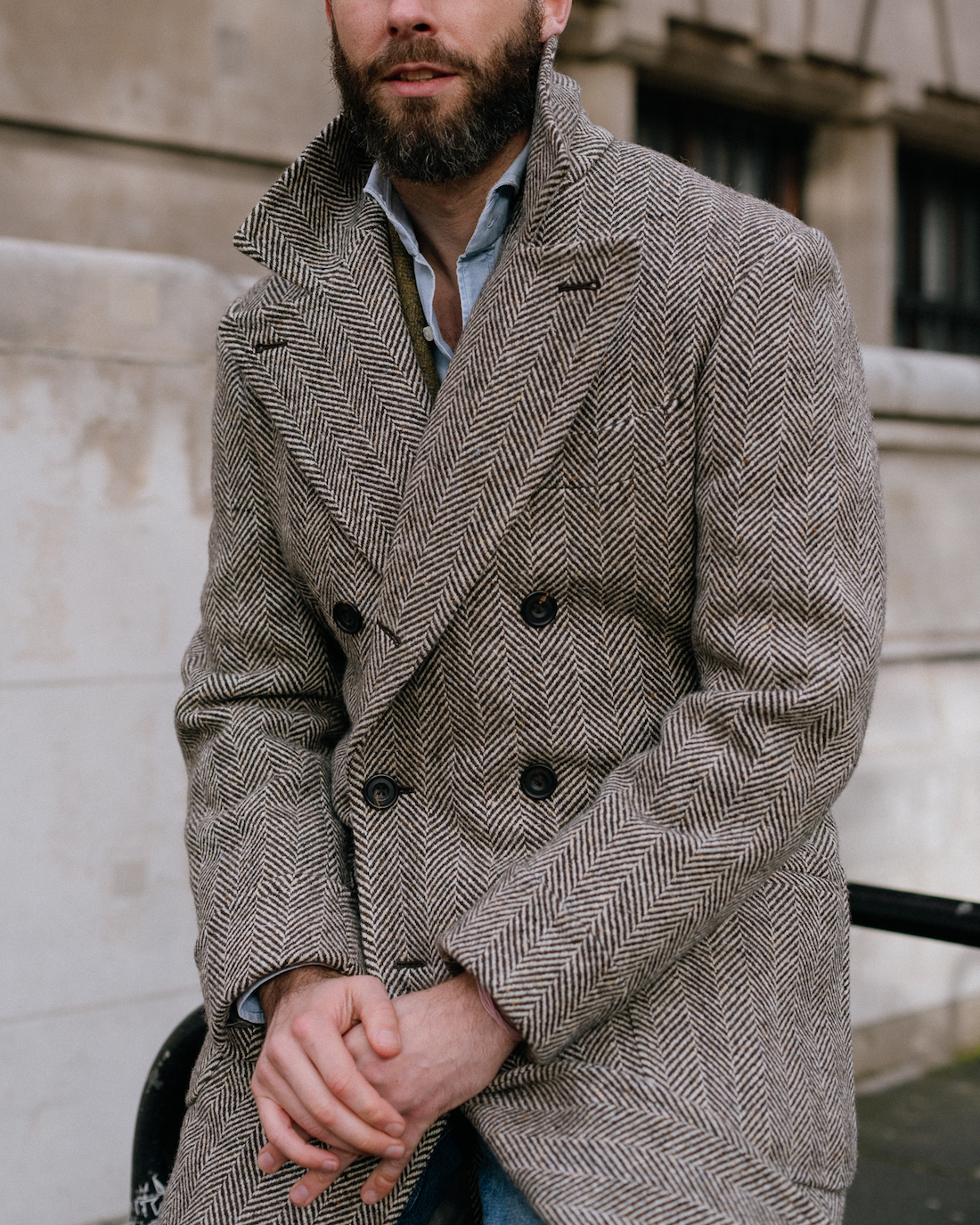
Pictured below is the Anthology herringbone coat, which I helped them design and they are selling RTW or MTO on their site here. It is exactly the same make and style as last year's polo coat, which you can read about here. The only difference is the lack of a flapped breast pocket.

The boots are Galways from Edward Green in mink suede.

Photography: Alex Natt @adnatt

Reader profile: Mattia

||- Begin Content -||

I met Mattia during our recent pop-up shop on Savile Row. A Permanent Style reader, he is also a fashion student, which gives him an interesting perspective on classic menswear. 

I enjoyed talking to him, and his friends, about their studies and their clothing choices, and that naturally led onto the suggestion of featuring Mattia in this Reader Profile series. 

Hopefully it brings one more variation to the line up we’ve included so far, in terms of age, occupation, budget and most importantly, style. 

Outfit 1: Semi-formal

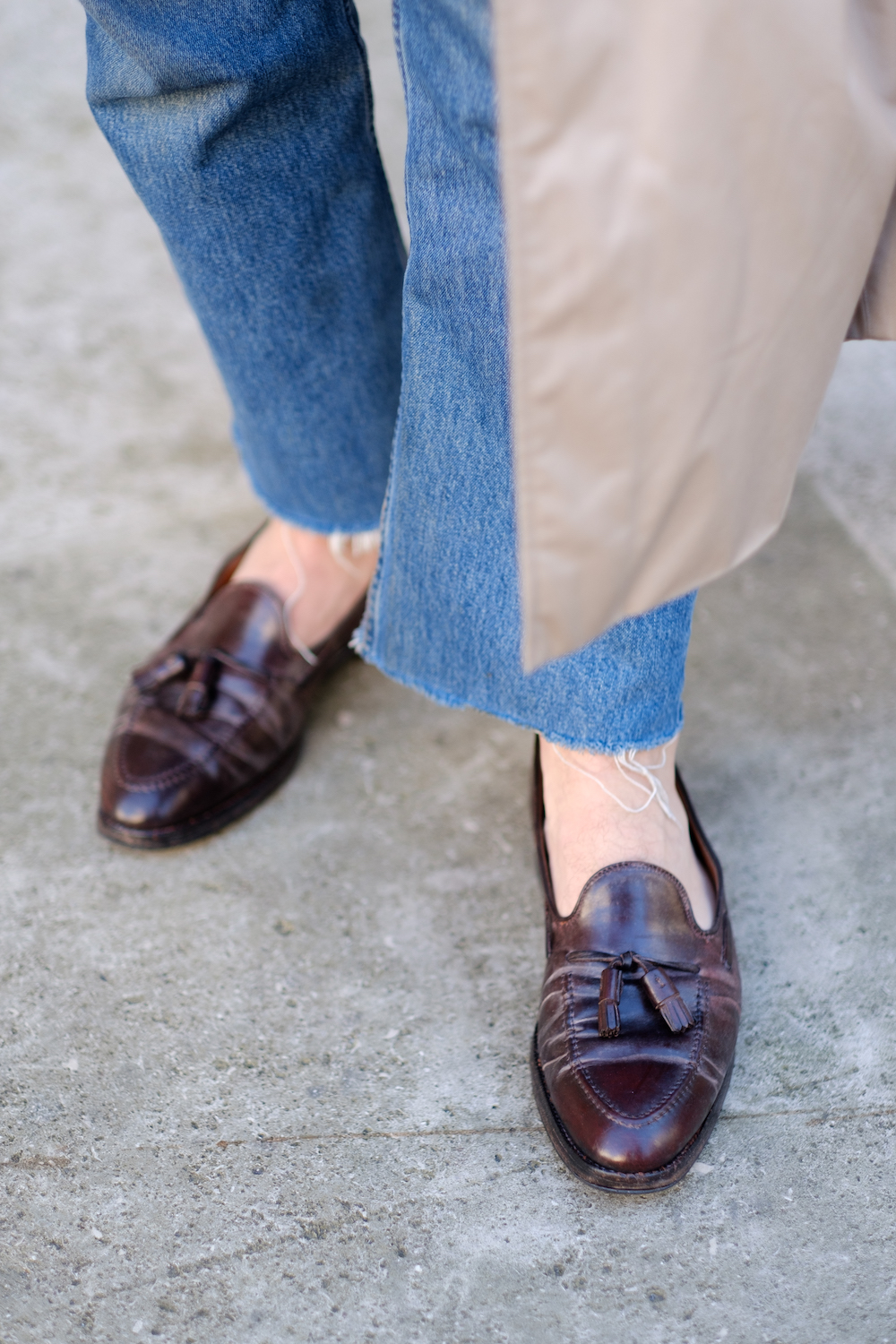
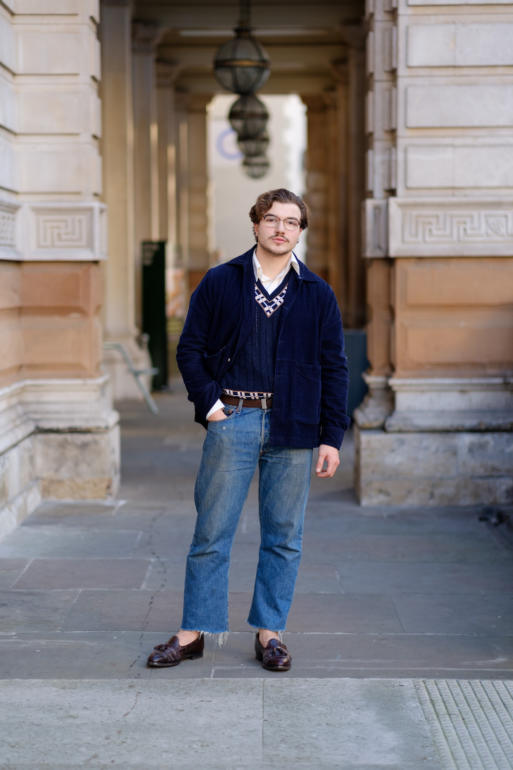
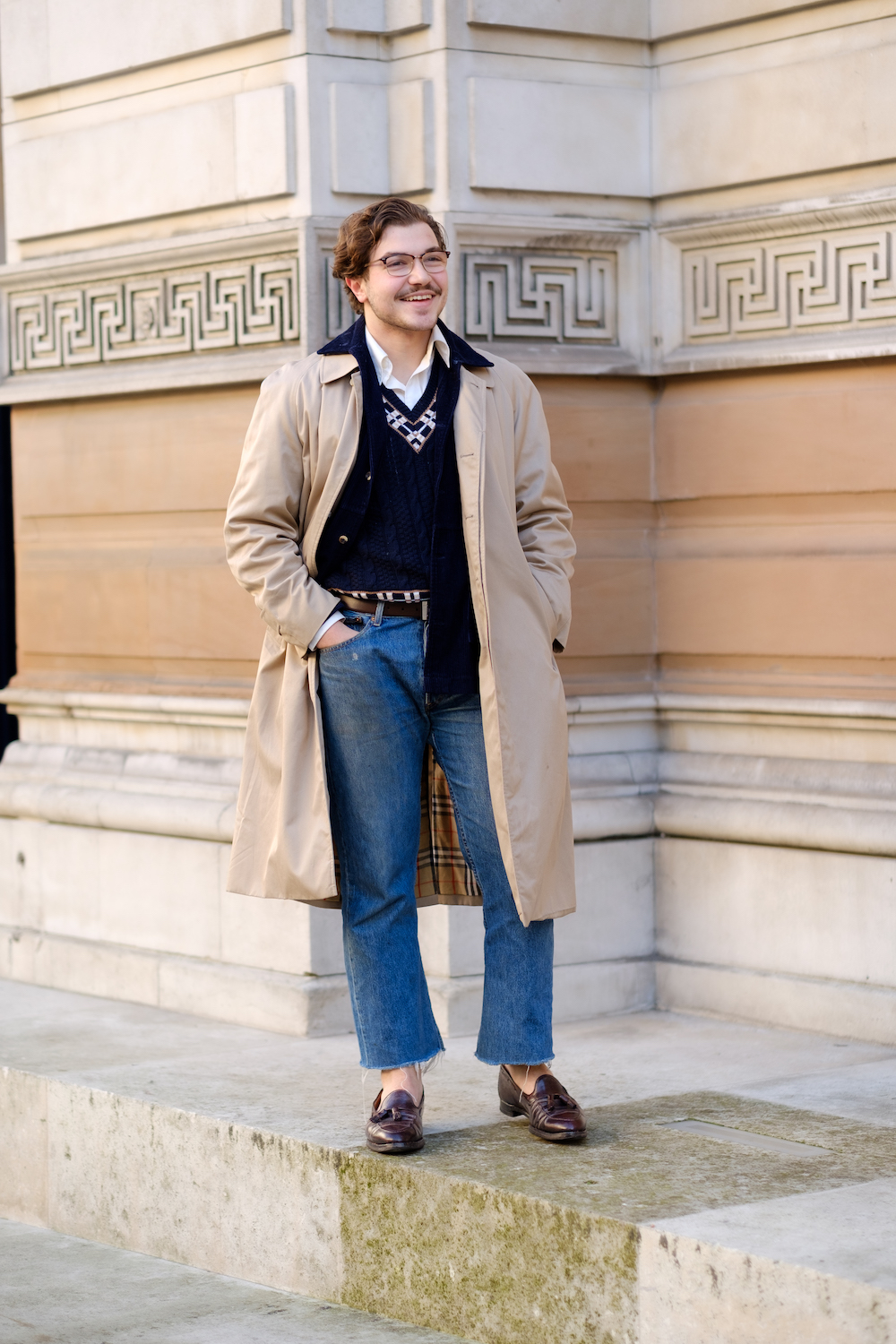
“For my first outfit I went for a fairly preppy look, with a vintage Burberry Mac on top of a corduroy workers jacket (it was a cold November morning on the day of the shoot), a vintage country rose cricket vest and an off-white button down shirt. My jeans are Levi’s 501s with a cut-off hem, with a Cerruti belt and Alden for Brooks Brothers cordovan loafers. 

The loafers were the first pair of ‘proper’ shoes I ever bought. They came from eBay US and have been an absolute game changer for me - a blessing and a curse as I used to buy a lot of high-street shoes, but I don’t think I ever can again. 

I love the durability, sturdiness and sheer quality of the cordovan and wear them with all kinds of outfits. One summer I wore them every single day, and they clearly show signs of that - but cordovan only looks better for it. I’ll be wearing these loafers until my toes poke out of the uppers.

Where do you buy clothes from mostly? 

EBay, vintage markets, charity shops. I also go to vintage streetwear sites, as they’ll often mis-price things like loafers, suits or Barbour jackets. 

I really enjoy that kind of shopping - I see it as a sort of lucky dip. But you do need a lot of patience as there will always be good days and bad days. The continuous upside is that you can be sure you won’t be matching with anyone at a party.

What advice do you have for buying second-hand?

When you’re shopping in person, give it time. I don’t like to rush - I usually browse each rack a couple of times to make sure I’m not missing anything. 

I also prefer to go to the lesser-known second-hand shops, as the famous ones have become quite commercial and more expensive. The best places are often charity shops in the posher areas of London. That’s where you’ll find Crockett and Jones loafers for £25 as well as bespoke suits, vintage furs and beautiful overcoats. 

Online I keep all my searches as broad as possible so that I can get the most out of each one, so for example “men’s overcoat 40”. When I’m desperately looking for something in particular, I’ll look at eBay in other countries, for example my Alden shoes came from Germany and the US, as they are very hard to find on eBay UK.

Another little tip that has only worked a few times over the Christmas period - but I give it a shot every year - is to send in offers that are substantially lower along with the message “Come on mate, it’s Christmas!”

Outfit 2: Formal

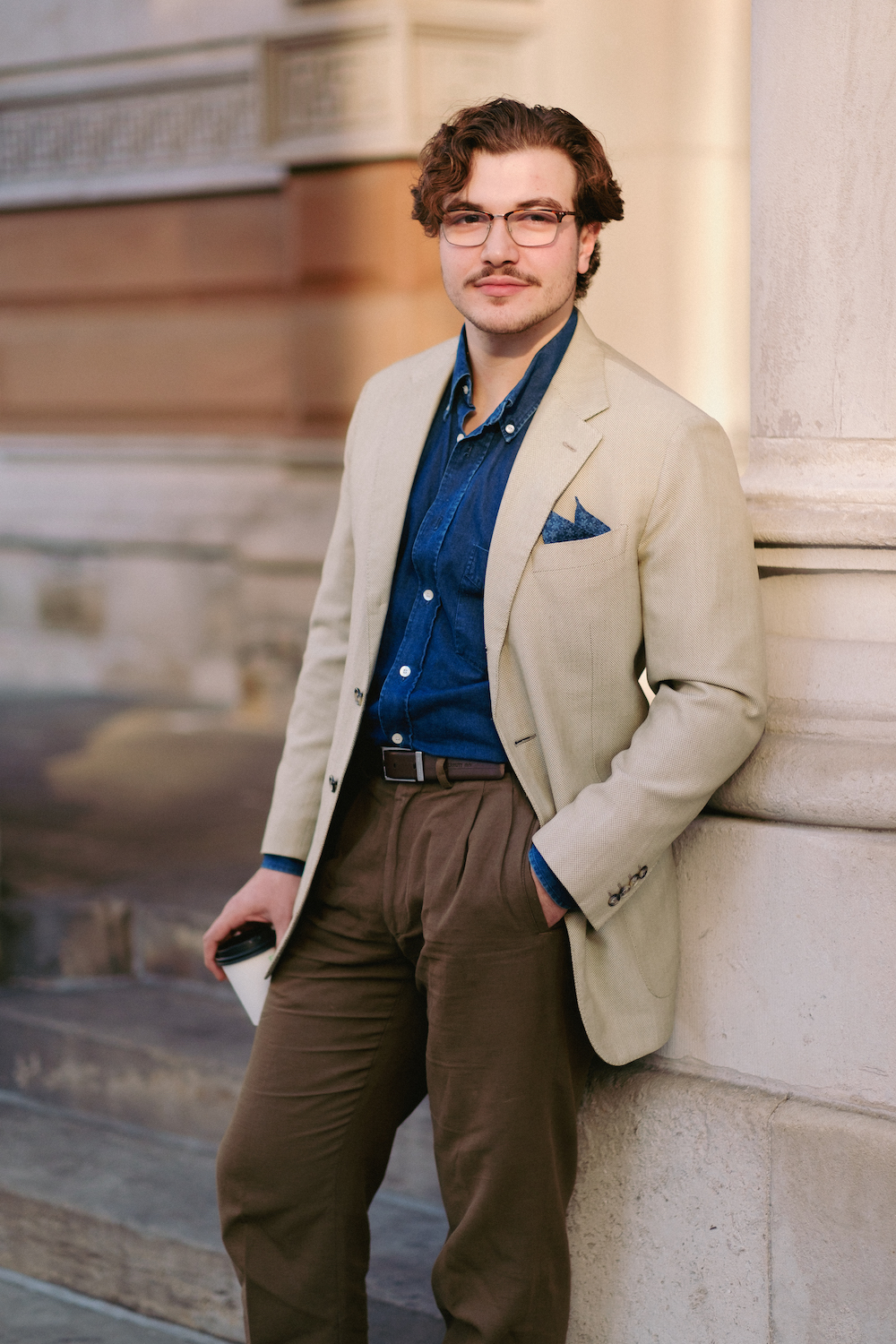
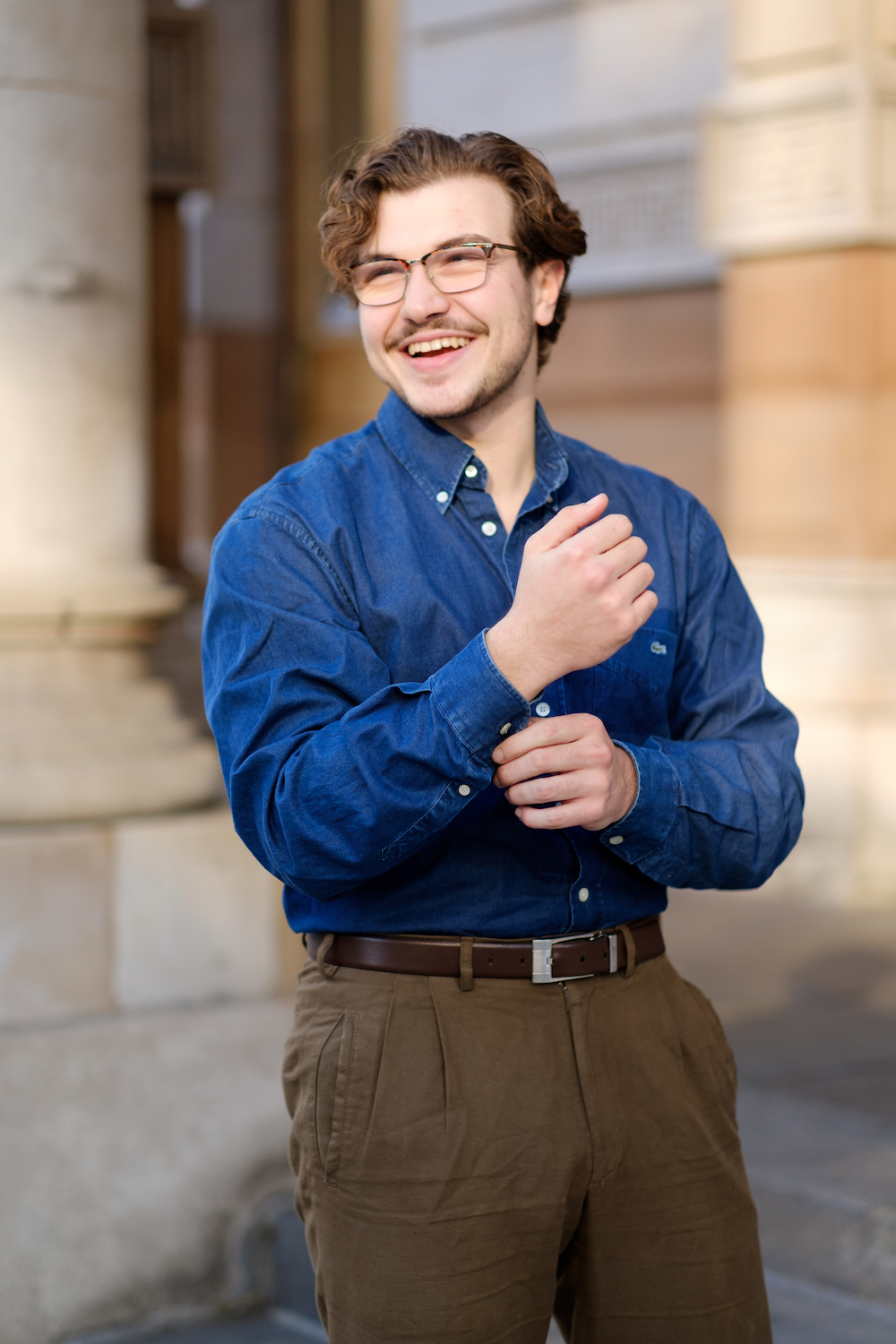
In my second outfit I’m wearing a beige three-roll-two jacket from Mabro Uomo, a vintage Lacoste denim shirt (which I like to add underneath a jacket every so often to loosen up the outfit) and vintage pleated trousers from a market in Naples. Same belt and loafers. 

I know you have Italian heritage. How does that affect how you dress?

My father was born in England to a Neapolitan father and a Polish mother, and my mother was born in Palermo. My great-grandfather was actually a shoemaker in Naples and my great-uncle still works as a tailor. 

I think the Neapolitan side has given me a natural attraction to the softer styles of tailoring, and for more flamboyant but relaxed looks.

What are your favourite shops in Italy? And brands?

My favourite markets to go to in Italy are Resina, Napoli and Sant’Ambrogio in Florence. The culture of buying vintage hasn’t quite kicked off in Italy as much as it has here, so it will usually be me in a sea of Nonnette (old Italian Grandmas) browsing for a bargain.

In terms of designers and brands from Italy I’ll always love Armani from the 1980s, as seen in American Gigolo. Giuliva Heritage is also making some really nice stuff, and I’m currently going through an overcoat phase so I’m hoping to get one of theirs in the near future.

How long have you been reading PS?

Since 2019, so I may be a little late to the game. I met up with Alex Pirounis of Anglo-Italian and he told me to watch Gianluca Migliarotti’s O’Mast. This led me to want to understand the differences between English and Neapolitan tailoring and I came across Permanent Style through the YouTube videos, which then led me to the website. 

I then started reading during lessons in Sixth Form college instead of doing my Spanish work. The blog was one of the first sources when I was deepening my interest in the sartorial world, so it will always have a dear place in my heart.

What is your favourite article or type of article?

When I had just started reading Permanent Style, I was invited to stay with a friend who is a freelance journalist in Florence. He showed me around Pitti - honestly, I had no idea what I was getting myself into, so I read everything I could about Pitti and there was so much useful stuff on the blog. 

I’ve also really enjoyed these reader profiles, reading them and doing one! When I’ve done my sartorial reading for the day I’ll usually pop over to the comment section for some evening’s entertainment, or what I like to call ‘Sartorial Smackdown’. Some of you guys are merciless. Please, go easy on me.

Who else do you follow, or are inspired by?

Robert Spangle (@Thousandyardstyle) - his style is really unique and expresses the person perfectly, his lifestyle, what he does, what he used to do and what he picked up along the way. 

Alessandro Squarzi for his ability to pull off almost anything, as well as his love for ‘vivere vintage’. Gerardo Cavaliere as a display of Italian classical excellence and elegance - to me it’s a romantic and slightly nostalgic style. Nathaniel Asseraf [for the cowboy boots, see below], and the guys over at Peplor who are maestros in Italian market shopping.

Outfit 3: Casual

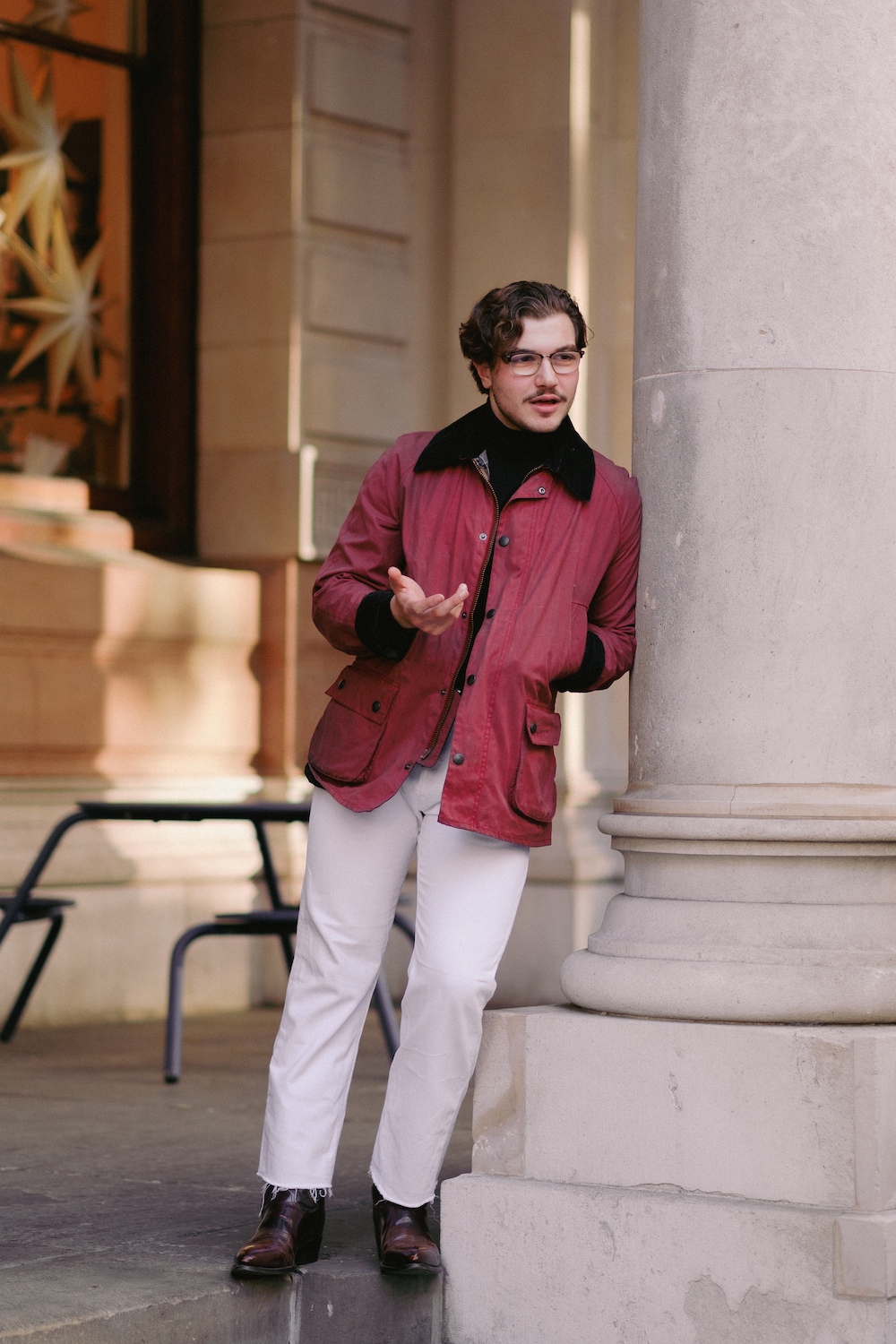
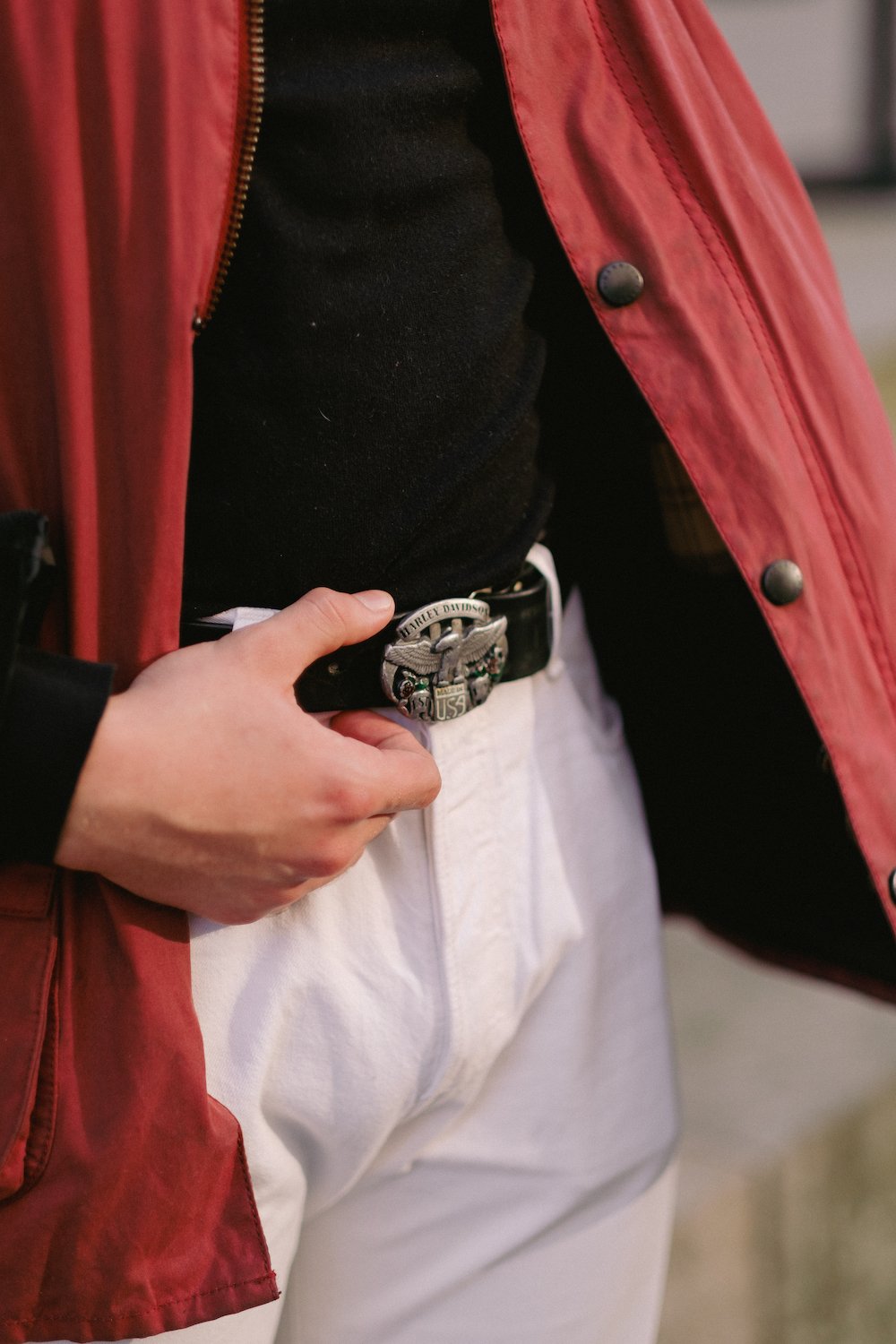
With the last outfit I’m mixing some US/UK classic items such as a red Barbour Beaufort with an M&S black turtleneck. Harley Davidson belt, white Levi’s 501s with a cut-off hem and Wrangler cowboy boots.

The Harley belt has become a bit of a family heirloom. It was found by my uncle attached to an old set of swings at the bottom of his garden. He gave it to his brother who is a leatherwork enthusiast, who became my Godfather and passed it down to me when I was about 9. I’ve been wearing it ever since.

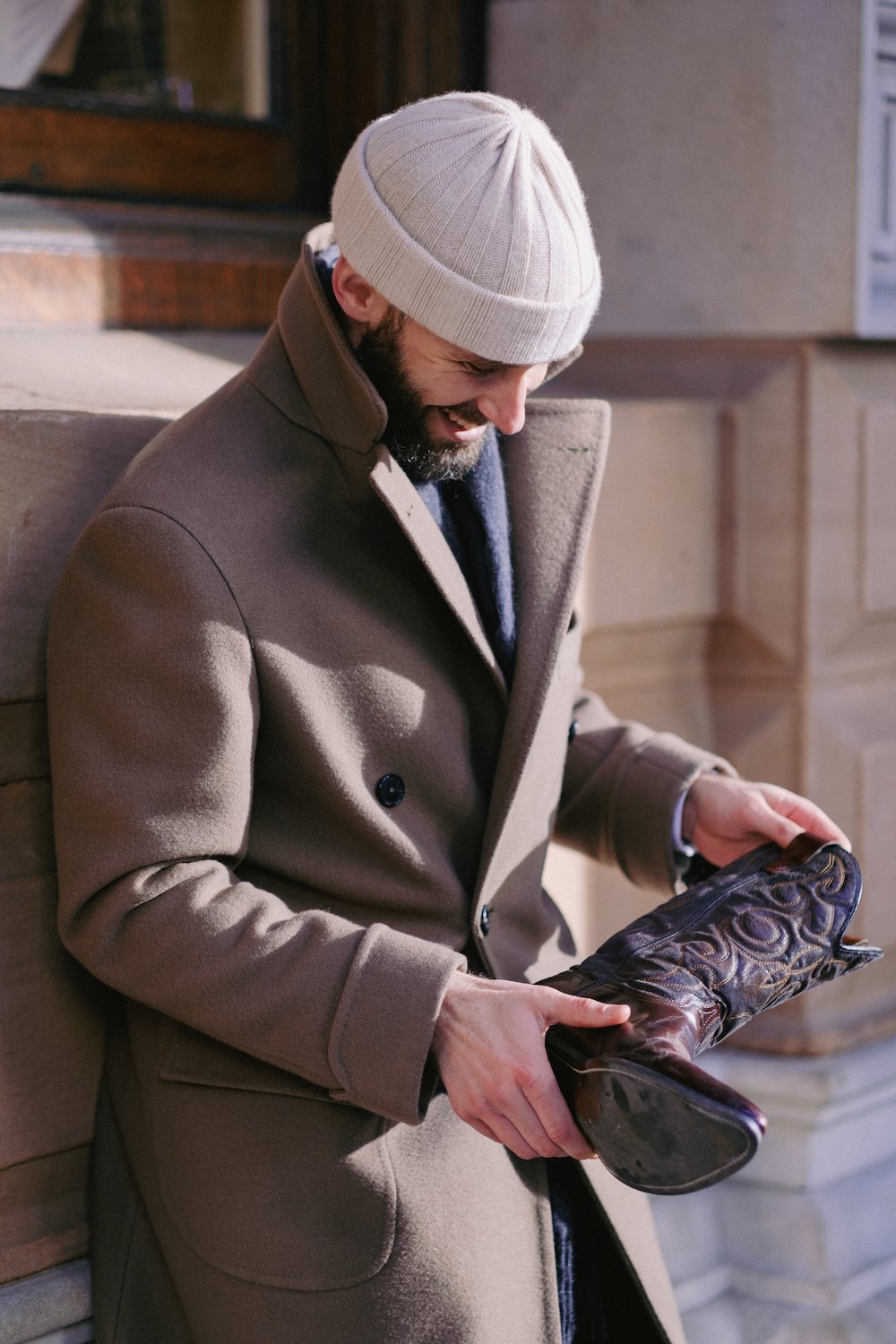
I always dismissed cowboy boots as I never thought I could pull them off, and they reminded me of dubious outfits in photos of my parents’ house parties in the late nineties. However, I saw Nathaniel Asseraf, of Casatlantic, in one of his Instagram posts wearing a sturdy pair of cowboy boots with some high-waisted jeans and I just loved the silhouette. 

I went straight onto Depop, searched for some cowboy boots and found these Wranglers brand new, exactly the same as the ones in the post. 

My Sicilian genes have blessed me with a lot of good things, but height is not one of them, and that little extra bit of heel in the boot also helps make up for it. Ever since I’ve absolutely loved them and bought a black pair as well. I would suggest giving cowboy boots a chance.

What do you do?

I’m in my second year studying Bespoke Tailoring at the London College of Fashion. In my spare time, when I’m not in the studio, I work a couple of days a week as a labourer to fund my eBay addiction. And when I’m not doing either of those, you’ll most likely find me drawing in my room or in the ring in my local Muay Thai gym.

How does all that affect what you wear?

Being at LCF as a 19-year-old who hasn’t quite figured out their own style or aesthetic can be challenging, as you’re surrounded by so many strong characters who fit perfectly into particular subcultures. But I’ve accepted that and am just enjoying the process, experimenting, messing up as well as discovering great combinations. 

What do your peers think about what you wear?

Everyone seems to enjoy how I mix vintage sartorial pieces into my outfits and make them look current, as well as quite varied and versatile - as sometimes I’ll come in wearing tailored trousers, a belted overcoat and loafers and some days white jeans and cowboy boots.

What do you wear when you go out?

Growing up in a rough area of south-east London was hard for the development of my style. From a young age I was always taught by my older friends that the ‘zebra with the red stripe gets eaten’. Robert Spangle told me the military term is being the ‘grey man’. Basically, not standing out. 

However, now that I’m 19 and have had my fair share of dangerous situations, and know my way around, I now do whatever I want (within reason). Clothes for going out now just depend on who, what and where. 

So often it will be on the casual side if I’m going out locally: shirt or turtleneck, jeans, boots or loafers, and the jackets will vary. When going into central London I’ll always dress up. The levels of formality will change depending on who I’m out with, but I tend to be a lot more tailored than others.

Have you changed how you dress since the pandemic?

Before the pandemic I was slowly changing my wardrobe from a more urban street style to something more tailored. I was a lost teenager who finished college with no exams and had really a lot of free time on my hands. A lot of that time was spent exercising, drawing or sewing, and the rest of it was on eBay. 

My brother and I discovered the weird and wonderful aspects of eBay during the first lockdown, and every Sunday we would wear our new eBay suits to keep Sunday special. It got so bad that we would refer to money as eBay credits!

Since that first lockdown I’ve pretty much had a complete wardrobe change, from that of a teenager to what I believe to be quite a developed, versatile and wide range of high-quality pieces that’ll last a hell of a long time.

Photography: Mohan Singh

Down parka from Nigel Cabourn: How great things age

Over the winter, quite a few readers have asked what I wear for very cold weather. 

If it’s formal, the answer is a simple variation on the coats we’ve already featured: a heavyweight overcoat like my 30oz from Sartoria Ciardi, for instance, but layered up.

Those layers might be a vest, a shirt and a 4-ply knit. For the coldest weather, the vest could be merino, the shirt heavy, and the knit a cashmere roll neck. The gloves, scarf and hat might be heavier too. I have a fur hat from Eggert that gets an outing on days like that. 

I might even, in extremis, try to get a fur liner under the overcoat – like my recycled mink one. But I’ve never needed to wear down just for the warmth. 

Down parkas always looked a little odd with tailoring to me. They can, in some cases, be an effective form of high/low dressing. But an unusual, stylish-because-unexpected look is not really what guys are after when they ask about deep-winter clothing. They want something they can wear easily every day.

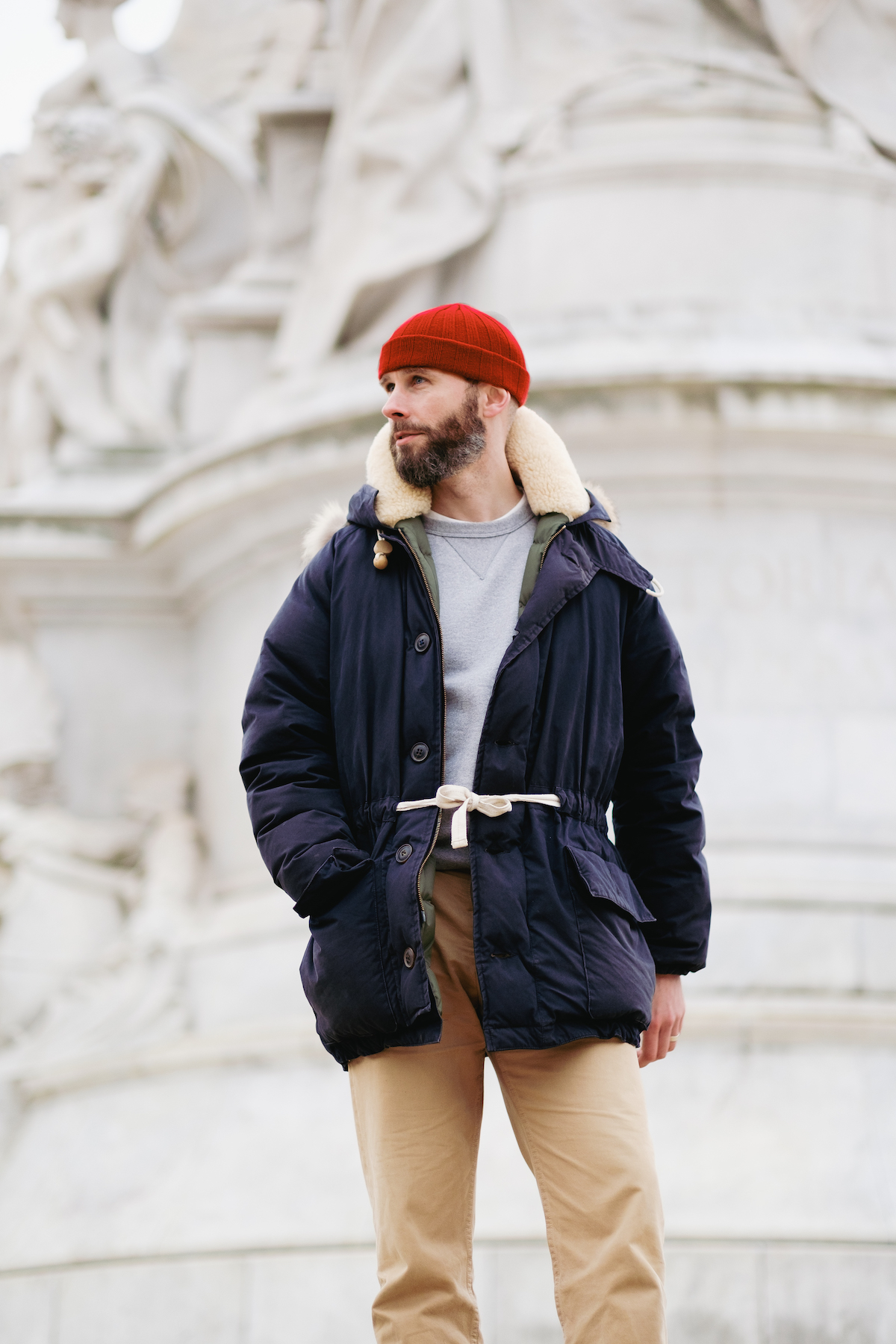
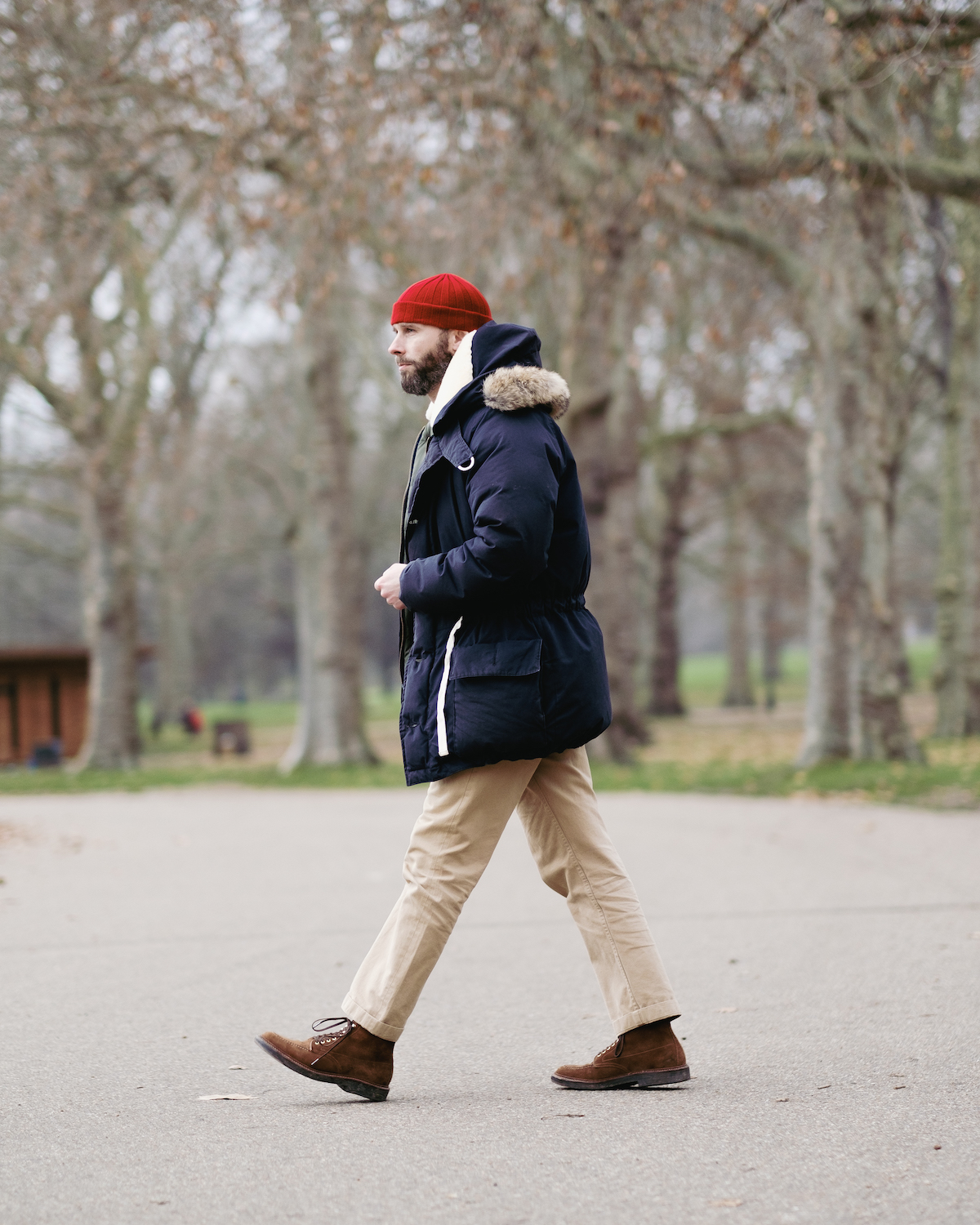
The only time I wear down is casually – in a gilet like this from Real McCoy’s, or my old Everest parka from Nigel Cabourn. Which is what this article is about. 

I bought the parka in 2014. It was a huge amount of money for me at the time, but really felt like an investment. There was clearly a lot going on with it, in terms of the materials and the details, and it was something that would keep me warm in a way that nothing else I had would. 

In the eight years since, that has proved true. I’ve worn it every winter – including in Swedish and New York winters – and it has both kept me warm and given me pleasure. 

The first should be a given, but the second isn’t necessarily. Part of the joy for me comes from the down: quality down is a lovely thing to put on in cold weather – it feels basically like getting into bed and putting your duvet back on – and this is 100% goose down. 

But there are other goose-down jackets. I think the Cabourn model is separated more by the other materials – the use of Ventile cotton for the shell and sheepskin in the hood – and then the lovely design details. 

Ventile, as most readers will know, is a densely woven cotton that is designed to expand when it gets wet, to become waterproof. It will never be quite as waterproof as a synthetic, but I’ve worn this for extended periods in absolute downpours with no issues. 

And it is a lot nicer to wear than a synthetic shell.

It is cotton, like your T-shirt, like your chinos, and is that much nicer to wear. It doesn’t rustle when you wear it, it softens over time, and it even looks better with age. 

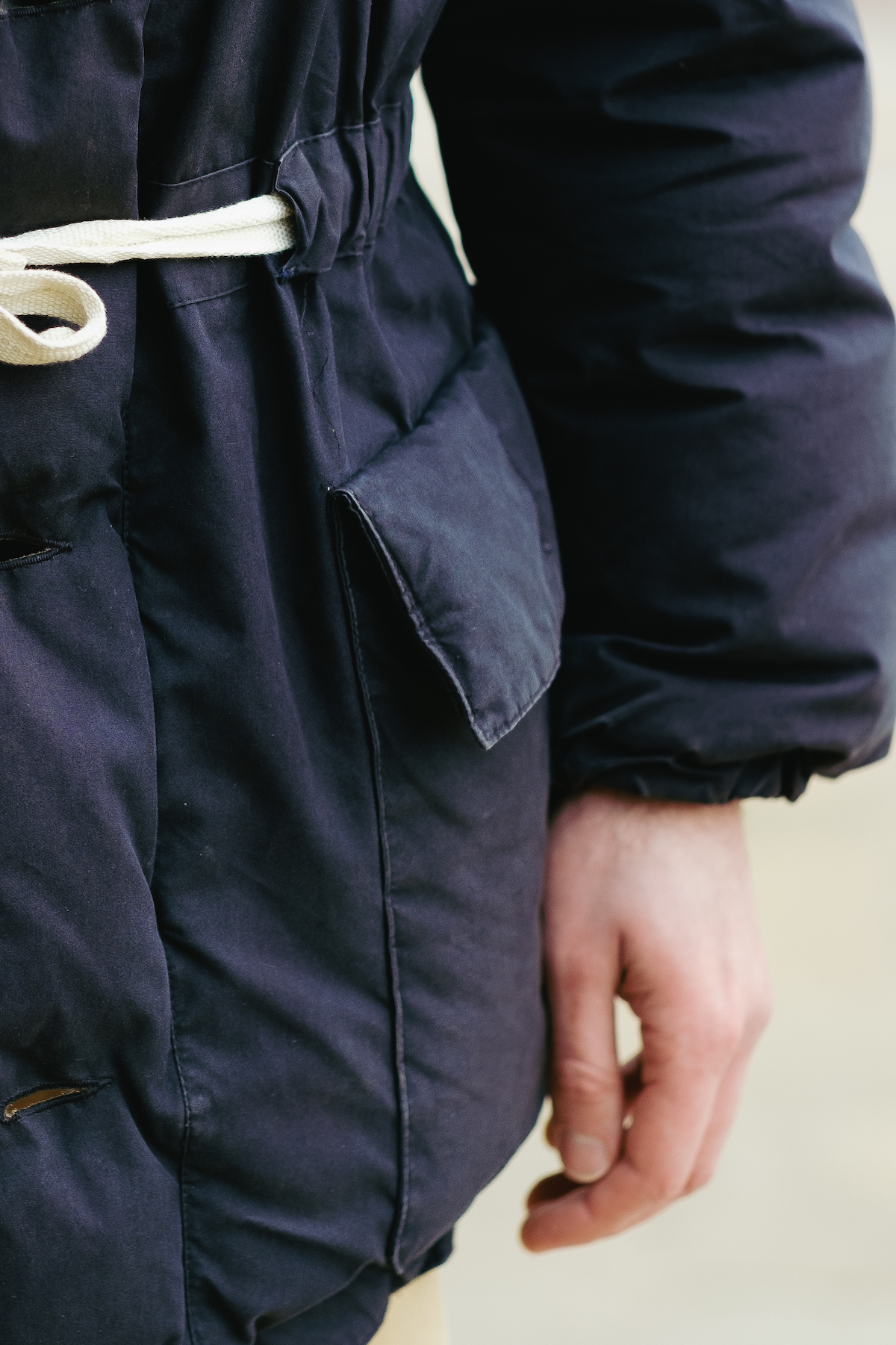
Look at the close-ups of my pocket edges in the image above. This slow fading after years of wear is personal and beautiful. It’s like whiskered jeans or shoes with patina.

Ventile is a material to enjoy like any other we discuss, whereas Gore-Tex, as functional as it might be, is not. 

Skiing jackets in the mould of Eddie Bauer have become popular recently, driven by the ‘gorpcore’ trend but also probably by the popularity of vintage generally. The problem is, those old jackets and gilets look great because they were cotton, and faded. Newer versions are synthetic and don’t look the same. 

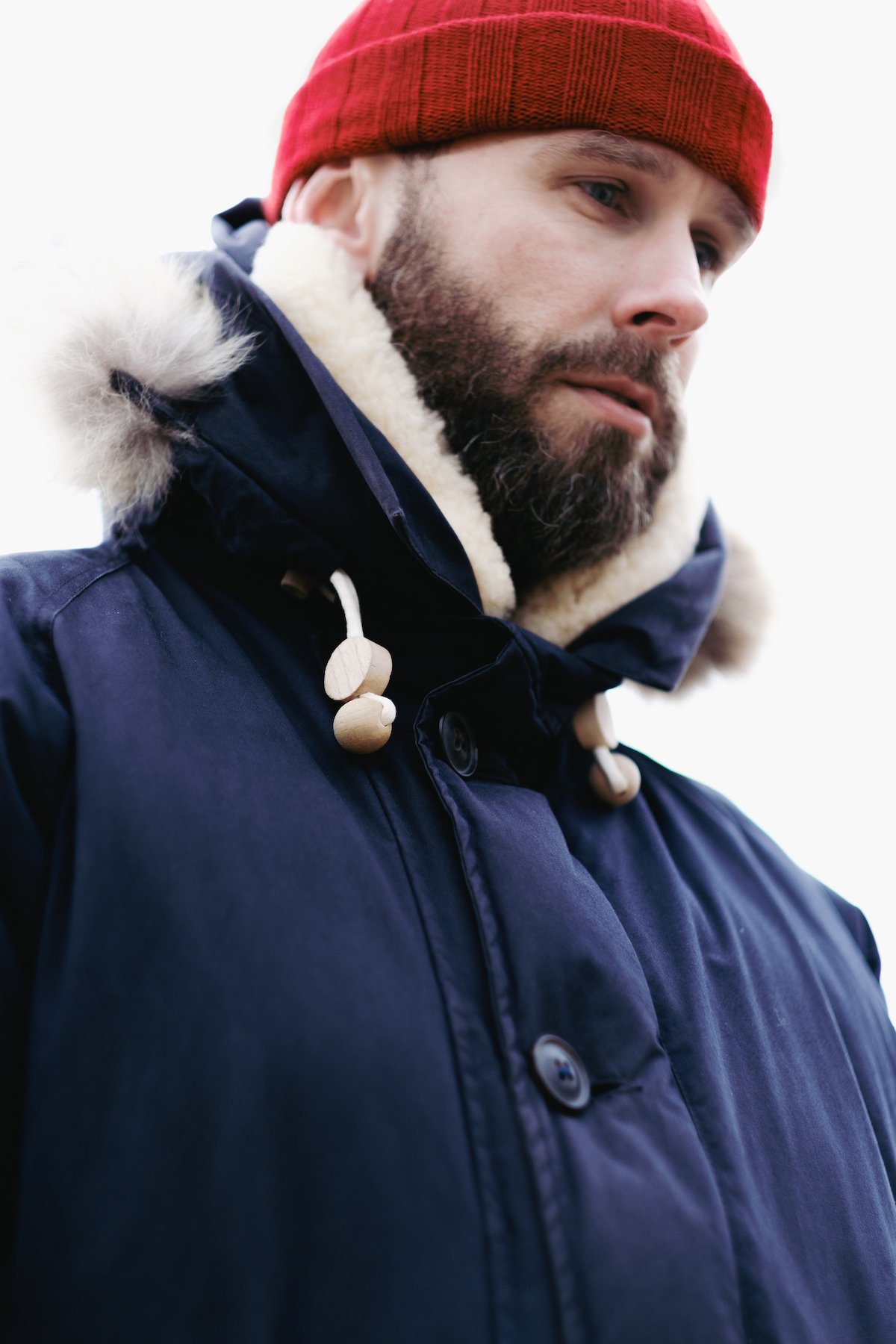
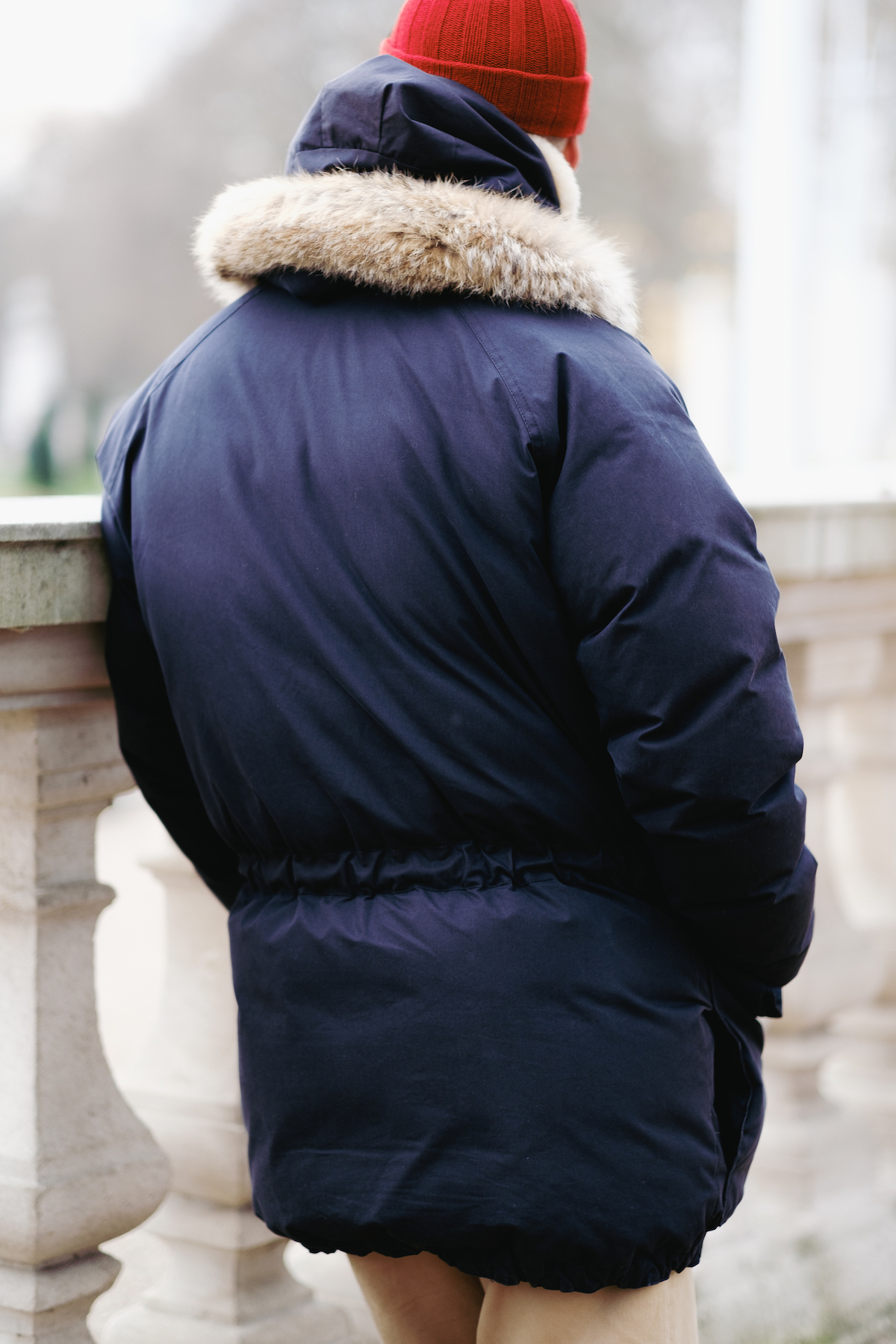
The sheepskin lining on the back of the Everest hood is genius. It basically acts like a half scarf, hugging the back of your neck even when the coat is open. 

That sheepskin is actually one of the key reasons I prefer this to the Arctic down jacket from Real McCoy’s. I also prefer the Ventile and goose rather than duck down, but I’d miss the feeling on the back of my neck in particular. 

The Cabourn is also more engineered. The Everest neck and hood has essentially four different heights of fastening: zipping up, a button placed a little higher, the throat latch fastened with a wooden toggle (above), and then closing the hood itself. 

When the hood is closed, it has the ‘snorkel’ look of enclosing the face entirely. I’ve only needed that once, while on holiday in Massachusetts in the falling snow. But I did enjoy doing so.

More details. The horn buttons are leather backed. The drawstring at the waist is made from a heavy-duty canvas that doesn’t fold when you pull or tie it. The bottom hem has a slight elastication that keeps the jacket snug under your bum, stopping air getting in. 

It’s a very well-thought-out coat, and the beauty of the ‘How things great age’ series is that I can say so after 8 years of wear, rather than relying on review and analysis. 

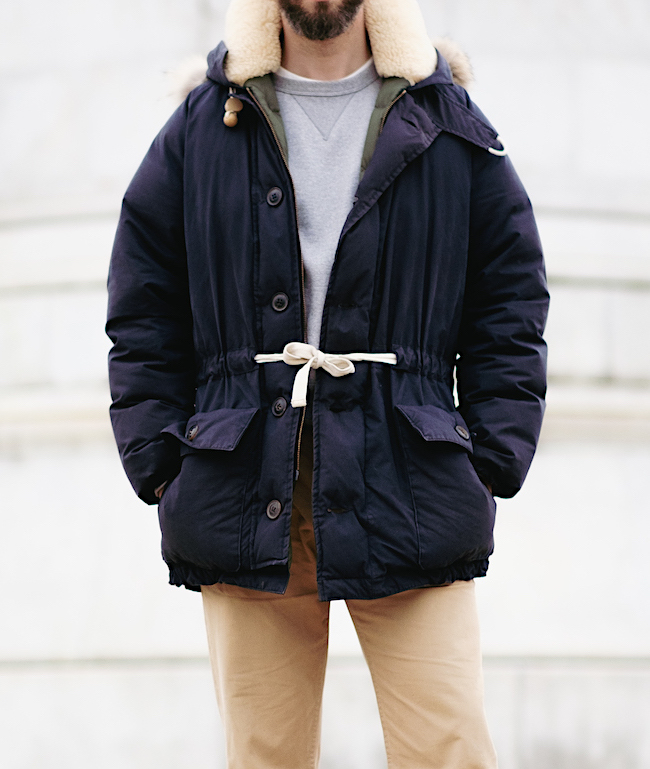
The drawstring is nice tied loosely instead of a waist button, as I’ve shown above. It looks retro, perhaps, but it’s also functional as it keeps all the warm air in your back, even if the front is open.

If you can’t be bothered with that tie every time, I found it also works to knot the cord on each side, to retain the cinch, and just use the buttons or zip to fasten the front. That’s what I do most of the time.

The Everest parka is very expensive – today it’s £2500. But the best evidence that I think it’s worth it, after my many years of wear, is that I’m about to buy it all over again. 

This coat is a size 48. It has always felt big enough, and been warm enough. But recently, I tried on a friend’s size 50 and it felt better. It didn’t look oversized in the body, and it gave me an extra couple of inches in the length, meaning that it dropped decidedly below my seat, rather than only just doing so. It felt more enveloping. 

So I’m buying that size 50 from him (he, too, is buying another Cabourn) and selling mine. It is on sale now, on Marrkt (NOW SOLD)

I really hope it goes to a good owner. It has served me very well over the years, and is just as functional as the day I bought it. On a cold December day in Covent Garden. 

Stylistically, by the way, I usually wear more colour with casual, outdoorsy clothes like this – certainly much more than with tailoring. 

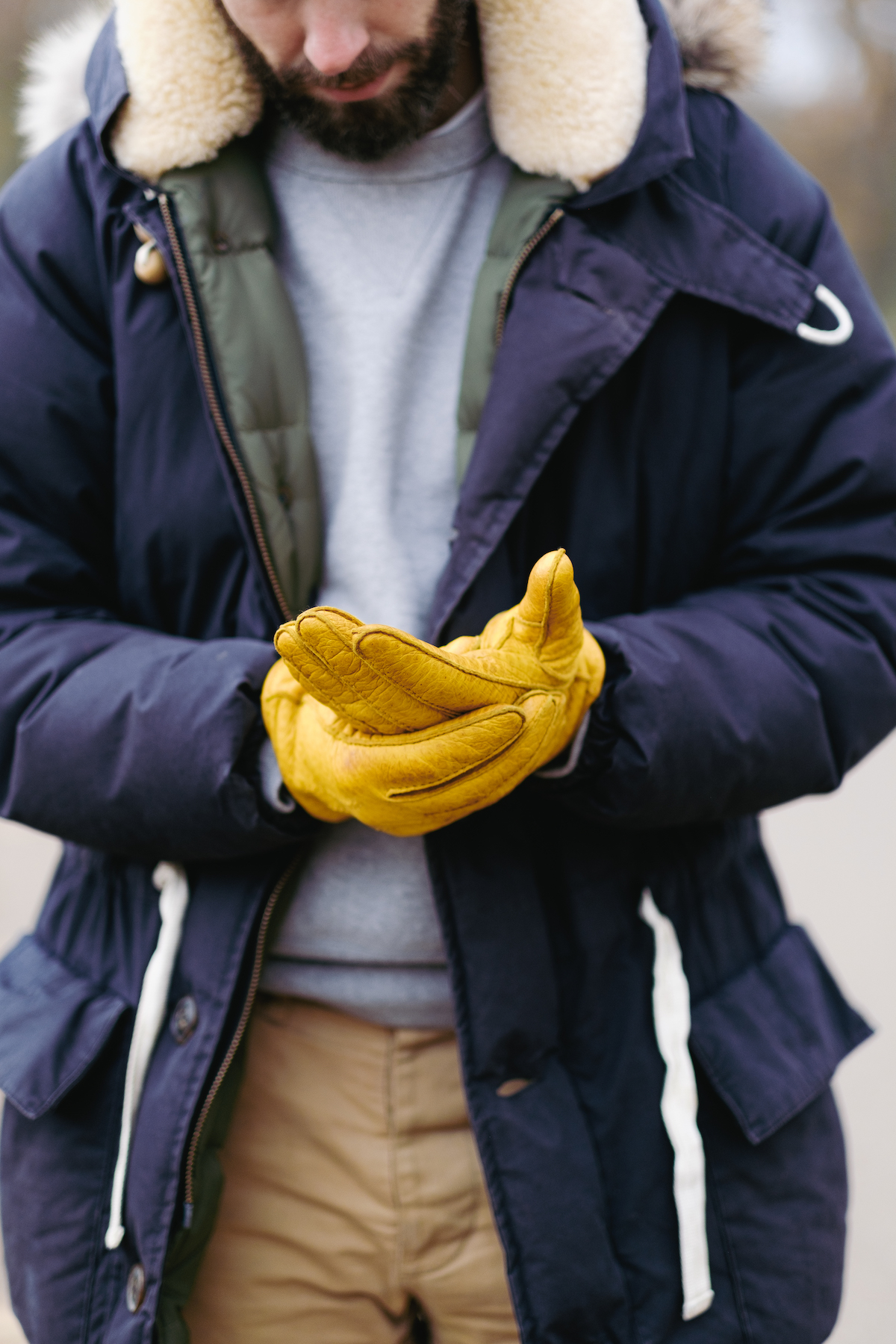
That might be a faded red or green sweatshirt, but it’s more often accessories, like the bright-red PS watch cap shown higher up, or the yellow gloves above. 

With the yellow gloves I’d wear a navy watch cap, to give the gloves more pop. But the red hat is also nice with tan colours, like tobacco peccary gloves.

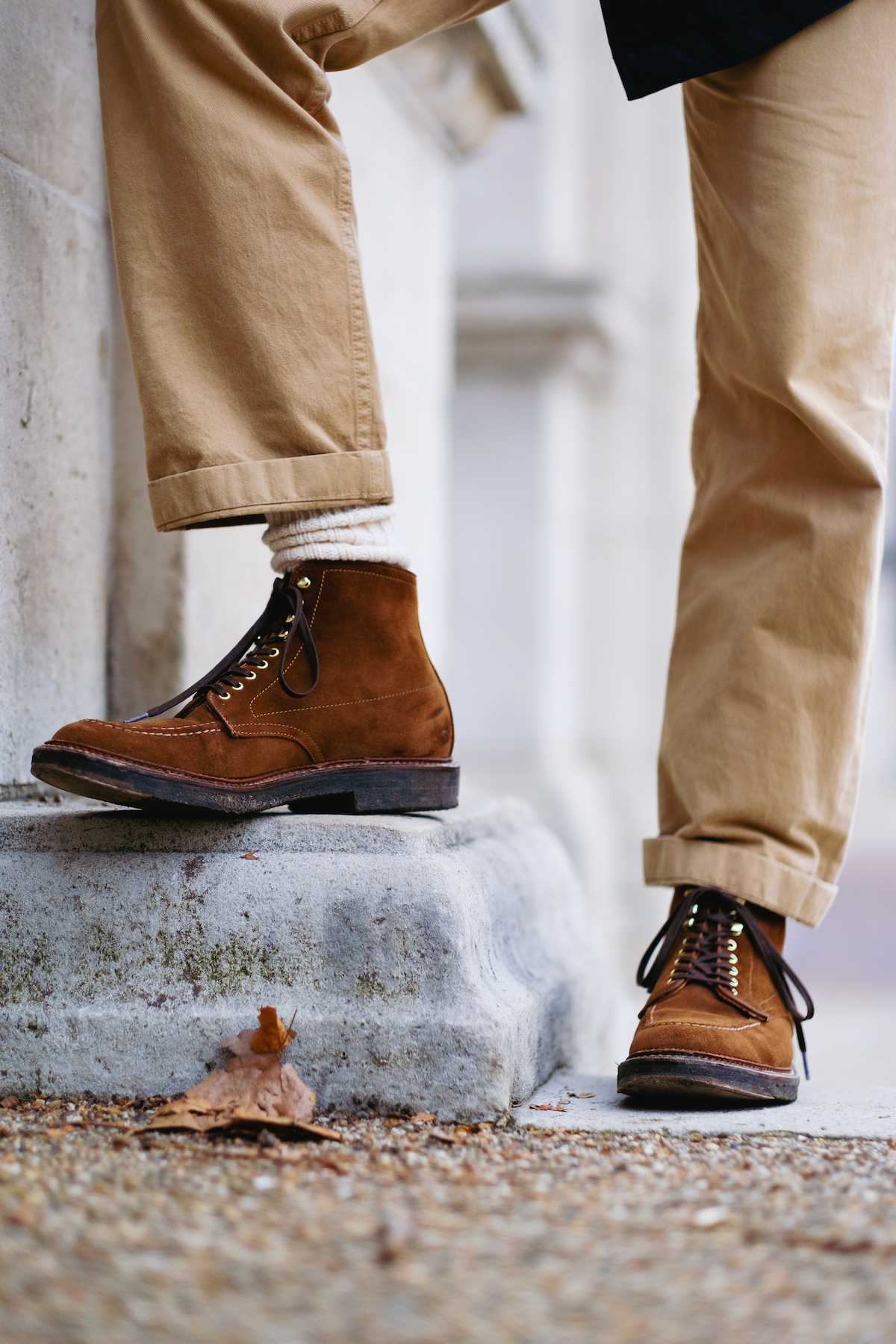
That goes for boots too. Color 8 cordovan is great with this outfit, but a warmer colour like snuff suede is even better. This is the tanker boot from Alden, which Drake’s offered as a collaboration last year, on the Barrie last with a crepe sole. I wasn’t sure about the crepe at first, but I don’t mind it with a casual look like this. 

Off-white socks go with the outdoors aesthetic as well. Although I’m not about to tuck my trousers in. 

Current Everest parkas from Nigel Cabourn cost £2500. The colour shown here is navy-black. 

Simon’s parka is on sale on Marrkt here. (Now sold)

Other clothes worn: 12oz sweatshirt from The Real McCoy’s, chinos from The Armoury (old style), ribbed socks from Anonymous Ism. Gloves from Mazzoleni, T-shirt from Allevol.  

Photography: Mohan Singh

PS Awards 2022: What are your favourite clothes, ever?

PS Awards 2022: What are your favourite clothes, ever?

Wednesday, January 12th 2022
||- Begin Content -||

This time of year we normally run our Permanent Style Awards, where readers vote for their favourite brand or shop in a handful of categories. I then profile the winners over the following month. 

This year I thought we’d do things a bit differently. Rather than brands, I’d like to know what your favourite pieces of clothing are - in order to recommend specific things to readers, with specific reasons that help them decide for themselves. 

I think this will be useful, as it gives particular recommendations rather than just shops in general - almost like an expanded ‘Top 10’ piece. It also means we avoid repeating previous awards.

So, these are the categories. Please let us all know what single piece of clothing you would list in each one, and why:

  1. Your favourite item of clothing you bought in 2021
  2. Your favourite item of (ready-made) clothing ever
  3. Your favourite bespoke (custom, MTM) ever
  4. Your favourite piece of ‘luxury’ clothing, and why it feels luxurious to you. (Not price, but fit, rarity, make, materials.)

I’m particularly interested to hear what people put for number 4. We talk a lot about luxury clothing, but it can mean quite different things to different people. To one person it might be a bespoke fit in jacket, to another the feeling of 12-ply cashmere, and to another the knowledge that no one else owns the same piece of clothing (as with vintage clothing).

I do hope you find the exercise interesting. I know other readers will find the recommendations valuable. 

I'll do a follow-up piece in a week or two, summarising some of the nominations and also giving my answers. 

Thank you

Simon

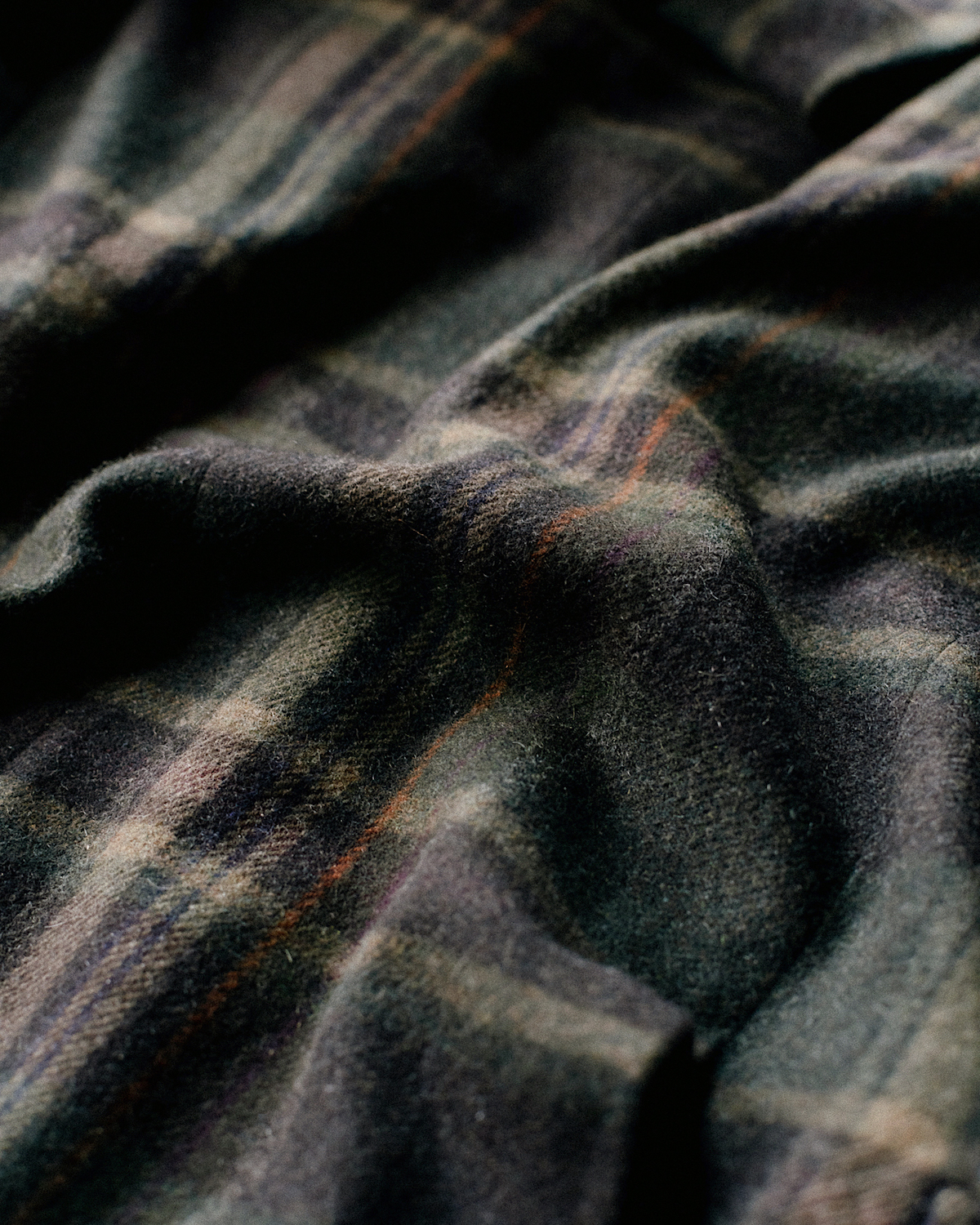
Imagery: top, my Whitcomb & Shaftesbury wrap coat, from the tailor's award for best artisan last year; below, the luxury (materials and rarity) of the PS Plaid jacketing material
Perro: The collection tried and reviewed

Perro: The collection tried and reviewed

Monday, January 10th 2022
||- Begin Content -||

I don’t think Per and Rock (below) will mind me saying that when I first saw the products and looks coming from their new brand, Perro, they didn’t have a big impact on me. 
The two of them - previously at menswear shops Linnegatan 2 and Sartorial respectively - had set up Perro offering knitwear and trousers, some shirts, and stocking other brands such as Bryceland’s. 

The stories they told weren’t usually product-led (and I am always at heart, a product guy) while the shoots were nice, but didn’t have the kind of aesthetic vision of people like Rubato or Stoffa.

In fact, I think it says something interesting about how fashion is consumed today that you need this kind of visual identity to have an impact. Everyone and everything is online, and it doesn’t matter whether you’re in Seoul or Stockholm, you need something different to cut through. 

That’s a pity, because it does make it harder to spot brands doing good product with a few nice touches, or ones just serving a local market particularly well.  

This point about locality struck me when I spoke to Rock and Per on Zoom, last month. 

Per was calling from the Perro shop, in Copenhagnen. Rock was at home in Amsterdam. Having never really considered Copenhagen from a fashion point of view, I asked Per what it was like. 

“There’s a lot of interest in fashion here, and design in general,” he said, “but there’s little awareness of alternative ways to dress more smartly. We’ve had quite a few people interested in the products, but they usually don’t wear similar things at the moment - it’s a lot of streetwear.”

The core aim of Perro is offer an alternative: a capsule collection that isn’t streetwear, but isn’t tailoring either; that makes most people in Copenhagen looked more dressed up day to day, but also rather elegant at a meeting, a dinner, or any other social occasion. 

That collection doesn’t have to be very new or unusual in international menswear. It just has to be better than what’s around the corner. 

The day after we spoke, Per hosted a launch party for the new shop. We spoke again two weeks later, after I had been sent some pieces to try. It seemed the event had borne out Per’s hopes for the local reaction. 

“It was interesting, we had a lot of creative types here - I think there were three or four photographers,” he said. “But few of them had seen much like this before. I guess it’s easy to forget that a lot of people live in a different bubble of brands and styles to yours.”

Of course, these are not PS readers. You are all well aware of the brands working what we have called a ‘casual chic’ aesthetic. Or you should be. If you’re not, read this and this. Plus maybe this.

So for all those readers - browsing Instagram and shopping online - what does Perro offer that’s different? Why plump for their trousers, shirts or knits over Anglo cottons, Armoury shirts or A&S sweaters? 

I tried most of the product after our initial call, and then discussed my thoughts with Per and Rock afterwards, to get their reactions. This is my breakdown.

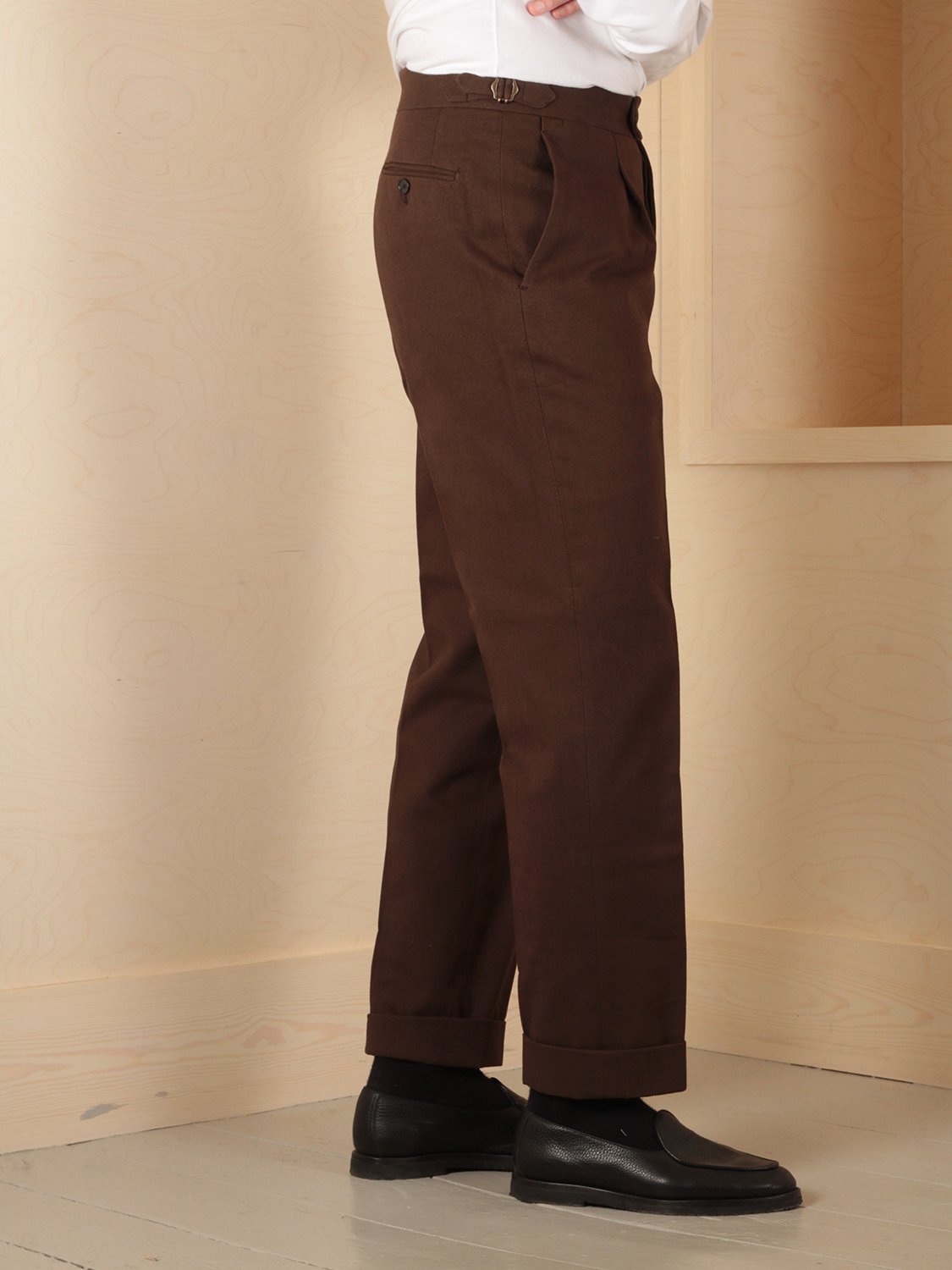
Starting with the trousers, Rock says they seem to fit everyone, or at least more than almost any others he’s worn. And once you try them in person, you can see why. 

They’re a nice mid-rise, sitting just at the top of the hip bones - the perfect height as far as I’m concerned. Flattering, but not anachronistic or uncomfortable. A fairly average hem size of 20.5cm. 

But the leg line is what makes them fit a lot of people - the thigh and knee are very generous, almost of the point of being a look. This means they’ll fit anyone with a bigger seat or thighs, while the taper stops them being a simple wide-legged trouser. 

“I worked with a few brands previously, and the leg line was always so skinny,” says Rock. “They really didn’t fit many people. Plus the rise was either very low or very high, nothing in the middle.”

Per didn’t have quite the same issue, “but I really like the balance on the trousers - the way they’re generous but tapered. It took a while to get that right,” he said.

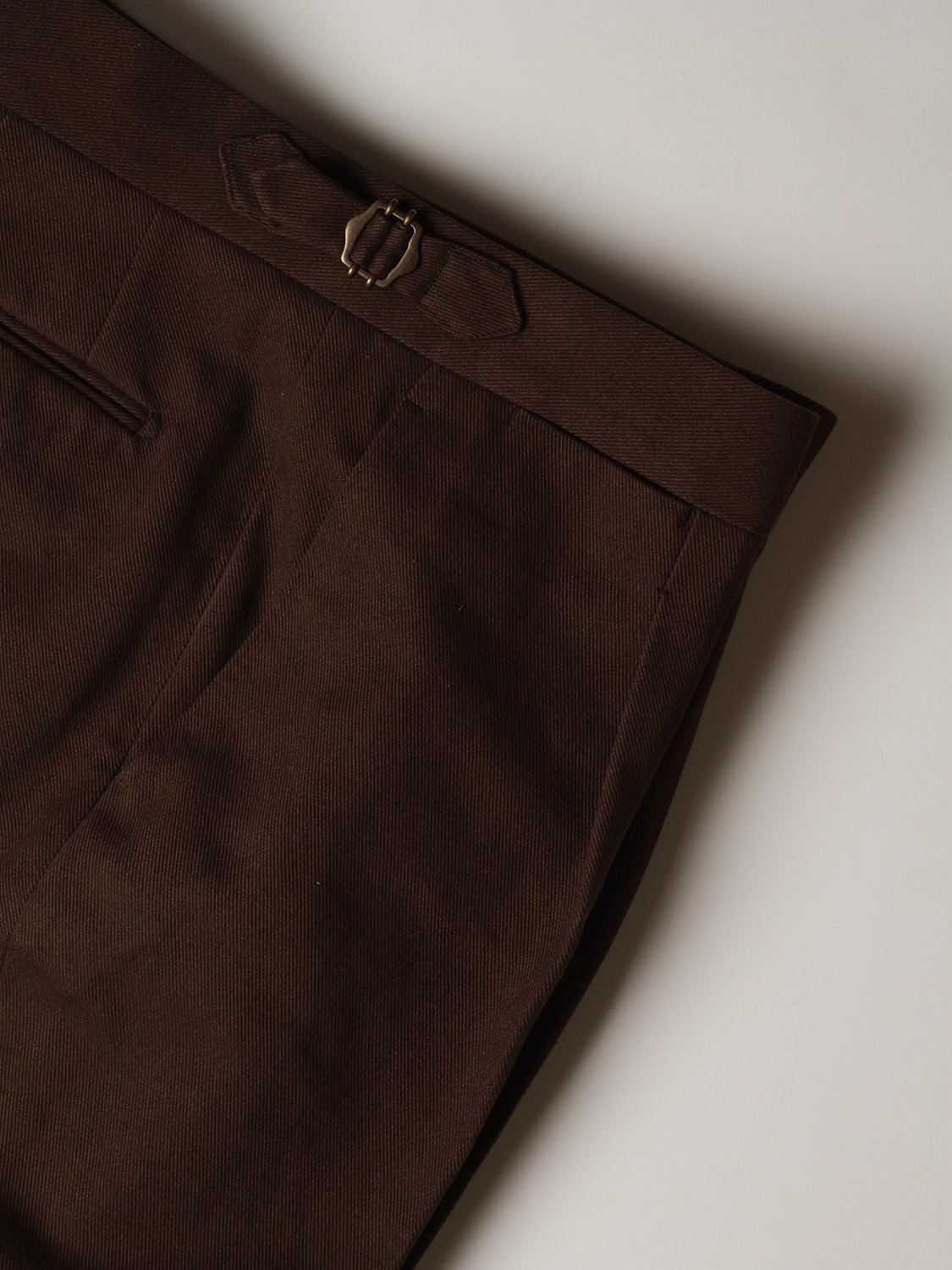
I tried the dark-brown cotton, and liked them so much I kept them. The material is also somewhere between a normal soft tailoring cotton and a tougher chino material (from Brisbane Moss), which appealed. 

The knitwear is more varied. 

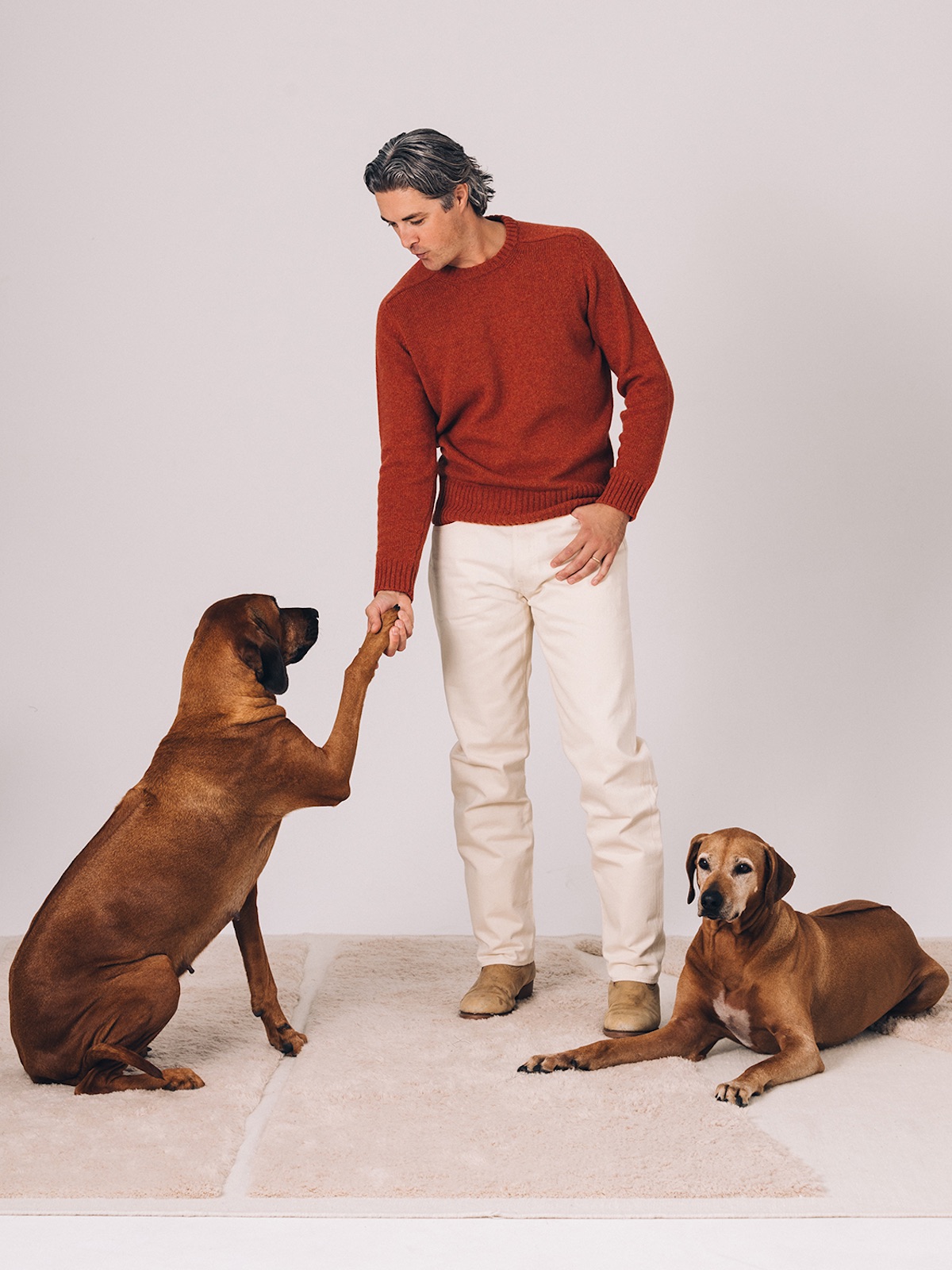
The shetland jumpers have a fit that I really like too - wider in the chest, slimmer in the hem, like the heritage fit of Rubato but less extreme. That larger upper body is flattering, but it’s also long enough to go with any rise of trouser. 

“The longer ribbing helps as well,” said Per. “And I like the fact that when the ribbing folds over, you still see a bit of it because of that length. The texture of the ribbing is an important part of the overall look, so it’s a shame if it’s hidden.”

I tried the rust-coloured shetland (above), but found the colour too bright for me. I might try the brown in the future. 

The fit of the collared knit and the roll necks are the same, but without the extended ribbing. The crewnecks are more generic in make and fit, being from a different supplier. 

The collared knit (above) I found had too large a collar and opening for me - not that it won’t find favour with others, but it was a bit too dramatic for my taste. 

I actually thought the same would apply to the flannel shirts, but I was proved wrong. 

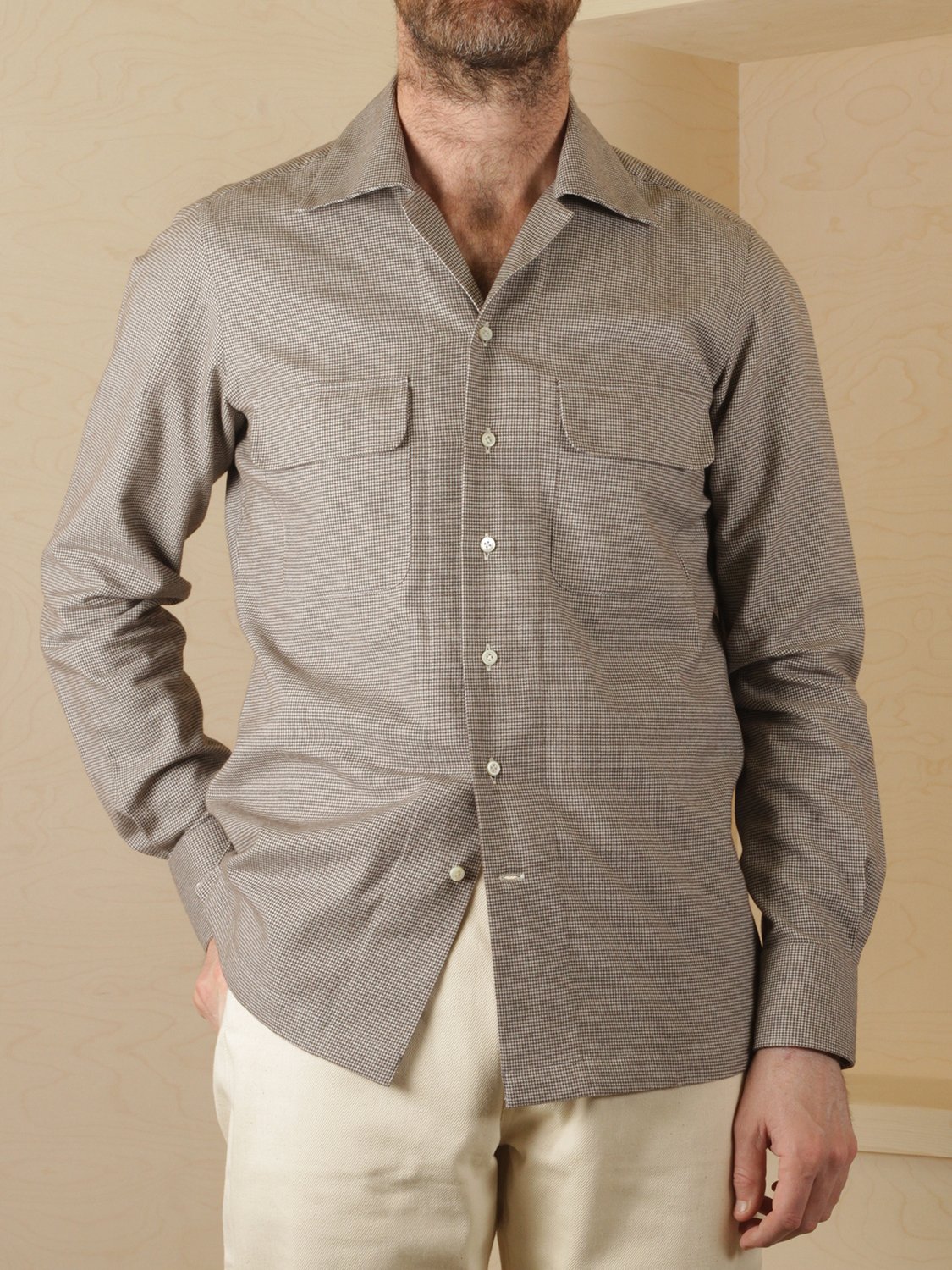
They do have quite a large collar, but as soon as you wear it under a jacket for a few minutes (or, to force it, shape it with your fingers) the collar develops a pleasing roll, which rather shortens the length and makes it look more natural. 

“I had the same fear when I first saw them,” said Per. “But they softened nicely. We still want it to be a collar that gets a reaction, but not one that looks too 2021, too fashion.”

The shirt is also designed to be worn both untucked and tucked-in, which is a hard balance to get right. 

I found it worked on me, but I think it depends heavily on your physical proportions and trouser rise. If you’re shorter, a shorter length will look better when the shirt is untucked. But if you wear a lower rise, you need a longer length for the shirt to stay tucked in. 

I could have worn a Medium or a Large (see the bottom of the post for other sizing details) but went with the Large so I could get enough length in the body. I reckoned I could always slim the body later if I wanted. 

“Honestly, I think it’s interesting how much people are playing around with sizing these days,” says Per. “Guys can wear two, sometimes even three sizes - it’s just a question of the style they want. With formal clothing things are more ‘correct’, but less so with anything slightly casual.” 

The shirt I tried was the brown puppytooth (below), which I’ve found is not the easiest colour to wear. It needs something like black, cream or maybe dark denim to create enough contrast (unless you’re going for the double puppytooth look). But it is a great colour when you do. I may look at the white in the future. 

I hope that gives readers a sense of both what Perro is trying to do, and what is interesting about some of the products. 

A slightly larger thigh or a collar that moulds are not the easiest things to get across on Instagram, but on PS we try to get a little deeper. A little more informed. 

I know Rock and Per have been hit by lots of delays in the past two years trying to get their brand up and running. I wish them all the best in 2022, and hope they have fewer frustrations. 

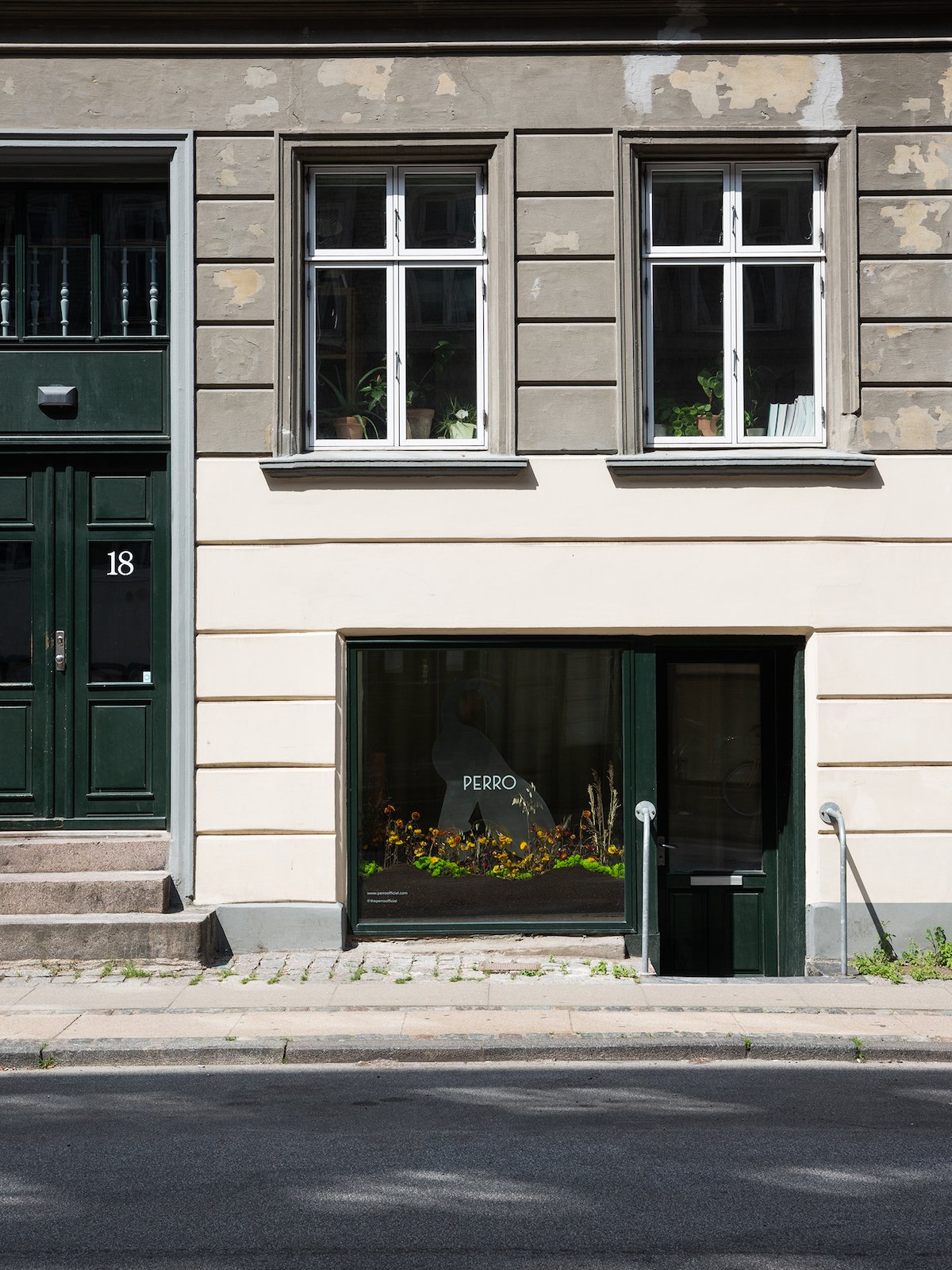
The Perro store at Ahornsgade 18 in Copenhagen is half store, half studio, and is only open on Thursdays and Fridays. The site is PerroOfficial.com

Rock and Per are also holding some trunk shows, including one recently in Gothenburg, Sweden. 

In the clothes I have mentioned, I went with a size Large in the safari shirt, a Medium in the sweaters, and a 48 in the trousers. The latter needed taking in about an inch in the waist, and hemming to length. 

Linen, paisley and velvet interiors: de Le Cuona

Linen, paisley and velvet interiors: de Le Cuona

Friday, January 7th 2022
||- Begin Content -||

I recently followed a thread of interest from shirtmaker Emma Willis, to the slow-woven fabric of her dressing gowns, to the company that produces them, de Le Cuona.

It was a fairly speculative journey. I had no idea whether anything I discovered at the other end would be useful, and the result of such pursuits often aren’t. But then I don’t write about those. 

In this case, obviously, it was. 

In de Le Cuona I discovered an interiors company that has a lot in common with the clothing we cover: natural fibres, finest quality, handmade production and a subtle, elegant aesthetic. In a world that is often fashion-led and nearly always mass-produced, de Le Cuona interiors are quite unusual. 

Indeed, many of the fabrics had me wondering whether they could be made into tailoring, or other menswear. But more on that later. 

First I want to explain what Bernie de Le Cuona does: when I started writing the occasional article on interiors earlier this year - first Navajo weaving and then tribal rugs - I said I thought readers would like them because they already appreciate the pleasure of great fabrics. De Le Cuona is the best example of that so far. 

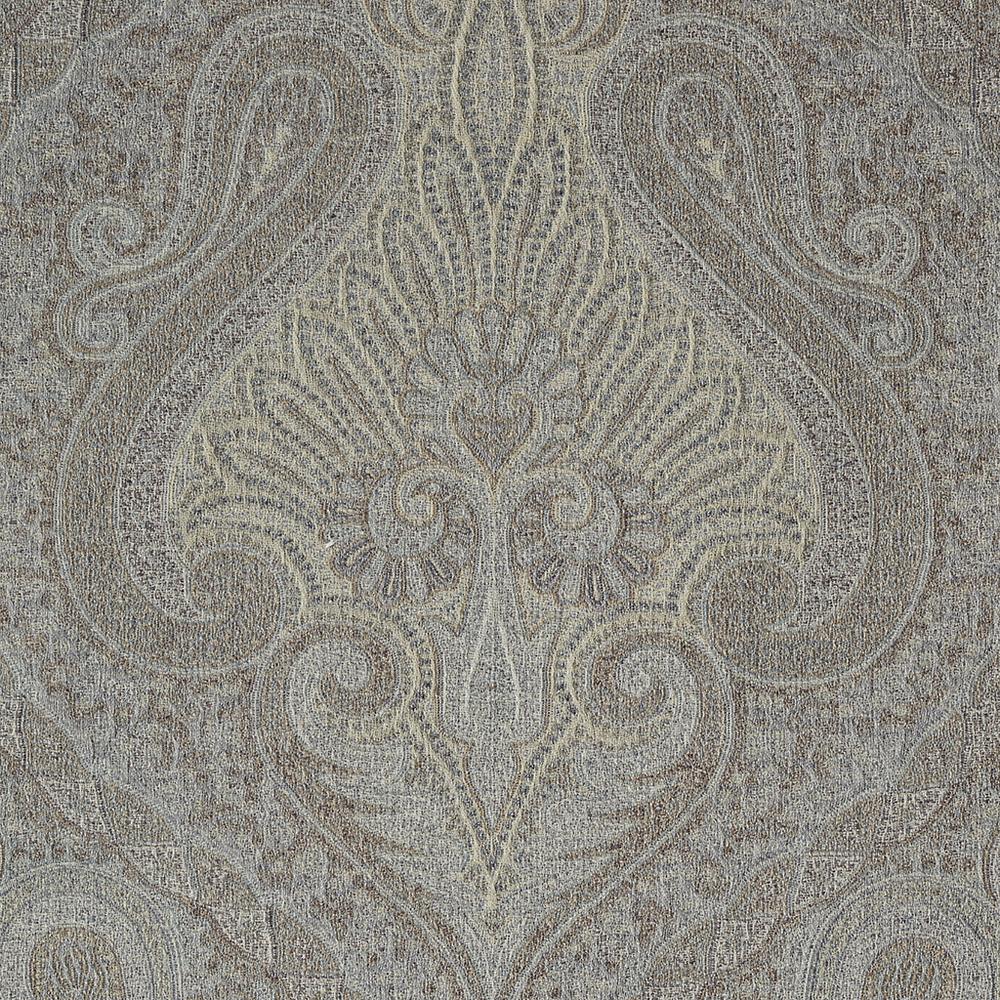
If you’ve seen the hand-woven paisleys that Emma Willis uses for her dressing gowns, you’ll understand how distinct they are from the tailoring materials usually used for gowns. 

But assuming most people haven’t, I’ll try and describe them. 

The material is quite open and loose, with individual threads noticeable in the spaces between the motifs. It’s detailed, with fine lines describing the leaf-like paisley, the buildings, and other elements of the design. And although some versions look quite uniform, there are often up to 14 subtle colours. 

The fineness is obvious if you compare one of the Indian paisleys such as Victoria, with the Scottish versions Bernie also offers, such as Contessa. The latter is still lovely, but many of those details are lost. 

“The fineness comes from the weaving being done so slowly,” Bernie explains. “Even with the more modern looms they use now, only about three metres can be made a day.”

The paisley also has an interesting mix of lightness and warmth, due to being 70% wool and 30% cotton. “The wool on its own was a little too warm and a little too rough. We added the cotton to make it softer and immediately comfortable.”

Bernie has been selling the paisley for more than 20 years, having originally discovered the makers while travelling in India. For a long time she had to source everything for the production, including particular fibres and dyes. 

Today the operation is more established. She found new looms that weren’t quite so temperamental, but could produce the same fineness, and an employee in Mumbai manages the production locally. 

The fabrics are mostly bought by customers by the metre, for curtains. They would be a bit too open for tailoring, and hard to work effectively with an iron. But they work very well for dressing gowns. 

(And indeed, for wall coverings - one of the Emma Willis changing rooms in London is covered floor to ceiling in one paisley design.)

If paisley led me to de Le Cuona, most of the further discussion was about linen. 

Linen is Bernie’s specialty, and accounts for around 80% of sales. A quick look at the linen page of the website will illustrate quite how many variations there are, but the range is dominated by neutral, earthy colours - textured, printed, even sometimes painted, but always subtle. 

When Bernie and I met at her showroom in Belgravia, she had just returned from a trip to the US. This is a big market for her, with two showrooms in New York and 12 representatives around the country. 

“In some parts of the US though, Simon, they just don’t understand these colours,” she says, pointing at a range of earthy linens and silks. “Everything has to be brighter and bolder. I prefer more natural tones, particularly at the moment - like your suit in fact.” (My double-breasted cord suit from Anderson & Sheppard.)

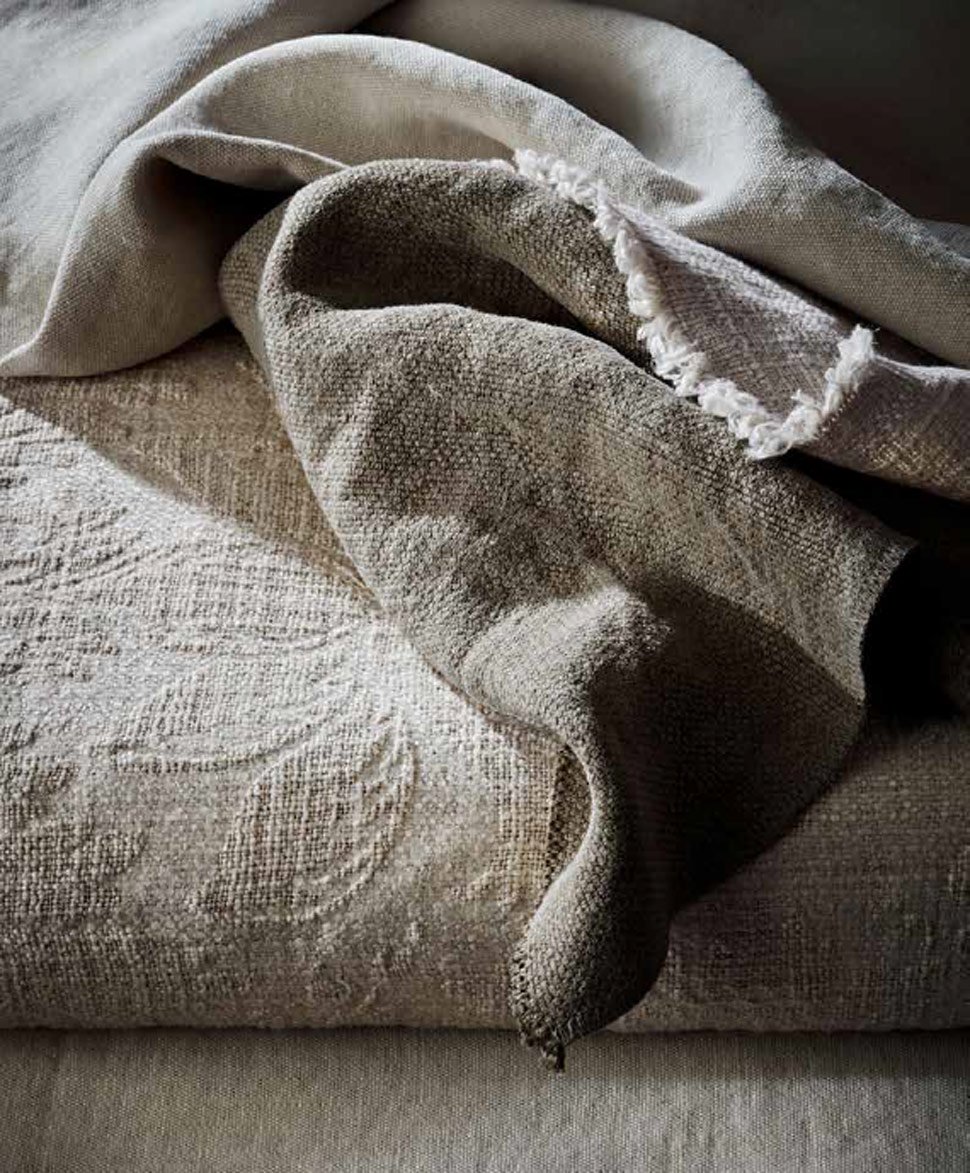
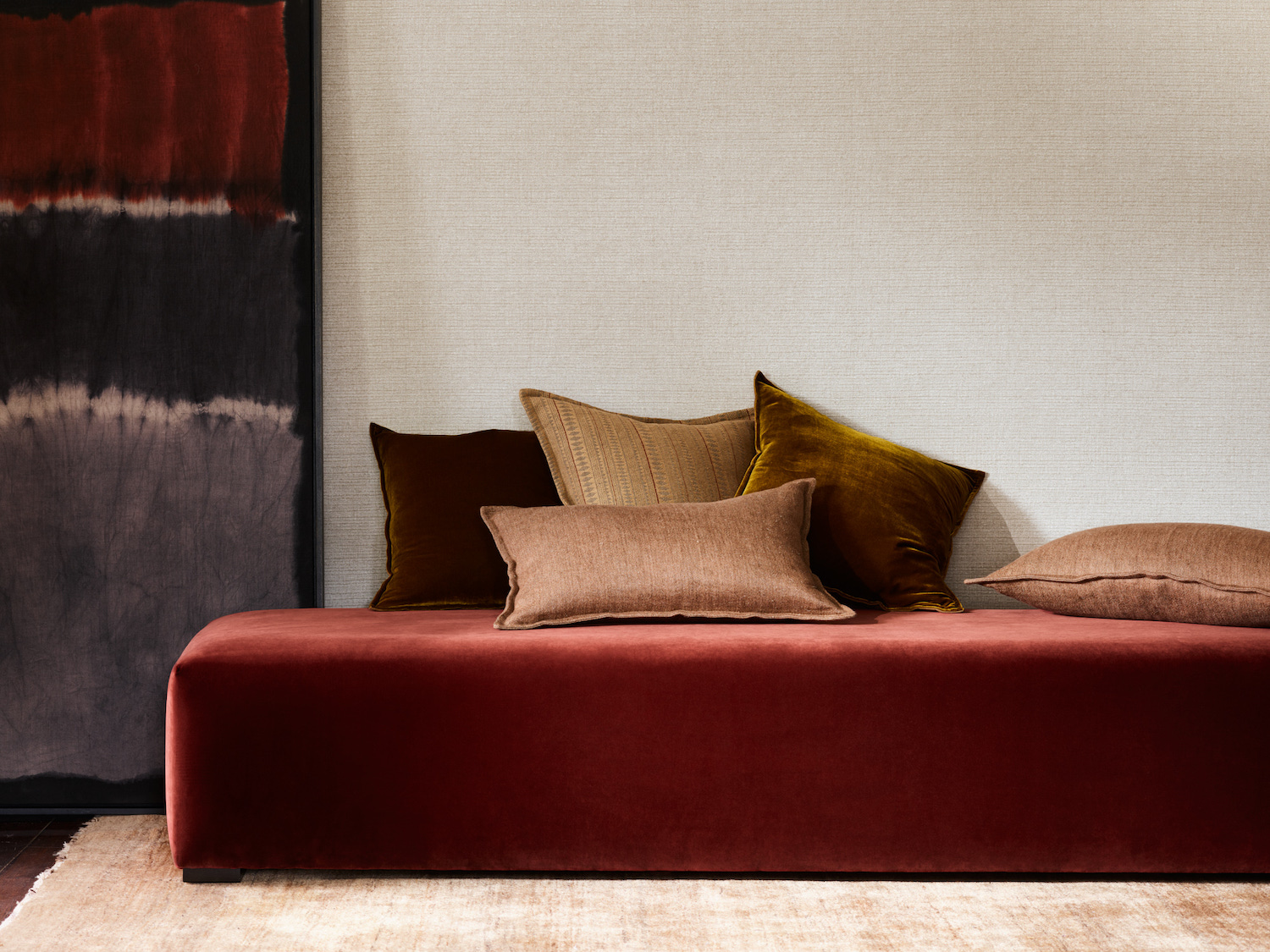
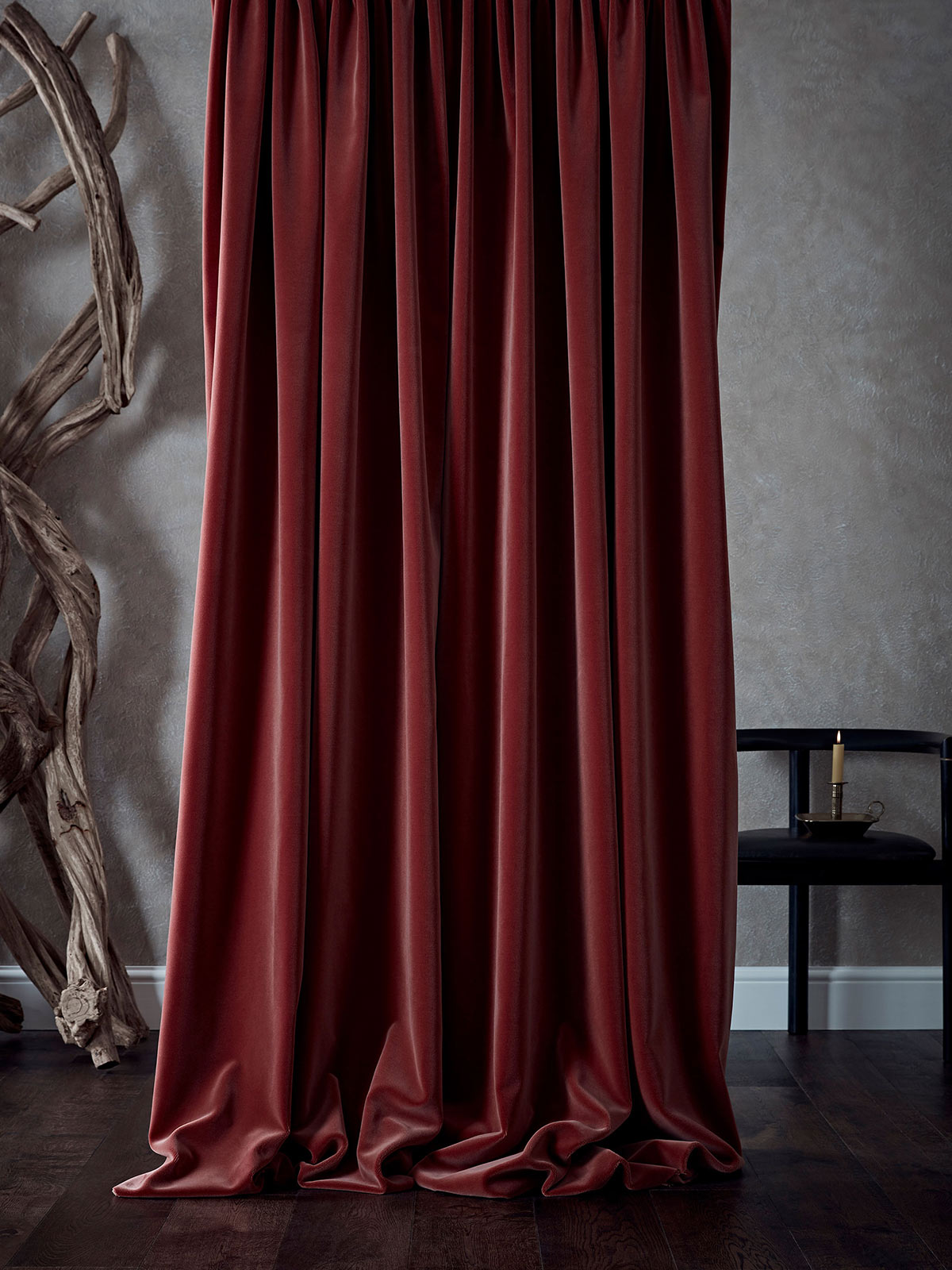
The image above gives a good sense of this aesthetic: large herringbone curtains, delicately patterned sheets, slubby throws and rugs. 

A few of the linen fabrics struck me as particularly nice, probably because I could see echoes of them in tailoring.

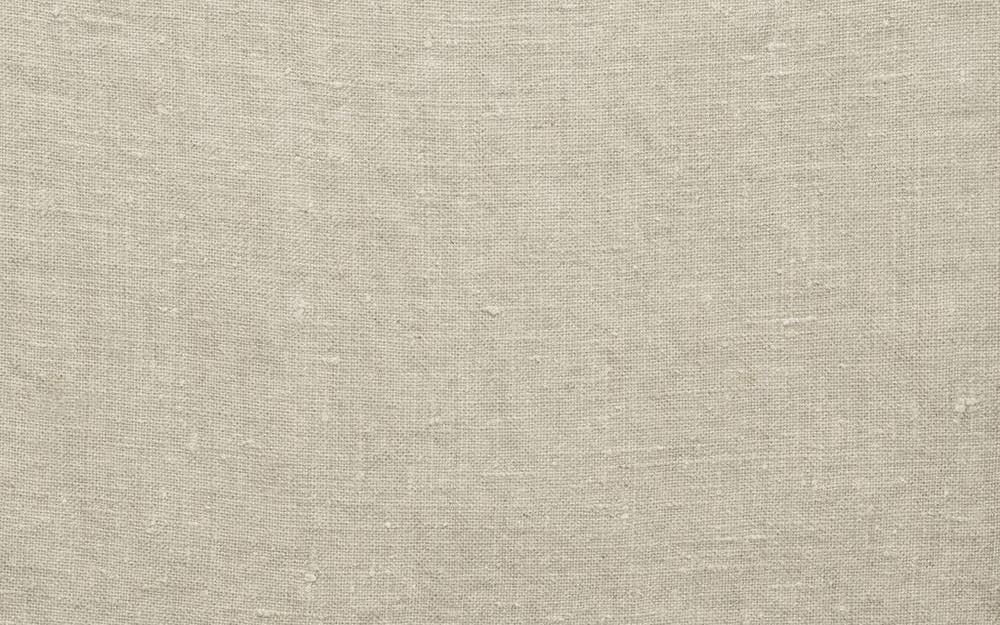
These included Primitive Linen (above), which is designed to resemble old French bed linen, and Vintage Canvas, which is stiffer but has a similar slubby texture. A version of the latter is even available that is painted white on one side and then stone washed, to remove the paint from the raised areas. It was lovely - though perhaps not the safest with small children around. 

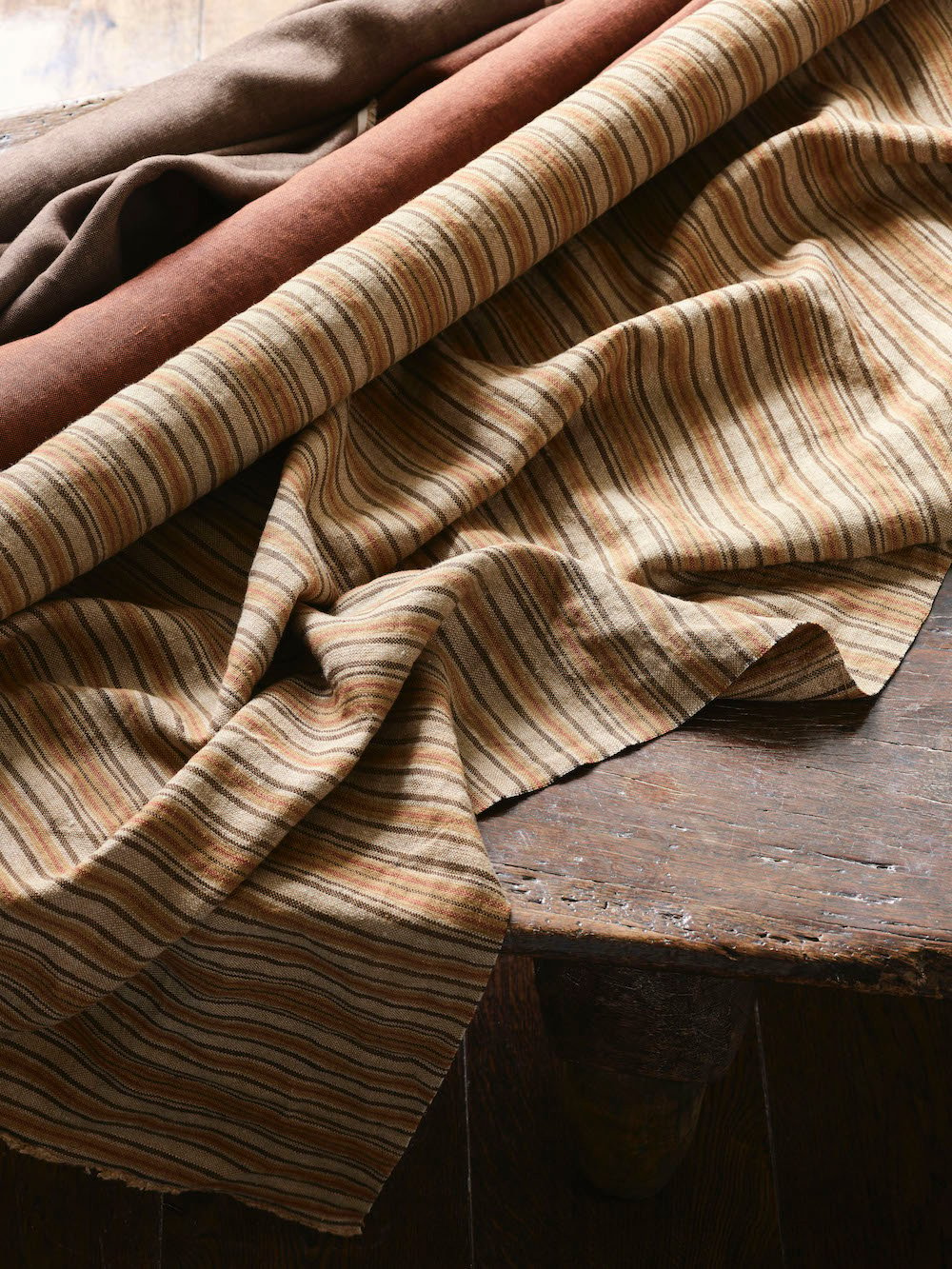
Another quality that appealed was Artist Canvas, which is lighter than the other two and comes in great washed colours, like Terracotta. And finally Origami, a lightweight linen with a crisp, papery texture. 

Of course, tasteful interior design does not usually mean decorating your home with the fabrics you like to wear as clothing. It requires different considerations, as well as an awareness of simply blending in with the sofa. 

But these particular linens did make me think about whether they (or versions of them) would work as a bespoke jacket. My next stop will be an old friend from an Italian mill, to see what he thinks of them. 

I thought the same with the velvets, which were the last area Bernie and I looked at together. 

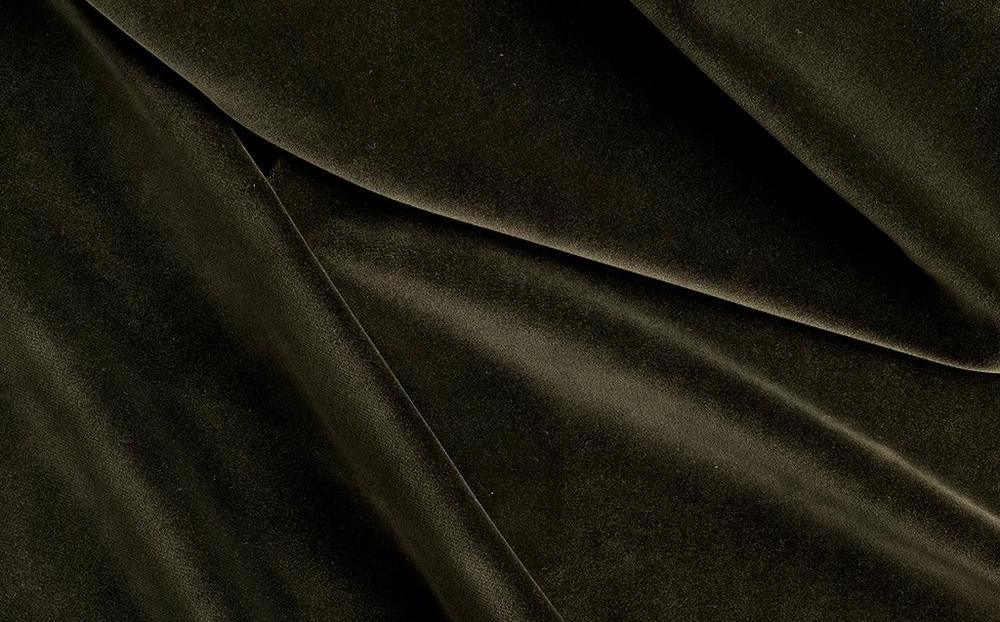
As far as I’m aware, no tailoring merchant still offers silk velvet. There is one producer I know, but they don’t sell by the cut length. Everything is cotton. 

I love cotton velvet, and have a wonderful jacket from Cifonelli that uses it. But I understandably took notice when Bernie showed both silk and cotton/cashmere velvet. 

The cashmere version turned out to be far too heavy for tailoring. Which is a pity because the colours - two murky greens and similarly dark purple - were perfect. The silk velvet is likely, too, to be too delicate for a jacket. But again I’ll ask around just in case. 

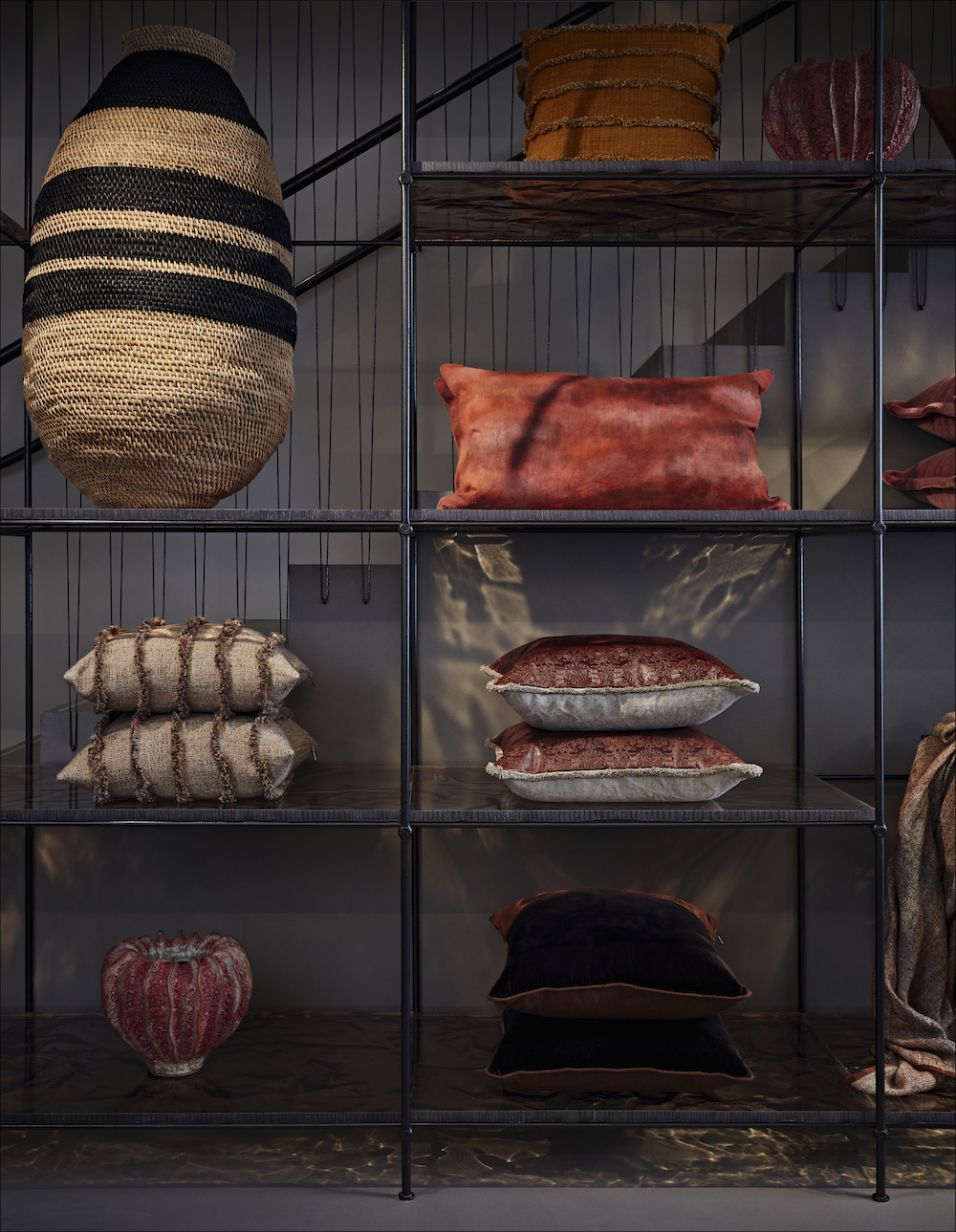
In the meantime, if I ever decide to use velvet upholstery, this is where I would come. I’ve also got my eye on two linen fabrics for curtains - the ones we took from our old flat have always been a little too short anyway. And while waiting for that I’ve been browsing the accessories, such as the cushions and throws. 

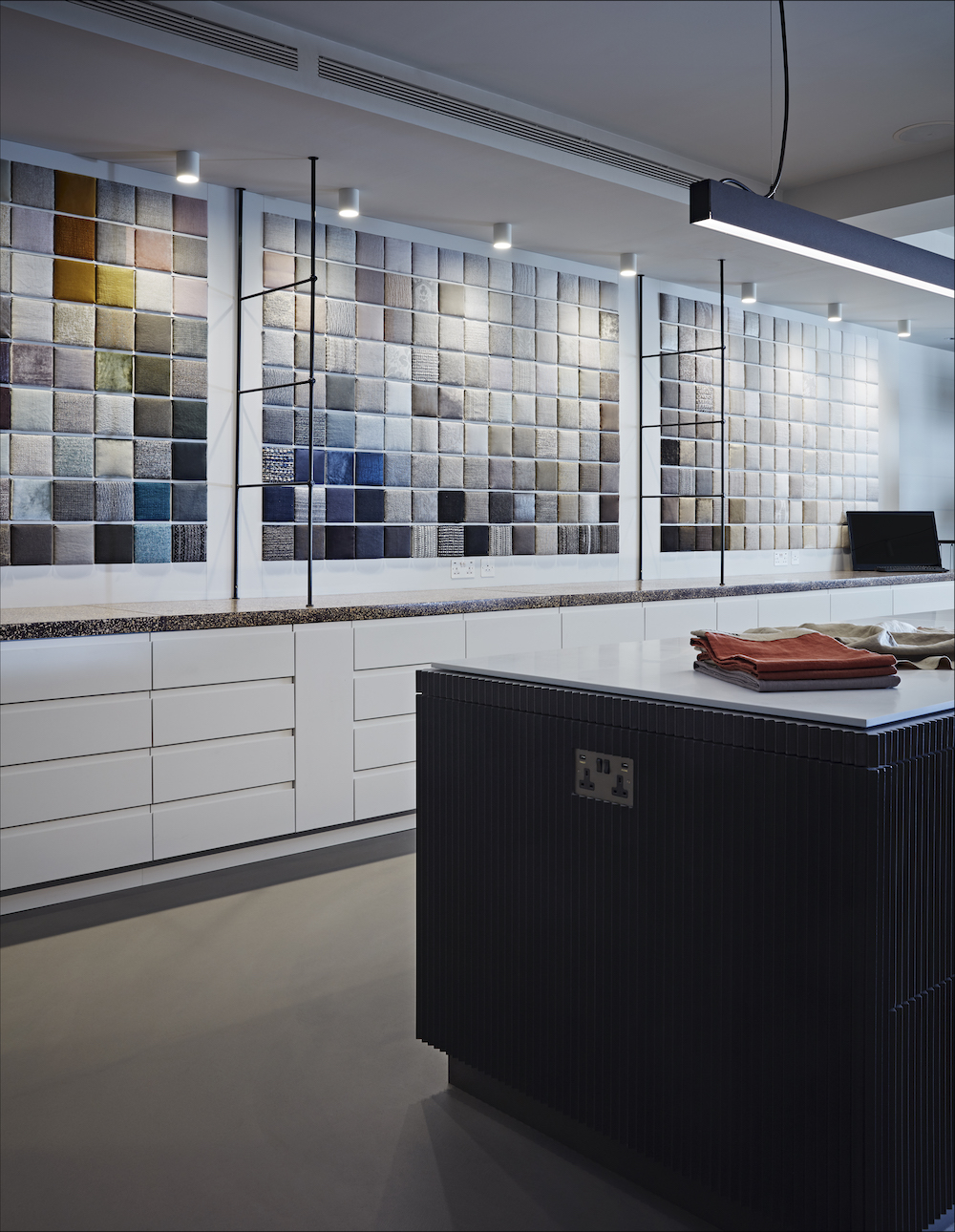
If you’re able, it’s worth visiting the Belgravia showroom (below) in person, just because the fabrics are all so tactile. 

I also haven’t had space here to cover the quality points of de Le Cuona, such as the long-staple Belgian linen, and it’s worth having someone walk you through that. 

It is, of course, a great area of London in general for interiors; a long-time favourite of mine, Robert Kime, is just round the corner. If you visit both, sit down for a coffee in between at Hagen, perhaps browse a few specialist vintage shops, it’s a very pleasant morning . 

delecuona.com

Why I’m wearing more belts

||- Begin Content -||

In recent months I’ve been wearing belts more often, after years of hardly doing so at all. 

I never wore them with tailoring, preferring the clean, elegant look of an unfettered waistband with side adjustors. 

And I didn’t even wear them with jeans, as I felt it looked more chic and relaxed. In fact, a woman once made the mistake of telling me it looked sexier, which as many readers will know is more powerful than any menswear rationale. 

My view on jeans hasn’t changed (fortunate, as I actually had the loops taken off some pairs) and I’m not sure I will ever wear them with suits; why so many Italians in otherwise elegant suiting cut themselves in half with a thick piece of leather is beyond me. 

But I increasingly like belts with sports jackets and trousers, which like many others I’m wearing a lot more these days. (We touched on why in this article.)

So why the change? Well, because otherwise with a jacket and trousers there is often not much else going on. 

It rarely feels appropriate to wear a pocket handkerchief anymore (article on that here) and a tie feels increasingly formal. In their absence, a belt is a useful option. 

You’re not going to wear a belt in the same colours or patterns as a tie. Something is still lost there. But a belt does give a jacket-and-trousers a focal point, and gives you the ability to play with different materials and textures. 

I’ve used the outfit here to show that even when an outfit has a fair amount going on, a belt adds significantly to it. 

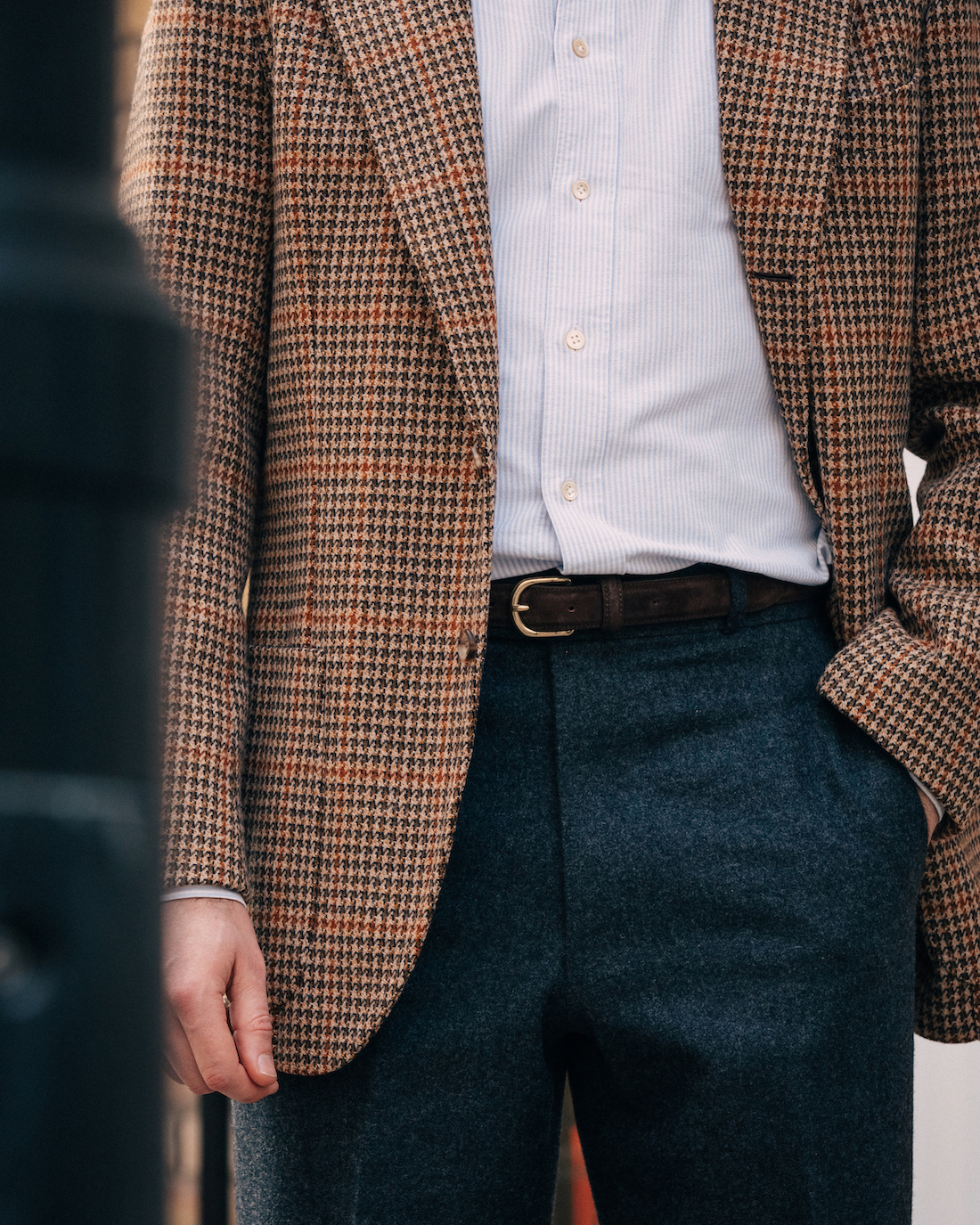
This is my gun-club check from Ciardi, with a striped PS Oxford button down. You'd rarely have much more pattern in an outfit, but still the suede belt (from Rubato) is a nice touch. You could even say it ties the outfit together.

It’s also pleasing that the belt is central, rather than off-centre - more like a tie than a handkerchief. (Although I won’t talk about what it encourages the viewer to focus on, given a tie is meant to lead the eye towards the face…)

If the outfit is plainer - say a twill oatmeal jacket and a white shirt - the effect of the belt is greater still. And it’s also nice with just knitwear and tailored trousers. 

I’ll show more outfits like that in the coming weeks. 

To illustrate how different belts can change an outfit, I’ve shown a few different options here. 

Above is a brown suede belt from Silver Ostrich. It's the same leather as the Rubato, but very different due to the Western-style buckle. It’s less formal than the simple suede, perhaps younger, and certainly more of a look. 

With the Rubato, by the way, I like that the belt is slim (one inch), has a stitched edge (making it look slimmer still) and has a simple, small buckle. All those make it look more formal and more contemporary. Thick belts with thick buckles are better with denim, if anywhere at all.

The next option, below, is an alligator belt - made by Equus in the UK. Actually, Charlie salvaged this one for me from a much thicker, wider belt I was given by Zilli years ago. 

It’s nicer as a one-inch belt, although in retrospect I should have asked Charlie to stitch the edge too, rather than just ink it. 

The last option, below, is probably the most common: a leather braided belt. 

Braided belts are very practical, given they can be fastened at any point in the braid. They’re also often softer than solid suedes or leathers. 

The only disadvantage, I think, is they can seem a little old fashioned - the kind of thing Drake’s would have fun with, undermining those associations with playful textures and colours. 

I know some people dislike braided belts for this reason, and if you’re one of them, I’d recommend a plain, slim suede like the Rubato for a smart look, or a braided suede for a casual one (article on my one from Sergey @tightly_stitched coming soon). 

The point of these different combinations, though, is that a belt can change a look. 

All of these are dark brown, all fairly plain, but they range from standard-to-the-point-of-stodgy (braided leather) through simple-but-elegant (suede) to definitely-going-to-be-noticed (Western). 

However, what if none of your dress trousers have belt loops? Well, I had loops added to these flannels by Whitcomb & Shaftesbury. It wasn’t hard, it just requires the same fabric to be available from the mill. 

Of course, sometimes the same fabric is theoretically available, but it’s a new piece (batch) and the colour is slightly different. 

So far I’ve haven't found this has mattered. Not just with dark greys like the flannels here, but with lighter ones too. I can imagine, though, that it could be a problem with very pale colours or much stronger ones. 

The real issue I’ve had is deciding which trousers to add belt loops to, and which to keep with side adjustors. 

Ideally I'd like a belt to be optional decoration, like wearing a tie or a handkerchief. But once you have belt loops, it looks much better if they’re used. And unless the fit is absolutely right, you’ll probably need the belt to keep the trousers up too. 

I have seen some trousers with loops and adjustors, but it looks messy - and doesn’t avoid the issue of the unused loops. There are some complicated ways to have removable loops, but they're very fussy.

So I need to decide if I’m basically going to wear belts with all my trousers, or just keep it as an option with one or two pairs. It would be far too indulgent to have two versions of everything. 

At the moment, I’ve made the switch on these dark-grey flannels, my mid-grey ones and a dark-brown pair. Time will tell whether this becomes a fundamental part of how I dress, and I end up changing all of them. 

Photography: Milad Abedi

Resoling sneakers and trainers: RforPeople and end-of-life

Resoling sneakers and trainers: RforPeople and end-of-life

Monday, January 3rd 2022
||- Begin Content -||

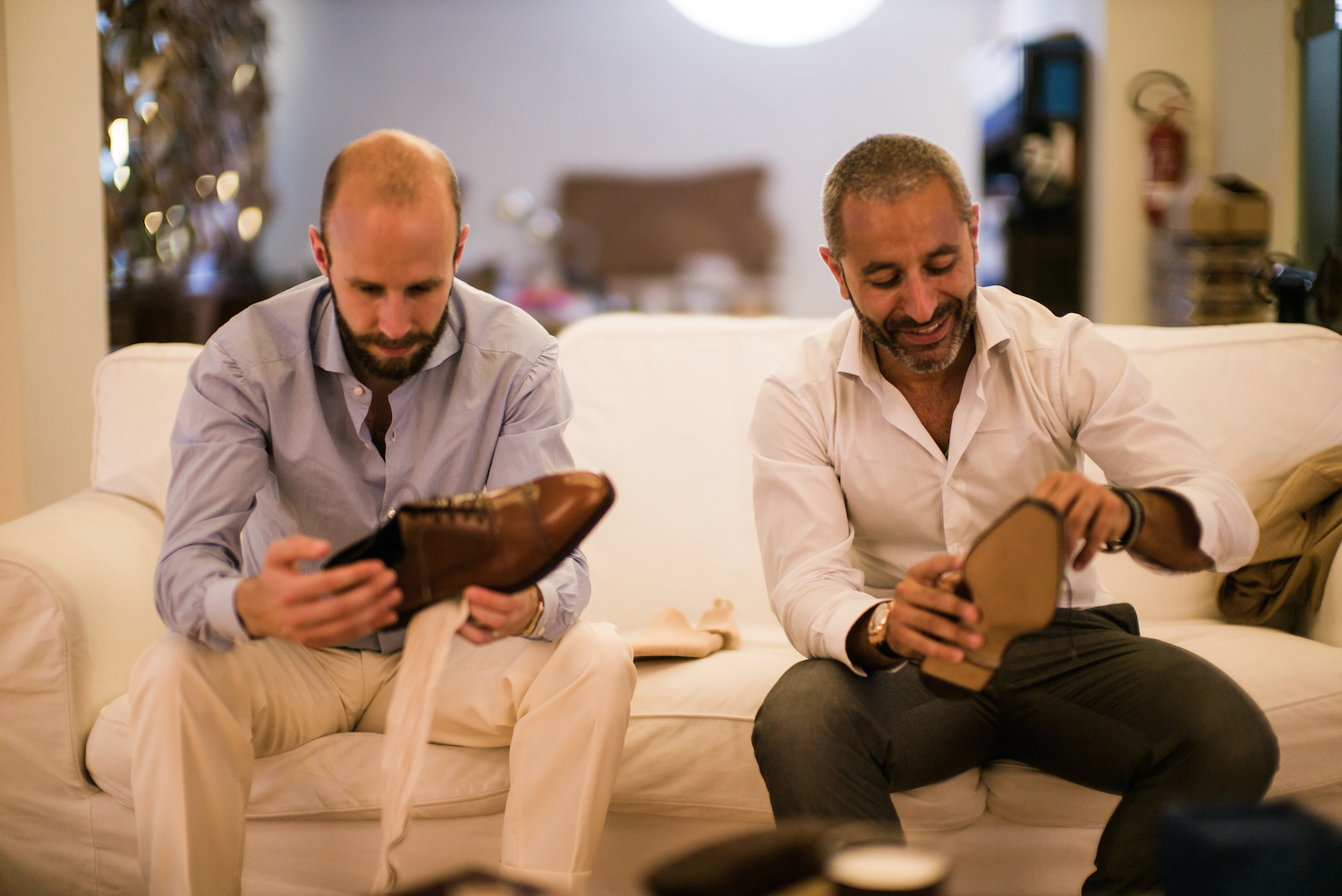
People did different things over lockdown. Talking to Tommaso Melani, owner of Stefano Bemer shoes, it turns out he started resoling trainers. 

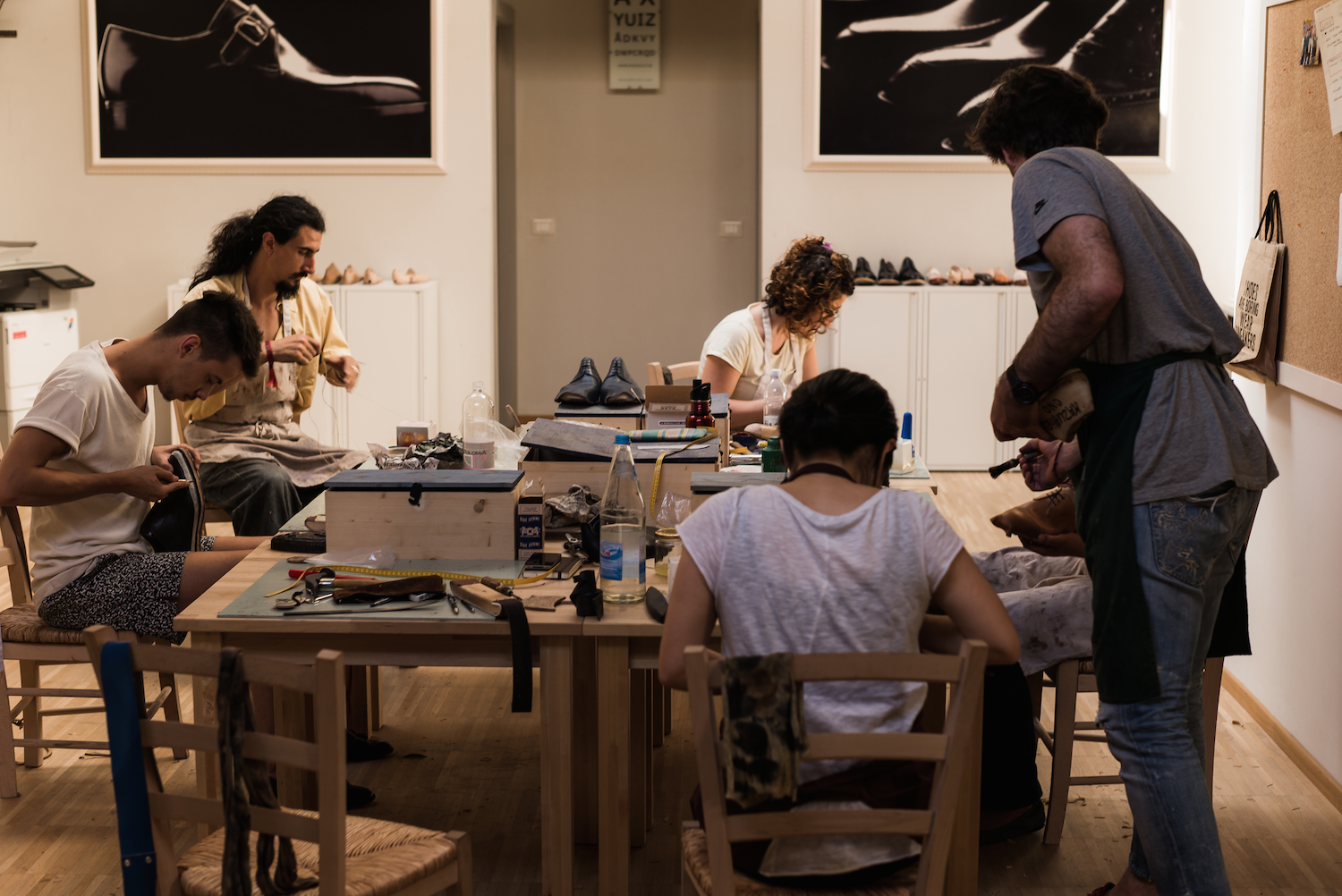
Stefano Bemer has a talented in-house team of shoemakers. They’ve made me three pairs of beautiful bespoke shoes over the years. With less to do over lockdown, Tommaso thought it would be interesting to have them take apart a pair of his sneakers. 

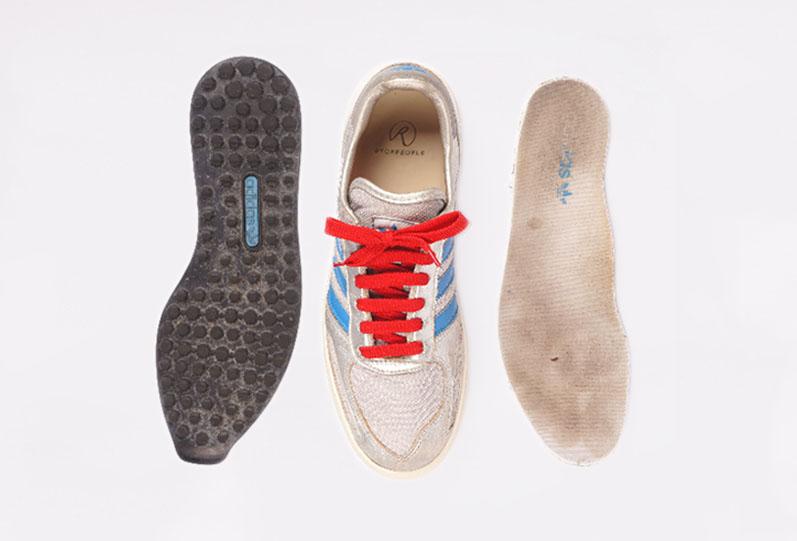
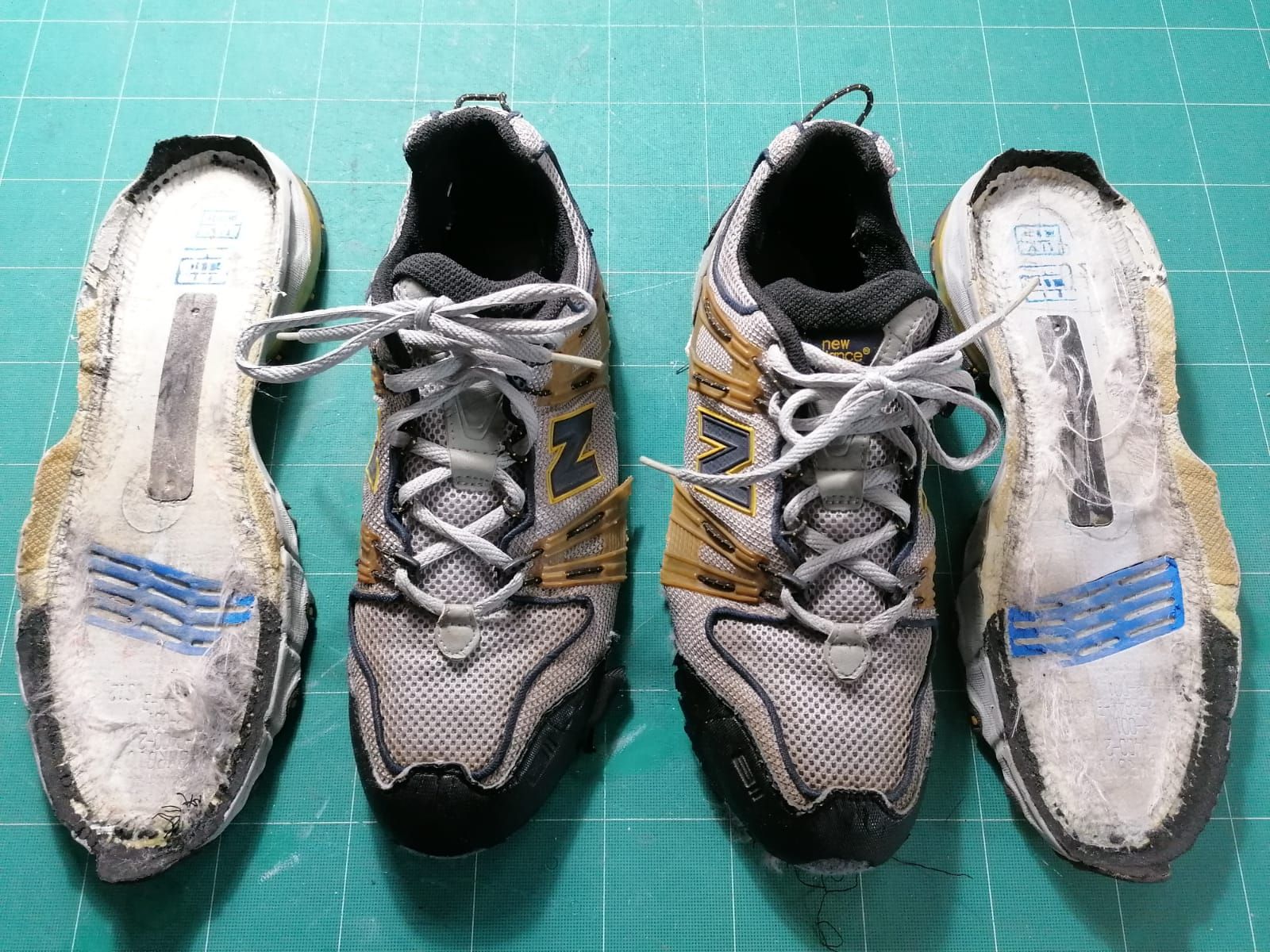
It was a pair of old Adidas - pictured above. They disassembled them, put them together again, and replaced both the insole and the outsole, both of which were heavily worn down. 

That provided the basis for a new service, and eventually a new brand - RforPeople. Tommaso has been on a big sustainability kick in the process, has spoken publicly on the subject, and can talk about everything from Adidas’s rubber waste to living wages around Asia. 

The resoling service for trainers/sneakers I find interesting, and worthy. I had a look for a pair of mine that could be used to trial the service, but unfortunately threw away the last pair of mine that wore through, from Common Projects. Which I guess is a case in point. 

Just as interesting, however, was talking to Tommaso about the afterlife of clothing in general. 

It’s an area that’s talked about a lot less than sustainable production, packaging or air miles. And probably for good reason - it’s a lot more complicated, and harder to do anything about. 

As a consumer, you can look after your clothes well, repair them, give them away rather than throw them away, and buy more second-hand. All of those things reduce the amount that is burnt or goes into landfill. 

But as a company, it’s hard to offer a really substantive end-of-lifecycle service that can, for example, recycle the raw materials the clothing was made out of. 

“Industry has got to the point - certainly in Europe - where finding more sustainable raw material is just a phone call away,” says Tommaso (above). “And it’s not hard to move production to be more local either.” That also goes for using renewable energy, reducing water waste, and offsetting carbon production. 

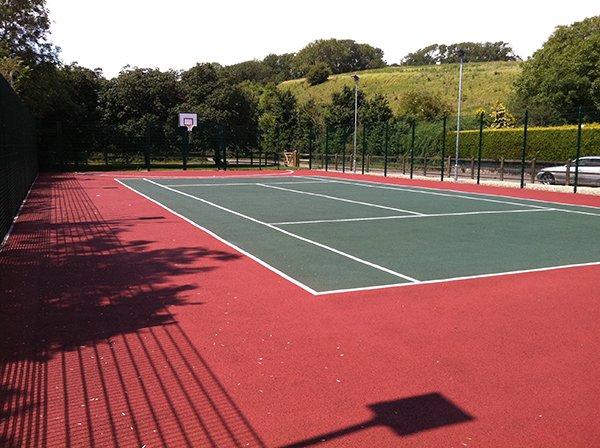
“But how do you avoid things going into landfill at the end of their life? You can recycle the rubber from shoe soles, for example - it’s used to make tennis courts - but you need to collect a large enough volume, and you need to store it in the meantime, which has its own cost.”

Big sneaker brands have the volume to offer a service like this, but usually not the margin. The price of cheaply made shoes does not extend to free shipping for customers to send their shoes back, then people to take them apart at the other end. End-of-life services are just more expensive. 

Interestingly, wool and cashmere can apparently be shredded and re-used, but only once. Unlike some plastics and most metals, they become too weak to re-use after one round of recycling. 

“The yarn is chopped up, but then often has to be mixed with a synthetic to make it strong enough to use again,” says Tommaso. “And after that it’s only going to landfill.” Plus of course, the synthetic means more plastics. 

There’s no easy solution to any of this, apart from the points earlier about caring, repairing, and buying more second-hand, less overall. As Tony wrote about recently

“I find it useful to think about how much we value things,” says Tommaso. “The difference is quite stark in our business, because we make bespoke shoes, and now much cheaper clothing as well.”

“People value bespoke shoes because they cost so much. It means they care for them, they will resole them multiple times. As a producer we value the workers that make them, and we value the raw material, saving every scrap - because it too is expensive. People just don’t value cheaper things in the same way, but I think they can choose to.”

The clothes from RforPeople (above) are unlikely to appeal to PS readers, either in terms of style or make. 

But Tommaso has done his homework generally, and that means if the resoling service is for you, you don’t have to worry about the carbon impact of sending the shoes (all offset), or the location of production, the labour practices and so on.

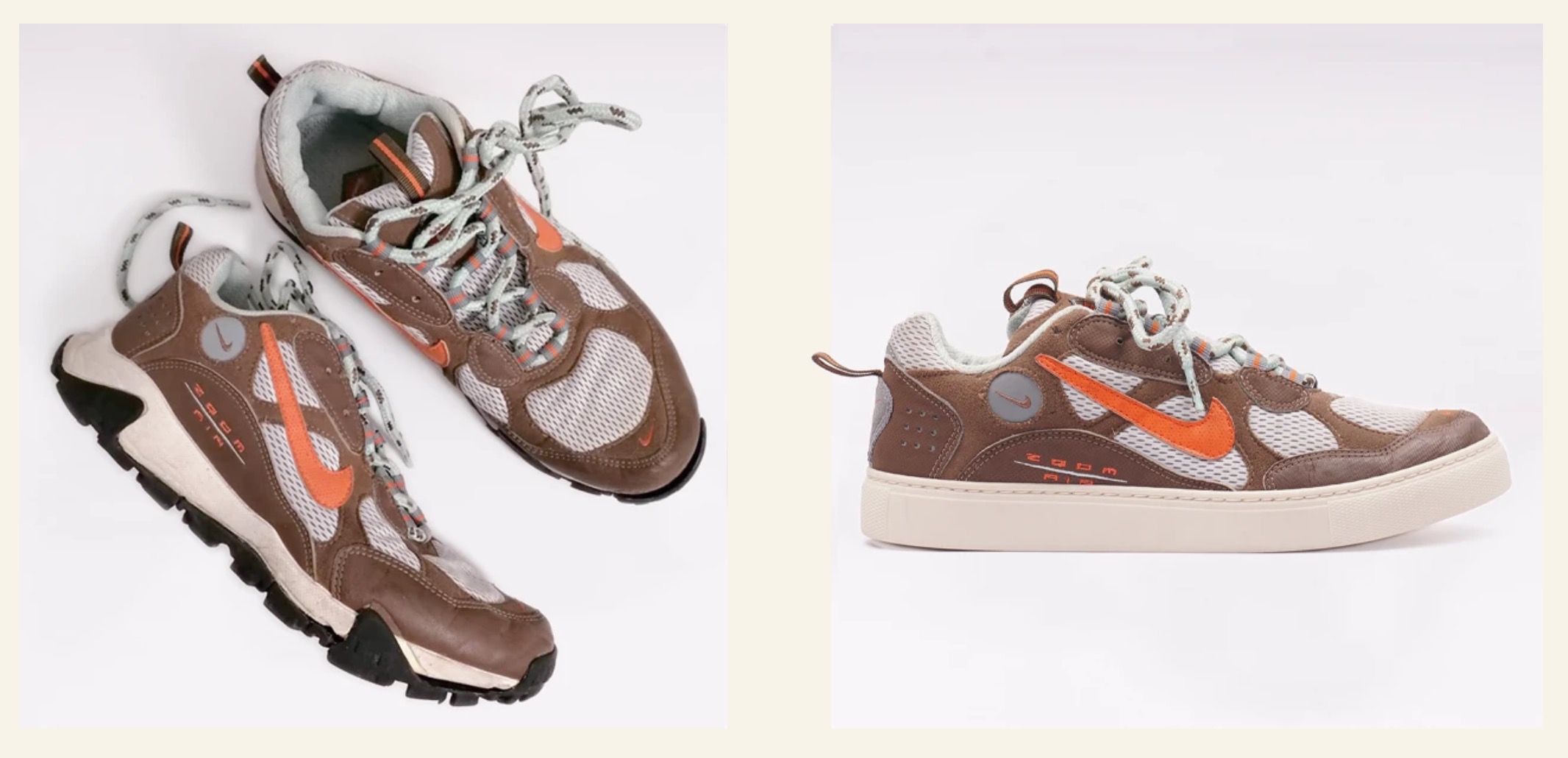
There is a natural limit to the resoling, and that is the style of the shoes. The team are putting on stitched cup soles, so a trainer with a different sole will look different afterwards. Tommaso has resoled running and hiking shoes of his (below) and likes the results, but it’s not a case of reproducing the original shoe. 

The last shape is also a limitation. Because the shoes are taken apart, they have to be put on the in-house sneaker last before being resoled. 

Still, most PS readers will likely wear some shoes with this sole type, such as my Common Projects that I had to throw away. Or vulcanised canvas shoes, like Doek. The latter will not be revulcanised by RforPeople, but that’s a small change compared with athletic shoes. 

The service costs €390 and includes sanitising the upper, replacing the laces and insole, and repairing the lining, as well as the resoling. The laces use recycled cotton and the sole uses zero environmental-impact EVA rubber. It takes 4-6 weeks. 

https://rforpeople.com/

If readers know of any shoe or clothing repair services anywhere in the world that we haven’t covered, please do let us know your experiences in the comments