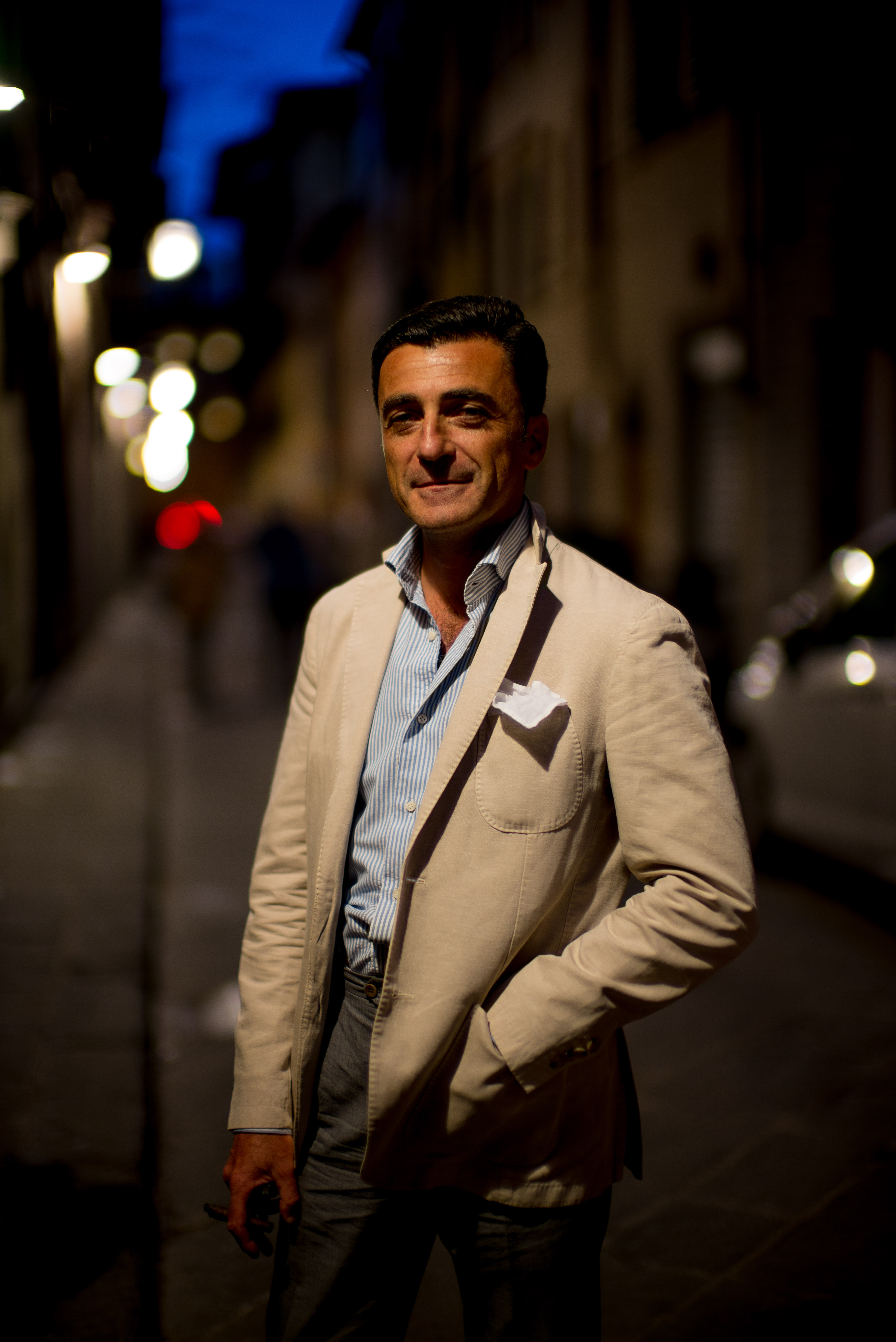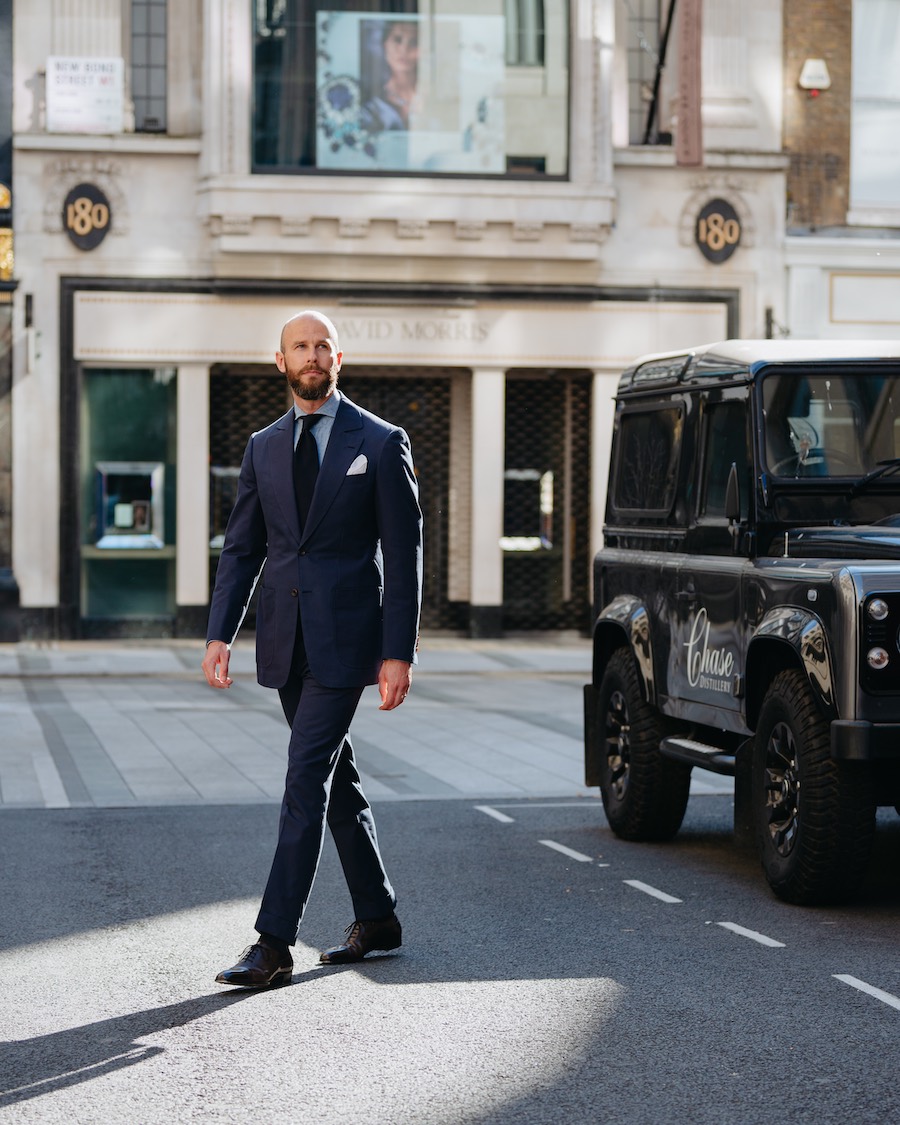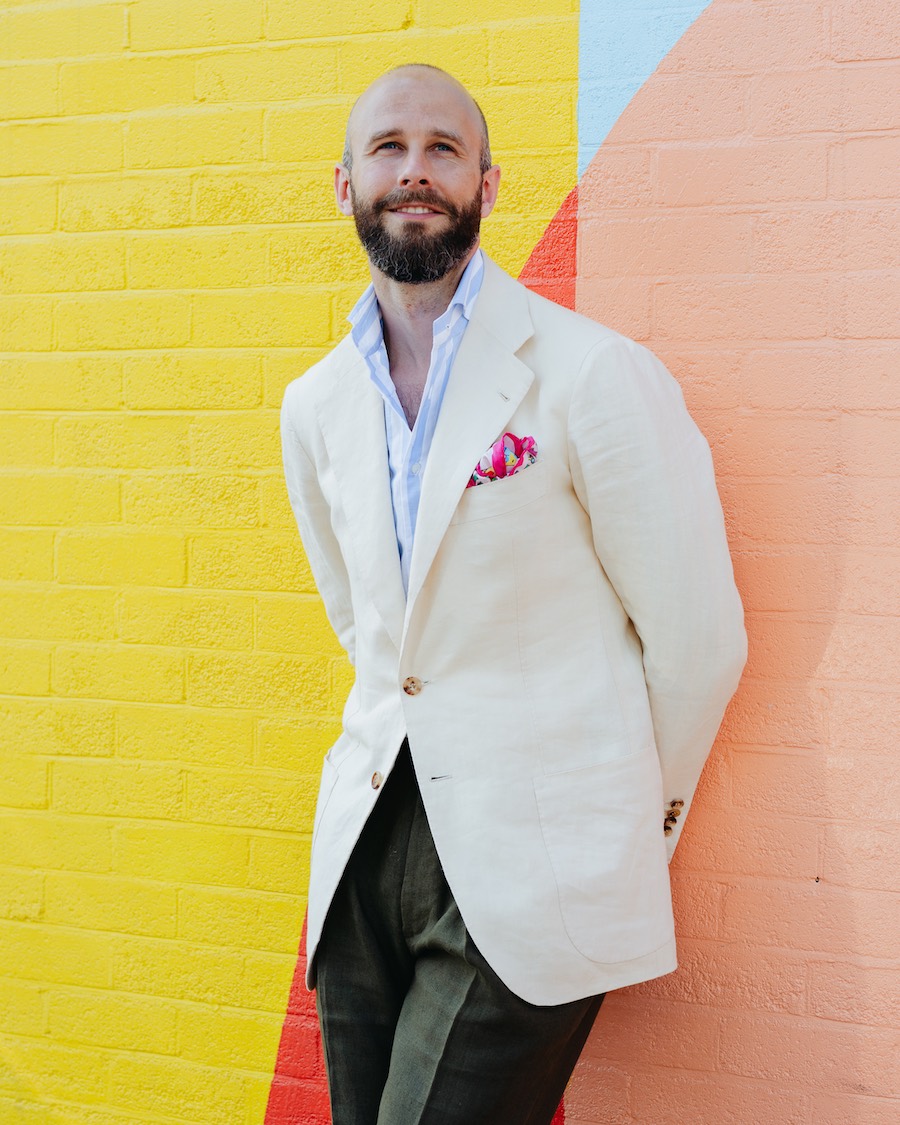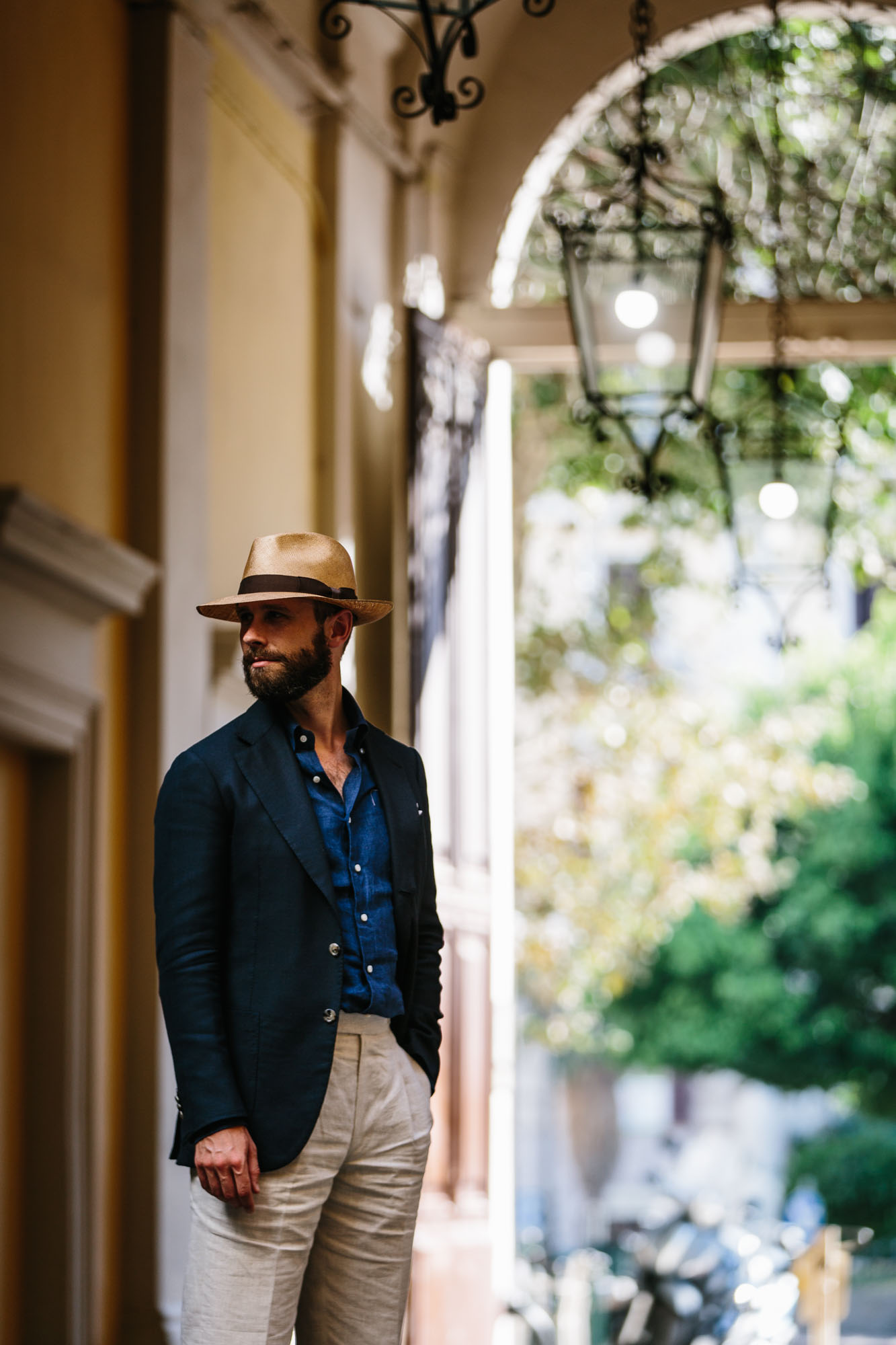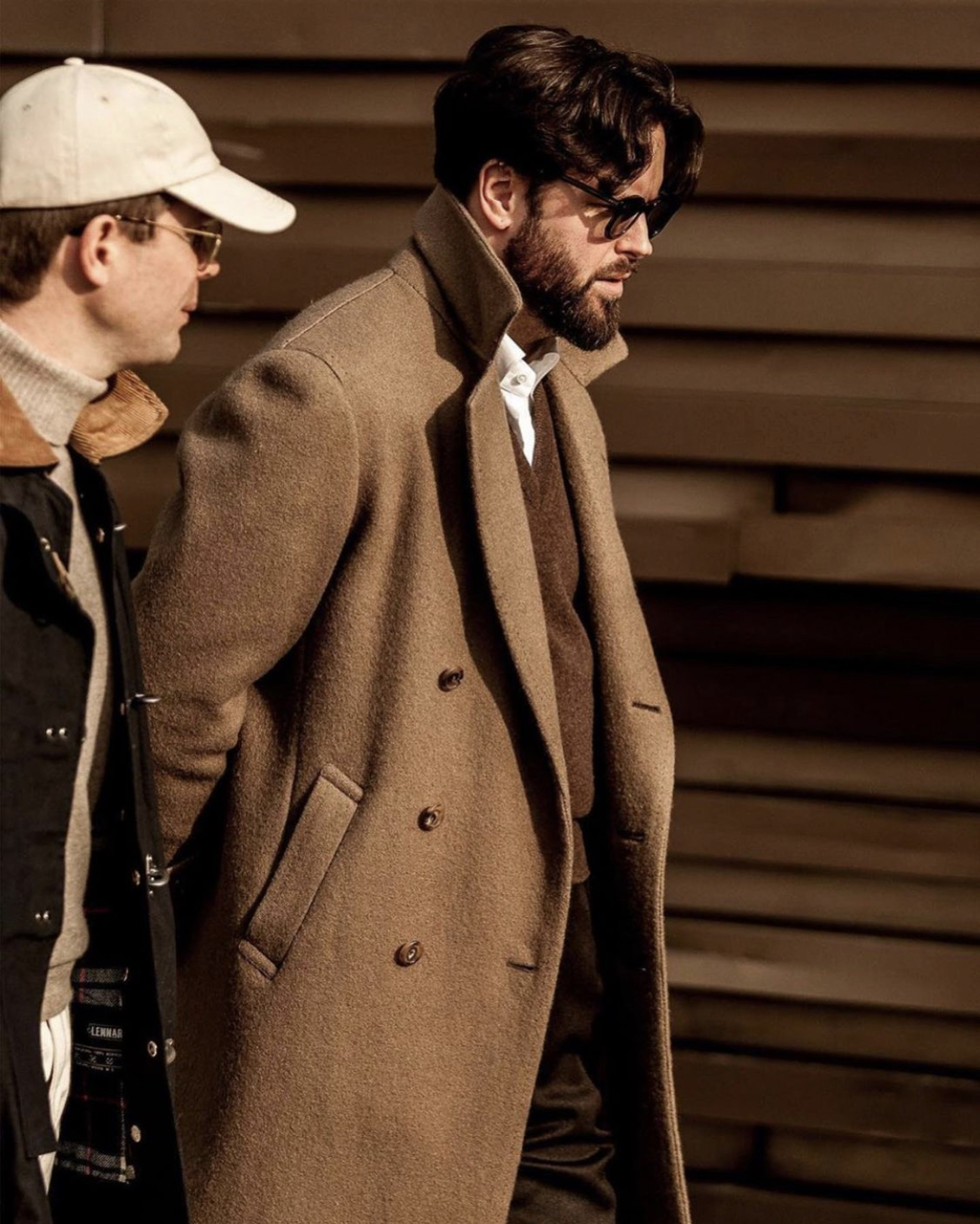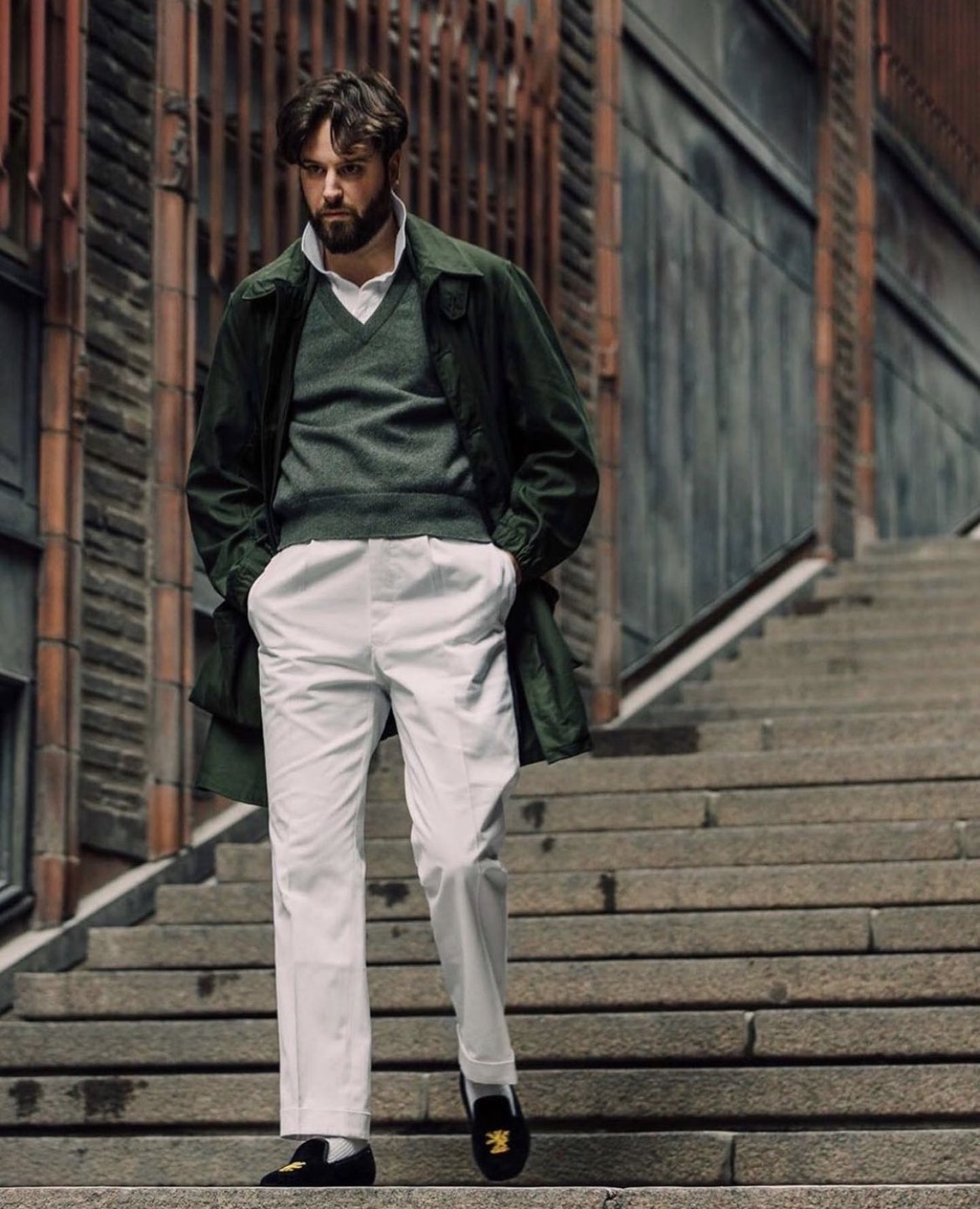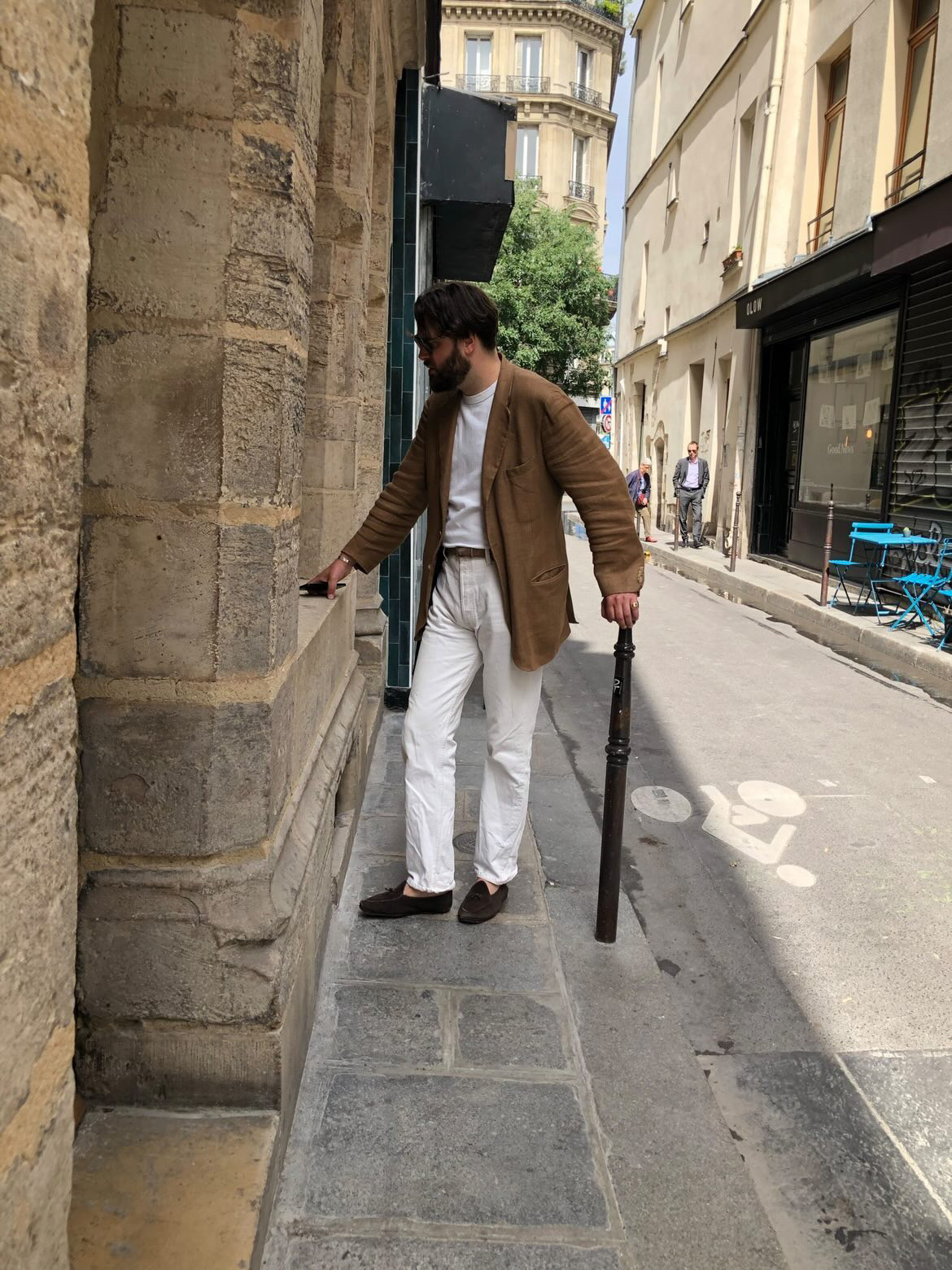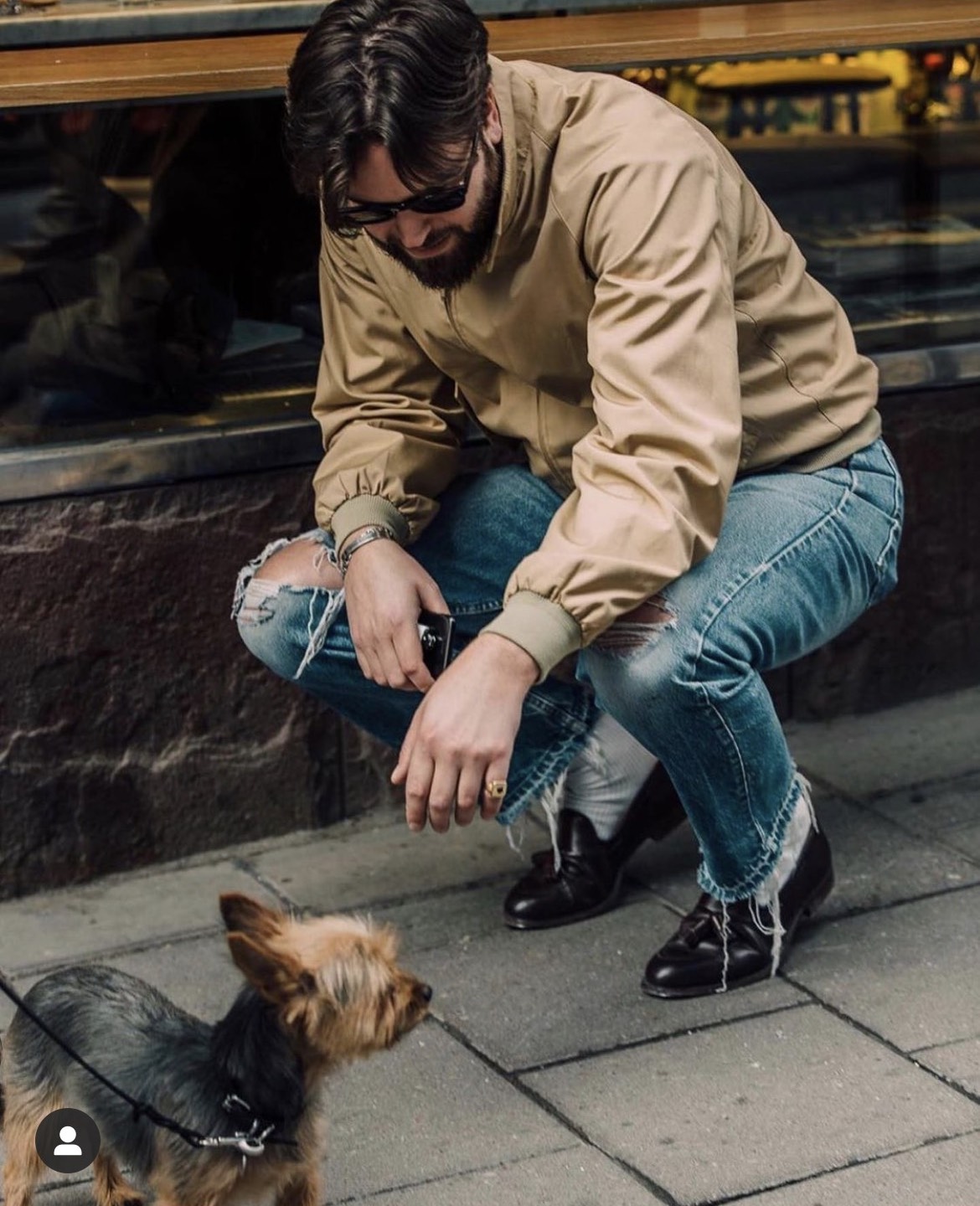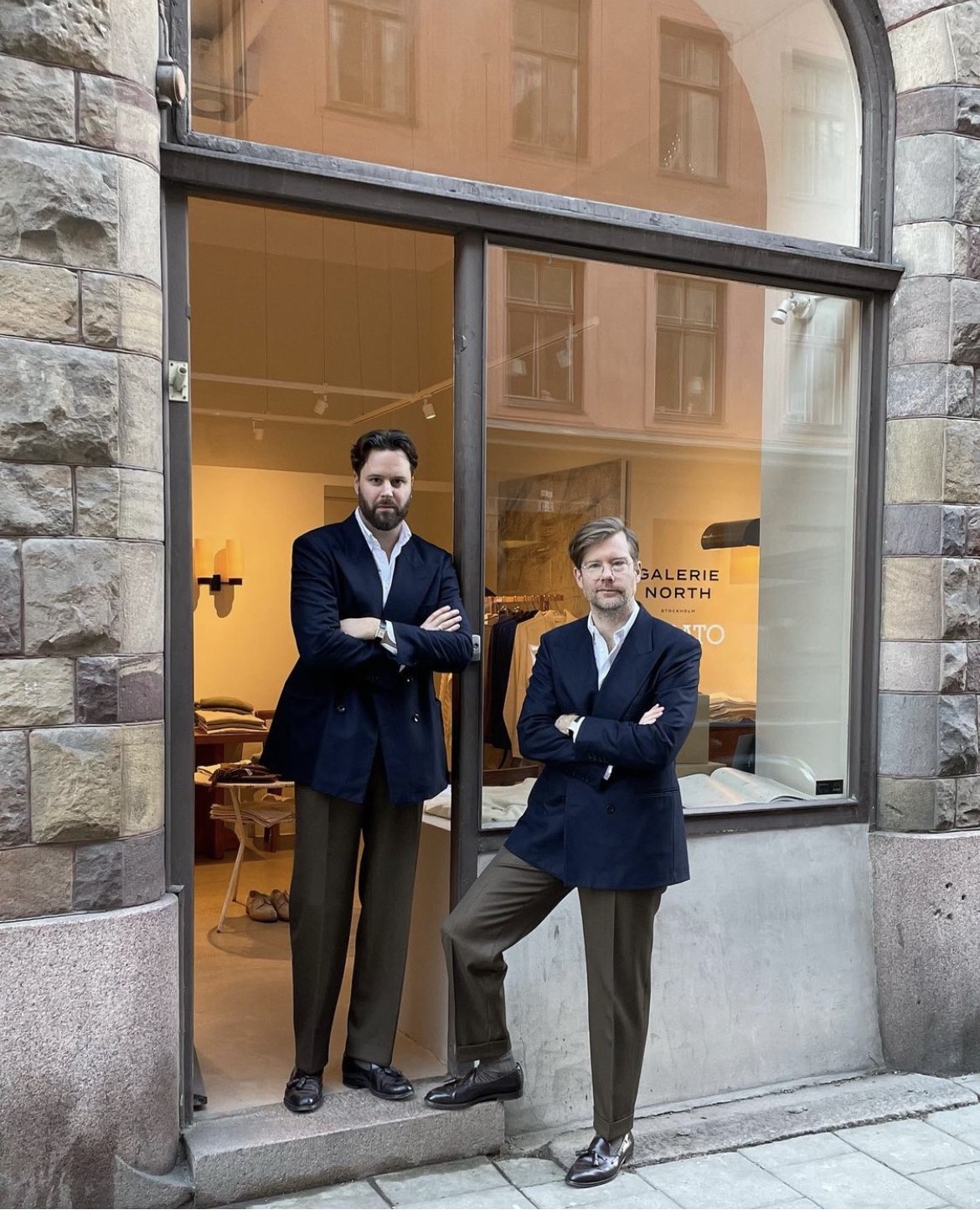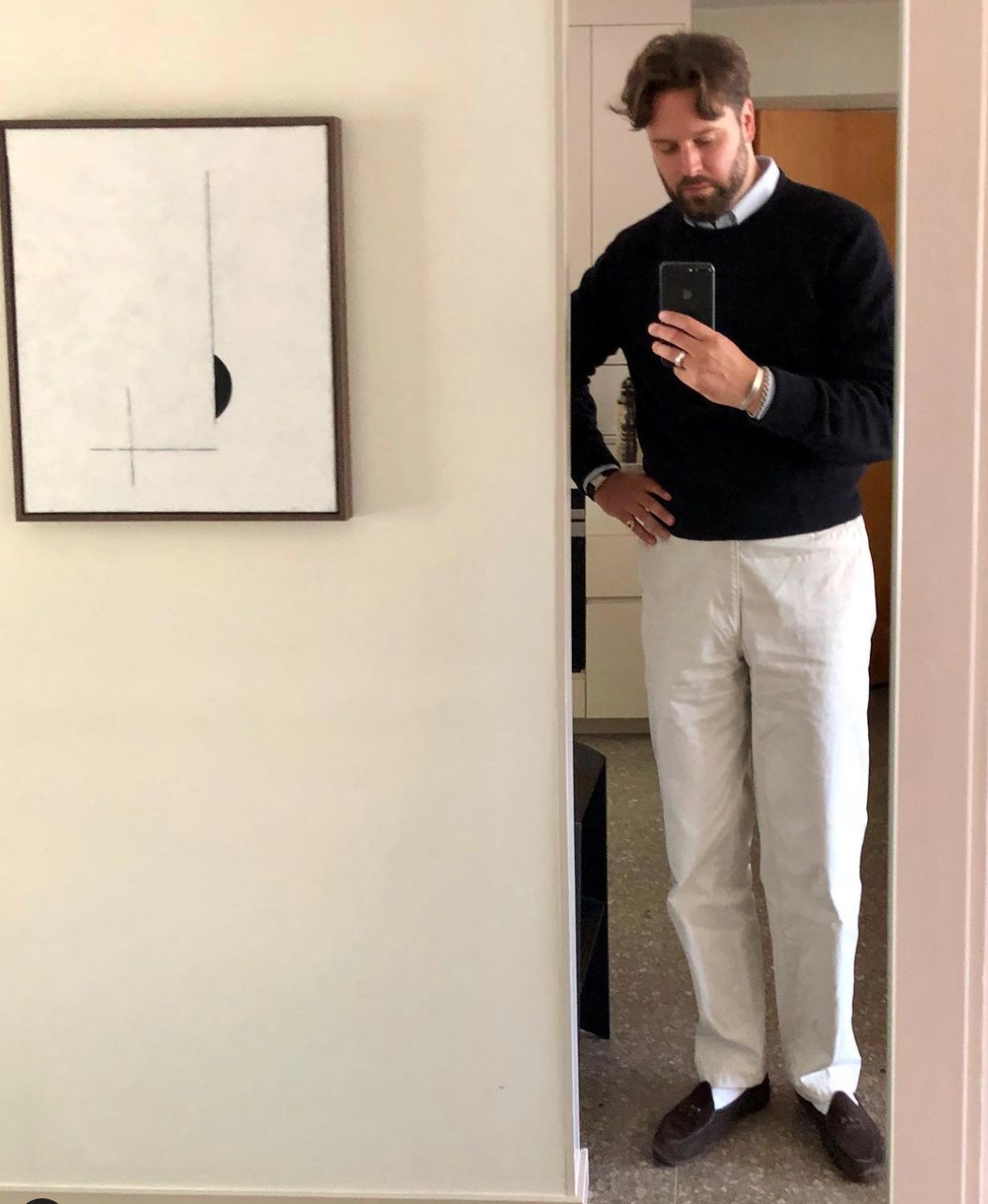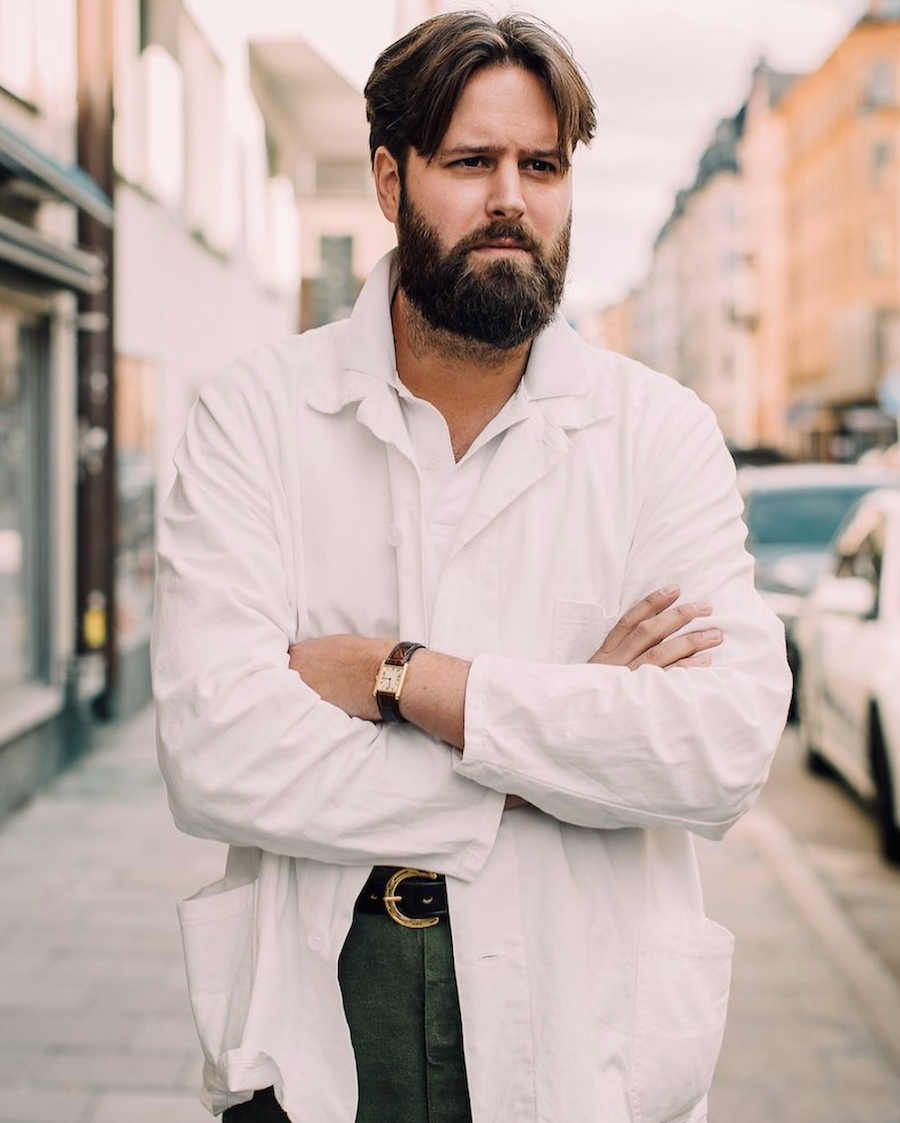
The rules and how to break them #11: Always button your jacket

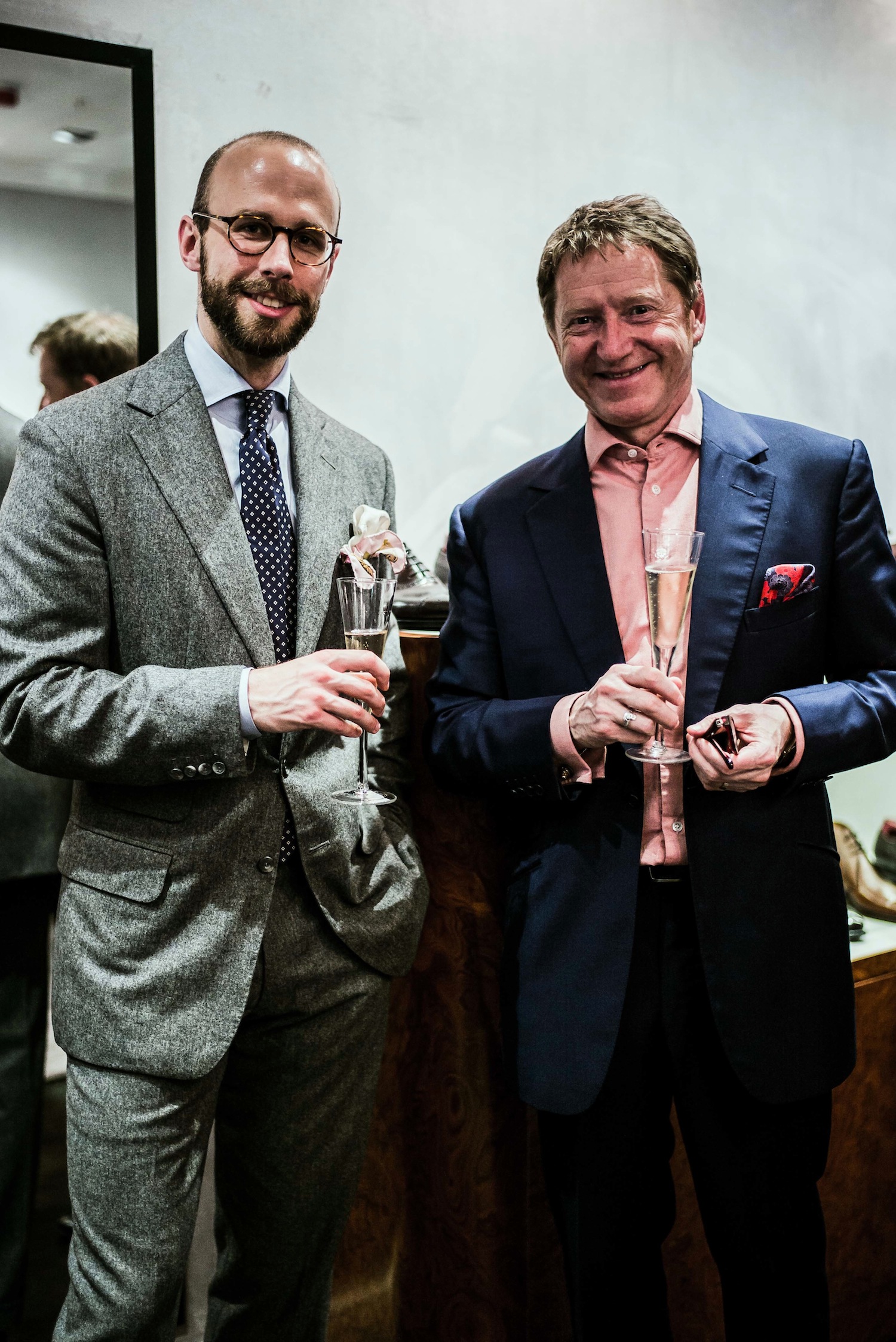
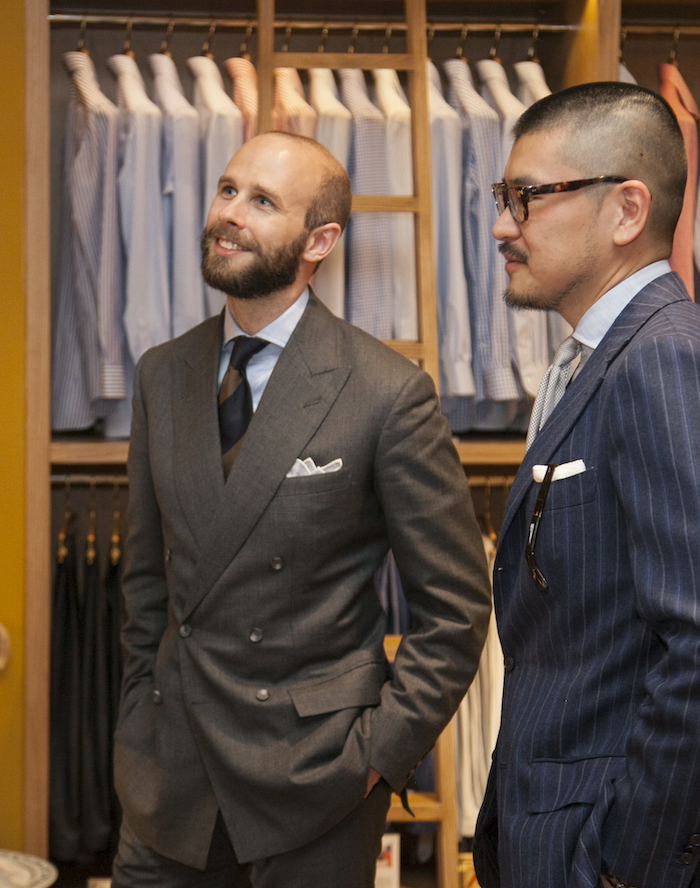
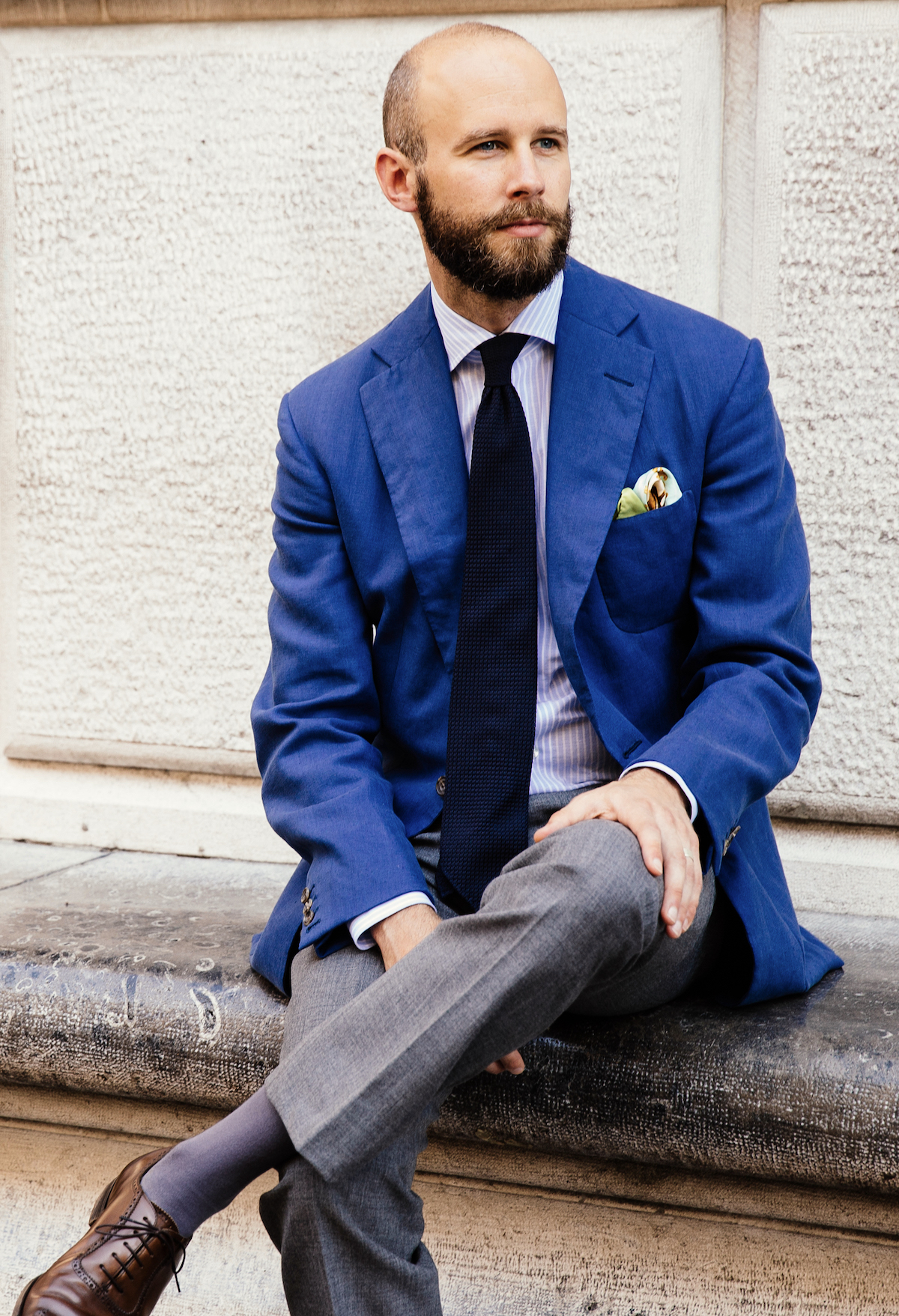
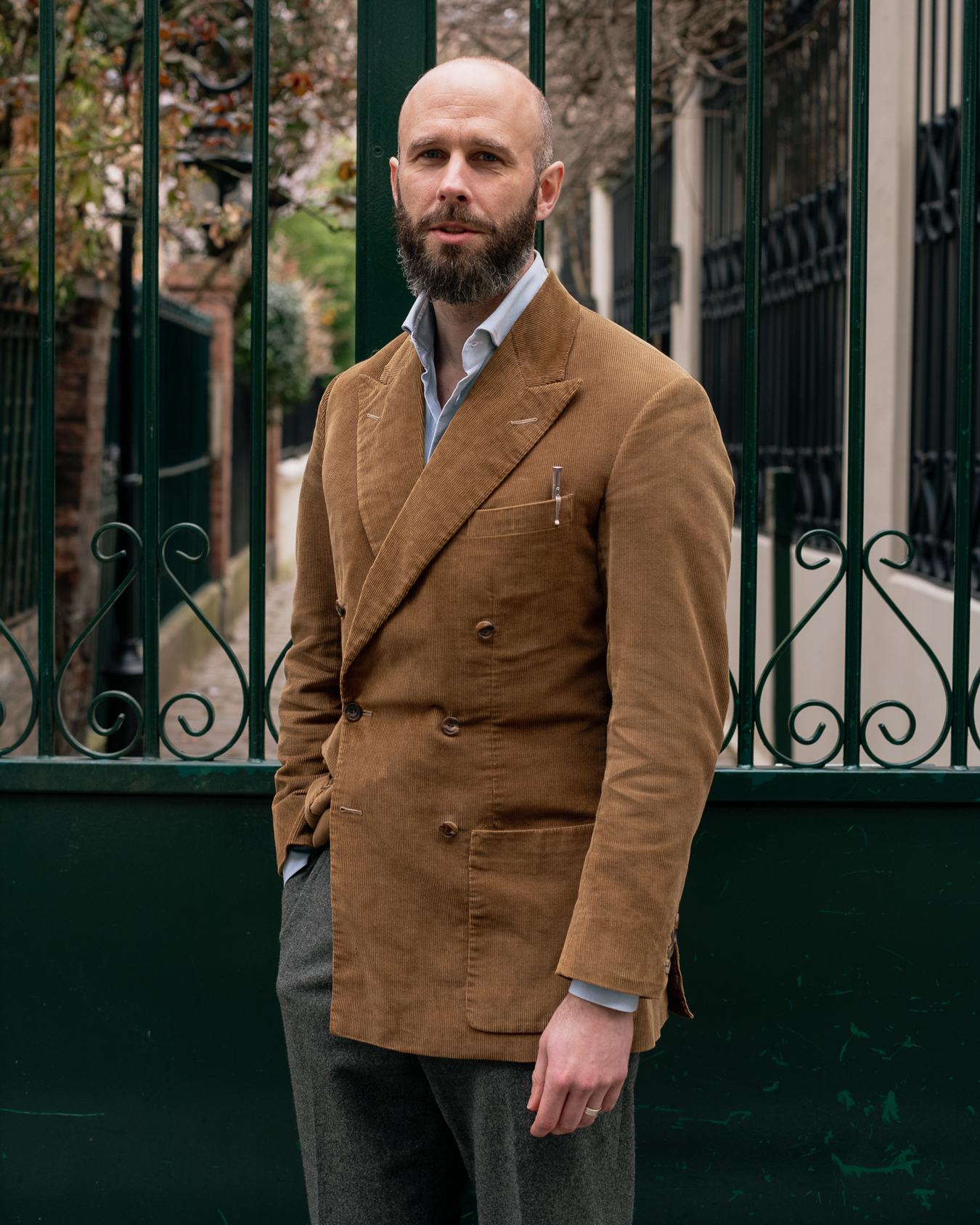
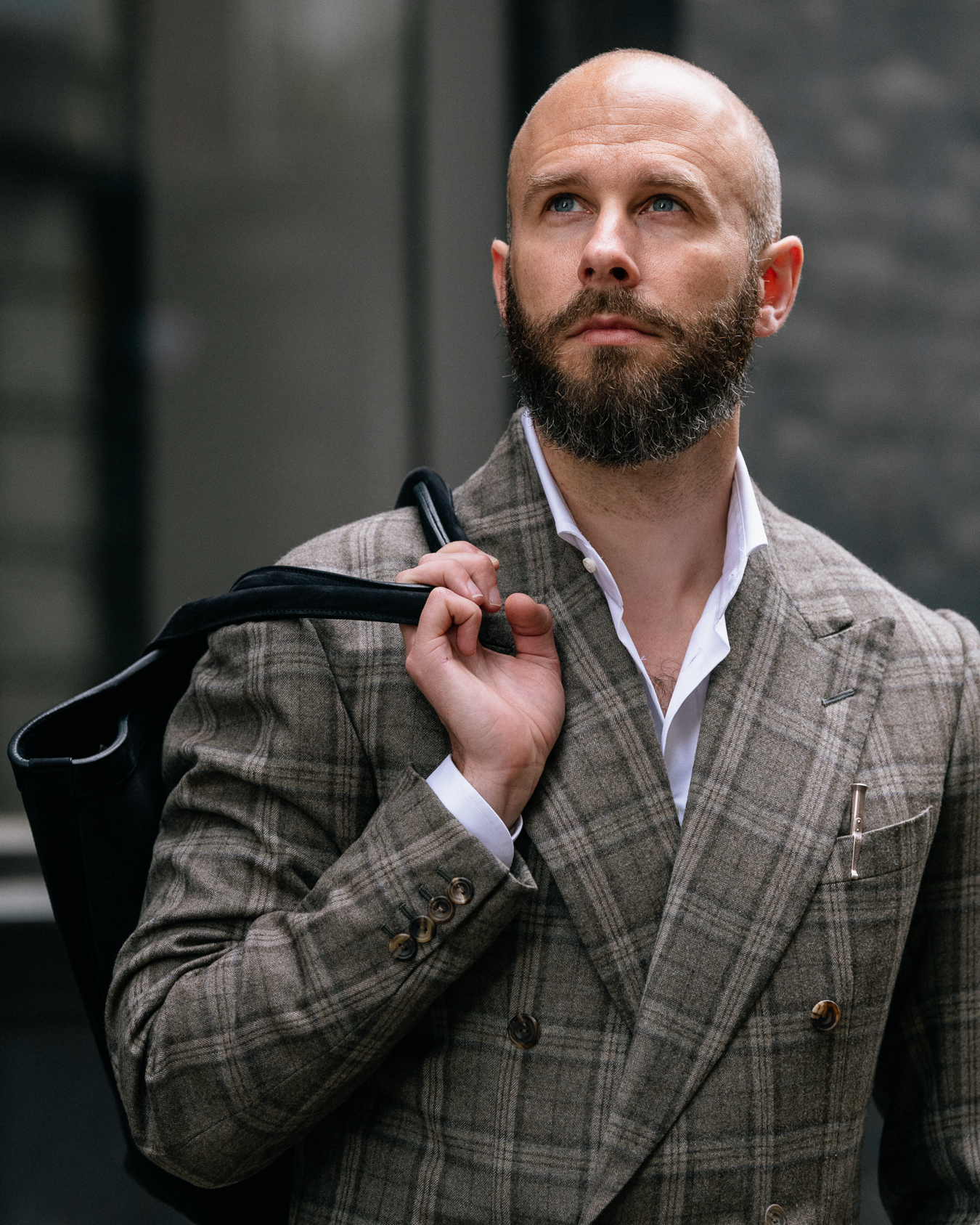
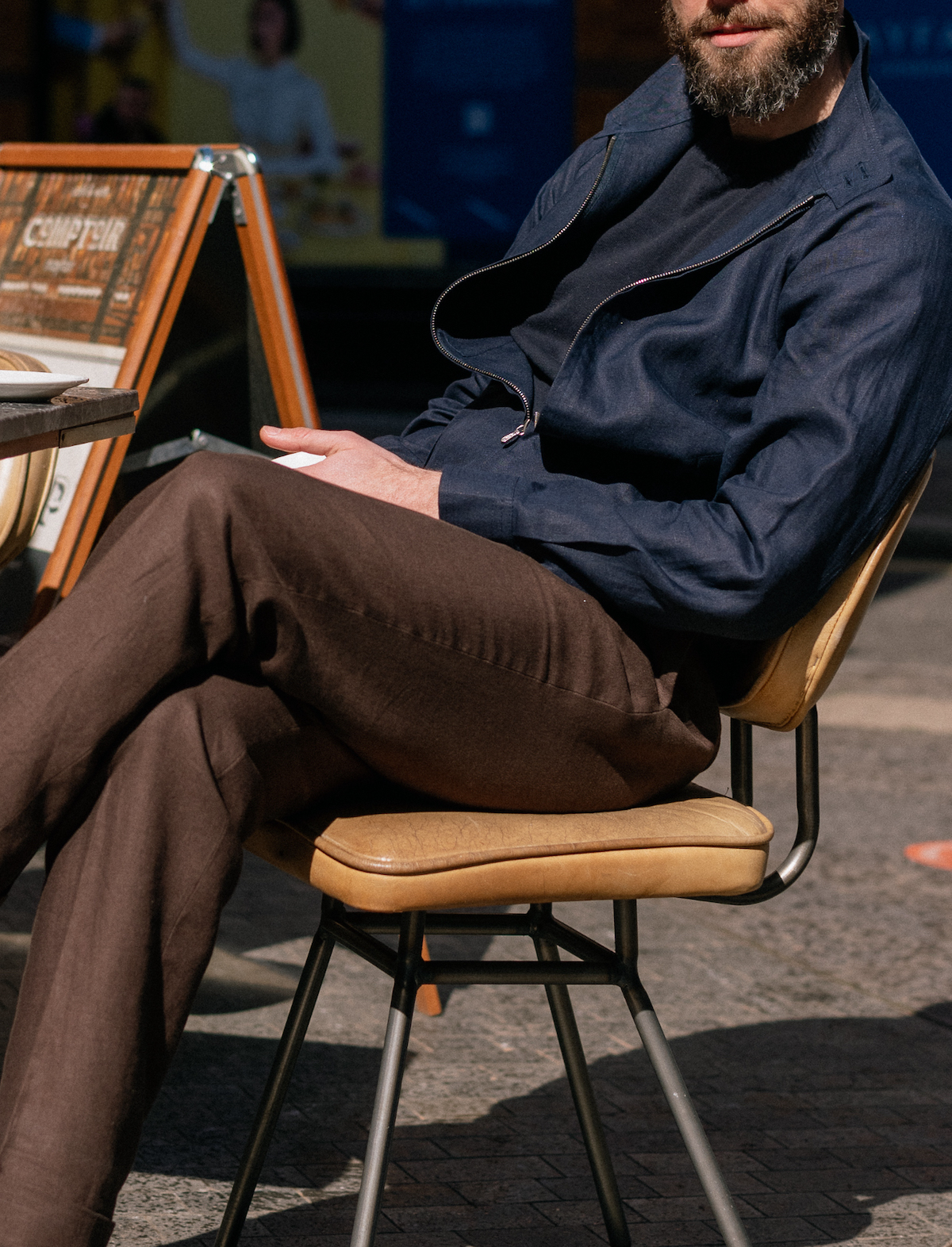
A reader commented recently (or rather, berated me) for not keeping my jacket buttoned. 

I understand the feeling behind this, but I also want to emphasise that just because it usually looks better, it doesn’t mean you have to follow this rule slavishly. 

It sounded like a perfect candidate, in other words, for our ‘Rules and how to break them’ series, of which there are now 11 chapters

The argument that underlies this series is that rules are more like conventions – ways of behaving which exist for a reason. They don’t have to be followed, but it’s nice to understand the reasoning first, so you know what you’re giving up when you break them. 

OK first, why does it look better to keep your jacket buttoned?

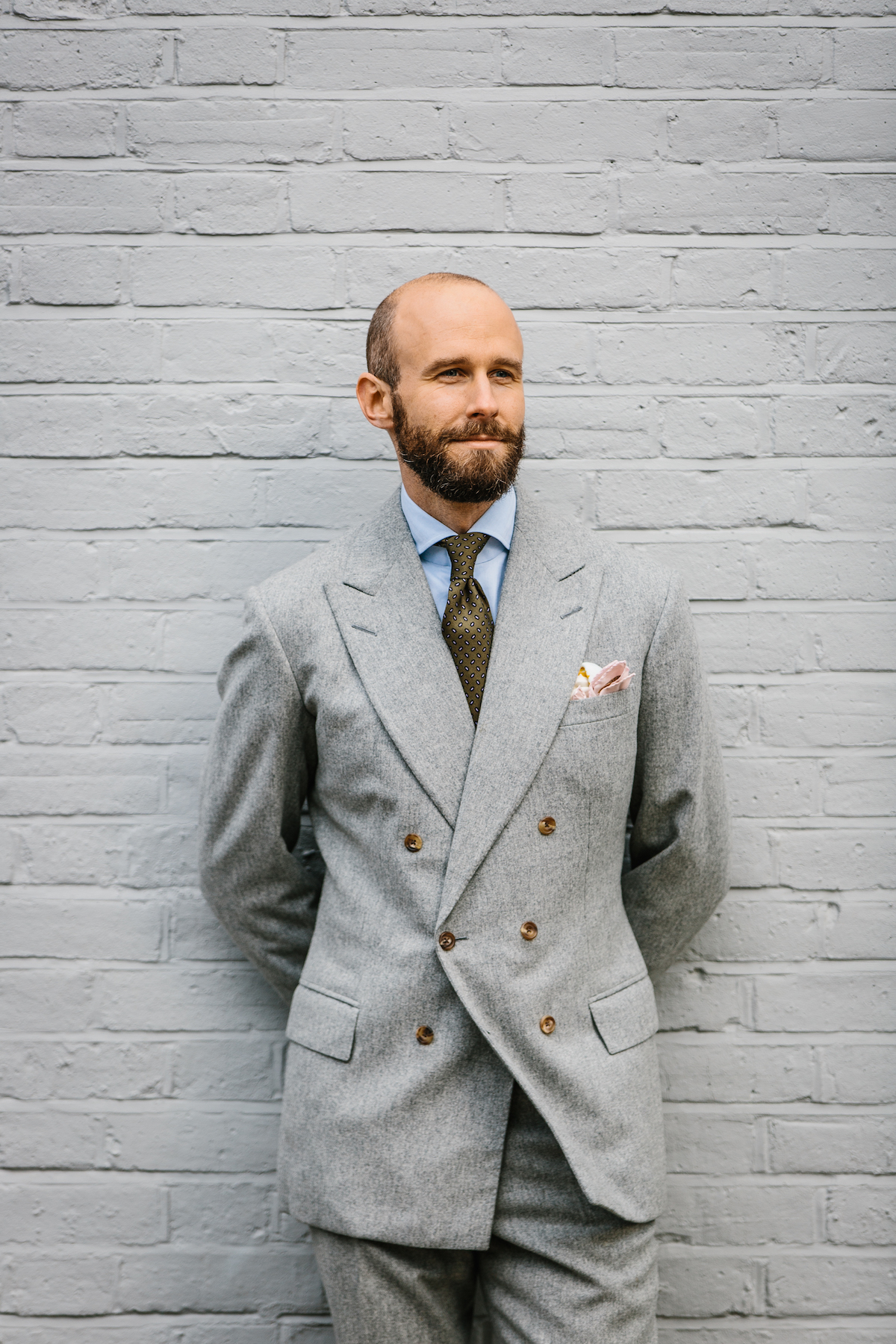
Well, because everything about the way the jacket has been cut and made presumes that it is. The shape from the shoulder, onto the chest, through the suppressed waist and into the skirt, has all been carefully designed to make you look good, on the basis that the waist button is fastened.

That button serves as a fulcrum, from which the fronts flow downwards around the hips, and the lapels run upwards towards the shoulders, emphasising width at the top and slimness in the middle. 

The lapels also frame the shirt, or shirt and tie, reinforcing the V-shape of the chest. And they hide the often puffy shirt, creating an uninterrupted line from the waist down through long, straight legs. 

Once the jacket is unbuttoned, a lot of this falls away. The jacket flaps open; the carefully sculpted shape, particularly in the bottom half, is lost. 

Whatever you think of Tony Blair, the ex-Prime Minister (and please don’t tell me what you think), he knew this well. Blair would always button his suit jacket as soon as he got out of a car, even mastering the one-handed technique, with the other hand raised in a greeting to the press.

It made him look better, but it also conveyed a sense of authority. 

There are obvious arguments on the other side. 

When you sit down, obviously you undo a (single breasted) jacket. If you’re stuffed after a particularly generous client lunch, you undo it too.

If you’re boiling hot, at the end of a walk through the streets of steamy Hong Kong, there’s nothing wrong with unbuttoning your jacket. Other things, like not fainting on the side walk or simply appearing comfortable, are more important. 

In fact, comfort is key here. 

We all know that appearing fussy, constrained or uncomfortable are the biggest killers to looking good as a man. Elegance requires ease.

Therefore if buttoning your jacket, for whatever reason, makes you uncomfortable, it’s a good argument to not do so. Just bear in mind the points above about what you’re giving up, and button it again when you’re back in an air-conditioned office. Or have it let out so it’s easier to wear. 

The more controversial argument for keeping a jacket unbuttoned is that it looks more casual – more suited to soft tailoring in soft materials, worn with casual things. 

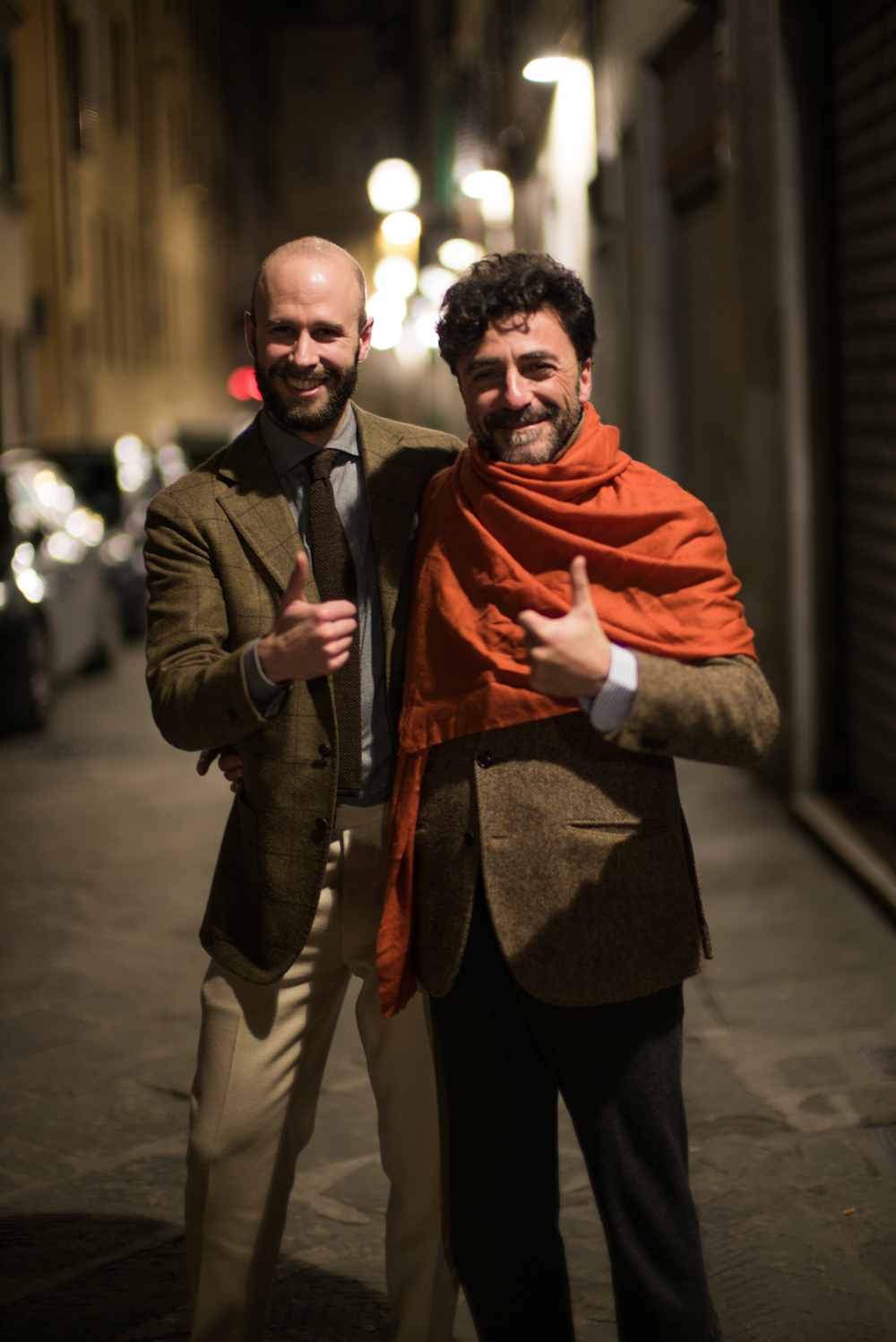
There is something in this. A Neapolitan jacket often looks better unbuttoned than an English one, with the latter’s hard, sharp edges hanging a little awkwardly. The typical canvas used stops it from having much flow.  

And it’s certainly true that the more casual the tailoring is in other ways – hairy tweed rather than worsted wool, sports jacket rather than suit – the more fitting it looks to sometimes leave the jacket open.

On the other hand, a Neapolitan jacket arguably needs that anchor at the waist more, given there’s less keeping it in place. And it will still always be more flattering on the wearer when it is buttoned.

This point is more a question of your priorities, I think. 

A better argument might be that an unbuttoned jacket is easier to wear with the most casual of trousers, such as jeans. 

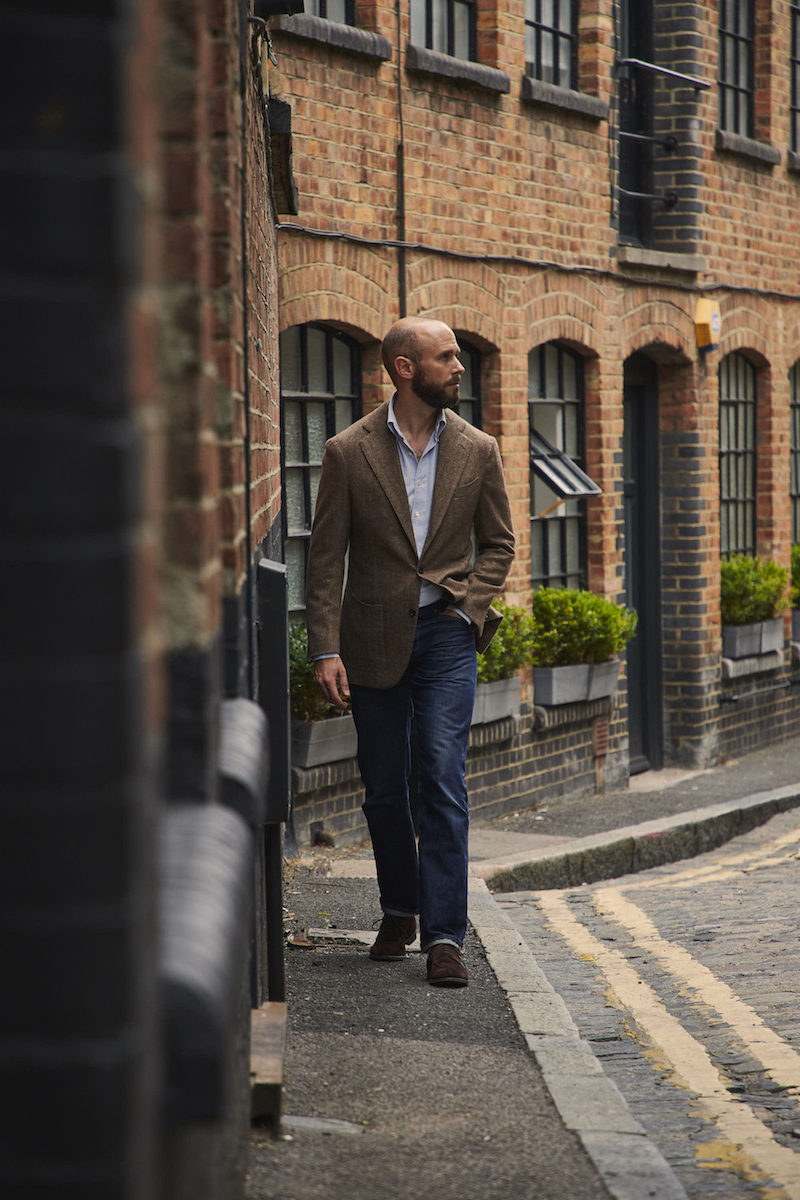
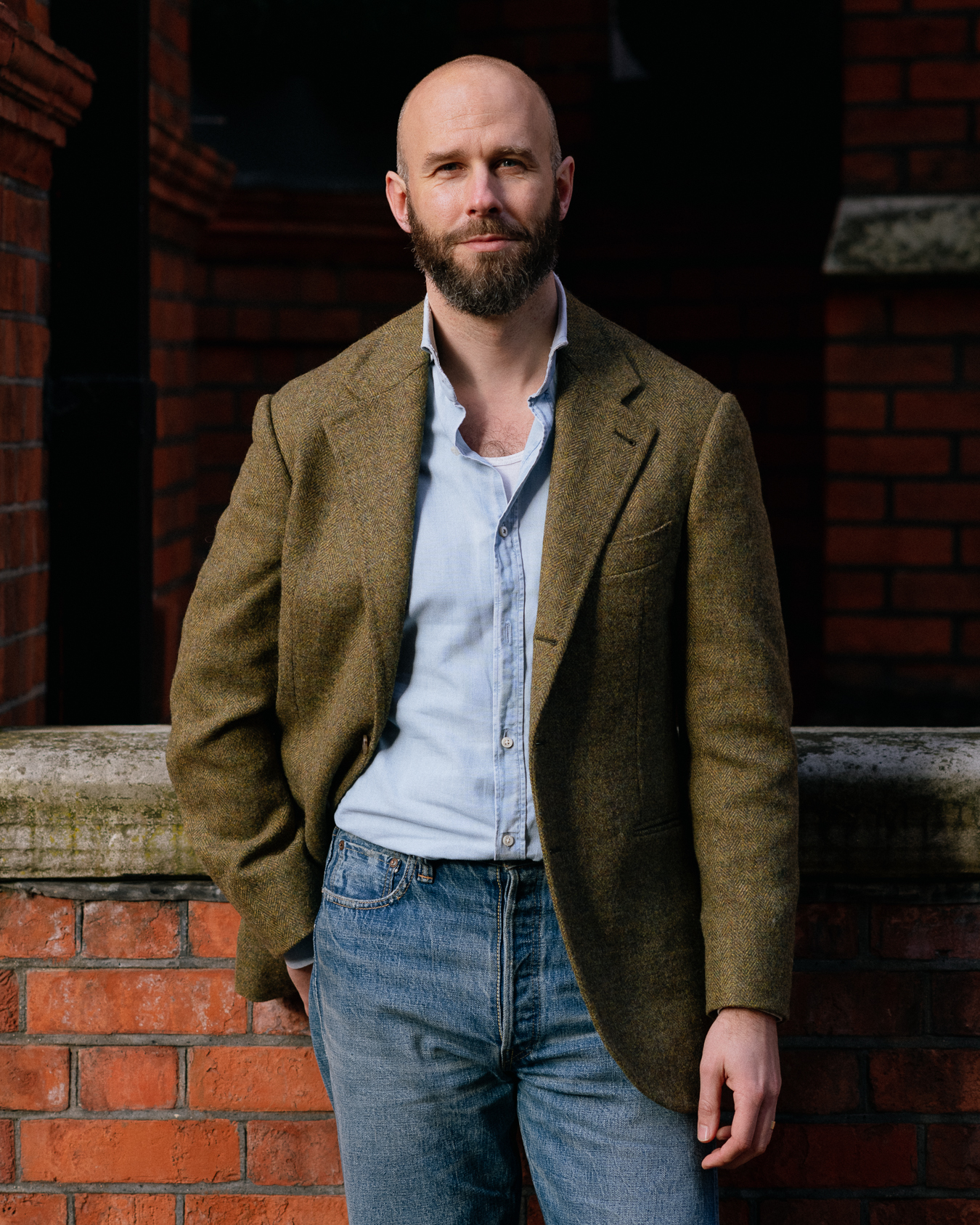
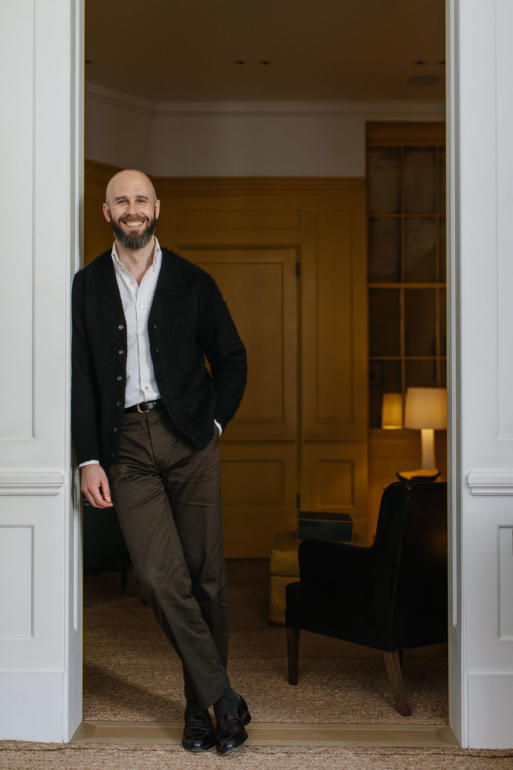
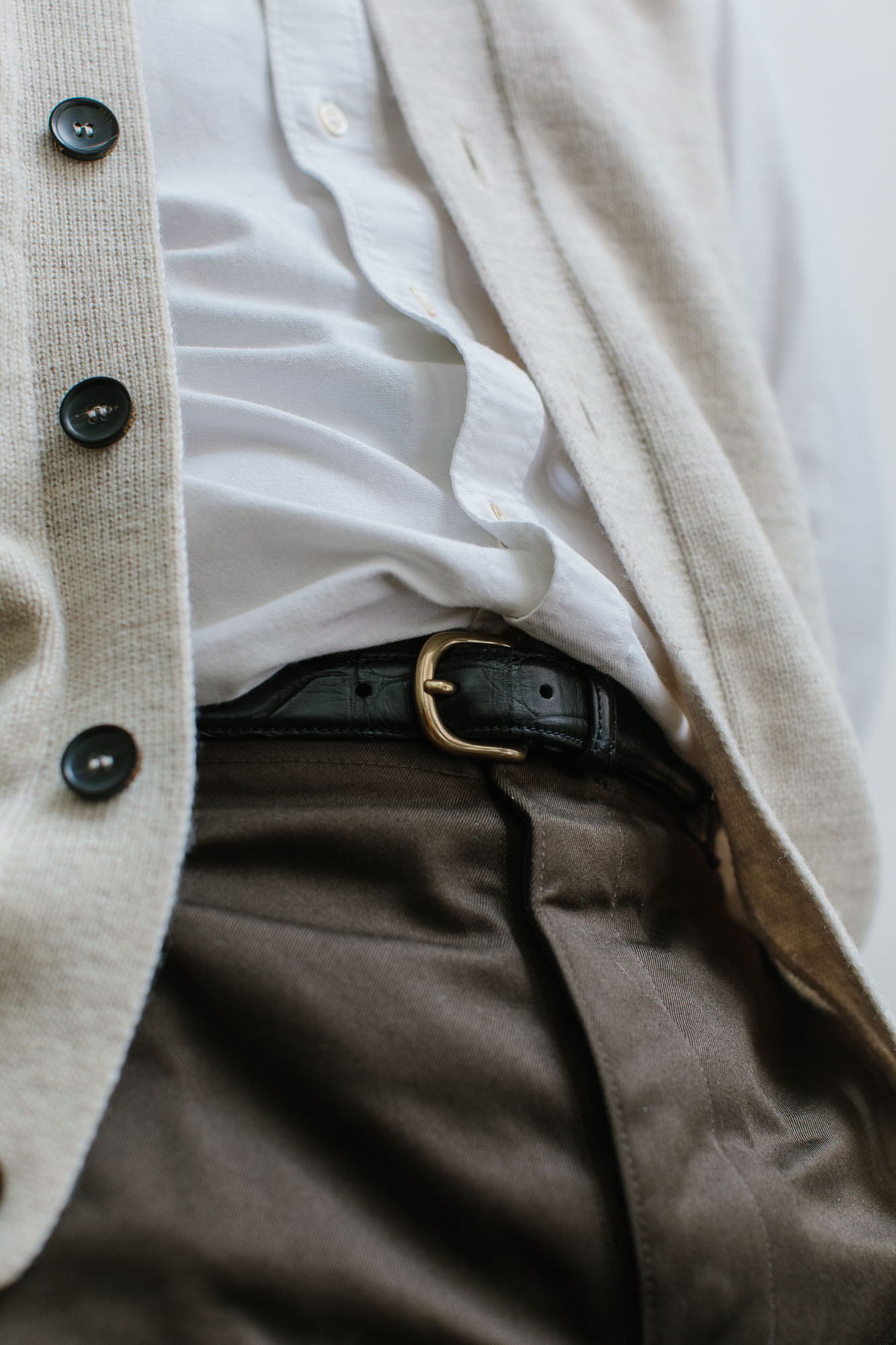
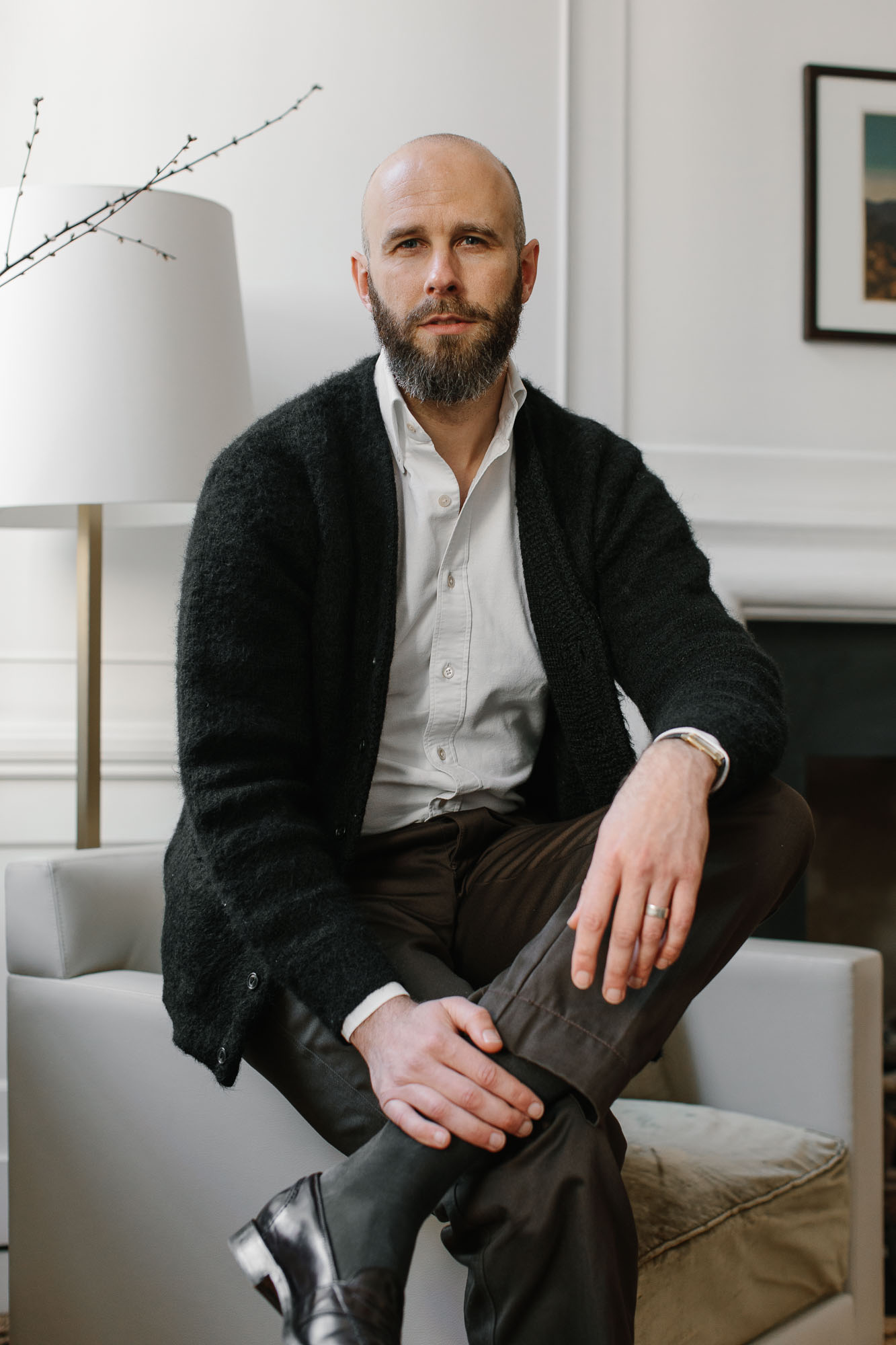
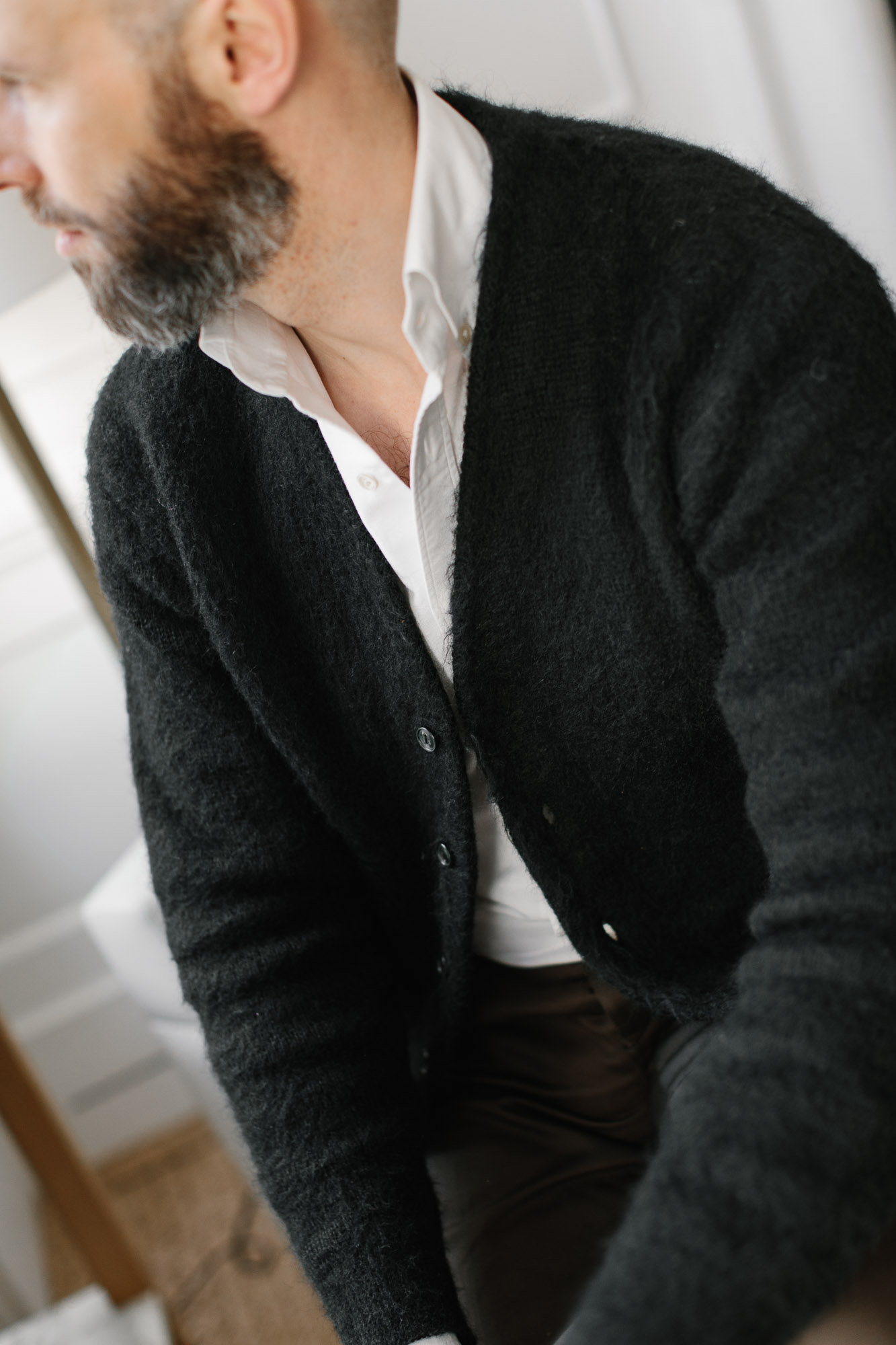
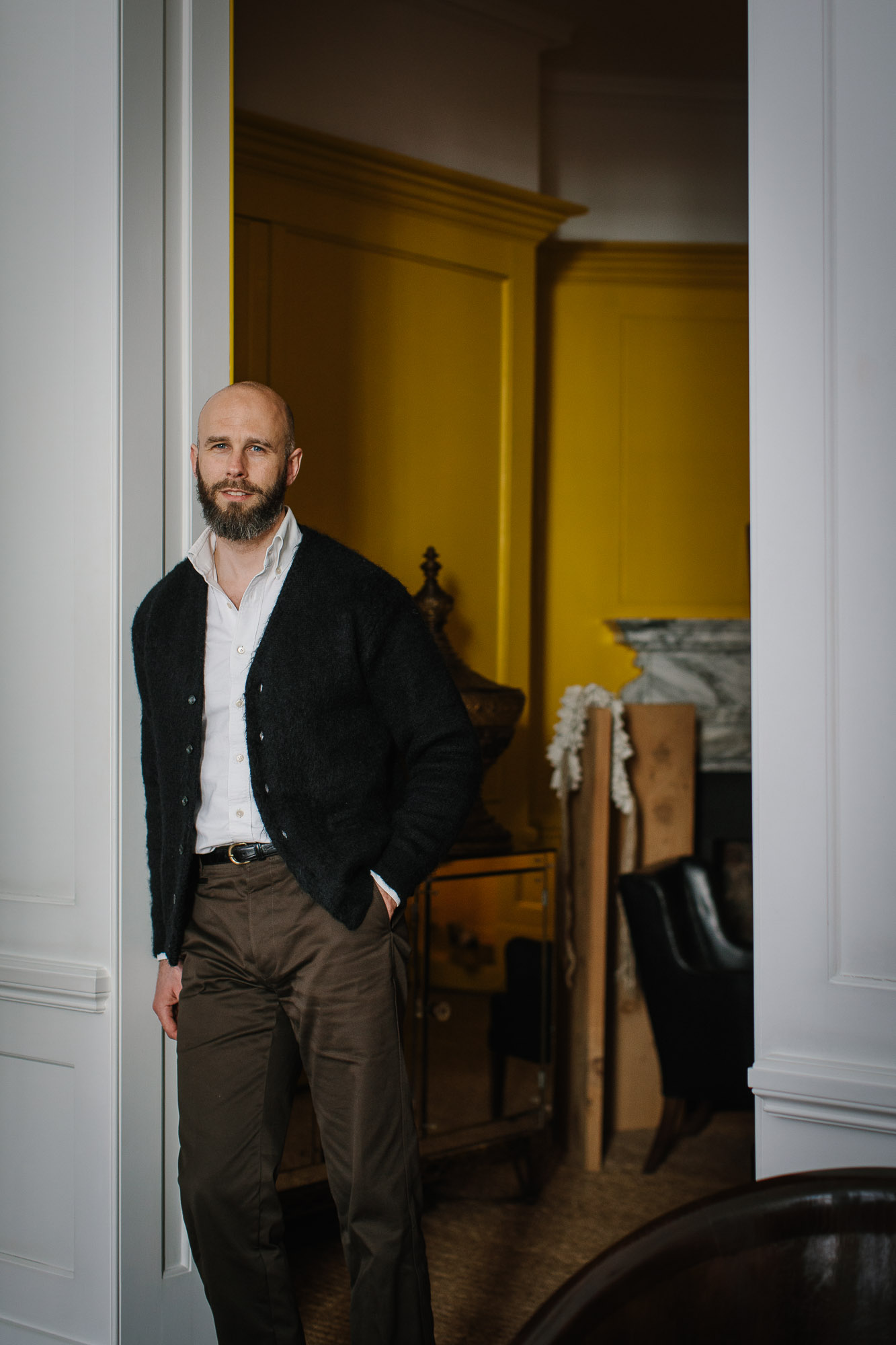
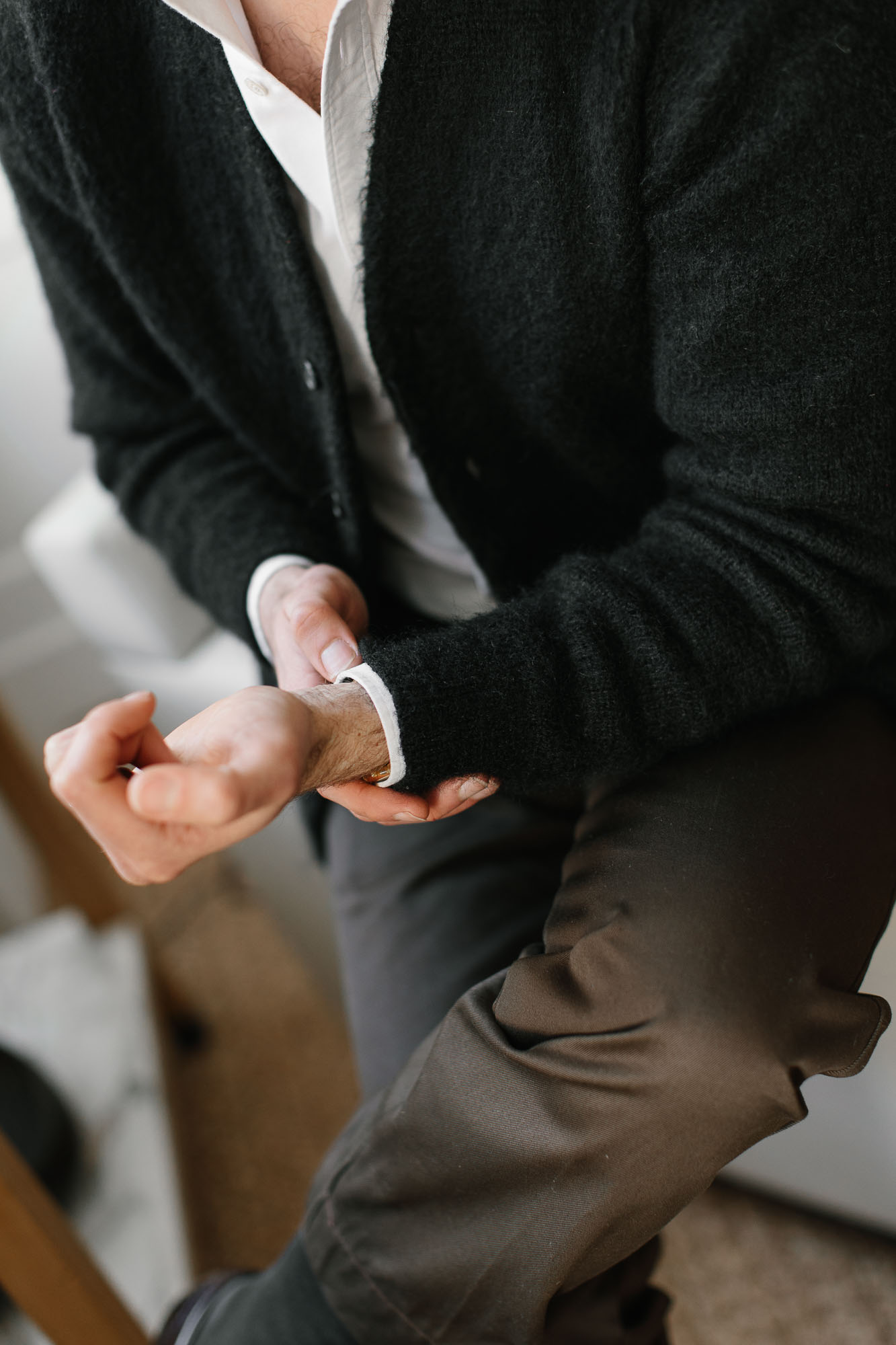
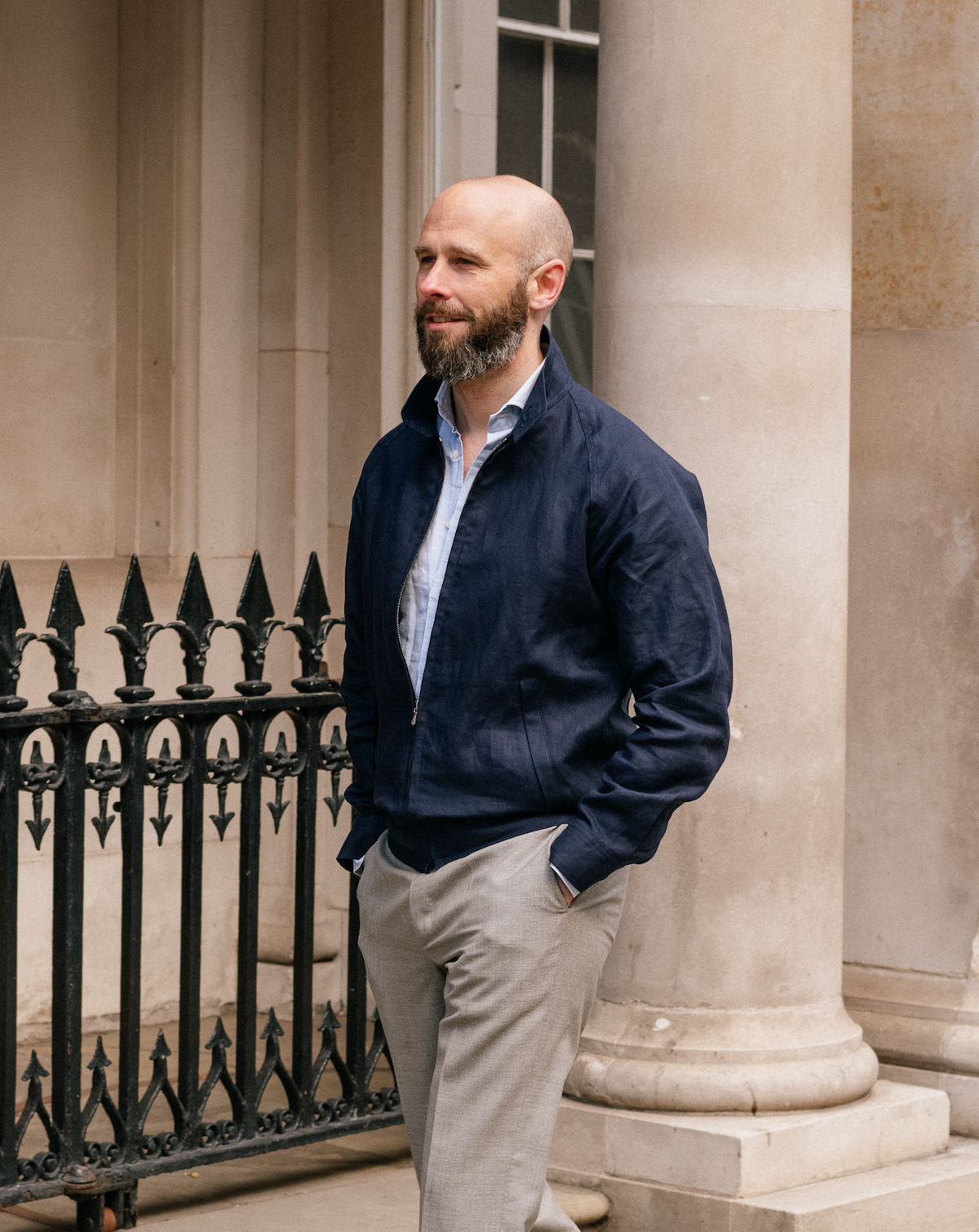
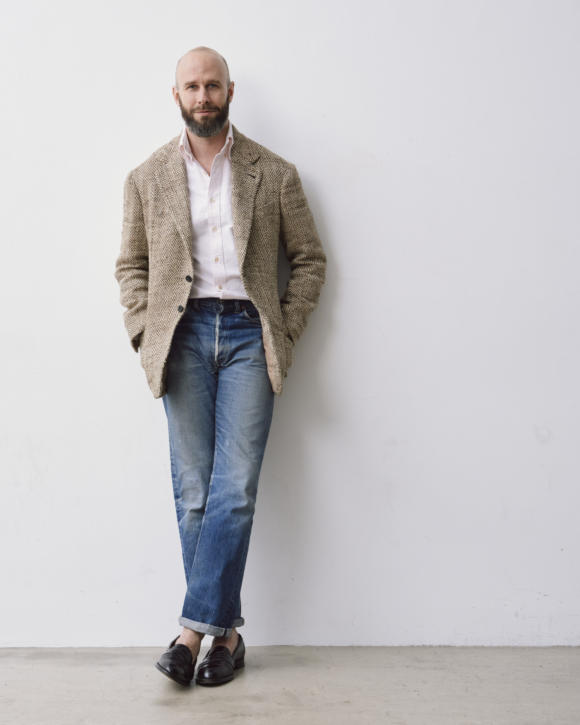
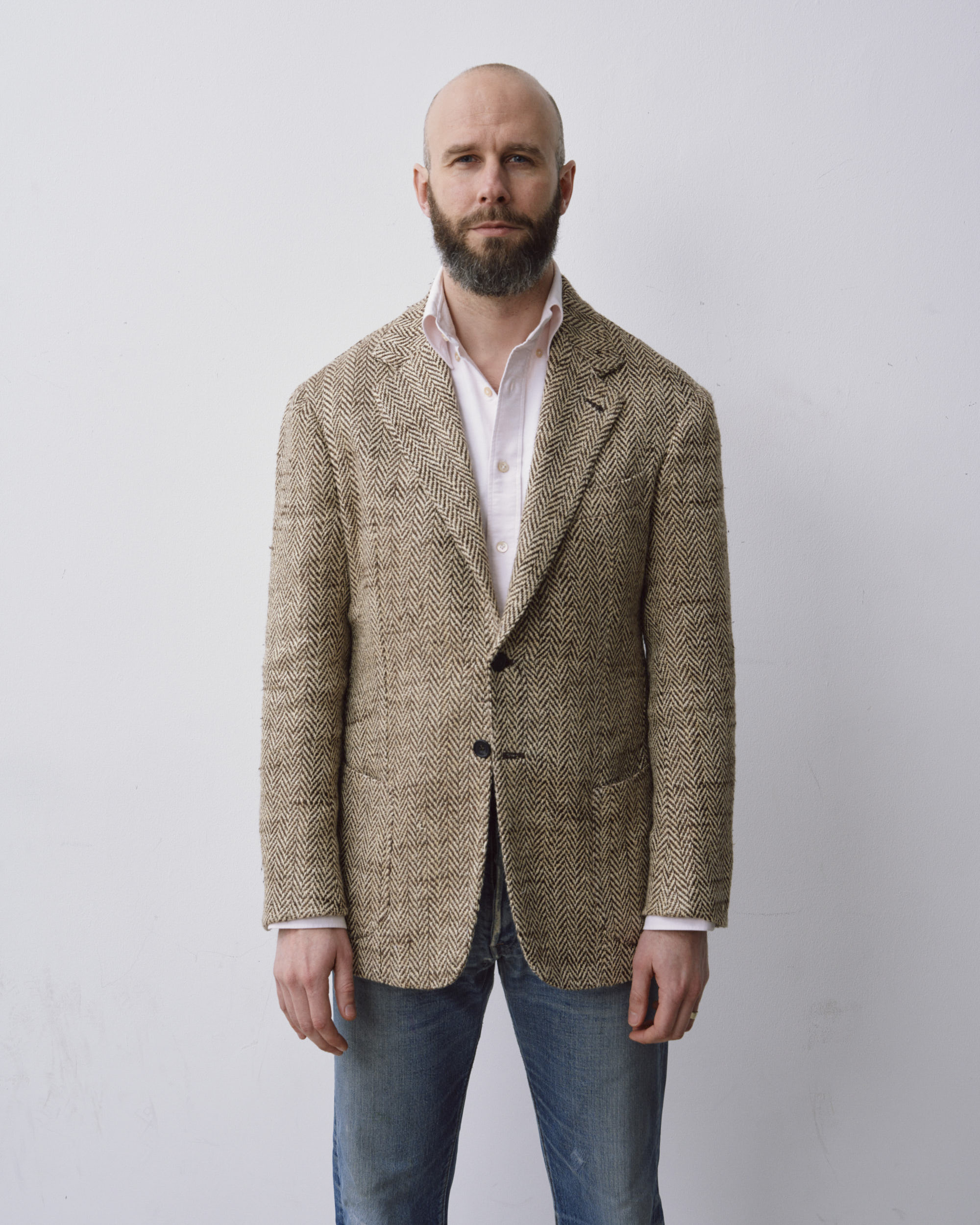
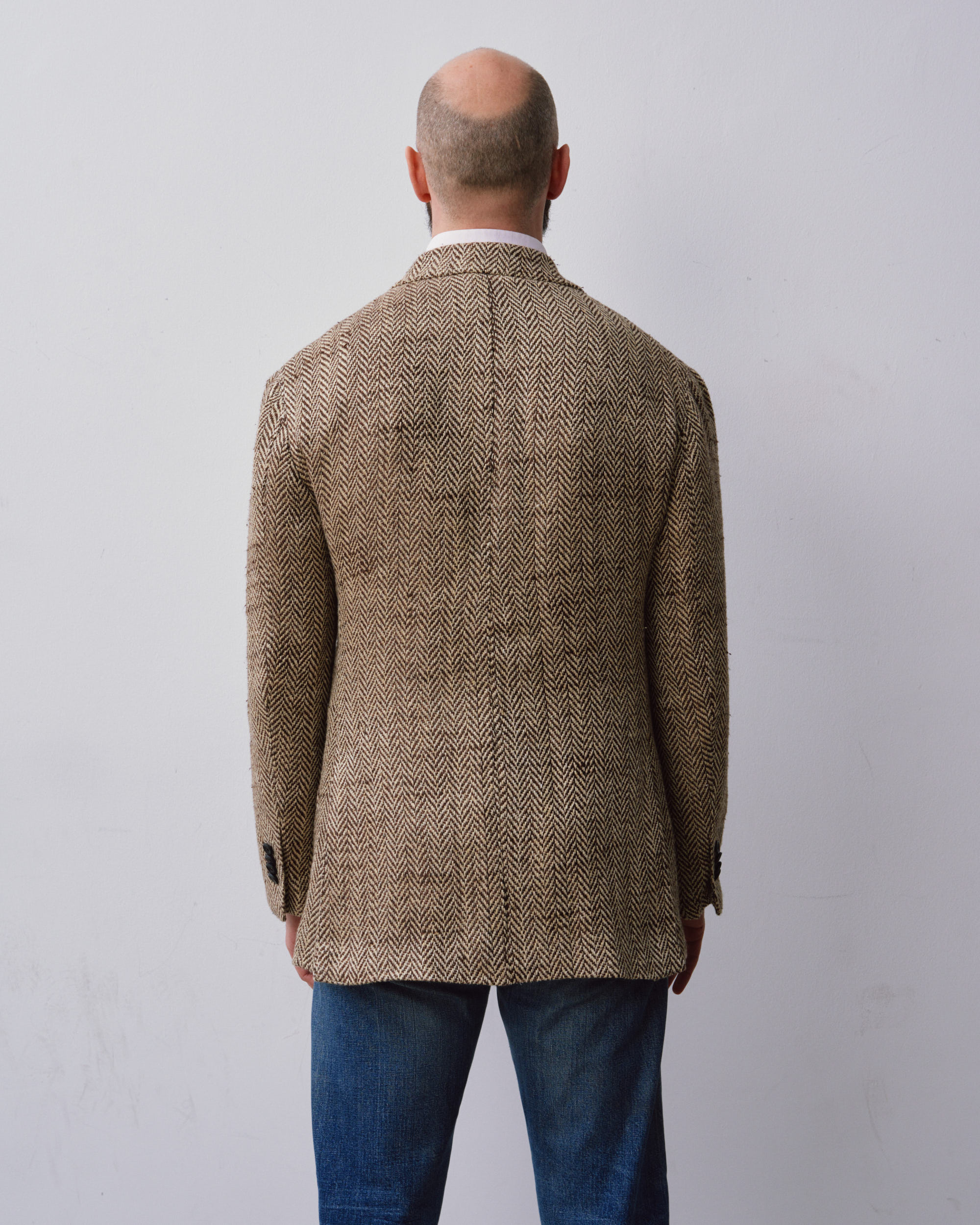
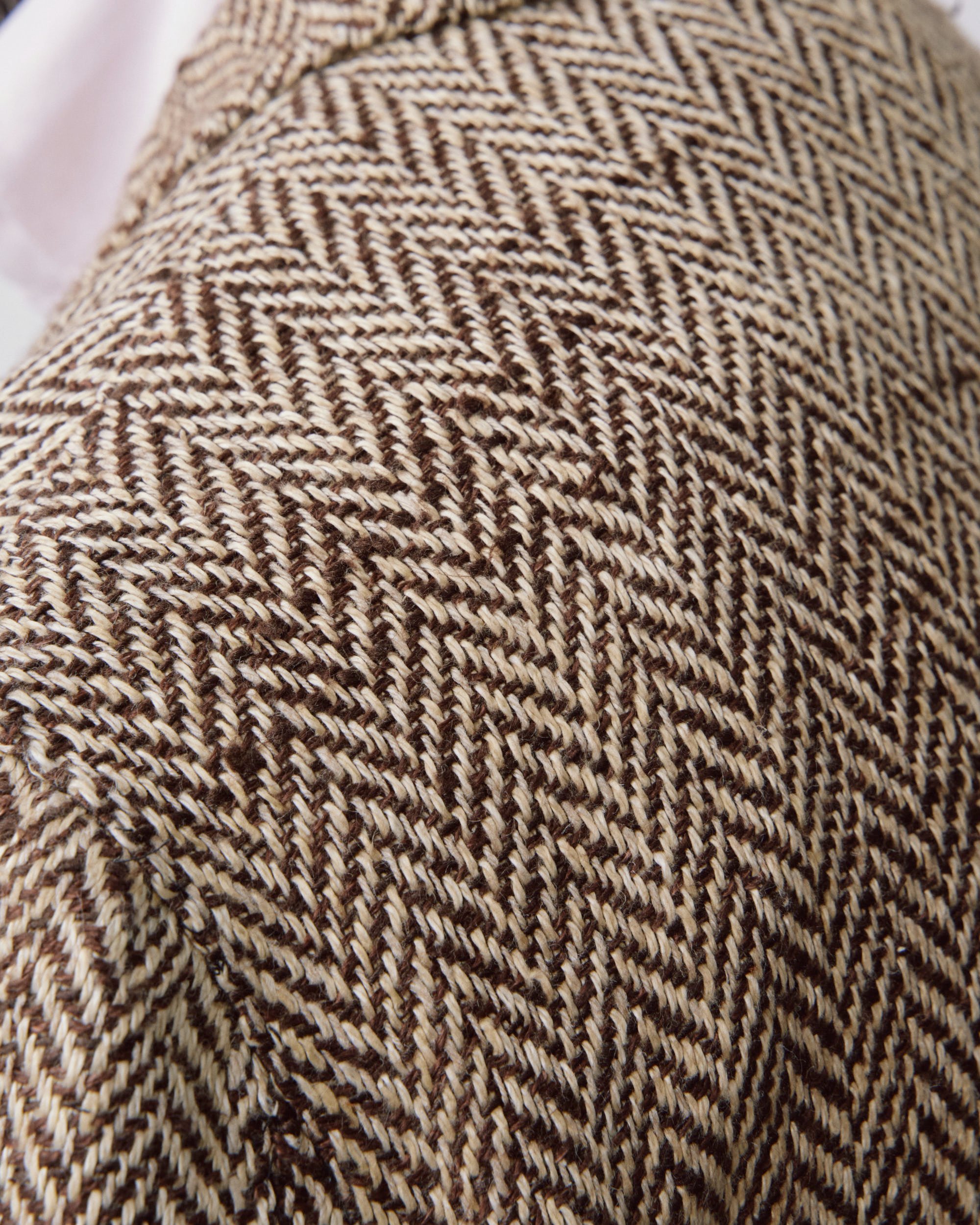
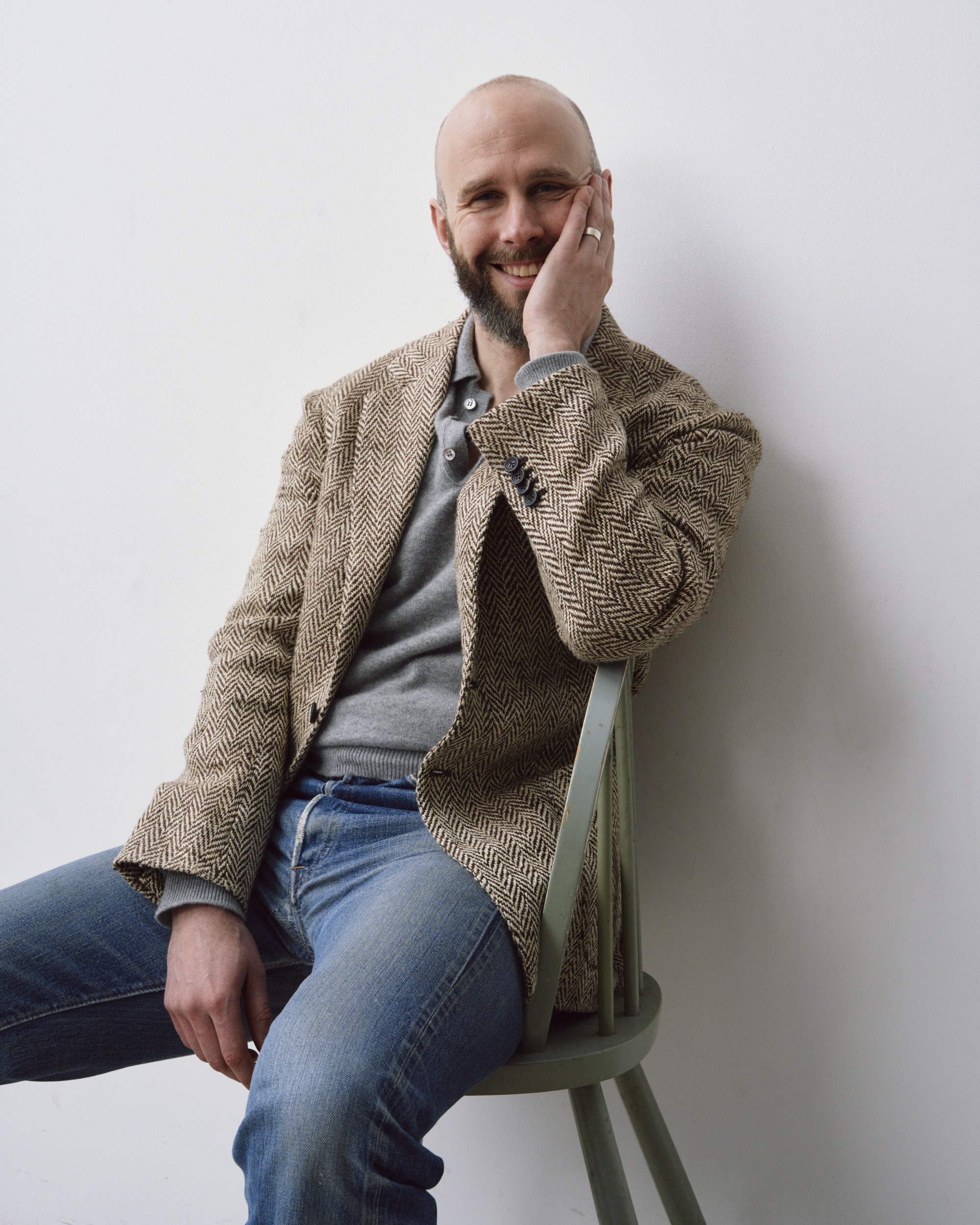
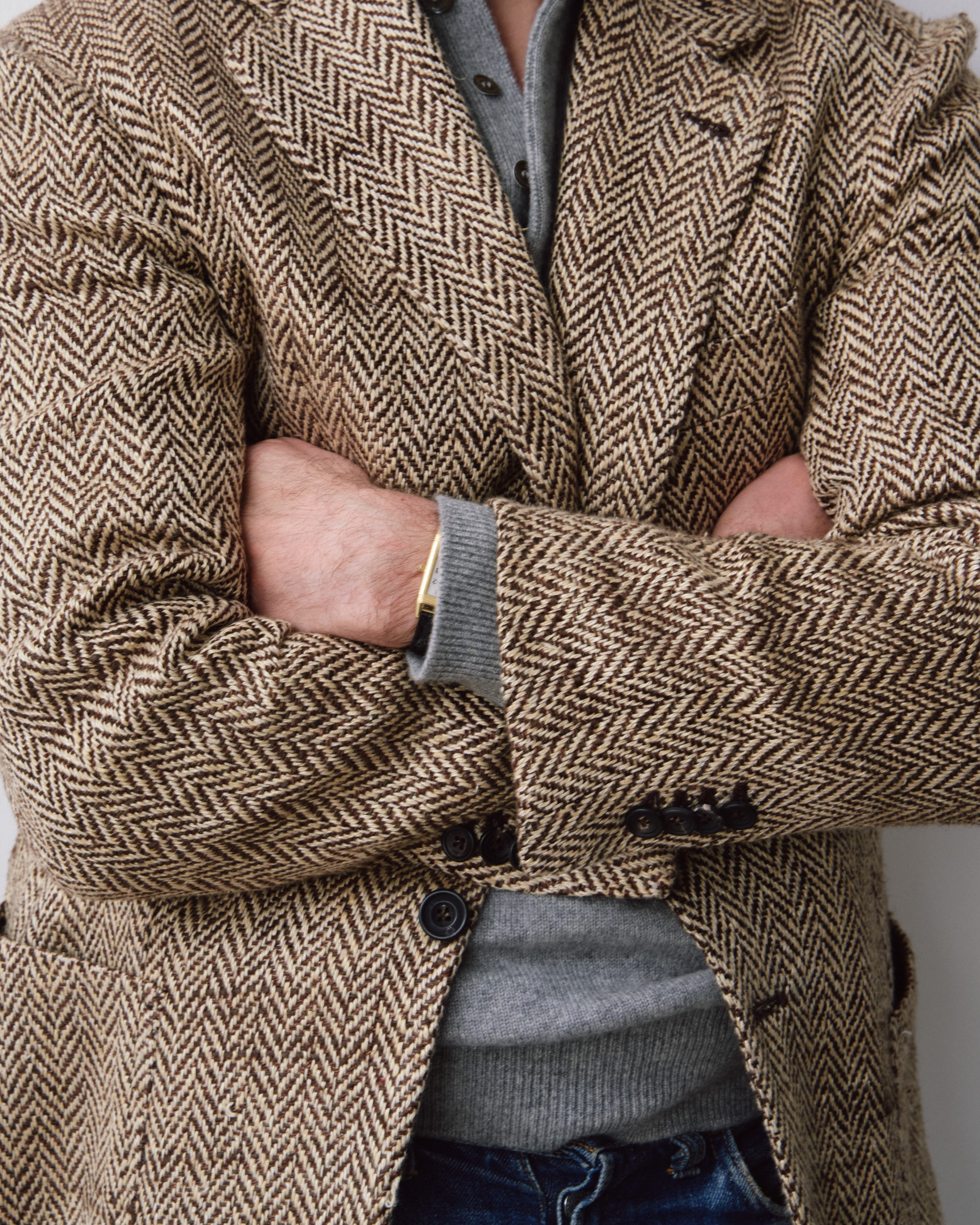
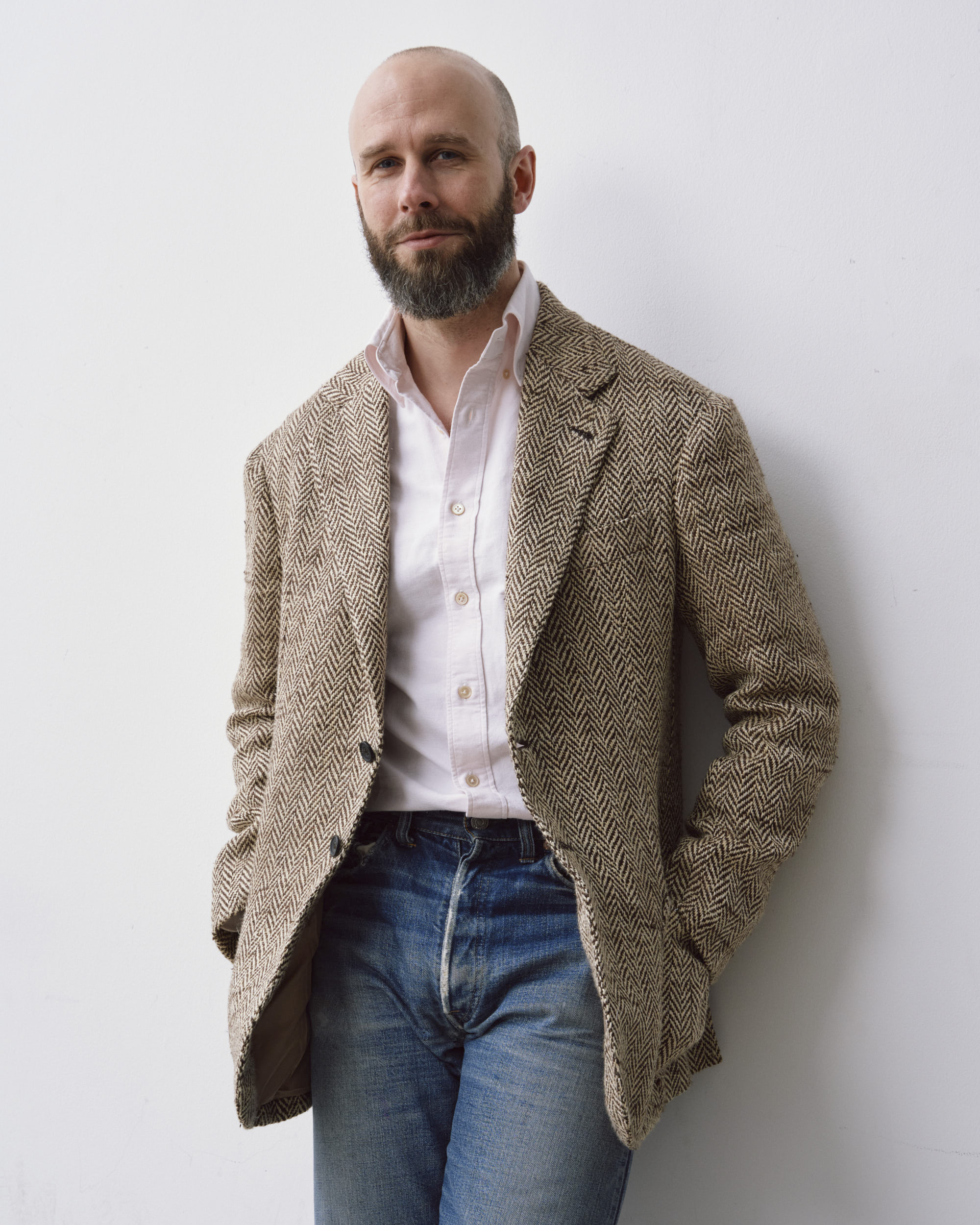
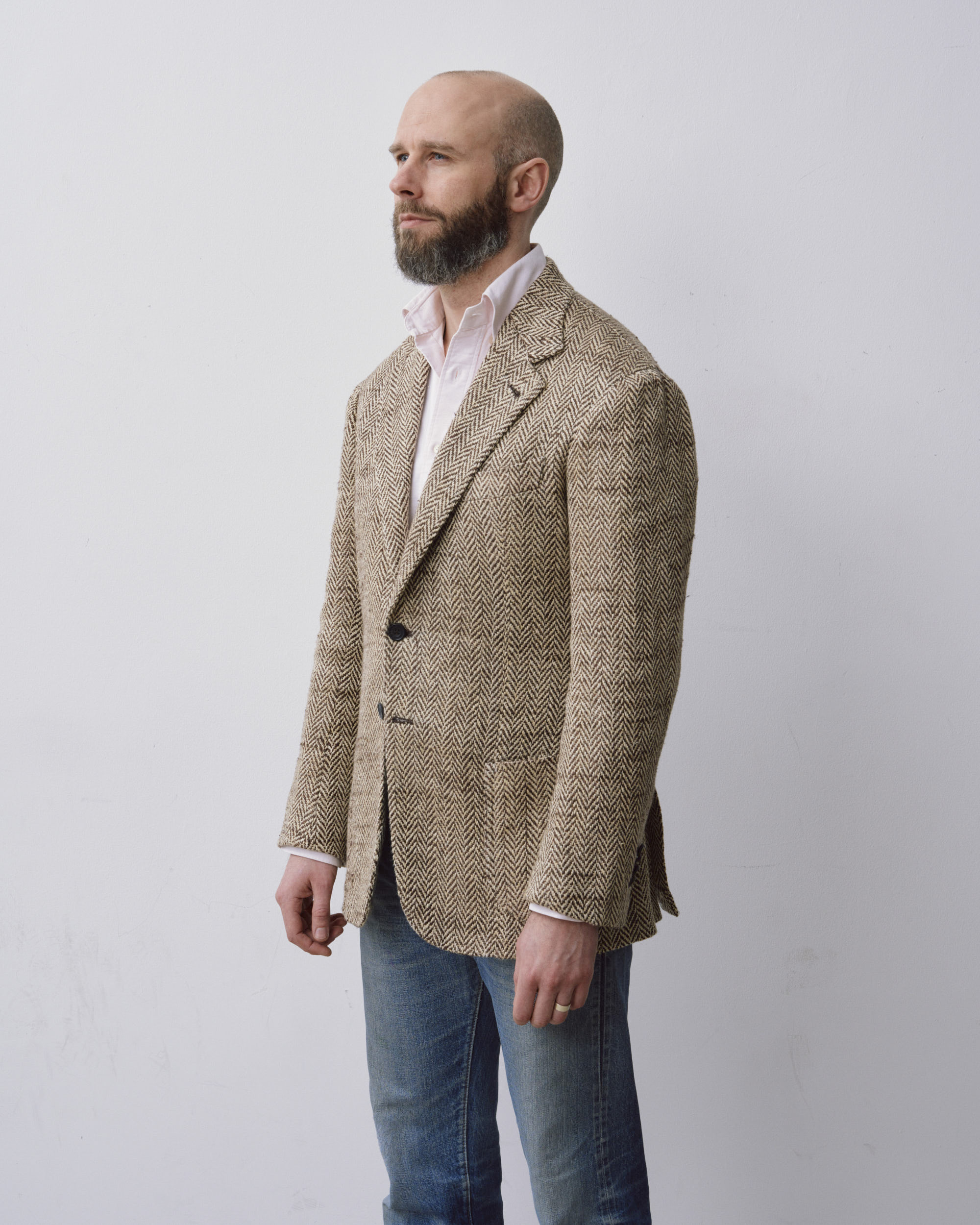
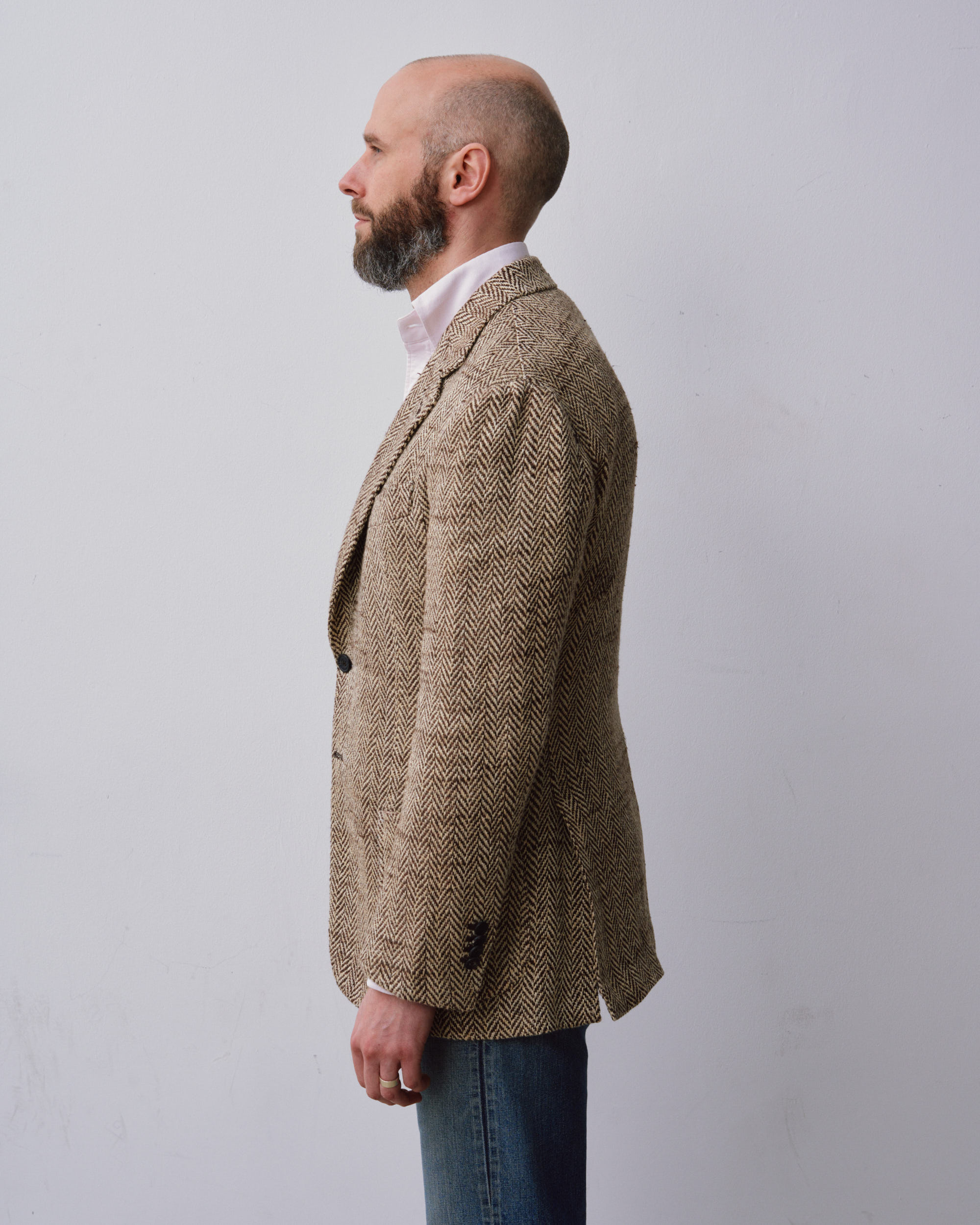
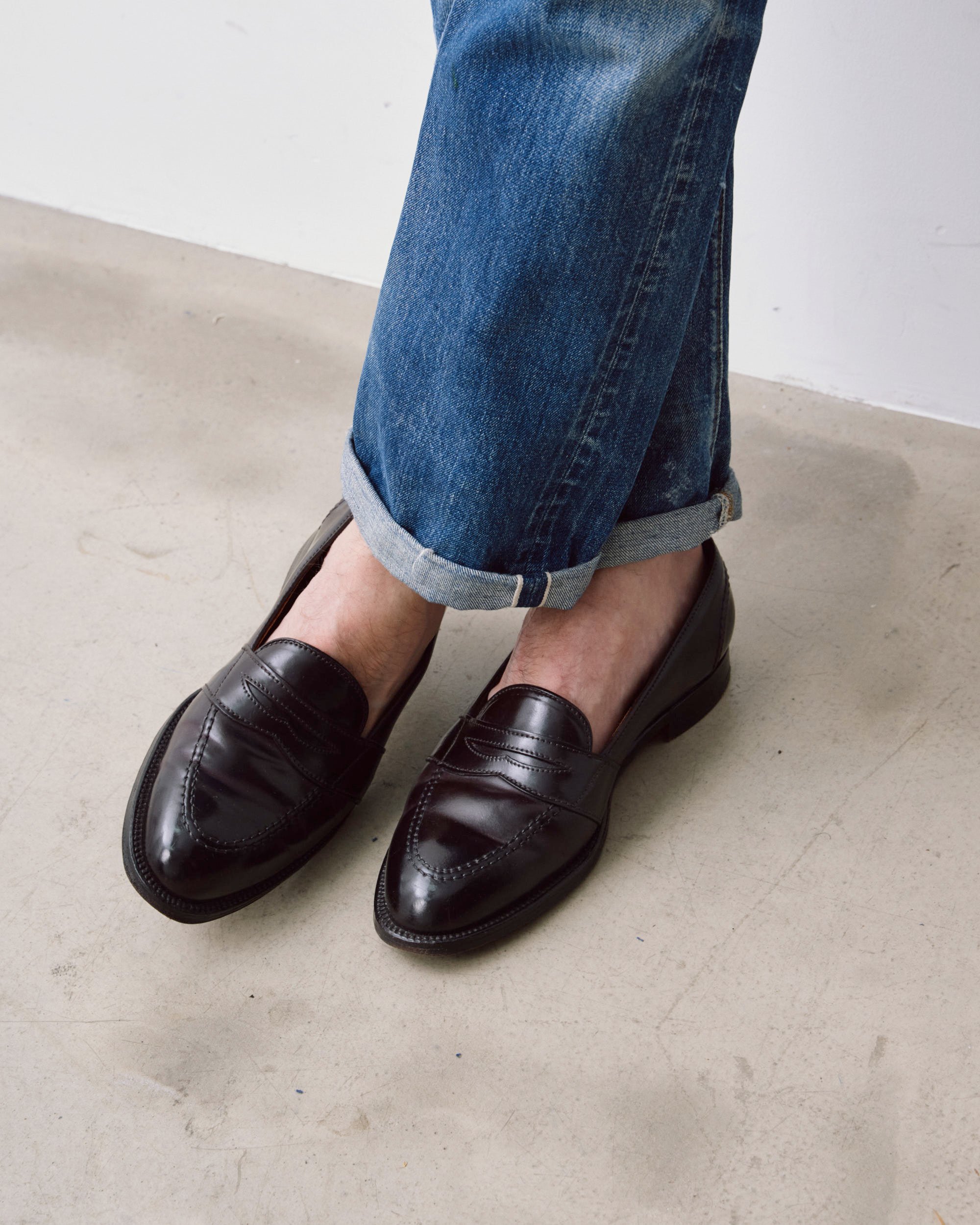
It’s perfectly possible for a buttoned jacket to look good with denim. I’ve shown an example above, from an article back in 2018. (Although I have to say that today, I would wear rather higher-waisted jeans.)

However, it is much easier to do so if the jacket is open, more like a cardigan. And given your trousers have no straightness or sharpness any more, there’s a good chance that the shape of the jacket is less of a priority as well. 

The jacket-and-jeans look is one I know readers often pursue, but not always (to their mind) successfully. I’d suggest that it’s worth keeping the jacket unbuttoned, and ignoring that purist nagging at them in their head. 

There are lots of men out there, working in a suit in an office, who never do their jackets up unless they’re cold. 

To them, I’d say, make more of an effort. Button your jacket when you get up from your desk, and chances are you’ll look better for it. It will hide that incipient paunch if nothing else. 

But there are also a few men – more likely readers – who know you should always keep your jacket buttoned. Because that’s the point of a jacket, and why buy a good one if you’re not going to wear it to its best advantage?

To them, I’d say you’re right, but loosen up a bit. Style is about how you wear your clothes just as much as which ones you buy. That’s why the men you admire look great when they pop their collar against the wind. Being relaxed is just as important as lines, fulcrums and silhouettes.

Don’t be so buttoned up.


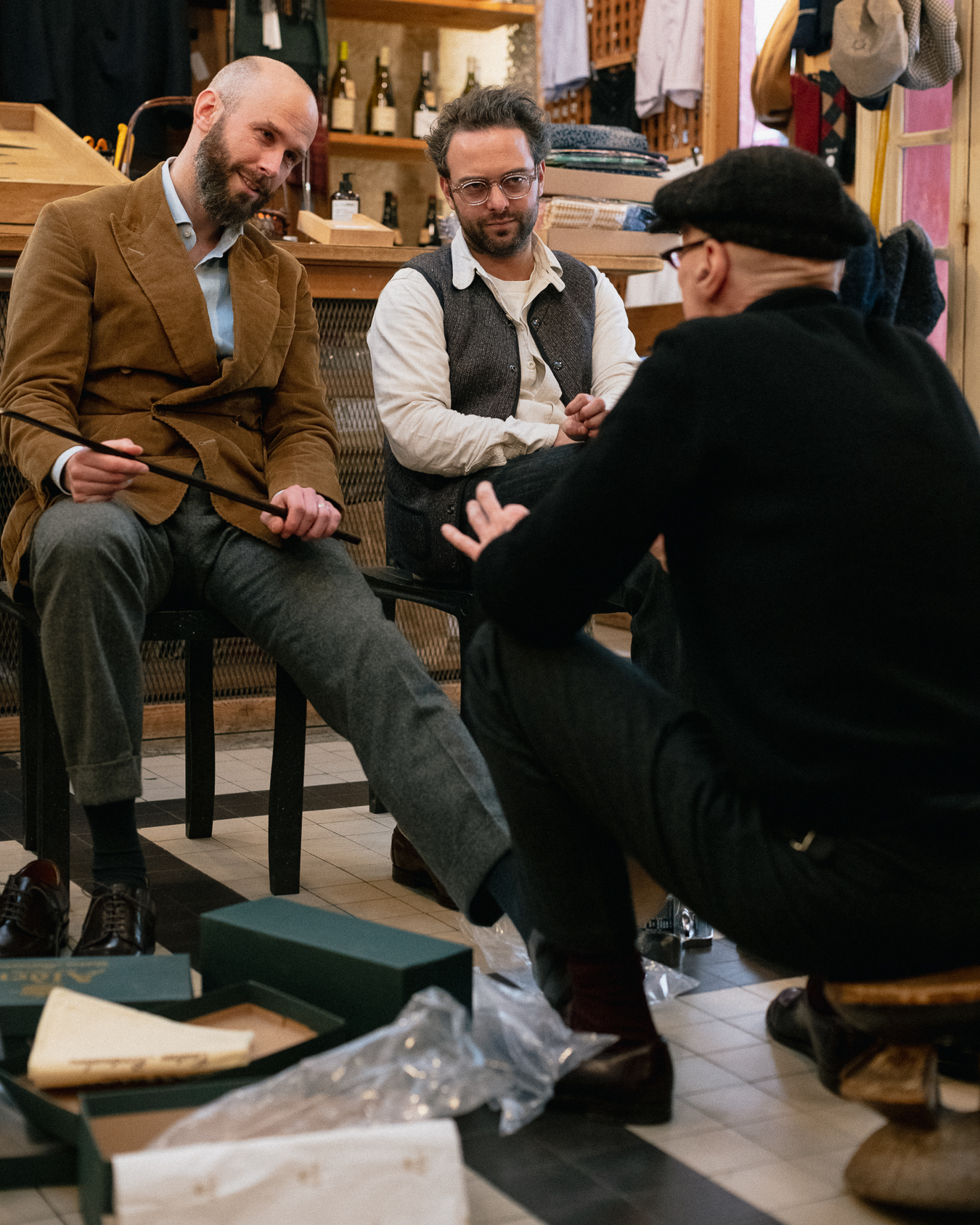
A story in suits: My history with Anderson & Sheppard

A story in suits: My history with Anderson & Sheppard

Wednesday, April 27th 2022
||- Begin Content -||

I had my first suit made at Anderson & Sheppard 12 years ago, in 2010. 

As I begin a series looking at the making of a new A&S jacket, I thought it would be interesting, even fun, to look back at that first suit and the ones that followed it - what I should and shouldn’t have, why, why I did at the time, and what lessons they might hold. 

I had that first suit made when I was helping to launch A&S’s in-house blog, The Notebook

This was based on the thoughts and experiences of a new set of apprentices - cutters and makers, of coats and trousers - so every couple of weeks I would go into the shop and interview them, ghost writing each into a post. 

Some of those apprentices are still at A&S, but most - Oliver, Ollie, James and the rest - have left. Oliver is now at Gieves & Hawkes; James has his own tailor shop in Berlin.  

I don’t know where Karl is, who worked front of house, but his style was an inspiration. The second A&S suit I had made was a double-breasted royal-blue flannel, entirely because Karl looked good in one. 

I think tailors still underestimate the importance of this direct inspiration, particularly in an age when men wear fewer suits and see fewer people in them. Instagram is all that’s left, and that's often dominated by inexperienced customers. 

The first suit, however, was not that. It was my dream suit - one inspired by years of accumulating Ralph Lauren ads, old shots of Cary Grant and the rest, and books like Dressing The Man

It was a grey three piece, in a Prince-of-Wales flannel.

This, for me, was the epitome of sartorial elegance. Sharp, traditional, not flashy but still striking.

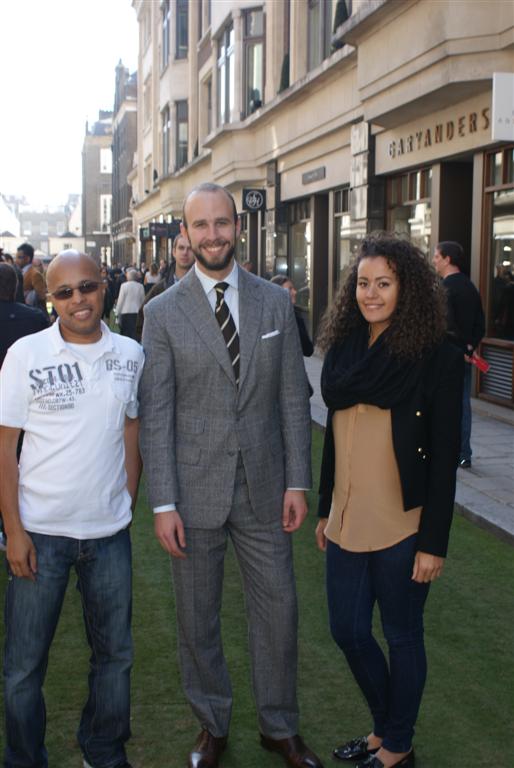
It was beautifully cut by John Hitchcock - since retired - and made by apprentice Sunna (also featured on The Notebook) and Derek. That’s me wearing it above alongside both of them, on the day in 2010 they turned Savile Row into a sheep field

It looks great, and it was great. But I made that first, so tempting mistake of not thinking enough about when and where I would wear it.

The suit was great in my head; but I don’t live in my head. 

A checked grey suit wasn’t professional enough to wear in my day job, even though I tried. The jacket was better on its own, but flannel is never quite right as a jacket.

The waistcoat, in particular, was a complete waste. It made the suit even more dandy, and never worked on its own either. 

Of course, now that fashion is my full-time job, I do get more opportunities to wear the suit, and cutter Danny Hall recently did an expert job of altering it, including increasing the shoulder width. But lessons remain, I think, for anyone commissioning a suit for the first time.

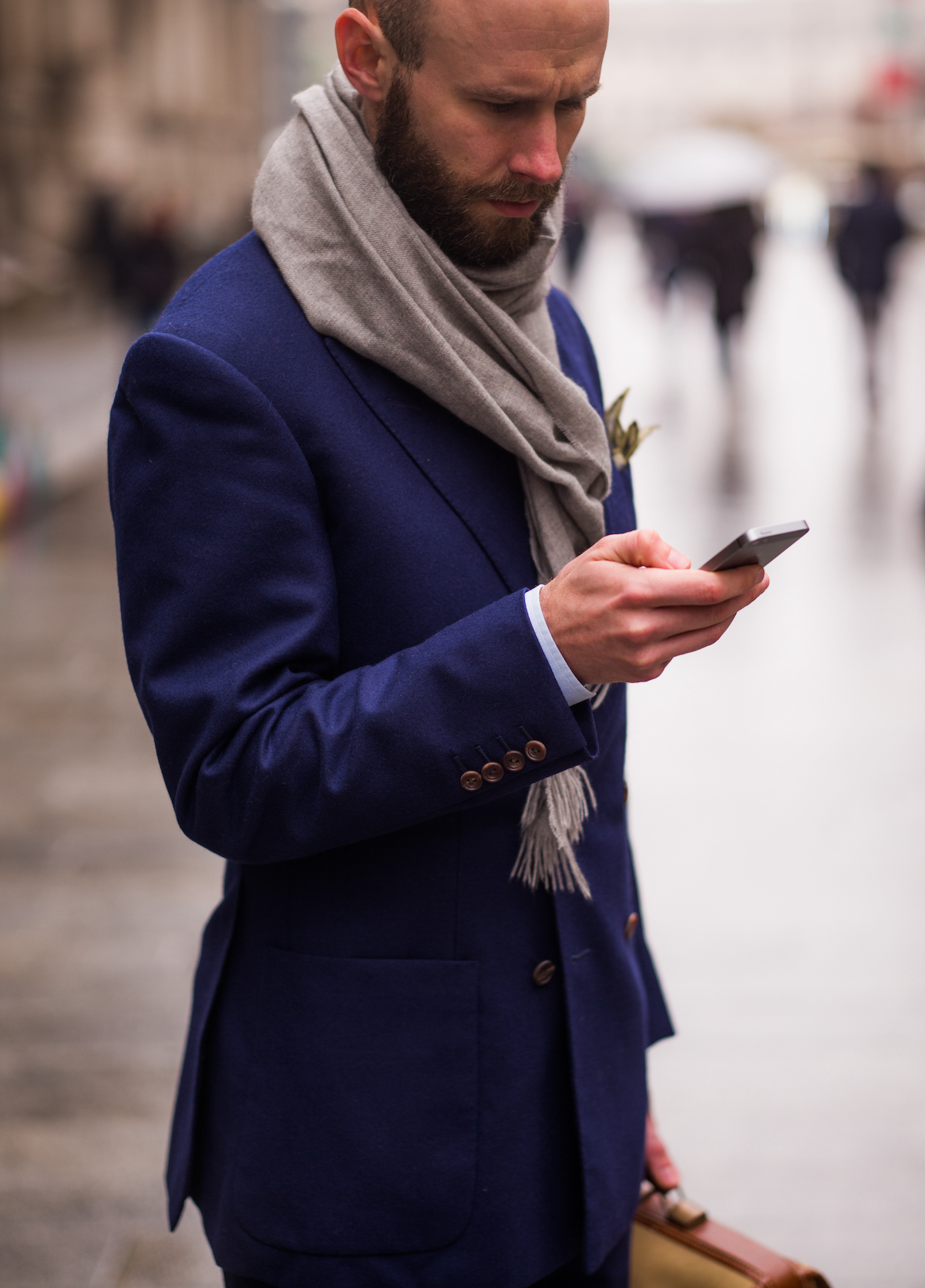
Unfortunately I didn’t learn my lesson with my second suit, which was the royal-blue flannel (above). 

It, too, is beautiful, and it’s great to wear at a particular event, such as the New York Symposium I hosted with Scott Schuman, Jay Fielden and others. But it’s too bold for day-to-day wear even as a fashion writer - at least for me. 

What this second suit did do was make me realise how much I loved the cut of a double-breasted A&S, and from that point onwards, most of my jackets would be DBs. 

In fact my favourite piece of tailoring of all time is probably the corduroy double-breasted I later had made, on which I’ll do a specific article as the next piece in this series. 

But we’re not there yet. I was slowly learning my lessons, and the next suit, about a year later, was far more useful - a mid-grey flannel. 

This was what I should have started with. Still an absolute classic, but so much more wearable. 

Even if no one in my office, or any lawyer or banker contact I had lunch with, wore flannel, it was still a plain grey suit, and more serious as a result. You could even wear it with an interesting shoe (I made similar mistakes there) and not startle with the combined effect. 

The suit was damaged beyond repair a few years ago - back when I did nothing about moth prevention - which was very sad. But it had had a lot of wear, even requiring a second pair of trousers. And I replaced it soon after with a similar flannel from Panico

There was a DB charcoal suit next (above), which was equally practical, and then a linen jacket (below). The latter taught the more subtle, but no less important lesson, to not try and make a tailor into something they’re not. 

My single-breasted jackets had previously been ‘three-roll-two’: a three-button jacket where the lapel line is positioned such that it rolls open to a spot between the third and second button. 

I had seen this on Neapolitan jackets, and liked the easy-going effect. But it was never quite right with A&S - nothing wrong with it, just not the same, not what I wanted. 

My next jacket, therefore, I made as a two-button: a blue linen single breasted, with cream gabardine trousers. 

The colour was strong, but I knew it wasn’t going to be for work. And the cut was beautiful, with those wider A&S shoulders complimented by the long lapel line down to the buttoning point. 

It’s the jacket I chose to analyse in our Style Breakdown series, and in the subsequent book Bespoke Style, when looking at A&S. And it’s the cut I’m going for again with my new jacket. 

It might be the most flattering single-breasted style I’ve had. 

Next was the tan corduroy. 

I’ll write about this separately, as I said, but it was ordered specifically with the idea of breaking it up - both cord trousers and a cord jacket with flannels would be fine in the office. 

There was usually between six months and a year between each of these orders. You’d think I would have learnt my lessons quicker, but there really weren’t many good blogs around (A Suitable Wardrobe was the only one) and even Style Forum was smaller. 

I really think I would have made fewer mistakes if there had been more information, and particularly transparent, honest writing about experiences ordering bespoke. The boom of Instagram has meant there’s a sea of imagery, but it often falls down in this regard. 

After the cord there was a checked DB (below) and a light-grey flannel (further below). The former was and remains very wearable. I love it. The latter was not and is only slightly more now - but, and this is the important thing, it was made with self-awareness, with real ideas about when and where it would be worn. Mostly book signings and Pitti, as it turns out.

Last week I had a nice consultancy appointment with a reader who was going to have his first bespoke suit made - probably at Anderson & Sheppard. 

He was considering a double-breasted grey flannel, as this was his sartorial ideal - his three-piece Prince of Wales. 

I agreed with him on how beautiful it would be, only adding my hard-won lesson that he should think carefully about when and where he was going to wear it. 

The difference between him and me was that he already knew all this. He’d been making MTM for a while, made his own mistakes, and knew that the DB flannel would be something special for special occasions, to be enjoyed for its own sake. 

But it did help that when he told me all this, I strongly agreed. Sometimes all it takes is someone to confirm something you already know. 

Here’s hoping some of the lessons in this wandering and winding history with A&S have done the same for others. 

Harpo, Paris: Generations of Amerindian jewellery 

Harpo, Paris: Generations of Amerindian jewellery 

Monday, April 25th 2022
||- Begin Content -||

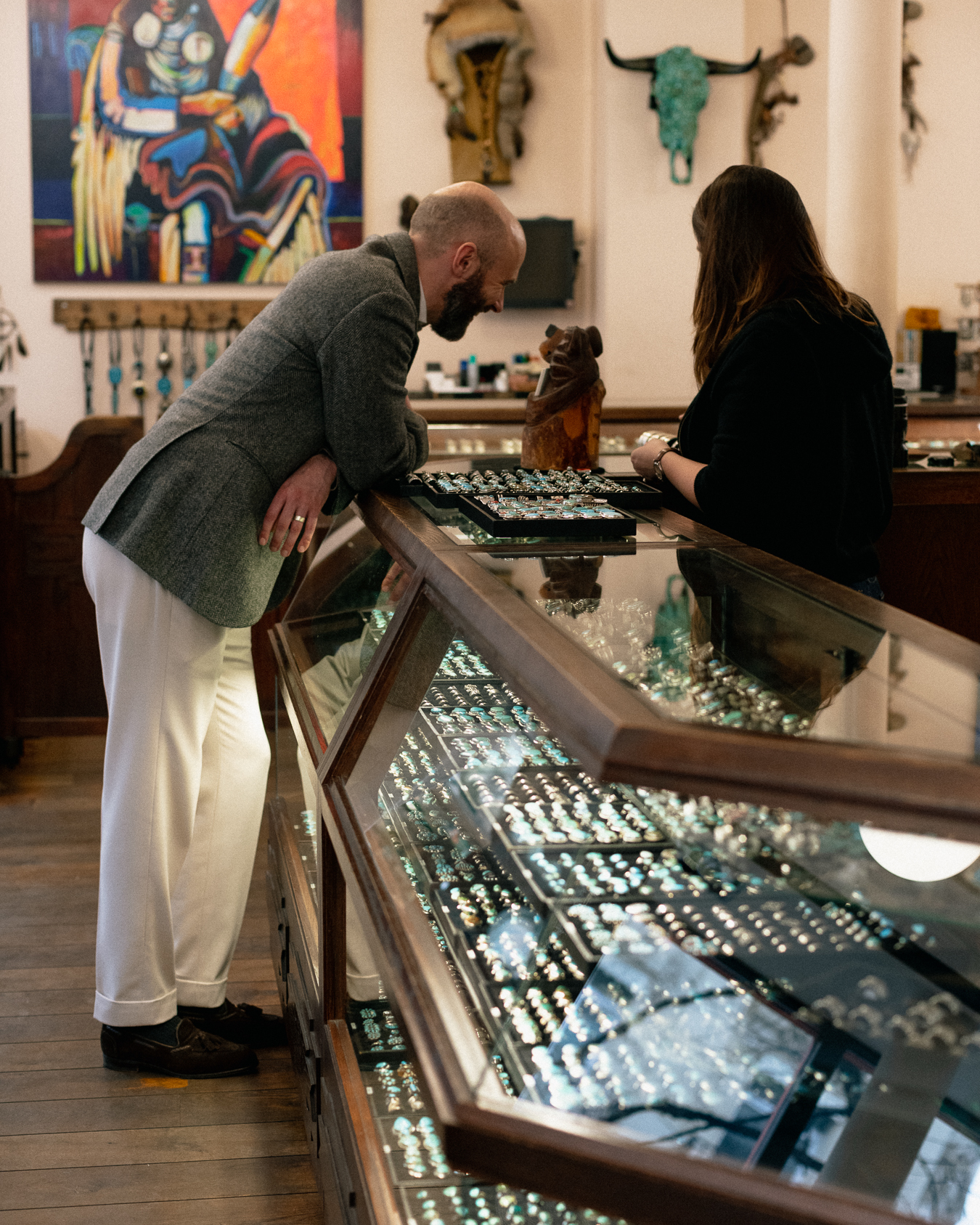
Not many people seem to have heard of Harpo, but it ticks many of the boxes for a Permanent Style reader: craft, authenticity, a classic style, and all family owned. 

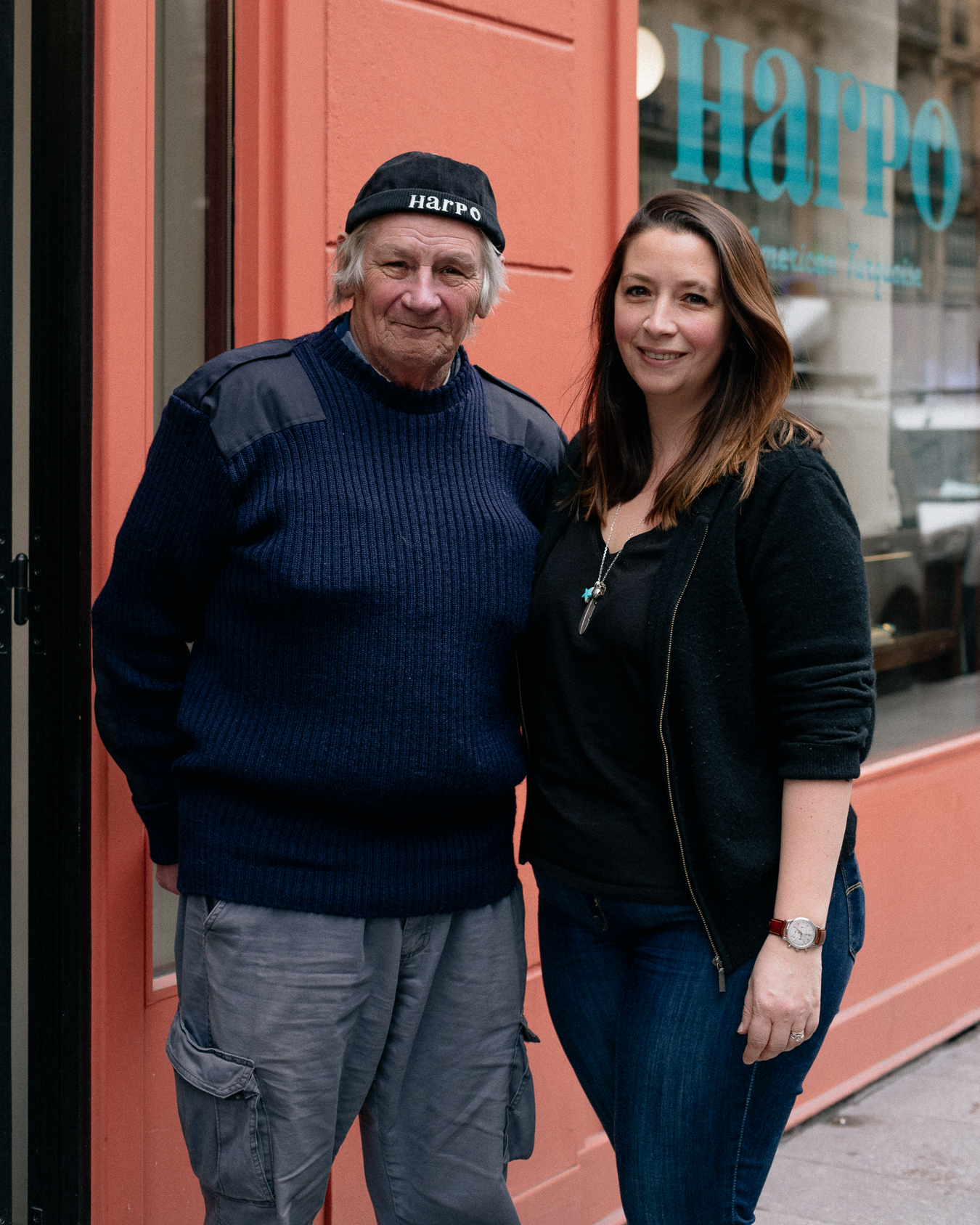
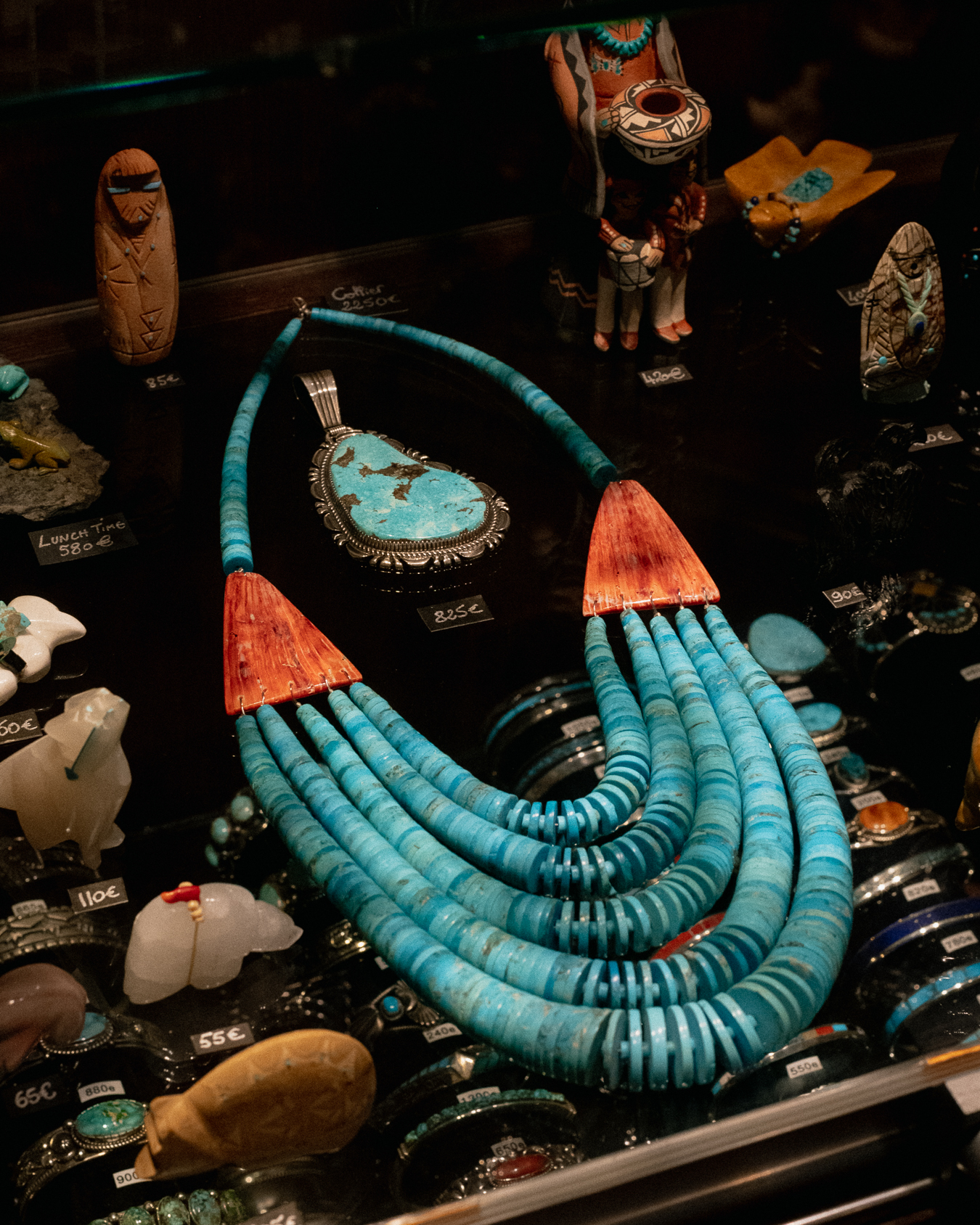
It’s a store in Paris, selling jewellery and other crafts made by Native Americans such as the Navajo, Hopi and Zuni. It’s been there since 1971, founded by Gerard ‘Harpo’ Nadaud, and run today by him and his three daughters: Dorothée, Valentine and Ella.

At one point during our interview, I asked Valentine (pictured below, with her father) why Harpo only works with Amerindians still - and not, for example, some of the skilled non-tribespeople that she said now make excellent work, and were often trained by those tribes. 

(Many of them, menswear fans will be unsurprised to hear, are Japanese.)

“It’s a question of generations now,” she said. “My father started working with several craftspeople, and they handed the work on to their children - and at the same time our father handed parts of the business to us. Given that history, it would just seem strange now to work with anyone else.”

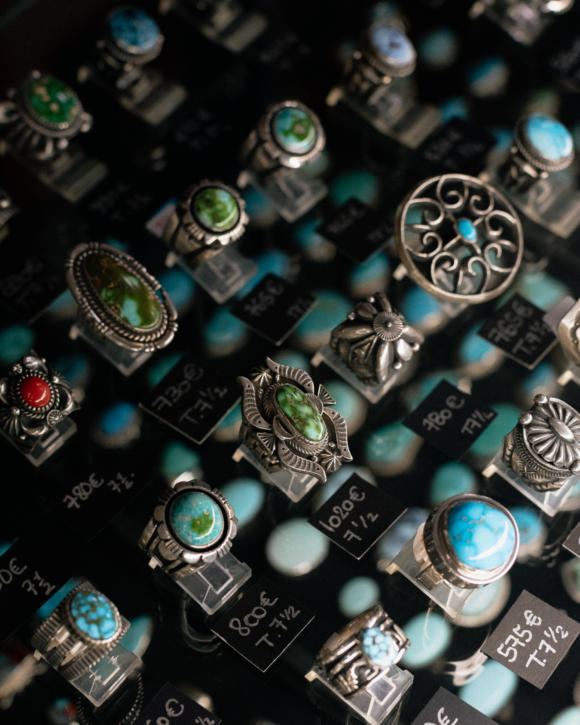
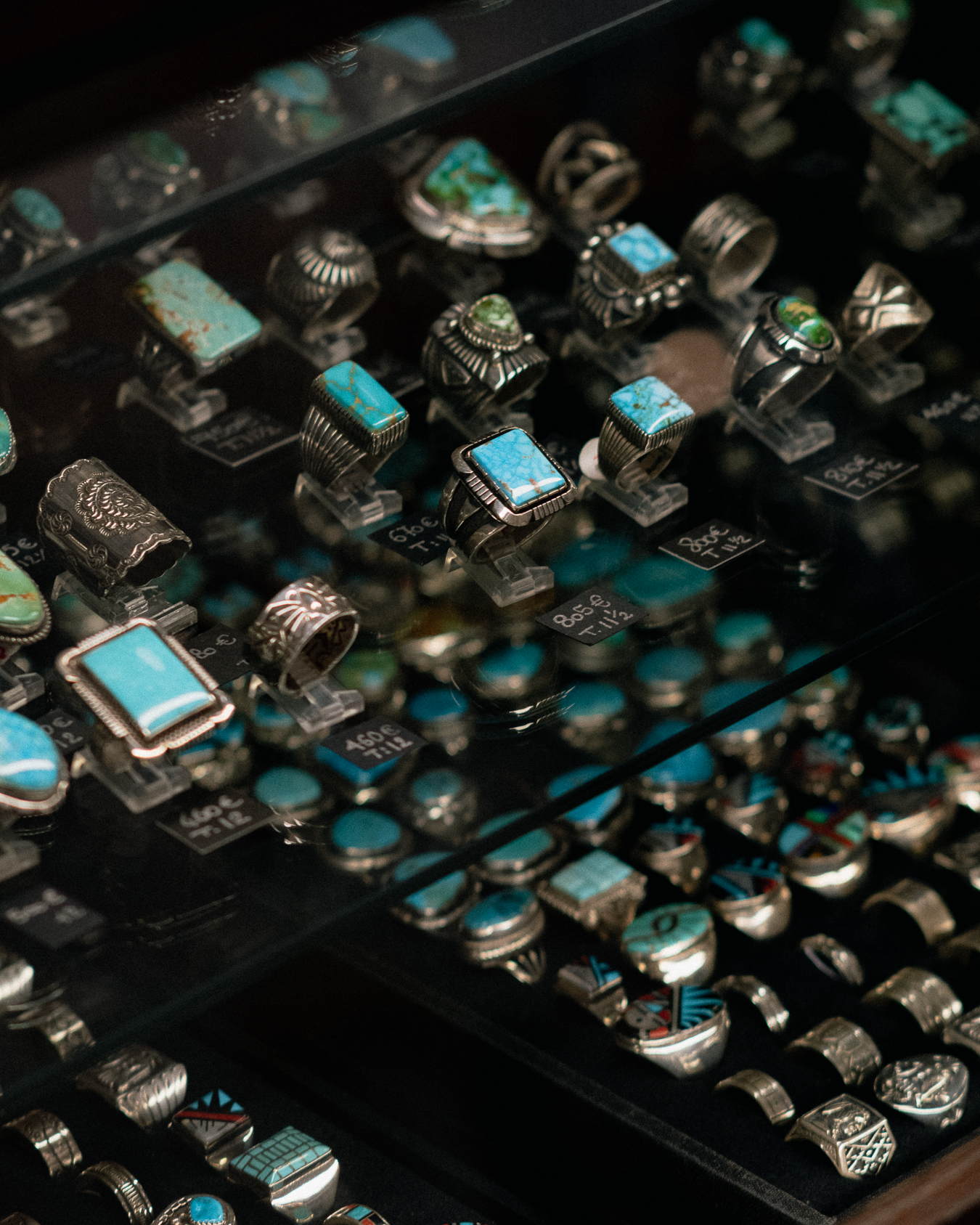
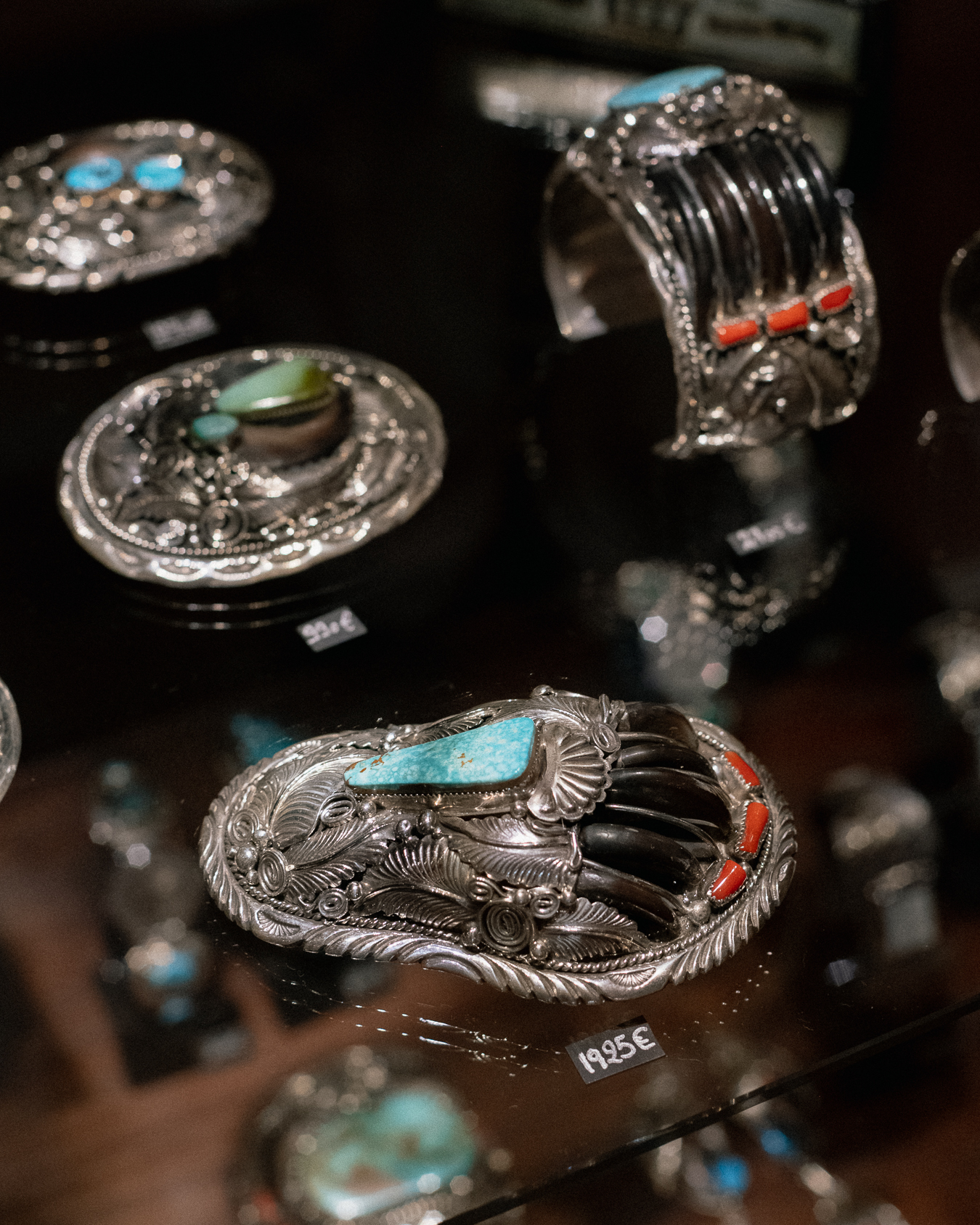
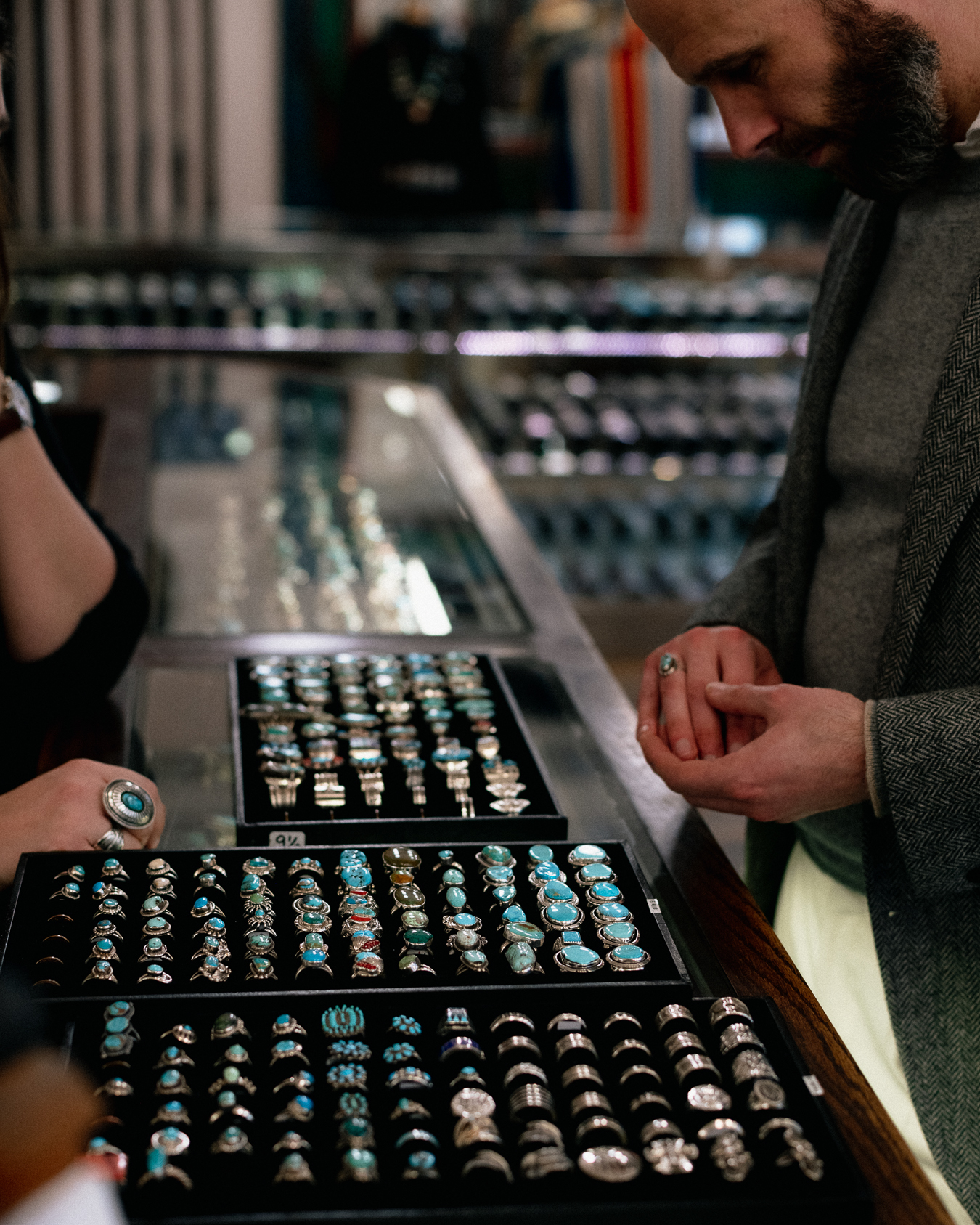
The silver and turquoise jewellery - for which there has been something of a vogue in menswear in recent years - ranges hugely in price. 

A simple stamped bracelet might be €65, but a complex piece - perhaps using a rare type of turquoise, or made by a famous artisan - can be €6000 or €7000.

This makes it a wonderful place to visit as a tourist. You can buy a little gift (I bought a couple for my daughters) or invest in something special, having spent an hour talking to Valentine about the history of a particular design and maker. 

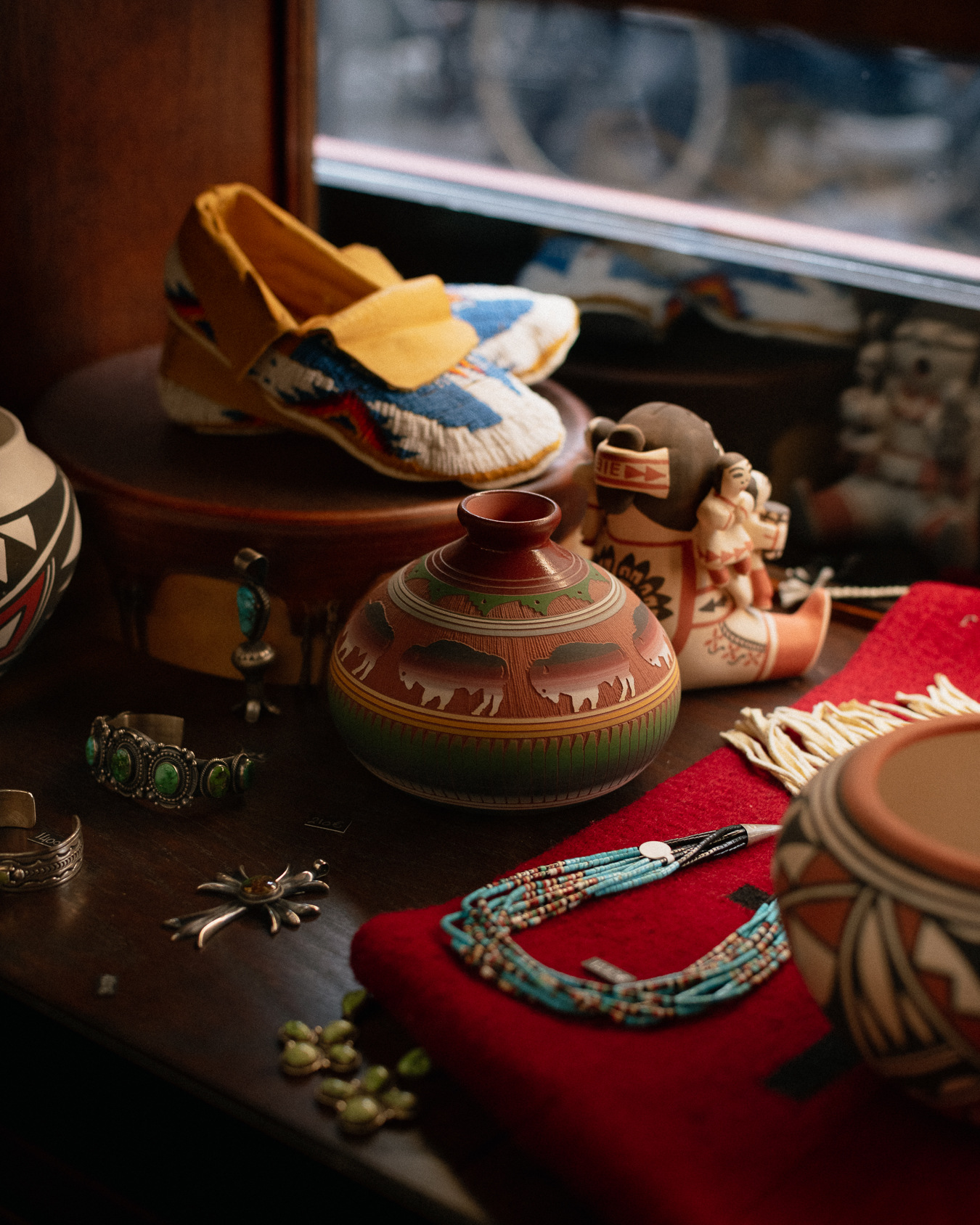
There are also ancillary pieces, such as bolo ties, concho belts and hand-woven rugs. I was particularly interested to see the latter, given our recent article on the craft of Navajo weaving.

However, the thing I spent most time chatting to Valentine about was what makes particular pieces special: what are the factors that govern quality, style and price?

The first thing she explained was the different types of turquoise used. The silver won’t vary much, but some turquoise is very sought after - because it’s are, or because it has particular characteristics. 

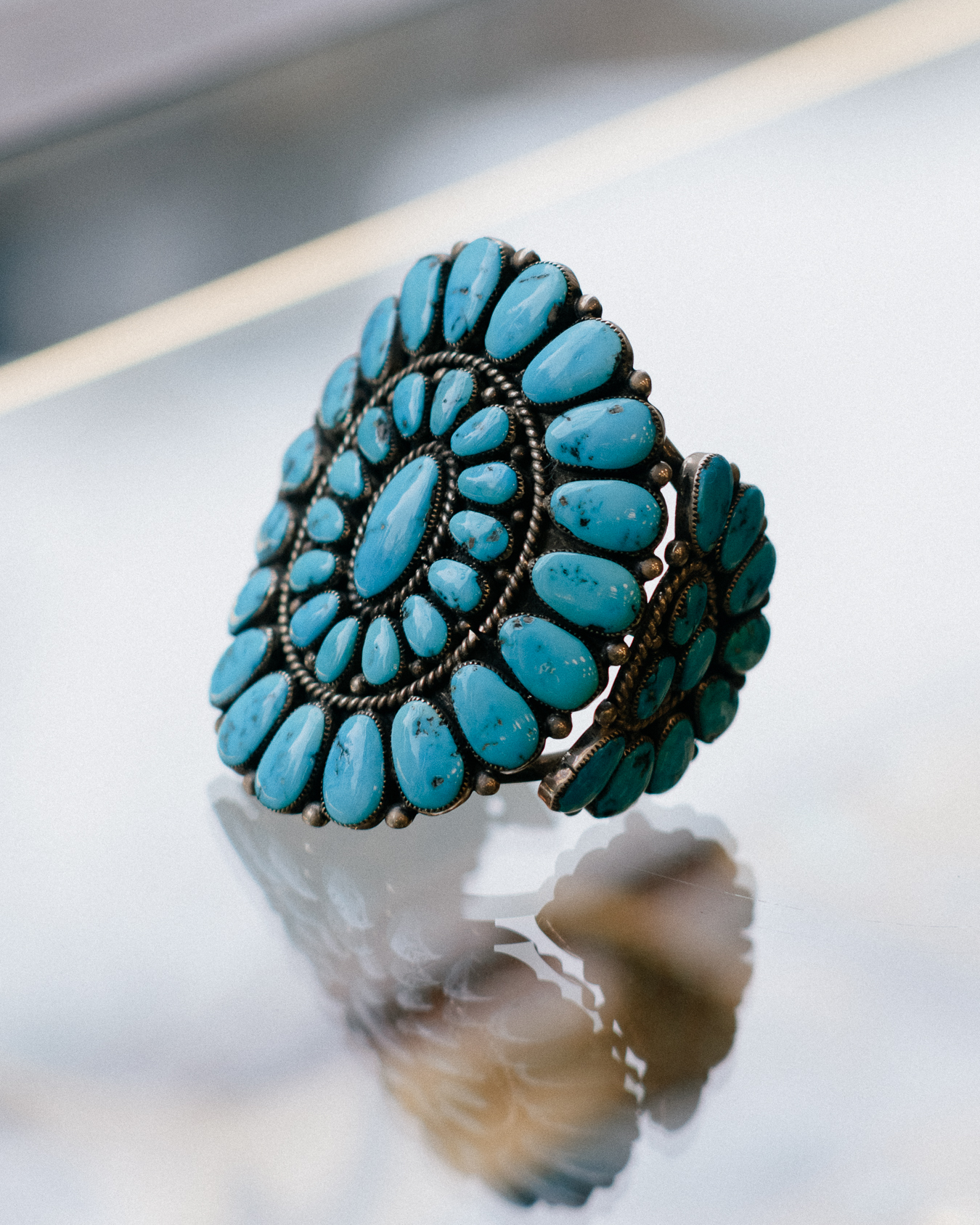
For example, ‘sleeping beauty’ turquoise comes from a mine in Arizona that closed in 2012, and so has a limited supply. The name comes from the mountains around the mine, which are shaped something like a sleeping woman. The large cuff below is made in that turquoise.

Other types are valued for their depth of colour, or because they are a particular shade in the broad colour spectrum of turquoise, from muddy green to azure blue. 

None of this is objectively better or worse. For example, I have a vintage cuff that has more veins and colours, which isn’t considered quite so valuable. But I like the effect.

The only thing that objectively turquoise should have is density. It’s a naturally porous stone, and if it’s not dense enough it can become brittle. Poorer quality stones sometimes have resin injected into them, to keep them together. 

The second thing that makes particular pieces special is the artisan. 

Most jewellery at Harpo has the name or stamp of the maker on it, so even if you don’t recognise the stamp patterns, you can tell which were made by the same artist. 

In fact, something that sets Harpo apart is that 90% of the pieces they hold are unique - they’re not duplicates, with the same designs being made year after year, but individual works. More like works of art in that sense. 

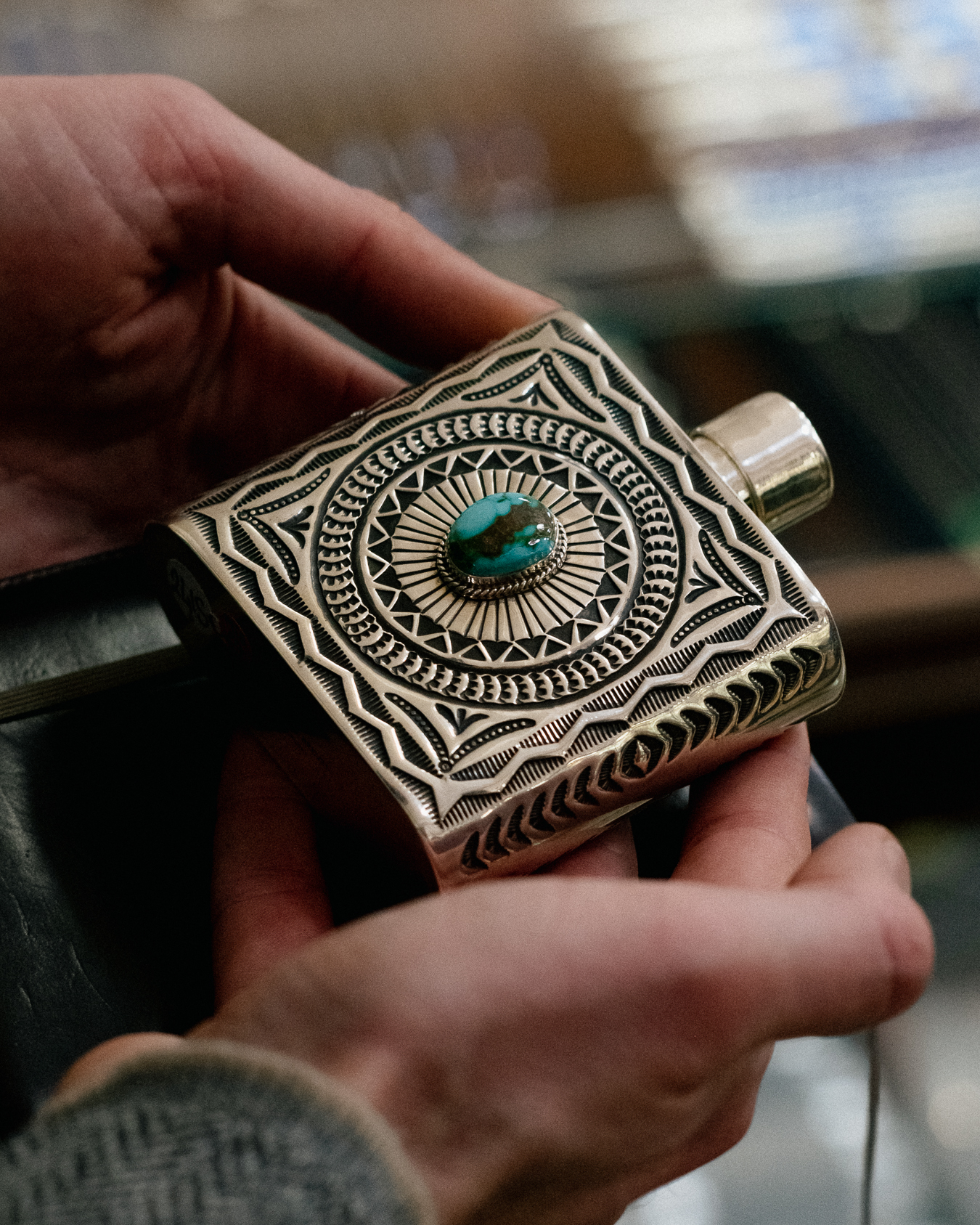
In terms of specific makers, one prominent example is Navajo artist Sunshine Reeves, who made the flask shown below

As with most pieces made in this style - with repeated stamped patterns - it’s easy to tell it’s handmade because of the little variations in the way each stamp has been placed. 

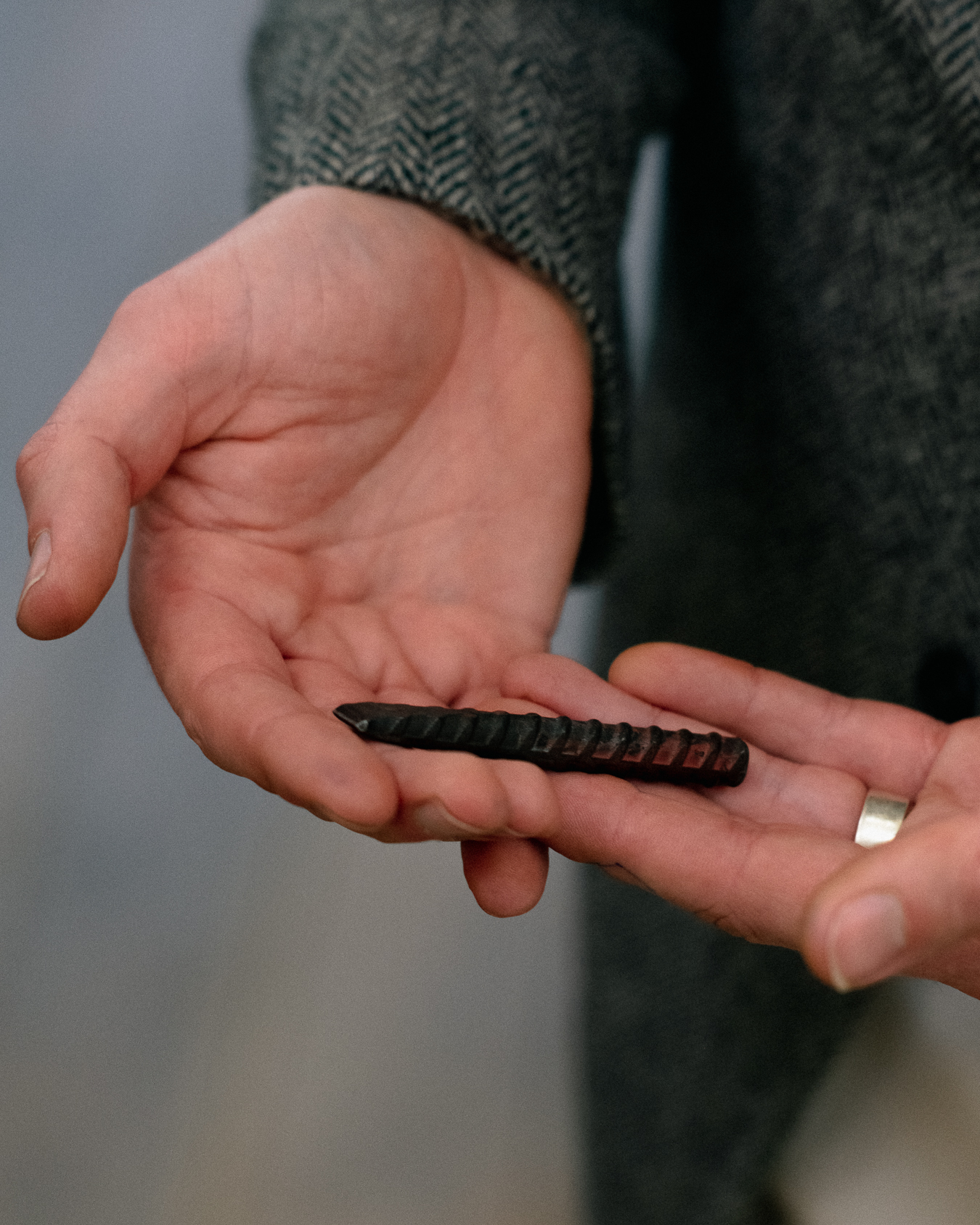
Bigger names make their own stamps, which makes them more recognisable. And often they’re handed down between generations. 

That’s why some - like the stamp above - can be many decades old, even if originally they were just made from iron that was lying around, such as railroad nails. 

Reeves’s work is pretty typical for Navajo work, which tends to be more masculine and typically ‘western’, with silver designs around a single stone. 

Zuni work often looks more modern, perhaps even a little ‘new age’. 

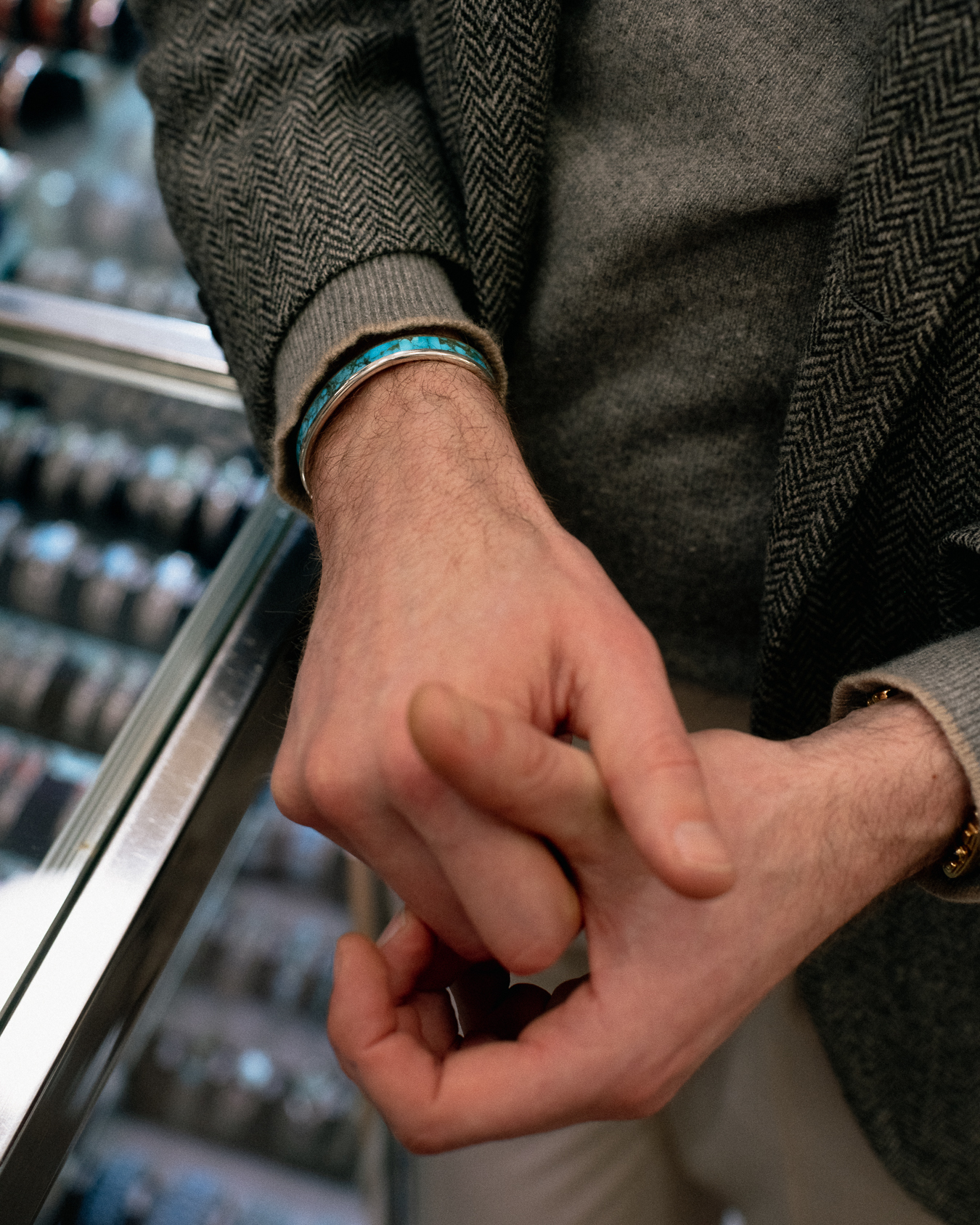
Bracelets made with inlays of different pieces of turquoise - like the one I’m wearing below - are typical Zuni. The challenge with those is cutting the stone so each piece has the exact same curve as the bracelet itself, sitting flush with its neighbour.  

It’s also Zuni that tend to make more fun pieces, or reference pop culture, such as pieces using cartoon characters that are sometimes referred to as ‘Zuni-toons’. My Red Rabbit pin is in that tradition. 

As you might expect, the longer you talk about these styles and traditions, the more details and idiosyncrasies you discover. 

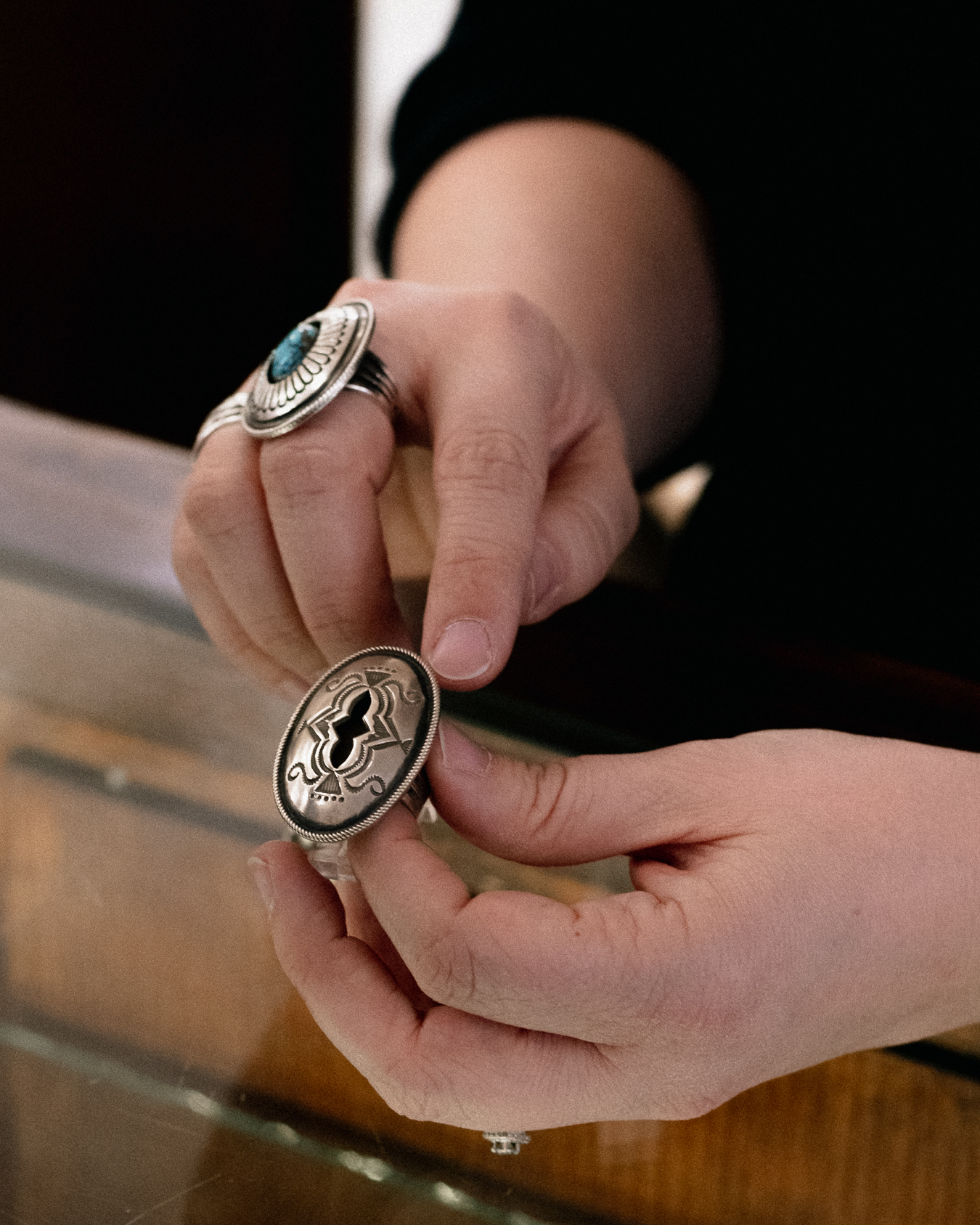
For example, the ring above is an example of ‘shadow box’ technique, where the artist makes a silver dome over a flat piece, leaving a little cave that can be left empty, or partially filled with a stone. 

The store itself is full of stories too. There’s a huge piece of museum-quality turquoise - the size of a small child - sitting in front of the office. It’s pretty valuable, but apparently would require several people to move. 

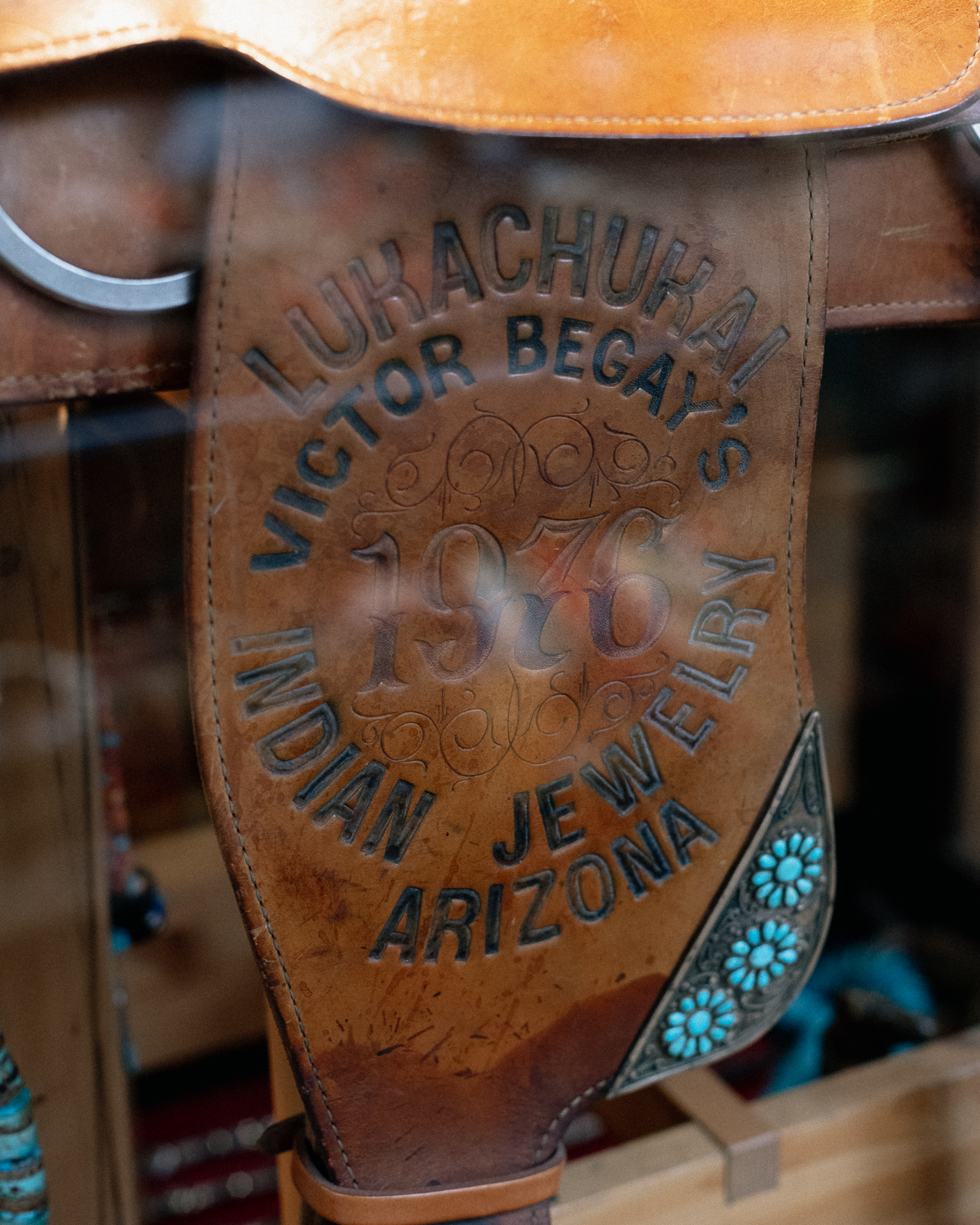
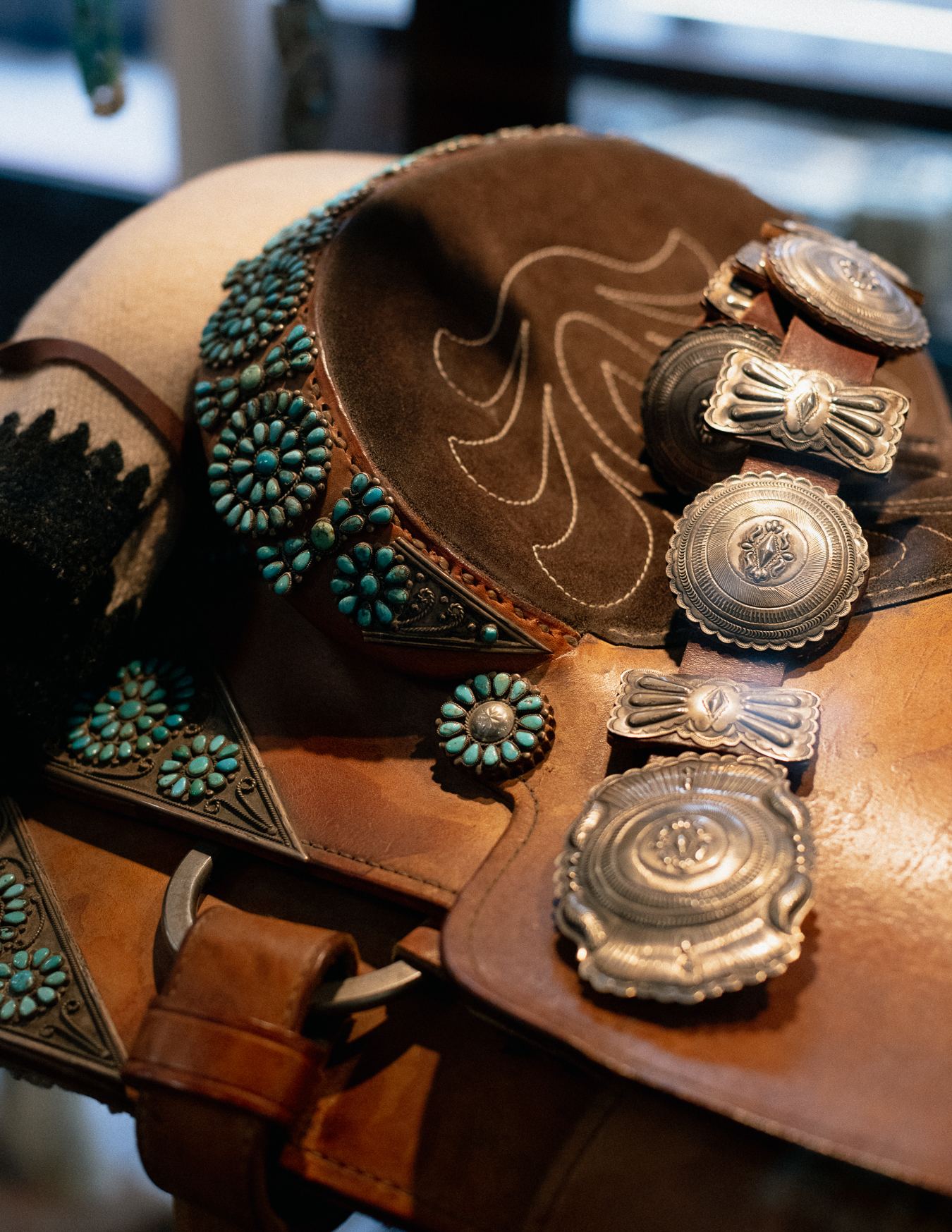
The central glass cabinet, meanwhile, contains an old saddle from a famous shop in Arizona run by silversmith Victor Begay. So many people have asked to buy that that it now has a sign reading ‘Not for sale’.

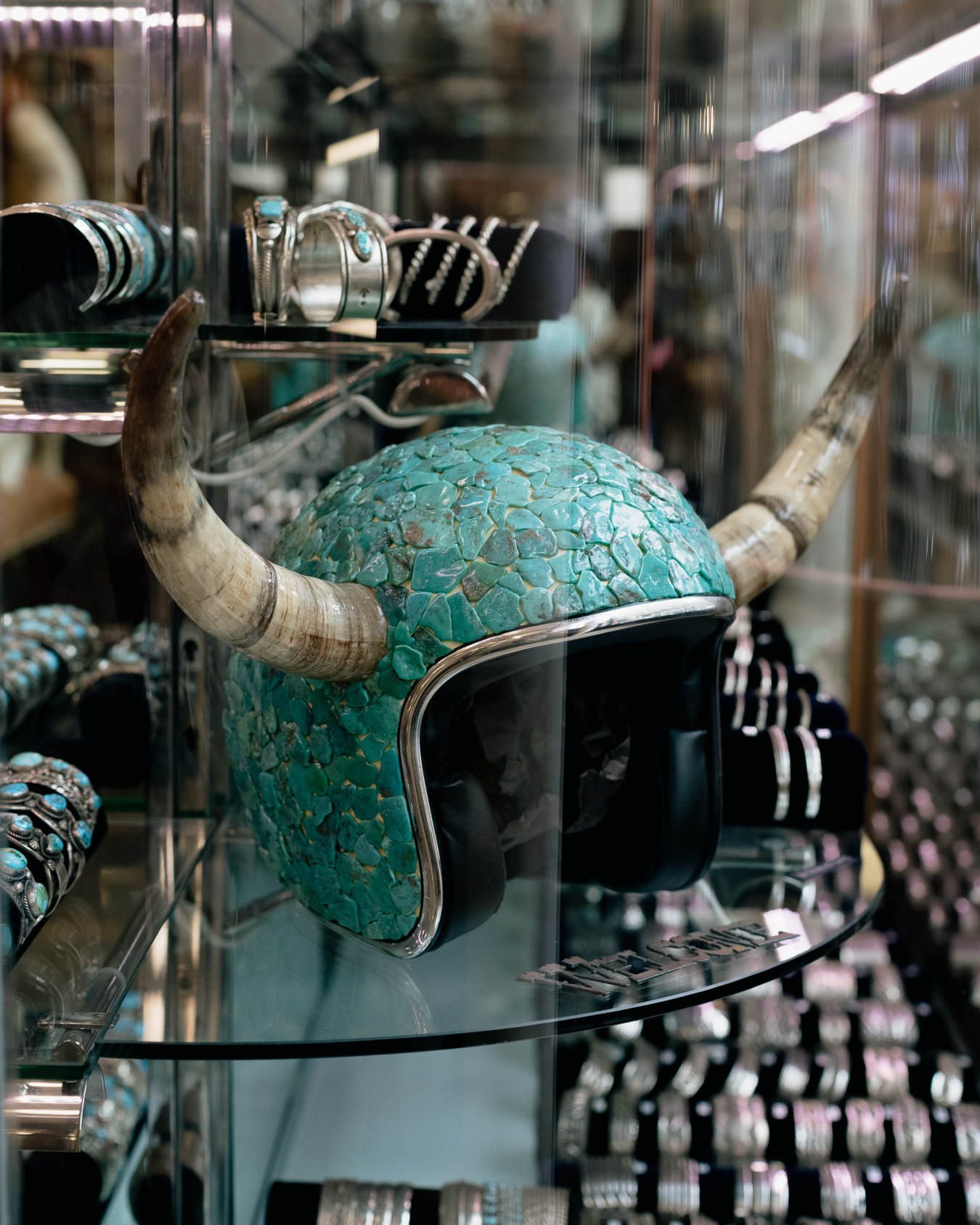
The in front of one of the cabinets is a motorcycle helmet decorated with hundreds of pieces of turquoise, and a pair of bull horns. 

“My sister Dorothée had this bucket of stones for ages, and always said she was going to decorate something for the shop,” recalls Valentine. “During lockdown, with time on her hands, we finally did it. She got this old bike helmet and started decorating the whole thing.”

There are similar stories - of old myths or just family shenanigans - everywhere in Harpo, and you get a real sense of history and personality. 

As the links throughout this piece attest, Harpo does sell online, so they’re pretty accessible. There are also some international stockists, which I have listed below. 

But as with most shops PS covers, it’s really worth visiting in person if you can. Paris seems to be better at this than London - giving good space to pretty niche or quirky stores. 

Perhaps London has just become too expensive, or mainstream. 

www.harpo-paris.com

19 Rue de Turbigo, Paris

Photography: Alex Natt @adnatt

Harpo stockists: 

  • Ron Herman, Japan, 
  • Montaigne Market, St Barth
  • Jane de Boy, Cap Ferret
  • Byblos, Nantes
  • Unglamouse, Korea
  • Ikat, Switzerland
  • Ya-ta-hey, Belgium

Hob-nail boots, pince-nez and Rubato denim – at the pop party

Hob-nail boots, pince-nez and Rubato denim – at the pop party

Thursday, April 21st 2022
||- Begin Content -||

*Note: Contra to my advice here, I ended up switching to size 32 Rubato jeans (my regular size) and that was the right choice. They felt a little right to begin with, but gave a little bit and are now perfect*

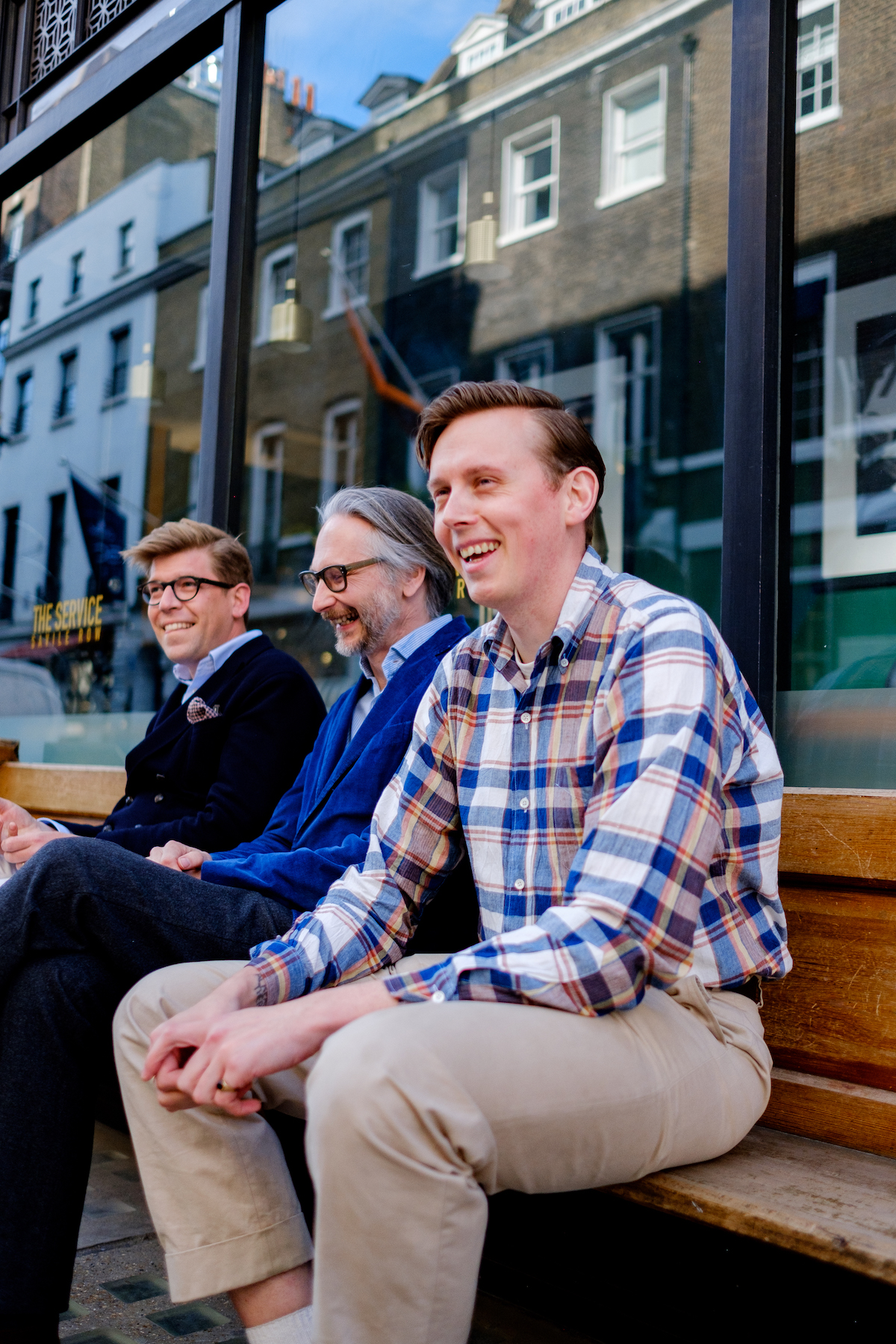
The pop-up opening party was lovely last night. Thank you everyone for coming. 

It feels like the event has settled into a really nice pattern - part shopping evening, part welcoming of new brands, part simple knees-up for a mix of both readers and friends. 

But there’s not much more to say other than thank you - so let’s talk about some interesting things everyone saw from Jake’s, Bentley’s, Rubato and Ludovic Lunetier yesterday. 

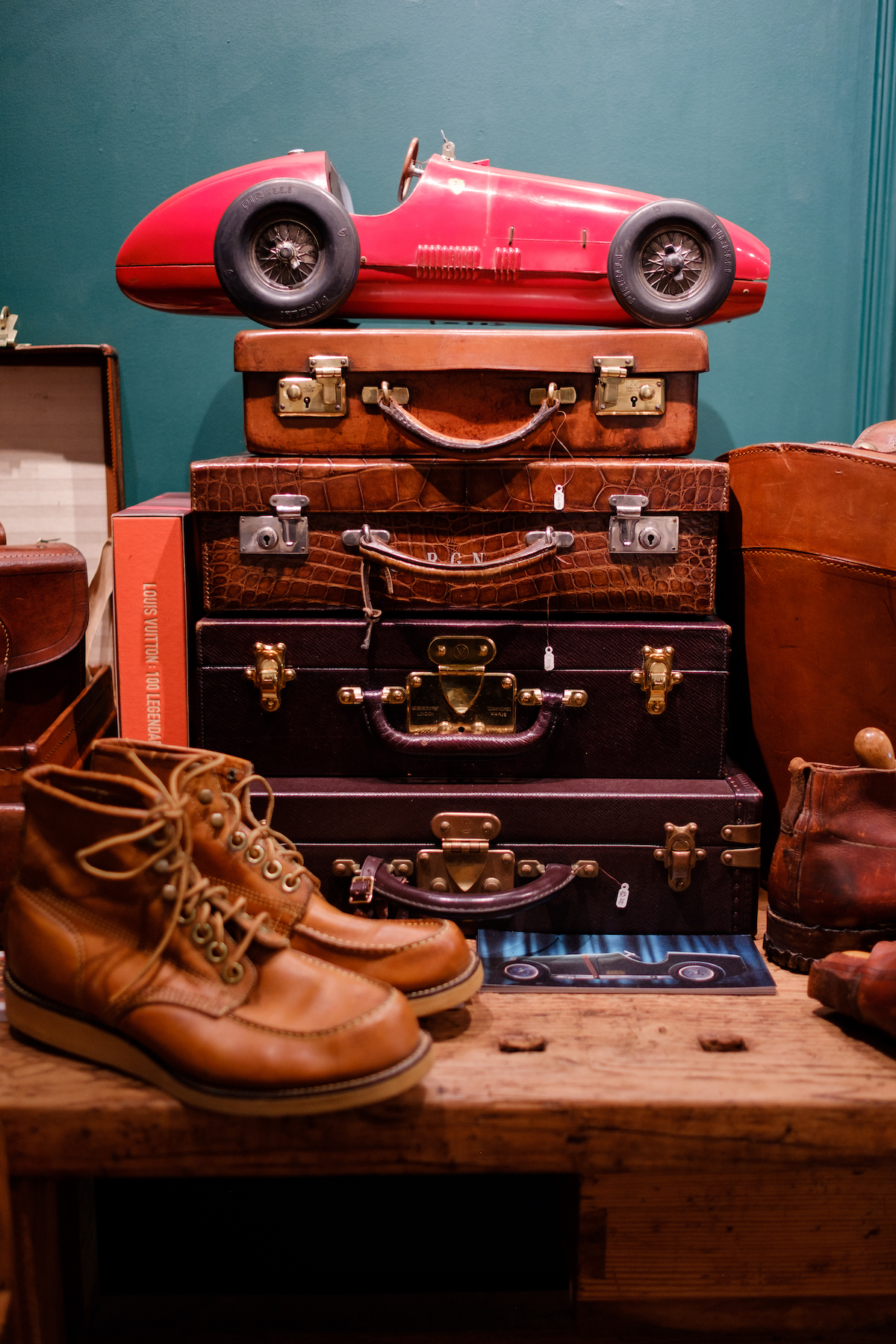
Tim Bent, of Bentley’s, admitted that when he went to Paris recently to trawl the markets and see dealers, he came back not with the trunks he was aiming for, but some curiosities he really didn’t want to sell. 

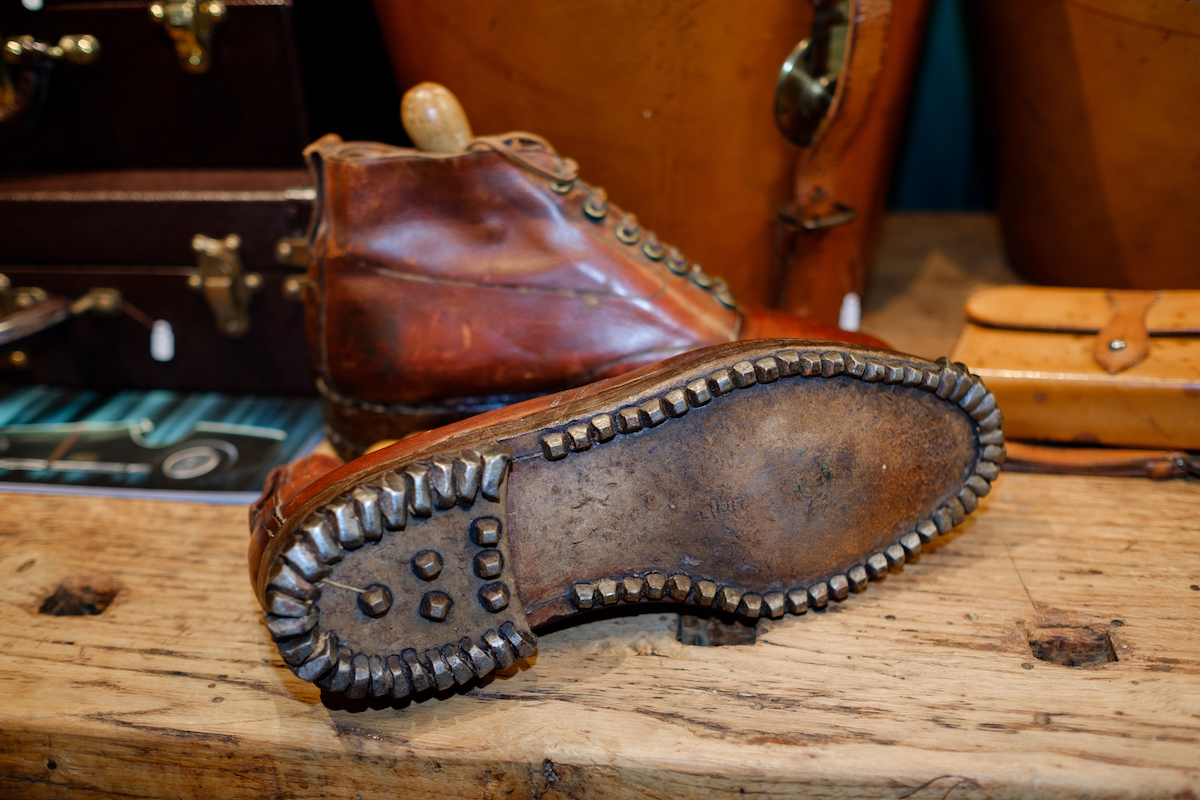
They included the two pairs of boots below.

The Red Wing-type work boots are from the collection of Douglas Fairbanks Jr. They’re remarkably well preserved, given he apparently used to wear his shoes to death. 

They were also a perfect fit for me, which made it the more frustrating that they weren’t for sale. They’re going straight into Tim’s collection. 

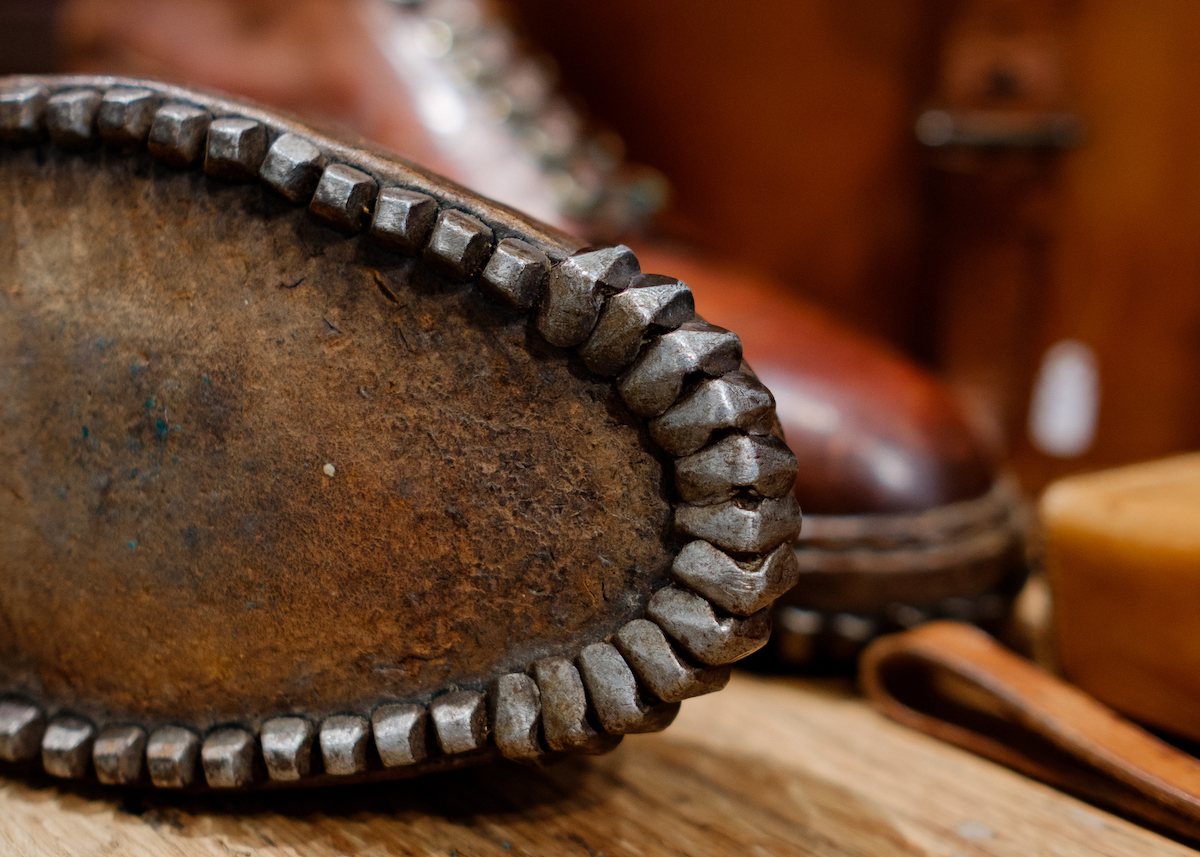
Same goes for the mountain-climbing boots, which had an incredible hob-nail sole. 

Look at those nails worked around the sole edge, and then jutting out of the front like a set of horrific teeth. The most impressive thing, when you see them in person, is what hard, aggressive things they are, yet how finely made. Each nail is fitted together perfectly, and the stitching is so fine. 

Of course, Tim also has dozens of more standard pieces, including an alligator document case and a stunning layered jewellery box. 

The key with these antiques I’ve found - to my cost - is getting something you will actually use every day, and a jewellery box is something I actually would. Unlike the cigar cases I’ve tried to turn into phone cases or business-card carriers over the years. 

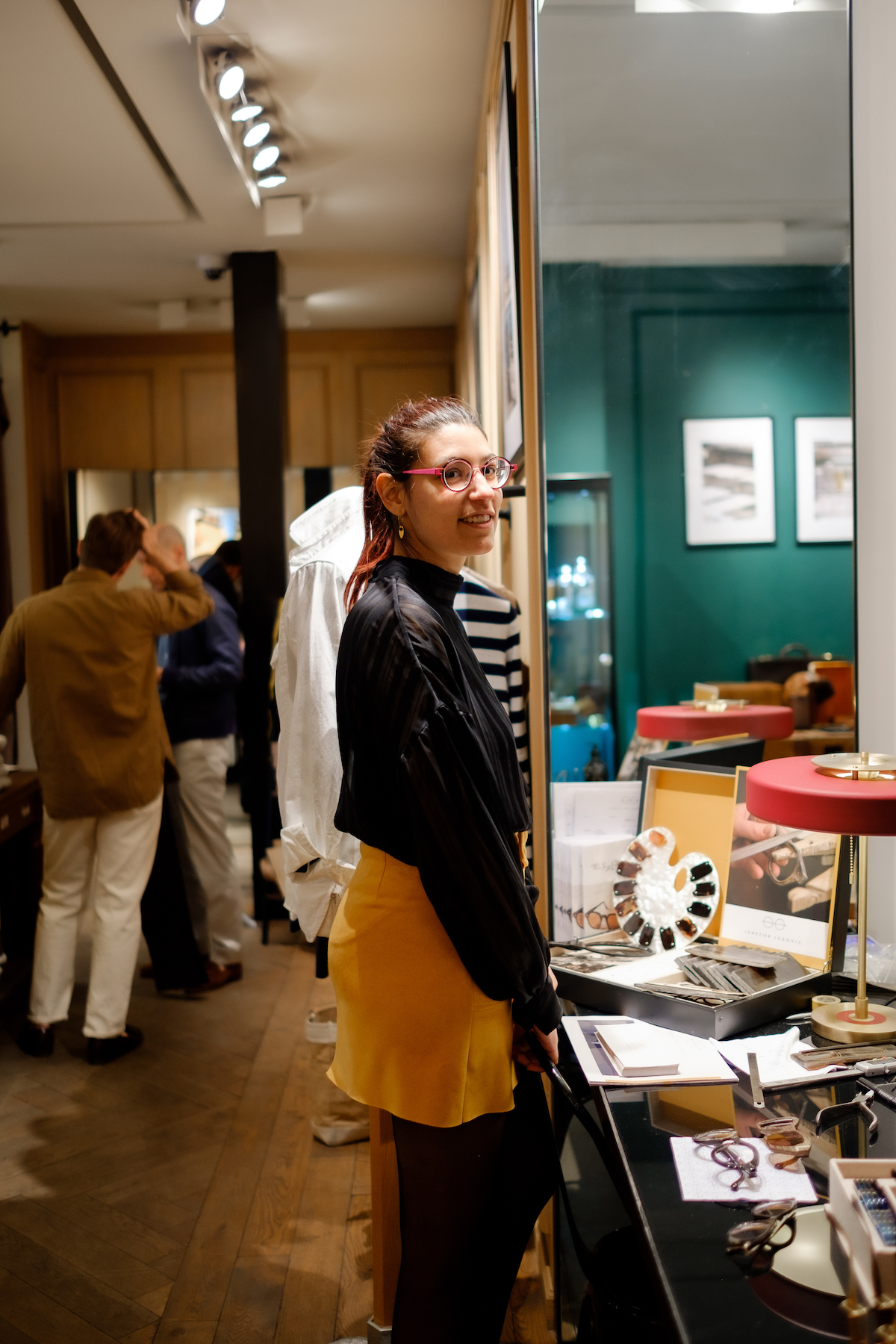
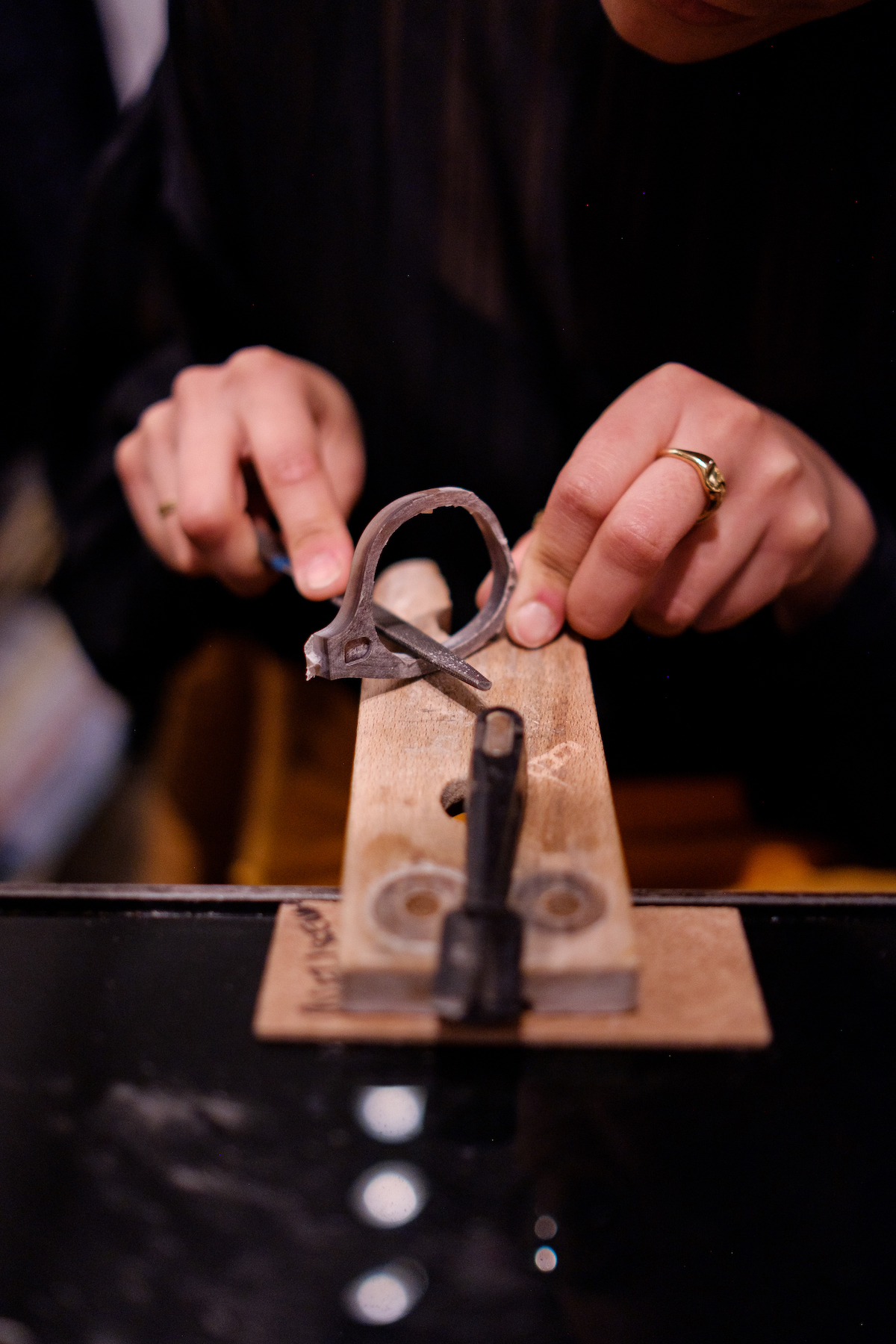
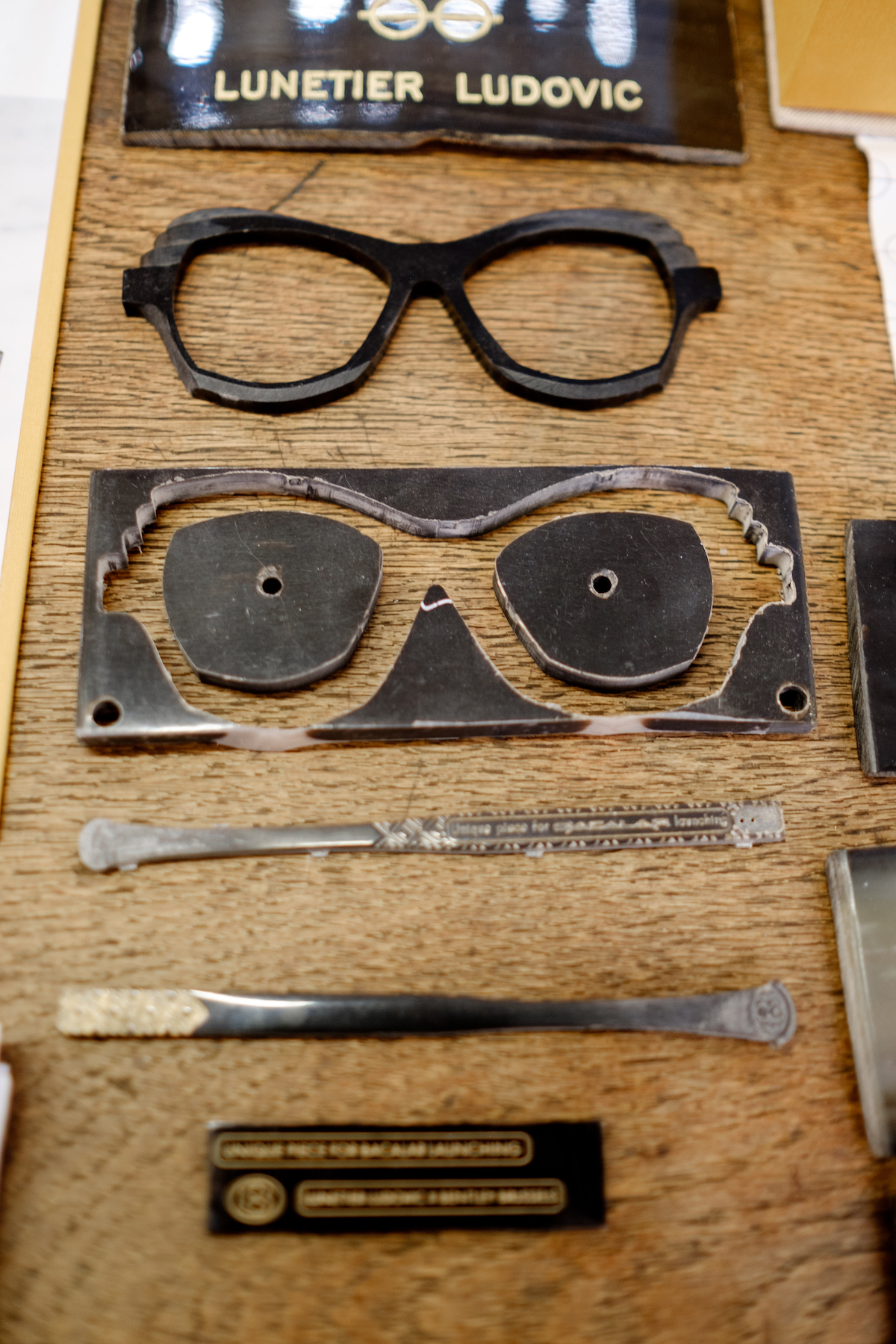
Ludovic, the glasses maker from Brussels, had some work going on to show - both sketching of new bespoke commissions and cutting of horn frames. 

Which was helpful, because the first thing everyone asks is where he’s based, and where the glasses are made. 

It was also good to see his made-to-order frames - three sizes, small, medium and large, based on analysis of his bespoke customers and how their sizing groups together. When you see them set out like that, it seems silly that glasses usually come in dozens of designs, but usually only one size. 

However, as with Tim it was hard not to spend time looking at Ludovic’s curiosities, like the samples of shell (for which he works with Daniel Bernard, ex-Maison Bonnet) and designs like the pince-nez. 

These are obviously pretty niche, but a well-known wearer is Jean Grimbert, previously of Arnys. Apparently he was a neighbour of Ludovic’s in Brussels and became a customer, but Ludovic had no idea who he was (not being involved much in menswear) until someone else pointed it out.

Jake’s shirts I spent some time trying on, for the first time. 

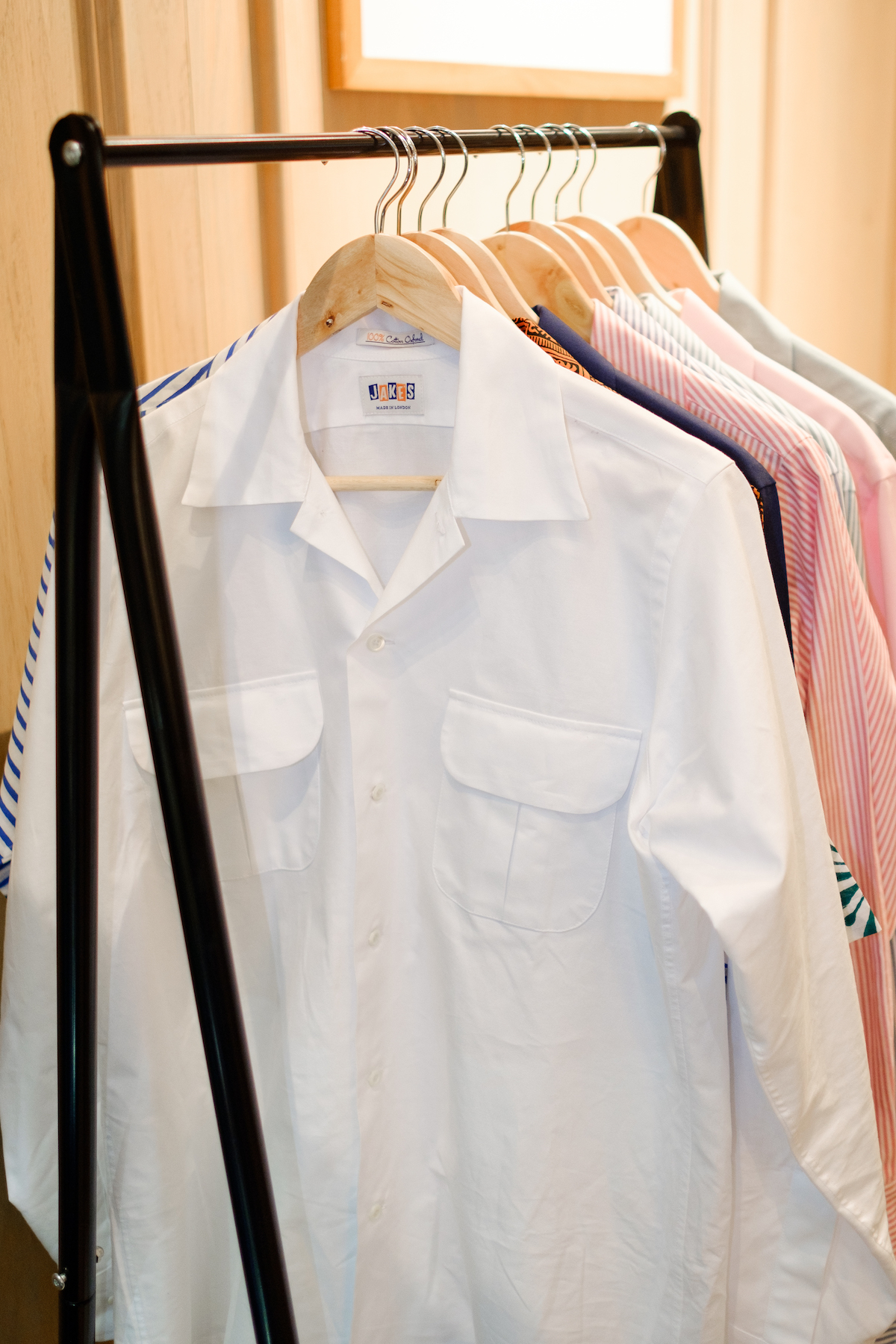
The button-down is a little low for me, but the ‘leisure collar’ he does, like a camp collar, is very nice (above). It sits a little higher at the back of the neck, which I find helps a lot with the style. If you have a remotely long neck, a camp collar can be quite unflattering. 

I fit a 15.5 neck, but the body shape (Jake only does one) was rather too full for me. This means his offering might not be for everyone, but the shirts are well made and very good value - if they do work for you, it’s a great option in London in terms of style and value. 

That was obvious given the number of customers that came in yesterday to see Jake, and spoke about all the shirts they’d had made. One had had every PS cloth made up. 

And again, while I wouldn’t wear some of them, it’s great having a big splash of colour on one side of the shop, with all Jake’s oxford stripes and printed madras jostling for attention. 

Finally, I was interested to see Rubato’s expansion into denim and shirts

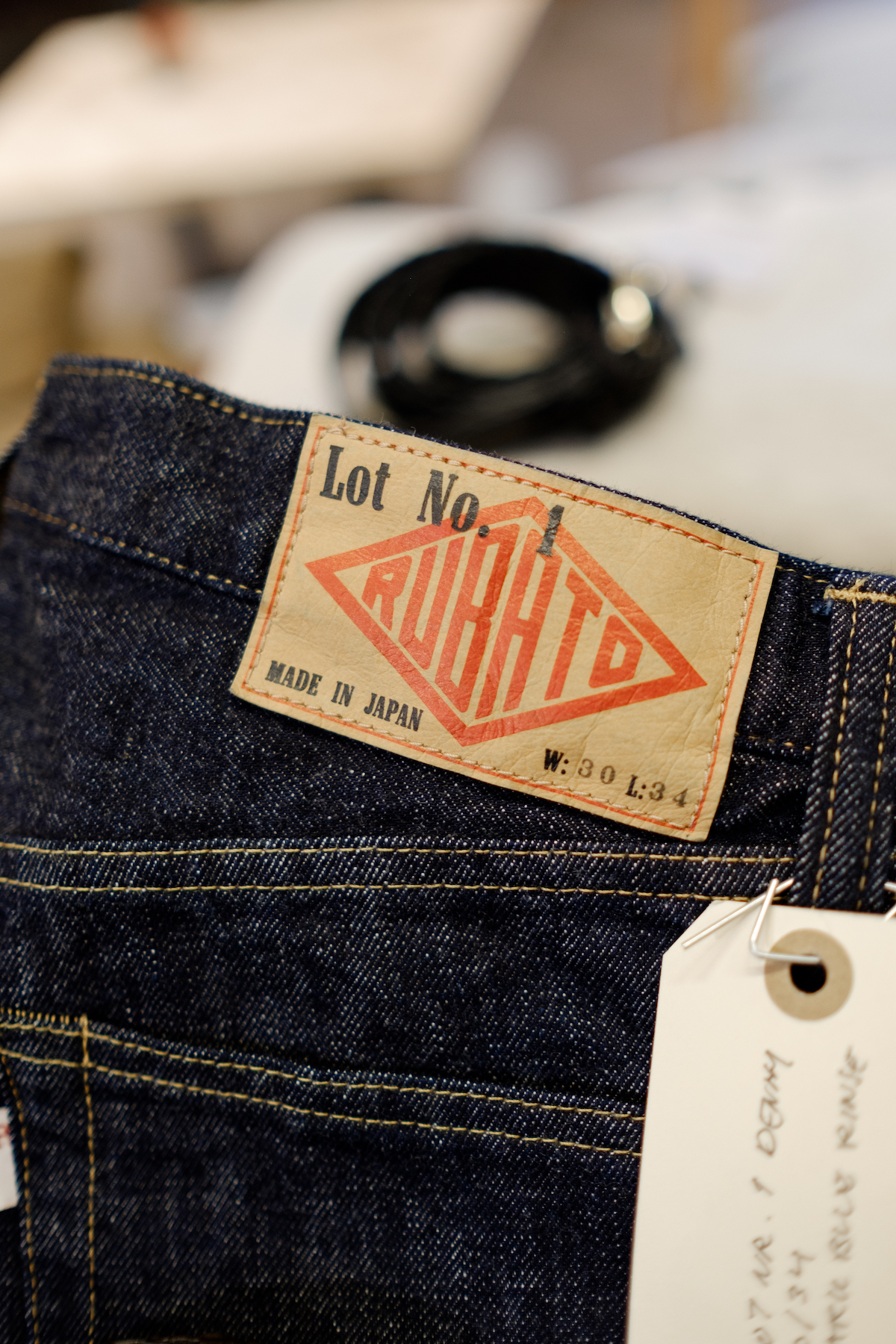
The jeans are really nice and, perhaps in contrast to the knitwear, very wearable. They have a good medium rise, a slightly tapered leg that isn’t slim or full, and come once-washed once, rather than raw.

This means they might not be for denim purists, as they won’t fade in the same way as raw or unsanforised jeans. Personally I’d also prefer more regular rivets on the fly. But I think the jeans  will have a very broad appeal. The ecru off-white is perfect, the denim is a nice mid- to heavy weight, and I even found myself considering the pure white, despite swearing I’d always prefer ecru.

I found the size 32 waist a bit too tight in the hips, so went up to a 33. These fit better, and I appreciate the slightly higher rise. They do give though, so I’ll wait and see whether that was the right decision. I can also bring them in if necessary, of course, but can’t let them out. 

The other new range is the shirts, which are heavy enough to be overshirts, but you could also tuck in if you wanted to. 

The white denim is nice, and the chambray too, if perhaps not that unusual. The smaller pointed collar and chest pockets will be familiar to those who buy from Bryceland’s or The Real McCoy’s.

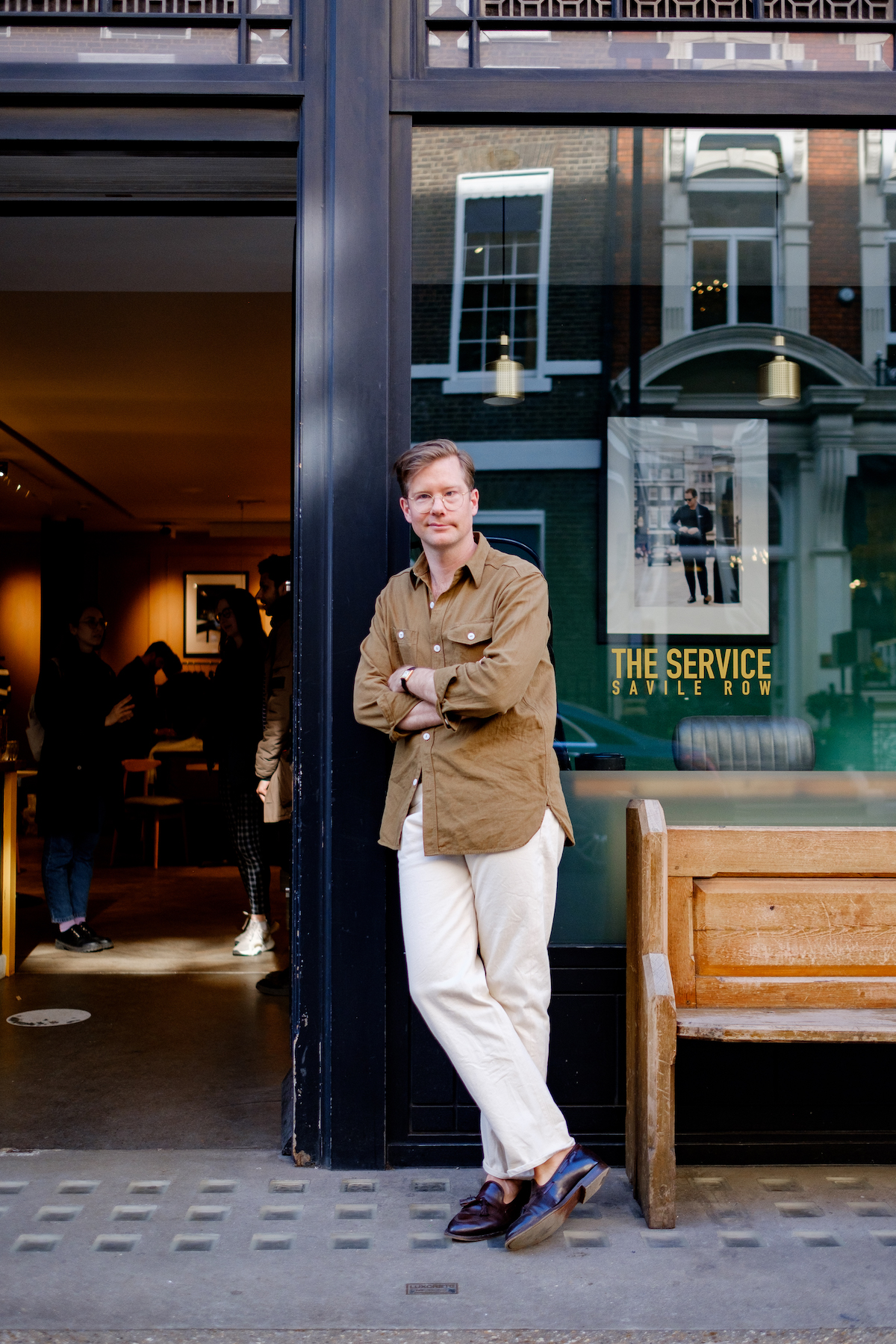
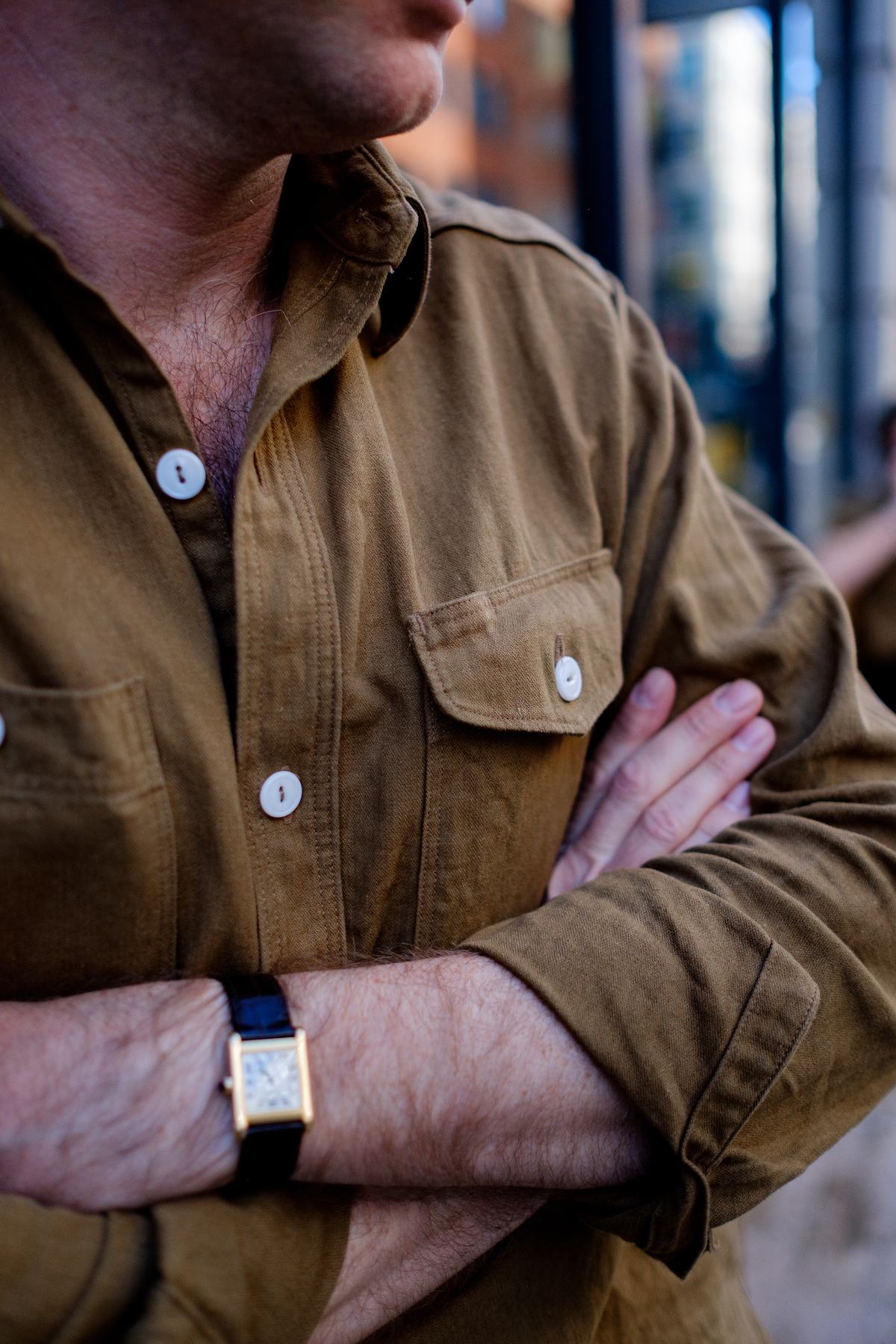
My favourite was the olive drab, which is made in a great linen/cotton -a heavy, almost canvas-like material, but cooler than the other shirts because of the linen in the yarn. That’s what Carl is wearing above (with the white jeans). 

The pop-up continues until Saturday, 10-6pm every day, at The Service, 32 Savile Row. All details here

The Spring Top 10: Fun, paper and lavender

The Spring Top 10: Fun, paper and lavender

||- Begin Content -||

It’s that time of the year again. Brands have been receiving all the spring clothing they ordered last year, even though they weren’t quite sure whether it would arrive, or be swallowed by an unexpected lockdown. 

So rejoice, there are new ideas and cuts and cloths, all pitching to be part of the new season’s wardrobe. These are eight of my favourites. As ever, nice to hear yours too. 

LEJ Cinch Back Blouson

£645

Luke Walker is a designer readers will know even if they don’t realise it, as he freelanced for Drake’s for several years, before turning his full attention to his own brand, LEJ. 

The brand straddles fashion and classic menswear very effectively, using classic materials but sometimes in unexpected colours, like this blouson in lilac cord or apple-green ventile. And the pieces are all very well thought-out, with the blouson having a vintage-like body shape and large sleeve - as well as, most ingeniously, a hidden cinch in the waistband instead of elastic. 

My favourite was the black cord, which is only now available in a couple of sizes. But the sand is great too, and there’s the lilac for bolder readers.

Carrier Company Celtic jacket

£245

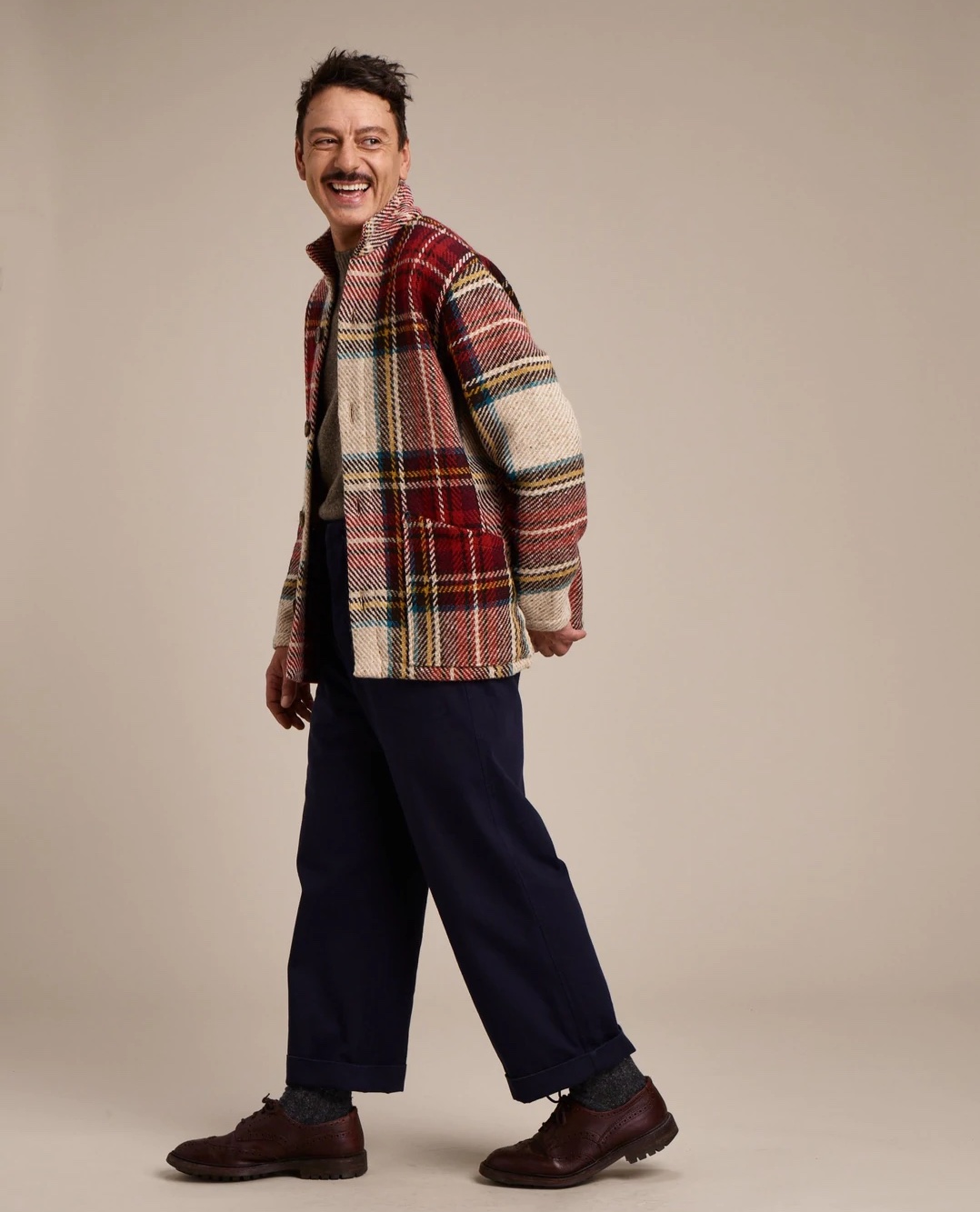
A friend told me recently about this Norfolk-based company, which makes all its outdoorsy products locally. I tried the Celtic jacket above - struck by the wonderful check - and found it an interesting contrast to the types of brands we normally cover on PS. 

The jacket is very simple. The material is made by Magee but really quite coarse. It's an open weave, so the jacket has less shape, and there's nothing else helping it - no fusing on the placket or collar, no collar stand. The buttons are plastic - a horn imitation - and there is no cuff at all. The checks are deliberately not matched on the pockets or sleeves to avoid waste, but this is of course also cheaper. 

If this were offered by Anderson & Sheppard, it would have all these points, in a softer but clearly still very casual wool. But it would also be three times the price. 

I think if you can afford it, a more refined version is what I'd recommend (and think about how many jackets you really need). But that doesn't stop the Carrier Company one from looking great for what it is.

Connolly sleeveless cardigan

£380

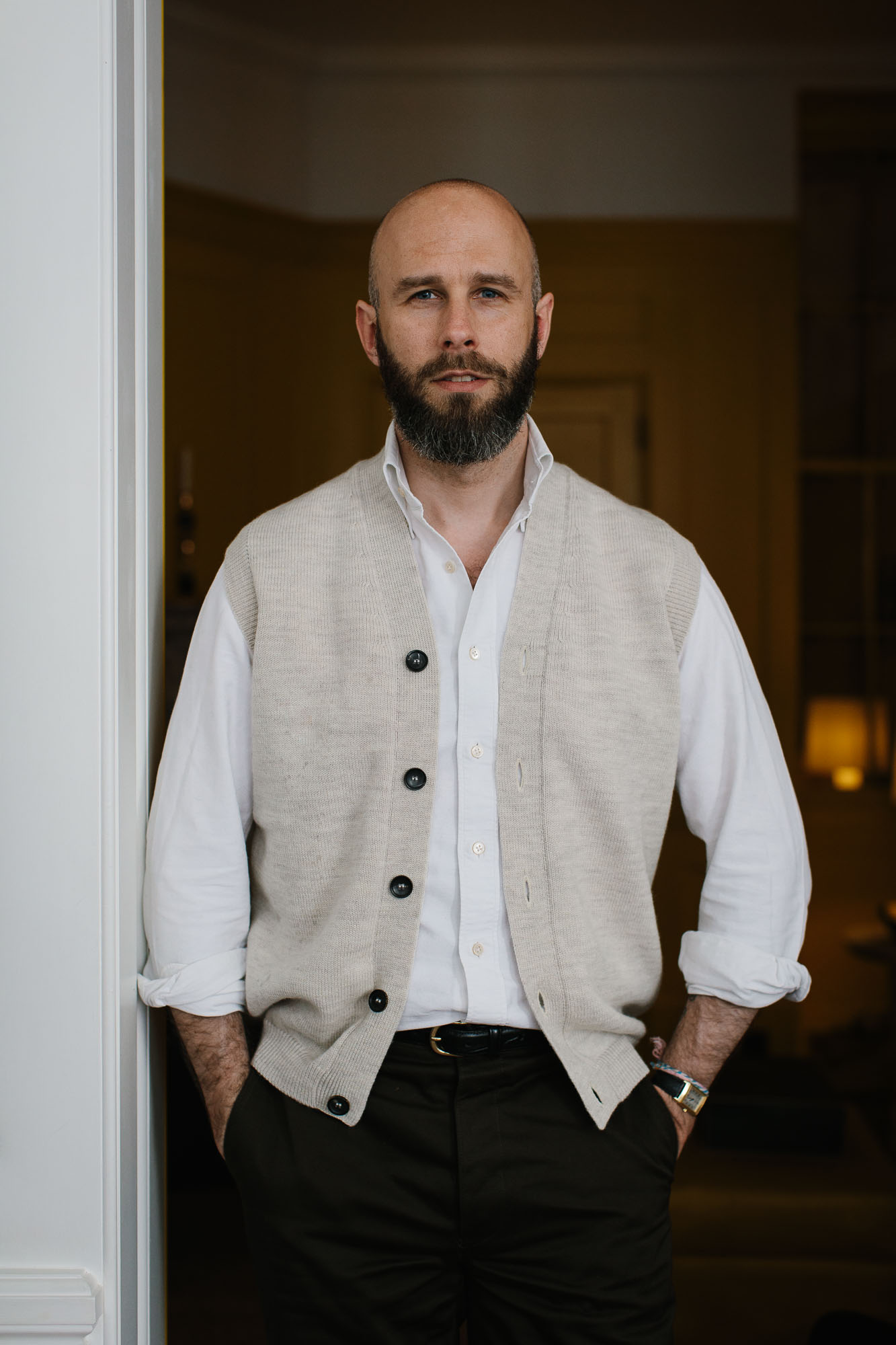
I’ll be writing a piece soon about cardigan fit, particularly if worn as a jacket substitute rather than under one. That’ll focus on the Art Cardi recommended last year, but this year Connolly has introduced a sleeveless cardigan that’s equally interesting and stylish. 

The main point on fit is that there’s something very elegant about a relaxed, loose-fitting cardi - more akin to the shawl collar we know and love, rather than fitted waistcoats. And the sleeveless Connolly cardigan does this very nicely, with a width that’s just down off the shoulder, a roomy body and slightly longer length. 

They’ve also reused the combination of shetland and cashmere (former on the outside, latter on the inside) from their crewnecks, which has the effect of making the oatmeal colour in particular look rather casual, and suitable for any washed-out pair of jeans, despite actually being quite luxurious. 

Yogi Moccasin shoes, via Oliver Spencer

£149

Chunky casual shoes have never been my style. I know the Paraboot 'Michael' is comfortable, but I always want something more refined, on a slimmer last. I wear Edward Green 'Shanklins', rather than Drake's Crosby boots.

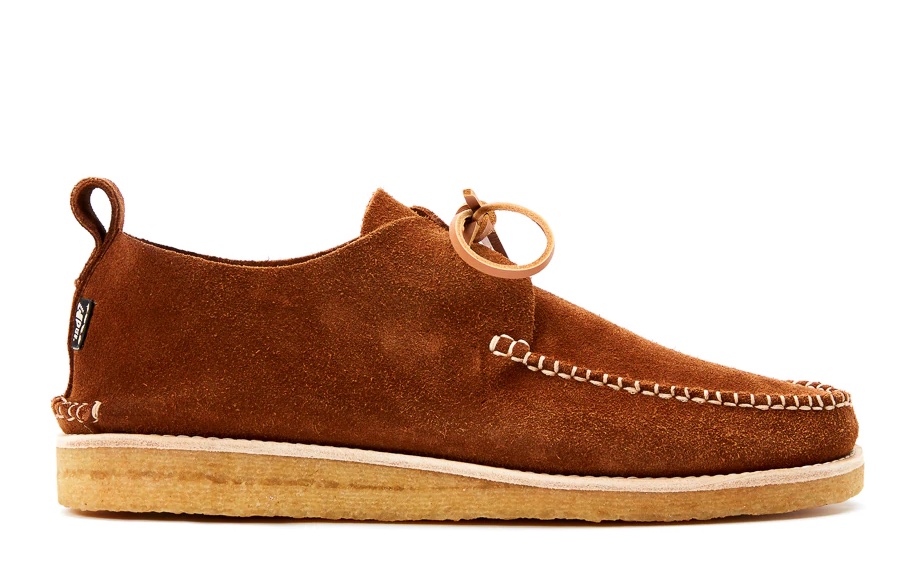
However, readers have asked recently about similar shoes, particularly deck shoes and moccasin styles, from the likes of Yuketen for example. And if I were to wear something along those lines it would be a simple tobacco-suede style like this pair from Yogi. They're soft, unlined and not too chunky, but very comfortable.

They're stocked in the Oliver Spencer 'Studio' store, which often has some interesting pieces and collaborations, including Snow Peak, Rototo and Niwaki.

Mortimer's: Moments in Time

£54, out May (US) and June (UK)

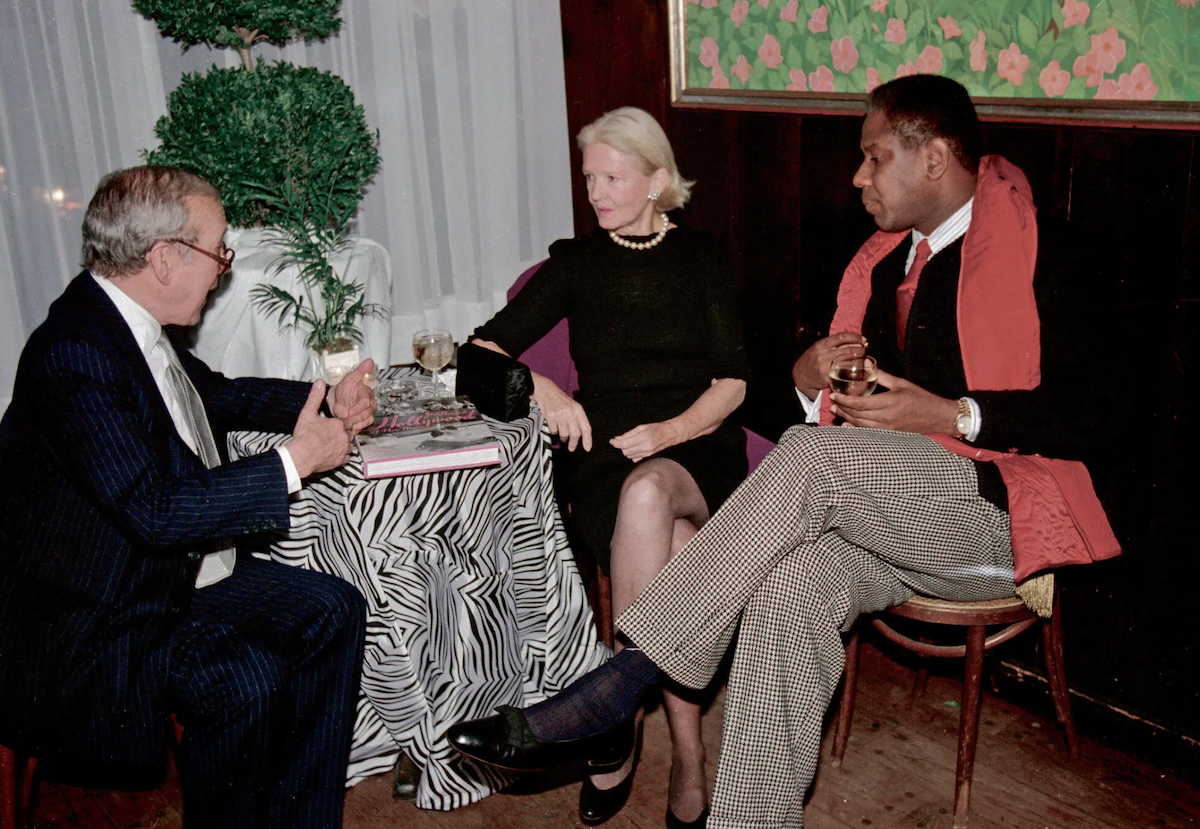
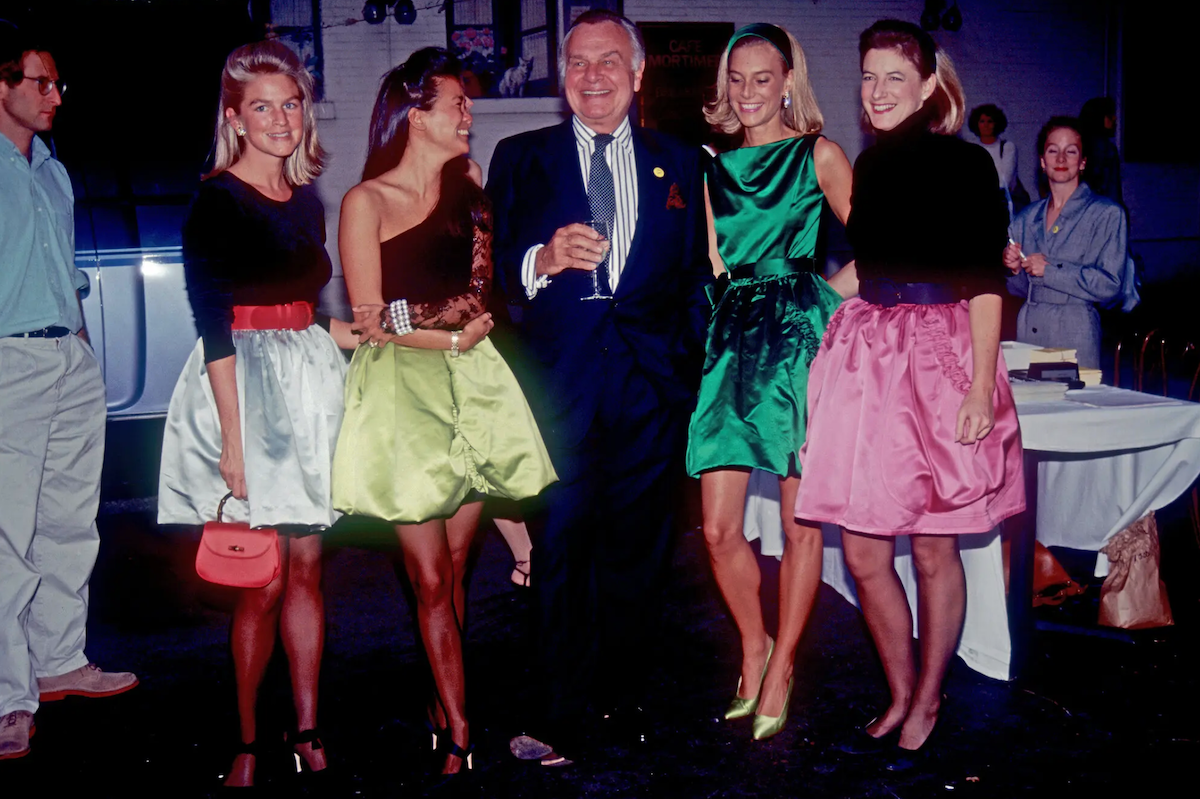
A friend gave me an early copy of this book recently, which charts the history of the society cafe Mortimer’s in New York. It’s not a menswear book, but it tells the story of a period and a social set very intimately, and the clothes are part and parcel of it all - aided by the fact that the founder, Glenn Bernbaum, had worked in fashion and was always a natty dresser.

For anyone that’s interested in the history of fashion, and its importance at particular points in time, this is worth a look. Also, check out the tailoring going on at the launch party of the book at the author’s current restaurant, Swifty’s in Palm Beach. Now I know where all that Scabal is going.

Grevi Japanese paper hat

£155

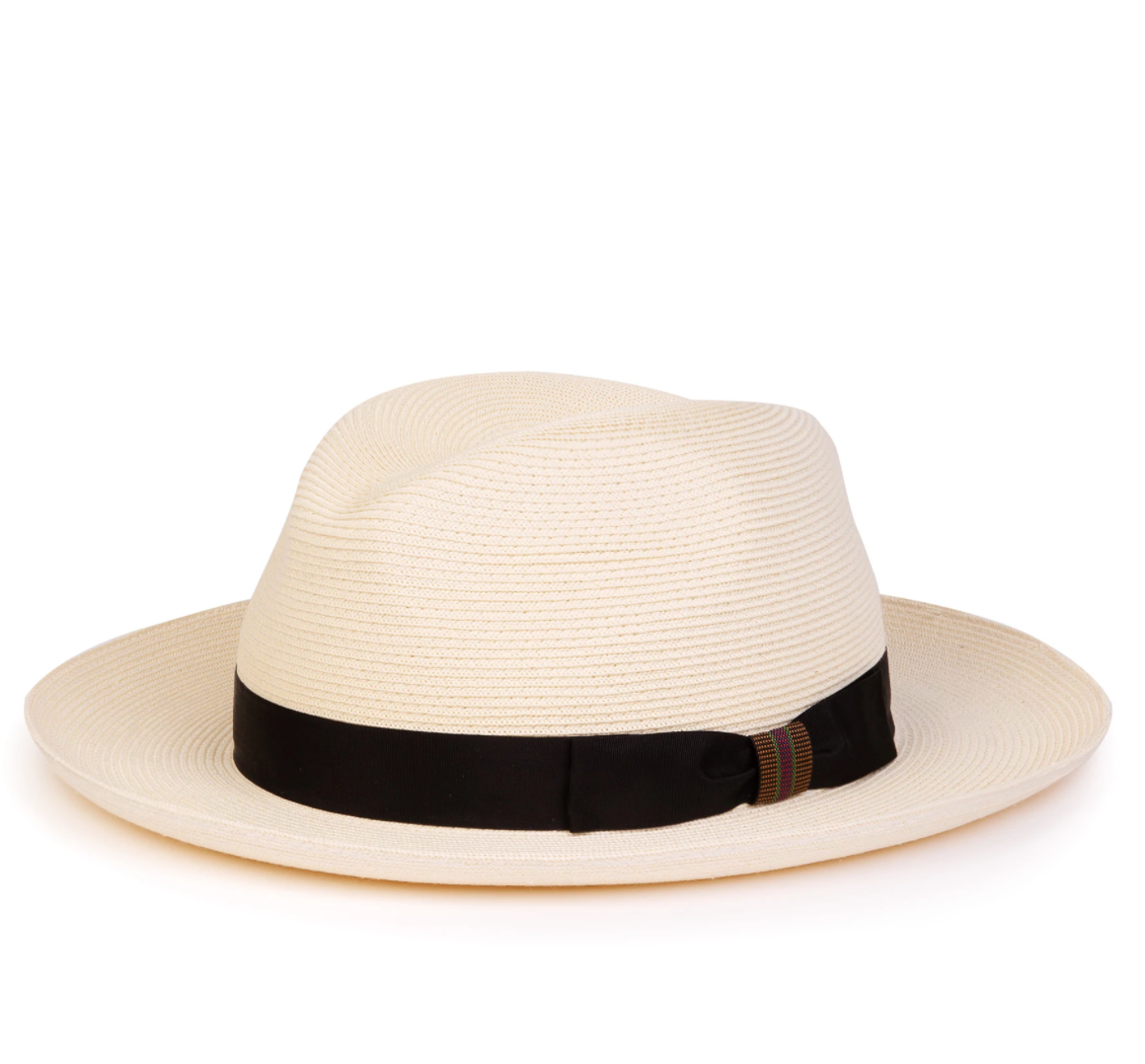
I wasn’t sure last year about this summer panama-style hat offered at Trunk, but I’ve come around. The key, I think, is that while it is fairly smart colour and make, it is soft enough to clearly not be a normal, sharp panama. 

Panamas are beautiful, but they look too smart for things like jeans or shorts most of the time, and without them there are precious few options for summer. This paper braid creates a soft brim that folds down and waves a little, all helping to suggest that it’s not as smart as the colour might suggest. 

I like the cream, but also available in a browner ‘natural’. And also nice with the ribbon taken off, if you want to remove that touch of formality too.   

Jake’s fun shirts

£175

Fun shirts have never quite been my thing. Nothing wrong with having fun with your clothes - indeed, it’s obligatory - but they always seemed a little gimmicky, whatever the history. 

However, of all the ones I’ve seen, Jake Wigham’s recent designs appeal the most. I think it’s because they’re a little quieter, often making use of a single colour and various patterns, rather than feeling like they have to incorporate several - and indeed the same Ivy four or five colours as every other fun shirt. 

Vetra linen jackets

£160

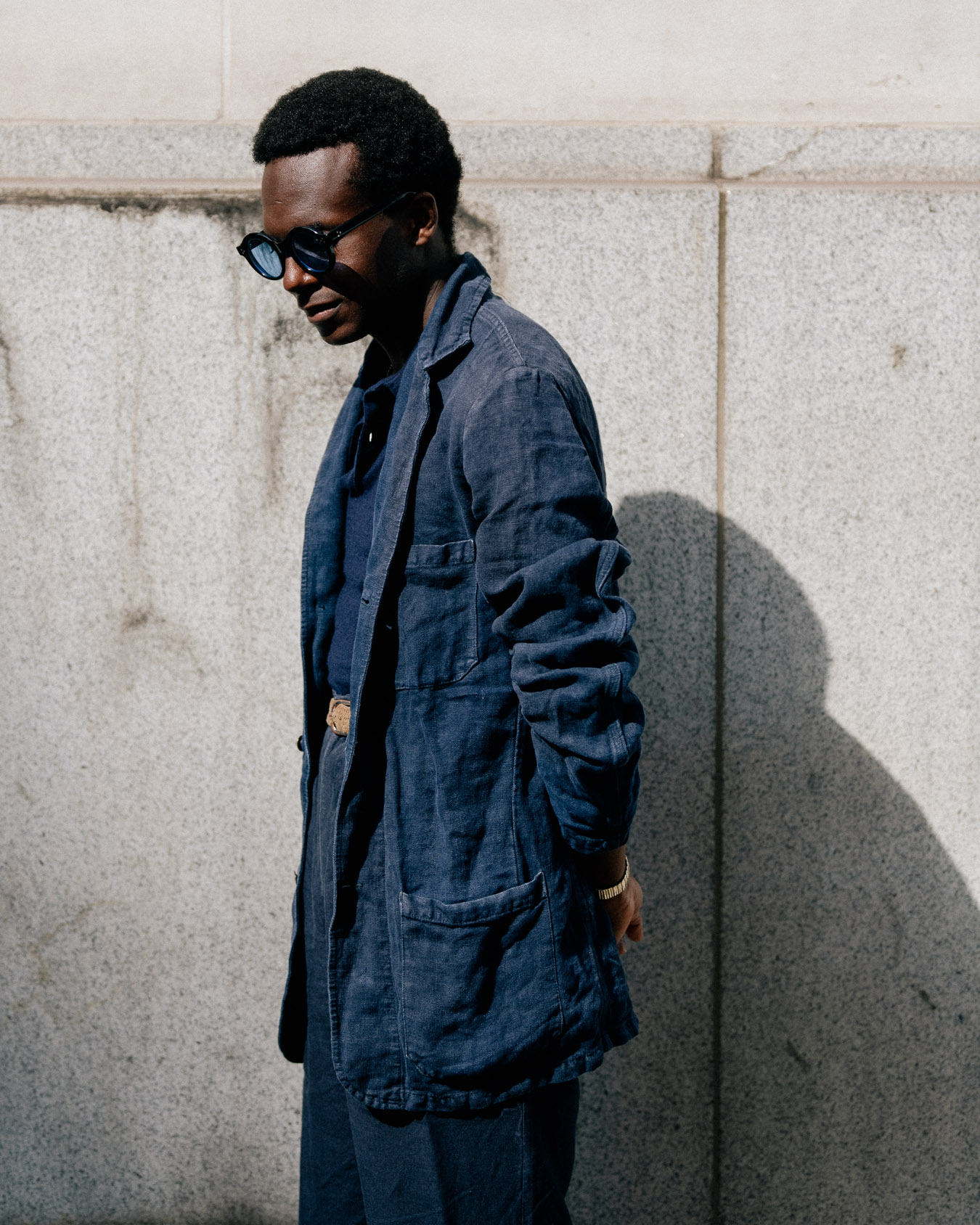
The John Simons shop on Chiltern Street has a handful of the heavy linen jackets from Vetra that we previously showed André wearing here. They’re great - a tough, substantial cloth that feels more like workwear than any other linen you’ll try. 

More are meant to be coming, but as with many things at the moment, there have been delays and delays. A few other shops have some stock - Union Clothing has the Rigging colour in medium and large, and the Vetra shop itself in France has a handful, such as the navy in 42 and the elk in 42 and 44. 

In the meantime, John Simons are doing their own linen jackets, in a much more normal weight of linen. For those that find the Vetra too heavy.

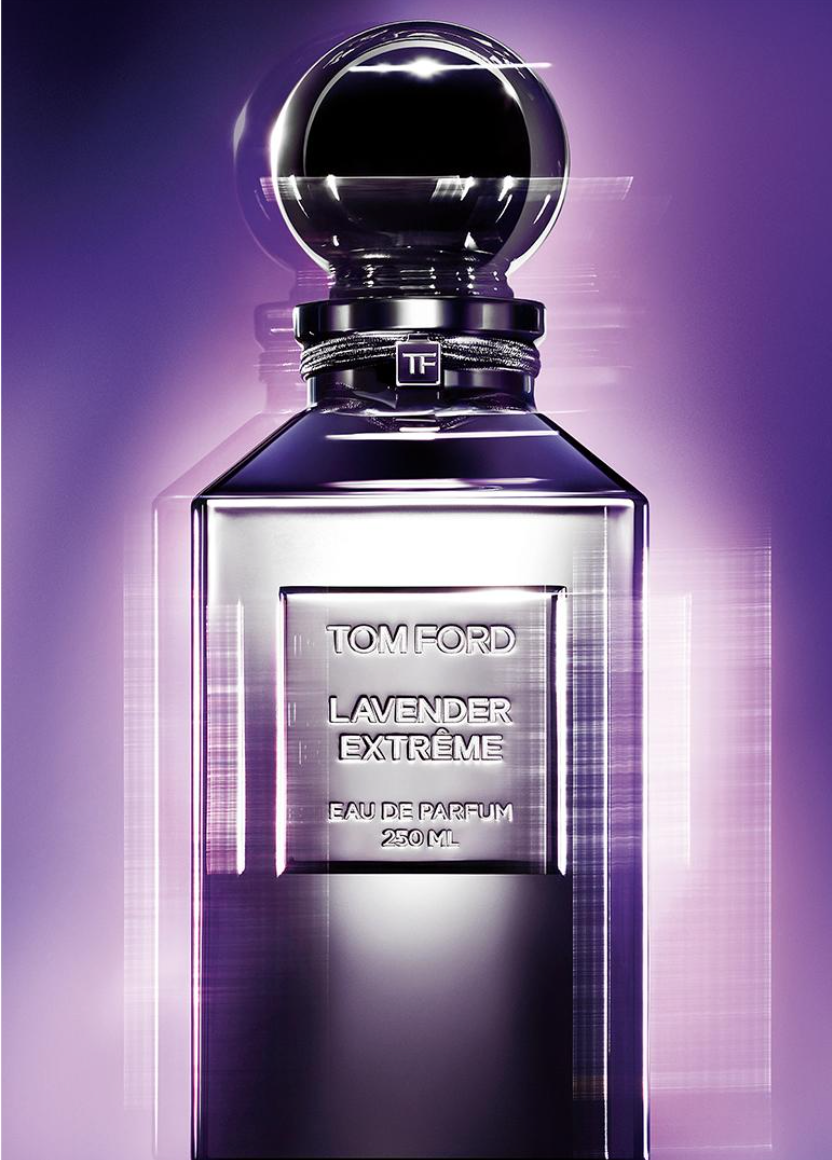
Tom Ford ‘Lavender Extreme’

£240

Despite the recent slashing of my perfume collection, I still find perfumes endlessly fascinating, and will go along to any Perfumer H launch to hear what Lyn has come up with, or try a new scent from any other maker I respect. 

Tom Ford is one of those, based on my personal experiences and the word of those in the industry - who will describe his perfumes as “obviously overpriced, but good and original in a way few other designers are”. Or something like that.

Lavender has a long history as a men’s scent, particularly with something like Trumper’s Lavender Water Cologne. It’s a way to create a fresh, summery perfume without using citrus or vetiver like everyone else. And this is the nicest I’ve tried. Not for everyone, but then who wants to be everyone? 

Casatlantic El Jadida linen/cotton trousers

€160

This is a nice way to include an update on Casatlantic, having done a full review on the Mogador trousers last year. Although I haven't tried anything from the new Cypress collection, which launches tomorrow, I have tried another style - El Jadida. 

This is a much better fit on me - just that little bit lower on the rise, and with a much more regular leg line. And I tried it in the black linen/cotton, which I also liked. It has a bit of a sheen to it, which some might dislike, and it’s more casual than you might expect. But it’s light and airy, and is an easy way to wear black. They look great with this Adret jacket, for example. 

One thing I think it’s worth re-emphasising is that these are simply made trousers - no skirt on the waistband inside, basic fastening and buttonholes. They’re made to be similar to the vintage trousers Nathaniel wears, and not to any dress trousers or indeed the top-end Japanese repro brands. That’s also reflected in the price of course. 

And a few others, in brief

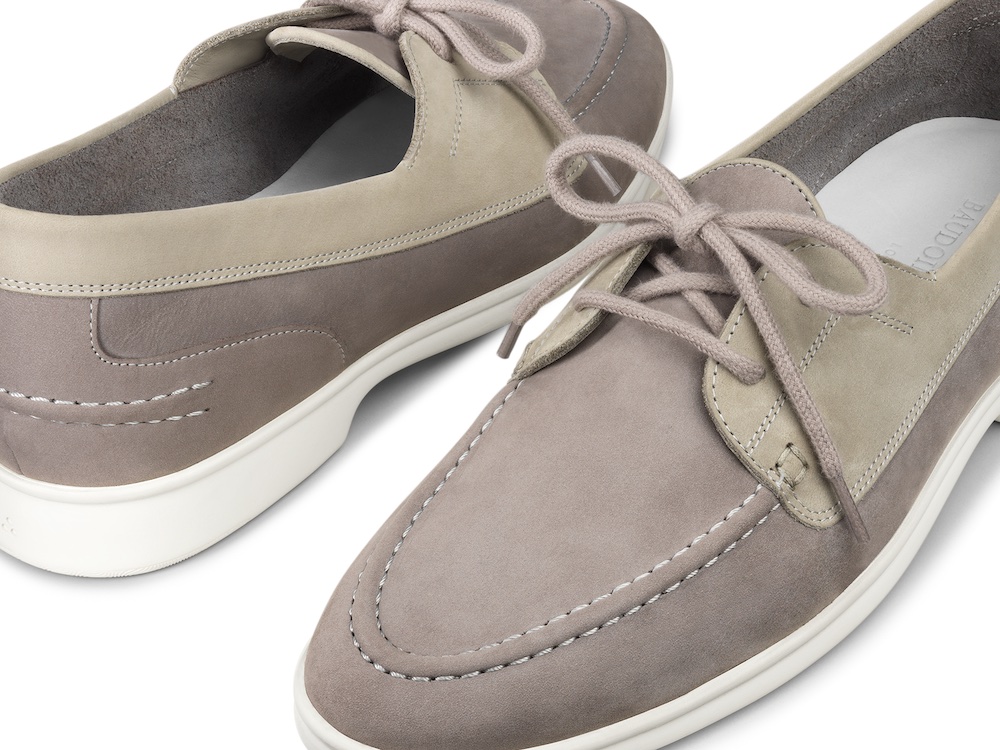
  • Baudoin & Lange have just launched a deck shoe (above). I'm not sure about these yet. Maybe a bit sleek for a deck shoe, though the materials quality is of course really high
  • There is a particular white, summer trouser that's made from a really robust cotton, almost like sail cloth. Margaret Howell's sub-brand MHL has some this season that are like that - great for wearing white trouser rough and casually. They are high rise and pretty wide leg, but the cloth is excellent.
  • Doekcanvas shoes remain my summer casual shoe of choice, and I've got my eye on the black canvas at Trunk this summer
  • Ralph Lauren Purple Label has a beautifully cut and made cotton cable knit for summer. I love knits with a collar, and haven't seen a cotton one before, but it is obviously expensive. Perhaps one for the sales
  • EB Meyrowitz have a (fairly) new frame shape called the Californian which I love - a soft and rounded version of an aviator. Pictured here
  • Fedeli long-sleeved polos are one of my favourites for a very casual summer option, often worn tucked out (below). Trunk have the half-button option, while Connolly have the shirt version, buttoning all the way through, under their own label.

So close and yet so far: TV pundits at the FA Cup

So close and yet so far: TV pundits at the FA Cup

Monday, April 18th 2022
||- Begin Content -||

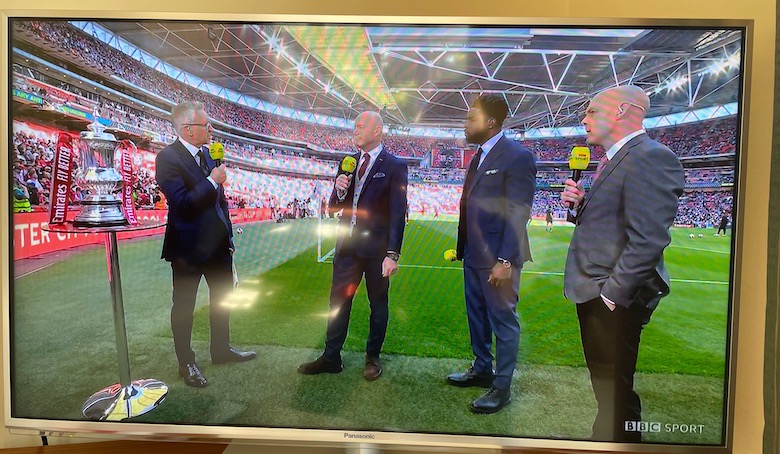
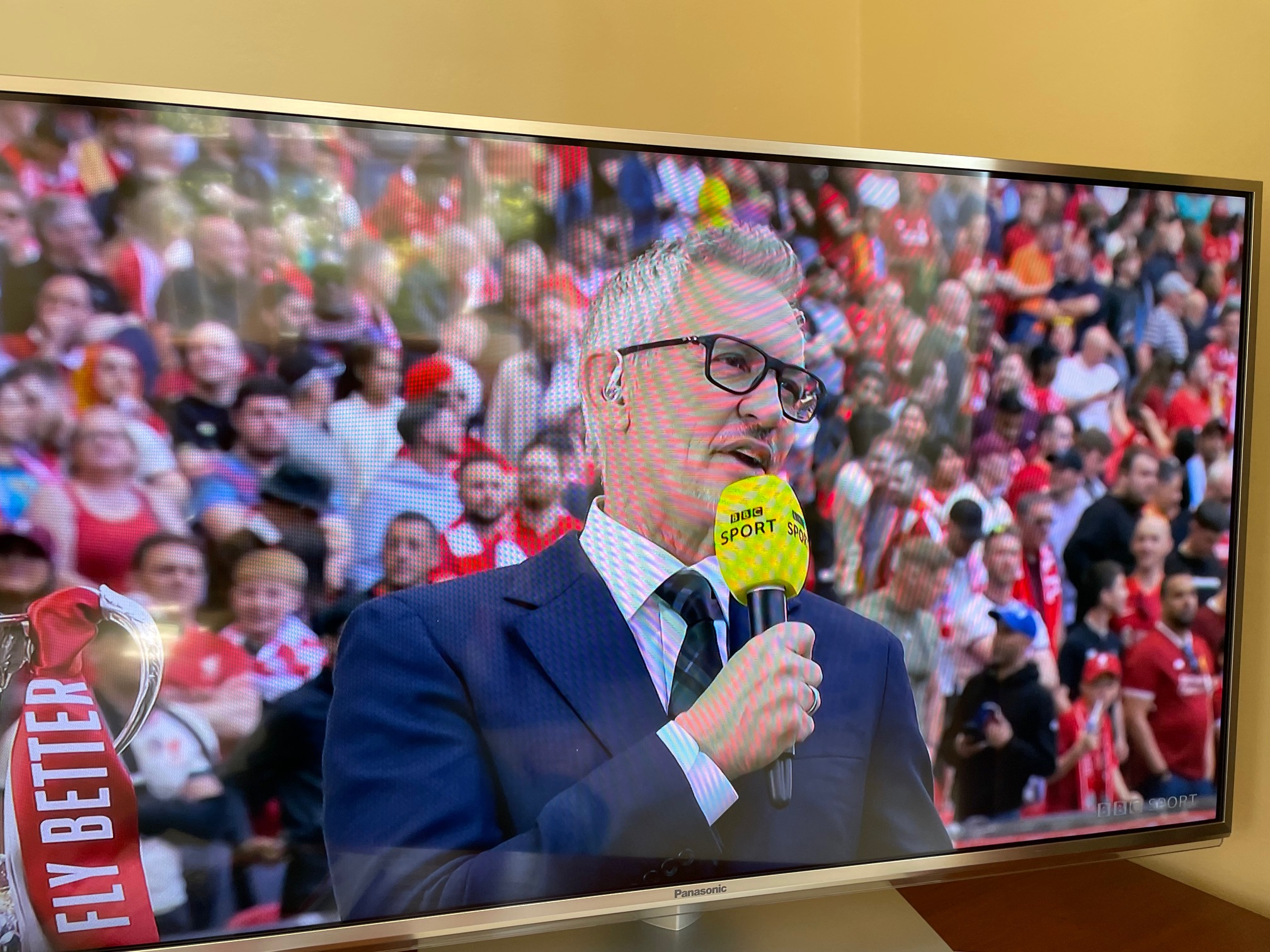
The tailoring that four TV presenters were wearing this weekend - to host the first FA Cup semi-final - were an interesting illustration of what I think men find challenging in tailoring today. 

For non-English readers, the FA Cup is the big knockout football competition. It’s not as big as the league, or as winning the European competition - the ‘Champions League’. But it has a certain prestige. It’s been running since 1871 and the semi-finals and final take place at Wembley, the national stadium. 

More importantly, it’s one of the few football competitions that doesn’t require a subscription. Many games are on public TV, and so they draw a large audience - Saturday’s semi-final in particular, because it featured the two biggest teams in the country at the moment, Liverpool and Manchester City. 

It was a national event, and the four presenters clearly felt they had to make an effort. 

As my Dad and I sat down to watch the game (he’s a lifelong City fan) we began to talk about what each one was wearing. 

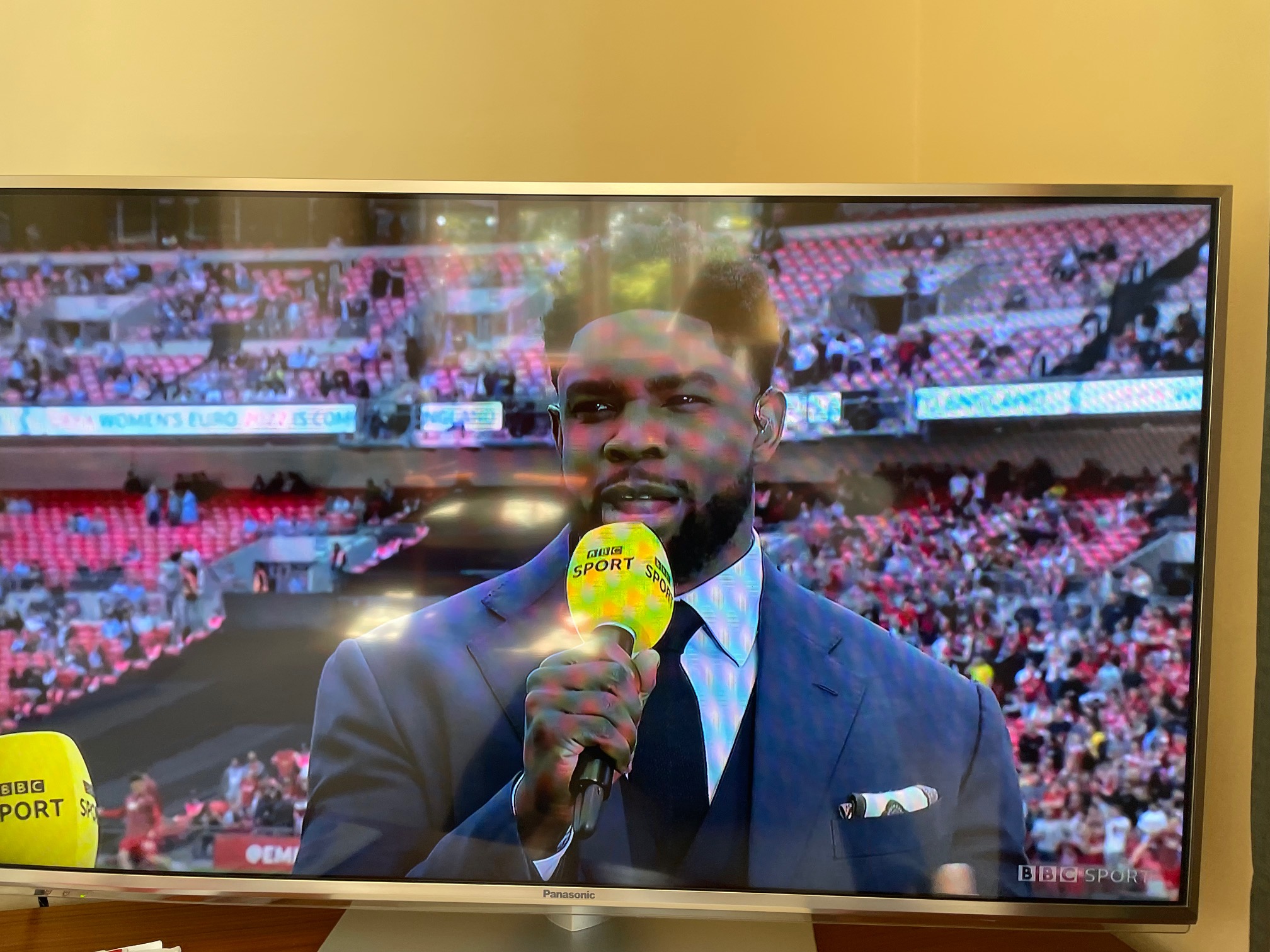
The ex-City player Micah Richards (above) looked pretty good at first blush. 

He was wearing a blue suit with a white shirt and plain navy tie. There was a navy cardigan and a subtle, folded over pocket square. It looked pretty classic, the cardigan an effective touch. 

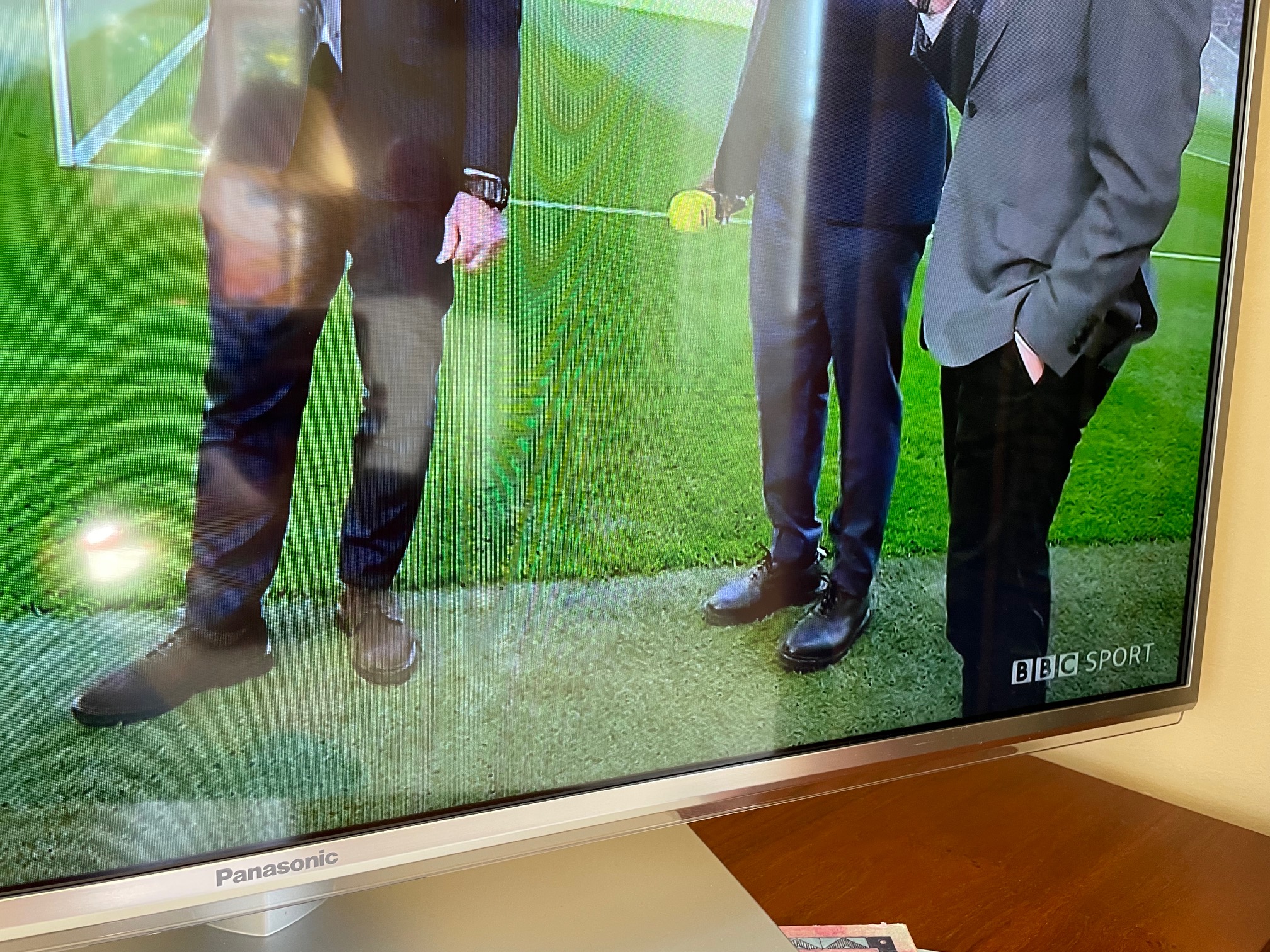
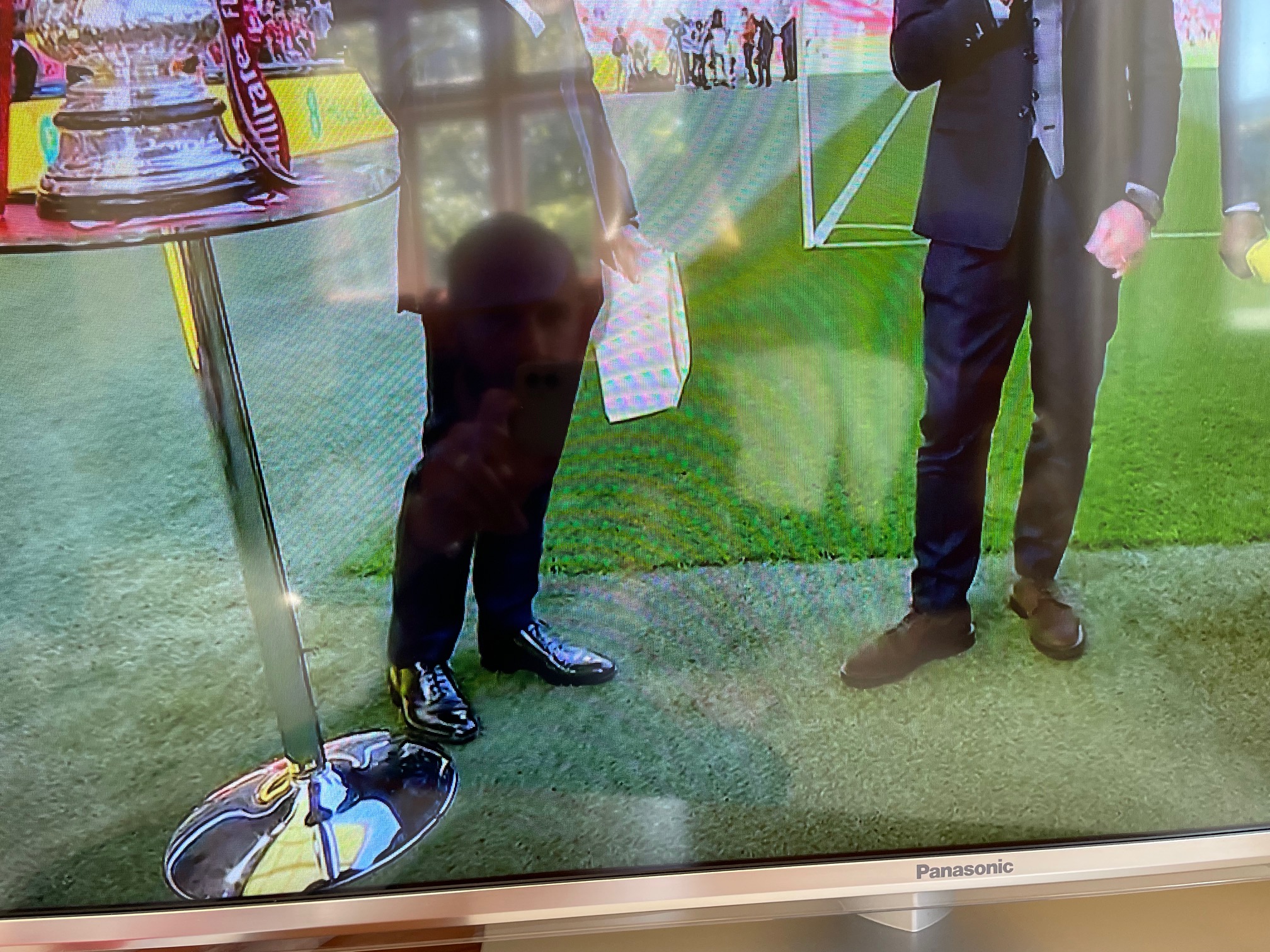
The problem came when he was pitchside, standing up. The skinny trousers - not a great option on such a muscular man - finished in black leather sneakers, styled like a dress shoe but with a branded loop sticking out the back.

It was a shame, because otherwise the look bordered on elegant. And while I understand that people want to wear comfortable shoes, I suspect the motivation for wearing them is that it’s felt they modernise the outfit somehow. 

They don’t. All that happens is that trousers puddle on top, and the soft, bulbous lines of the shoe jar with the sharp, clean lines of the tailoring.

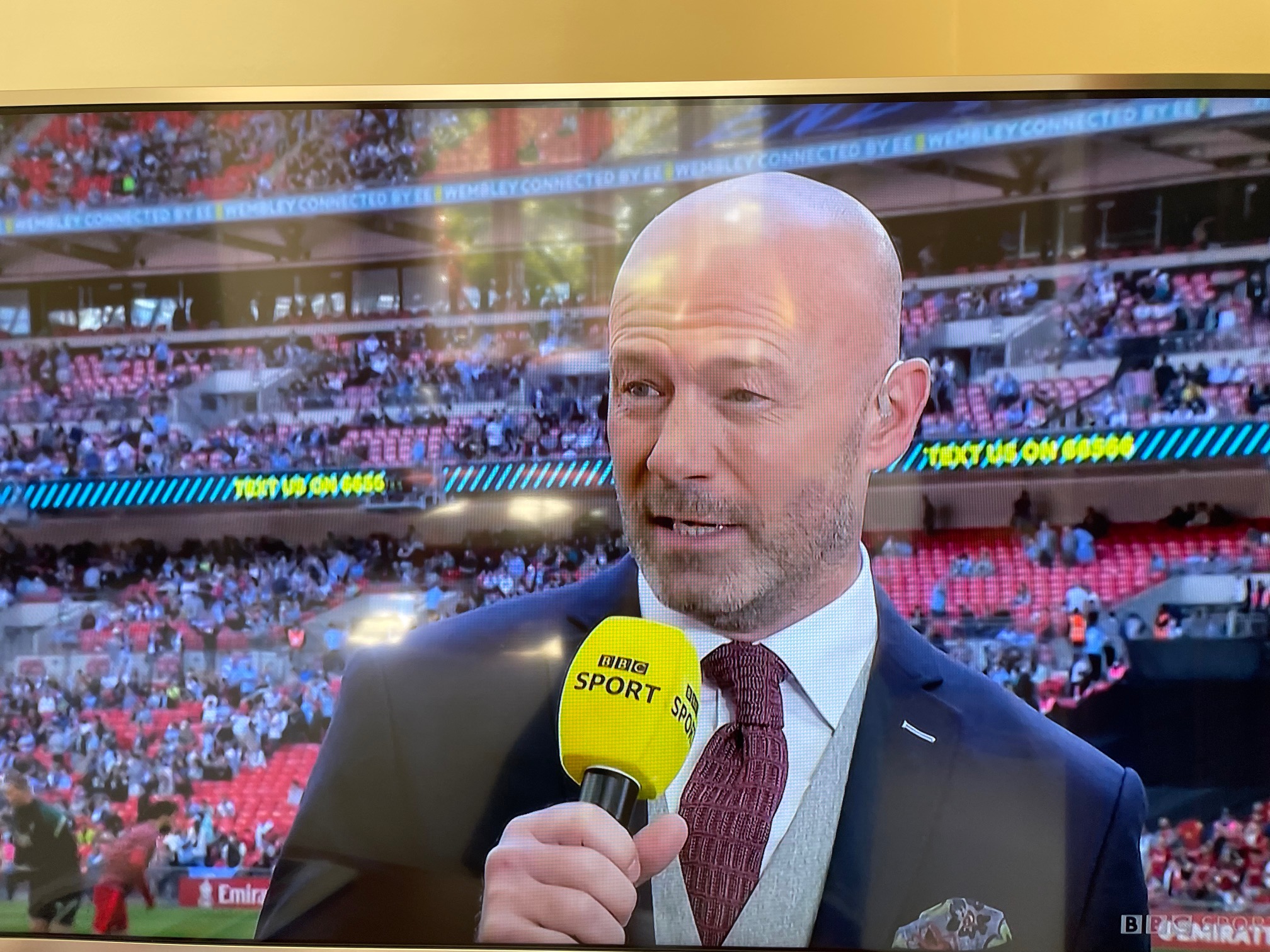
Alan Shearer, perhaps the most senior of the pundits, had made a bold choice: a grey waistcoat under his suit. 

There were obvious echoes of formal dress here, where contrasting waistcoats are a common feature under morning coats. And actually while I expected to dislike Shearer’s one, it worked fairly well. The colour was spot on and it made a clear statement that this wasn’t any old match, and he wasn’t wearing any old navy two-piece. 

Unfortunately it was also let down by the shoes, which were dark-brown derbys. Not a bad shoe generally, but too casual really for a dark worsted suit, and certainly out of keeping with what the waistcoat was aiming for. 

The jacket, on closer inspection, also had a white lapel buttonhole. Rather a cheap touch. It always looks like a gimmick, or more importantly as if  the designer had such little confidence in the suit that he had to resort to eye-catching distractions. 

It’s just not what tailoring is about. You’re not playing to its strengths.

Danny Murphy, the last of the three pundits being interviewed by the host, Gary Lineker, also made a good first impression. 

Mid-grey jacket, white shirt, woven silk tie: there was something of the father of the bride about it, but otherwise it was hard to fault. (And I wasn’t trying to find it. Honestly, nothing would make me happier than seeing elegant menswear beamed around the country.)

The issue was that the jacket looked like one half of a suit. You couldn’t tell the material of the trousers (if anyone could, perhaps with a 50-inch and HD, let me know) but the jacket was certainly a hard worsted material, and looked orphaned from a lost bottom half. 

It would have been much better as a suit, or with a jacket that was clearly a blazer - something with more texture. 

The brown shoes were also a bit long and pointy, but that was minor. 

Lineker showed them all up. Not by dressing spectacularly well, but by doing everything simply and correctly.

Dark suit, white shirt, dark tie with a subtle pattern, black polished shoes (below). You wouldn’t hold him up as a style icon, but he managed to show how each of the others had missed the mark in one way or another. 

I thought this was worth covering because these are all things men commonly get wrong. Wearing parts of a suit separately; mis-matching formalities; going for gimmicks rather than subtleties of cut and fit. 

There are many things wrong with the concept of ‘rules’, including the fact they have far less relevance to casual clothing. 

But they're good at encapsulating pieces of advice for dressing smartly, better. And that’s why they can often be a good starting point. 

I also think that as guys wear fewer suits to work every day, they will need more of this advice, not less. Because when they feel the need to dress up - as these four presenters clearly did - they won’t have a uniform to fall back on. They’ll be less sure what to wear, or why. 

Hopefully PS (and PS readers) can carry on helping them out. 

P.S. Sorry you lost Dad, but you’ll win the league anyway. You had to give Liverpool something. 

Mohair cardigans and Rubato chinos

Mohair cardigans and Rubato chinos

||- Begin Content -||

These chinos are the Rubato ones I’ve asked them to reissue, which will be available exclusively in the PS pop-up shop on Savile Row next week. 

They’re not exactly the same as the originals, which were a single pleat where this is a flat front - the Officer’s Chino model I’ve reviewed previously

But it’s the same in every other respect, and the colour is the important thing - a surprisingly dark brown, rather smart, and particularly nice with neutrals like white, cream and black, as well as menswear standards like navy and grey. 

It’s a colour I wear a lot already with the charbrown flannel from Fox (eg here) so I already knew I'd get a lot of wear out of them. 

When Rubato and I started talking about doing something for the pop-up, I was keen to do these chinos because I wear my other ones so much, but missed out on the brown. 

They agreed to reissue them, albeit with some compromises. Their chinos are all made with a button front now and I prefer a zip; but I can live with that. And as mentioned in the past, I slim mine down to a 20cm bottom when I get them, from the 22.5cm they come with (in a size 48). But I know others prefer the wider leg.

And it’s worth it to get my favourite smart chino in such a unique colour. They’re fairly limited - around 25 pairs - so if you’re interested, worth getting to Savile Row next week to have a look.

The pop-up runs from Wednesday, April 20 to Saturday, April 23, at The Service on Savile Row - featuring Rubato, Ludovic Lunetier, Jake’s Shirts, Bentley’s Antiques and of course PS. All details here

There will be welcome drinks on the Wednesday evening from 5pm, so do come along then if you fancy a glass of something.

Returning to the chinos, the hard right-hand twill does feel a bit stiff to start with. The dyed colours like khaki and brown in particular.

But I’ve found they soften after three or four washes, and that extra, dense weave is worth it for a great feel in the long run. 

The khaki colour also has a bit of a sheen at first, which softens over those first few washes. I don’t know the technical reason for this (any fabric nerds, please let me know) but it’s the case with many dense cottons, including the more workwear-inspired ones. 

In fact I got a pair of Freewheelers ones from Son of a Stag last year, and lovely as they are, the sheen is only starting to go after about 10 washes. 

I’ve pictured the chinos here with two cardigans - a style I find I wear a lot these days, given I’m still working from home a lot and not wearing a jacket as much.

The oatmeal-coloured one above is from Connolly, but I'll talk about that in our regular ‘Spring Top 10’ piece next week, so I won’t go into details now. 

The other cardigan, however, is worth exploring. 

It’s a mohair knit from The Real McCoy’s, which I was rather unsure about when I first got it: I was sold on the material, but the style was a little unusual.

The material grabbed me as soon as I picked it up. 

The long, raised fibres - the fluffiness - probably comes across in these images. What won’t show is how dense and heavy it is. It feels soft, spongey, with an amazing substance and warmth. 

Mohair cardigans (old and new) usually use a yarn comprising a nylon or polyester core, with mohair spun around it. The McCoy’s version uses a wool core instead, with the knit then hand-rolled to lift the hairs and create that fluffy surface.

The result has real heft in the hand, but isn’t heavy when worn - it feels more like it’s hugging around the body. 

The mohair, though soft, is a bit scratchy. It’s fine over a shirt, but I wouldn’t wear it over just a T-shirt (as most of the modern ones are styled). 

I know there will be some that’ll question buying an expensive cardigan that’s ‘a bit scratchy’. But to be looking at clothes like this at all, you’ve really got to be in love with materials - what they can be, how they are made, how the resulting clothes can feel and drape. I certainly am, and this one is beautiful.

Now the style. Mohair cardigans have a fairly long history, with their first spike of popularity in the 1960s. But that was largely among women, and most today will know them from Kurt Cobain in the 1990s - or, if you’re younger, from the recent trend created by Marni, Needles and others.

The heritage is Ivy; they feel naturally more casual and grungy; but the current vogue is to dress them up, albeit in stronger colours. 

Over the time I've been wearing this one, I’ve found that it's too casual for shirts and tailored trousers. The cut is a factor - the low neck and straight body are very different from sartorial-type cardigans.

It’s also too stark a colour for my casual default of mid-blue jeans. The other stronger colours of mohair, like Jelado’s mustard, would be better there. 

Instead, it’s best with dark denim and flannel/chambray shirts, or with chinos and an oxford shirt as pictured here. 

And no, there’s no sensible reason to have both this cardigan and this alpaca one. Other than to try both and write about them.  

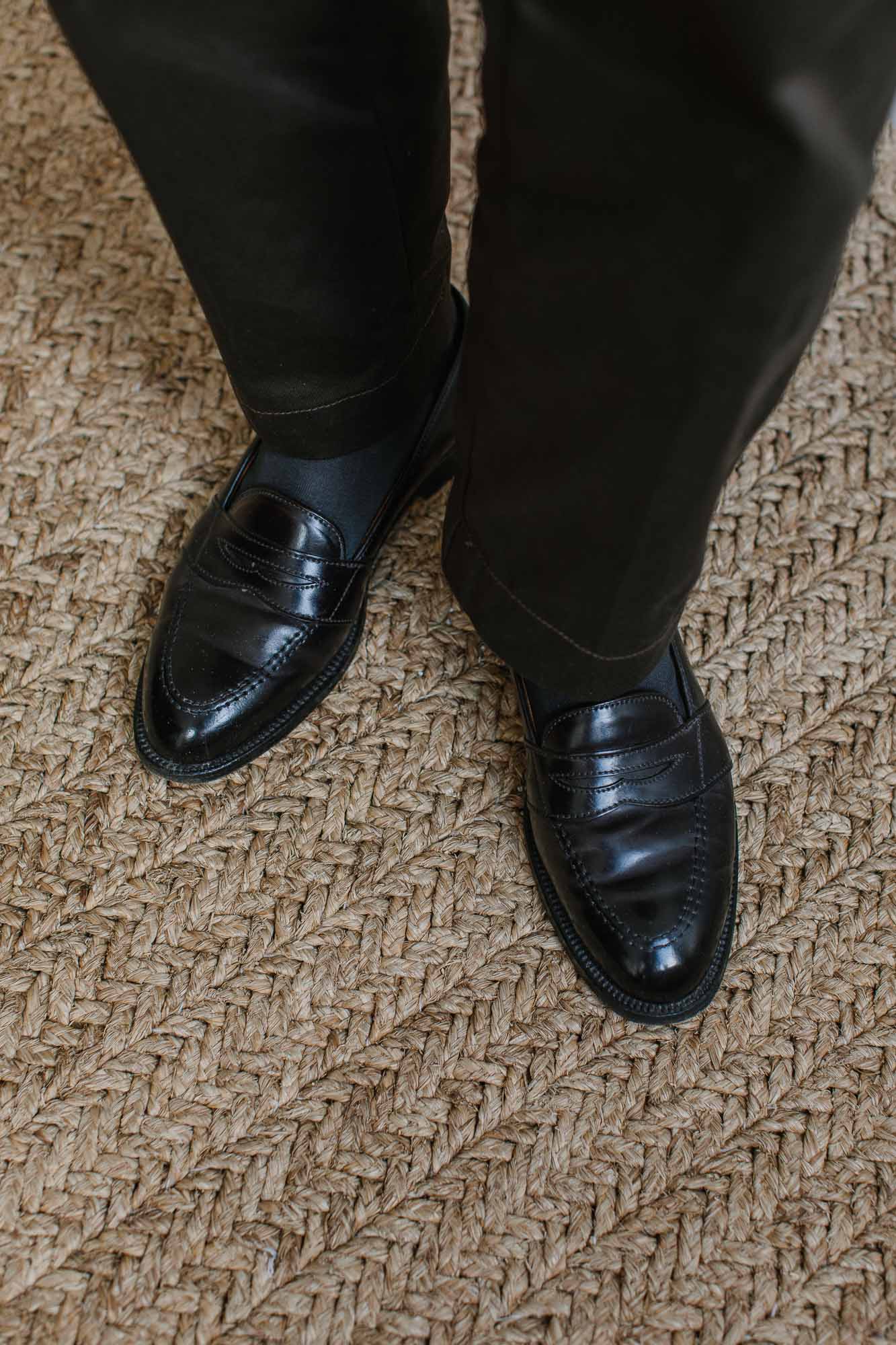
The loafers are full straps from Alden in Color 8 cordovanThe belt is alligator, also from Rubato. 

The shirt is a white PS Oxford, while the socks are (short) charcoal wool from Trunk.

All details on the pop-up here. Looking forward to seeing everyone next week.

Photography: Jamie Ferguson

Introducing: The Linen Harrington

Introducing: The Linen Harrington

Wednesday, April 13th 2022
||- Begin Content -||

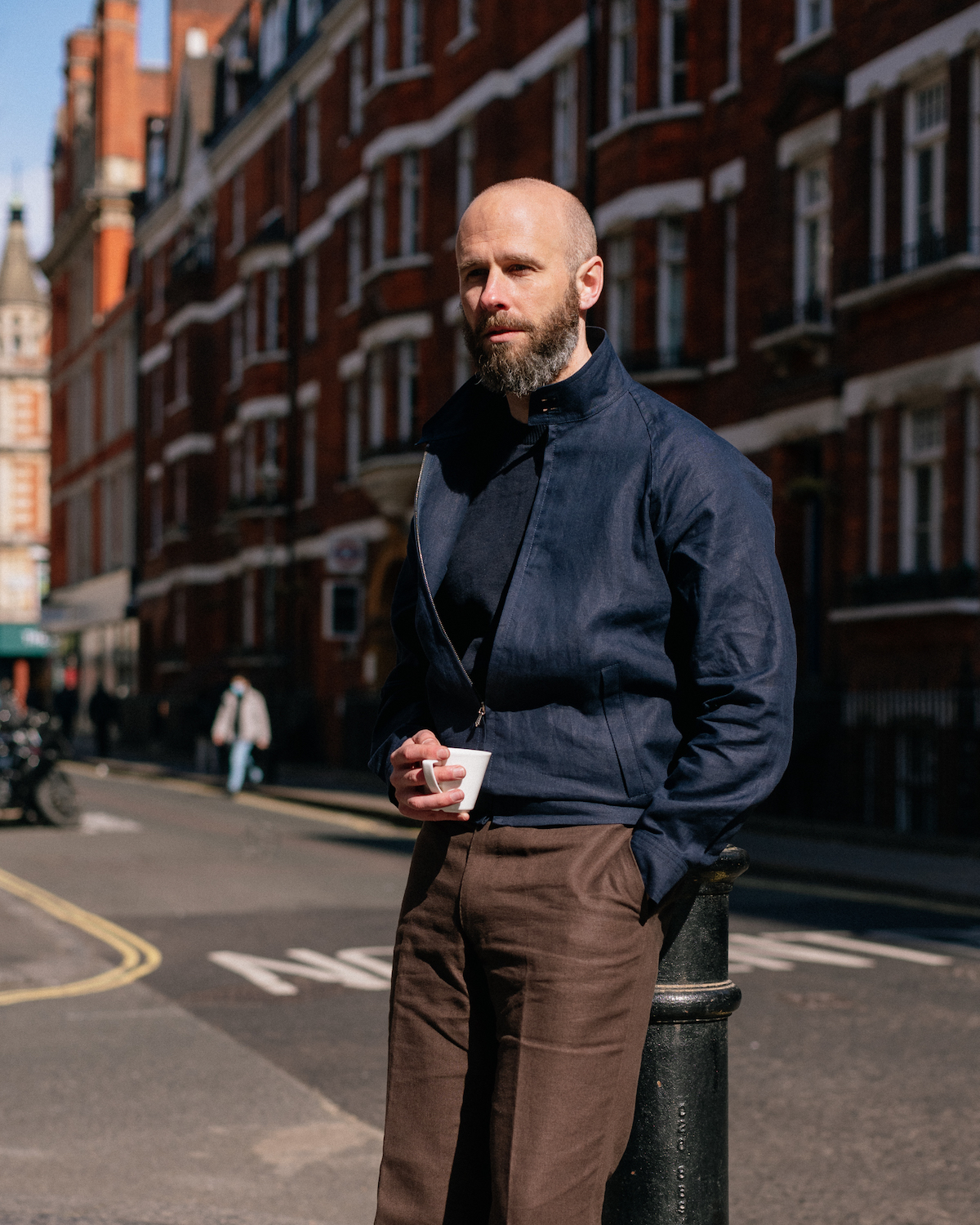
I used to have a linen bomber jacket from Hermes. It was a beautiful piece of clothing, lightweight and cool, and I loved wearing it with both shorts and tailoring in the summer. 

Unfortunately the design had some flaws (in my view); it had a tiny collar, no pockets, and a slightly A-line body shape. 

Then, last year, I picked up a vintage Harrington-style jacket from Levison’s. From what I can tell, this was made in the 1940s or 50s - not a G9, but English and with a wonderful roomy cut.

I wore it quite a bit last summer, but the cotton made it much more of a casual piece. So the thought occurred: what would a version be like in linen, like that old Hermes bomber? Would it be just as versatile, and pleasing if it had that classic blouson shape? 

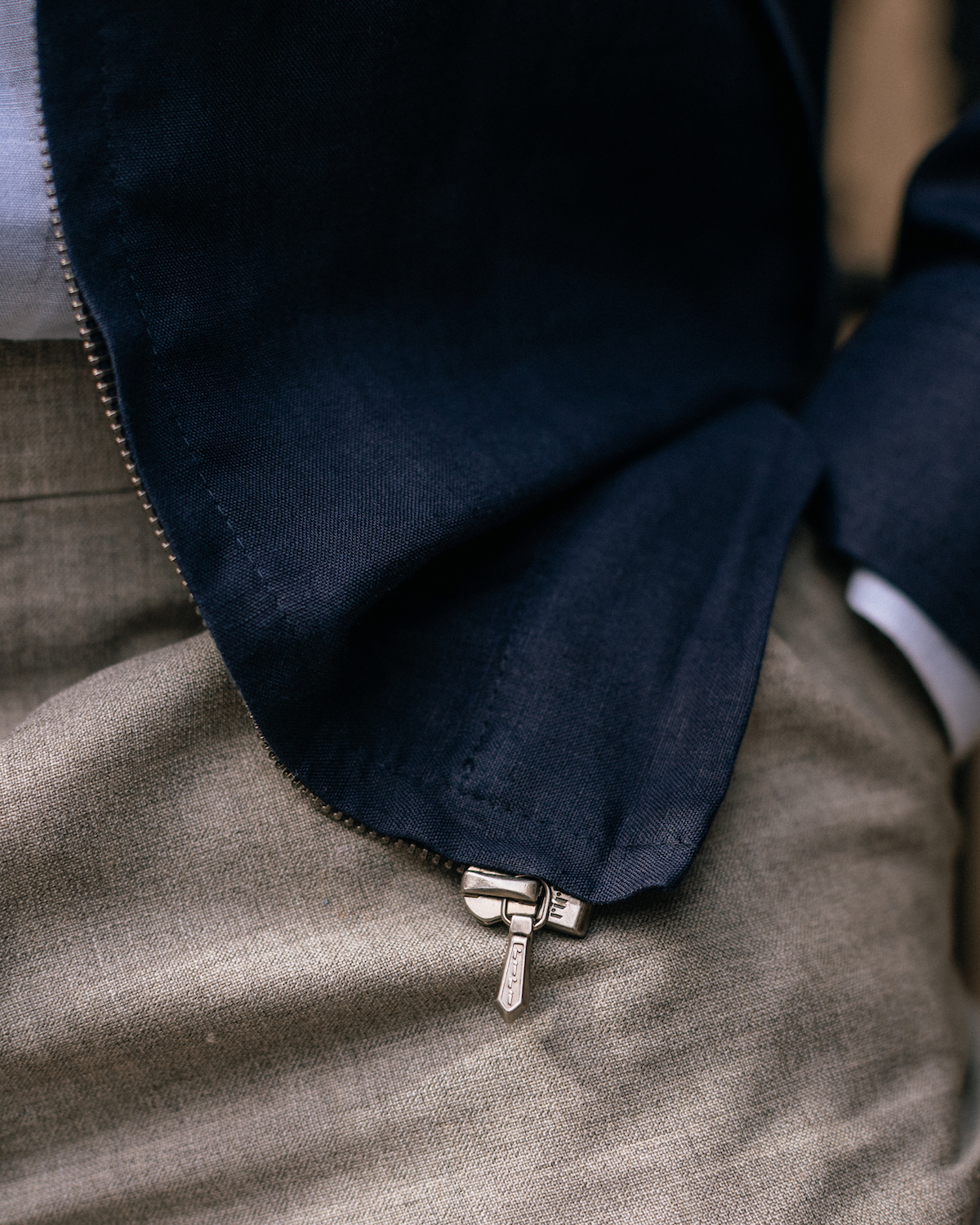
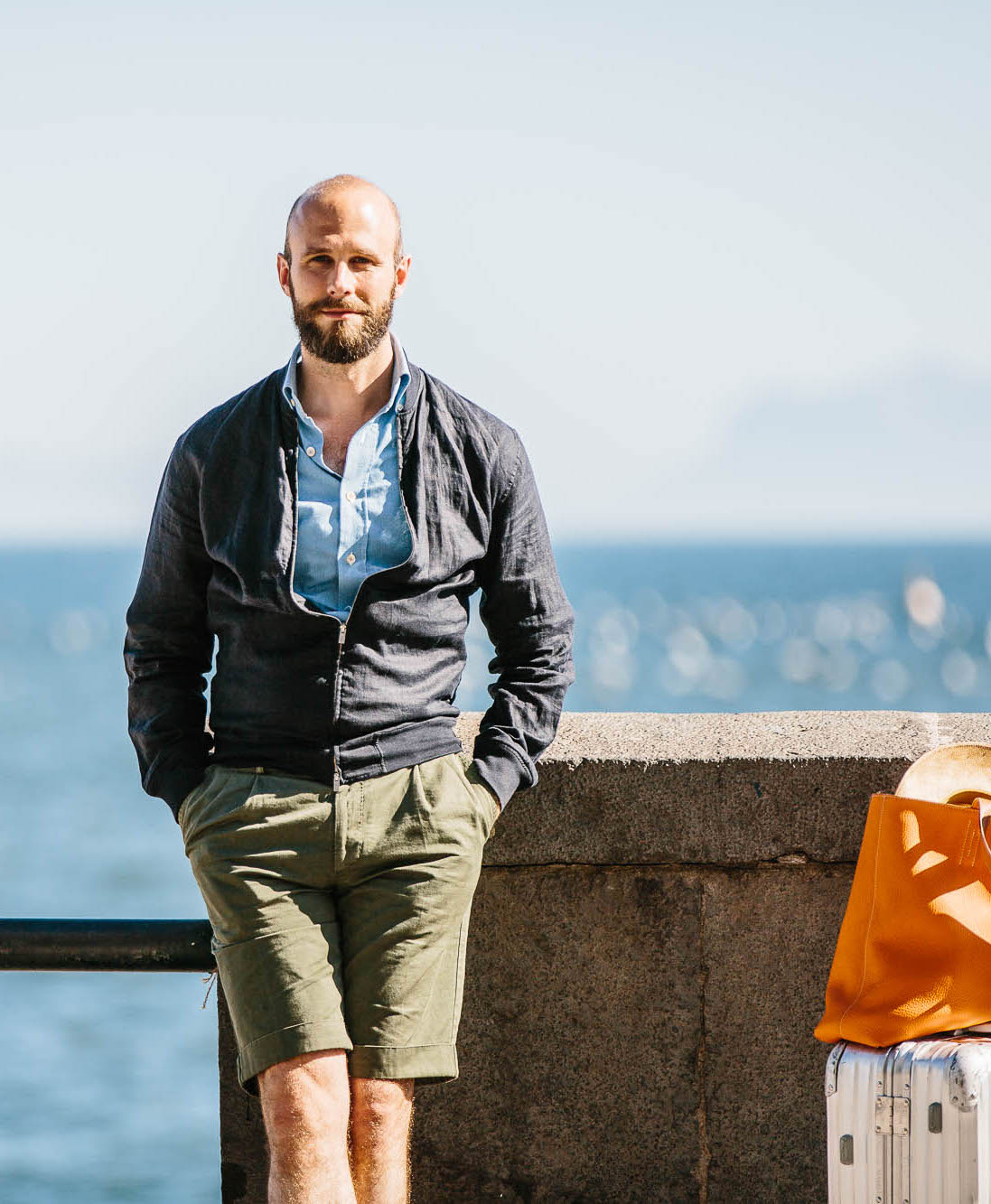
This led the team at Private White VC and myself down a rabbit hole of linens, zippers and back yokes, and eventually to the piece we’re launching today: the PS Linen Harrington. I have to say I’m very happy with it. I prefer it to both the vintage Harrington and the Hermes, and I think it’s more useful than both. 

The linen is light - 270g - and so air passes through easily. On the couple of recent days when the temperature touched 20 degrees in London, I tried it and hardly felt like I was wearing an outer layer at all. I’m looking forward to wearing it when the heat is closer to 30.

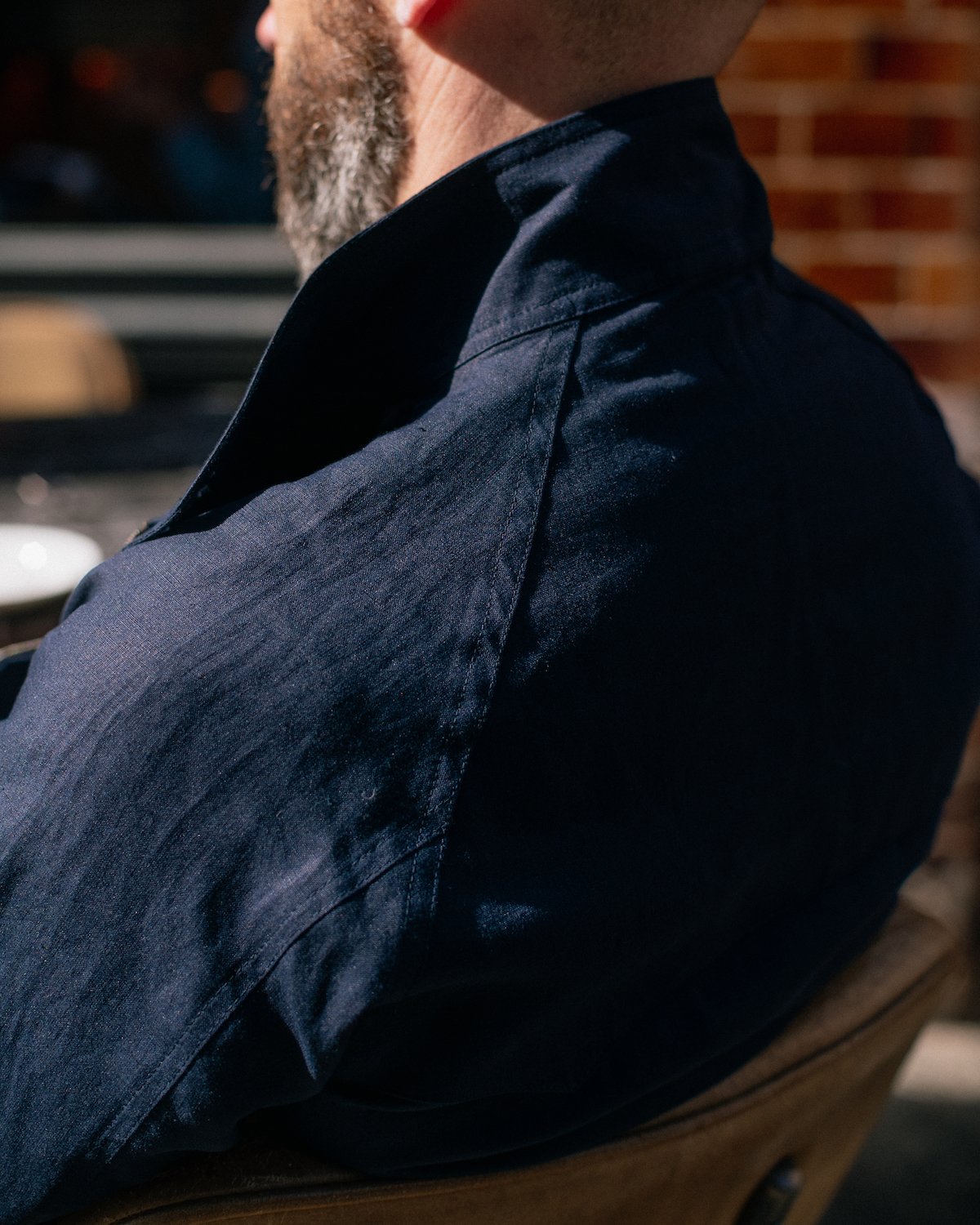
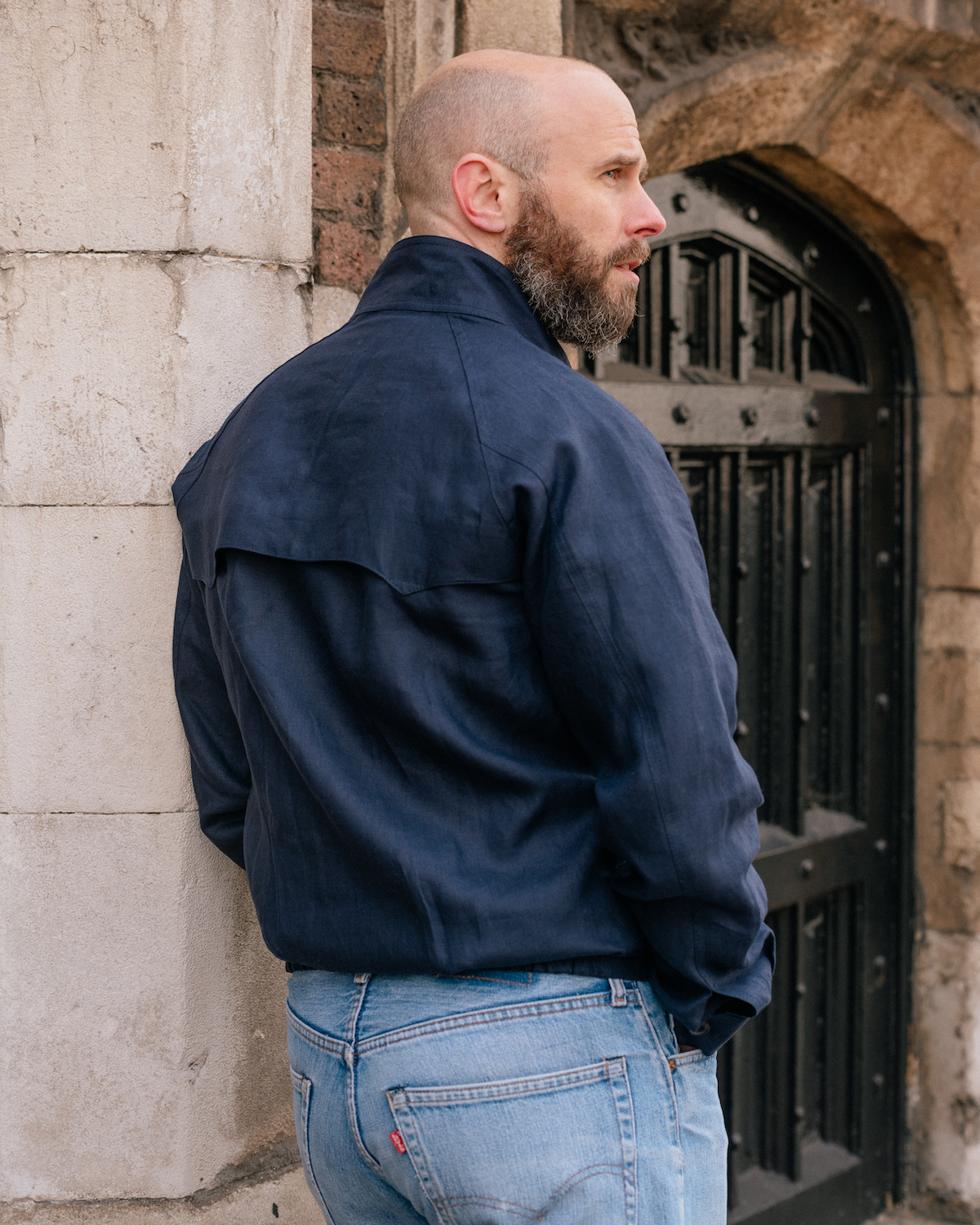
On the back of the jacket, I was keen to keep the large, shaped back yoke of a traditional Harrington. It’s a nice detail, and rather flattering too - emphasising the width across the shoulders.

Of course, on those originals, the point of the yoke was the provide a double layer against the rain, when you were out on the fairway and caught in a downpour. 

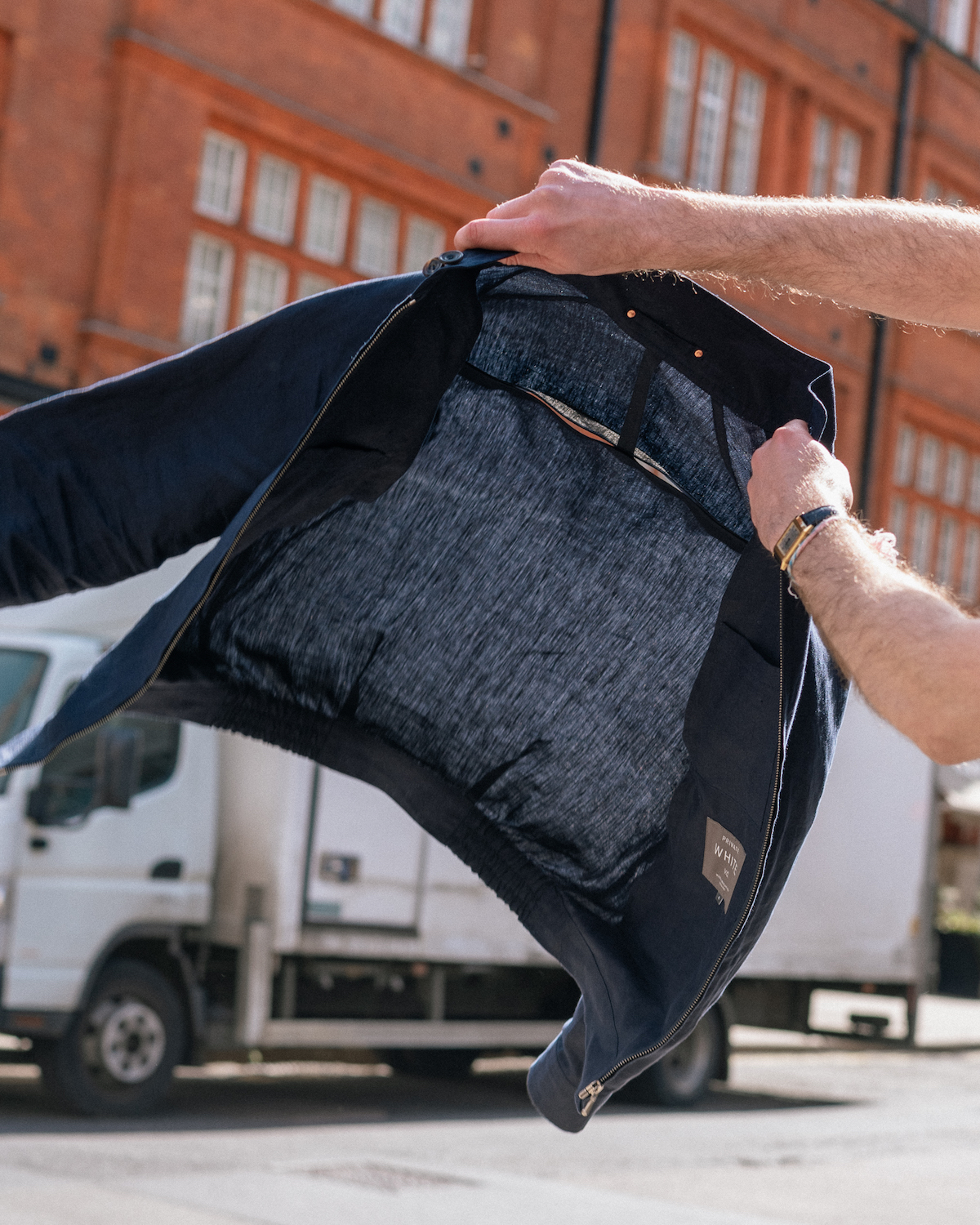
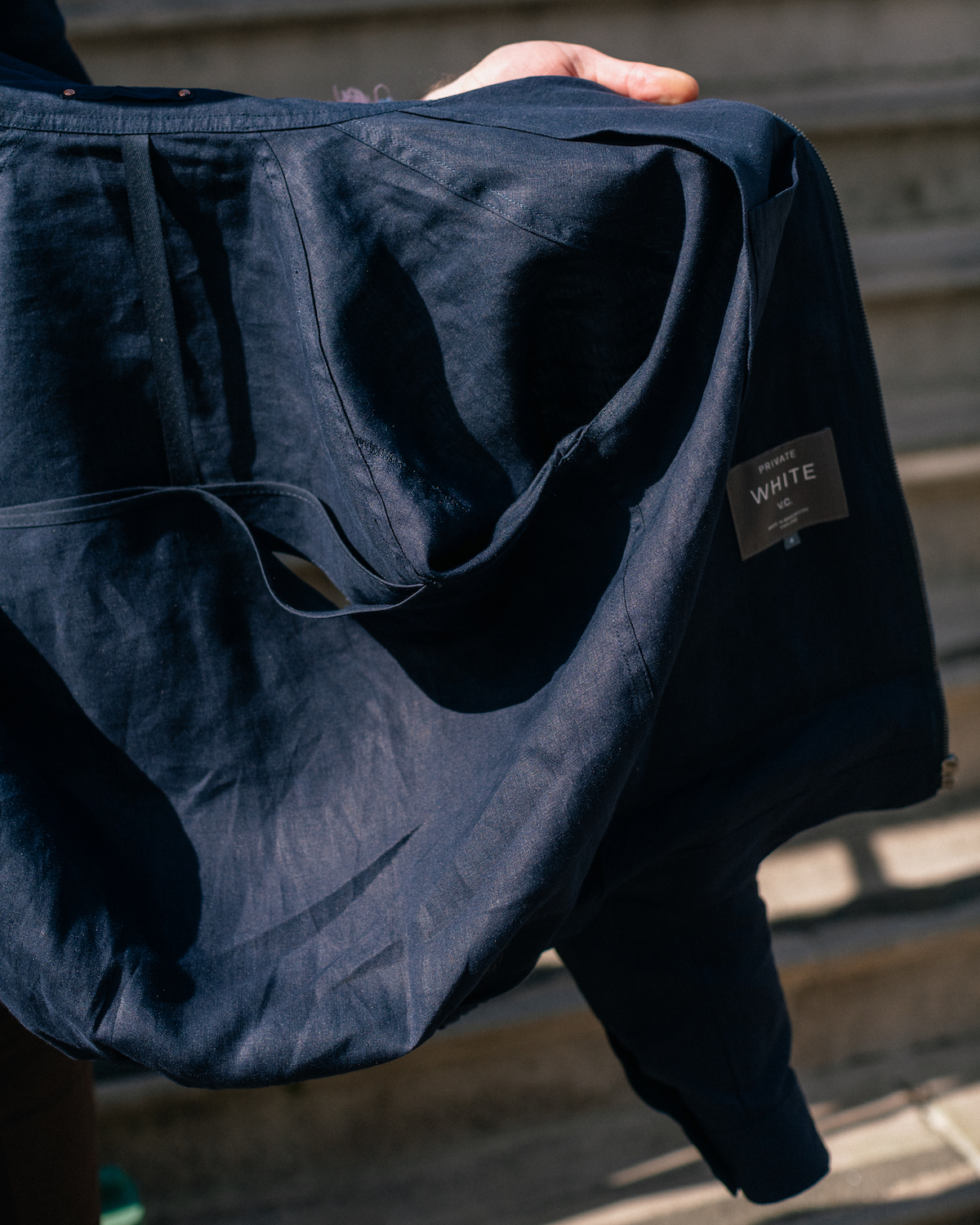
As this jacket was meant to be cool, we didn’t want two layers of linen there. So instead, we decided to leave a gap between the two parts of the back, held together at the points of the yoke. 

This means not only that there is just a single layer of linen on the back, but that there are three small vents that can let a little air through, cooling the back even further. 

This practicality had to be the most important thing of the design: it is made for the heat, and had to be effective. 

But the aspect of the jacket I love most is the silhouette. 

It is deliberately cut close at the waist. So when you try it on for the first time you may have to pull the two sides together slightly, to zip it up. 

This is easy to do, because there are two panels of elastic at the back of the jacket (not all the way round - rather more elegant); and when it’s fastened, the tightness means that the waistband stays fixed on the hips, allowing the blouson-shape of the body to bloom above. 

This is looks good to my eye, creating a larger upper body, and I love particularly how that looks with a pair of sharp trousers running straight down below. 

But it’s also surprisingly cool. The closed waistband means you’re getting less airflow, but the blousy body moves and billows, pushing air around and through the linen. 

That was one of the things that surprised me about that Hermes jacket, the first time I wore it. 

This body shape is complimented, I think, by the zip and collar. 

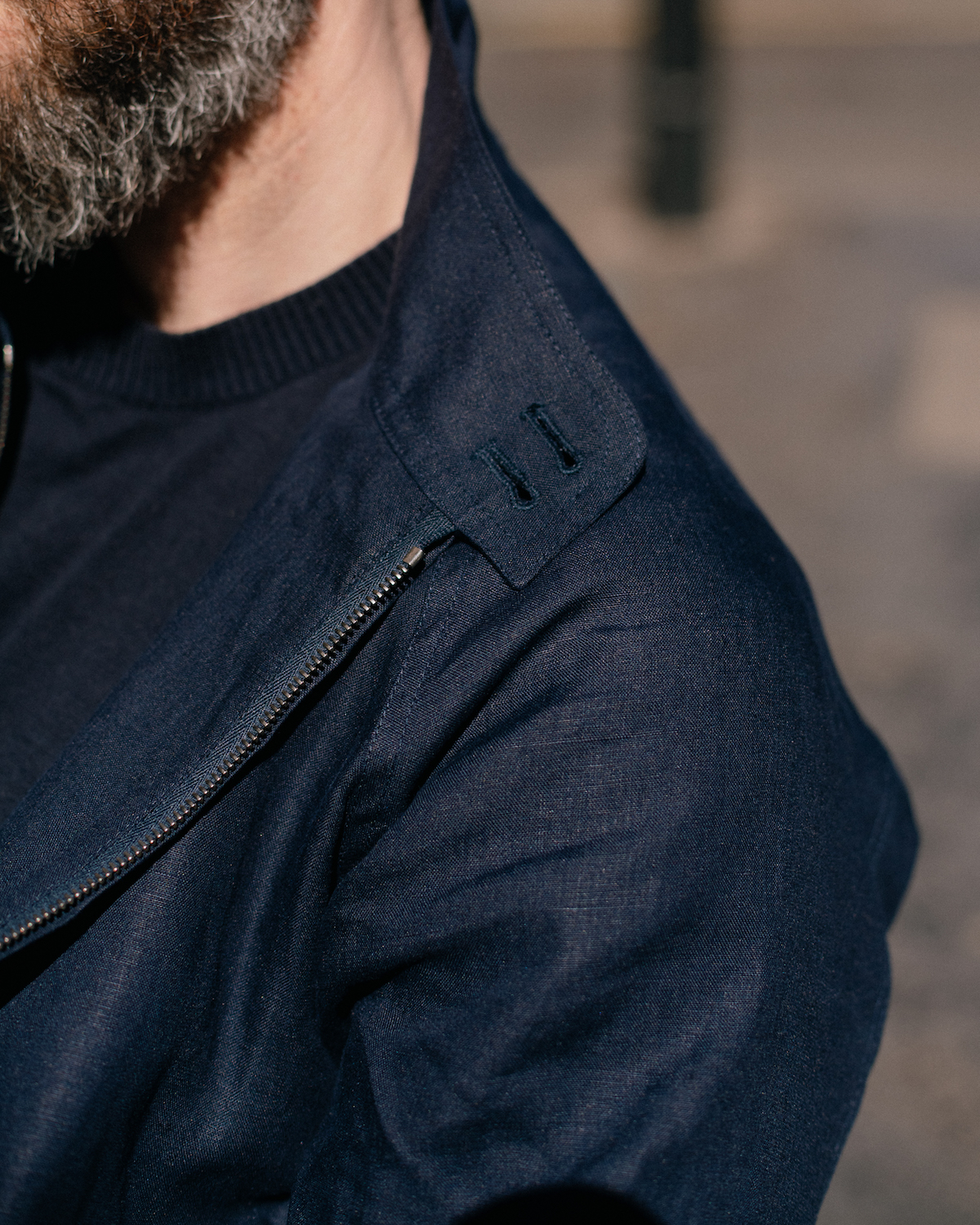
These were made deliberately so that front edge doesn’t collapse, but runs in a nice bow up the chest, and is held at the top by the double-layered collar. 

This shape is what I always loved about a Harrington-style jacket, zipped perhaps a third of the way up. You can see how nice that is in suede too with the Purple Label jacket shown in the recent T-shirt shoot.  

Of course, if it is too hot to keep the jacket closed, then you can leave it open, and even here I find the firm zip line helps the front look good. 

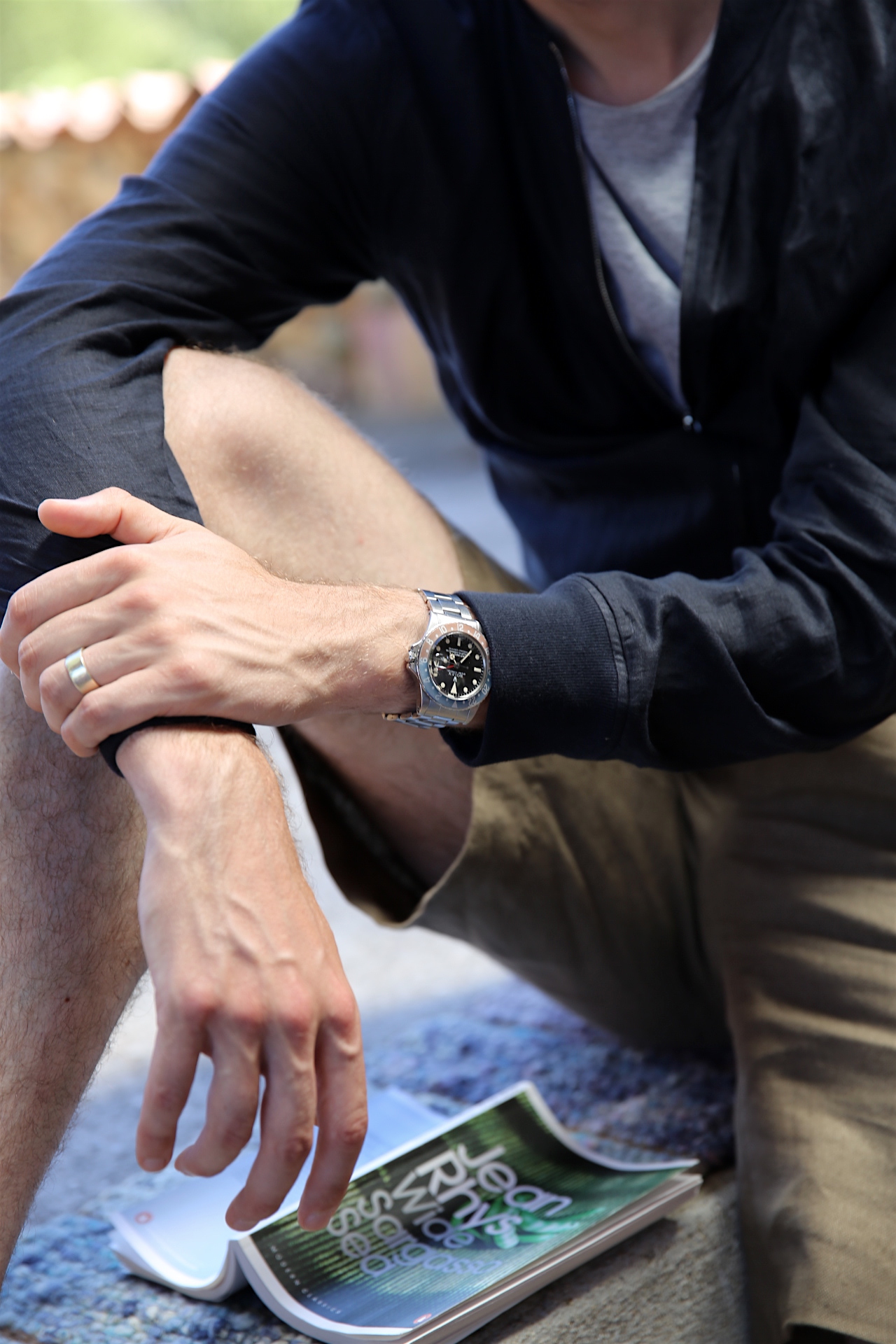
The sleeves are also easy to fold back, so if you want to be even cooler and don’t mind that more casual look, you can wear it as I am below, with them rolled. 

In summer, at least half the point of wearing a jacket like this is to have pockets, so we put two simple patches on either side of the chest. 

They’re 11cm by 13cm, so will fit quite a lot of mobile phones and certainly a card wallet or similar. Anything bigger would have required not just the more material for the pocket, but also the facing, sacrificing the coolness a little too much. The contents also become disproportionately heavy.

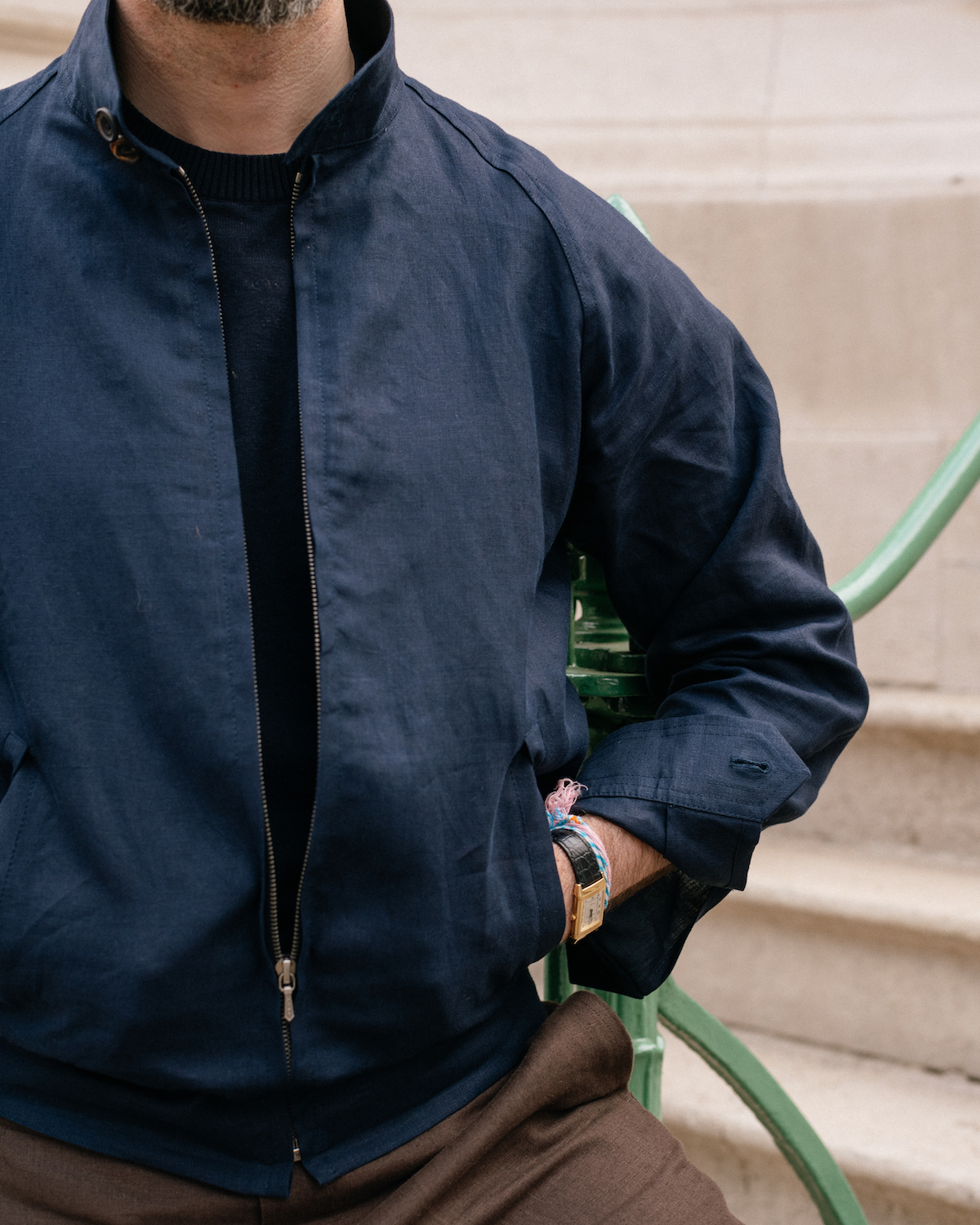
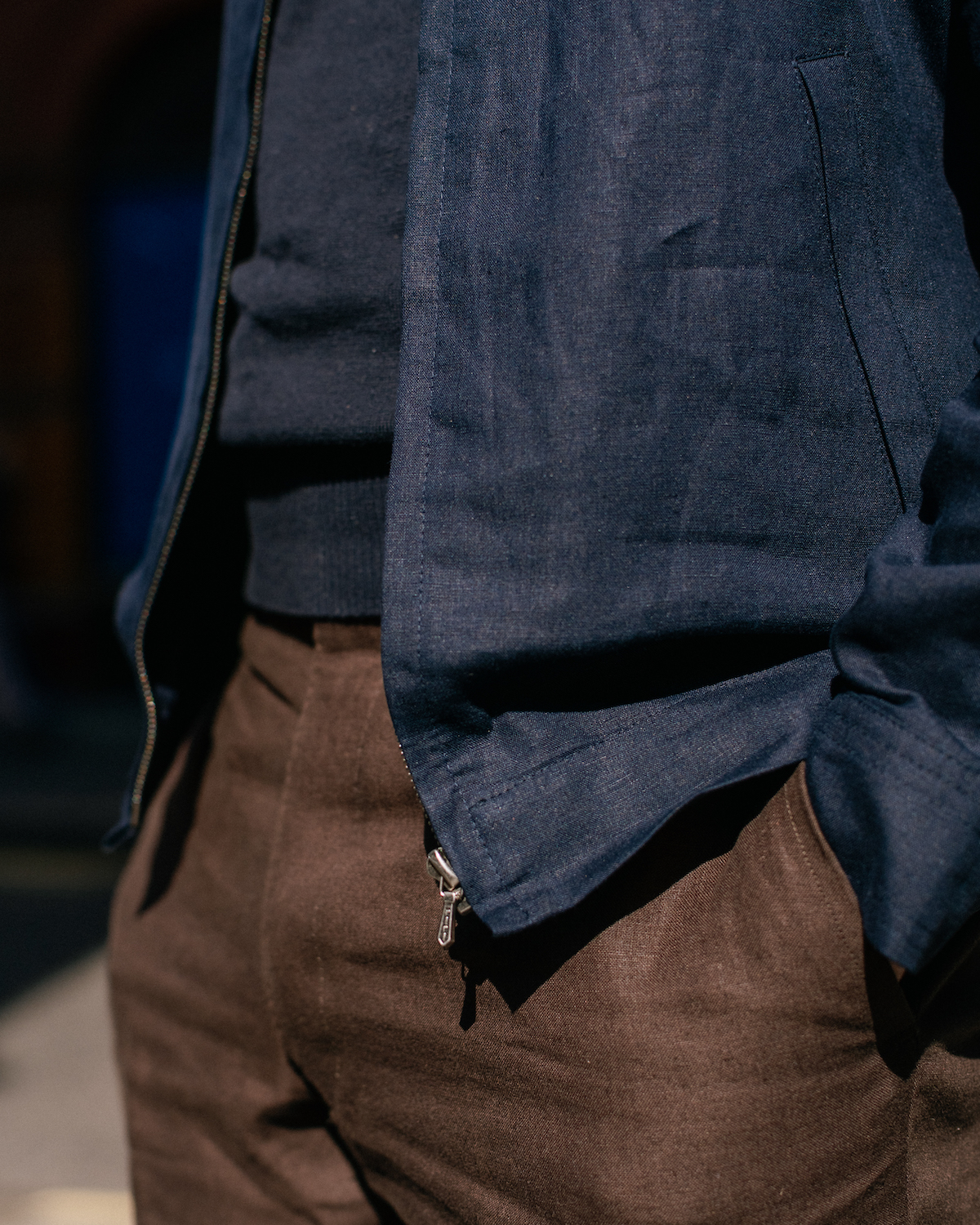
The jacket has two hip pockets, but they’re made with the welt facing downwards, so they stay sharp and closed if not in use. This was originally done on golf jackets against the rain too, but I like the fact that the front looks that much cleaner - particularly on a jacket as dark and simple as this one. 

Elsewhere there are details you’d expect on a PS piece, such as the two-hole, unpolished horn buttons used on the other PWVC collab coats. The RiRi zip is also deliberately small and elegant.

In order to demonstrate the versatility I mentioned earlier, I’ve shown the jacket with three different outfits, and different levels of smartness. 

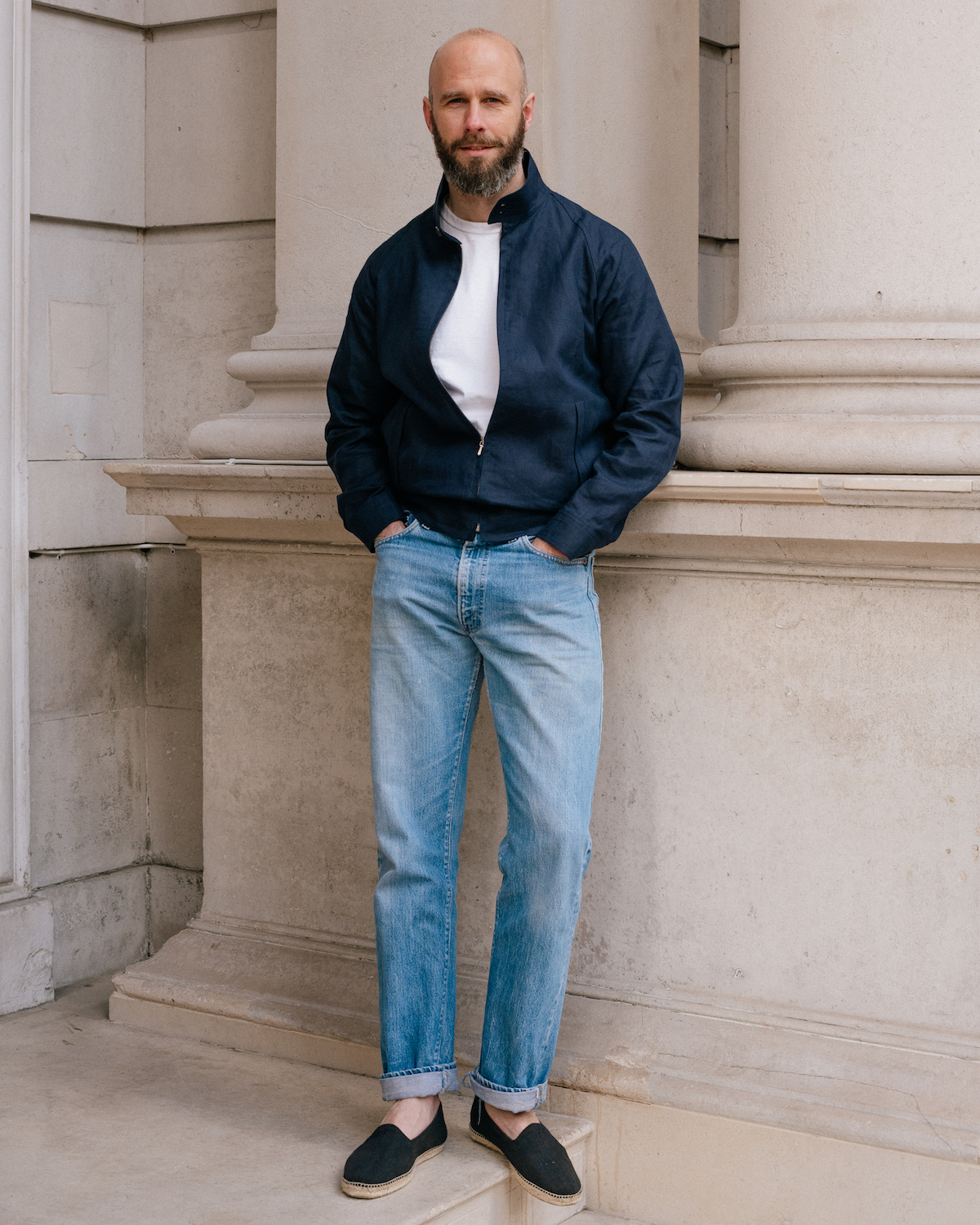
First with jeans, simple and casual. A white T-shirt, vintage seventies light-wash jeans, and black espadrilles. 

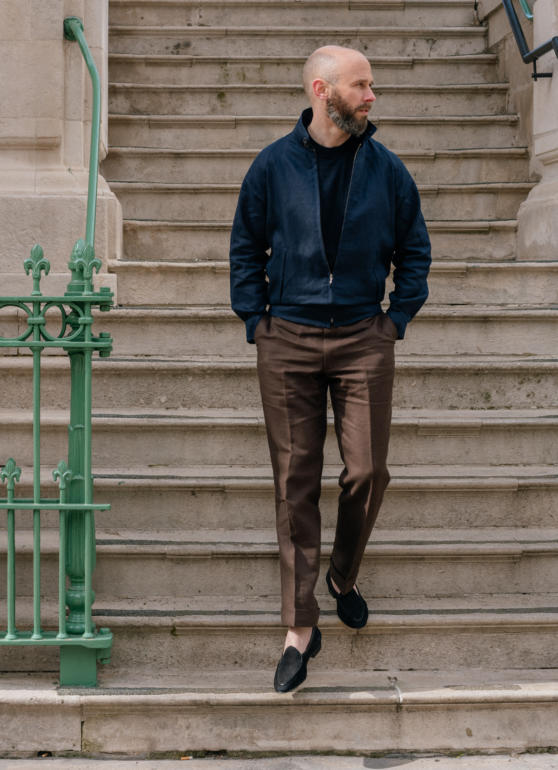
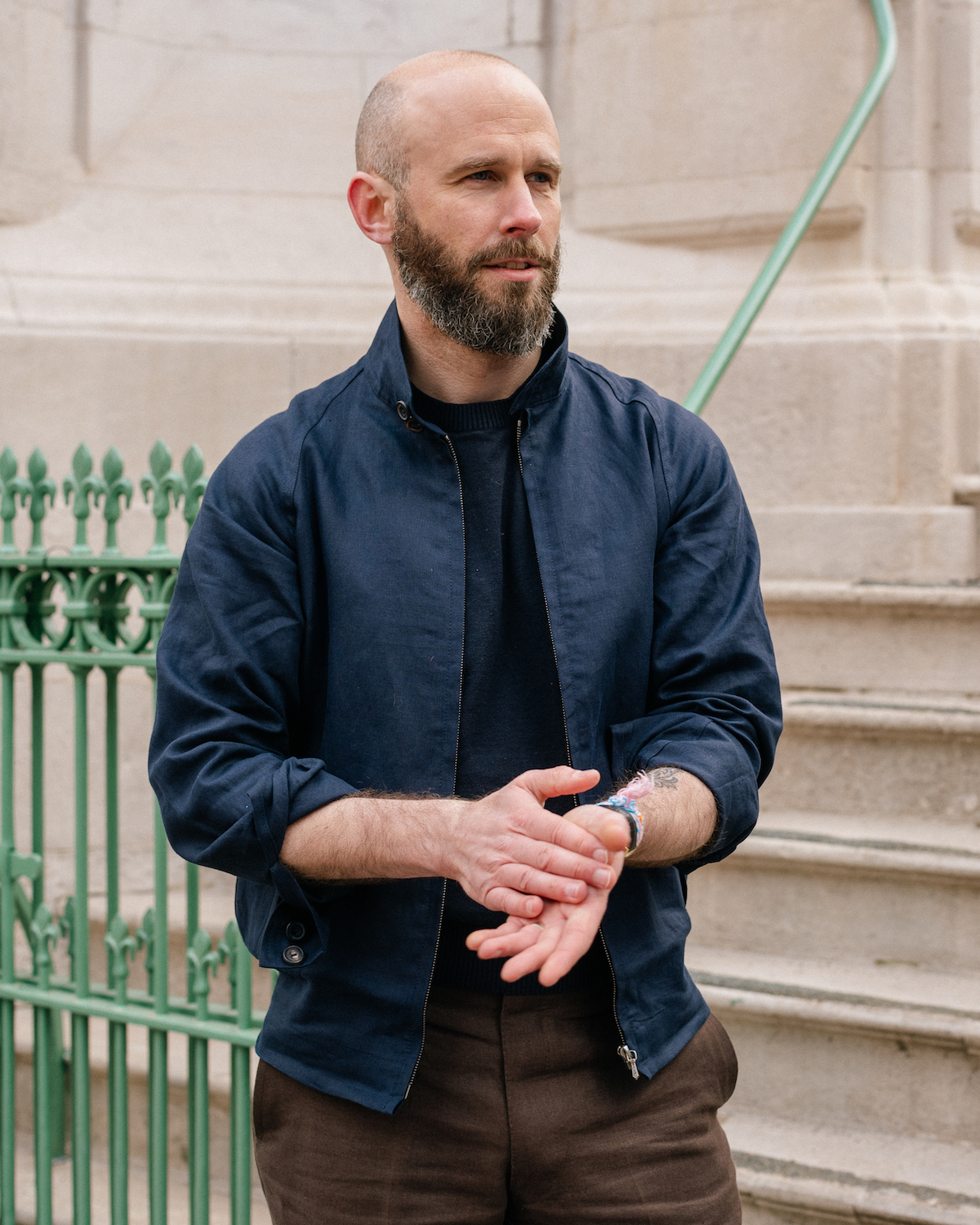
The second still has a T-shirt, but it’s a knit from The Anthology, and the trousers are tailored brown linen, from Edward Sexton. The shoes are Sagans from Baudoin & Lange. 

That second outfit is smarter but the colour palette, tonal and dark, is also perhaps more modern.

The last outfit (below) is more tailored: a blue linen shirt, high-twist trousers and still black shoes but with a welt to them. Here the Harrington is more a substitute for a navy blazer - and indeed would be a good travelling companion alongside a hopsack jacket. 

If I could have shot one more, I would have shown the Harrington with shorts, as I used to wear the Hermes blouson - I’ve included an old picture of that lower down. I especially like that combination with a shirt, rather than a T-shirt. 

I know some readers will ask how this jacket compares to the Linen Overshirt. I think, actually, they have pretty similar uses but just different styles. 

The Harrington is arguably a touch more casual, because of its shape, and a better fit for jeans. But I think the overshirt is nice with jeans too. The overshirt is perhaps cooler because you’ll more likely wear it open; but actually its made with slightly heavier linen than the bomber, beause it needs it to retain shape.

The difference is more one of style. And just like you might have both a field jacket and a suede blouson for autumn, so both of these can work in the summer. 

The Linen Harrington costs £495 plus VAT and is available on the PS shop here, now. Product details and sizing information below. Any questions, please do ask in the comments. 

Details:

  • Harrington-style jacket with zip front and button collar and cuffs
  • 270g dark-navy linen
  • Unpolished two-hole horn buttons, as preferred by me on Savile Row tailoring
  • Slim RiRi zip made in Switzerland
  • Jacket made in Manchester by Private White VC
  • Two reverse-welt hip pockets and two internal, patch breast pockets
  • Vents to allow air movement between back body and yoke
  • Cost £495 plus VAT, ships from outside London

Sizing:

  • In these images I am wearing a 4, which in Private White’s sizing system is equivalent to a medium
  • I am six foot tall, with a 39-inch chest, 33-inch waist, and usually wear a size 40 jacket
  • The jacket is intended to fit closely at the waist. When wearing, you will likely need to pull the elastic panels on the back to close the front. This is intentional, to keep the jacket in place

Measurements:

  • Chest width is from 2.5cm below underarm
  • Hem width is without using elastic - elastic adds up to 8cm
  • Back length is from bottom of collar at back, down to hem
  • Sleeve length is along top of whole raglan sleeve, plus cuff
X-Small (2) Small (3) Medium (4) Large (5) X-Large (6) XX-Large (7)
Chest width 49cm 51.5 55 58.5 62 65.5
Hem
width
41.5 44 47.5 51 54.5 58
Back length 67.5 68.5 69.5 70.5 71.5 72.5
Sleeve length 77.2 78.1 79.5 81 82.4 83.9
Bicep 21.1 21.7 22.5 23.4 24.2 25.1

Le Vif: A vintage shop like a regular shop

Le Vif: A vintage shop like a regular shop

Monday, April 11th 2022
||- Begin Content -||

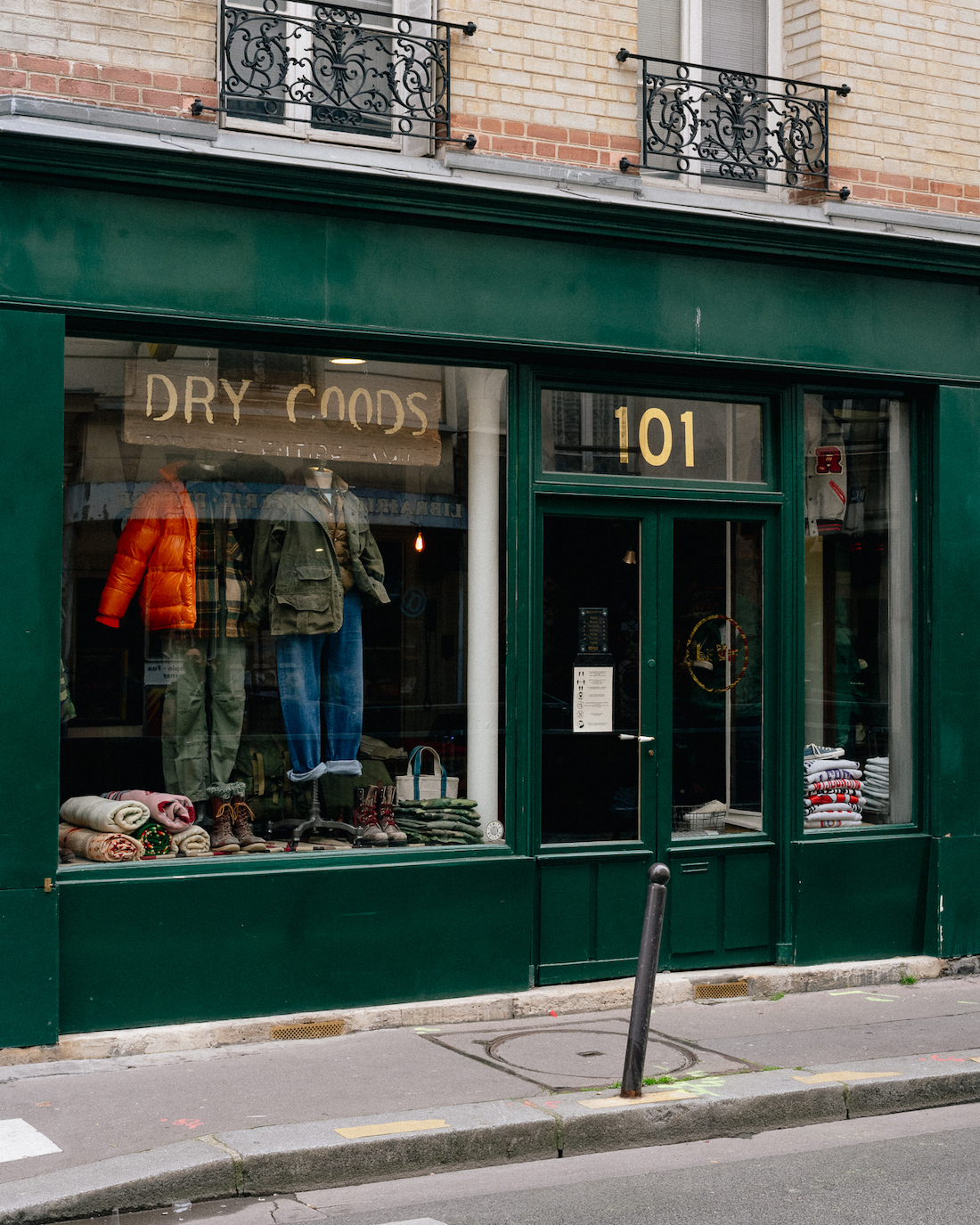
Le Vif in Paris is one of the most curated vintage stores around. 

What do I mean by that? Well, it has a particular view on the clothes it offers - in terms of quality, style and origin. 

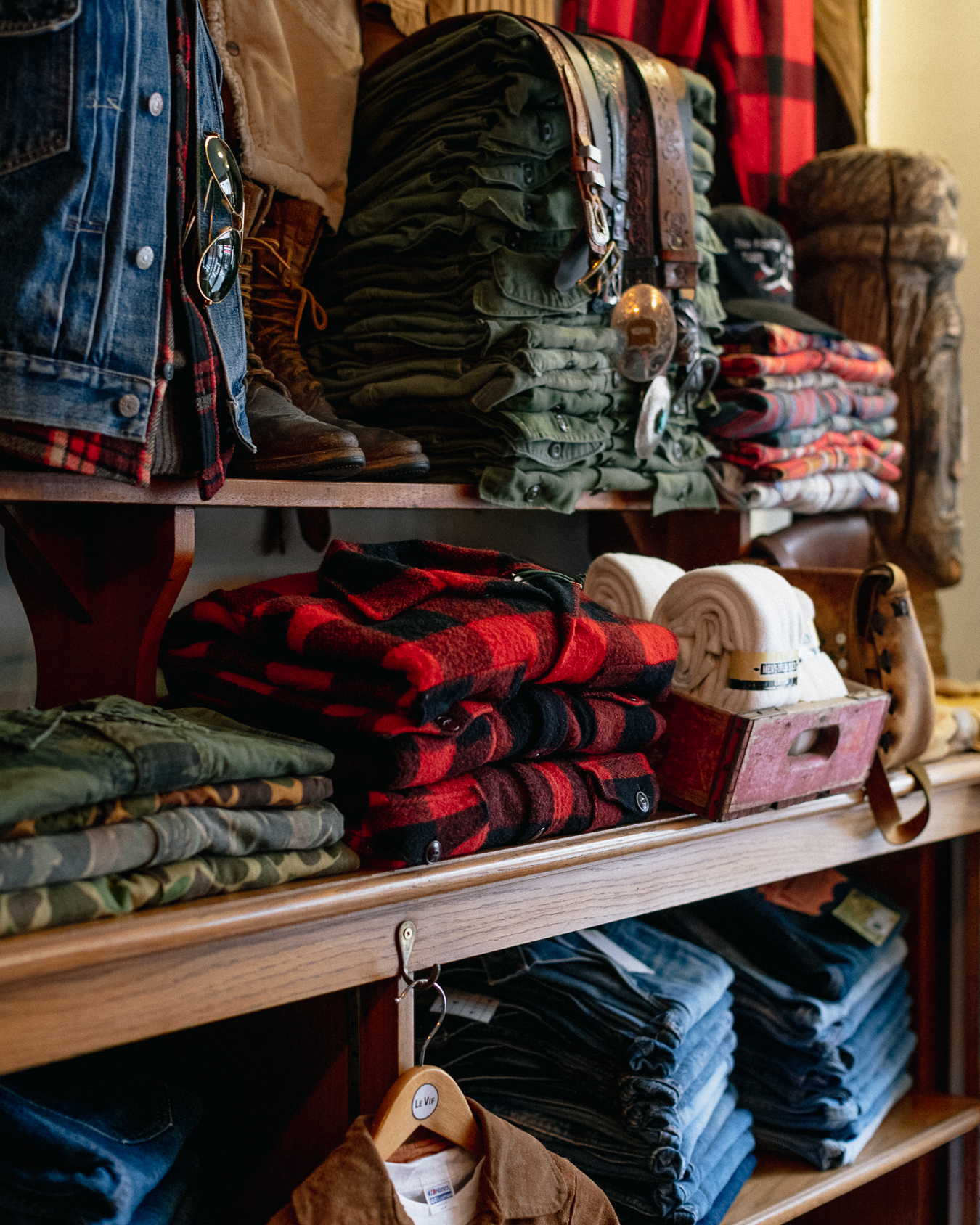
It sells Americana, normally American-made. There’s no British military or French workwear. That could be quite narrow, but the period covered is large, from the 1930s to early 2000s

It also sells clothing of a certain quality. Things are worn, but they’re never close to falling apart. There might be the odd paint splash, but nothing is stained. 

That’s in contrast to thrift stores, where the priority is price and the bar is often much lower. It’s also different to fashion vintage, where what’s in vogue is the priority. That’s the kind of store you see most of - around Brick Lane in London, or The Vintage Store further north.

Other vintage shops have different priorities still, I think. Some, for example, value rarity more, collector’s pieces. There clothing tends to be a lot older and, often, less wearable. A World War 2 shearling is a beautiful object, but if you wear it a lot, it will rip. 

I’m picking this apart because I think it shows why Le Vif is quite unusual, and why it’s one of my favourite vintage shops to visit.

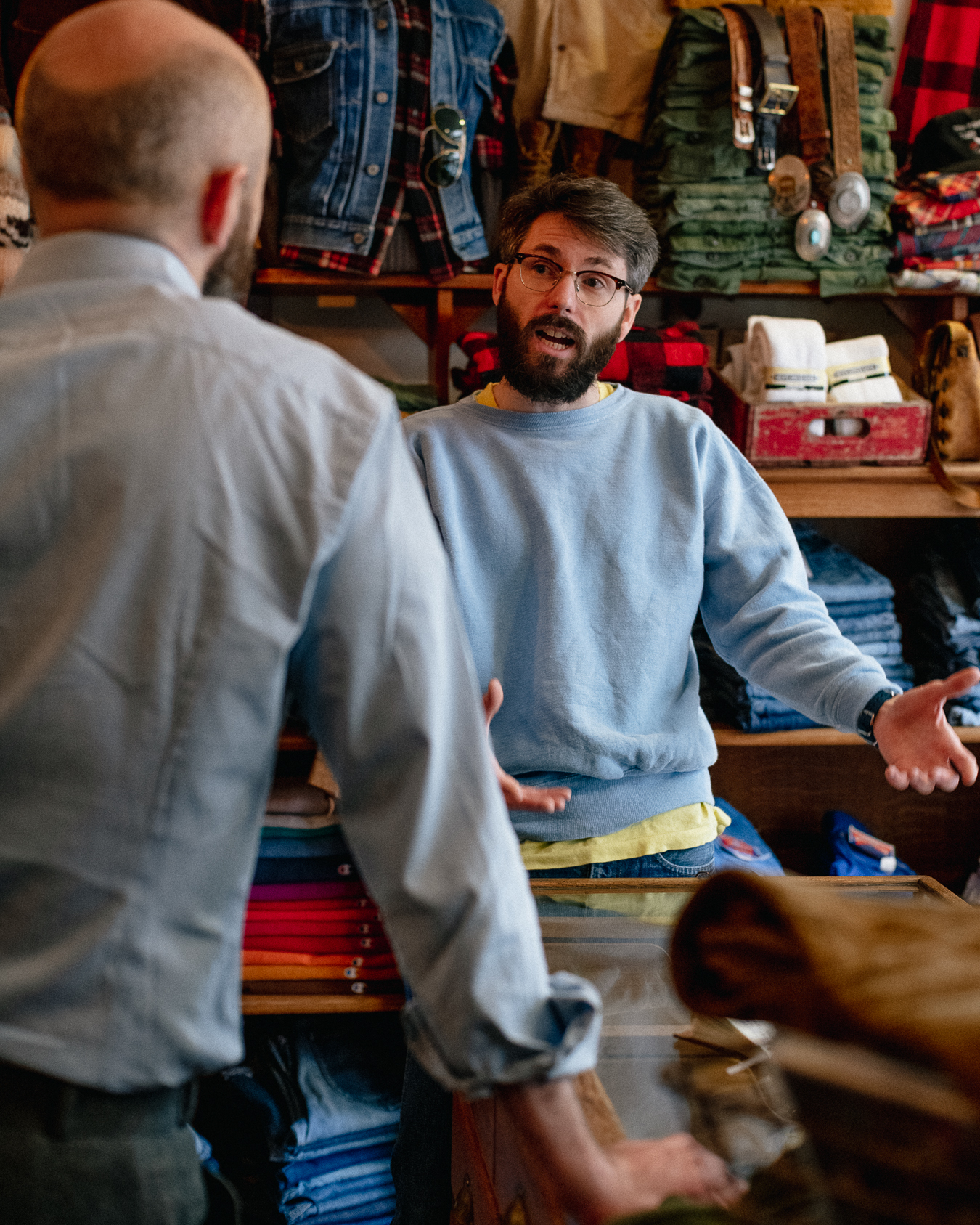
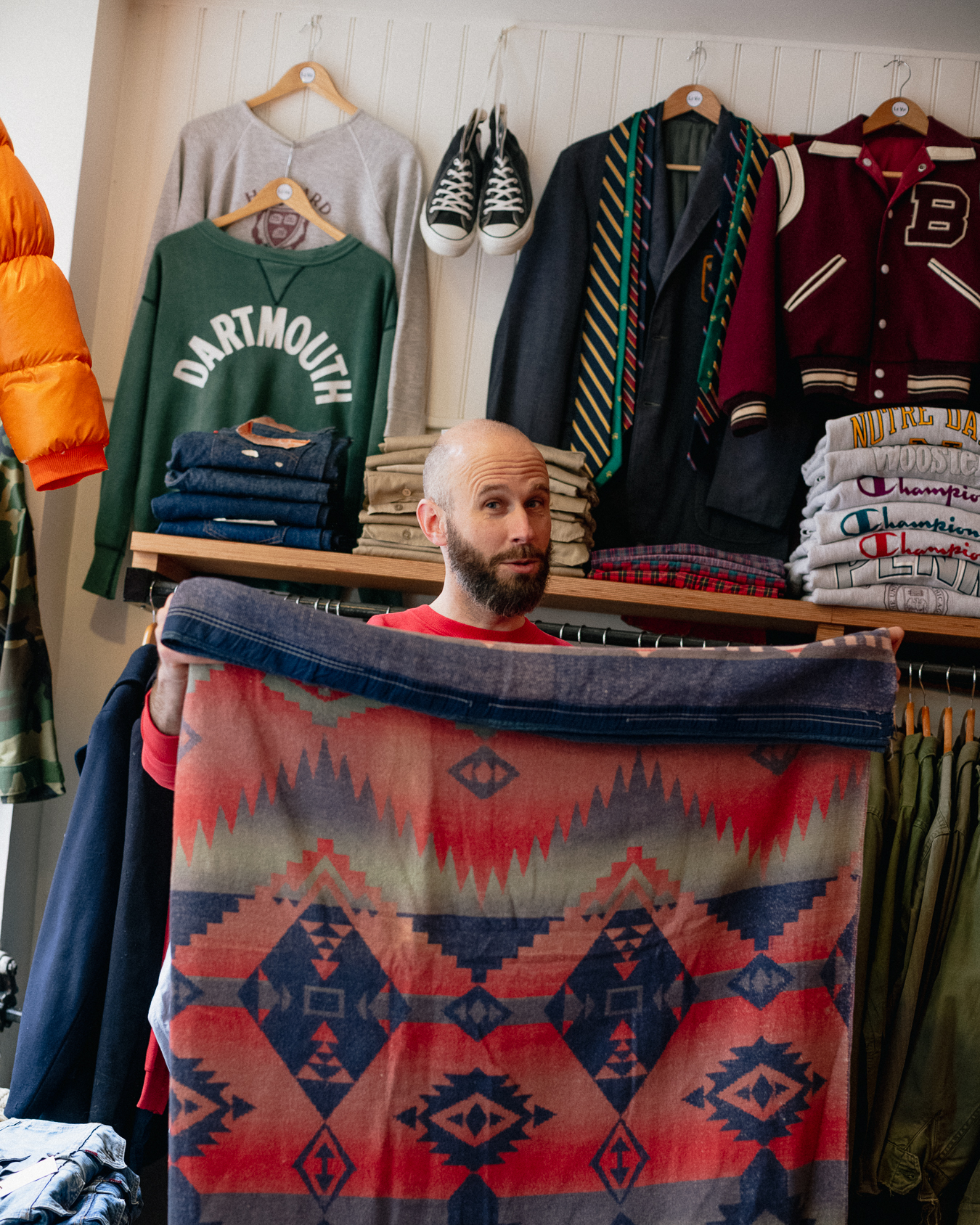
“Curated is a good way to put it,” says Arthur Menguy, pictured above, co-founder of Le Vif alongside Gauthier Borsarello.

“Having only American-made clothing sets a baseline for quality, but it also sets a kind of boundary for us. It’s always tempting to buy different things, to broaden. But you can lose your identity that way.”

Another way to look at it, is that Le Vif is more like a regular shop.

A normal shop manager doesn’t pile up stacks of whatever they can get their hands on, like a thrift store. They buy according to a particular aesthetic, and also change every season. 

“I think that’s the thing that makes us most different,” says Arthur. “In a couple of weeks we’ll change a lot of this stock around - both to reflect the season and to keep things fresh.”

“We also bring in clothes when we find a trend or a particular style interesting. Carhartt double-knee pants are a good example, or those fleeces on the shelf - though I think we brought those in before the trend really started.

There have always been thrift stores and flea markets in Paris, but not many vintage shops. 

“I would often find great things in the flea markets,” says Arthur, “but it would be very random. You’d find this great pair of red-line Levi’s, right next to a three-year-old pair made in Turkey. That kind of searching can be fun, but it’s not how most people want to - or have time to - shop. We wanted Le Vif to be simpler.”

You can probably place most second-hand stores somewhere along this spectrum. Broadway & Sons in Gothenburg, for example, tends to have greater volume of clothes and is less tightly edited, I find. The vintage you sometimes find in a RRL store is the opposite: there’s very little of it, but it’s often the perfect age, size and style. 

Curation is then sometimes tied to price. You pay someone to do a lot of hunting, and because it’s a popular piece it's more valuable still. 

That doesn’t mean everything is very expensive - I picked up a pair of 1977 jeans for €200 at Le Vif, for example. It just means this isn’t thrift any more - you’re buying the clothes because you like them or because they’re unique, rather than to save money. 

“Second-hand clothing has gone through waves of popularity over the years,” says Arthur. “But often the reasons have been different.

“In the 1970s, for instance, vintage became popular as part of the hippy movement. The motivation there was to consume less, to re-use and to live a cheaper, simpler lifestyle.

“Bell bottoms became identified with that movement because they were readily available in thrift stores - naval trousers that had a wider bottom to make them easier to roll up. It was only later that they became a fashion, and later still that brands started making them.”

So why has vintage become popular now? “Price is still a factor for younger people, as is sustainability. There’s a fashion element, particularly with the nineties. But I think there’s also still an interest in heritage clothing - traditional pieces that feel more authentic or characterful.”

This range of motivations might be why there are so many different types of vintage store today, from a simple reseller to a fashion shop to a collector of militaria. 

Le Vif is one particular type, with a geographic focus, a certain style, and a desire to make buying vintage easier. 

All of them appeal to me, which iswhy I love visiting so much.

Photography: Alex Natt @adnatt. I'll cover what I bought, and indeed have bought elsewhere, in a separate post.

www.levifparis.com

Smart/casual and high/low: How to dress like Oliver Dannefalk

I was surprised when I realised we hadn’t ever featured Oliver Dannefalk in our ‘How to dress like’ series, given I’ve admired his style for years, particularly since he launched Rubato with Carl Pers.

I assume it’s because what he wears has effectively been featured in the various times we’ve covered Rubato itself. As with many small brands, his style is intrinsically bound up with the ‘easy elegance’ the brand espouses. 

That aesthetic is actually quite narrow compared to the range of clothing Oliver wears though. One of the most inspiring things I find in his style is the way he mixes casual and formal, such as canvas sneakers with an overcoat, or tassel loafers with old jeans. And the way vintage clothing is mixed in there too. 

So in this instalment of ‘How to dress like’, I specifically asked Oliver about those types of combinations, while also presenting a range of outfits, from fairly smart to pretty casual. The rest of the series, interviewing 16 other men I admire, can of course be seen here

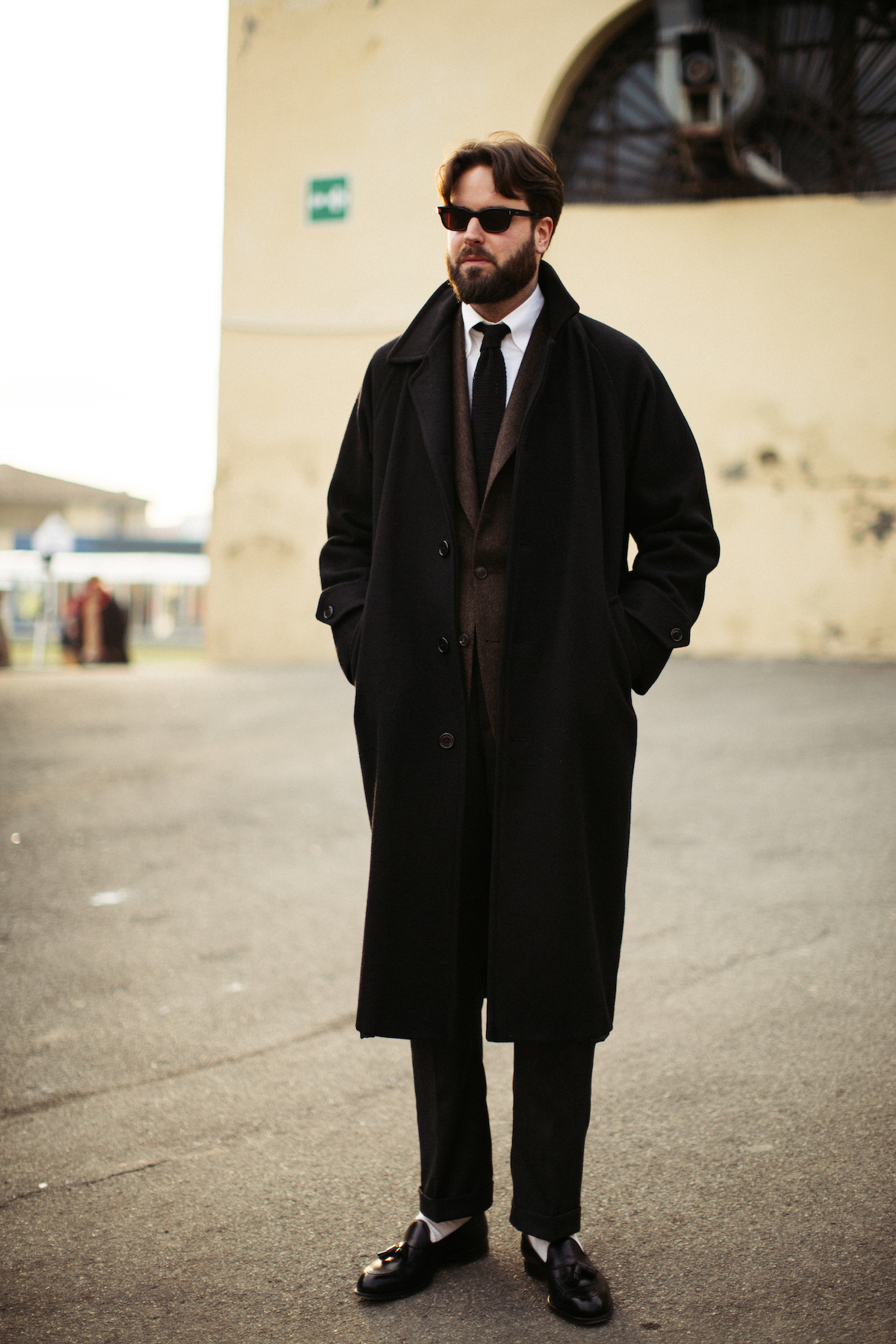
Outfit 1: Tailoring with white socks

Black raglan coat: Vintage

Black knit tie: Vintage

Brown herringbone jacket: Saman Amel

White shirt: Rubato sample

Grey cavalry twill trousers: Bespoke from a Swedish tailor, now retired 

I’ve found it hard in the past to incorporate black into any outfit, except for a pair of shoes or a tie once in a while. But when my friend found this vintage coat for me, the colour started to make more sense, with its inherent drama and elegance.

Here I wore it with a knit tie, crisp shirt, jacket and grey trousers – and white socks to take a little bit of edge off. I don’t want to come off as too serious and dark.

I love a knit tie. This was the first tie I bought for myself, around 15 years ago. My first ever tie, though, my father bought me for graduation. I wonder if I still have it somewhere. 

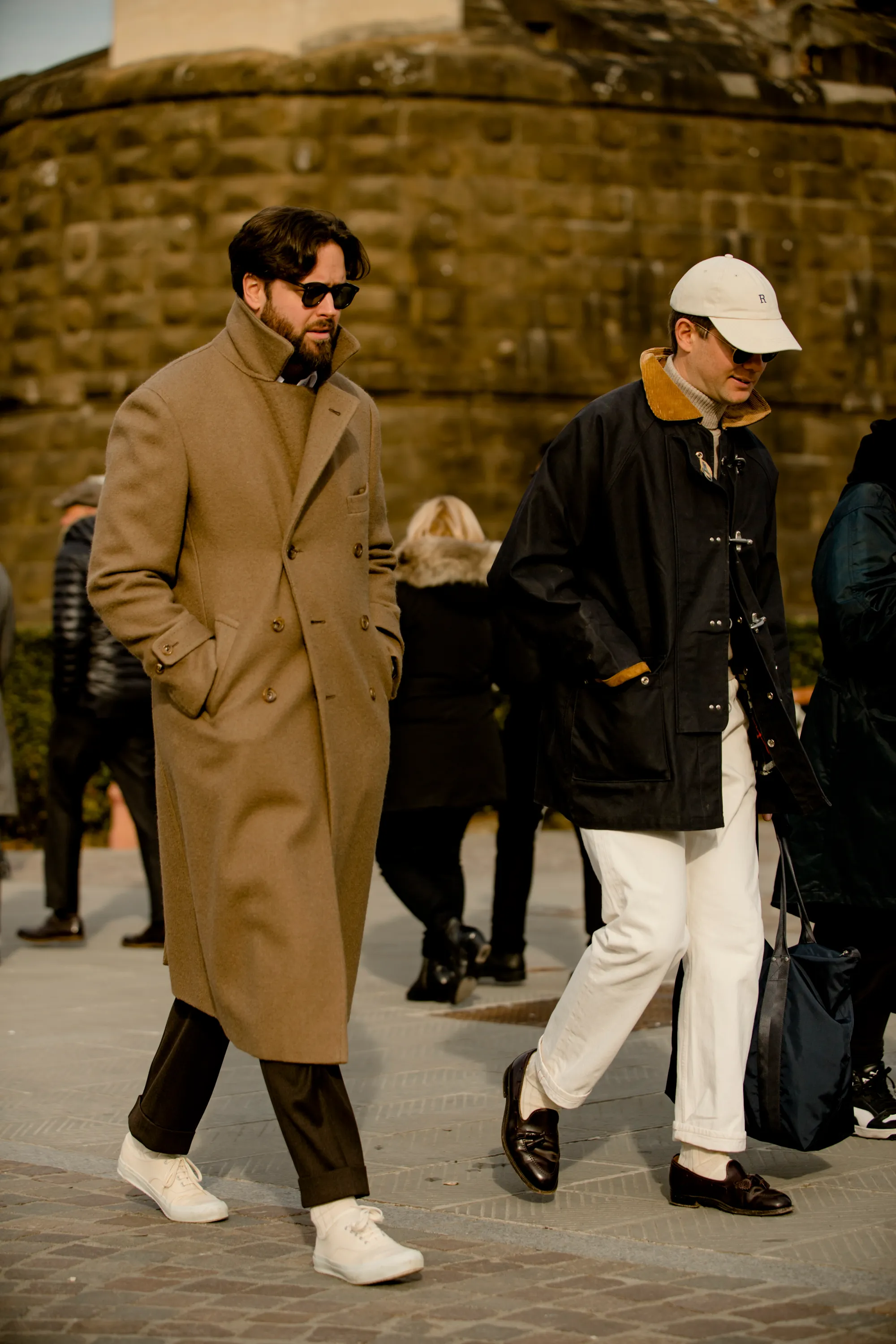
Outfit 2: Overcoat with sneakers

Bespoke coat in British Warm cloth by Fox Brothers: BnTailor

Brown cavalry twill trousers: BnTailor

Brown V-neck: Rubato

White shirt: Rubato

Off-white canvas sneakers: Doek oxford 

I’d probably say my favourite colour is brown because of its warmth, richness and versatility. Plus a friend’s mother once told me to always wear brown because it compliments my eyes. I took that to heart.

This outfit is a deliberate clash between casual and more dressed-up clothing. You have the pleated trousers, but the sneakers instead of loafers; you have the double-breasted heavy coat, but also the V-neck knit instead of jacket and tie.

Frankly this is just a very comfortable look and one I keep coming back to because it works for almost every occasion. The casual and the dressed are kept in balance, and tied together by the fact the colours are all from the same family. That’s what makes it interesting in my opinion.  

Outfit 3: Milsurp and knitwear

V-neck in sage green: Rubato

White polo shirt: Rubato

White army chinos: Vintage

Green Swedish army jacket: Vintage

Black velvet slippers: Bowhill & Elliott

Proportionate volume is key for me – both width and length – especially since I’m 190cm tall. I’ve always had trouble finding garments that fit me: mostly things are too short, too tight and don’t fit my body proportions.

Vintage garments tend to work though. Made to be really worn, they usually have a simple make and a comfortable fit. Here I’m wearing a take on the look above, but with a green Swedish army parka, white vintage army chinos and black velvet slippers.

The oversized parka is lovely as it lends a dash of drama to an otherwise quite straightforward look. I must say the slippers turn some heads though.

Outfit 4: T-shirt under tailoring

Linen jacket: Vintage Ralph Lauren

White Levi’s: Vintage

White T-shirt: Uniqlo

Beige suede belt: Rubato

Loafers: Marphy model from Rubinacci 

I used to always wear a collar. From the time I graduated in 2006 I had this fixed idea that I should always wear a collar, whether it was a shirt or a polo. It made me feel more dressed, and for some reason that was how I wanted to feel.

As I grew older though I rediscovered my love of T-shirts, and of late I’ve started wearing them more and more with tailoring. It takes away all the frills and extras, and just creates clean outfit where that lack of frills is part of what makes it look good.

The jacket in this shot is a vintage Ralph Lauren linen jacket (part of a suit) – another of those amazing vintage finds. Made in the nineties, it’s a 52 Long(!) and works perfectly for me. It’s nothing special, no crazy lapels or insane shoulder line, just a damn good jacket.

Outfit 5: Loafers and jeans

Cotton jacket: Vintage Baracuta

Jeans: Vintage Levi’s orange-tab

Cordovan tassel loafers: Alden

For me, this look is all about the tassel loafers.

You have this mod-ish look with the wrecked jeans and Baracuta jacket, and it would’ve made perfect sense to wear more casual shoes. But mixing in the loafers, as with the sneakers and overcoat above, balances out the extremes.

I must admit though that these jeans are probably beyond saving, and I did not make friends with the dog. It was more excited about something further up the street –  probably someone wearing jeans without holes in them.

If I have a conclusion, I think I’d my style consists in balancing casual and more dressed garments, new and vintage, bespoke and ready to wear. Dressing for the occasion but trying too not be too obvious. I also value comfort above anything else, there’s nothing worse than feeling uncomfortable throughout the day.

Nothing is perfect, so one’s style cannot be perfect – something has to be off, and that’s where character comes in.

Read Oliver’s thoughts on buying vintage clothing, featured so heavily here, in this previous PS article. He also wrote a piece on the arts and aesthetics that influence him generally, here.

Photography: Milad Abedi, Jamie Ferguson, @the.kyu and Rubato

J Mueser made-to-measure jacket: Review

J Mueser made-to-measure jacket: Review

Wednesday, April 6th 2022
||- Begin Content -||

Jake Mueser made me this made-to-measure jacket over the past six months, entirely remotely. 

We had one hiccough, but the result was still good and I’d recommend it. It is a solid MTM jacket, in an unusual cloth that I think also highlights Jake’s taste and style. 

The hiccough came with the third fitting, when an attempt to deal with splaying vents led to the workshop making the jacket rather too long. 

New fronts had to be cut for it, and the jacket remade. But the end result was good and I have to say I’m really looking forward to wearing it this summer.  

But let’s back up a little. Jake (above left) runs a small shop in New York under his own name, J Mueser. He’s based on Christopher Street down in the West Village, though has also just opened a temporary store in midtown, in Rockefeller Center. 

You may have seen Jake or his colleagues on social media, or around at Pitti, doing a decent job at showing how tailoring can remain both contemporary and stylish. Given the relative lack of good tailoring in New York (beyond the quality default of The Armoury) I was interested to see how effectively Jake was filling this gap. 

The only suit I’d seen up close was one Jake made for my friend Jamie a couple of years ago, and that seemed fairly basic - none of the things like a hand-attached collar that I’d look for in a quality (non-bespoke) suit

It turns out that was an example of Jake’s lowest of three tiers of tailoring - the ‘Campania’, which is offered as ready-to-wear and made-to-order, starting at $1650. The level I’m more interested in is the ‘Waverly’, which begins at $2450. 

Both are made in Italy but the former is a more industrial product, while the latter is cut by hand and made in a smaller workshop. 

Above both of these is a real bespoke product, known in ‘Mayfair’, which is made in New York by a group of local coatmakers. 

I personally dislike ‘bespoke’ being used so prominently on the website, given only one of the offerings is at that level. But the word is used pretty broadly, particularly in the US, and Jake describes the top tier openly as ‘bench made’ which is often the way full bespoke products are referred to in the US.

Jake has also played with using a Neapolitan bespoke tailor, with them cutting and assembling suits that he measures for in New York, which is an interesting model. But that remains the smallest of the offerings. 

At the very least, given this range of tailoring options, I’d say it’s worth making sure you understand which type you are ordering, and engaging with Jake and the team on that point.

The Waverly jacket I had made-to-measure was a nice make: hand-felled lining, handsewn buttonholes, shape to the collar and chest.

It doesn’t have a hand-padded canvas, which is what stops it being the top level of MTM I’ve covered on the site (from Saman Amel and Jean-Manuel Moreau for example), but this is the top tier most will want, and I think what most that can afford it should aim for. 

It’s also worth saying that during the ordering process, it was clear that Jake had a deep understanding of both the dynamics of tailoring and the system he was working with. 

The fear with MTM from a new brand, is that it’s basically a young stylish guy who’s signed up to a basic Munro or similar suit-ordering system, and knows little about figuration or how tailoring measures interact. Jake was clearly not that, and I think that’s also obvious in the final result. 

Style-wise, while everything Jake puts out isn’t necessarily for me, I love the cloth he tracked down for this jacket. He apparently found it in a sale in New York’s garment district, and it looks very much like an old Ralph Lauren Polo one, with its distinctive straw colouring and open weave. 

It’s a style Polo has done for years, but you could never find from the regular mills. (An attraction of MTM from a brand like RL that doesn’t get talked about enough.) Drake’s started doing something similar recently as well. 

However, it’s the loosest and most open version of that cloth I’ve ever seen - you can literally stretch a swatch of it by a couple of inches on the bias. That makes it hellish to tailor, and means the jacket may well grow a bit over time. 

Jake had used it for a few other people already, however, and seemed to know how to control its behaviour. Plus it was a look I was really interested to try, even if it meant the jacket was that much more rumpled and casual.

As mentioned, we conducted the whole process remotely. I took my own measurements, and we did three fittings over Zoom. 

This is not the way Jake normally works. Remote services are usually restricted to a more basic MTM with the Campania line, where a couple of fitting jackets are sent and simple adjustments made. Or video calls are used when a customer can come once to the shop, but not a second time. 

My experience is a bit of an exception therefore, one Jake was happy to make because I was pretty experienced, and because he was familiar with what I had made in the past. 

However, the strong end result reflects even better on him as a result, I think. The custom service is only available if you visit the store, but if he can make this jacket without ever seeing me in person, it should be as good or better if you did visit.

The jackets I received (from New York via Italy, with Jake checking them each time) were pretty basically stitched together, but most of the fundamentals of fit were strong from the start. The first fitting was pretty big and long, but the balance was spot on. 

The only significant issue arose at the second fitting, when making the jacket slimmer caused the vents to gape a lot, pushed out by my ‘prominent rear’ and hollow lower back.

This is a common problem for Neapolitan tailors I’ve used, although I have to say other top-end MTM makes (Saman Amel, The Armoury, JM Moreau) dealt with it without a problem. 

The jacket went back, and at the next fitting was perfect, except the front was now long - just over an inch longer than before. Jake was unsure what caused it, but said the fronts would have to be remade, using new cloth. 

The final jacket was very good, as you see here. So it’s not worth trying to work out what caused that issue, much as I love to play with the 3D twisting and turning of bespoke patterns in my head.

I wouldn’t say the jacket is perfect. The vents could still have a bit more overlap for example. 

But this was a good result, done entirely remotely, in a difficult cloth. In particular, I’d say the latter should be borne in mind when looking at the fit images. The fit is strong even in a tricky material like this - a hard worsted would flow beautifully. 

If anyone has any other questions about the jacket, for example the style or cut, please let me know in the comments. 

A ‘custom’ suit in the Waverly make like this starts at $2450. My jacket cost $1950.

It is pictured in the first outfit with a pink PS Oxford shirt, my vintage Levi’s, and Alden full-strap cordovan loafers

And in the second outfit with the PS Cashmere Rugby, the same jeans and loafers, and a hand-tooled RRL belt. 

Photography: James Holborow 

A guide to piqué cotton polo shirts

||- Begin Content -||

By Manish Puri

Whilst the recent sun in London has brought a sugar rush of excitement for the warmer days that lie ahead, it also brings a more troubling, recurring question: how do I usually dress for summer?

It shouldn’t be difficult to answer. After all, this will be my forty-third summer of wearing clothes. Nevertheless, it evokes the same anti-Pavlovian, temporary amnesia I would suffer upon returning to school after summer holidays, where I would spend the first fortnight trying to recall how to hold a pencil.
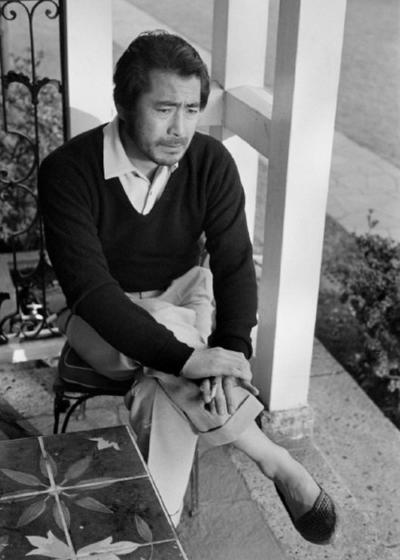
Fortunately, I know that while I regain my summer- bearings, I can always turn to a piqué polo shirt.

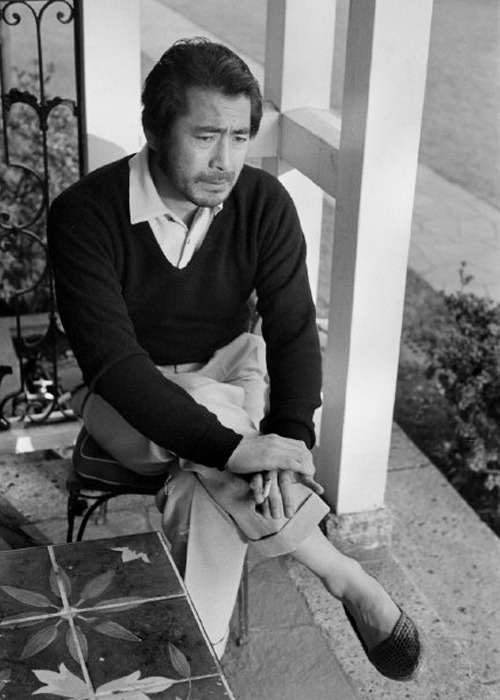
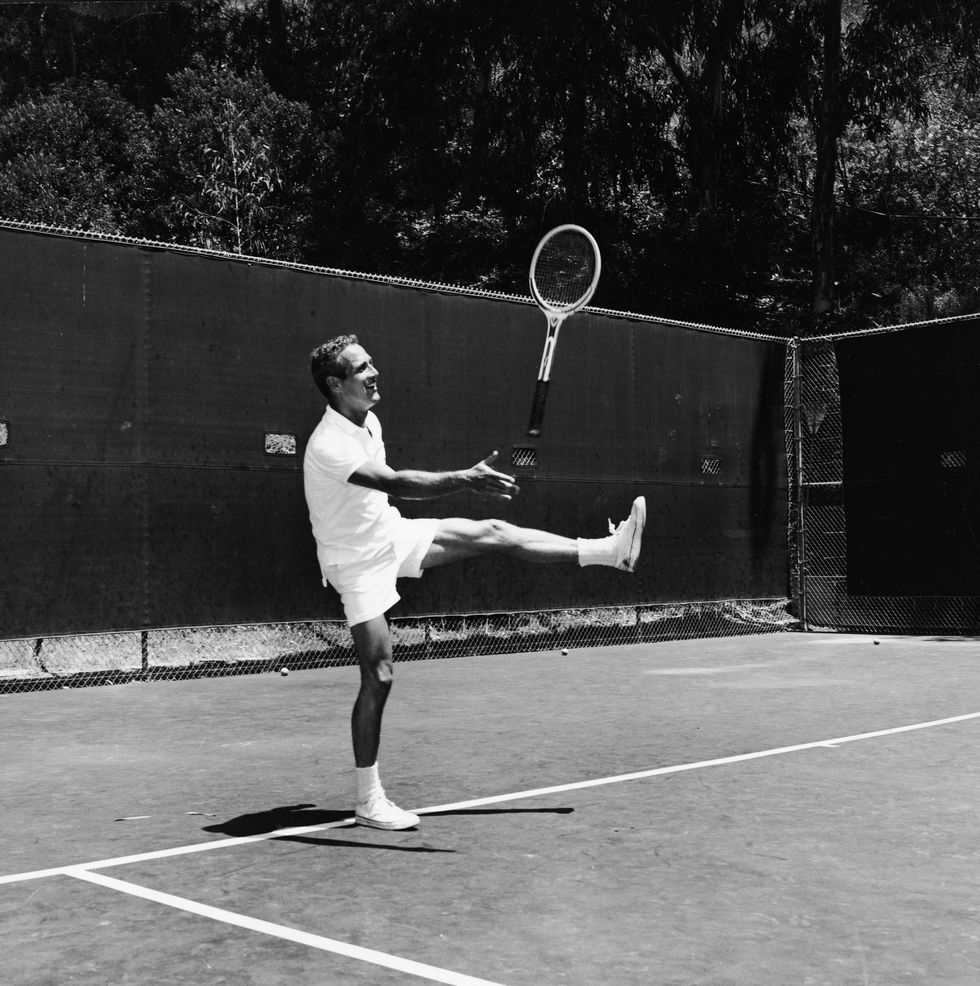
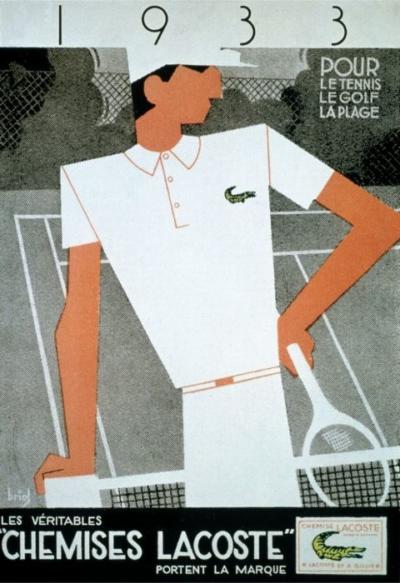
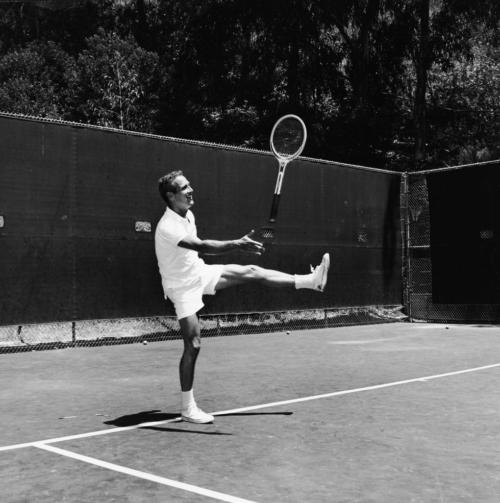
Whether layered under a jumper while the weather makes its mind up (Toshiro Mifune, above), tucked into a pair of tailored trousers (Sidney Poitier, below) or spilling over a pair of shorts while making tennis racquets levitate (Paul Newman, further below), a piqué polo can be relied on to see you through the summer.

My hope is that this article serves to highlight some of the best options on the market.
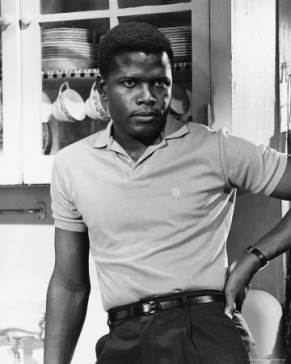
But before we get into the brands, permit me a brief aside on what a piqué knit is and what ‘best’ looks like.

Piqué fabric is a double weave knit (two warp and two weft threads). It is this twin layer that gives piqué its signature waffle or quilt texture on one side, and a smooth finish on the other. And it is the space between those layers that encourages air flow, making it breathable.

Most other cotton polos are usually made of jersey (a smoother, single knit fabric), which is stretchier. But a piqué polo tends to be more durable, more absorbent of dye and better at concealing sweat.
So, what are we looking for in a piqué cotton polo? After all, there’s no shortage of options out there.

To answer that question (and with my apologies to the diamond trade) allow me to introduce you to my three Cs of piqué polo shopping.

Composition - The cheapest polos may use a cotton-synthetic blend and plastic buttons. Nearly all the polos in this guide are 100% cotton (the one exception is noted).

- At higher price points they are likely to be made of extra-long staple cotton (such as Sea Island) with mother of pearl buttons.

Construction - High-quality construction points might include a set-on placket, reinforced vents, hand-sewn buttons, flat felled seams and ribbed hems.

- Most polos will be made using a cut-and-sew technique, but at a higher price point some polo are fully fashioned. This also makes them feel more like knitwear.

- Where the polos are made will have a significant impact on cost (and possibly on quality).

Collar - The cheapest polos tend to come with simple ribbed collars that often curl up over time.

- At higher price points the collars may be constructed in the same manner as a shirt collar (with a collar band and even interlining) which makes them more suitable with tailoring.

You’ll find reference (and more detail) to each of the three Cs throughout this guide, but it’s important to note that an expensive polo won’t automatically have all the higher-end features. For example, Ralph Lauren’s Purple Label polo (£300) comes with a simple ribbed collar.

What does usually happen at a higher price is that the polos tend to be finer, sleeker and dressier – which some might consider antithetical to the essence of a piqué polo.

As is so often the case, the choice will come down to personal style and usage; do you want your polo relaxed and sporty, or do you want something finer and smarter?
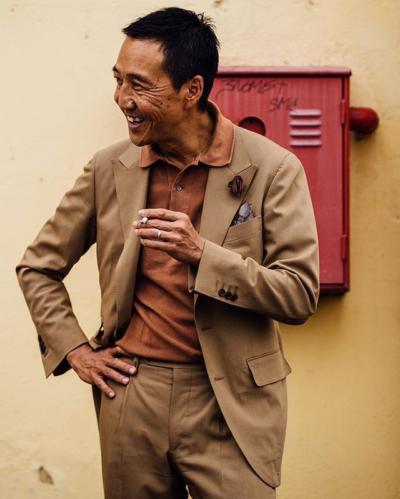
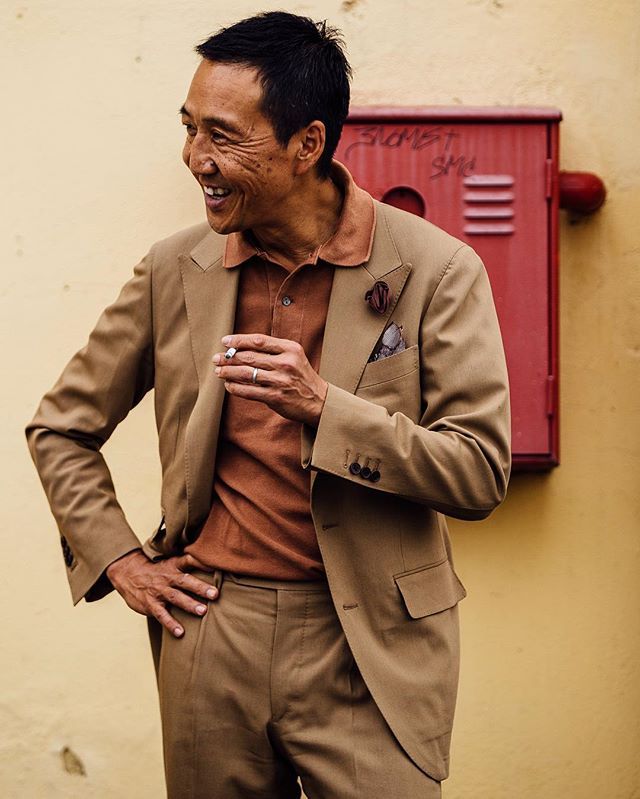
On the subject of collars and usage, whilst it is undeniably easier to wear a shirt-collar polo with tailoring (and let’s set aside any arguments over whether one should wear a jacket with short sleeves in the first place) it’s certainly not impossible to wear a softer smaller collar if you’re blessed with the mischievous charisma of Yasuto Kamoshita (above). No? Me neither.

With that we’re ready to take a look at the brands, which are presented in ascending price order. For context on sizing, I’m a pretty standard 38” chest and tried on a medium in most places.

I’ve focused on ten but have provided links to an alternative ten that have similarities to the featured ones. In addition, you can shop over 40 designers (including Altea, Brunello Cucinelli, Canali, Loro Piana, Rubinacci and Tom Ford) at Mr Porter with this customised search link.

As always with these guides, my research will only take us so far and therefore I’m grateful to anyone that can add their experience with these or any other piqué polo shirts below the line.

I hope you find something to piqué your interest (sorry, Simon, I held off on that joke as long as I could).
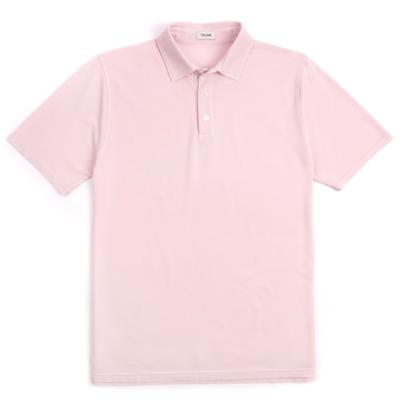
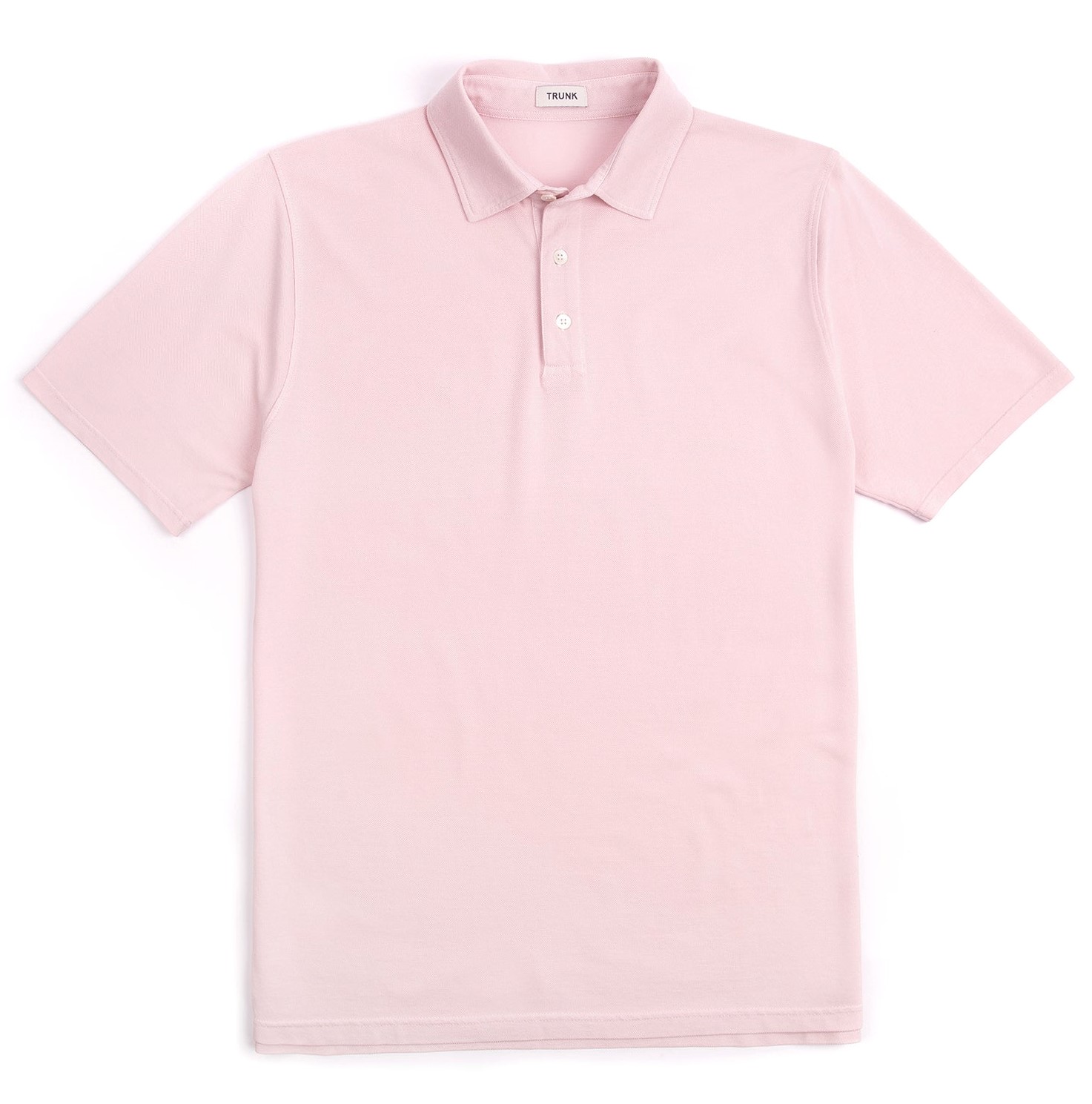
Trunk Clothiers (£75)

I really want you to read the whole guide. Right to the end. I’ve featured some great polos that I believe are definitely worth your time. With that said, it is with some reluctance that I inform you that the first shirt in this guide (the Moxon polo from Trunk) is also one of the best all-round options.

The details are on par with most of the other polos here: a crisp cotton, mother of pearl buttons, reinforced vents and a soft shirt collar with interlining that gives it a bit of pep. Sure, it doesn’t have the collar expanse of the Rubato, the airiness of the Sunspel or the dreamy texture of the Brioni but, for the price, it’s hard to find fault.

What appealed to me most (and this is entirely personal) was the fit. Trunk’s medium is 2-3 cm slimmer in the chest than most of the brands featured but still 2-3 cm bigger than Orlebar Brown (which is too slim for my tastes).

Of course, one might be able to achieve a similar fit by sizing down on other brands - and I successfully did this with Anderson & Sheppard - but often issues of comfort around the shoulders and armhole start to surface. For my body at least, the Moxon hit a sweet spot of shape without any compromise in comfort.

Other Options: At a similar price and style, William Crabtree stock a pair of classic piqué polo shirts in navy and white (£75) that are made from Californian Supima cotton
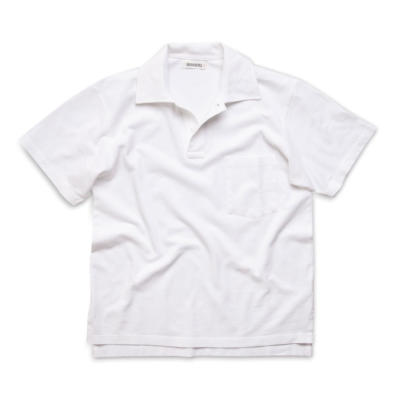
Rubato (1000 SEK)

What I enjoy most about Rubato’s designs (and this isn’t limited to their tennis shirt) is that whilst they’re rooted in simple and easy elegance, when they choose to emphasise a detail, they’re happy to be bold.

The chest pocket on their tennis shirt is there to actually, you know, put stuff in and the two-piece collar is wider than a Florentine steak – measuring around 8cm in point length compared to 6cm on the Trunk model.

The fit is Rubato’s Ivy Fit, which is generous (compared to both their own Standard Fit and the other polos in this guide) and straight cut through the body. The shirt is finished with tennis tails, which is where the rear hem is longer than the front. This is a detail lifted from René Lacoste’s original polos and helps the shirt stay tucked in whilst sprinting, jumping and lunging for the ball (or, in my case, jogging in a vain attempt to catch the last night bus).

The buttons are plastic, but I think this underlines the functionality. Whilst it would undoubtedly look good with a pair of jeans, I suspect nothing would make the Rubato team happier than to hear you’d also played a few sets in it.

Other options: I can’t vouch for the quality but if you wanted to bring classic tennis style to your wardrobe there is a website called Golden Age of Tennis that makes reproductions of classic shirts, like the Fila pinstripe worn by Björn Bjorg when he won Wimbledon.
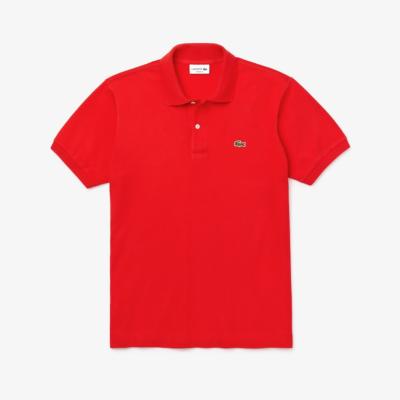
Lacoste (£89)

Acknowledging the instrumental role that the French tennis player René Lacoste had in developing the modern polo shirt, I wanted to take a look at what his eponymous brand had to offer today.

The Classic fit is made from a honeycombed petit-piqué cotton with mother of pearl buttons, and I found it to be comfortable and well fitting. The collar is the standard ribbed collar that was originally designed to flip up, stay up and bestow a tennis player’s neck with protection from the sun. Whilst it might not be the most sartorially refined choice, it does compliment the sporty nature of the piqué and there are far more expensive polos than this in the guide that still insist on a ribbed collar.

However, to my mind, the best reason for picking a Lacoste polo over any other featured here is the colour options – I counted 45 different colours online with 14 shades of blue alone! If you can’t find what you want here, you’re unlikely to find it in any other brand.

Lacoste also carry a Paris fit (£110) that intrigued me, billed, as it is, using words that I fancy would describe many a PS reader: “discrete” and “elegant”. You could argue that the tone-on-tone crocodile logo and hidden-button placket help to achieve the discrete part.

However, the 6% elastane that is woven with the cotton seldom confers elegance, given that its primary duty seems to be clinging onto contours of the body that should only be clung onto when a mate needs to gain some purchase. Oh, and the collar is pathetic.

Other options: If it’s another tennis-inspired heritage polo you desire then you should look no further than the M12 from Fred Perry (£85).
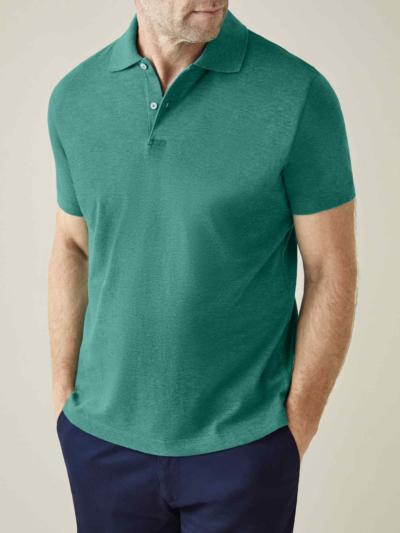
Luca Faloni (£105)

There wasn’t much I didn’t like about Luca Faloni’s Italian-made short sleeve piqué polo shirts. They fit well (although they are one of the straighter and roomier options in the body so you might prefer a size smaller), the colours were unexciting but versatile and the finishing was good with mother of pearl buttons, attached using the crow’s foot stitch that is used to indicate hand sewing.

The only thing I would say is the shirts didn’t feel very piqué-y, which you could argue is quite a significant drawback for an article on piqué shirts. The knit just wasn’t open or gauzy and so the finish of the shirts was relatively smooth and verging on jersey.

Given the styling and the price point I’d say the Luca Faloni option is ideal for someone that likes the Lacoste or Ralph Lauren options but wants something without a logo and a less sporty finish.

Other options: The Riviera from Kenneth Field is similarly priced (£130) and styled with a flat knitted collar. Available in navy and white on The Merchant Fox.
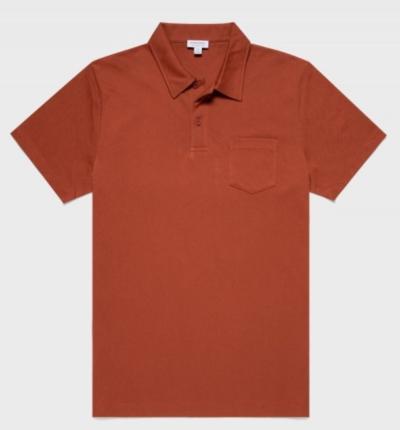
Sunspel (£115)

Forever known as the ‘James Bond polo’ after being featured in Casino Royale, the Riviera shirt is Sunspel’s best-selling polo. It’s not technically made from a piqué cotton (although they do sell those for £115 as well) but rather a soft cotton mesh called Quality 75 (Q75).

Developed by Sunspel in the 1950s, the loops of the Q75 mesh are knitted at an angle which gives them a unique diagonal shape and allows more room for air to circulate. That gauziness was immediately apparent when I held the Riviera to the light, and it helped the polo feel supremely comfortable – this was definitely one of my favourites on the body and shoulders.

As a hirsute fellow, I would caution that any chest hair is likely to navigate its way through the mesh as the day progresses so (if that bothers you) you might want to stick to darker colours or polos with a tighter knit.

The Riviera does have a soft tailored collar, but it is a little meagre – certainly when compared to The Armoury or Rubato models featured – which, in my view, makes it less elegant.

The Riviera was one of the few polos I found with a small chest pocket which should (just about) hold a pair of sunglasses depending on your activity levels; if you’re planning on chasing a MacGuffin through a crowded Moroccan souk then it would be wise to put them in a case; but if your only exertion is moving from hotel room to hotel pool then they should be secure.

Other options: An option that has lots of texture but isn’t technically a piqué is a collaboration between Warehouse & Co and the Japanese artist Yusuke Hanai. Their polo is knit using a traditional Japanese pattern called Kanoko and features a traditional Herashi collar (that almost looks like a long point). There aren’t many of these kicking around but Clutch Café and Son of a Stag currently have very limited stock (£149).
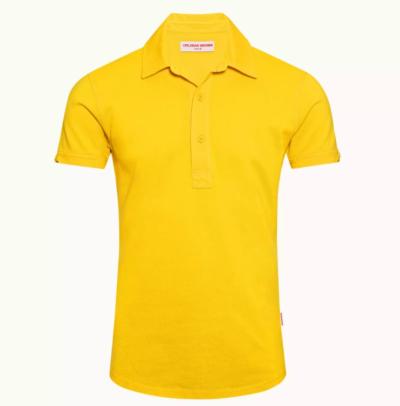
Orlebar Brown (£125)

Orlebar Brown has a large range of polo shirts with names plucked from what I can only assume must be a register of superyacht owners: Horton, Fitzgerald and Gaston. However, it’s their Sebastian model that comes in a reassuringly robust piqué cotton which, whilst unlikely to win any awards for refinement and softness, feels like it could sit forgotten at the bottom of a suitcase for a fortnight and still come out ready to wear.

The shirts have had every millimetre of excess liposuctioned out of them and so they fit trimmer than any other polo in this guide. If you want a more relaxed style, I advise either sizing up or looking elsewhere. In keeping with the tapered fit, the sleeves are very short with little triangle cutaways in the cuff to reveal even more bicep – we get it Sebastian, you like to work out.

The buttons (including two that are placed oddly onto the sleeve cuffs above the cutaways) are made of nylon and the side of the shirt has a brand tag stitched into the seam. The latter isn’t an issue if you like to tuck your polos in as I do, although I think the Sebastian would work well untucked as its tapered waist and curved hems prevents it from looking too much like a nightdress.

Most notably the polos feature a two-piece collar of decent height and proportion that should hold its own under a light jacket. I also loved the deeper placket, which gives the wearer more scope for breeze and to tease.

Other options: Fellow swimwear brand Vilebrequin stock a range of piqué polos (£95 to £125) that come in bright, beach-ready colours and a similarly trim fit.
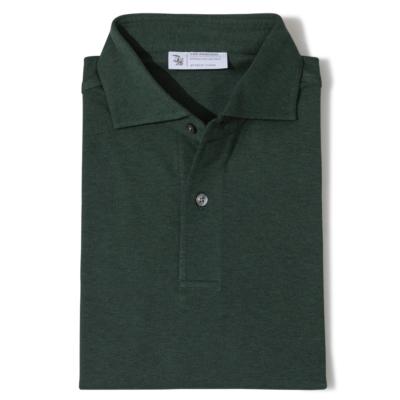
The Armoury ($250)

Let’s cut to the chase on this one: the Armoury’s polo shirts (made for them in a mid-weight piqué by Hong Kong tailors Ascot Chang) are the best in this guide for wearing with a tailored jacket because they have been expressly designed to do that.

The construction includes a full collar band and light interlining (as you would find in a good shirt) which offers support and height to the collar, ensuring it doesn’t get bullied into submission by a jacket over the course of a summer evening.

The shape of the collar is a wide spread, which is unique amongst the polos in this guide. If you’re not a fan of that shape, The Armoury does offer a short-sleeve button down version, but the compromise is that you only get to pick from two colours (navy and white) whereas the spread comes in sixteen colours (the forest green above looks particularly lush). Alternatively, you could buy a one piece collar model from Ascot Chang directly.

Given the formal nature of the collar you won’t be surprised to hear that The Armoury polo is not designed to be worn untucked, with a length that is several centimetres longer than most of the other polos in this guide. Although, as with most Armoury products, they can be made to order if you desire a shorter version.

Most of the polos in this guide have a three-button placket but The Armoury has opted for just two. Whilst this might be a shade more conservative, it does have a simplicity and neatness that might make Mies van der Rohe smile - having designed the venetian blinds of his Seagram building to only have three functioning positions: open, half drawn and fully drawn.

Other options: Kent Wang sells some excellent value polos ($75) with mother of pearl buttons and a spread collar with integrated collar band. The fit is very slim so size up.
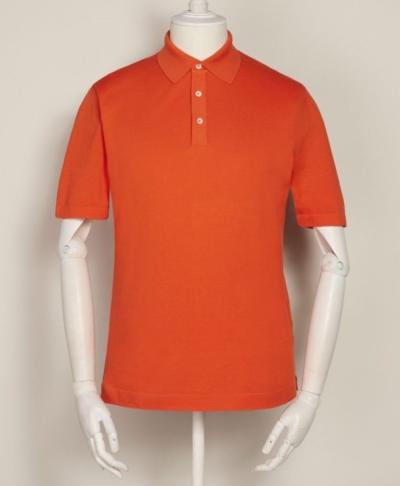
Anderson & Sheppard (£245)

Of the polo shirts at the top end of the price range (above £200) the Anderson & Sheppard model was the one I liked most, for the simple reason that it looked and felt like a good piqué polo and not an overtly ‘luxe’ facsimile.

The cotton was a little softer and finer in the hand than some of the dryer cotton polos from Trunk and Orlebar Brown, but still had a pleasing honeycomb texture. The knit is not as compact as other brands, so the polos had a little natural stretch when on the body which improved comfort.

I tried both the medium and small sizes and found the small had a sharper appearance all round. Smooth over the shoulders with a comfortable taper into the waist. The grip around the bicep with the smaller size was a little snug but not to the point of restriction. The collar is knitted with a soft collar band holding it up.

While this all sounds very nice, the question remains: what’s pushing the price that much higher than some of the other brands? The key factor is the A&S polo is fully-fashioned like a piece of knitwear – a process which takes substantially more time than standard cutting and sewing. The benefits of this more laborious (and expensive) process are neater, lighter and more comfortable seams (which don’t have to be over-locked to prevent fraying), a better fit and less wastage in the manufacturing process.

Other options: Fedeli stock two pique models: North (€175) and Wind (€200). The former is their classic piece-dyed model and the latter is a lighter-weight update with a ribbed collar and shallower vents in the hem.
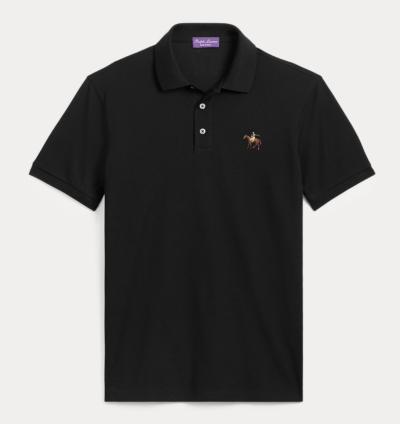
Ralph Lauren (£300)

I’d wager that most PS readers have at one time or another had a Ralph Lauren mesh polo shirt (or at least a ‘Rolph Lauren’ picked up on holiday at one of their 100% authorised back-alley market stalls). And whilst they remain incredibly popular – priced between £95 and £155, available in four fits (Original, Classic, Custom Slim and Slim) and 30-plus colours – I wanted to take a look at the luxury Purple Label version for the PS reader.

The first thing you’ll notice is the logo; it’s bigger and, shorn of the ball-thwacking dynamism of the classic, looks a little sad – like the polo player is trudging off the pitch with a French baguette lodged under his armpit.

As you’d expect it’s the detailing that separates the Purple Label version from the Polo. While the Polo versions are made in China, the Purple Label polos are made in Italy and finished with mother of pearl buttons. The vents are taped inside for extra strength. The fit (Custom Slim) is slimmer than the Classic mesh polo but not as tight as the Slim version.

The shirts are made from Pima cotton (which is an extra-long staple cotton) that has been double-mercerised. This gives it a smoother and shinier appearance, that is a bit of a double-edged sword – on the one hand the polos have a silkier, more dressy appeal than others on this list but, on the other, I found it lends a faint whiff of “football shirt” to them.

I also found that the fabric, whilst smooth to the hand, did itch very slightly on my shoulders, but perhaps this would be resolved with a wash (of the shirt not me).

Other options: You might want to take a look at Hugo Boss who have a decent selection (£89 to £189). Note that some of the designs are questionable – the polos with the word ‘BOSS’ taped onto the shoulders look like something David Brent would wear to the company picnic.
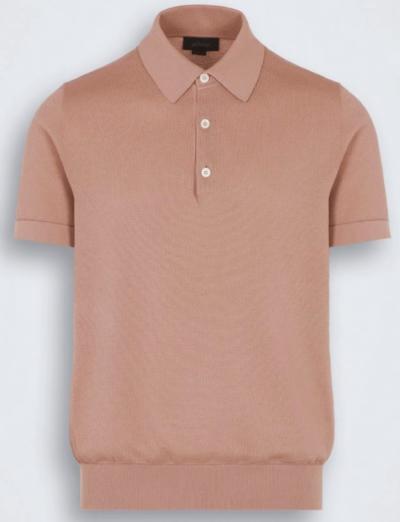
Brioni (£680)

Whilst personally I wouldn’t be able to (or necessarily want to) spend £680 on a polo shirt, I was fascinated to see what one looked and felt like. For the sake of the readers of course. And, I have to say, being able to spend thirty minutes in the stunning Brioni store housed in a listed four-storey Georgian building in Mayfair was almost worth the price of the garment alone!

Beyond retail costs, there are two things that push the price of the Brioni up: composition and construction. The polo shirts are composed of 100% Sea Island cotton which is an extra-long, extra-fine and extra-rare cotton (estimated to make up only 0.0004% of the world’s cotton supplies) grown in the Caribbean. The polo is hand-made in Italy with mother of pearl buttons.

If the art of summer dressing is about preventing the simple from becoming the bland then pairing a richly textured polo like this (in a colour like the dusty pink above) with a pair of high-twist trousers and soft loafers would be an elegant way to step out on a hot summer’s night.

The polo fits large to size and has a generous shirt collar which, whilst not as reinforced as the Orlebar Brown or Armoury collars, would work ok with a tailored jacket with occasional readjustment. The only detail that didn’t appeal to me was the unnecessary inclusion of a fine, grey contrast stitch on the hem, sleeves and placket.

Other options: Another Sea Island polo with ribbed sleeve cuffs and hem is the Roth from John Smedley (£155) which is fully fashioned - essentially a piqué version of their Adrian model featured on PS previously.
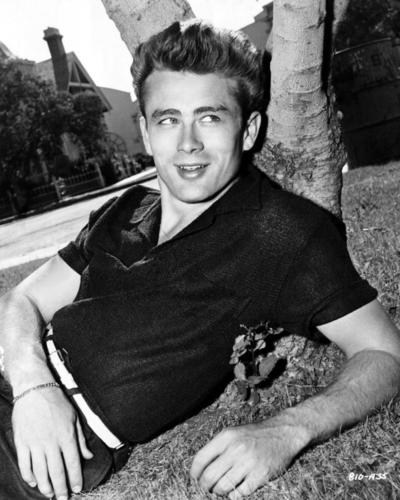
The Index

The index is designed to collect the key information of each of the polo shirts. To aid comparison we’ve shown the chest and body length measurements for a size medium (or equivalent) - measurements taken from the brands. Prices are correct as of time of writing.

Brand Model (size) Price Collar Buttons Chest (cm) Length (cm) Notable details
Trunk Clothiers Moxon (M) £75 Soft collar Three 50 71 Trimmer fit than all models except Orlebar Brown
Rubato Tennis Shirt (M) 1000 SEK Two-piece collar Two 55 71 Large chest pocket and tennis tails
Lacoste


Classic fit (M) £89 Ribbed Two 52 72 Array of colour options
Luca Faloni Short sleeve piqué polo (M) £105 Ribbed Two 53.5 70.5 Subtle piqué texture
Sunspel Riviera (M) £115 Soft collar Two 51.5 72 Chest pocket and gauzy style
Orlebar Brown Sebastian (M) £125 Two-piece collar Three 47 73 Slim fit and deep placket
The Armoury Short sleeve polo (M) $250 Full collar band and interlining Two 53 75 Structured collar and longer length
Anderson & Sheppard Soft cotton polo (M) £245 Soft collar Three 53 70 Fully fashioned
Ralph Lauren Purple Label – Custom Slim fit (M) £300 Ribbed Three 53 73 Double mercerised cotton
Brioni Sea Island cotton polo (40) £680 Shirt collar Three 54 72.5 Sea Island cotton, plush texture and hand-tailored

Manish is @the_daily_mirror on Instagram
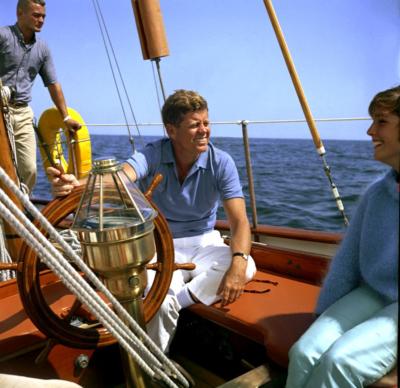
The Alden modified last, and Anatomica sizing

The Alden modified last, and Anatomica sizing

Friday, April 1st 2022
||- Begin Content -||

Alden has this particular shape of shoe, on what is referred to as the ‘modified’ last. 

It’s unusual, almost orthopaedic in appearance, with a narrow waist that hugs the middle of the foot and rather bulging sides to fully accommodate the joints. 

It’s got a bit of a following, and has become something of a curiosity in menswear. So I was interested to try it when I visited Anatomica, in Paris, recently. 

Anatomica has become well known for the modified last, as one of the few stockists in the world, and also for recommending larger than normal shoes to customers, in the name of comfort. 

As always, it is the sole of the shoe that shows the last shape best, and above you can see something of the distinctive wavy lines of the modified last. 

It’s slightly ‘banana shaped’, meaning it curves more around the outside of the foot but is straighter on the inside. 

This makes anatomical sense, given your big toe is the longest point of the foot, not the middle one. Most shoes involve some kind of compromise between body and style, and the modified last tips that balance a little more in favour of the body. 

In the picture below, Anatomica founder Pierre Fournier attempted to illustrate this with two sketches, one showing a normal last shape (right) and the other the modified last (left). 

Note how the right-hand shape has to cut the big toe (in white, underneath) in half. The jagged lines indicate pain!

There are other idiosyncrasies to this style of shoe too. 

The heel is asymmetrical, being it’s longer on one side than the other. You can see that in the photograph of the sole above, although it’s the kind of thing you probably wouldn’t notice until someone pointed it out. 

The sides of the shoe at the ankle are also asymmetric, with the outside cut lower than the inside (below). 

This is something you see more on other shoes, particularly bespoke ones. Have a look at my bespoke Cleverley shoes here, for instance, and note how low the sides are cut. 

You’re also more likely to see that ‘banana’ shape on bespoke shoes, as makers have more freedom to adapt the shape when they think a customer needs it. 

Foster & Sons did that with the bespoke shoes they made for me in 2016, shown here. Although interestingly no other shoemaker has felt it necessary. 

When you try the modified last, you do immediately notice a difference. The arch and instep are held more tightly, and there’s a puddle of room around your toes. 
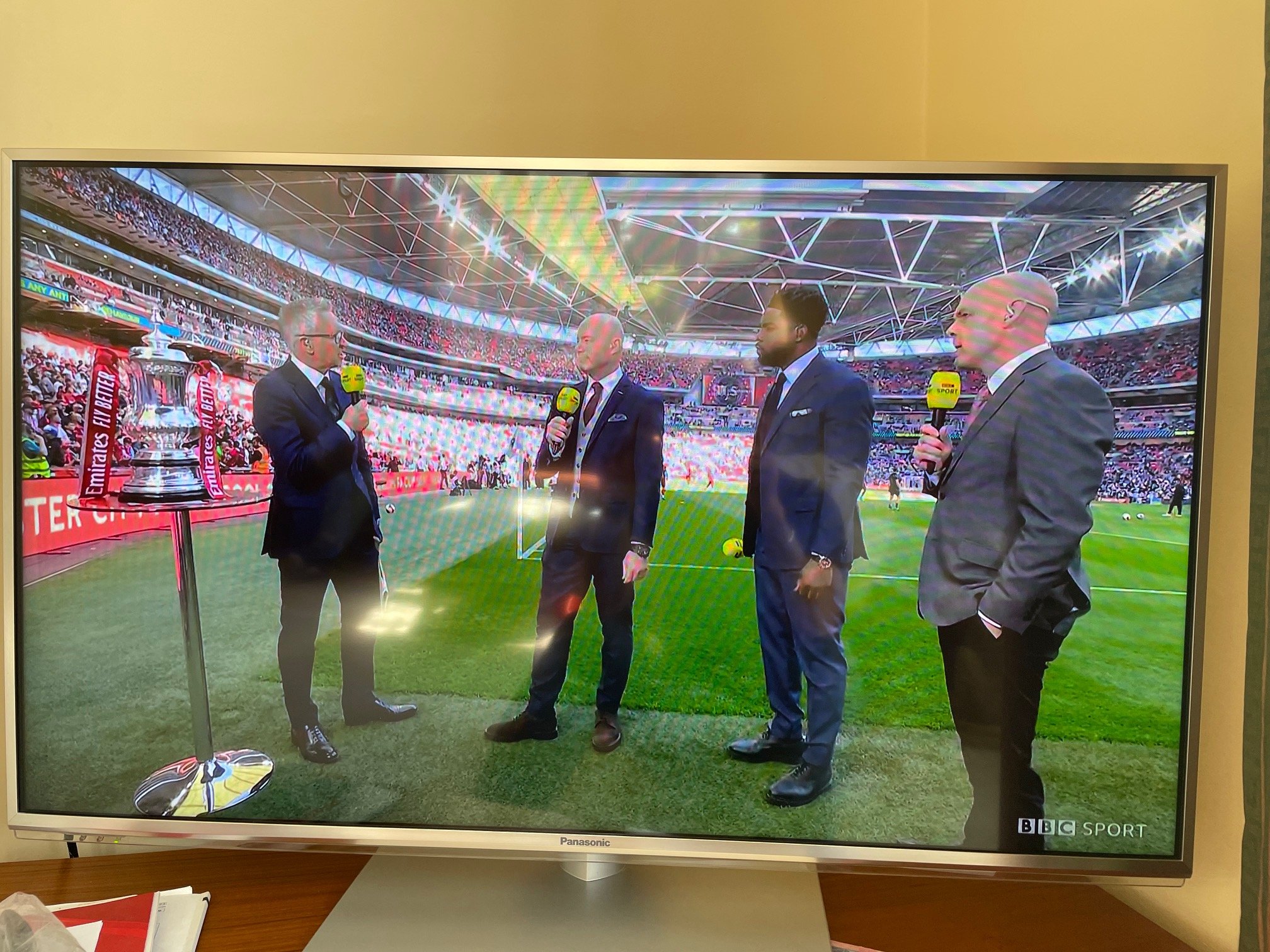
It does look unusual too - not to turn and stare at on the street, but the kind of thing even a non-shoe obsessive would notice after a while; rather like the effect created by the typical narrow waist and thin welt of a bespoke shoe. 

However, at Anatomica it is hard to see the last in isolation, because of their aforementioned attitude to sizing. 

Pierre believes that most people wear shoes that are too small for them, making their feet needlessly uncomfortable at the front. 

They should be wearing shoes that are longer - but not necessarily wider. So you go up a size, but take a narrower fitting, meaning the width of the shoe remains almost the same as it gets longer. 

When Pierre measured me, for example, he wanted to put me in a 10.5C (American sizing*) rather than a 8.5E. 

That is quite a lot narrower, but then the modified last is also wider at the joints than a regular shoe anyway. You can see the two shoes compared above - my Edward Green in an 8.5E on the left, and the Alden modified last on the right. 

The shoe did feel comfortable, but the oddest thing was not the extra length, but the fact that the joint of the my little toe - the widest point on the foot - was not at the widest point of the shoe. It was about a centimetre further back. 

The other aspect of having a longer shoe is that the front will wrinkle rather more, folding in more than once place. You can see how this looks over time with Pierre’s shoes below. 

This is rather accentuated by this Anatomica model, which is unlined throughout the shoe, including the front. This made for the most comfortable cordovan I’ve ever tried, but doesn’t help with the wrinkles. 

I can see the advantages of the modified last, and I’d be interested to try it some time. I have friends who swear by it, and like the unusual look. 

I wasn’t as convinced by the argument for larger sizing, but then I also haven’t tried it in person, at least on the modified last, so I can’t really judge. 

But it has convinced me that I should size up a little, at least in loafers. 

I mentioned in my recent article on Crockett & Jones loafers that I was realising I’d prioritised the fit in the heel too much over the years, at the expense of comfort at the toes. Voices like Pierre’s push me further in that direction. 

“It’s just inevitable with a loafer,” he said. “I remember an American in here, overhearing someone talk about heel slippage, and slapping and sliding around the shop to show that a little bit of it was fine. He looked so much more elegant than someone creeping around in pinched toes.”

So I’ll carry on buying 9 rather than 8.5, and these Edward Greens will go in for a bit of a stretch. 

In the meantime, if anyone wants to try the modified last in the US, Moulded Shoe in New York is good. Ben did a nice article on them on Stitchdown here

Read more about Anatomica, its history and other beautiful clothes, on our previous article here

*Pierre says American and English sizing are the same historically. It's just that the English preferred to put people in smaller shoes for commercial reasons, which is why English shoes and indeed measuring come up smaller. I wear a 9 or 9.5 in Alden normally, so that's not so far off the 10 or 10.5 the Anatomica guys were recommending.

Photography: Alex Natt @adnatt