Best US shop 2019: The Armoury (or, how to break the US)

Best US shop 2019: The Armoury (or, how to break the US)

Wednesday, February 27th 2019
||- Begin Content -||

Best shop in the US: The Armoury

Runner-up: Sid Mashburn

Some of the Permanent Style awards this year were close. The award for best US store was not: The Armoury romped home.

To a certain extent, that’s not surprising. It stocks all the things PS readers love, has an international reputation, and genuinely offers something different even in a city the size of New York.

But many brands have tried to set up US branches over the years, and found it tough. It’s very competitive, often price-focused, and surprisingly conservative.

I asked Mark Cho, a founder of The Armoury (and part owner of Drake’s) how the move came about, and what he’s learnt from the past five years the store has been open.
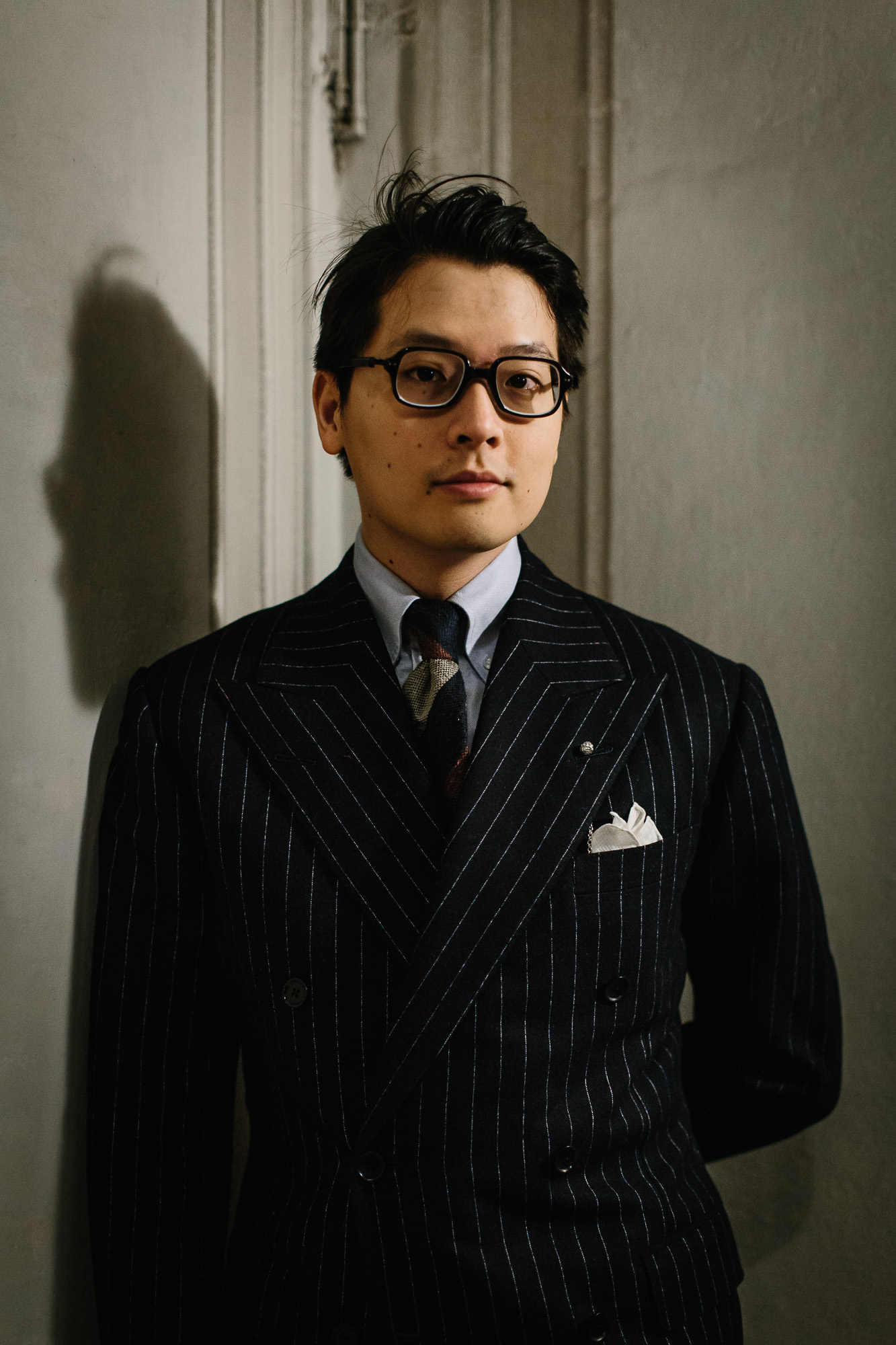
Mark

Permanent Style: Why did you decide to open in New York as the next city after Hong Kong?

Mark Cho: In 2012, we were considering London and NY. I had looked at a number of spots in and around Mayfair and the West End for an Armoury but the lease premiums were nuts.

I had made a few offers of around six months to a year's rent to takeover existing tenants’ leases and was constantly getting outbid.

London made sense because we had some customers, it's home for me, I love the city and we had a little Drake's infrastructure we could rely on. However, since I couldn't get a space for a reasonable amount, I decided to move on.

How did you find the space in New York?

It was a strange twist of fate. We already saw our online store was doing a large chunk of its business sending to the USA and especially to New York, so we wanted to build on that. The idea was to try and open an office/showroom operation in NY.

I used to live and work in the city so I had some familiarity with it. On one particular expedition to look for spaces, I had to go to a friend's wedding which was taking place at City Hall downtown. He ended up being three hours late to his own wedding (he is a bit unreliable).

While I was waiting, I had a wander in the neighbourhood and came across 168 Duane St. I thought it was just an incredibly beautiful location and was immediately imagining how The Armoury might look there. At the time, it was a gift shop and I had intended my daydream to be nothing but a daydream.
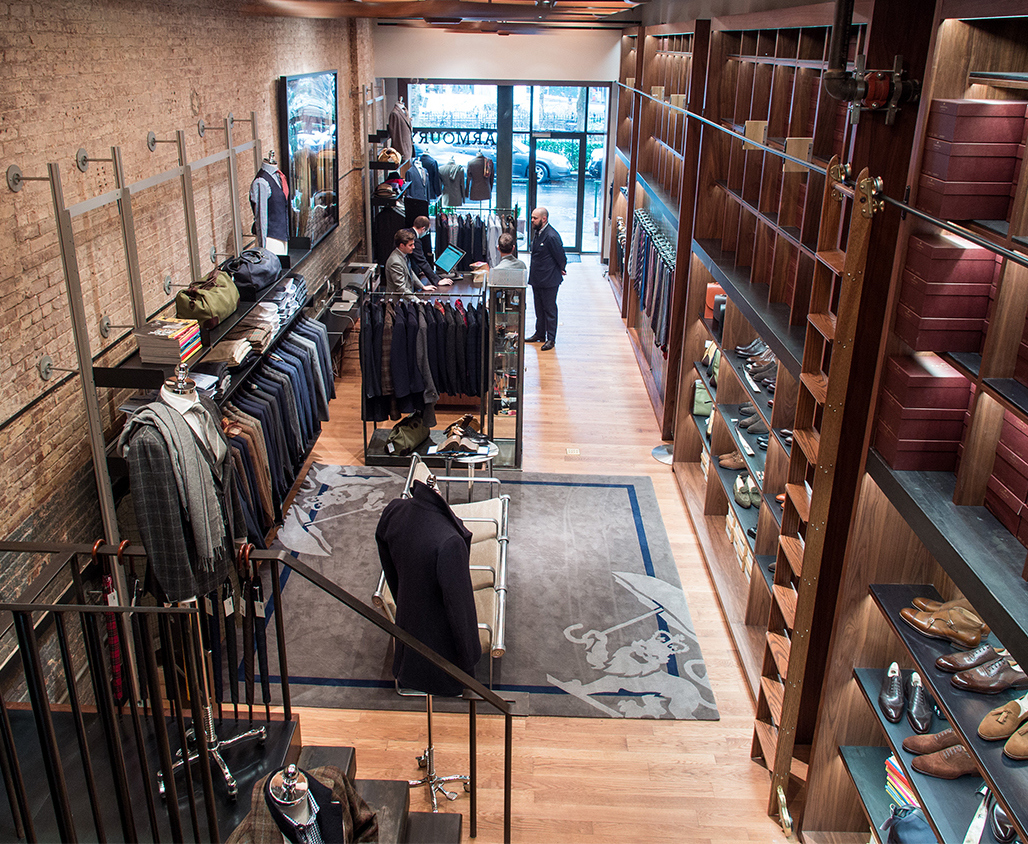
The New York store

A few days later, I was browsing property listings and somehow came across the Tribeca local paper's website with a classified notice saying the gift shop was for sale. I decided to pursue it further and went straight to the shop that morning before my flight back to Hong Kong.

The owner was not around but I left a message with the shop assistant. He got back in touch, turned out he was a Yorkshireman who had settled in the US years ago.

The space was much bigger than I expected, with an extensive basement that he used as his offices for his advertising agency. The gift shop was something of an amusing side project for the real business downstairs.

I explained what I did with The Armoury and Drake's. He was happy to hear that I was a shopkeeper and also working with mills in the UK. He was hoping that he could pass his business onto another shopkeeper, so we struck a deal soon after and the shop became mine.
Yohei Fukuda at The Armoury

What have you learnt about American customers? How do they vary, how do they shop?

Generally the US customer is more similar than different to the HK customer. As you'd imagine, professionals comprise a large part of our customer base: banking, finance, consultancy, legal, medical as well as entrepreneurs, businessmen and people from the art and media worlds.

They’re well traveled and a number of them visit both the HK and NY shops. When we first started, we even had a few Tribeca-based customers who had previously shopped with us in Hong Kong and were glad to see us in their neighbourhood.

The commonalities for all of them is they’re interested in something classic but a little off the beaten track, are invested in quality and enjoy craftsmanship.

Does the familiarity with bespoke vary?

The level of experience there is definitely different. Hong Kong today has a stronger culture of conservative business dress and having your clothes made for you. In NY, that culture waned as a side effect of relaxing workplace dress codes.

Compared to Hong Kong, more American customers are also at an early stage in building their bespoke wardrobe, so there is more interest in staple items. The cream-linen bespoke Liverano suit has yet to fill many American wardrobes, but I'm excited to eventually make that happen.
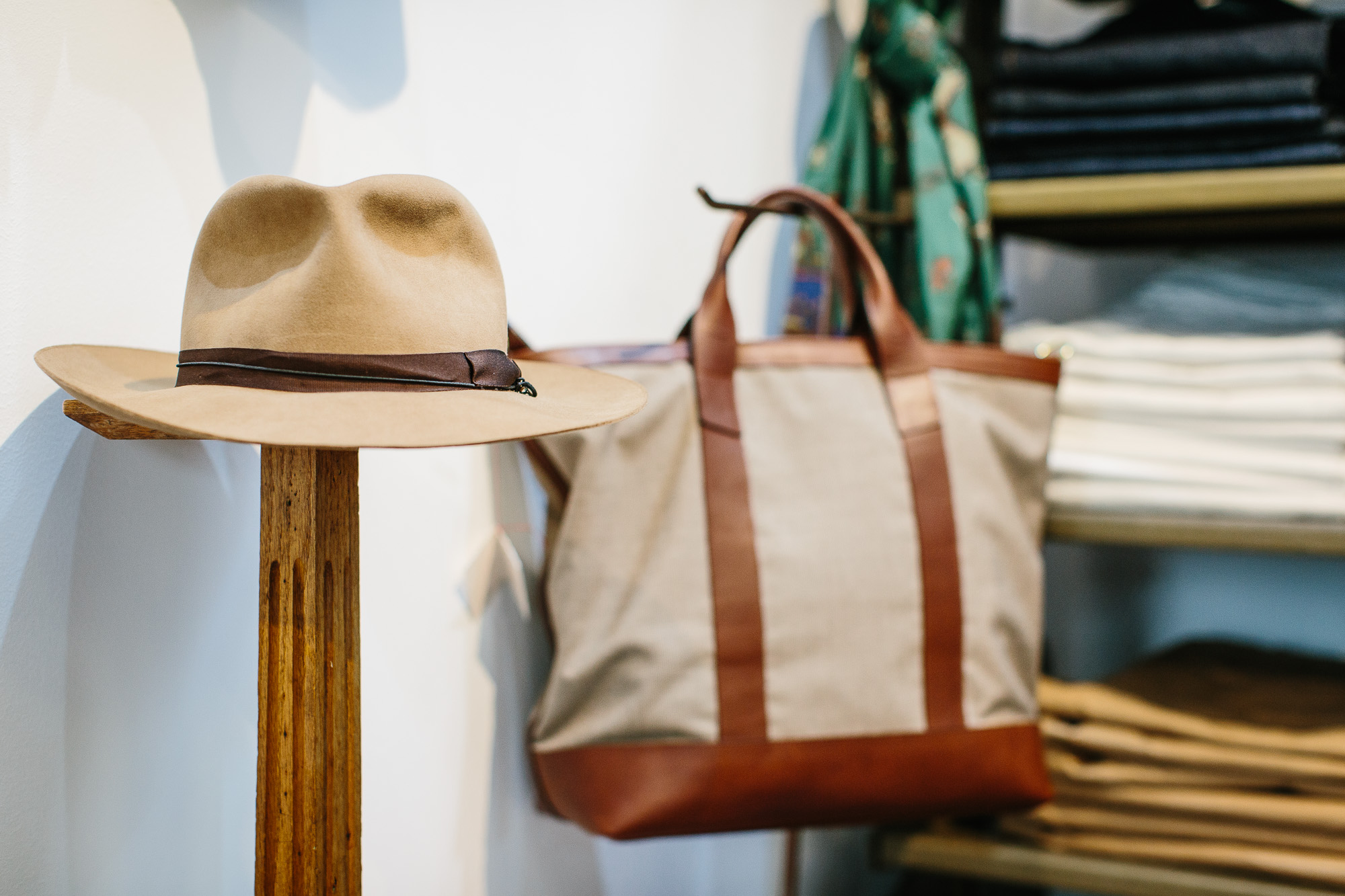
Hats and totes

What expectations you had at the start have been verified or contradicted?

I expected that sizing would be a challenge in the US. We were comfortable with our size grading (the difference in dimensions of garments as they increase in size) for sizes 50 and below, but we had work to do for sizes above that.

Our grading system is not automated and I have spent a long time working on it across a number of products. It is an iterative process, and you have to pay attention to customer feedback and also amalgamated alterations data each season, to slowly dial it in.

We take this very seriously and it was part of the impetus for having The Armoury by Ring Jacket, which is tailoring made by Ring Jacket in Japan but in our own exclusive models and fabrics.
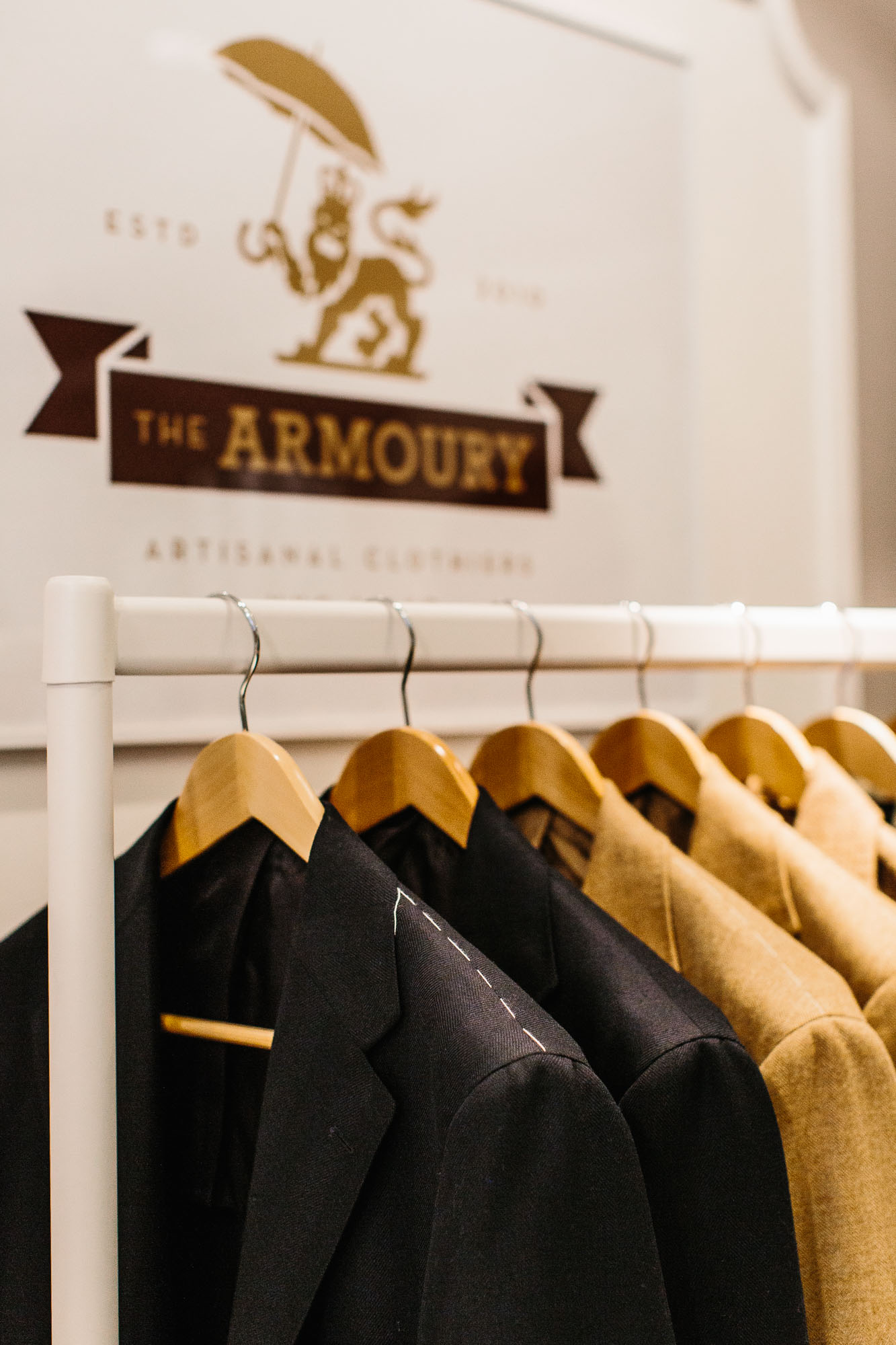
Ring Jacket styles

How have you found marketing and communication in the US? I'm told it can be a hard area to break into.

Yes, marketing and communication in the US is hard to penetrate. The system is somewhat insular because journalists just have so many brands wanting to speak to them.

PR companies act as gatekeepers, and having the right people introduce you and represent you is a worthwhile investment.

But I generally like working with the journalists and count many of them as friends. They are also good sounding boards for new projects and getting a sense of what the market might be thinking.

How has the product range evolved in New York since you opened? Do you have to keep different stock in the stores to reflect the different customers?

New York's effect on the product range centres on three main aspects: weather, sizing and staples.

New York has inclement weather, thus we stepped up development of knitwear, boots and heavy-fabric garments. Sizing, as I mentioned before, has been refined, particularly for our Japanese suppliers.

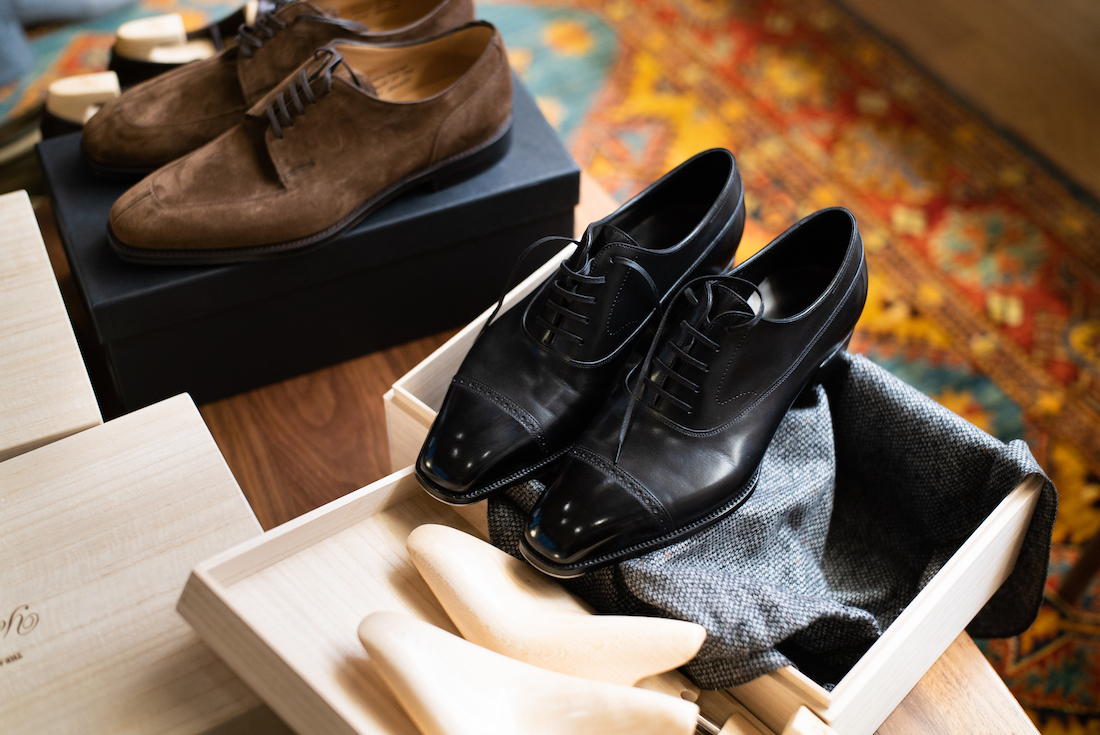
And staples are an important part of the business, so we try to keep healthy stock of basic key items like white shirts, navy suits, black cap-toe shoes etc.
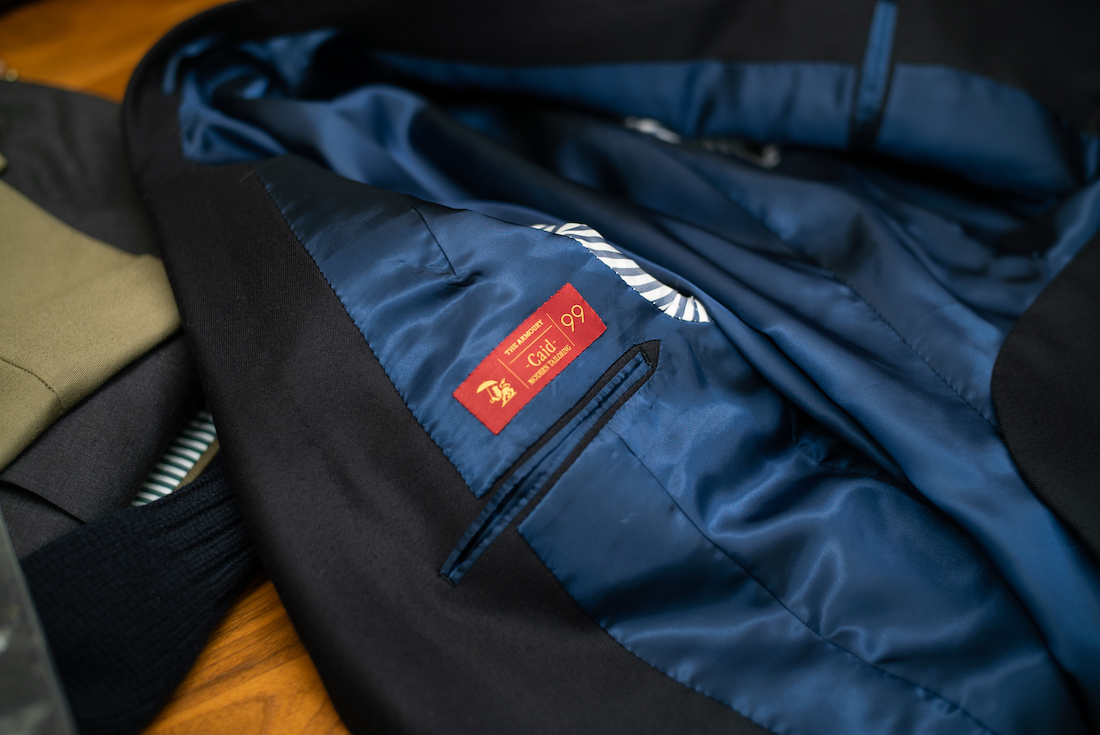
Tailor Caid by The Armoury

How has it been having a store so far away from the first? It must be hard given you and Alan are so used to being so close to everything in HK?

Tiring but fulfilling. I travel to New York monthly because the store is my baby and I want to make sure it is doing well. I deal with a number of our good US clients personally and it's always a pleasure to spend time with them during these visits.

Given the distance, it’s difficult to keep up with everything when I'm away but I do my best, with conference calls at all hours and a great team that I really rely on, like our General Manager, Bailey McKay and Head Buyer, Jim Parker.

I feel it’s important to maintain a consistent brand between the two locations and it has been an interesting challenge given the differences in customer needs in Hong Kong and New York.

I am always fascinated when certain items do much better in one location than the other. Digging into the reasons more deeply can sometimes yield interesting insights.

For instance, we do much worse with pinstripe suits in New York than Hong Kong, seemingly because there is still a cultural barrier to pinstripes in New York. New Yorkers still associate pinstripes with gangsters and they are more apprehensive about wearing it themselves.
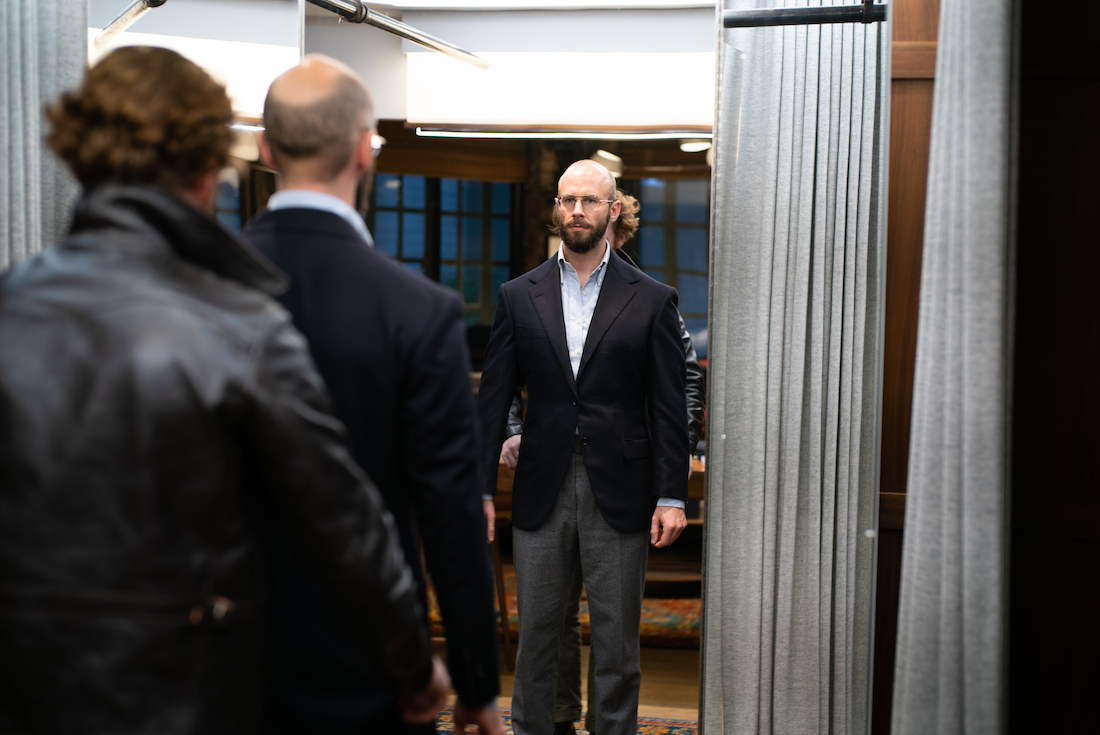
Myself being fitted by Jim

What other lessons have you learnt since the store opened?

Managing people, managing relationships and trying to build a team and culture are probably the most important lessons I have learnt and am still learning.

Improvement in these areas has mostly come from experience or more accurately: painful mistakes. I read what I can on psychology and behavioural economics (Tversky and Kahneman are my heroes) and that has helped a lot as well.

I am always trying to work on communication, both internally and externally. For better or for worse, The Armoury is a very interesting place with a very diverse product offering, to the point of being confusing or just too much trouble for some customers.

Ultimately, the goal is to be telling the right story to the right person and helping them into something great without pigeonholing them to "the brand". The Armoury is not out to photocopy looks, it's trying to outfit individuals.

Do you know where you will look to next?

I would like to do another store in New York. It's a big city, I'd love to have something further uptown.

Other than that, just consolidate, do what we do better. We're far from perfect but I'm quite proud of our progress, the people we work with and the customers we serve. I hope we can do it for many more years to come.

Good luck, from PS and all the readers that voted for you.
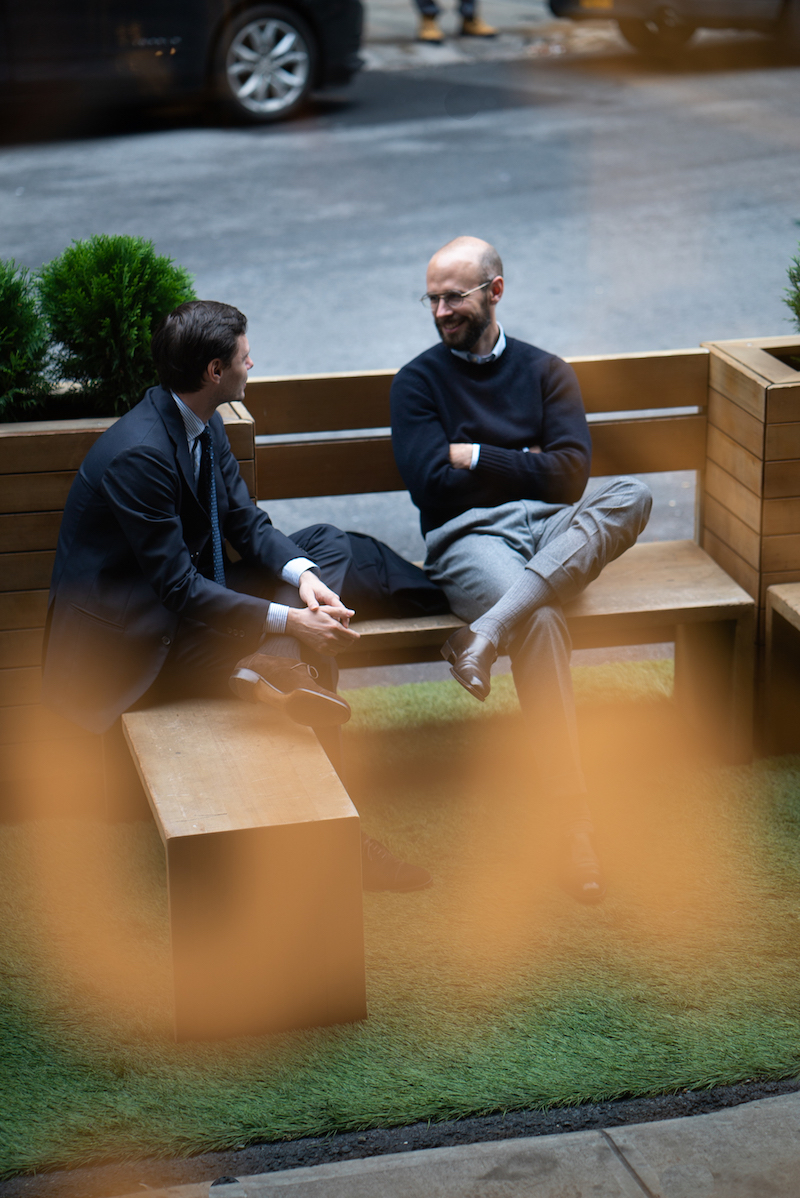
With General Manager Bailey

You can see all the voting for this award on the initial post here

Photography: Jamie Ferguson and Elliot Hammer

What to learn more about how Permanent Style is funded? Details here: 'Is this an ad?'

Introducing: The leather envelope folio

Introducing: The leather envelope folio

Monday, February 25th 2019
||- Begin Content -||

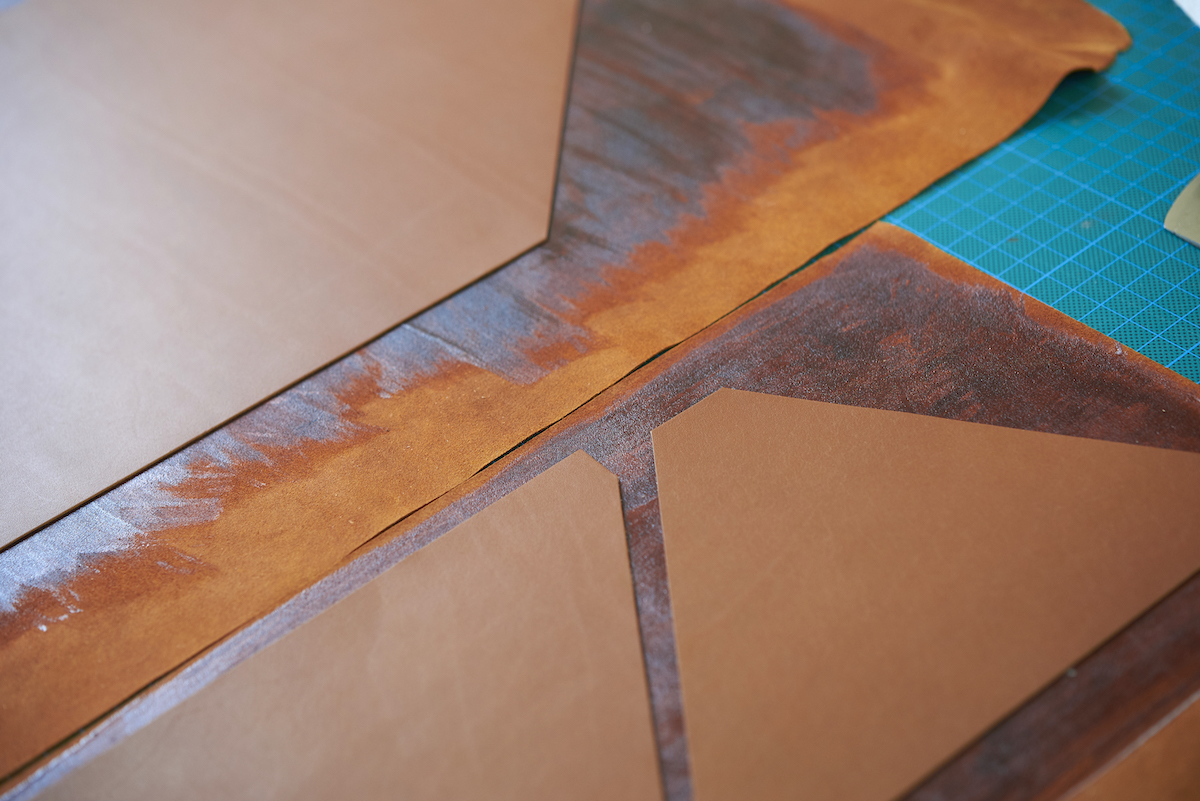
Writing about this leather folio feels like a release more than anything else.

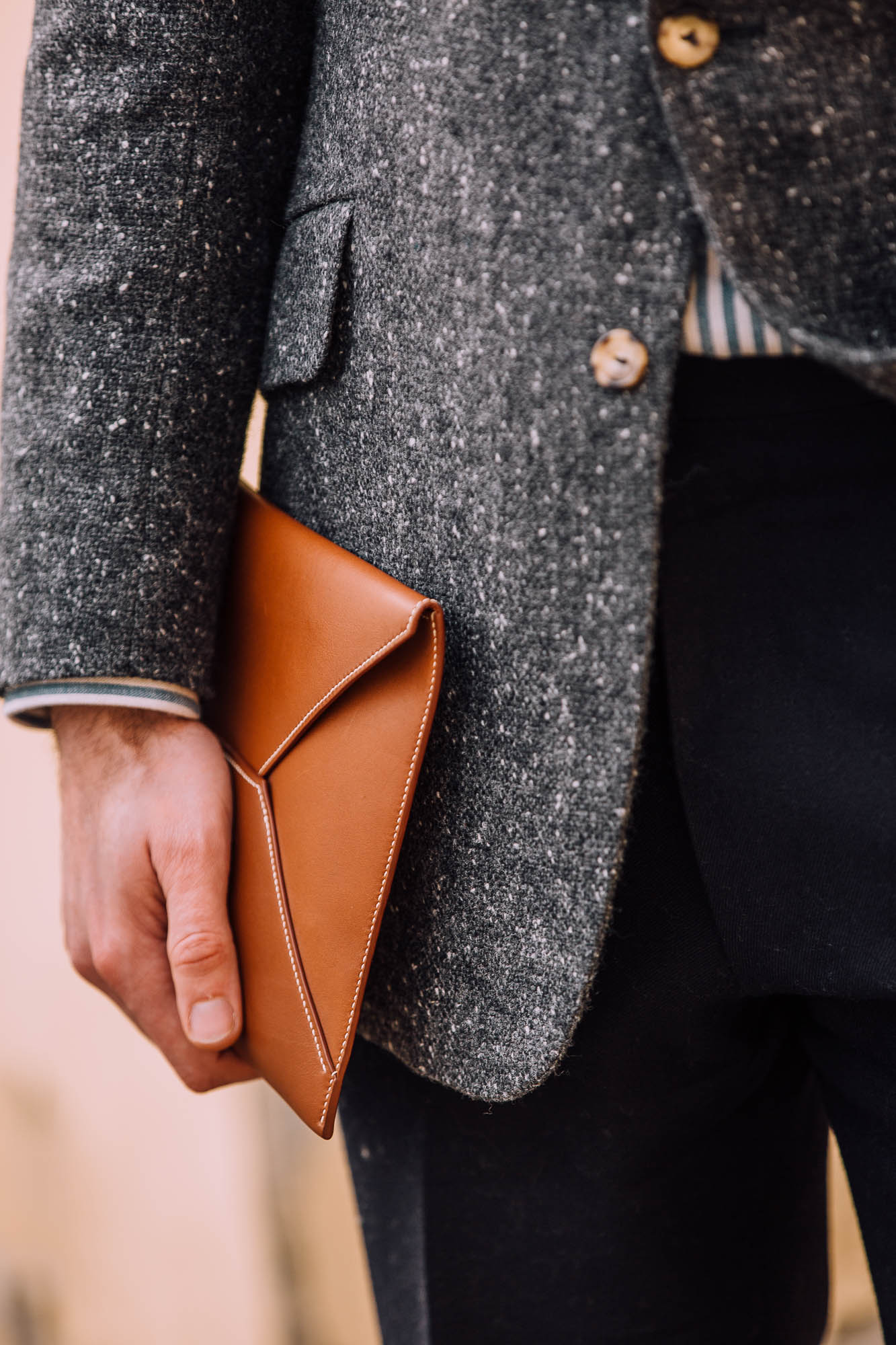
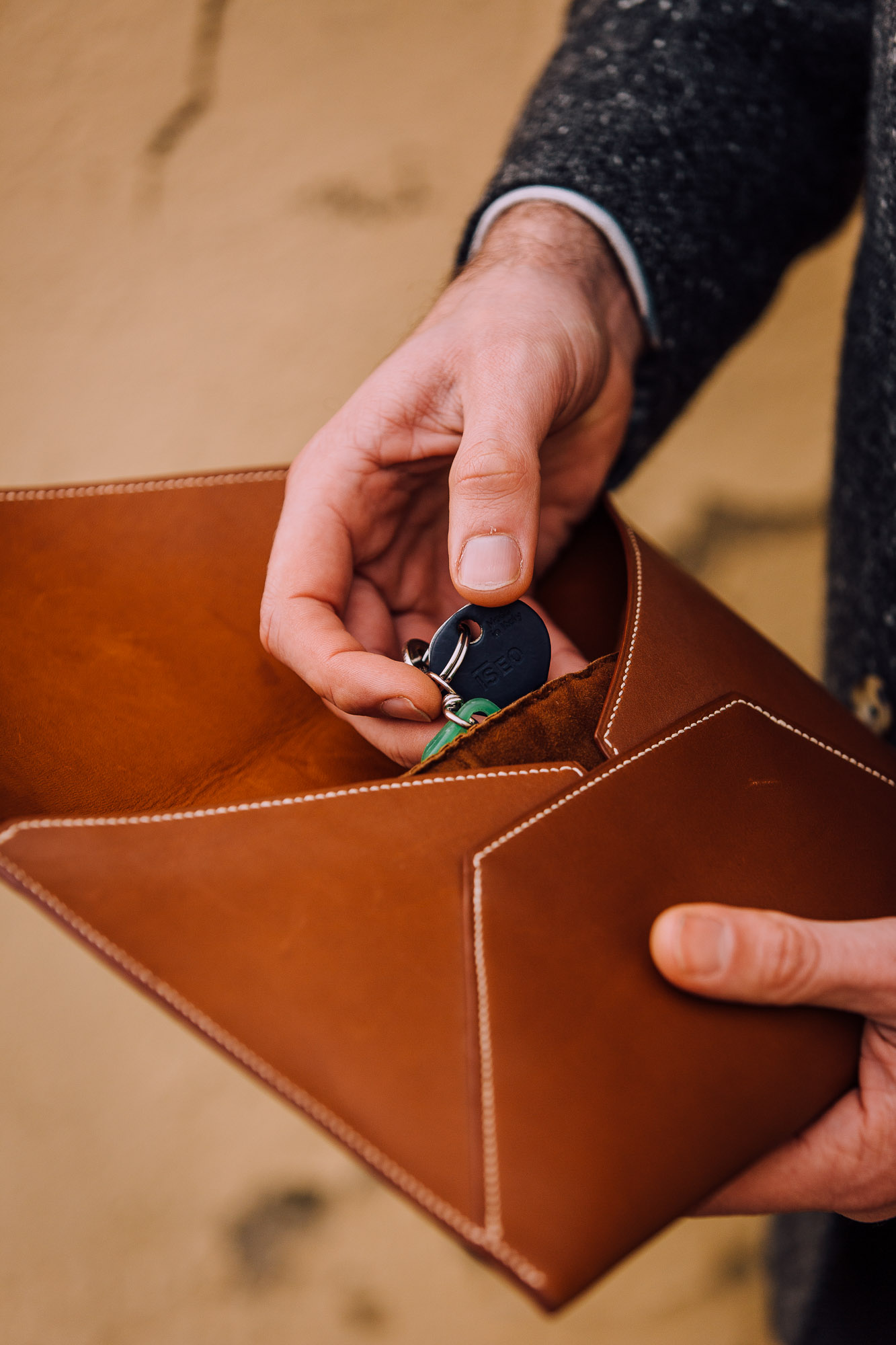
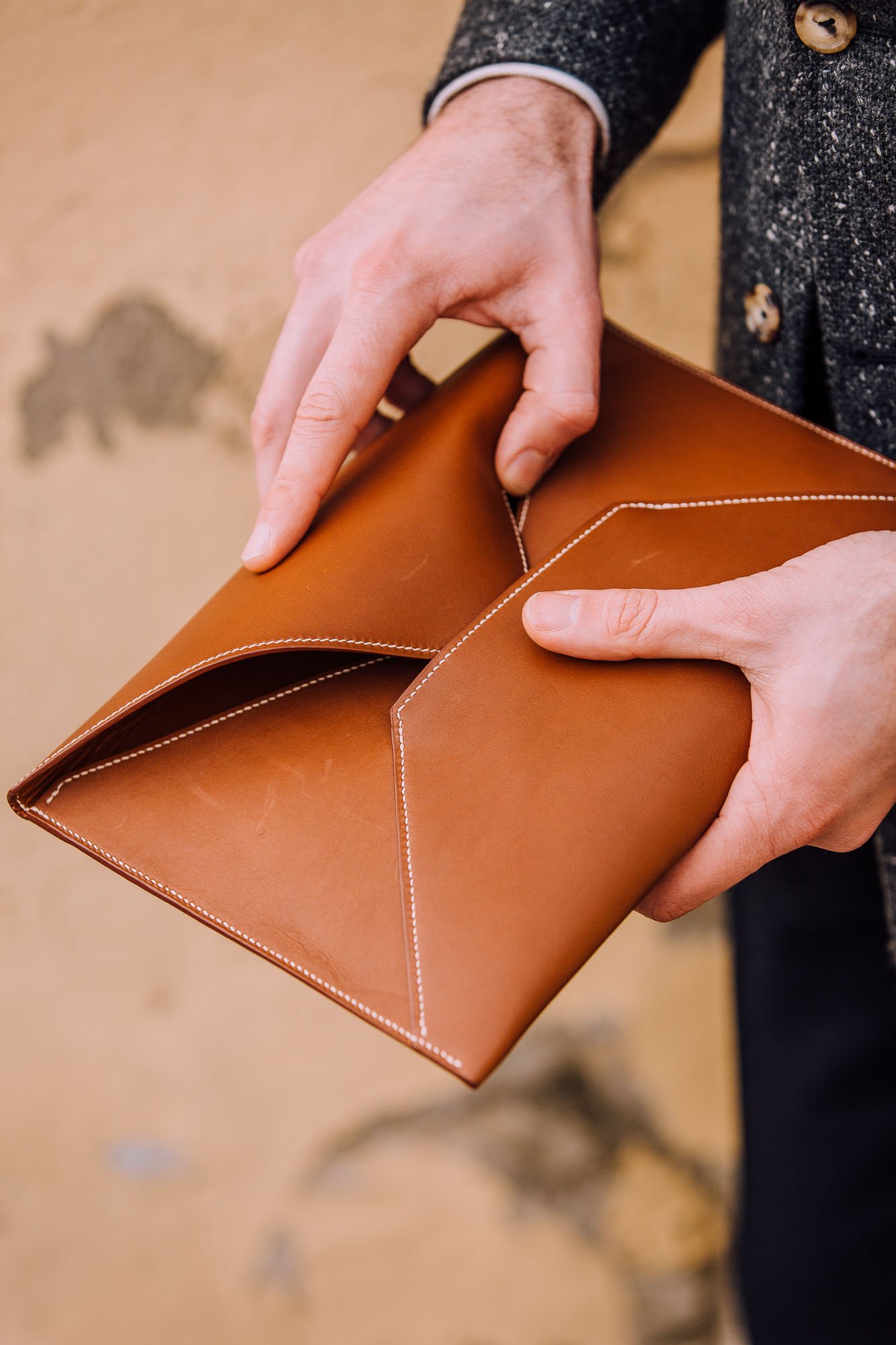
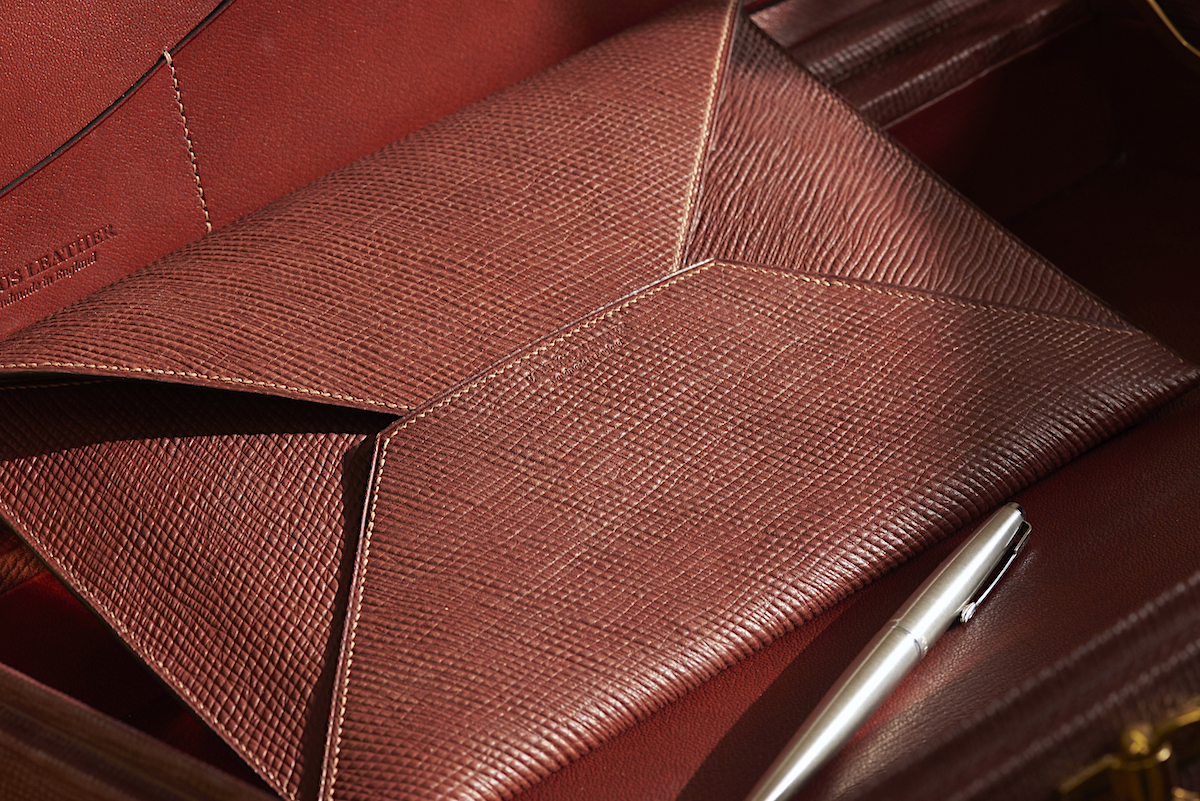
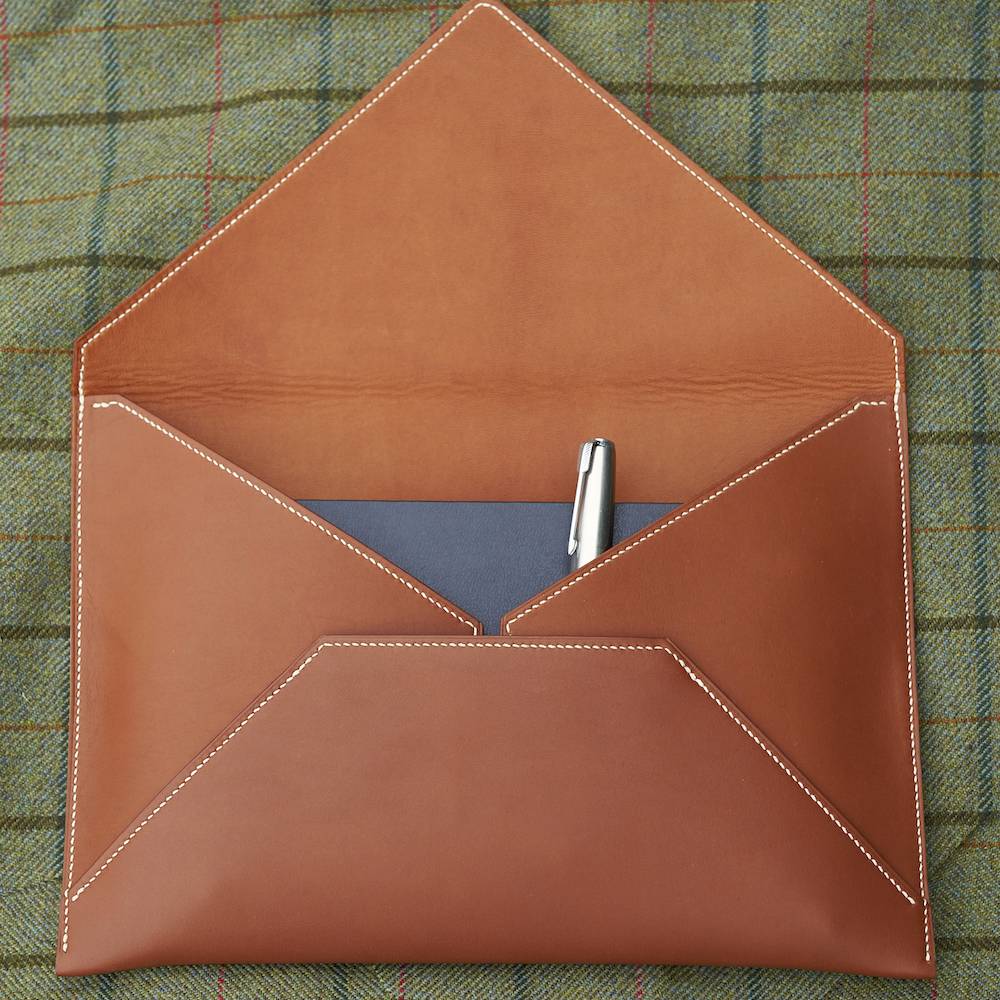
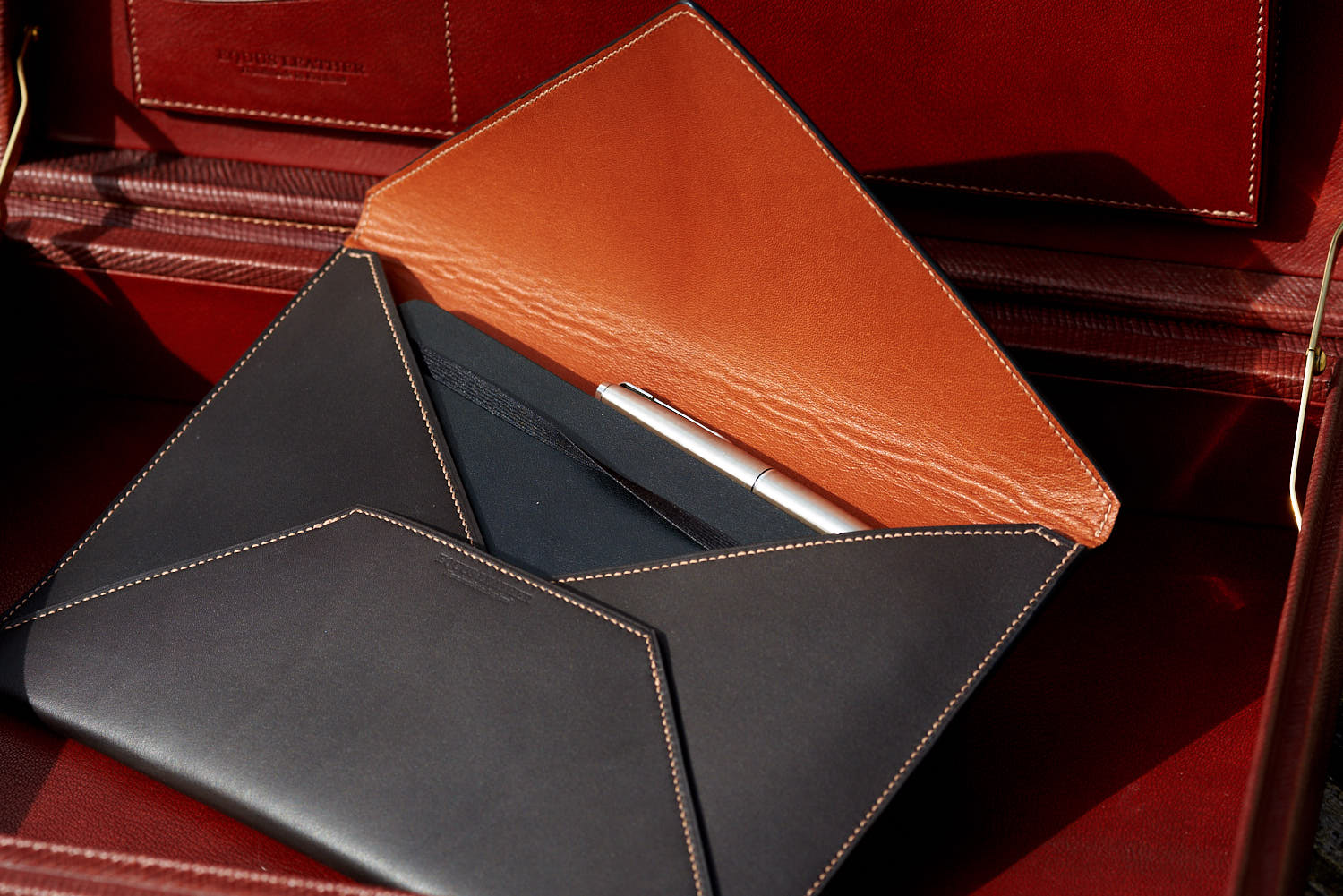
It is the result of two years of work, back and forth, with the aim to produce a simple but beautiful hand-sewn envelope - in which to carry a phone, wallet, keys, headphones and notebook.

I can carry a phone and wallet in my jacket, but it’s keys that push me over the edge. They definitely shouldn’t be in your jacket.

One of the most satisfying things about this design is the fact you can fit so much in there, because it is so soft and unstructured - almost more pouch than folio.

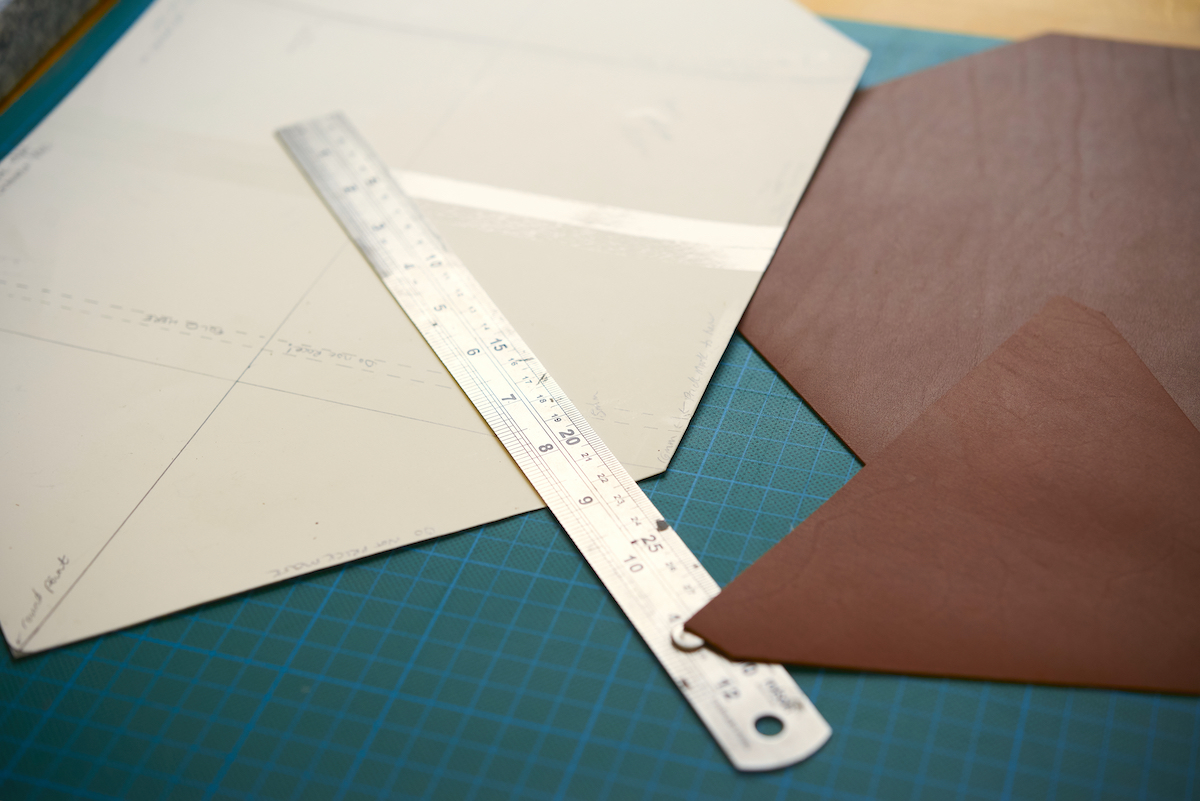
Its lengthy gestation was due to two failed prototypes and two failed collaborators.

Last year, fortunately, I started working with Charlie from Equus Leather, and things went smoothly from that point on.

I’ve covered Charlie’s work several times in recent years. He designs, cuts and hand-stitches leather goods in County Durham, England, and has done particularly well as a result of videos made covering his process.

[See wallet-making video here]

Charlie immediately understood the concept for the folio: something unfussy, easy to use, and in the finest materials.

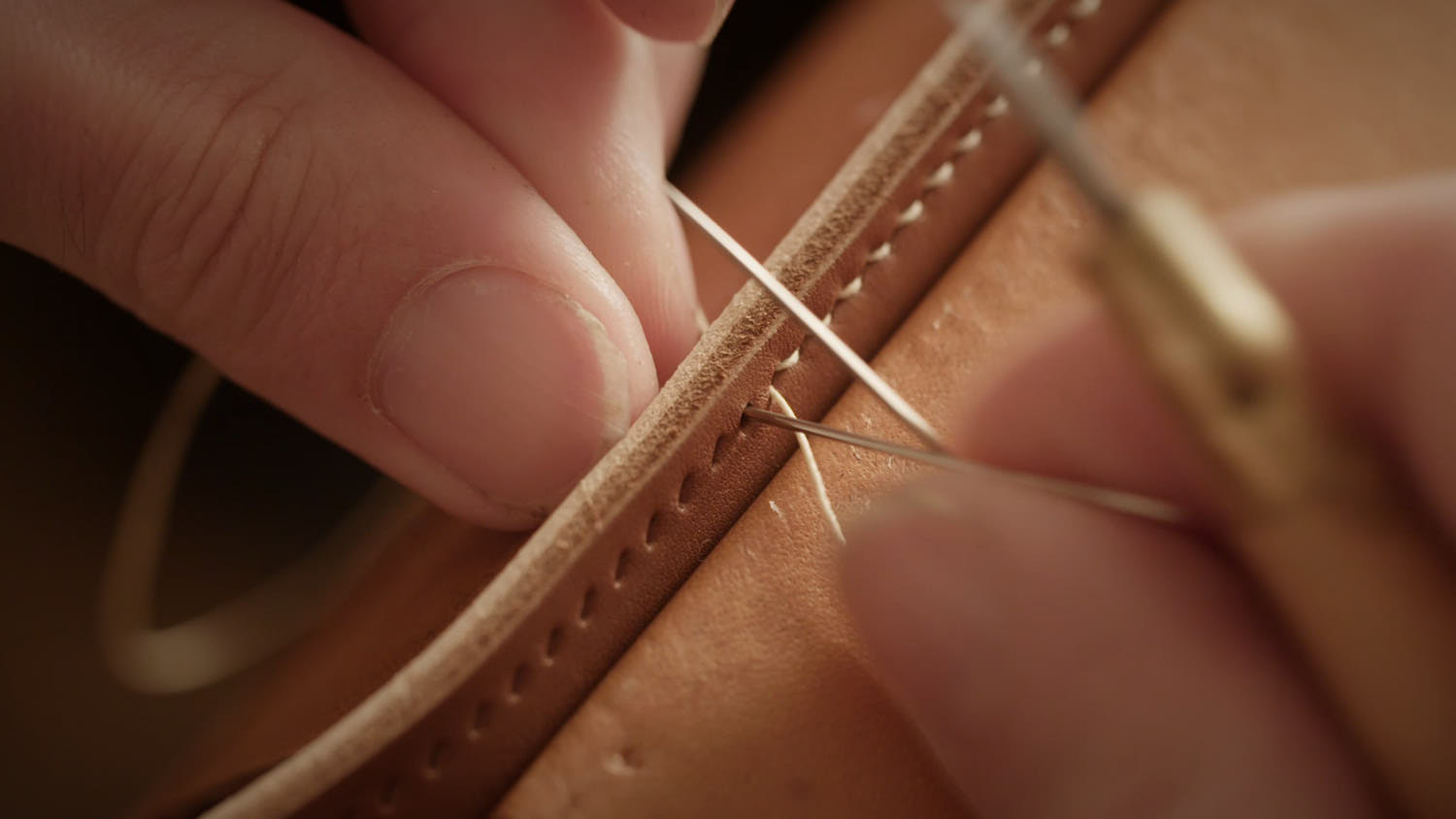
So no fancy hardware, entirely hand sewn, and showing off leathers that the owner appreciates every time they hold it and use it.

The simple, soft construction means the folio can expand easily when things are added to it. And yet empty, it returns to a flat envelope that slips inside a drawer or suitcase.

I’ll post more images and video of using it in the future. But the current video below gives a good sense of it in use, I think.

It also shows how easily the folio can be held, opened and closed.

Getting that right was the hardest technical part. The flap had to have sufficient size to flop down cleanly, while the bottom had to have an opening at the right angle (and be sufficiently large) to make the flap easy to slip in.

Like a good brass lock, the resulting mechanics are quite satisfying.

I should say at this point that Charlie will be selling the folios, rather than me, and that they will be made to order - like most things on the Equus website.

There might be a little stock when Charlie gets ahead of himself, but the assumption should be that they are all MTO.

Each should take four weeks to make, largely depending on leather supply.

He is offering it in three leathers:

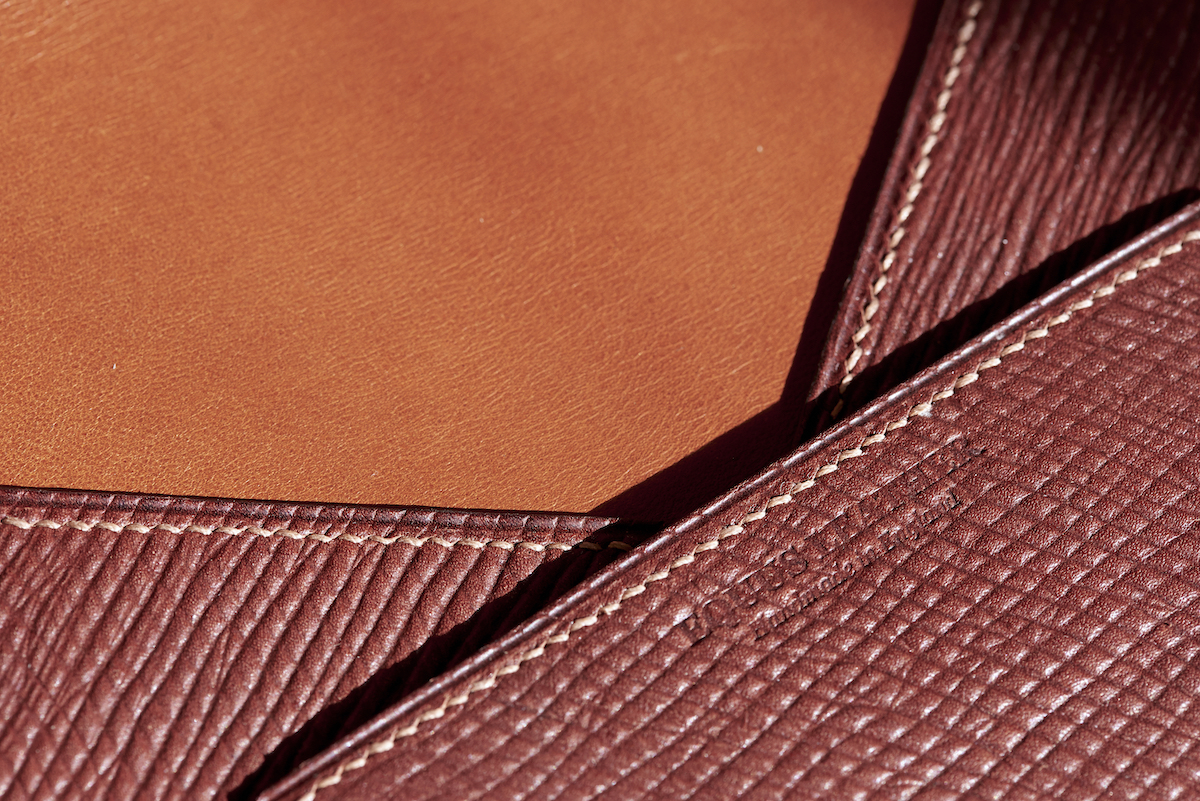
The baranil is a fine, soft calf from Tannerie Degermann in France. It will gain a patina noticeably - as you can already see on the close-ups of mine.

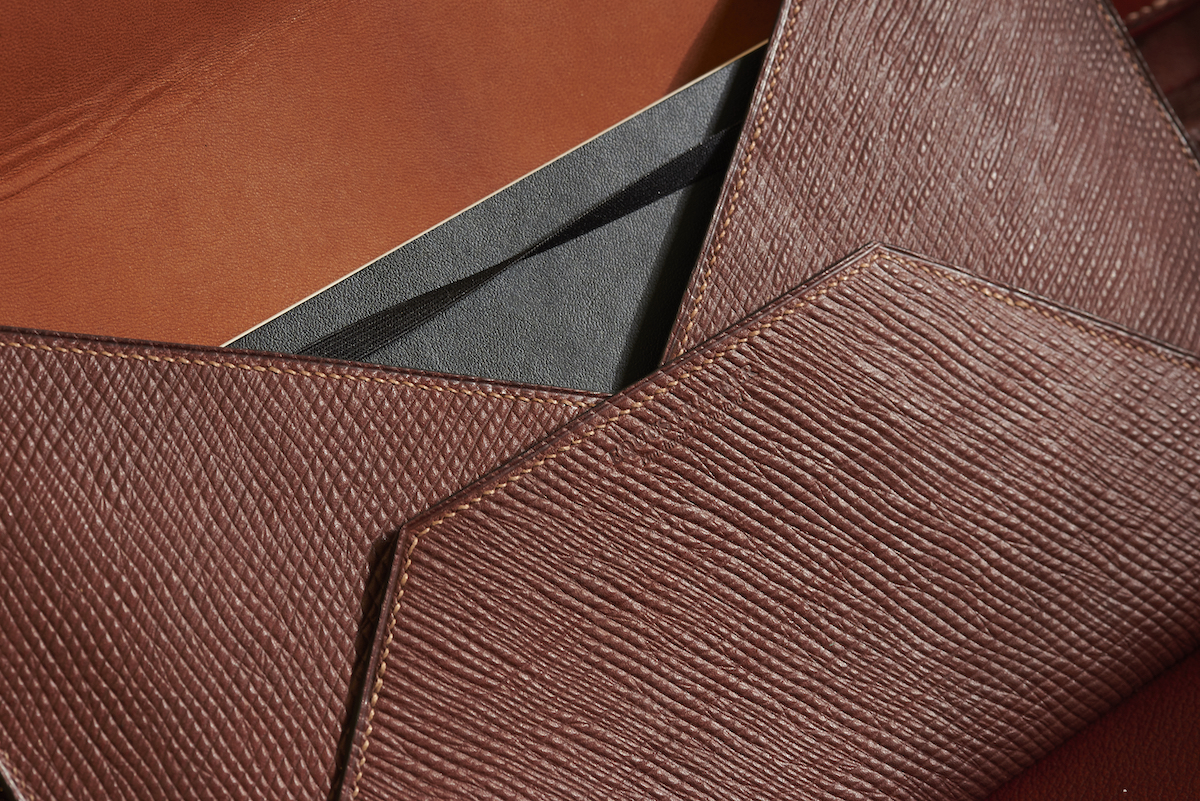
The cuir de russie is stronger but no less supple. Readers might recognise the texture, as it’s a recreation of the Meta Catherina leather that I had my Cleverley shoes made out of.

Tanned by J&FJ Baker and developed with a French expert in the original Russian calf, it has a similar texture and smell (largely birch oil) to the original, though less variegation of colour.

In all three cases, the lining is a lambskin with a lovely depth of colour. It not only provides a soft protective surface for the contents, but develops a patina of its own too.

I’ve moved this post forward a couple of weeks as I just received the sample in the cuir de russie - and so will have it and the fawn baranil in the pop-up shop next week, for anyone to try for themselves.

Charlie also tells me he now has stock of every leather except the fawn, and that should arrive in a few weeks.

Apologies that a lot of coverage at the moment is about new products or brands in the pop-up - a necessary part of informing everyone that's appearing Normal service will resume next week.

For some, I can see how this folio might feel too feminine. But I find it too squashy and practical in use for that to be an issue. It’s just so functional - something at the root of all good menswear.

Details:

  • Folio designed by me but sold only on the Equus website (like the suit-carrier holdall)
  • Entirely hand sewn, in beige linen thread, in England
  • Made to order, in three leathers
  • Price £550 + VAT (Baranil) and £600 + VAT (Cuir de Russie), with embossed initials available
  • Size approximately 267mm x 190mm when closed
  • Sized to hold an A5 notebook, but with space to hold several other things alongside it
  • Cuir de Russie available here, and Baranil here

Photography: Jamie Ferguson (me and barinil carried by me), Equus Leather (making shots and cuir de russie)

Video: Itch Media

UPDATE: 

Thanks for all those that have placed an order in the past month.

Interesting to see some going for A4 rather than A5, which is better for documents and more masculine. Also interesting to see one order for navy, with a navy lining.

Below is the sample promised above in the espresso-colour calf. Quite striking against the thread and lining.

What to learn more about how Permanent Style is funded? Read here: 'Is this an ad?'

Our first Hong Kong Symposium – please RSVP

Our first Hong Kong Symposium – please RSVP

Friday, February 22nd 2019
||- Begin Content -||

Continuing our attempts to bring the Symposium format to more people around the world, we will be coming to Hong Kong at the end of next month - on March 26th.

We plan to discuss the role of China in modern consumption and luxury, which should be really interesting.

Please put the date in the diary, and RSVP when you can. We will have slightly less space than usual and don't want to have to turn anyone away. The address is [email protected].

I look forward to seeing everyone

Thanks

Simon

The pop-up, the goods, and the opening party

The pop-up, the goods, and the opening party

Thursday, February 21st 2019
||- Begin Content -||

Personally, the best part of yesterday’s opening party was about half an hour before, when Graham of Optimo hats (below) told me how well the first two days had gone for him. ‘Really exceeded expectations’ were the words he used.

It was the best part because, lovely as it is seeing friends, and meeting readers, my biggest concern with the pop-up is always the brands.

They’ve taken a punt on me to travel halfway across the world and stand in a shop, and I worry every day that it’s not working out for them.

So, wonderful that Graham was going well.

The Rake had been round and talked about coverage; everyone had gone through the process of trying hats that suited their heads; and Graham was talking about how often he could come back.

Kristie at Joshua Ellis was also doing a sterling job – particularly in the technical questions she was getting from Graham and everyone else.

We had a long conversation about different types of cashmere, and how the product had got finer over the years (a good and a bad thing – it’s great quality but there were some advantages to coarser cashmere too).

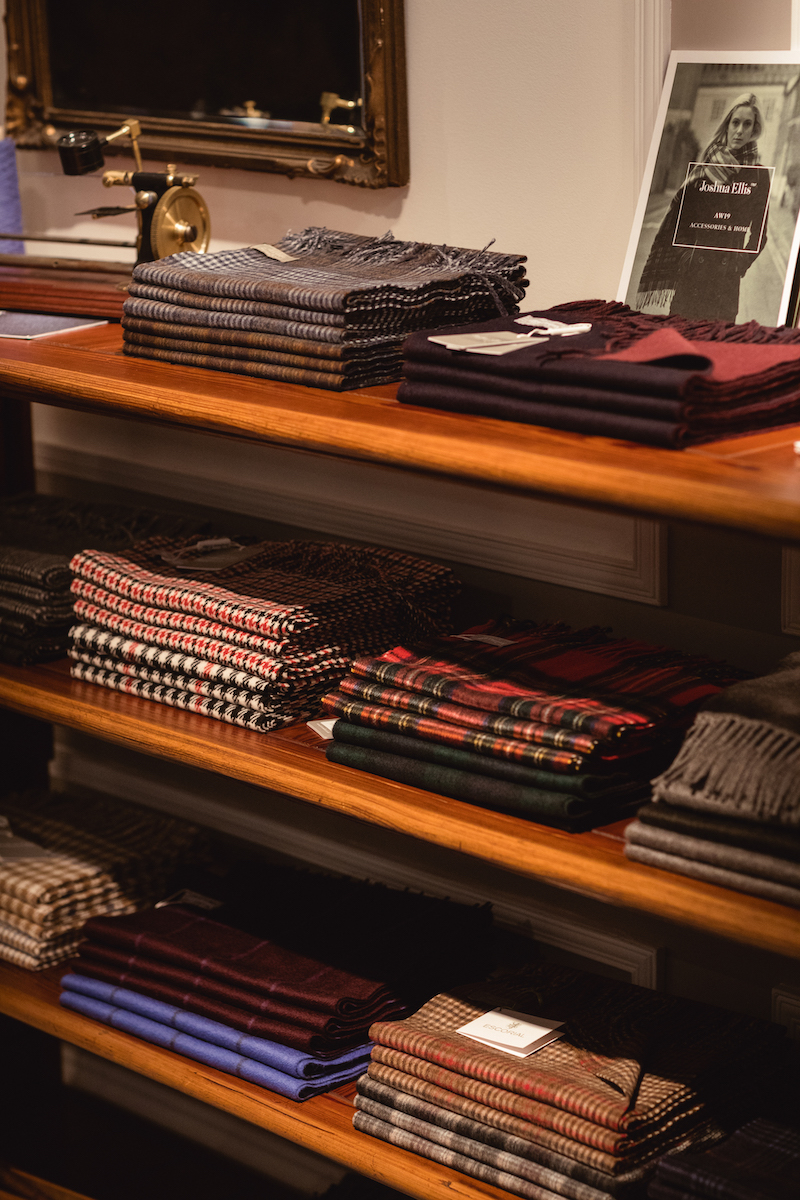
Joshua Ellis have a nice range of scarves out, including some lightweights I hadn’t seen before.

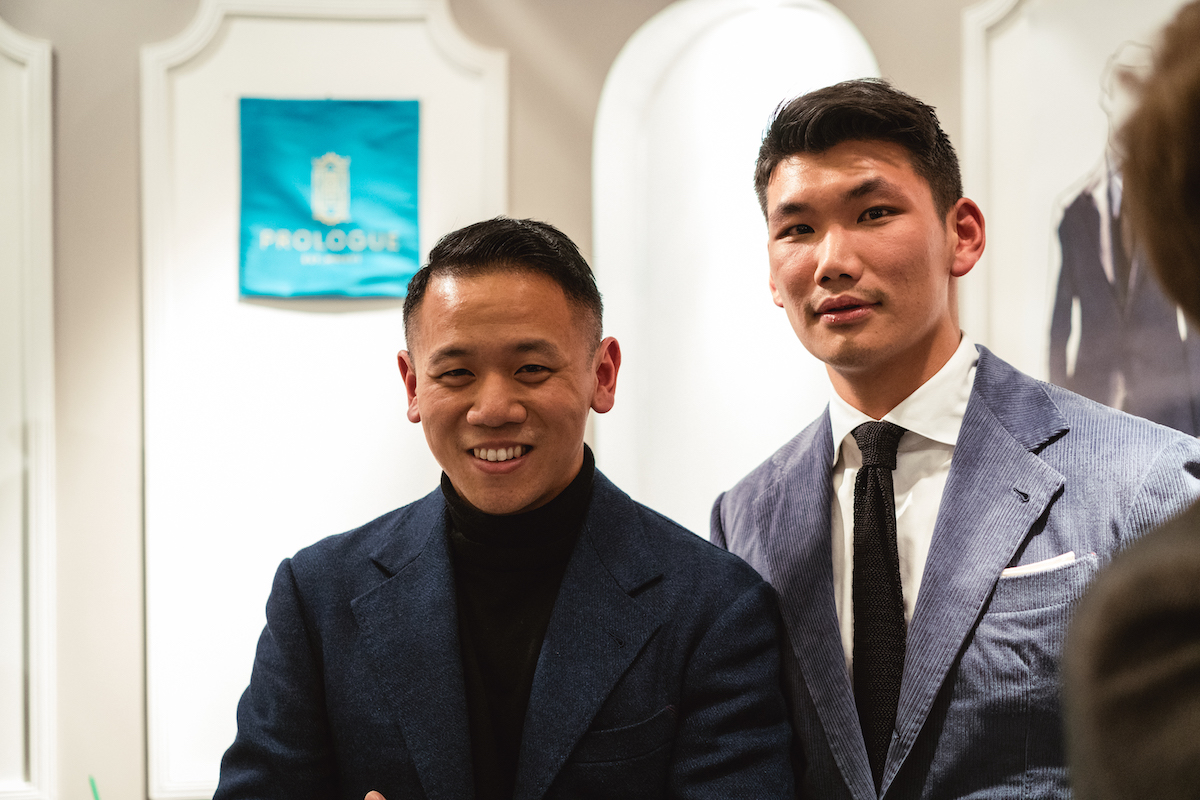
And both Jerry and Chris from Prologue were there (below). Chris flies back today, leaving Jerry in charge for the duration, but he seemed happy enough (much to my relief).

I collected my first jacket from them, a green/grey summer jacket in a wool/silk/linen mix, which was good. I wouldn’t compare it to the top-end bespoke makers, but it’s still fantastic for under £1000.

The Prologue guys also had an interesting mix of new projects: samples of shoes made in a Chinese workshop that looked very good – machine sewn except around a hand-sewn waist.

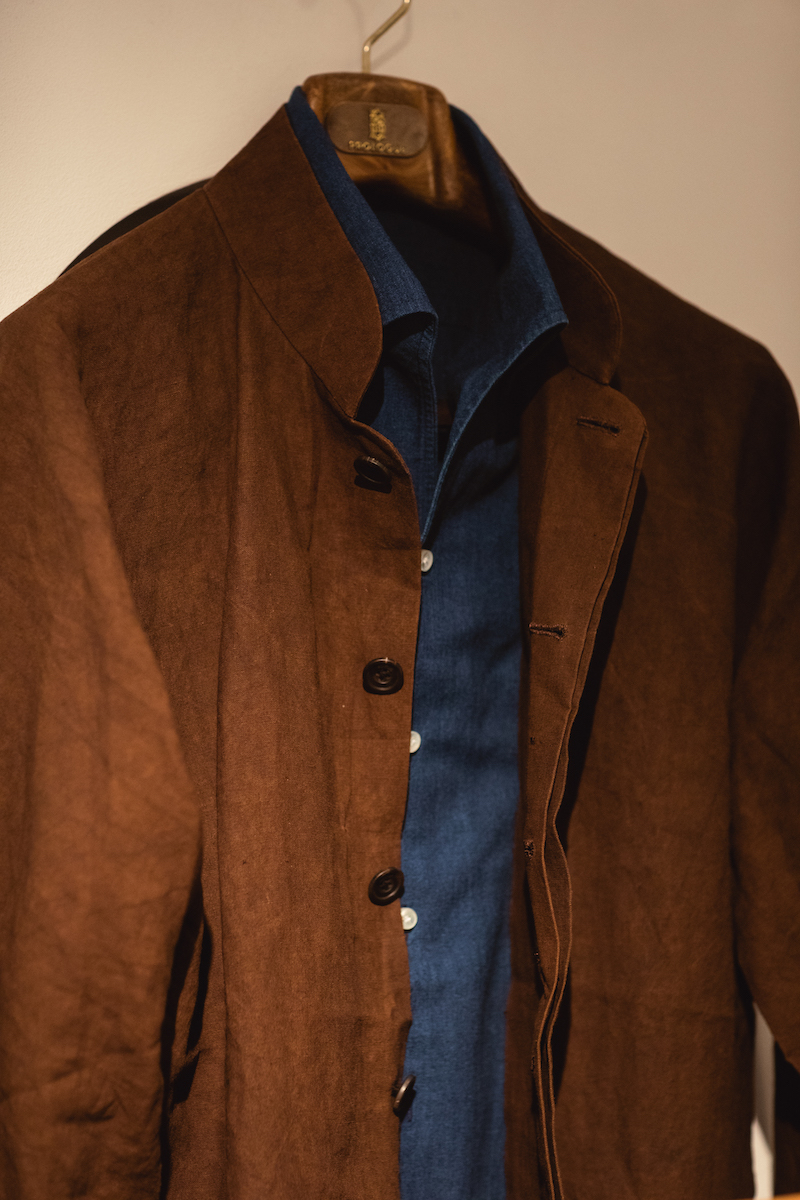
And there was some little pieces of ready-to-wear, including Mandarin jackets in interesting hand-dyed cloths.

James Girdwood and I, meanwhile, pottered on with our products, picking up a few sales from regulars.

James’s watch straps and cordovan products are always popular (brand J.Girdwood) as are his Coherence coats and teba jackets

He also has a nice selection of fabrics to make tebas out of now – I have my eye on a lightweight beige wool with a thin maroon overcheck.

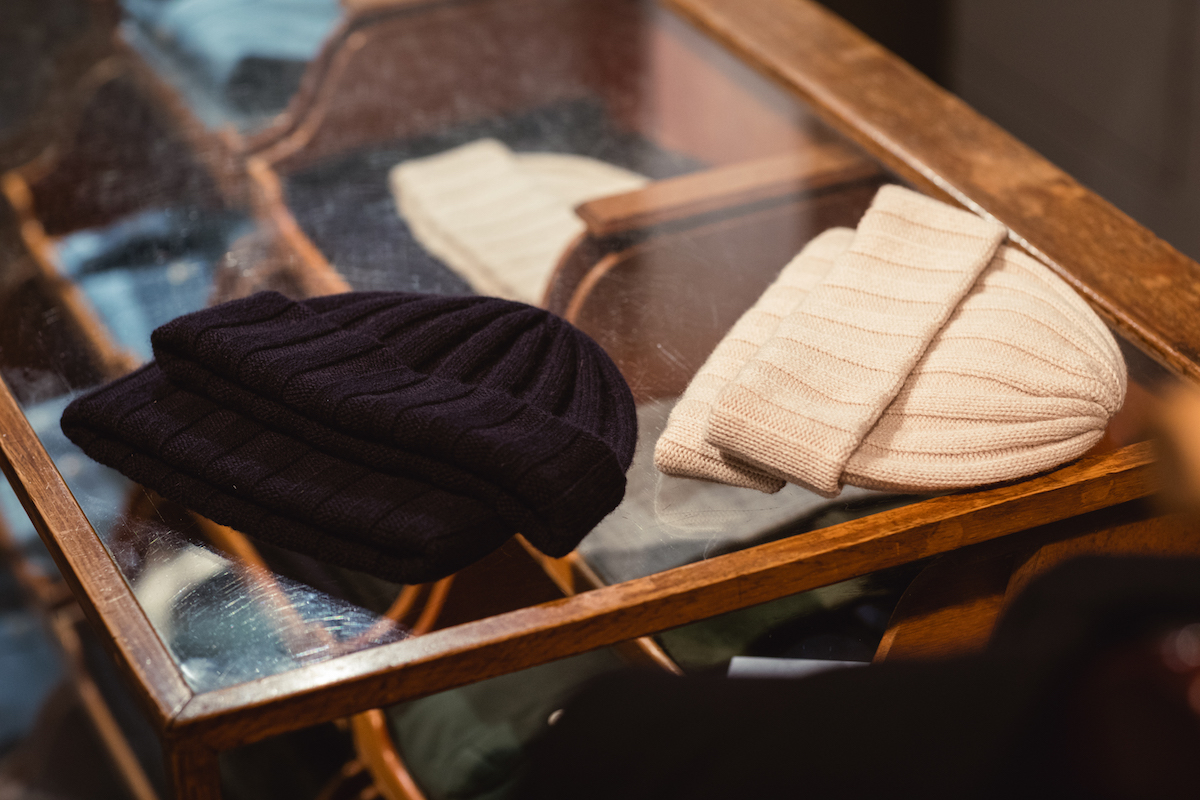
And readers came in to try on bridge coats, to pick up watch caps for these chilly mornings, and to try denim shirts (which have just arrived, in light and standard Everyday Denim).

Perhaps the nicest part for me on the product side was talking to shirtmaker Wil Whiting about the PS oxford cloth, which he says he can’t find an equivalent for anywhere. Wil was also being fitted for a hat with Graham – as were many people by the end.

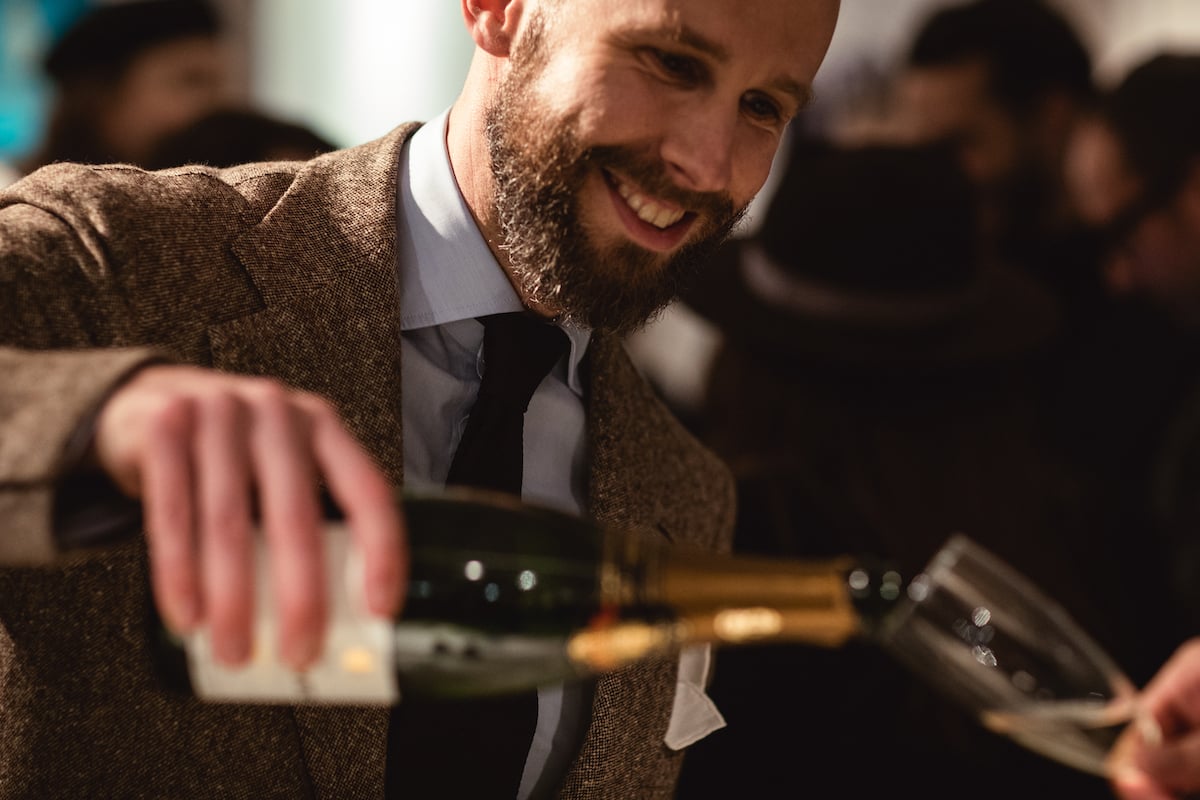
Thank you everybody for coming over the first two days, and for coming and sharing a drink in the evening.

As a reminder, the shop is open at 37 Savile Row until Saturday featuring these brands (none of which are otherwise available in the UK) and then re-opens for the second week on Tuesday, with a new set.

All details here.

Photography: Milad Abedi

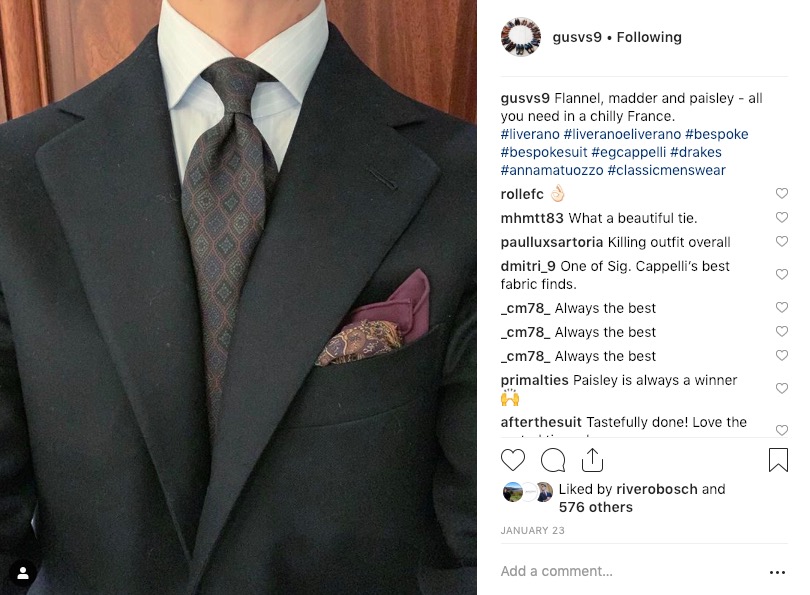
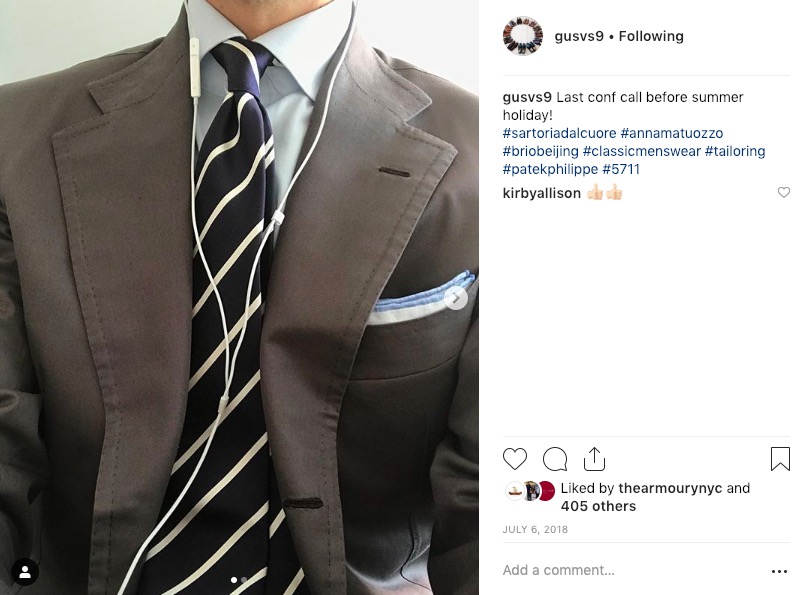
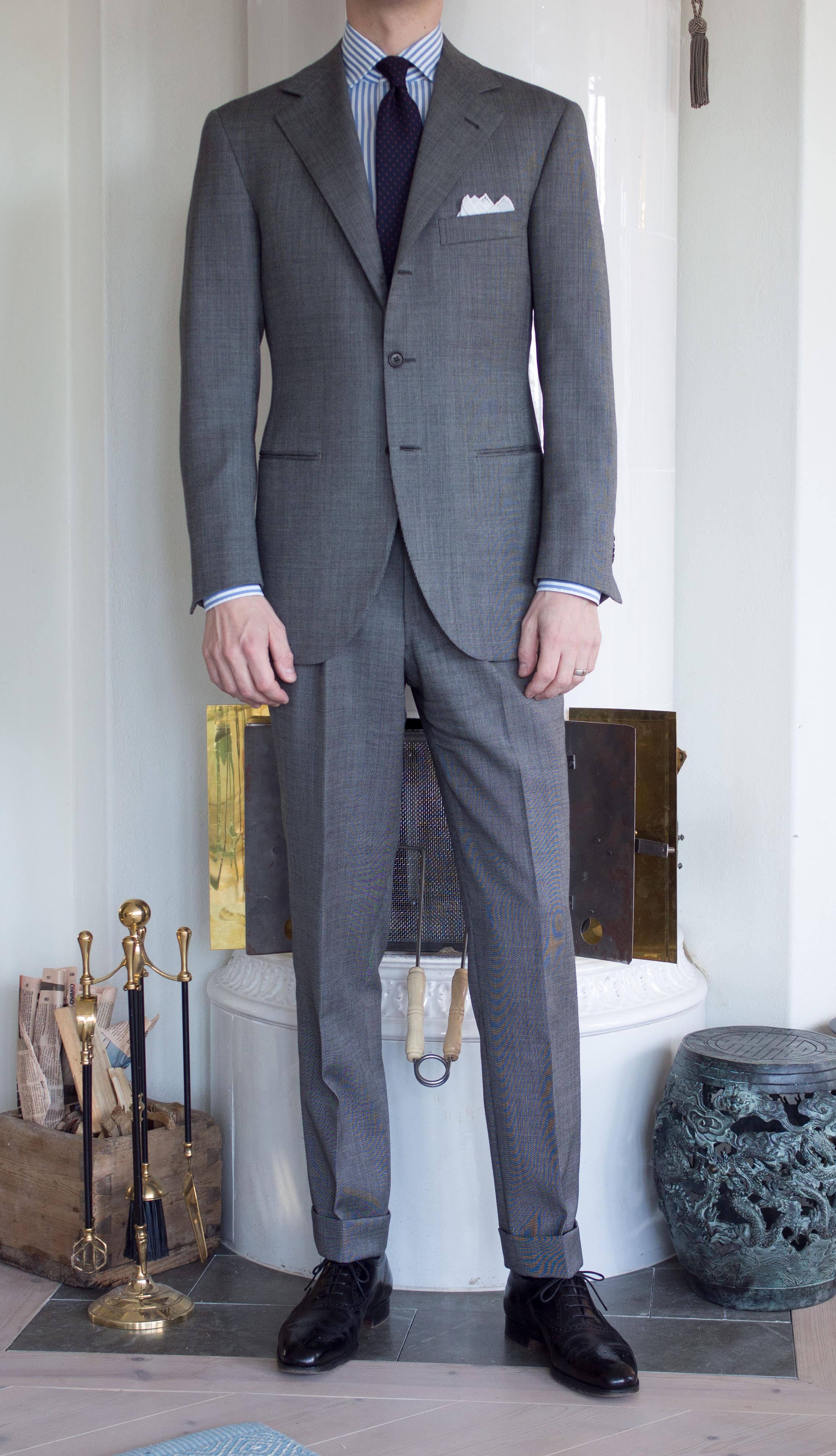
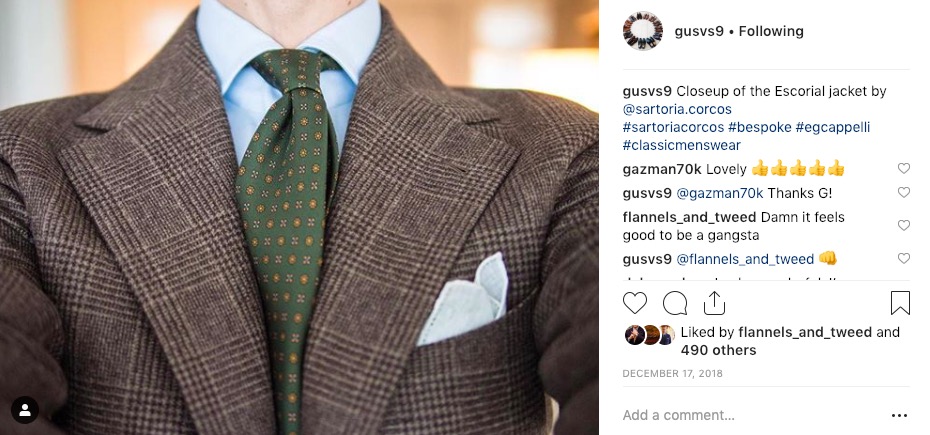
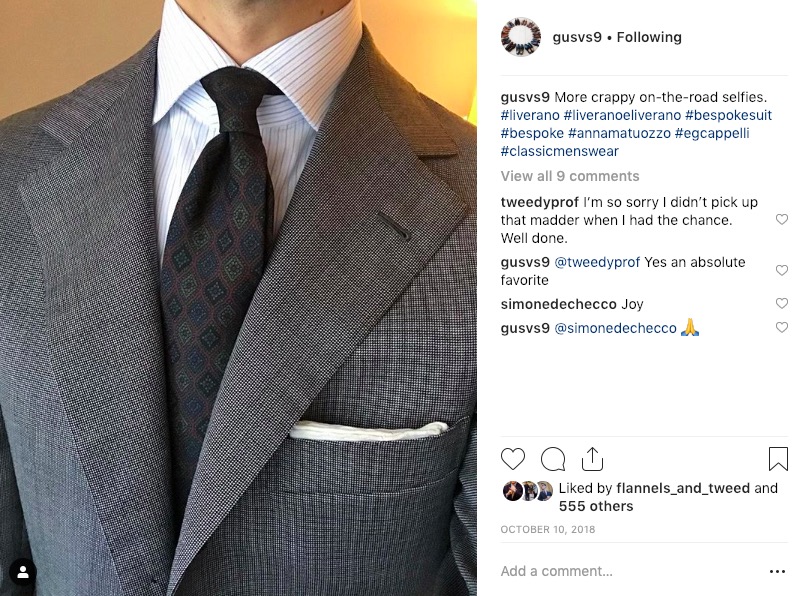
Best-dressed man 2019: @Gusvs9 (or, dressing simply but well)

Best-dressed non-professional 2019: @Gusvs9

Runners-up: @urbancomposition, @flannels_and_tweed

@Gusvs9 doesn’t like people to know who he is. You never see his face on Instagram, and there is no biography.

Such an approach is almost weird in the age of Instagram influencers. Yet it’s also a reflection of how he dresses – and, in a way, how Permanent Style has always encouraged readers to dress. Simply but well.

Gustaf is the winner of this year’s ‘Best dressed’ Permanent Style award, which we decided to limit to non-professionals: those that don’t work in the menswear industry.

One of the pleasures of Instagram is how much visual inspiration there now is from such stylish men around the world – who don’t work for a brand but who wear brands’ clothes in elegant ways.

We wanted to recognise that, and celebrate it.

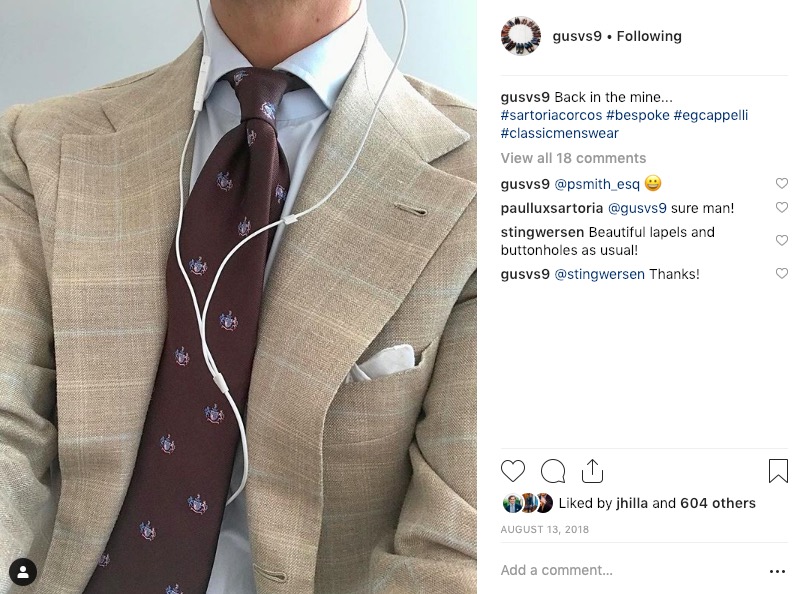
Gustaf usually wears a plain or very subtly patterned shirt and jacket

To judge the award, as in 2018, we had a panel. Style is such a subjective area (unlike, say, customer service) that I feel a panel is best placed to judge – it is clearly their opinion, rather than anything objective.

Last year I was joined on that panel by Michael Drake and Jamie Ferguson. This year, I decided to ask winners of last year’s awards: Greg Lellouche of No Man Walks Alone (which won the customer service award) and Ethan Newton of Bryceland’s (who won the best-dressed award).

Greg, Ethan and I had slightly differing opinions, but we all loved Gustaf’s style, and agreed on Peter @urbancomposition and Andreas @flannels_and_tweed as very worthy runners-up.

On Gustaf’s style, Ethan said: “Gustaf is simply elegant. He uses some of the best tailors in the world and dresses beautifully.” While Greg commented: “I’ve been admiring his impeccable style for years. He has amazing taste and his outfits are systematically well composed.”

So, I phoned Gustaf to ask about his style, his tailors, and not playing Instagram’s stupid games.

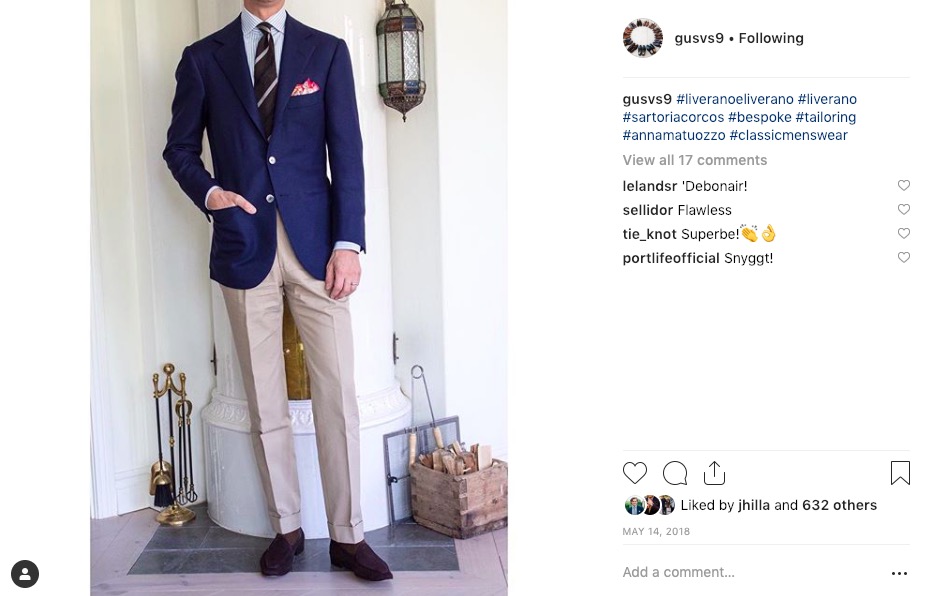
This blue jacket is as much colour as you get

Permanent Style: Gustaf, let’s talk about the anonymous point first. Why do you prefer not to show your face?

Hi Simon. I think it’s just that I focus on my job a lot, and I don’t want that and Instagram to mix. Sweden is a small country, and it wouldn’t be hard for the two to connect.

I started posting things on Instagram because I liked seeing what others were wearing, and it’s nice if it’s reciprocal. I don’t think you can’t just watch, you have to contribute.

I really enjoy it, but it’s just a hobby, a nice way to connect with people.

How did your interest in classic menswear start?

Probably with my father. He was always well-dressed, always in a suit and tie, even wearing a tie at the weekend.

It was part of his generation I guess. I’m in my mid-forties, he was born in the 1940s, and back then he wore a school uniform, then a suit every day.

But there was also a personal interest there, an element of dressing to please himself. He enjoyed his clothes and enjoyed the impression it gave.

At what age did you first get into clothing?

I think I was always quite peculiar and particular about things. Certainly compared to my older brother, who has no interest whatever in clothing.

I remember when I was five, we were living in Cyprus at the time and I dragged my father out to find cowboy boots. It was the late 1970s and everyone was wearing them.

I was extremely stubborn. But fortunately they didn’t have any in my size, so I avoided that fashion moment.

And did you discover tailoring, like most of us, when you had to wear it for work?

Yes, exactly. So there was a period when I was a teenager when I wanted to dress the opposite of my father, but when I started working, then I discovered a passion for tailoring.

And this checked jacket is as much pattern

What was your first job?

It was at the Japanese Chamber of Commerce in Stockholm, so it was a very official environment, and particularly so being Japanese. Everyone wore a suit and tie.

I started buying some basic suits, then some made-to-measure – Belvest, for example.

There were only a couple of menswear stores in town and I used to hang out there, chatting to the guys about styles.

Later on, I started travelling to Japan a lot. And while they didn’t have much bespoke, they had a lot of menswear, and particularly Italian brands that you would never see in Stockholm.

I bought things from United Arrows, from Sovereign House. And then when we actually moved to Japan later, that’s when I started buying bespoke.

Who did you first make with in Japan?

It was a small tailor – I forget the name – that doesn’t exist now. I found them through Men’s Ex, the Japanese magazine.

However, most significant was that I got to know Liverano. Not Antonio himself, but the brand through the shop-in-shop they had at Sovereign House.

At the time it seemed very classic to me, very traditional. Everything, in Japan and Sweden, was very tight and short. But over time that classic style began to appeal.

So did you end up buying bespoke from Liverano?

Only a while later. First we moved back to Stockholm, and there wasn’t any bespoke here really, apart from AW Bauer and that wasn’t to my taste.

But later we went on our family holiday to Florence, and that was when I popped in to Liverano. And met Taka. The Japanese connection helped a lot, and I quickly decided next time I’d come back and have my first suit made by them.

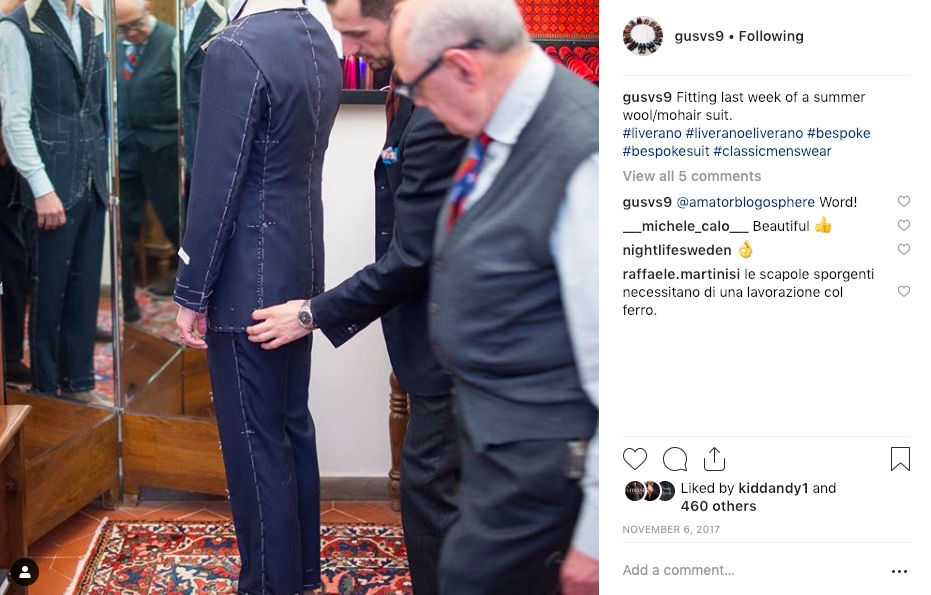
Gustaf gets a shot of being fitted at Liverano

When did you end up going back?

My first Liverano? Actually let me check, I have the jacket here… it was completed in 2012.

And how many do you have today?

Ah, there’s the question. Eleven I think. Quite a collection, but built steadily over the years. They were cheaper back then too – before The Armoury brought them to wider attention.

I think I fell in love with the Florence silhouette. It suits me well, and I adore the lines. It’s no coincidence that the other tailor I’ve ended up using a lot – Sartoria Corcos – is also in Florence and also Japanese.

And I’ve recently placed my first order with Sartoria Cresent in Milan – again Japanese – after carefully reading your article on him on Permanent Style.

It’s interesting that you’ve stuck with so few styles. Most men today take the opposite approach, and want to try everyone.

Well, I have tried one or two others. I have used WW Chan, and I did try the Neapolitan style with Napoli Su Misura, when they were coming to Stockholm. That was actually before Liverano.

They were very much hyped on Style Forum – I was reading it a lot at the time – and I managed to get them to come and see a few of us.

It was OK as an entry-level bespoke I guess, but it was the same story as many tailors, particularly Neapolistans – as they got too big, the quality started to suffer.

I’ll be interested to see what Cresent is like, as I’ve never had anything Milanese. And in the future I might try something English, probably Anderson & Sheppard.

But it sounds like you’ve found your style, and enjoy the best aspects of bespoke – the relationship that develops, and the perfection of a look you like.

Yes, and to be fair the Florentine style suits the more formal environment I’m in most of the time.

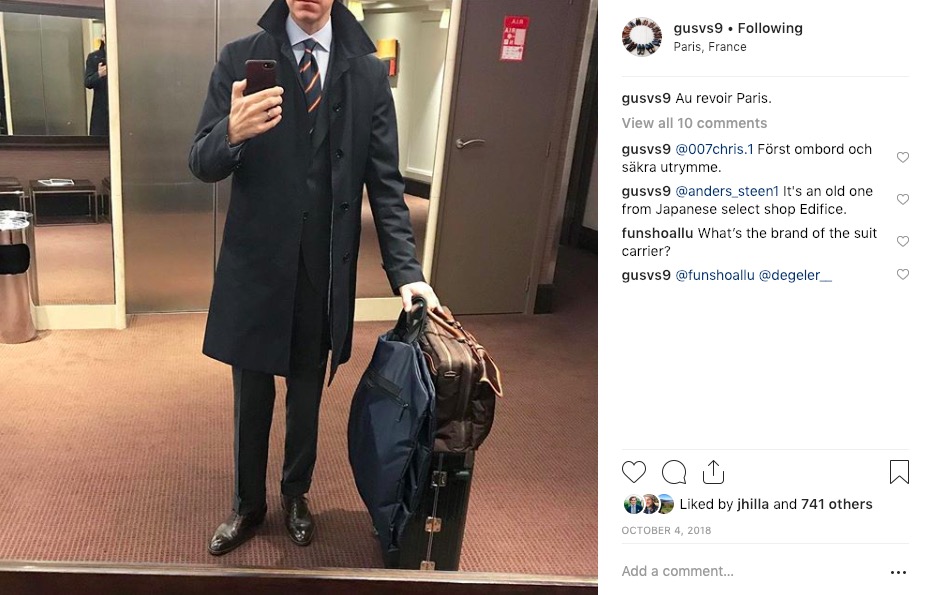
The travelling businessman

Do you still work with the Chamber of Commerce?

No, I now work for a large industrial company, actually headquartered in the UK.

And how do people dress there? Are any of your outfits we see ever a little too smart for them?

In London most of the senior management wear a suit and tie, but in other offices – as everywhere – it’s becoming more casual, and most people wear just a suit and shirt. Even just a shirt and trousers is common.

I’ll be completely honest, even I sometimes wear just a suit and shirt because anything smarter would be out of place, but I like to always wear a tie.

People say you should dress for yourself, but that’s just not realistic in a professional environment, particularly when you meet clients and need to dress for them.

You can do a lot by not wearing showy things though – not a double-breasted suit, not a pinstripe etc.

Do you ever wear a sports jacket and trousers, when a tie would be too formal?

Yes, and in fact that’s what I prefer when I’m not wearing a tie. A suit and shirt just feels too odd, as if something’s missing.

I’ll often add a cardigan or something else under the jacket as well, to add some interest.

You seem to wear a pocket handkerchief in all your outfits though – does that not stand out as much as a tie?

No, I don’t think so. I’ve probably been wearing them so long that it would feel odd to me – and even look odd to others – if I wasn’t wearing one. And if I want to be more subtle then a simple white handkerchief in a TV fold is fine.

Tonal combinations, rather than patterns or colours

You mentioned you’re in your mid-forties with a family – what do you wear at the weekend?

Ah yes. My two children are fairly young, so there’s the issue of not wearing anything white at the weekends – but you know, you have young children as well.

Absolutely, and it’s something readers ask about a lot. All your pictures are of formal clothing though – are you not interested in casual clothing, or do you just not post images of it?

No, I like more casual things. I like Japanese denim, I always do my research on what I buy. But the interest is not on the same level as tailoring.

And also I want everything I wear to be simple, something I’m comfortable in. You know how it can be in menswear, where it borders on theatre, everyone in their costumes. That’s why I generally dress quite classically.

Yes. I think that comes across quite clearly from your feed.

You wear shirts and tailoring that are plain or with very subtle patterns, for example, which means any pattern of tie or handkerchief works with them.

Exactly. My favourite suit is probably a grey pinhead suit from Liverano – I call it the perfect suit. It’s the perfect colour, fabric, structure and fit, and it goes with everything.

It’s great with a crisp white shirt and a dark blue tie. But it’s equally nice with a blue shirt, perhaps in a subtle pattern, and a coloured tie.

And my other favourite is a blue hopsack jacket from Liverano – a little lighter than navy, but not too strong. Again, the fit and make are just perfect.

I often take that one travelling, and take different trousers to wear with it on day two. It’s fully lined as well, so I can wear it long into the autumn.

The perfect Liverano suit

It’s interesting, I expected most readers to vote for people that combined lots of different colours, patterns and so on. But actually, your classic combinations are clearly appreciated.

That’s lovely to know. I don’t feel an urge generally to try different colours – it’s very much things that feel natural to me.

I do think Antonio Liverano is the master of colour, and he does encourage me to step outside my comfort zone now and again. But it’s rare.

What’s the biggest mistake that young guys make with bespoke do you think?

Well, it’s the obvious one, something you come back to on Permanent Style a lot – they don’t start with the basics.

All of a sudden you have all these options, and want something exciting, so you go for big checks and patterns.

I understand it, I did it myself. And it’s not entirely a mistake, as you learn from it. But I’d always suggest someone start with a classic, plain suit. Buying bespoke is when you’re investing a lot of money in clothing, and you don’t want it to be waste.

Keep it simple. Less is more.

The blue Liverano jacket

How do you feel about Instagram and the way it works?

I don’t like it. There are all the games people play, with liking each other’s posts, and trying to work out what the Instagram algorithm likes at a given moment.

I know others that have started to lose followers because they don’t do those things, and I guess I’m lucky that I don’t care how many followers I have. But it’s frustrating that this is how it works.

And of course when you have 18,000 or 20,000 followers, people start offering you things to wear or endorse, which I always turn down.

Sometimes I also get annoyed at other people like me – who are not in the business – who have professional photographers come and take photos of them.

It’s fine for those working in it, I think, like yourself or Andreas Weinas, but to do it as a normal person feels fake.

When a normal person says ‘Monday morning, off to work’ and then has this perfect photo in perfect light, it’s just silly.

More colour and pattern. But again, a shirt that could go with anything

Personally, I find it odd that people don’t differentiate between the internet – where a search engine is regulated – and something like Instagram, where they can stop showing your images to people if you don’t spend money with them, for example.

Yes, exactly. It all seems rather unclear.

Fortunately I decided I’ll never be able to outsmart them so I just ignore it altogether. But it must be more annoying for others that have a business that relies on it.

I’m delighted to see the site is still growing by the way, I’m amazed. Instagram is great for me, but I love the fact that there is still in-depth content too.

Thanks. I always liked the contrast between ‘lean forward’ and ‘lead back’ media. I like the idea that a reader is leaning back in his chair and relaxing into it.

Yes, that’s a good way to put it.

Well, thanks for your time Gustaf. Congratulations on your award again, and hopefully I’ll see you in London sometime soon.

My pleasure Simon, and thanks again.

Photography: @Gusvs9

What to learn more about how Permanent Style is funded? Details here: ‘Is this an ad?’

My personal favourite combination. I want that tie.

Optimo bespoke felt hat: Review

Optimo bespoke felt hat: Review

Monday, February 18th 2019
||- Begin Content -||

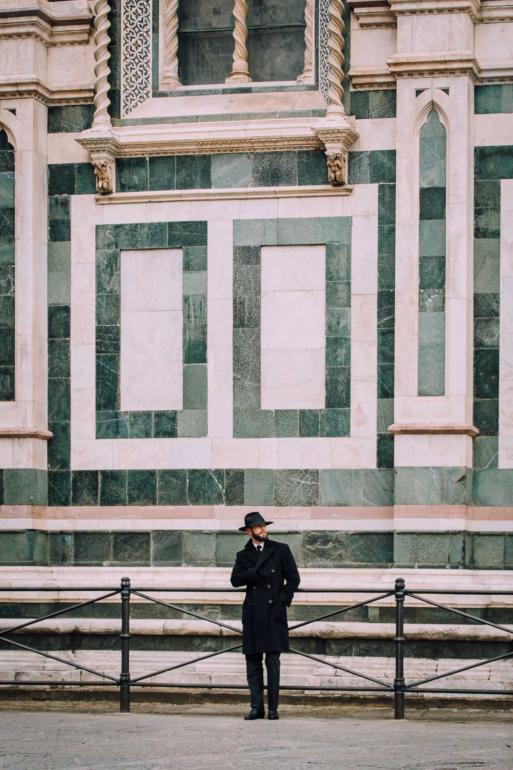
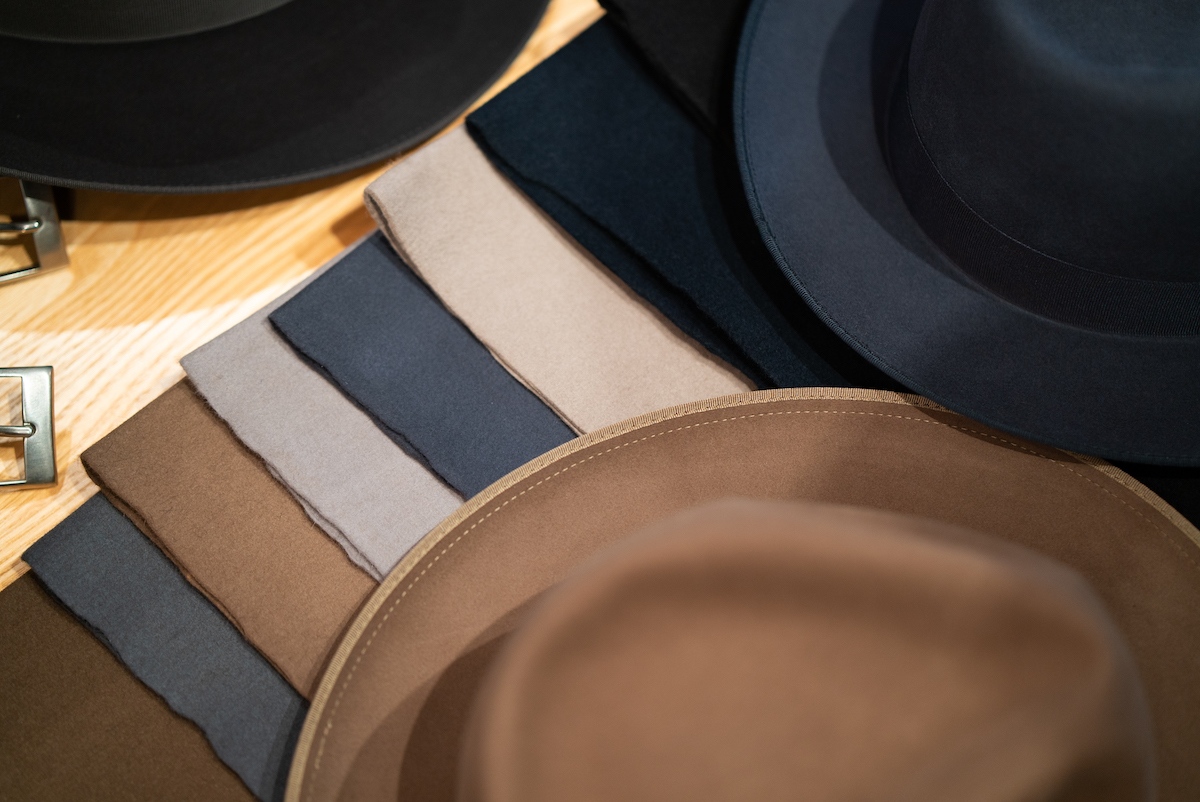
I'm not sure whether it came across, but I was almost surprised by how much I liked the Optimo hats I saw in New York last October.

It was the first time I had seen them first hand, and the felt was noticeably different from what I had seen at other makers. It was supple yet tough, with a sharp line yet soft to the touch.

When you've covered most of the major producers in an area, this kind of difference is rare. Differentiation is more usually about small aspects of finishing, fit or service.

Optimo had those as well - I particularly liked the fact Graham didn't allow people to buy ready-made hats online, or even to try them on in the shop without supervision - but the product was also pleasingly different.

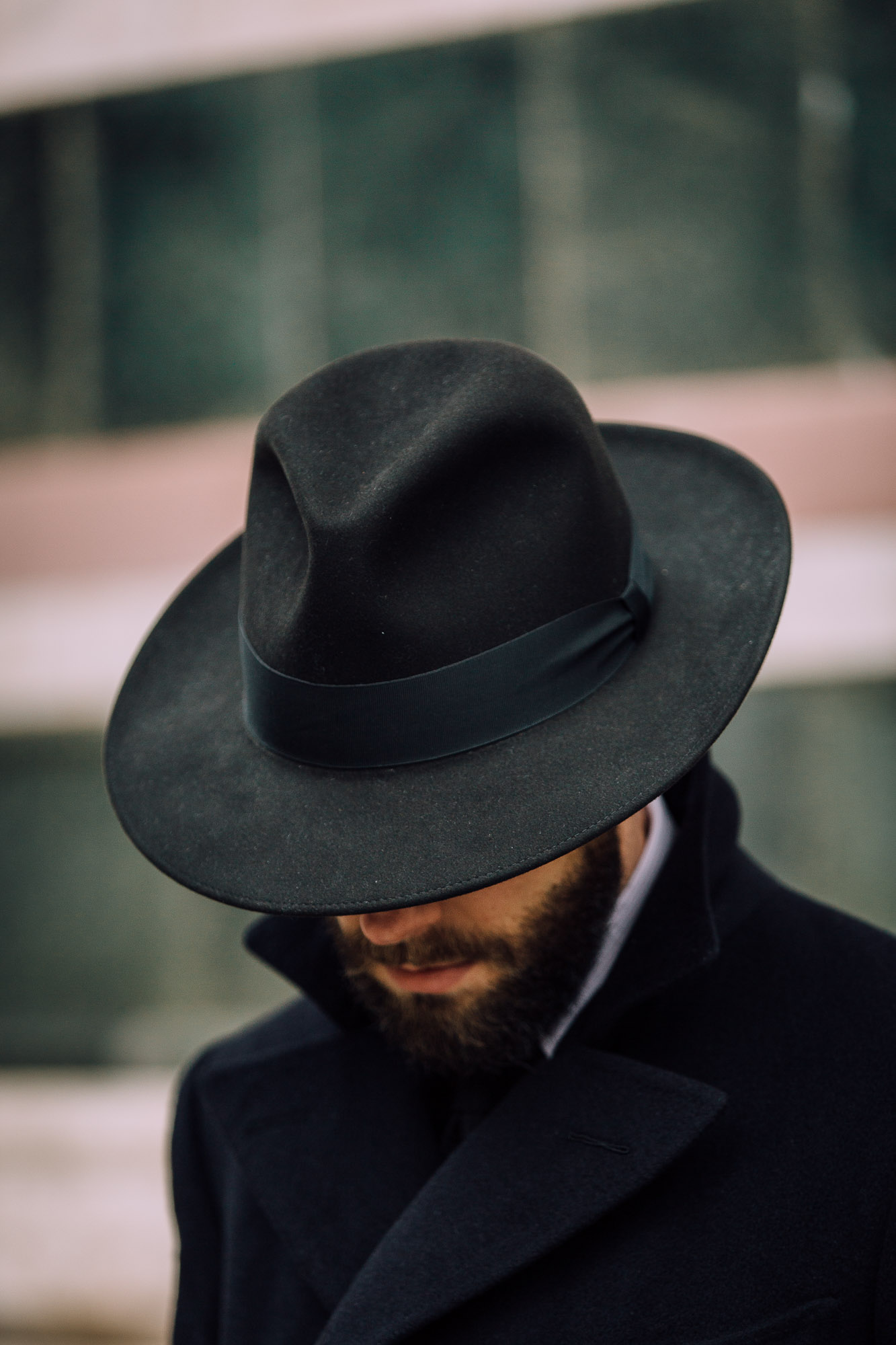
The hat I ordered, which was received just before Christmas and is pictured here, did not disappoint.

Of course, I knew what that felt was going to be like. But it creates a new level of appreciation when you wear it, day in and day out.

The hat was rained on heavily, a couple of times, yet retained its shape perfectly once it had dried. In fact, as Graham had said, that moulded it better to the shape of my head.

Moulding like this is common to most felts, but some - like my Lock & Co Voyager, for example - can also lose their shape along the way.

Now the Voyager is a thin, unlined felt, designed to be more casual and rollable. But even thicker felts I've had from the likes of Bates or Anderson & Sheppard haven't reacted that well.

The biggest reason is the Optimo hat is made from top-end beaver felt, where the others are mostly rabbit or hare.

And of course, you pay for that: an Optimo hat starts at around $800 whereas Lock ones start at £295. But, Lock does also do beaver/mink hats at £695, and they didn't feel as nice to me.

If the Optimo felt was a case of getting exactly what I expected, the biggest surprise was the feel of the sweatband.

This might seem like a small detail, but the sweatband is in constant contact with your head, so it is the part you feel most.

The Optimo band is made from a plump veg-dyed leather, which feels lovely on the head and also moulds over a few wears. It's the thing I now notice most when I switch from the Optimo to another hat.

The fit of the hat was good, but it could have been a better longer oval shape.

My head is what is known as a long oval, which is slightly harder to fit for than a more regular, shorter oval.

It's the reason I often find it hard to get hats to fit (they're either too big and have gaps at the sides, or too small and buckle at the sides).

The Optimo was good, but not perfect - there is still some gapping at the sides. It's something I'll show to Graham when he's here this week for the pop-up, and he will take back to Chicago to correct.

Of course, this does illustrate the problem with using an overseas hatmaker. Corrections like these are not easy to arrange - although Graham does offer consultations online over video.

I would probably have tried that if he wasn't going to be in London anyway.

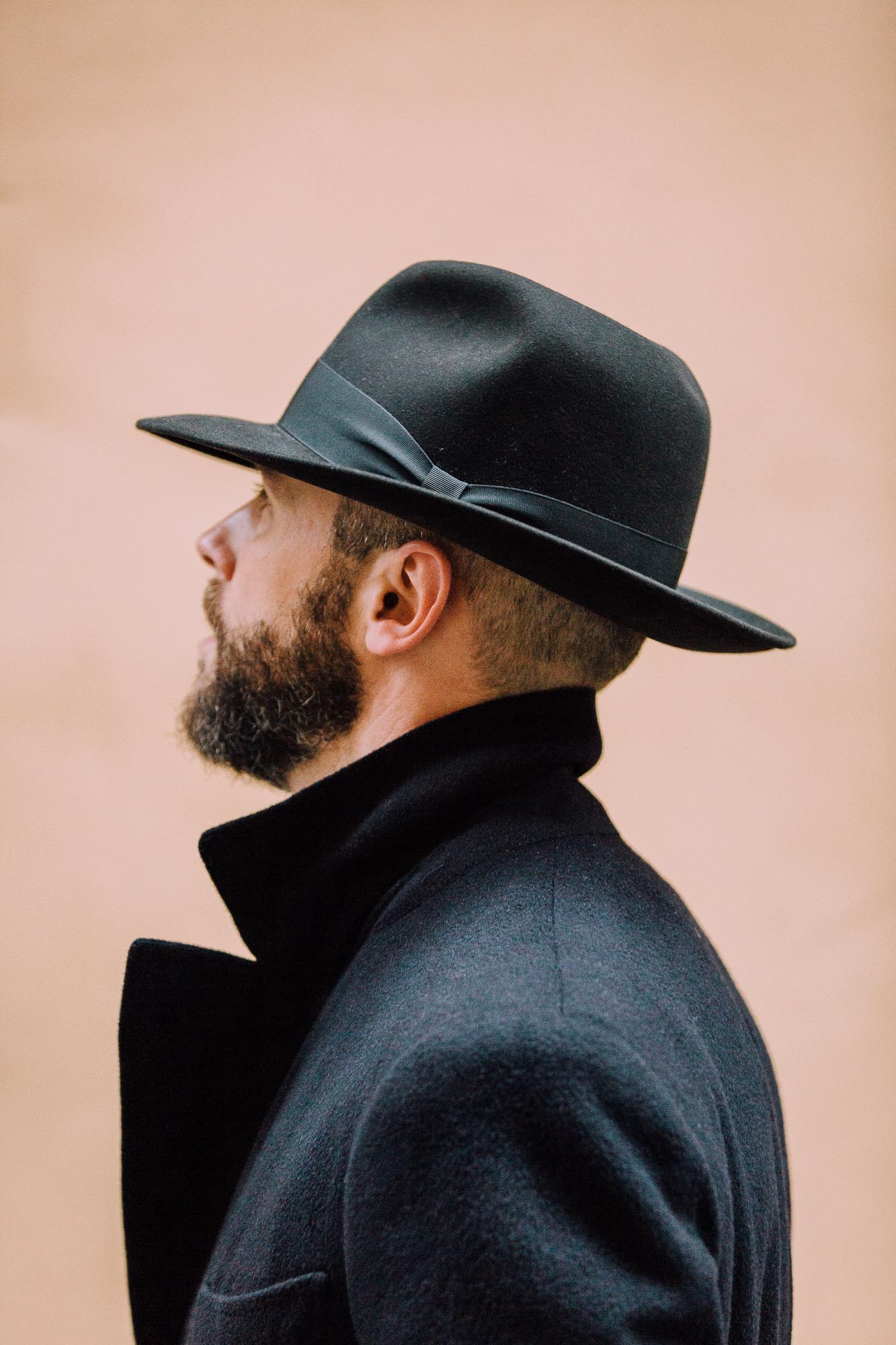
I was also pleased with the overall shape of the hat, which had a more tapered crown than Optimo's standard ready-made hats.

A good hat should echo the shape of the rest of the head (see post illustrating that here).

As my head is long and fairly narrow, the crown can be tall but it also needs to taper towards the top, or it will look too big.

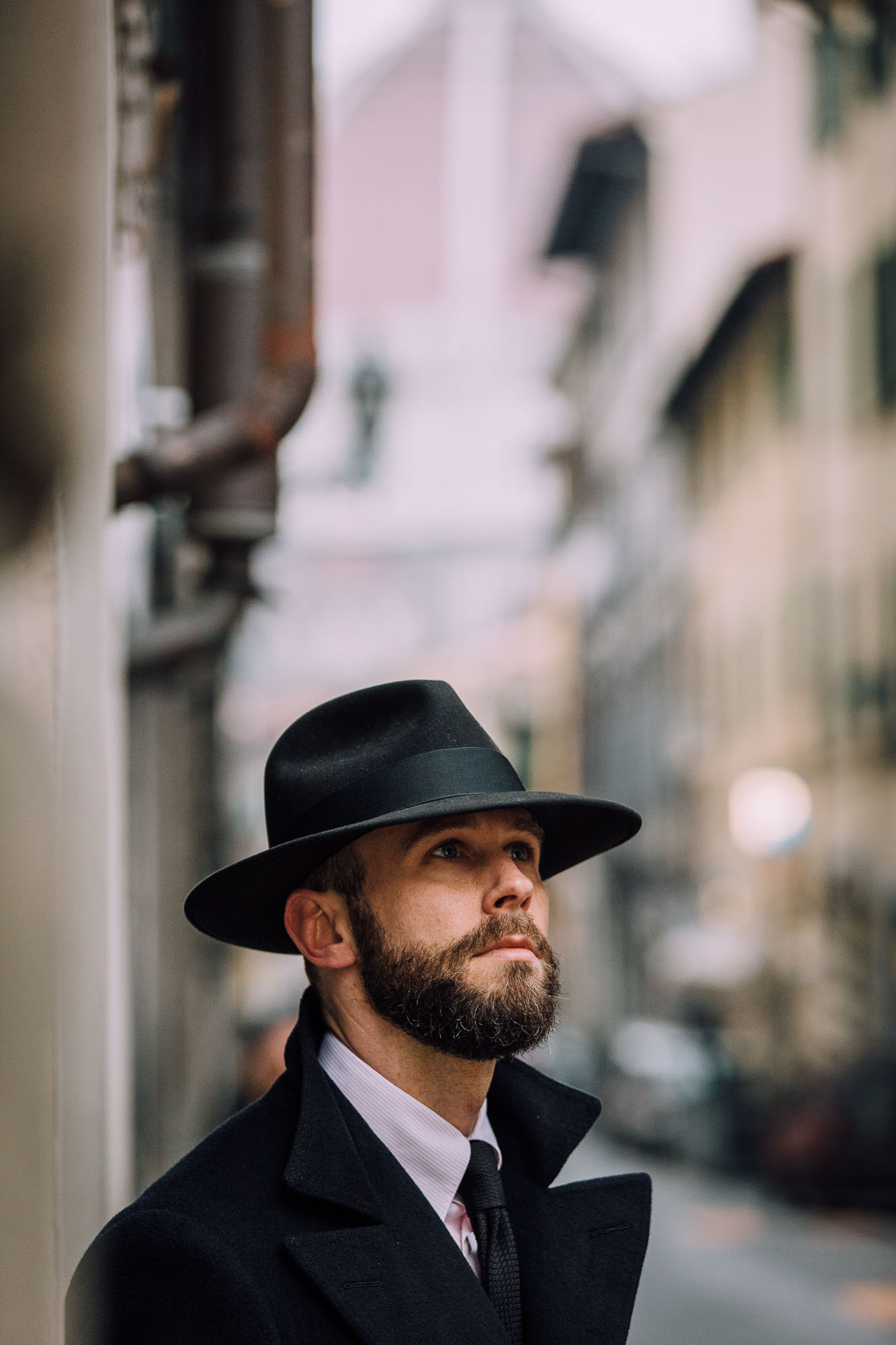
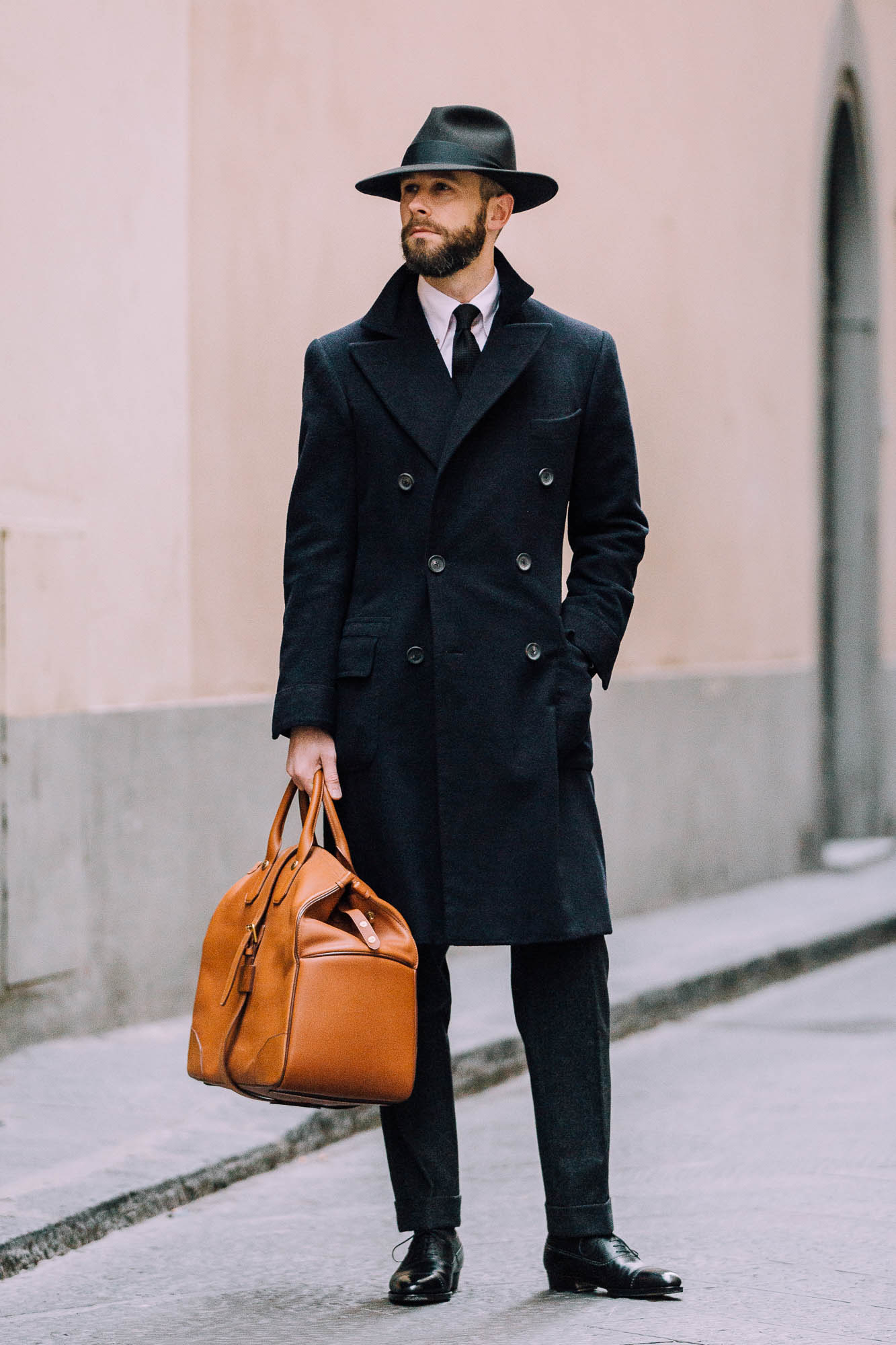
These pictures hopefully illustrate how that shape works. The full-length shots also show how I can get away with a slightly larger brim width, I think, because of my height.

Not getting these proportions right is the major reason most men think they don't suit a hat. Every hat isn't going to flatter your face, just as every jacket won't flatter your body.

Interestingly, I also don't think men give enough consideration to the proportions of the rest of the outfit.

A hat looks more normal with an overcoat and scarf both because they're defences against the weather, and because they all add bulk to the body. Wear the same hat with just a jacket, and it can look too big.

This might seem like overthinking the subject, but I do think it's worth trying for guys that think hats don't suit them. Wear an overcoat, and a scarf, and pop the collar of the coat. Everything might suddenly seem more proportionate.

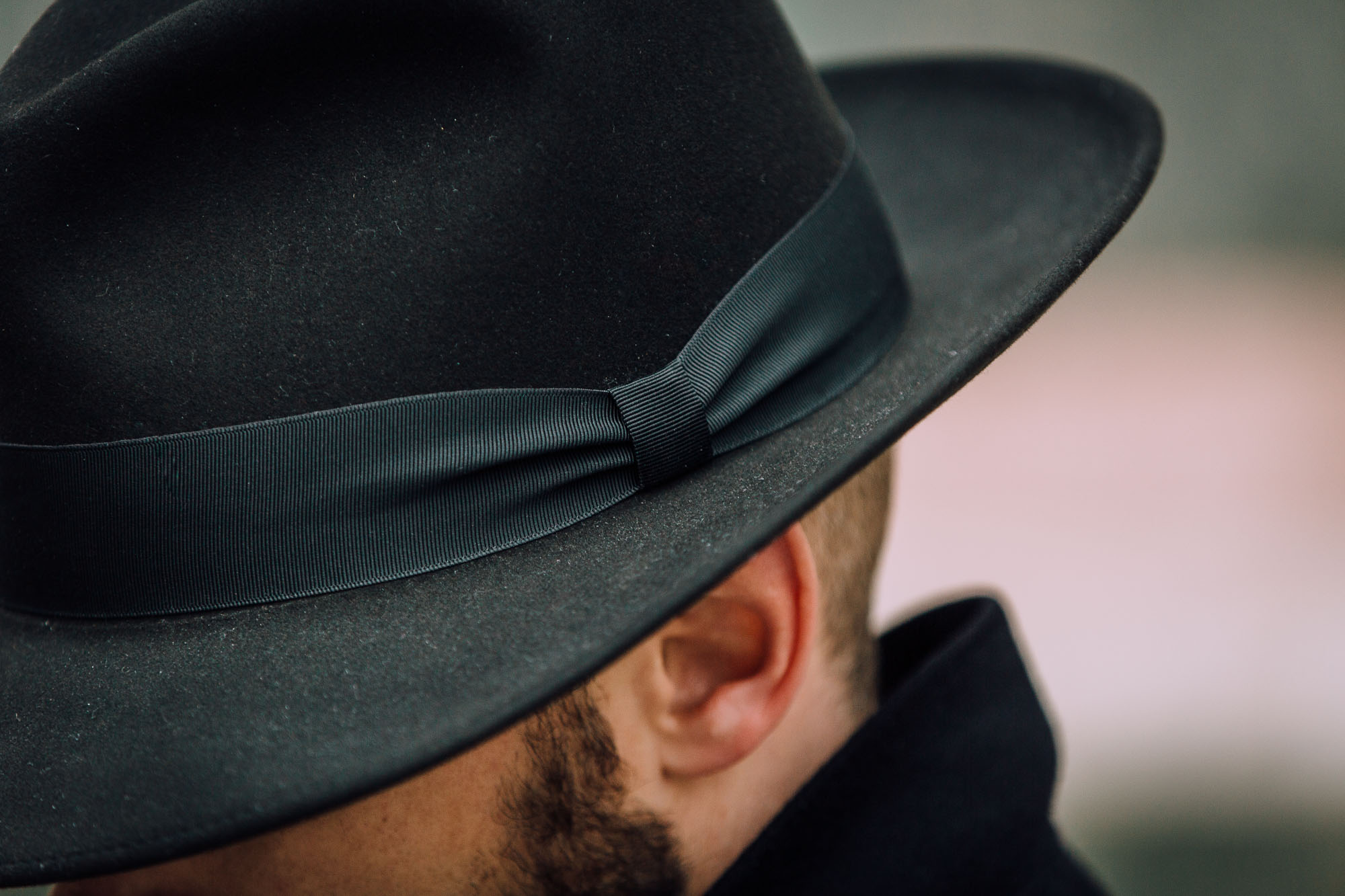
I like the colour of this felt - which actually has shades of brown in it - but the hatband was the wrong choice.

I've commented before when having a hat made by Stephen Temkin that a hatband can radically change your impression of a felt's colour. It's freakish.

And this felt looked very different in New York with a dark-brown band. I picked charcoal instead, and that was wrong. It makes the hat too dark and formal. I'll ask Graham to switch it back to brown.

I do like the design of the band though, which can easily go unnoticed. Rather than have the normal bow on the side, it merely has a circle of silk that gathers the band together (shown above). A less showy and dressy look, perhaps.

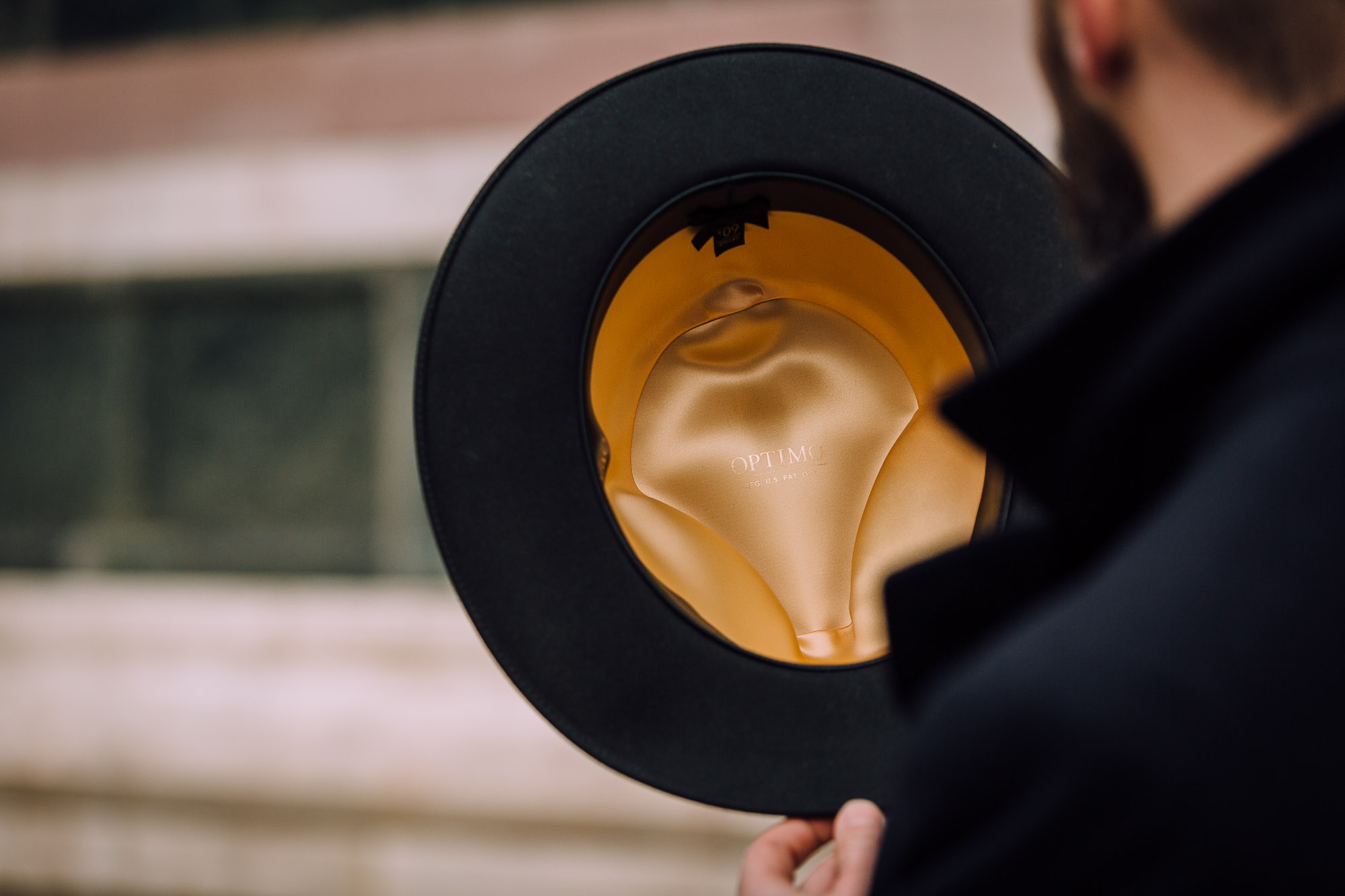
The lining is a beautiful gold, and the hat comes in a nice black, thick-card hat box. The kind you want to put on display.

It's what you'd expect for your money, but it's good to see Optimo is considered enough to have taken care of these details. Tailors and their cheap hangers or suit bags, take note.

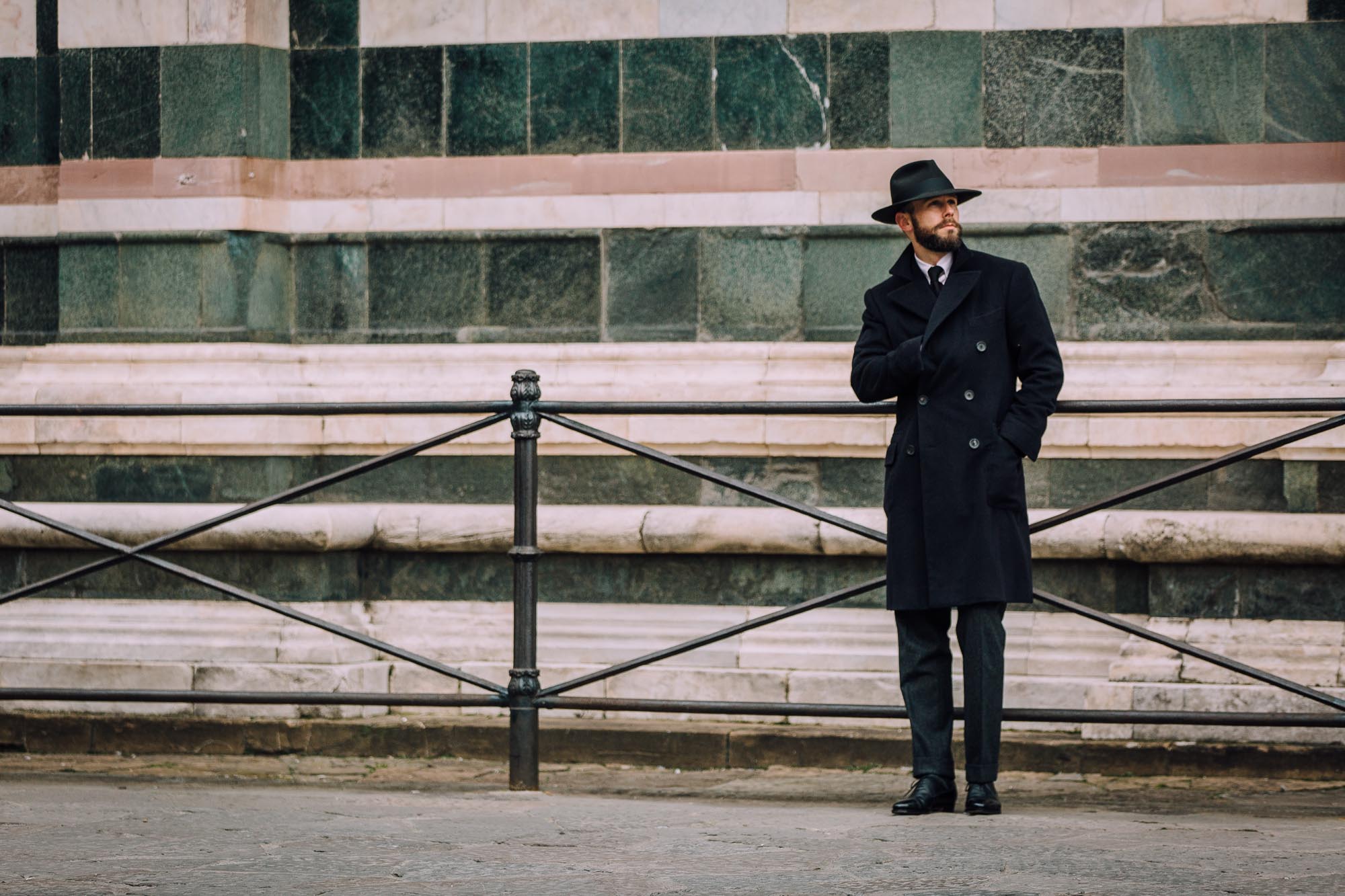
The overcoat pictured is my navy cashmere from Cifonelli.

This is probably my favourite thing I've ever had made bespoke at this point, and even though it's showing no signs of wear, I still worry about how much I use it. I love it so much.

The shirt is a pink stripe from 100 Hands, and the tie a black grenadine from Drake's. I increasingly wear black knitted or grenadine ties, but only with very dark colours elsewhere. It's particularly nice with deep, muddy browns and greens.

The suit is my charcoal-flannel from Sartoria Vestrucci, and the bag from Dunhill.

The shoes are from Mori, an interesting start-up that's making bespoke-quality shoes in China. More on them in a few weeks.

Optimo, of course, are in London for the first time this week - from Tuesday to Saturday, in our pop-up shop at 37 Savile Row.

If you want to talk to Graham about hats (whether actually planning to buy or not) I suggest you get in contact with him to arrange an appointment. He is [email protected].

You can read more on the background to Optimo, and their shop and factory in Chicago, here.

Optimo.com

Photography: Jamie Ferguson @jkf_man

What to learn more about how Permanent Style is funded? Read here: 'Is this an ad?'

The Joshua Ellis mill: Factory visit

The Joshua Ellis mill: Factory visit

Friday, February 15th 2019
||- Begin Content -||

The Joshua Ellis mill is just outside Batley.

That’s not a name many readers will associate with British cloth. They’re more likely to know Huddersfield for suits, or Scotland for tweed and cashmere, and with the recent popularly of Fox, perhaps Somerset for flannels.

But Joshua Ellis is arguably the leading British mill for fine wool and cashmere fabrics. Huddersfield is mostly worsteds (smooth wools used for suits) and Scottish mills largely make knitwear or accessories (Johnston’s, Begg) or rougher cloths like tweed (Lovat, Moon).

The reason most readers won’t know Joshua Ellis well is that their cut-length business (selling to tailors) is pretty small, with most work done at larger scale for designers (eg Ralph Lauren).

The competition is largely in Italy – the likes of Loro Piana and Piacenza. This is the biggest source for luxury British jacketings.

This was largely new to me too, but slowly unravelled when I travelled up to Batley to see Joshua Ellis last year, and spoke to the team.

Unfortunately, as with much manufacturing in the UK, the story is largely one of decline.

Seventeen years ago, Joshua Ellis employed over 300 people, and was based in the centre of town. You can still see that building (dating from 1767) and other mills when you arrive on the train.

Today, they’re based outside the centre and have around 60 people. But they’ve survived by producing at the very top of the luxury market, as many customers have migrated to Asia.

Ironically, the area they’re now in was known for ‘shoddy’ work in the past: the re-using and re-weaving of fabric. (That’s where the term comes from, and our association of it with poor quality.)

Here’s one advantage of being the last mill standing: you’re likely to have a good archive, both from your own work and from that of others.

That was the case when I visited Robert Noble a few years ago in Peebles – though Noble itself has now sadly closed.

And it’s the case at Joshua Ellis. They have their own archive, pieces collected from several other mills as they’ve closed, and even books stored for other institutions.

The impressively old books in the office, for example (pictured below) are actually part of a collection owned by the Royal College of Art, which Joshua Ellis is looking after.

The more recent archive of the team’s designs downstairs is an absolute treasure trove.

For every cloth that goes into production, many more will be considered, so there are lots of variations on cloths that look like something you would have seen on a brand in the past.

You’re quickly swamped with different fibre options (Escorial and cashmere largely), different plys and different finishes.

Those last points are something that tends to separate Joshua Ellis from the Italian mills by the way: closer-set fabrics with less finishing.

This generally means they won’t feel as fluffy and soft at first, but age better. (A little like bare-finish cashmere on the knitwear side.)

They also tend to use stronger cashmeres (Mongolian rather than Chinese) and like working with something like Escorial wool, because it feels like cashmere but is more robust.

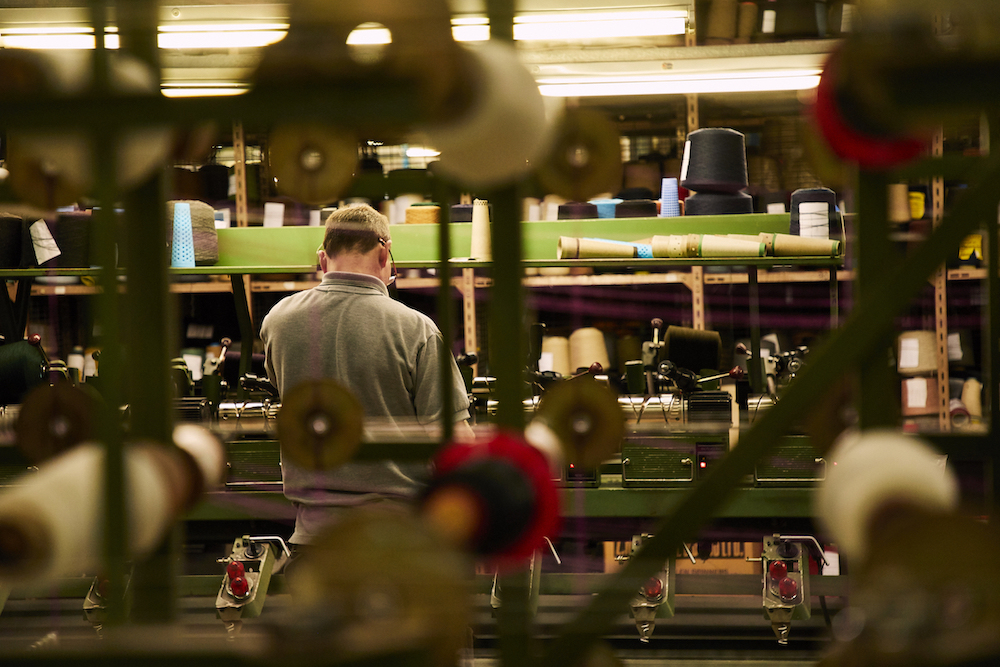
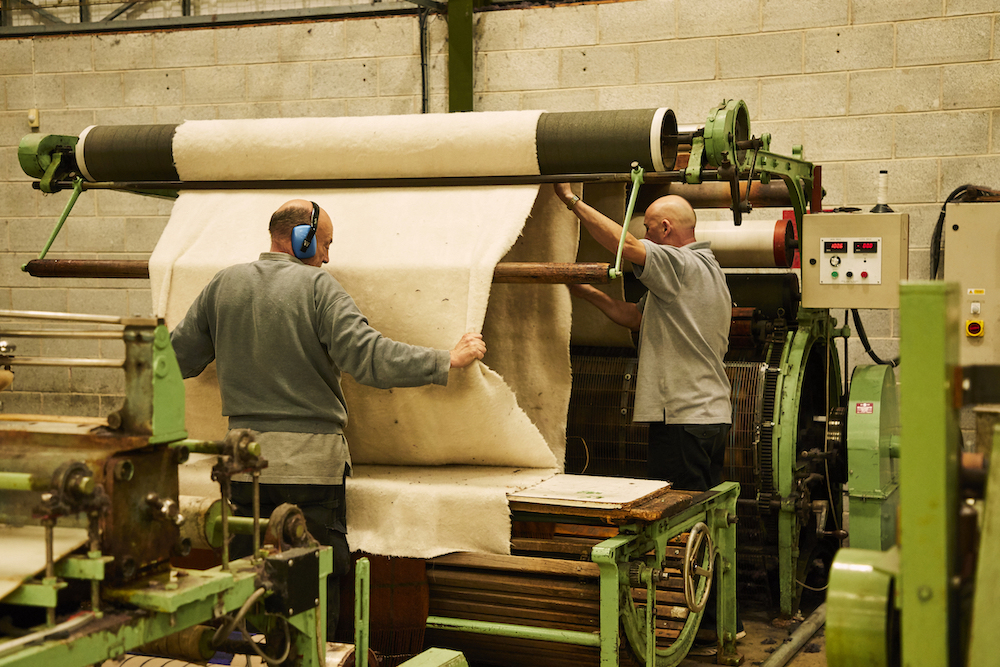
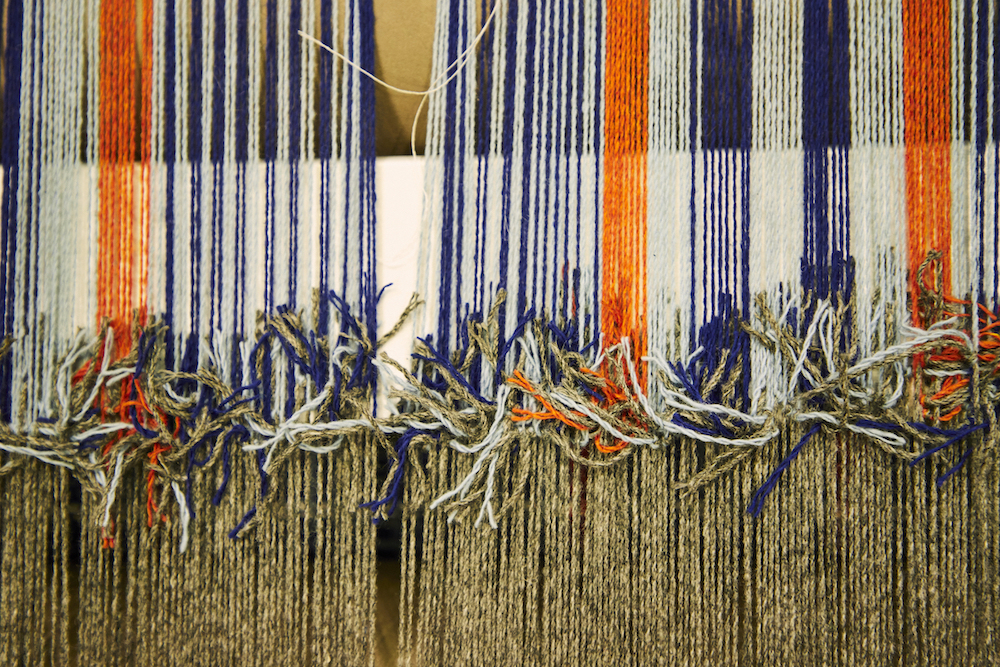
The Joshua Ellis mill itself is a pleasing mix of old and new machinery.

There are some kept for one particular cloth, even when that cloth is a little less fashionable for a while. (Such as one for producing original duffle-coat cloth.)

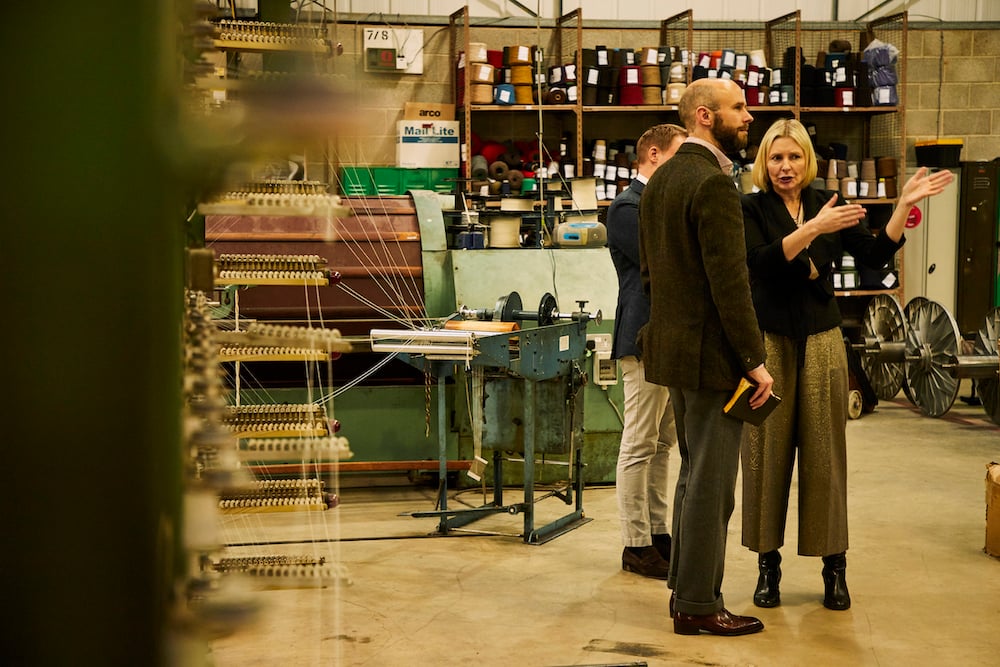
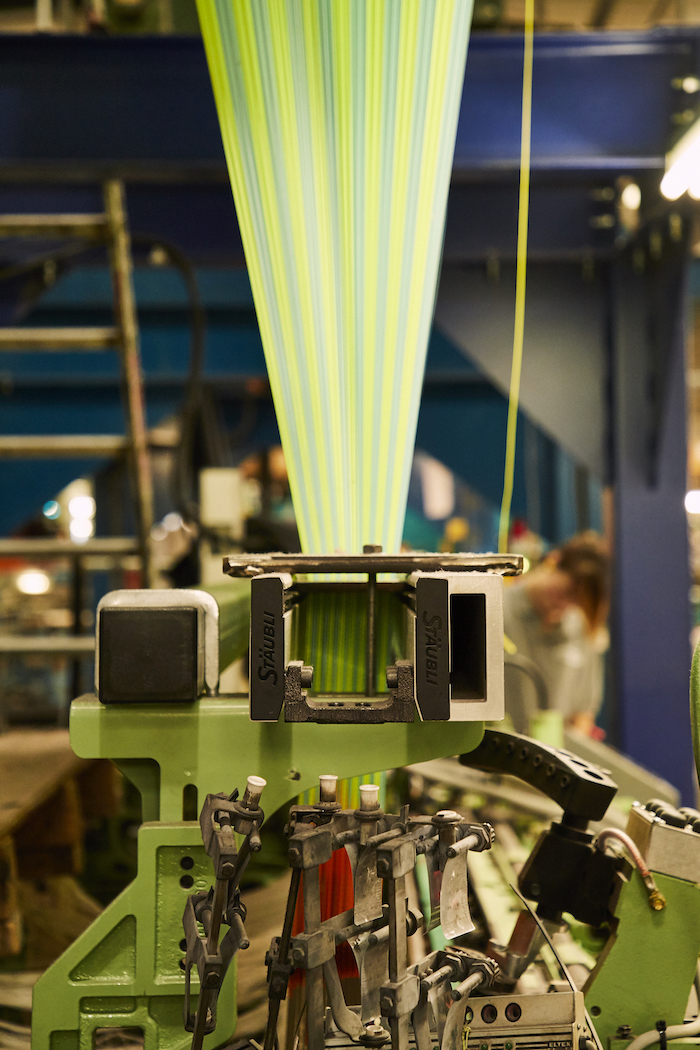
And ones that have been invested in recently and are speeding up aspects of the work. (Such as the drawing-in machine, which does in two hours work that would take a person all day.)

Among British mills, Joshua Ellis is quite unusual in doing all its finishing itself. Those in and around Huddersfield tend to outsource this work (see my piece on WT Johnson’s here).

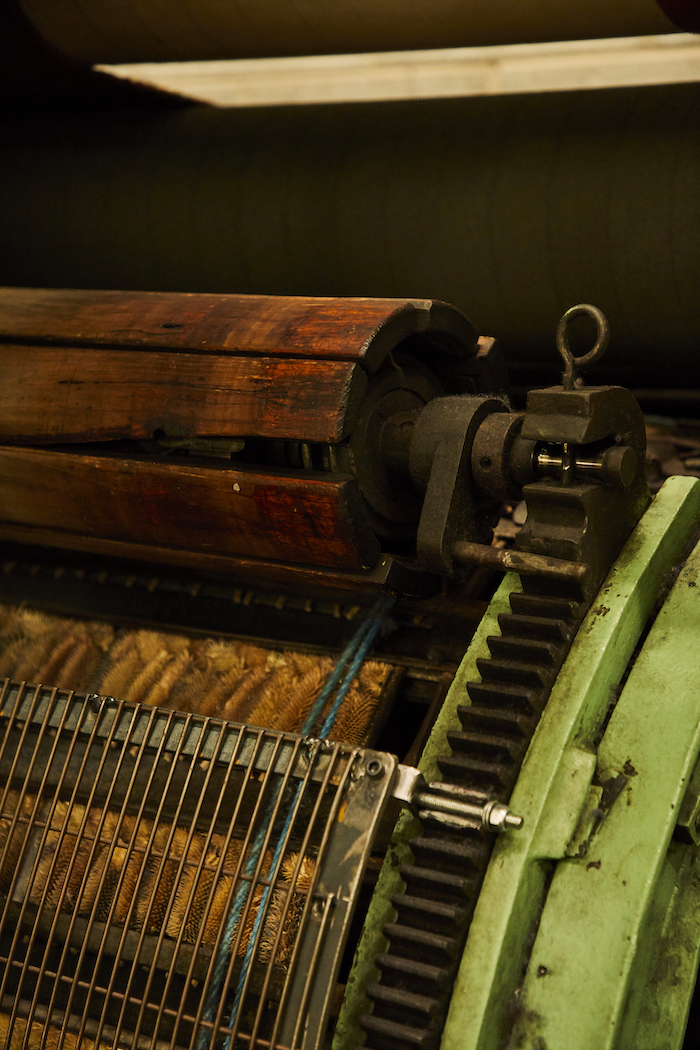
The older machines look the nicest, with wooden elements that gain a nice patina (such as the brushing machine above, with it’s embedded teasles).

But even the modern pieces like the drawing-in machine (below) have something of an appeal in their Technicolour graphics.

It reminded me of a 1990s-era computer game.

Joshua Ellis has also started doing more of its own scarves – which is what prompted their appearance in our pop-up shop in a couple of weeks.

This began four years ago, and it's grown quite quickly, with Japan the biggest market.

The company had done scarves historically, but largely for brands. Doing it themselves is a nice way to use the machinery to produce something different, and it’s more sustainable under their own name.

(Not that weaving cloth and scarves is the same – cloth for a scarf will always be woven a little looser, and usually have more of a finish.)

Back in the office, it was interesting to talk to the team about their work with the Sustainable Fibre Alliance, which brings together brands, farmers and manufacturers to try and improve working practices.

It includes brands like Marks & Spencer’s and LVMH, and charities like the RSPCA and WWF, as well as mills like Joshua Ellis, Begg and Johnton’s.

Most fibres like wool and cashmere and very sustainable and environmentally friendly – unless the land is over-farmed.

It is that over-farming that has caused huge problems in Mongolia, and with cotton in places like Kazakhstan.

Personally, I identify more with these balanced, inclusive organisations than with the single-issue campaigning groups.

We finished our visit with an optimistic discussion of that, and then one of the various training schemes at the mill.

In among the mill team are six full-time apprentices, and we were told 15% of the workforce are in some form of training.

It isn’t easy in an area like Batley, where there isn’t the same pool of talent as in Scotland or Huddersfield. But the management team recognise that it’s the only way to go on.

If you’re going to be the last mill in the area, you have to be the best one - and planning well for the future is the only way to do it.

www.joshuaellis.com

Photography: James Holborow

What to learn more about how Permanent Style is funded? Details here: 'Is this an ad?'

Video: Buying a pair of bespoke shoes

Video: Buying a pair of bespoke shoes

Wednesday, February 13th 2019
||- Begin Content -||

While in Florence last month, we took the opportunity to film some of the practical videos we've produced in the last year, with artisans based in the city.

This is the first, with Stefano Bemer, talking about buying a first pair of bespoke shoes: what the process is like, what you should think about in advance, and (importantly for the obsessives out there) what you shouldn't worry about.

Tommaso is a great spokesperson for the craft, freely admitting what he doesn't know and talking openly about the different types of customer. It's worth a watch for both the general advice and for his specific tips.

As with all videos we've produced, this covers an area that particularly benefits from being shown on film. And it's lengthy, intended to cover every aspect of the process, with questions and clarifications from me throughout.

You can see a review of bespoke shoes made for me by Stefano Bemer here.

And other videos in this series include:

Thank you to Tommaso and everyone at Stefano Bemer for their time and help.

What to learn more about how Permanent Style is funded? Details here: 'Is this an ad?'
Pop-up number 4! Come to the opening party…

Pop-up number 4! Come to the opening party…

Tuesday, February 12th 2019
||- Begin Content -||

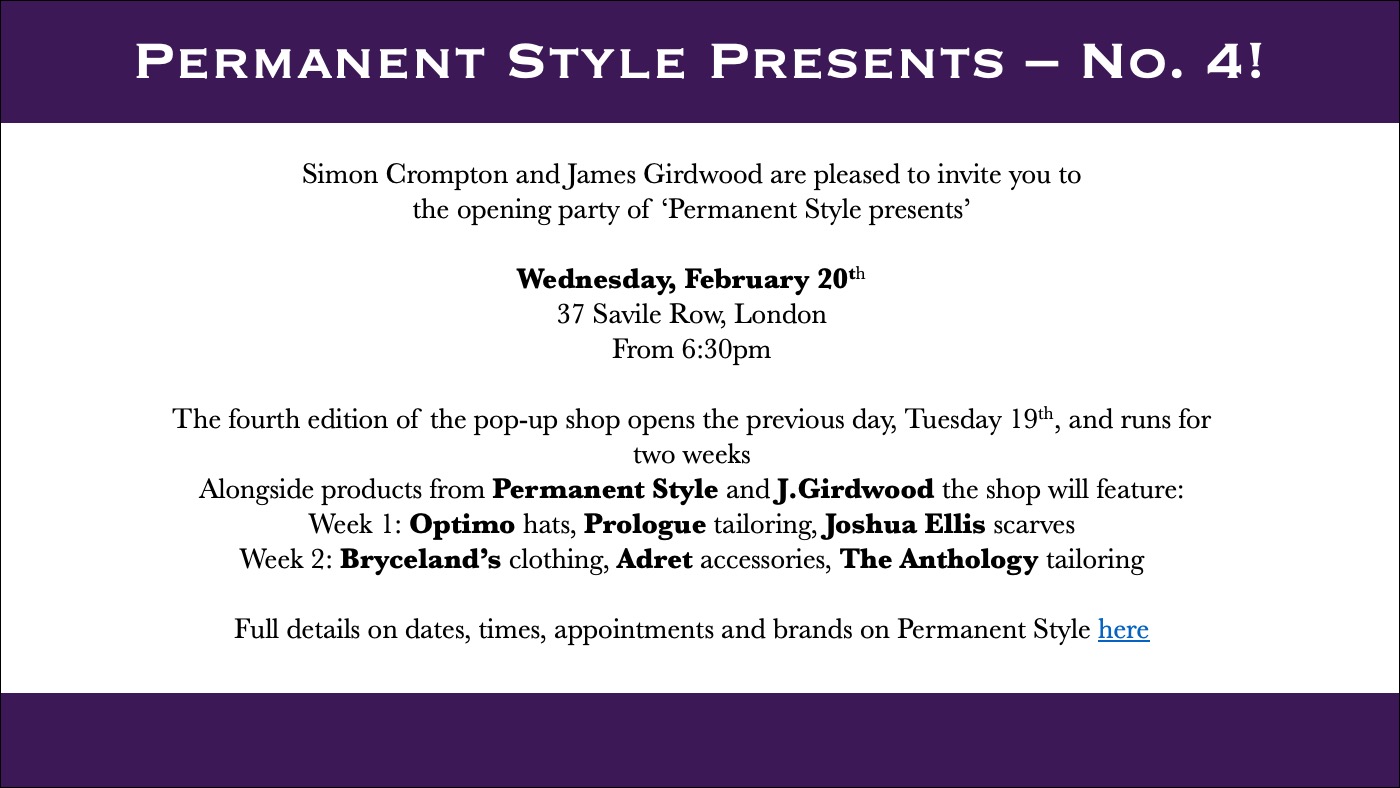
The opening party for our pop-up shop on Savile Row is next Wednesday, February 20th. All are welcome.

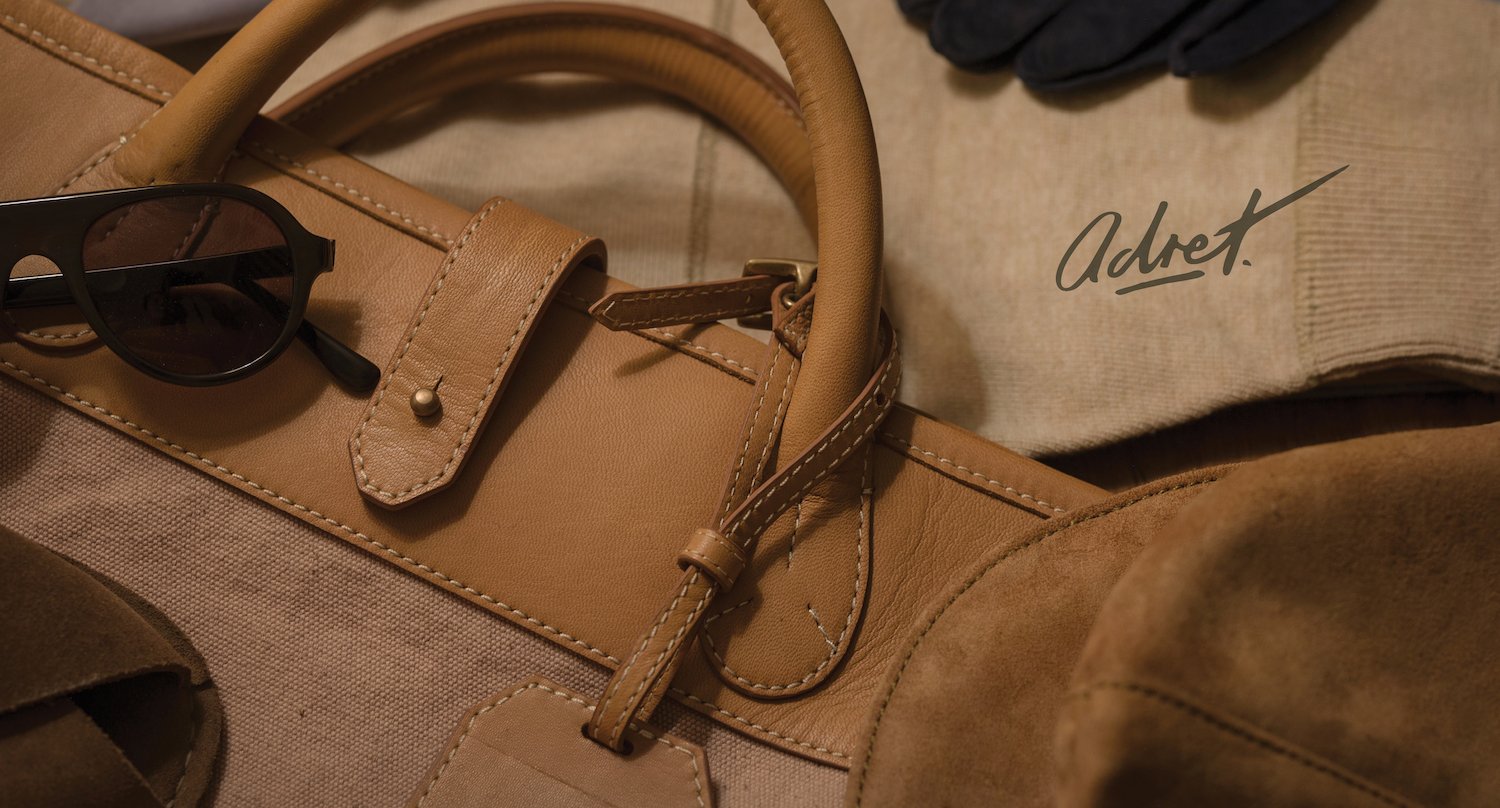
Please do come along and support us and all the brands: in week 1 Optimo, Prologue and Joshua Ellis, and in week 2 Bryceland's, Adret and The Anthology.

The tills will be open in the afternoon and into the evening party, so you will be able to make any purchases if you want to.

I'll write more on everyone in the lead-up and during the pop-up, as per usual.

And for all those that have asked about Permanent Style products, everything in stock on the online shop will be there to see and try, including a full size range of bridge coats.

We have also created a permanent page, here, where all information on the pop-up will be contained, and kept updated. So that we don't have to rewrite old posts, and everyone has a place to direct people who are interested.

See you there everyone!

Thanks

Simon

What to learn more about how Permanent Style is funded? Details here: 'Is this an ad?'

Milano Unica: My first visit to the cloth fair

Milano Unica: My first visit to the cloth fair

Monday, February 11th 2019
||- Begin Content -||

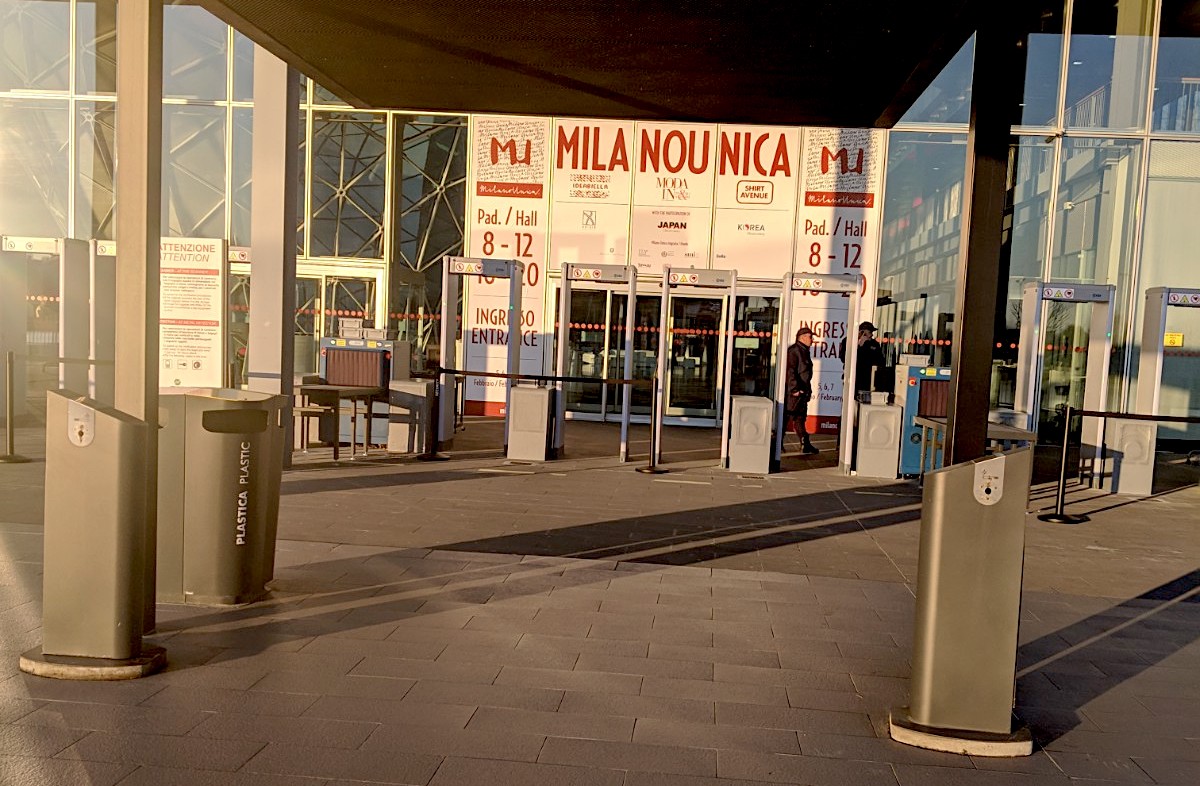
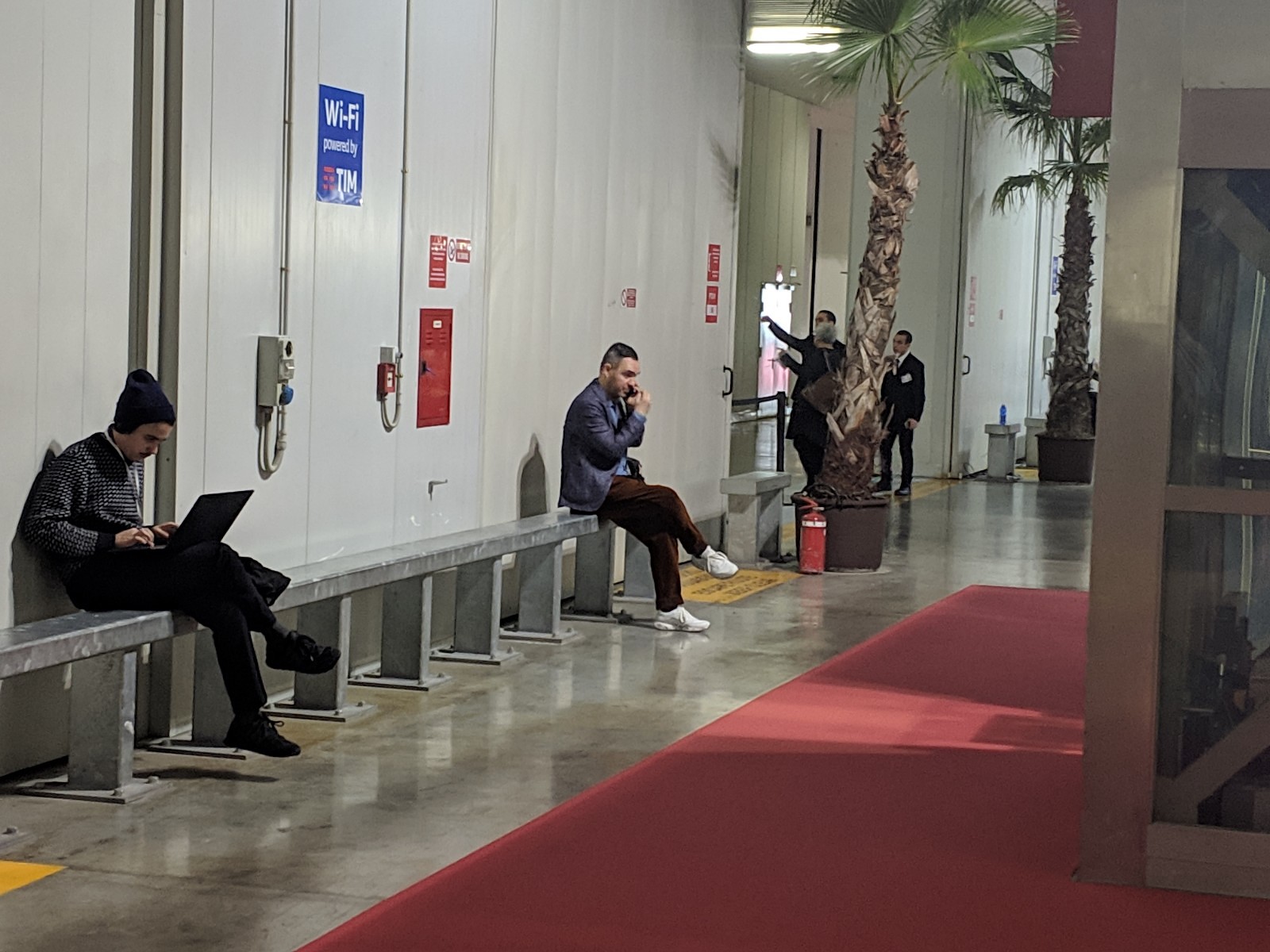
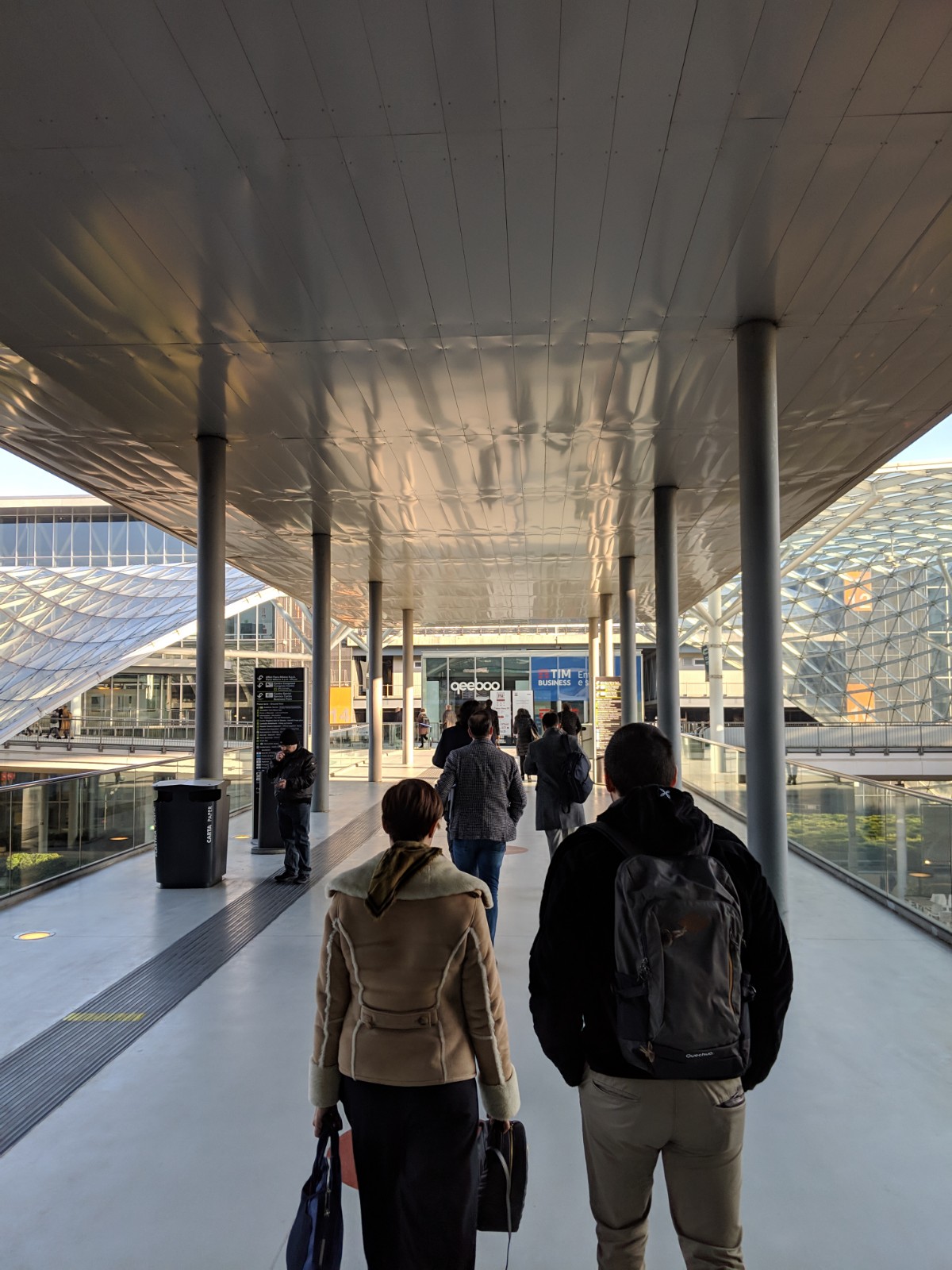
They said Milano Unica was like Pitti without the peacocks. That was partly true.

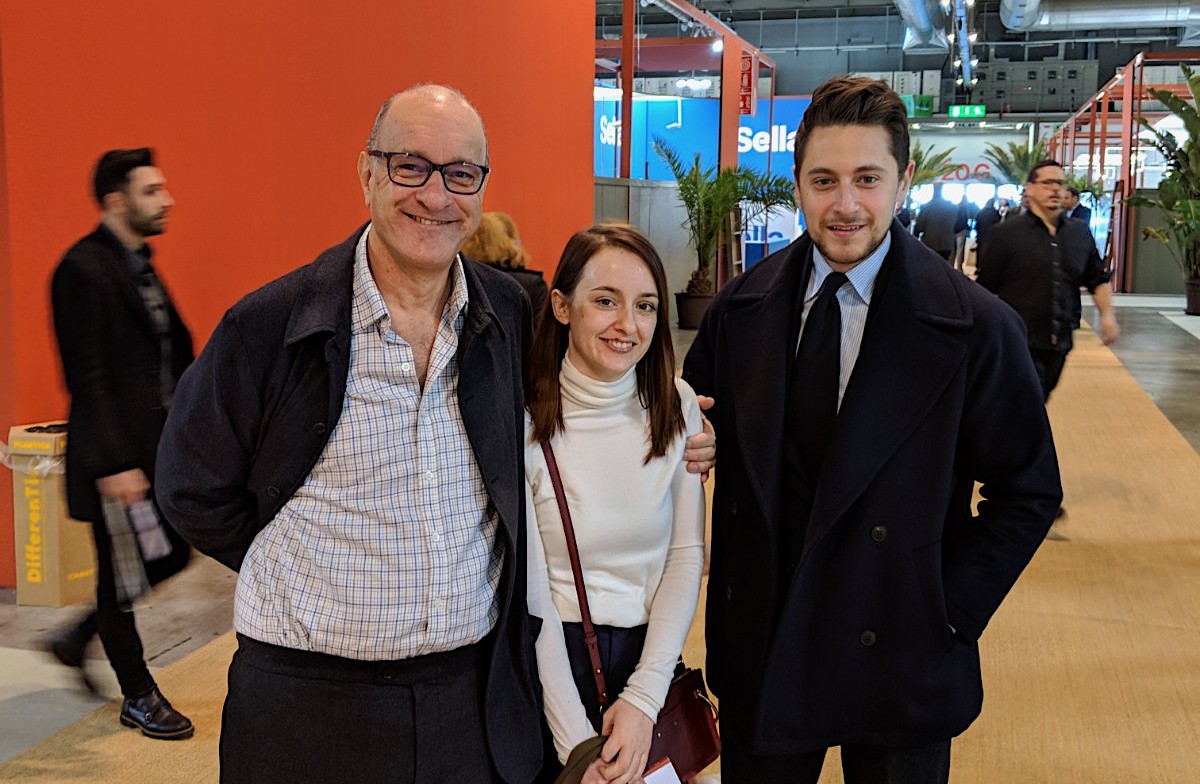
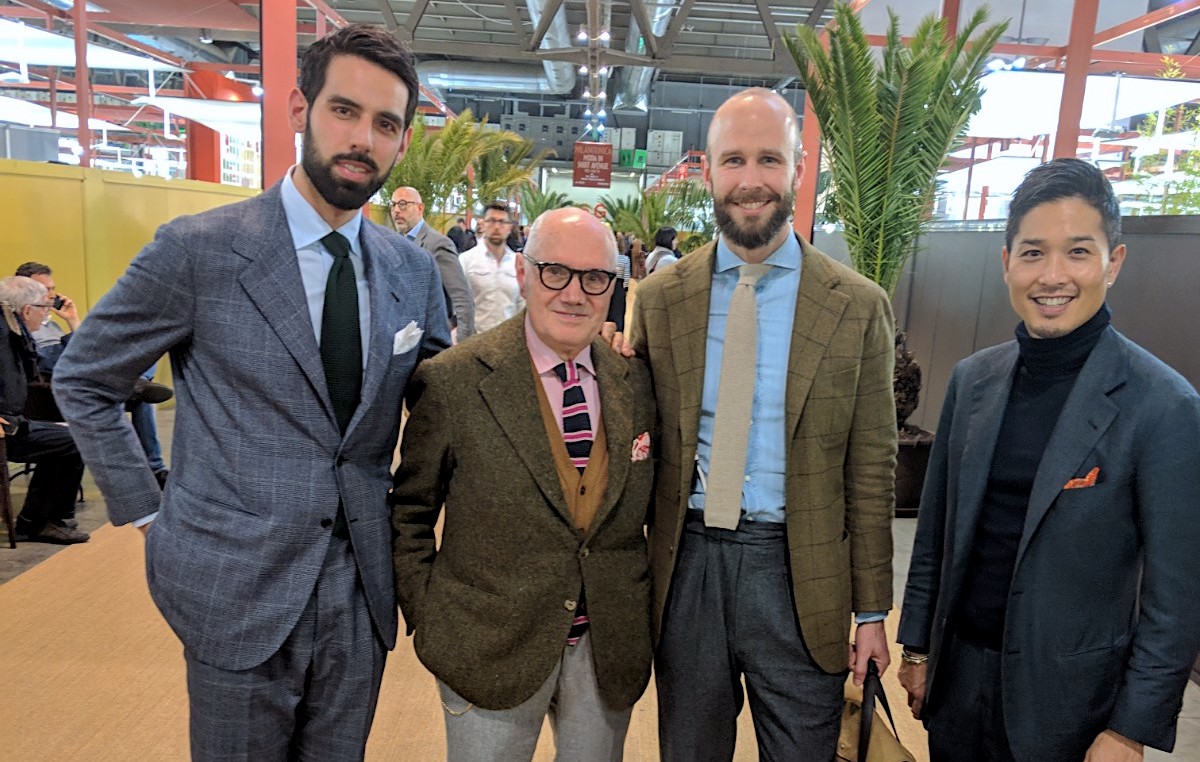
Certainly, there are no photographers, so even though many of the same people visit Milano Unica (MU), they're not on display. Everyone is noticeably more relaxed: there is no playing or posing.

But a bigger difference from Pitti is the way the exhibitors present themselves - with the same absence of showing off.

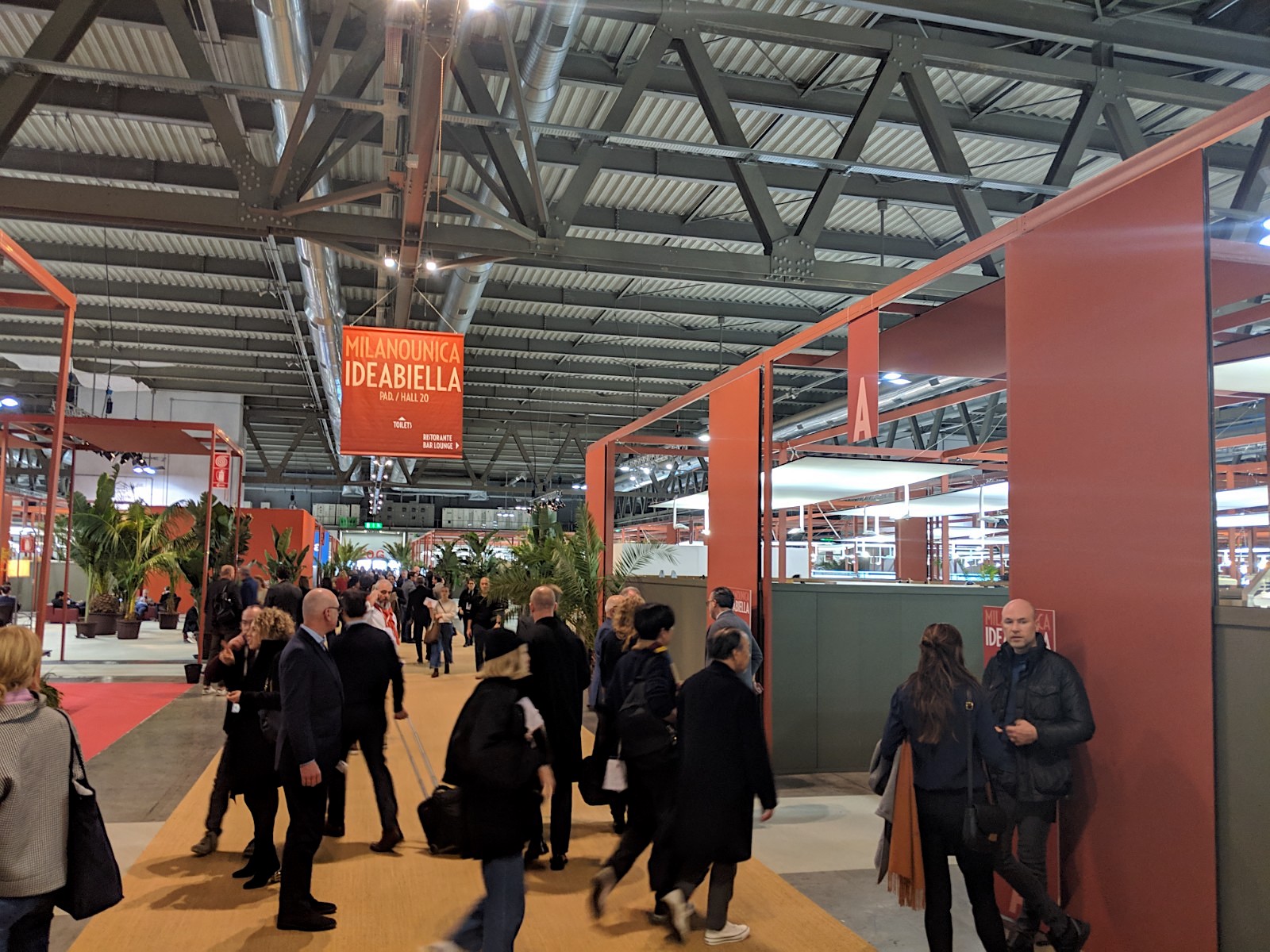
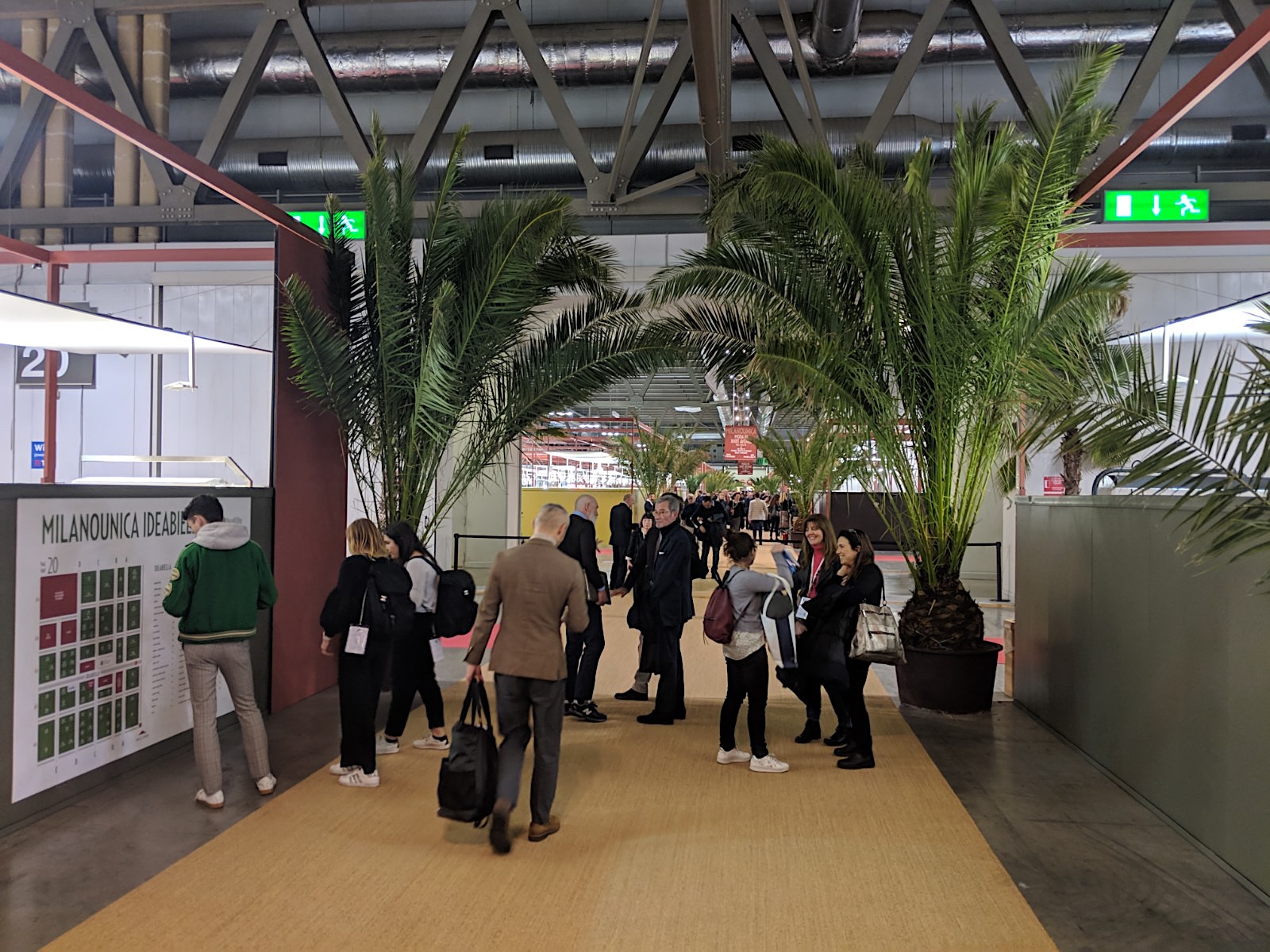
At MU, all the stands are closed. From the corridors, all you can see are homogenous brown walls with the occasional ‘Loro Piana’ or ‘Fox Brothers’ board sticking out like a street sign.

There might be orders for millions of euros of cutting-edge fabric going on inside, but you’d have no idea.

Inside the booths there is a little more going on, but not much.

A small British mill might have a logo and a couple of lengths of cloth draped over the wall. A bigger outfit like Loro Piana has its own wallpaper and reception desk, but there is little razzmatazz beyond a video screen.

“Milano Unica is such a nice, relaxed atmosphere,” Agyesh of Stoffa told me on the second morning. “I do most of our development at the mills, but it’s lovely just to see everyone from those mills, to catch up and congratulate them on their work.”

So what was I doing there, you may well ask?

Well, Vitale Barberis Canonico (VBC) asked me to give a talk to their agents on the Monday night – basically, to tell them what questions you all ask about cloth every day.

So I thought I’d use the opportunity to stay for a couple of days and tour the show. I’d never seen this side of the menswear industry, though many had told me about it over the years.

(I also didn't have a photographer with me, hence the delightfully amateurish photos.)

My strategy was to spend that first evening understanding how it works for a seller, like VBC.

And then for most of the next day, to piggy-back on the appointments of Mike and Kasia from Private White, to understand how it works for a buyer.

Most of the third day seemed to be spent hanging out with Gianluca (Migliarotti) of Pommella, or talking to Fox, Albini and Canclini about the various cloth collaborations we’ve done.

'The wall'

The VBC evening was probably the most eye-opening.

The company was presenting its collection to the 30+ agents that represent it around the world, who would be on the stand for the next three days, meeting their clients and repeating the same information.

There were macroeconomic forecasts, a deep dive on the French market (where VBC is the market leader) and 23 new ‘qualities’ to understand and memorise.

A ‘quality’ is a new type of cloth, whether due to fibre, weave or finishing. But each quality then has a range of colours and patterns – perhaps a handful, perhaps 20. So the total number of new cloths for someone like VBC is in the hundreds.

With Mike and Kasia (above, left, with Alex of Anglo-Italian) the next day, it sometimes felt like you were going through thousands of swatches. And they all started to blur together.

Mike and Kasia had pretty clear objectives on what they wanted, but given the scope of the Private White range, they still ordered scores of samples.

For someone like Jake and Alex from Anglo-Italian, whom I saw on day one, things were simpler.

They have a very focused idea of what they want and simply looked through everything until they found it – usually no more than a handful of pieces from a mill.

The Liverano team

The overall process is: mill presents client with their whole collection; client picks several qualities/designs they like; these are sent to the client a couple of weeks later to make sample products.

Those samples are presented at shows like Pitti Uomo the following June. From these, brands or shops place their orders. And the final garments are made and delivered to shops for January – for us to buy from February onwards.

So the cloth on show at MU in February 2019 is for things to sell in Spring/Summer 2020.

You’re going almost six months further upstream.

Wine, cheese, honey, nuts

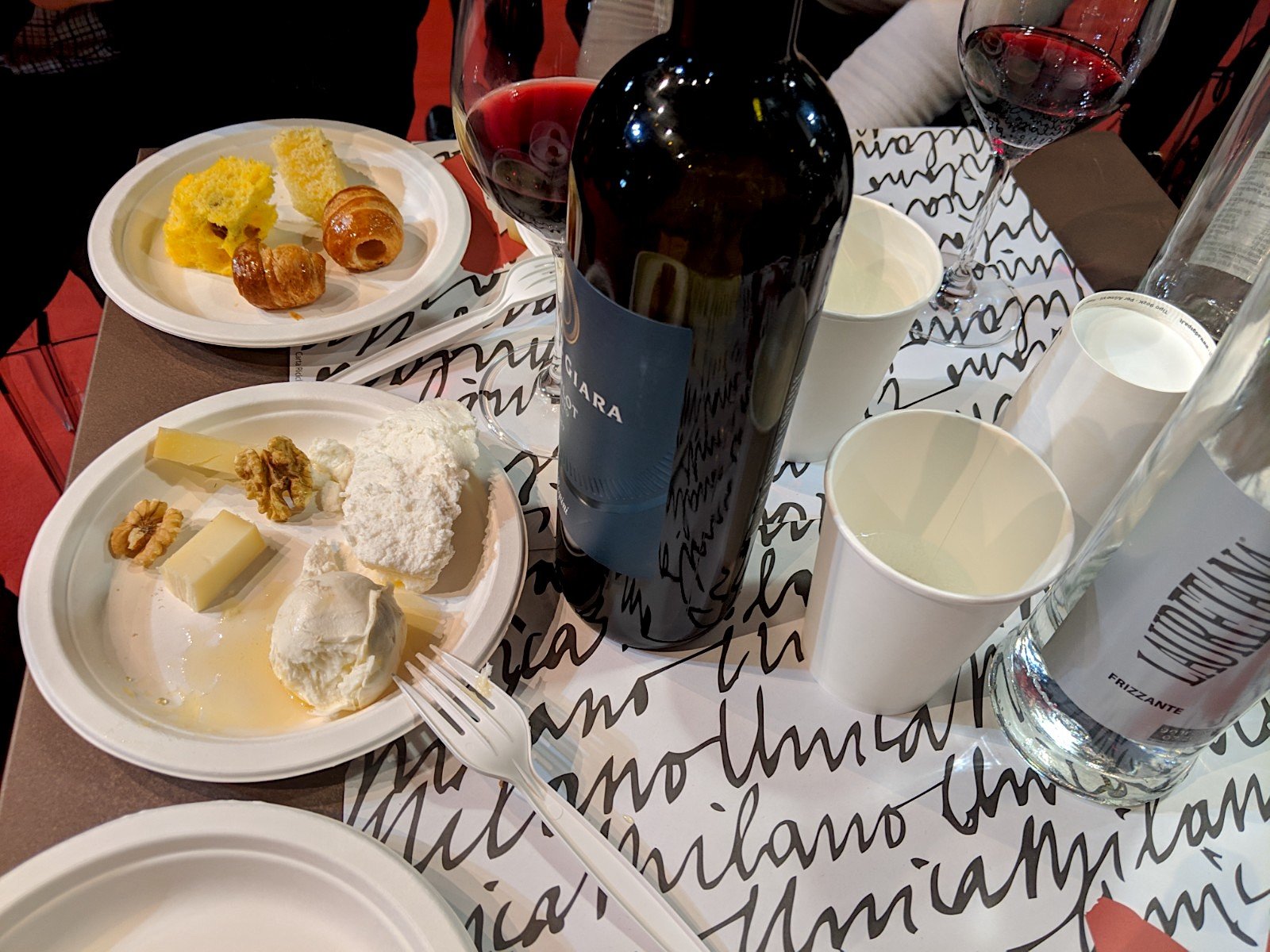
Fortunately the lunch is very good, and free. But then you can’t get into the show at all without being invited – and ‘IdeaBiella’, where the tailoring cloths are, requires an extra level of access.

For some reason the shirts section, ‘Shirts Avenue’, is open to everyone.

For me, an unexpected bonus was that I got to meet lots of mills that I’ve never quite had the time to visit.

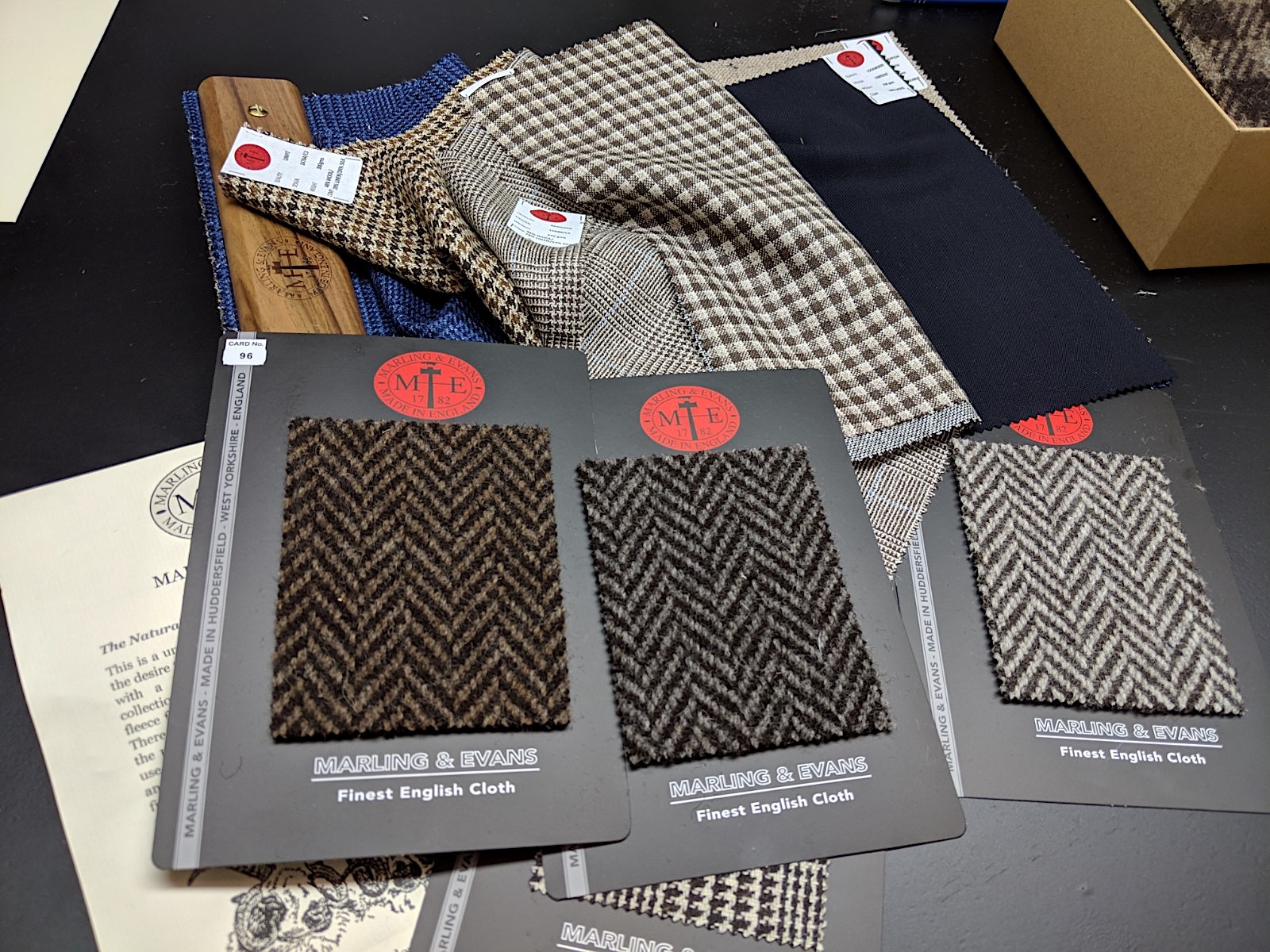
Marling Evans, for example, a lovely mill in Yorkshire with some beautiful coatings in undyed yarn (below).

And Stephen Walters, the silk weaver in Sudbury that celebrates its 300th anniversary in 2020. (I visited Vanners, next door, years ago, but never got here.)

It's similar to Pitti in a way: even though lots of the exhibitors are British, it's a lot easier to see them here than to travel to all their factories/mills around the UK.

As a consumer, though, it’s very frustrating.

Pitti is bad enough, where you see so many products that aren't picked by buyers and are therefore never available in the shops.

But at MU you see hundreds and hundreds of fabrics that are available to brands to order, but will never make it into a bunch for a bespoke customer.

It’s just too expensive for mills to weave all these designs and hold them as stock, in the hope that they’ll all be sold, two or three metres at a time.

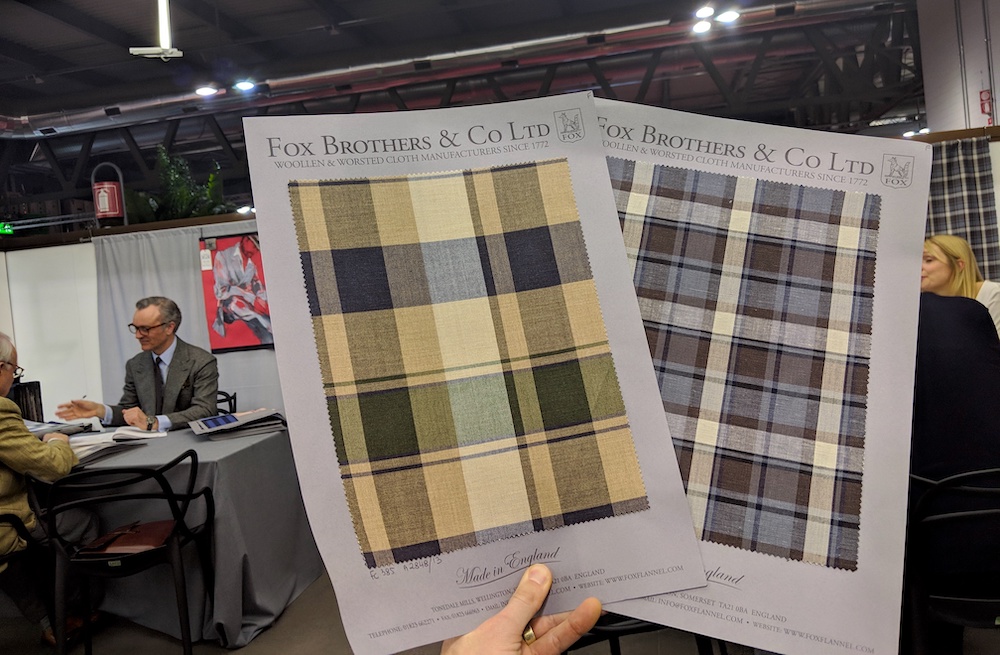
High on that list was some of the boating stripes and madras checks from Fox, who had one of the most attractive and interesting stands (below - hello Douglas!).

As far as trends in general go, these were pretty consistent:

  • Performance fabrics. Everyone had new versions to show, whether Albini, VBC, Canclini or Loro Piana: anti-wrinkle, natural stretch, UV-resistant, water-resistant
  • Sustainability. Just as often, the mill's big pitch was how much water they had cut out of production, or fibres (like tensel, bamboo) that are completely recyclable
  • Transparency. Providing more information to customers about where every element of their fabric comes from. Something on trend and particularly useful for the mills still doing it all in Italy
  • Decline. Mills being bought, going out of business, or cutting agents. Usually those not at the top level for quality, and losing business to Asia and elsehwere
  • Vintage. Linked to the trend of authenticity. Old-fashioned, duller and micro-patterned fabrics that feel vintage and so (ideally) connect the customer to the mill's history

I'm not sure it would ever make sense for me to go to MU regularly, but as with lots of things, I found it really interesting learning the mechanics of this part of the industry.

I hope you did too.

Photography: Permanent Style

What to learn more about how Permanent Style is funded? Details here: 'Is this an ad?'

Introducing: Striped PS Oxford cloth

Introducing: Striped PS Oxford cloth

||- Begin Content -||

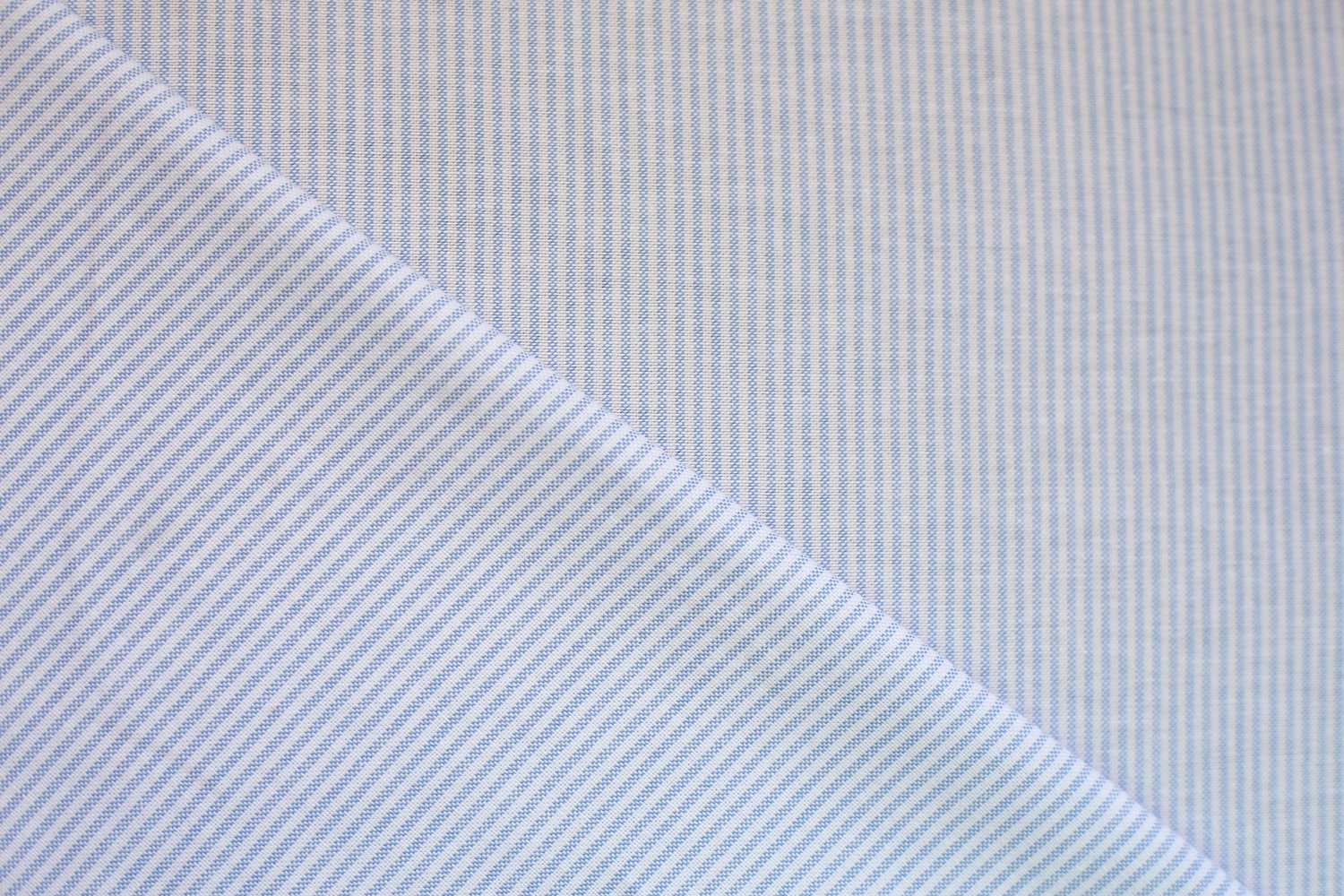
The traditional, nubby oxford fabric we developed last year has proved so popular that we’ve decided to introduce another option.

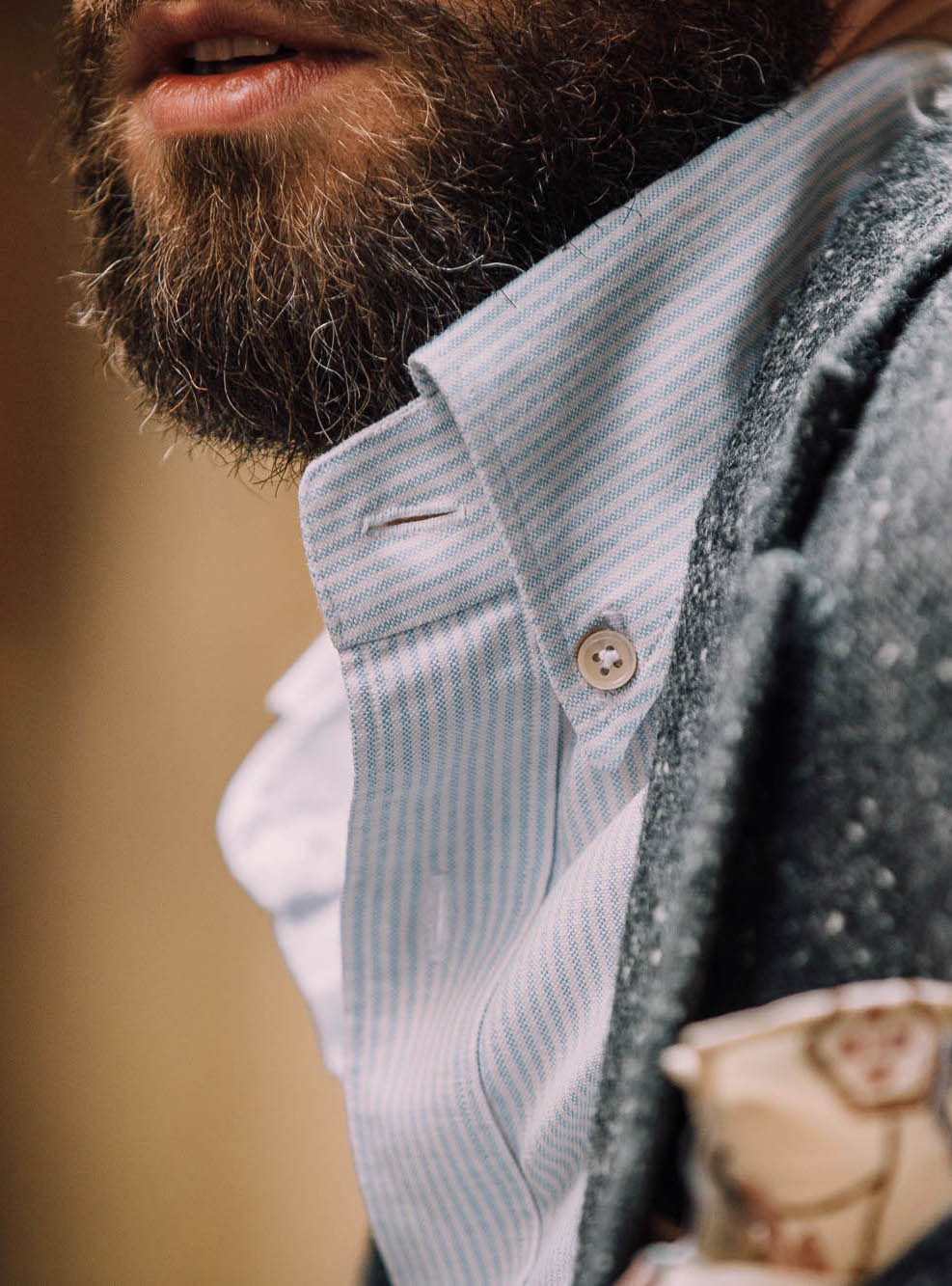
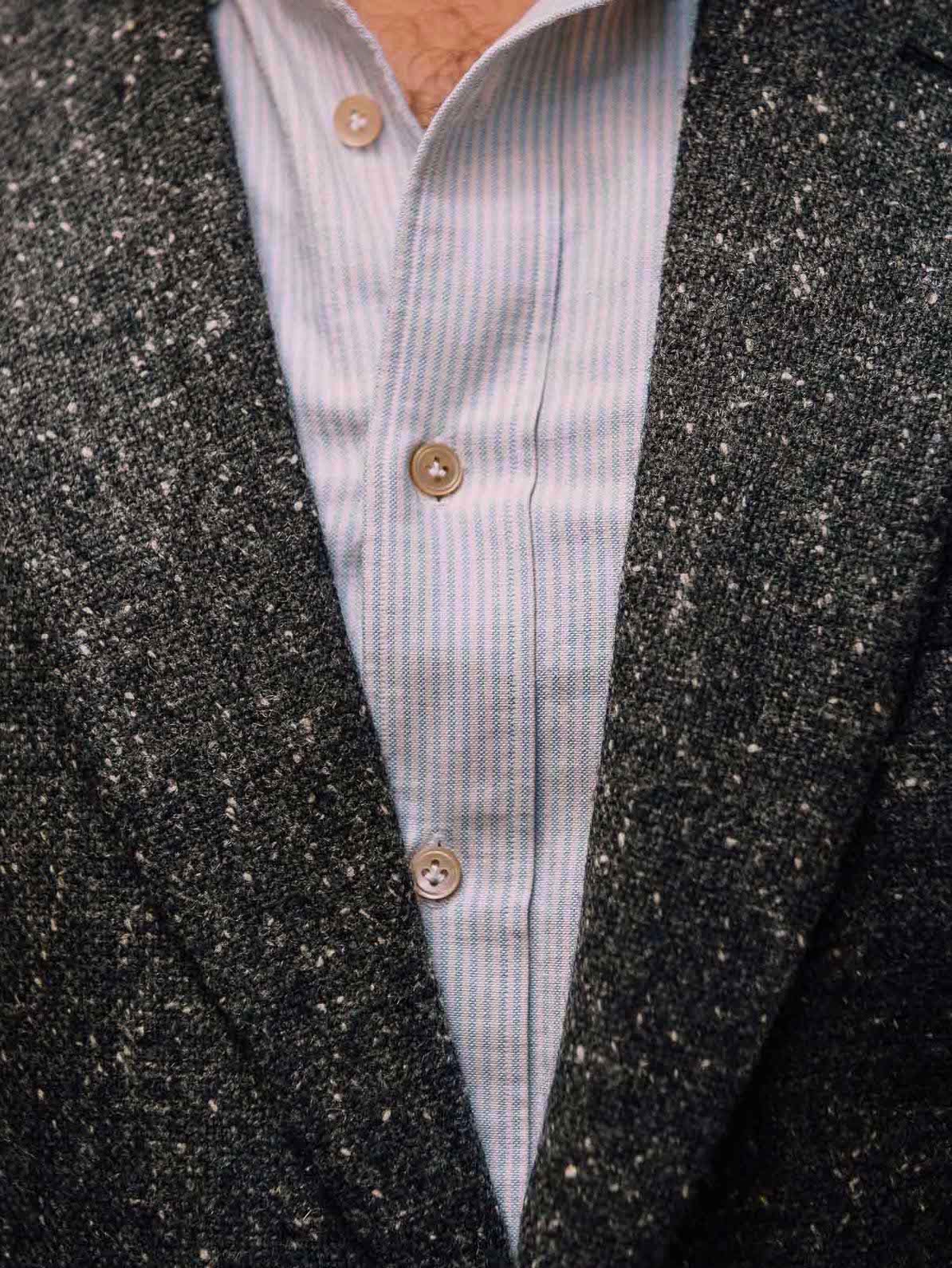
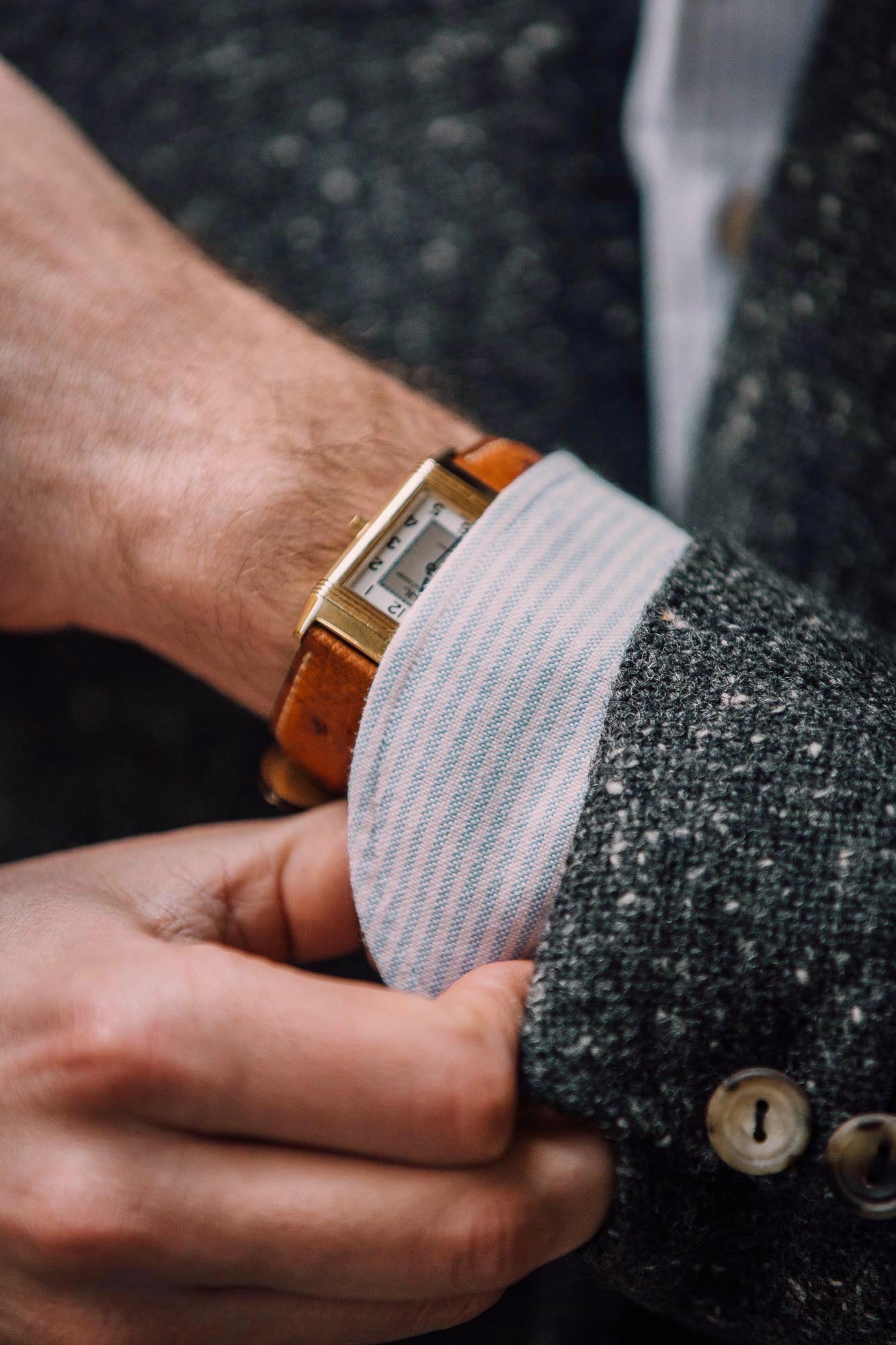
It’s a little unusual in another way though, beyond the robust, textured yarn. It’s an off-white and blue stripe, rather than blue and white.

The difference is very subtle. Few people would notice without it being pointed out. But using this warm, creamy colour rather than a cold white does have a real effect.

A shirt made up in the fabric looks more casual, perhaps a little vintage: rather like using yellowed mother-of-pearl for the buttons on the ready-made shirts.

Most brands offer blue/white stripes because they are smarter and more corporate. Nothing wrong with that.

But this PS Oxford shirting is not meant to be formal or corporate. It’s supposed to be more traditional, rugged and robust - a better match for jeans and tweed than a sharp suit.

And as ever with the products on Permanent Style, it’s nice to do something a little different. Something that you can’t find from a dozen other brands, and fills a gap in the bespoke market.

This blue/cream stripe uses the same yarn as the popular PS Oxford cloth introduced last year.

So it has a relatively thick yarn in the weft (1/10) but a finer one in the warp (2/90).

The thicker weft makes it tougher, and wear in beautifully - like the vintage oxfords that inspired it - but the finer warp retains a touch of luxury.

Oxfords with anything near that thickness aren’t available as cut lengths for bespoke customers, which sets the cloth clearly apart. But even RTW shirts rarely use single-ply yarn in the weft.

The result is a shirting that reproduces the look and feel of oxford shirts sold by Brooks Brothers and others in the 1950s and 1960s, including the nubby surface that comes from the varied thickness of the short-staple cotton.

You can read more about the development of the fabric, and the research with Italian mill Canclini, in the first post on the plain-blue oxford cloth here.

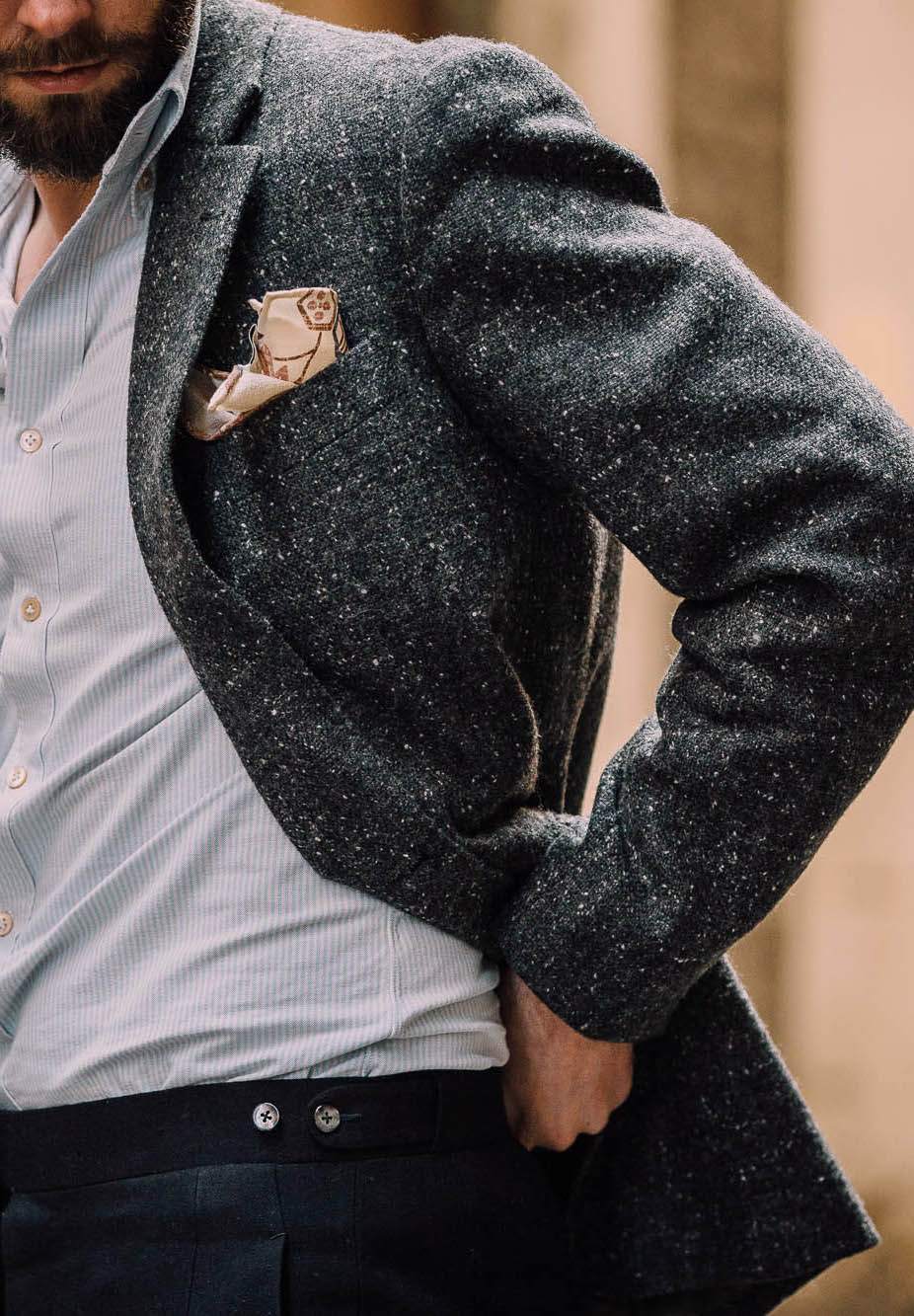
Since I’ve had this blue/cream stripe, I’ve found that it also works with a serge trouser and structured donegal, as pictured.

This is very useful. It means I can chuck on the shirt with jeans at the weekend, but also wear it with sports jackets. And given I rarely wear worsted suits these days, it also makes it perfect for travel.

When I went to Milano Unica this week, I travelled in this striped-oxford shirt and had a plain blue in my bag. I wore jeans and a sweater on the plane, changed into flannels and a tie for dinner, and wore the plain blue the next day open-necked with a jacket.

There will be ready-made shirts in this cloth available later in the year, made up by Luca Avitabile.

For now, the cloth is available in the normal 2m lengths, to have made up by a shirtmaker.

If you want it sent directly to a maker, please put them down as the delivery address, including your own name as a reference. Then drop them a note so they know to expect it.

Other details:

  • Yarn: 1/10 x 2/90
  • Composition: 100% cotton
  • Weight: 250g/metre
  • Cut length: 2m x 1.5m
  • Fabric pre-washed and should not shrink
  • Price £55 plus VAT
  • Available now on the shop site, here

Full information on the PS Oxford cloth and its journey here

Below, a comparison of the cloth (top) to a normal blue/white stripe (below).

Other items shown:

Photography: Jamie Ferguson @jkf_man

Sartoria Ciardi cotton suit: Style breakdown

Sartoria Ciardi cotton suit: Style breakdown

||- Begin Content -||

In our last installment in this Tailor Styles series, we looked at the modern incarnation of the Neapolitan jacket: light and soft, but also short with a small shoulder.

Today’s suit, from Sartoria Ciardi, is the diametric opposite within Neapolitan style.

It is closer to the original cut developed by Vincenzo Attolini, who re-made the suits of the English to use less padding and lighter canvas, making them better suited to southern Italy.

Attolini did not fundamentally alter the proportions, however, and this Ciardi suit hasn't much either. The shoulders are still strong, the body easy, the length easily covering the seat.

Indeed, given all the English tailoring we’ve already covered in this series, it will be interesting to compare the Ciardi measurements to those houses. And in subsequent weeks to see how other Neapolitans vary between the twin poles of this and Solito.

House: Sartoria Ciardi

Address: Via Giuseppe Fiorelli 12, Naples

Site: www.sartoriaciardi.com

Cutter: Enzo Ciardi

Price (at time of writing): €3200 (incl VAT)

Suit starting price: €3200 (incl VAT)

The most important thing to keep in mind with this suit, which Enzo Ciardi cut for me in 2018, is the thick cotton it is made from (Drapers, Cotton & Cotton 4844, 13oz).

Cottons are wonderful in many ways, particularly comfort and ageing. But they have no drape.

So while the straight lines are nice and sharp (see skirt and vents) the curved lines in the waist or elbow will always be crumpled.

They will soften over time, and the colour will fade naturally - but that requires wearing and washing. It will probably even be nicer (but take longer) than lightweight cottons like my Caliendo suit.

In terms of style and proportion, the first thing to note with the jacket is its length. The back seam is 31¾ inches long, more than an inch longer than the more modern Solito.

This puts it towards the shorter end of the English tailors (though still longer than Anderson & Sheppard) and around the same as the Milanese like Ferdinando Caraceni.

The buttoning point is proportionately lower still, a full inch lower than Solito and one of the lowest we’ve looked at in this series.

The next important point is the fit around the body. Few modern Neapolitan jackets have any drape in the chest (excess fabric, adding fullness/strength but also comfort), but Ciardi does.

Indeed, if you look at the side-on shot of the suit above, you can see there is little suppression in the waist at all - the back runs in an almost uninterrupted line from top to bottom.

This is particularly noteworthy on my body shape, where my larger shoulder blades and hollow back make it hard to avoid some suppression.

The upper back also has more drape than most Neapolitans - an effect exaggerated by the stiffness and light colour of the cloth.

These factors all contribute to making the jacket very comfortable, while still retaining a flattering impression and ‘X shape’ at the front.


Interestingly, the shoulders are not that wide - only a quarter inch wider than the Solito.

But this measurement only runs the length of the shoulder seam, from the collar to the beginning of the sleevehead.

The bigger difference is the roping on the Ciardi jacket, which effectively extends the line of the shoulder out into the top of the sleeve. Few modern Neapolitans have this, and it adds at least another half inch to the width.

As a technical aside, this jacket is also one of the few I’ve had made that has a ‘spalla camicia’ construction all the way down the front and back of the sleevehead.

This construction, where the the sleeve appears to run underneath the shoulder, is usually only employed on a smaller section of the sleevehead, and sometimes just at the front.

One area where Neapolitan jackets are usually significantly different to their English cousins - but less commented upon than sleeve or structure - is the opening below the waist button.

Here Ciardi is again more conservative than Solito, being a little more closed. However, it still retains the roundness of that front edge that you rarely see outside Italy.

The comparison is most stark against the Anderson & Sheppard linen jacket (see post at that link). Its opening is actually larger than the Ciardi, but the lines of the opening are much straighter.

Elsewhere on this suit, the lapel is quite broad at 3¾ inches, and the gorge (the notch in the lapel) quite high at 3⅛ inches from the shoulder seam.

The vent is quite long, befitting its length, the sleeve only subtly tapered towards the cuff.

It is a slightly more formal cut than the modern Neapolitans and, on most people, a more flattering one. It’s the key reason my first suit from Ciardi was a more business-like four-ply wool.

The broad blue-and-white striped shirt is from Luca Avitabile, with blue wool tie and yellow handkerchief from the Anderson & Sheppard Haberdashery.

I rarely wear bright shirts or ties with summery suits like this, but tend to add colour in a handkerchief: here a slightly unusual ikat-print cotton.

The loafers are the Piccadilly model from Edward Green, in dark-oak antique calf.

You can see the full list of posts in this series - which is gradually comparing the cuts of every major bespoke tailor I've used - in the dedicated page here. 

Photography: Jamie Ferguson @jkf_man

 Style breakdown:

  • Shoulder width: 6 inches
  • Shoulder padding: Thin canvas plus felt
  • Sleevehead: Moderate roping
  • Sleeve: Straight, only slightly tapered
  • Lapel: 3¾ inches
  • Gorge height: 3⅛ inches
  • Drape: Moderate
  • Outbreast pocket height: 10 inches
  • Buttoning point: 19½ inches
  • Waist suppression: Small
  • Back seam: Straight, little suppression
  • Quarters: Moderate opening, from first button
  • Length: 31¾ inches
  • Vent height: 9¼ inches
  • Trouser circumference at knee: 19¾ inches
  • Trouser circumference at cuff: 15¼ inches

Photography: Jamie Ferguson

One million readers on Permanent Style

One million readers on Permanent Style

Tuesday, February 5th 2019
||- Begin Content -||

In recent years, it's been lovely to see consistent popularity of Permanent Style's independent, long-form content.

Despite new media and the volume of images, re-posting of images, and algorithms that pretend to be people re-posting images, interest in what we do has continued to grow.

In that time there have been several new highs. But last year was the first time the site has received over 1 million unique visitors.

One million people, reading 6,041,585 posts. It's staggering to think about.

I would like to say a humble thank you to everyone, in particular to those that have recommended PS to a friend (the way we have always grown...) and taken the time to write a comment, adding their personal experiences to the conversation.

In terms of the future, I can only reiterate what I wrote last October: nothing is going to change.

We're not going to become a shop; we're not going to become a vlogger talking about what we had for breakfast; we're not going to join 'like circles' on Instagram or engage in other bullshit ways of trying to become popular.

Instead, we will continue to publish independent, thoughtful content on classic, quality clothing. On a website where we can control everything about what we do, pick niche advertisers, and create a searchable, categorised body of work.

The tide might be turning. Slow journalism might be making a comeback. That would be nice - there would be more things to read. But it doesn't matter either way: we're not following trends.

This post is not meant to be a pat on the back. It's meant to be a heartfelt thank you to all those that read and support Permanent Style, and a notice that there are more like them every day.

Thank you

Carreducker: The pains of learning to saddle stitch

Carreducker: The pains of learning to saddle stitch

Monday, February 4th 2019
||- Begin Content -||

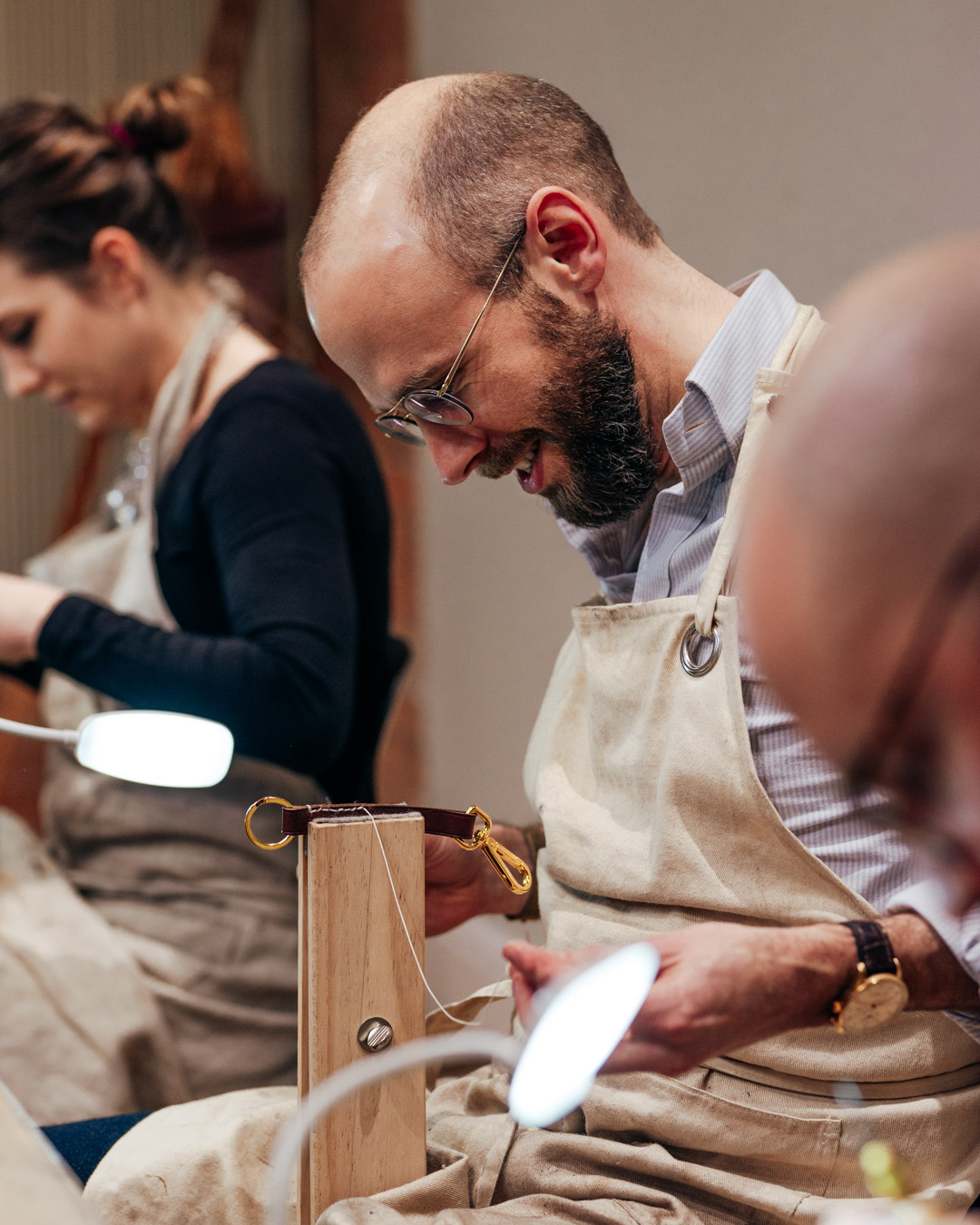
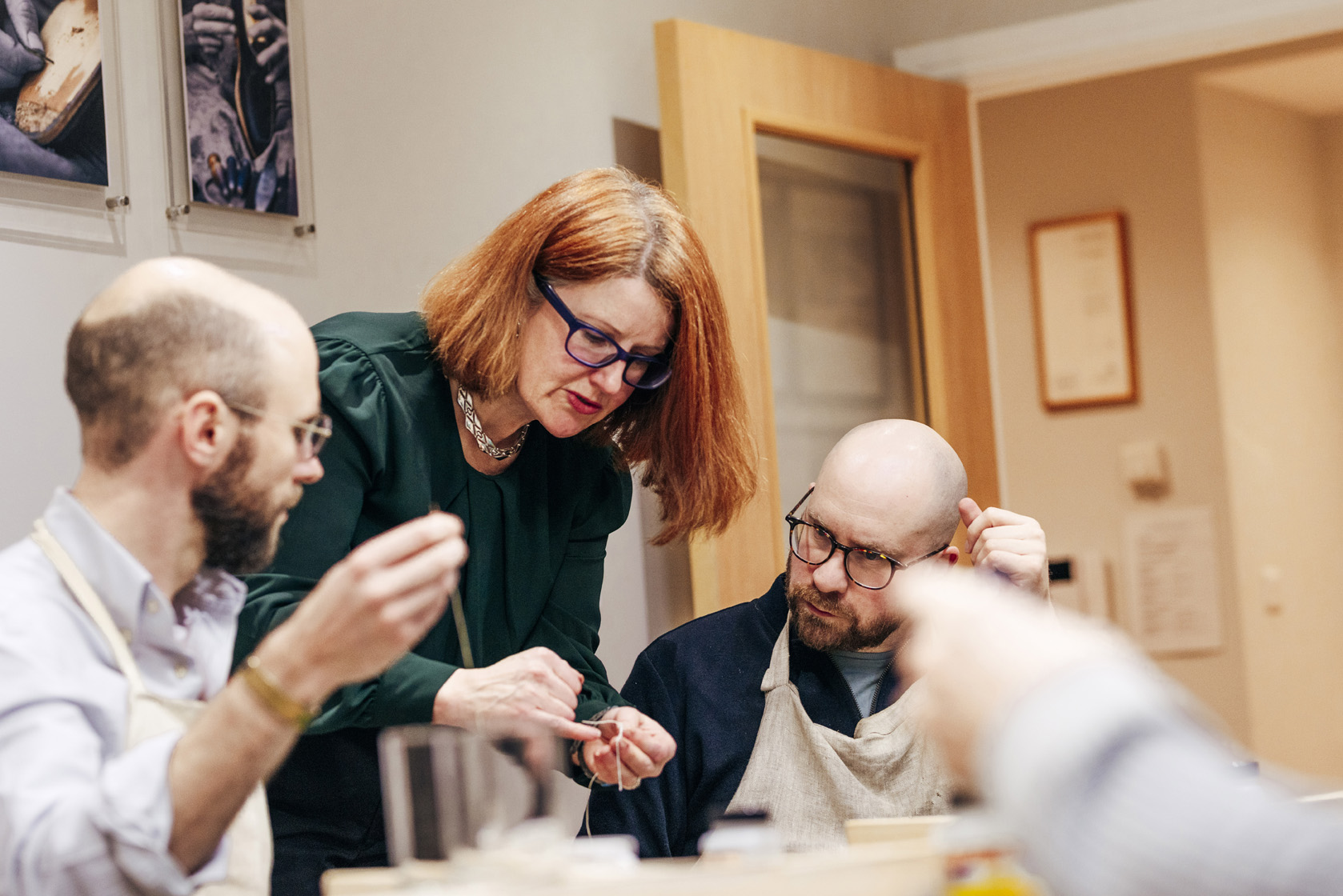
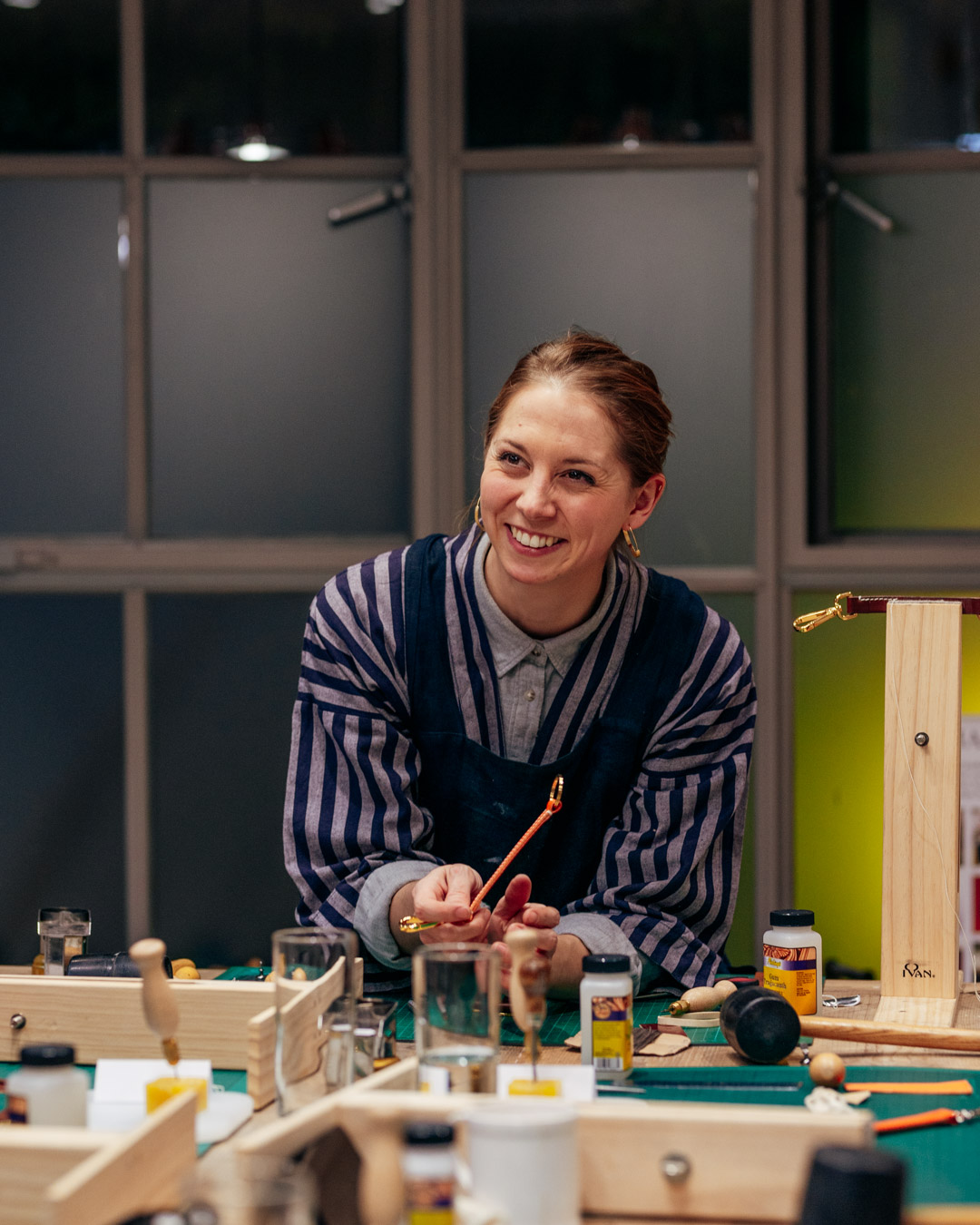
Last week I took part in a leather hand-stitching class organised by Carréducker: British bespoke shoemakers Deborah Carré and James Ducker.

It was lovely to see Deborah and James again (I last covered them back in 2013) and to see their new digs, a converted flat just behind Old Street.

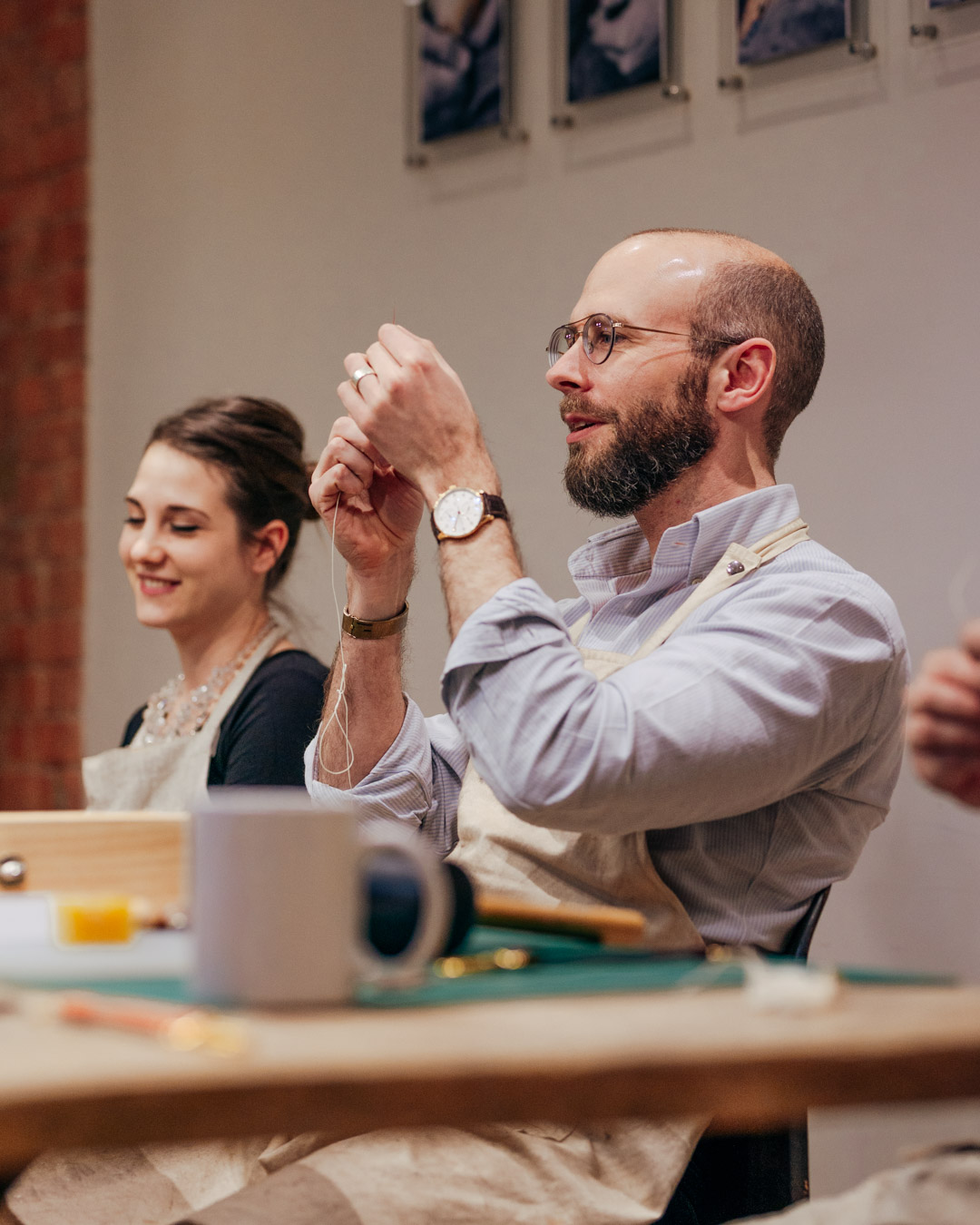
I had tried saddle stitching briefly in the past, with Hermes, but never made a whole piece. This three-hour session with Carréducker was frustrating at times, though in the end rewarding.

I also found it interesting which parts of the work were the hardest, and which contributed most to neat, strong work. Neither was what I expected.

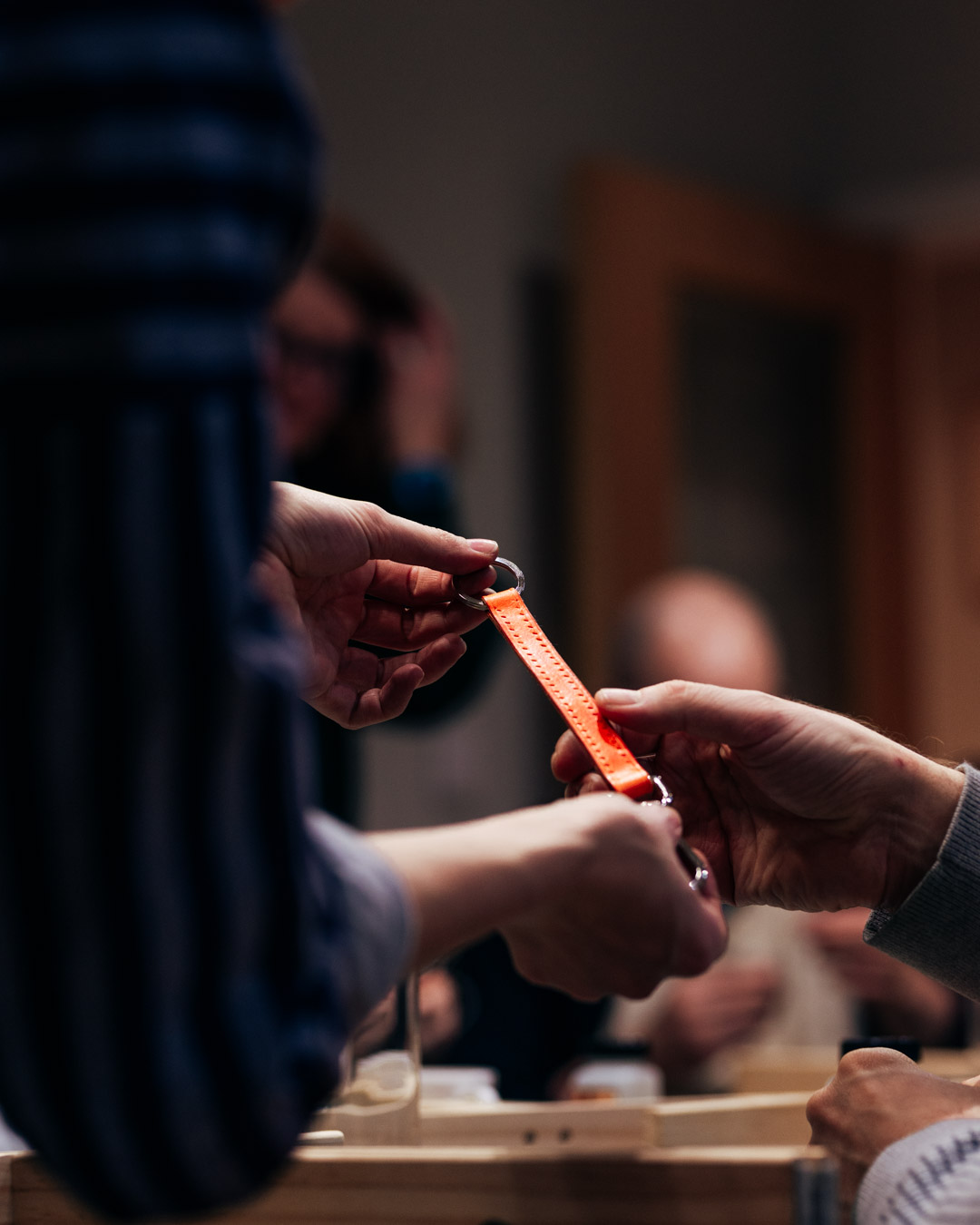
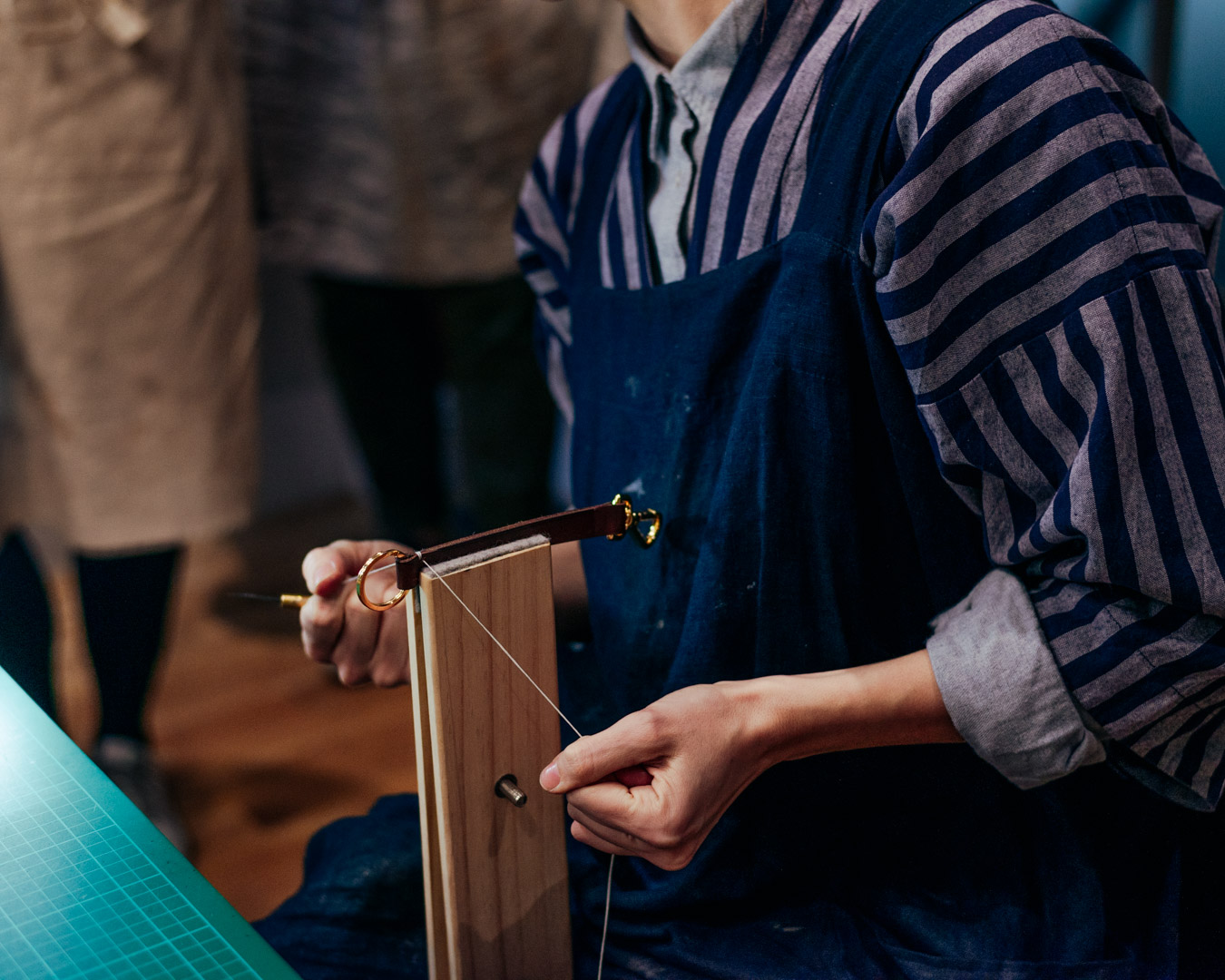
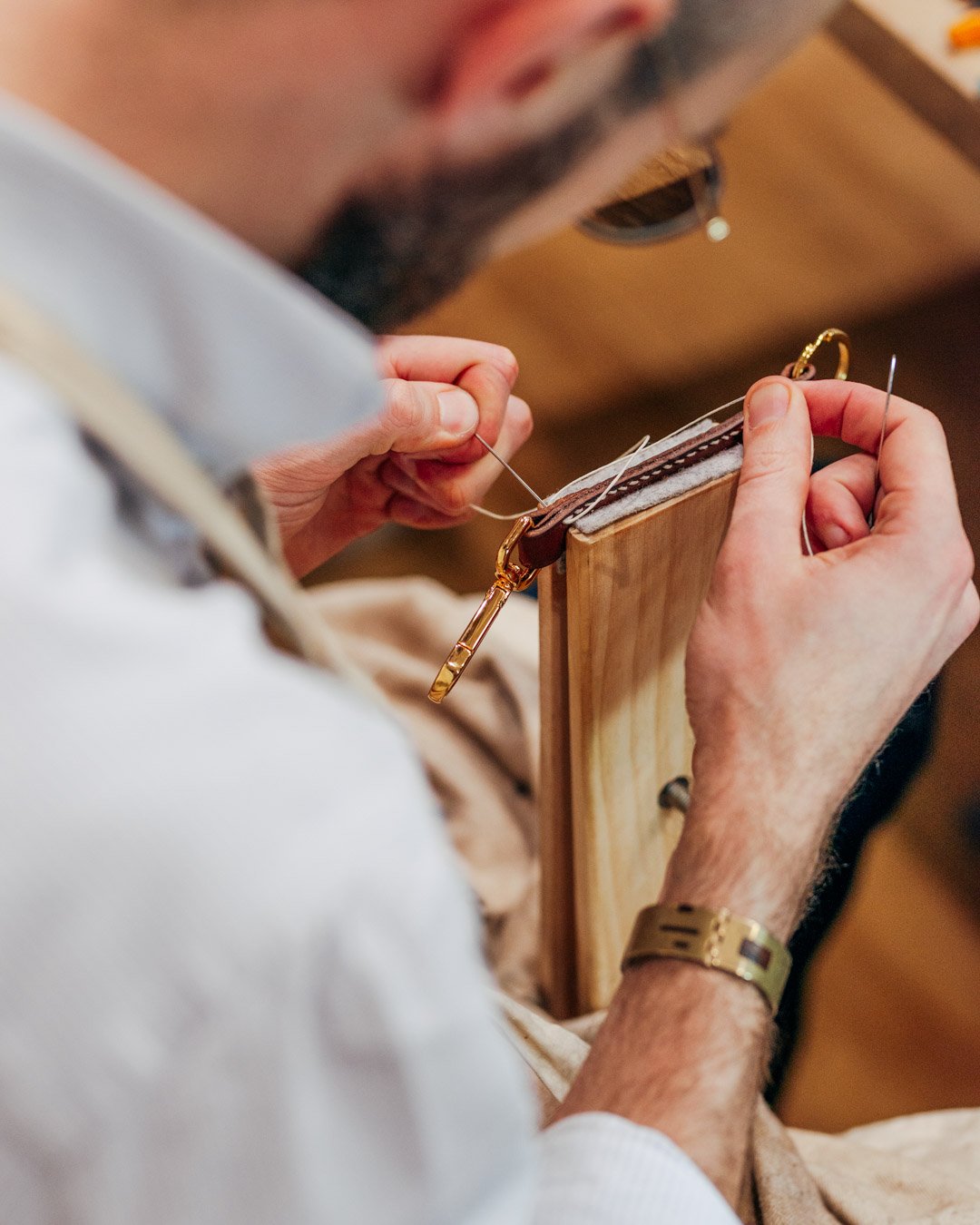
The course is one of the simpler ones Carréducker run, and teaches participants to make a key fob: a band of leather with a ring at one end and clip at the other.

You start with two leather strips, one shorter than the other, glued together and skived.

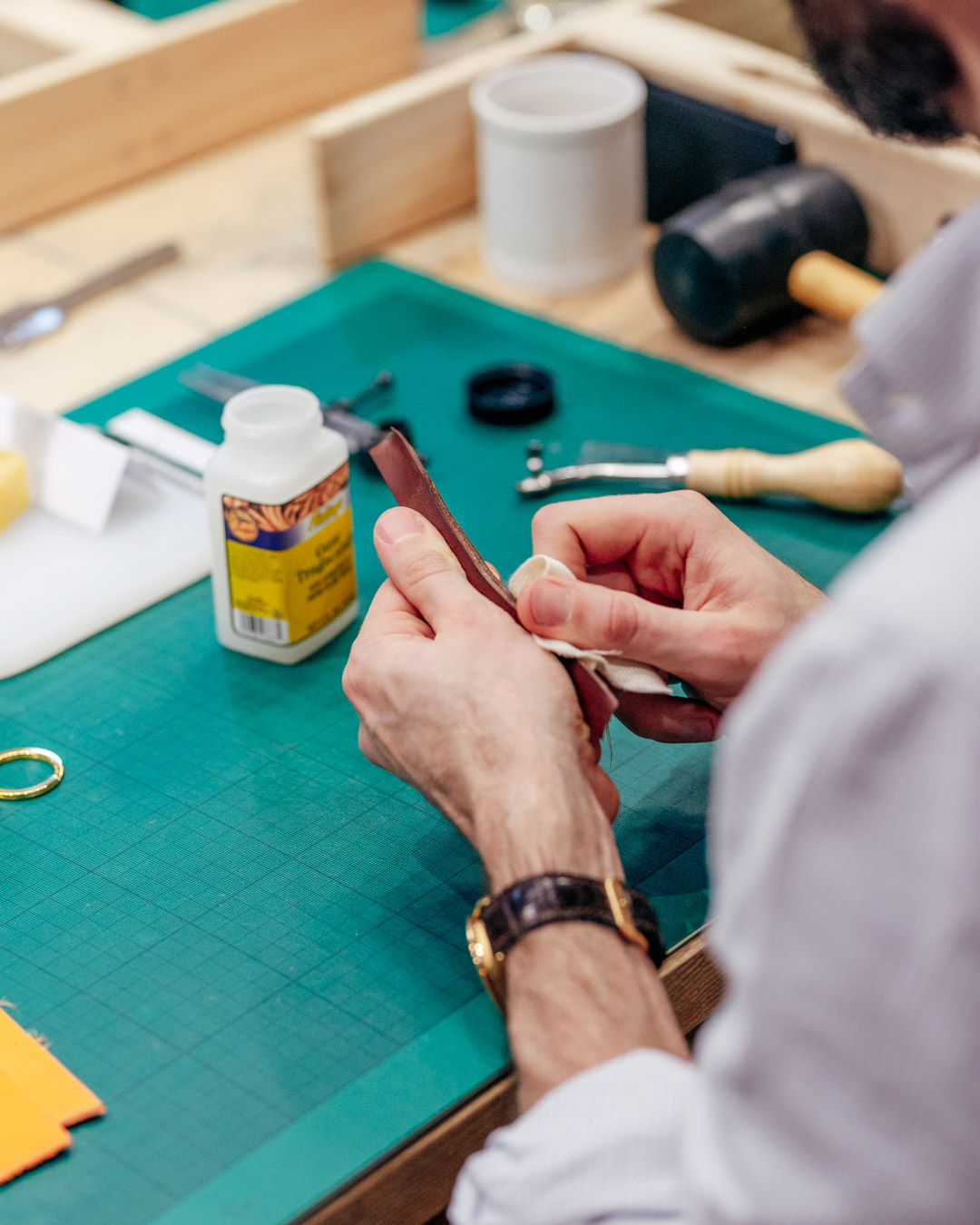
The first stage is finishing the edges. You do this by applying a natural product called gum tragacanth with your fingers along the edge, and then using a piece of webbing cloth to rub it furiously.

(Well I did it furiously - I was pretty scared of messing up, and so perhaps a little over enthusiastic.)

The rubbing creates heat, which after two or three layers seals the edges - basically ensuring that the leather fibres can’t start coming out at the sides.

I was rubbing so hard that I started to distort the piece rather, twisting it. But it’s a nice veg-tanned leather and was easy to mould straight again.

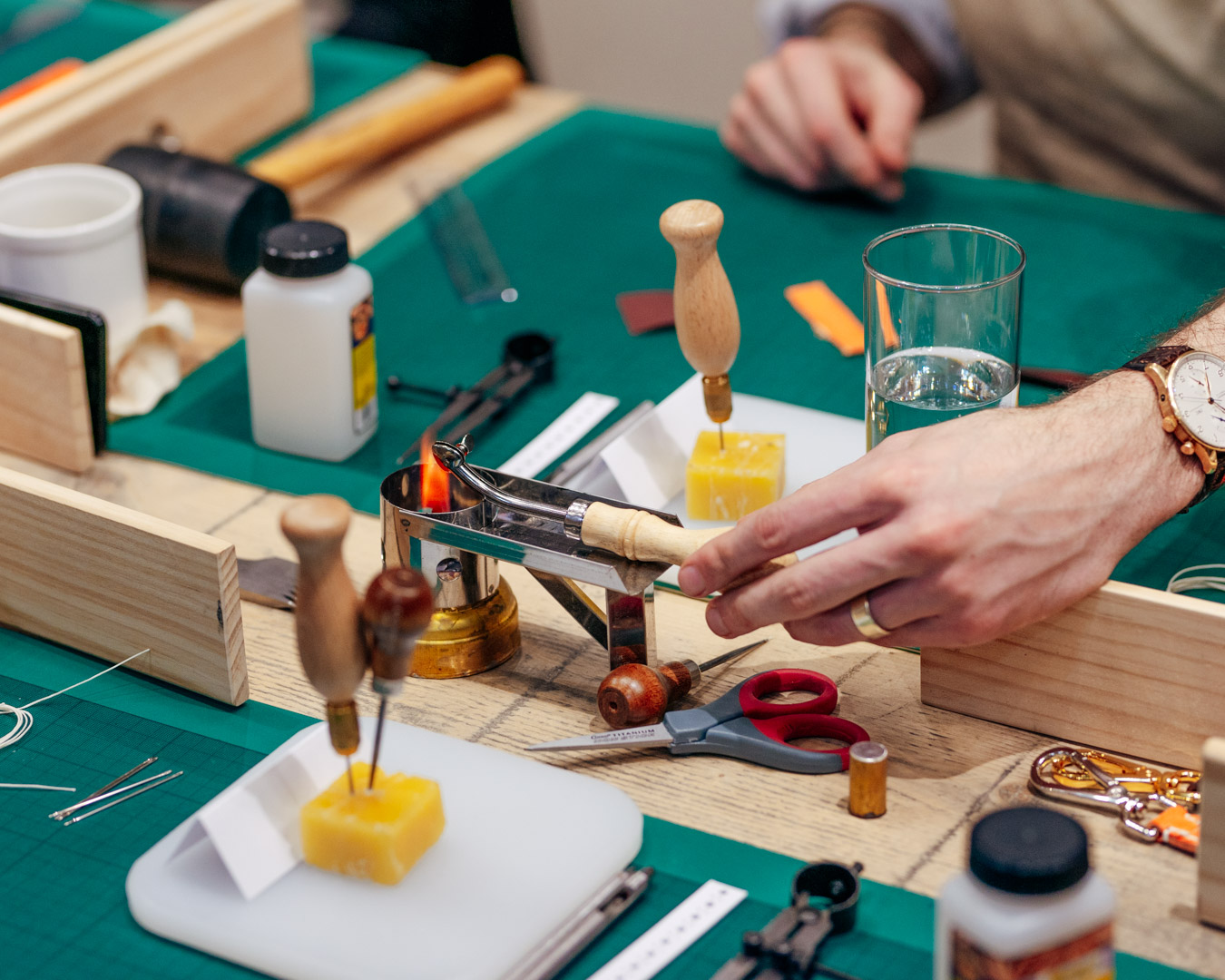
Next is edge creasing, which uses a heated tool to draw a line up either side of the leather. This is largely decorative, but does help guide the stitches later.

Like many things in menswear, a finer line and slimmer distance from the edge creates a dressier look - akin to the swelled edges on a jacket or overcoat.

The tool can be adjusted to set this width. Then you heat it for around ten seconds, hold it in your fist like stabbing with a knife, and score down the edge of the leather.

The tool also has one end lower than the other, which hooks onto the side of the leather, guiding you as you run along.

We did a few practices on scrap leather first, and it’s not a hard technique.

But, as soon as you lose concentration, the tool can slip across the body of the strip, marking it.

This can be rubbed out or polished later, but not everything is so fixable - and it showed early how much of the work is about just precise repetition. Whether cutting holes or tightening stitches, the core skill is being able to repeat a fairly simple procedure consistently and accurately. A momentary loss of concentration can ruin everything.

I have to say, the scoring of the leather was also very satisfying. You could see the natural material burn and mould as you drove into it, the fibres and pores of the skin stretching and distorting.

I can see how enjoyable it would be to work with a material like this, whether lasting a shoe or scoring something more artistic into it.

The next stage was pretty straightforward: you fold back the two ends of the leather, with the clip and ring inside, and glue them down.

This is just to keep them in place temporarily. The stitches will secure them long term.

Next we used a pricking iron to mark where our stitches go. I’d seen this done before in a factory, but it hadn’t occurred to me that it makes evenly-spaced stitches quite easy.

The hard thing isn’t getting the stitches the same distance apart. It’s sewing each one at the same depth and angle.

The marks are made by placing the iron along the edge of the leather, and hitting it gently with a mallet.

There are different irons depending on how many stitches per inch you want. We were starting pretty easy: seven per inch.

Then you have to wax your (linen) thread, by pulling it through a block of beeswax two or three times, and wiping off the excess.

It sounds silly, but it’s easy to forget something small, like wiping off the excess with your fingers, and then find later on that it undermines everything - like making the stitching impossible because your hands are too waxy.

We had two lengths of thread, each with a needle at each end.

There has to be a needle at each end because this form of stitching - often called saddle stitching - involves pushing both ends of the thread through the same hole, one from each side.

Regular readers will know that this looping through the leather is what makes hand stitching stronger than machine stitching. One side can wear through or break and the whole piece doesn’t unravel.

It’s the reason this technique is used on parts of leather bags, and on the welt and sole of bespoke shoes.

One thing I didn’t realise though, and only saw when I stitched myself, was the way the thread twists inside the hole when you sew, almost knotting inside, which also adds strength.

So, to the stitching. There is a formula to this that you quickly remember

  • start by pushing a needle from left to right through the hole
  • pull it out the other side with the other needle on top (‘T on the top’)
  • pull the thread down in the diagonal-shaped cut, to make room for the second needle
  • push that second needle through the top of the cut
  • loop the thread on the other side over that second needle (‘casting off’)
  • and then pull both needles tight, creating the diagonal, looped stitch

While it sounds a little complicated, after a couple of mistakes (forgetting to cast off, for example, which changes the shape of the stitch), I had it memorised.

Much harder, and more important, is making the holes in the first place.

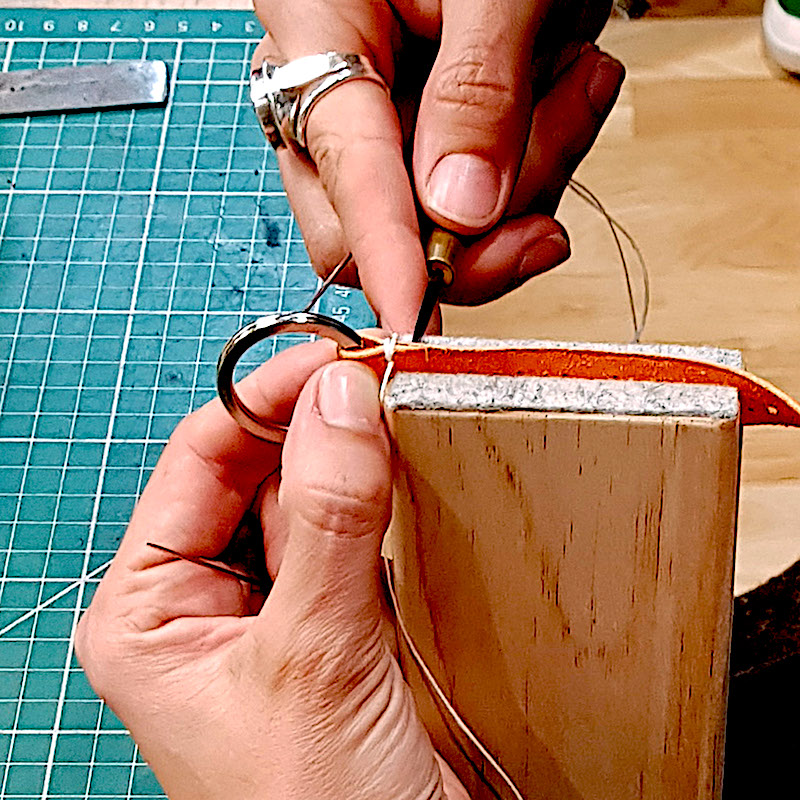
For this you use an awl. It has a diamond-shaped head which is longer than it is wide, creating a diagonal cut in the leather when you push it through.

The pricking iron has cut diagonal marks for you already, so the hard thing is not keeping the same angle with each cut.

Rather, it’s pushing through the same amount each time. If you make a hole too deep, the stitch in it will be larger than the others; too shallow, and it will be smaller. Both make the line of stitches inconsistent.

It’s also hard to push it through perfectly straight. If you angle up or down slightly as you push, the cut on the other side of the leather will be higher or lower than its neighbour, again ruining the line.

I used the edge of the clam (a wooden vice) as a guide and rested the awl on the clam (as advised) to keep it steady, but still a few holes were too shallow or too deep.

Wiggling the awl as you go through also makes it easier to control the depth; but that can enlarge the hole.

So that was interesting.

The thing that killed me physically, though, was getting the needles through - particularly at both ends, where the leather is folded back and you have to go through more leather, and sew back on yourself twice.

There are various things that might have made it harder. If I had used too much wax on the thread; if the thread was knotted or bunching around the needle; if the holes weren’t big enough.

It was hard to know what combination was causing it, but it took me time and no little pain to do all of the final stitches, my fingers throbbing and bruised by the end.

I was tired, hot and frustrated.

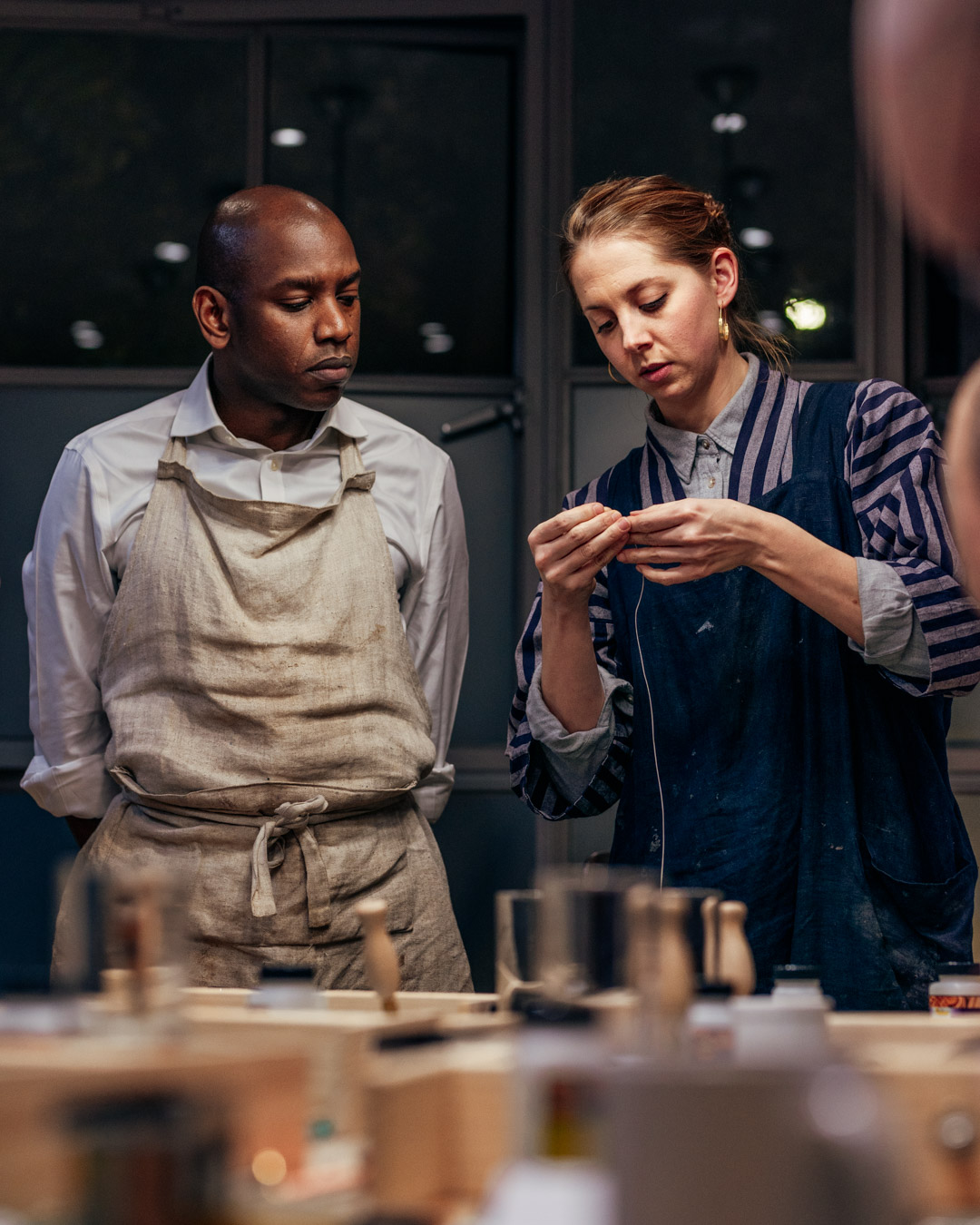
Doing it a lot helps of course. Your fingers get stronger and develop calluses. Deborah (above) could get the needles through fairly easily, but she’s had years of shoemaking - which in most ways is harder and tougher.

(Although, interestingly, shoemaking has to be less precise and is slightly less fiddly, because the stitches are often larger and straight, not on a diagonal. Deborah joked how poor her stitching was compared to that of Frances, our teacher.)

Still, I got there eventually. The stitching on the fob might not be pretty, but it’s strong and it's functional, and even in the run of stitches down the first side, you can see how I’m improving.

I just need to practice making holes in things.

There's more information on the Carreducker courses, which include all aspects of shoemaking, on their site here.

For those that are interested, I am wearing:

Photography in this piece: Alex Natt @adnatt (except awl image)

Strong colour in accessories

Strong colour in accessories

||- Begin Content -||

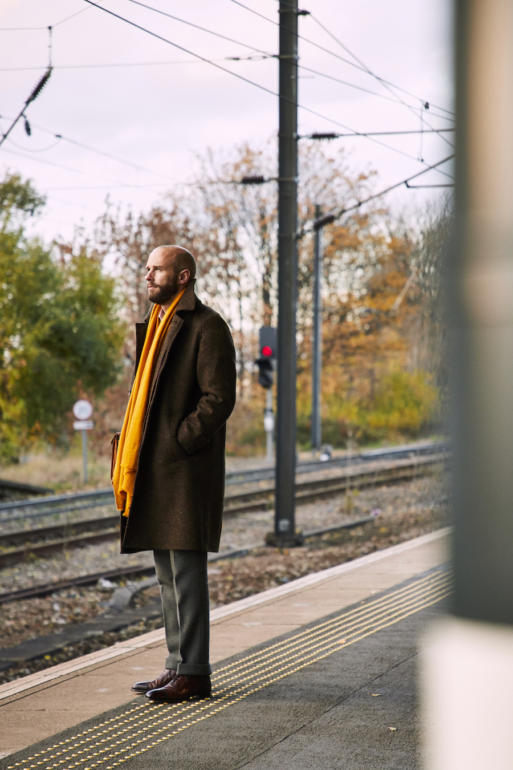
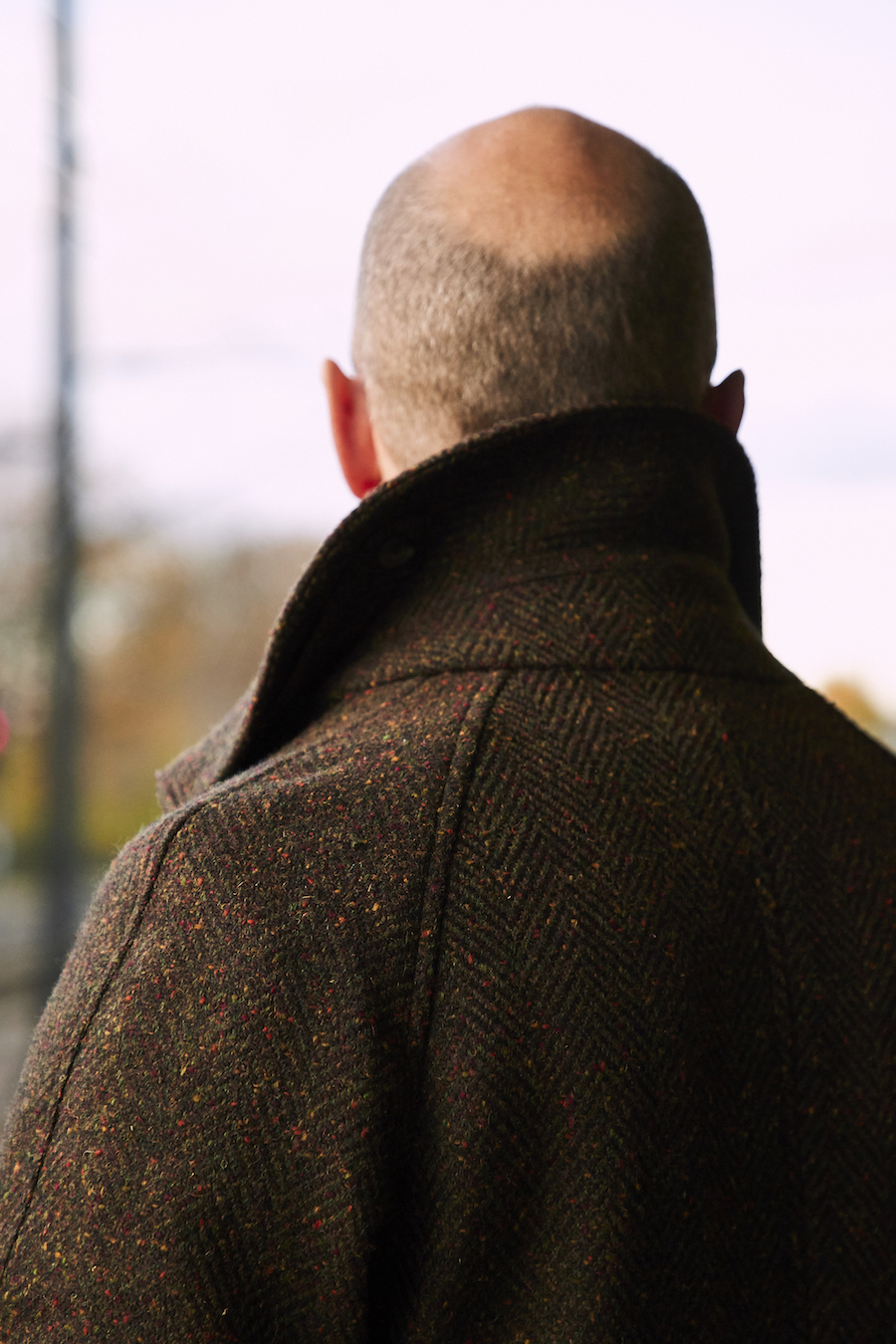
The tangerine orange looks nice against the brown tweed, doesn’t it?

This combination, worn up to see Joshua Ellis recently, spurred a few thoughts on colour. Here they are.

First, I don’t wear many strong colours just because I find that smarter, tailored clothing is more likely to fit in when it’s subtle.

Most of us start our love of suits with a passion for Prince-of-Wales checks, tan shoes and bright linings. I certainly did: my favourite suit at one point was an Etro two-piece with a green overcheck and rampant floral lining.

But over time we settle into the subtler - perhaps deeper - pleasures of weighty flannels, tweed flecks and shoe waists.

Strong colour can be showy, unprofessional and even boring: everyone notices that you’re wearing ‘that’ jacket again.

It’s easier to wear such colours in accessories.

But even there, I find young guys start with quite showy pieces: red ties, yellow handkerchiefs or spotty socks.

These aren’t much subtler than the tailoring they’re worn with, given how prominent they are in an outfit. And the colours are often loud, primary.

Better, I think, is using colour in what might be called second-level accessories. Those that are often hidden, or not worn all day. So scarves, gloves, even cardigans.

They’re not in the face of everyone you meet, all day, like a tie. And they’re so tangential to the outfit that they can easily be swapped for something more conservative.

So for example while I love this bright-orange scarf from Anderson & Sheppard, it could be swapped for something quieter, such as a cream shawl (below, also A&S).  

A grey or dark-green scarf would be even subtler, particularly in a smaller size.

Second thought (perhaps an obvious one, but worth spelling out): such bright accessories are much easier to combine with clothing in warmer, rural colours than colder, professional ones.

Country shades like green and brown are much more amenable to bright orange, yellow or red. Their warmth means there is less contrast than against a cold colour like navy, where bright accessories can often look cheap.

It's one reason bright colours are so much more common in rural clothing - whether red cords or a yellow overcheck.

Strong colours can work with a navy business suit, but they tend to be darker and deeper, like purple or maroon.

Finally, the easiest thing of all is if the accessory picks up a colour in something else you’re wearing.

This is what makes this orange scarf so easy: there are already orange flecks in the tweed coat, so you know the colour works.

It’s one of the reasons tweed in general is such a pleasure.

There are far greater depths than this to colour theory, which could explain why a certain shade of orange works with a coat, but another doesn’t. Small changes in saturation or acidity.  

But they’re hardly relevant, because as a customer you’re not picking scarves from a Pantone book. Rather, your decision is whether the particular yellow in front of you works.

There, the best thing is always to try it against something you’re wearing, or go home and do so.

It’s what I did with this scarf. I saw it, was unsure, and wore my coat in the next day to check. The coral pink also worked, but nowhere near as well.

The coat, by the way, is from Cordings Autumn/Winter 2017/18. It's not available anymore, though there is a duffle coat in the same material in the sale (Medium only).

As with most things from Cordings, that material is great - a 20oz donegal. And the functional elements like the collar are well thought through.

But other style points are too loud - here the bright purple lining and green buttonholes. Fortunately both things could be changed relatively easily, as could the length.

Then again, I thought that a year ago and I haven't got round to changing them yet.

Photography: Jamie Ferguson @jkf_man