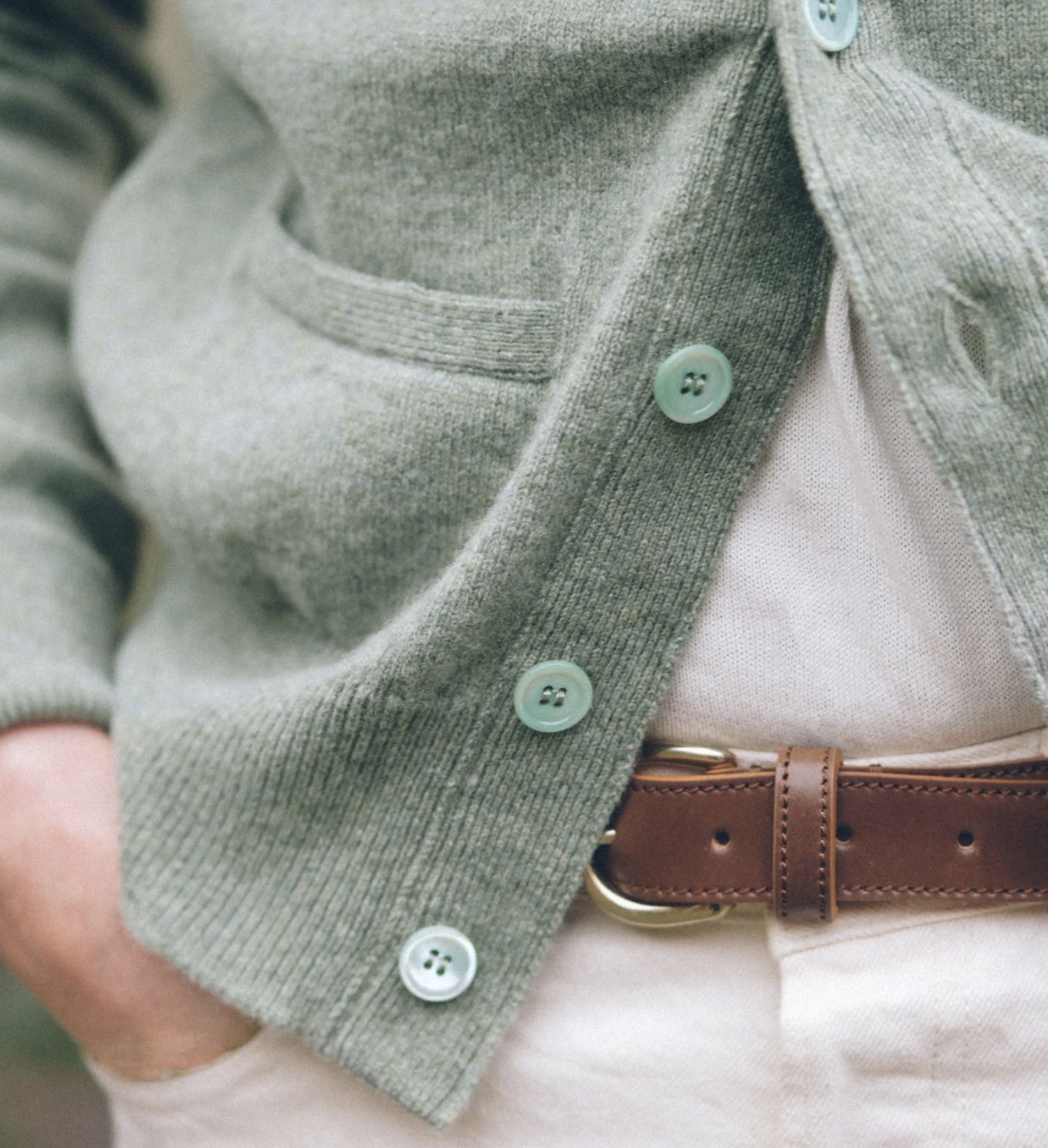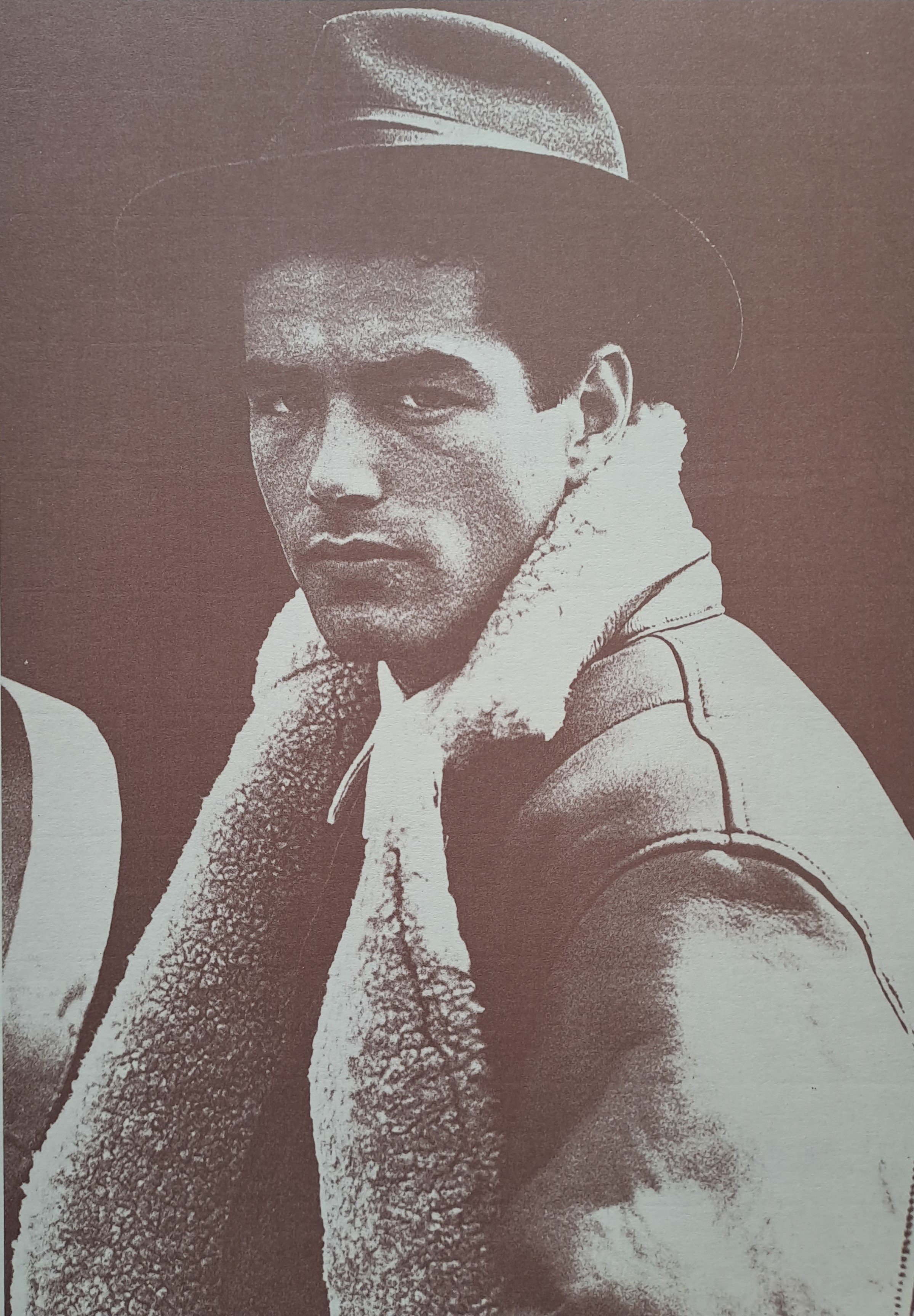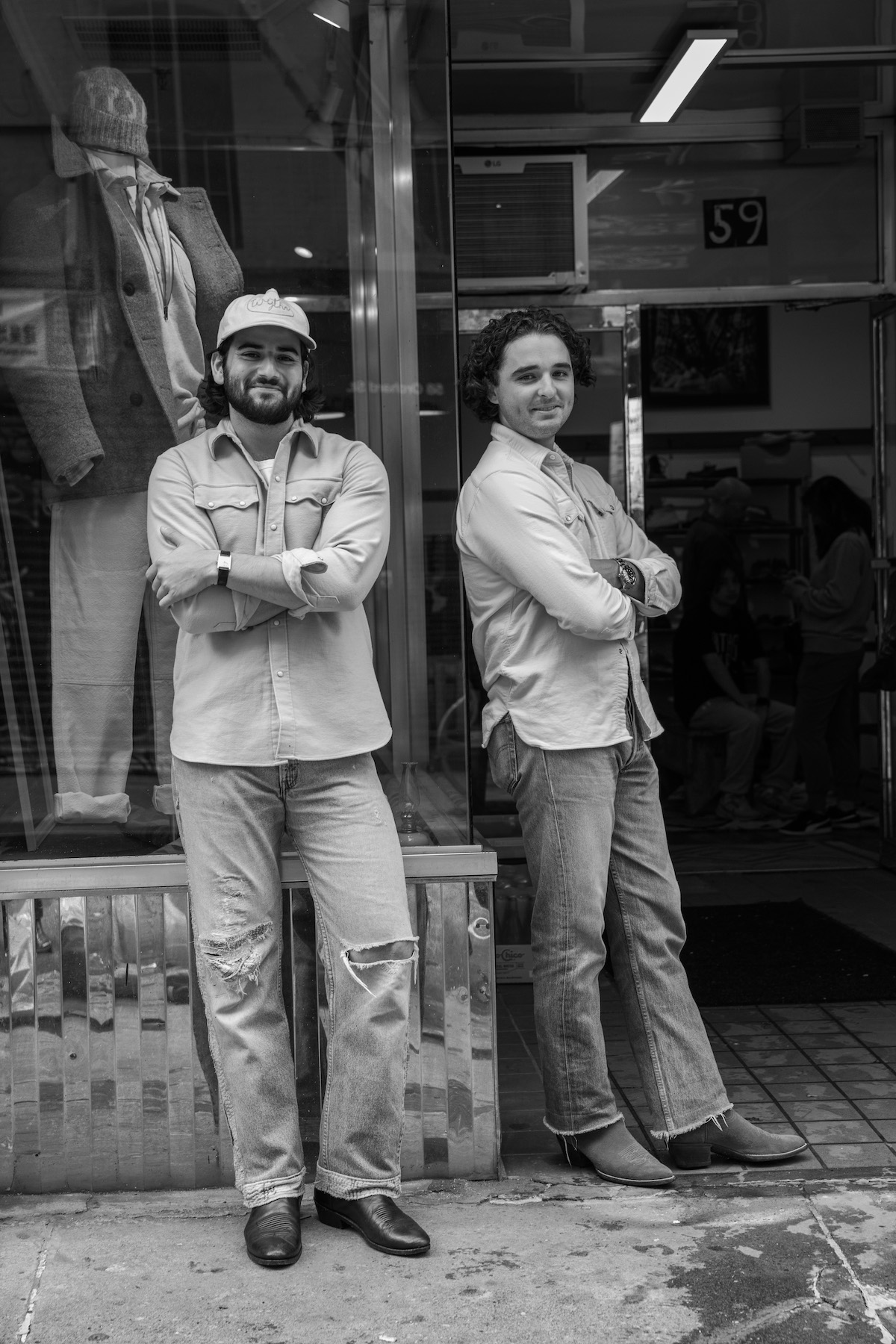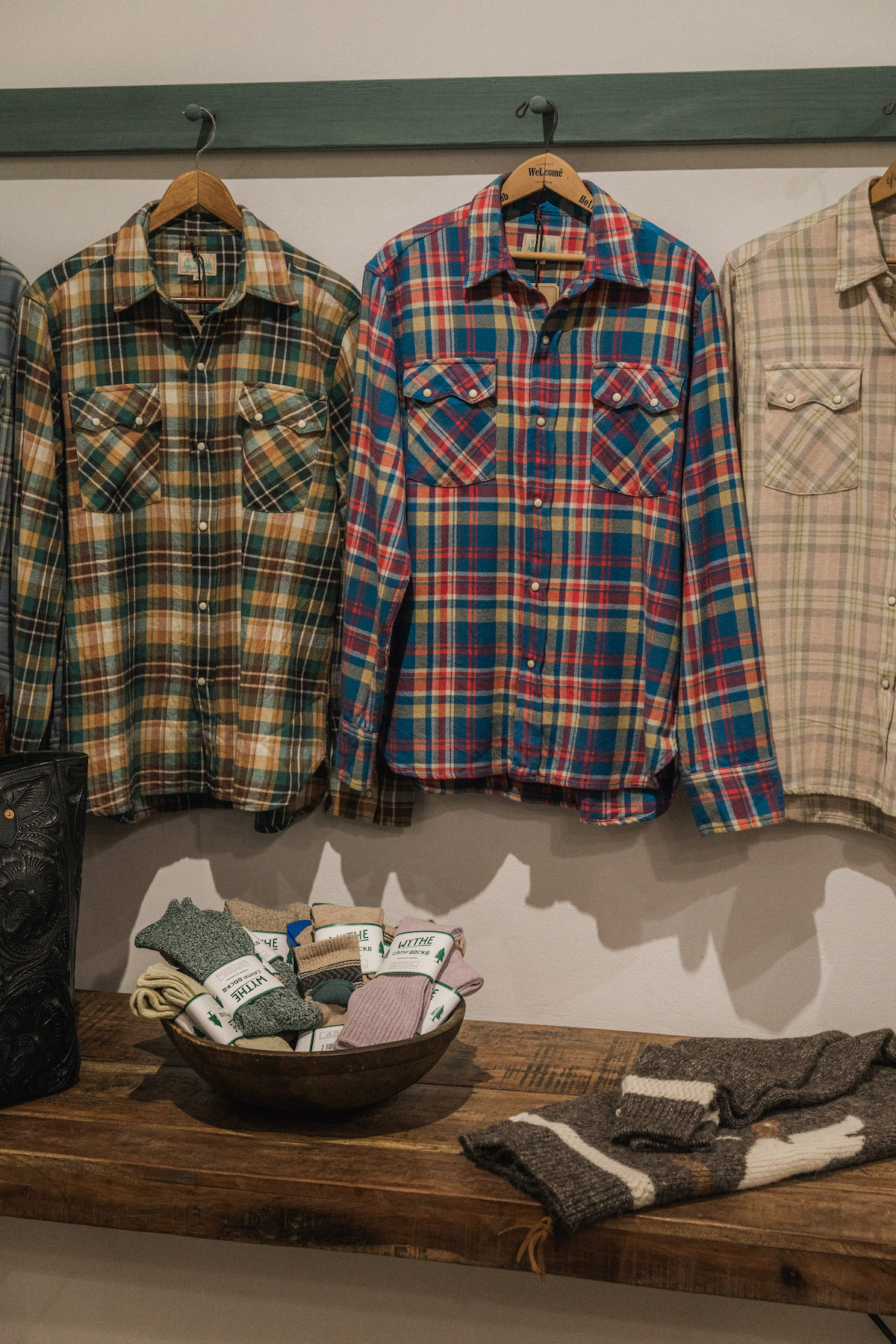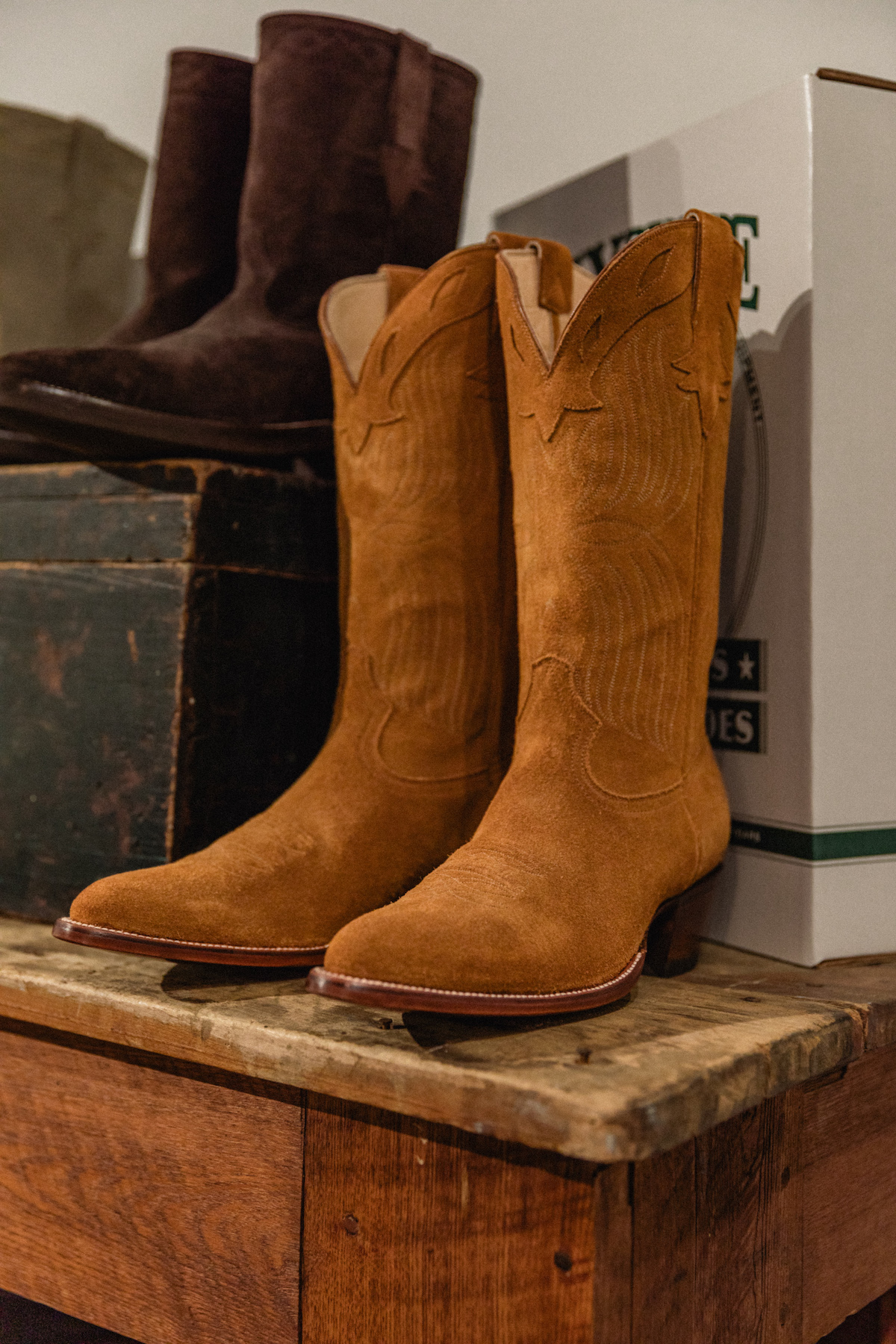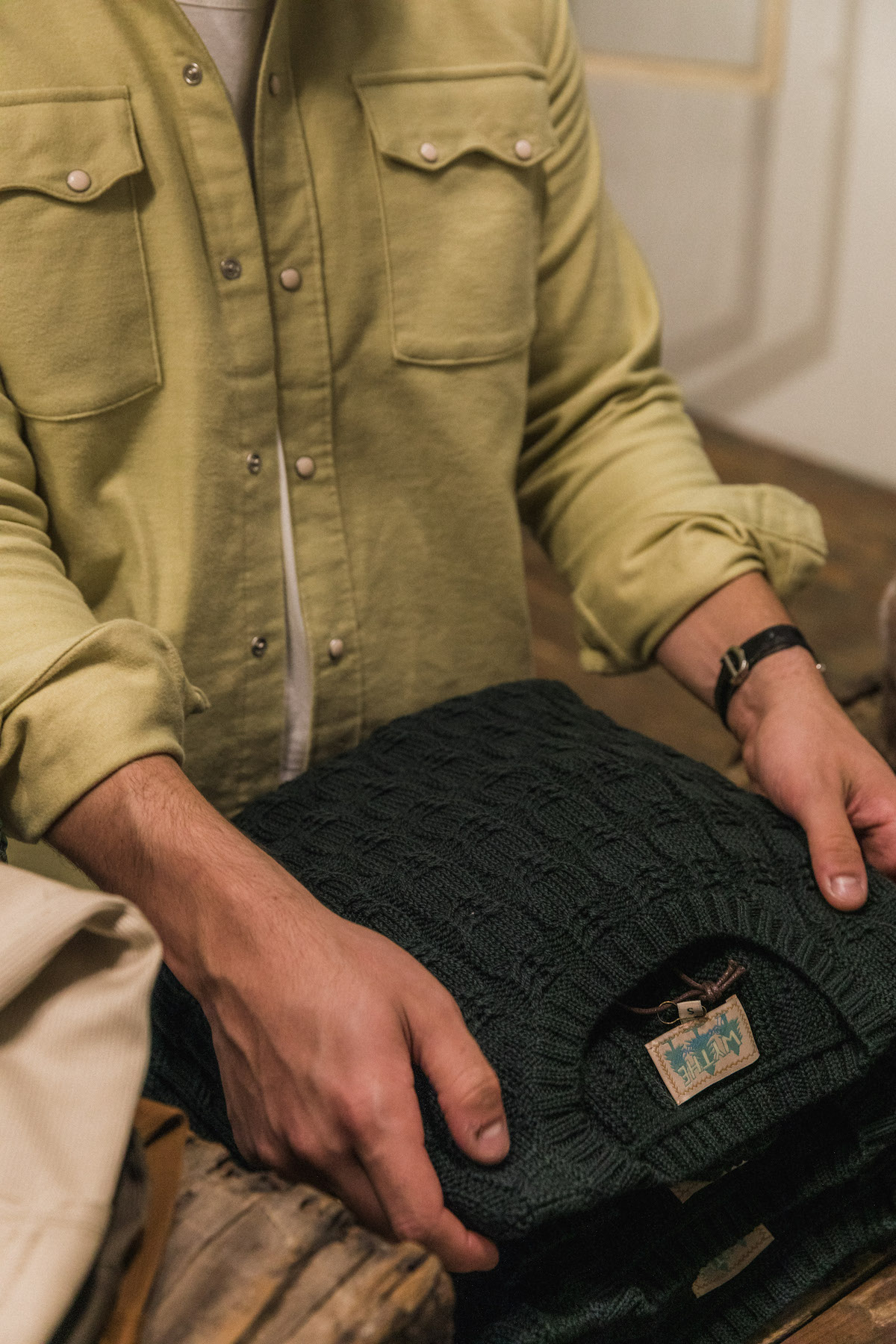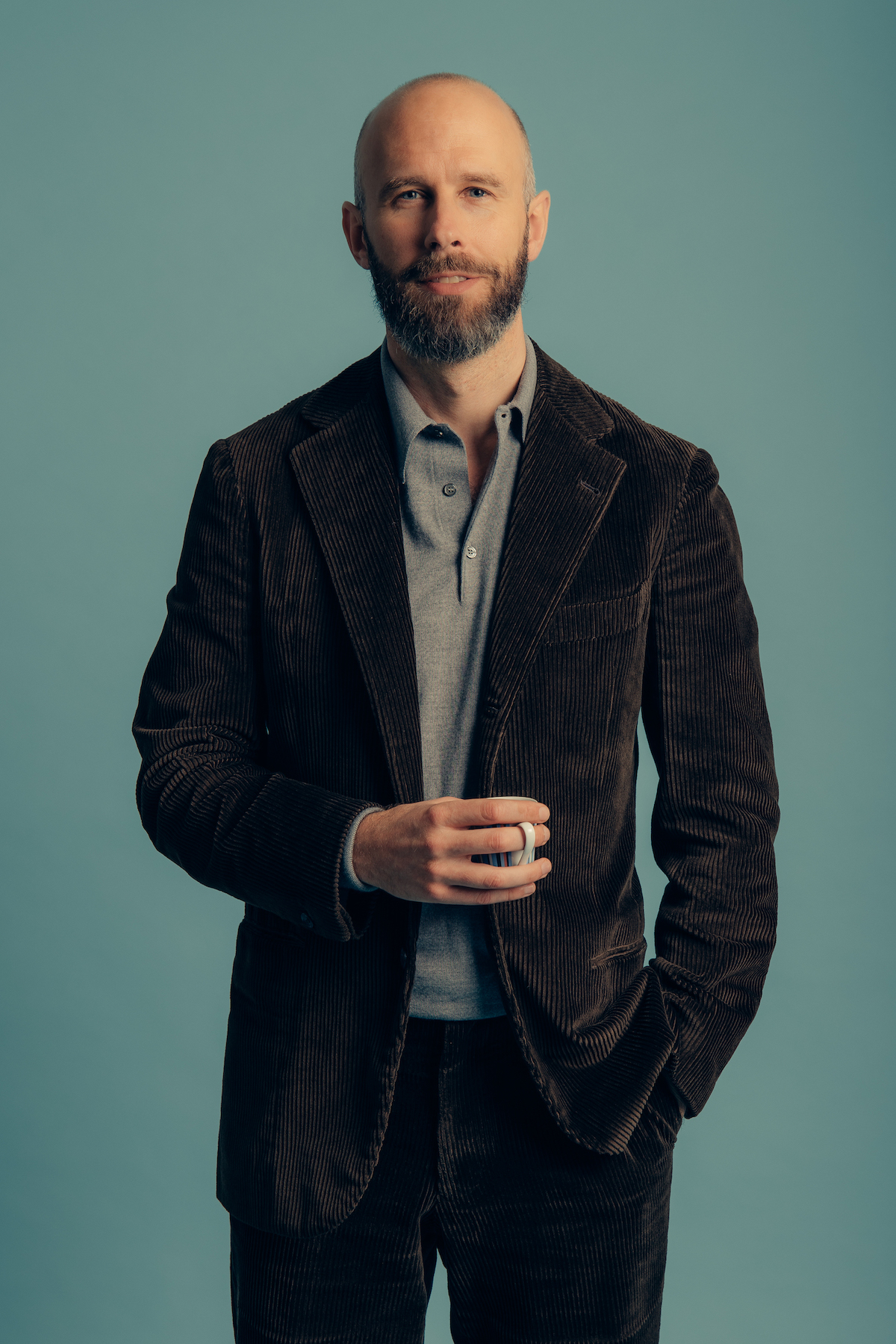
The jacket-as-coat: Seiji’s commission from Tailor Caid and others

The jacket-as-coat: Seiji’s commission from Tailor Caid and others

||- Begin Content -||

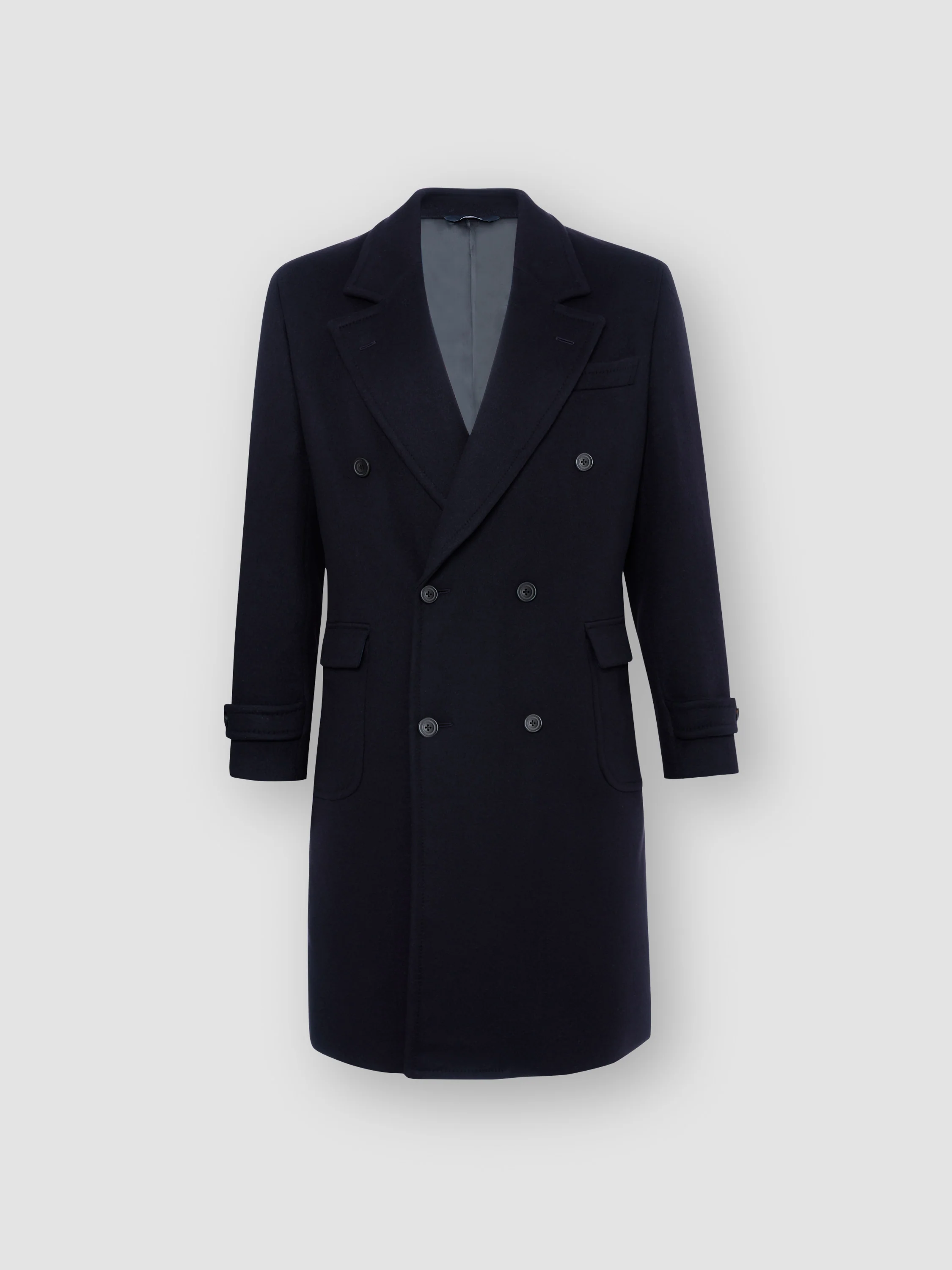
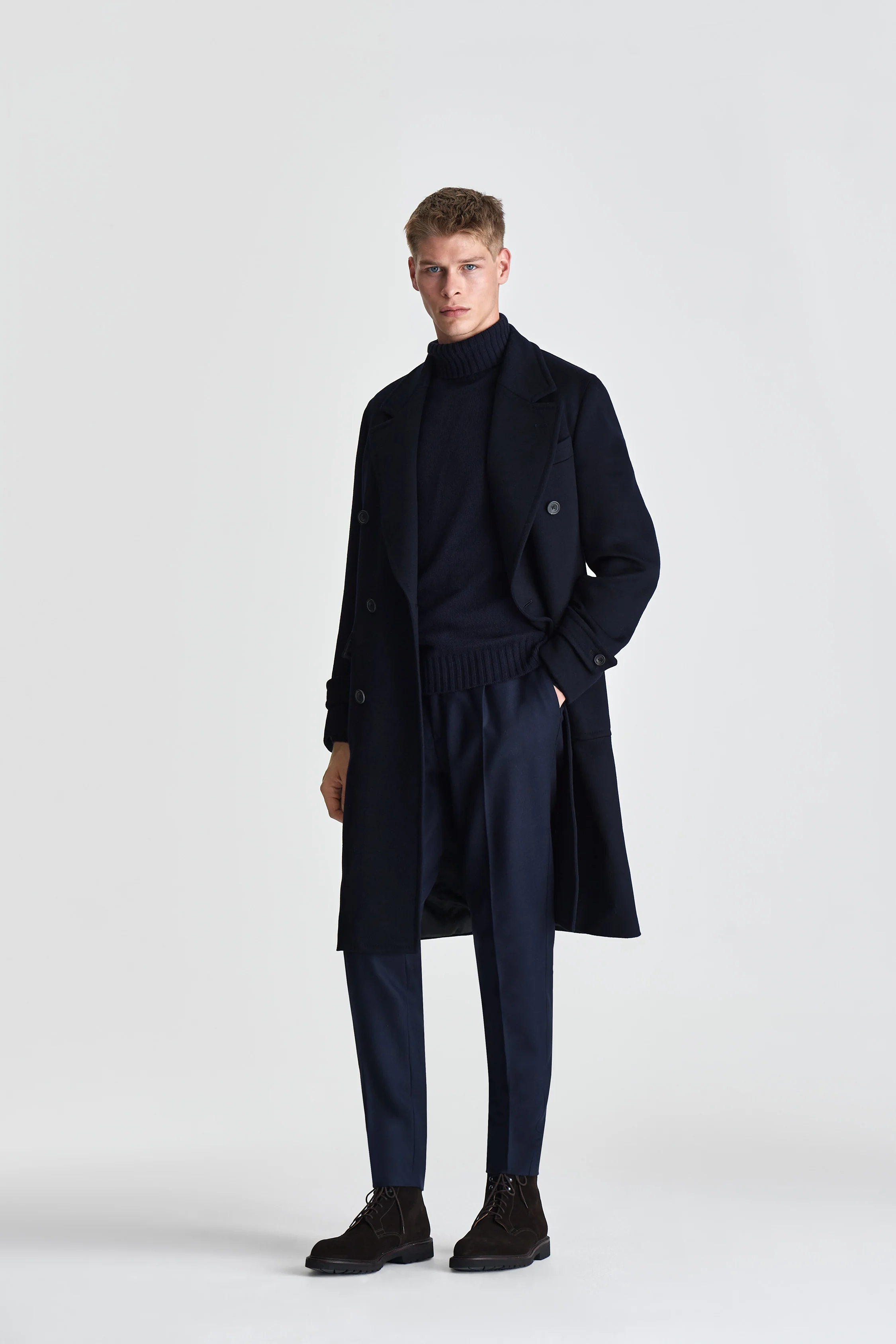
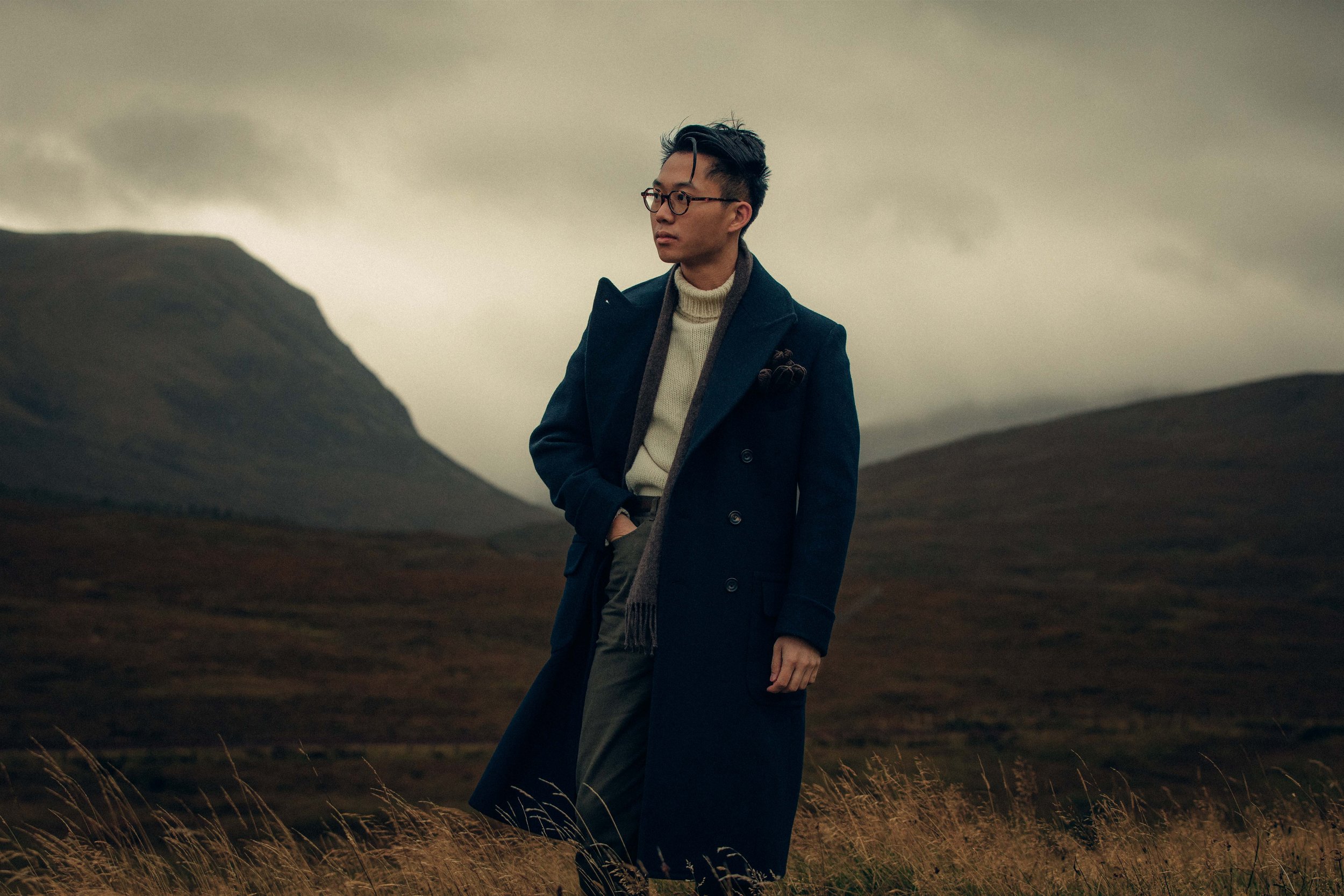
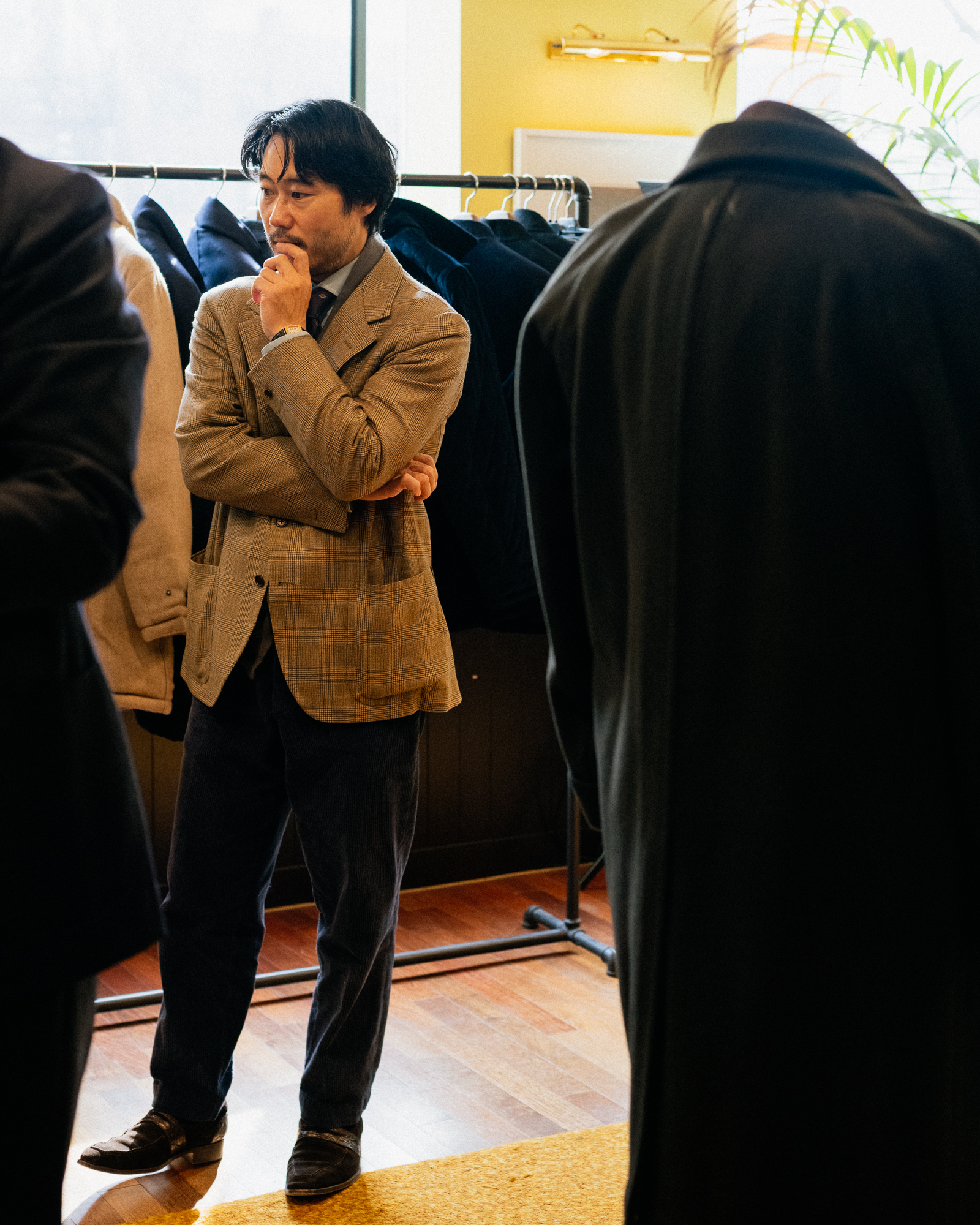
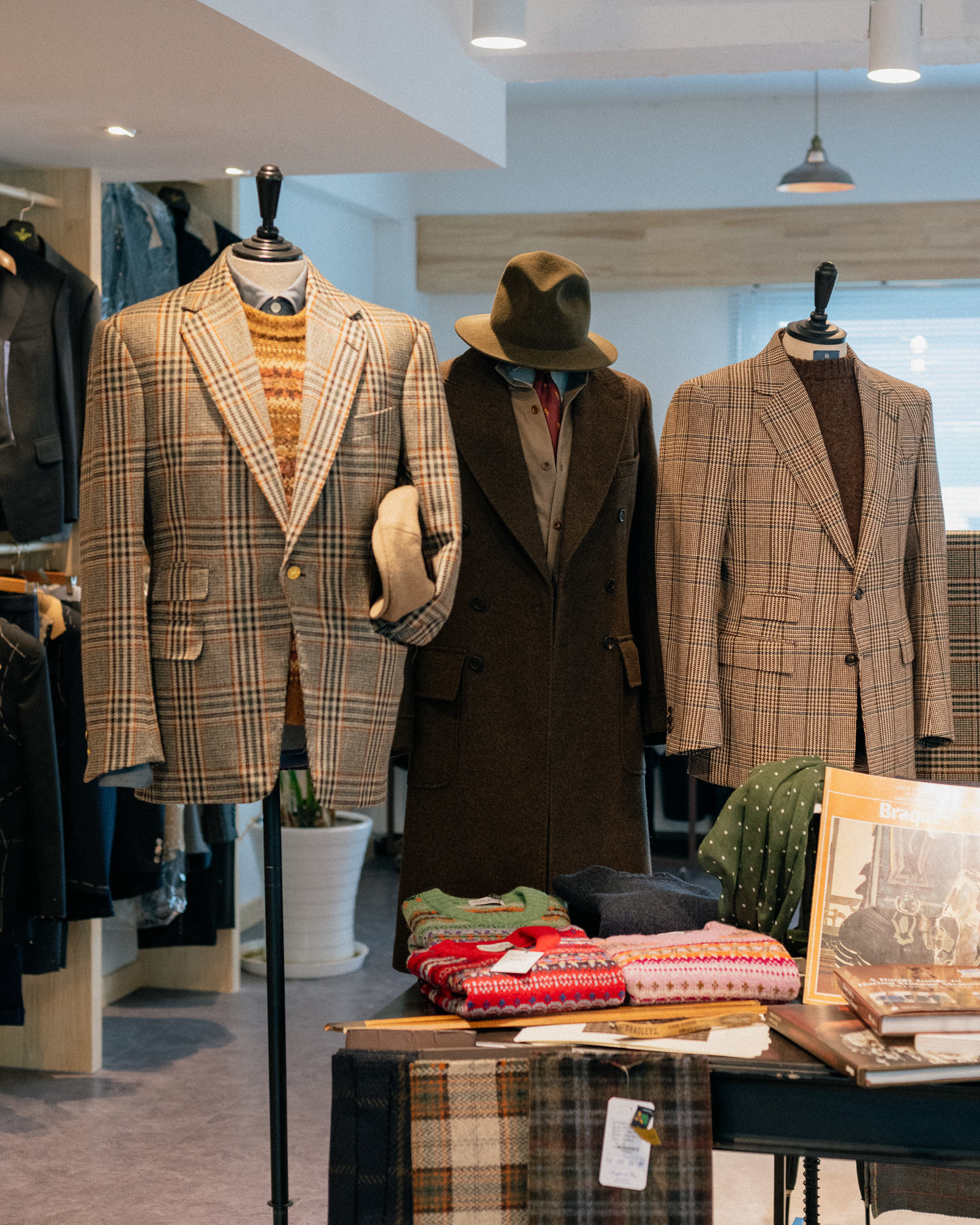
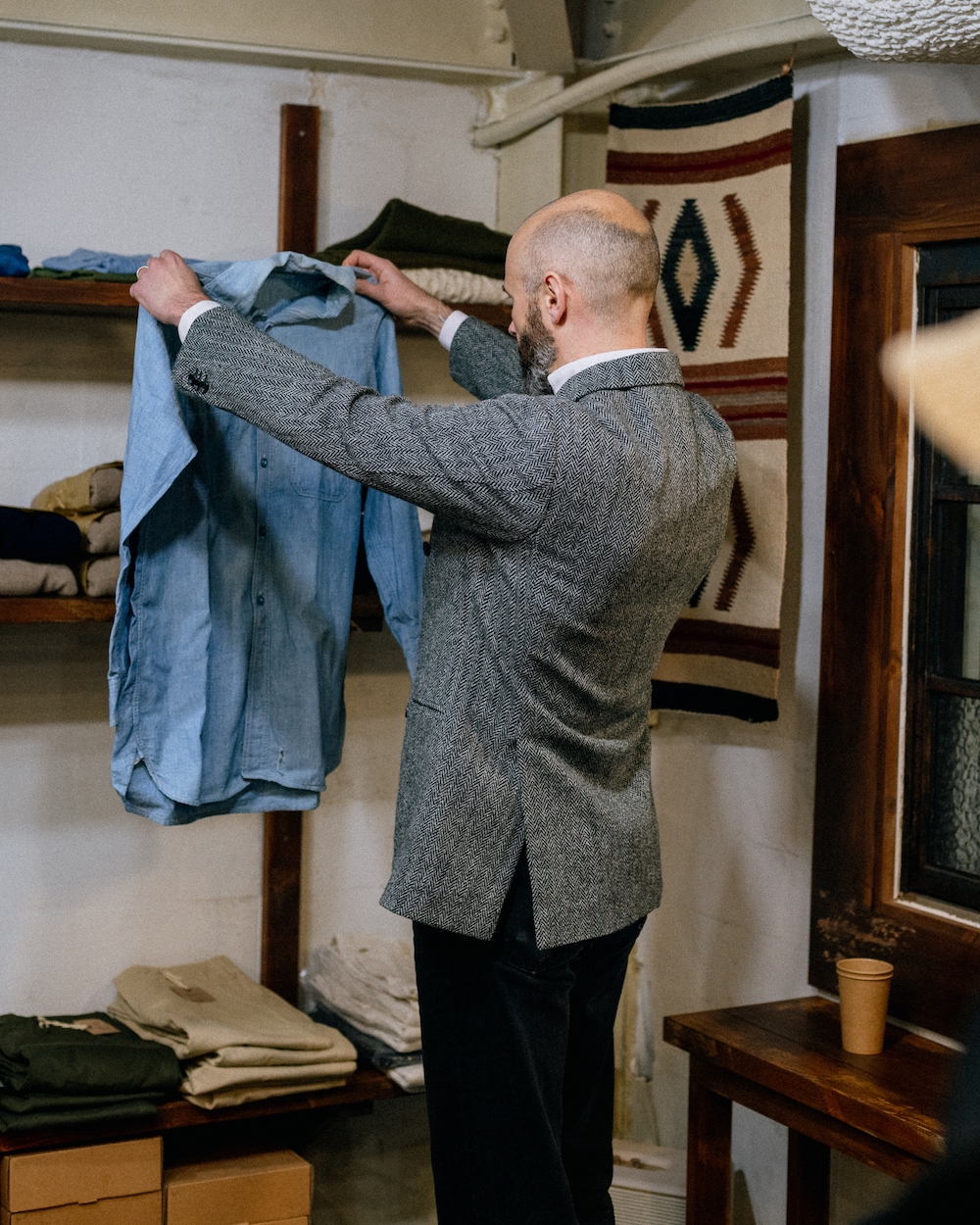
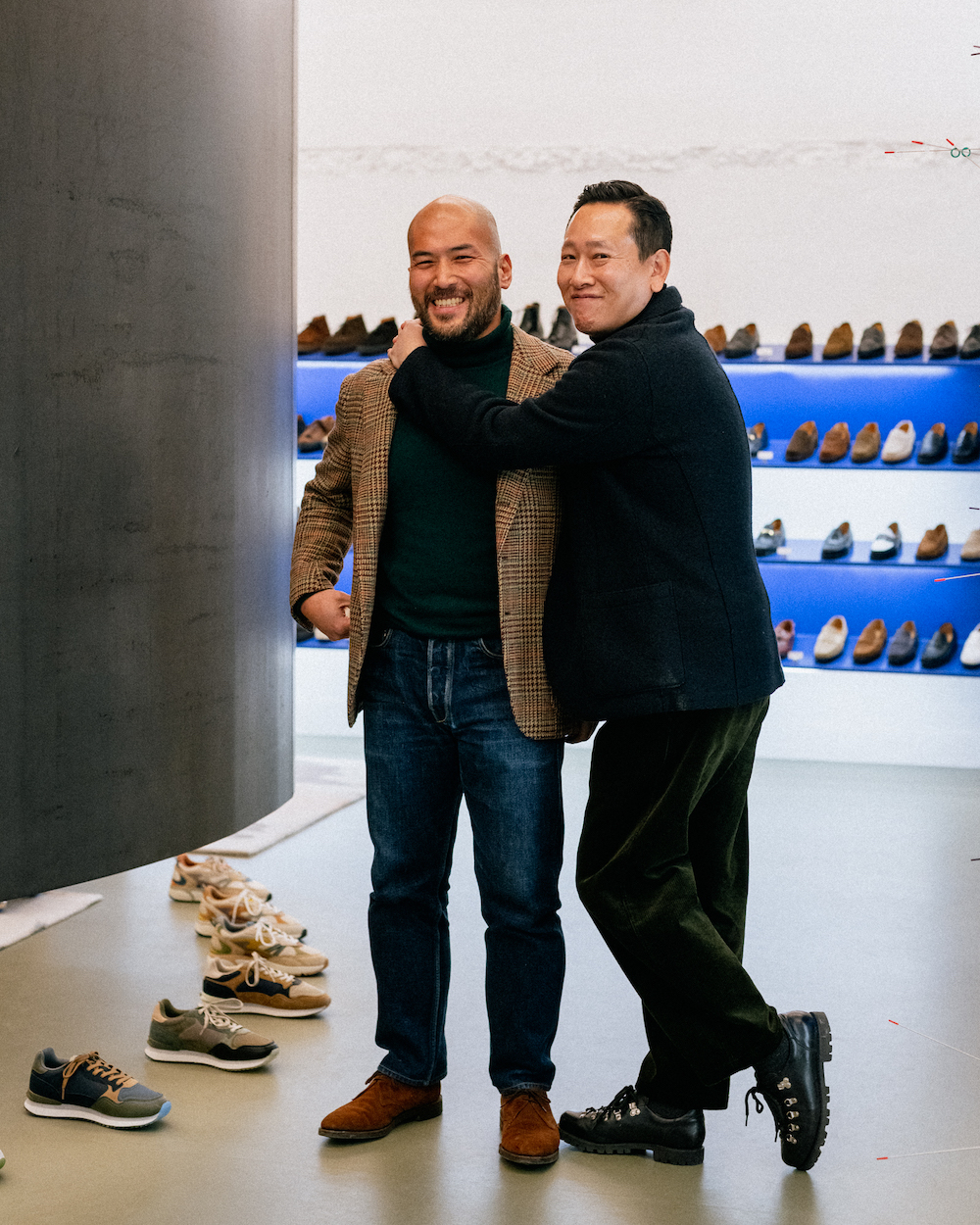
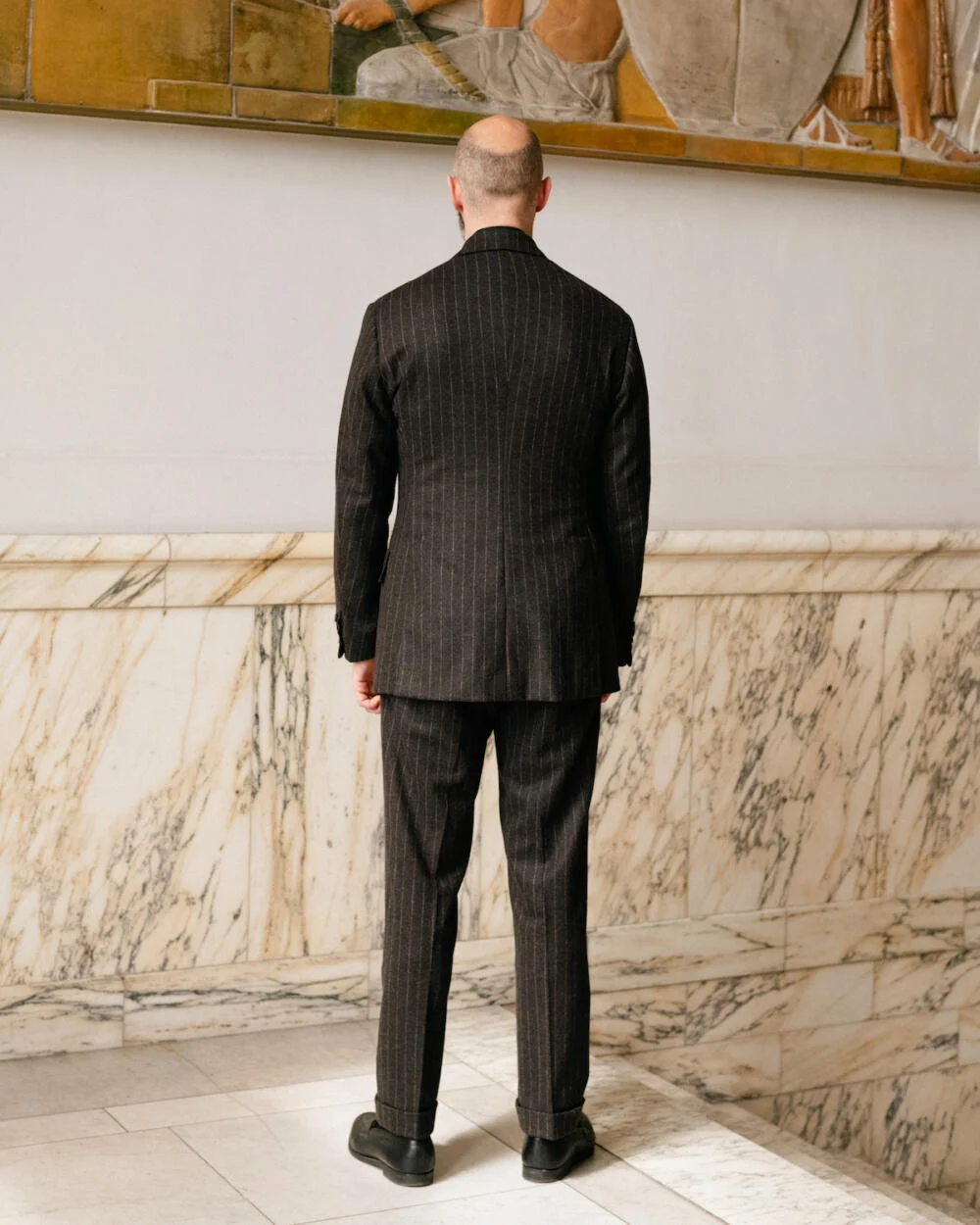
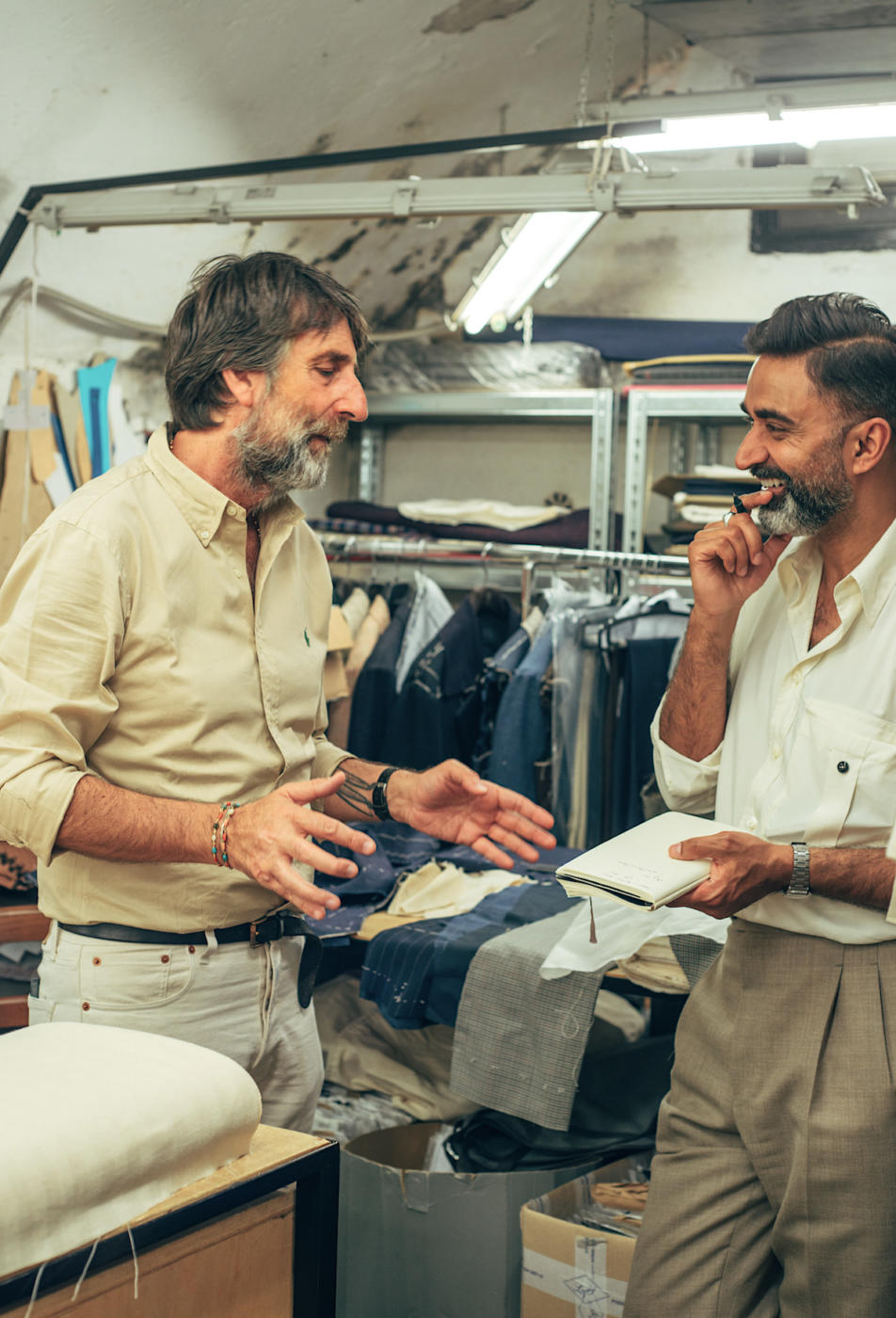
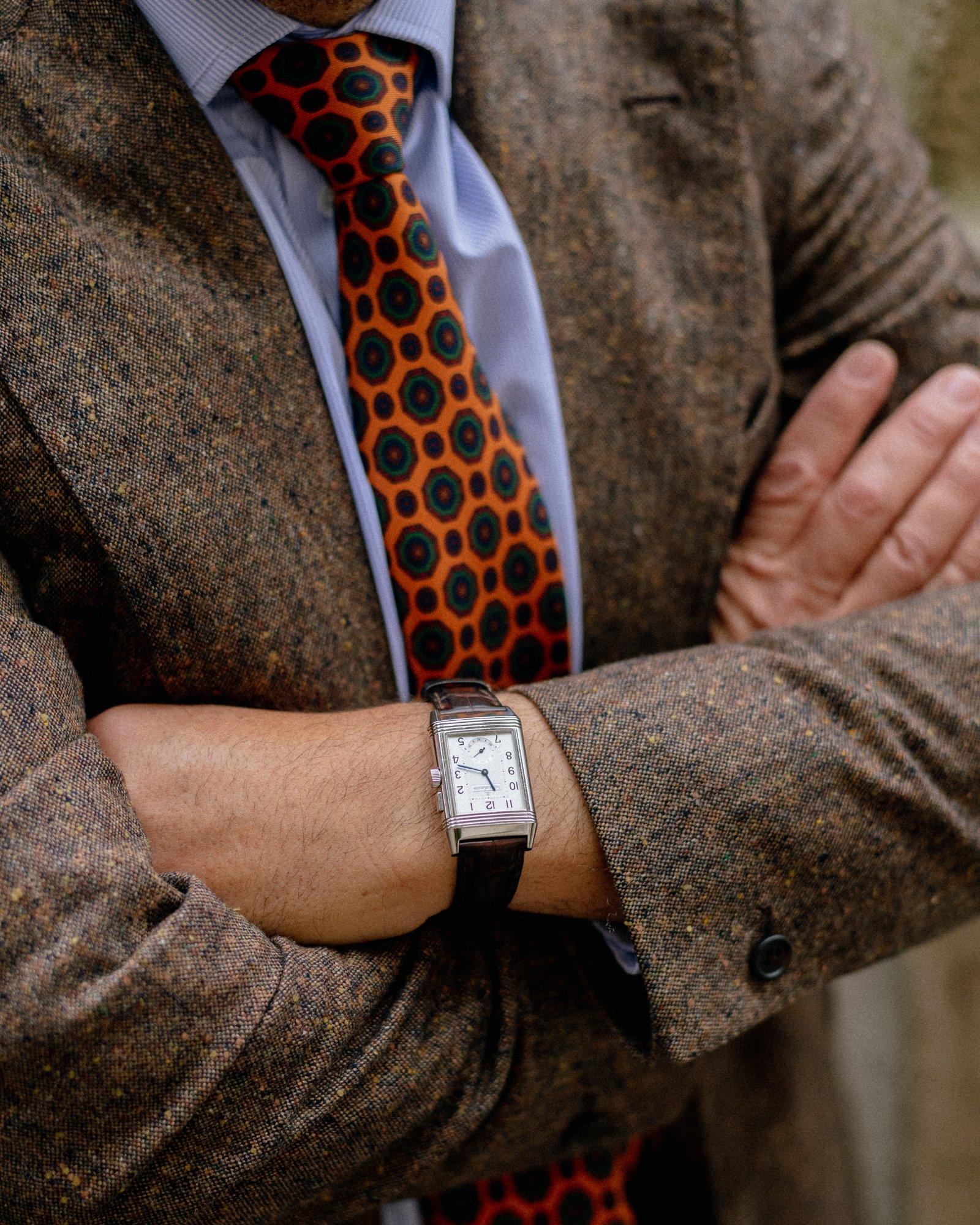
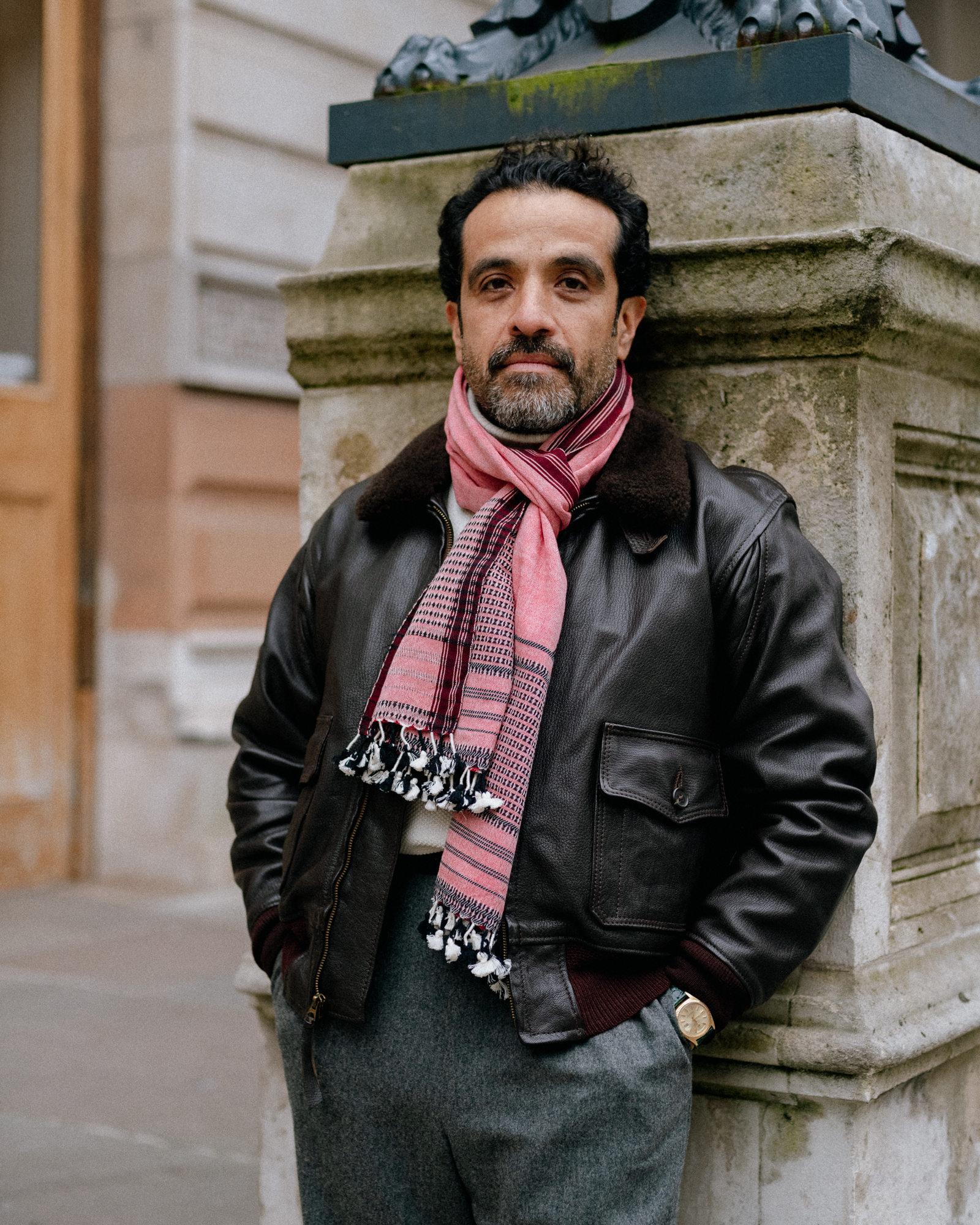
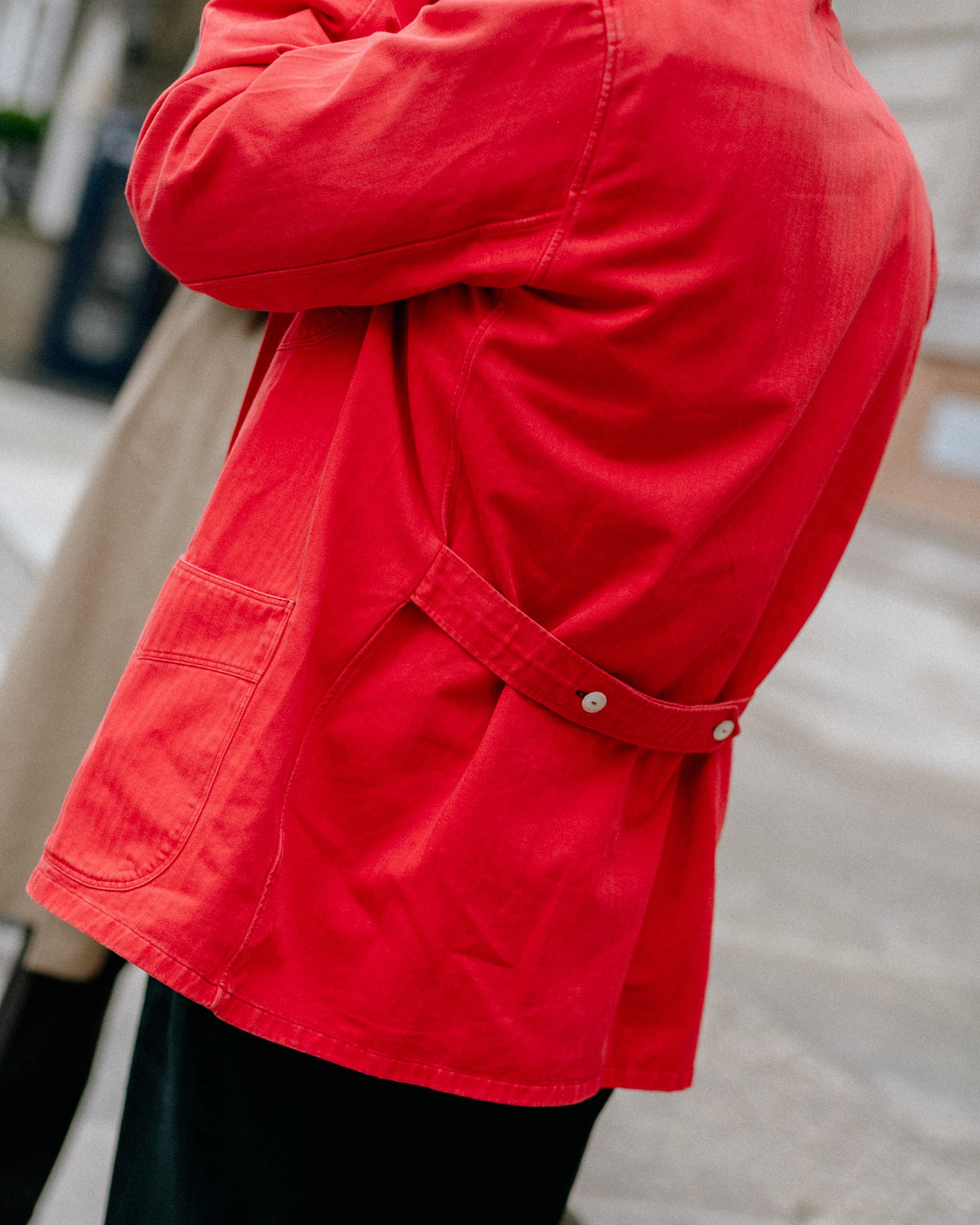
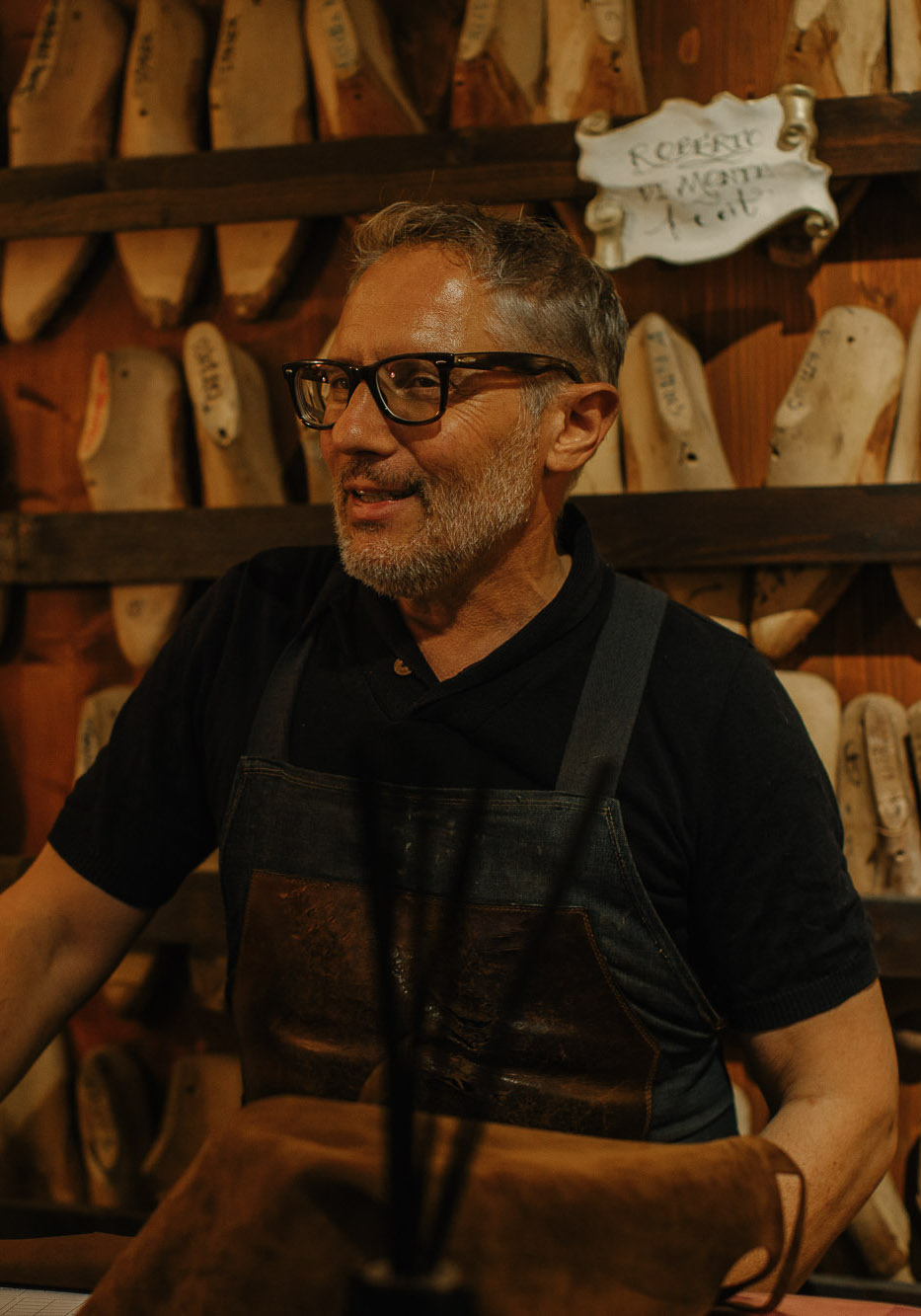
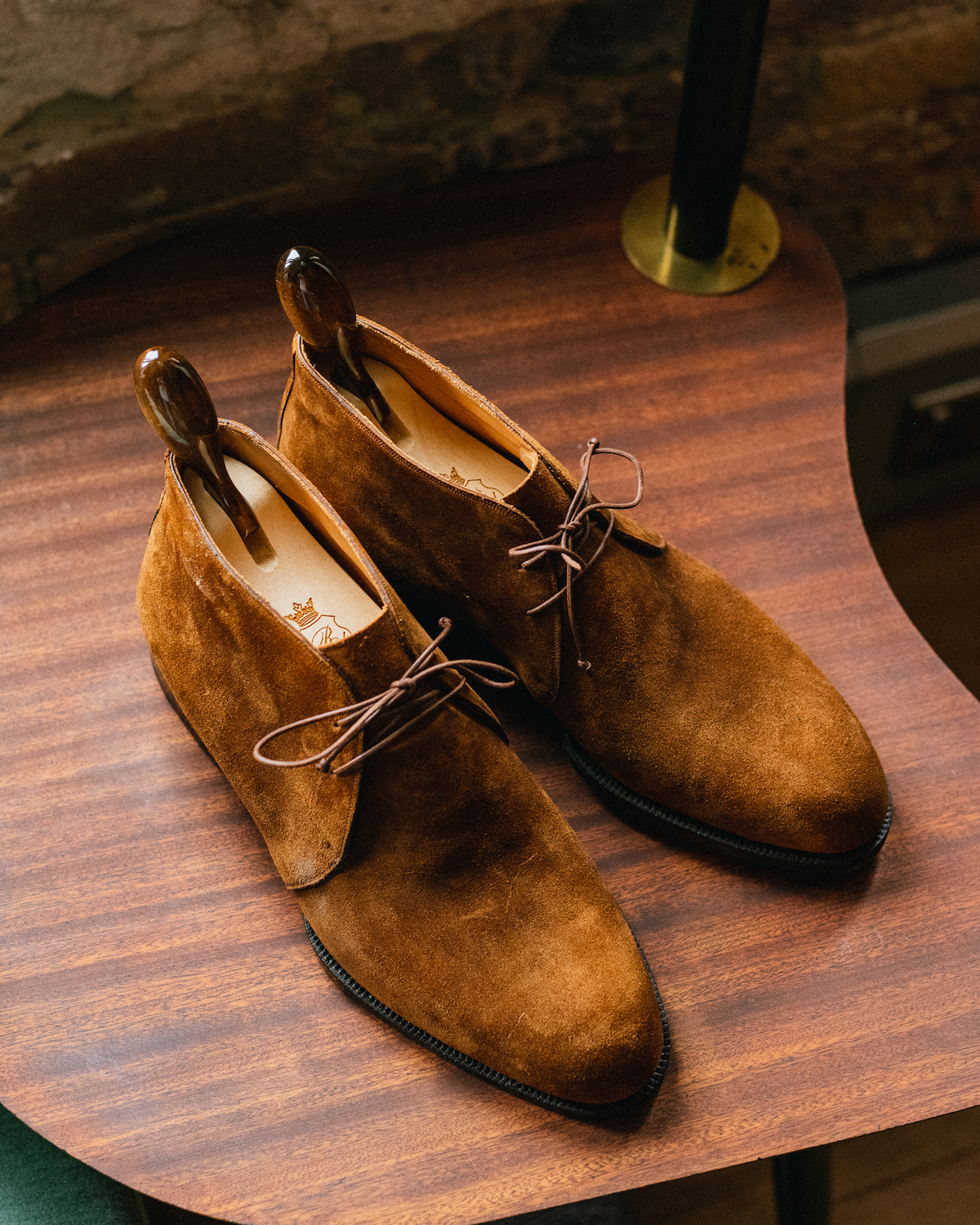
When the shoemaker Seiji McCarthy came to New York recently to take part in our pop-up, he brought with him a recent commission from Tailor Caid, the Japanese bespoke tailor run by Yuhei Yamamoto.

Yamamoto is a big enthusiast for mid-century American style, and from what I’ve seen produces a beautiful bespoke product. I’ve seen lovely tailoring he’s made for Mark Cho of The Armoury (where he conducts trunk shows) and several others. 

The style has never been quite for me, mostly because of the higher fastening of the jackets and the straighter cut. Were I around in that period in the US, I imagine I’d have been an early adopter of the alternative: the new darted jackets and ‘continental’ look.

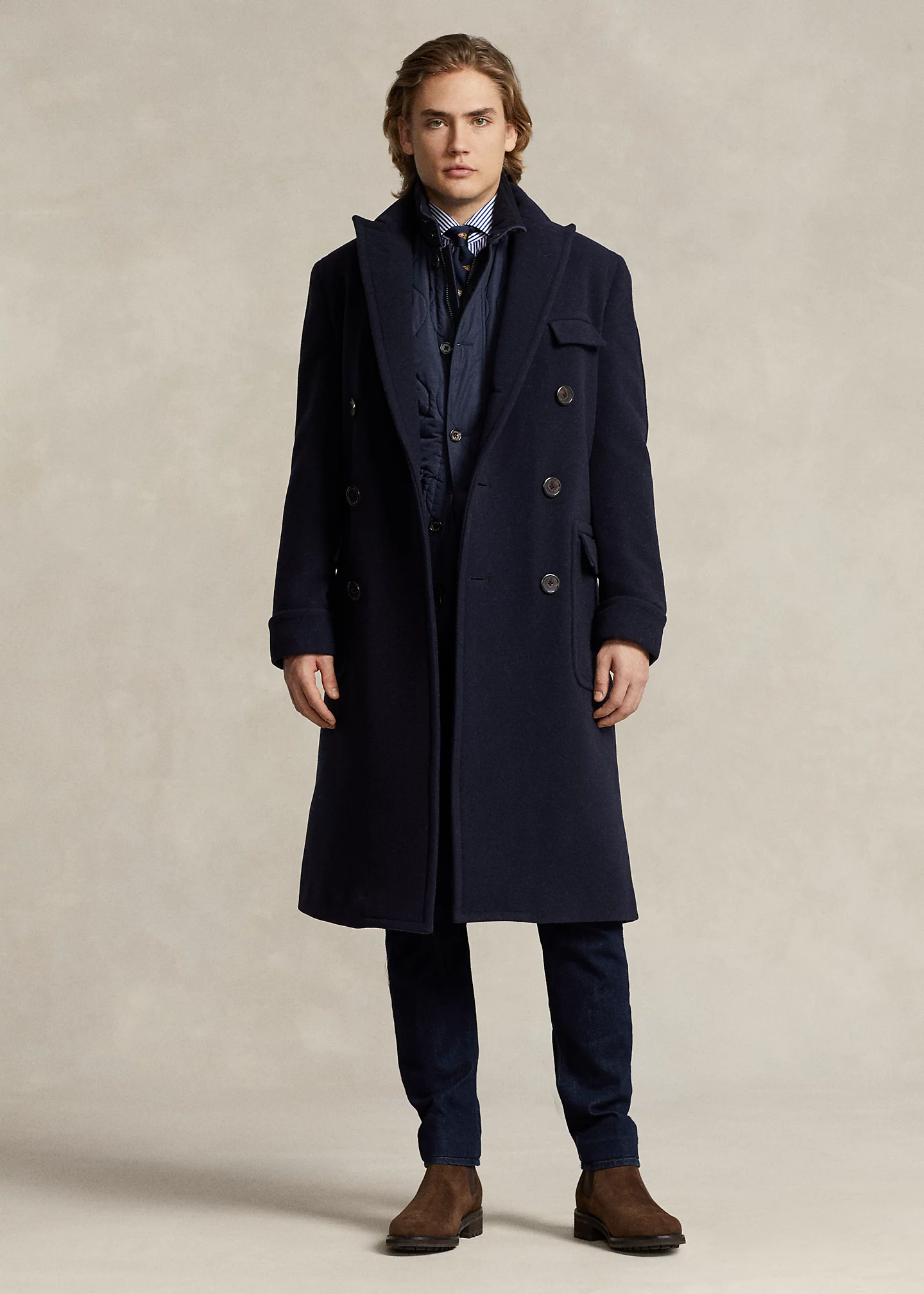
However, the jacket Seiji had had made really appealed to me, and I thought it was worth sharing on PS. Its heavier weight and more casual style also made it more of a coat substitute than a tailored jacket, which goes to a recent theme of mine as regards tailoring. 
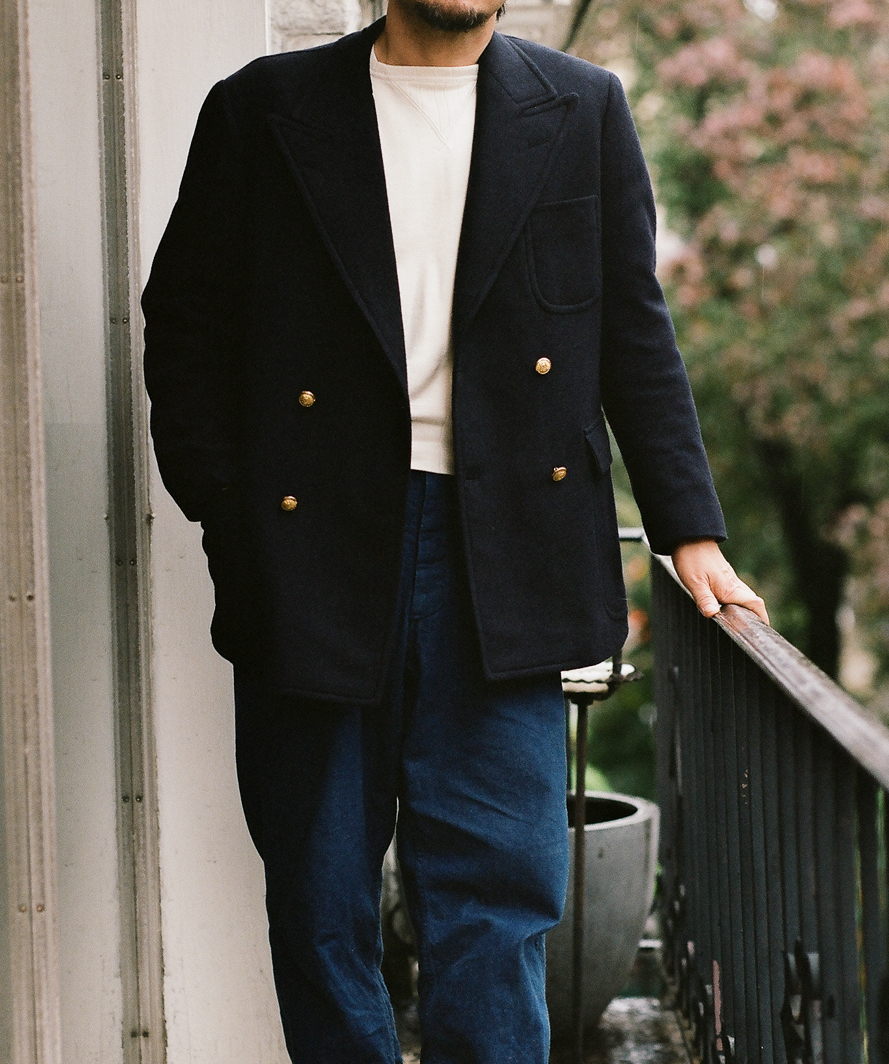
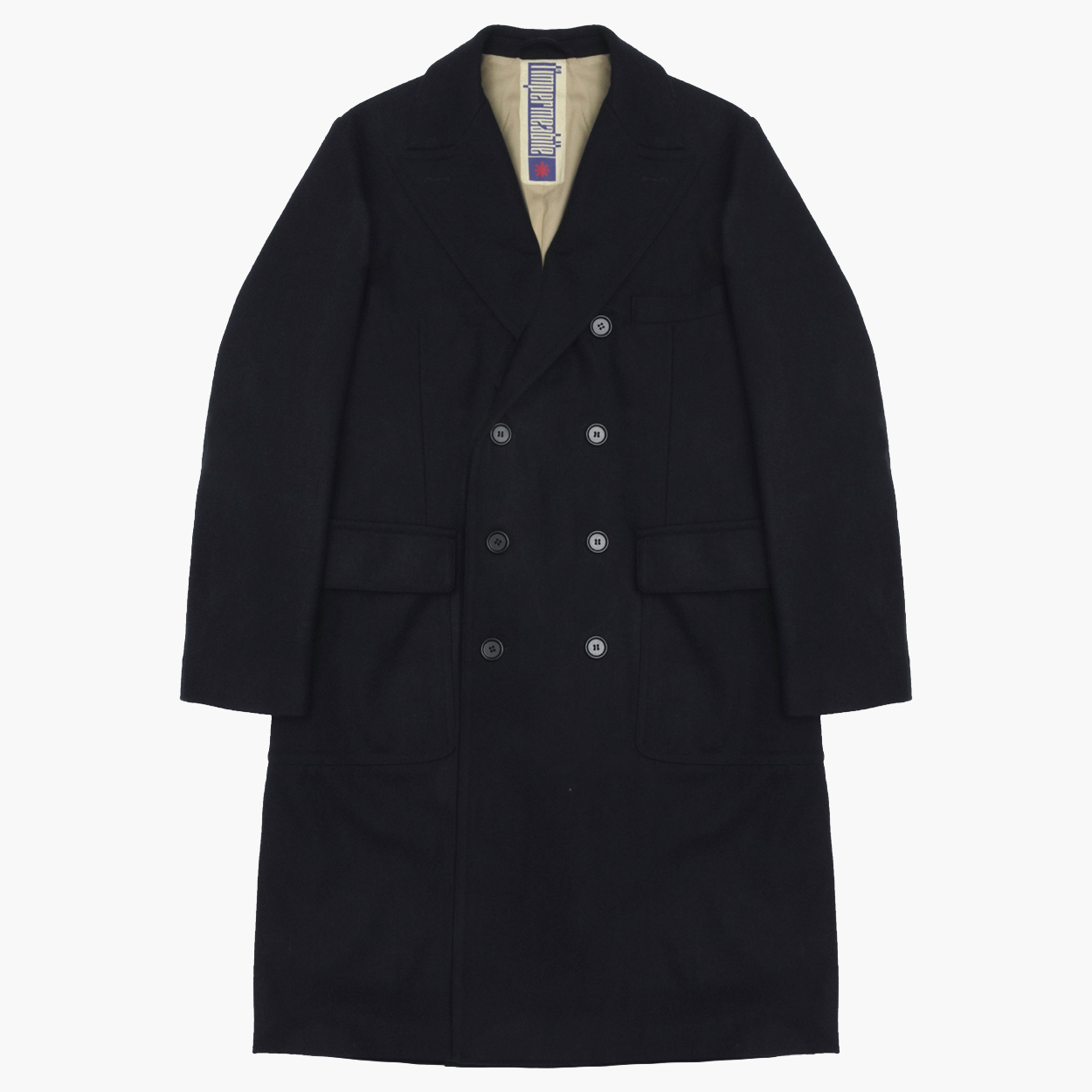
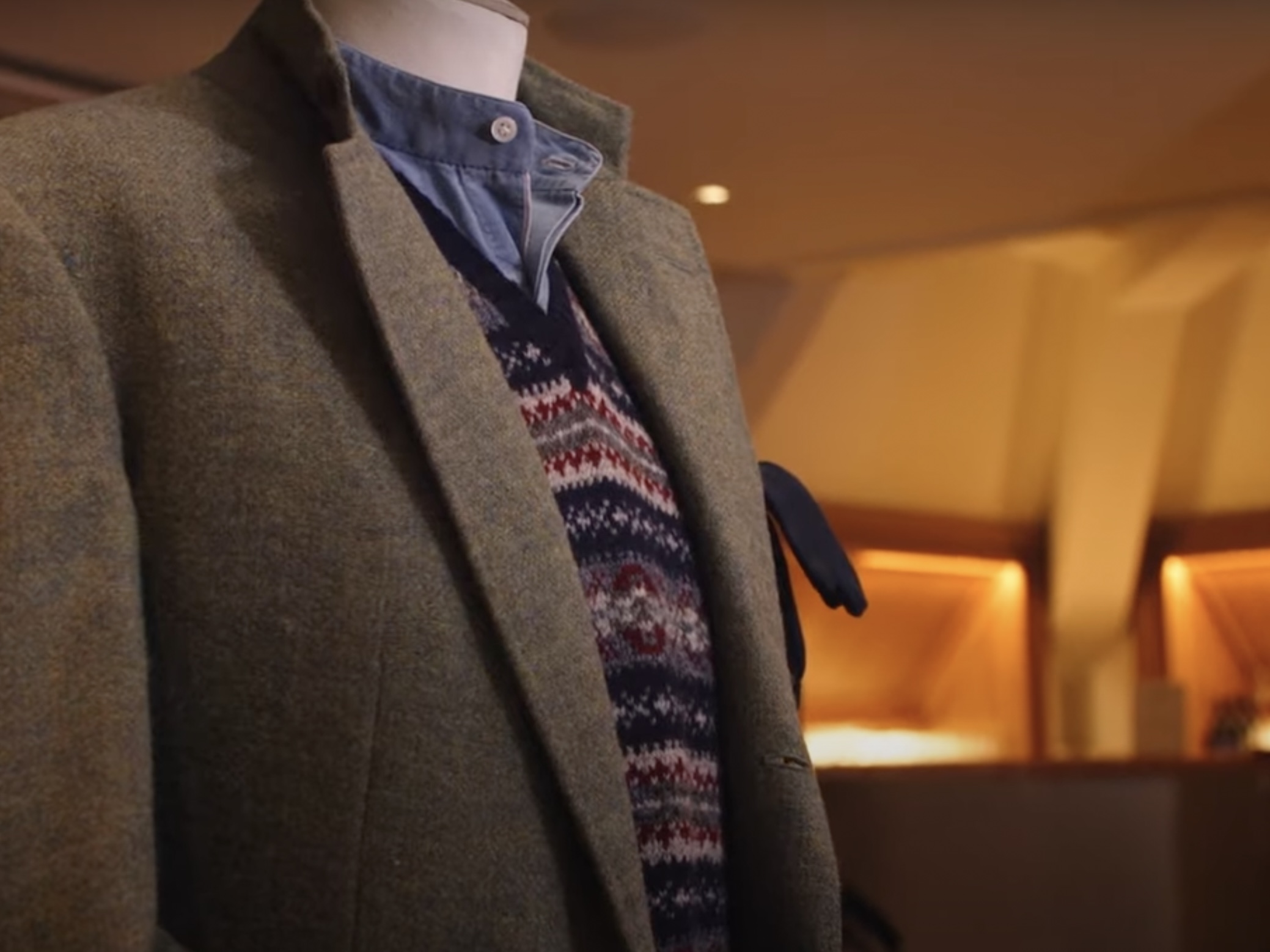
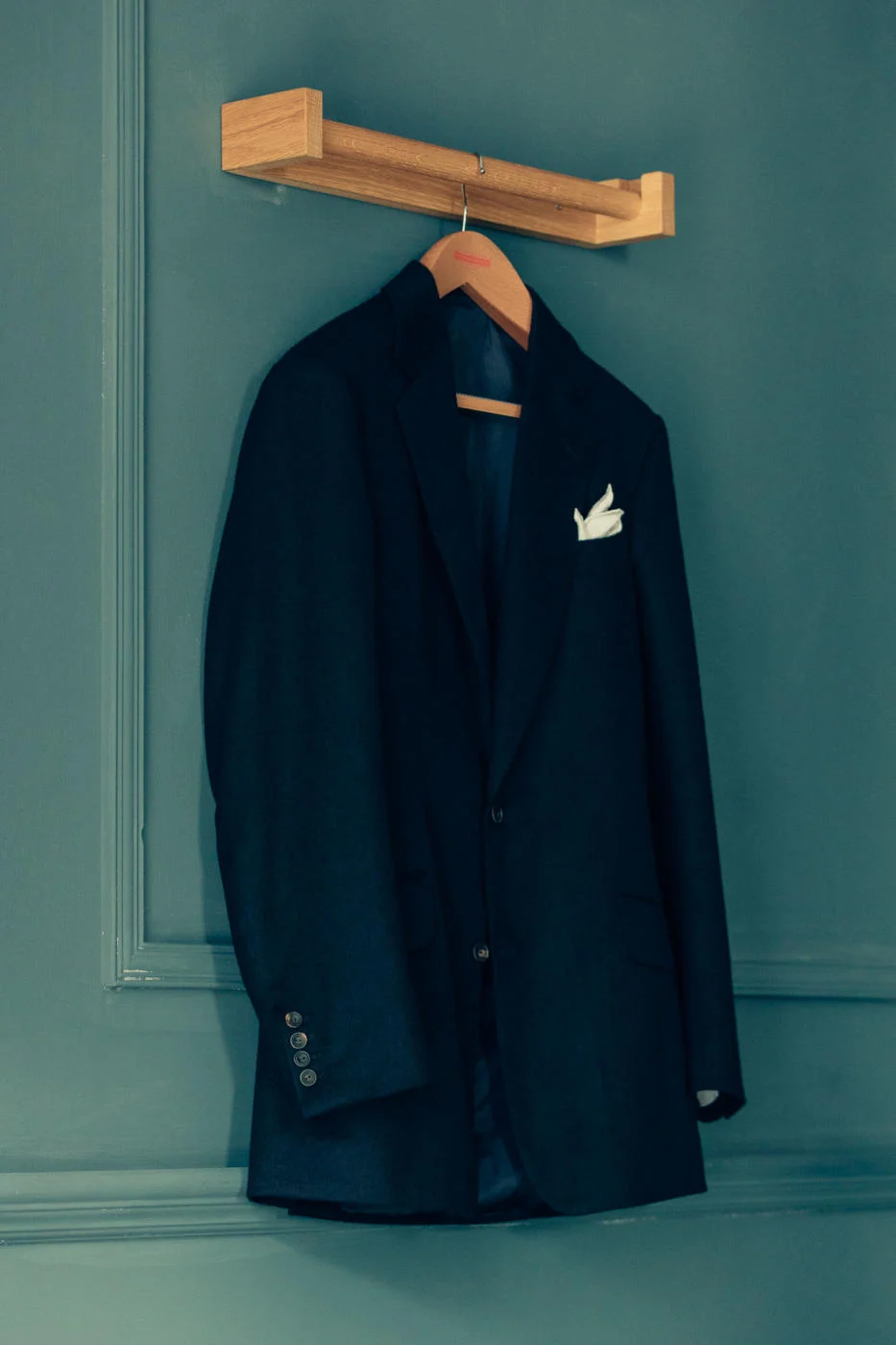
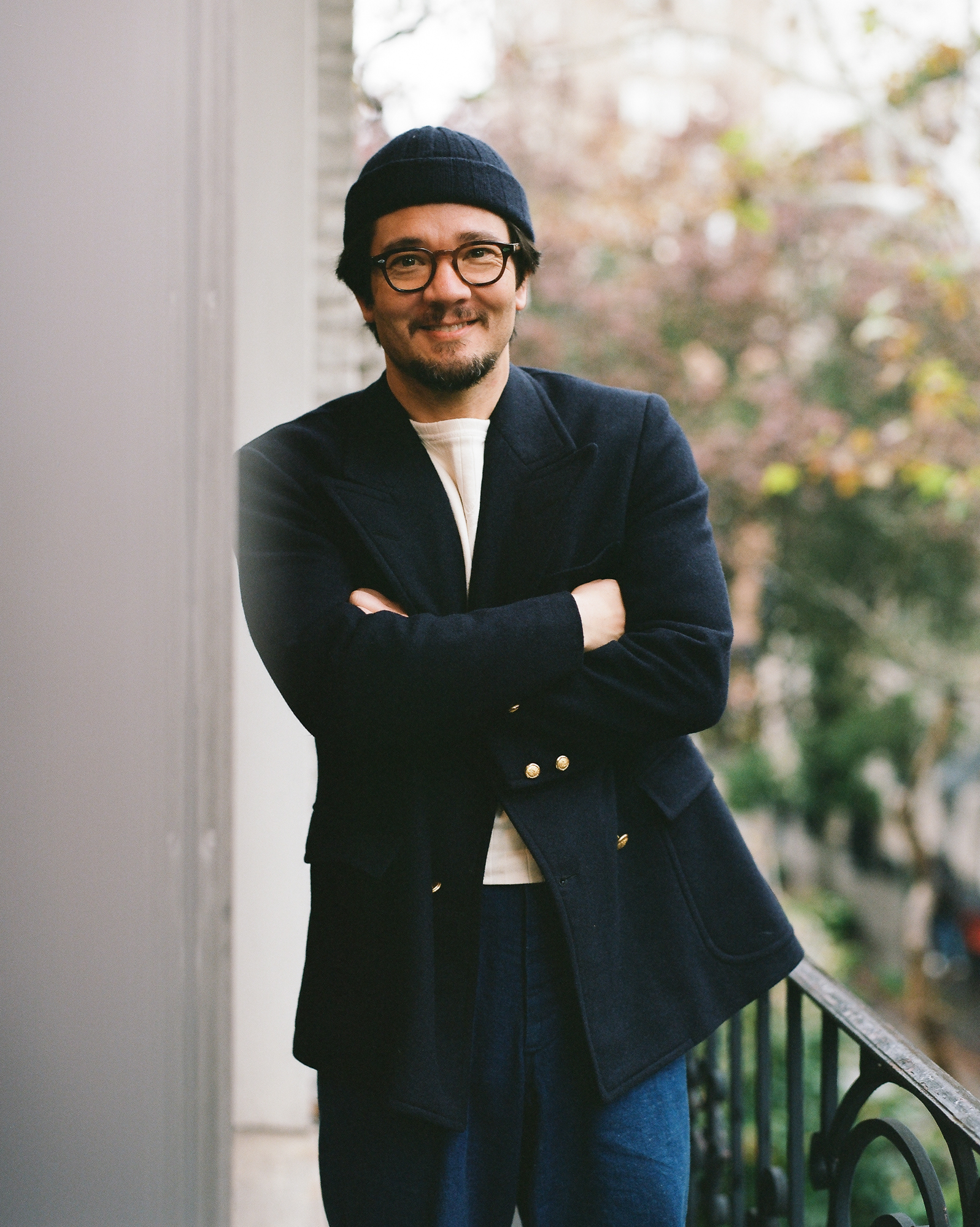
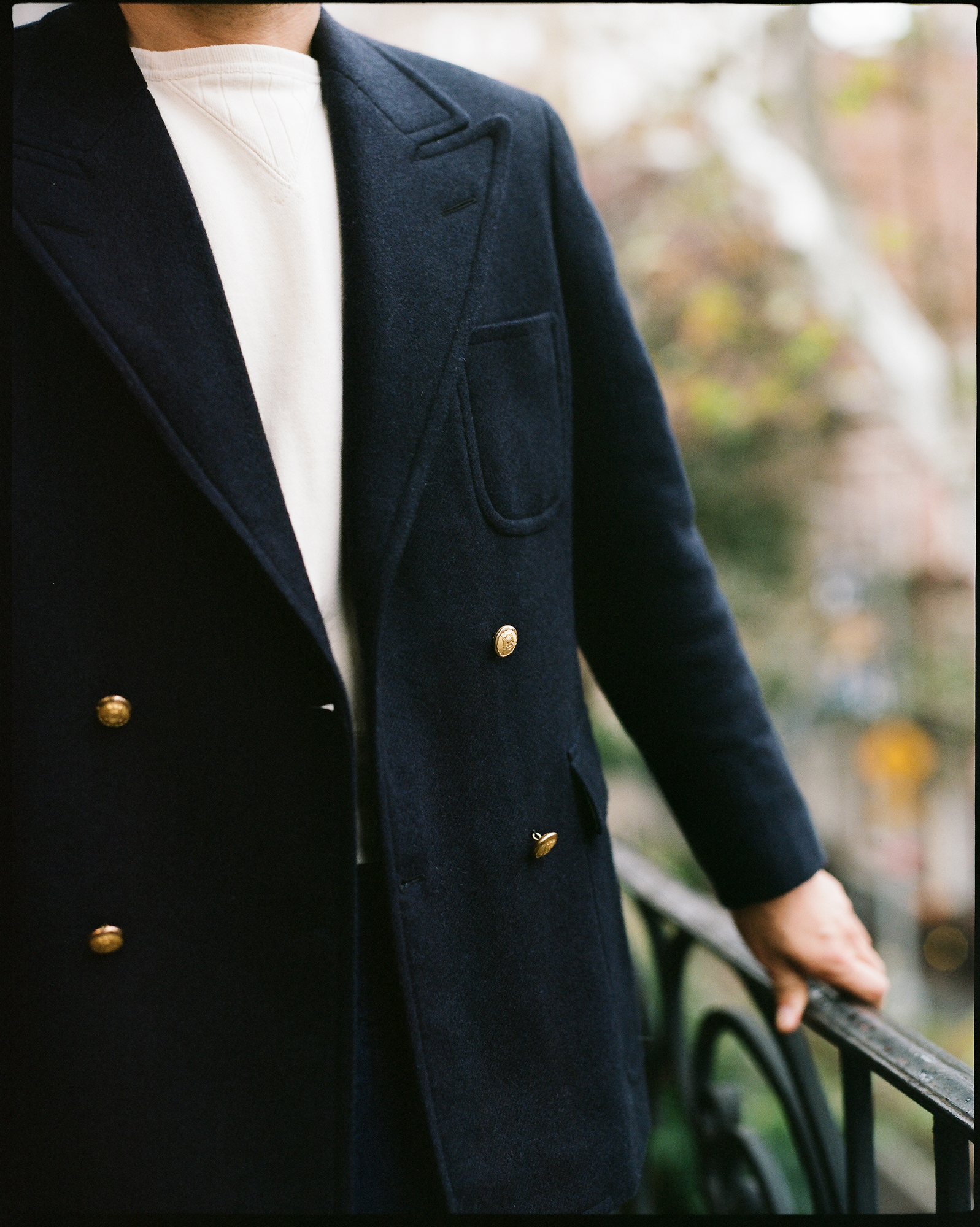
The jacket is a rugged, heavier version of a style Yamamoto calls his Newport jacket. 

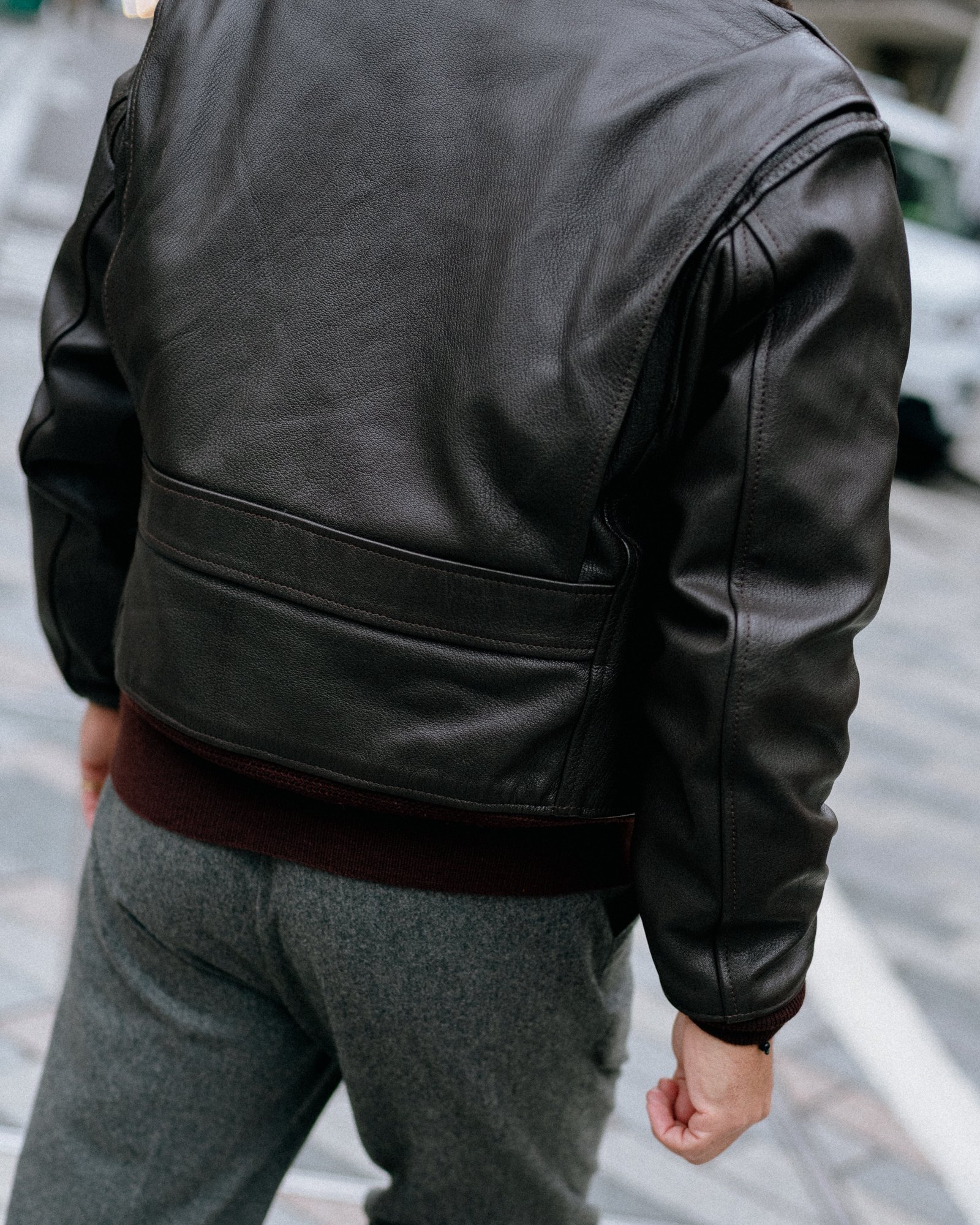
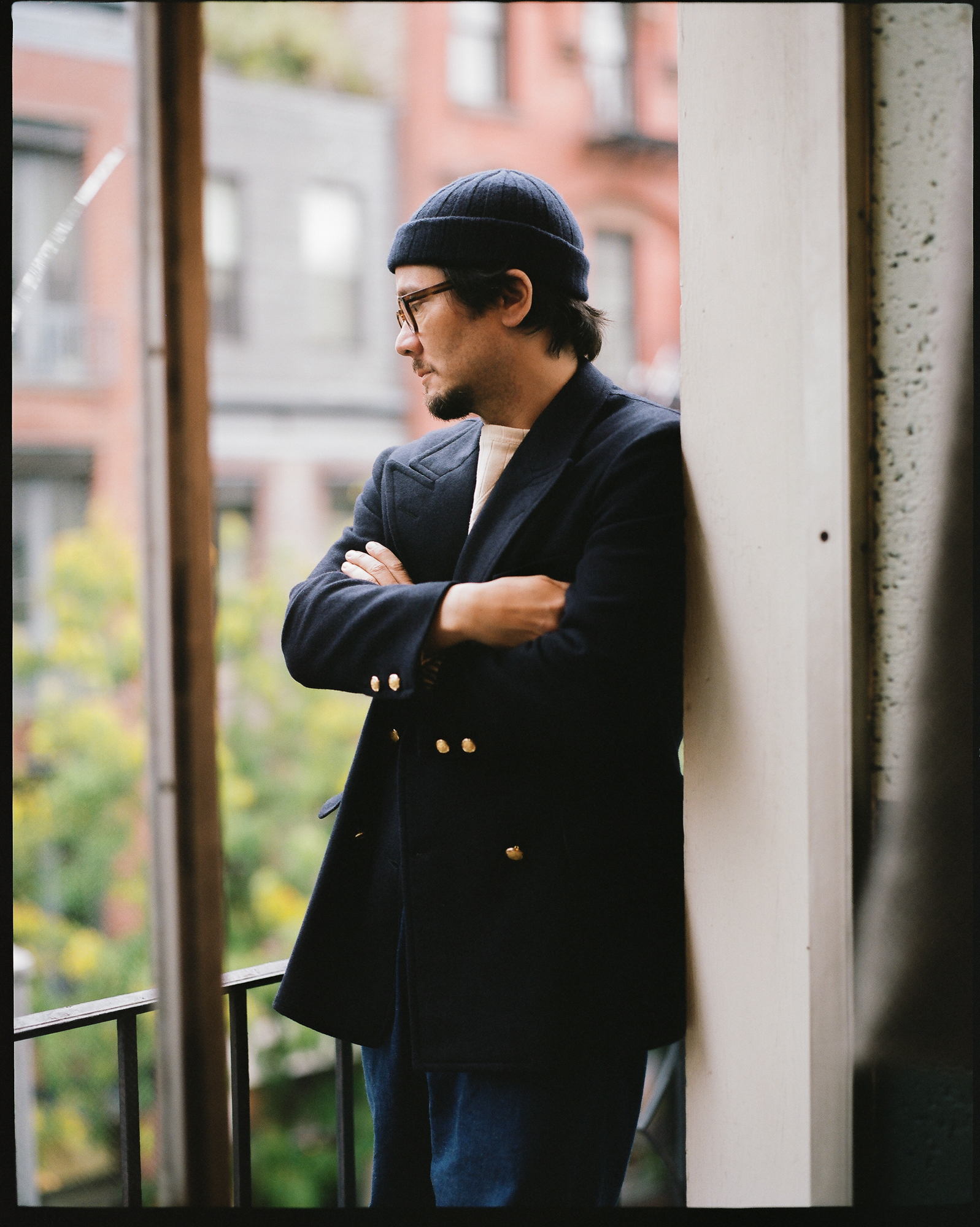
It’s double-breasted, with four buttons (4x2) and patch pockets. The two hip pockets are flapped, it has two vents, brass buttons and features his characteristic (very Ivy) edge stitching.

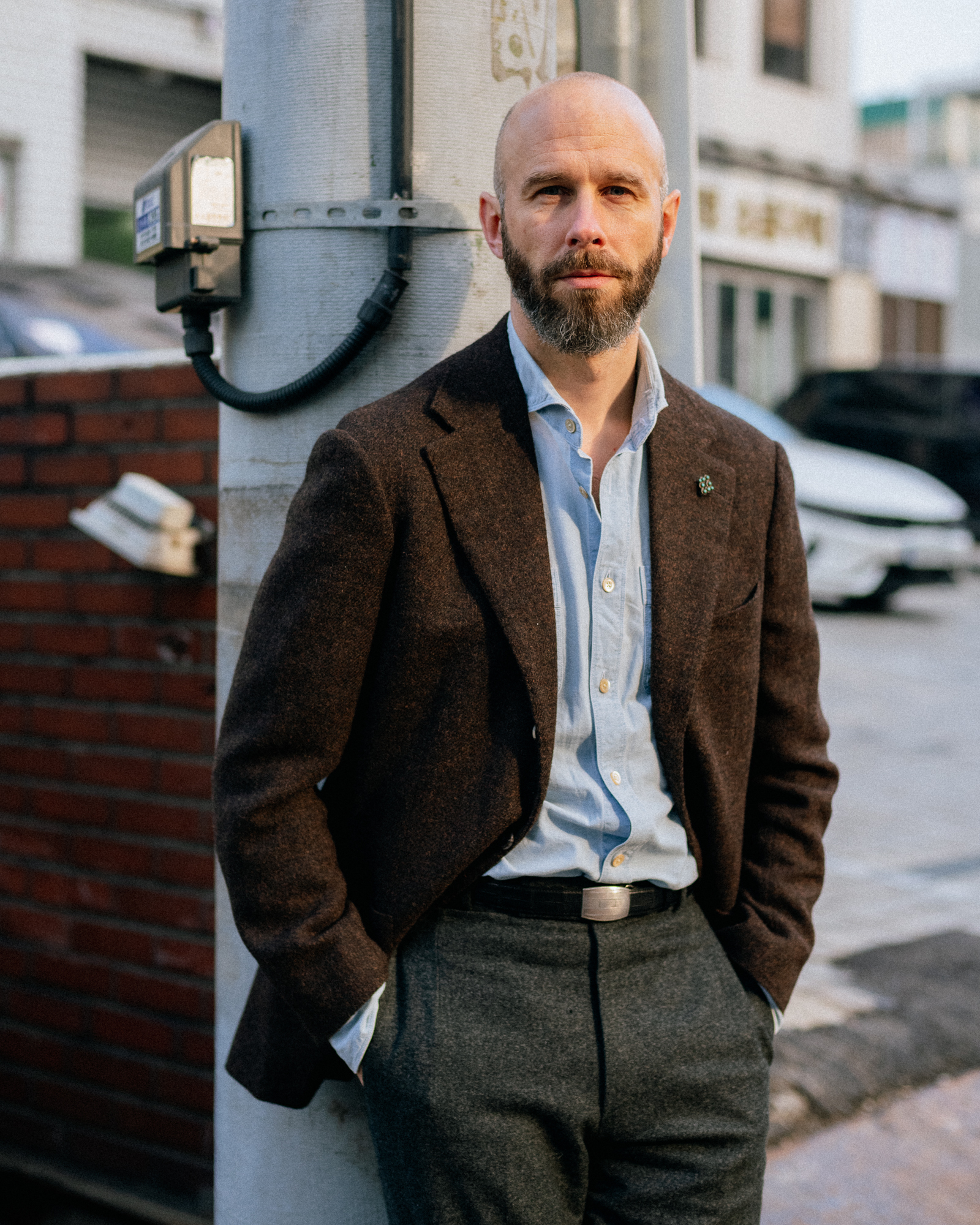
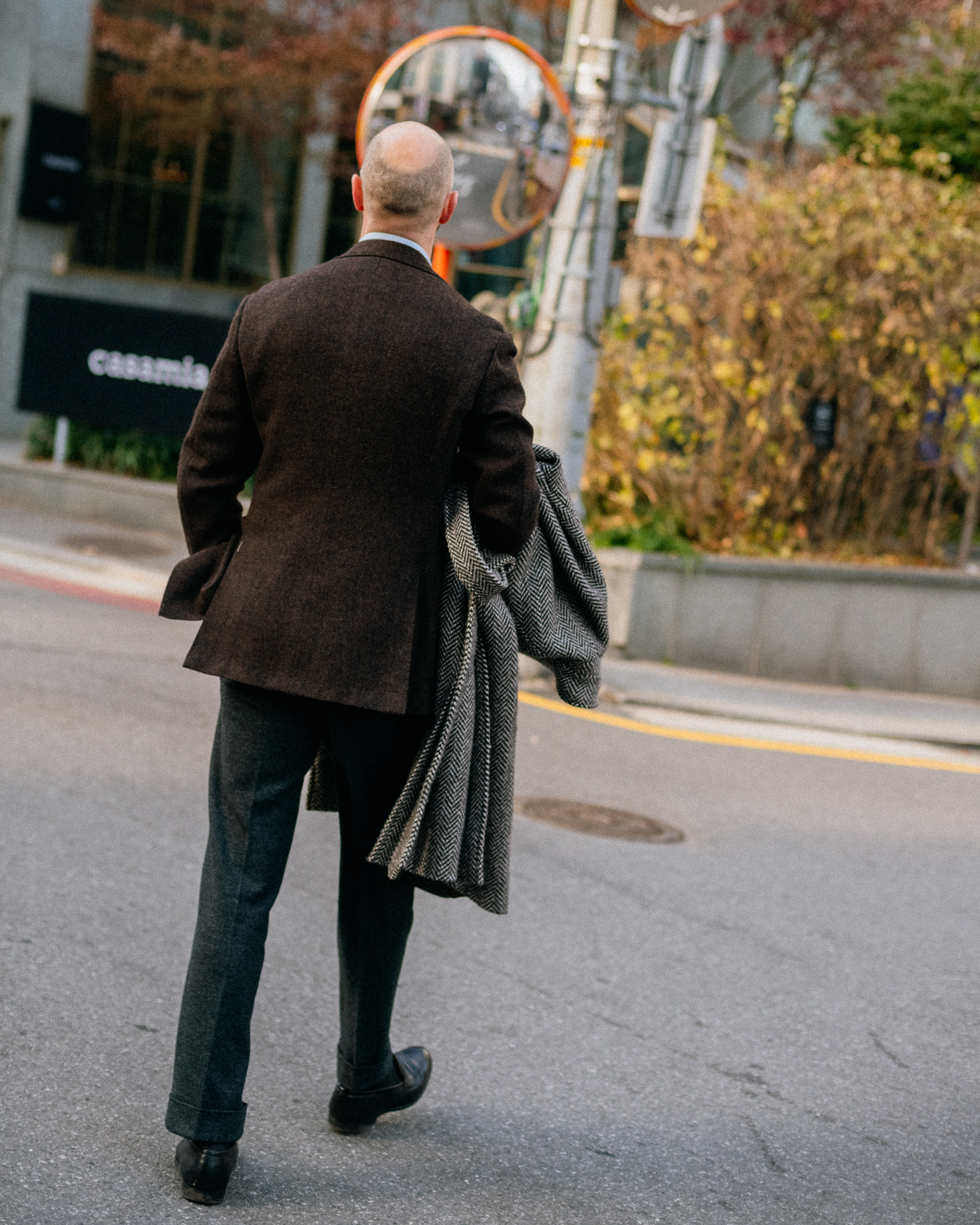
Seiji requested it to be made in a heavy-duty 550g (19oz) melton wool, and Yamamoto widened the lapels (more forties style) to better match Seiji’s preferred wide-legged trousers. It’s the kind of special make-up Yamamoto loves doing.

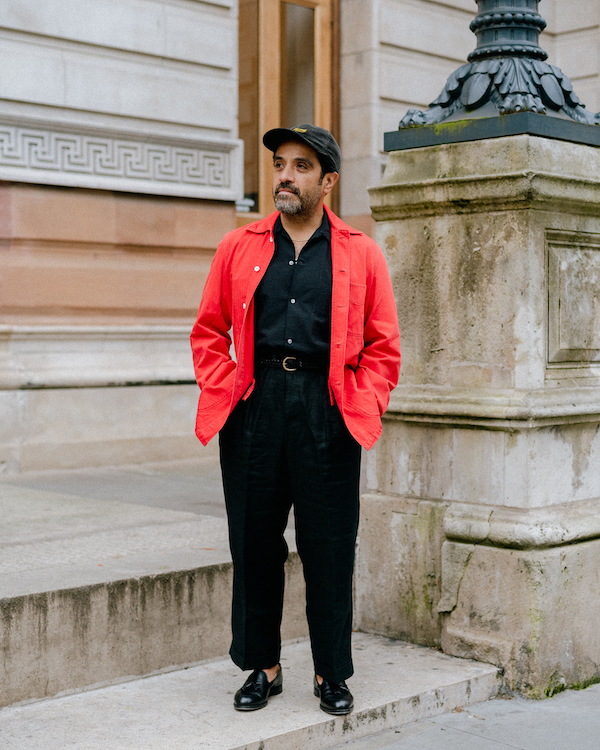
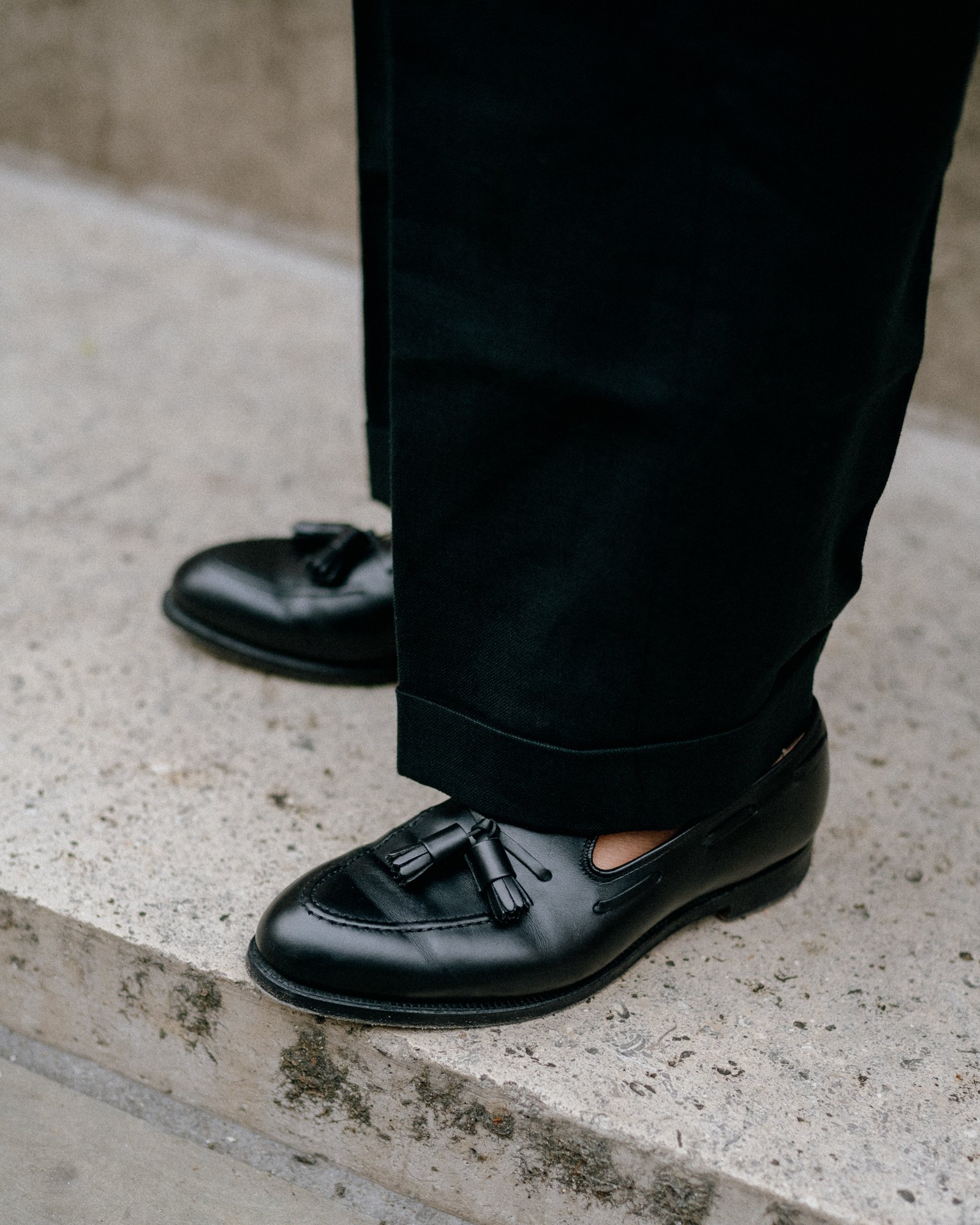
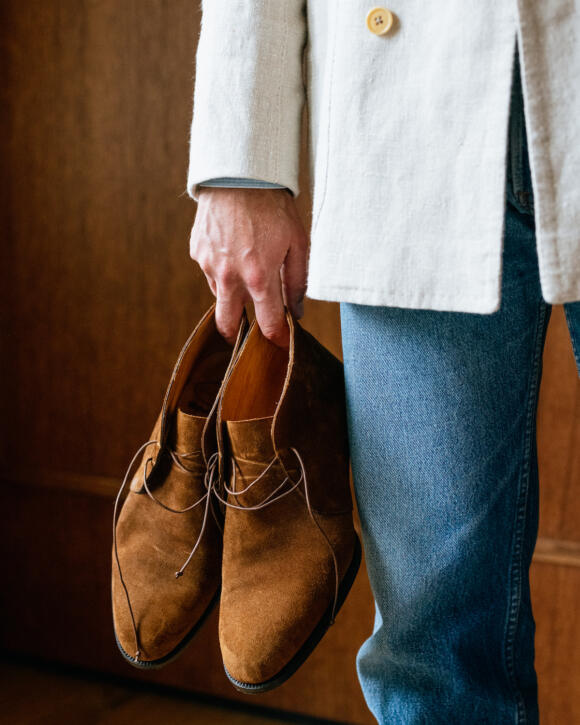
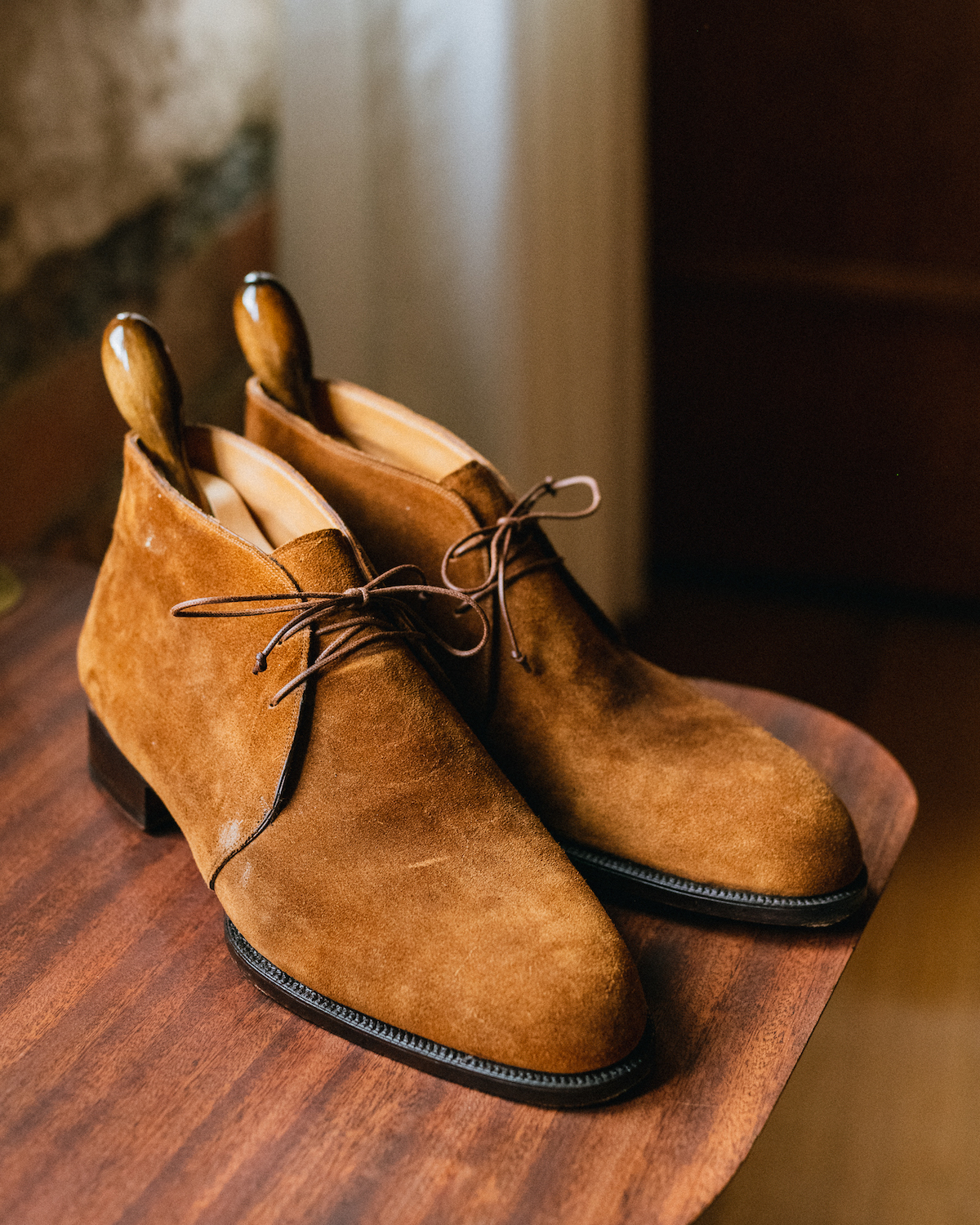
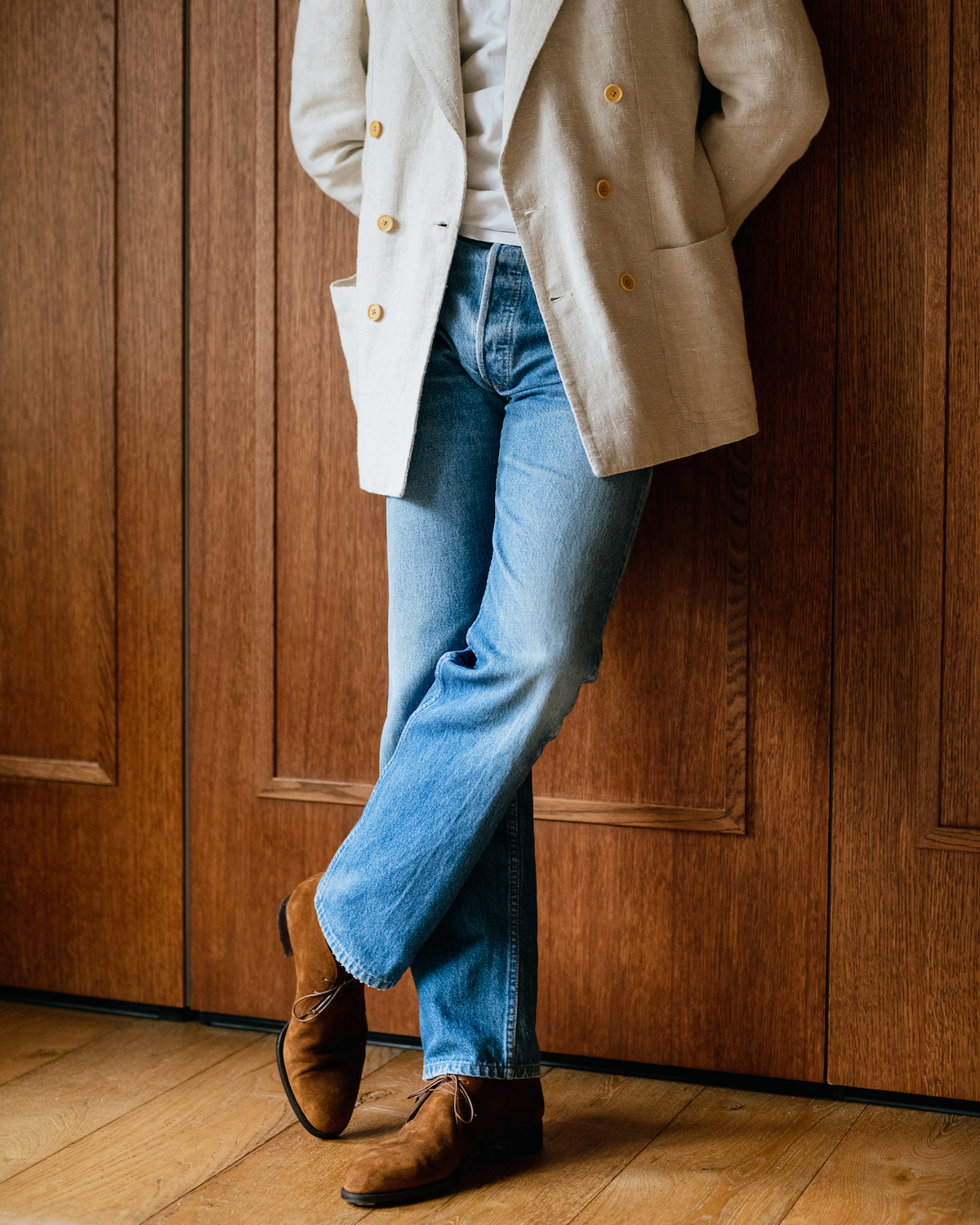
I think it really suited Seiji and how he dresses, which is Ivy-influenced but rarely formal. Here he’s wearing the Bryceland’s sweatshirt and Bryceland’s Army chinos in jelt denim, a PS watch cap and his own cordovan loafers. 
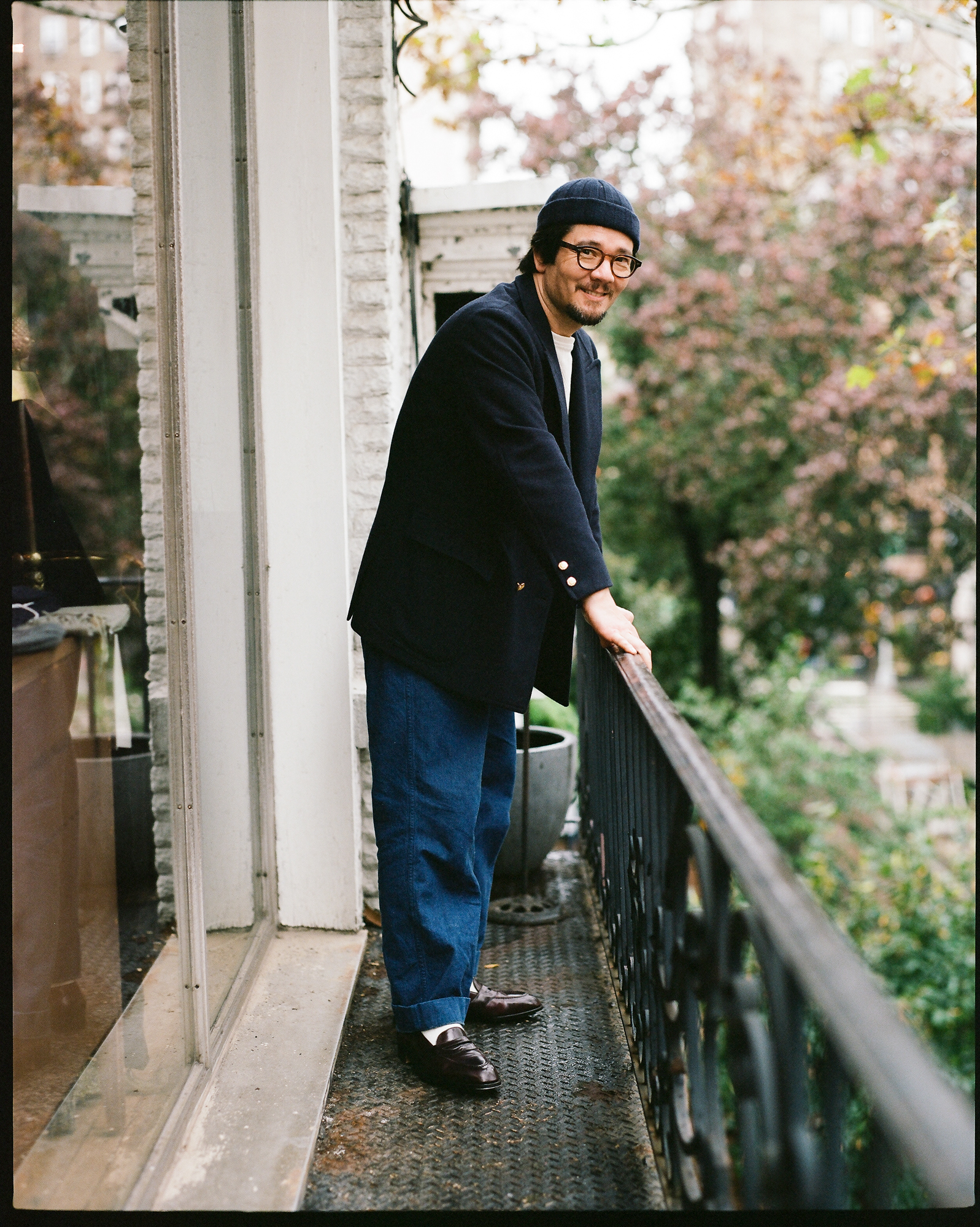
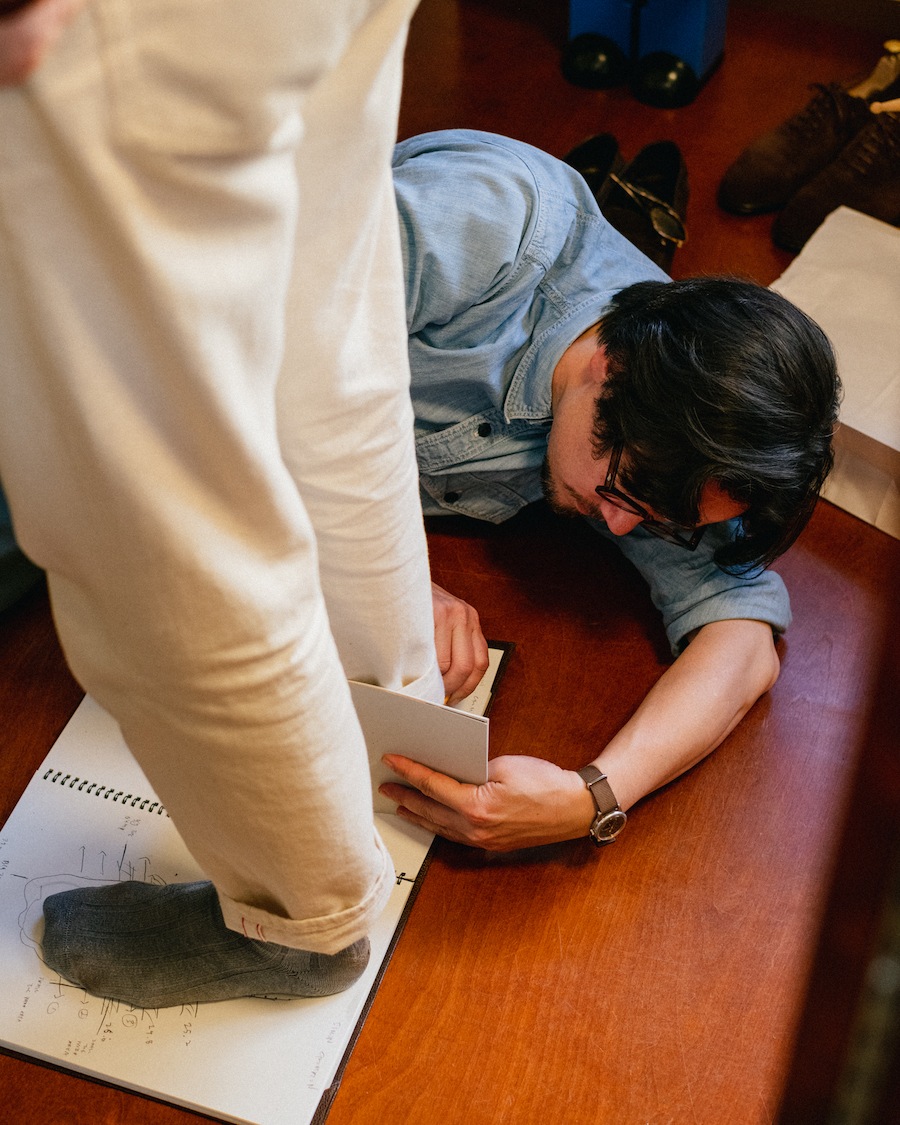
It also functioned very well for him and what he does. Seiji doesn’t wear a jacket indoors much, but then he spends a lot of his time on his knees measuring feet, or doing manual labour on some combination of leather and wood. Tailoring rarely makes sense. 

(Side point: this also makes him one of those people that has the most annoyingly and achingly well-faded workwear. It’s almost enough to make me want to take up a craft. If I wasn’t awful at it.)

But when did put the jacket on, Seiji looked great - dressed up and stylish. This was always outside of course, but could also be inside, when meeting a customer for the first time perhaps. 

Seiji says: “I remember when I showed it to Ethan [Newton] he said: ‘Congratulations, you’ve had something made bespoke that doesn’t look like bespoke!’ But for me it’s perfect, it’s exactly what I needed and couldn’t find anywhere else.”
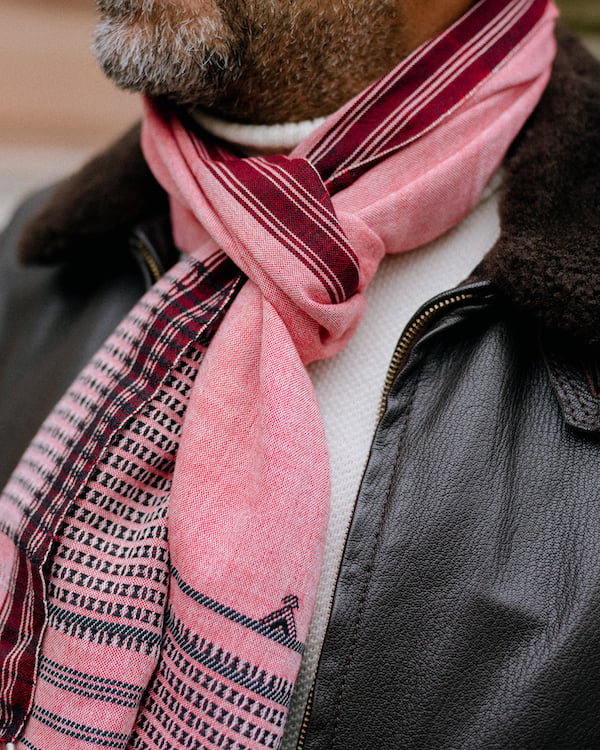
I think there will be quite a few PS readers who will identify with not wearing a jacket indoors all the time, but who would like the option and also like something that can become outwear (perhaps with the addition of a hat and scarf). This could be something unusual and naval, like Seiji’s jacket, but it could also be simply a heavier tailored jacket. 

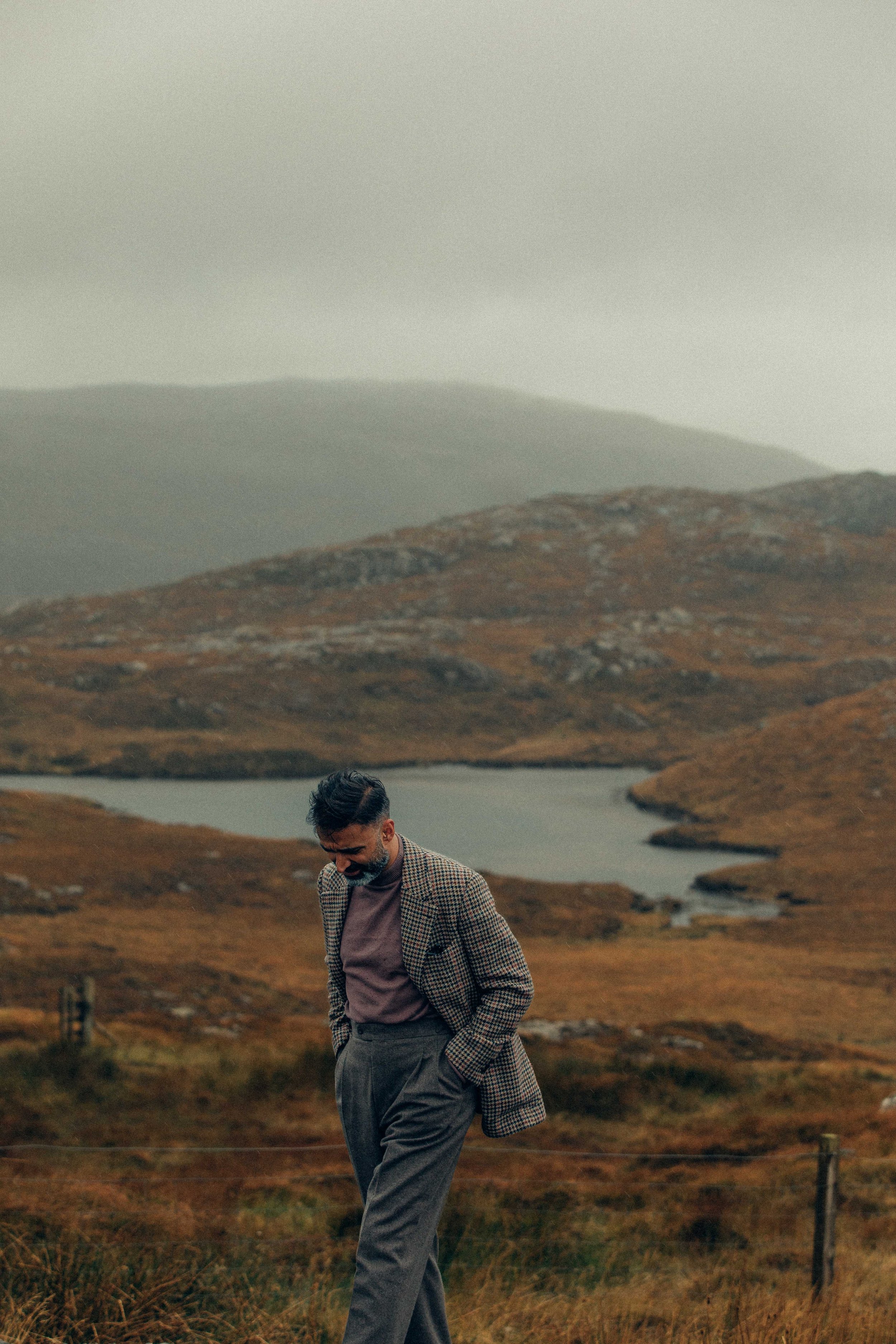
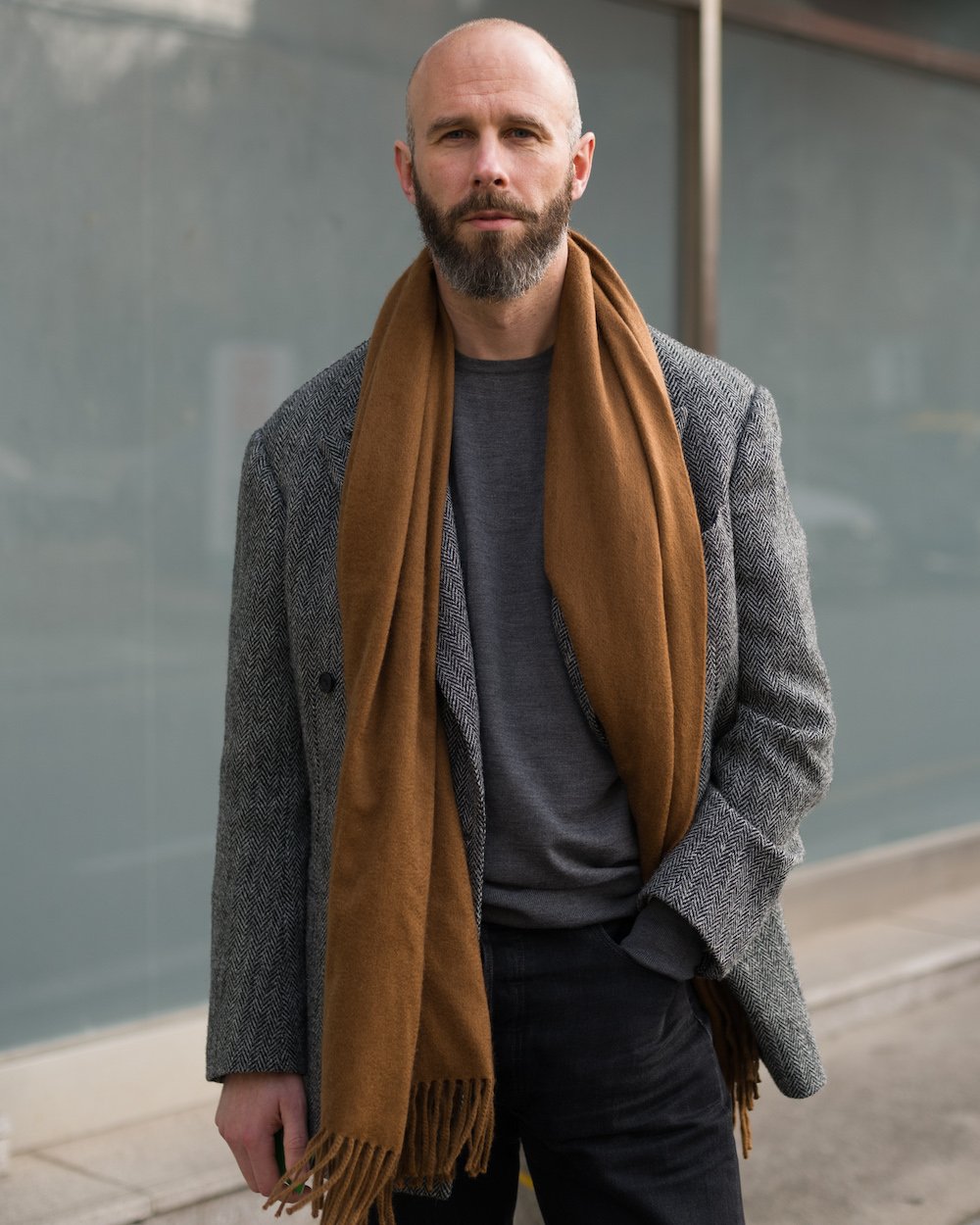
That’s how I’ve enjoyed wearing my double-breasted jacket from Assisi (above) over the winter. Its weight and size meant I could use it as outerwear with a sweater underneath, a scarf and a hat. But I could also wear it on its own as a jacket too. 

When I travelled to Korea recently, it was a great piece to take because it could do double duty - a coat alternative on a mild day, but also a normal jacket on a cold one. 

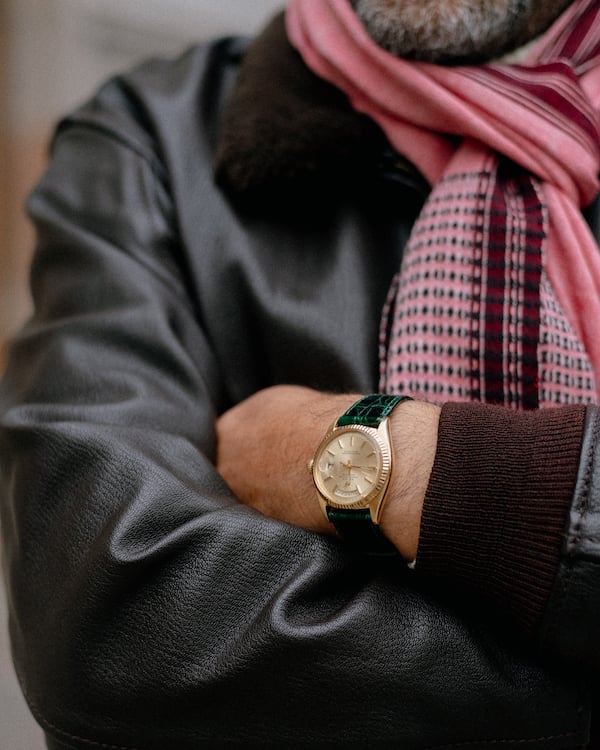
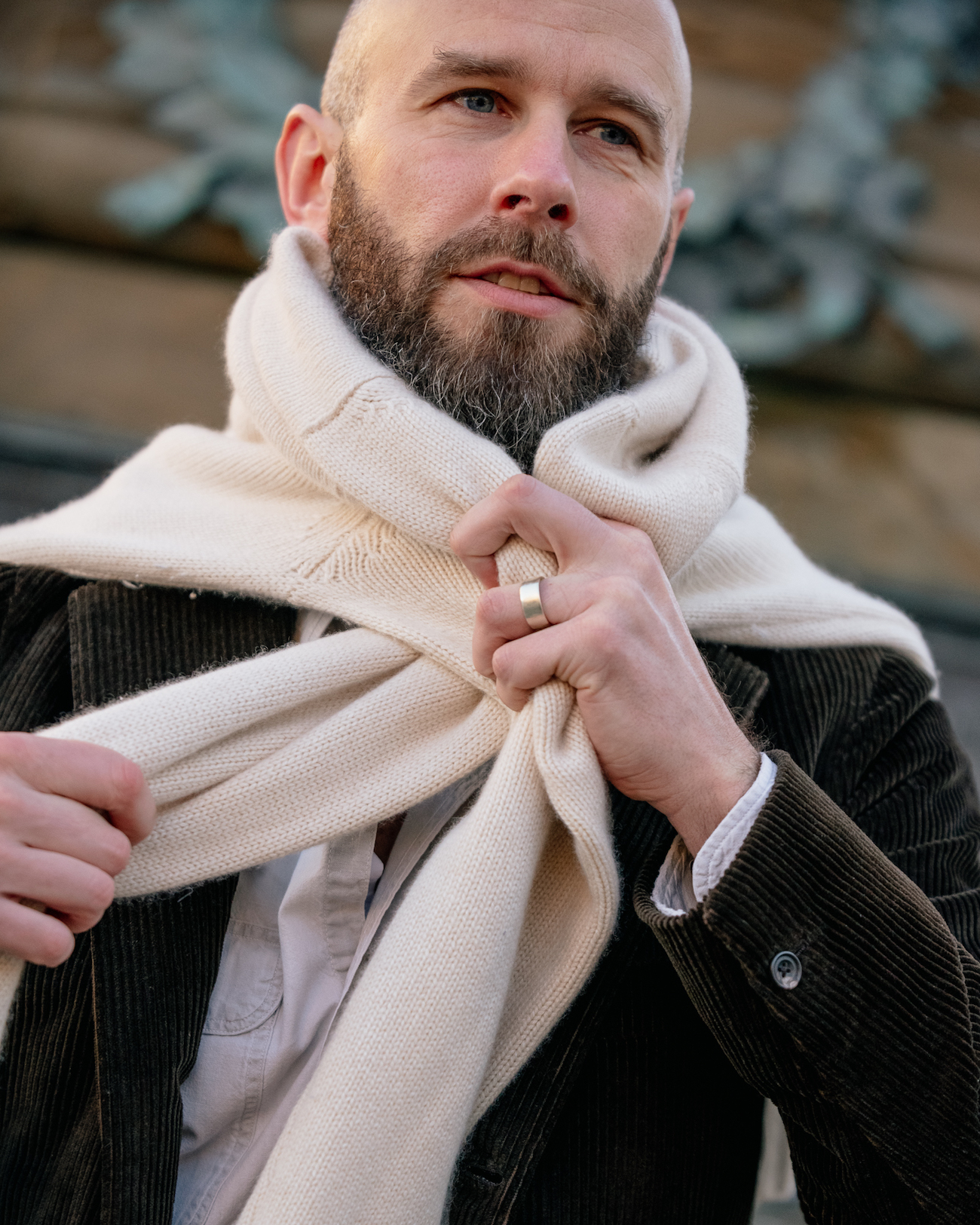
In the outfit above I’m wearing it with a grey Finest Crewneck and a large cashmere shawl from Begg - the combination of knit, DB tweed and big scarf around the neck was easily warm enough that day. 

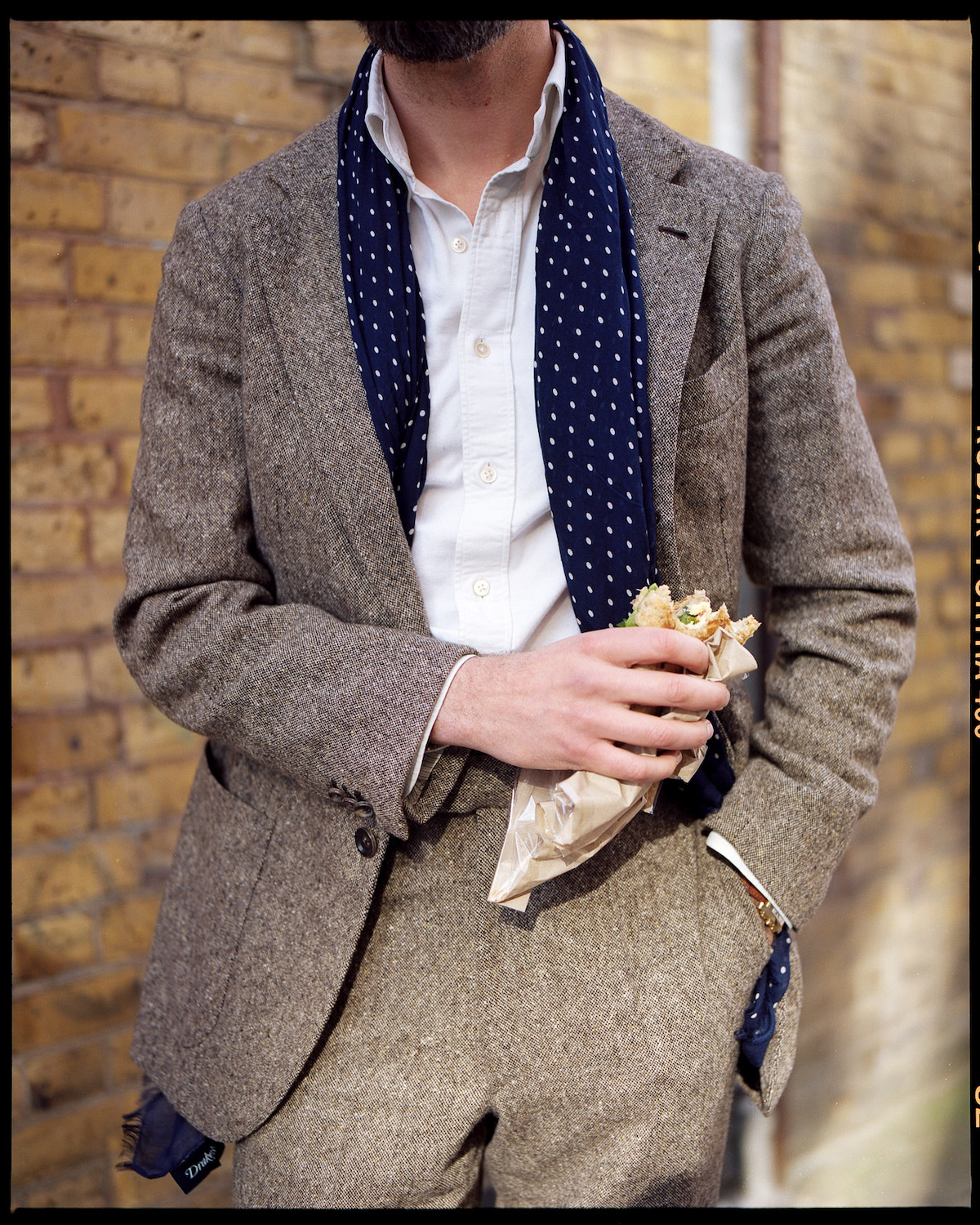
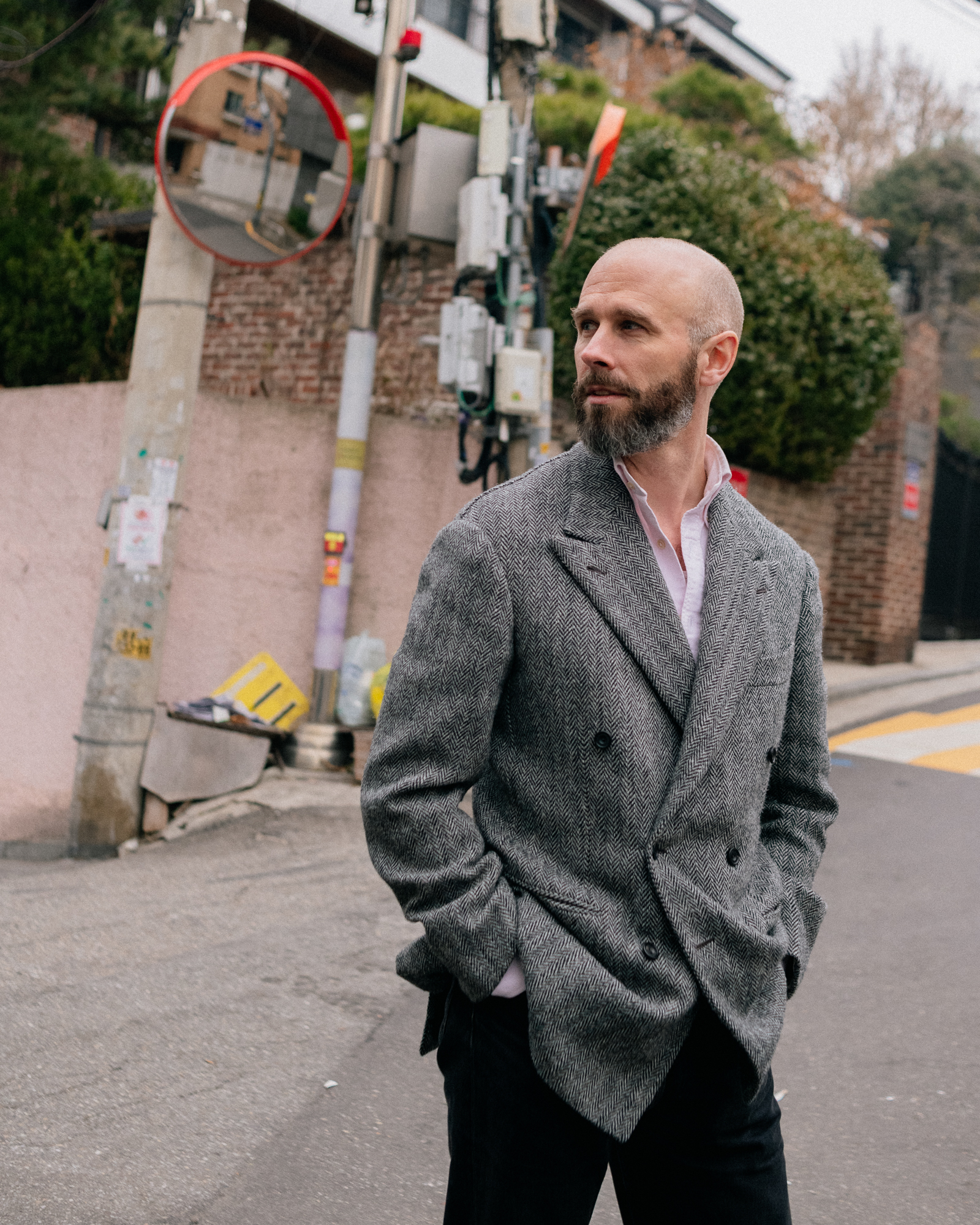
But below I’m wearing it with just a pink oxford shirt and black jeans, and had a raincoat with me over the top, so the tweed was functioning more as a jacket. 
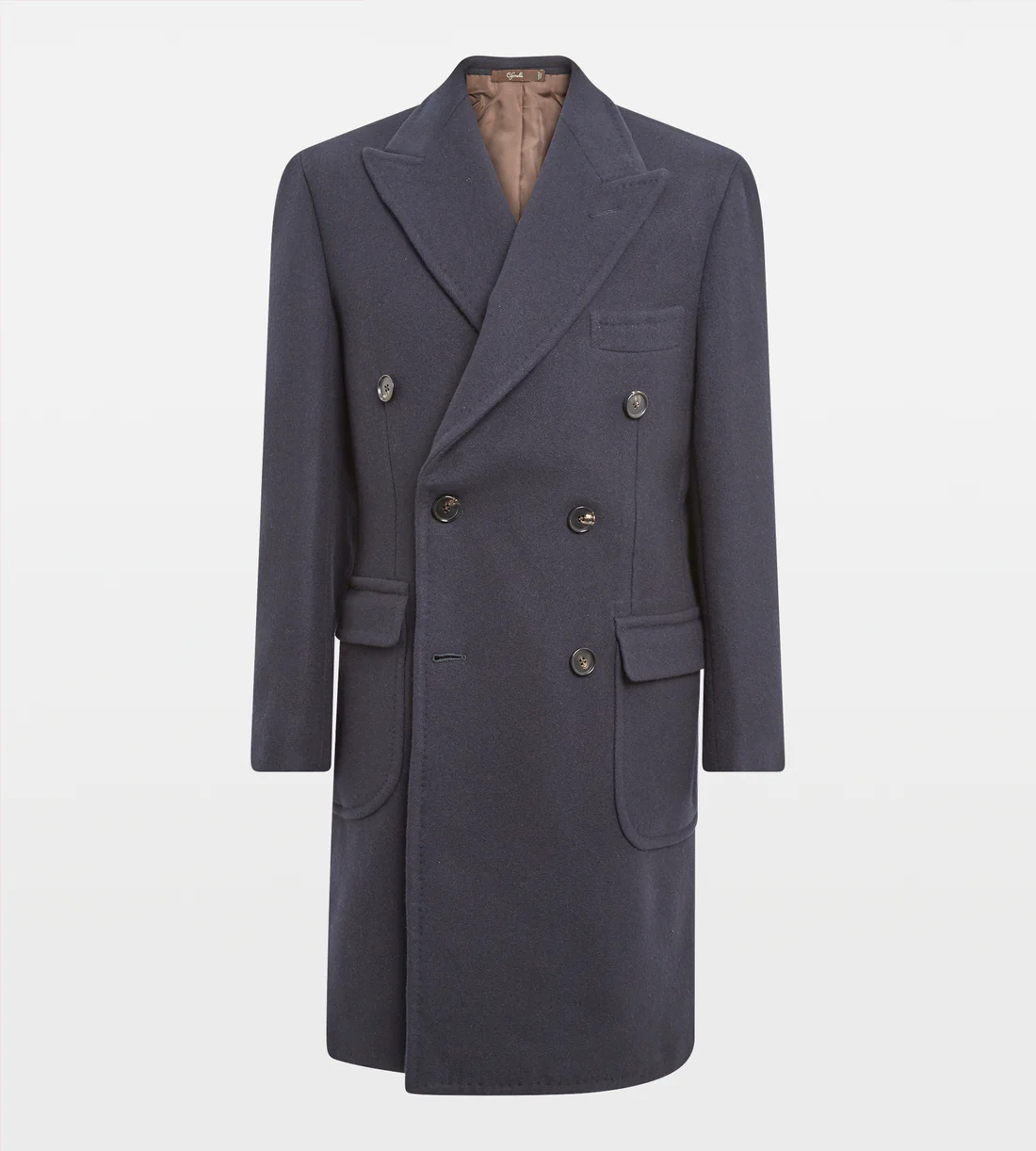
It’s funny Seiji mentioned Ethan, because the success of that tweed from Assisi has also prompted me to commission a navy blazer from them, partly inspired by Ethan’s jacket from tailor Anglofilo (below).

Ethan has frequently worn it when travelling to London, and it seems to have that same versatility (his is made from camelhair). Stylistically it also sits somewhere between a normal jacket and Seiji’s design, given it has the brass buttons and edge stitching. 

I’m a little unsure about brass buttons myself, having had them on my bespoke pea coat and later removed them. So I’ve gone for normal horn buttons to start with but could always add them later. 

(I actually have some lovely buttons that Gieves & Hawkes made for me for this travel blazer project with my college’s crest on them. They’ve been looking for a home since.)
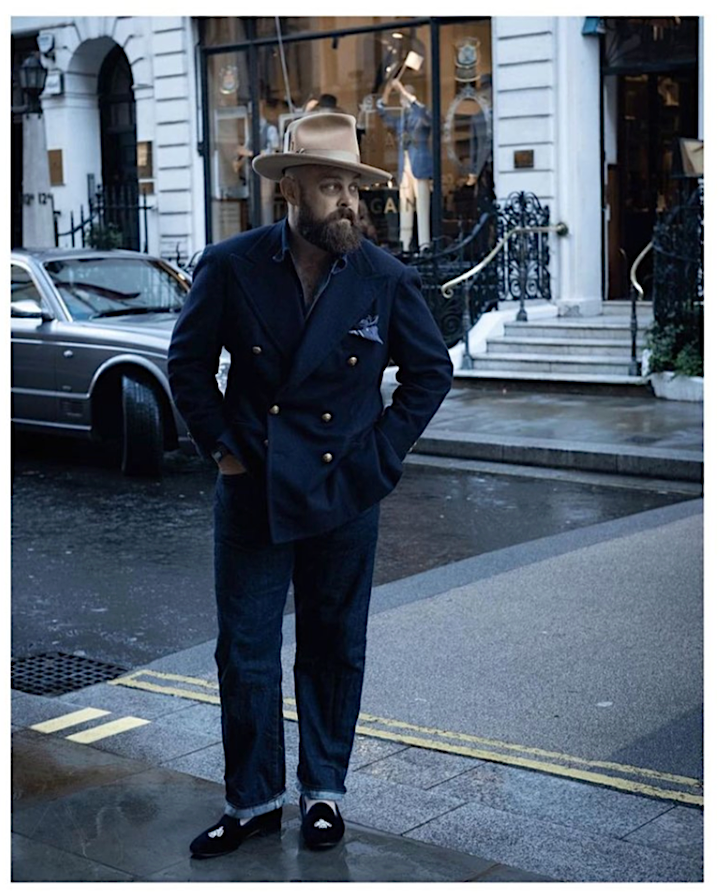
What would I advise for a PS reader looking to commission something similar? It’s early days for me too, but it feels like the key is something in a jacket length but a heavier weight - perhaps between 15 and 20oz. 

It helps if it’s double-breasted, for the casual style and for the warmth. My Solito jacket here is just as heavy, but misses something in being single breasted.

And I’d stay with a fairly classic colour, but use a material with a bit more texture. Tweed and melton certainly fall into that category, but so can camelhair or even cashmere if they have a bit more of that texture. 

Let me know if you find yourself wearing any jacket of yours performing a similar function. 

Details on any of the other clothes upon request. Just shout. Equally for all Tailor Caid details including prices. [email protected]. Apologies for the lack of a shot of Seiji's jacket closed. If I ever get one I'll add it!
Lost in translation: What menswear phrases really mean

Lost in translation: What menswear phrases really mean

Wednesday, December 27th 2023
||- Begin Content -||

By Manish Puri

Powering up one’s menswear game isn’t merely about honing the perfect silhouette or mastering colour combinations. It also means becoming fluent in a whole new language. 

That will, of course, initially mean becoming familiar with the jargon: a key building block of any sub-culture. But to elevate your status, you must learn that those building blocks make structures and structures conceal as much as they reveal. Within menswear, the aficionado understands that a great many truths hide in plain sight.

In the pursuit of those truths, I’d like to offer myself up as a latter-day St Jerome (or at least José Mourinho) by providing translations of common menswear assertions. Below you’ll find a list of things that have been said by me or to me - doubtless you will have uttered or heard similar things. Alongside these statements I present their true meaning, naked and unadorned.

That’s the context for unpacking the subtext. But what’s the pretext? Well, it’s Christmas (translation: ‘tis the season to be jolly).

What I said What I meant
I favour a more relaxed silhouette these days I ate too much cheese at Christmas
I think gentlemen should start wearing ties and pocket squares again I bought too many ties and pocket squares at the last Drake’s sample sale
It’s a unique piece I have no idea what to pair it with
I think it will last forever Because I’m never ever going to wear it
Wow, I’ve been looking for something similar for ages You stole my look!
I don’t like to overthink my clothes I do like to overthink my clothes. I just don’t have an answer for that specific question 
It’s important to think in terms of cost-per-wear I overpaid
How do you keep finding so many great items for so cheap on eBay? I hate your guts
The Neapolitan look is over My Neapolitan tailoring doesn’t fit me anymore
Just look at how badly kids dress today It must be nice to have the energy for lots of casual sex
I’m thinking I should maybe have gone a shade darker with the cloth Oh my god!! What have I done?!
(Real things) people said to me What they meant
How many fittings did you have for your suit? The fit is terrible
Our house likes a longer coat, Sir You can get fucked if you think I’m shortening this jacket
It’s a classic look You look like your Dad
He’s a bit fashion forward  He scares me
Take your time. We don’t do a hard sell here.  Please don’t buy this
You're looking very distinguished Is that more tweed?
I’m thinking of switching tailors My tailor has put their prices up
I love the hunt for vintage My bank has put my mortgage up
I like to play with the conventions of black tie and make it ‘alternative’ I don’t know how to tie a bow tie
My preferred knot is a four-in-hand I didn’t even know there were other tie knots
I’m transitioning to a capsule wardrobe My wife said she’s going to leave me
Alright Chef, got your mise en place ready? I really do like your striped seersucker trousers, mate. I’m just masking it by making a world-class burn.
What my partner said to me What they meant
Don’t you look dapper? Why are you so overdressed?
What are you wearing tonight, darling? Please tell me I can wear jeans and a t-shirt
I'm so happy that your clothes make you so happy I prefer you in jeans and a t-shirt
How much did that really cost? I’ll take whatever figure you give me and know it was double
Ooh, that’s a nice jumper darling, be careful not to shrink it  Watch me “accidentally” put it on a hot wash so that I can have it
I think you can pull it off I don’t think you can pull it off

Manish is @the_daily_mirror on Instagram

Merry Christmas everyone

Merry Christmas everyone

Monday, December 25th 2023
||- Begin Content -||

Thank you everyone for what you have helped Permanent Style become this year. Merry Christmas from myself, Lucas and all our wonderful contributors. Here's to a stylish, creative and pleasurable 2024.

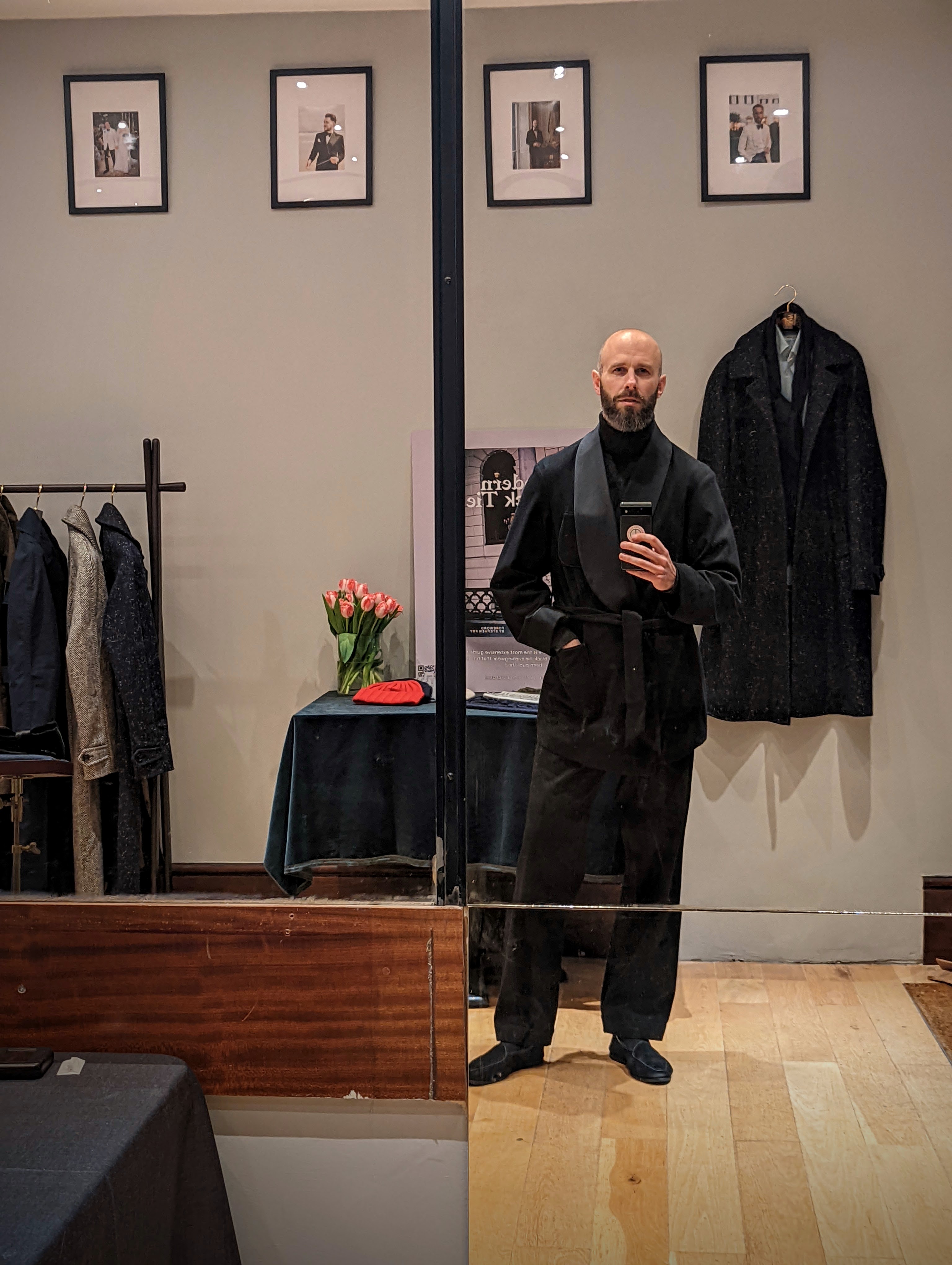
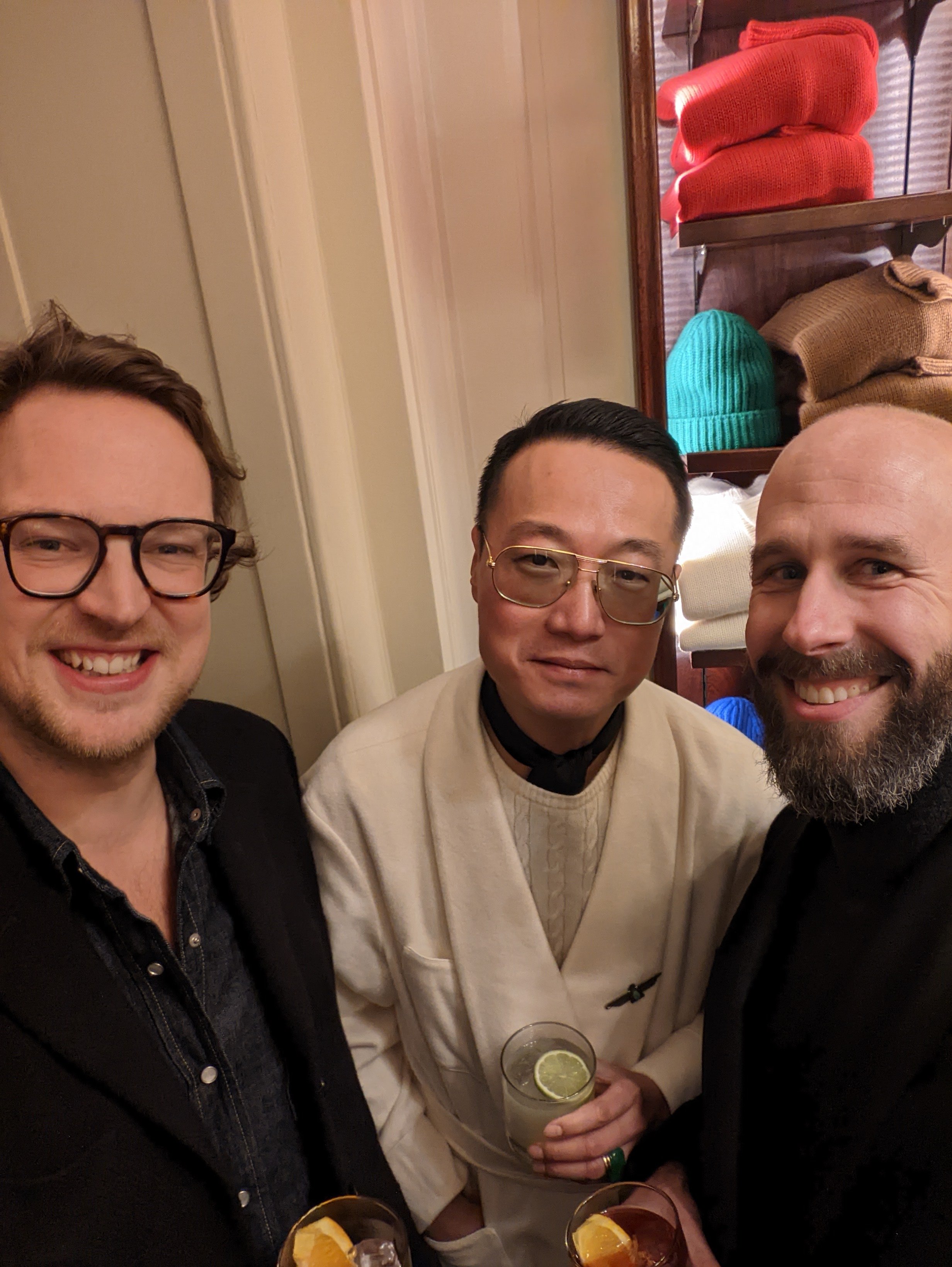
Pictured above: Selfie at last year's pop-up, wearing Bryceland's tuxedo lounge jacket, Drake's charcoal roll neck and Baudoin & Lange Sagans in black suede. Below: Lucas in Bryceland's sawtooth and black tailoring; Kenji in his version of the same lounge jacket

The story behind the English Tweed coat

The story behind the English Tweed coat

||- Begin Content -||

When we develop a new coat with Private White VC, Lucas and I generally travel up to Manchester to them in person, to talk through the idea and dig into the archive. 

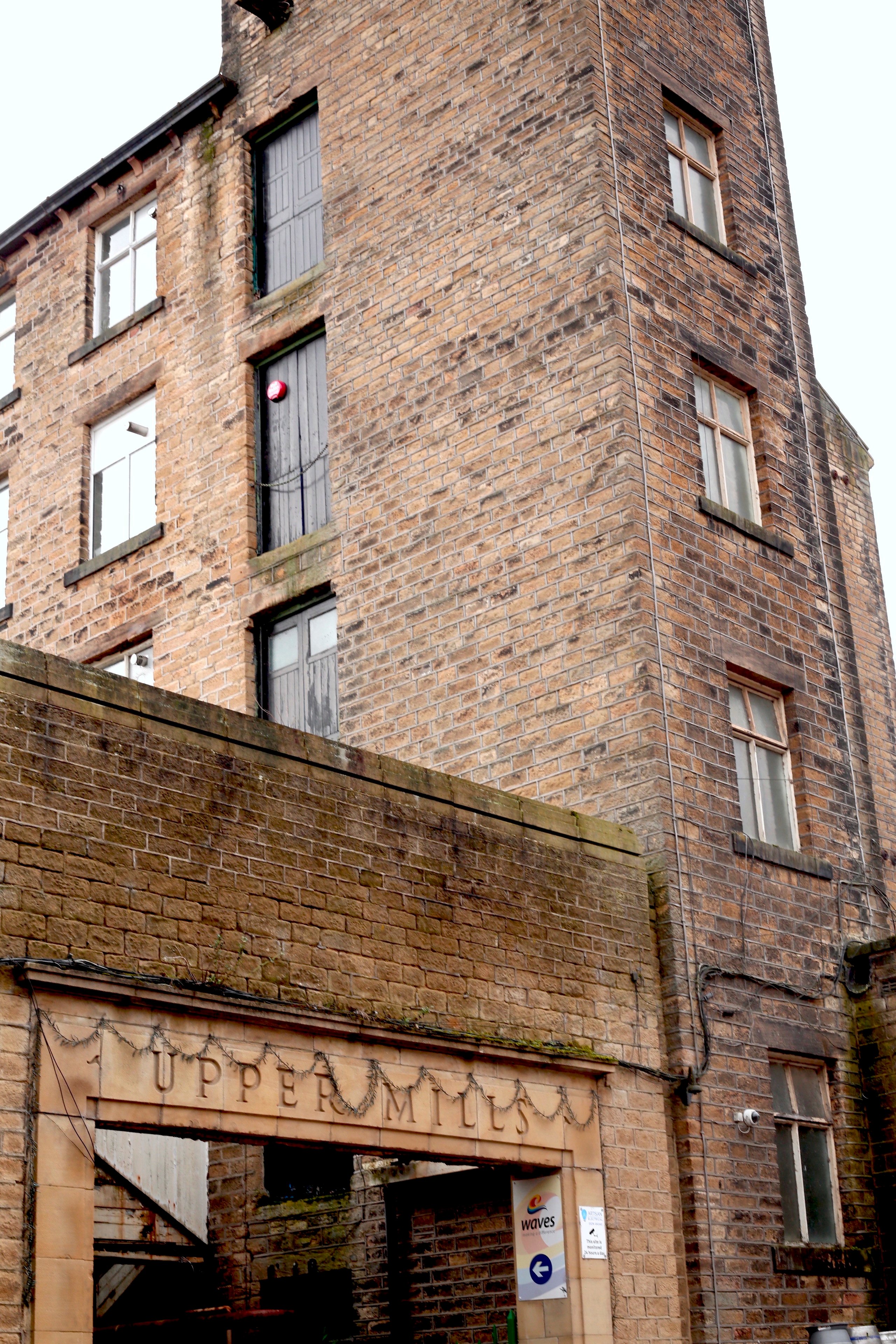
At the end of last year, when we went up to discuss our ‘English Tweed’ project, it also turned into a road trip, with five of us shuttling along the M62 from Salford to Slaithwaite to see Marling & Evans. I’d never been to the mill, and Mike Stoll at PWVC thought some M&E cloth might be a good fit for the coat. 

It ended up feeling something like destiny.

The dynamics in a car are interesting. Suddenly the relationships between people change, with one person in charge and others feeling like kids in the back. It’s perfectly acceptable to stare out of the window and say nothing - but people do also share completely random thoughts. It’s cosy and intimate, yet no one is looking at each other. 

My abiding memory of that journey was seeing the farm that famously sits between two halves of the M62, Stott Hall Farm (above). The story is that the owner refused to move out when the motorway was developed, and so it's plonked incongruously between the north and south lanes. 

I think at this point someone else in the car pointed out that this isn’t quite right. That actually the land couldn’t be used for the motorway because it was too steep, so the farmer is not the reason for the bifurcated traffic. Still, he could have moved out and decided to remain there, tending his sheep. 

Weird conversation. Not something we’d ever talk about if we weren’t all sitting in a car, staring out at the countryside.

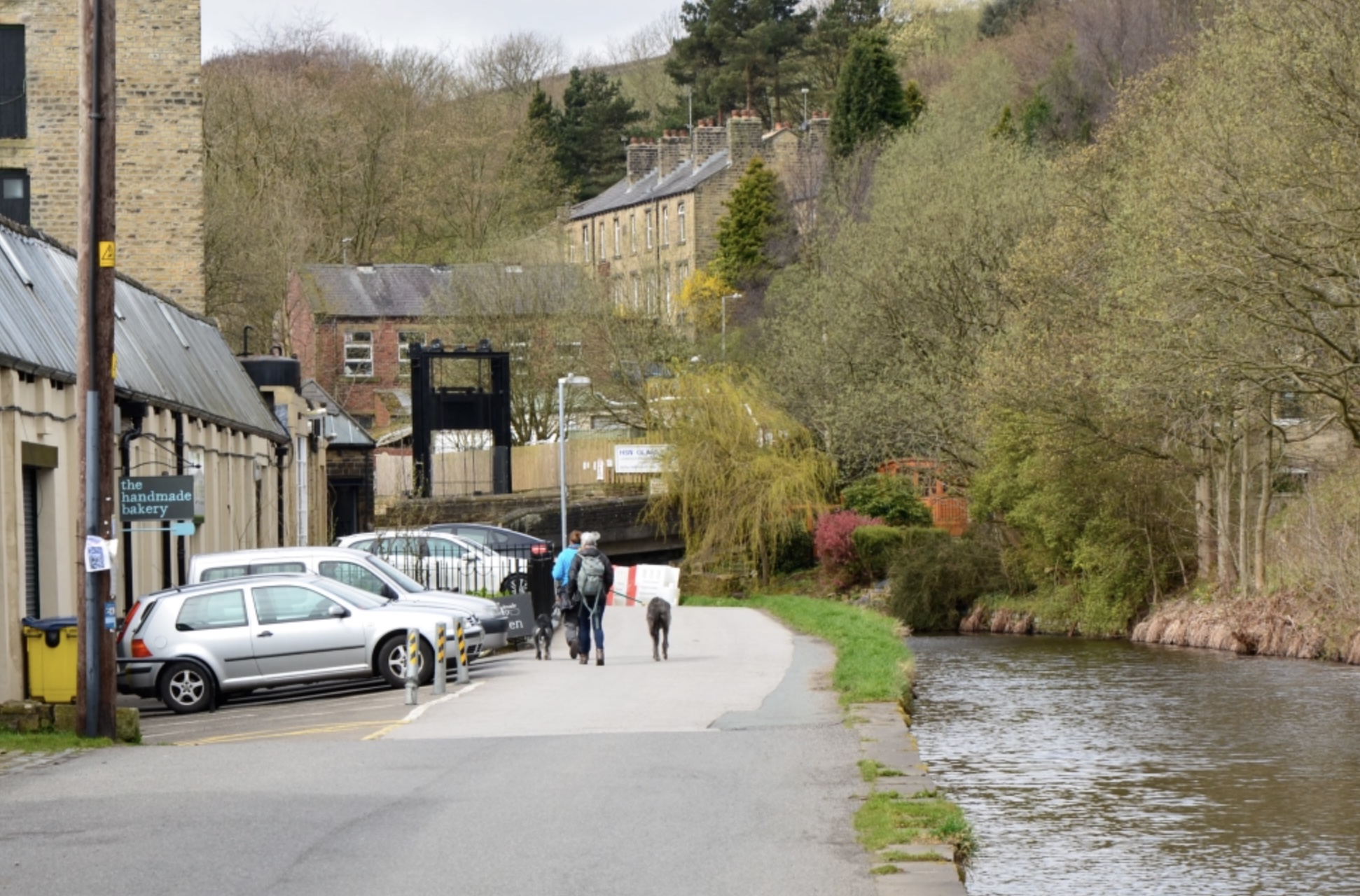
When we arrived at Marling & Evans it was a pleasant sight. The local industrial area is being redeveloped (above), and M&E's neighbours are The Handmade Bakery and Hillside Harmonies record shop. The hills slope down steeply all around, and the River Colne (rather like the M62 around Stott Hall) flows thoughtfully around either side of the complex. 

Mark Garrett of Marling & Evans was outside to greet us and conducted a quick tour of the mill, before we sat down with cups of tea to talk about our reference coat - a vintage piece from 1980 I’d picked up a few weeks earlier. 

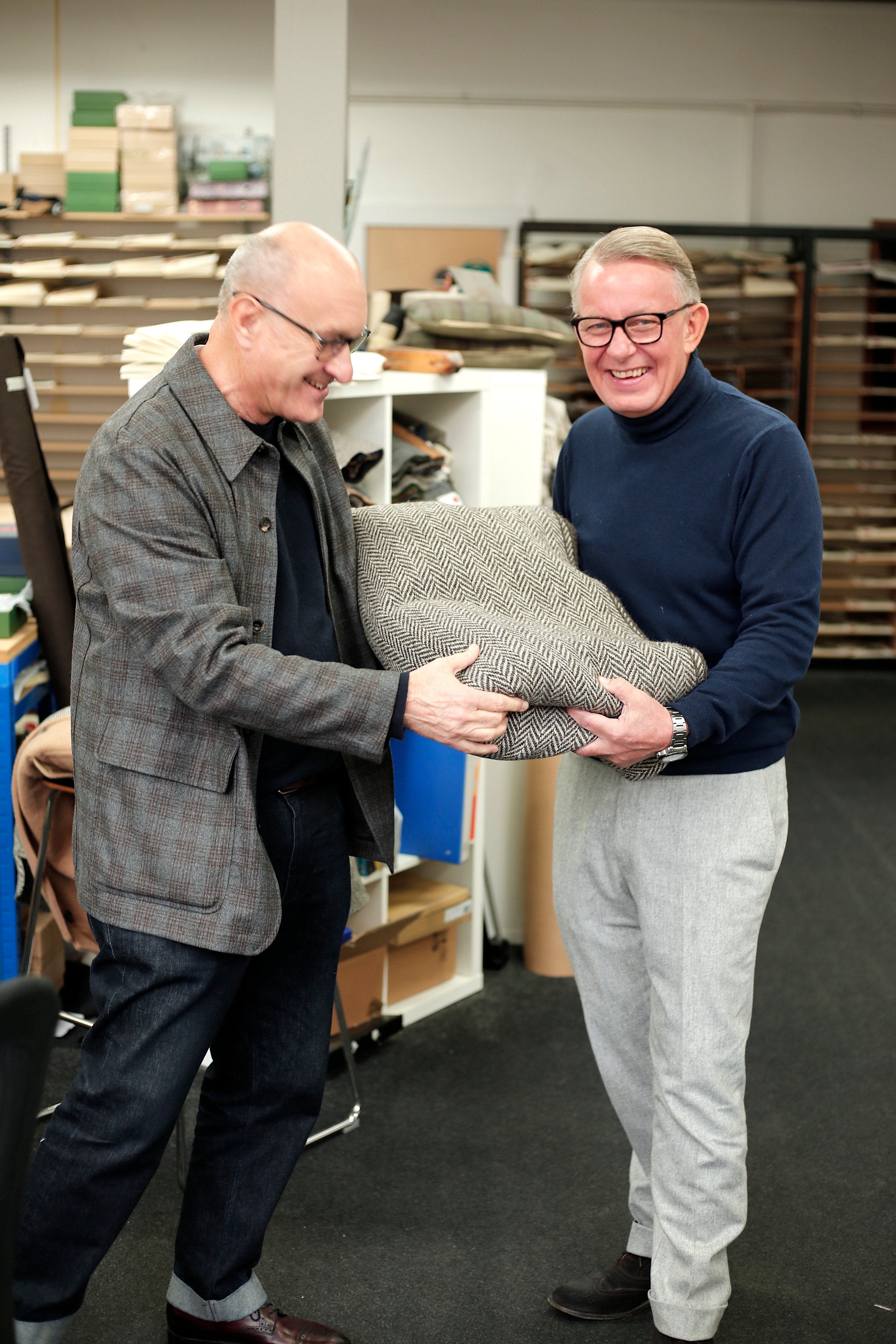
Mark and Mike began turning the coat over, talking about the period. Both were working back then, both in the same industries, and they realised they might have made the coat together - Mark the cloth and Mike the coat (shown below, right and left respectively). 

In fact the more they looked at the details, the more likely it seemed. Mike has been making British outerwear for decades in what is now the Private White factory - hence the extensive archive. Our task shifted from trying to create something new to remembering how the original had been made. 

The cloth Mike had had in mind was Marling & Evans undyed wool, which is made from local sheep and seemed close to the spirit of the original. 

But we would certainly want to develop our own version - which is an aspect of PS products I probably don't emphasise enough. 

The material used in the English Tweed coat is not one you can buy anywhere. Just like the Donegal coat, the weight, density and colour combination are all specific choices of ours. The fact some M&E undyed wool is available by the cut length has caused confusion with some readers, asking which swatch it is. But nothing else is the same. 

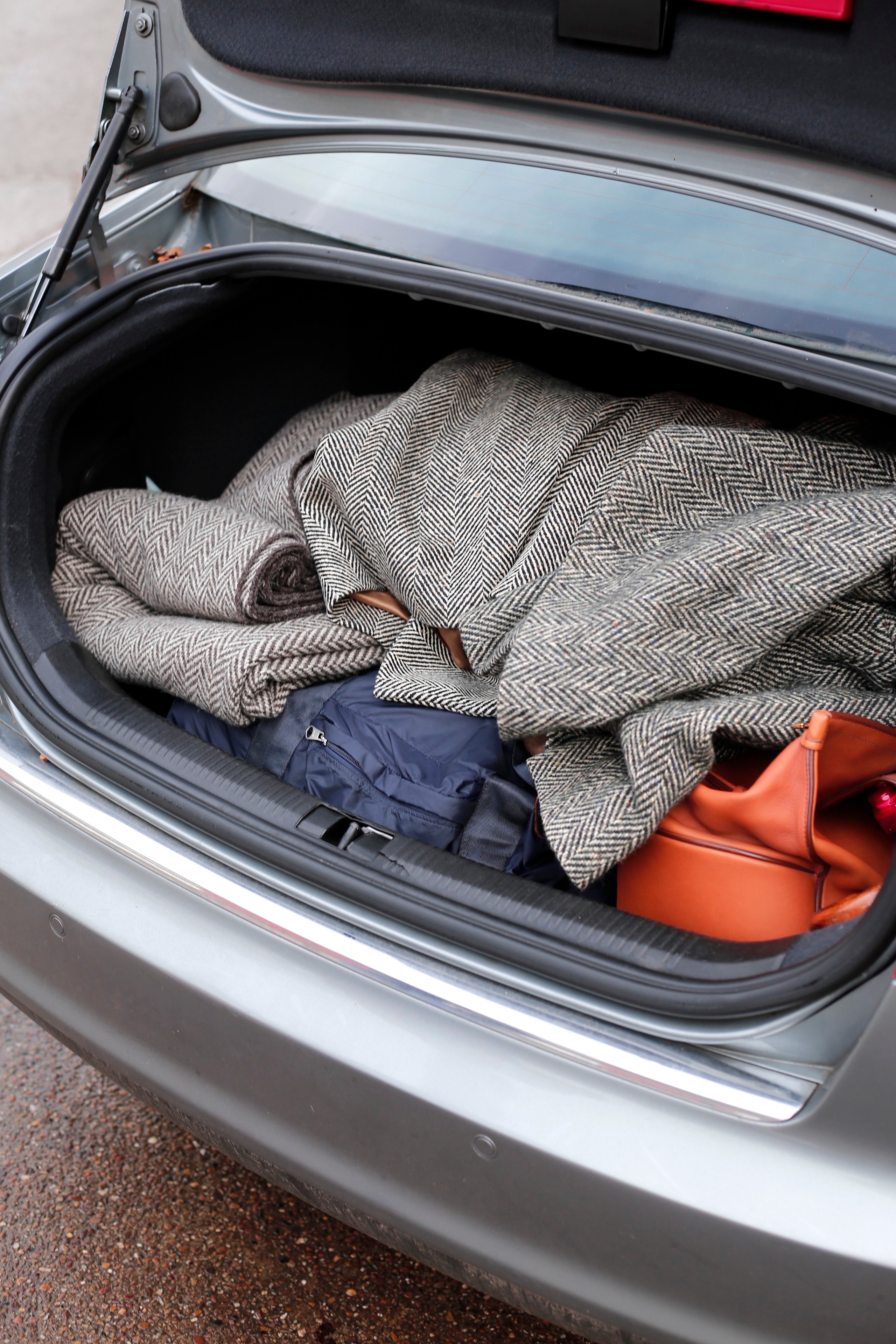
The journey to develop it started that day in Slaithwaite, when Mark went to see if he had a spare length of the undyed quality. He did, so we lugged that big roll out to the car and stuck it in the boot (above) to take back to PWVC. 

In the next few weeks we went through three other permutations, though, before arriving at the tweed we wanted. It had to be heavy enough to be a real winter weight, but also soft enough to give that reassuring sponginess. The colours also changed, with grey and black being replaced with a more subtle grey/cream mix in one direction, and dark brown in the other. 

As I said in the launch article, developing your own products really makes you realise how much these little decisions contribute to good design, and how much time it takes. 

I’ve worn the coat on my travels this winter - to New York back in October, to Seoul a fortnight ago - and it’s proved practical, warm and reassuring. 

We just missed the snow in Seoul, but there was still an icy wind now and again, and the coat was nice buttoned up to the chin. In New York the weather was warmer than normal, but in the evening there were cold winds that fly down NYC’s long, straight streets. 

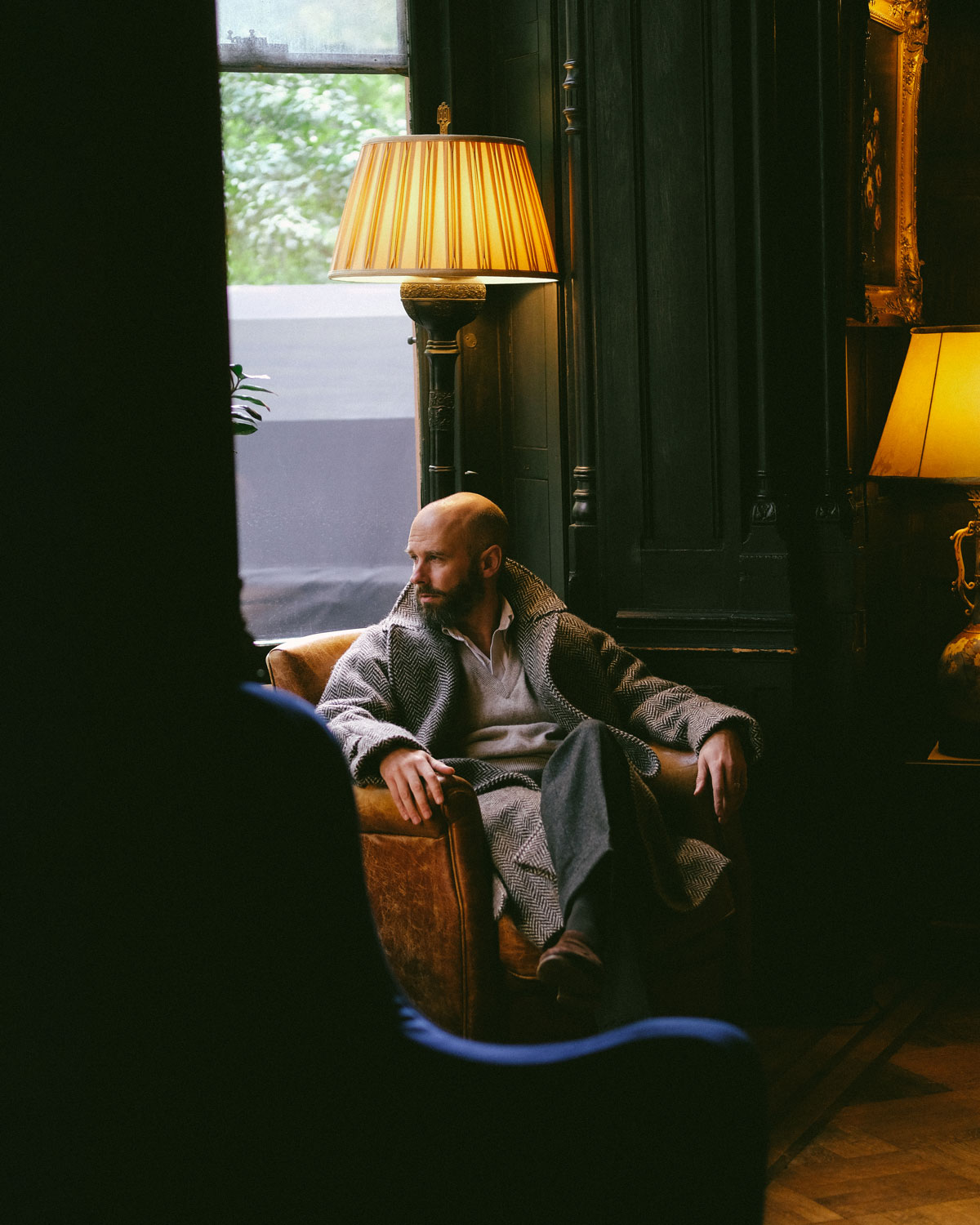
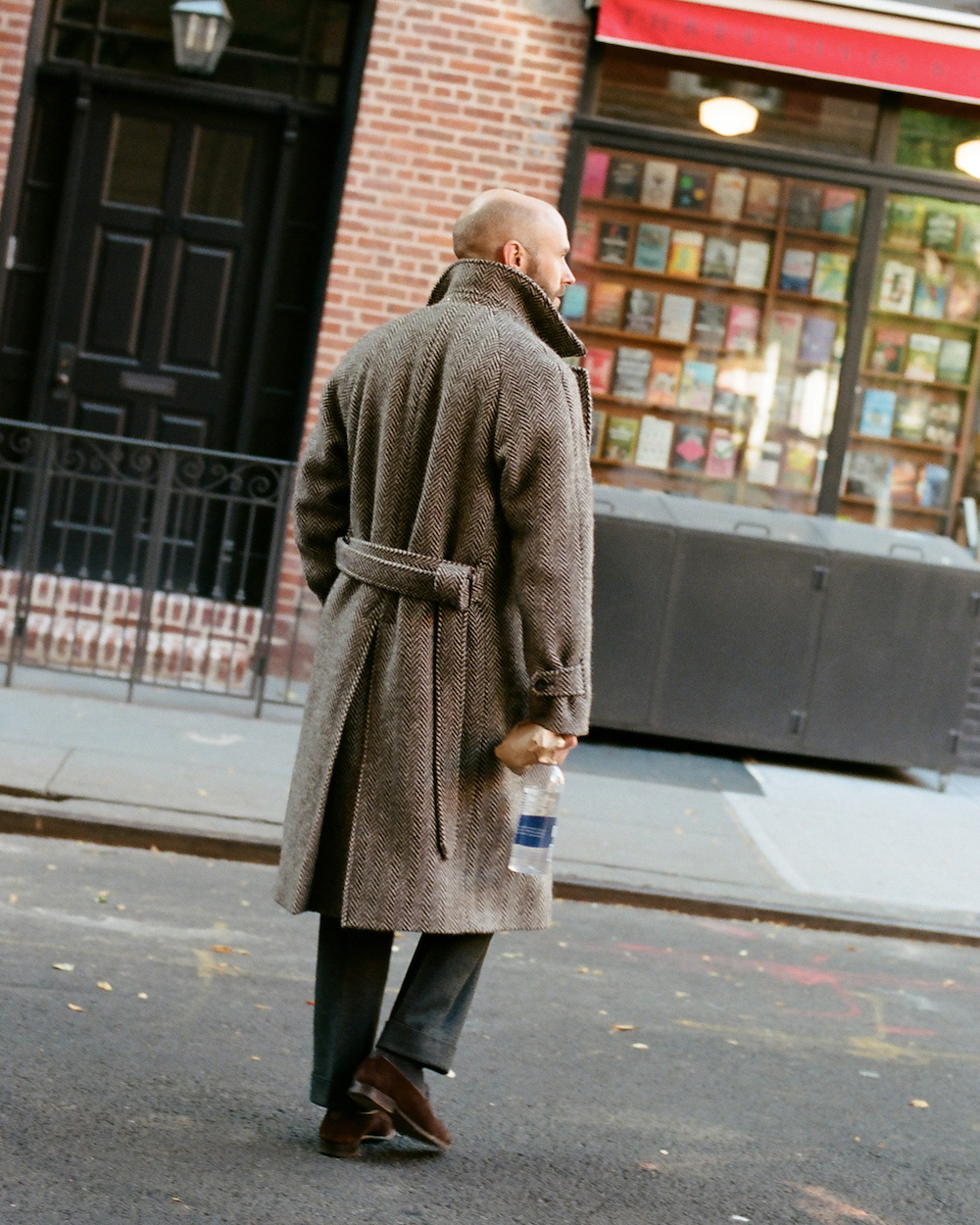
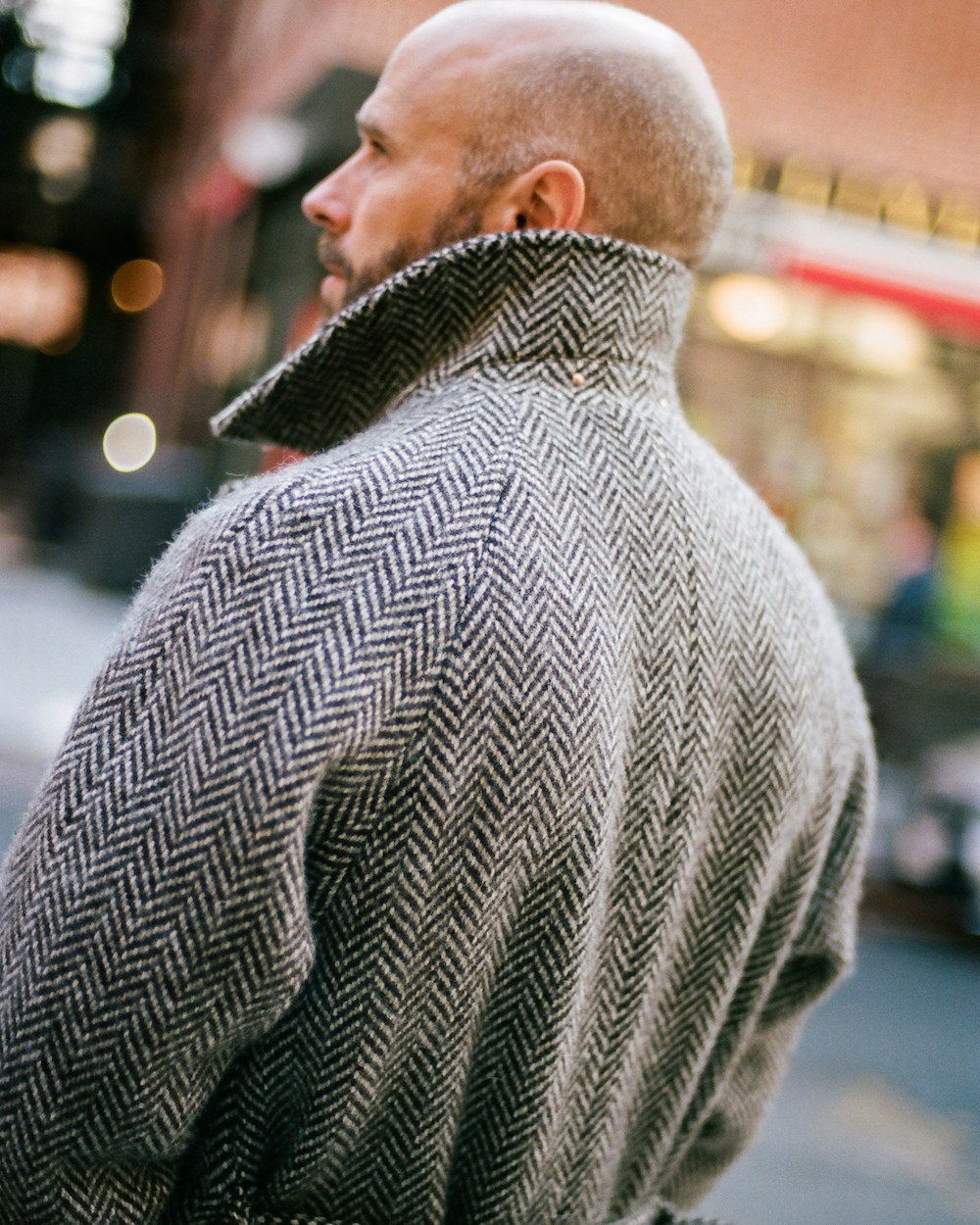
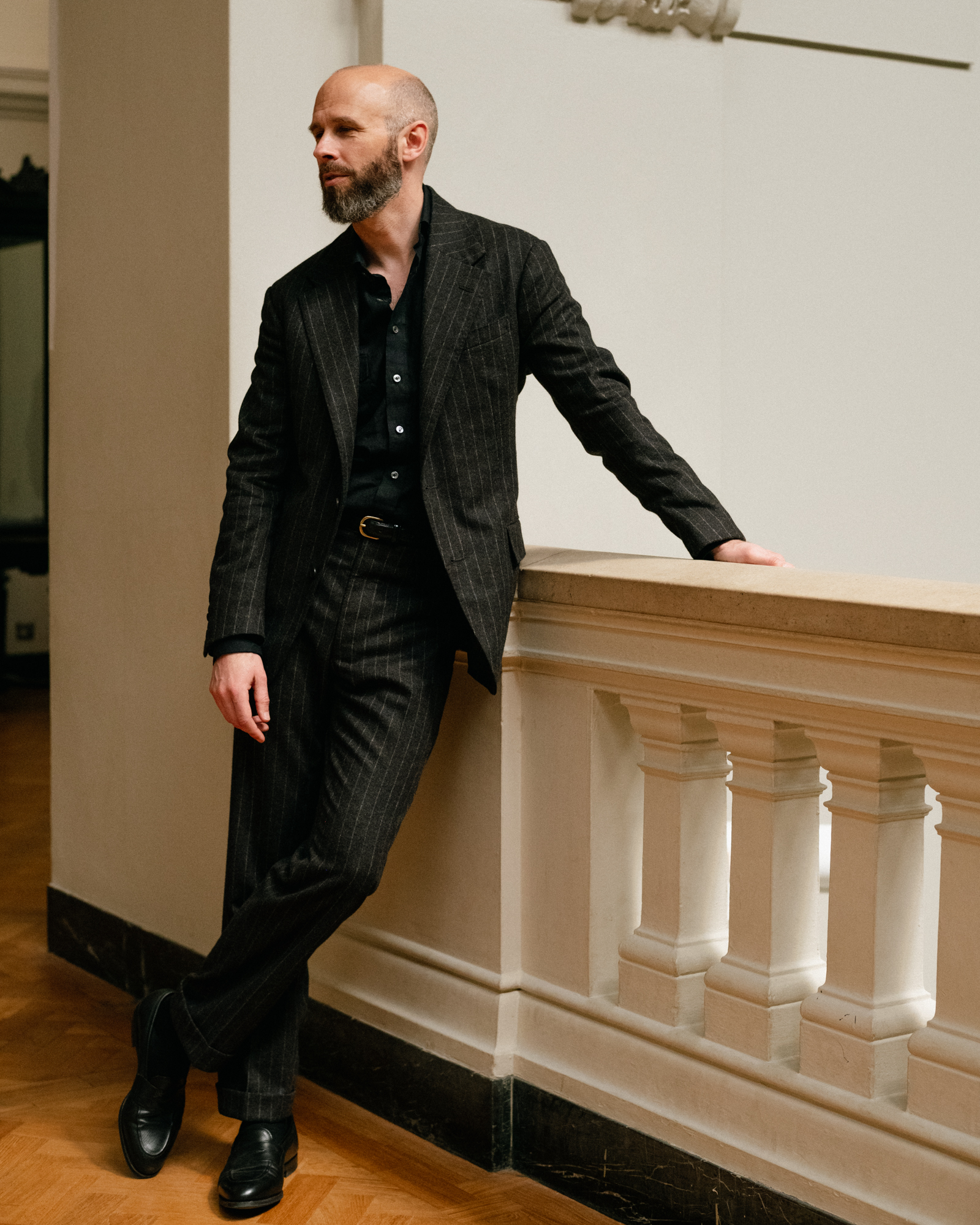
The picture at the top of this article was taken by Rubato in New York, for an upcoming journal piece. It shows how I wore the coat most days: open, with a knit and a pair of flannels, not too warm but ready to button up against the cold. 

In Seoul it had to be rather smarter, as I was seeing tailors every day and having fittings. But it admirably there too, never looking too casual and holding a hat and notebook in the big hip pockets.

I love bespoke overcoats and they will probably always be my favourite, but it’s great to have something soft and easy that can also cross over between smart and casual. 

Thank you to Mark and Mike for sharing all their history with us, and to Rubato for the use of the photo. That journal piece, with more of Oliver’s lovely photography, will be on their site when it’s ready

The English Tweed coat is available here. Some snaps below of the M&E mill.

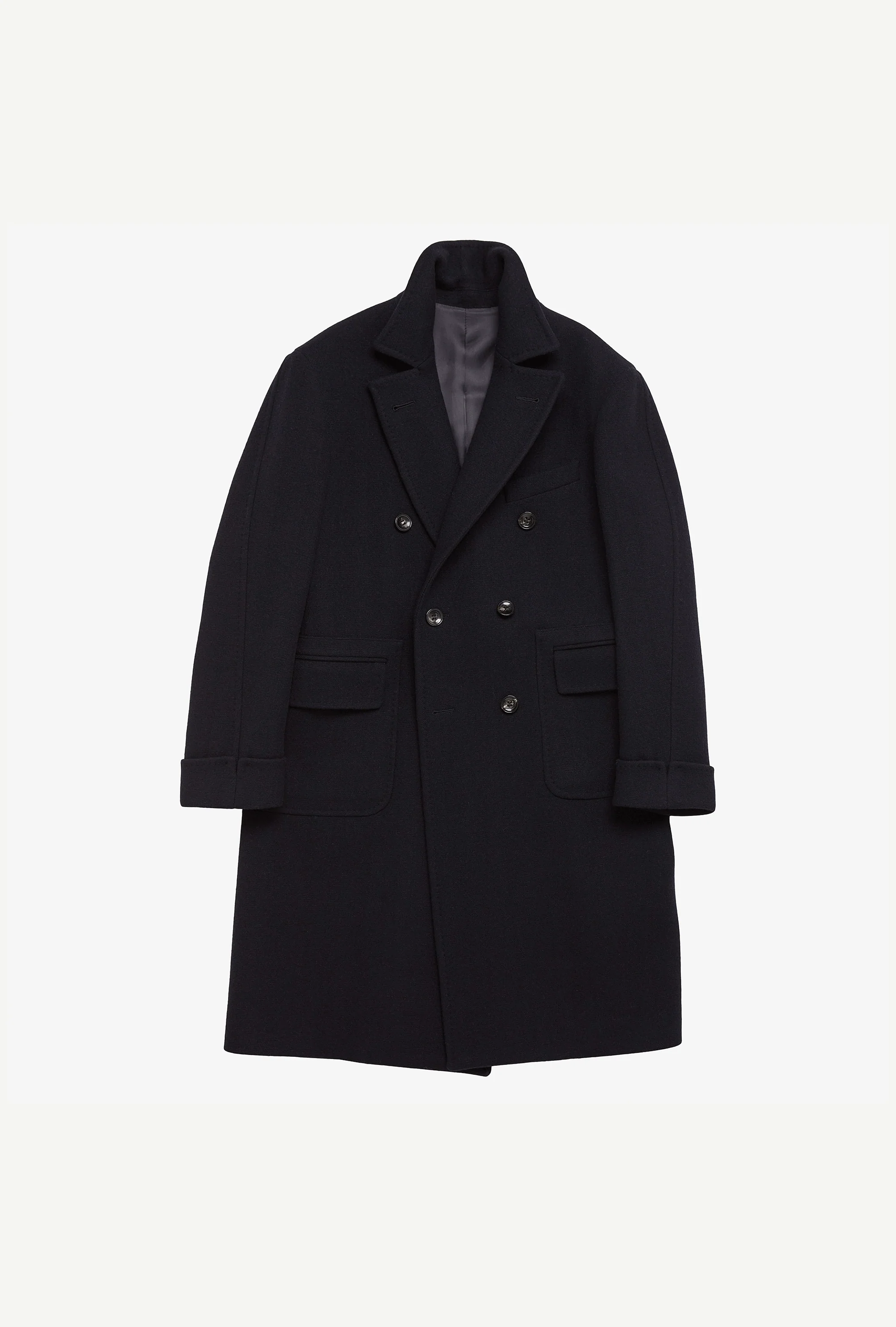
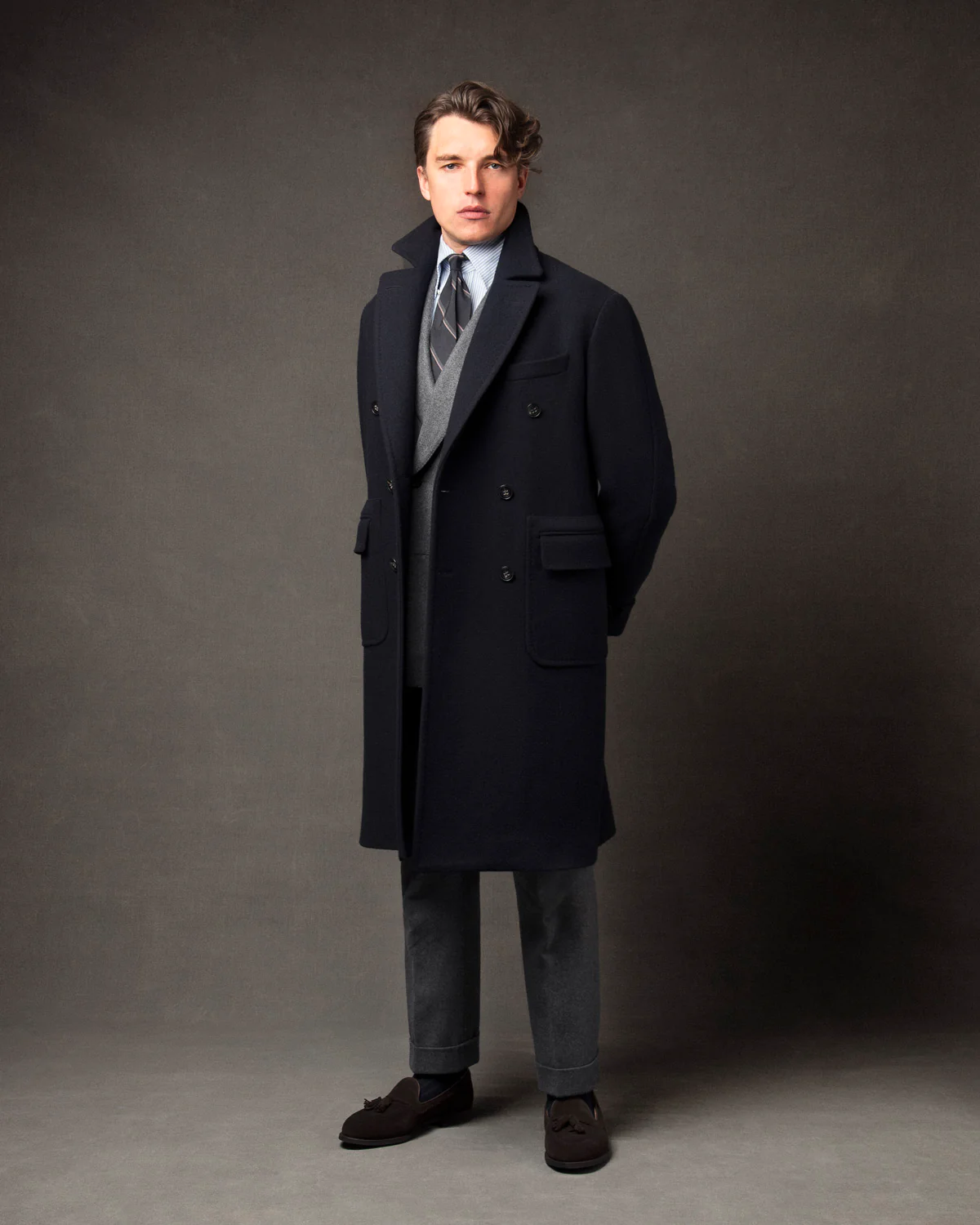
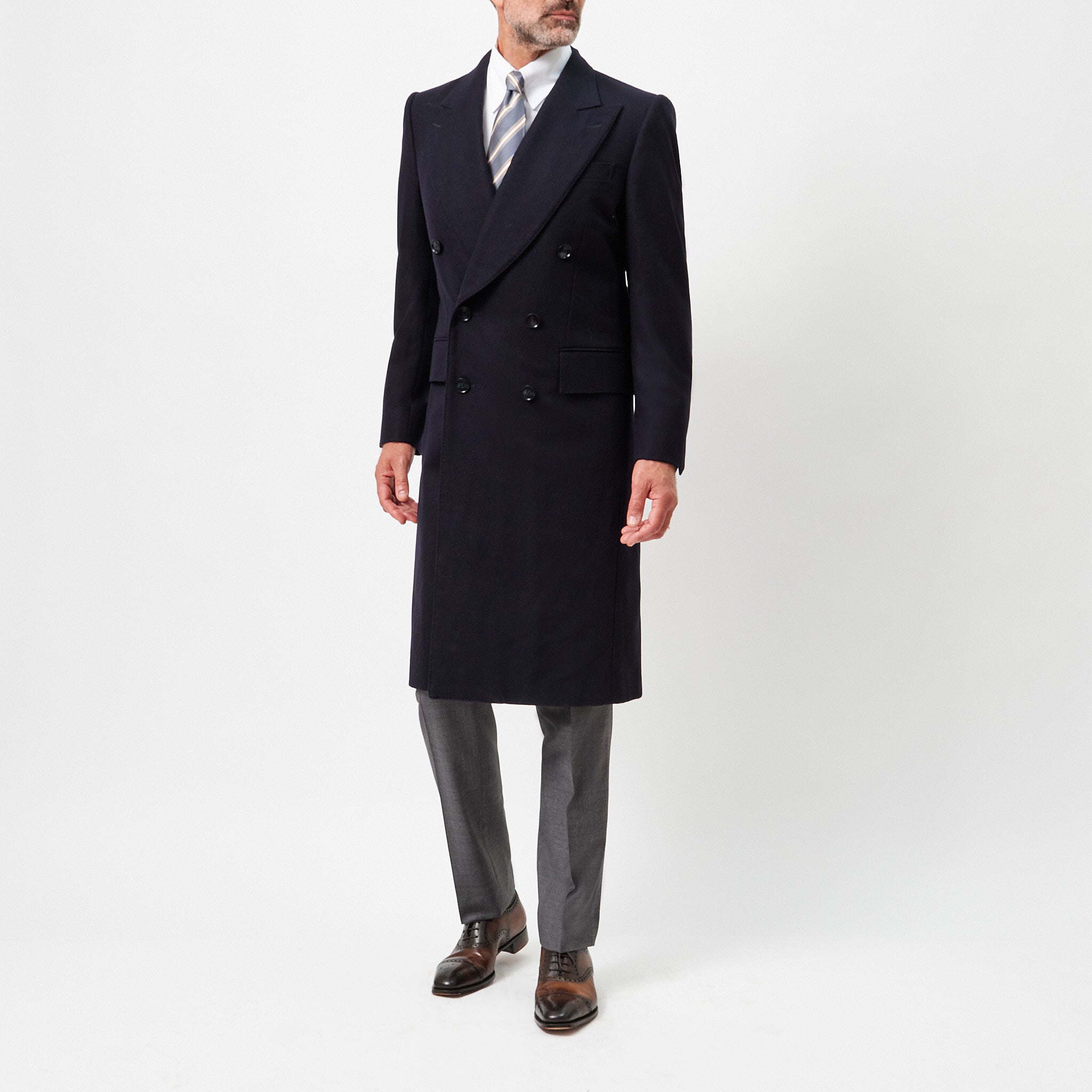
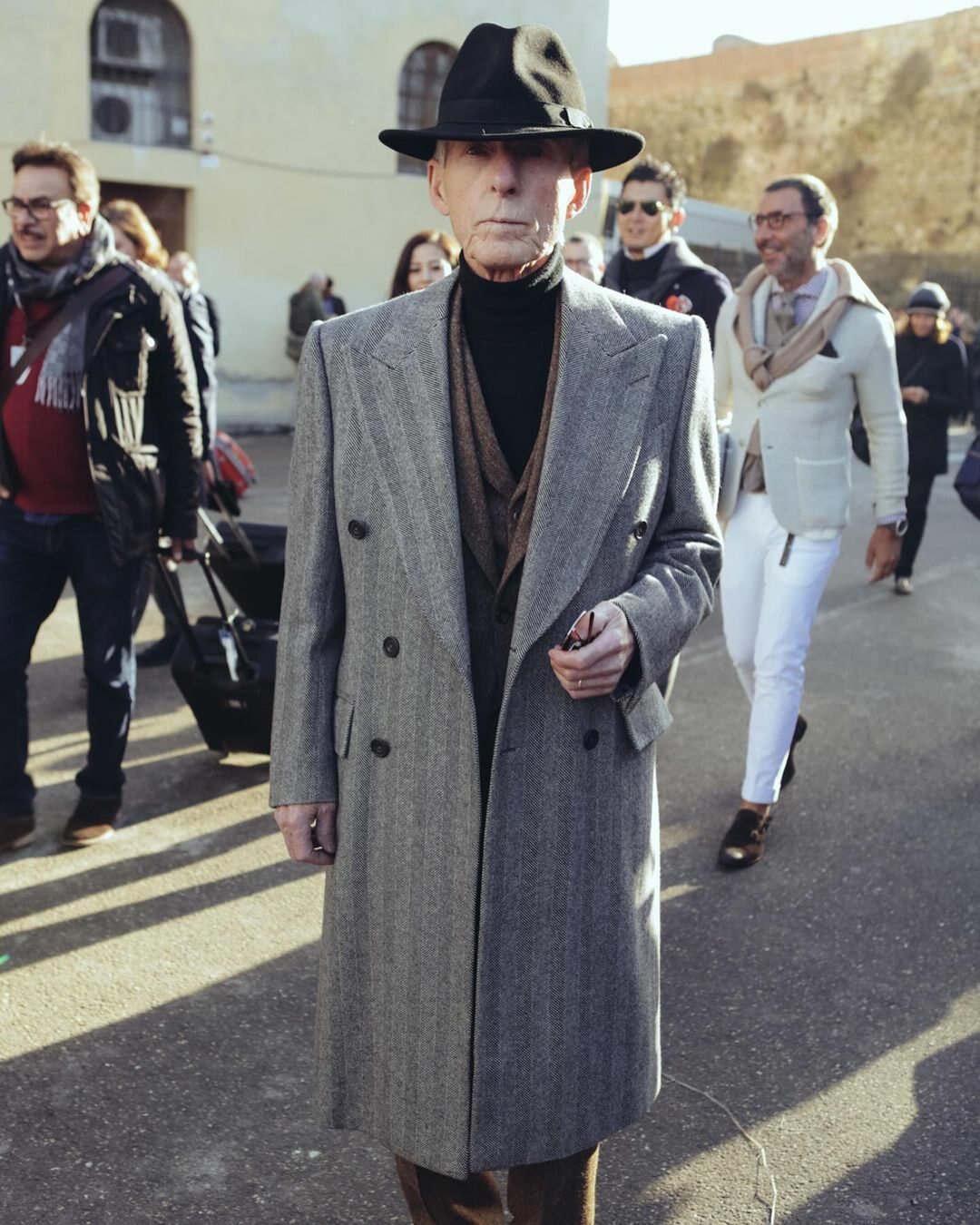
Where to buy a RTW double-breasted navy overcoat

Where to buy a RTW double-breasted navy overcoat

Wednesday, December 20th 2023
||- Begin Content -||

By Manish Puri

Some years back, I was having a drink with my partner, Gemma, and a friend, Nathan, who shared my interest in clothes. Over a few pints and packets of bacon fries we delved deep into matters political and philosophical, before turning to the personal, and nothing is more personal than style.

"What item of clothing do you think a woman notices first about a guy?" asked Nathan.

"Their coat," Gemma replied, without hesitation.

Nathan and I were both surprised. Lad's mags had been insisting for years that women are constantly scanning men's feet and judging them by their choice of shoes - it was almost as if the magazines didn't know what they were talking about!
The more we pondered it, the more sense it made. Many guys (and this was true of me for a time) have a 'one-and-done' policy when it comes to outerwear, the whole of autumn/winter to be spent wearing the same coat regardless of the occasion. And, if that's the case, the coat you've chosen to wear to work, on a date, and for a night out can speak volumes.

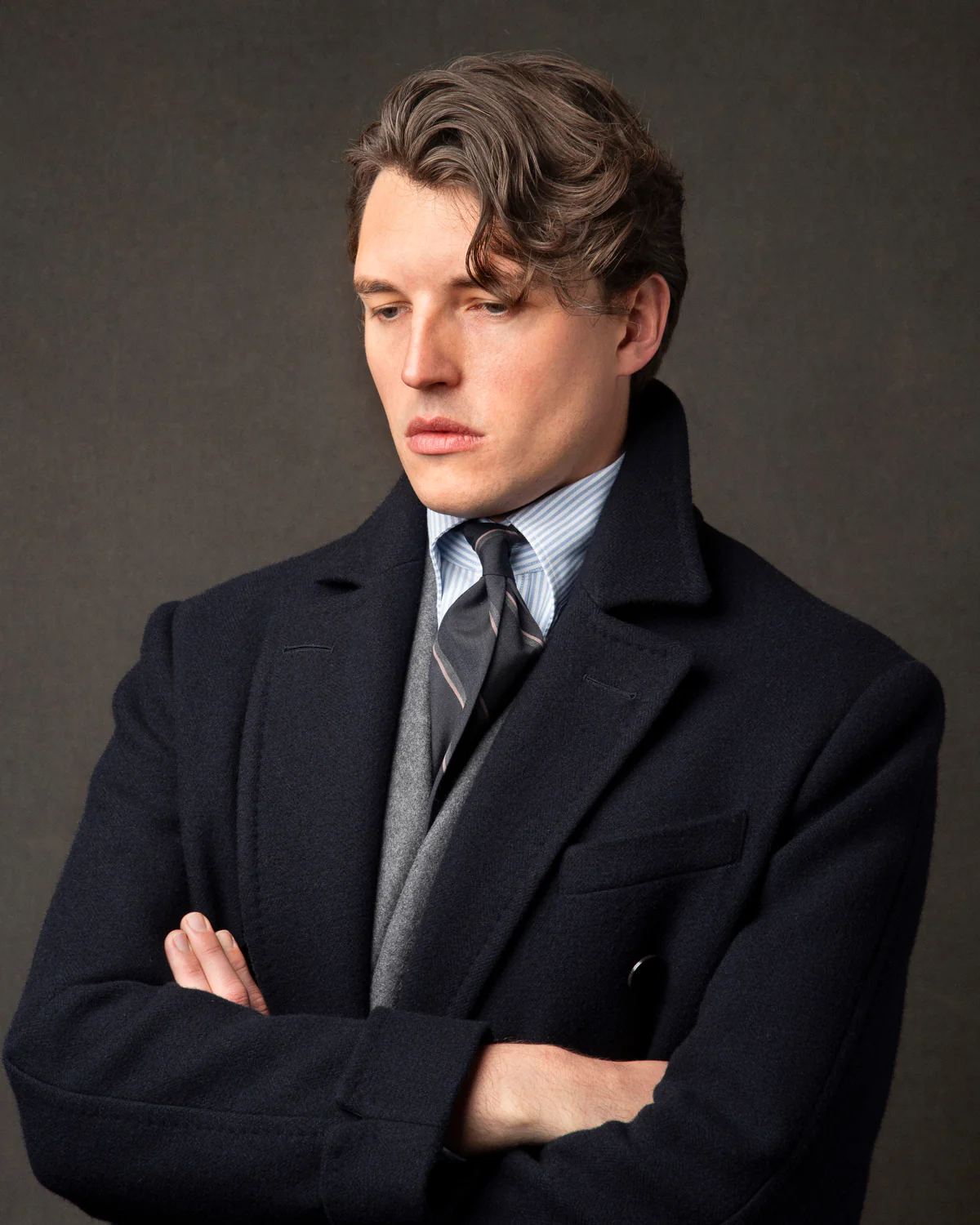
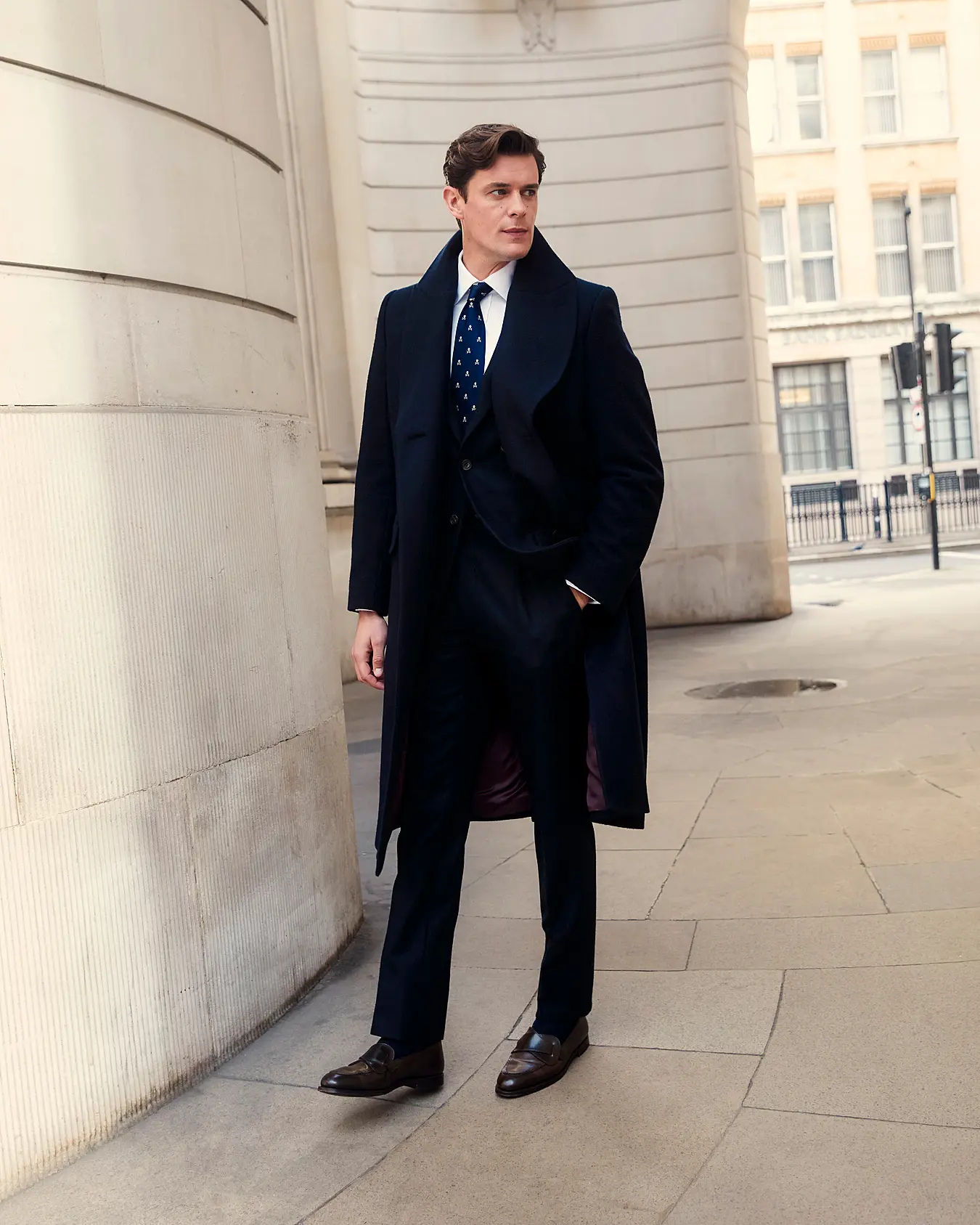
If that actually is the case (and I'm breaking out in a cold sweat just thinking about returning to having only one coat), is there a better candidate than a double-breasted overcoat? I don't think there is, and I know Simon agrees, going so far as to say the double-breasted overcoat might be his favourite piece of menswear.

And so, this guide has been written to look at some of the best RTW options in navy - arguably the most versatile colour. I've focused on coats that I've been able to try firsthand in London - and my, how lucky us Londoners are to have access to so many excellent options within a mile of each other. However, I know there are many more choices online, and so, as always, the comments section is open for your best recommendations.

Cordings (£795)

The Cordings polo coat is undoubtedly the workhorse option in this guide. Hewn from a robust Yorkshire wool (at 26oz the heaviest in the list) it should easily shrug off being balled up in the corner of a pub or getting snagged by a branch on a country walk. It doesn’t feel like the most luxurious cloth, but then again, the cashmere option in this guide is five times as expensive.

I tried the UK38 and it was a comfortable fit, even over the chunky Shetland roll-neck I was sporting at the time. The coat was longer than a Bollywood movie, finishing in the middle of my shins; an unapologetic length for a classic coat and the longest in the guide too.

The shoulders were slightly padded, but I’m pleased to report that they didn’t appear as prominent or as stiff as on Cordings’ website (below).

The only quibbles I had were on the design side. For example, I found the coat’s matte, textured exterior jarred with the satin burgundy lining, which is emblazoned all over with the Cordings crest. 

Or how about the patch-flap breast pocket, which didn’t appear to be wide enough to foppishly stuff a nice pair of gloves into - as is de rigueur with a polo coat. (I know, I can’t believe there isn’t a support group for poor tortured souls like me either).

But these points aside, I would recommend this coat to anybody that’s looking for a more classic style and length, and a more economical proposition. 

Also available in chestnut

New & Lingwood (£1250)

I’ve been really impressed with the collections released by New & Lingwood of late. (I’m also annoyed I didn’t give them a shoutout in my article on pink, because I’ve not seen a brand use the colour so well - whether it’s pyjamas, gowns or knitwear). 

Their pieces are full of character, or, in the words of the shop assistant who helped me, “charisma” (wind your neck in Stefan, I’ll do the writing). Their double-breasted coat is no exception with two standout elements.

The first is the use of a gently textured cloth made of 85% wool and 15% silk, the latter injecting a little lustre and elegance to the coat. As a result, the cloth is marginally lighter than the other coats in this guide - still plenty snuggly, but it might require bolstering with chunky knitwear in a cold snap.

The second element is the shorter, Buddha-belly lapels which evoke the feel of an old naval coat (although perhaps that idea has been implanted in my mind by the brand’s styling with a white roll neck - above). The shorter lapels (with a jigger button situated near the bottom of the ribs) affords the skirt of the coat a generous drop; it might look incongruous with low to mid-rise trousers, but I found it wonderfully expressive.

I tried a size 40 and that fit well in the shoulders, had room for layers and finished at my platonic ideal of coat length - a couple of inches below the knees. Generally, as long as the basic fit of a RTW overcoat is good, I don’t tend to fuss too much with alterations. However with its stylised lapel, darted waist and lighter cloth, I’d make an exception for the New & Lingwood coat to preserve the sharpness of the cut.

In my case, the shape through the waist was ever-so-gently interrupted by a few ripples caused by excess cloth in the back. Stefan was as quick with the pins as he was with the adjectives and restored the intended line, which could subsequently be altered by their in-house tailor.

Anglo-Italian (£1550)

The Anglo-Italian martingala coat has been a constant since the business was founded. It was also one of my first serious menswear purchases, having previously bought overcoats at High Street retailers such as River Island, Zara and (this must have been in another multiverse) G-Star.

I remember browsing Anglo-Italian’s earliest range of products (whilst trying very discreetly to check price tags before getting too excited or attached to anything) when Jake Grantham (the founder) invited me to don their new overcoat.

The lining of the sleeve may as well have had a card swipe machine stitched into it, because as soon as I put my arm through I was sold. The substantial 25oz wool weighed heavy on my shoulders, but, at the same time, propped me up straight and proud. It was one of those garments that wasn’t just pleasurable to wear, but revealed a mode of dressing that I’d been grasping at with limited success for a while.

And so, it’s with a heavy heart that I inform you dear reader that (after several winters of denial) I recently sold the coat to a fellow (slimmer) enthusiast. Alas, amongst the martingala’s many properties preventing weight gain wasn’t one of them, and I had to accept that the IT46 was simply too small for me and I would never again wear it with the intended repose.

Were I to get a replacement, an IT 48 would do nicely. Indeed, in the intervening years, the only thing that has changed is my body, the coat remains as it was: patch flap pockets, turnback cuffs and a more discreet lapel than anything offered by the other brands in this guide.

However, it was the details of the back of the coat which originally fired my imagination, as I’d never seen them on a High Street coat before: an action back to allow ease in motion, a buttoned rear vent, and a half-buttoned-belt to nip the waist just so. 

On reflection, perhaps I was too hasty and should have enquired if Anglo-Italian would consider a part-exchange?

Also available in mid-grey and charcoal

Edward Sexton (£1,750)

The Edward Sexton top coat is a relatively new addition to their range of RTW coats and is patterned after a coat that Edward himself used to wear (below).

It is, as with much of the Sexton range, a statement piece: full-bodied lapels swelling through the chest and demanding attention be paid to the strong, roped shoulder. And, as with many statements, they’re best made when you know exactly what it is you want to say. 

In other words, if you're tentatively building a more tailored wardrobe (in the manner that I was when I purchased my Anglo-Italian coat) the Sexton top coat may just overwhelm the rest of your wardrobe. For everyone else, it’s a superb option - steeped in Savile Row history - at a good price.

I tried the UK 40, the first time I’ve ever put on a Sexton garment, and was jolted by a frisson of excitement. I felt the beginnings of a smirk developing on my face, an unintended consequence of knowing you look damn good.  

The coat was perfect through the shoulders, but, owing to the thick folds from an overly long jumper and the thick folds from an overly long lunch, it was too tight through the waist and seat when buttoned. 

The coat has a few hallmarks of Savile Row tailoring: hand-made buttonholes, pick-stitching and generous inlays. And so, I could easily have let out the waist by an inch or two to allow me to button the coat more freely. However, the advice from Dominic (Edward Sexton’s Creative Director) was to size up to the 42 and bring the waist in to preserve the Sexton hourglass silhouette.

Thom Sweeney (£3,995)

Of all the coats I tried, the Thom Sweeney model was the one I would have walked out with on the spot. (An act I may have contemplated had there not been a staff of pesky, youthful assistants who looked like they could run quite fast).

This is partly because of the fit - the IT48 was absolutely dead on for me in the shoulders, sleeves (which are usually a shade long) and waist (which is usually a smidge tight). 

The only note of caution I’d sound is the length, which is gently flirting with being on the shorter side - fine if you’re below six foot (and at the age of 43 I’ve recently accepted that I’m unlikely to grow beyond that threshold), but, any taller and you might risk exposing the knee (and you wouldn’t want to set tongues wagging in the local Parish, would you?).

But my main reason for favouring this coat was the composition. Whilst the other options in this guide are predominantly fashioned from wool (a material that’s well represented in my coat wardrobe) the Thom Sweeney offering is made from 100% Loro Piana cashmere (a material that’s tragically less well represented).

And so, I could easily envisage a prime, central hook of my coat rail being cleared to make room for the Thom Sweeney coat. However, if you’re in the market for a one-off coat purchase to be worn regularly and without a care then I’d suggest a hardier and cheaper wool (such as those used by Cordings or Anglo-Italian) might be a better choice for you.

Also available in ash oak

Other options

The Anthology, in collaboration with Permanent Style, have developed a terrific polo coat. My only reason for not featuring it in the main body of the guide is because there’s currently no RTW navy option - it’s only available in herringbone donegal tweed ($1950) and camelhair ($2050).

However, customers can commission a navy polo coat via MTO, and, having seen it on a couple of friends (including The Anthology co-founder, Buzz - above), I would wholeheartedly recommend it.

One of the pleasures of working on these guides is that it gives me an excuse to pop into shops that I haven't visited before. And so, I recently found myself in the Cifonelli showroom on Clifford Street for the very first time. The range, as you’d expect, uses some of the most luxurious fabrics in the world - it’s certainly not cheap, but, when compared to some of the luxury brands housed on nearby Bond Street, it suddenly appears quite reasonable. 

Their double-breasted coat (€3,600) is a good option for anyone looking for a more luxurious piece. The coat is made from a very soft, thick, spongey, double-faced wool (which you can see as it’s unlined) and has some hand-sewn details like the milanese buttonhole. 

As is characteristic of Cifonelli, the coat does fit quite close to the body and high in the armhole, so I found sizing up to IT 52 offered the best fit. If you too find yourself with any fit issues, it’s worth noting that in-store alterations are included in the price.

When I visited the Ralph Lauren store in London they’d sold out of their navy polo coats (£1899) and had just a few large sizes in camelhair left. 

You might have more luck in your local store but I would expect a similar model (made from a double-faced melton wool) to be available most Autum/Winters.

And finally, a more budget-friendly polo coat option (£795) is also available from John Simons - made in Florence from melton wool.

My warmest thanks to Matthew Coles, Mila Dastugue and Nina Penlington for their help with this guide.

Manish is @the_daily_mirror on Instagram

The breadth and style of Korean tailoring

The breadth and style of Korean tailoring

||- Begin Content -||

On the Wednesday night of my recent trip to Seoul, there was a party to celebrate the anniversary of the local cloth agency, Renovatio. The founder Sam Ahn invited everyone in the industry, and over 200 people turned up. 

I have never seen so many well-tailored men in one place. They were young (on average), they were stylish (the occasional pink-shoed peacock apart) and they were all wearing suits and ties. It was wonderful. 

Korea is not a big market compared to the UK or Japan - and tiny compared to the US - yet it supports a large number of tailors, from cheap MTM to bespoke. Walking around Seoul, you see more tailoring-related outlets than in probably any other city, including several alterations houses that have also expanded into making their own things. 

This is particularly impressive in a country where (as I noted in our Seoul shopping guide) few people wear suits. There isn't the conservative office culture of Japan, and most tailoring is worn by choice. 

Like Hong Kong, Seoul has always had a plethora of tailors, at a low level. It’s quite standard in a less industrialised country, and South Korea was poor for a long time after the Korean War ended. Ready-to-wear fashion really only arrived strongly in the 1990s.

Yet despite the subsequent growth of fashion, bespoke or at least personalised tailoring saw a big resurgence around 10 years ago. The trend for craft and heritage hit hard, and Seoul saw many new tailor shops set up, as well as greater awareness of those that already existed. 

B&Tailor was part of that trend. Head tailor Jung yul Park had been running his own shop since 1967, but it was when his sons caught the bug for tailoring that the style (and popularity) of the shop was transformed. Chad in particular (above) showed he had a talent for modernising bespoke style and for communicating it online. 

In fact two of the other strong tailors in Seoul, Assisi and Luca Museo, have members that worked at B&Tailor at one point. It’s still a small world, and inevitably one with intricate politics.

The first foreign-trained tailor to set up in Seoul, however, was Jeon Byeong-ha (above), who had trained in Naples with master Antonio Pascariello (a contemporary of Noriyuki Ueki, now Sartoria Ciccio in Tokyo). 

Jeon arrived back in Korea in 2013, and called his atelier Sartoria Napoletana - a name which might seem generic to us, but makes perfect sense to describe what it does to Korean customers. 

In recent years Jeon has added ready-to-wear to his offering, creating patterns for factory-made garments that are sold in his atelier and in shops such as Parlour (under the label Sartoria Jun). This was largely a reaction to a difficulty finding good apprentices, which has substantially limited the amount of bespoke he can make. 

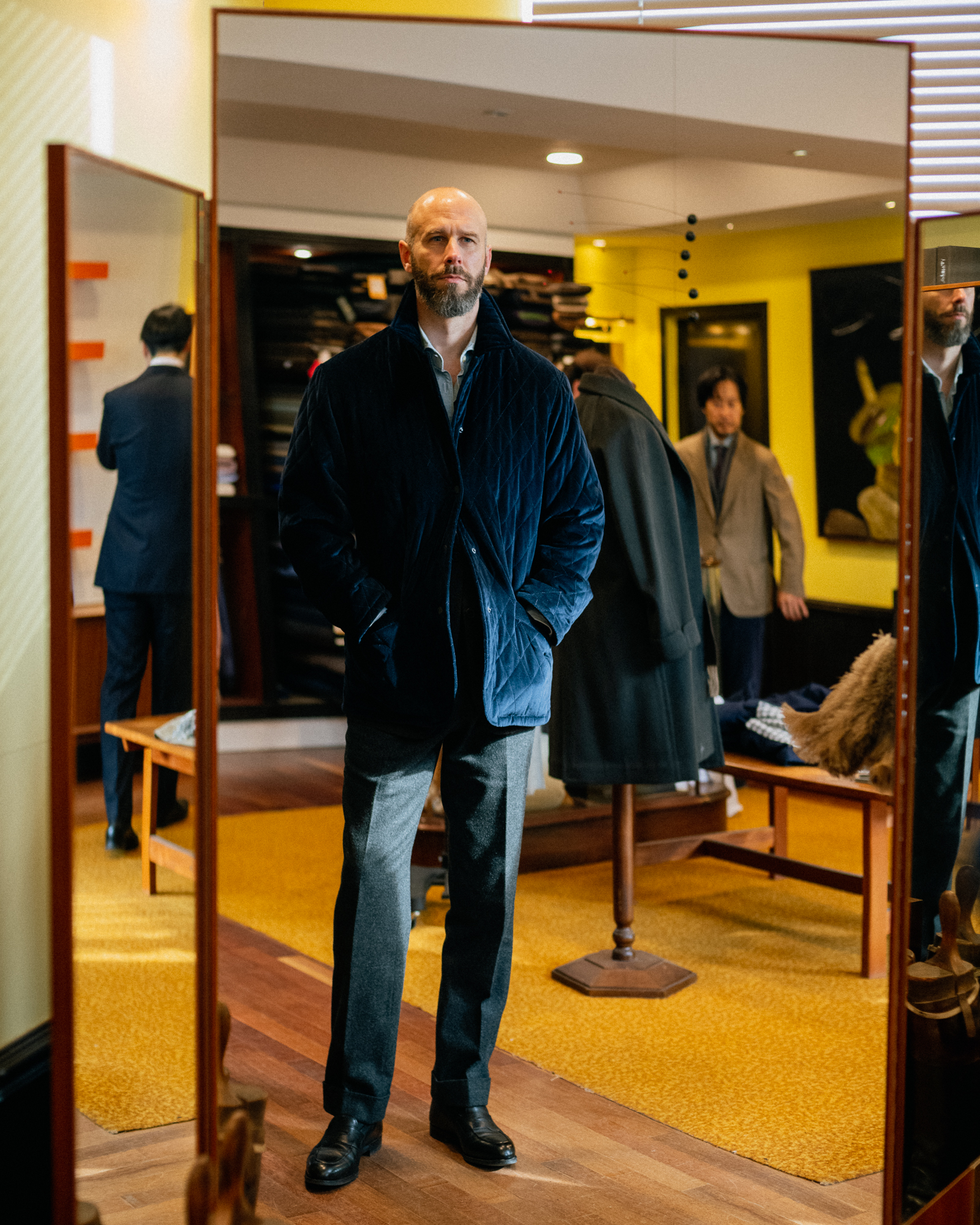
We visited the team and saw some of the RTW, my favourite piece of which was a quilted jacket made in navy velvet (pictured top). Designed to fit over tailoring, it was the perfect length and big enough in the shoulders to cover my tweed jacket. 

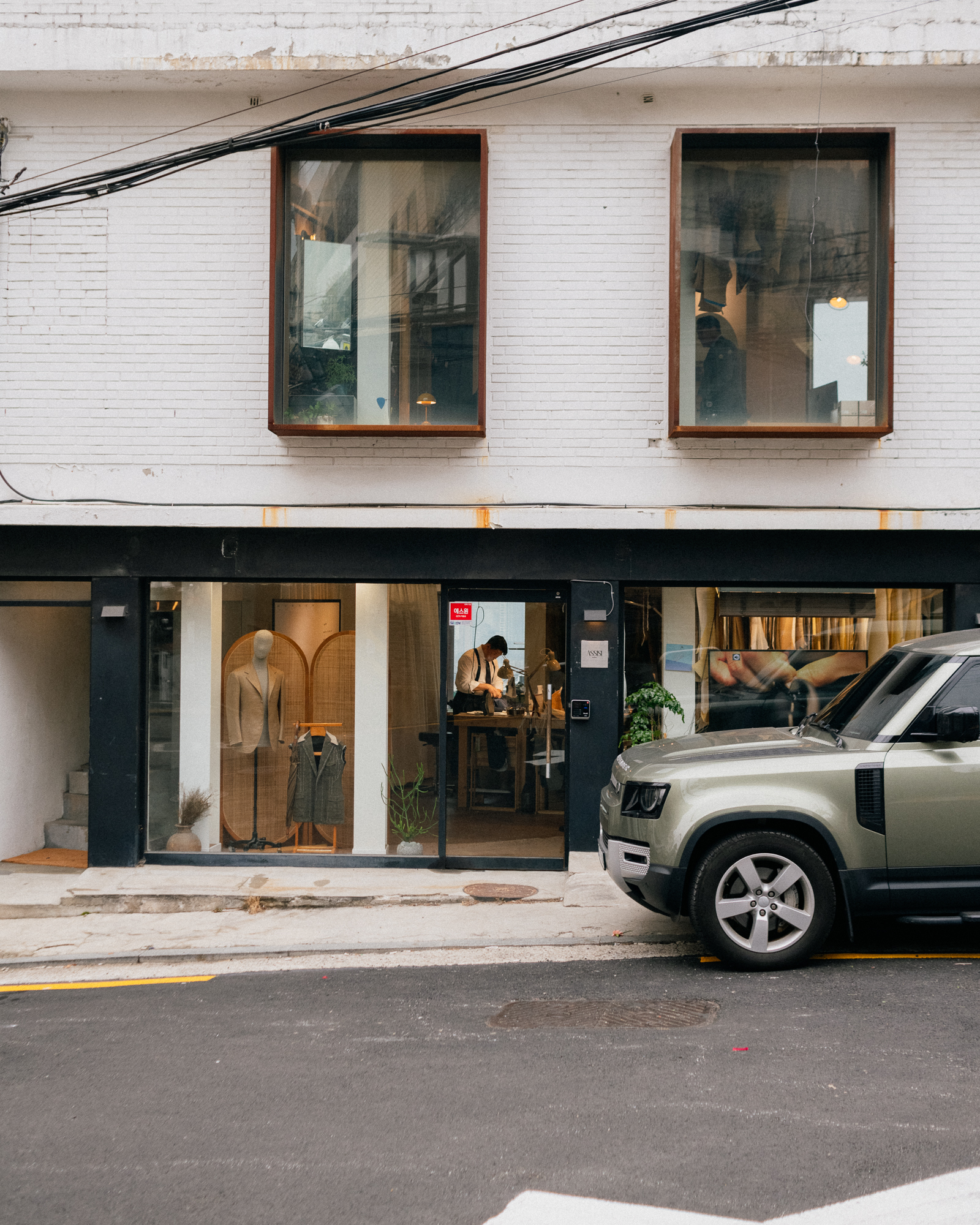
We also visited the new atelier of Assisi (above), where I was having a final fitting on the light-grey summer suit (Ascot 4-ply from Drapers) we had started at Pitti. 

Assisi are everything that makes me excited about Korean tailoring. The standard of the work is good, the fit (which I experienced here) is extremely good, and they have real style. Dabin is always wearing something I’d wear, which is freakishly uncommon in bespoke. 

It makes sense when you see their atelier, because everything there is stylish. The lighting, the sound system, the furniture. There’s the kind of taste level we’re more used to seeing from MTM brands such as Saman Amel or Stoffa, but married to hand craft.

Same goes for Luca Museo (above). They have a lovely, warm space just off a major shopping street in the south side of Seoul. B&Tailor are nearby, though Jun and Assisi are in the north (Assisi in a very rich residential area - the BTS house is up the street).

Luca started the business after many years at Sartoria Vanni, one of the most established Korean tailors. The other two team members are Chan, who started as a trouser maker at B&Tailor; and Ivano, who also started there but spent time with Sartoria Raffaniello in Japan and Pirozzi in Italy. 

I started the process of making a suit with Luca Museo, so we’ll cover that when it’s finished. They come to Pitti occasionally, including in January, and that will be the mechanism for getting it done. They’re not travelling for trunk shows yet, unlike B&Tailor and Assisi. 

In terms of style, Jun is very Neapolitan but most others are a mix of influences, including some elements of Florentine tailoring. Assisi is quite generous in its cut, as I noted in my review, while Luca Museo has a penchant for roped shoulders (though they're happy to soften them). 

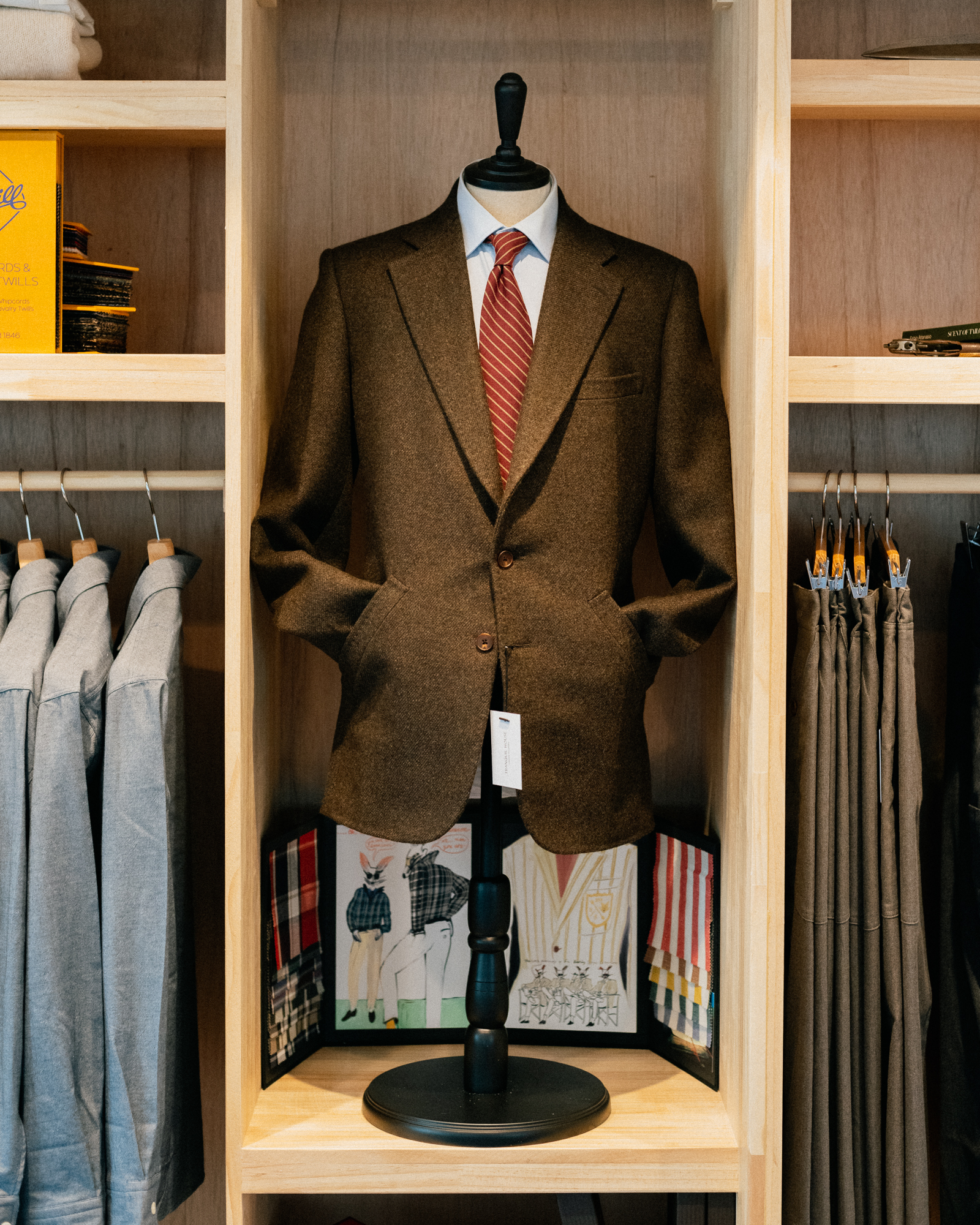
The one tailor that’s different in that regard is Donghyun Kim, aka Tranquil House (above). Kim trained in the UK, studying at London College of Fashion and then working on Savile Row. 

Since returning to Korea he has proved popular as the only English-style tailor, and he’s helped brands design patterns for their ready-to-wear as well. Kim has a lovely space on the second floor of a building in central Seoul, and when we were there we saw some of the ready-to-wear shirts and trousers he now offers too. 

Kim is particularly committed to the idea of ‘rock of eye’ tailoring, where some parts of a customer’s pattern are drawn freehand. “I remember how hard it was to teach that - to draw the oval shape of an armhole for instance,” he told us. “I used to go home, switch out the lights, and draw 200 ovals on my coffee table before I went to bed each night. Eventually I got it.”

Other notable tailors include Corallo Rosso, who studied at Istituto Secoli in Milan and worked as a tailor at Eduardo de Simone before returning to Korea. He’s pursued more of a tailoring academy business and many of the current generation of tailors in Korea have been students. 

There’s Hacheon, who I knew already from Sartoria Vestrucci in Florence as he had fitted me there in the past. He originally studied under Francesco Guida and only came back to Korea last year. He’s currently setting up his own local tailor under the brand name Ccalimala

And finally there’s Lerici, which is probably the best known internationally (covered here in Monocle) but recently changed gear from a formal-wear shop in an affluent area of Seoul to a more artistic outfit in a secluded house in the hills. 

They had an exhibition in the space when we visited, which was beautiful. Seoul is surrounded by four mountains and you quickly get up into the hills when you drive out. From the Lerici garden you could look down on the old town and see the broad Han river below. 

The clothing we saw was mostly womenswear and non-formal tailoring, such as quilted jackets. But a couture-like atelier behind glass panels was hand-sewing tailoring, and that was mostly what was on the racks. It feels like Lerici is less likely to appeal to PS readers, but it does demonstrate the breadth of Korean tailoring today. 

I'll go into more detail on each tailor when they are covered in more detail in the future. I'll also detail things like prices, although in general Korean tailors are at a discount to European ones, even on trunk shows. See Assisi pricing here for example. 

Bespoke loafers with Seiji McCarthy: Commissioning and fitting 

Bespoke loafers with Seiji McCarthy: Commissioning and fitting 

Friday, December 15th 2023
||- Begin Content -||

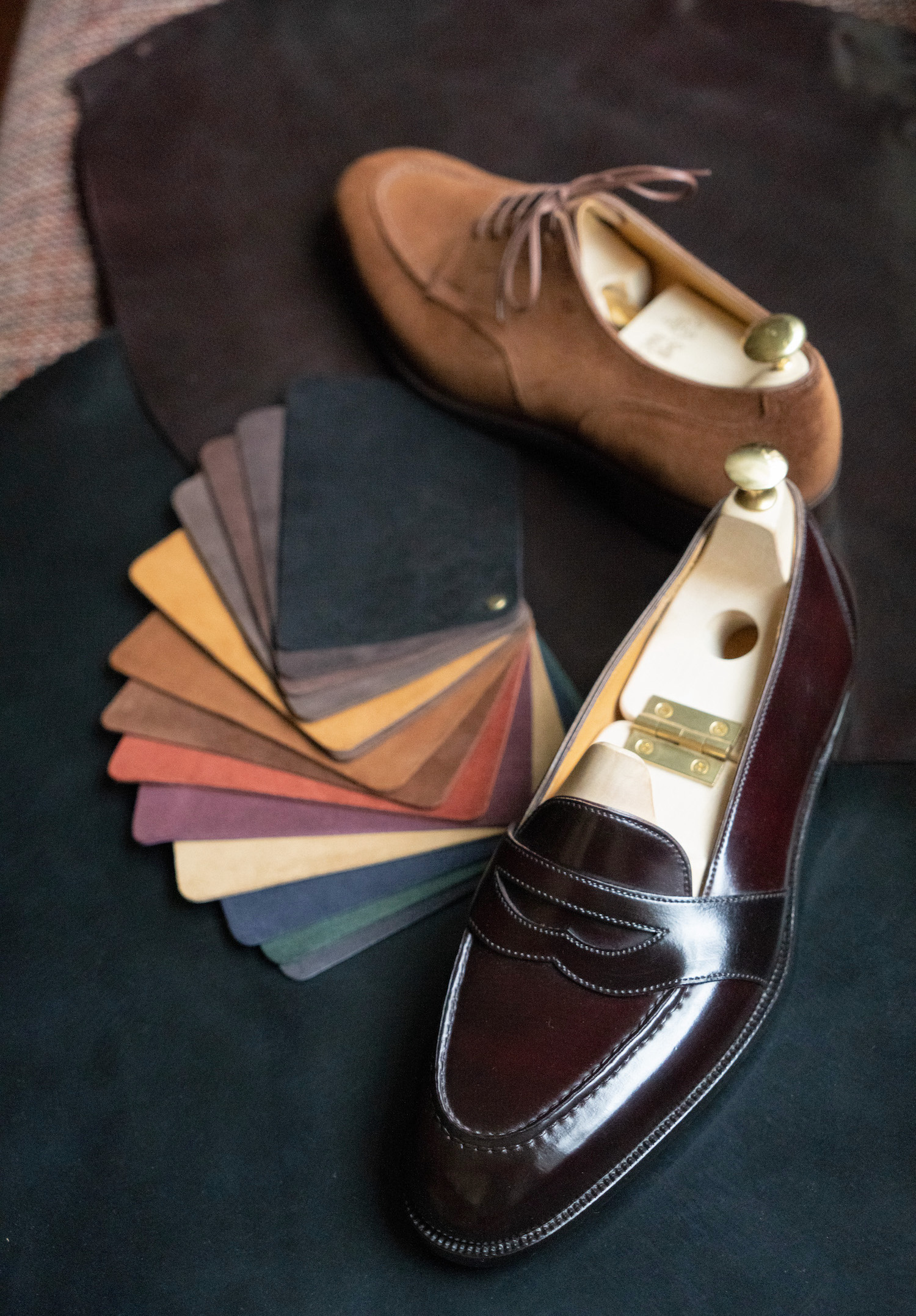
In Japan earlier this year I started the process of commissioning a pair of bespoke loafers from Seiji McCarthy

Loafers are often tricky to make bespoke, and bespoke as a whole I’ve found a little inconsistent, so why did I take this leap with Seiji? 

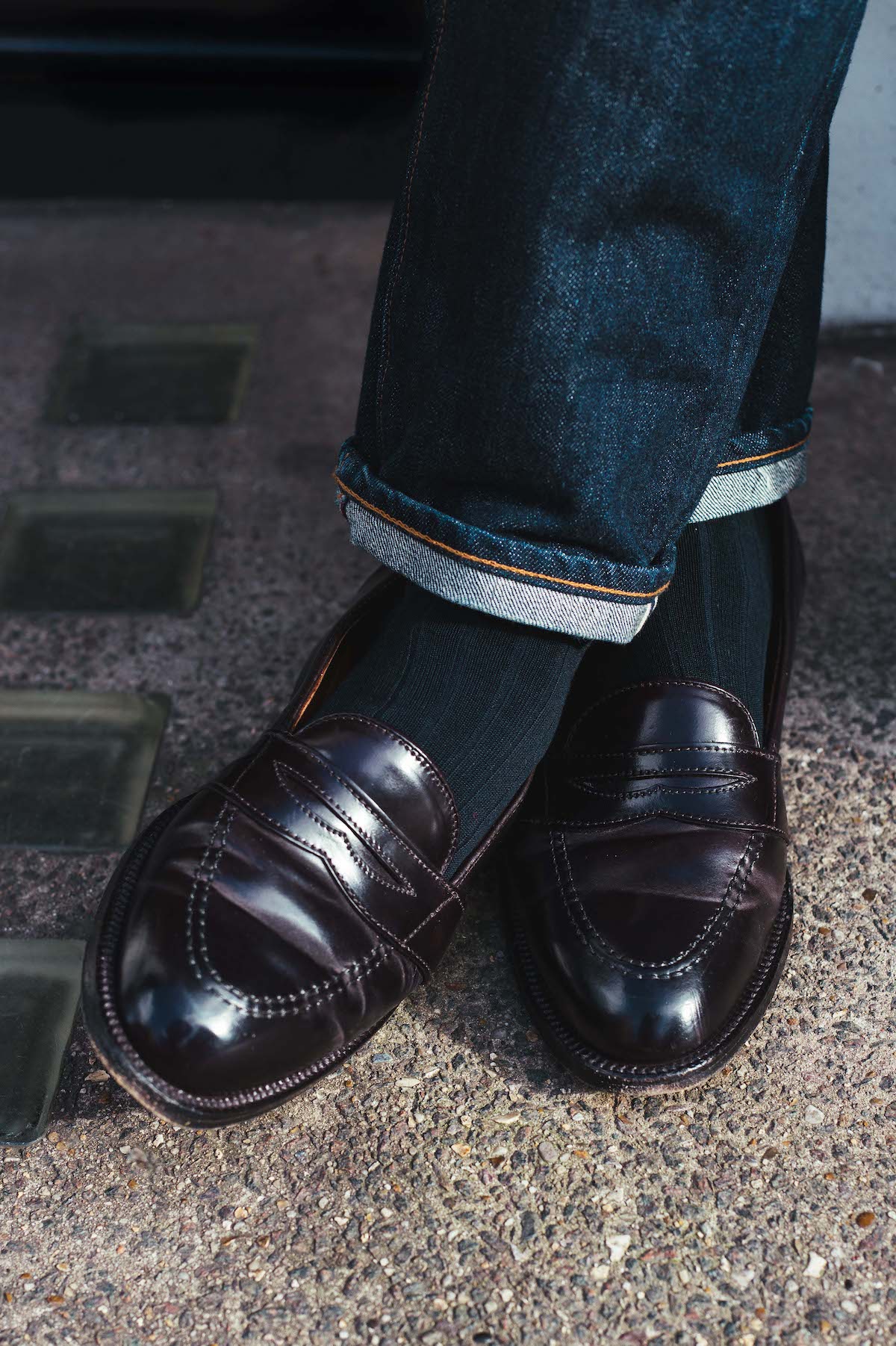
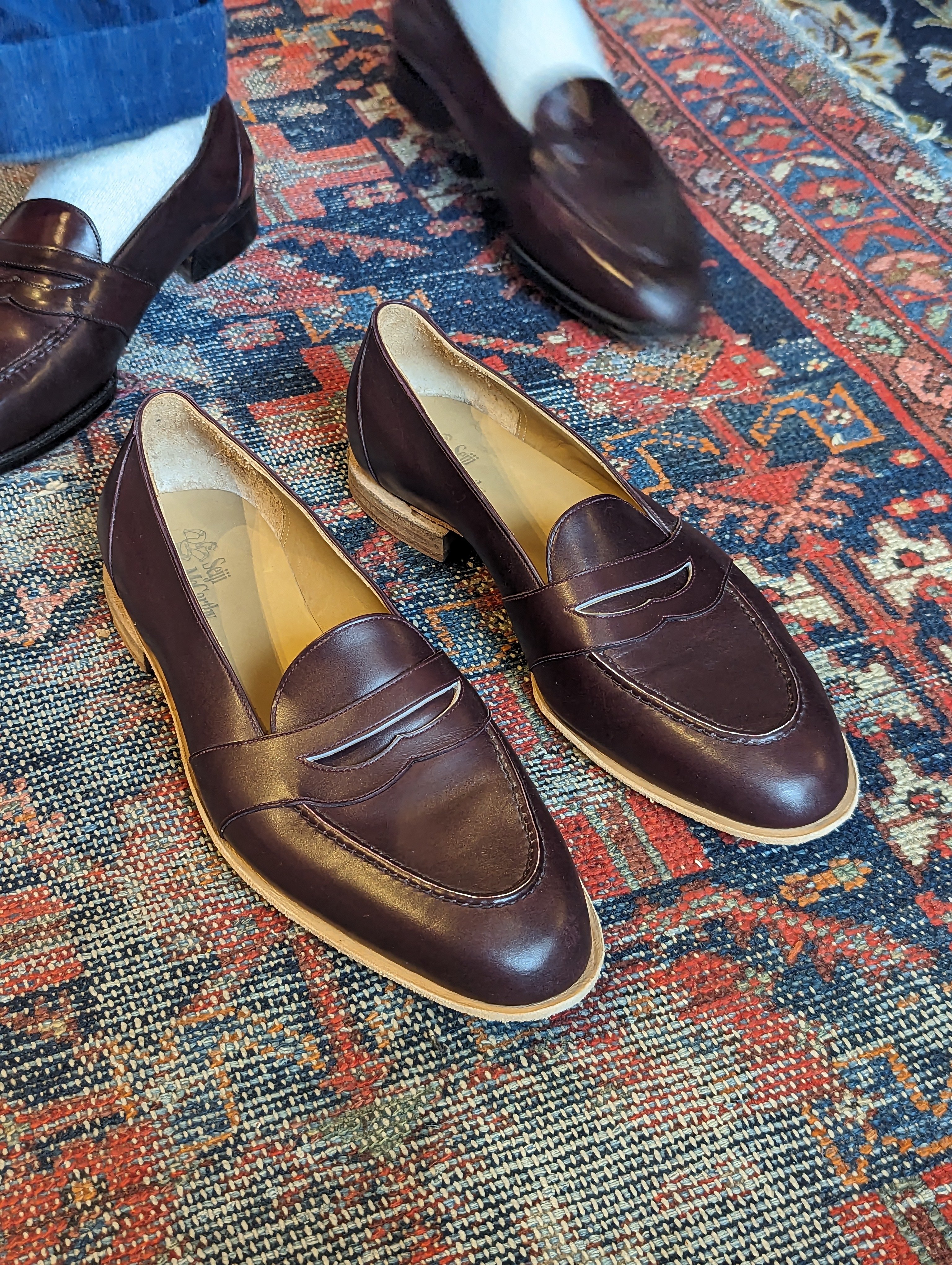
Largely it was because he offers something different - a particular love of American footwear such as that made popular by Alden, which he really understands and also executes beautifully. One of my favourite ever designs is the full-strap loafer from Alden on the Aberdeen last but it's never been a good fit for my feet. This was my opportunity to get a better version. 

(That's an example of Seiji's below, followed by my Aldens.)

But there were other reasons too. Seiji has ready-made models of his shoe that you can see in person, unlike some makers; he's an interesting one to cover because of that design angle and because he offers MTM and MTO alongside bespoke; and, a much underrated factor, we get along. 

Seiji is a little older, highly educated and professional. He studied at Stanford and the LSE before working for the NBA, leaving to study shoe design in Italy and then shoemaking. 

We're more similar, in terms of cultural background and education, then I am to most craftsmen, and I’ve found that's both nice and helpful: at a superficial level, the chat is better; at a deeper one, it's easier to discuss concerns with someone you relate to. 

I didn’t realise until we met in New York this past October that Seiji initially studied to be a shoe designer. He had thought his connections at the NBA might help as a market for the shoes. 

That didn't really work out. Turns out a young, financially flush sports star doesn't want to wait several months for a pair of dress shoes made by a brand no one has heard of.

But Seiji found his niche with bespoke shoemaking in Japan, where he lived in his twenties and returned to seven years ago (he has a Japanese mother and American father). He was also helped (as many bespoke makers have been) by Ethan Newton - the model of loafer I commissioned is even called the ‘Ethan’. 

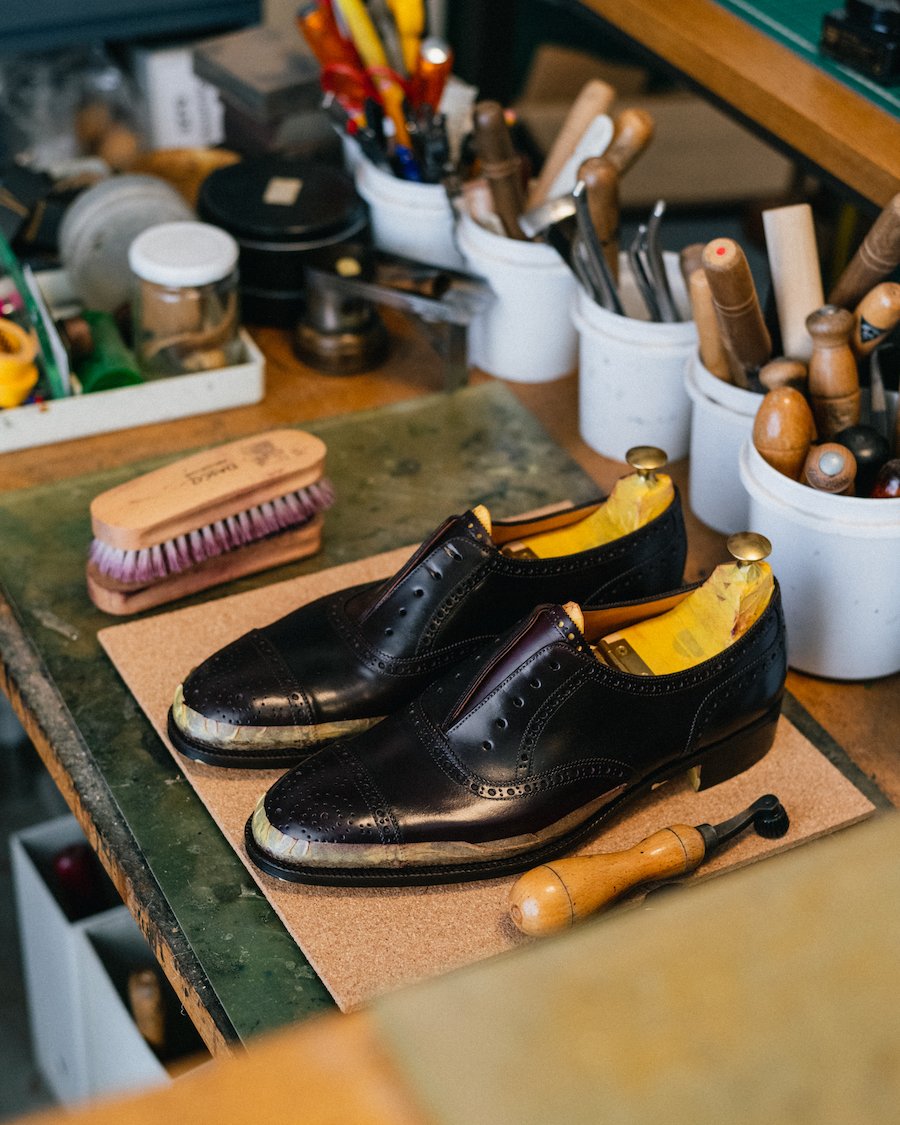
Seiji has also just moved to a bigger workshop space (the photos here were taken at his old one) and has taken on two apprentices.

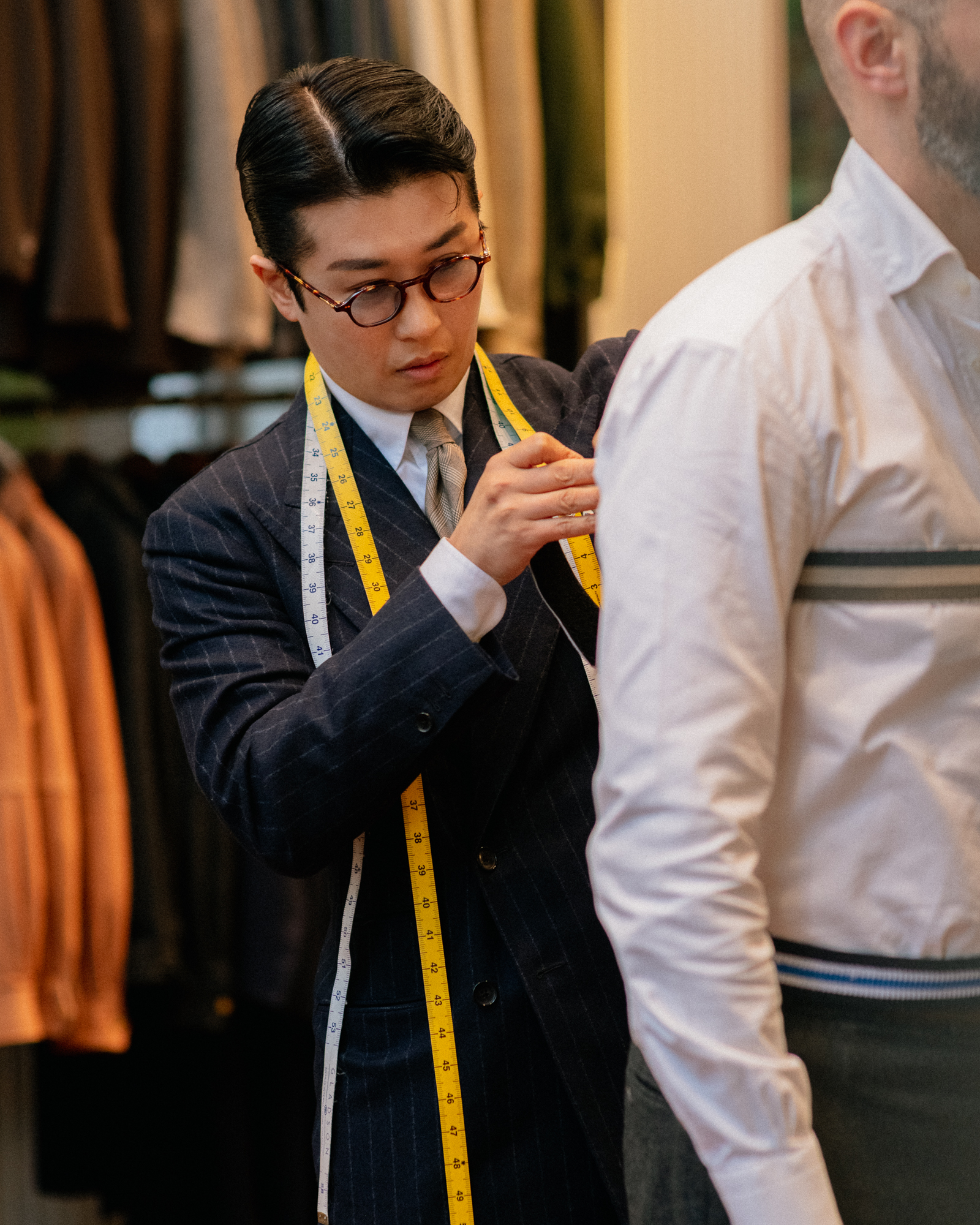
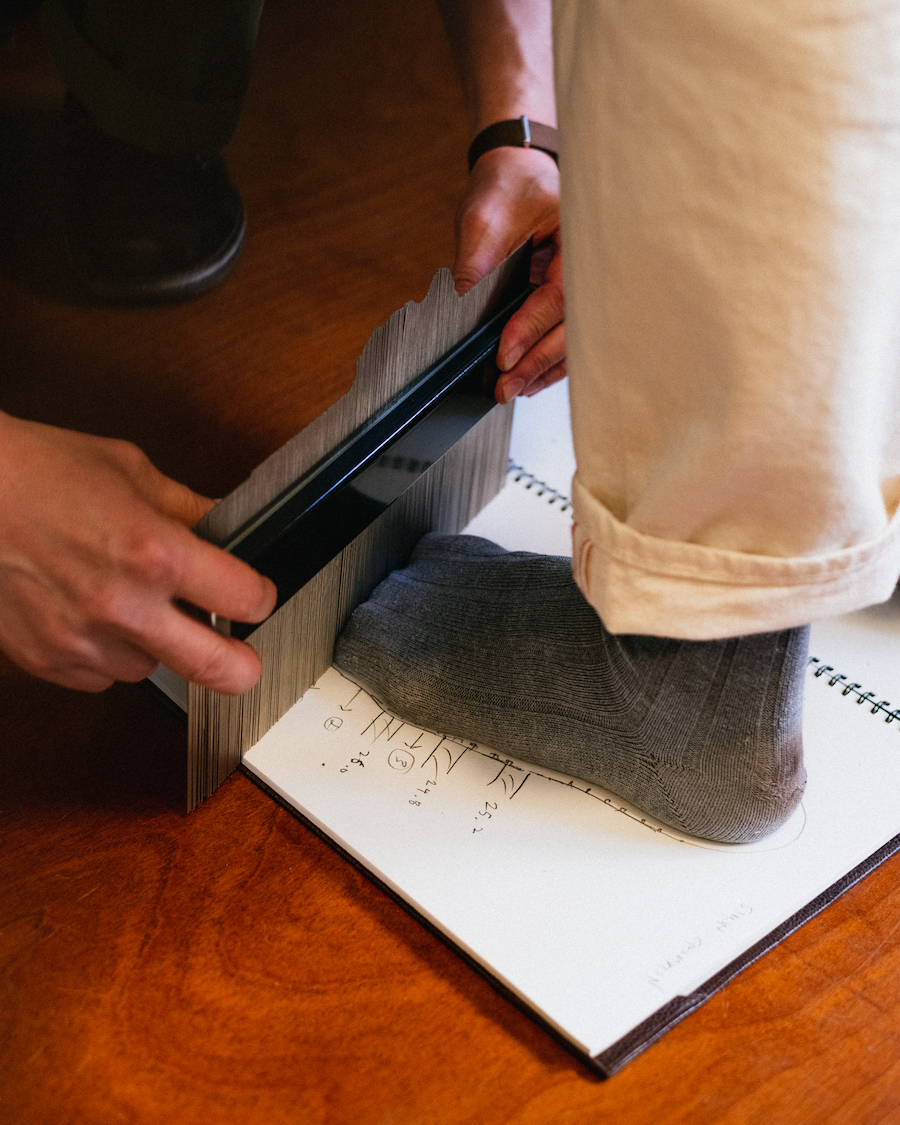
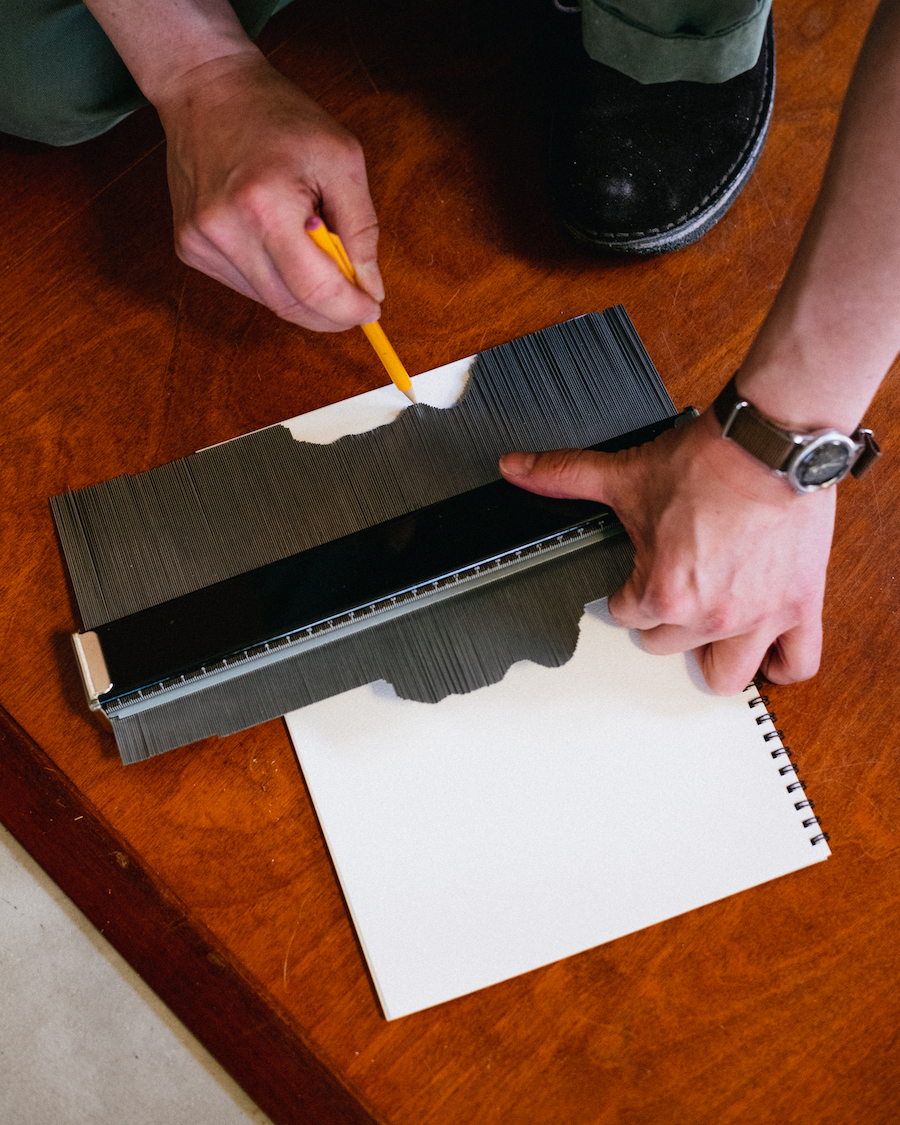
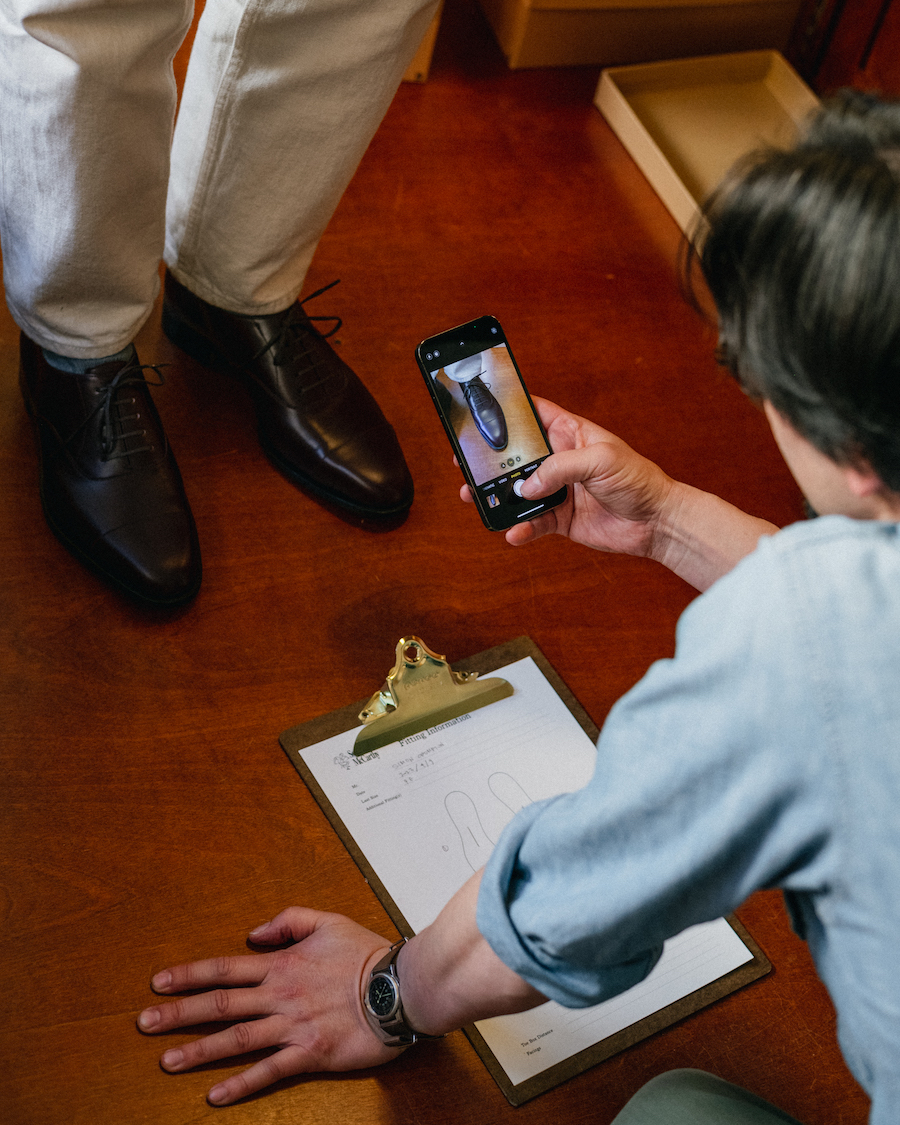
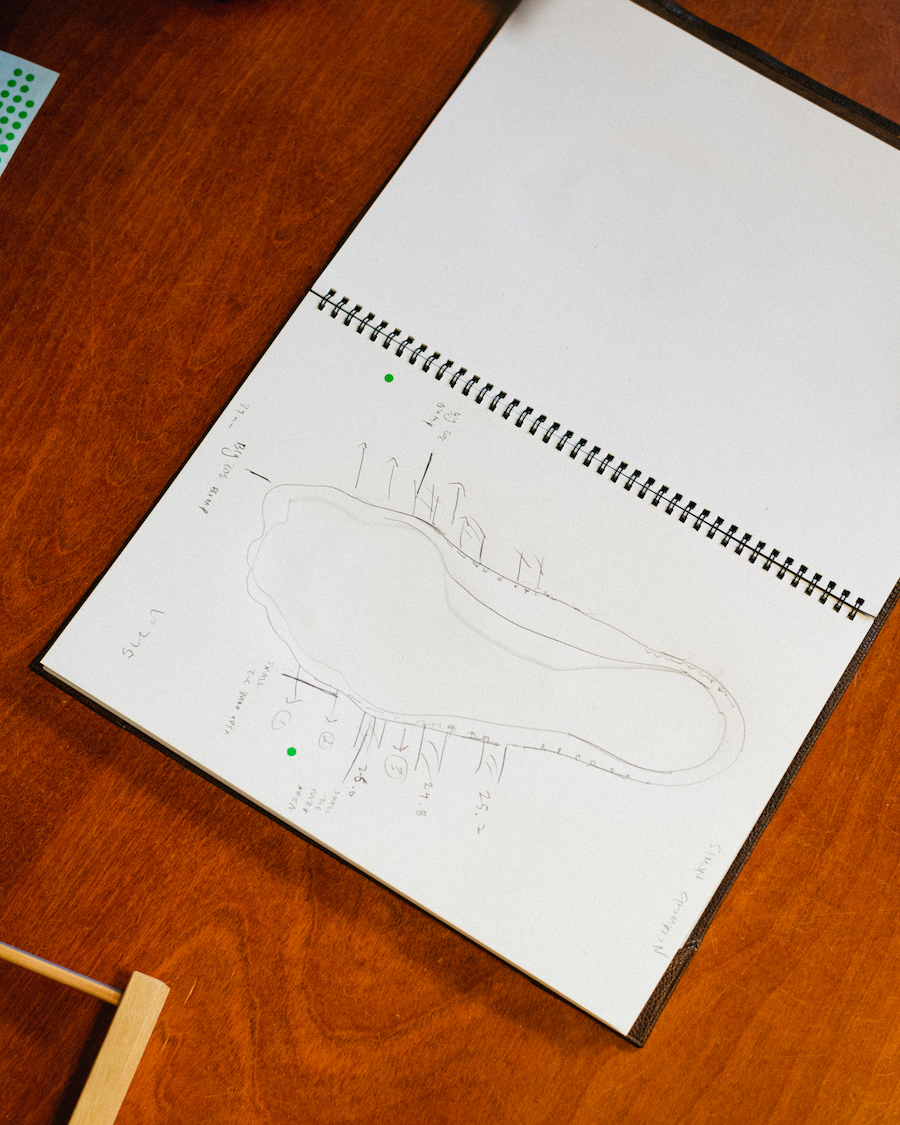
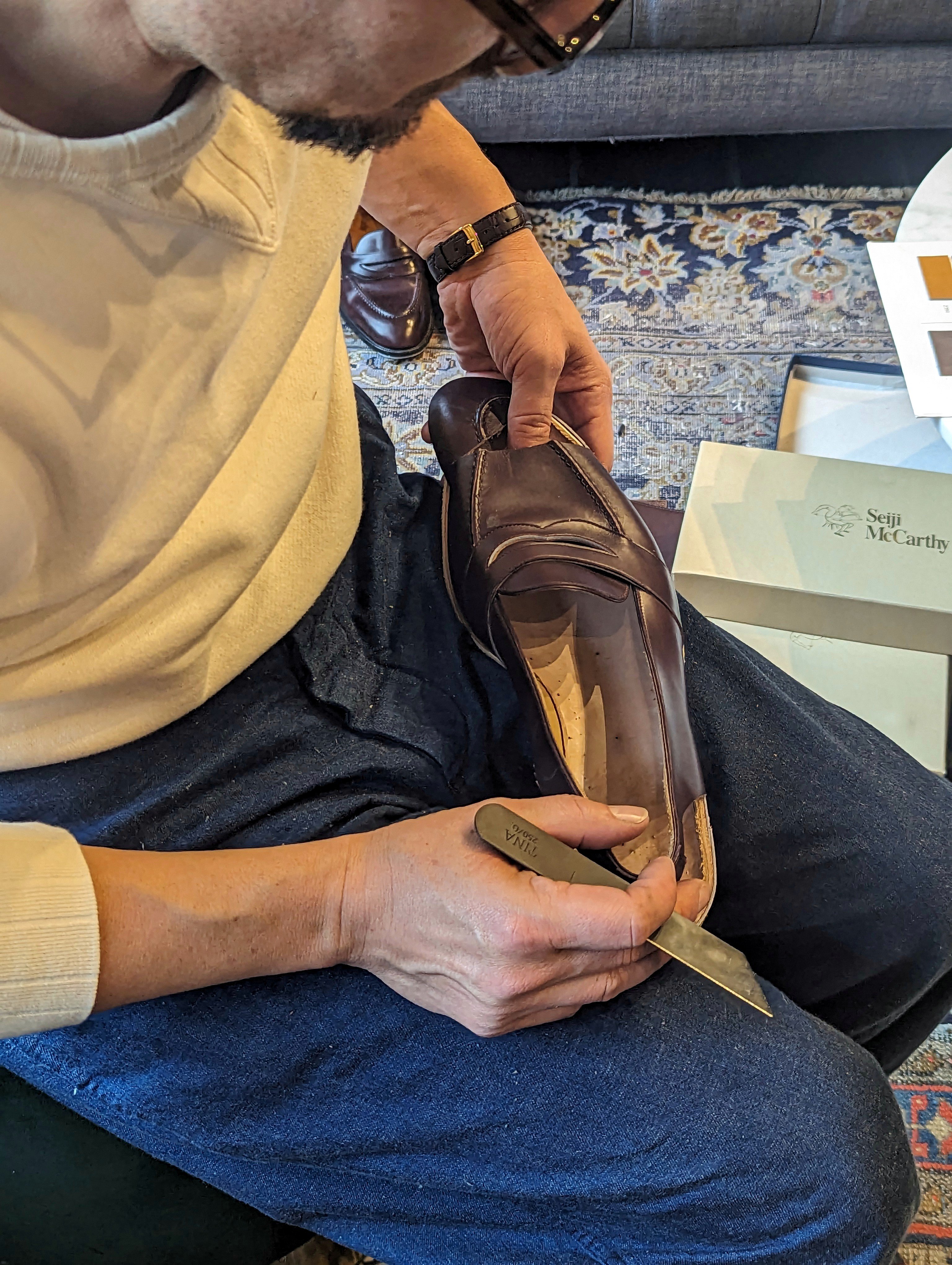
The initial measuring session (most pictures shown) was interesting, particularly Seiji's emphasis on tracing the profile of the foot (above). From a customer point of view though, the most practical thing was trying on sizing shoes (below). This really makes it easier to communicate issues of fit - almost like having two fittings rather than one.

When we had the actual fitting in New York this past October, the shoes looked good. As per my recent Ugolini article, I was specific about what worked well for me during both sessions: there needed to be enough room for those toes to move. 

Initially the shoes felt a little tight at the front, but Seiji ripped out part of the insole in order to lower my foot, and that was better. (Not that the final shoes will lack this insole - it was just a good way to see what room was needed.)

There was a little discussion about how much height to have over the big toe vs the others, given they are so much lower. To an extent you can shape the upper to give space to one and not the other, but it's also one piece of leather and will move around. In the end we opted for a little more room rather than less. 

And after the initial fitting, Seiji cut the shoe apart at various points (making it look like a woman’s sandal) in order to see where my foot was sitting inside. 

Not every shoemaker does this, but I did see the advantage here, as Seiji pointed out that my heel was sitting off the inner edge of the insole. He also showed me where you could see on my ready-made shoes that my heel rubbed on this part of the lining. 

Adjustments will be made, and I should have my final shoes early next year. 

On this experience I would certainly recommend Seiji, particularly given how hard loafers can be to fit. But I'll do a full piece next year. 

If anyone would like to read more about him, we also commissioned a feature from a Japan-based writer here in 2022. And there is a nice piece here on how Japanese shoemaking in general has changed in recent years. 

Seiji now travels to the US once a year for trunk shows - currently New York and San Francisco but with plans to add others in the future. 

Pricing and order types:

  • MTO/MTM starts from JPY 280k (includes lasted shoe trees)
  • MTM is the MTO base price plus an additional JPY 5k per adjusted area on the last
  • Bespoke starts from JPY 450k (also including lasted shoe trees)
  • This is ordering in Japan. Trunk show prices are around 15% higher. 
  • Due to delays coming out of Covid, as well as high demand, MTO/MTM delivery is one year and bespoke trial fitting is one year with delivery a year after that
  • But new apprentices are hoped to bring MTO/MTM delivery down to six months and bespoke trial fitting to six months and delivery six months after that

Seoul: A menswear shopping guide

Earlier this month I visited Seoul, to see some of the tailors I had been intrigued by but mostly seen from afar, and to visit some of the shops and brands.

My impression was of a dynamic city – new development, new retail, every shop with a distinctive concept and branding. There seemed to be an independent coffee spot on every block, each with a fully-fledged identity, complete with period furniture and branded stickers.

Comparisons with Japan are probably inevitable – especially for a westerner – and Seoul felt newer, more tech-savvy, more open. It’s said Tokyo feels like the city of the future, in 1990; Seoul feels like the future now.

This is not necessarily good. I like tradition and I like old buildings. In many ways Seoul is not my kind of city. But there are some more neighbourly areas and the longer I stayed (we were there a week) the more I liked it.

The retail was also exceptional. Just like the coffee shops, every block of Seoul has multiple fashion start-ups alongside the normal big-brand flagships. They’re fast changing and (another difference from Japan) fuelled by social media.

I was told retail has matured in the past 10 years though.

The criticism of Korea used to be that it was all hype; that it adopted fashions quicker than anyone else but dropped them quicker too. Speaking to those that have lived there – and either worked in menswear or been consumers – that seems to be changing.

Classic menswear was a big trend for perhaps 10 years (a big thing in a place where, unlike Japan, few people wear suits). That has started to fade in recent years, but there still seems to be enough makers and customers for it to be sustainable. Vintage was also a big thing, but even though it’s not as popular as it once was, there are still some really great stores (in fact, perhaps my favourites anywhere). There’s a little less hype these days, and a little more diversity.

Tailoring has been on its own journey too, and I’ll cover that in a separate article. Today I’m just going to mention the best shops we went too – something a few readers have already asked for.

The list is by no means comprehensive, as it was our first visit and we spent a lot of time seeing tailors. But I think it’s a great set of places for any Permanent Style reader to visit, and hopefully I’ll get a chance to flesh it out in the future.

Thank you Sam, Matt and everyone who was so generous to myself and Alex during our time in Seoul. Hopefully this and future coverage will do some kind of justice to your city.

San Francisco Market

San Francisco Market was the first real menswear multibrand store in Korea, though that only makes it 30 years old. It’s an interesting mix today, with brands like Nepenthes and Engineered Garments alongside Alden and Andersen-Andersen. Upstairs there’s Liverano and Jacob Cohen jeans.

Unipair

Unipair is the second generation of menswear in Seoul, tracing its history back to the start of PS and so much else, in 2008. It began as a shoe space inside San Francisco Market and is now a large, traditional shop with an impressive entrance, stocking the widest range of classic shoes in Seoul. They’re planning on launching a bespoke service next year. Joe’s Garage (below) and the Drake’s shop are operated by the same group.

Joe’s Garage

A good shop for Japanese repro brands, with a particular emphasis on Toys McCoy and Boncoura, which we don’t see so much of in the UK. There are also the more standard brands such as Full Count and Warehouse, plus Korean brands Demil and Eastlogue. The latter is a good example of what Korea has become increasingly known for abroad: down-filled and other outdoor clothing, also seen at FrizmWorks for example.

Barbershop

I have to say, being in Seoul makes you miss good multibrand (‘select’) stores. There are so few in London, and they always give you a fresh perspective on the brands they choose. They also (in Seoul as in Tokyo) often have European brands that are hardly available in Europe. Barbershop is one of the best, with highlights when we visited being a long long row of Harley shetlands and a selection of Owen Barry shearling.

Parlour

A shoe store that’s part of the same group as Barber Shop, Parlour (above) also has some smarter clothing – they’ve just introduced a ready-to-wear selection designed by Sartoria Jun, the first foreign-trained tailor in Seoul. The shoes included exclusive make-ups of Alden (such as a rather nice kidskin) and my first look at La Botte Gardiane.

Random Walk

The third, most recent generation. Random Walk has a mix of smart and casual, with JM Weston shoes alongside Coherence and Scottish knitwear brand Esk. Also Filmelange, which Manish highlighted in a recent article, and the American brand Crescent Down Works. Next door they also have a pop-up space which when we were there was led by Rocky Mountain Featherbed, Anatomica and Big Yank.

Omnipeople 

Omnipeople (above) is two vintage shops, one in the north and one in the south of Seoul (Gangnam). The one in the north is the better and certainly larger. It’s the biggest I’ve visited anywhere in fact, with full size runs of American military clothing and an impressive range of periods, including a lot of 1960s-1980s outerwear, from Eddie Bauer and the like. The rarer stuff is in a small space upstairs.

Magnolia Miss

A smaller vintage shop (below) but just as impressive. In fact I found more things here to try on than anywhere else, including old American flannels, American-made Rocky Mountain, and a range of chambrays. As with all the vintage shops we visited, each owner was behind the counter and keen to explain the history or interesting aspects of any piece.

Soobaak

A slightly more personal, quirky vintage shop, but really worth a visit. The collection is eclectic, with great clothes but also Sony tape players, a little collection of Cartier watches and great books like the Margiela: The Hermes Years. The kind of place I’d like to go back to if I ever wanted to find something really different. They also make some of their own pieces, including a nice range of belts.

Take Ivy

A small vintage place selling (you guessed it) Ivy clothing. Cheaper and more modern, it was notable for selling not just Ralph Lauren but the Japanese line of J Press, and a lot of Van Jacket. I picked up a varsity jacket that Van had made for a Japanese prep school.

Tannery

Just across the road from Take Ivy (which is why I’m placing it here), Tannery has a mix of smart and casual just like most of Seoul’s menswear. That includes Boogie Holiday (also a brand worth checking out separately), East Harbor Surplus and Kenneth Field. It’ the shop in Korea stocking Fortela.

Jack Fort

A little space around the corner from the Assisi bespoke shop. Jack is a trained tailor who takes apart vintage clothing that can’t be sold otherwise and remakes it into new pieces (above). That might be M65s remodelled as a double-breasted jacket, or his own design of a field jacket made with deadstock cloth and backed with new alpaca.

There were many other shops we would have liked to check out, including Korean brands that are doing things adjacent to more classic menswear – such as Document, Niftydo, Havati, Ourselves, Rinostore, Calico and others. As I said, hopefully next time.

The future of Savile Row, with Anda Rowland: Video

The future of Savile Row, with Anda Rowland: Video

Monday, December 11th 2023
||- Begin Content -||

This talk a couple of weeks ago with Anda Rowland was flagged as a discussion of the future of Savile Row. And while we did talk about that – including how to get more new tailors into the area – the most interesting area was probably how the Row has changed since Anda became involved.

She grew up seeing her father’s love of clothes (his valet lived in the flat downstairs) and his financing of a buyout of his tailor, Anderson & Sheppard. Anda became personally involved in 2004, when A&S had to move from its historic space on the corner of Savile Row and was trying to re-establish itself on Old Burlington Street.

It was then that her background in brand development started to change A&S, and created a format that many other tailors have copied since. We rarely talk about the recent history of Savile Row, so it was fascinating to learn about the ups and downs it has gone through.

I hope you enjoy the talk. It’s long, but it would be criminal to cut any of the different sections. Put it on in the background while you’re doing the washing up, or play it through your headphones on the way to work. It’s all interesting.

Thank you to Anda for taking part, to Mortimer House for hosting us, and as ever to the 40-odd readers who came along to take part.

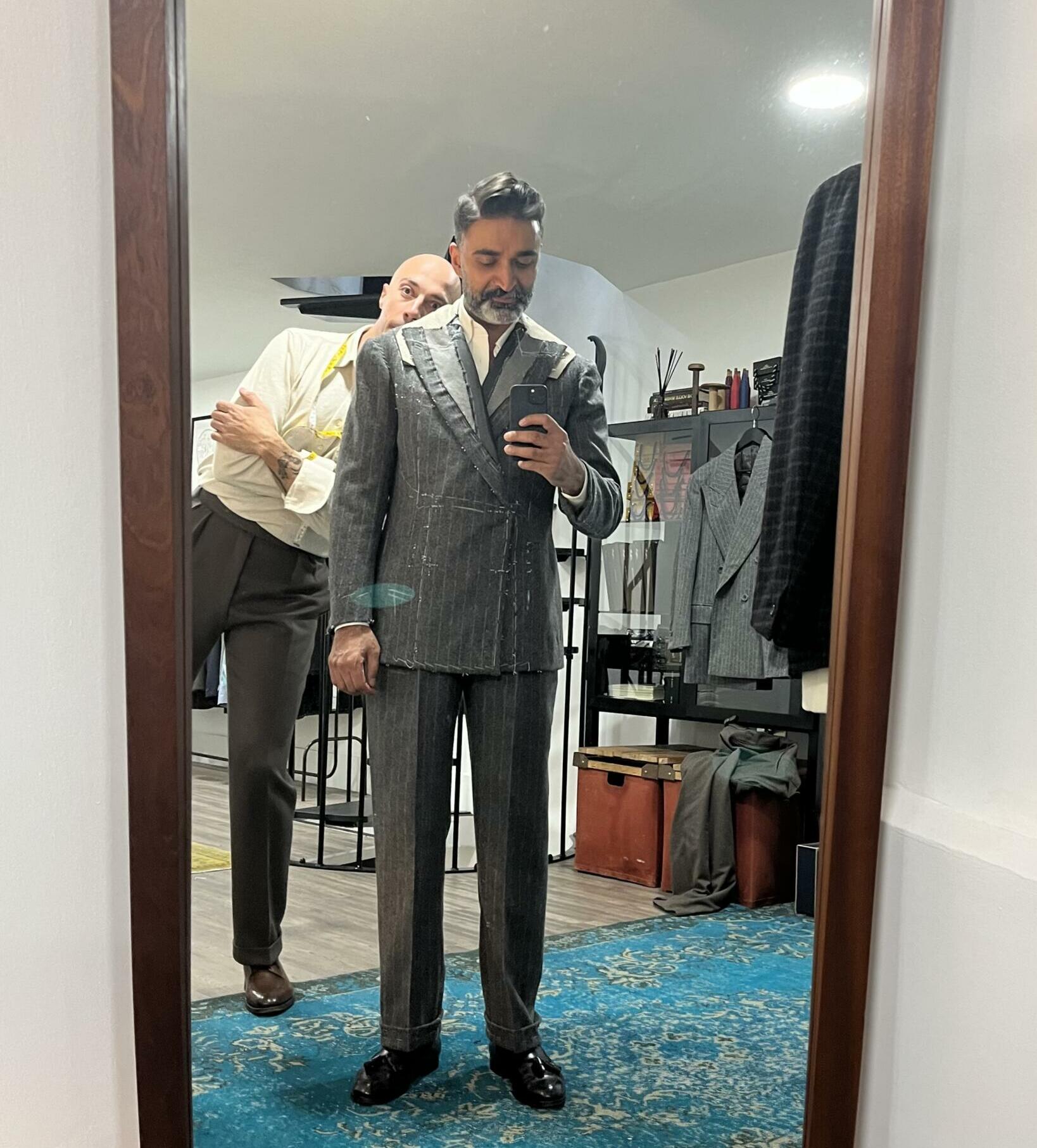
For those that are interested, I’m wearing my double-breasted end-on-end suit from A&S, cut by John Hitchcock in 2011. It’s needed two alterations in that time, and body changes mean the shoulders are only 99% correct, but I love it.

Worn with a pale-blue shirt from D’Avino, printed silk tie from Drake’s, and dark-brown oxfords from Yohei Fukuda.

Christmas Gift List 2023: Do not read!
||- Begin Content -||

Permanent Style reader, this is not for you. This is intended for your wife/husband/partner/child/dog, in an attempt to help source a Christmas present for someone who, let’s face it, is very fussy in general but particularly about clothing. 

So print it out, hand it over, share to their relevant social account, and do not read on. After all, you want it to be a surprise don’t you?

-

Hello, loved one of a PS reader. I know, I know, what are they like? Nothing is ever good enough. Or some things are, but they’re so expensive!

Hopefully this list will help find something that satisfies and perhaps even surprises them. With luck it might manage to be relatively inexpensive too, although I use the word ‘relatively’ very advisedly. 

If you have any questions, please do ask in the comments below. Good luck. (Oh, and remember that while we never include Permanent Style products, there are some great hats and scarves and books in there too.)

1 Rubato belt

£185

So, I’d say the easiest way to get your guy a present they’ll definitely like is to find something they already own, and get the next colour. You know that belt they always wear? Look on the inside, find the brand and size, and get one in black rather than brown. 

It doesn’t have to be a Rubato belt - it might be any brand - but I mention it here as an example of how finicky they can be. The belt has to be one-inch wide; it has to have a solid brass buckle; the suede/leather has to be a certain quality - which let’s face it, you’re never going to pick out (along with the rest of humanity). So as a safe bet go with the same one, just different.

2 New watch strap

Various prices

A watch strap falls into the same category. There will usually be a brand on the inside too, and the nice thing about a watch strap is that most men never buy a different colour. This means it will be more of a surprise than the belt, and it will almost look like a new watch, for a fraction of the price. 

If you need to find a seller, I use Jean Rousseau in London’s Piccadilly Arcade, but readers mentioned a few others in this article: GLC straps, Hirsch, Strap Tailor. Doubtless they will now leave suggestions in the comments below too. 

3 Black silk socks

€38

OK, let’s change tack now. Another way to get him an impressive present is to buy something that seems so indulgent, he’d never buy it for himself. This sounds very expensive, but it doesn’t have to be. 

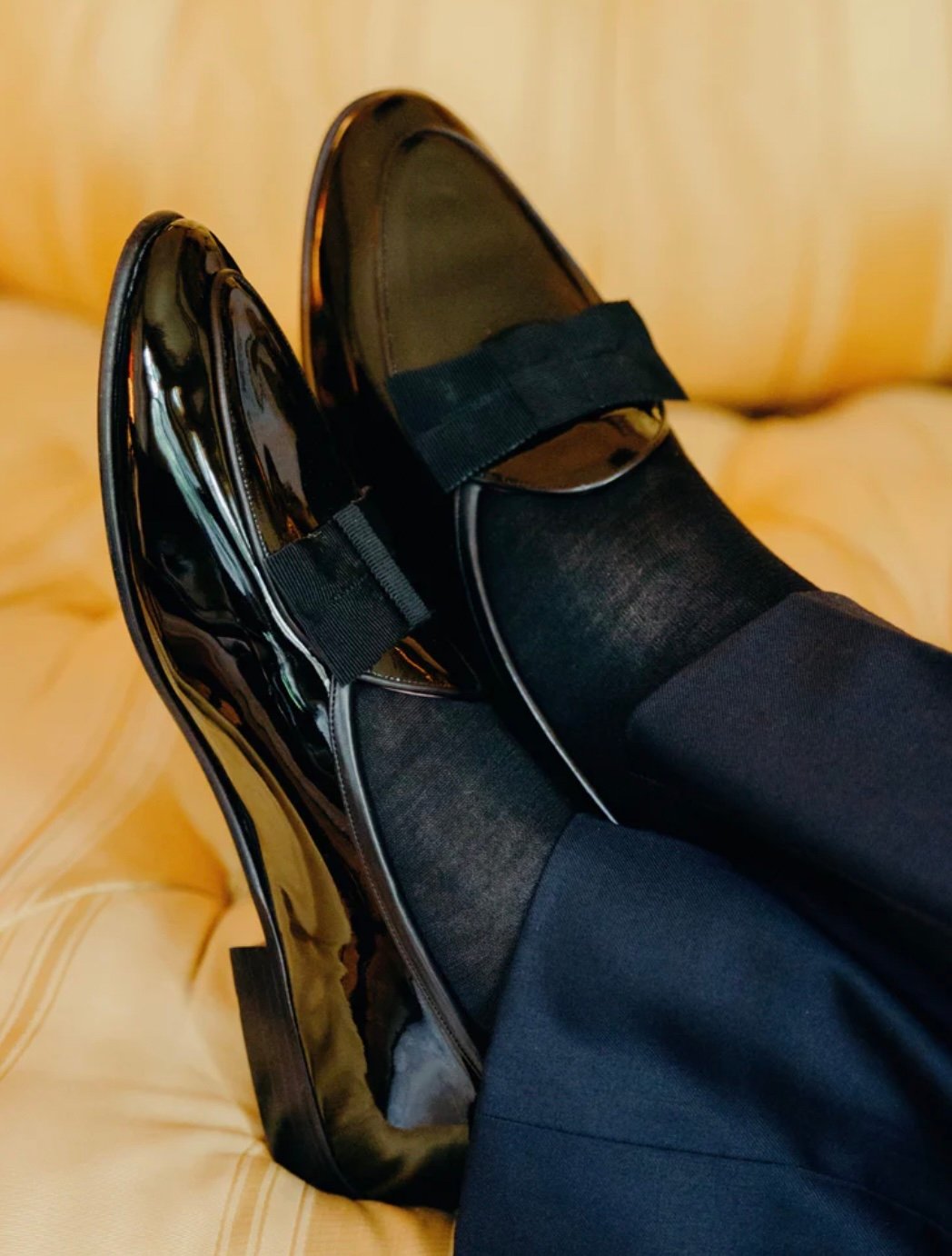
Black silk socks, for example, are something you only ever wear with black tie. If he does wear black tie, chances are it’s not that often, so this will be a very indulgent thing to own. Have a check whether he has some, and if he doesn’t, get a nice pair from somewhere like Mes Chaussettes Rouges. I bet he’s never worn skin-tight silk either. 

4 Ideas from Massimo Osti

£58

A book can be a good option because it’s something you can easily check on the bookshelf for, and there are lots of options out there. There’s no way he’ll have all of them. There are classics he’ll always enjoy, from the likes of Alan Flusser and Bruce Boyer, and. I’d put something like The Rebel’s Wardrobe in the same category for casual clothing. 

But something like this on the designer Massimo Osti (image below) will probably have him looking at menswear in a whole new way. The background, the fabric innovation, the discussion of style, it’s a really stimulating read. 

5 Miles, Chet, Ralph, & Charlie

£24

I wasn’t sure how much I’d enjoy this book, which is a history of The Andover Shop presented as a series of quotes from different people, in sort-of conversation. But actually the stories are so good that it works - it might be George Frazier getting obsessed with the idea of ‘duende’ and who had it or not (musicians or clothes horses) or which Andover Shop trousers are in different museums, but it all hangs together. 

Permanent Style readers (I know you’re still reading) this is a fun one to get if it doesn’t end up under the Christmas tree.

6 Connolly ‘Grain 1001’ candle

£55

While I’ve got you, this is a beautiful candle and smells very menswear, if that can be a thing. It smells of old leather and the nice type of cigar, but in a subtle way. It’s the kind of thing you might even be able to get away with giving to your loved one, and enjoying the smell around the house. 

There's also the option of a carry case, which sounds insane but I took my little one on holiday recently and it does make any hotel room immediately feel like home. 

7 Choosing Keeping notebook

£65

Perfumer H is, of course, my favourite perfume house (they’ve just opened a shop on Clifford Street, which is wonderfully convenient). And if anyone’s looking for stationery gifts, I’d recommend the collaboration they did this year with Choosing Keeping - the notebook in particular, with its Italian marbling and linen binding. 

Choosing Keeping itself is also recommended, particularly now they’ve moved more centrally, to a lovely corner shop in Covent Garden.

8 Blackwing pencils

$30

Combining the subject of stationery with the theme of small, beautiful things, how about a set of perfect pencils? I was given this set from Blackwing last year and they’ve been sitting on my desk ever since, slowly being used, sharpened and worn down. It might seem like a lot for pencils, but I’ve gone through one-and-a-bit in a year, so there’s a long way to go. 

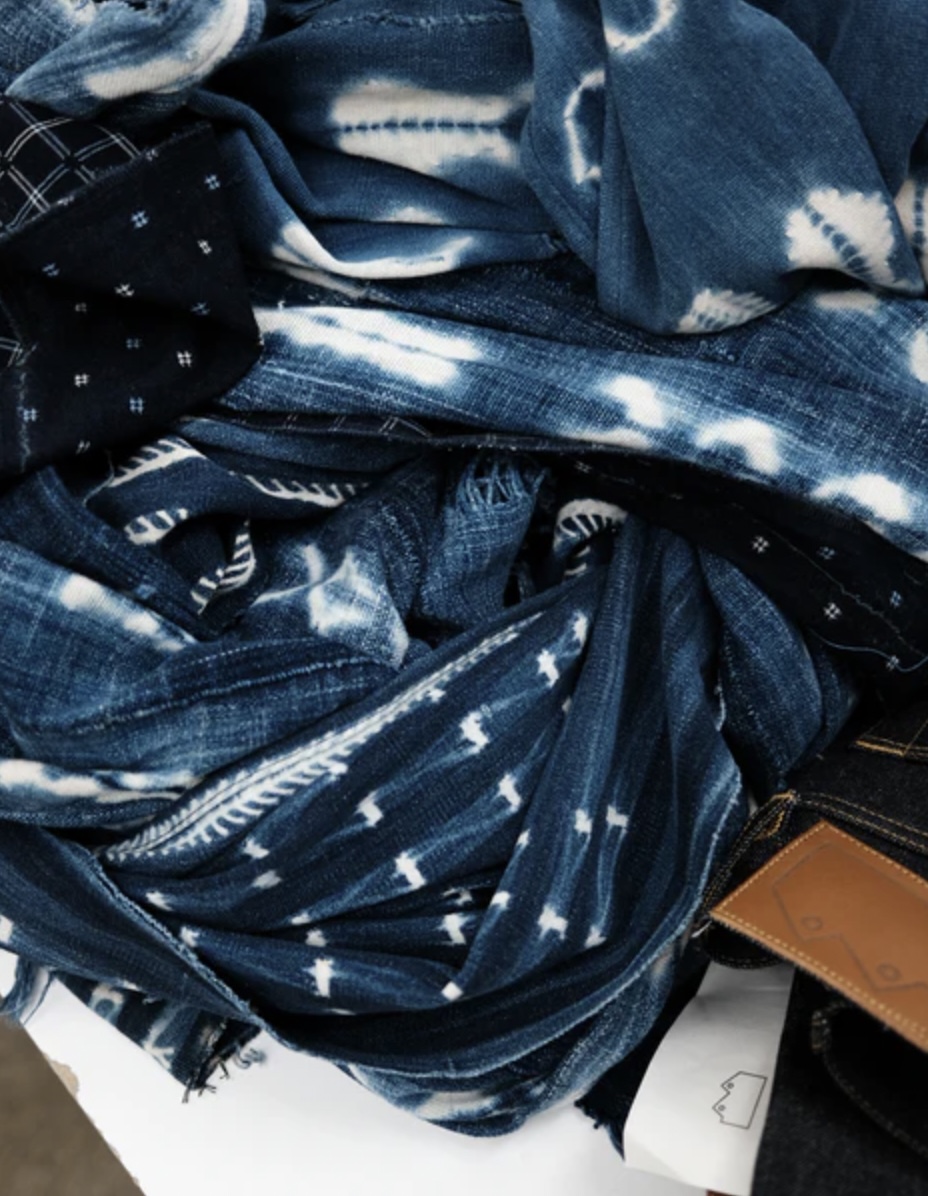
9 West African handloomed scarves

£85

Blackhorse Lane just started offering these - selecting the best from what can often be pretty cheap quality in African markets, and then also meticulously repairing and reinforcing them. I have a couple of vintage ones, but it’s nice to see a new option readily available, as the indigo is beautiful (pictured below). 

10 Trunk or Budd gloves

£135 or up to £650

And last of all, I realise gloves fall into the same category as the first two items we mentioned on this list, with the added bonus that they’re very seasonal. Chances are that after Christmas you’ll have the busiest time for actually wearing them. 

I’ll do a bigger piece on gloves soon, but in the meantime I’d recommend Trunk’s selection (probably my favourite thing from their expanding own-brand line) and the more luxurious range available at Budd. They represent the value and the top-end quite well. 

The Guide to Tweed: Bunches


In our voluminous
Guide to Cloth series, we’ve already done an article on tweed. But that was about the history, the style and a little about the types. There was no mention of bunches.

Today’s article takes on that introduction, fleshes out the categories and expands into recommendations. In particular, it explains what makes one tweed different from another. While Harris and Shetland tweeds might be quite different, the Harris bunches from the various mills often are not.

A further compliment to this series might be a breakdown of the various tweed jackets I’ve had made over the years, with my reflections and advice. Let me know if you that would be welcome.


Shooting tweeds

Historically, tweeds were mostly used for suits, including those specifically intended for rural sports such as hunting. This type of tweed is quite different to the soft tweed jacket you’d think of today – it’s denser, sharper, tougher. This a separate category of tweed, and the main bunches are:

Porter & Harding: Hartwist
Probably the most popular shooting tweed around Savile Row today. Like other shooting tweeds, it’s a woollen but uses a twisted yarn, and is densely set to achieve that toughness. This is what makes a tweed suit something that is functional, that in particular works for trousers.

HFW: Alsport
This was the default bunch for many years, but the bunch changed slightly in 2007 and was reissued by Huddersfield Fine Worsteds. The new bunch is no longer woven in-house and has a design range more similar to other bunches.

Porter & Harding: Thornproof
Like Solaro, Thornproof is a trademark and refers to this particular bunch, but the name is so evocative that it is sometimes used as an almost generic name for this type of tweed. Thornproof has some lighter weights than Hartwist and has fewer checks – it’s a muddier, slightly more urban range with some Donegal-like options. The variation between these bunches is mostly one of weight and patterns.

Lovat Mill: The Ettrick
One of the reasons the bunches don’t vary much is that today the vast majority are woven by the same couple of mills, of which Lovat is one. Lovat bunches are less available and often less supported (meaning the cloth is not being held waiting for someone to order a cut length – these are all things that make the merchants valuable). But Ettrick is a little different, being particularly tough and having a nano coating to help with waterproofing. Tevist and Kirkton are more regular bunches.

Glenlyon
An old Scottish mill that was bought up and kept going to make its original patterns, Glenlyon has a slightly different handwriting from the others in this list – different colours, some of them lovely, some of them less so. They also have I think the heaviest tweed on the market (775g).

Johnstons of Elgin also have some shooting tweed by the cut length, but it’s sometimes avoided by tailors as it’s commonly seen in ready-to-wear. Dugdale’s also has a bunch called White Rose Sporting Tweed, while Holland & Sherry offers the type as Moorland Tweed. Campbells of Beauly is the best place in Scotland for shooting tweeds and often has old lengths.


Harris Tweeds

Harris Tweed is protected in terms of where it can be produced and how. But nonetheless, the tweed itself has changed over time with the local sheep – it is nearly all Cheviot today, rather than the original Scots Blackface of the crofters. This makes the tweed softer, quite apart from other changes in mechanisation (see artisanal section below).

But, in general Harris Tweed is still hairier – tweedier – than other tweeds you can buy by the cut length, particularly the other obvious jacketing options. Harris Tweed is the first place I would always look for a real tweed jacket. Comparing them to shooting tweeds is rather like comparing woollen to worsted flannel: the latter is very functional but lacks the texture and character of the former.

W Bill
Porter & Harding and W Bill were the two traditional tweed houses but are now both owned by Harrisons/LBD – another sign of how the world has amalgamated and narrowed. Still, Bill does still offer something slightly different, with patterns that reference the archive and so are more traditional, plus a lighter finish on the material generally, making them more three dimensional. It’s closer to a traditional tweed than most.

Holland & Sherry
Apart from W Bill and the small artisans we’ll get to later, most Harris tweeds are pretty much the same, and indeed woven in the same places. Holland & Sherry is one of those, but I list it first because it’s often the most accessible for people, and historically has had a broad colour range. Also, it should be said that while traditionalists dislike the softness and more pressed finish of these tweeds, they are more commercial for a reason, being easier for most people in most places to wear.

Porter & Harding, Huddersfield Fine Worsted etc
There are a few other Harris Tweed bunches out there and the quality is the same, but they don’t usually offer anything apart from an occasional colour. In terms of quality by the way, they will often be described as ‘handwoven’. This means a pedalled loom is used to weave it, but arguably the bigger difference is the loom itself and the size of the wooden shuttle. The artisanal names mentioned lower down are different.


Shetland and other soft tweeds

Shetland wool is softer than cheviot and so shetland tweeds and their like tend to make softer and lighter jackets – better for urban use and frankly the majority of modern use. A lover of tweed might call them flat, lacking character, but make up your own mind.

W Bill: Shetland Tweed
The default again, although the difference compared to other bunches is less with the Harris, in terms of patterns and feel.

Holland & Sherry: Sherry Tweed
Uses a New Zealand lambswool rather than shetland, but is similar, just a touch smoother in feel. As with Harris tweed, Holland & Sherry is also often the most accessible around the world for this type of jacking and has a wide range. I’ve used it for jackets in the past and they’ve served me well.

Fox Brothers: Fox Tweed
Fox Tweed uses a crossbreed British wool that feels quite similar to shetland, but the quality is s heavier and denser than others, coming in at 17/18 ounces. Where Fox Tweed really shines though, is in its colours and patterns. Personally I think it’s the most modern and tasteful selection out there, with a mix of original designs, standards, and twists on them (a particular purply brown comes up a lot). The bunch also stands out given how narrow the tweed market has become in recent years.

Abraham Moon
Moon are unusual in producing some of their own tweeds in Yorkshire, where most of these come from the same mills. I tend to prefer other bunches, such as those above, but Moon is great when it comes to value for money.

Dugdale/Marling & Evans: Undyed wool
The popular undyed range from Marling & Evans is now distributed by Dugdale, in a temporary bunch called ‘Undyed British wool jacketing and suiting’. Dugdale also offers a shetland-like tweed under the White Rose Caldonaire label.


Donegal Tweeds

Donegal Tweed is characterised by flecks of different colours in the cloth, something we’ve seen being made in Donegal (pictured below). However it is not protected like Harris or so clearly defined as Shetland, and so similar designs are seen from various different mills.

Molloy & Sons
A great mill that we visited for PS here, but hasn’t always sold cloth by the metre. It now offers this through its website – expect a similar handfeel to the shetland and softer tweeds mentioned above.

Magee
A bigger operation than Molloy and using more modern looms, but often good value for money. The tweeds are often smoother than Molloy or more traditional weavers, which goes to the points above regarding character and choice.

Other mills will offer Donegal selections occasionally, usually produced by one of these two or by Nobles, which doesn’t itself sell by the metre.


Artisanal tweeds

Old Harris Tweed wasn’t just different because of the wool it used. The old Hattersley looms were also slower, with a big wooden shuttle that worked more space between the yarn and gave it an airy, three-dimensional feel. I worked with Breanish years ago on something related and have seen bolts of the old Harris Tweed at various tailors. They feel like something very different.

There are very few of these weavers left, and those there are don’t usually offer cut lengths (it’s too expensive to keep stock). Ian Sutherland, who used to run Breanish, supplied Anderson & Sheppard for years and his cloth became part of what A&S was known for. Donald John Mackay of Luskentyre Harris Tweed still weaves but nothing is available by the cut length.

One bright spot is Sam Goates of Woven in the Bone, and she occasionally has ends available to buy. And there’s Ardalanish on Mull, who do some cut lengths. They have more modern looms but focus on undyed wools from a range of sheep, or natural dyes such as wode.

If you get a chance to see old Harris Tweed somewhere, it’s worth a look as a reminder of where the material came from – why those cloths could easily make a tough shooting suit, where are a modern Harris could not.


Other tweeds, including Italian versions

There are worsted tweeds such as Glorious Twelfth and Alsport Light, but to me they’re even further away from what tweed should be – basically suitings with a tweed look.

And there are always Italian versions of everything. Some of these are soft wools or even cashmeres with tweedy colours or Donegal flecks (like my Rubinacci jacket, above). But others are more interesting – in Prato they make some lightweight cloths that are deliberately as airy as tweeds, but in softer wools. Perhaps it’s something different to tweed, but it has a definite appeal.

One bunch that I’d certainly recommend in that area is Sopra Visso from Loro Piana, which like all Loro Piana bunches has a very high taste level. It uses local Italian sheep and takes inspiration from tweed designs. Currently there’s only a suiting range but they have also done jacketings.

The craft and range of Begg blankets 

The craft and range of Begg blankets 

Monday, December 4th 2023
||- Begin Content -||

Textiles is a very complimentary area to the tailoring we cover on PS, given the time readers spend poring over swatches and discussing weaves. But, the most readily consumable version of this is blankets, which we haven’t covered much. 

Given they’re also great gifts - and it’s that time of year - I thought it would be good to do a detailed piece on one my favourite ranges, at Begg. 

We’ve covered Begg x Co many times over the years of course, going back to when I visited the mill in Ayr a decade ago, for the book The Finest Menswear in the World. But that was focused on scarves, and more recent coverage has been more about the expansion into knitwear

Their homeware can run a little under the radar, which it shouldn’t because Begg blankets have perhaps the greatest combination of range, value and design of any luxury brand. 

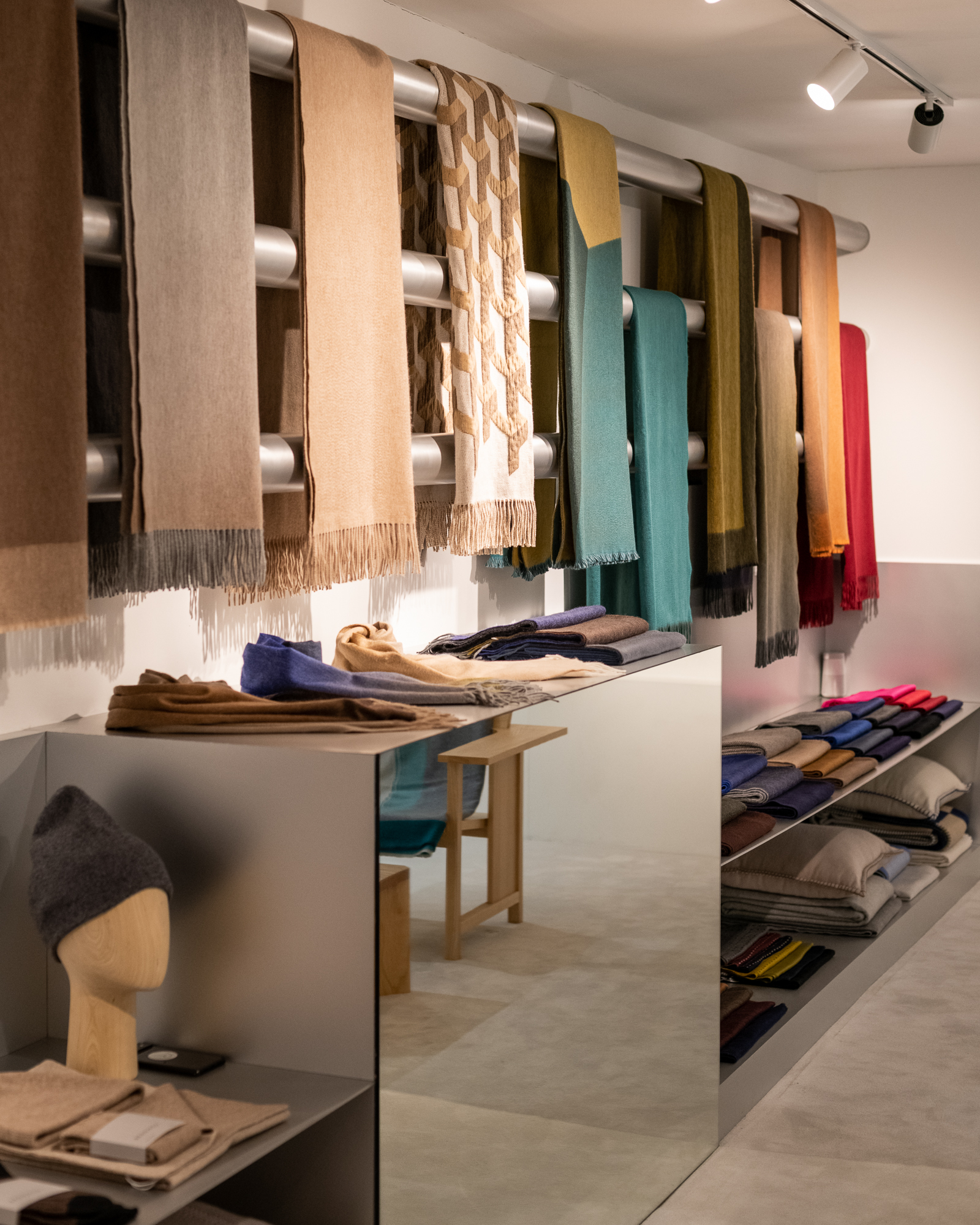
The store in the Burlington Arcade is a good place to appreciate the technical differences between them - in weight, in openness and feel. Knitwear is easier to appreciate online, at least with menswear, as the fits and designs don’t vary too much. Textiles can be harder.

So…the standard type (or ‘quality’) as with the scarves is the Arran. This is pure cashmere and has that same ripple surface, created by combing with dried teasel plants.

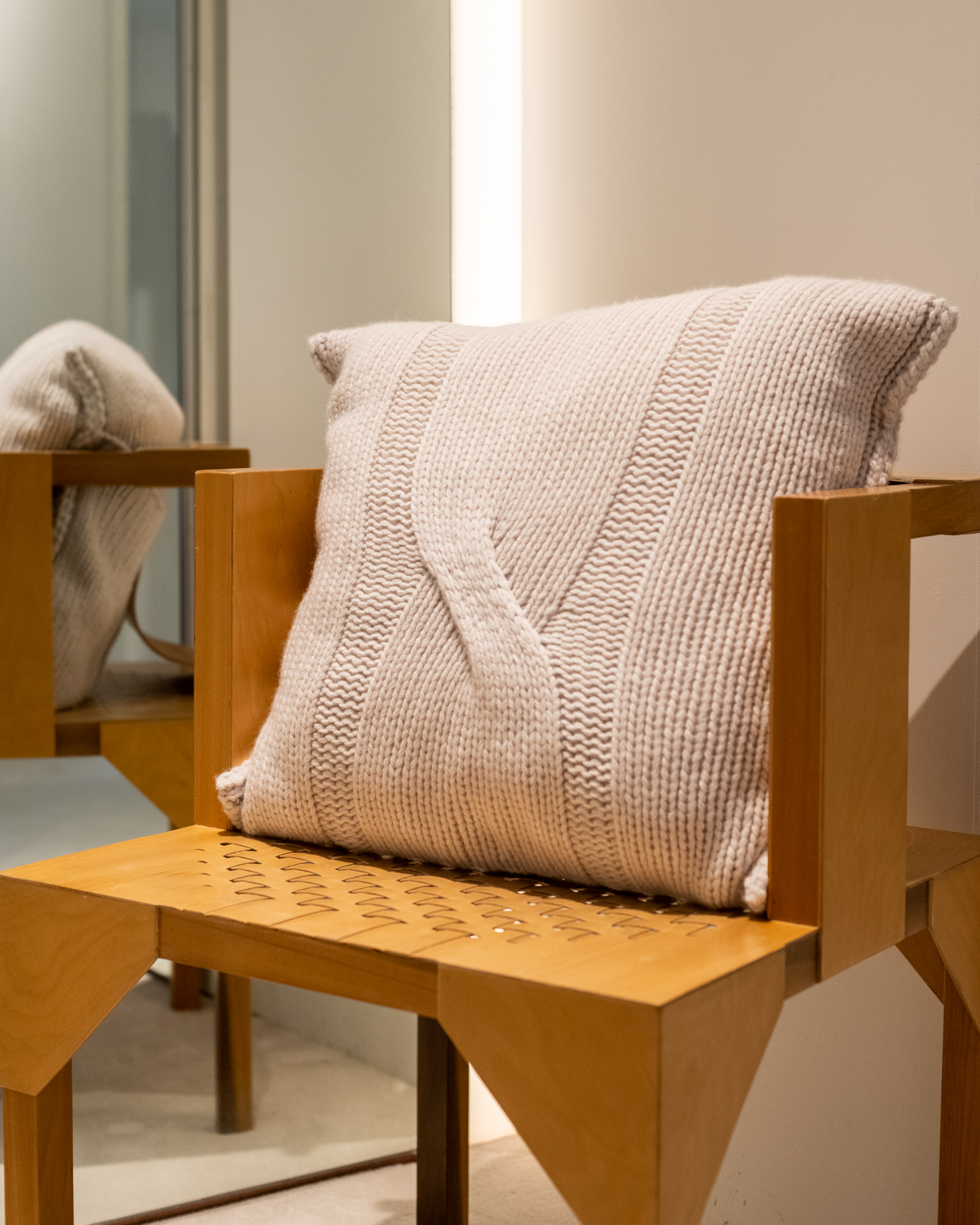
It’s fairly light for a blanket though (you could also wear it as a stole) and Begg just introduced a heavier version, the Kintail. This is three layers of the same cashmere, which is why it’s rather more expensive (£1750 as opposed to £1150). 

Price tends to reflect material (cashmere or lambswool), size and weight - basically how expensive the material is and how much of it there is. Online it’s always worth checking the size, as this can vary quite a bit. 

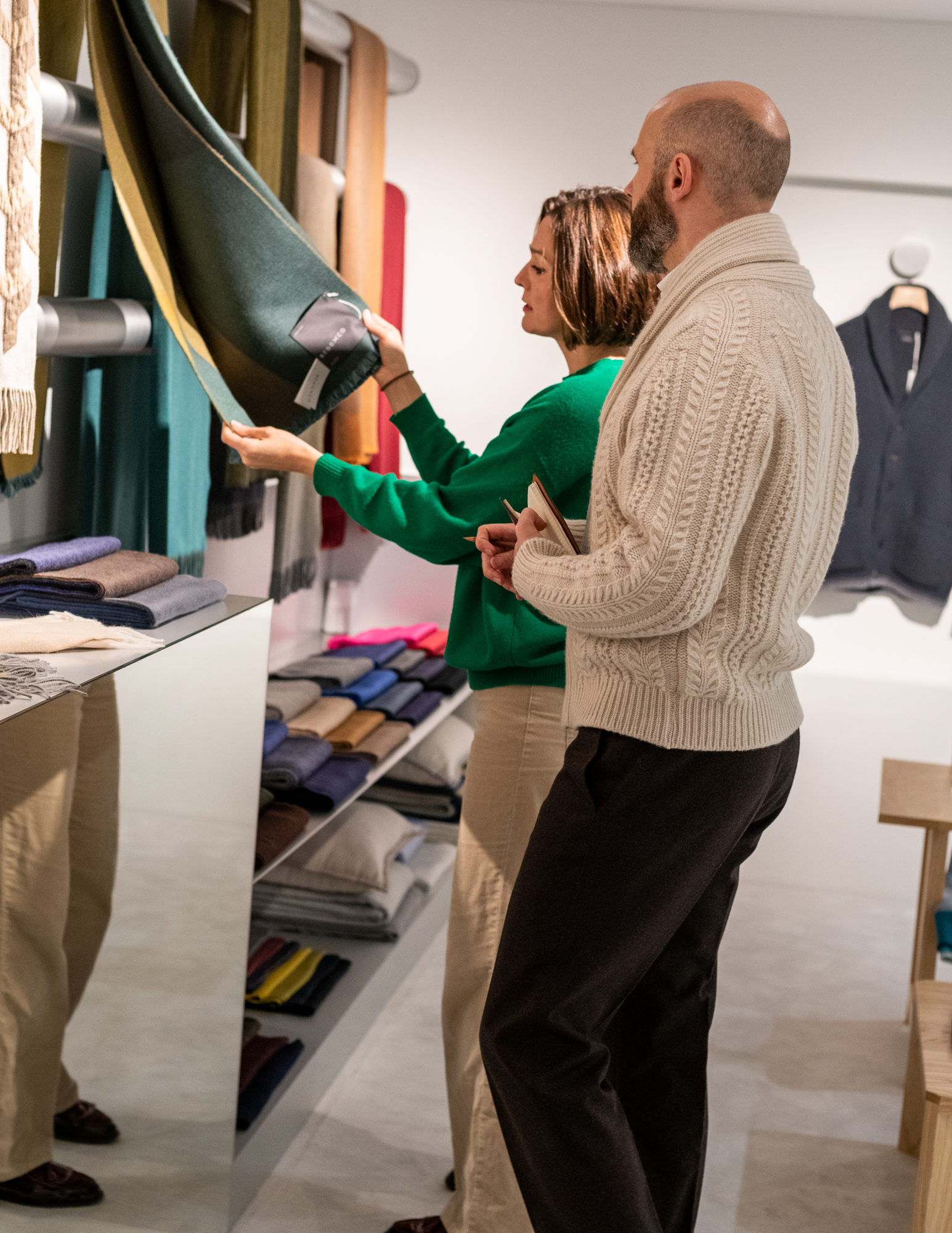
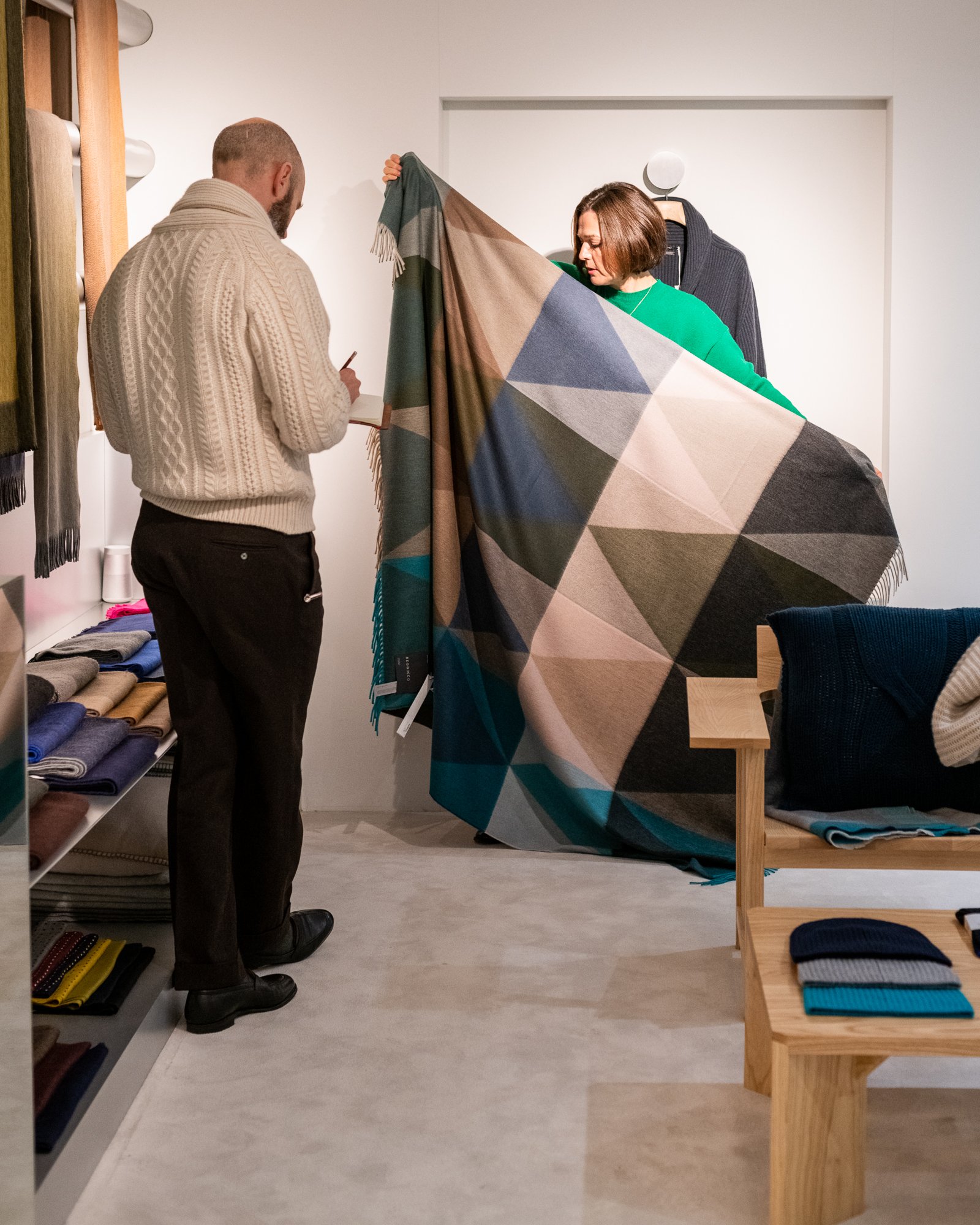
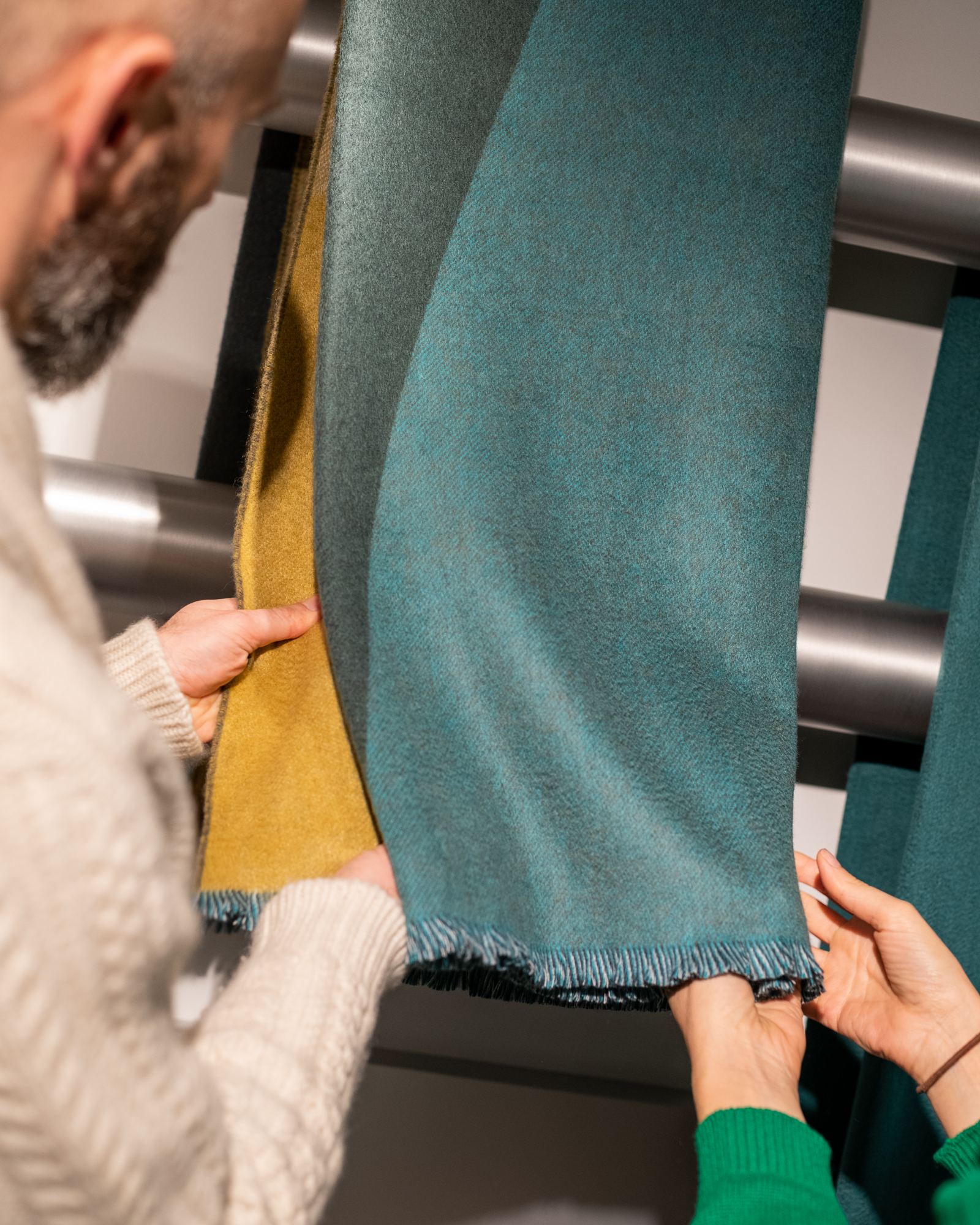
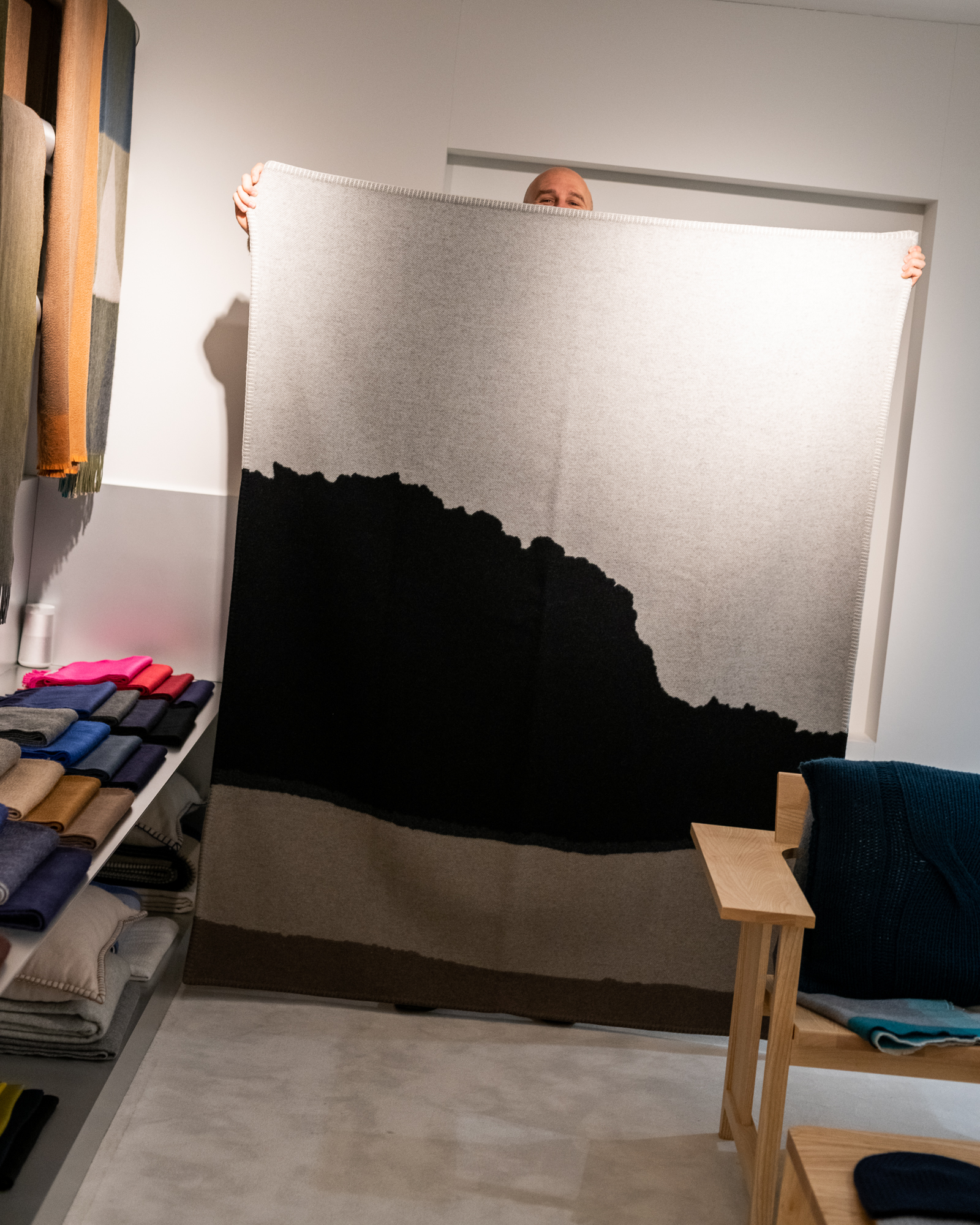
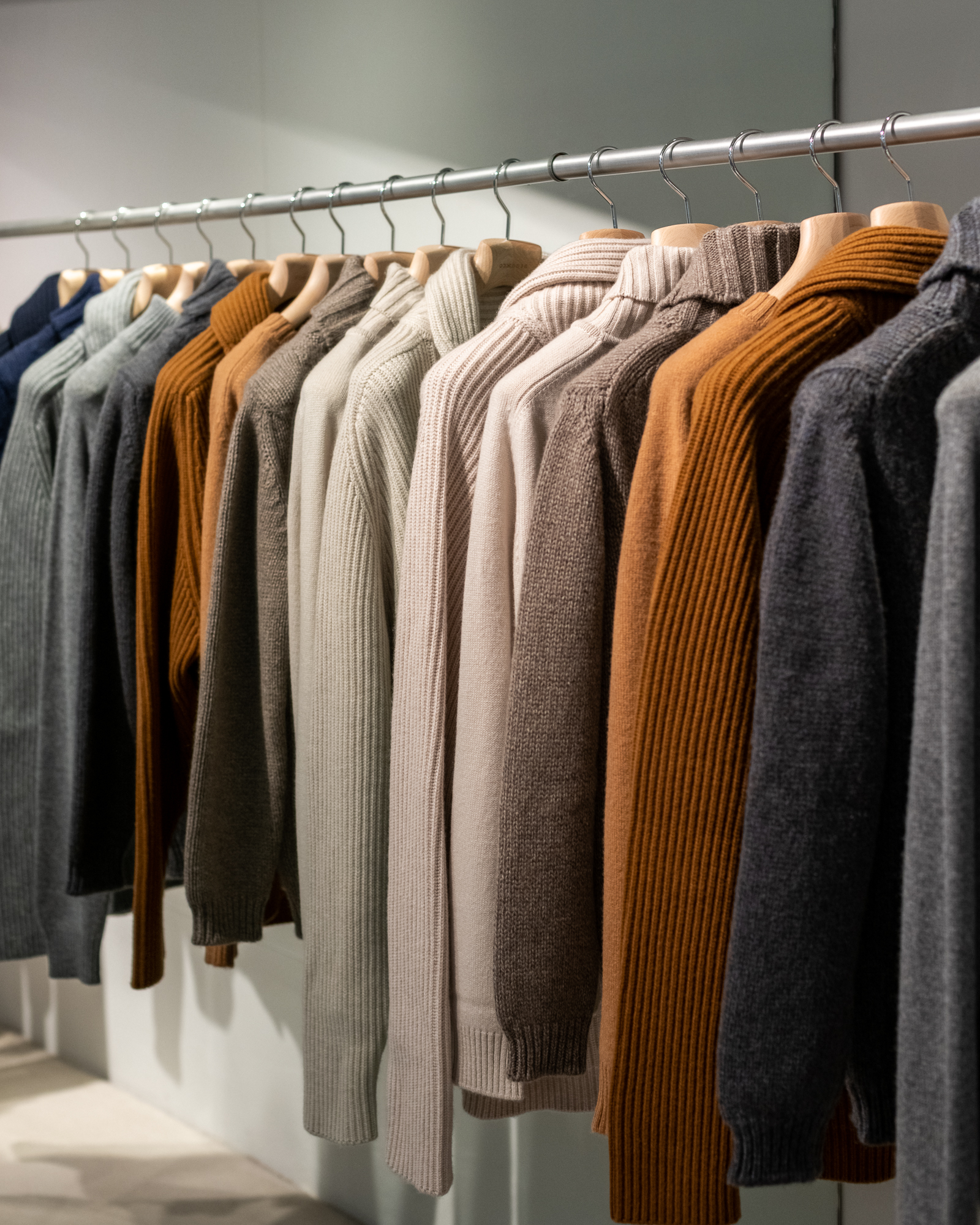
Marija, above, walked me through the types hanging on the wall of the store. As with the Begg scarves, names tend to reflect the quality, then the design. So the first image is the the Arran Pyramid, the second is the Kintail Cubist.

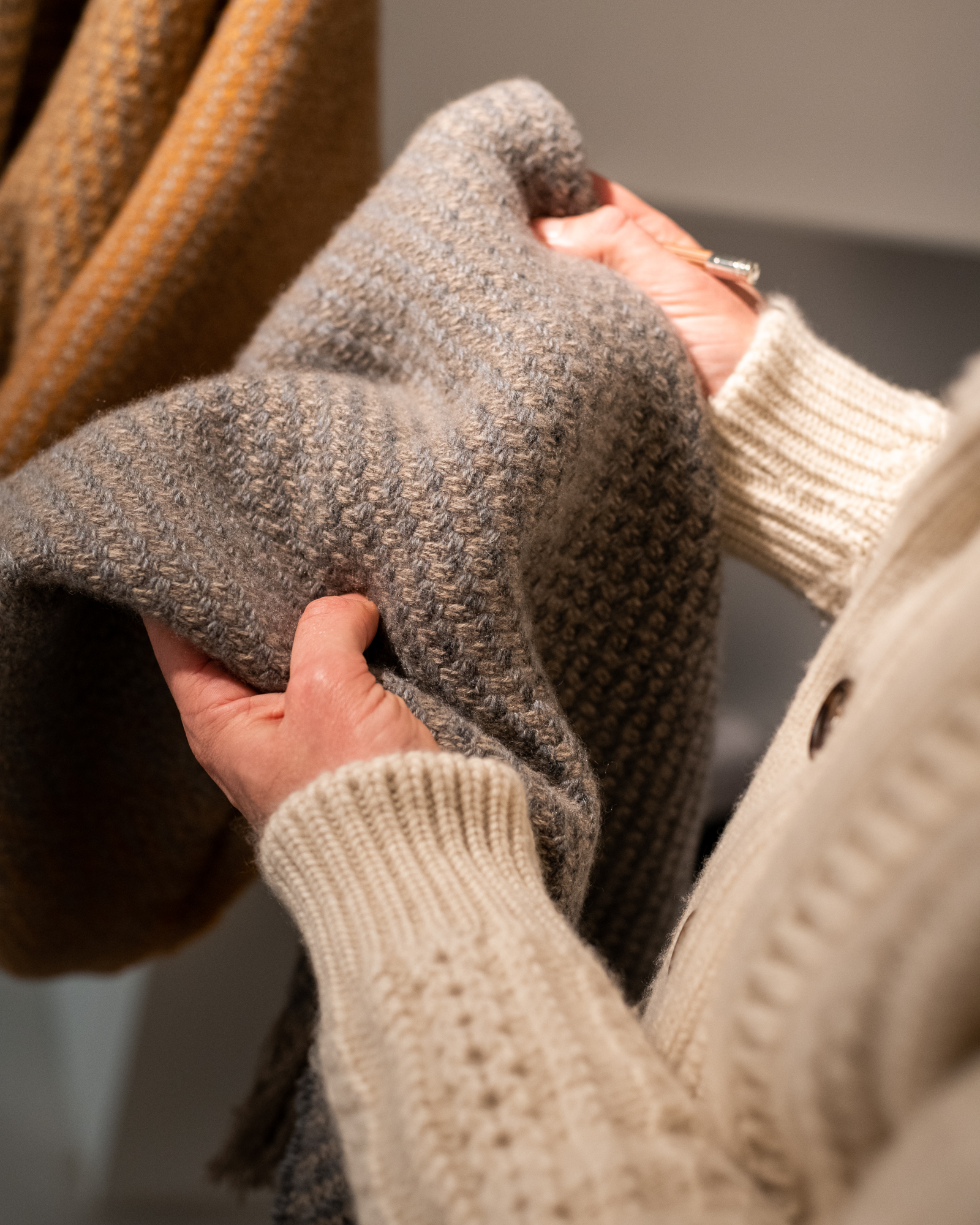
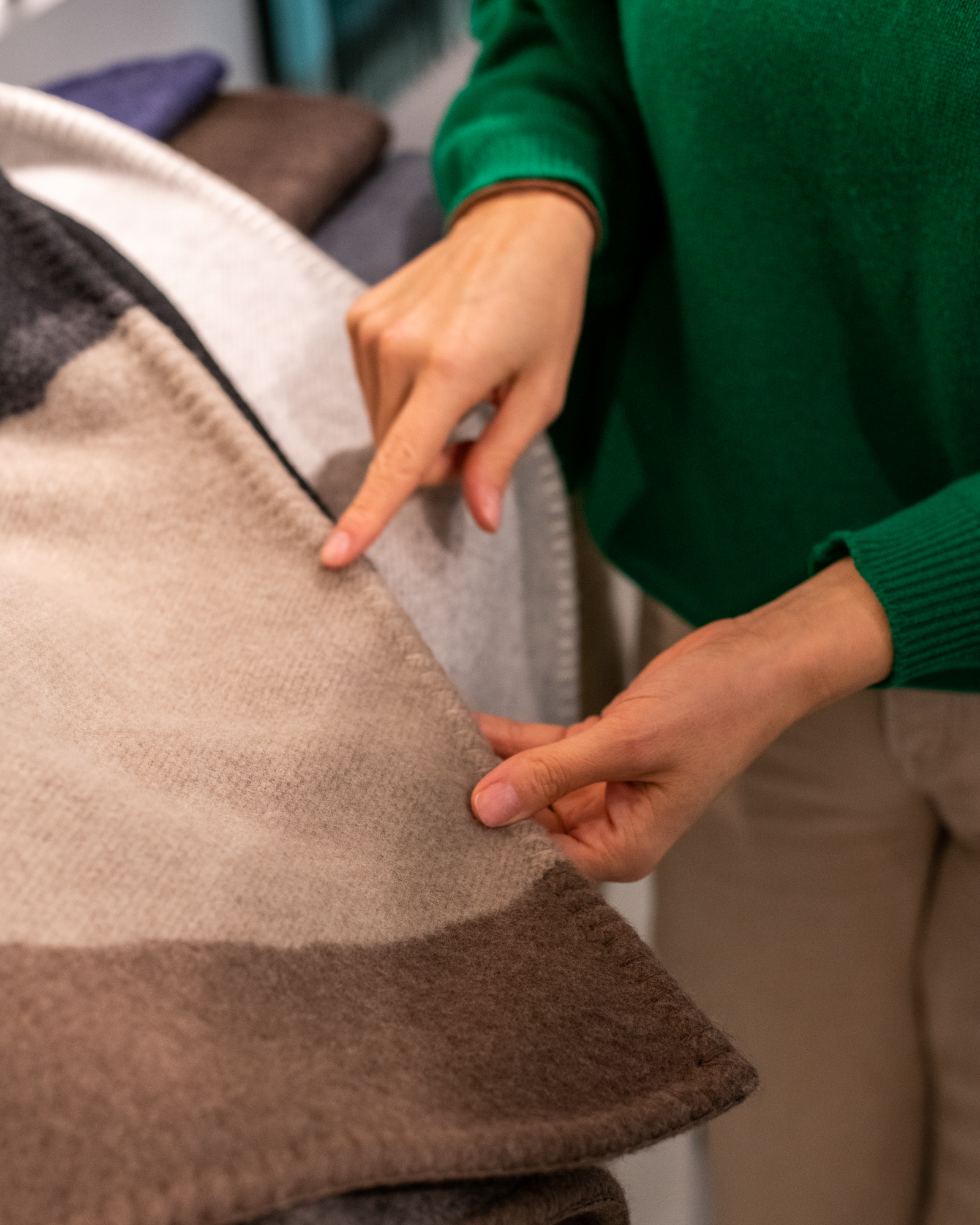
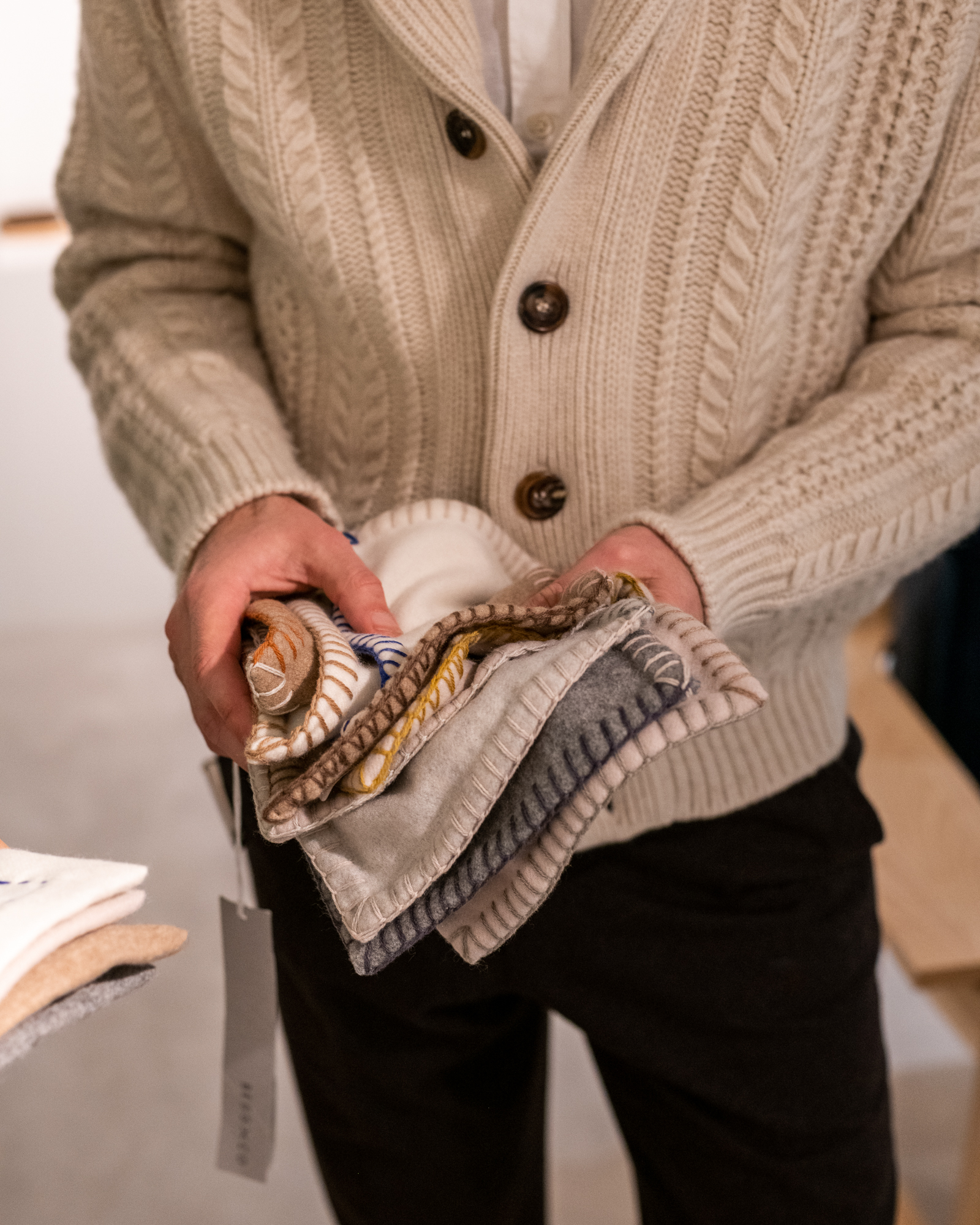
My favourite quality, however, was the next one we looked at: Mossband. This is woven but feels like something knitted - the technique was created to give that effect. It gives it a slightly rustic feel (which they’ve leant into with the long fringes) but also makes it more three dimensional, like you can get in amongst the material. 

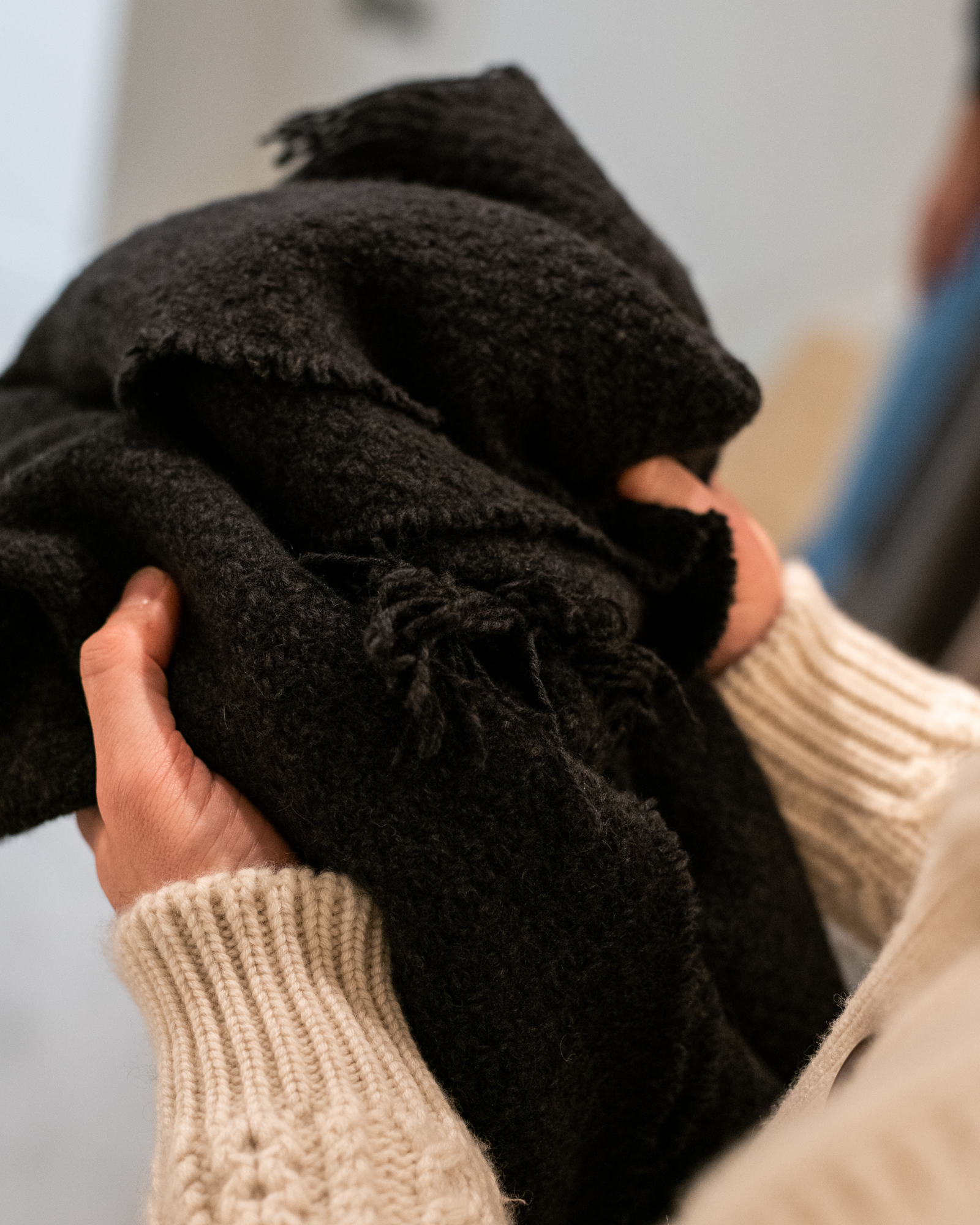
I’ve tried to get across in the pictures below how nice it feels in the hand. The first picture is of the Harmony design, just because it shows the the weave better. But the second, plain colour is more the kind of thing I can imagine appealing to a PS reader.

My other favourite is the Volatzu. This is a bit cheaper as it’s a a lambswool/cashmere mix and a more straightforward technique. (Some designs are also on sale). 

The reason I like this is that the lambswool doesn’t make it feel that much less luxurious, just more solid. It’s the kind of blanket that’s more appropriate in my household, where there’s a decent chance at some point a child will spill or wipe something on it. Anything can be dry cleaned of course, but this could put up with a little more dabbing, soaking and rubbing.

It also comes in my favourite design, Sanna Bay, shown below. This was a collaboration with the artist Hayley McCrirrick, and represents the surrounding Scottish landscape. It’s a lovely combination, and not easy to weave given those long, snaking lines.

A nice touch, I think, is that the blanket stitch on the edge of these designs is done in a matching yarn - changing every time the main colour changes. Normally an edge stitch is done in just one colour. 

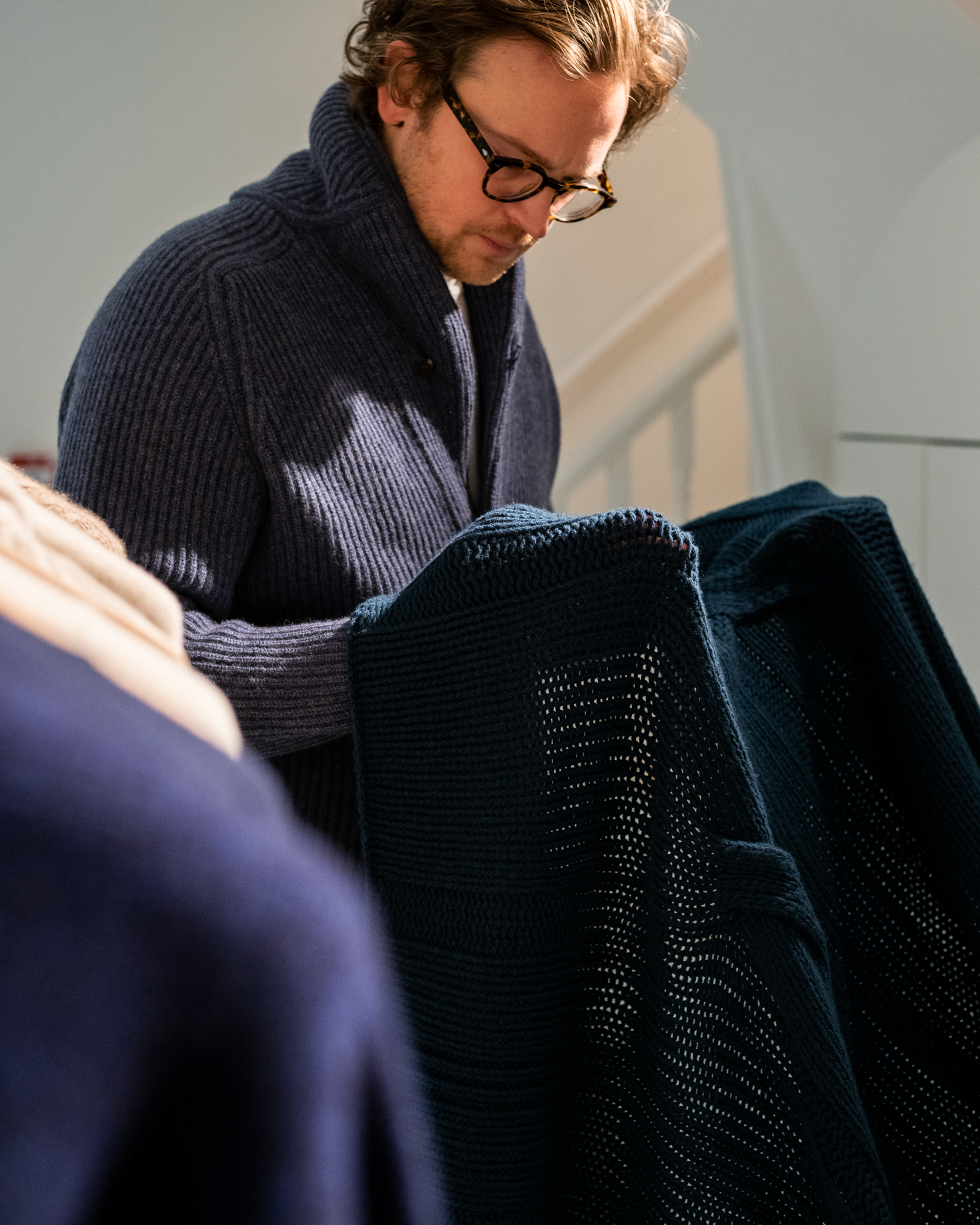
Two more qualities to mention, largely for completeness. The Chalet blanket is a huge cable knit, loose and open - you can see that in the image above. I can see where the inspiration came from: it would be exactly the thing to wrap yourself in, or at least have around your shoulders, up in the mountains. 

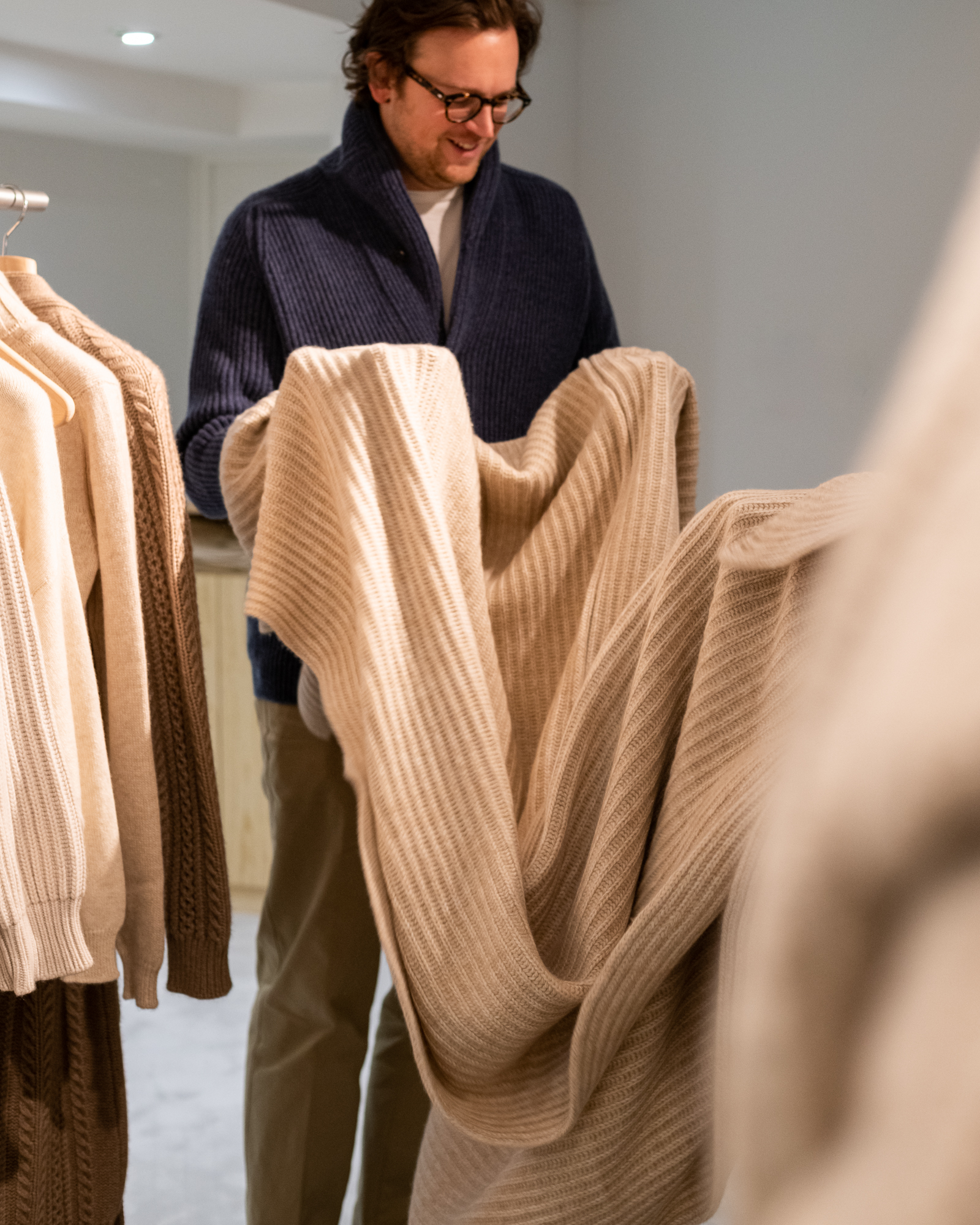
And there’s the Furrow, which is a huge ribbed knit. Given this involves the most cashmere, it’s the most expensive at £2750. Although as sometimes goes without saying on PS, these are all good value for what they are, and would be rather more at a bigger brand. 

Interestingly, Begg also do bespoke blankets at no extra cost. You can pick from around a dozen colours that are kept in stock in the mill (below), and choose the size and colour of the edge stitch. It takes about six weeks. 

If anyone can, I’d really recommend going into the Burlington Store and seeing the blankets in person. They’re such tactile things, and I really think PS readers are the type of people that will appreciate all the differences. My descriptions can’t quite capture everything, and it’s the only place they’re all alongside each other. 

For those that are interested in the knits shown, I’m wearing my Aspen shawl cardigan, Marija is wearing a Joy Slouch crewneck (old season colour) and store manage Jolyon (pictured higher up) is wearing a Sloane V-neck

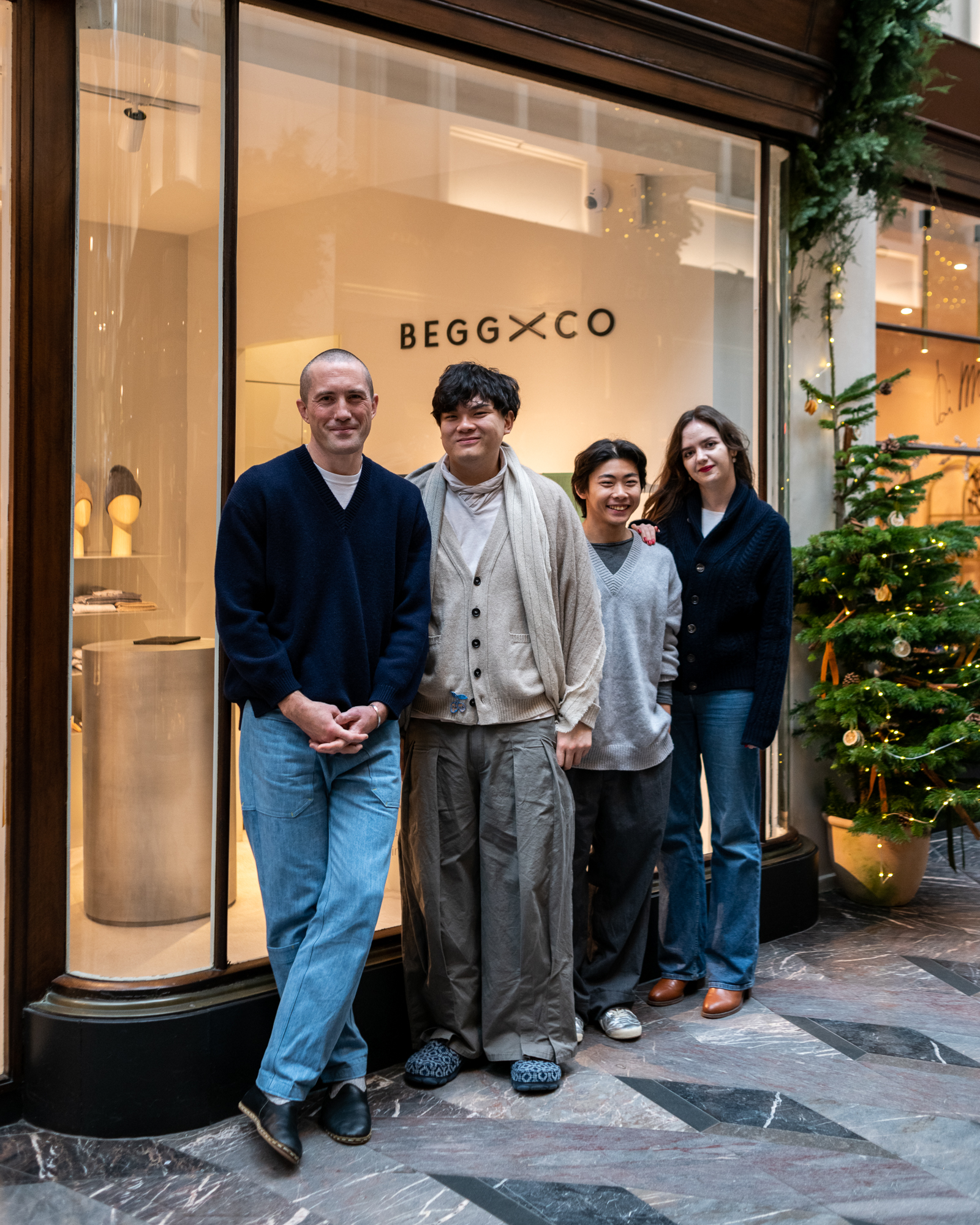
The rest of the store team (who I thought all wore them in interesting, different styles) are in, left to right:

  • Jolyon, as mentioned
  • Jesse, Shadow cardigan 
  • Bryan, Sofia V-neck 
  • Elisa, Aspen cardigan 

The weekend gilet or vest

As colder weather has arrived recently, there have been a few questions from readers about gilets or vests. It’s not a category we’ve covered in much detail, so Alex and I took a bunch to the studio last week and had a play with a few outfits - in order to illustrate how I wear them and, as a result, what I like (and to an extent don’t like) about them. 

Gilets are one of those pieces that are burdened with associations. For some it’s a preppy thing, the sloaney ‘Fulham lifejacket’. For others it became synonymous with the ‘tech bro’ uniform, worn over a dress shirt and trousers. Then there’s the outdoorsy guy, in ripstop and multiple pockets. The streetwear look with the trainers and beanie. The quiet luxury version (Loro Piana/Cucinelli).

What all this says to me, though, is that gilets don’t have to have any particular association - that they’re actually quite versatile. What matters is the type of gilet, how you wear it and what you wear it with. 

Personally, I like gilets best as outerwear, and therefore quite chunky. Usually down-filled, I wear them with thick knits or sweatshirts, in lieu of a jacket or coat. 

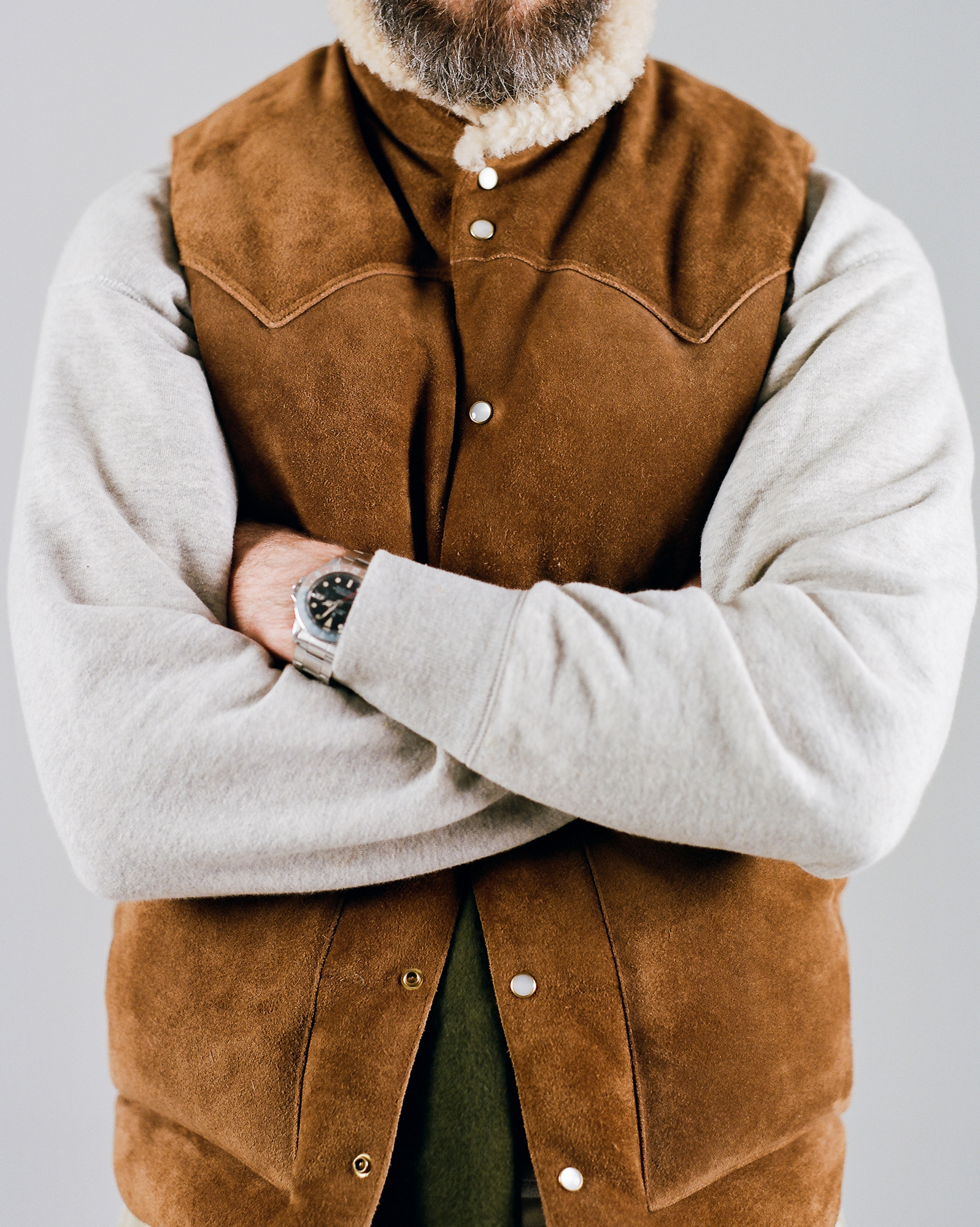
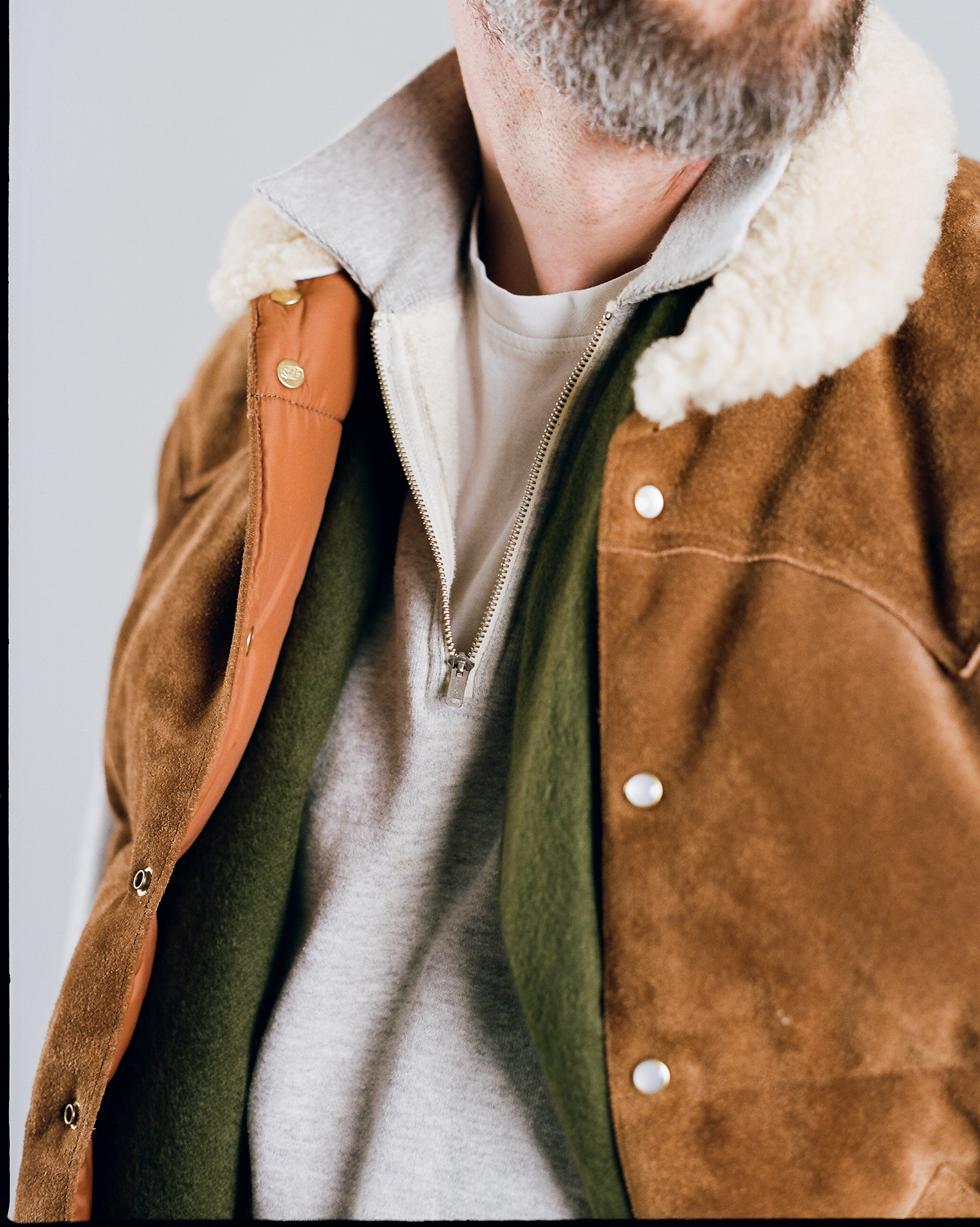
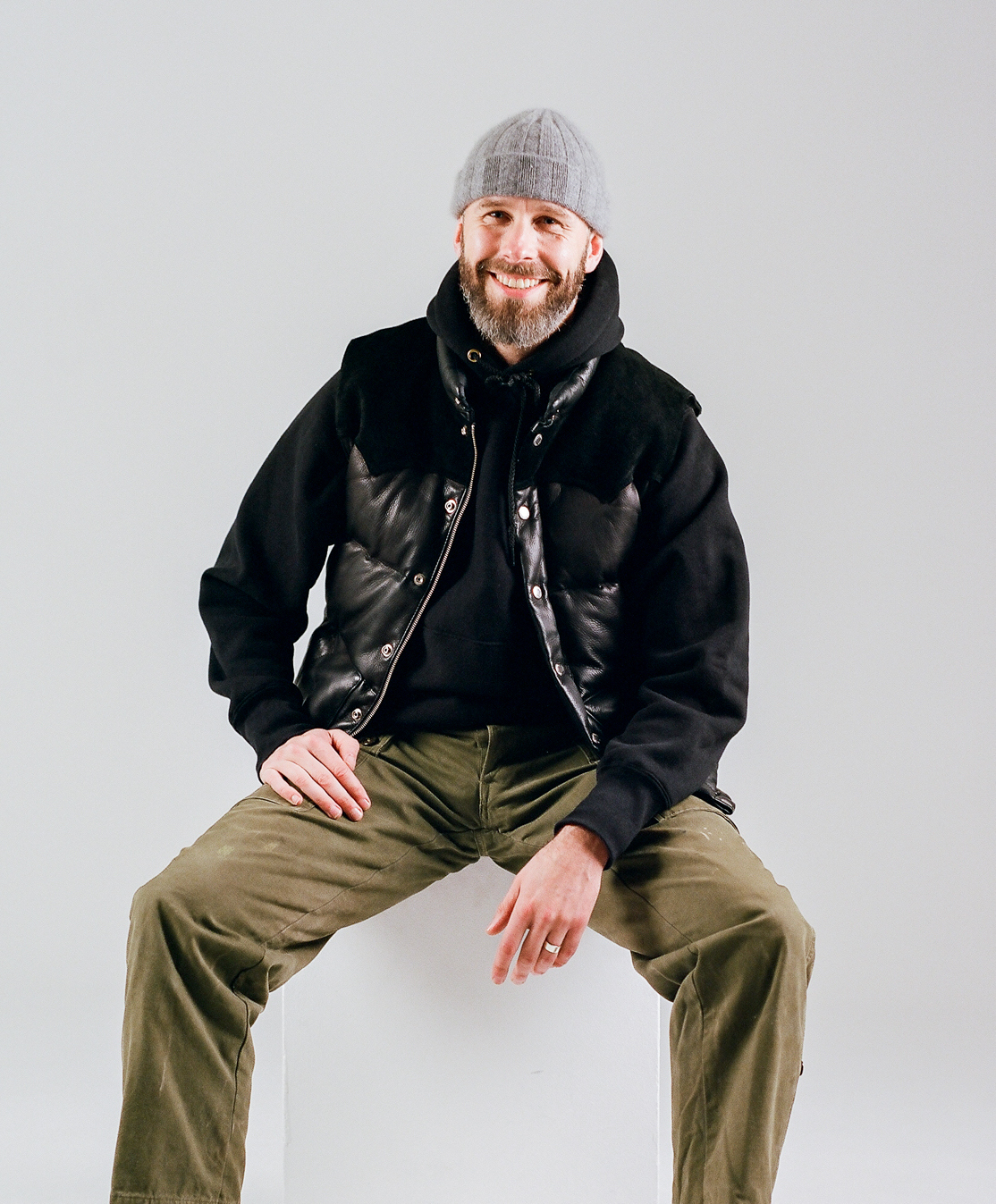
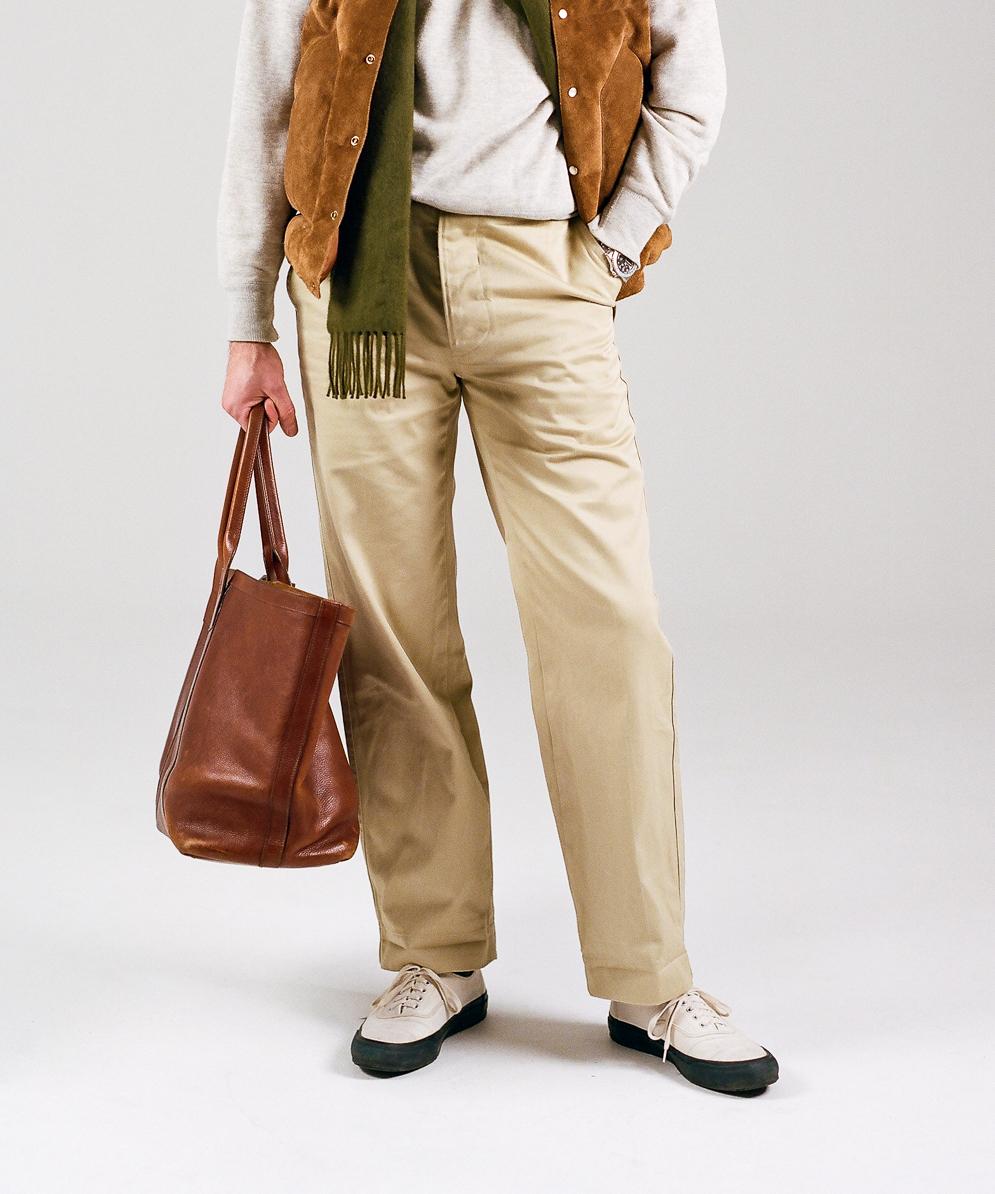
The first one above is a good example. An old collaboration between The Armoury and Rocky Mountain Featherbed, it’s the Christy model but in roughout suede with a shearling collar. I’m wearing it with a quarter-zip sweatshirt from The Real McCoy’s and Rubato chinos. 

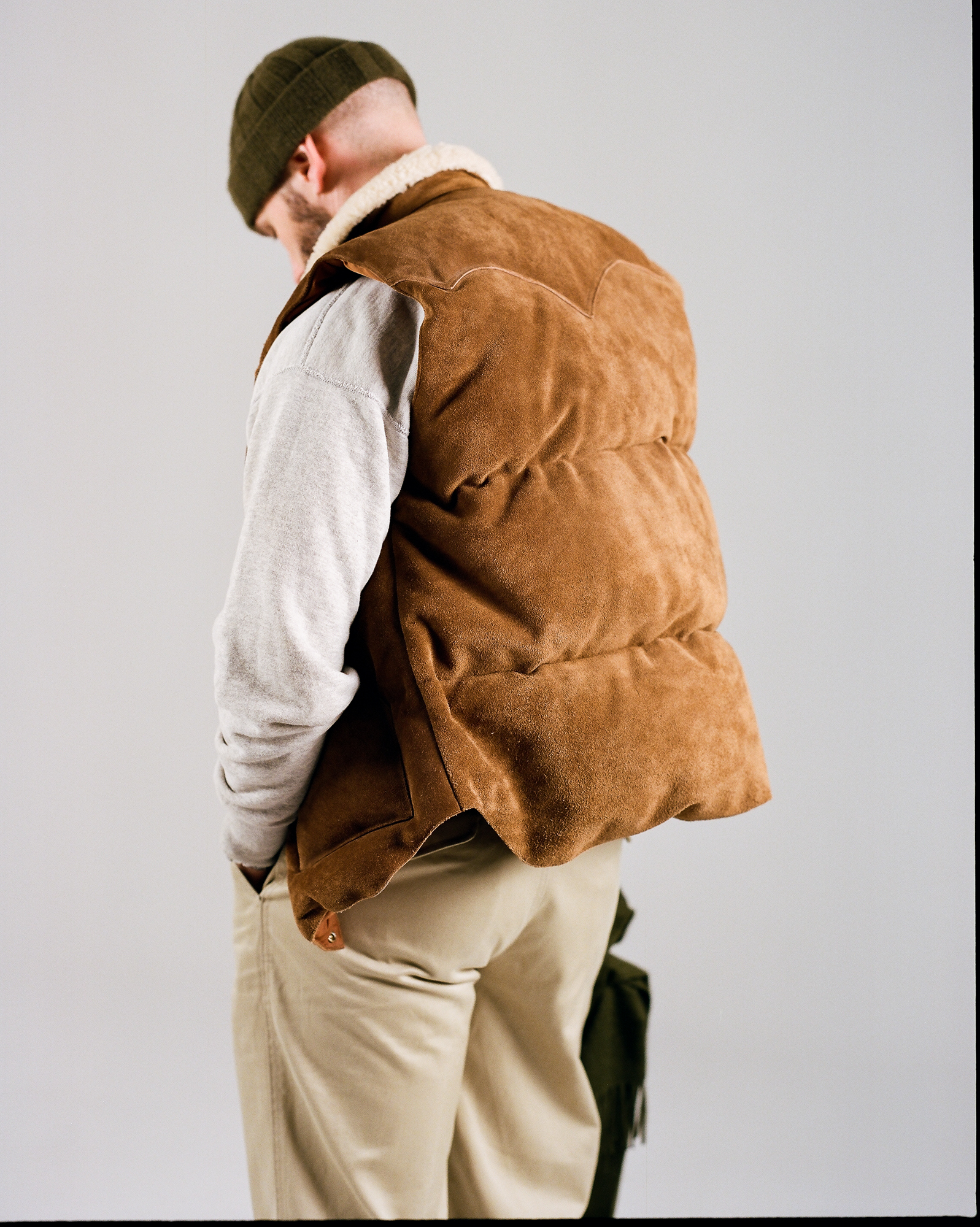
The vest is big, as you can see in the image below. Even though down-filled ones bed down over time, and so lose some of their volume, they’re always going to be chunky. As a result they’re best with other larger fits - not huge, but not skinny or slim. 

My Rubato chinos have enough volume to work (these haven’t been slimmed down) and so does the sweatshirt. A chunkier knit would be ever better - perhaps a thick roll neck - but a simple two-ply crewneck would get drowned. 

I also think the volume of a gilet is something to enjoy and lean into. I used to wear this one buttoned up the whole time, trying to keep it close to the body (mostly using poppers high on the chest). But over time I’ve become comfortable with having it open and voluminous. 

It’s not the kind of silhouette that fans of tailoring will necessarily find easy. But it’s no different to the volume you get in the skirt of a coat, or the leg of a trouser - it’s just a different shape in a different place. Getting used to it just requires some thought and experiment and play - a little exercise of the aesthetic muscle. 

The other clothes there are a PS T-shirt, a PS watch cap and scarf, a Frank Clegg tote and Rubato/Doek shoes. 

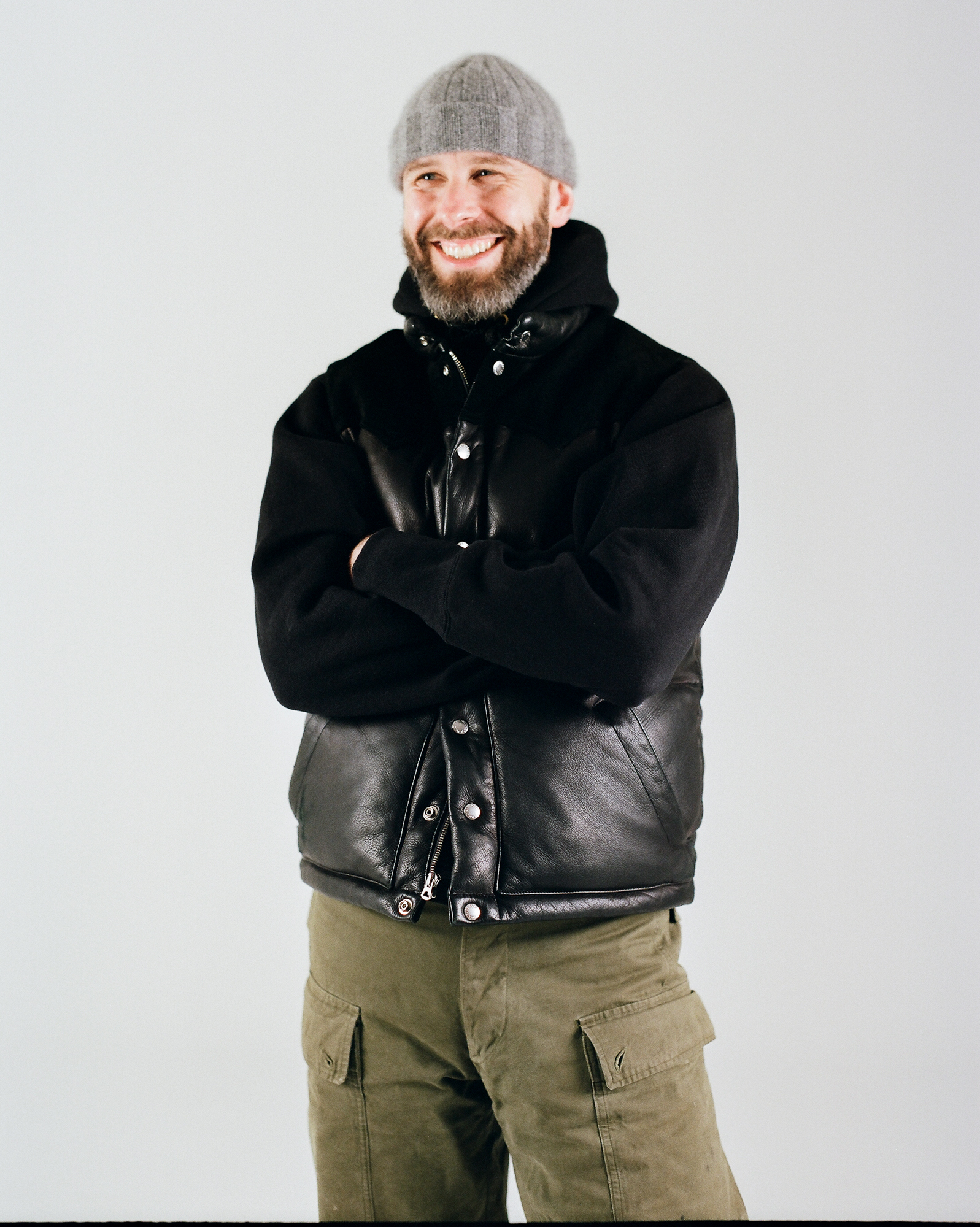
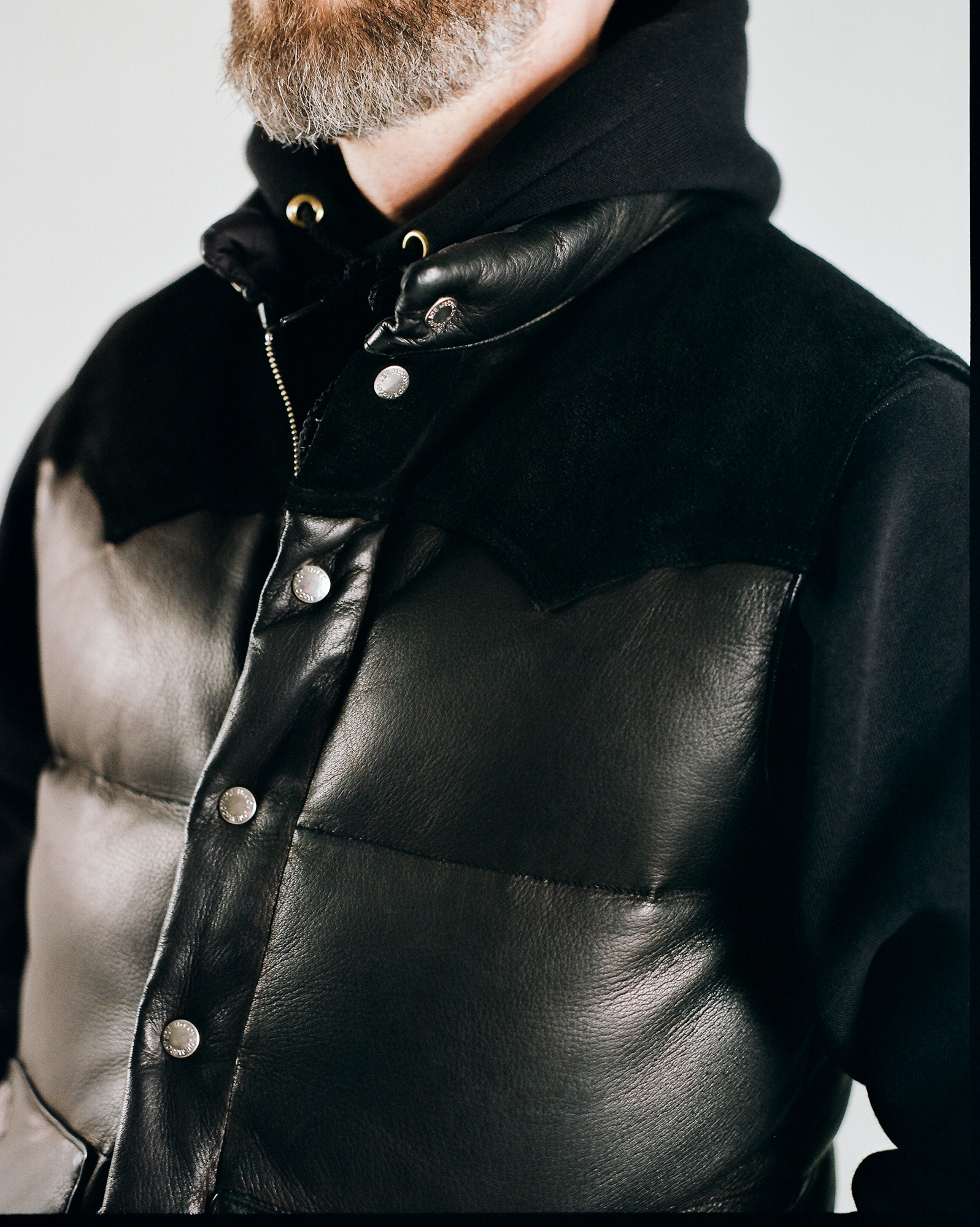
This second gilet is probably my favourite - a black deerskin from The Real McCoy’s

The down-filled volume is similar to the snuff-coloured vest above, but the outer is softer and compresses more easily. The feel of the deerskin is also beautiful - for me, top-end deerskin is the best combination of strength and luxury in any leather. 

Underneath this one is a rather bigger sweatshirt - a Camber hoodie from Beige Habilleur. Camber uses a particularly thick material in its sweats, a 90/10 cotton/poly mix with a fleecey inside but harsh outside. They’re not the most luxurious, but they are extremely warm and hard-wearing, which is what they were designed for. 

And the silhouette is great - this is a size small and it’s still big on me, but it has a shorter cut that stops it being too much and actually makes it quite flattering. 

An important aspect of both these vests is that the suede and pointed yokes give them a Western style that is not one of the more common associations. 

It’s not unknown - many will have some image of Ralph Lauren on his ranch wearing one - but it perhaps separates them from the other associations readers could worry about. That might be why Rocky Mountain in particular has become popular, though I don’t like the more common nylon outer materials as much.

The McCoy’s one here is worn with vintage Dutch cargo trousers, a PS watch cap and Color 8 cordovan boots. 

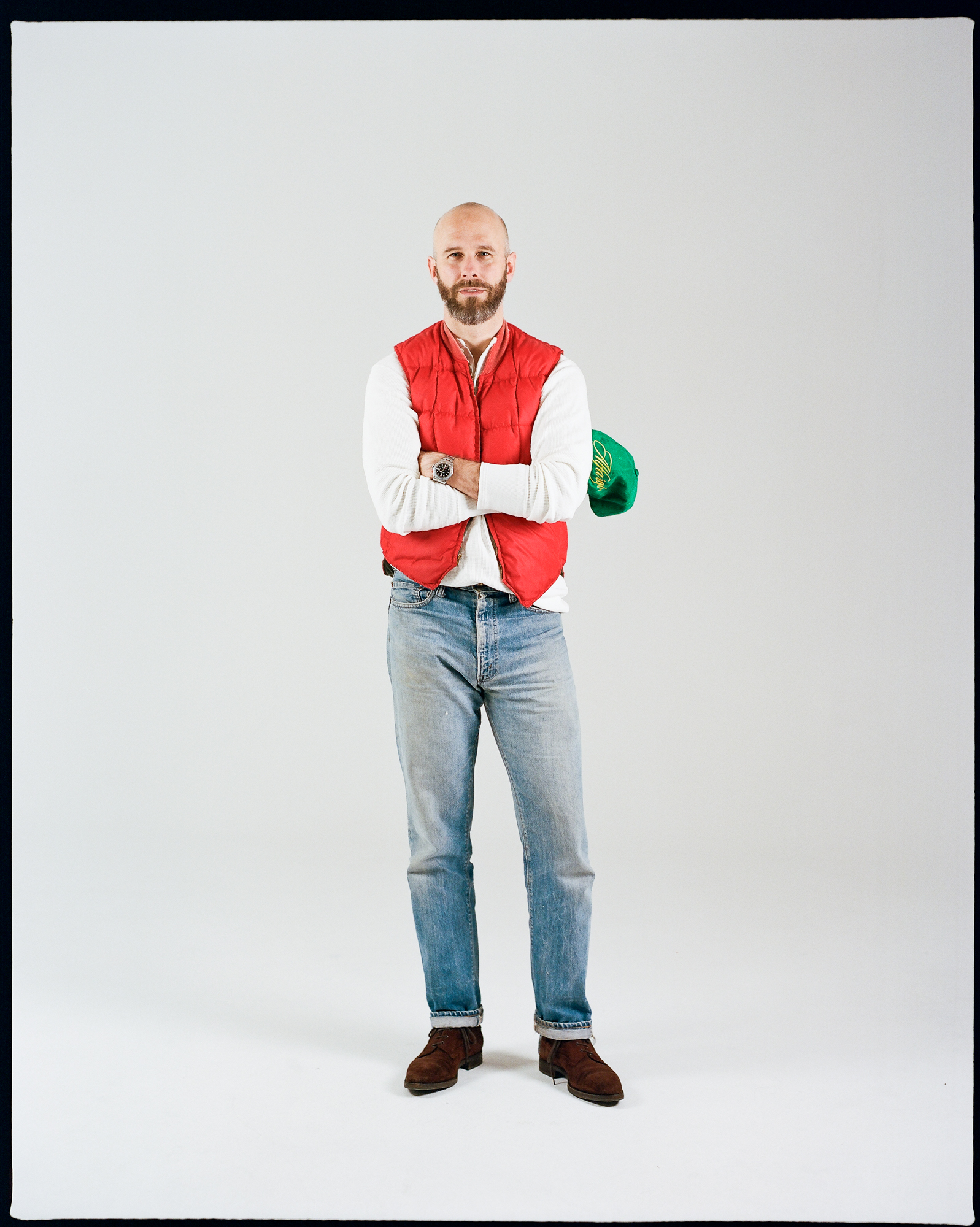
The last gilet is from a similar but different tradition, that of American outdoors wear. This is a rich seam for menswear, and one that has become particularly popular as outdoor clothing in general (sometimes known as ‘Gorpcore’) has become fashionable.

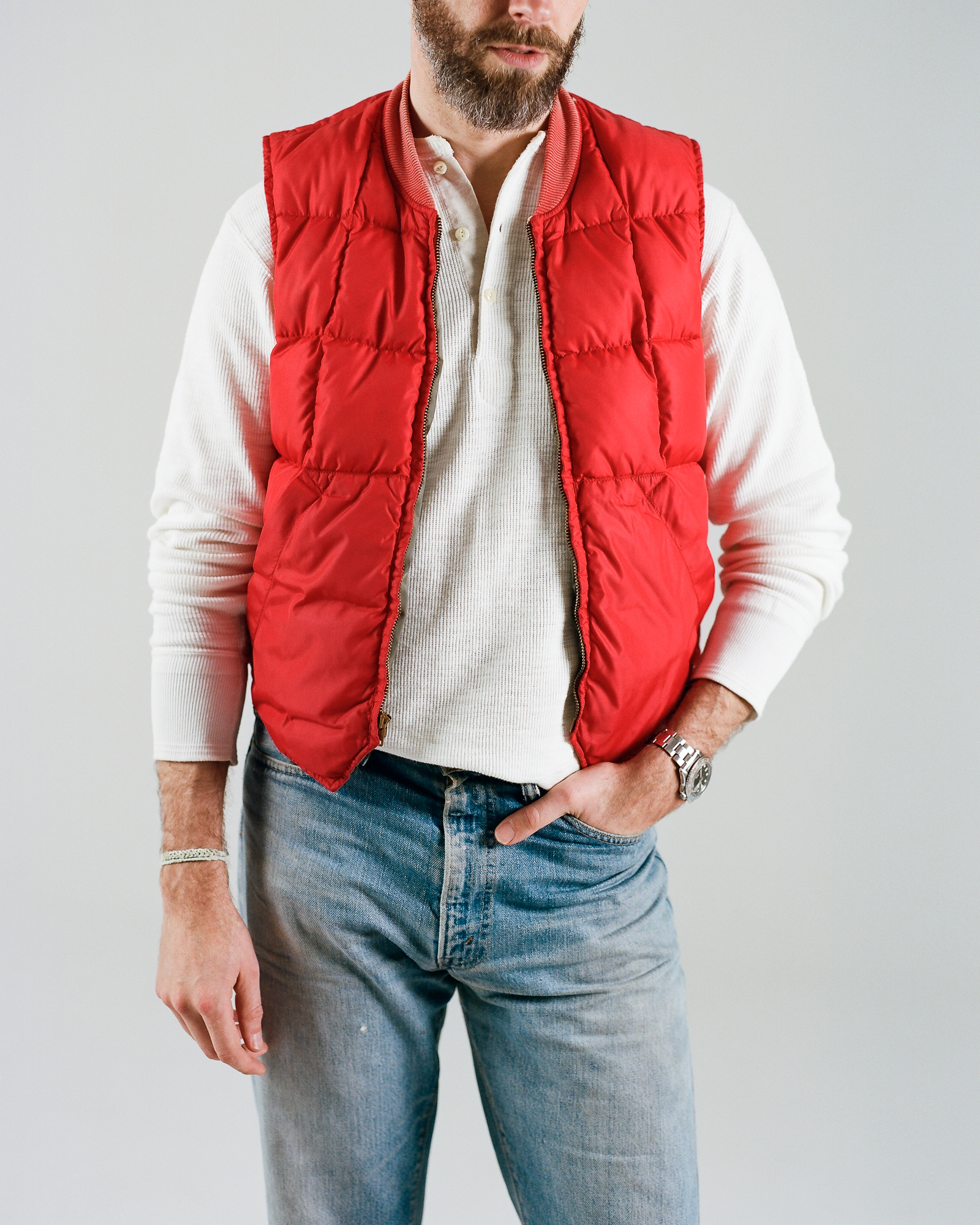
Gilets in this mould tend to be a little smaller and lighter, often used for layering in the same way as those ‘tech bro’ ones. But older models are made from better materials - usually around 50/50 cotton and polyester, which gives them a matte, natural finish. 

The colours are usually better too - either natural beiges and olives, or bright colours like this red. (Red or orange is often used for hunting, I'm told, because deer see all such colours as shades of brown, while hunters can see each other easily.) 

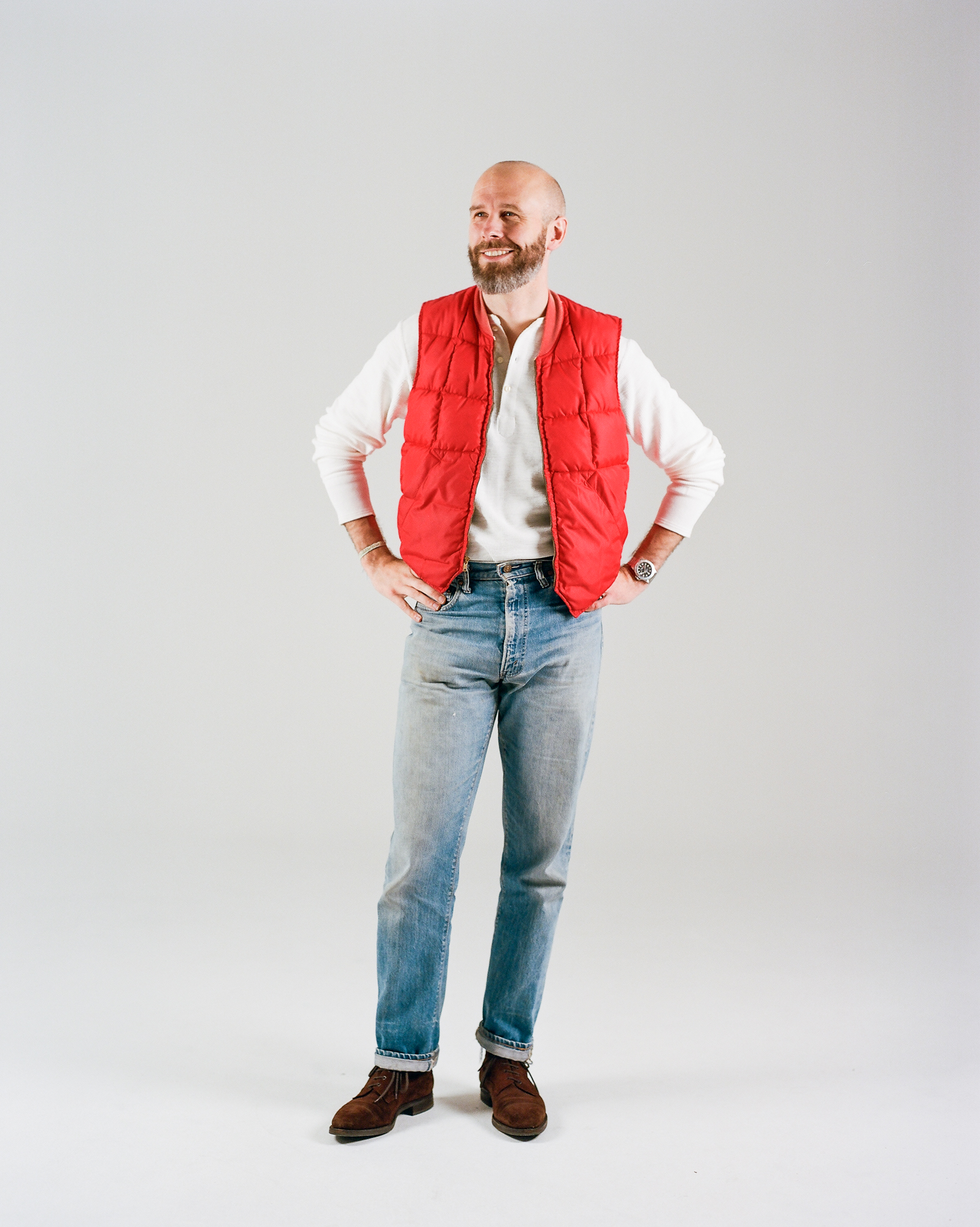
I don’t wear this style of gilet as much, but I do like this old Eddie Bauer model for its pop of colour. Shades of Marty McFly perhaps, but if I’m going to impersonate anyone, a white suburban kid isn’t much of a stretch. 

Here it’s worn with a henley-style thermal from Real McCoy’s (the Joe McCoy model) and vintage Levi's. A sweatshirt works just as well, but it needs to have a shorter body, given the short length of the vest. Same goes for the higher rise of the jeans. 

The boots are Galways from Edward Green. A model like the Cranleigh is good too, but given everything on top is quite close-fitting, chunkier Alden or Viberg work boots aren’t so in keeping. 

To some, a heavy gilet can seen an odd choice - why wear so much down on your body and then leave your arms uncovered? 

I’ve always found it surprisingly practical as long as the knit underneath is warm, and you can use the pockets when needed. Their popularity in recent years probably supports that. 

A reader also asked recently about fleeces, which in many ways fall into a similar category. 

I can see the appeal of a Patagonia-style fleece, but for me it’s a shame not to wear materials like suede and leather as outerwear, given it’s such a rich, enjoyable area for menswear. A fleece feels akin to knitwear, whereas a gilet like this is more similar to a suede blouson or leather flight jacket. At least with the first two in this article, the materials arec ertainly more in line. 

Down-filled vests or gilets won’t be for everyone, but they’re certainly practical and enjoyable, and I don't think anyone should worry too much about associations. 

Manish’s five bespoke lessons: Working with a tailor

Manish’s five bespoke lessons: Working with a tailor

||- Begin Content -||

By Manish Puri

I’ve been commissioning made-to-measure and bespoke garments for six years. 

In any other sphere, that amount of experience might qualify me as an expert. So, it’s telling about the nature of bespoke - the slow production times, the incremental improvements to a pattern, the subtle differences in house style, and the gradual evolution in taste that comes from having a broader palette to create from - that I still very much consider myself a beginner!

Even so, in that time I’ve commissioned tailors from London, Hong Kong, New York, Naples and Stockholm to make pretty much every type of garment save for an overcoat (note to self: ooh, an overcoat).

I’ve had one almighty calamity (aborted partway), a few things I’ve outgrown (figuratively and literally) and have ended up with several pieces that fill me with joy and gratitude whenever I wear them.

So, this article (the first of two) is about some of the lessons I’ve learned from working with different tailors. Of course, this is just my experience and the Permanent Style archives are stocked with articles dealing with Simon's take on similar matters - I’ve added links to key pieces at the end. 

My target reader is someone who is about to embark upon having clothes made for the first time. For the old hands, I hope it gives you the satisfaction that comes from knowing the safe route through a minefield - and I insist that you share your hard-earned wisdom in the comments.

In the final reckoning, to be in a position where you’re even considering having clothes made for you is a gift of fortune. By all means research tailors, agonise over fabrics, measure and remeasure garments, snap selfies, curate look books, and interrogate makers. But, my best advice is to enjoy the ride.

1. More than a feeling

In Simon’s review of his bespoke suede boots from Roberto Ugolini he wrote something about the bespoke experience that had me knocking the nearest table in agreement:

“I am increasingly specific about what I need…and it seems to be paying off. When I was younger I didn’t, and a lot of shoes were just too small for me. Partly it was awe at the bespoke process itself - the work these makers were going to do on my behalf, the combination of skill and strength. But just as importantly, I didn’t have confidence in my own opinions.”

I’ve been guilty of this myself (and perhaps it’s that “natural English reticence” that Simon alludes to). I subordinate my own gut instinct to the tailor’s skill and experience. And on the occasions where I have voiced a concern that something is too tight (and, by the way, it’s nearly always an issue with something being too tight, because, barring your pants falling down, it’s amazing how quickly you can adapt to something being slightly more relaxed than you’re accustomed to) I’ve learnt that reassurances of things ‘giving’ through wear are futile if the current state is so uncomfortable that you can’t bring yourself to wear it - I’m looking at you dry denim!

As Simon says, “it takes time to know what you need”, and over the years I’ve gotten to know that my tailoring ‘pressure points’ (the areas where an uncomfortable fit can mark even the most beautiful garment for the eBay corner of my wardrobe) are around my elbow, across the shoulders and in the crotch.

And so, I’ll try and take a seat at the tailors to see if I can feel any pinch. Not a prim perch on the edge of a stool mind you, but a full gangster-lean back into an armchair with legs tightly crossed. I’ll take imaginary phone calls to see if the elbow feels tight. And I’ll reach into the air as if I’m gripping the hand strap of a Tube carriage to examine if the collar creeps away from my neck. 

I sometimes feel a little silly and even (here comes the English in me again) rude doing this - as if I’m casting aspersions on the quality of the work done. Your tailor won’t care. They’ve seen it all before. One told me that they had a regular client who would go to the corner of the room and assess the fit by contorting their body into shapes that would make Houdini wince.

2. I’ll be your mirror

If the front of a finished jacket and its attendant embellishments (lapels, quarter, pockets, buttons) conveys a tailor’s style, then the back, a landscape of pure cloth, is where their skill is on naked display. 

The large (and largely interrupted) length starts wide at the crest of the shoulders, peaks over the shoulder blades, troughs and narrows through the small of the back, before spreading its form to envelop the tuchus. This undulating journey reveals a lot about how the jacket fits and how comfortably it will wear.

And, so, it’s a minor frustration (and surprise) of mine that not all tailors have a setup that offers customers a closer look at the back - a rear view mirror, if you will. This is especially true of travelling tailors and trunk shows, although I can forgive them for being reluctant to check a full-length three-way mirror onto an aeroplane.

Fortunately, these days we all carry our black mirrors with us so, if you do find yourself trying to catch a glimpse of your own posterior like a dog chasing their own tail, I would encourage you to enlist your tailor’s help in documenting the back of your commission - photos will give you a sharper picture to nitpick over, while video will offer a sense of how it looks in motion.

And to those who say this tip is essentially just a 21st century repackaging of Cher Horowitz’s advice in the film Clueless to never rely on mirrors and always take polaroids, my retort would be that you’re a virgin who can’t drive.

3. My love is your love

In Permanent Style’s infancy, Simon would often bemoan the fact that tailors didn’t have enough examples of their work on display to help prospective customers get a clearer picture of what the house style was.

I think this is undoubtedly an area where tailoring houses have improved - both in the showroom and through the curation of a library of commissions on social media. (Indeed, at the last Mortimer House talk, Anda Rowland of Anderson & Sheppard appealed to customers to tag them when posting looks online).

However, even within the relatively narrow parameters of a house style there are still so many decisions to be made where even a modest adjustment can have a dramatic impact on the finished product.

Shoulders. Drape. Notch height. Lapel width. Belly. Buttoning point. Skirt length. Openness of the quarters. Like you, I’ve done my homework and I have a notion of what I want from each of these, and I also understand the theory of what a change to any one element might induce. 

However, what this looks like in practice, and how multiple tweaks might work (or not work) in concert sometimes escapes my aphantasic mind. The problem becomes particularly acute on a second or third commission with the same maker where you’re starting to find your bespoke legs and are emboldened to subtly develop your silhouette.

In those cases, you’ll find a helping hand on the commission rail, where finished and semi-finished garments dangle like ripe berries. By trying on other people’s commissions, I’ve been able to answer questions about how closed I want my quarters, how I like the collar to feel, how much belly I want on the lapels of a DB, and how extended I want my shoulders more precisely than I ever would otherwise. It doesn’t matter a jot if the coat is ill-fitting, you’re only looking for visual cues on one or two elements.

Personally, I’d be delighted if one of my commissions helped to steer a fellow enthusiast in the right direction. Just remember to ask the tailor first!
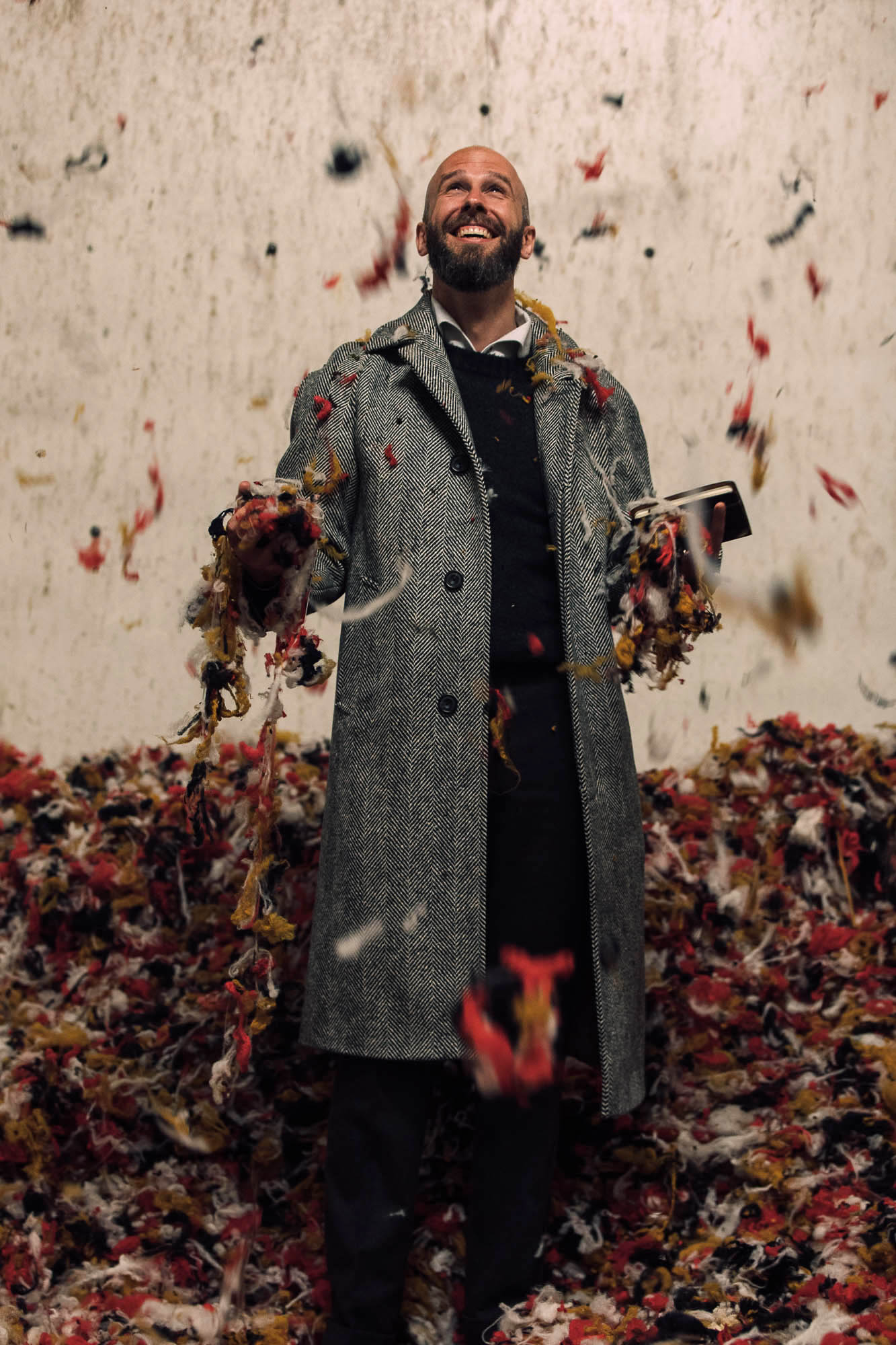
4. Lisztomania

Once you’ve made those micro-decisions, make a list of them. 

You might not realise it (because it’s probably been skilfully done) but you’ve just shared more information on your style, and made more choices about your wardrobe, than you ever have before. And even with a relatively quick turnaround (six to eight weeks minimum) you’re going to forget some of them. Or, if you’re like me, you’ll start daydreaming about the next commission and conflate the two in your mind.

Making a quick note of the fabric code, lining (cloth and type), number of sleeve buttons and any other atypical design choices can really help. Now, the tailor should make notes too, but this is a human transaction - accidental error or misinterpretation can occur, and you should prepare yourself for that possibility within reason.

Or course, if you went in for a navy worsted single-breasted suit and your tailor fishes out a lime-green corduroy double-breasted then run for the hills. Your diligent transcriptions in a notebook won’t help you in these forsaken lands.

5. Tell her no

The golden rule of retail is that the customer is always right. However, as someone that has previously purchased stretch denim, I can attest that not only is the customer frequently not right, they're often crying out for a style intervention where the errors of their ways are patiently and systematically laid out in front of them.

I do understand why some tailors are minded to tell the customer “I'm going to make whatever you want”, but, in the long term, you’ll benefit from working with a tailor that is comfortable saying no to you.

I’m a regular (and very satisfied) customer of The Anthology, for example, and still remember messaging Buzz (one of the founders of the brand, above) to enquire about making a jacket out of a cashmere glen-check cloth that had caught my eye on his Instagram stories.

In characteristically polite fashion, he steered me away from it. He understood my budget, my existing wardrobe, my style and my lifestyle, and he knew what I didn’t at the time: that this wasn’t the right piece for me at that particular stage. 

That careful handling of a customer when there’s a sale at stake gets to the heart of what makes a good bespoke relationship - trust and longevity. You can’t build a long-term customer relationship without their trust and you won’t gain their trust without looking out for them in the long-term.

Manish is @the_daily_mirror on Instagram

Six recommended PS articles to delve into this deeper:

Wythe: Tasteful and accessible Americana

Wythe: Tasteful and accessible Americana

Monday, November 27th 2023
||- Begin Content -||

Peter Middleton is an affable Texan with a real passion for fabrics. We talked previously for a PS piece on Navajo rugs, and also for an article about the design side of Ralph Lauren, where Peter (above, right) worked in fabric research.

But when we had dinner in New York recently, the subject was how his own brand - launched after leaving Ralph - has developed. Wythe had just opened its first store on the Lower East Side and suddenly the start-up was feeling rather bigger. 

“It’s definitely more real now,” Peter says of Wythe, which started with a Kickstarter campaign for oxford shirts and is now in its fifth year. “There are more questions from the customers, more conversations in person.” 

From my point of view, the store gave me more of an understanding of the Wythe products, having previously only seen things online and owned one piece (the Camp Friendly Pines overshirt). 

Wythe wears its influences on its sleeve, with a pair of old cowboy boots hanging on the shop door and some of those Navajo rugs hanging around. Peter’s family are from Texas and the Adirondacks, and a love for those places runs through a lot of the clothing. 

“It took me a while after leaving Ralph to feel confident in my own designs, that that background was relevant,” he says. “Bode was a big influence there, I like how every part of her brand is a different way to talk about her family lineage.

“At Ralph, by contrast, everything is from the outside - very little is from his own experience. I guess at Wythe I’ve found myself splitting the difference between the two, researching my family background but also bringing in influences from the time I’m interested in, like hunting or backcountry skiing.”

Peter didn’t have the easiest of starts. Although he had strong buyer reception for his first full collection in January 2020, that was swiftly shut down by Covid. Then as things started opening up in September 2021, his warehouse was flooded before stock could be shipped out. “So far, things with the store have been going more smoothly, but there’s always this lurking fear at the back of my mind.” 

As a PS reader, one of the first things that will strike you if you visit the shop and begin trying clothing, is the difference between these pieces and the Japanese brands such as The Real McCoy’s we often cover. 

Peter has a large archive and brings construction details from those vintage garments into his clothes, such as a particular trim, a stitch count, or the way a waistband is constructed. 

But at the same time, he prefers clothes that have already been washed and softened, rather than selling a rawer product that will get there over time. “I have less patience for that kind of thing than I used to,” he says. “I’m 31 now. It feels like a long time to wait three years to get those jeans to wear I want them to be.”

The flannel shirts I recommended recently are a good example, with a softness you might not expect. And the cardigan and cord suit below are both surprisingly light.

Peter doesn’t necessarily want to go to some of the extremes of the Japanese repro brands either - which is reflected to an extent in his prices. “A lot of the modern buttons are stuck in even sizes - 24 ligne or 26 ligne - whereas the older pieces are often odd, like 25,” he says. “Often we’re not going to produce our own buttons for that small difference. Same goes for a zipper colour or doing the tape in cotton rather than a cotton/poly blend.”

That positions Wythe somewhere between those niche producers and mainstream America, whose products are generally pretty low quality and mass produced. Does he think that’s a sweet spot?

“It’s really hard to know to be honest - it depends how many normal guys out there care about the points we do,” he says. “I mean if you’re looking for a flannel shirt there are a million options out there, so that market’s well served. 

“But I’d certainly rather find my own niche than try and compete with those Japanese brands. Like Orslow does a great OG107 trouser, and if I want one maybe I’ll go there - or we’ll recommend that to a customer. Same goes for some of the denim.”

My favourite pieces from Wythe tend to be the sturdier ones, like that jacquard overshirt I covered a couple of years ago, and the tweedy coats. But the Wythe range also stands out for me for its taste level, particularly the colour choices. 

The biggest issue I have with flannel shirts from the repro brands is not that they’re too heavy or too expensive, but that the colours aren’t very flattering. I have some nice vintage examples (eg here) but even they are in quite stark colour combinations. 

The Wythe ones are much more wearable, while still containing a lot of colour. The three pictured below, for instance, are nice despite the contrasting tones. Its something in the softness of the yellow, or the inclusion of brown rather than black. 

That goes for other colour choices in the Wythe range too, such as this green collared sweatshirt. It’s not a colour I would have ever thought about, but it looked great when I tried it in person in New York. 

“A lot of that comes from my time at Ralph Lauren,” says Peter. “If you look at the fabrics in a Ralph shop, 90% of those were custom developed. It’s not an option to just take something from stock - or if you do, it’s an inspiration which you then change and sample. Very few brands do that.”

A reader commented recently that the cuffs of the Wythe shirts are surprisingly large, and I’d echo that. I’d add that I found the chest pockets a little high on both the sweatshirts and the coats. 

But I like the colour choice so much I’d likely get the sweatshirt anyway, and having seen everything in person, I’m much more interested to see what Peter and his team come up with in the future. 

In the meantime, readers in New York are recommended to visit the store at 59 Orchard Street, and anyone that wants to learn more should look at the Editorials section of the Wythe site, as well as the product descriptions on each piece. There’s lots of detail there to get your teeth into.

wythenewyork.com

Reader profile: Sebastian

||- Begin Content -||

Sebastian has an interesting story - a clothing story with distinct phases. He’s a long-term reader (just over 10 years) and has worn many different styles, many different brands. But he's another PS reader in essence - always a little similar to the last, always a little different. 

We’ve met a few times, at pop-ups and in the familiar stores, but it turned out we have some other connections. He grew up in Ecuador, where I spent a happy month travelling. He knew my old employer, Euromoney, through his work too. There were more connections than you’d expect, which is always a nice surprise.

I hope you enjoy his story and his clothes. 

Outfit 1

  • Parka: Buzz Rickson replica of M-51
  • Jacket: Bespoke, from Solito
  • Trousers: Bespoke, from Whitcomb & Shaftesbury 
  • Shirt: Turnbull & Asser
  • Tie: Drake’s 
  • Belt: Rubato
  • Shoes: Crockett & Jones, Cavendish model
  • Watch: JLC Reverso 

How did you first get into clothing?

Well I was born in Ecuador, but from the age of five we lived in Caracas, Venezuela. This was the seventies and Caracas was a prosperous, cosmopolitan city, with a lot of American influence. 

I was into my clothes even before turning 10 - or at least I had an awareness of what I wore and of colour, which I guess not everyone does at that age. I wore a lot of American sportswear. That was my first love.

But then when I was older we moved to England, and I remember my mother shopping for clothes at Marks & Spencer. I cried when I saw the things she bought - it wasn’t the same.

In my teens I went through different subcultures. I was a Casual for a couple of years - Tacchini and all that. Then I was a Mod - probably the first Latin American Mod in England! This is why I wore my parka today, in homage to those years. 
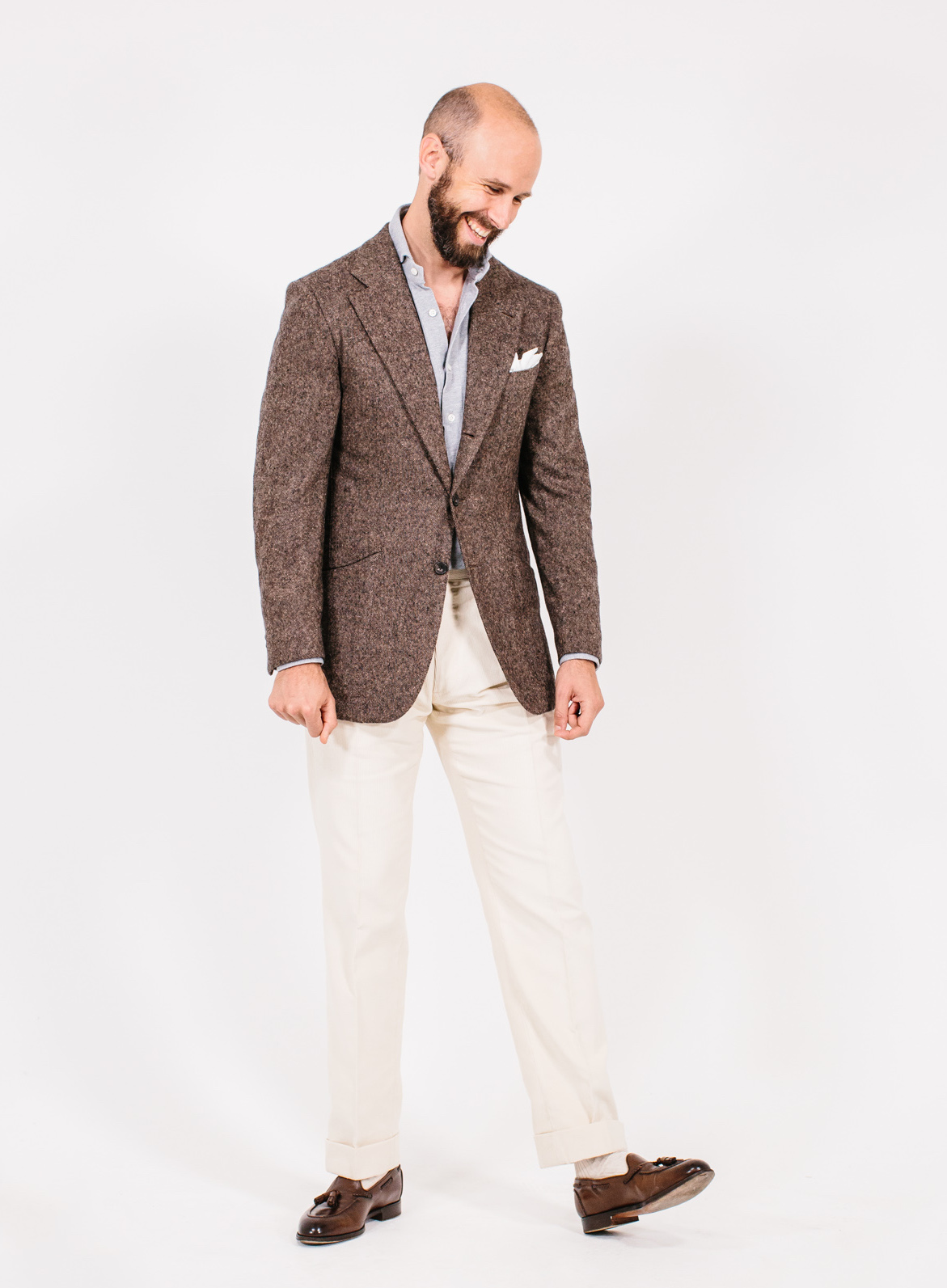
Did you keep up that interest in clothing?

Oh no, when I was in my mid-twenties I entered the dark years as far as clothing is concerned. I was a consultant and busy trying to establish a career, having a family. I travelled a lot, put on weight, clothing was very functional. 

But then in my early forties, when some of the pressure lessened, I rediscovered clothing. I think it was about that time I started reading your site as well. I dug out the clothes I used to love, but got into new areas too. The truth is I continue to have many styles, but I have a lot of fun with it all so don't consider it a problem!

Do you think you have too many clothes? 

My wife would certainly say so! One issue is I only started selling things in the past year and a half, mostly on eBay. I’m starting to get better at it though. I managed to sell my old Lee Rider jacket through Bryceland’s recently, though then I bought yours, so that was more of a swap...

Is your wife into clothes?

Not that much. Although I do think if there were more shops like Bryceland’s for women, that are so welcoming, so easy, maybe more would appreciate good, timeless clothes. It’s also so much nicer to shop when there are a few places you go to, who supply most things, who get to know you too. 

I hadn’t thought about that. We’re lucky in that regard, certainly in the area of traditional menswear. I think my wife would love shopping that way as well. 

Outfit 2

  • Jacket: LEJ
  • Shirt: Brcyeland’s 
  • Trousers: Scott Fraser Collection
  • Belt: Rubato 
  • Shoes: Crockett & Jones, Cavendish model
  • Cap: Aimé Leon Dore
  • Necklace: Red Rabbit necklace with silver pendant from French flea market 
  • Watch: Omega Speedmaster (pre-Moon)

Do you think growing up with an interest in clothing helps you later on? Does it give you an established taste?

It definitely helps - I am very instinctual, and it can be hard to suddenly develop that if you’ve never been into clothes. It is also interesting
to rationalise your approach to clothes and to think about why certain things work and others don’t, and also to consider different perspectives. Your site has been hugely helpful in that sense.

Black is a good example. I never wore black when I was younger, or in my career, and always thought it was too one-dimensional, a bit flat. But when I read your pieces on it, I realised how much was about texture, and how some categories were easier than others. 

I guess this outfit is influenced by that - I never would have worn it a few years ago. I appreciate the texture in the seersucker, in the linen trousers. And I naturally break it up, with a belt or something else.

It’s interesting to see you wear it with red as well, as that strong contrast doesn’t work on me - your colouring must help. 

Yes, and of course that’s a big part of that background in clothes - you have a better idea of what suits you. 

Where are the trousers from? 

Those are from Scott Simpson, but I had him taper them a little from his standard width on the lower leg. I like big trousers but if they’re too wide at the bottom they can drown you. Even if they’re wide it helps if they taper a little. 

You could wear that width more easily than me given your height. I guess that’s one more about learning about what looks good on you. 

The shoes are from Crockett & Jones? 

Yes I have three pairs - the most comfortable loafer for my foot I’ve found. The brown tassels in the first outfit were Crocketts as well. 

The belt is from Rubato, although I’ve also gotten into western belts from Silver Ostrich thanks to you. And the jacket is from LEJ - it was a sample and I had to convince Luke to sell it to me. I think it was a shorter length than his usual chores, which works a lot better on my height. 

How much are you into watches?

Not that much, or at least not as much as clothes. I have a handful of collectible ones, some of which you can see in these outfits. I’m better at controlling myself when it comes to watches - my biggest weakness is definitely clothes, outerwear particularly. 

Outfit 3

  • Jacket: MTM, Aero Leather
  • Scarf: Mahala
  • Roll neck: De Bonne Facture
  • Trousers: As in Outfit 1
  • Watch: 1967 Rolex Day Date

I love the scarf here, where’s that from?

A little shop called Mahala that’s close to us in Crouch End. They do some lovely textiles that they import from places like Afghanistan, Iran. There are kilims from Turkey, handmade pieces from India. 

They’ve made me a few pairs of trousers over the years too - they’re not sartorial pieces but they’re nicely done and they have some pretty special fabrics. They also like a good wide trouser. 

I like hunting down things like that abroad as well - I was in Marrakesh recently for work and I loved walking the markets, hearing everyone’s pitch, looking at all the textiles. There’s a vibrant, entrepreneurial atmosphere to everything. 

I presume the jacket was made to measure for you, is that right?

Yes this was made by Aero Leather - at an event Clutch did a few years ago. 

How do you find the experience of made to measure or made to order?

It’s hard, because there’s more risk there than with tailoring, partly because you’re not going to have a fitting, and partly because once it's made that's pretty much it. So I would never do something that was just online, where you had to enter all the information yourself - this was different because the guys were at the trunk show and taking measurements themselves, taking some responsibility! 

Where do you have your tailoring made? 

I’ve used a few different places over the years, but again I wouldn’t say I’m a big bespoke guy. I have business suits from Whitcomb & Shaftesbury, casual jackets from Solito. Oh, and I recently used WW Chan for the first time through Bryceland's for a simple navy MTM sports jacket. Despite my nervousness, I was really pleased with the result. I have been aiming to get a simple navy blazer for a while now, but then I get distracted by something else. This time I finally did it. 

I should also include a shout-out to my fellow countrymen at Hidalgo Brothers on Savile Row - we walked past them earlier. They’re Ecuadorean too, a whole family team, and they do a great job with alterations. I use Pinnas & Needles in Soho too, but they have a bit of a backlog.

I've never done bespoke shoes, and not sure I ever will. I am not sure I could justify the money involved.

Any other clothes you've bought recently that you'd recommend to readers?

I recently got some boots from La Botte Gardiane in the south of France that get a lot of comments. They're basically French cowboy boots from the Camargue - similar functionality but without all the associations of western cowboy boots.

I feel that they're good value, and have a great shape. You can also have them made to order if you want some tweaks. The collar is quite large so there is some movement if you have smaller ankles, like me. But you get used to that.

Roberto Ugolini bespoke boots: Review

Roberto Ugolini bespoke boots: Review

Wednesday, November 22nd 2023
||- Begin Content -||

I recently had these boots made bespoke by Roberto Ugolini in Florence, and they have turned out very well. I have two reflections about bespoke shoes off the back of them.

One is that I am increasingly specific about what I need in terms of fit, and it seems to be paying off. 

I make it very clear that I only get pain with shoes in two places. One is the outer edges of my toes (little toe joint, little toe itself, fourth toe) and therefore I need width in that area. It’s what kills me on narrow shoes like my old Corthays and, more significantly, bespoke shoes in the past. 

The other area is the top of my big toe, which is rather larger and taller than the others. Any shoe that is too tight across the top will bite on that big toe and be horrible. 

Beyond that, I’m golden. There are many other areas a shoemaker has to get right of course, but these are less crucial. It’s in those two areas that makers have fallen down over the years.

When I talked to Roberto, I made this clear. At the measurement stage, at the fitting stage, I swallowed that natural English reticence and communicated rather specifically.  

When I was younger I didn’t, and a lot of those shoes were just too small for me. Partly it was awe at the bespoke process itself - the work these makers were going to do on my behalf, the combination of skill and strength. But just as importantly, I didn’t have confidence in my own opinions.

The shoes felt tight, sure, but wasn’t that how it was meant to be? Even when the results were sometimes painful, they were not that much more so than ready-to-wear could be - just in different places. 

During the pop-up in London recently, I had two separate conversations along the same lines - readers saying they’d tried bespoke and it wasn’t what they expected, but they weren’t confident of their opinion. 

My lesson is not that everyone should speak their mind and shoemakers should obey them. (I’ve heard enough odd opinions to sway away from that.) But instead, that it takes time to know what you need.

I should have learnt faster, certainly, but I think everyone needs time. No one comes to this with any experience, and we don’t have friends or family that have been through it either, as in older generations. Shoemakers themselves might also benefit from talking about this to customers.

And it adds to the argument I made last year, that bespoke shoes really make sense as a long-term thing - over years and pairs, often with the same shoemaker. I have to cover everyone; I wouldn’t necessarily recommend anyone else do the same. 

In fact it almost feels unfair to compare this Ugolini experience to those older ones with other makers, given how much I’ve changed. 

But that shouldn’t take away from how nice the boots are. I was particularly pleased because I’d heard a couple of negative experiences from acquaintances, but mine were good at the trial stage, were well executed, and the style was exactly what I was expecting. 

That last point is my second takeaway: whenever possible, commission shoes that you have already seen in person. 

Roberto has a decent range of shoes and boots on display in Florence, and I picked a specific chukka, then picked the suede to make them in (from an actual hide, pleasingly). I knew what to expect, and so it was much more likely the result would meet my expectations. 

When I look back on bespoke shoes in the past, I so wish I had done that more. 

My Cleverley double-monks, for example, were a real mismatch of shape and style - too elongated and fine for that leather and style. We did talk about making the shoe rounder and more casual than the previous pair, but the salesman and I were clearly talking about different things, because the changes were very small. 

You’d think I’d be more relaxed these days about making mistakes with such commissions, given I have a fair few bespoke clothes. But it actually annoys me more, feels more frustrating. Perhaps it’s the waste; perhaps the thought that I should know better. 

The one thing I was a little unsure of with the final boots was the sole edge - which tellingly, is the one thing I changed from the pair on display. 

I went for a dark colour, and a lighter one would have been a more natural fit for the snuff suede. But I’ve found the difference small, and it means the shoes are slightly easier to wear with things like dark denim. 

I’ve also found the boots a nice match for anything that has a slight Western feel, as this clothing combination does (full details on that here). The shoe has that slightly pointed almond shape that we discussed on this original piece on my roper boots

Elsewhere, there are small points where you could point out that the finishing is not quite the same as the very top bespoke, such as along the welt line. The work overall is good though, and the price also lower than many makers, with shoes starting at €2300 and these boots costing €2400 (both excluding VAT). The couple of scratches on the upper are also my fault - or rather, natural signs of wear. 

The boots have beautifully made boot trees (that's the handles showing out of the top), a box made with local Florentine paper, and I rather like the way the laces are finished with simple knots. Those things are probably in descending order of importance.

Overall I’m very pleased but also slightly relieved - relieved that the boots fit well and I will wear them for many years to come. Hopefully I’m getting better at commissioning them, even if it’s taken a while. 

(Oh and this experience probably weighs against the idea of making shoes based on scans of the foot, at least for bespoke. The challenge of bespoke is not knowing what the customer’s foot looks like.)

Roberto currently travels to New York, Seoul and Japan for trunk shows.

The Bureau, Belfast: Big brand mix and exclusive styles

The Bureau, Belfast: Big brand mix and exclusive styles

||- Begin Content -||

By Manish Puri

If you leave Belfast city centre and head east, past Nuala with the Hula, across the Lagan, and along the Newtonards Road, eventually, in the shadows of Samson and Goliath (the monumental gantry cranes that loom over the shipyards where the Titanic was built) you’ll come to a large brick building known as the Portview Trade Centre.

Once home to the largest flax tow spinning mill in the world (just one of several mills that earned the city the appellation Linenopolis), it’s here that you’ll find a shop whose products in some ways bond this history of cloth and construction: The Bureau.

The Bureau’s founders, Michael Hamilton and Paul Craig, first met 40 years ago in that most unlikely cradle of menswear talent, Topman. In 1989 they opened their first shop on their own, and were early champions of a handful of the biggest names in high-end, design-led fashion: Paul Smith, Dries Van Noten, Maison Margiela, Margaret Howell, Stone Island.

The eclecticism of the brands was, in part, an assertion of individuality and open-mindedness in a city riven by sectarian violence. As Michael and Paul wrote themselves: “As teenagers our interest in identity transcended the city and 'The Troubles', instead we sought music, clothes, and culture…The influence of other cultures, the urban city and the great outdoors remain our inspiration.”

In 2005, the Bureau moved to a larger space on Howard Street – restoring an original tobacconist and the dining rooms of the old Presbyterian Hostel in the process. The change coincided with a shift from working with some of the (by then) larger labels and a refocus towards smaller, niche companies.

“Around that time, some bigger brands began to move production to cheaper countries. The price was unchanged, but you could feel that the quality wasn’t quite at the same level”, Michael explains. “We felt that smaller brands offered better quality and value”.

In 2011, the Howard Street location was subject to a rent review. “It was after the fallout from the financial crisis in 2008 and the retail outlook was very different,” Paul told me. “We were paying for the footfall of customers that we were irrelevant to,” adds Michael.

And so, in 2012, The Bureau moved to the Portview Trade Centre (above) where their neighbours include architects, a ceramicist and a children’s illustrator. “It’s humbling to be around all this talent”, Michael notes modestly.

I visited one overcast Saturday morning, pushing open an unassuming wooden door to reveal a stunning and unexpectedly large space with double height ceilings, custom-made mahogany shelving backed up against whitewashed walls, and Pendleton throws draped over camping chairs. The jazz soundtrack set a languorous mood.

I was welcomed by Michael and  over cups of coffee regularly topped up by Roger (a Bureau customer since he was 16 and now an employee) we looked at some of their 40-plus brands.

The Bureau’s relationship with their core brands often stretches back a decade or more. Indeed one of the questions they ask themselves before stocking a new brand is, “can we see ourselves working with you for the next 10 years?” That personal connection helps foster a more collaborative alliance.

Alden, for example, have produced a variety of exclusive models for The Bureau. Their classic-with-a-twist is the Color 8 cordovan longwing with soles finished in an antique edgetrim (above left) instead of the standard dark (above right). The modification (in part inspired by the paler soles of another of The Bureau’s long-time collaborators, Tricker’s) lends some contrast and warmth to the deep, rich cordovan, and The Bureau were the first stockist to push for it.

Of the current selection, I also really like the black cordovan blucher with an atypical commando sole – a nod towards Michael’s affection for shoes that are “clumpy, heavy and big”. The Bureau also has limited stocks of Alden shoes in rare shell cordovan – Whiskey, Cigar and Ravello – but only available instore.

There are a number of Japanese brands that are part of The Bureau’s offering: jeans and loopwheel t-shirts from Warehouse & Co, bags from Porter – Yoshida & Co, canvas sneakers from Shoes Like Pottery, and outdoor accessories and apparel from Snow Peak.

One Japanese label that I hadn’t come across before (and, apparently, neither had any of the considerable number of menswear accounts I follow on Instagram) was FilMelange who make sweatshirts and loopwheel t-shirts from melange yarns with a crisp, dry handle. I took home a quarter-zip sweatshirt (above), a first for me as I generally don’t care for this style. I liked the sporty nature of the cloth, the boxy fit and the two-tone zip – where some teeth have been polished and some left dull.

Among other longstanding brands are Engineered Garments, whom The Bureau have stocked and collaborated with since 2003. “We’ve made lots of special garments,” Michael tells me. “We’ve even sourced Donegal tweed for them”. Because of that history, The Bureau stock one of the most extensive selections of Engineered Garments you’ll find anywhere.

Of the other clothes I looked at, I was impressed by the knitwear from the British brand Tender Co; fully fashioned in Scotland, hand linked, often dyed using traditional techniques, and made from a meaty 5-ply Gansey wool.

The Diving Pullover (above) had a raw, almost primitive quality to it. (The knits aren’t up on The Bureau’s website at the time of writing, but you can see them on the Tender Co website).

While The Bureau’s offering has tended towards workwear in recent years, they continue to stock some interesting fashion-forward labels. I liked the selection of items from Parisian atelier Casey Casey. Here, once again, the cloth choices stood out, often tightly woven and structured fabrics that are loosened up and broken in through heavy washing, double-dyeing or hand-finishing.

The Big Blobby Coat (above) for example is fashioned from a deeply textured, black boiled wool and lined with a bone-coloured, crushed paper cotton. As its name suggests, the coat is bold and voluminous; not one for those that like the structured sharpness of a tailored overcoat, but it still comported itself with the “bad-ass swish and drama” of the best coats.

The following day, I squeezed in a quick visit to The Bureau’s newest outlet in the Cathedral Quarter – a former warehousing district that has been recast as a cultural area.

While The Bureau’s internet presence is strong, Michael told me they try to keep the online experience close to bricks-and-mortar. This means re-measuring all items before they go online (rather than relying on a brand’s specs), using their own images (Roger is the resident photographer and Michael’s son, Jakob, models frequently), and handling customer service and the fulfilment of orders themselves.

However, at heart, Paul (above) and Michael are retailers and their instincts told them there was an appetite for a more traditional shop setting post-Covid. So, when a space adjacent to Niall McKenna’s new Waterman restaurant became available, they returned to the city centre in June 2022, with Paul manning the shop from Wednesday to Sunday.

In preparation for my visits to The Bureau I reread Lucas’s piece on the state of UK independent menswear: a paean to those who take risks in curating and supporting small and unknown brands - sometimes based on little more than a gut feeling.

After meeting with Michael and Paul - and seeing unusual iterations of much-loved favourites, discovering half a dozen new brands, and trying on a few garments that are outside my usual style - I came away with a deeper appreciation of exactly the type of business that Lucas was so protective of.

Manish is @the_daily_mirror on Instagram

Photos by Manish and courtesy of The Bureau Belfast.

The importance of visiting your makers (repeatedly)

The importance of visiting your makers (repeatedly)

Friday, November 17th 2023
||- Begin Content -||

Readers have asked in the past what it’s like developing new clothing, what helps and hinders, what the challenges are. One piece of advice a friend gave me a while ago was to visit the factory more than you think - that even a one-day, flying visit is equivalent to 100 emails. 

That’s certainly been borne out by my experience. There are the physical things you pick up on, like the fact there are three more weights of interlining than you realised - just because you never thought to ask. Or you see a new material made up, rather than a swatch, and notice the beautiful way it drapes: suddenly the benefit of that weight is revealed.  

But there are subtler ones too. For example, it wasn’t until we’d been at the workshop where we have our shirts made, in Naples, for about two hours that we thought to bring up why communication of shipments makes such a difference. 

Most brands work more in seasons than PS. They order products to arrive in July to go on sale in September, with weeks of leeway. And just as importantly, their customers have no idea what products are going to arrive or when. 

We’ve tried to bring readers closer to the product - setting out in articles what’s coming up. This makes it more of a problem when a workshop decides not to send the cut lengths of cloth with a shipment of finished shirts, perhaps for a good reason like it puts the shipment over a weight threshold. 

It might delay the cloth for a month, until the next shipment, and in the meantime readers that are expecting it in September are wondering what’s going on. Do you send an email to the waiting list, or is that overkill? Do you do a broader announcement, or does that annoy everyone else?

We’d brought this up with Luca Avitabile and the rest of his team before, over Zoom. It had even been discussed when Luca visited London, for his trunk shows. But it wasn’t until we were actually together on the ground, talking to Luca’s assistant and the manager of the workshop, all at the same time, that everyone made themselves understood. 

Sometimes it’s about putting yourself in another person’s shoes, to work out why something doesn’t make sense to them. Which in this case was because we’re different to every other retailer. 

The workshop shown in these images is the one Luca uses for his production - a small, bright but nondescript building outside the centre of Naples, with around a dozen people working in it. 

All the cutting, sampling and basic sewing is done here, plus some handwork. A lot of the finishing, like hand-sewn buttonholes, as in much of the world, is done by workers at home.

It’s the handwork that separates Neapolitan shirts from most of those made in Europe, and why people come here. The buttonholes attract the attention and are easier to communicate, but it’s the functional details like attaching a collar in the round, or easing a larger sleevehead into a smaller armhole, that make the real difference. 

Actually, Lucas (who runs the support side of the PS Shop) still gets emails from customers saying there is a mistake with their shirt, because there is a hand-sewn bar tack half way down the front. 

This isn’t a mistake - it secures the top of the section of the placket which is machine sewn (for strength) from one which is hand sewn (for movement). He did actually ask me to mention that, so I’m glad I’ve had an excuse to. 

One of the things Luca and I did when we visited the workshop, was refine the new Friday Polos that were released recently. 

It’s always fun seeing different people try them on and give their feedback. Luca, who’s probably a size smaller than me; Lucas, who is two sizes bigger; and even Jamie, who took these photographs, joined in with the odd jibe from the sidelines.

I’ve found good product design benefits from the clear vision of a single person - about colour, about shape, about style - but also the input of multiple people on cut, sizing and size splits. And indeed data, which Lucas has quite a lot of now.

Our conversation about communication continued into the evening, when we all went out for pizza and beer (always what I have a hunger for in Naples). How can we make life easier for Anthony (who runs our warehouse); how that can avoid the occasional mistake; what feedback we get from readers, which we wouldn’t think to share on a time-boxed Zoom call. 

It was very productive, though cut short by the fact Napoli were playing on the TV, and winning. (The local football team - or ‘soccer’ team to our American friends.)

The conversation became increasingly broken up as goals were scored or chances went begging. People moved from the edges of the restaurant to get closer to the TV, hung high in a corner. Jamie, who had the misfortune to be sitting with a column between him and the game, shifted round. 

Napoli won, there was much cheering and air punching, and then an almost eerie lull. Everyone except us knew what was coming. Suddenly the restaurant was flooded with noise as cars roared back from the game, fans screaming from the open windows, horns honking. 

I love Naples. 

Dress like a Parisian woman

Dress like a Parisian woman

Wednesday, November 15th 2023
||- Begin Content -||

Among the many pocket-sized books on women’s style, dressing like a Parisian is a popular category. Many, it seems, find the idea of the Parisian woman who dresses fashionably but not fussily, in a way that is simple but chic, appealing.

I was skimming one of these recently (in the wonderful Gower St branch of Waterstone’s) when it struck me how similar the philosophy is to Permanent Style. Not just the aspiration to timeless style, but the attitude of investing in versatile clothing. 

So I bought what looked like a good example of the genre (Dress Like a Parisian by Alois Guinut) and have been making notes in the margin ever since. 

The approach is remarkably similar. As Guinut (above) puts it, "the words that come to mind when you think of Parisian style [are] effortless, chic, understated" and "our obsession with perfect basics may make us look alike…but for La Parisienne singularity is all in the details."

The same goes for the attitude to fashion: “La Parisienne doesn’t take fashion too seriously and trends do not really matter to her...Yet she may follow fashions when they please her and, as long as she likes them, doesn’t care about wearing the same.” Rather similar to ‘How I filter fashions’. 

It's nice having your approach endorsed by someone from a different world - in the same way it would be if someone from a different culture admired it, for example. But more significant is that it can really refresh your perspective on that style and how you think about it. 

For example, in the introduction Guinut writes something that could have come straight from Permanent Style: "What I will share with you in this book are not 'rules' but guidelines…style recipes that you can choose to follow or break away from".

But then she makes a point I've never quite managed to put into words: "You could think of this book as being like a cookbook of French cuisine. [And] as with all great cookbooks, I will give you easy recipes as well as more advanced ones."

It's a useful metaphor. I often struggle to express to readers how some looks are more complex, and therefore harder to achieve, but that this doesn’t necessarily make them better or worse. Much of high/low dressing falls into this category, as does mixing of strong colours and patterns. 

I would usually use a term like 'advanced' dressing, but that can sound condescending or suggest there is something necessarily superior. But there isn't. Just like a simple boeuf bourguignon compared to Parisian haute cuisine, the latter requires more experience to master but that doesn't mean it's to everyone's taste, or that there isn’t a lot of subtlety in a seemingly simple dish. 

Of course much of the book is not relevant.

I know a lot more than I did before about how to flatter your legs with different shapes, soles and heel heights (so complicated!). And I know some tips on mixing shiny materials in eveningwear (lurex, sequins, glitter, metallics).

But some of the sections are more relevant than you’d imagine. The way women wear lipstick as a pop of colour, for example, has parallels with how men use accessories. Plus the Parisian approach to make up and hair in general is something I think men could learn from.

Parisian women (apparently) like a natural look, with less make-up and a simple hair style, while always having a clear understanding of what flatters them. Men that work their designer stubble into too sharp a shape could take note - but so should guys that spend no time at it whatever.

And throughout the book, there were some genuinely useful and practical points. 

For example, Guinut’s definition of a ‘neutral’ colour, as one that doesn’t conflict with any other. This could be black, navy or grey; beige or nude (“warm neutrals”); denim or even “natural leathers”.

It isn’t a concept we (or at least I) use very much - instead referring to simple versatility or to less saturation. In Guinut’s view, Parisian women should work their whole wardrobe around these neutrals. 

She also talks well about the colour wheel, highlighting the contrast created by different sides of the wheel (blue with orange, yellow with purple) but then - more usefully for menswear - the role of neighbouring colours. So green and blue, red and orange. 

Often it can be hard to communicate to readers which colours ‘harmonise’ with each other when picking ties or handkerchiefs. Without such an understanding they're often reduced to picking an identical colour from elsewhere in the outfit. This discussion of neighbouring colours - along with how pastels work together, or monochrome and camaieu - creates a nice structure for thinking about it. 

It’s the kind of colour combination we admired in King Charles recently. 

Still, the biggest thing throughout the book, is the reinforcement of principles we talk about on PS, put in different and refreshing ways. For example:

  • Showing a white T-shirt under a crewneck: “Use white as a highlighter. Layering a white T-shirt or shirt underneath something is a great way to make colour easier to wear and add lightness.”
  • That style can be something your’re born with, or that you can learn: “La Parisienne would say she doesn’t care much about rules, that she is a free spirit. Truth is, they may be so ingrained in her DNA that she doesn’t realise she is following them.”
  • The difference between more rural and urban colours: “Silver, greys and blues will give a cool, urban look.”
  • That black can easily look cheap: “If you feel black is too harsh for you, replace it with navy blue, its more polished, bourgeois brother. Unlike black, navy matches almost every other colour.” 

I like the use of the term ‘bourgeois’ in that description. One thing classic menswear can be, by not following youth trends and being more conventional, is bourgeois. It’s something to be aware of and perhaps push against, but in some ways this is a better term than ‘fuddy duddy’ or old-fashioned.

The same goes for the way Guinut uses words like ‘cool’ and ‘sexy’, which menswear writers shy away from. Pushing back sleeves, for example, is for her just cool - which is the opposite of fussy. 

Do Parisian women actually dress like this? Speaking to a few friends, in the sense that there is some tendency there that they recognise, the answer is yes. But it doesn’t really matter - the important thing is how interesting or useful the ideas are, rather than who is actually following them.

I found the book refreshing - much more so than reading another menswear guide, which will always tend to use the same phrases, the same references, the same ‘icons’. 

That doesn’t mean readers should necessarily go out and buy this book, because some of the information will be irrelevant. But it's a good presentation of the argument for learning from womenswear, and for seeking other perspectives in general. Perhaps those that have a stylish partner could start by sneaking a look at their bookshelf.

Swedish craft companies playing the long game: Svenskt Tenn and Märta Måås Fjetterström

Swedish craft companies playing the long game: Svenskt Tenn and Märta Måås Fjetterström

||- Begin Content -||

By Dag Granath 

Something that’s true for most – if not all – companies covered by Permanent Style is that they aspire to create something that stands the test of time. Two of my favourite Swedish companies outside menswear have this same aspiration, and in a recent conversation with Simon he suggested readers would be interested in hearing about them.

I find it’s often the case that one can enrich one’s palette and develop one’s practice by looking to related areas. For instance, in our work we often find that clients start their interest in clothes by becoming interested in shoes. They realise that a shoe that is properly made will last longer, age more gracefully and look better. That insight spills over into other aesthetic fields, including clothing and other crafts.

For our part, we find the more we engage in art, design and culture the more excited we get about clothes and tailoring. Two companies we discovered in that way, and in more recent years befriended, are textile studio Märta Måås Fjetterström and interior design company Svenskt Tenn.

While not in the business of making clothes, we’ve found their approach to production and to longevity inspirational.

Shortly after setting up her namesake textile studio in 1919, Märta Måås-Fjetterström became an integral part of the so-called Swedish Grace movement, a term describing turn-of-the-century architecture and design that mixed modernism and art deco.

Personally, I’ve always found this part of Swedish design history interesting because it circles around a discussion of the role of craftsmanship in modern society – a topic that only feels more relevant today.

Märta Måås-Fjetterström was also integral in elevating the status of textiles into an artform in Sweden. In our Stockholm atelier, we have a large MMF tapestry (pictured top) that’s probably the decorative object visitors respond most strongly to. It was originally woven in 1931 and has been refurbished many times since, so the fact it still resonates with people must speak to some qualities of the work.

What’s particularly interesting about MMF is that craft is – and always has been – the guiding principle behind the designs. A creative director is always subordinate to the production manager: they dictate what can and can’t be done aesthetically, so that nothing is produced where the studio can’t excel.

MMF uses a wide range of techniques – knotted pile, knotted relief pile, knotted rya, rölakan flat weave, tapestry weaving and gobeläng flat weave – and each of these drive the studio’s designs. Some of the methods are unique to them.

I spoke to the owners of MMF recently (above) about the techniques and about the focus on longevity.

Dag: Tina, you and Ulrik were collectors of Märta Måås-Fjetterström but then went on to buy the company in 2001. What made you take that step?

Tina: We were reluctant at first, but we realised how unique the studio in Båstad is, and that the company needed to bring forward its incredible archive and history. We also wanted to work with contemporary artists as collaborators, in order to explore the cultural heritage that MMF has become.

DAG: What makes the work of the MMF studio unique?

TINA: The combination of artistic direction and craft is something you very rarely see. Many craftspeople have the ability to produce technically excellent work, but sometimes they lack the artistic aspects needed to produce something that aesthetically stands the test of time. In our case, the weavers are the artists.

A technique that is unique to MMF is gobeläng flat weave. This is similar to how tapestry lengths are made at Les Gobelins, but applying it to rug qualities gives it a unique appeal. The technique is very demanding physically, and the weavers have to use their artistic competence throughout the process to get the desired flow of colors.

The second company I wanted to highlight is Svenskt Tenn. Frankly, it’s almost impossible to talk about Swedish arts and crafts without mentioning the company: they’re almost woven into the fabric of Swedish design history.

The company was founded by Estrid Ericson as an interiors shop, studio and tea saloon in 1924. Since 1975, it’s been owned by a foundation - an active choice to make sure “the company will live on for eternity”. Like many companies featured on Permanent Style, it is unusual in a world where the aim is commonly very short-term profit.

While Scandinavian design is commonly associated with austerity and simplicity, Svenskt Tenn’s designs are essentially playful and colourful. Like MMF, a big portion of its collections are archival designs originally created almost a century ago. My personal favourites include the works in pewter by Anna Petrus and Nils Fougstedt (above), and the iconic furniture by Josef Frank.

Maria Veerasamy (above), the CEO at Svenskt Tenn since 2011, has a background working with glass but also tailoring. An ex-punk rocker, she also carries a DIY ethos and is passionate about creating things by hand.

Dag: I know you work very closely with your suppliers. How do you mange those relationships?

Maria: We think it’s important the Svenskt Tenn team understands every way our producers work. For instance, when sourcing alder root veneer for certain Josef Frank table designs, our staff needs an incredible eye to understand graining and coloring of the wood, and how that will translate into a piece of furniture.

Dag: Interesting. It’s not unlike working with a tailor – a big challenge can be understanding how a suit will look just by looking at a small swatch, something it can take years to do instinctively. The tailor analogy also applies in the sense that the more you’ve worked with a tailor, the better work you can do together.

I suppose this all means that you rely heavily on the wellbeing of your suppliers?

Maria: Yes, and we provide a fundamental role there. The network of craftspeople producing for Svenskt Tenn is vast, and many of them have experienced decreased demand over the years. This obviously makes it difficult for them to invest in developing their practices and bring in new apprentices. Svenskt Tenn’s function is to provide them with the stability and longevity they need to be able to plan ahead.

Talking to Tina and Maria kept reminding me of the now popularised academic concept of finite and infinite games, an idea first introduced by theology professor James P Carse.

Finite games are games you play to win. As a company, that might mean you plan an exit at some point by selling the company. Infinite games, on the other hand, are played to keep on playing. You work to build something solid enough to hand to the next generation.

Märta Måås Fjetterström and Svenskt Tenn are both playing an infinite game: playing for the sake of keeping going, and as a result also making the journey meaningful and enjoyable.

In some ways, this is also how most of us reading Permanent Style go about building our wardrobes. We want to build relationships with our clothes and the brands that make them. Over time, we also gradually realise we engage with clothes because we enjoy doing so, rather than to achieve some imagined perfect wardrobe. After all, then we’d never have to think of clothes again.

The faster the world moves, the more luxurious it feels to give yourself the time to make decisions and figure out what makes you feel fulfilled aesthetically. And finding people, within or outside the industry, who share that approach is always a fulfilling experience.

Both the Svenskt Tenn and MMF websites have lots of further reading. In particular, the Svenskt Tenn site has pages on all its best-known pieces, such as the Anna Petrus pewter and the making of the armchairs

Dag is the co-founder of of Saman Amel

Casual suits with collared knits: A new default

Casual suits with collared knits: A new default

||- Begin Content -||

I like wearing suits. Not only do I have a lot that I like wearing, but I continue to commission them – not as much as sports jackets, certainly, but consistently.

It can be an issue knowing how to wear them without a tie though. I know I have a bias here, as a fan of traditional tailoring, but sometimes there is that feeling that something is missing with the head-to-toe block of colour, a shirt, and nothing at the top.

We’ve talked about ways to mitigate this in the past. Accessories can be added elsewhere: less so pocket squares, but certainly belts, scarves, hats, knits, and sunglasses in the top pocket. Shirts can be patterned to add interest, as can the suit itself. (Some images of those below, and links in the text to the relevant articles.)

This can certainly work – in the Solaro outfit featured recently, the denim shirt and contrast belt were pretty effective, I thought. (Last image above.)

But a belt depends on having the jacket open; you don’t always want to wear such suits or such shirts; and the same goes for accessories, which are also easier at certain times of year (eg sunglasses and sunhats in the summer).

My recent tendency, therefore, has been to wear collared knitwear with them as a good staple – the easiest and often the default.

Like most of my conclusions, this was an observation that was then rationalised in retrospect.

I wore the combination above on a working day in town a couple of weeks ago. The suit is my dark-brown corduroy from Sartoria Ciardi (in all its soft rumpliness) the knit a PS Dartmoor, and it was worn with a black Rubato belt and Edward Green Piccadilly loafers.

It didn’t feel like a tie was lacking, because of course you wouldn’t wear a tie with a knit. But the soft, matte material of the sweater and the colour also separated it clearly from a shirt.

For this reason shirts in less-classic colours can also be good, such as the black one worn with my brown-chalkstripe suit recently. But as remarked at the time, a knit would have been better still, and when I flew to New York recently for our pop-up shop, it was black knits that came with me, rather than a shirt.

The point of these rationalisations is often to answer questions like that one.

It’s all well and good saying, ‘wear a collared knit with a suit’, but some readers – especially those at the beginning of their sartorial journey – will inevitably ask ‘which colours?’, ‘which materials?’, ‘with smart suits as well?’ and ‘without a collar?’

Hell, I’ve been thinking about this daily for 15 years now and still have observations that seem worth sharing, so it’s not just beginners that have these questions.

The answers to those particular ones are:

  • We covered colours of knits under tailoring here
  • Fine-gauge wools or cottons. Thin ones, essentially
  • Yes, though it’s harder. Start with something very tonal (eg navy on navy, charcoal under charcoal)
  • Yes without a collar, but it’s a lot harder. Similar to wearing a T-shirt under a jacket, which we covered partially in this piece about a heavy-linen jacket. Roll necks are also good, but a different style.

The other problem with this suggestion is that a lot of knits don’t work that well under a jacket. The collars aren’t designed for it: they’re too low, they don’t have a collar stand.

The PS Dartmoor and the short-sleeved Finest Polo are better, but that shouldn’t be surprising, given they were designed for that purpose. They’ve also been refined over the years, and the most recent batch of Dartmoors has a different knit in the collar that helps that little bit more.

But others work too. The Rubato summer knits, for example, are good – I have a brown long-sleeved and a black short-sleeve. They have quite an extreme cutaway but actually that’s quite a good way to deal with the issue.

And on the sportier side I’ve always been a fan of the Armoury polos made with Ascot Chang. If you want more of a sport, cotton-pique look (like a regular polo) they’re a good choice. I’m sure readers will have others they’d recommend.

The day I wore this outfit, it felt so relaxed and easy.

A cord suit could have been stuffy, a little geography-teacher-esque, but in a dark colour, with black shoes and fairly tonal knitwear, it was not. As with a lot of my favourite tailoring combinations, it felt very me (suited to my time, place, occupation, personality).

Black would have been good, but perhaps more suited to evening. Cream would also have been nice, as would navy and green if they were in the right shade (very dark navy; green that complimented the brown).

I’ve worn all of those options since, as well as grey-on-grey with my old Anderson & Sheppard DB suit. In that case a white pocket handkerchief was added, but it was an event. Fine worsteds are trickier, as mentioned.

Questions and suggestions and logical objections, as usual, fire away.

Stolen valour: Issues with wearing military clothing

Stolen valour: Issues with wearing military clothing

Wednesday, November 8th 2023
||- Begin Content -||

There is a concept American readers will be most familiar with, and which often surrounds vintage and reproduction military clothing, known as ‘stolen valour’. 

It describes how wearing military clothing as a civilian, and particularly medals and awards, can be distressing for veterans. The assumption is that people wear the clothing in order to give the impression of being tough, having endured hazardous circumstances - even specifically having served - in order to gain respect and other benefits. Hence, stealing valour. 

It became particularly relevant in the US after the Vietnam War, and the term comes from a book of the same name. A law was introduced in 2005 - the Stolen Valor Act. In the UK a petition to introduce a similar law in 2015 was rejected by the government, saying no equivalent was needed. It remains, of course, an offence to actually impersonate a solider, as a police officer, and in some circumstances the wearing of military medals without permission is an offence

Even explaining this concept, though, shows what a range of behaviours it covers. Most would agree that pretending to have served in a conflict you haven’t done is wrong. Very few would think that wearing a piece of fashion styled after a military field jacket is the same.

As ever, the interesting bit is the grey area in middle, and that’s what we’re taking about today. I also find it interesting because so many opinions vary, including among those who have served. And my mind has been changed more than once. 

So our subject is clothing that is obviously military, being worn by someone who did not serve. No medals, no actual behaviour of pretending to be a soldier, but clearly with that origin. 

It could be a vintage piece, or it could be a new one - from a Japanese repro brand for instance. What makes it more or less acceptable?

Let’s start with an example of how opinions can vary. In a related discussion on Permanent Style, a reader commented that he wore vintage military clothing but preferred it without a name on it, as this seemed disrespectful - this guy actually wore it to serve, and now I’m not. 

But another said that he didn’t mind such clothes, and in fact wanted to keep the name and then research the particular soldier who had worn it, in order to know more about him and feel like he understood what the jacket had been through. This felt more respectful. 

Both readers were aware of the issues and were trying to do the right thing, but reached different conclusions. 

The same can happen with veterans. One veteran on another PS post claimed no one should be allowed to wear reppe ties, because those with a diagonal pattern originally indicated one’s regiment. A bit extreme, but still a very long way from my own grandfather - who served in the Navy - who told me he couldn’t care less as long as the wearer wasn’t actually pretending to be in the forces. It was all just fashion. 

Personally, I have no problem wearing military clothing with no name on it. After all, the military themselves sold a lot of it off to civilians as surplus. 

I'm less comfortable with camouflage, and still a little unsure about pieces with a name. It has been pointed out to me that some surplus had names on too - as it was surplus to the individual. And that protestors against Vietnam specifically wore such pieces to honour the soldiers that had died in them. But then, I’m not wearing it as a protest for peace. 

Wearing a jacket that’s more blatant - such as the US Airborne jackets that have emblazoned across the back ‘When I die I’ll go to heaven because I’ve served my time in hell’ seems a little more distasteful, particularly with the use of the first person. 

And it seems both distasteful and odd when you have a military jacket with ‘R Lauren’ on the breast and some made-up lightning insignia on the arm. 

Importantly though, a lot of my opinions have come from speaking to those with greater knowledge (eg around military surplus) and those that are meant to be offended - veterans themselves. 

Such opinions can vary, as we’ve noted, and in these debates there are often far more people talking on behalf of those that are offended, presuming offence, rather than the offended themselves. I know there are a good few veterans among PS readers, so I’d be interested to hear what they find offensive, distasteful, or neither. 

Other things that are relevant are period and context. 

Wearing a piece from WW2 is clearly different from wearing a current piece of military clothing. “I draw the line at Vietnam,” one vintage collector told me recently. “I’ve seen a lot less military clothing around recently from the first Gulf War onwards, and that’s because a lot of it is being sent to Ukraine, for actual use in actual war. So that kind of brings it home to you.”

And the relevance of context is most clearly seen in Japan. One reader commented that he couldn’t understand why the Japanese so enthusiastically wore the uniforms of a country that had defeated them. There are of course many reasons, mostly deriving from the long US occupation after the War. But the very fact that you can’t understand them - that they are socially complex - should stop anyone from proclaiming judgement. 

I can imagine this topic will engender quite a few comments. As ever, they are welcome and indeed a treasured part of PS. But let’s avoid extremes (yes, a T-shirt was originally military clothing; no, no one is suggesting that’s stolen valour; please don’t erect any windmills just to  be tilted at) and keep an open mind. It’s perfectly possible to change your mind and to do it publicly. I have on there, and I’m sure I’ll do it again. 

Berlin: A menswear shopping guide


By J Patrick Truhn, with contributions from Maximillian Mogg and The Heritage Post.

‘Berlin’ and ‘sartorial’ are not words one is accustomed to seeing in the same sentence. This “poor, but sexy” (to quote a previous mayor) haven for hipsters has become more expensive during the decades since reunification, but the irreverent, anarchic strain remains. While Berlin is not likely to challenge Milan, Paris or London for sartorial supremacy anytime soon, there is no shortage of talent turning out first-rate clothes and accessories, often off the beaten path.

There are, of course, the inevitable international designer boutiques that line several kilometres of the Kurfürstendamm (usually abbreviated ‘Kudamm’) and Tauentzienstraße, the main axis of former West Berlin, while an attempt to turn Friedrichstraße in the East into a similar hub has largely failed, for economic as well as urbanistic reasons.

But beyond both of these areas there is much creativity and independent excellence in menswear – the focus of these Permanent Style guides – to be discovered.


Bespoke tailors

Egon Brandstetter

http://www.egonbrandstetter.de

Chausseestraße 50, Mitte

Egon Brandstetter has recently gained renown for appearing – as himself – in the motion picture Tár (he made a green jacket for Cate Blanchett), but has been creating bespoke suits and shirts in Berlin for 15 years, working with a team of apprentices at the massive wooden table that serves as the shop’s centrepiece. He began his career making costumes for the English National Opera and Vienna State Opera, with additional stints at the Salzburg and Bregenz Festivals. Above is a nearly finished waistcoat from a vintage fabric designed  by Dagobert Peche for Backhausen.

Maximilian Mogg

www.maximilanmogg.de

Bleibtreustraße 27, Charlottenburg

Mogg has a major social media presence, regularly posting ‘Mogg TV’ episodes on his Instagram site. Within their Tommy-Nutter-esque house style – featuring pagoda shoulders, wide, belly-shaped lapels and high-waisted trousers – they offer factory-made made-to-measure with hand details and fully handmade bespoke; the latter being cut by Savile Row-trained and Golden Shears winner Riki Brockman. There is a second outpost in Cologne, and regular trunk shows in the United States, UK and elsewhere in Western Europe.

James Whitfield Bespoke

www.jameswhitfieldbespoke.com

Wilhelmshavener Straße 7, Moabit

A former cutter for Anderson and Sheppard, Whitfield is the most experienced Savile Row-trained tailor working in Germany today. He initially led the tailoring operation at Purwin & Radczun (see below), but set up on his own in 2019. His shop and studio are located in the warehouse of the noted contemporary art gallery Galerie Kewenig, a former battery storage facility. In his own words, his philosophy is “elegant design, exquisite materials, beautifully made”.

Purwin & Radczun

Torstraße 147, Mitte

Martin Purwin was a fabric salesman for Kiton and Armani, and Boris Radczun was the founder of two of Berlin’s most successful restaurants (Grill Royal and the recently closed Pauly Saal); they opened their bespoke tailoring operation – with James Whitfield as their chief tailor – a decade ago. The website has not been updated for years, but their frequent Instagram posts (@purwinradczun) provide a good selection of their style and work. A ready-to-wear line is sold occasionally at Torstraße 106.

Herrenschneider Amann

herrenschneider-amann.de

Kiefholzstrasse 14, 12435 Berlin (Alt-Treptow)

Alexander Amann was trained at the infamous Düsseldorf bespoke tailor Heinz-Josef Radermacher. Modern, sleek lines with a touch of rock ’n’ roll, fully handmade on the premises.


Bespoke shirts and shoes

Maßatelier Fasan

www.fasan-berlin.de

Giesebrechtstr. 18, 10629 Berlin, Charlottenburg – but currently closed, moving to a new location

Maßatelier Fasan has been making bespoke shirting for over 70 years. They offer bespoke shirts, blouses, pyjamas and morning gowns, and make on the premises in Charlottenburg’s exclusive Giesebrechtstraße.

Campe & Ohff

www.campe-ohff.de

Leibnitzstraße 53, Charlottenburg

A tiny but charming shop on Walter-Benjamin-Platz that is dedicated above all to custom-made shirts, which are produced in the firm’s workshop in Lauterbach, Hessen. In addition, there is a small but excellent collection of silk neckwear, pocket squares, boxer shorts, handkerchiefs, and socks. Campe & Ohff also have a store in Hamburg.

Korbinian Ludwig Hess (KLH)

www.klh-massschuhe.com

Hohenzollerndamm 201, Wilmersdorf

A bespoke shoe workshop with makers trained in Vienna, London and Florence. Waiting times of at least six months, and rather traditional styles, but shoes that are built to last a lifetime. There is also a small selection of ready-made shoes and small leather goods that can be ordered online. Pictured above.


Other artisans

The Hackesche Höfe in Mitte is the largest courtyard complex in all of Germany. Built between 1905 and 1907 and under historic preservation since 1977, it consists of eight courtyards with entrances on Rosenthaler Straße and Sophienstraße. Most of the shops contain local artisans, many of whom have workshops attached to their stores. Of particular note:

Askania (Hof I)

www.askania.berlin

Founded in 1871 as a manufacturer of precision instruments such as naval and aviation chronometers, the company was re-founded in 2006 and manufactures watches in Berlin. The flagship store is in the original, late Jugendstil party room of the Hackesche Höfe.

Auerbach (Hof III)

www.auerbach.berlin

Ties, braces, ascots, scarves and pocket squares, produced on the premises in an underground atelier.

Hoffnung Berlin (Hof IV)

www.hoffnung-berlin.de

A belt shop founded in 1985, offering 40 different leathers and adjustments, with which one can design handmade belts or buy ready-made models. Pictured below.

Mühle Rasurkultur (Hof IV)

www.muehle-shaving.com

Founded in the Erzgebirge, southwest of Dresden, in 1945, Mühle (‘Mill’) produces top-notch razors and shaving brushes. The store also features arguably Berlin’s finest barber, who offers haircuts, beard treatments, and straight-razor shaves. Mühle also has a shaving store on Newburgh Street in London. Pictured above.

Schirm Schirmer

www.schirmmitcharme.de

Kieler Straße 6, Steglitz

Rolf Lippke is Berlin’s last umbrella-maker and -repairer. The trade was officially removed from the list of training occupations in 1998.

Salon Hüte und Accessoires Herrensalon

www.hut-salon.de

Mommsenstraße 2, Charlottenburg

In addition to selling hats, both hand-crafted and those of such brands as Borsalino and Stetson, this shop provides repairs such as re-banding.

Fiona Bennett

www.fionabenett.de

Potsdamer Straße 81-83

A British-born hat designer that makes men’s and women’s bespoke, often in striking designs.

Classic Shoe Care Service (Valentin Zamora Lopez)

Kaufhauf des Westens (KaDeWe), 1st floor (men’s shoe department)

and

Shoeshine Europa Center (Alisan Genccagi)

Tauentzienstraße 9-12, Charlottenburg, ground floor

The last two shoeshines in Berlin


Retailers

14 oz

www.14oz.com

Münzstraße 21/1, Mitte

14 oz is a menswear retailer with real character and great curation. The store focuses on urban high-quality ready-to-wear. Brands include Drake’s, Ludwig Reiter, Levi’s Vintage Clothing, RRL, Barbour, Mackintosh, Alden and Tricker’s.

Claudia Skoda

www.claudiaskoda.com

Mulackstr. 8, Mitte

Claudia Skoda is a German knitwear designer who has been an icon of the Berlin underground scene since the 1970s. She is known for her spectacular, avant-garde fashion shows as well as her collaborations with artists and musicians, such as David Bowie. All pieces handmade in Berlin.


Mientus

www.mientus.com

Wilmersdorfer Straße 73 (flagship) and Kurfürstendamm 52

Berlin’s largest multibrand shop, offering under one roof most of the major designers whose stores line the Kudamm.

Patrick Hellmann Collection

www.patrickhellmann.com

Bleibtreustraße 36, Charlottenburg

Berlin’s leading menswear designer, whose ready-to-wear and made-to measure suits clothe many of the local elite. A ‘casual’ store has opened nearby at Kurfürstendamm 44.

Herr von Eden

www.herrvoneden.com

Alte Schönhauser Straße 14, Mitte

Berlin branch of a Hamburg-based company selling rakish, retro-looking suits with colourful linings, as well as dressing gowns and accessories.

Hannes Roether Berlin

www.hannesroether.de

Torstraße 109, Mitte

Understated, comfortable pieces in a subdued palette of black, grey, navy, and earth tones. Roether is a Munich-based designer whose work, along with that of similar German designers, can also be found at:

Müller + Reitz

www.muellerundreitzberlin.de

Fasanenstraße 61, Charlottenburg

Andreas Murkudis

www.andreasmurkudis.com

Potsdamer Straße 81, Tiergarten

A curated presentation of over 300 brands in a vast, light-filled, gallery-like environment (the former printworks of the Tagesspiegel newspaper). From Inis Meáin knitwear to Yohji Yamamoto pleats to playful Dries Van Noten prints, it has broad appeal. Pictured below.

Harveys Böhnisch

www.harveys.berlin/de

Kufürstendamm 56, Charlottenburg

A multibrand shop run by Frieder Böhnisch that has specialised in avant-garde fashions for more than 50 years. In recent decades the focus has been on Japanese menswear, from the likes of Issey Miyake, Yohji Yamamoto and Comme des Garcons.


Trüffelschwein

www.trueffelschweinberlin.com

Rosa-Luxembourg-Straße 21, Mitte

Like the eponymous truffle-hunting pig, this store’s manager often sniffs out up-and-coming manufacturers (at present the likes of Armor Lux, Hansen, and Universal Works) before they make it big.

Schuhkonzept

www.schuhkonzept.de

Bleibtreustraße 24, Charlottenburg

The “concept” is to offer a selection of high-end shoe brands such as Lobb, Church’s and Carmina, an expert repair service and an intensive shoe care service, all under one roof.

Budapester Schuhe

www.mybudapester.com

Kurfürstendamm 43, Charlottenburg

Carries a wide selection of models from Crockett and Jones and other prominent shoemakers.


Department stores

Kaufhaus des Westens (generally abbreviated KaDeWe)

www.kadewe.de

Wittenbergplatz, Charlottenburg

Founded in 1907, KaDeWe is the second-largest department store in Europe (after Harrod’s), and has recently undergone a comprehensive renovation. The menswear department is on the first floor. Some luxury brands (Hermès, Louis Vuitton) have their boutiques on the ground floor. The 6th floor is devoted to food and restaurants.

Galeries Lafayette

www.galerieslafayette.de

Friedrichstraße 76-78, Mitte

Located in a landmark nineties building by the French architect Jean Nouvel, Galeries Lafayette anchored a new upscale retail presence in the centre of the former East Berlin following German reunification. The men’s department is on the first floor, and is particularly good for French manufacturers.

Wythe, Bally, P Johnson: A/W 2023 highlights 

Wythe, Bally, P Johnson: A/W 2023 highlights 

||- Begin Content -||

Some old, some new in this year’s round-up of Autumn/Winter products. These articles are a nice way to mention brands on the edge of our radar (Bally) as well as to discuss new releases from favourites that wouldn’t otherwise get a full article (eg jeans at Bryceland’s).

They’re also a nice way to revisit brands we haven’t discussed for a while, such as P Johnson. Sometimes it feels like brands only get one opportunity to be covered on PS, but everyone evolves and adapts over time, especially relatively young brands. 

If anyone has any detailed questions about the products, including points like sizing, please do ask in the comments. 

1 Wythe washed-flannel shirt, also at No Man Walks Alone

£159

Wythe just opened their first store, and we visited last week when we were in New York. Although still unfinished, founder Peter Middleton’s Americana-driven vision was very clear, with Navajo blankets on the walls and a pair of old cowboy boots hanging on the door. In fact it makes you wonder why there aren’t other American brands competing with RRL for this space, given how relevant the casual-but-collared vibe is. 

The clothes are often a little softer and lighter than similar pieces from Japanese brands we cover, or the likes of Bryceland’s. But that's deliberate and the prices are rather lower - with this flannel £159 compared to over £200 at many of those brands.

There’s also a really lovely eye for colour, most obviously in the shirts like the pink/grey above. It’s surprisingly rare to see these flannels in colour combinations that feel both attractive and flattering, but the Wythe range really nails it. You feel Peter's experience on fabric development at Ralph Lauren perhaps coming through, also on unusual but great colours like this lovely faded-green sweatshirt.

I mention No Man Walks Alone because they’ve stocked Wythe for a while, and recently set up an EU store that is easier for those in continental Europe to purchase from. 

2 P Johnson quarter-zip rain top

£315

P Johnson closed their larger London store a while ago, but they have a neat little showroom in Fitzrovia on Percy Street, which is by appointment only. It’s worth a look, both because the casual side has expanded since we covered them six years ago, and because some of the tailoring has changed - more relaxed, less standard Italian, perhaps more P Johnson. 

As with Wythe, this is not the quality of a Connolly or a Private White, but the prices reflect that and there are some really nicely designed pieces. My favourite is the quarter-zip pictured above, which has a pleasingly tight waist and big body. It’s simple but flattering. 

The shiny synthetic they have as the default isn’t to my taste, but there are matte options and a possibility to make to order with Loro Piana Storm System (both at higher prices). In fact it’s worth noting that everything in London apart from shirts, knits and shoes is MTO. That means you have to wait four weeks, but it also means you can pick your body and sleeve length, as well as the material. 

3 Colhay’s cashmere alpine quarter-zip

£595

Speaking of quarter zips, one of Colhay’s three new designs this Autumn is the only quarter-zip knit I think I would wear. I’ve always had a prejudice against them, I think because I see so many guys wear them poorly, with a stiff dress shirt for example. Something without the hardware seems more elegant. 

But this version has a higher collar, more akin to a rollneck, and a deeper zip, reaching to the middle of the chest. It makes a feature of it and, like a deep V-neck, looks more flattering. In a really nice, heavy cashmere rib, it feels sporty and you can see the reference to old skiing knits. As ever, I also like the Colhay’s deep, muddy colours, such as the olive green pictured. 

4 Bowhill & Elliot velvet slippers

£295

I’ve liked the idea of smart slippers with more casual things like jeans for a while - which I’m sure won’t surprise people; it’s hardly new. But most of the time the combinations weren’t for me, whether it was the embroidered initials, the bright patterns or the Grecian style. So I thought I’d try something plainer, like this simple black velvet from Bowhill & Elliot. 

They’ve worked out well - I went for the Albert-style slipper with a red lining and Venetian rounded tongue (rather than the standard square one above). They have to be made to order, but much of the Bowhill range works like that anyway. Nice with some dark denim and a simple T-shirt or shirt. 

5 Bally leather jacket

£1500

Bally isn’t a designer brand that gets talked about much, but they have an interesting mix of classic styles and more fashion ones, and are pretty good value. The leather jacket here, for instance, is made in a really lovely calfskin, a modern rather than classic or fashion-y cut, and is £1500.  

The range includes plenty of logoed hoodies and T-shirts, plus some pieces that are probably too showy for most readers - like a full-length green-leather trench. But there are also clothes that sit in between, such as a plain leather bomber in an exaggerated fit, or a boldly striped knit. And the quality is consistent. If you like the idea of exploring different styles but find most fashion brands off-putting, Bally is worth a look. 

6 Bryceland’s 133s jeans

£269

Bryceland’s recently brought out an indigo denim in the cut of the black jeans I have, the 933. It’s a really lovely fit: mid-rise verging on high, generous in the thigh and seat so it fits a lot of guys, and then tapered in the lower leg. 

The new ones, the 133s, are made in a left-hand twill rather than the more standard right-hand used on denim, which is a touch smoother (though not something you’d likely notice unless it was pointed out). As is always the case with fabrics, the weave only tells you so much, and it remains the case that most left-hand twills are softer and more mainstream - just not these. 

The denim is also more stable and shrinks less, so I ended up with a size 31 compared to the 32 I had taken in the black 933. 

7 Canons slide-handle portfolio

£1700

I visited the lovely team at Canons bespoke shoes last month and will be covering them (like Wythe) in more detail soon. For now in this format, I just wanted to mention their leather goods, which are perfectly made - as in, exactly what you should expect from English top-end product: hand-sewn, bridle leather, oak-bark tanned, with solid-brass hardware. 

A lot of the English shoemakers used to offer similar top-end leather goods, but since the Tanner Krolle factory closed down, there’s less of it about. Dunhill also does less at its Walthamstow factory, and the new Swaine products are nice but not hand-sewn.  

8 Nanamica mohair fleece

£445

Although I don’t wear them much (the closest thing I have is a big Real McCoy’s one that’s more coat than fleece) I understand why fleeces are so popular for guys at the weekend. Halfway between a sweater and a jacket, they feel practical yet as soft and cosy as a knit. 

I can also imagine Permanent Style readers not wanting the same Patagonia as everyone else, and perhaps something without the branding. This Nanamica model, currently at Trunk, is nice in that regard: dark menswear navy or subtle beige, in a mohair/wool/nylon mix that is practical and soft, but benefits from not having all the nylon of most fleeces.  

Below, the Wythe store in New York