Cocktail attire: An argument for a new type of evening wear

Cocktail attire: An argument for a new type of evening wear

Friday, December 31st 2021
||- Begin Content -||

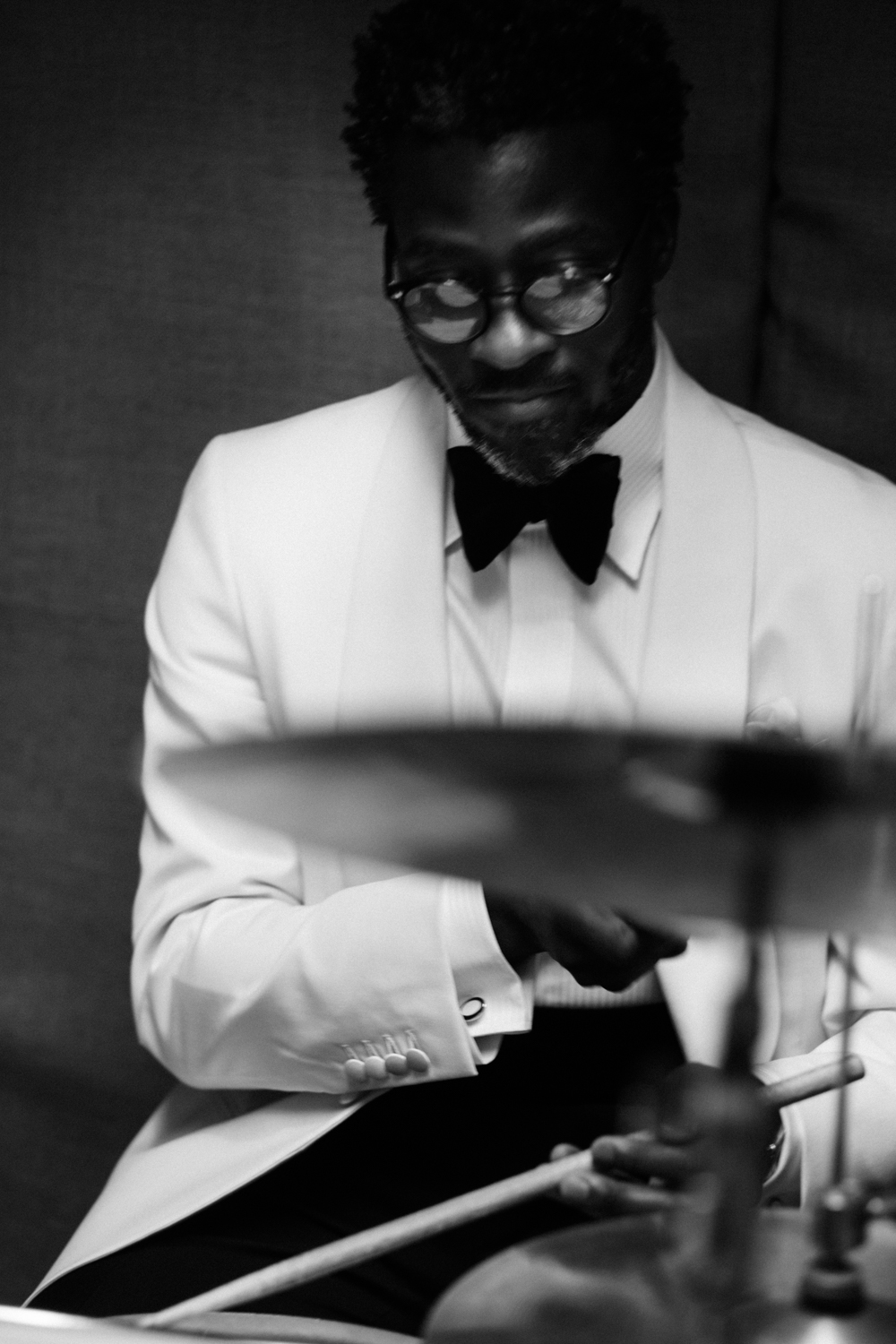
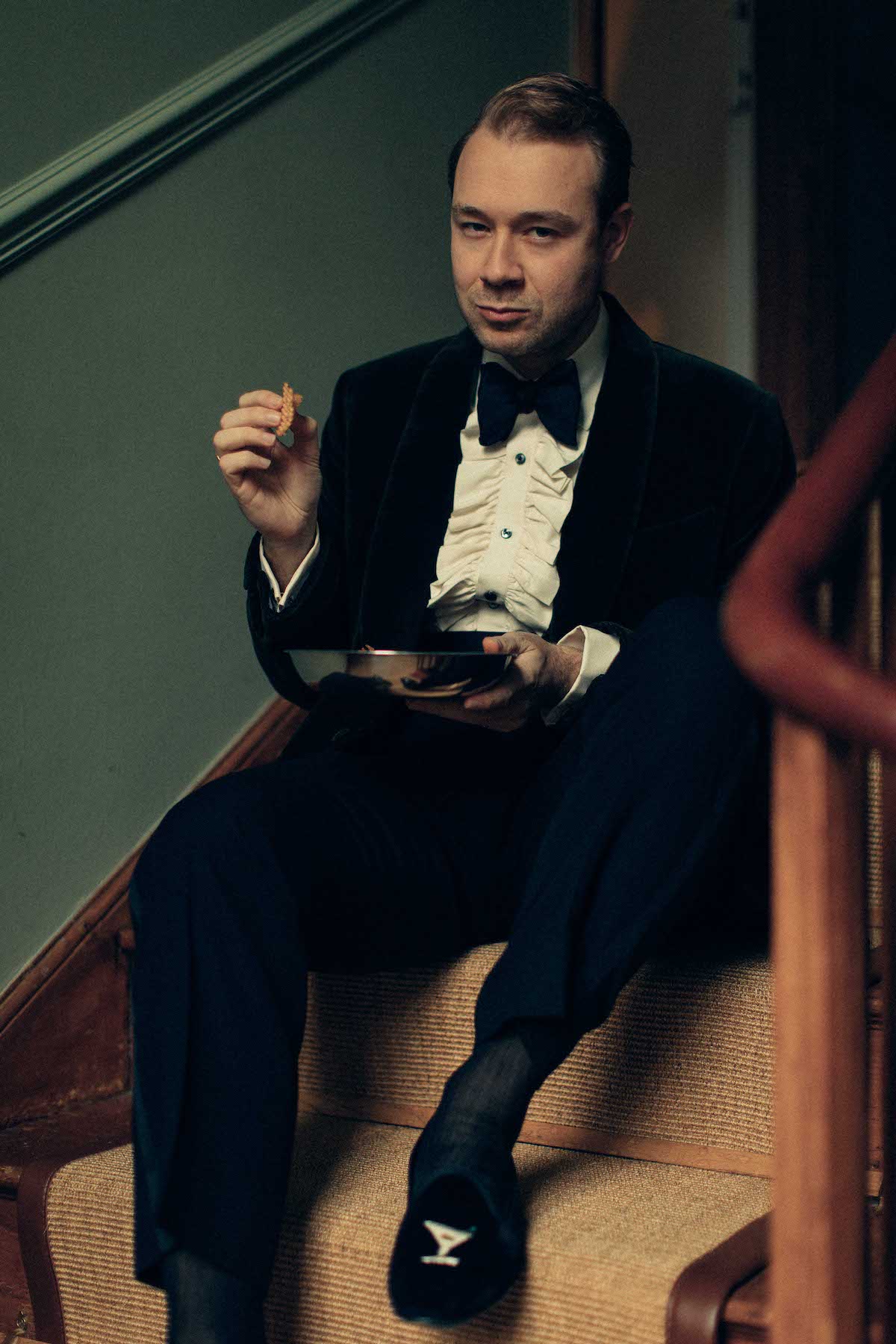
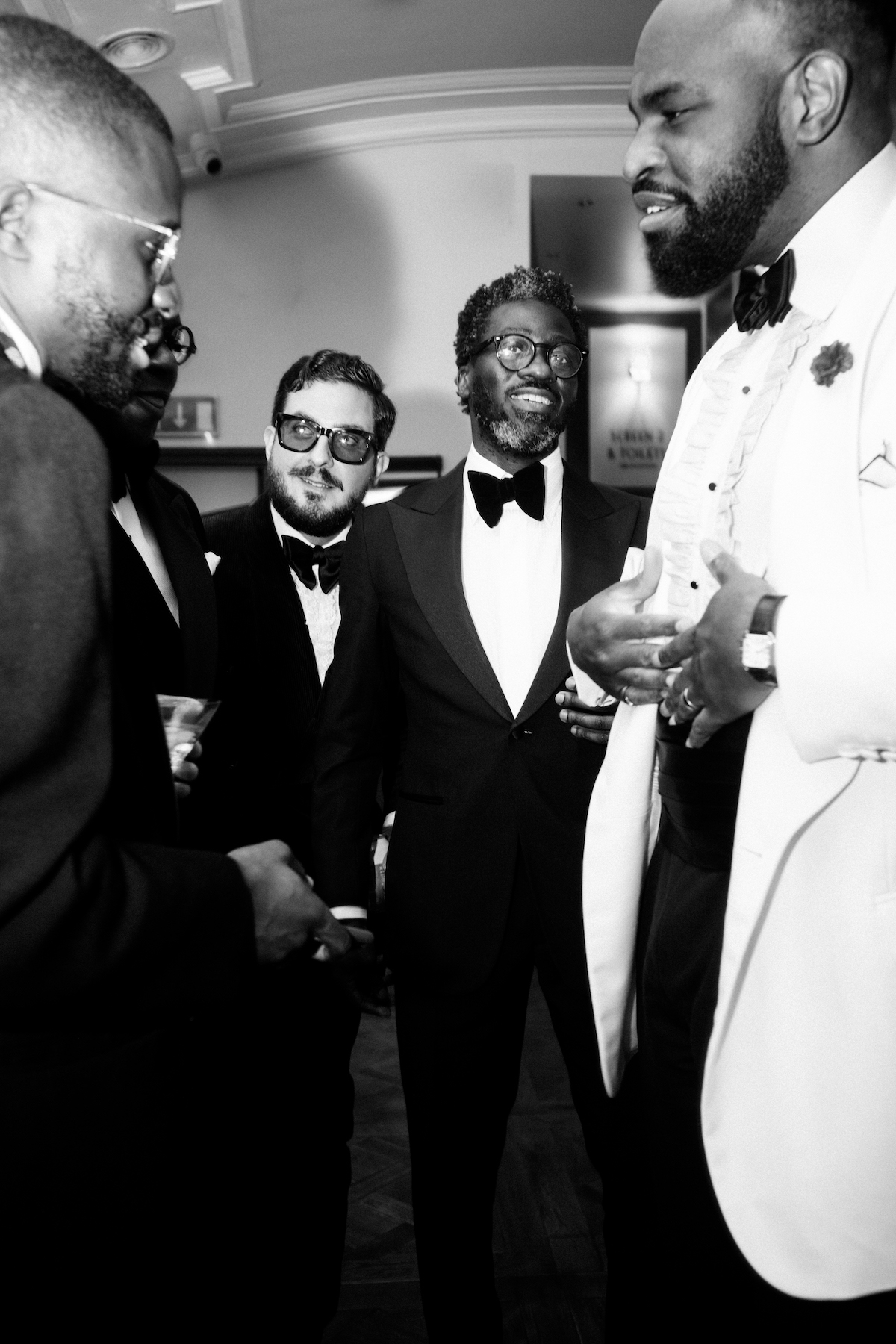
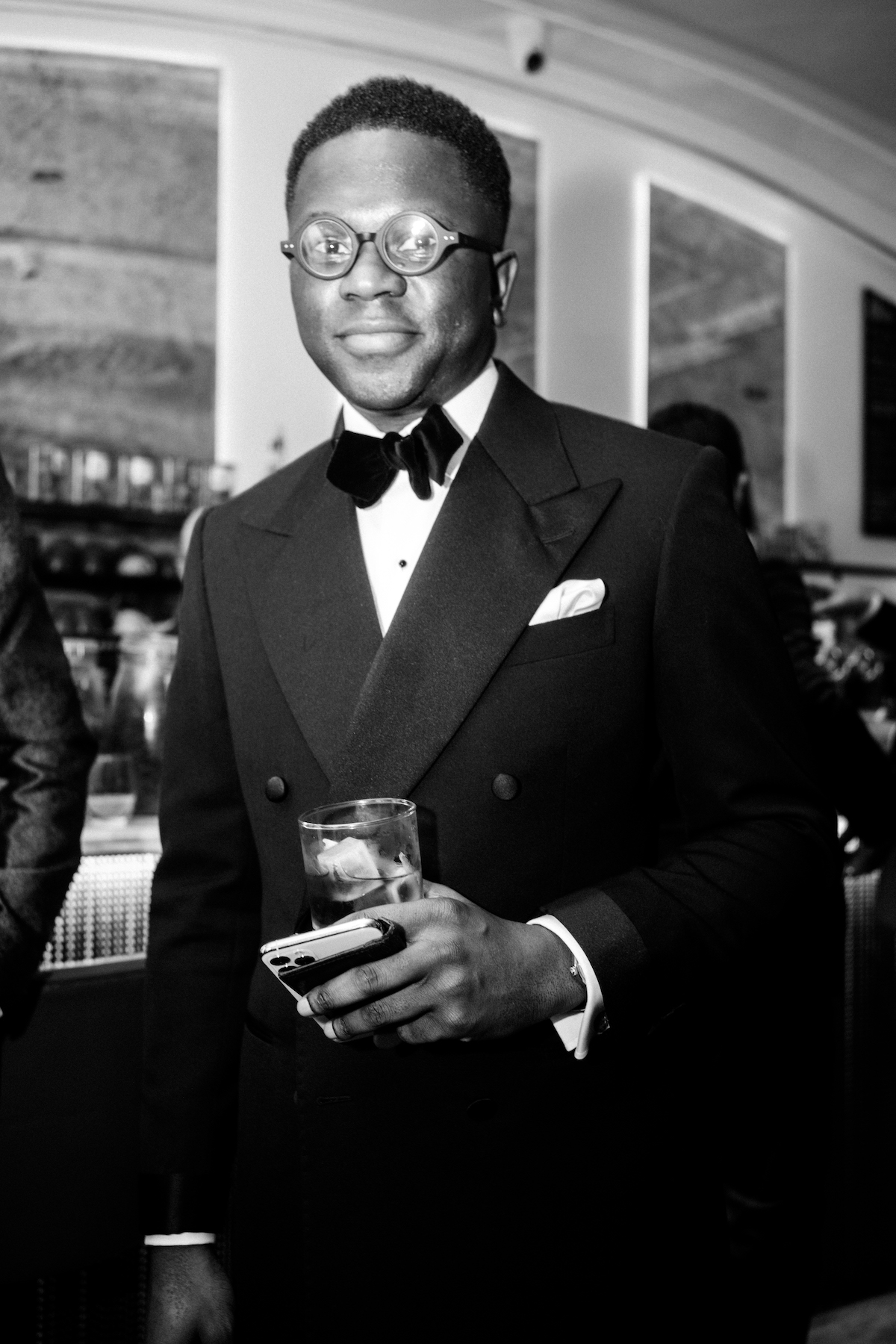
Just before Christmas, I organised a Permanent Style Christmas dinner, to thank a few people that had helped and supported PS in recent years. 

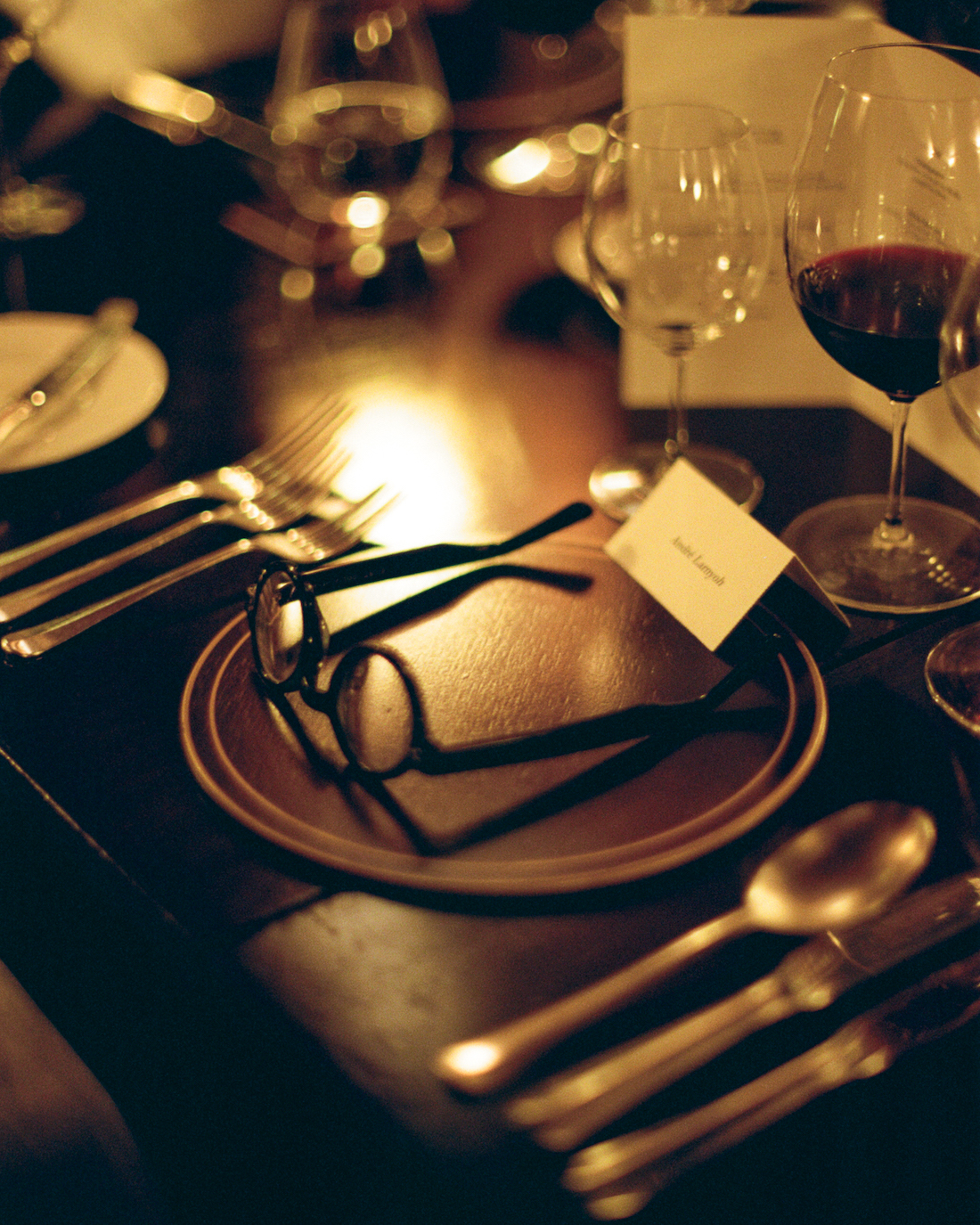
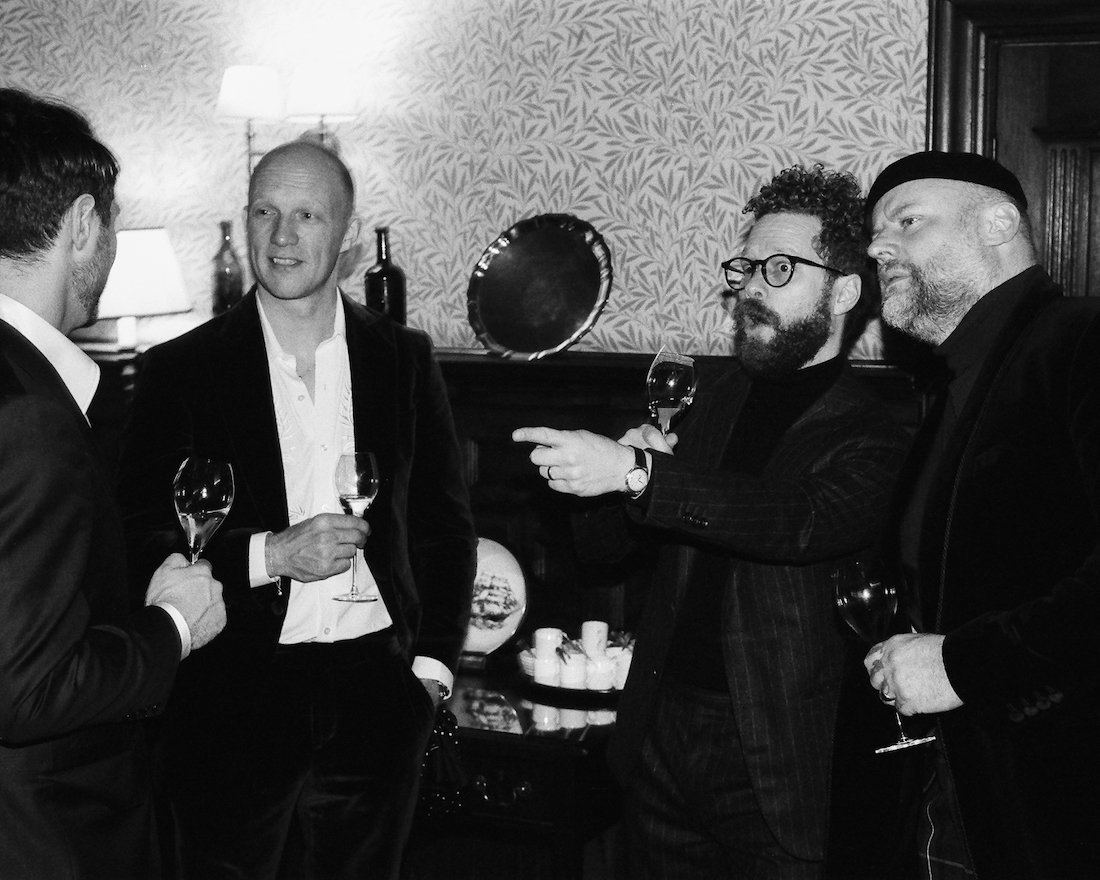
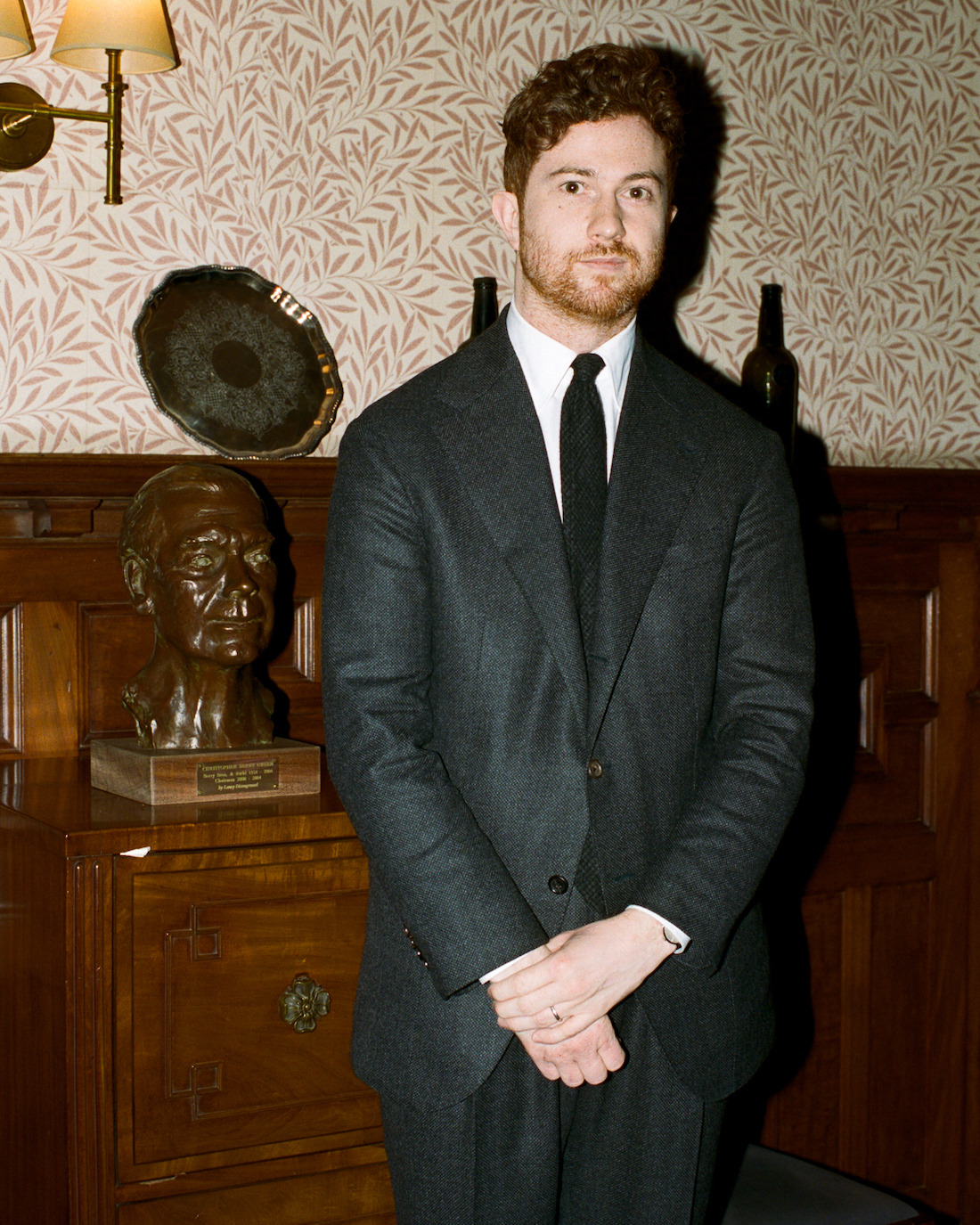
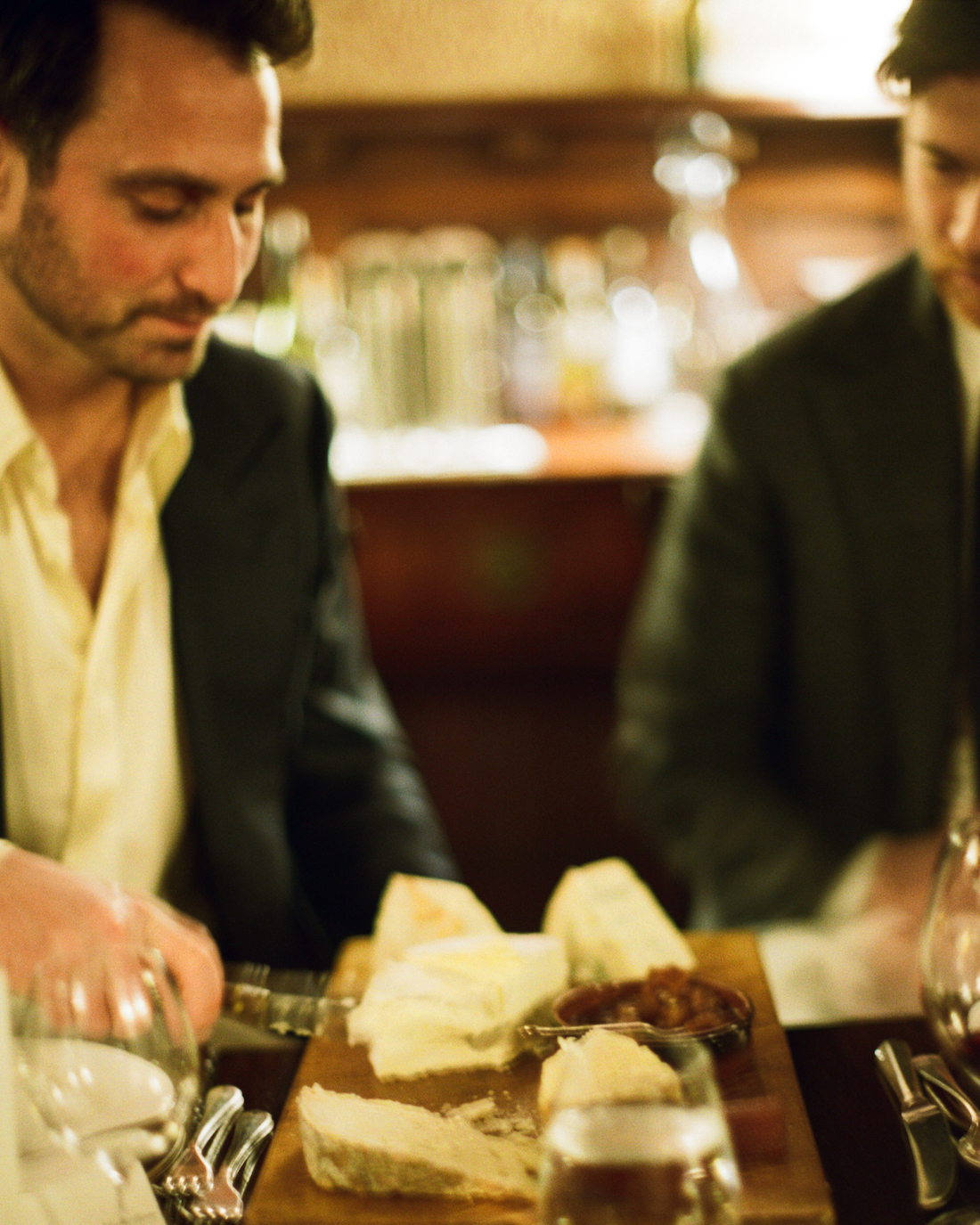
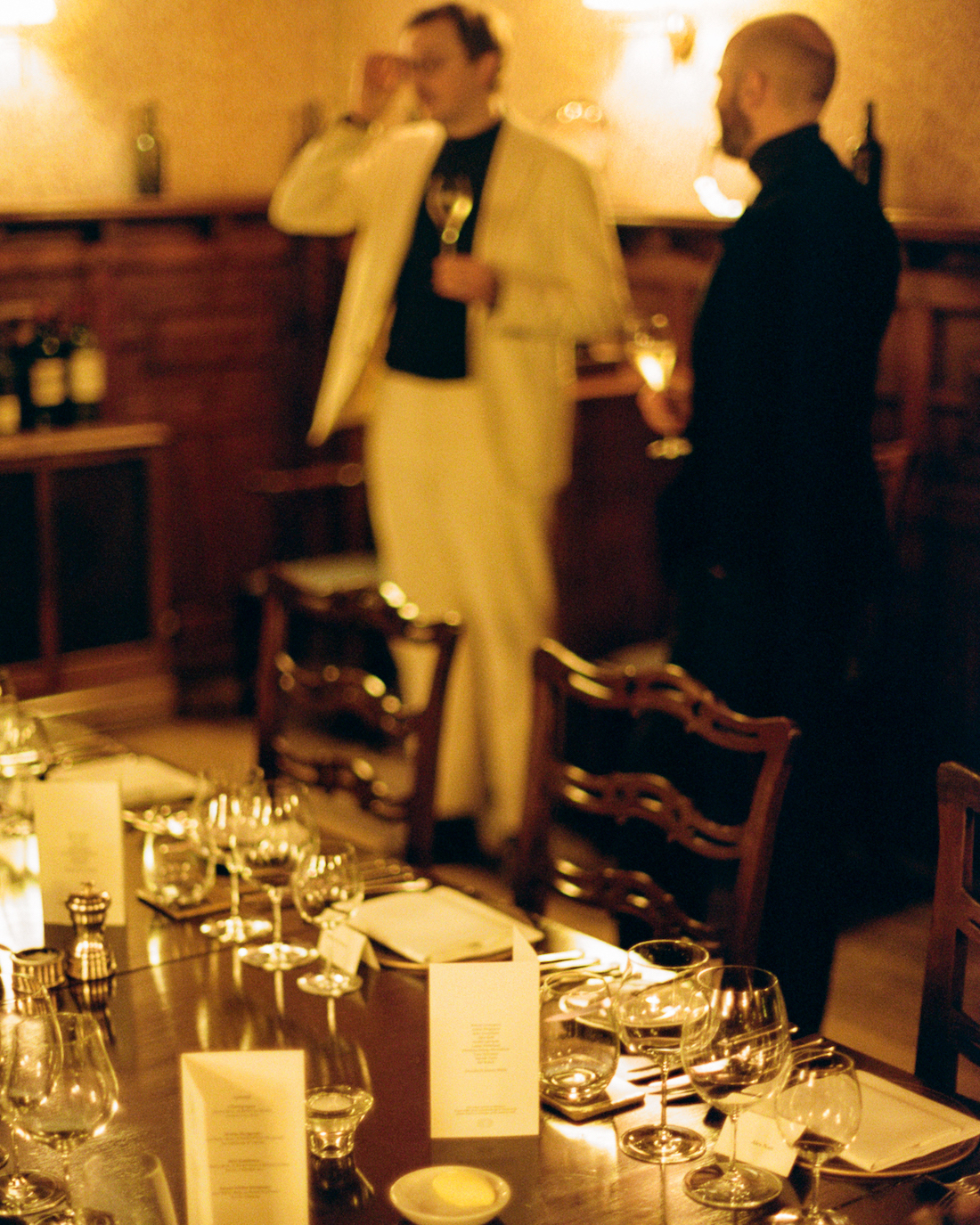
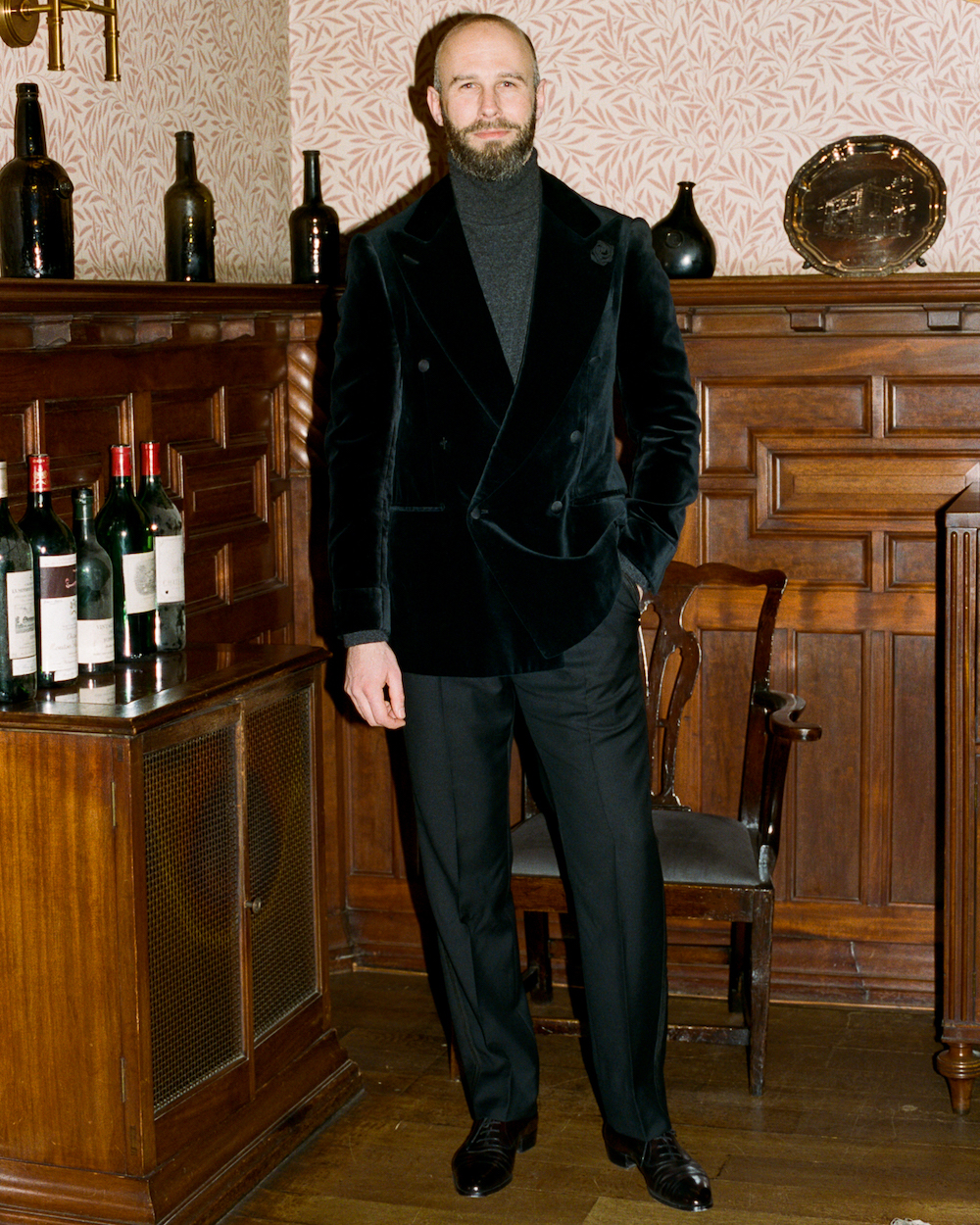
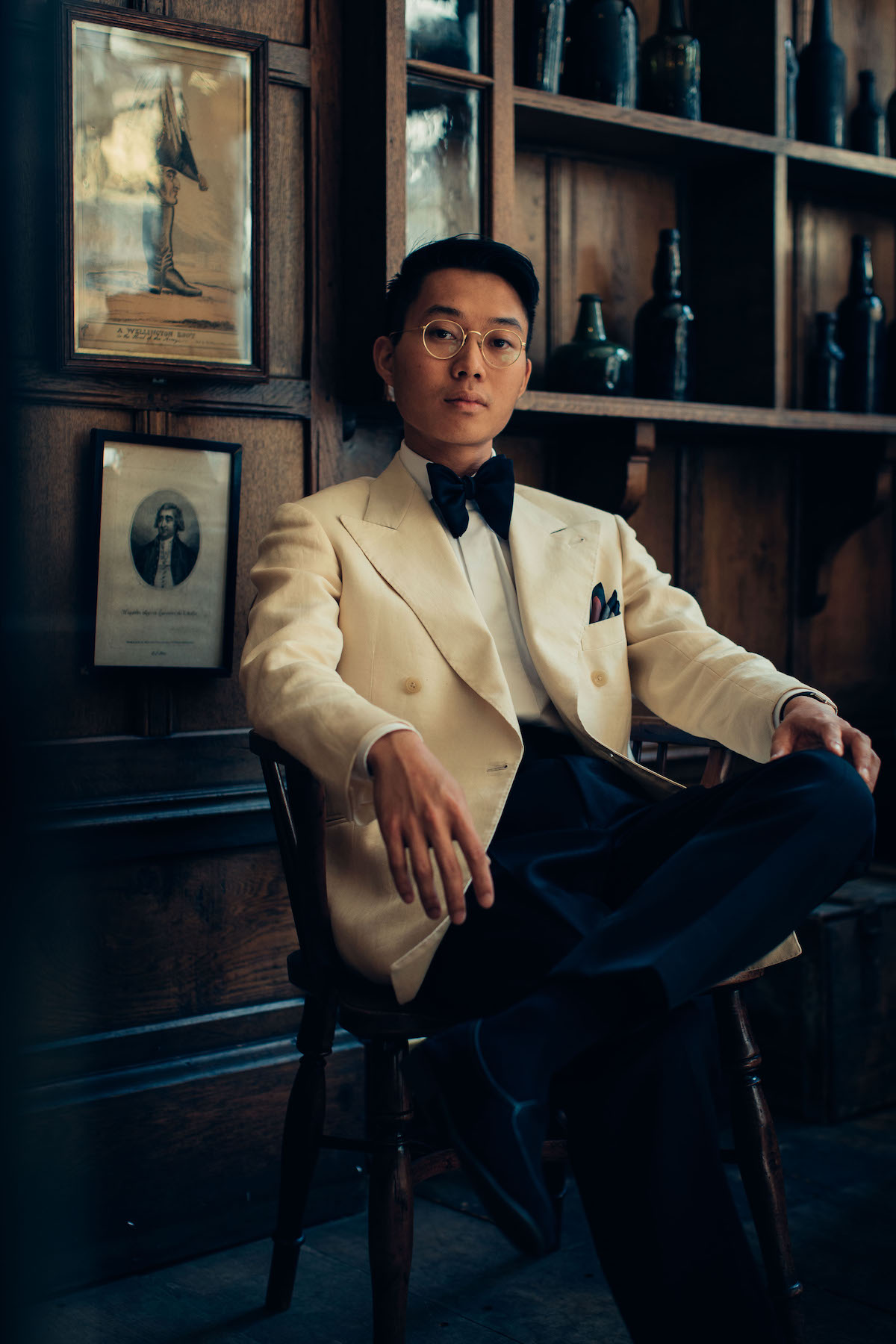
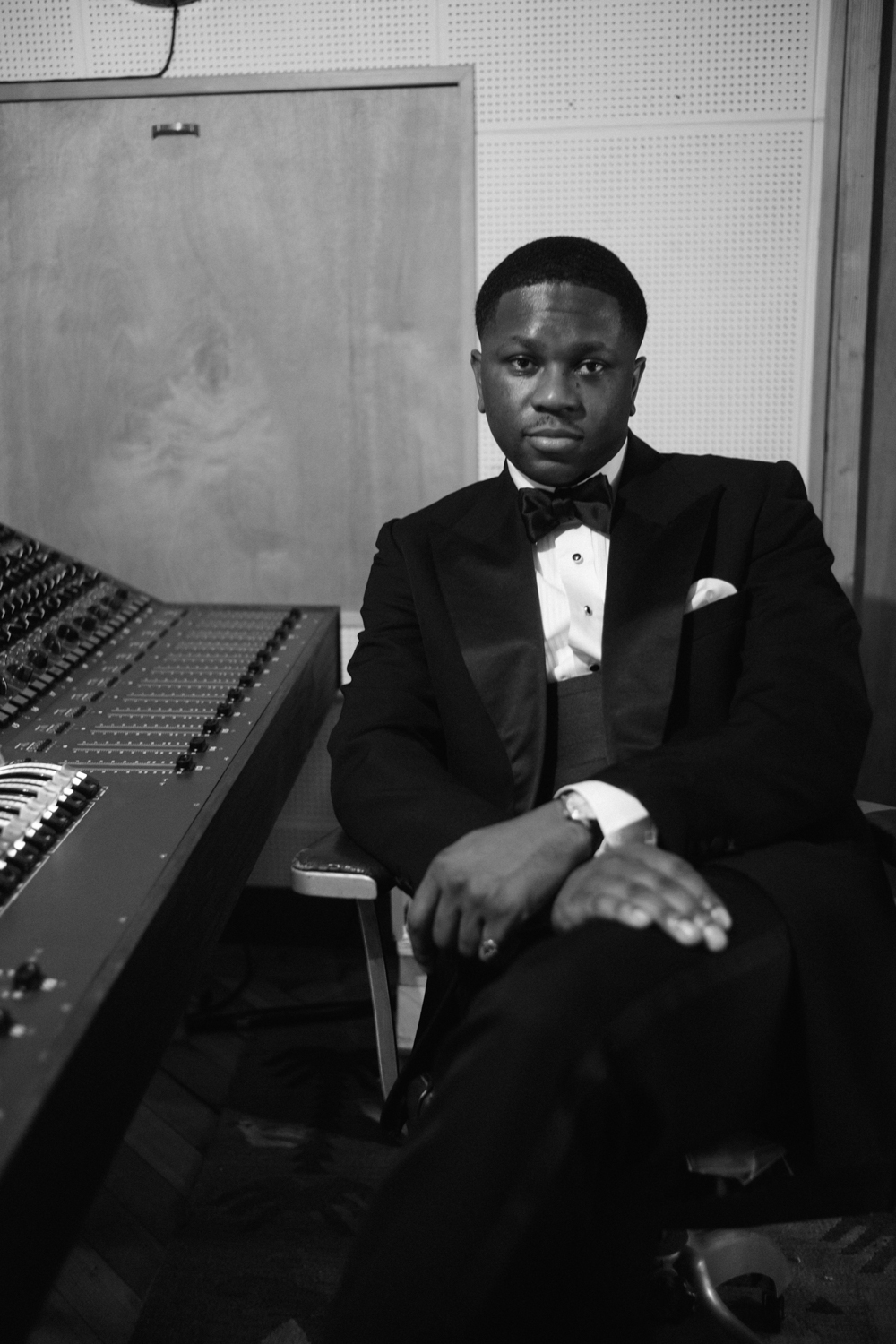
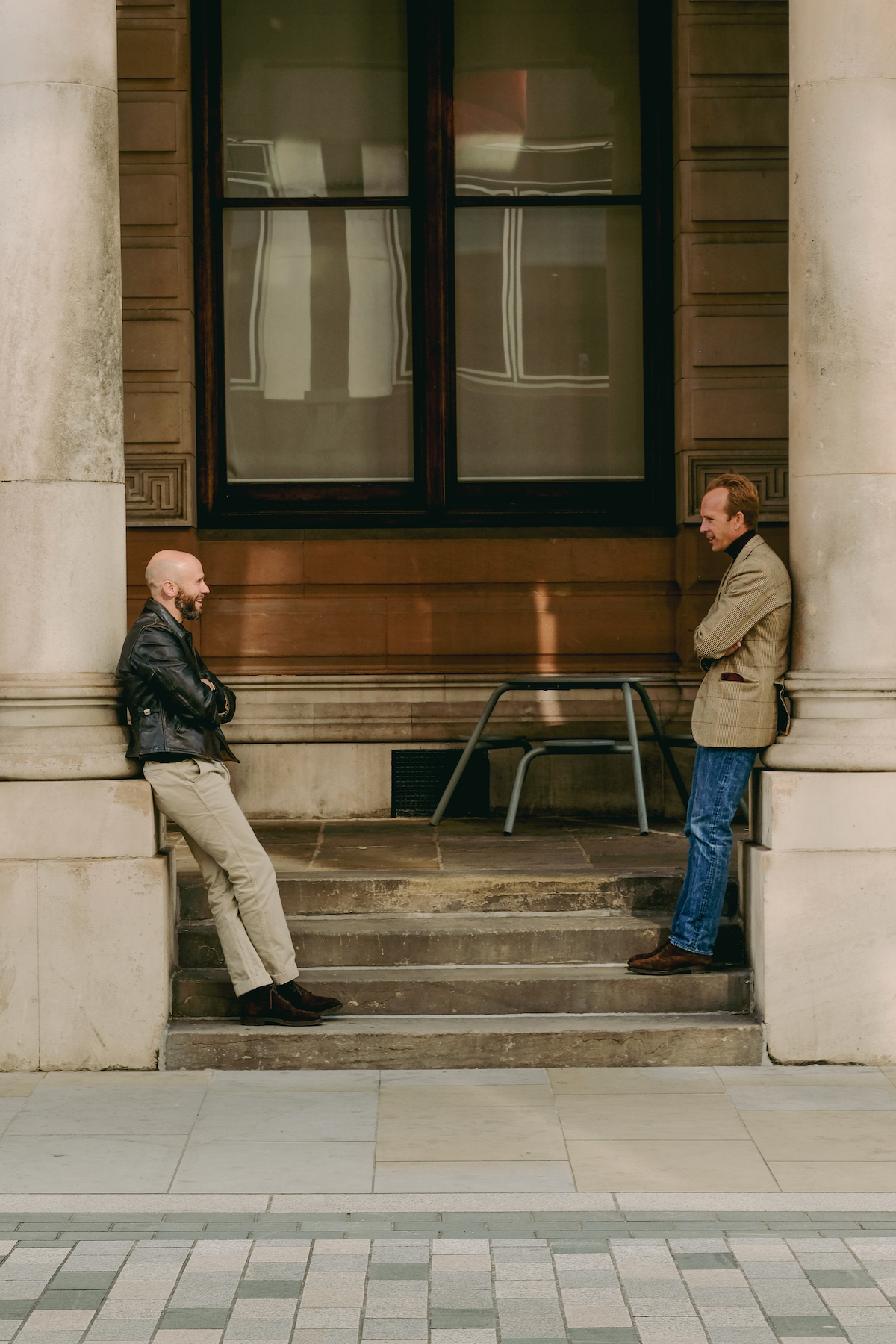
We were hosted by Geordie D’Anyers Willis of Berry Bros & Rudd, which was kind of Geordie, and also meant we could use the Directors Dining Room - a fabulous old room at Berry Bros that’s not normally available to the public. That’s the room and the occasion you can see here.

It was a wonderful way to end the year, and it was nice talking to everyone outside the normal bustle of day-to-day work.

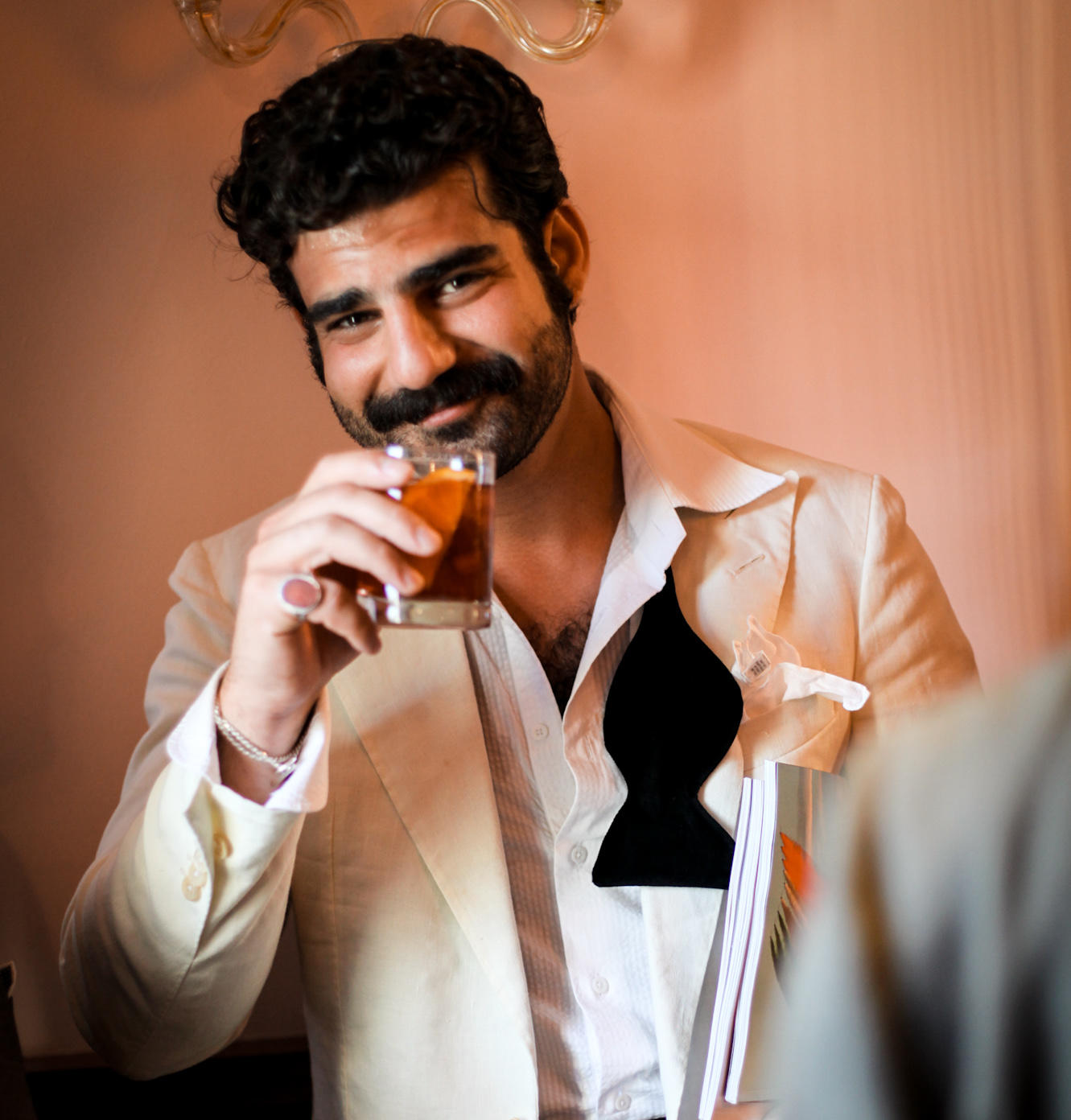
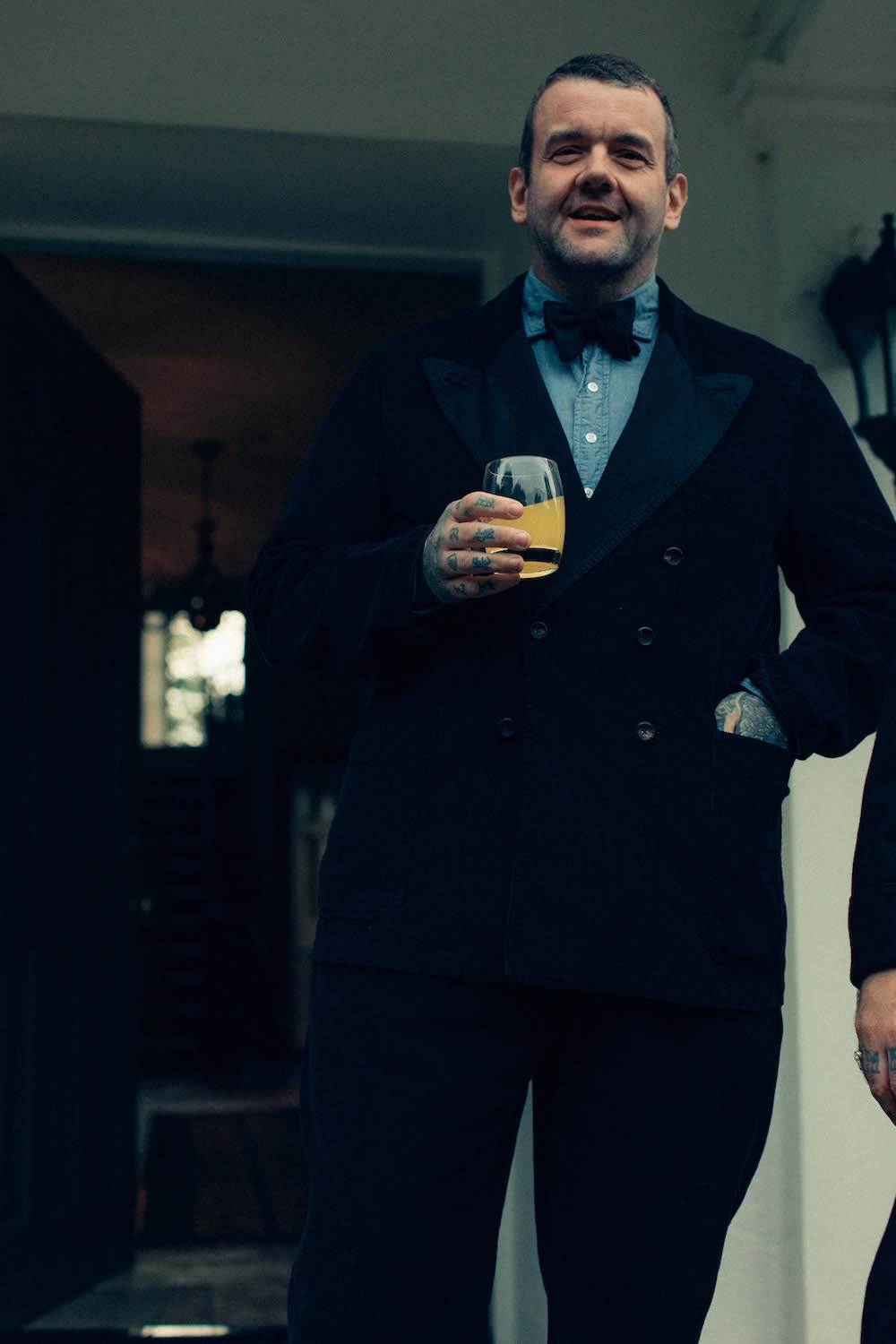
Probably more interesting to readers, however, is that I encouraged guests to dress up - but not in black tie. To be formal, perhaps even glamorous, but to eschew both the dinner jacket and, at the same time, their standard everyday clothes.

I did this deliberately because I feel there’s a gap here in menswear. 

Formal clothing today nearly always means black tie. Few people ever wear morning dress or white tie, and even events like weddings - the obvious time to wear tailoring that isn’t a business suit or dinner jacket - have become so varied that it’s almost impossible to give advice on what to wear. And of course, Americans often wear tuxedos to those anyway. 

This wasn’t always the case. Tailoring used to be more varied, with different styles worn to the office, to a board meeting, to church, to cocktails, to the theatre and to entertain at home. 

Indeed, I think the reason you see so much ‘alternative’ black tie at black-tie events, is that people who love clothes really want to exploit the potential of tailoring, but have few opportunities to do so. 

As offices have become more casual, tailoring has also been squeezed from the other end. When everyone is in a dark suit and shirt, with nothing at the neck, it’s harder to wear a collar pin, a pocket handkerchief, a double-breasted jacket or even a waistcoat without looking out of place. 

The solution, I think, is to urge a new appreciation of evening wear. Perhaps we should promote a style or dress code where little touches of glamour, of sartorialism, and even of dandyism are encouraged. 

This is not business clothing, so there is no need for the sobriety that requires. It is a celebration, and the clothing should reflect that. 

As it is in the evening, though - just like black tie - most of the emphasis will be on texture rather than colour. Super smooth worsteds that reflect the light; flannels and velvets that suck it up. Jewellery because it catches the eye. 

The cuts can also be more dramatic too. The shoulders of an Edward Sexton suddenly come into their own, as do the sweeping lapels of a Cifonelli. It’s an opportunity for personality and expression. 

Let’s face it - a lot of the tailoring we love was never really wearable to the office. Unless you were a big enough character to just wear a windowpane suit to the shops, it always struggled to be relevant. 

That’s why everyone gets excited about Pitti - because it’s the one time and place they can wear anything they want. Plus there's the validation of photographers. 

The place to revel in this dramatic tailoring is, I think, the evening event. The party in the suitably chic and glamorous location. 

Perhaps we should refer to it as cocktail attire. That’s a fairly well-established level of formality, and historically it was distinct from business clothing. 

Today the term is usually used at weddings to mean a jacket and tie. But if it’s actually cocktails, in the evening, I think we have the latitude to add other aspects of eveningwear: mohair, satin, perhaps a touch of embroidery. 

My vote is to call it cocktail attire. The term ‘semi-formal wear’ has been used in the past, but I think that’s vaguer and lacks the specificity of evening. 

To be honest I don’t think the historic language is worth burrowing into, because what matters is how we use it in the future. But I’m sure a reader or two will bring it up anyway. I’m certainly interested in any experiences, thoughts, or other suggestions you all have. 

So, the point of the dress code for our Christmas Dinner was to play around with this idea, and see what people came up with. (I put the dress code as ‘cocktail attire’ but added copious notes.)

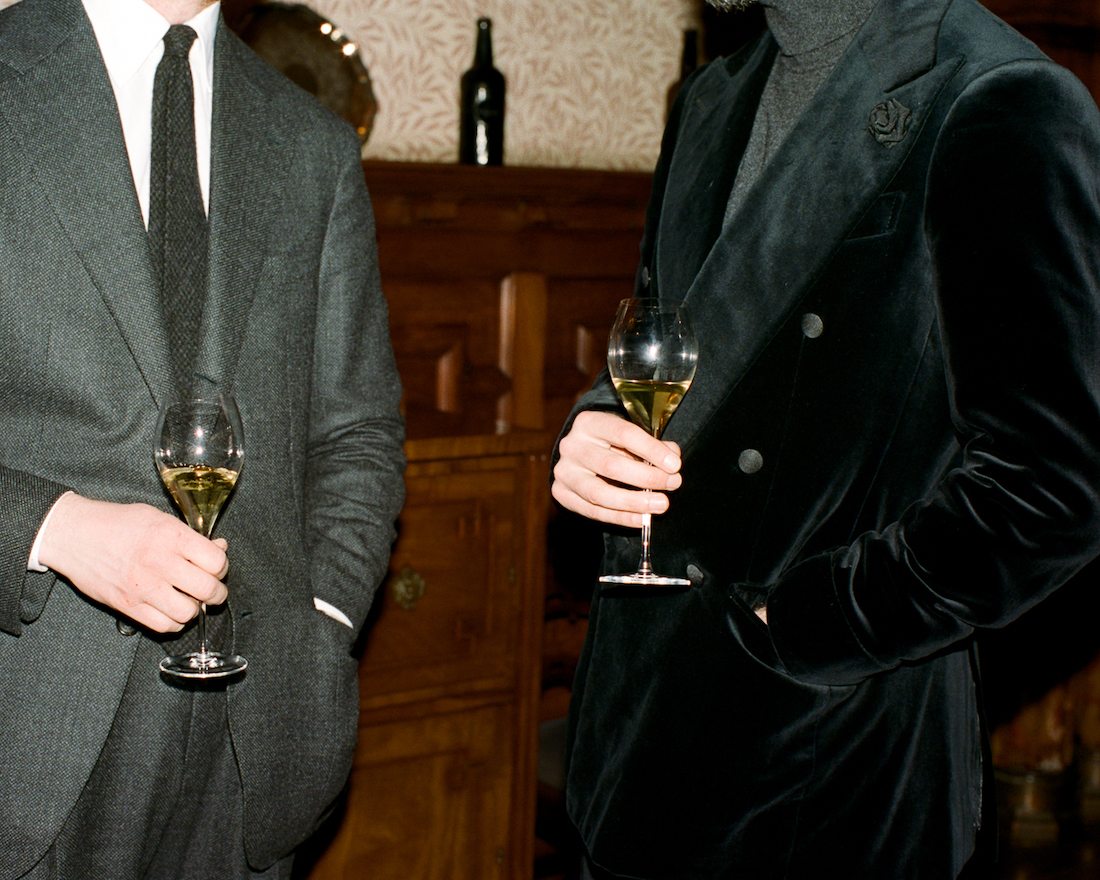
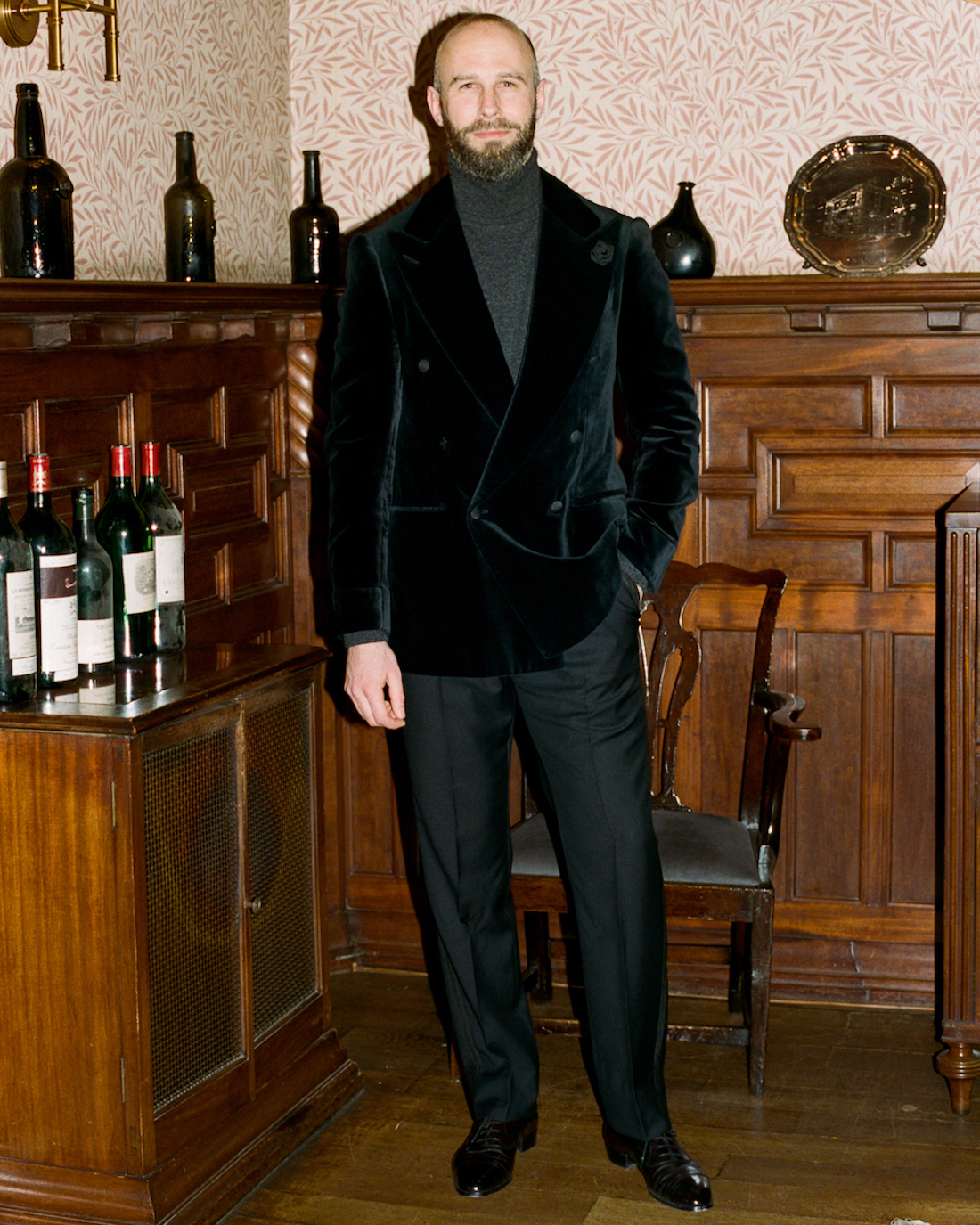
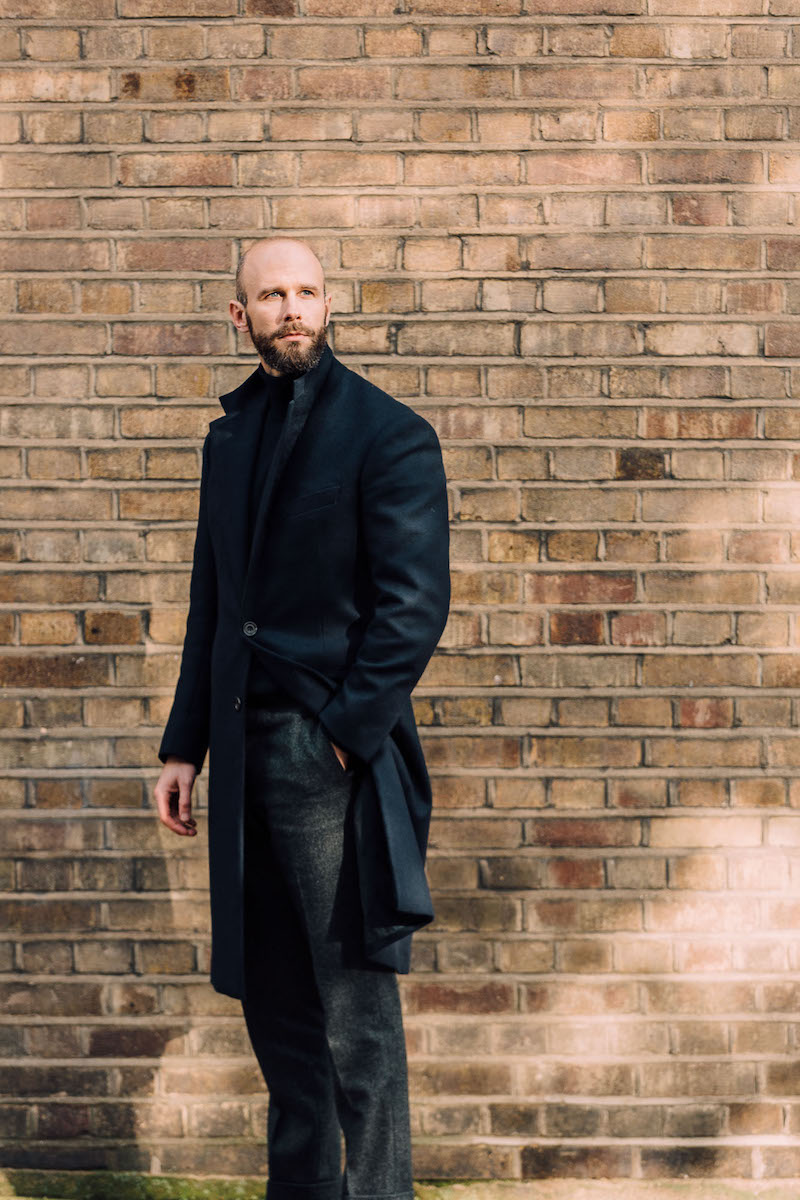
I wore my black Cifonelli velvet jacket with barathea trousers, highly polished oxfords, and a charcoal roll neck, plus a silk boutonniere. You can see that above.

This could pass for black tie at most events, were it not for the roll neck. With that added, it’s an outfit that doesn’t necessarily belong anywhere - unless you really do dine at home in velvet. But I think it’s a very elegant tailored look, and this is a good setting for it. 

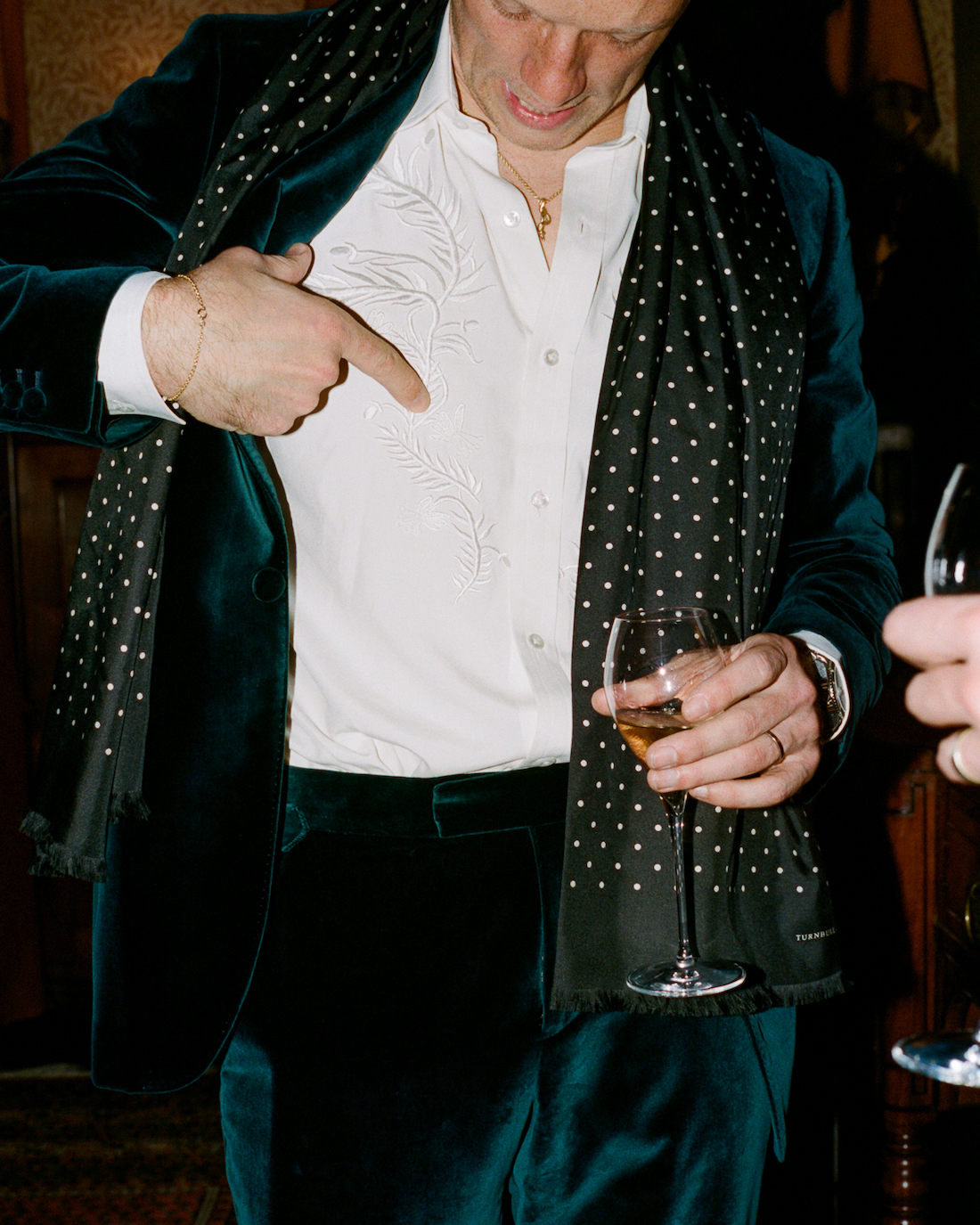
Ed Walsh, head of marketing at Turnbull & Asser (above), went for bottle-green velvet - but in a complete suit. Which took in further away from black tie. 

He also wore a cream, hand-embroidered shirt from T&A, with a dash of jewellery. That’s a necklace and bracelet from the ocean diamond collection at Alice Made This

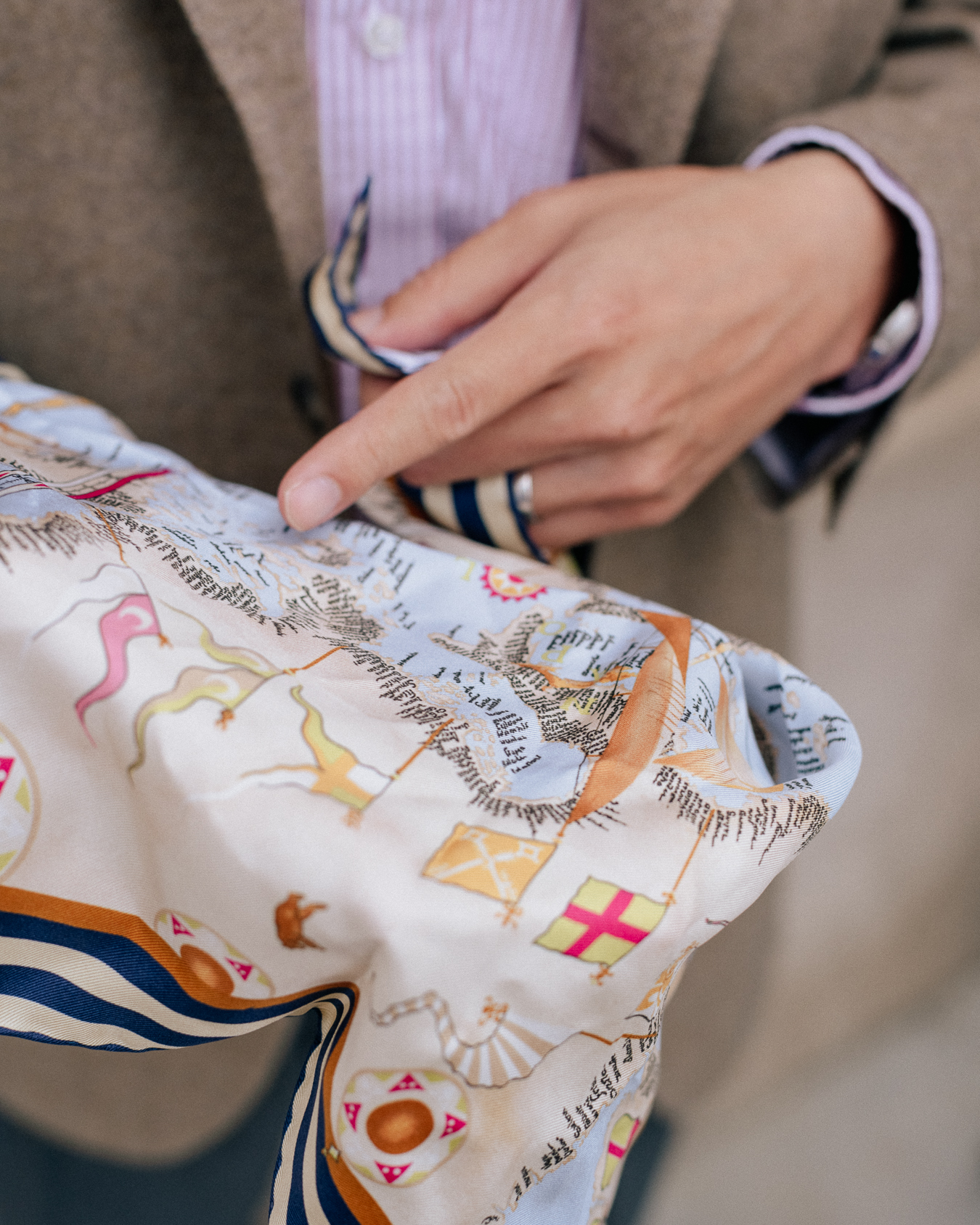
Plus a silk scarf. 

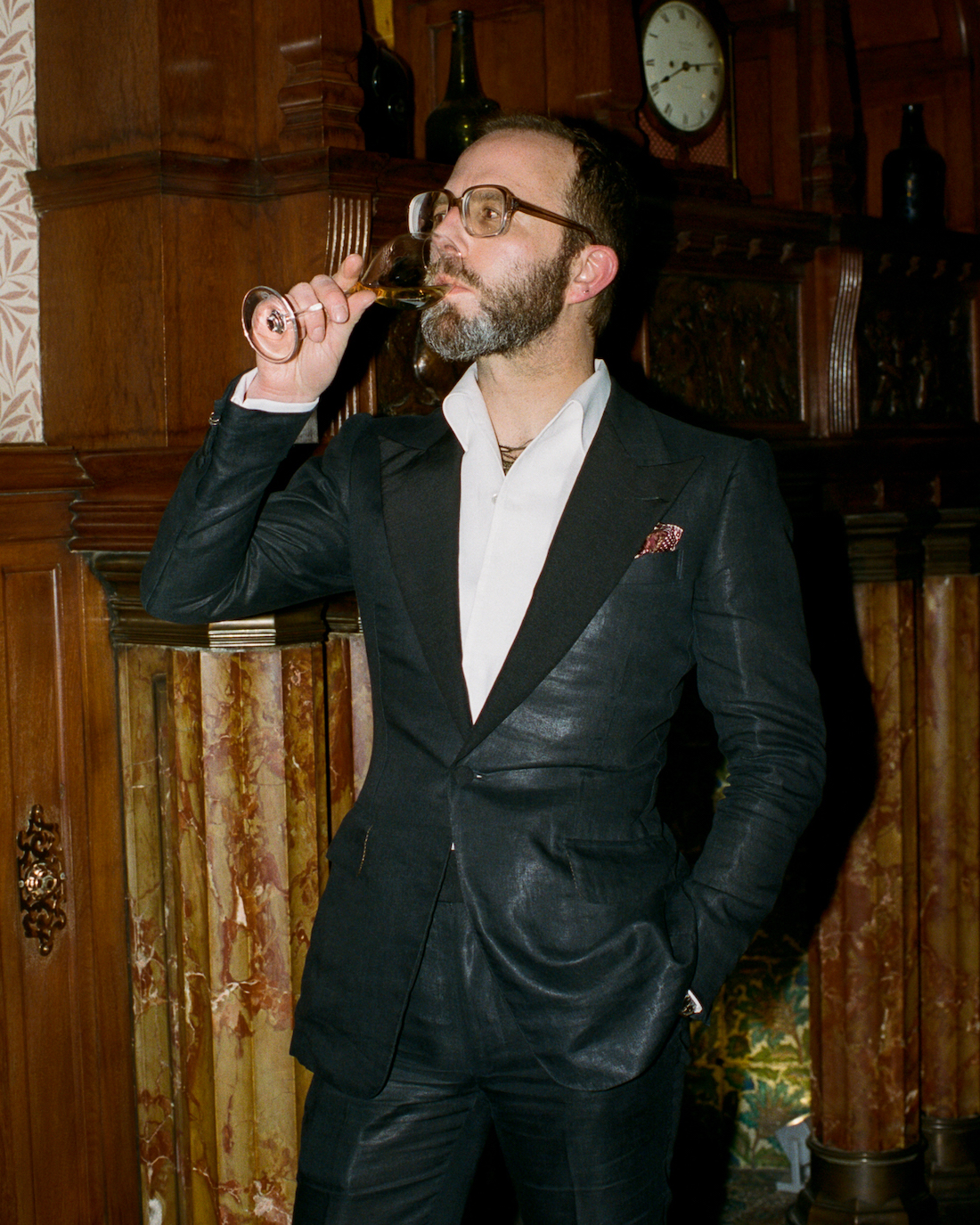
Davide Taub, head cutter at Gieves & Hawkes, frankly always looks like he’s dressed in cocktail attire. He wears black, non-corporate materials, and jewellery. 

Here his peaked lapel, mohair suit was worn without a tie, but with both a one-piece-collar shirt in marcella cotton, and a profusion of jewellery underneath.

Dominic Sebag-Montefiore of Edward Sexton was similar - also going tieless, but making sure the shirt added something by wearing a Sexton silk number. I don’t think I’ve ever wanted one until I saw it on him. 

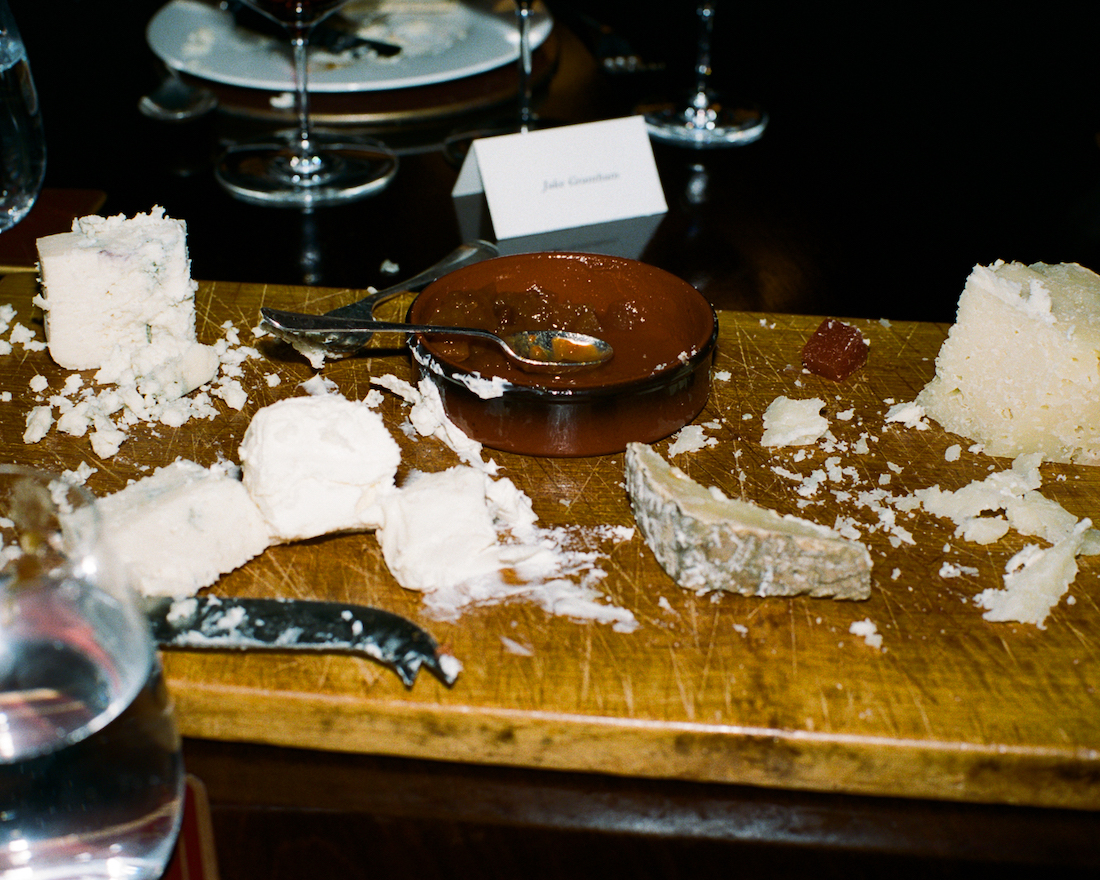
Jake Grantham of Anglo-Italian (above) did eveningwear in a very Anglo way. 

It’s not Anglo to wear anything shiny, not even normal things like superfine worsteds - and certainly not velvet or satin. 

So instead, Jake made the standard Anglo look more uniform and higher contrast: a charcoal flannel suit, charcoal cashmere tie and (out of shot) black-suede shoes. Everything dark, everything matte.

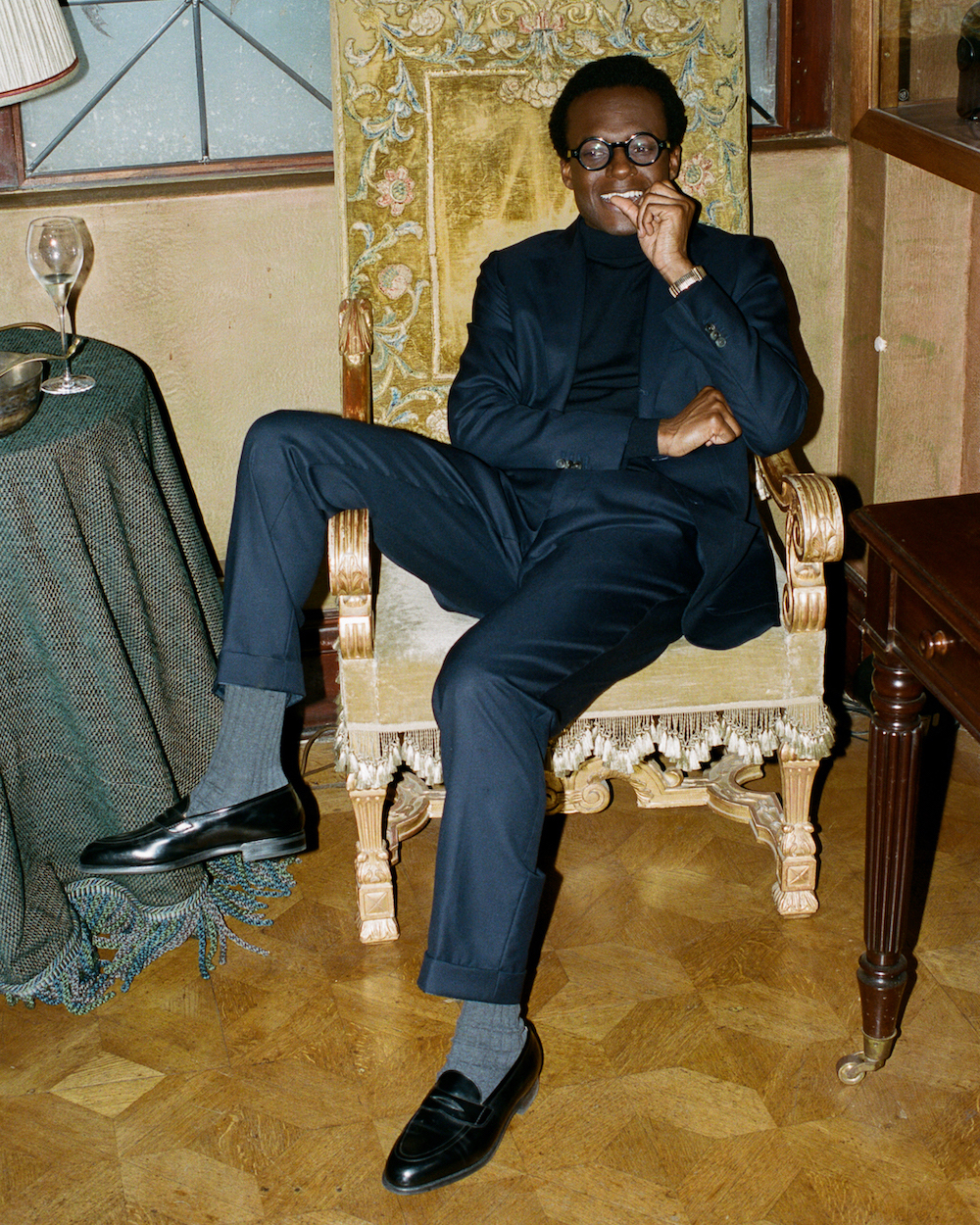
Tonal roll necks are probably the easiest way to turn a normal suit into cocktail attire, and both Jamie Ferguson and André Larnyoh (above) went for that option. 

André wore navy on navy. Jamie had black under charcoal brown - although under artificial light, both could have just been shades of charcoal. It was only when photographer Alex Natt turned his flash on them that you saw the difference. 

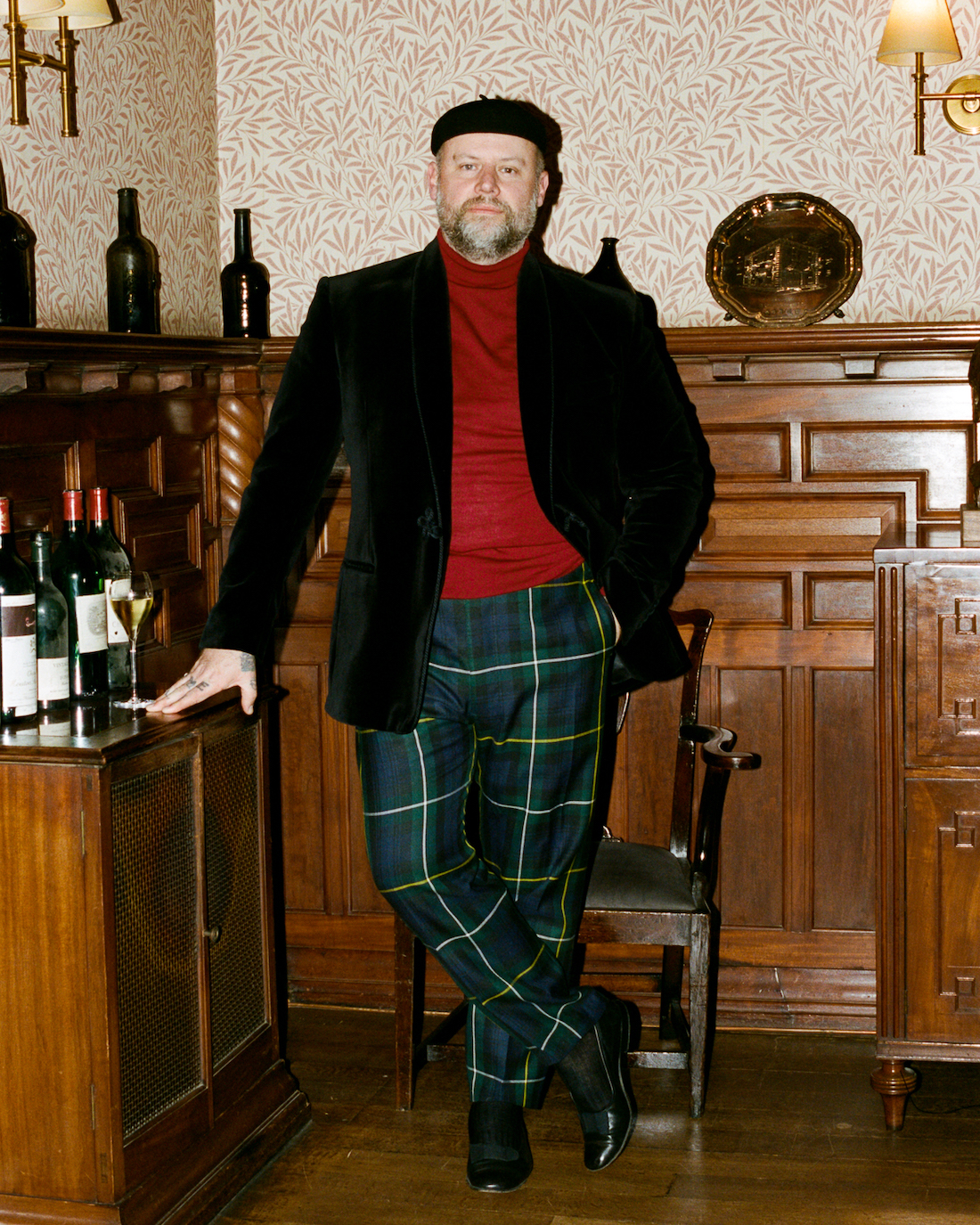
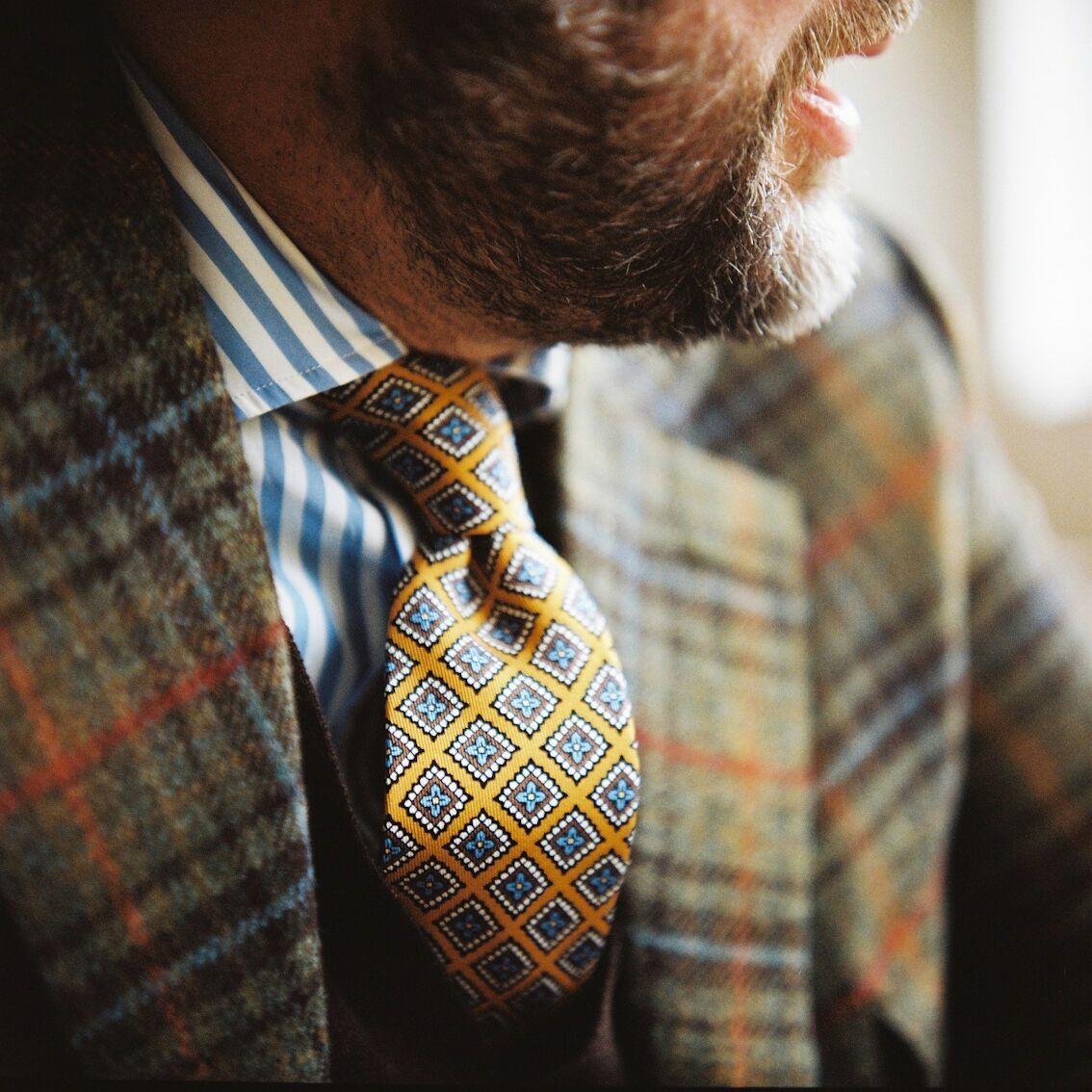
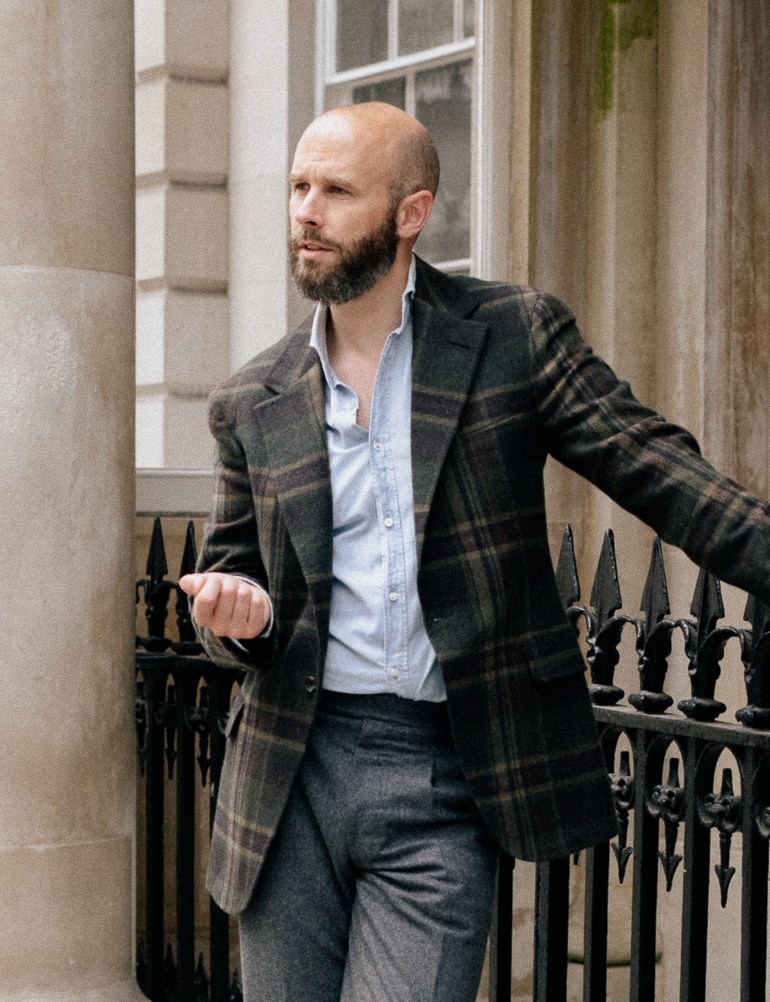
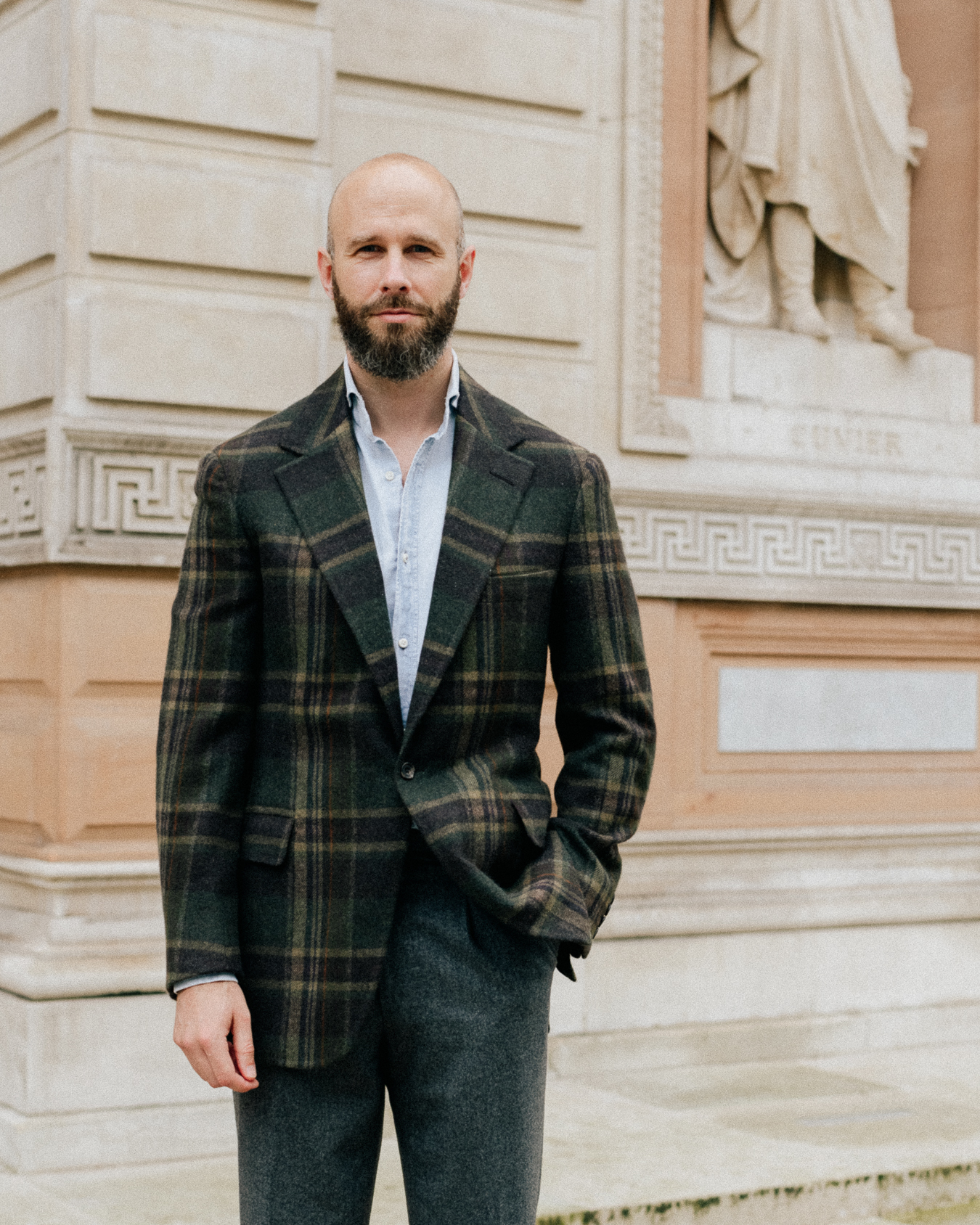
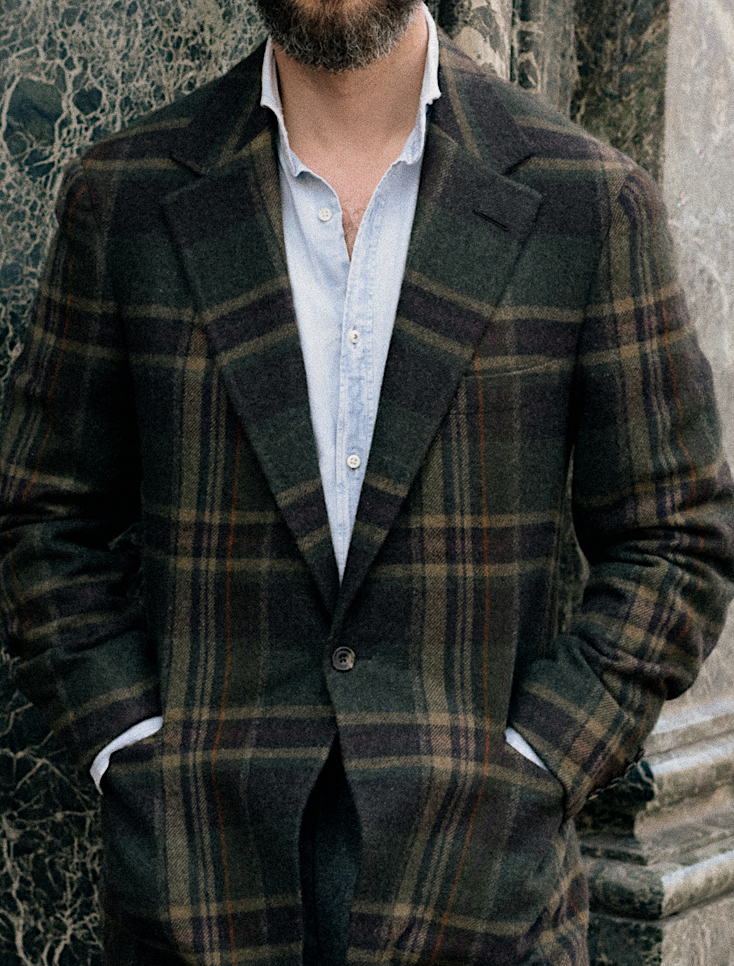
Tony Sylvester (above) wore the most colour, with a combination of tartan, black and red. 

I’ve never been much of a fan of tartan as part of black tie, unless it is traditional dress. But it makes more sense in a setting like this - as celebratory clothing, but not necessarily formal wear.  

There were others, but those were the themes. 

I think alternatives that would have looked great would have been a double-breasted suit with a satin tie, or a sharp three-piece suit with a tie and pinned collar. More sartorial combinations, basically, without necessarily eveningwear materials. 

I find this category exciting because it gives me an excuse to wear dramatic tailoring, but also because it's a way to make tailoring appealing to others. 

If you wear workwear or streetwear most of the time, the idea of a business suit might not be that attractive. But a party suit is something different. It can be sexy as well as elegant - have swagger as well as style.

The club where I work has motivational messages on the walls. Most of them I find clichéd, but there is a nice one about balance. The essence being, that it’s good to embrace all sides of life. 

It’s addressed to women, and encourages them to wear yoga pants one day, but high heels the next. To stay healthy, but enjoy good wine as much as health shakes. 

With men, there’s nothing wrong with enjoying sweatpants, hoodies, denim and sneakers. But I think it's a real shame if you can’t enjoy kick-ass tailoring too. 

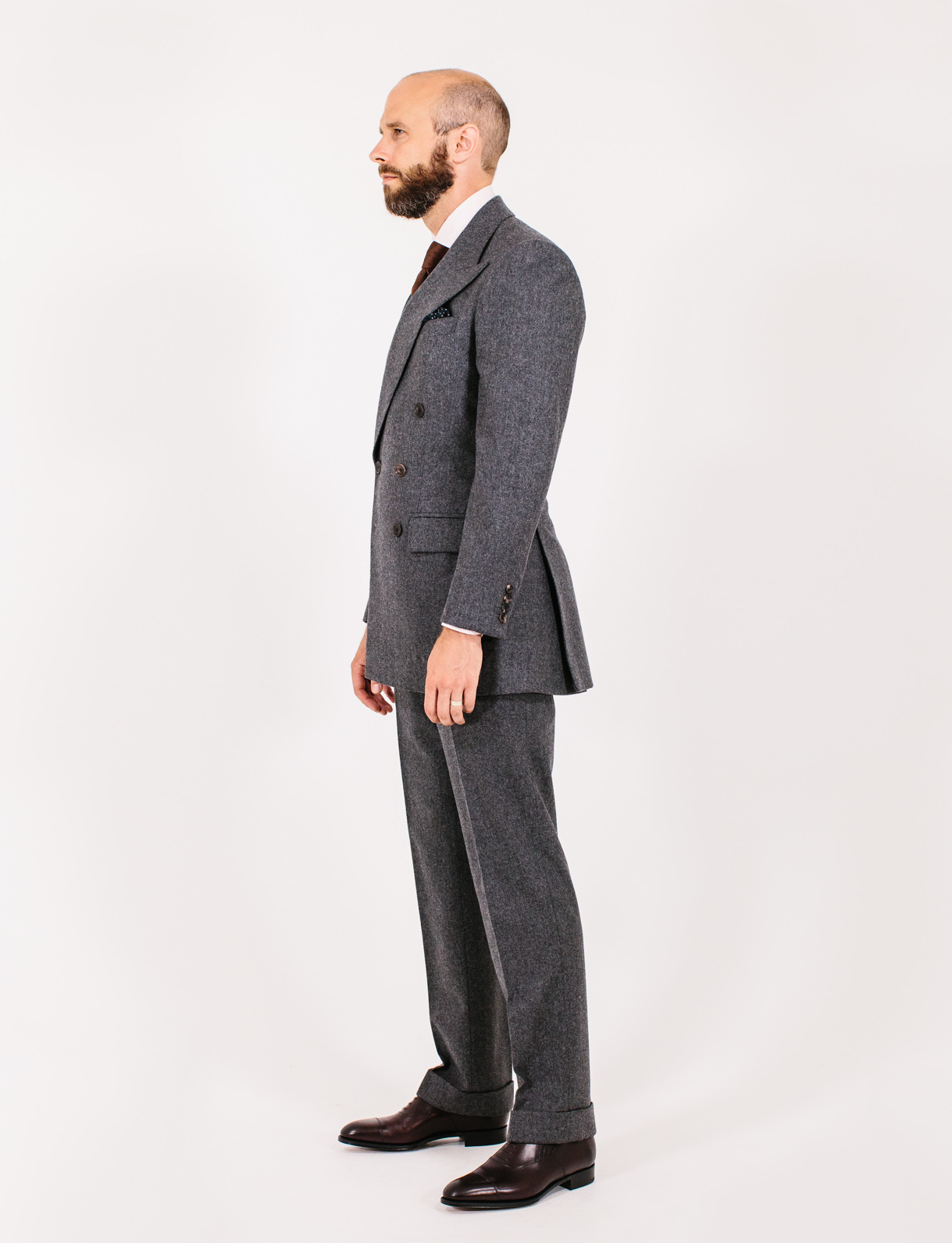
Edward Sexton double-breasted flannel suit: Style breakdown

Edward Sexton is famous for bringing sexy, dramatic tailoring to Savile Row in the 1960s and 1970s, as head cutter for Tommy Nutter. Mick and Bianca Jagger in white suits, The Beatles crossing Abbey Road: these are the looks we know. 

And today Edward still likes a padded shoulder, perhaps upturned at the end, together with a longer jacket with a little flare in the skirt. 

But interestingly, a double-breasted suit from Edward is not all that dramatic. Single-breasted pieces often have a lapel that is wider and more curved, setting Sexton apart. But as a DB already has much of that, the difference is smaller.  

House: Edward Sexton

Address: 26 Beauchamp Place, London

Site: www.edwardsexton.co.uk

Cutter: Edward Sexton

Price (at time of writing): £5200 (incl VAT)

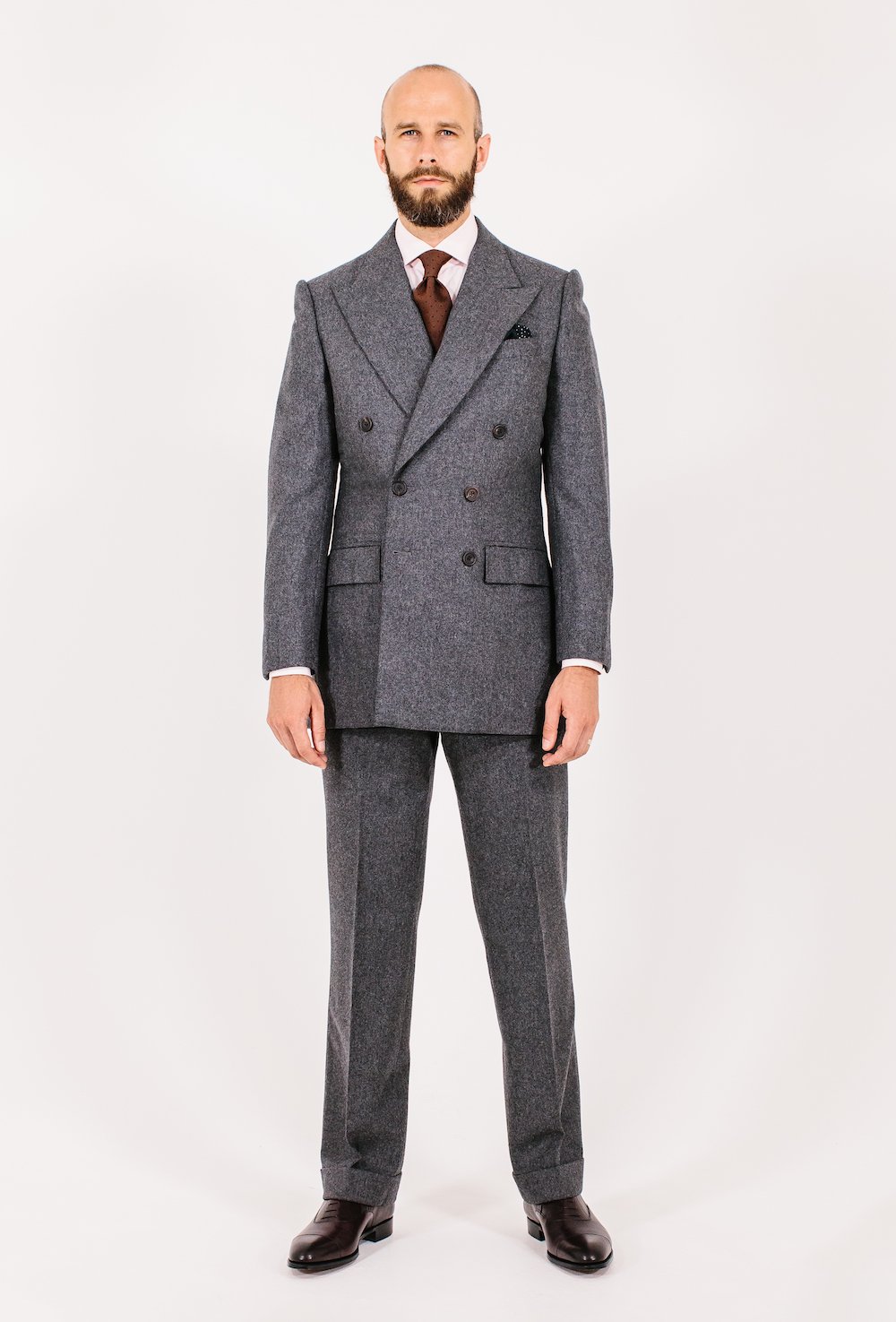
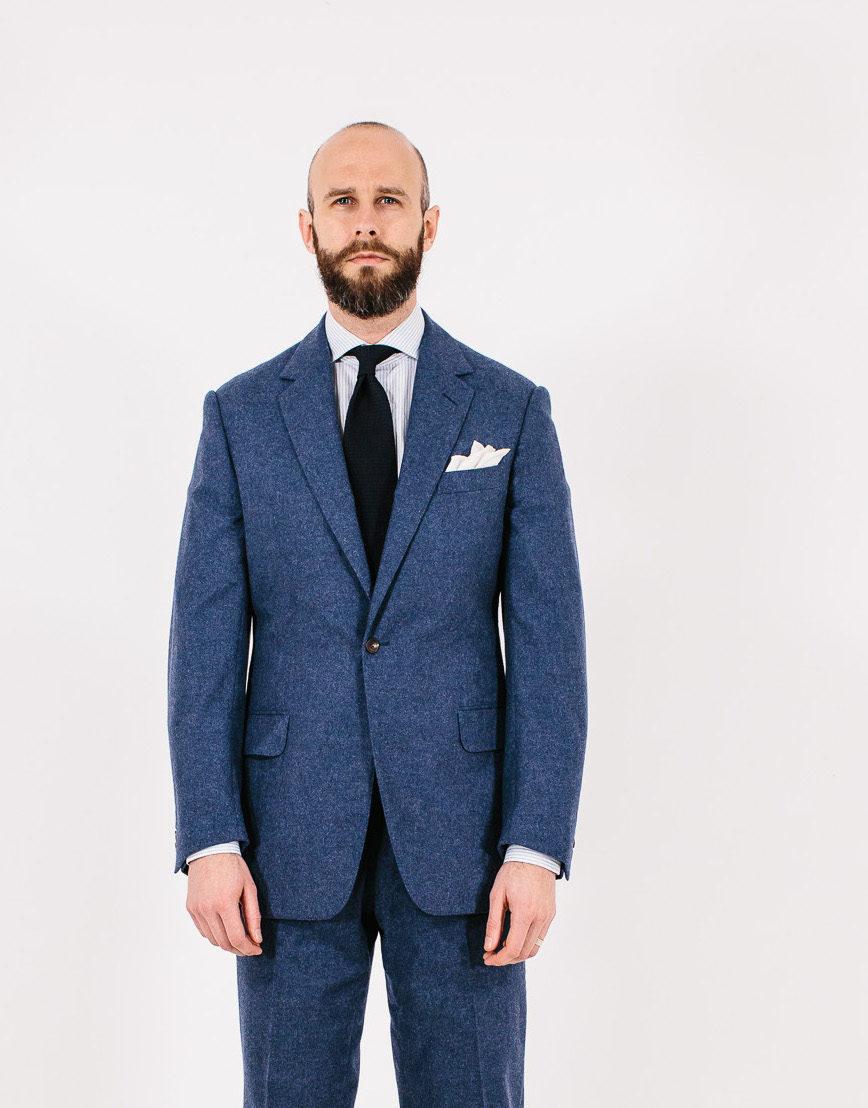
Edward cut this flannel suit for me in 2014, and it’s become one of my favourite things to wear to lunches or events.

I find the structure of the shoulder and the sweep of the lapel distinctive, but the grey-flannel cloth subtle enough to make them things people only notice after a few minutes. 

I’m not sure the style flatters me quite as much as a drapier cut like Anderson & Sheppard, but it has real style and I hugely enjoy wearing it. Particularly with a scarf or roll neck. 

As you can see from the image above, the lapels are wide (3¼ inches) and sweeping. But as mentioned at the start, this feels less dramatic than on a single-breasted jacket. 

I should also say that the front edge of the suit is not slanted upwards or left in reality; that’s something odd with the photography. 

Compared to fellow Nutter-alumnus Joe Morgan, Edward also uses fewer flourishes or finishing details, such as lapped seams or Milanese buttonholes. 

Instead, the finishing is just very good. The suit and coat he has made for me have some of the best English finishing I’ve ever seen: extremely fine, precise buttonholes, but in a regular structure rather than Milanese. It’s a subtler overall look than many might expect from the name Edward Sexton. 

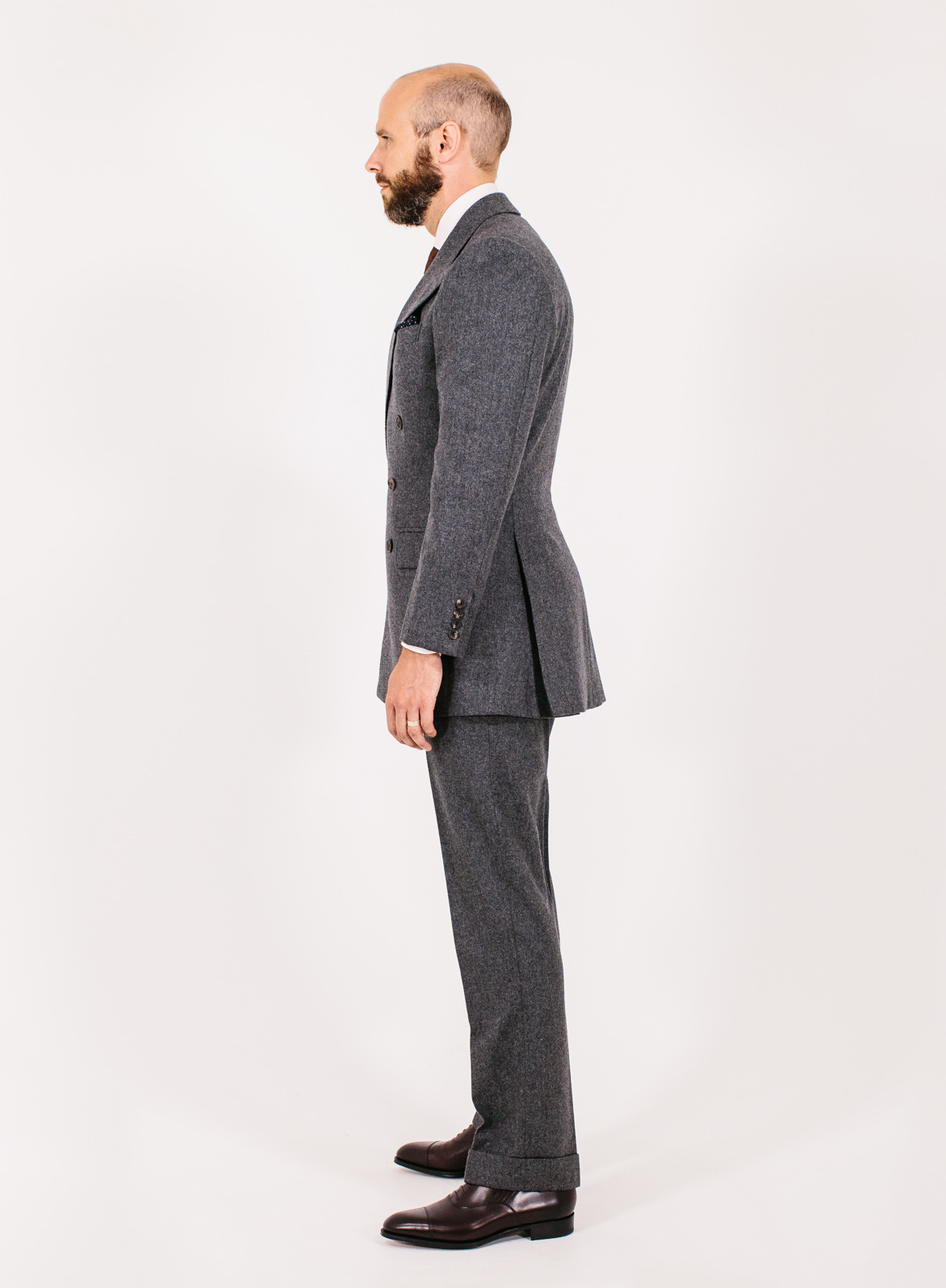
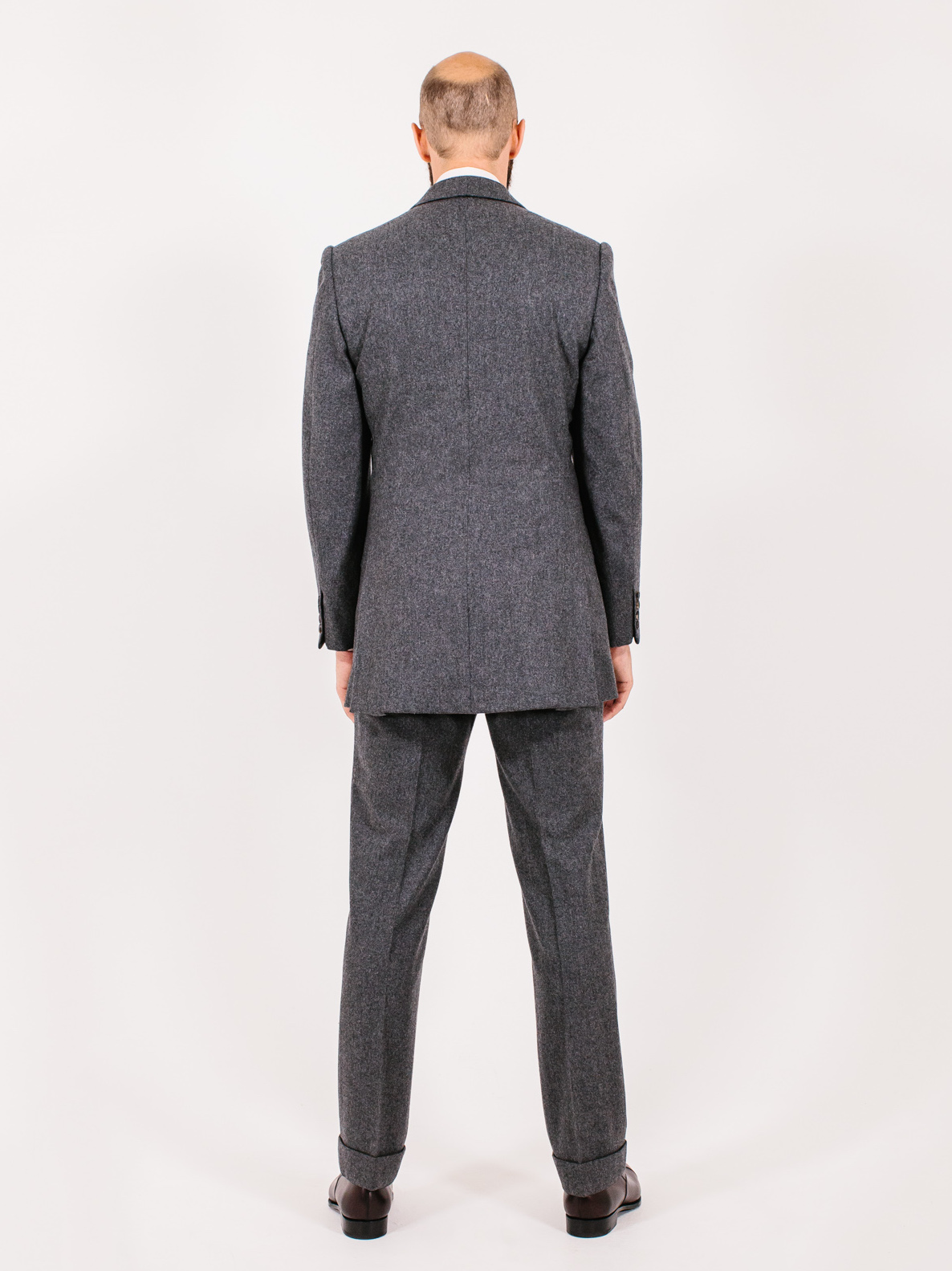
There is a little more drama elsewhere – specifically the shaping of the jacket through the waist and the small of the back, and the width of that roped sleevehead. 

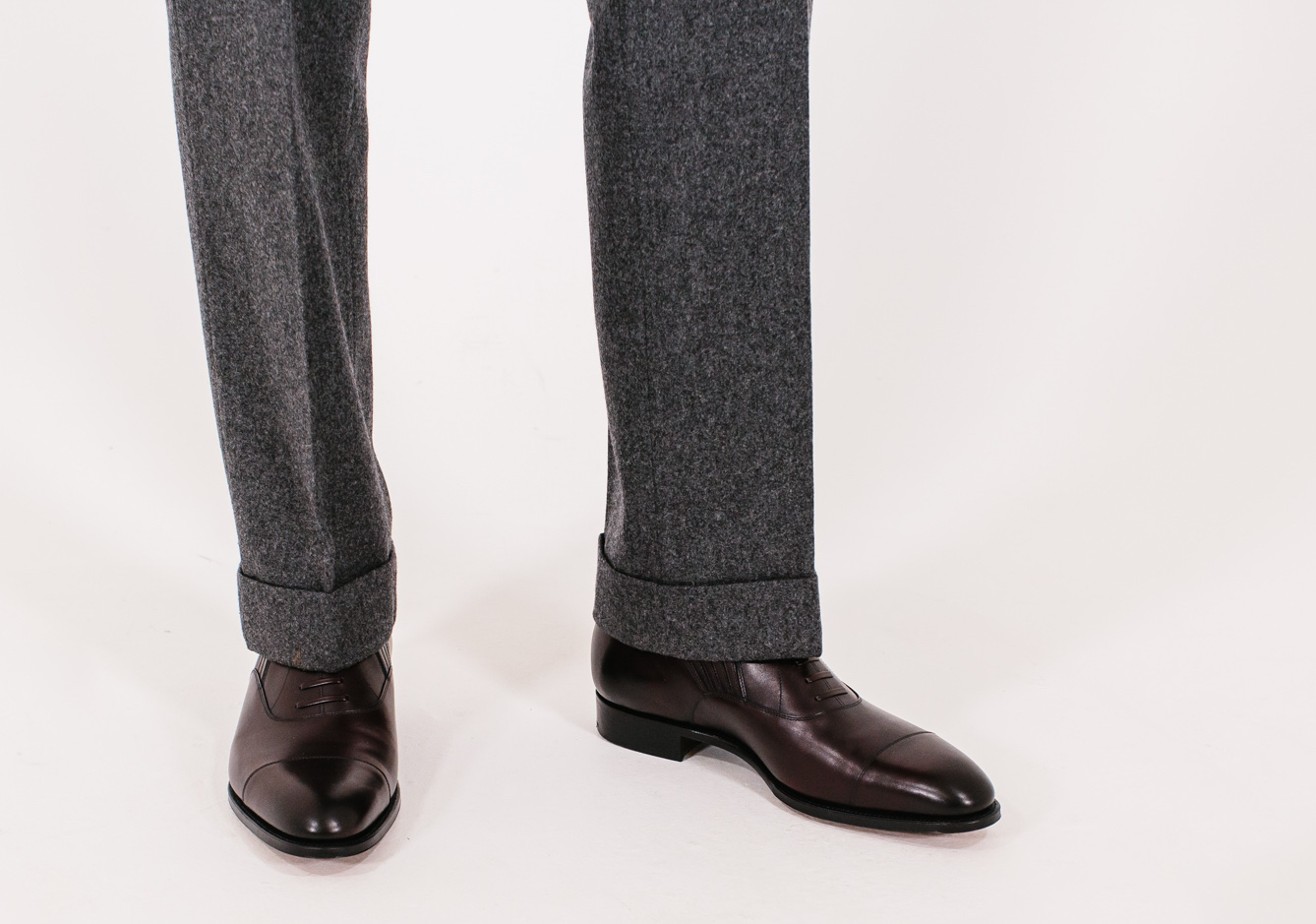
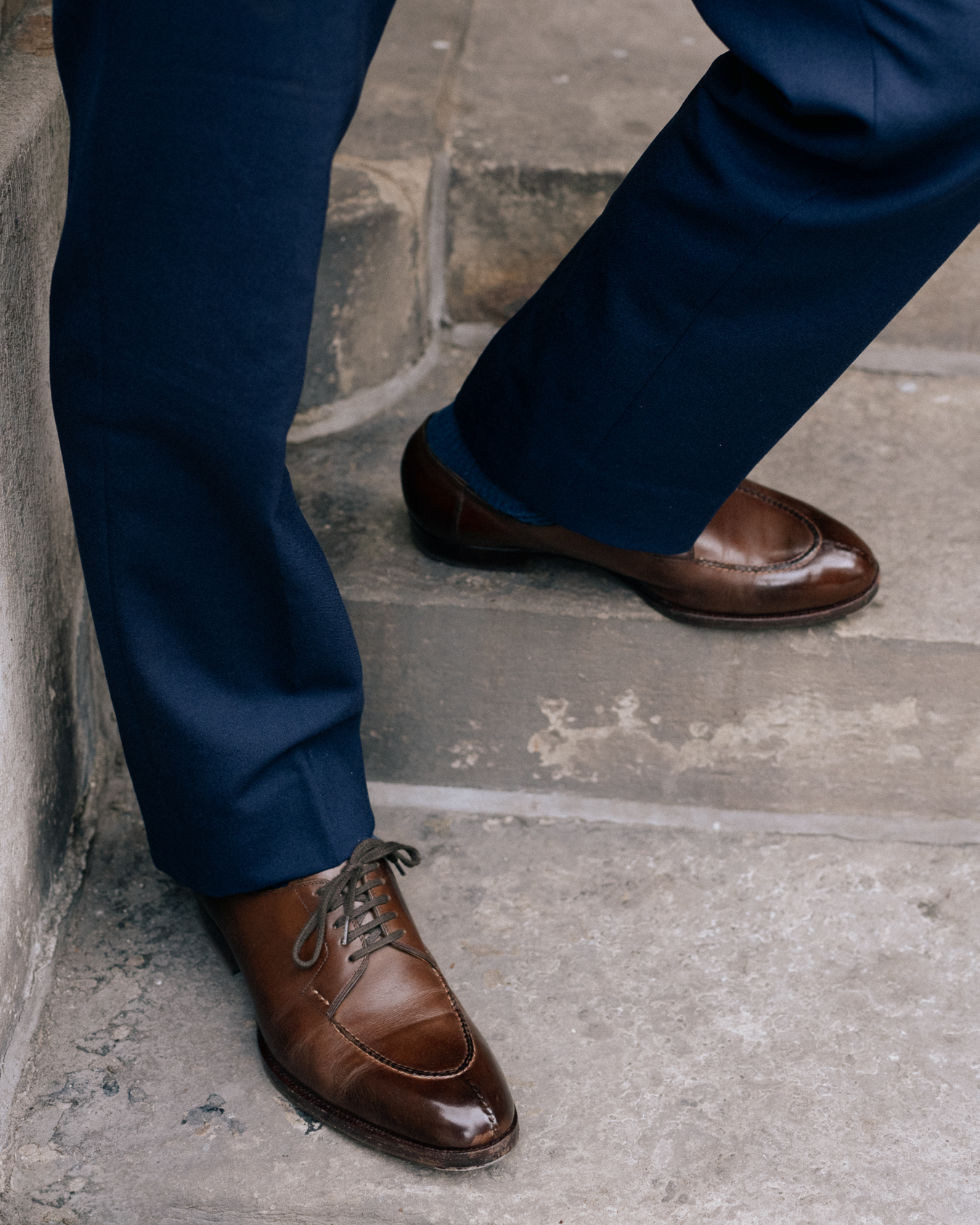
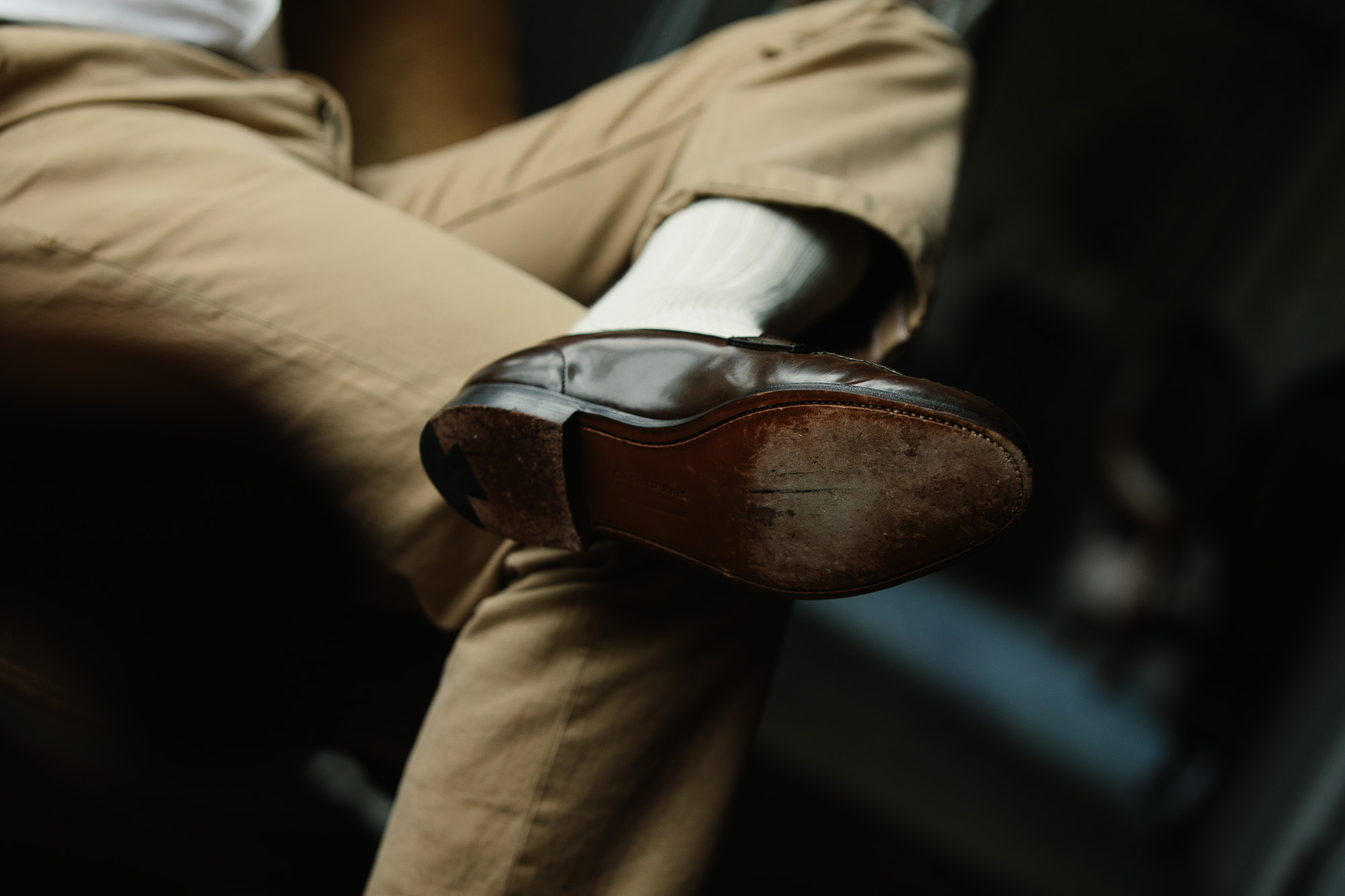
Edward also likes a trouser that is fairly straight – a little narrow in the thigh and then straight to the shoe. (The effect of that can be seen in the close-up of the shoes, lower down this article.)

When that leg shape is combined with a jacket that fully covers the seat, and so the legs finish with a touch of white space between them (below), the effect is again quite striking.

(The trousers are a touch big in the waist now, and are sitting a little low – there wouldn’t normally be quite as large a break.)


Looking at the measurements (listed in full below), the suit is not that wide in the shoulder (5½ inches) but is extended by fairly high and thick roping in the sleevehead. 

The buttoning point isn’t that high (19¼ inches) but looks it due to the fairly long back length of the jacket (33 inches).

The vents are cut quite high (11½ inches), adding to that impression of flare in the skirt. And the sleeves taper rather from the wide starting point at the top. 

The shoulders are strongly padded, but no more than other English structured tailors like Huntsman, Dege & Skinner or Kathryn Sargent. They are, however, slightly more built up at the ends. 

In terms of the rest of the clothes, I’ve always liked a pink shirt with grey flannel, even if it does feel a little corporate. And the mid-brown is nice against pink too. 

In retrospect I shouldn’t have picked a handkerchief that was the same pattern as the tie though. Oh well. 

The shoes, from Edward Green, are the Selwyn model on the 82 last. The slightly purplish shade is called Nightshade. 

You can compare this cut to those of 25 other bespoke tailors that have made pieces for Simon, in the Guide to Tailor Styles here. There is also a book version, called Bespoke Style.

Style breakdown

  • Shoulder width: 5½ inches
  • Shoulder padding: Strong, particularly on back
  • Sleevehead: Roped, domette and canvas
  • Sleeve: Generous, tapering to a 10¾ inch cuff
  • Lapel: 4½ inches, slight round
  • Gorge height: 3 inches
  • Drape: Moderate
  • Outbreast pocket height: 10 inches
  • Buttoning point: Low, 19¼ inches
  • Waist suppression: Moderate, low
  • Quarters: Straight
  • Length: 33 inches
  • Back seam: Suppressed
  • Vent height: High, 11 inches
  • Trouser width at knee: 19½ inches
  • Trouser width at cuff: 16¾ inches

The colour fallacy

The colour fallacy

Monday, December 27th 2021
||- Begin Content -||

By Tony Sylvester

This Autumn past, I took my first trip since before Covid. A short flight to Copenhagen, a city I know well. A very brief holiday, it served as a primer of sorts; a way to ease back into the idea of travel. 

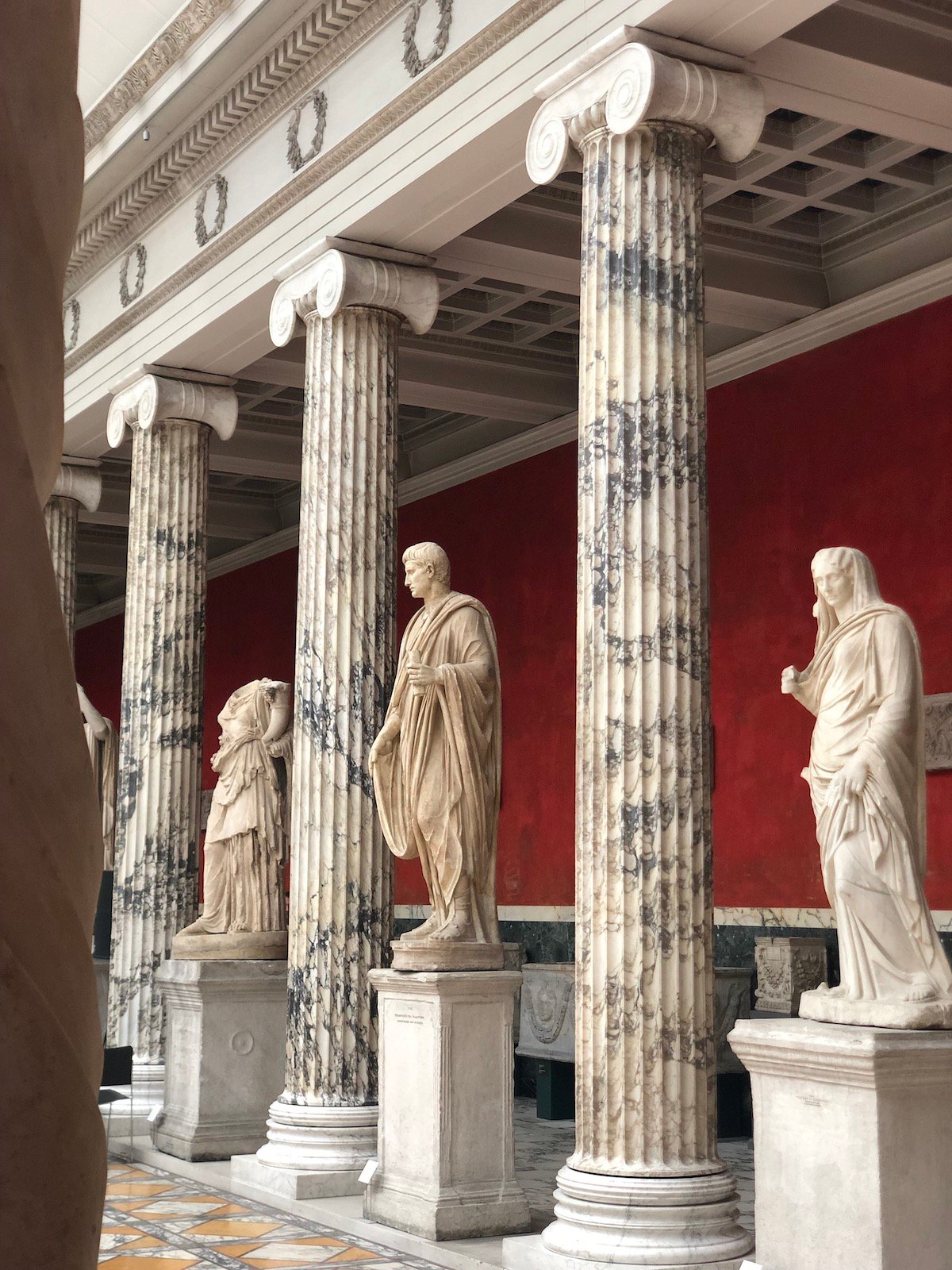
Everything was familiar - the streets, the shops, the restaurants, and especially the museums. The one necessity of any trip to Copenhagen (besides hot dogs from Steff's Place) is for me a visit to the Glyptoteket. 

The Glyptoteket (literally 'Carving Place') is a sculpture museum built on the old city's fortifications in 1897. It houses the exhaustive collection of art, predominantly statues, collected by Carl Jacobsen, the son of the founder of Carlsberg beer. 

Split between French works from the 19th century and marble pieces from antiquity, there are endless rooms of glowing white figures offset against coloured walls of various Farrow & Ball-esque hues. It is incredibly beautiful and calming in its austerity: somber yet lovely. One could argue this is Western Classicism at its most fundamental: cool, minimal, stoic, tasteful. 

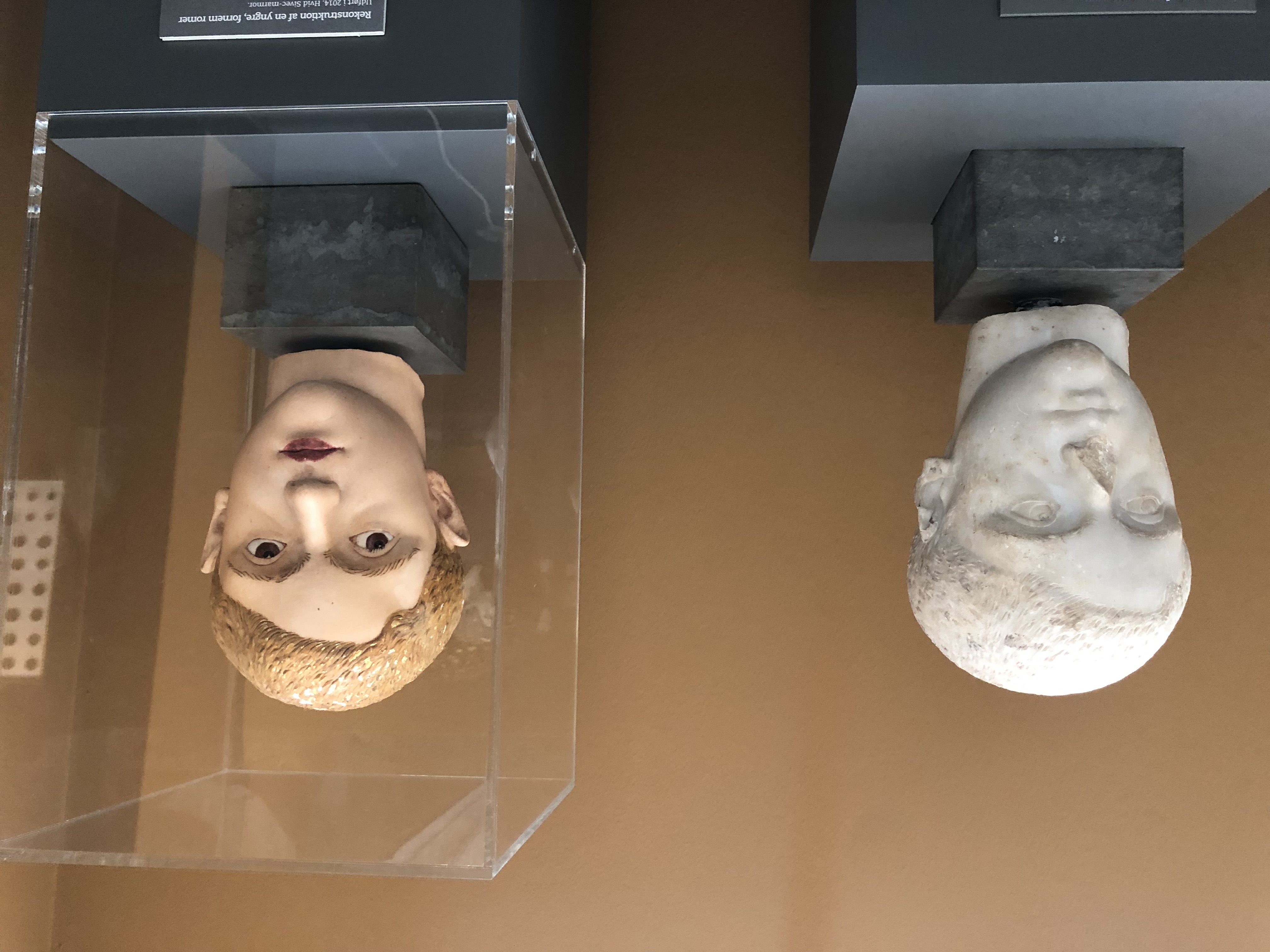
Unfortunately, scientific development in recent years has somewhat burst this bubble, undermining any belief in the inherent legitimacy of these plain white figures. Upstairs, a research room shows the statues as they really were. 

Analysis of the statues' surface reveals microscopic paint fragments in an incredibly diverse palette. Eons in the soil and waters, coupled with the wire brushes of the early archeologists, had washed and scrubbed away their true appearance. 

In contrast to ones in the main halls, these restored figures that once stood in the Greek and Roman private villas and municipal squares, radiate with multi-coloured togas, glowing eyes and golden locks. The whole thing is a little… well gaudy, to be honest. 

As archeologist Jan Stubbe Ostergaard points out, this goes directly to the European sense of self. Our white marble was what set us apart from the ‘barbarians’ with their childish paintboxes.

"European high culture was not characterised by respect for other cultures," he points out. "In our own imagination, we Europeans have regarded ourselves as different and superior throughout history. The Europeans have regarded the white marble figures as the ideal for sculptures because they were different from all the others." 

Turns out we were as gauche as the next man after all. 

This made me chuckle because it reminded me of the often blinkered world of 'traditional' menswear. With its dogmatic adherence to rules and regulations laid down in the last century, it can involve a very specific, monolithic view of our forebears. 

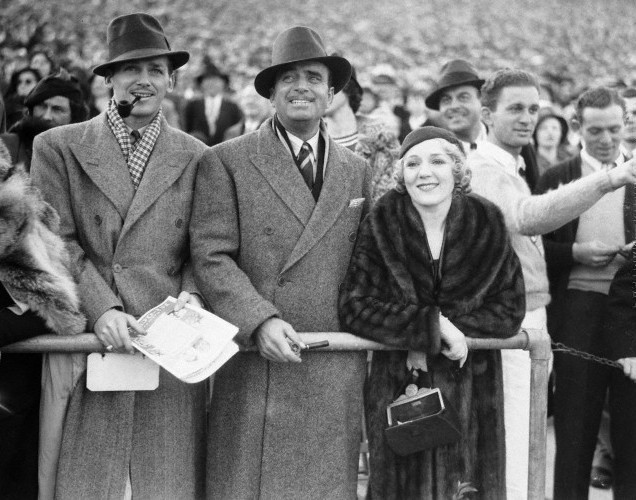
One of the most commonly held myths about stylish men of the past, is the sober colour palette they employed in their outfits. The monochrome world of Pathé newsreels, faded newspaper clippings and Golden-Age Hollywood celluloid has created a sense that our forefathers were a conservative lot; well dressed, but dowdy and tame in their choices. 

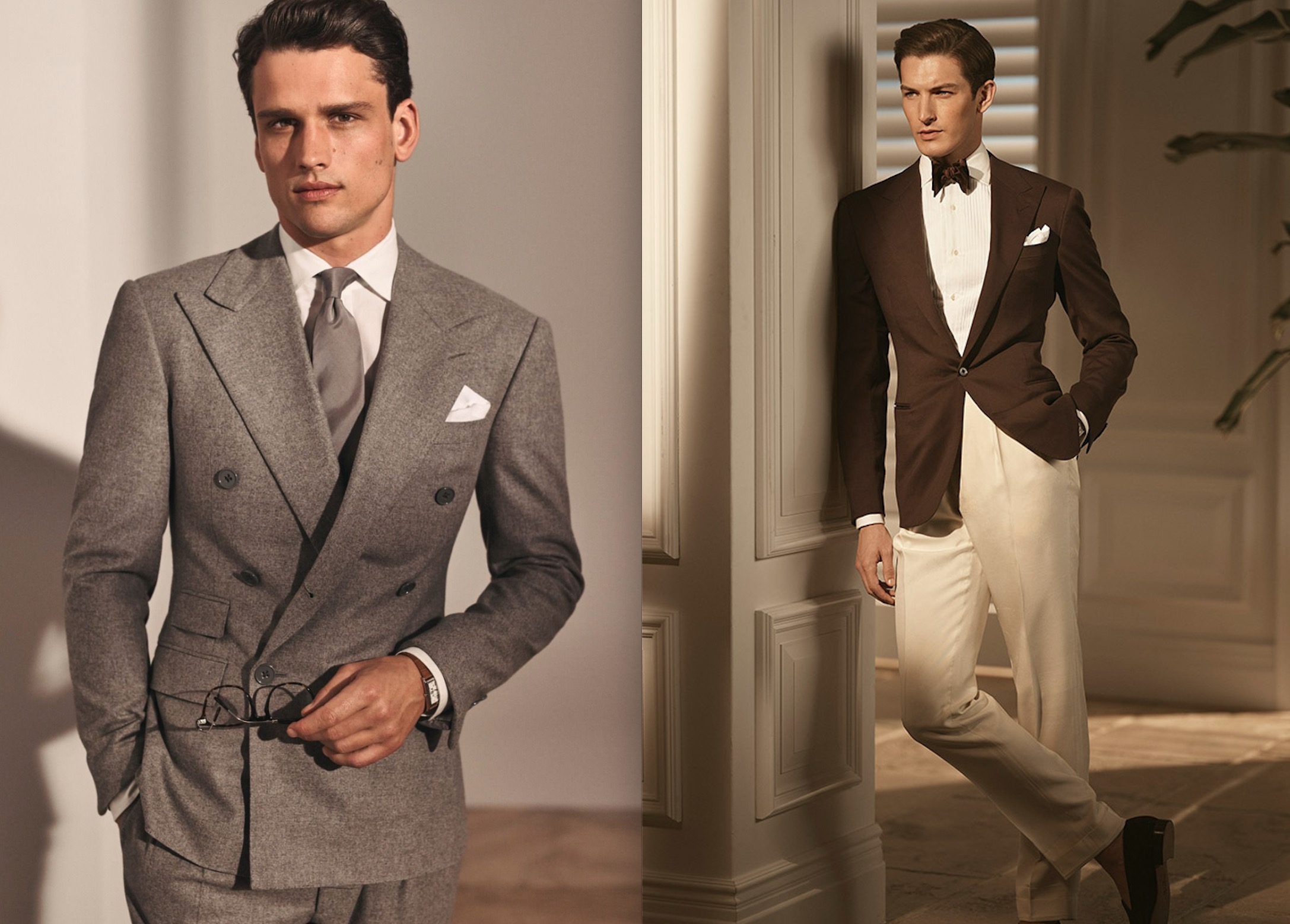
You see echoes of this in the collections of many modern brands, Ralph Lauren’s Purple Label (below) being the most obvious example. The tailoring on the chiselled models is almost unfailingly tonal, whether it’s grey surrounding the palest of lilac, or cream set against the darkest of browns. The whole thing will usually be shot in a white room with high contrast and strong shadows. Ralph’s love of old Hollywood is common knowledge, and often the look and feel of the collections screams of the monotone movies he devoured as a child.

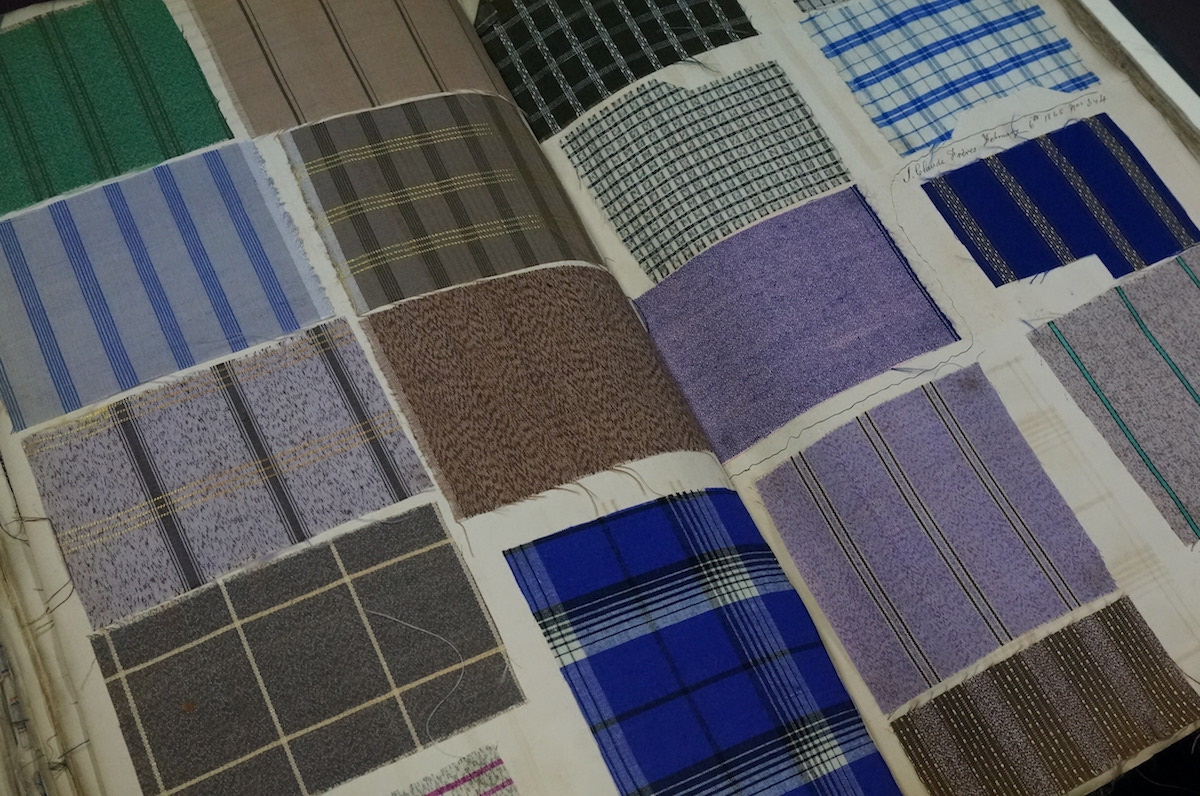
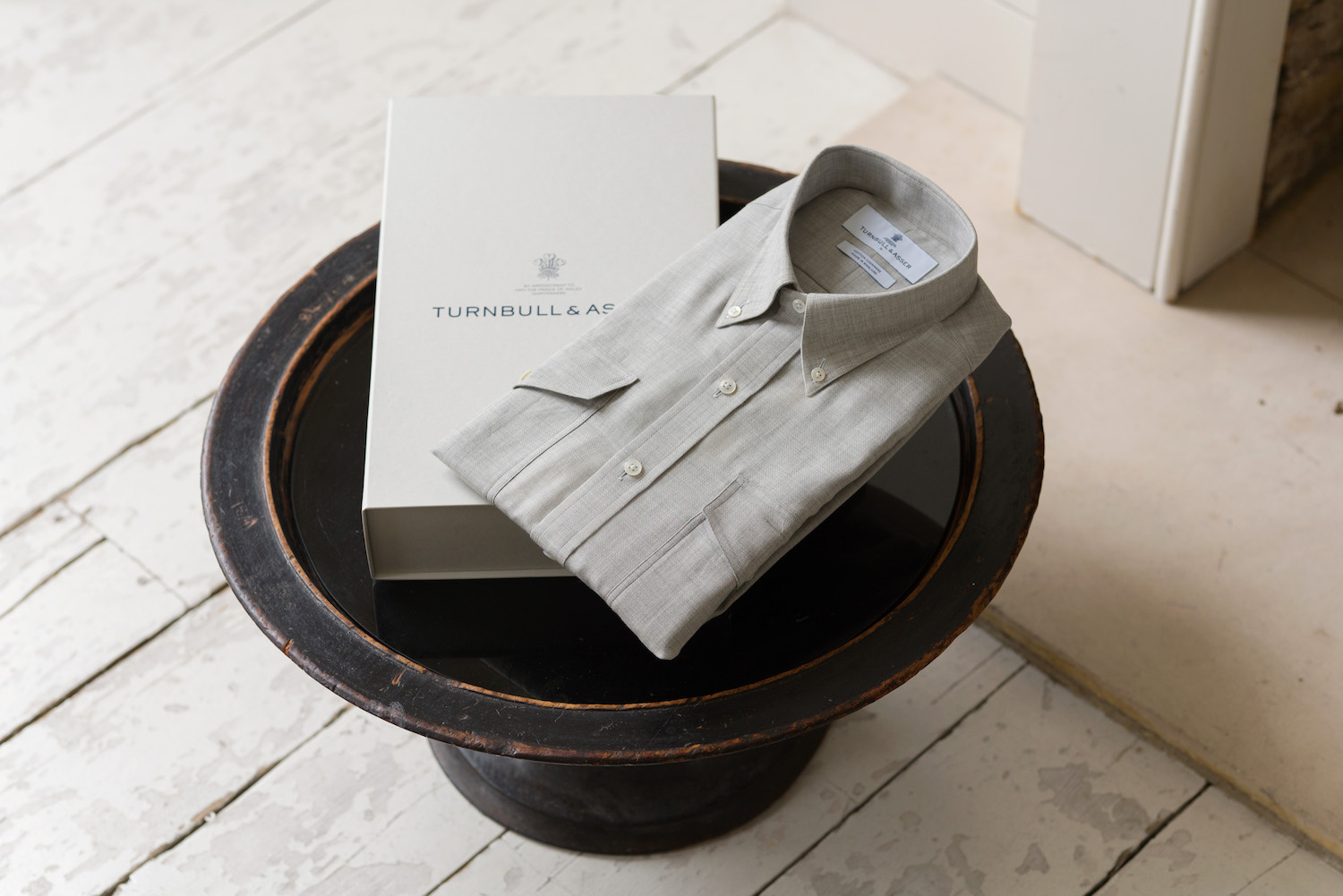
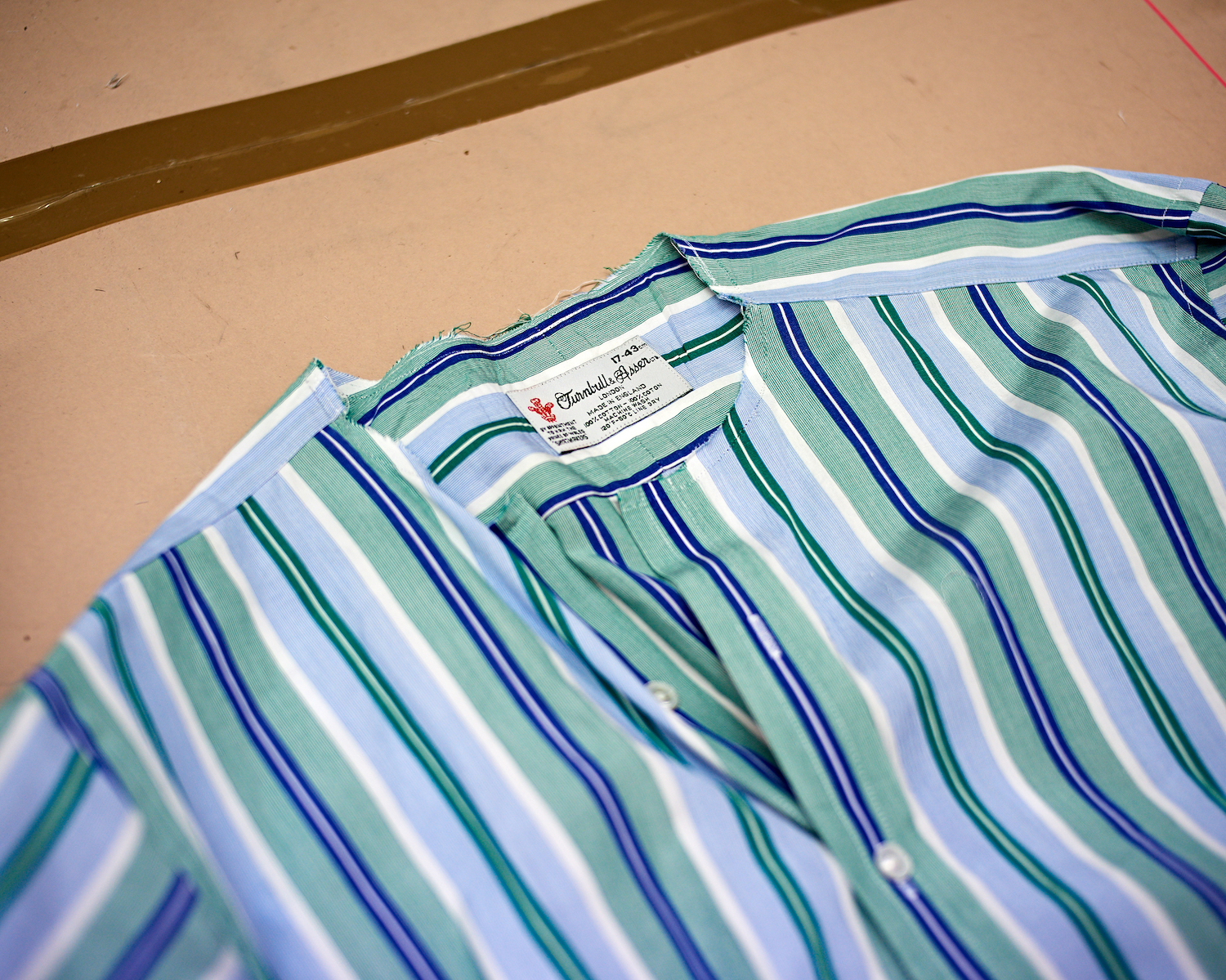
The reality of the period this aspires to was illustrated to me when I recently visited the archives of Jermyn Street stalwart Turnbull & Asser (above). 

The sheer scope of their kaleidoscopic checks and stripes from the turn of the century is breathtaking. Silks, voiles and cottons in every conceivable shade, still bursting with unfaded pigment, hidden away as they are in thick leather bound binders. Certainly contemporary portrait photography of the time failed to capture this ebullience. 

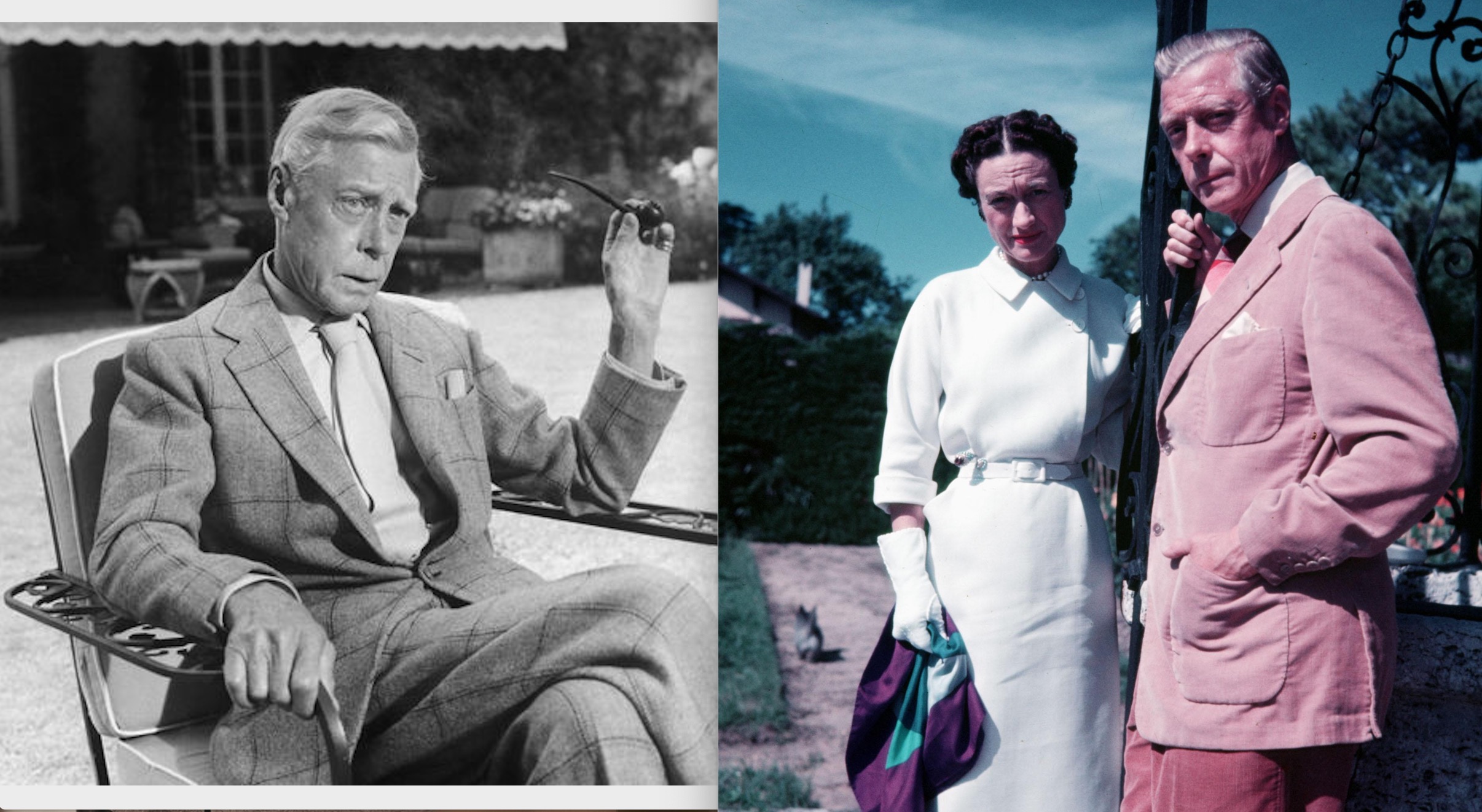
Die, Workwear!'s ever-insightful Derek Guy once pointed out the dissonant disparity between seeing one of the Duke of Windsor's outfits in black and white, and viewing the same ensemble in colour. All that expert pattern mixing of scale and tone is blown out of the water by the full drama of the colours. 

The infamous Sotheby's collection of Herr Windsor's personal belongings highlights some, shall we say, eccentric choices when it comes to cloth. Outfits in old Time Life issues show Eddie rocking what one assumes to be a country tweed in a suitably muted palette. Cracking open the Sotheby's catalogue however, we discover that the diminutive Duke had swathed himself in parakeet green with a navy windowpane. 

It evokes peals of laughter, shock or a begrudging respect, depending on where you sit on the scale sartorially. 

These are issues I often ruminate on at this time of year when thinking about commissioning tweed jackets. 

While no fanboy of the wayward king, I often wish modern cloth mills would cater more to those of us with similarly gutsy opinions on colour and pattern. There's a boggy murk on the heart of most books of winter cloths that puts one in mind of a particularly drab and rainy day on the moors. 

For me Tweed, with its roots in the tartans of the great Scottish houses, offers so much potential for working colour into an outfit that I am always on the hunt for brighter checks with greater contrast. 

The first sports coat Fred Nieddu cut for me almost a decade ago (above) was from a long discontinued Cacciopoli bunch. The olive base was to the mustard end of the scale, with bisecting lines of paprika and teal: perfect foils for bolder ties or socks. 

Later, my favorite Teba from Justo Gimeno used a deadstock cloth I discovered which used a biscuit-coloured base to build a grid of rainbow abstraction. Despite the myriad colours, it still maintained its utility with an overall harmony. 

More recently, I ordered a grey tweed three piece with gold overcheck from Porter & Harding's Hartwist bunch, after seeing Fred use it for one of Prince Philips' highland looks in The Crown. 

This year I'd been stuck for something that would compliment my recent wardrobe of black, tan and brown. Black is the colour I find least harmonious with tweeds, as there's very little echo in most cloths I've seen. 

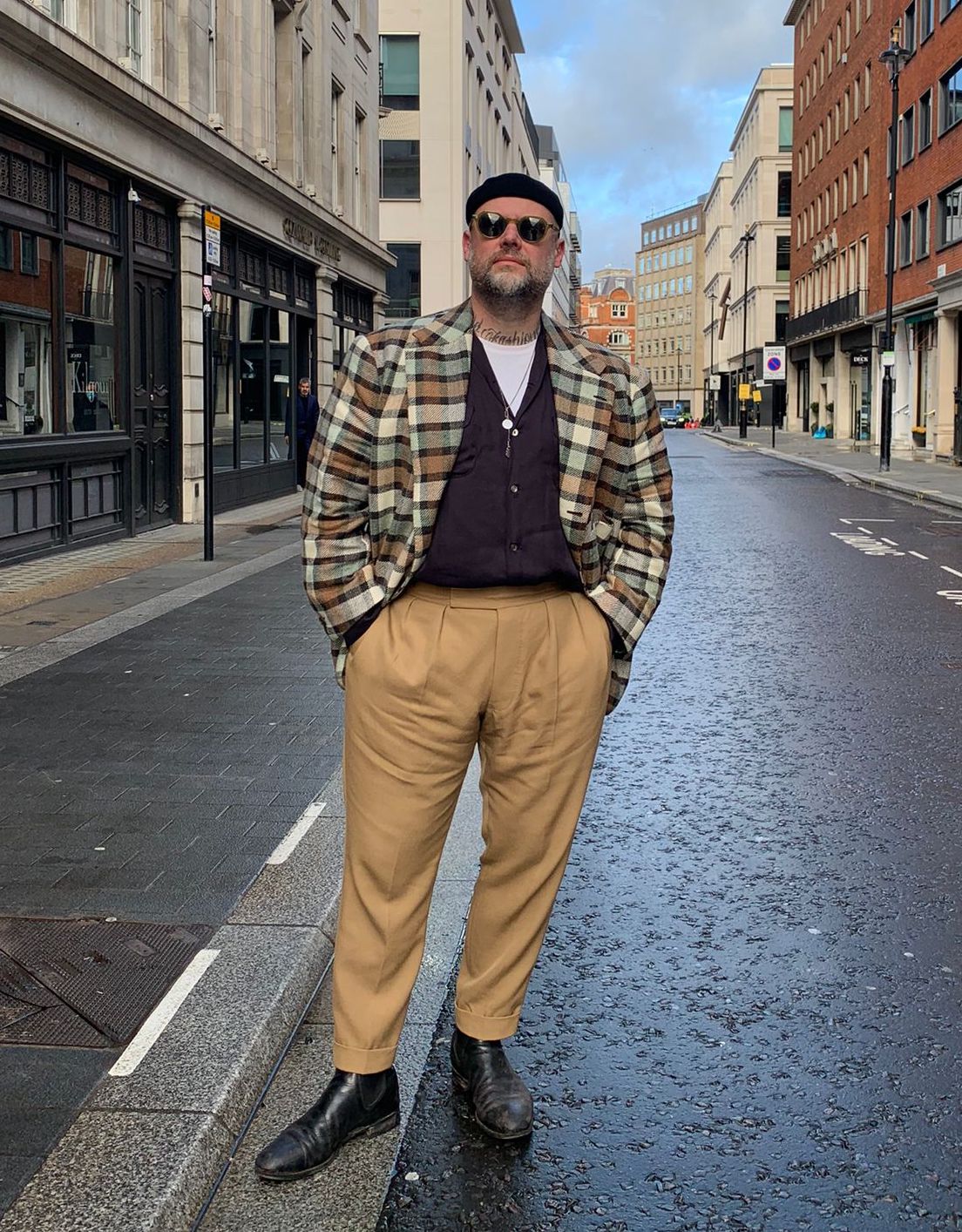
As luck would have it, Dugdale's had placed some old bolts and end-of-lines in Savile Row Valet, and there amongst the worsteds and high twists was the ideal candidate. At once loud and bold without resorting to colours you could call flamboyant, it was labelled ‘Carnaby’ and' was a mid-sized check of tan, seafoam, brown, cream, and yes, black. It went straight over to Fred at Taillour to be made into a patch-pocketed sports coat (shown above). 

It turns out that this Carnaby cloth was part of a series called ‘Tweed In Town' that Dugdale's promoted at the tail end of the 1960s to achieve exactly what I had been aiming for: a tweed that shed its country complexion in search of more urban pursuits. 

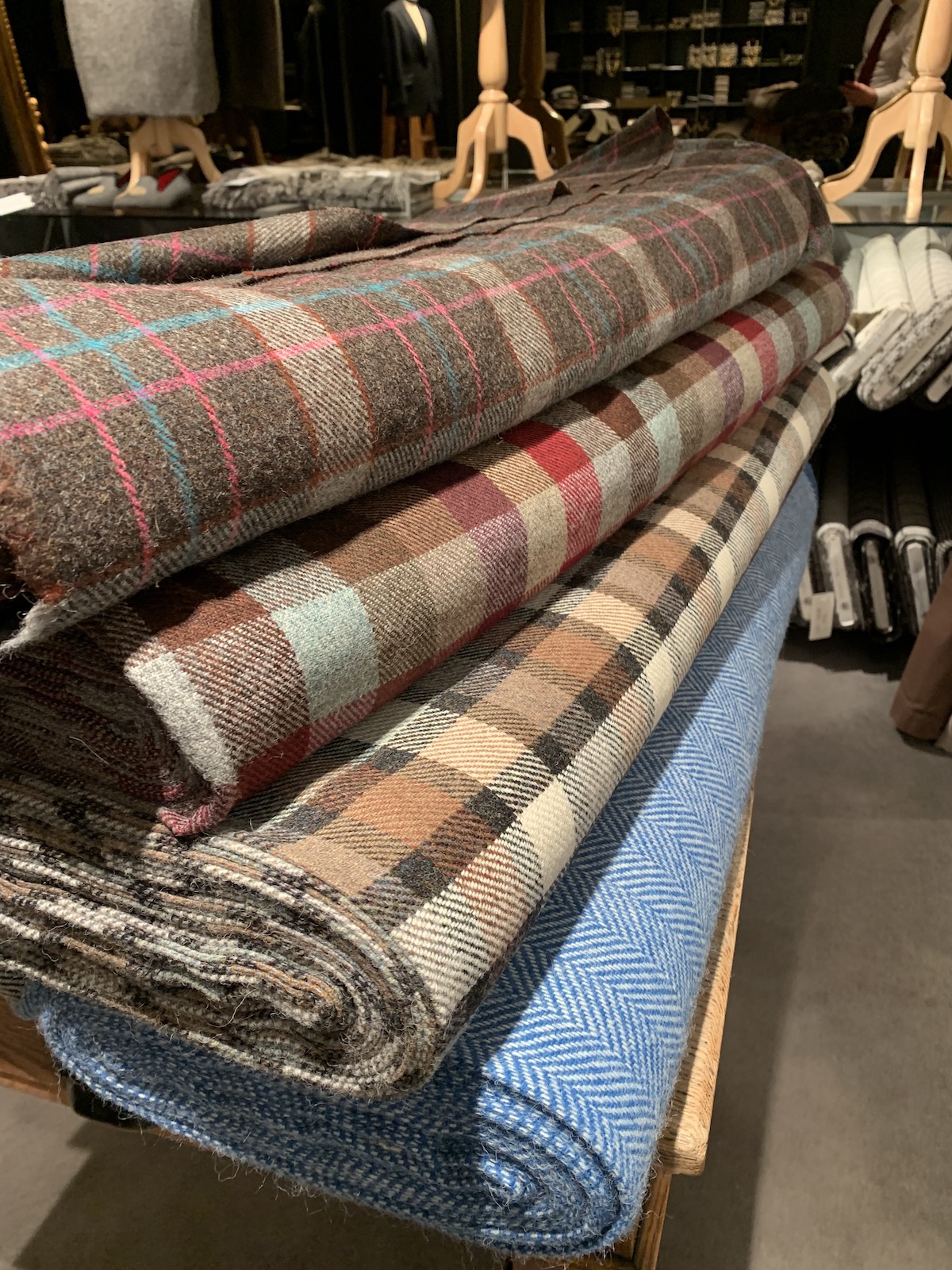
They still have stock on the wonderfully monikered ‘King’s Road’ (a bright blue and cream herringbone), ‘Golden Square’ (a large scale check of pale brown, raspberry and wine) and ‘The Pimlico’ (with sorbet pinks and blues over a mid-brown base, all shown below). 

Come on, let's wreck the temple of neoclassical good taste together!

Merry Christmas (Eve)

Merry Christmas (Eve)

Friday, December 24th 2021
||- Begin Content -||

Today, Permanent Style takes its traditional, annual day off - I know, a whole day!

So stop reading this, go talk to a loved one, and stay away from screens. Unless it's to watch a gushy Christmas movie you can take a cheeky nap in the middle of. That's what I'll be doing.

The shot above is from our Permanent Style Christmas Dinner a couple of weeks ago. There'll be more on that next week. So no questions for the moment please.

Lutays made-to-order jacket: Review

Lutays made-to-order jacket: Review

Wednesday, December 22nd 2021
||- Begin Content -||

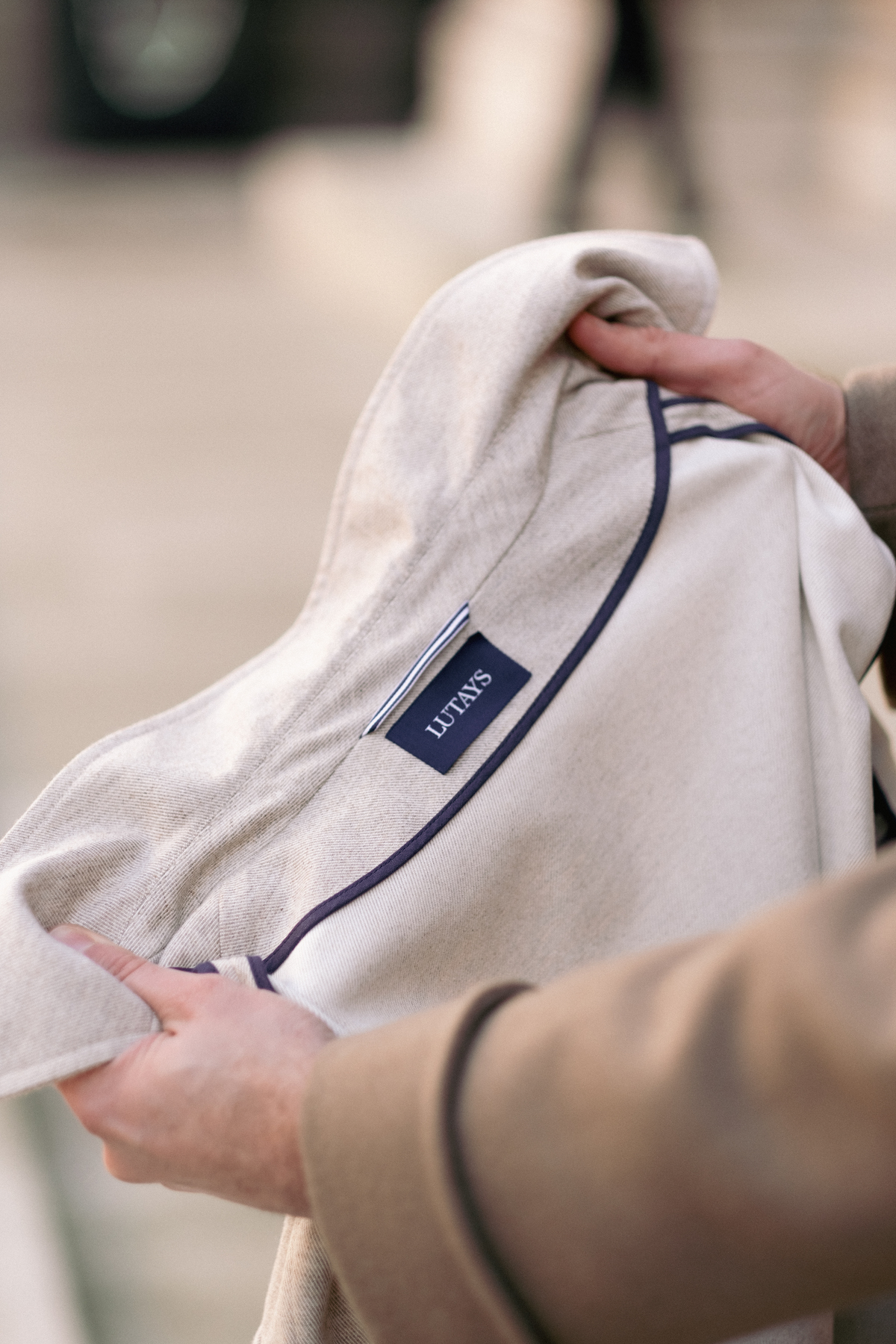
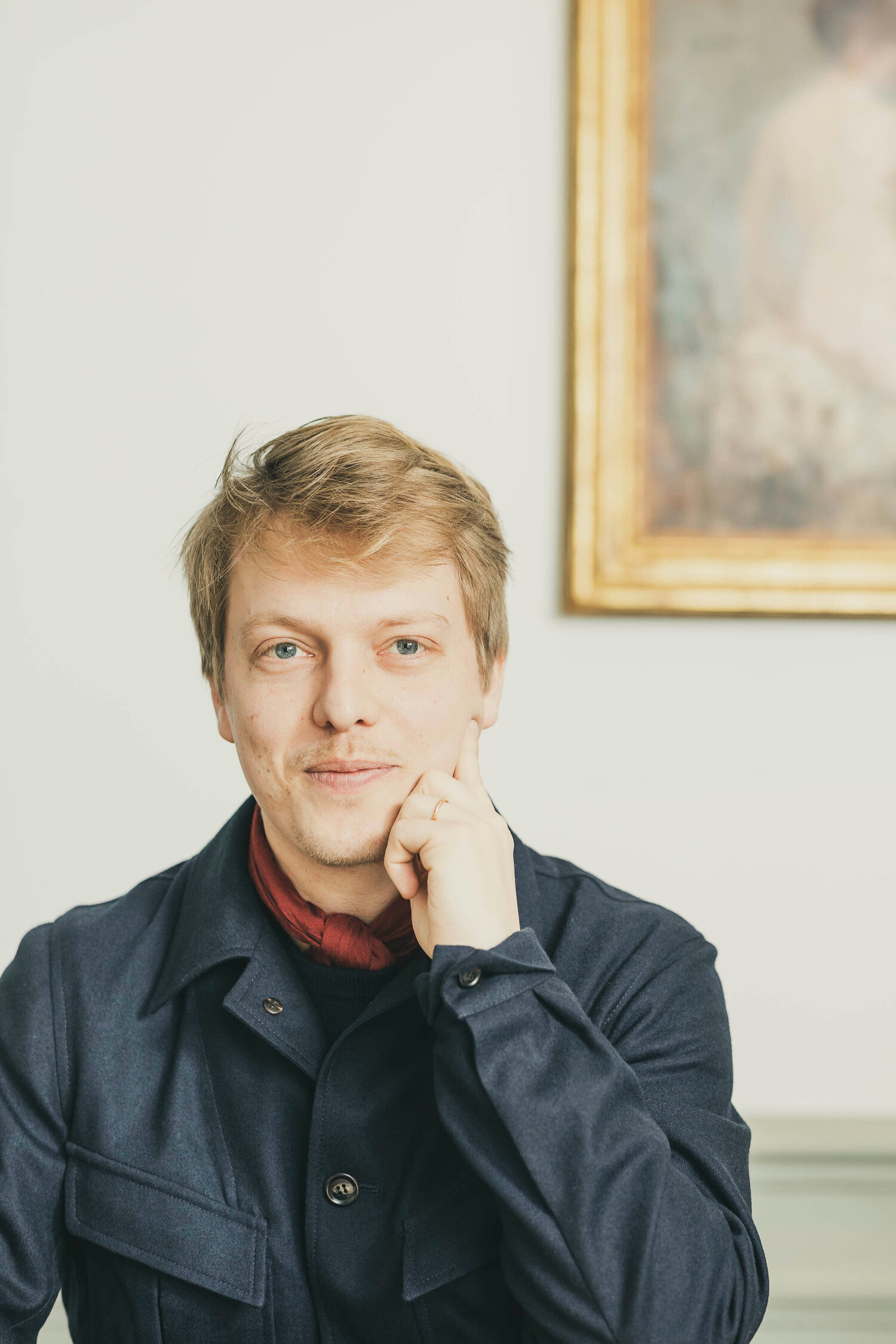
Lutays is a French brand making casual jackets in a couture workshop in France. It was started by Jean-Baptiste Rosseeuw (above), whom readers might know from his previous job at glove maker Lavabre Cadet

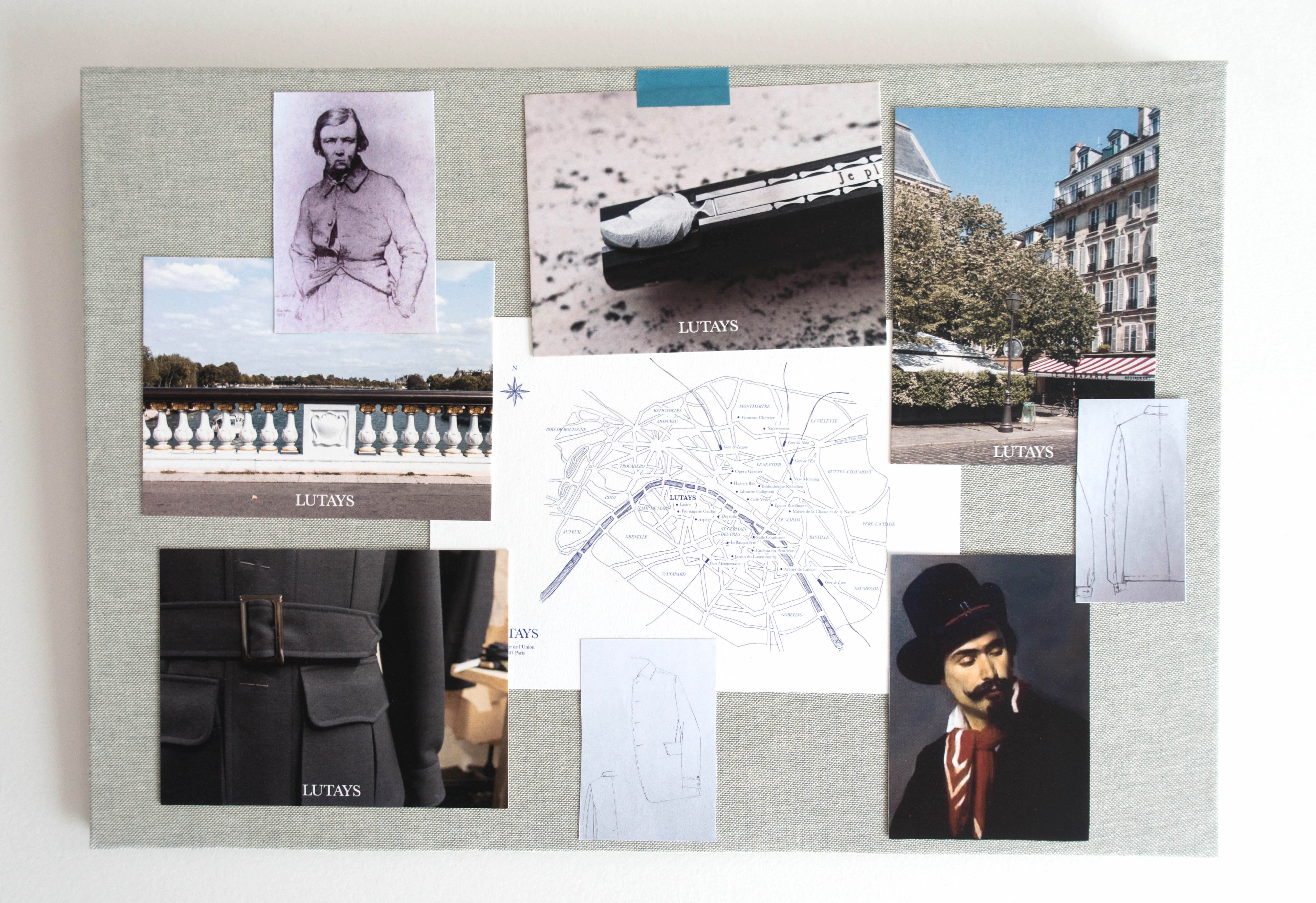
JB - as he is known to those that know him - wanted to launch a product that was particularly French. Not just made there, but projecting a style that was distinctive from those of England, Italy or America. 

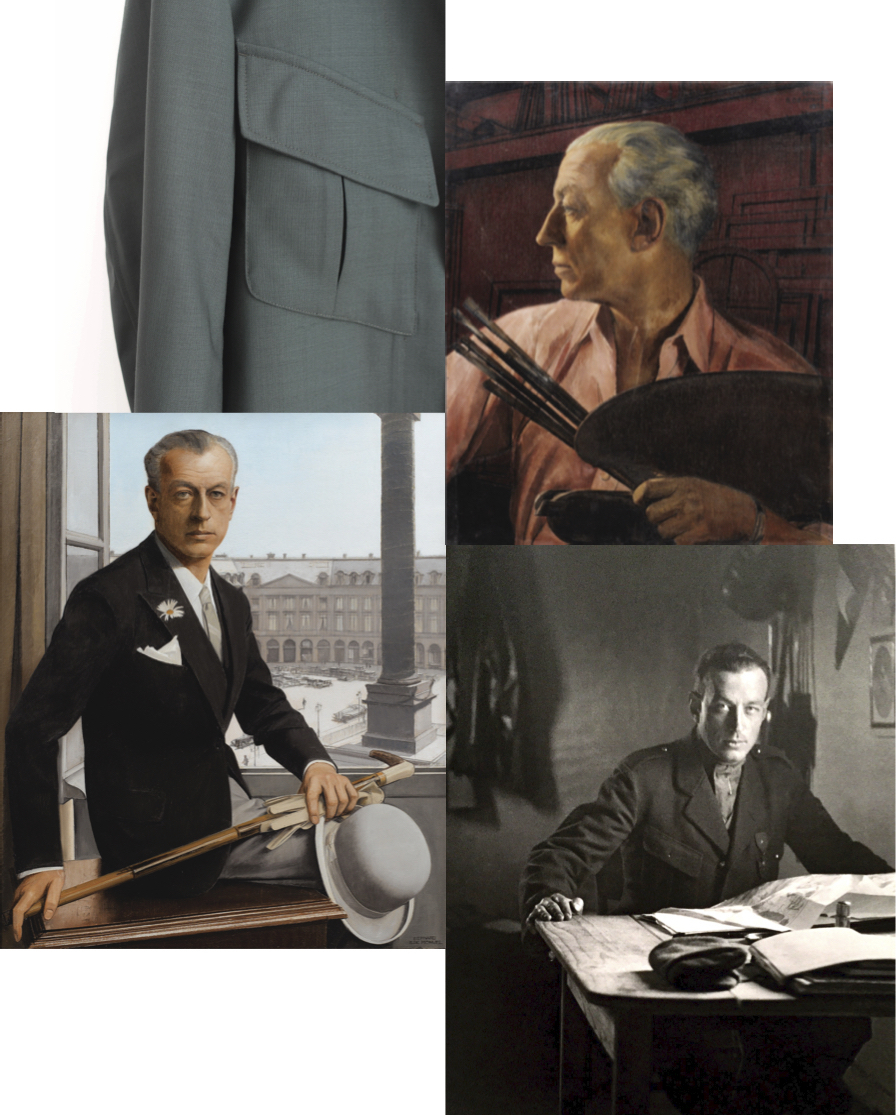
For him, this French style is to be found in the clothes worn at the end of the Napoleonic era, before British suits became dominant. These were practical jackets, for activity as much as meetings, and were characterised by soft shoulders, open quarters and natural materials. 

He also dug into regional traditions and French military clothing, bringing up details like high-fastening gilets or a general absence of breast pockets.

There is inevitably something of the old Arnys style here. But while JB reveres that tradition, and wishes to build something equally, distinctively French, there are clear differences: the Lutays fabrics are noticeably more sober and textured, and the designs are less eccentric. 

The decision to make in a couture workshop is an interesting one, because most of the time I think it leads to a garment that is precise and clean, but free from the flourishes that menswear usually associates with hand-worked clothing. 

It also means Lutays is relatively expensive. Everything is made to order, with jackets ranging from about €1100 to €1800 depending on the material and style, and the full couture experience with fittings in Paris starting at €4300 (VAT inclusive). 

JB decided to make this way after several experiments with tailors and shirtmakers. The shirtmakers’ jackets he found were too unstructured - basically, just shirts with pockets - and the tailoring versions too structured, as well as too sharp and formal. He also didn't want to make with a factory, for example in Italy. 

It wasn’t easy to find a couture workshop that would take him on, as most only make for women. But finally he found one that understood his aims, and would make in the traditional couture manner, with one person making each garment. 

Earlier this year JB offered to make me a jacket remotely as an experiment, sending me a few of the fitting toiles that are normally held in the Paris atelier, to try on and then order from a swatch. 

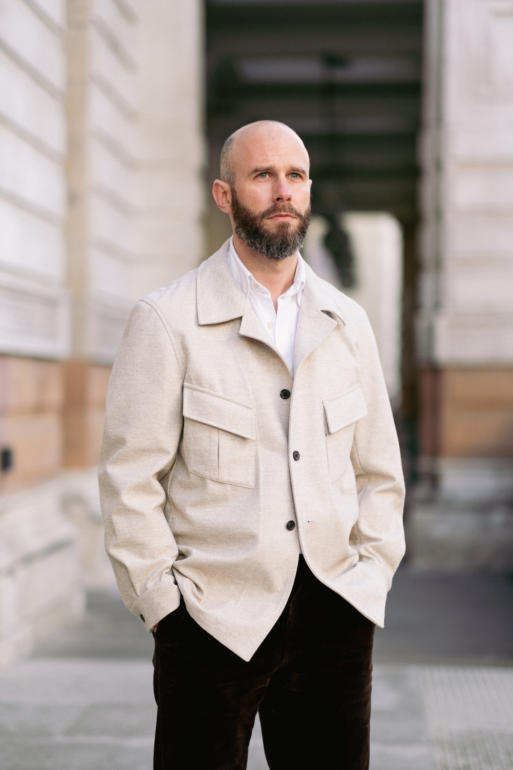
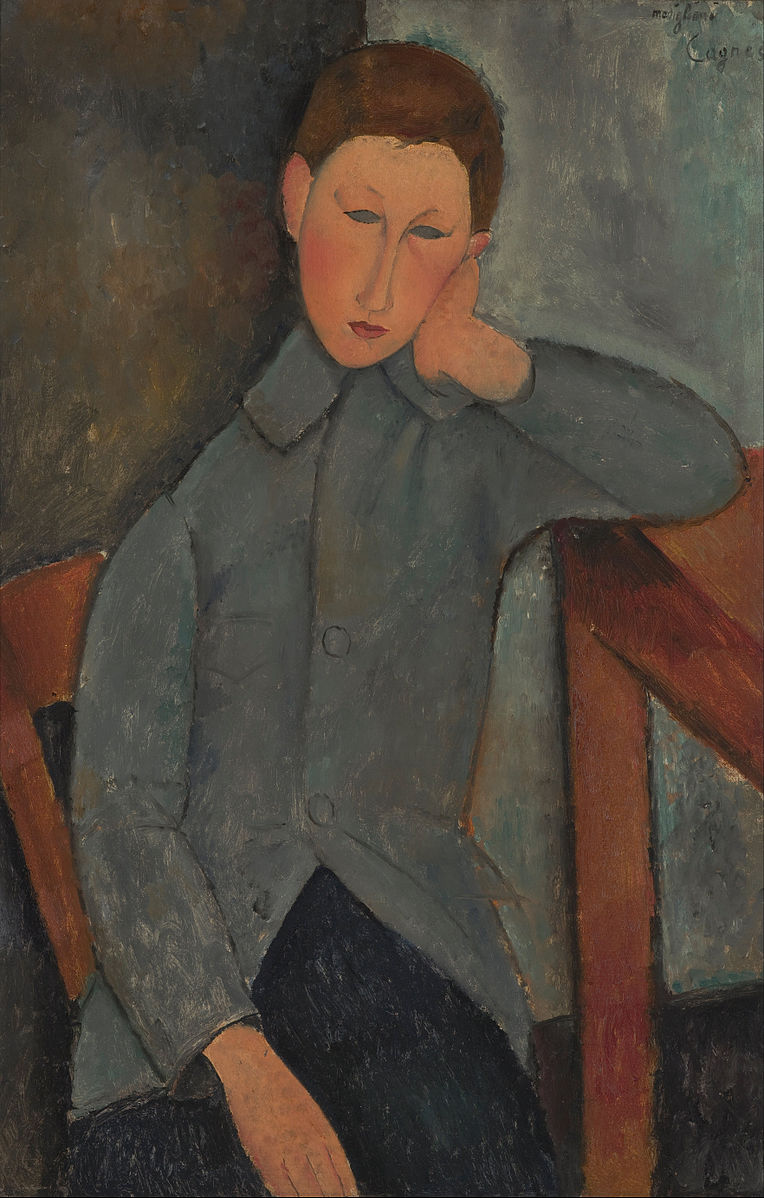
Of the styles on offer, the one that appealed to me the most was the ‘Boutet’, an overshirt style with just two angled breast pockets. Some others I discounted because of the belts, or band collars, but my second choice would have been a jacket similar to the Boutet, like the ‘Zola’ with its simple pockets. 

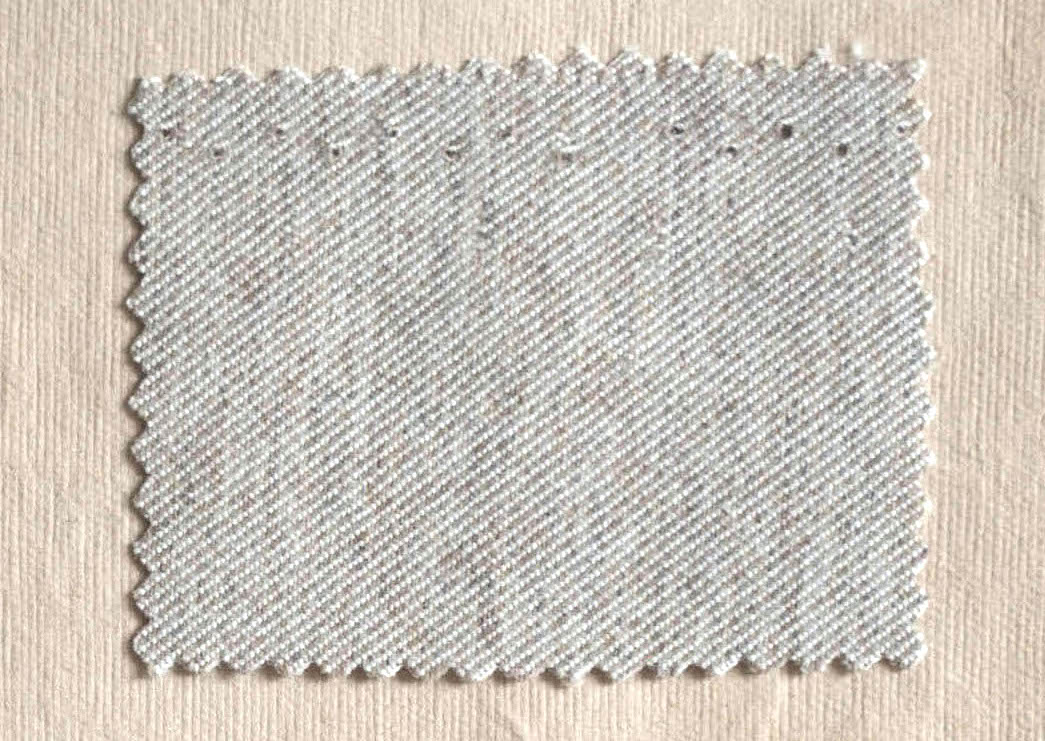
A special word should be said about JB’s fabric selection, because he has gone out of his way to source unusual, natural-coloured cottons, linens and wools, which I think give the brand as much identity as the designs of the jackets. 

Some of the swatches he supplies are pretty small, and harder than normal to get a sense of what they’ll be like at scale. But it’s a long way from an MTM brand that just shows all the same Loro Piana or Scabal cloth books. 

The fit models I was sent to try on were all in a toile canvas, which I think limited my ability to get a sense of the designs. I did feedback to JB that it would have been nice to try a finished one, and ideally something in a similar material to the one I had selected. 

The fitting process all went quite smoothly though. I took pictures of the fit from every angle, and we spoke on the phone about my thoughts. I basically requested the neck and waist from one size, and the shoulders, chest and length from a size up. 

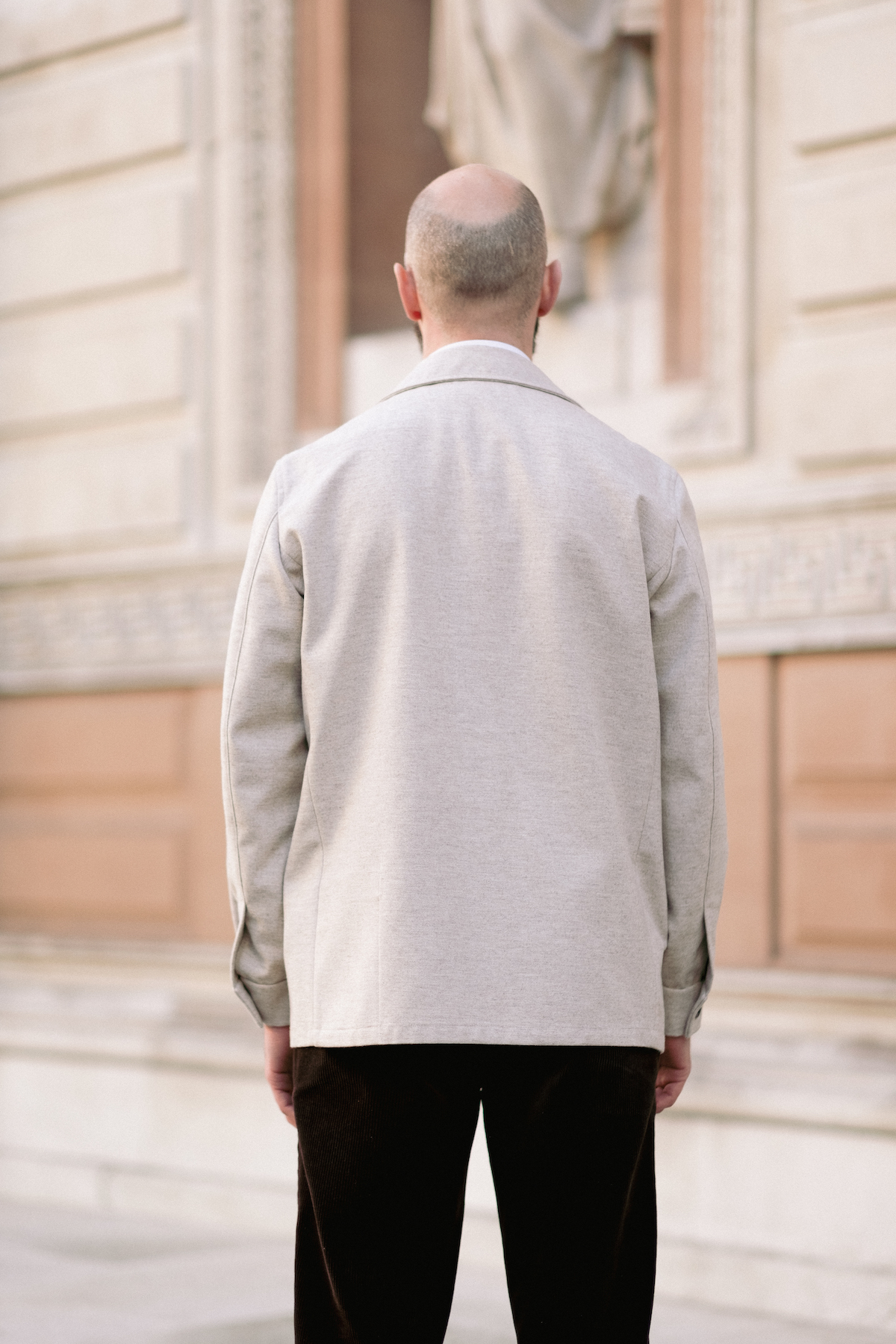
When the jacket arrived a few weeks later, the fit was good, but the waist and hips were a little large. This is the problem I have with overshirts generally: being slim, they tend to look a bit A-line as they drop from my shoulders to the hips. 

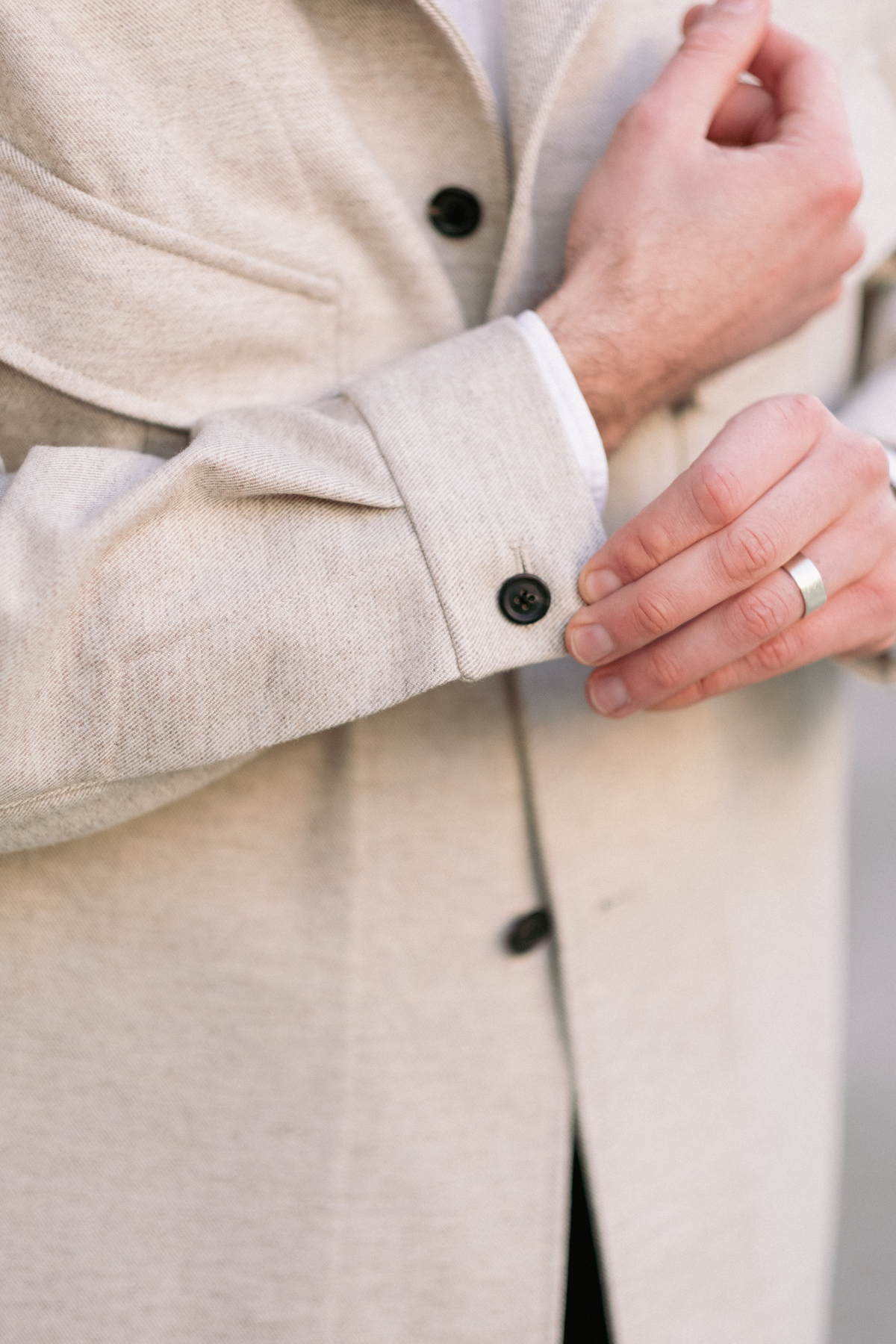
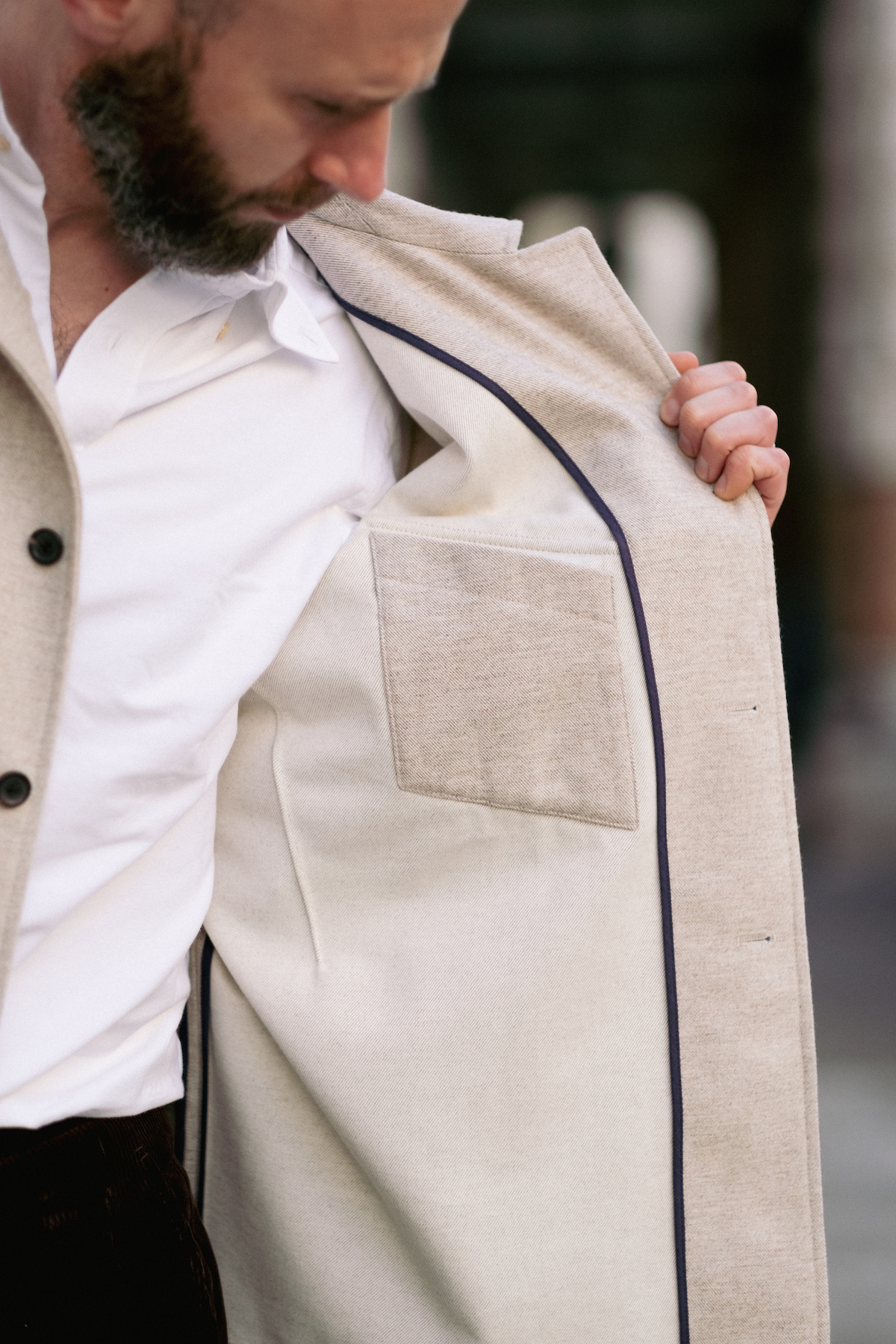
The jacket was sent back, this was changed, and the result is what you see below. Interestingly, the adjustment on the hips was done with two darts running into the bottom hem, rather than the side seams. 

So do I like it? Well, the first thing to say is that I’m in two minds about the material. 

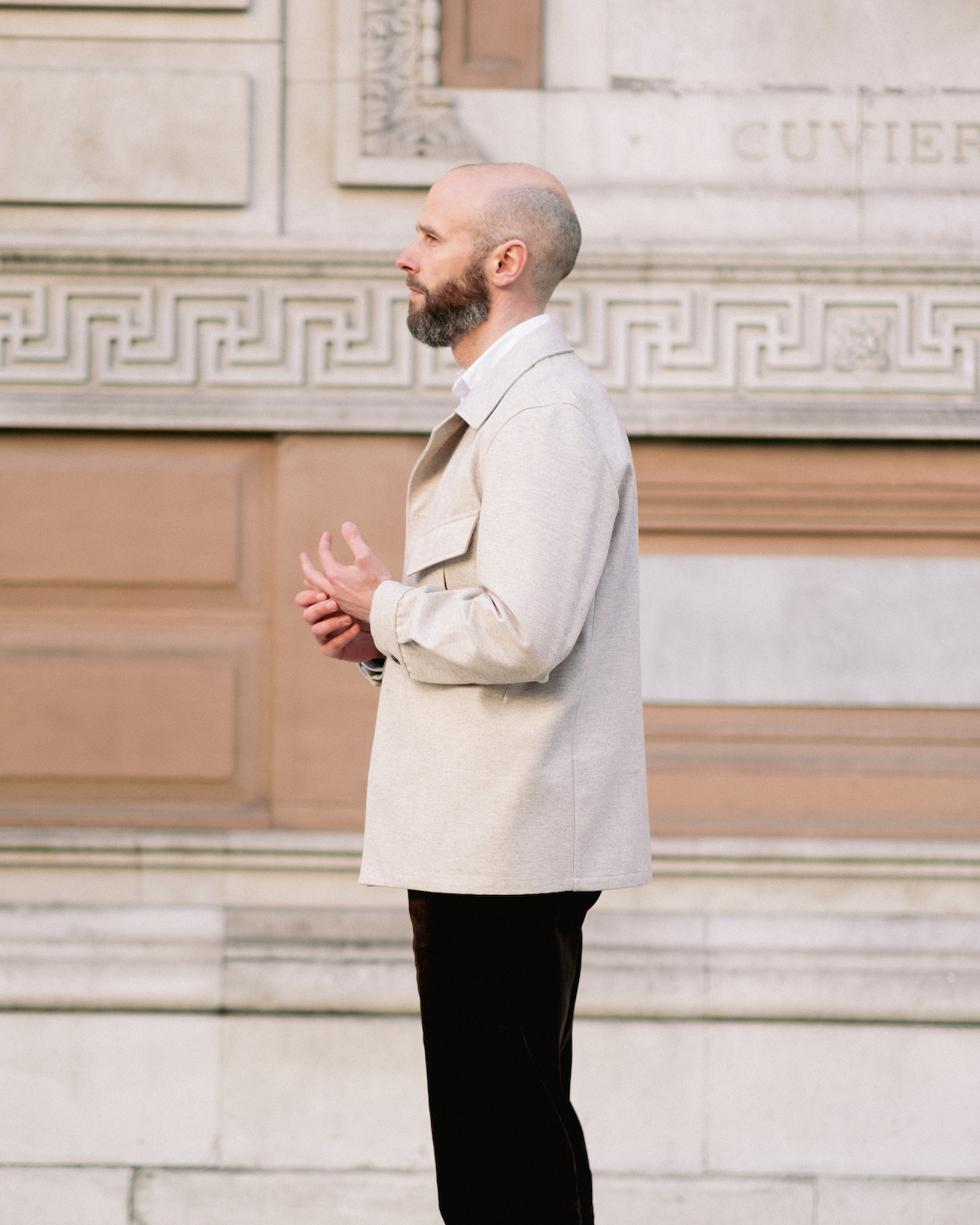
It’s an unusual wool/cotton twill, a beige or oatmeal colour but with some lovely browns and caramel colours in the yarn. A good example of how JB has turned up some materials that are different to most things in tailoring bunches.

The only problem with it is that it’s a very dense weave, and quite firm. That can be an advantage with something as unstructured as an overshirt, and it certainly helps this piece look more like a jacket. 

But I’ve worn this about a dozen times, it hasn’t softened and it does hang rather stiffly. I think there will be some people that will like it, but had I seen a jacket made up in that material (even in a different colour) I’m not sure I would have chosen it. 

The style of the Boutet has grown on me, but it's a different style to what I would normally wear, and I think it's another reason to see the models in person. 

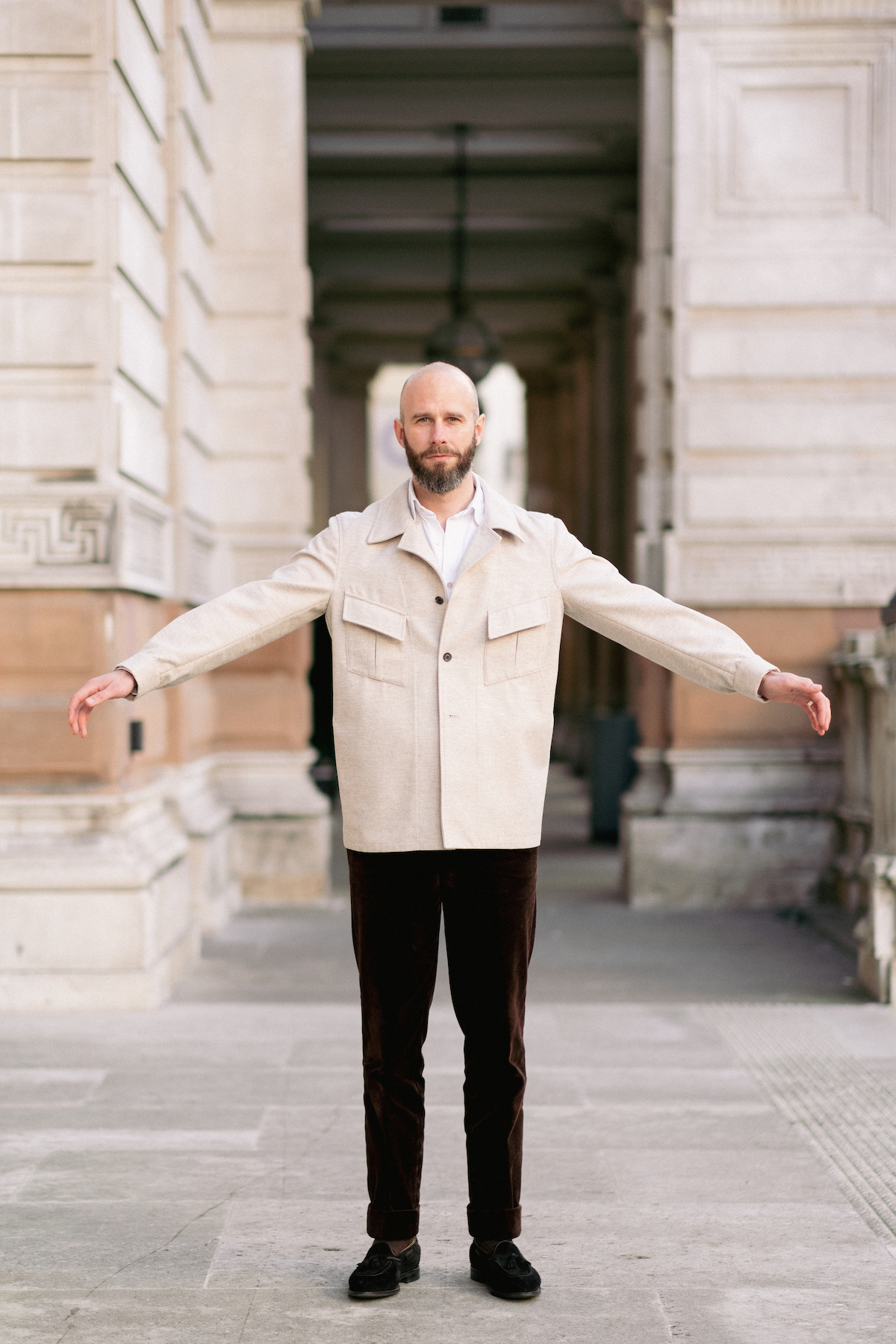
It has quite a dramatic collar, one most commonly on traditional safari jackets. The breast pockets are quite low on the chest, and the buttoning is rather high (in fact the central button is almost parallel with those pockets). 

The fit is also very large in the chest. This is most obvious when I have my arms outstretched, as shown in the image below. 

None of these things are too unusual, and the buttoning point in particular is something seen on some work jackets. The body fit is also quite deliberate: one of the things JB always disliked about Arnys jackets was the size in the neck and shoulders, so these are generally smaller in relation to the chest. 

But it’s not a style that fits naturally with other things I wear. I don’t mind loose clothing generally - see my Prologue linen shirt, Adret bomber, or Ramon Puig Guayabera for examples - but they all tend to work with tailoring clothing elsewhere. This doesn't so much.

The process I went through was an experiment, and not one JB is going to offer in the future. So just to be clear, there are two offers today.

The first is buying a piece online, in any size (even from 42 to 60) and any Lutays fabric, delivered in six weeks. If the order is placed in Paris, it's possible to adjust the sleeve and body length. But otherwise it's simple MTO.

The second is a couture experience, which means toile fittings in Paris, at least three appointments, and much more flexibility around design. I had elements of this because I changed the fit so much, and adjusted the finished garment too.

I would struggle to justify the latter experience, given the cost of €4300, although of course I didn't change the design too much in that case. The former is much better, at €1100 for my jacket, and is made in the same place in the same way.

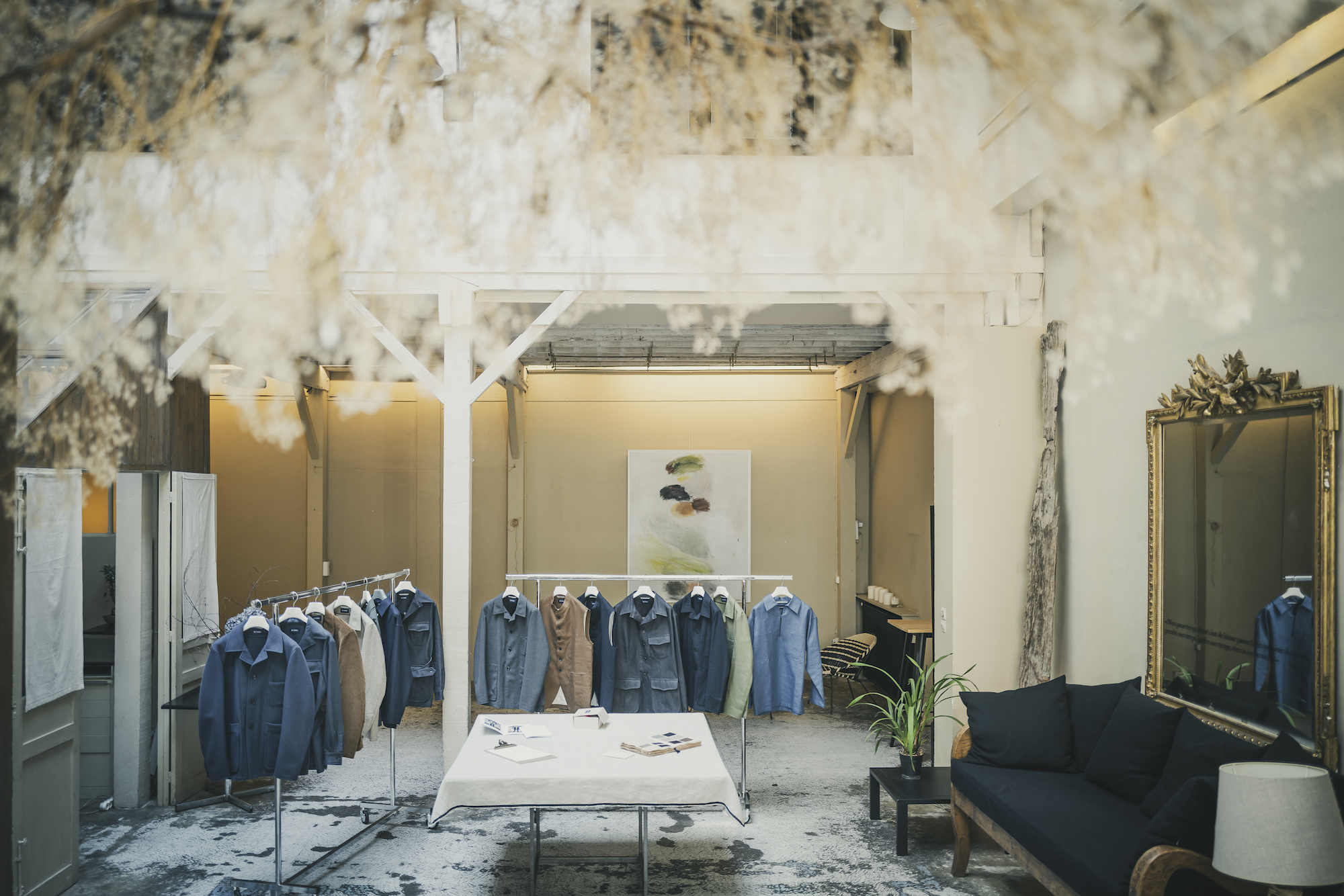
The only thing there is I think you need to be certain about liking the style and the fit. So again I would recommend buying in person in Paris (below) - or on a trunk show. JB has been planning these for a while, but they haven't really been possible during Covid.

Finally, Lutays does have some international partners. You can try the styles at Brio in Beijing, and particular designs have been created for stores in Japan: Q store in Osaka, Strips St. in Tokyo, Wolf and Wolff in Tokyo, and TF Labo in Tokyo.

Lutays.com

Other clothes worn: PS Oxford shirt in white, brown Brisbane Moss trousers, black-suede Edward Green 'Belgravia' loafers

Photography: Mohan Singh

The styles of bow tie – and why they matter

The styles of bow tie – and why they matter

Monday, December 20th 2021
||- Begin Content -||

I rarely wear a bow tie. Certainly never casually, and the number of black tie excuses has dwindled since I left my job in legal journalism. 

Back then there were several award ceremonies a year - we even threw four ourselves - but those have gone and, perhaps surprisingly, little in menswear has taken its place. 

That has started to change a little though, so I thought it was a good opportunity to look more closely at the design and style of bow ties.

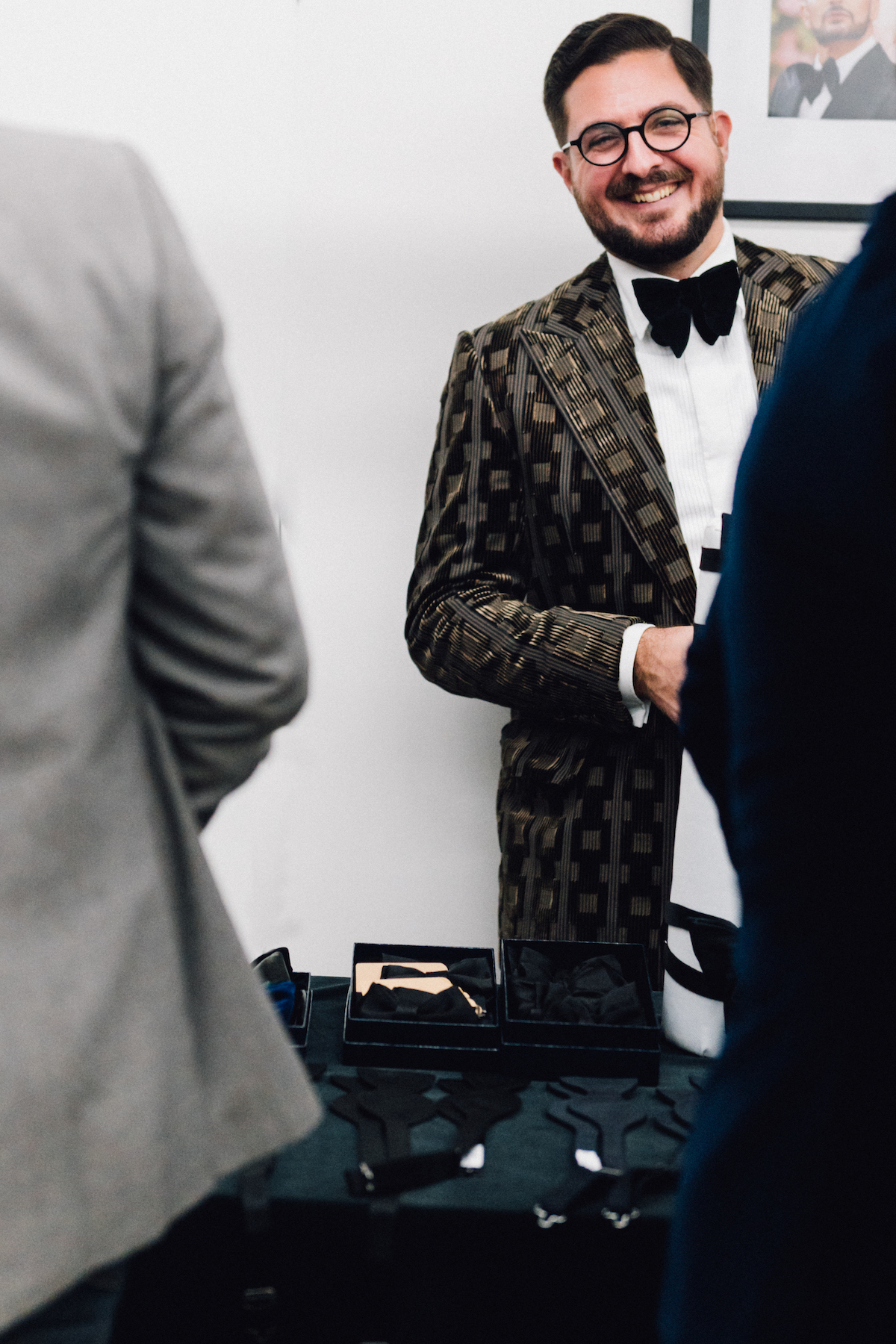
It’s also an excuse to cover Mickael of la Bowtique (below), who certainly deserves it, having done so much to spur interest in bows since he came to London.

Mickael offers three fundamental designs of bow, and they’re also the most common generally. 

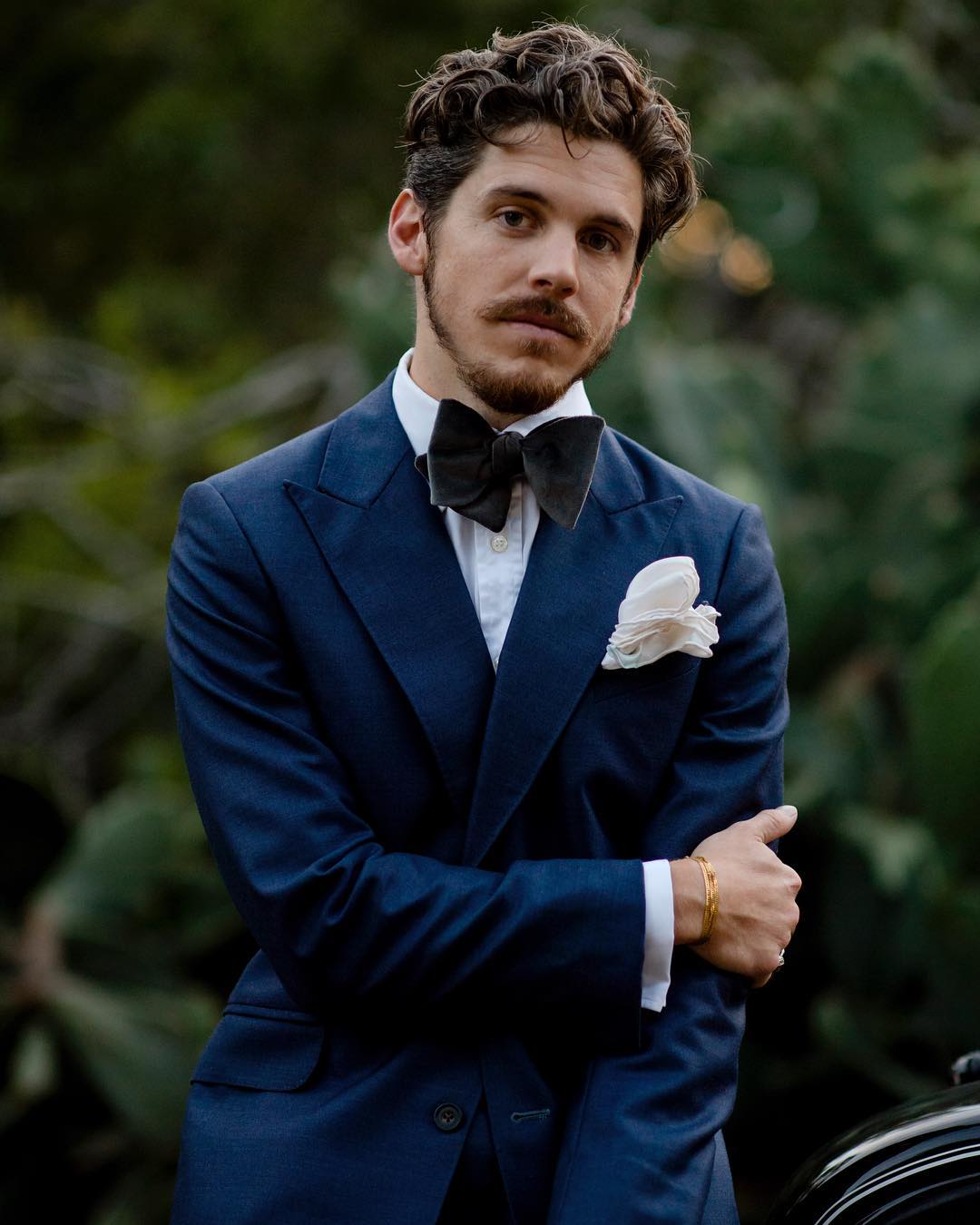
The first is the butterfly shape, where each end of the bow curves outwards from the bottleneck in the middle. This is the most popular and today considered the classic style. Mickael is wearing a butterfly above.

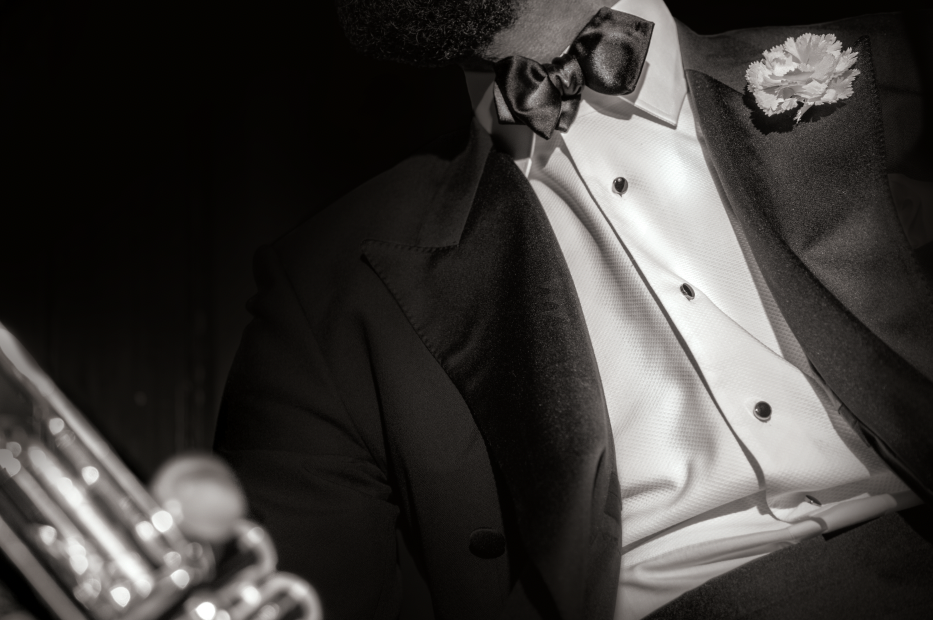
The second is the batwing, where the bow itself is straight - though of course it doesn’t look it when tied. This is the most traditional shape but quite unusual today. This is worn in the top image below.

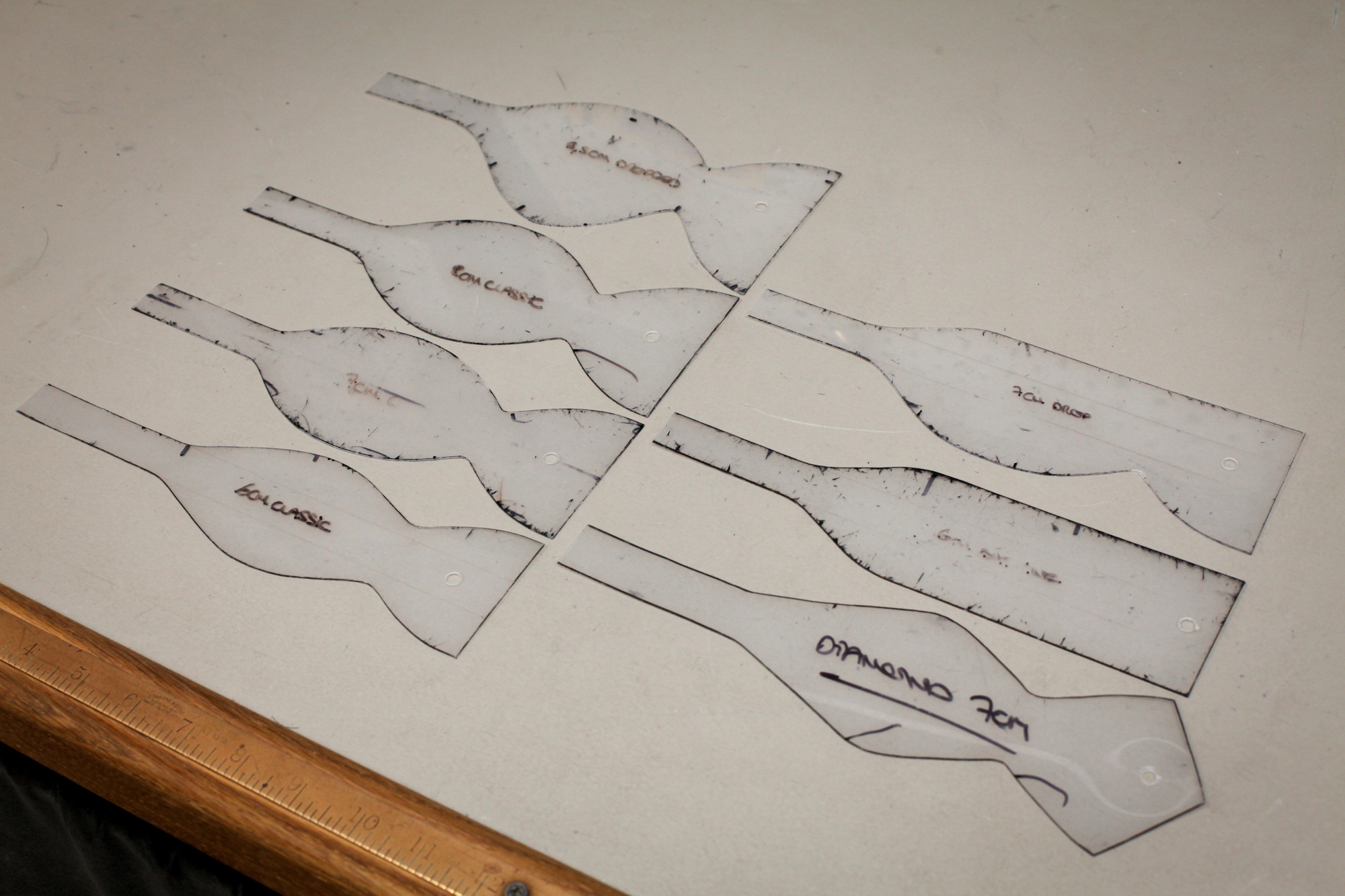
And the third is the diamond, where the ends of the bow are pointed, so that when tied, each side looks uneven. This is unusual but also perhaps appears more easy and relaxed. The diamond is shown in the second image below, followed by (more usefully) a comparison of the different patterns. 

There are many other variants, including bows designed to sit underneath the collar (above), and string bows that hang down from it. Mickael has made many of them at the prompting of clients - usually an email with an image and the subject line ‘Can you make this?’

However, I think the more interesting variations are the tweaks to those three classic styles. Particularly the butterfly. 

The most obvious change is in the size of the bow (height, not width). Mickael’s classic bow is 7cm high at the outer edge, which is pretty average. You get one or two smaller than that, and then quite a few larger. 

A little bigger, say 8cm, is a subtle change. Once you get beyond that it starts to become more of a statement. 

Which is why at the larger sizes, the bottom of the bow is made larger, but not the top. This is usually referred to as a ‘dropped’ style. 

You can see this with the bow below. The total height is 9.5cm, but the top half is still 4cm; only the bottom has been enlarged to 5.5cm. 

This is a more subtle way of adding size. It stops the bow looking too seventies, and is also more practical, as it stops the top of the bow pointing into the chin. 

You can achieve some of this style by simply pulling down the two ends of the bow, so that they point downwards a little. (This has been done to some extent in the top two images of this article.) But it’s much better if the bow itself is dropped. 

I think it’s also more stylish to play with the height in this manner, than with the width. 

It would be intuitive to buy a longer bow tie - or adjust an adjustable one to be longer - in order to make a bigger bow. But actually, the width is best kept in proportion to the wearer. 

The general rule there is that a bow’s width should align with the outer edges of the wearer’s eyes. It’s when this isn’t followed that bow ties can begin to look silly: a clown’s bow tie may be high but it’s also very, very wide. 

Consider Buzz from The Anthology below, wearing a 9.5cm dropped bow. This is a big size relative to Buzz’s stature, but it doesn’t look big because the width is still proportionate. 

You can start to see how the proportions of a bow tie have something in common with both tailoring and with eyewear. 

Just like the lapels and shoulders of the jacket surrounding the bow, the physical proportions of the wearer - not just height, but breadth, neck, features - should be taken into account. Keep them all in balance, and be a laggard when it comes to fashion trends: if you're going to move that way, do it slowly.

The similarity with eyewear is that because a bow tie is close to the face, very small changes make a big difference. It’s not quite as bad as glasses, where 1mm is a normal change and 2mm a big one. But still we’re talking in terms of half centimetres. 

The other obvious variation is the material of the bow. 

Now in general, the rule with black tie is that the bow should match the facings of the dinner jacket. So satin with satin, grosgrain with grosgrain. That goes for velvet jackets too - unless the facing is in velvet (like mine) and then there’s more room to play. 

As ever with rules, this is a good starting point, but there’s also elegance in playing with contrasting textures. It’s certainly a lot better than bright colours: try a black velvet as an alternative to grosgrain, before scarlet or purple. 

Grey velvet can even be nice, as seen on Robert Spangle above. As with most elements of black tie, it works because it’s a change in tone and texture rather than colour - almost muted black rather than a new hue. 

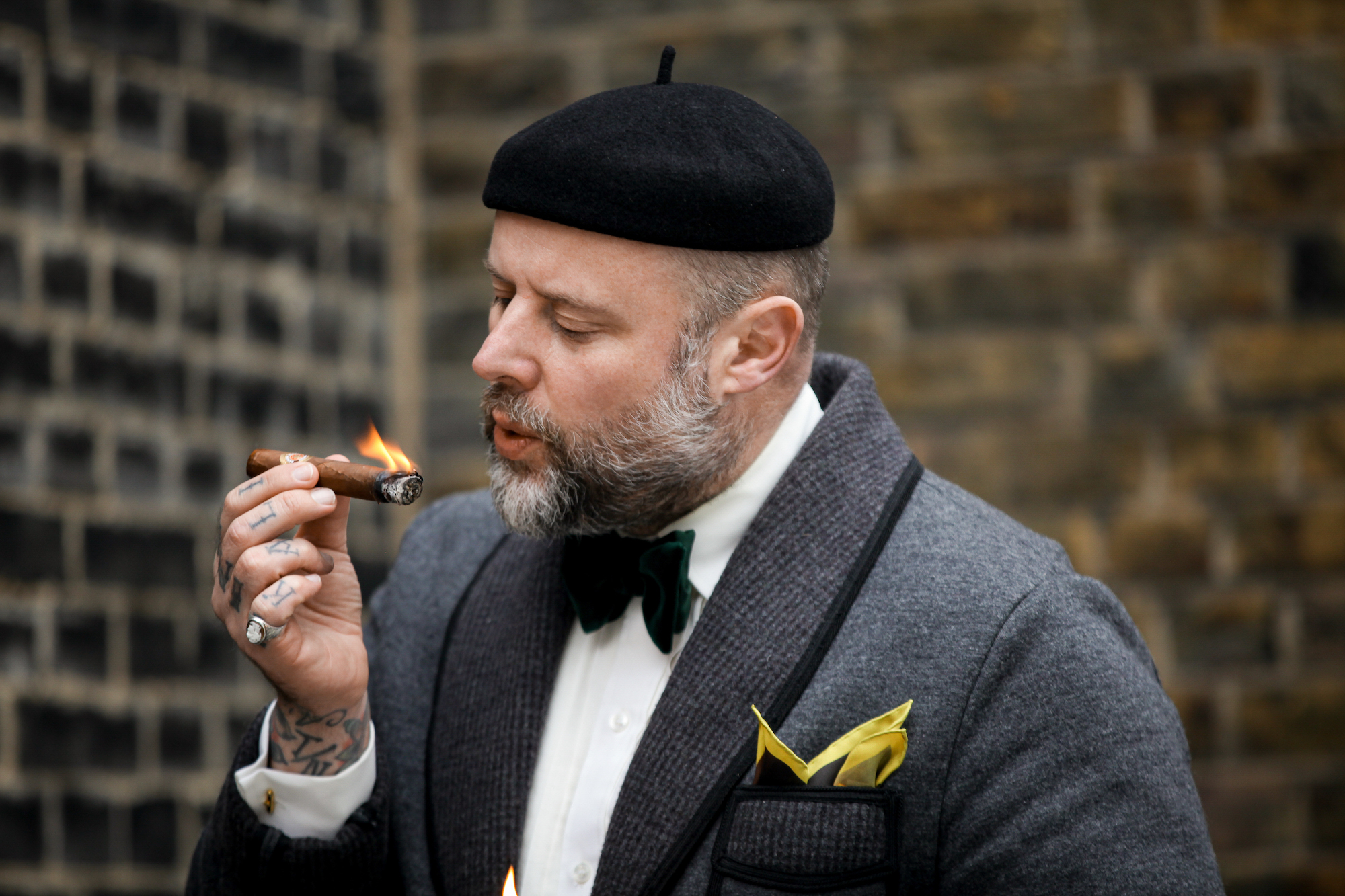
I find green (below) or burgundy velvet is nice when the outfit is no longer strictly black tie, and so there's other colour elsewhere.

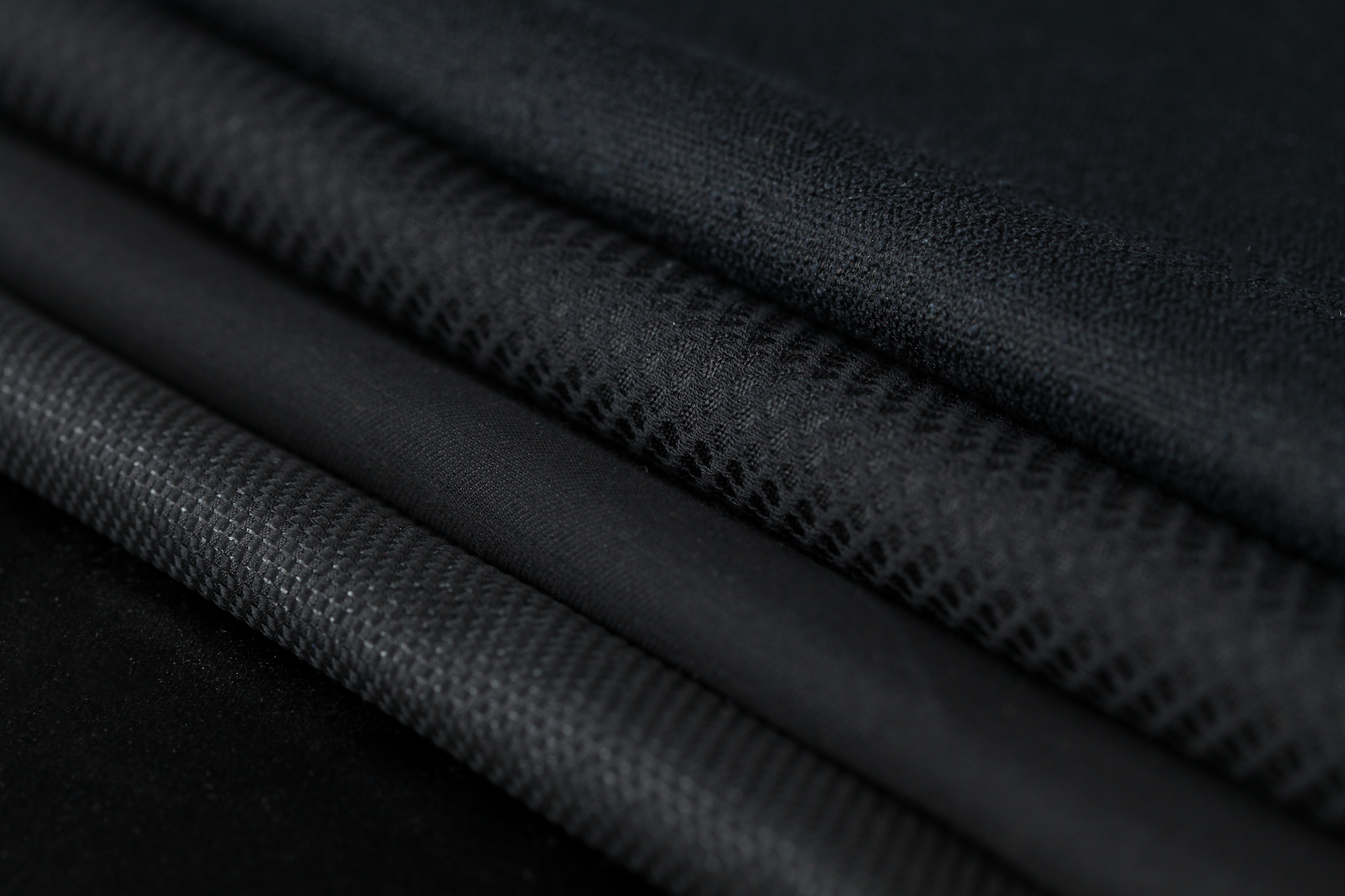
There are also a few different silks other than the basic satin and grosgrain - with some Mickael's shown above. There’s silk barathea, hopsack, and slubby silks. There’s silk mixed with lurex, - which gives it a bit of sparkle - and waffle weaves. 

However, other than possibly a slubby silk for something casual, I would stick with grosgrain and satin. And of those two,  I’ve always felt grosgrain was the most elegant - both because it's more subtle and because satin is always used on cheap rental tuxes.

Silks can also be heavier or lighter. Usually heavy silks are too stiff, however, and are only used for really large bows - such as the one Mickael made for Marc Jacobs (below). 

And there is variation of the interlining, though as with neckties, it’s usually nicer to have a lighter lining so you’re wearing the silk, rather than the lining. 

There should be more emphasis on bow ties, given how central they are to black tie. 

It’s not uncommon for a bespoke spoke customer to spend £5k on a tux but then plump for a standard off-the-shelf bow. And to agonise over every aspect of the tux’s design, but hardly consider the shape of the thing closest to his face. 

Mickael is doing great work to try and bring back this focus, and I’ll cover more about his work - as well as the bow tie I commissioned - in a second piece.  

Below is a further comparison of different styles and shapes - all made by la Bowtique, as are the ones above. More on the la Bowtique website here

Medium butterfly (7cm height)
Large butterfly (8cm height)
L-R: Large dropped butterfly, medium butterfly, diamond
Diamond-end bow
Batwing bow
Dropped batwing

A visit to Molloy & Sons

A visit to Molloy & Sons

Friday, December 17th 2021
||- Begin Content -||

Living in a city, it’s easy to become reliant on Google Maps. After all, it will tell you not only where things are, but how to get there, which train is fastest, and the branches of Pret a Manger along on the way. 

Driving from Belfast to Donegal a couple of months ago - from one side of the island of Ireland to the other - Google Maps did us proud. There was no loss of reception, no wrong turnings, and correct indication that there wasn’t a single Pret. 

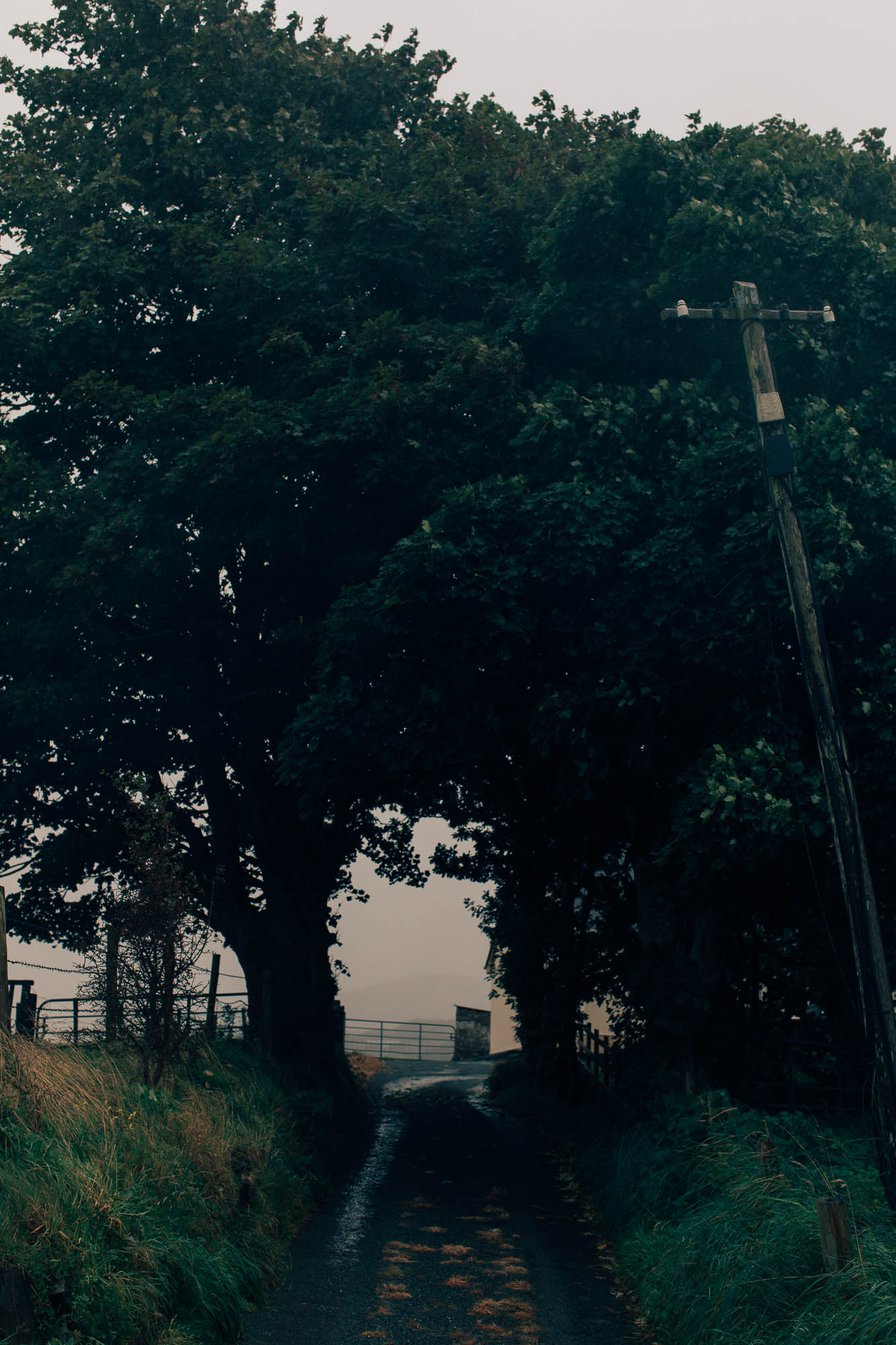
But once we skirted the Donegal coast, things got a bit sketchy. Reception dropped in and out; landmarks quickly became hidden behind hills. For some reason the road signs always seemed to point to the middle of a field. 

I’d found John Molloy Woollen Mills on Google, and that’s where we were headed. Then I remembered something in Kieran’s email about it.

Yes. OK. He did explain that there was more than one Molloy mill in the area. The result of a family being in the wool business for over a century, and branching out in different directions.

On re-reading the email, it turned out Kieran had actually provided a Google Maps link. Smart man.

We needed to turn right after Molloy Woollen Mills, head down a single-lane road, take the second right onto a smaller road, and then stop where the road runs out. 

Except the reception dropped out again. We missed the turning. So down to the service station to make a three-point turn, and try again. 

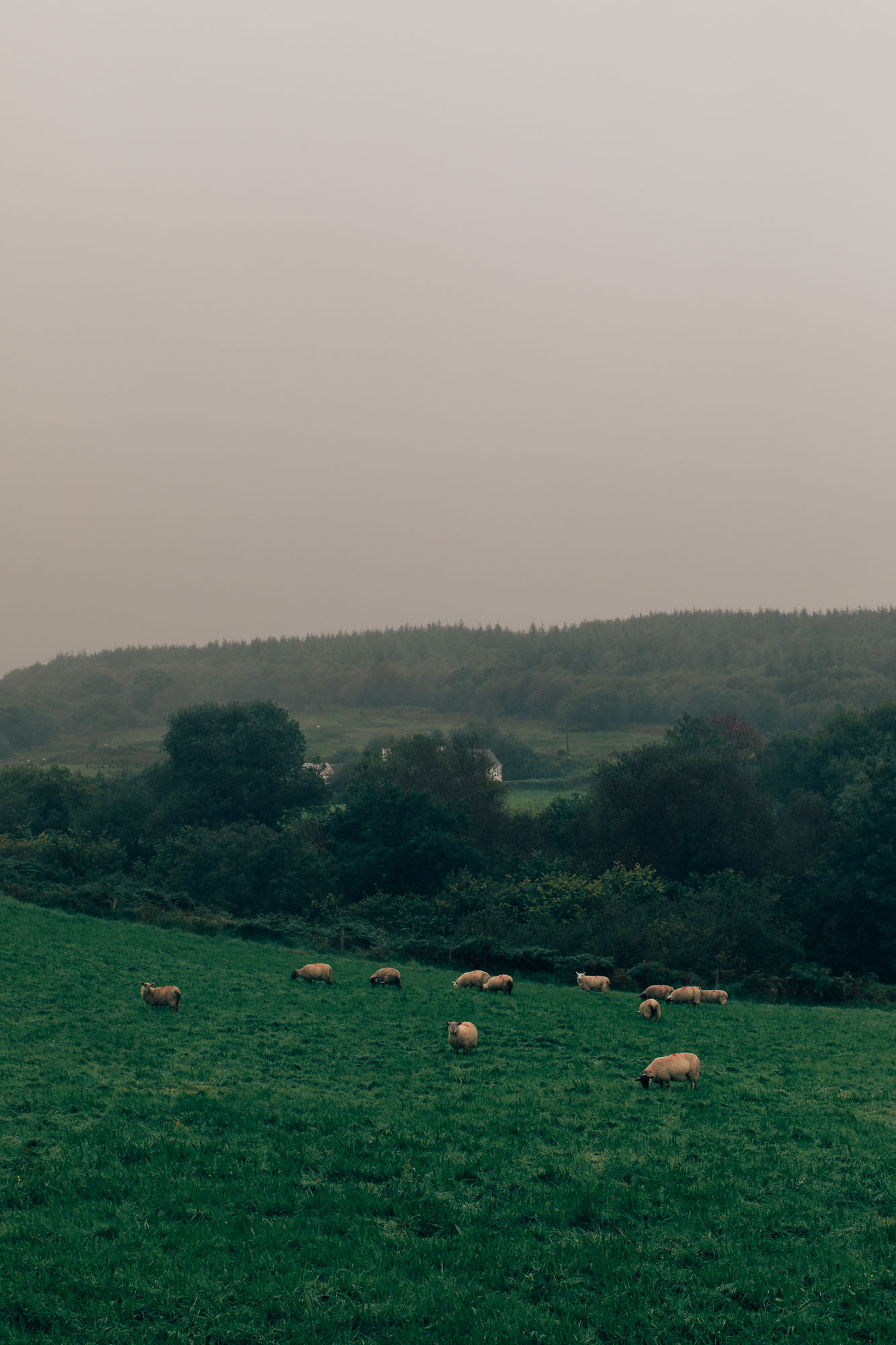
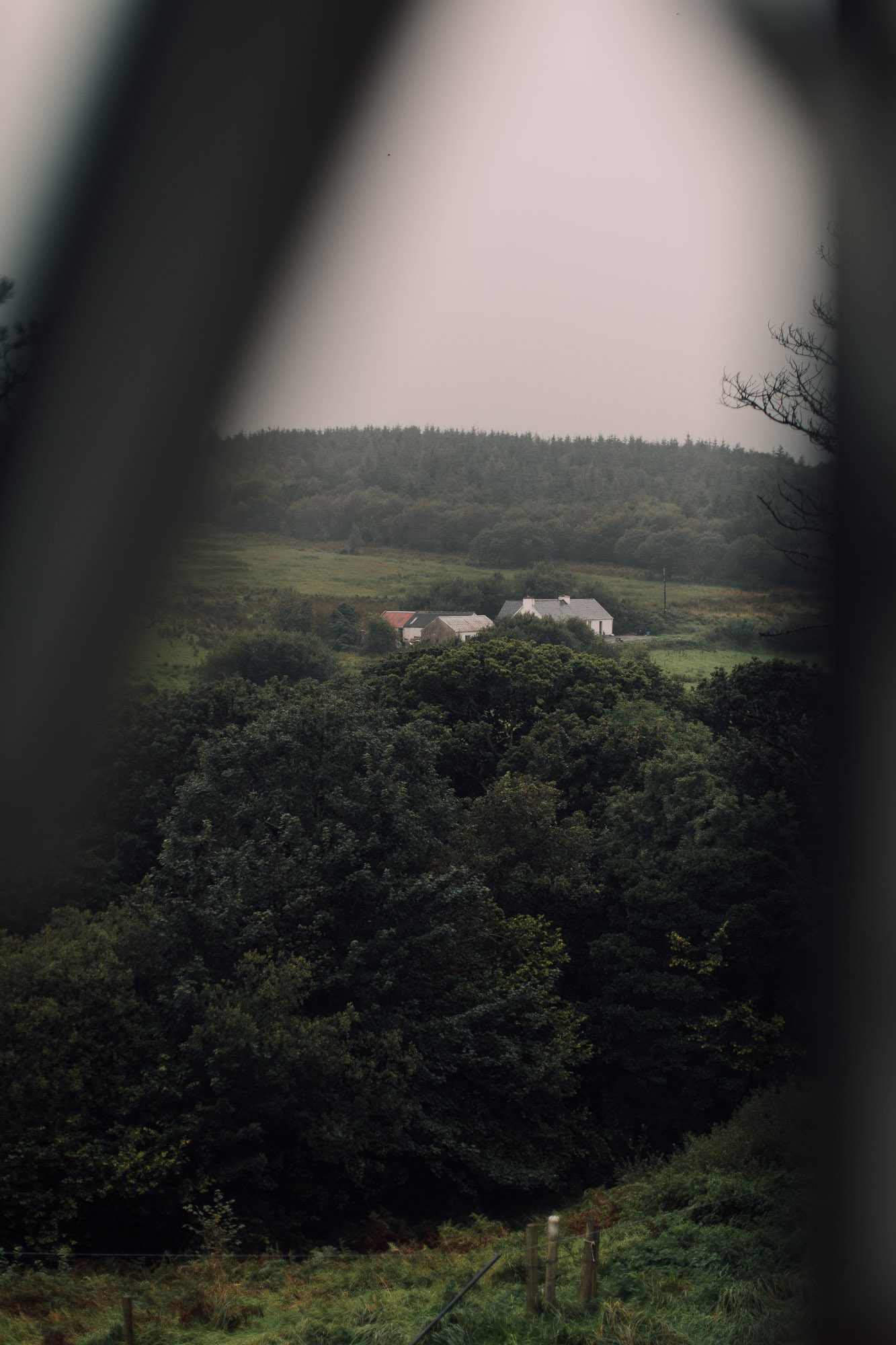
The mist wasn’t helping. It was increasingly clear why this was wool country: wet, green and hilly. The sheep were loving it, but not much else could be farmed on those slopes. 

Finally we were on the right road. We crept up the hill and turned in at the first cluster of buildings. 

A house, two big barns. This could be it, but there was no sign, not even on the front door. Could this be the best-known Donegal mill in the world? Beloved of everyone from Beams to Paul Stuart to 18 East?

Jamie (Ferguson, photographer, driving) hung back as I walked to the door and rang the buzzer. There was a nervous minute, which felt more like fifteen, as I imagined the irate Irish farmer that was going to appear. 

The mist seemed to hang closer. The temperature dropped two degrees. 

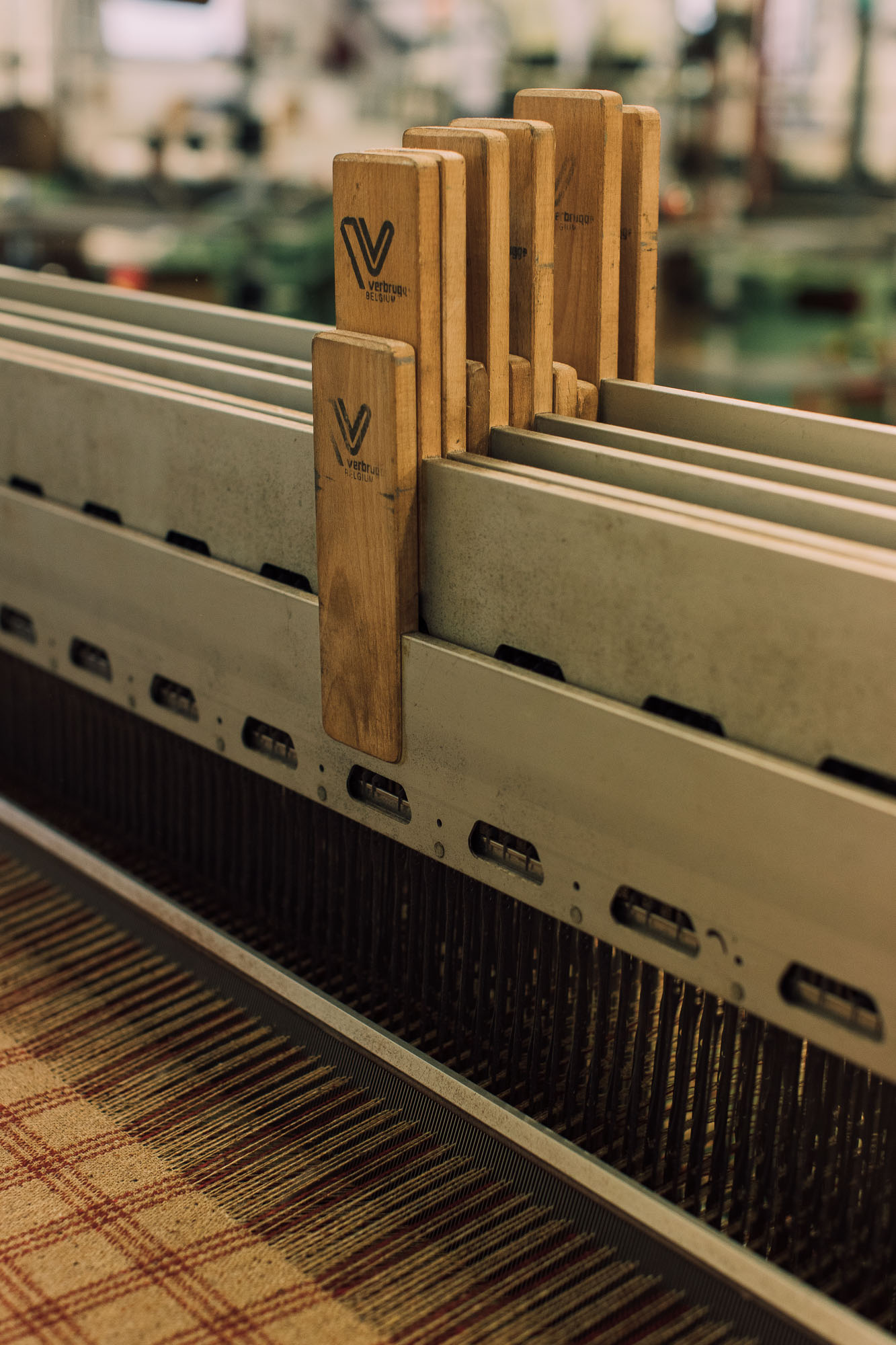
Then Kieran Molloy appeared at the door, smiling warmly. And behind him were two floors of barn housing an entire mill’s worth of weaving machinery, violently clacking away. 

We were offered tea. 

Mills and factories seem to stay in my memory when they’re in beautiful or unusual locations.

Vitale Barberis Canonico, with the switchback mountains behind, is particularly vivid. John Smedley too, where the approach runs alongside its own custom-cut canal. 

Molloy & Sons is now one of those, and only partially because of that nervous minute in the mist. 

It’s the kind of place other brands tend to come and stay too. Kieran told us many stories, including those of the Beams team arriving in force to place their orders. The Molloy family house next door perpetually had one Beams staff member in the kitchen, just hanging out and drinking coffee. 

Then again, they had driven even further than us - from Dublin rather than Belfast. Four hours rather than three. 

That’s Kieran above. He is the sixth generation in the business, and runs it today with his father Shaun. 

“The first two generations were hand weavers, just for the local area,” says Kieran. “Then in the 1920s the third generation started exporting to the US - we used to have a showroom on 5th Avenue, opposite the New York Public Library.”

The business then split up, with one side focusing on knitting, while Kieran’s stayed with weaving. It’s Kieran’s uncle who runs Molloy Woollen Mills down the road, which is the knitting business. 

“My grandfather was still doing just hand weaving when he started - and I remember his first big export order was for 22,000 metres to Japan,” says Kieran. “That was an intense time. He was doing hand-knitted Arran sweaters too, all made locally.”

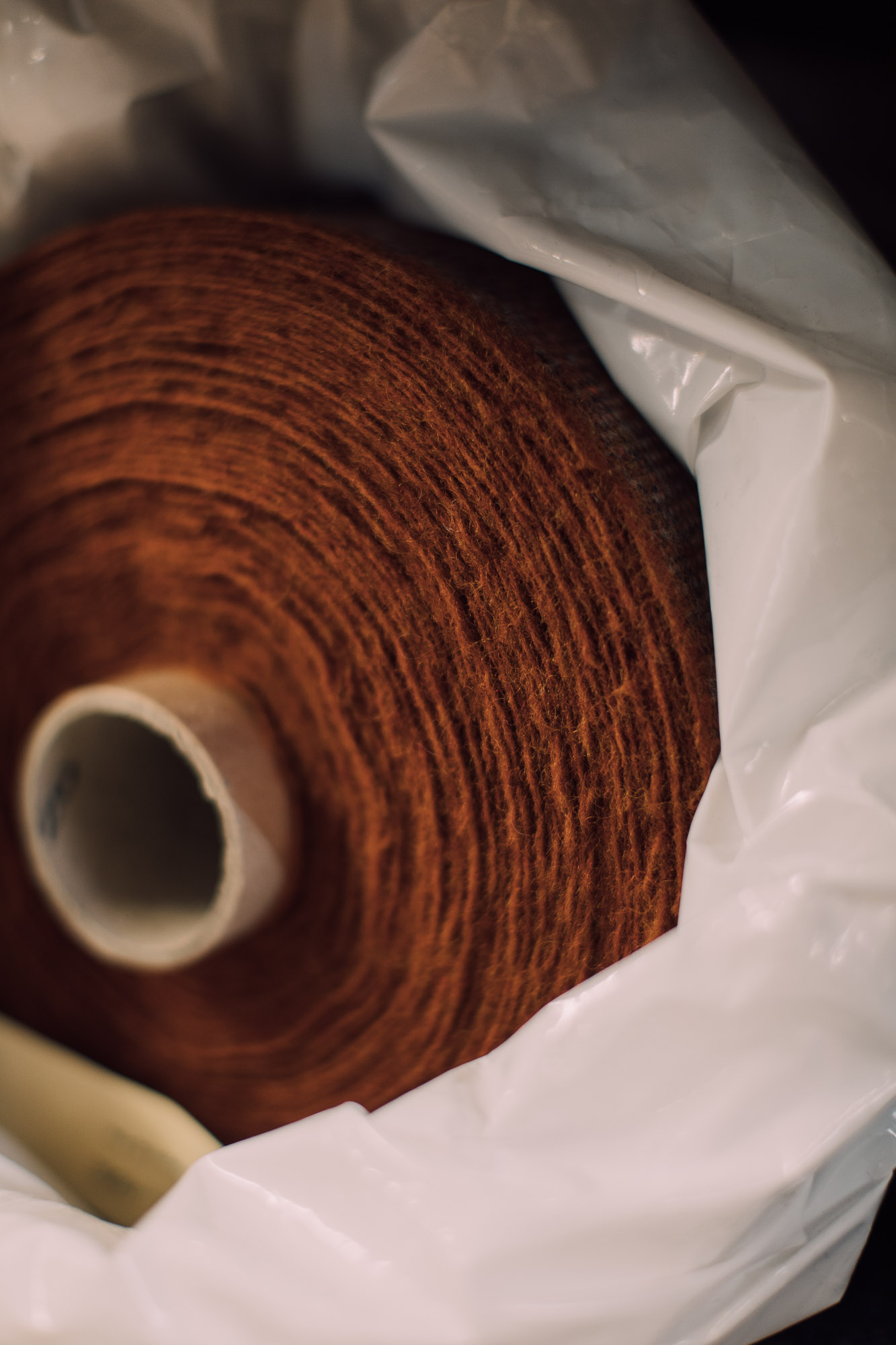
Since the 1990s Molloy & Sons has steadily modernised, and today it’s fair to say that the small buildings house a very modern weaving operation - a pocket-sized version of anything you'd find in Huddersfield or Biella. 

The vast majority of the business is weaving to order for brands, such as Beams. Only about 5% is made for cut lengths - which is why you don’t see bunches around very often. 

“We are trying to change that a little,” says Kieran. “One thing we learnt during the pandemic was the value of diversification - to having different streams of revenue.”

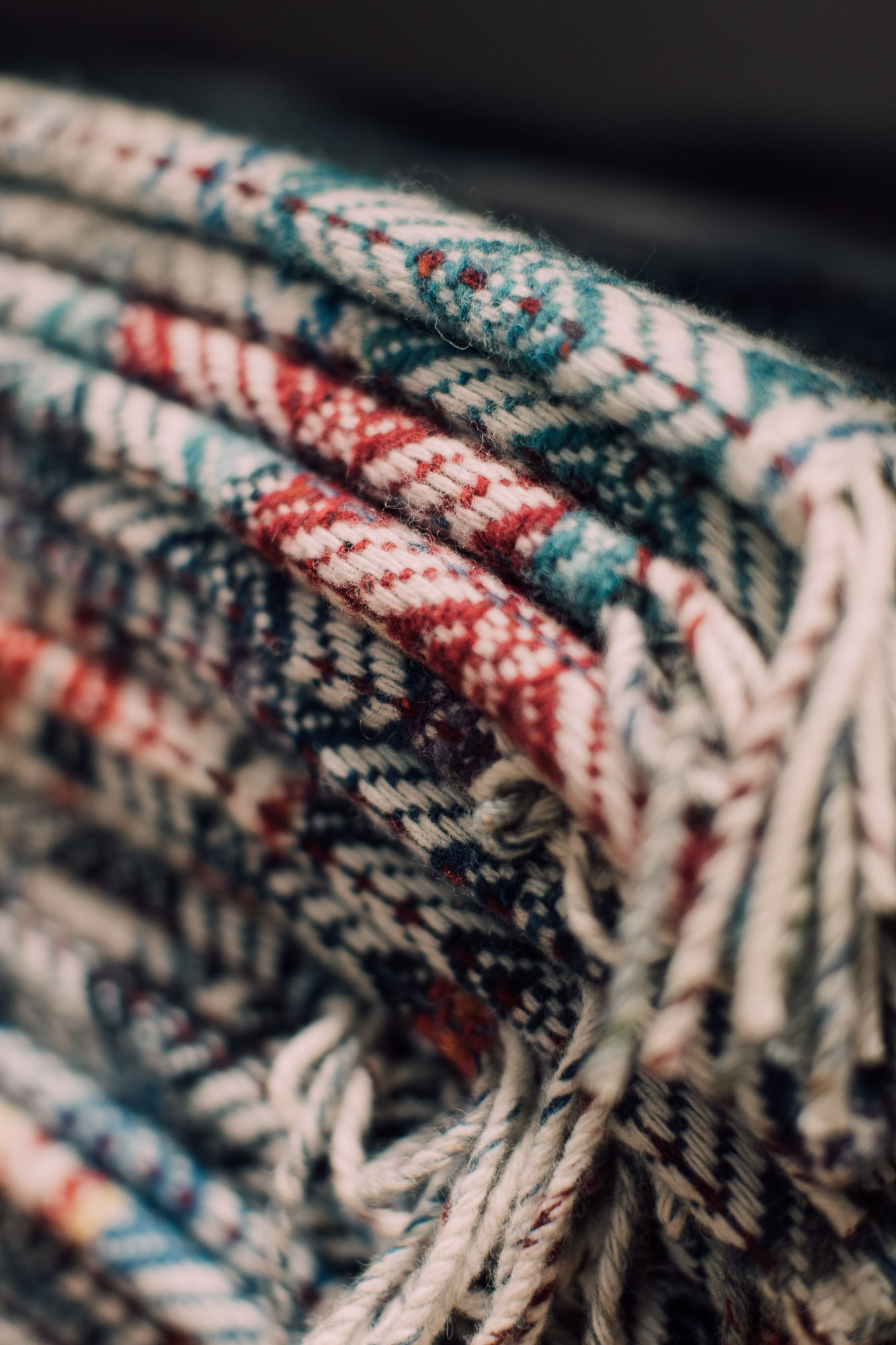
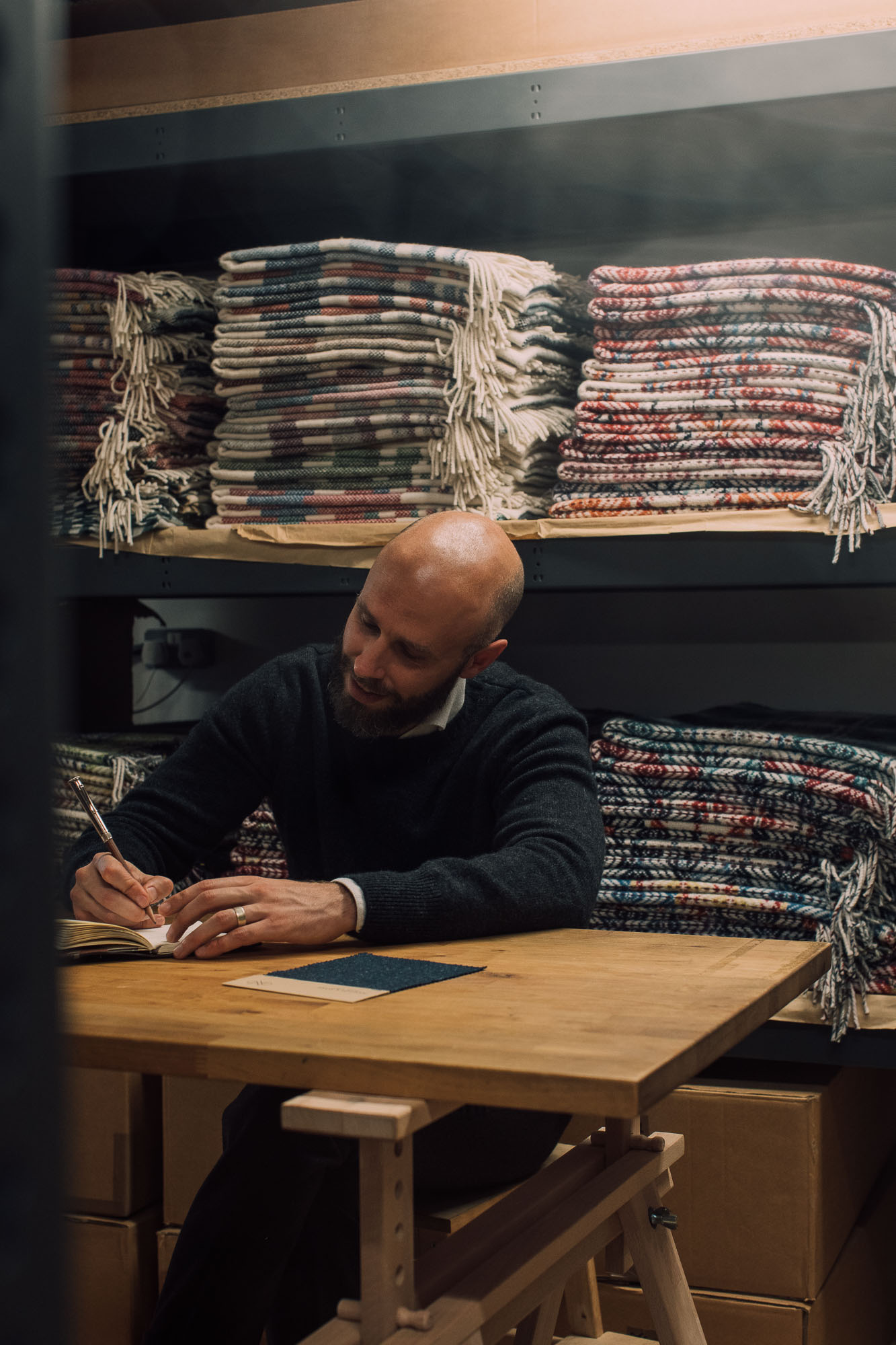
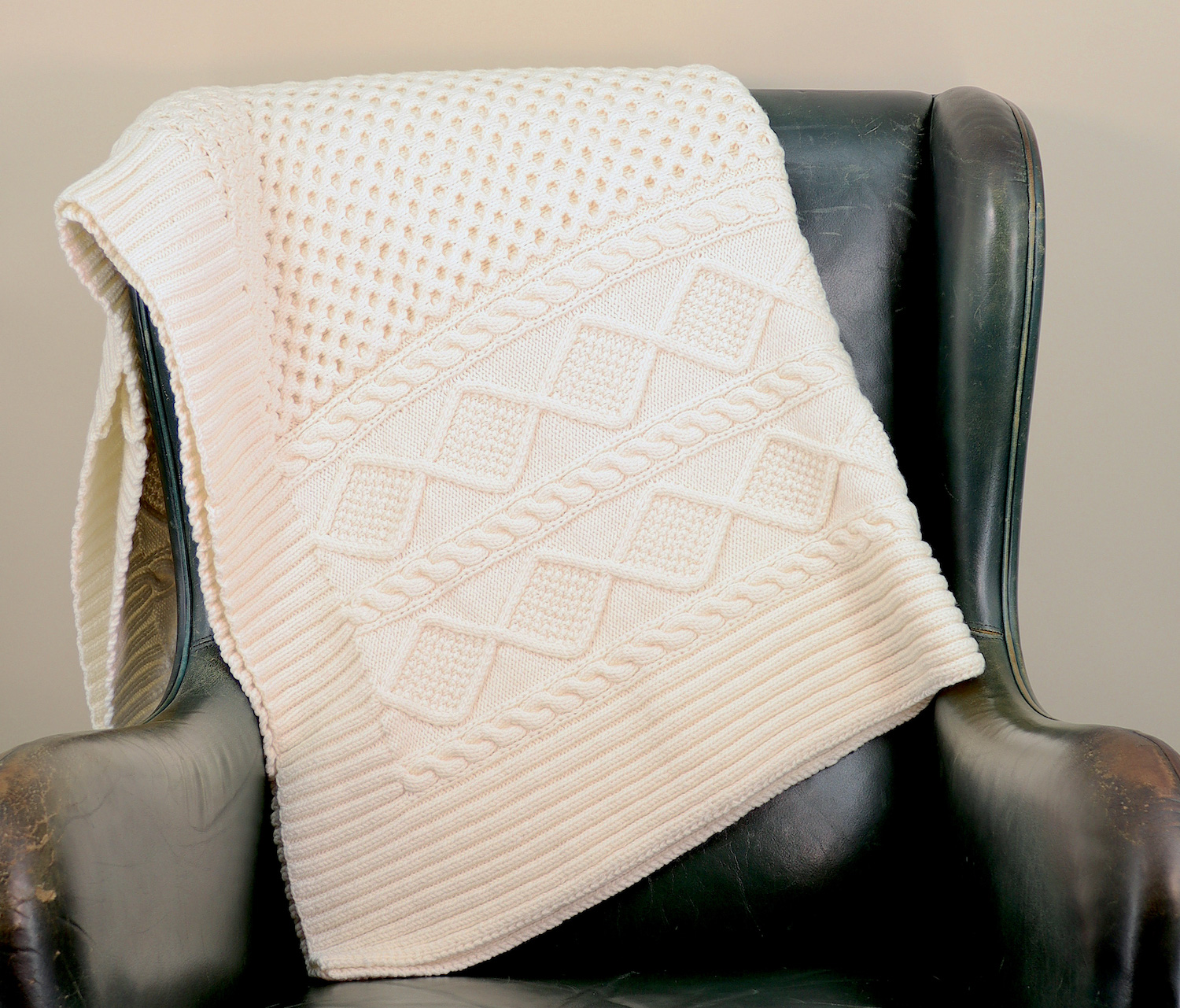
One way they’ve diversified is selling more of their own blankets (pictured above). “We’ve always done a few - it’s a good way to use up extra yarn," says Kieran. "But we’ve been doing more recently, selling them in local markets and giving people something to buy when they visit. And we’re just beginning to wholesale them as well, which is one more revenue stream.”

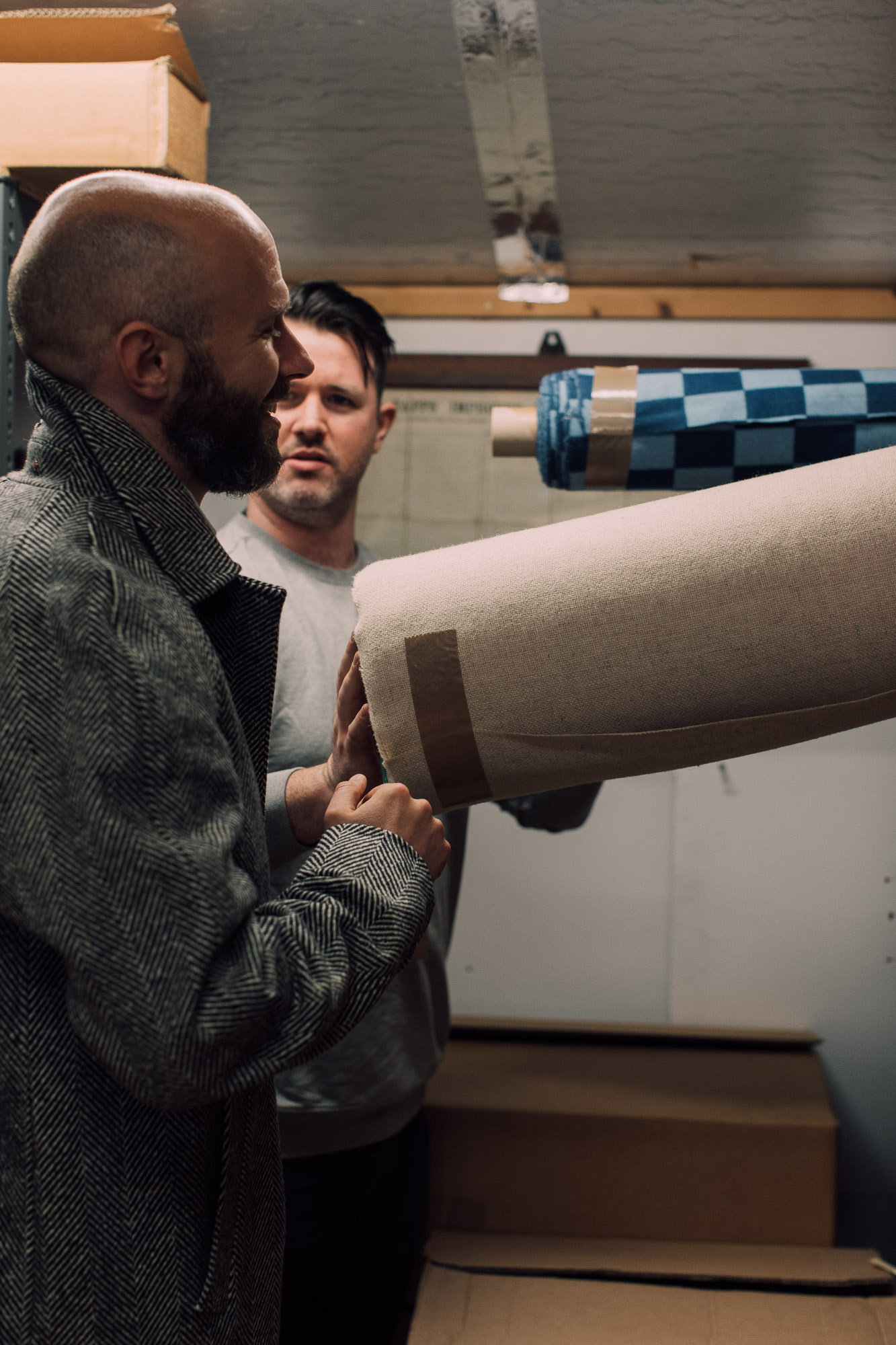
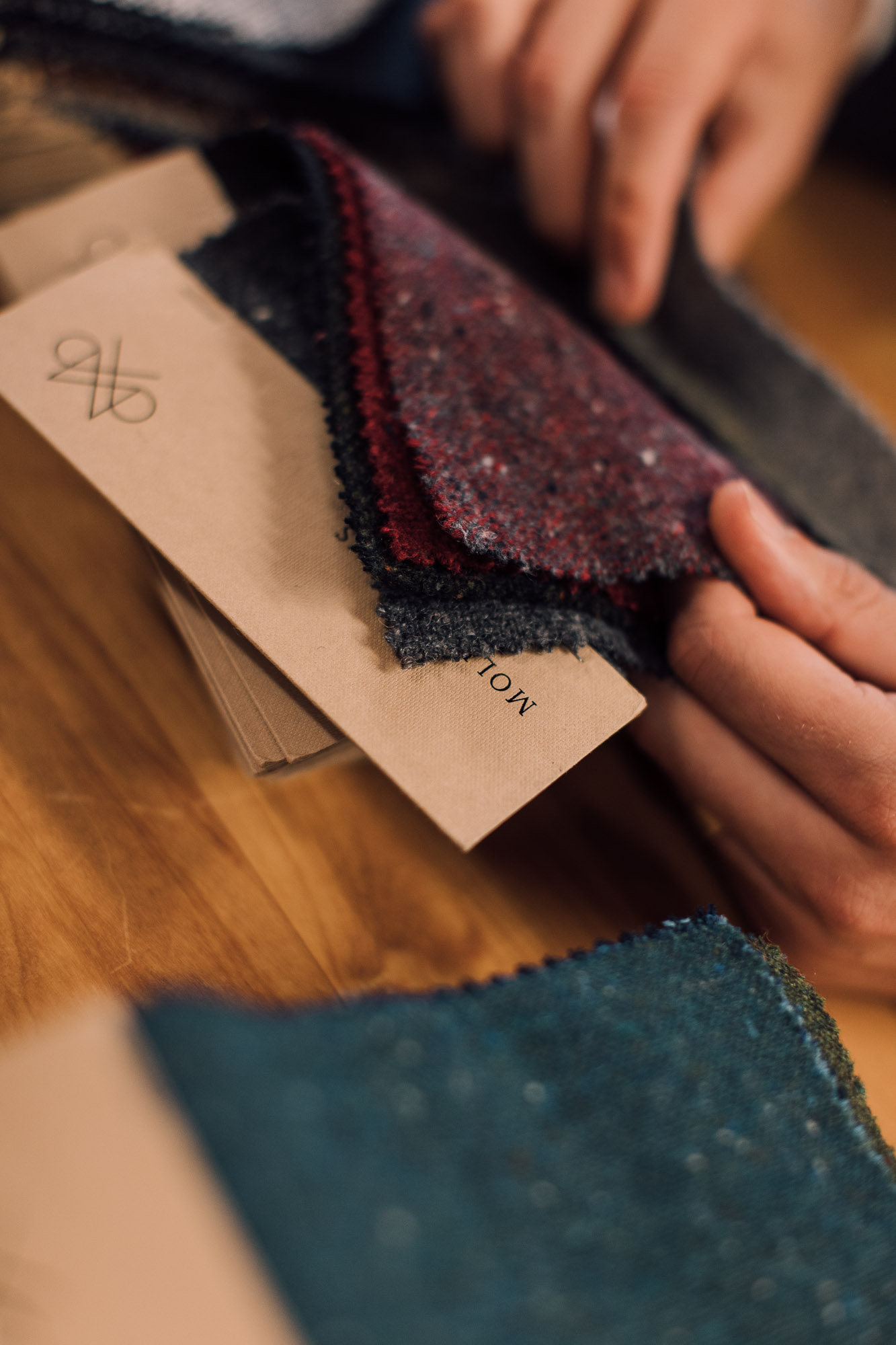
I was quite tempted by several of the bolts of Molloy Donegal tweed, which was sitting next to us on the first floor. One of them was a nice oatmeal colour and a mixture of wool and jute. It turned out the latter came from old coffee bags. 

“The bags were originally used by Starbucks,” says Kieran. “Jute is quite effective when mixed with wool - it gives the cloth a rugged texture and a natural variation.” (It is the bolt I am holding in the image above, talking to Kieran.)

I can see why brands come to Molloy to develop interesting Donegals: the small scale and personal involvement of Kieran and Shaun has to make it both easy and fun. 

The only cloth of theirs I’ve tried personally is the one used recently for the overcoat I designed with The Anthology - shown here. That was lovely, and though I’ve no reason to look beyond the mill we use for our Donegal coat with Private White, if I was looking to develop a new Donegal project, I’d certainly look to Molloy. 

“I think the drive for authenticity and local production has helped us in recent years,” says Kieran. “We recently started a hand-weaving course in Kilcar down the road, which is the first one there’s been in Ireland since 1980. And we’re starting a Donegal Tweed Association, to try and get greater protection for the craft.

"It's the support of customers like Permanent Style readers that keeps that going.”

More on the history of Molloy & Sons, including a video and some great old photos, on their News page here

Blankets, throws, and the tweed itself are available through the Molloy webshop here.

Jamie and I would like to thank Kieran and Shaun for their hospitality. We’ll definitely be back. Though this time I’m bringing an actual map. 

Photography: Jamie Ferguson @jfk_man

The guide to Shetland sweaters: Part two, brands

The guide to Shetland sweaters: Part two, brands

||- Begin Content -||

By Manish Puri

"In part one of this guide, we discussed the general styles and constructions of Shetland jumpers, which I hope helped provide context for which jumper is right for you and why.

Now that you’ve eaten your metaphorical vegetables, you’re allowed to have dessert. In part two, we look in some detail at 11 retailers that sell high-quality Shetland knits of various styles, shades and shagginess.

Despite all my research and numerous, generous conversations with kindly retailers I’m reminded of what the famed Shetland wearer, and competent physicist, Albert Einstein once said: “The more I learn, the more I realize how much I don't know”. Which is to say dear reader that I know this guide is not, and could never hope to be, complete. Why not The Andover Shop? Will people be howling that I’ve not included Howlin’? Don’t these look good value for a heavy brushed knit?

I’m sure you’ll understand that I had to draw the line somewhere, otherwise I could become the first medical case of someone who was kept awake by counting sheep.

So, once the last full stop of this guide is typed, I pass the knitting needle baton to you. The Permanent Style readers are a font of taste and erudition, and I know they can be relied upon to highlight any hidden gems or unforgiveable omissions in the comments section. Ultimately my hope is that this guide, much like a Shetland knit, will mould, soften, and improve over time with the odd annual repair job to patch a hole here and there.

With that I present our 11 brands prioritised by nothing more than the alphabet.
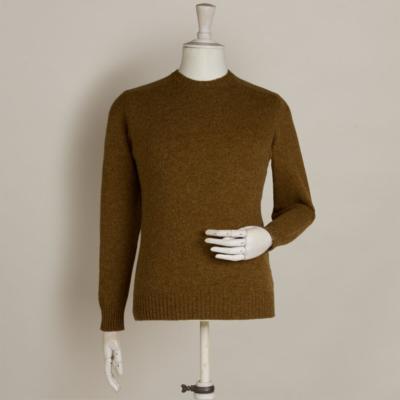
Anderson & Sheppard

£225 to £265

A staple of Anderson & Sheppard’s knitwear offering, and a long-standing fixture of Permanent Style’s winter wardrobe, their classic Shetland comes in an impressive range of rich autumnal hues that I always find agonising to choose between.

The A&S shape is a little unusual, being both longer in the body than most and slimmer in the arms. The idea is that this helps when wearing tailoring. One can slip into a jacket in the same manner as sliding into a hot bath after a hard day shopping for Shetland sweaters. It also stretches a little – which is usually remedied by a gentle soak – and for this reason some customers size down.

New this winter, Anderson & Sheppard are also offering a super soft ‘Shetland’ that is akin to my memory these days – shorter and fuzzier. The jumper is styled to mimic a classic Shetland knit but is made from a brushed geelong wool, which makes it a good option for those who don’t find Shetland comfortable next to the skin.

Unlike the classic A&S it only comes in three, neutral colours – brown, grey, and natural – that would work equally well with ensembles that you either want to keep tonal or want to tone down. Compared to the classic, I found the fit to be more cropped in the body, looser in the arms and higher on the neck. The knit is also a little tighter than the classic (meaning it should stretch less) so it’s advised to take your usual size.
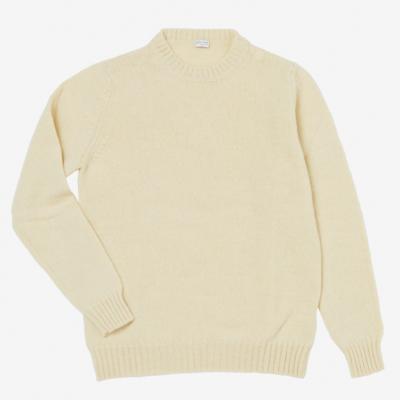
Anglo-Italian

£150

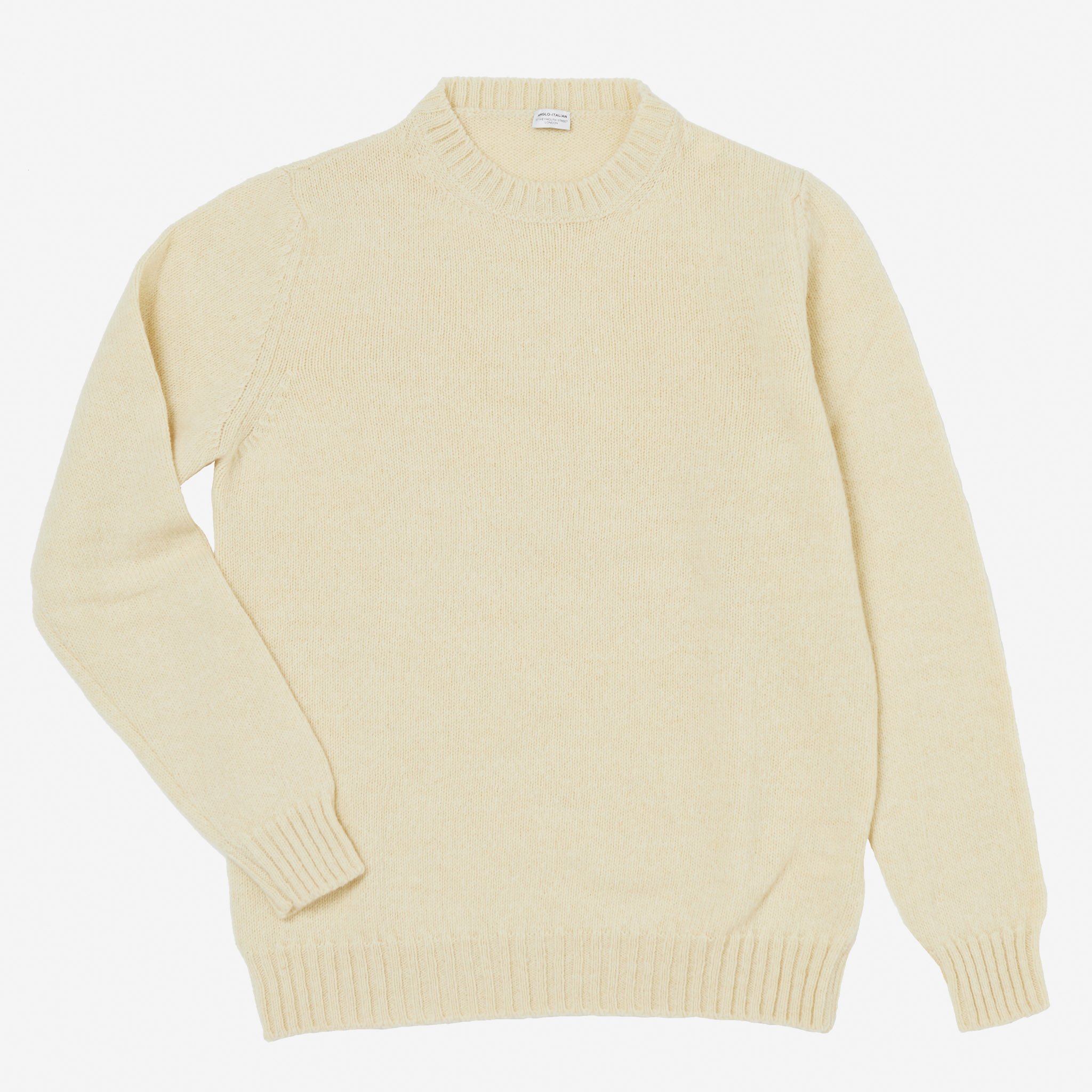
The clue is in the name. Since their formation in 2017, Anglo-Italian have taken inspiration from the best of both British and Italian tailoring and style. Their Shetland jumper is no exception in that it is made from Shetland yarn (naturally) but, unlike many of the other brands who also make their jumpers in Scotland, is knit in Tuscany. This doesn’t make much difference to the feel of the knit, but does mean Anglo can create their own design, and here the neck is noticeably tighter and higher.

The colour palette is in keeping with the restraint and simple elegance of the rest of Anglo-Italian’s collection – blue, green, grey, cream and charcoal. The sleeve length is just a shade longer than the other brands, which works well for me as I personally like folding back the cuff on knitwear to show a finger of shirt.
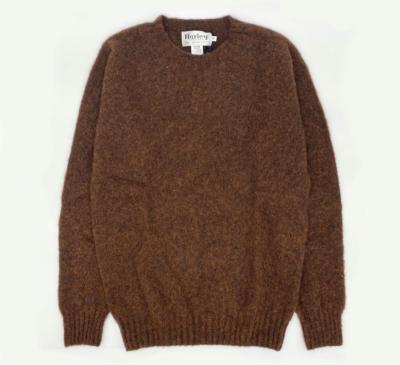
Bosie / Harley

£92 to £125

Of all the retailers and makers of Shetland knits in this guide, none can match the variety and value that Bosie offer.

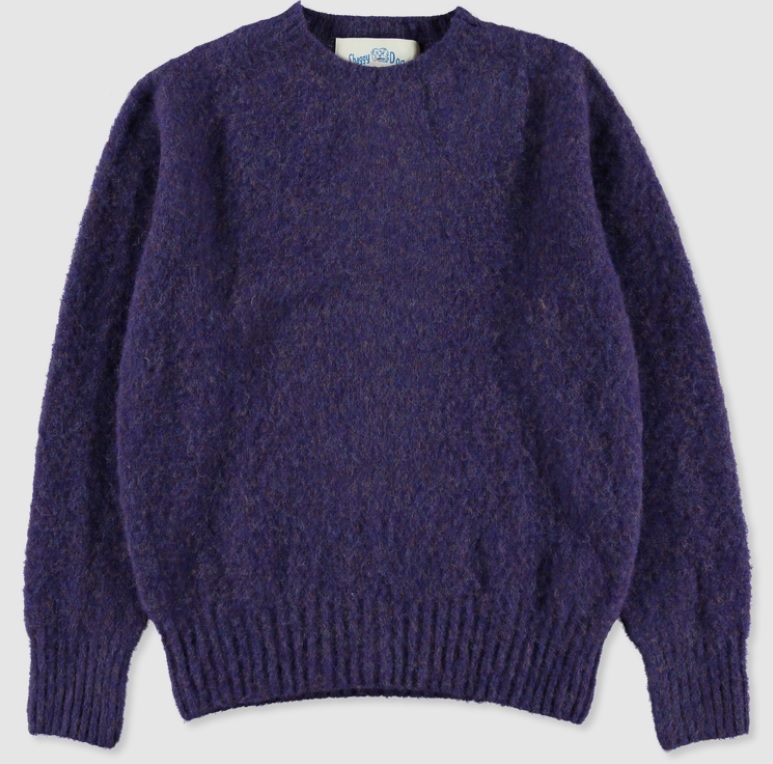
Their standard crew neck (which is made under the Harley of Scotland label) comes in at around £92 and is knitted in the round, with a saddle shoulder, longer length and a slightly lower fitting and wider neckline. The characteristics of the yarns are similar to Anderson & Sheppard in that they are peppered with mustard and ochre and liquorice flecks. The same yarn is used to make up the Harley roll/polo neck (£100).

Bosie also offer the Harley jumpers in a luxury yarn (adding 12% cashmere for £125) and a Voe True yarn (from £96 to £110). Voe True is made from undyed virgin wool taken from Voe sheep - the original Shetland breed that braves the cliffs of Voe to feast on the seaweed beds of the shoreline. There is a lovely variety of stone and brown colourings across the undyed fleece of Voe and each will have natural markings and highlights that are unique to it. I think this is the best choice for someone that wants a Shetland jumper that is as authentic and natural as possible.

Jumpers made from Voe True yarn are sold by Bosie in a two ply ‘Sherpa’ model (virtually all the jumpers we have featured are also  two ply) and, more unusually, in a one ply ‘Everest’ model – the name coming from its association with Sir Edmund Hilary, who wore Voe knitwear as thermals on his ascent of Mount Everest in 1953.

Perhaps most unusual of all, Bosie offer a brushing service where they can brush your chosen Shetland wool jumper (except those made from Voe True) two, three or four times for £12 to £24.
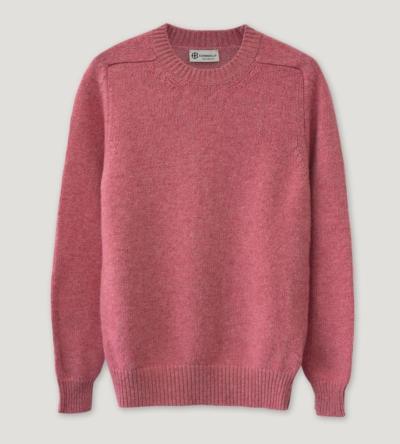
Connolly

£195

Masochists are present in every walk of life. Even in the serene and cosy world of woollen knitwear there are those who sneer at delicate flowers like me that prefer their knitwear to be fluffy and itch-free. For those that would sooner rub Brillo pads on their nipples than wear merino wool I courteously invite you to skip this listing.

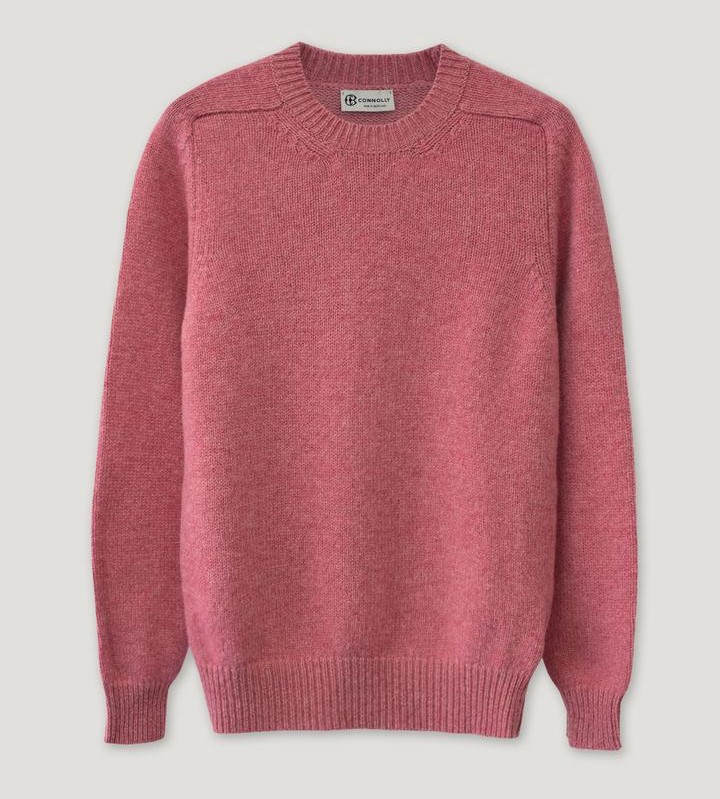
For those that prefer un-chafed nipples, Connolly carry a jumper that is 75% Shetland wool and 25% cashmere. The jumper is plated which means it is knitted so the textured wool sits on the surface whilst the cashmere is smuggled inside – the masochists will never know.  Connolly are known for using some of the most luxurious materials available so the price point of this jumper, given the amount of cashmere knitted in, is great value.

It’s constructed with a saddle shoulder and a reassuringly chunky, high neckline. I’ve sometimes found that lower necklines, whilst adept at holding the front collar points in place, neglect to grip the rear of the collar inside the jumper. The Connolly one neatly bands the collar at an equal height all the way round, which shouldn’t bring me as much pleasure as it does but what can you do?

The jumpers are available in a pink and a green that remind me of summers eating rose and pistachio kulfi at my grandmother’s house.

Another Connolly piece to highlight is a navy Shetland wool/cashmere, five-button, sleeveless V-neck cardigan (£380). What I like most about it is the finishing around the edges. The placket is deeper than standard, which helps alleviate some of the stress on the waist button, which I find can pull if you’re not arrow-straight in the belly.

The sleeve heads are also finished with tight, deep cuffs – with the jacket off it keeps the upper silhouette clean and sharp, and with a jacket on it helps keep the shirt out of the way of the inside of the sleeve. The cardigan isn’t currently available online but worth checking out in-store if you’re passing through Mayfair.
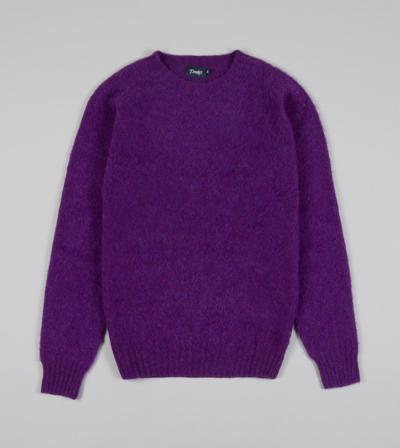
Drake’s

£195

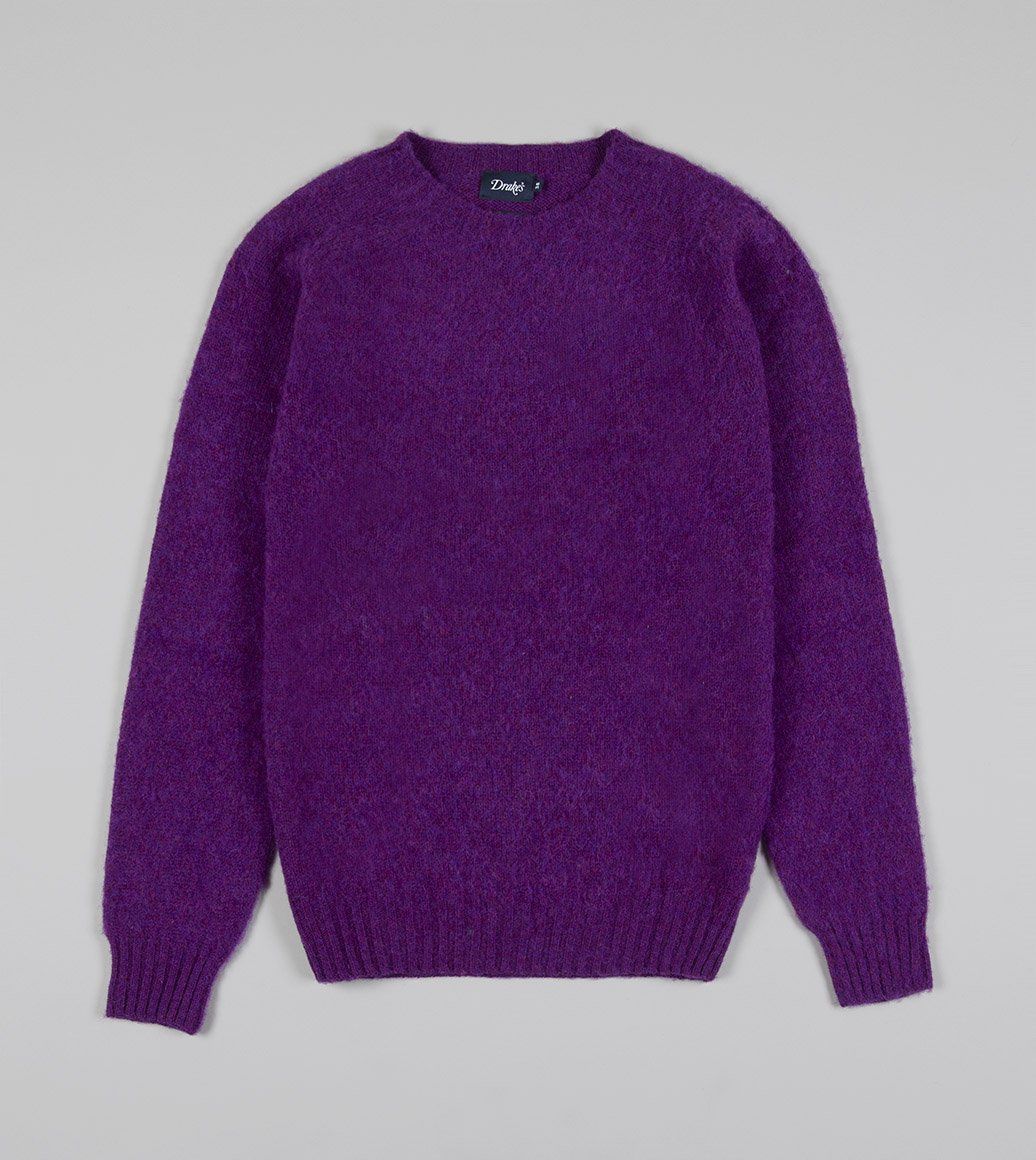
Ever since Drake’s made the transition to a complete-wardrobe retailer the Shetland jumper has been a playful and eye-catching piece in their collections. This year’s offering is no different with a number of bright, jewel-like tones.

The styling pushes Drake’s jumpers towards the casual end of the spectrum - medium brushed, raglan sleeves and a seamless construction for greater comfort. My experience was that the jumpers run just a tad big as well, so I would recommend you consider sizing down.

In fact, I tried one jumper on that was two sizes smaller than my usual and it still looked good – a little slimmer than my tastes these days but not scandalous at all. I found the body length to be the shortest of all the knits we have looked at – ideal if, like me, you prefer a higher waist trouser.

For UK readers that like the J. Press Shaggy Dog (see below) but might baulk at the delivery and various import fees, the Drake’s jumper is the best alternative.
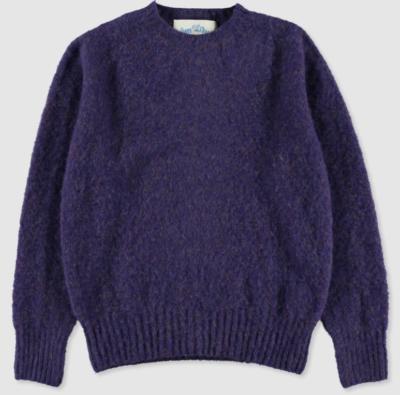
J Press

$245 - $265

Seriously, what is there left to say about the J. Press Shaggy Dog sweater? It’s had more origin stories written about it than Batman. Suffice to say it remains a bona fide Ivy classic, with heavy brushing that creates micro pockets of air that keep the jumper cosy while simultaneously softening both the handle and colour.

And just like Batman, J. Press have franchised the original Shaggy Dog jumper to sate all your Shetland tastes by offering:

  • The crew neck in classic fit with a set-in sleeve ($265)
  • The crew neck in trim fit with a raglan sleeve ($245)
  • The crew neck in classic fit with regimental stripes ($265)
  • The crew neck in trim fit with university stripes or rings ($265)
  • A cardigan in classic fit ($265)
  • A vest in classic fit ($225)
  • Cuffed hats in one and two tone ($60)

The V-neck cardigans, in particular, look terrific and would be great to pair with flannels and an Oxford shirt in place of a shawl collar. And of course, each of these variations is available in a symphony of colours.
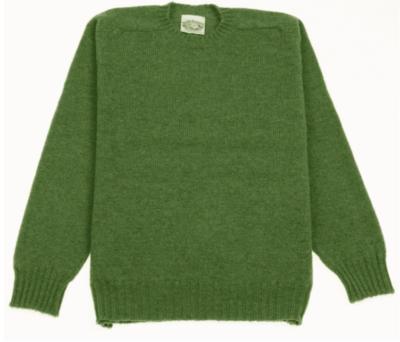
Jamieson’s

£112

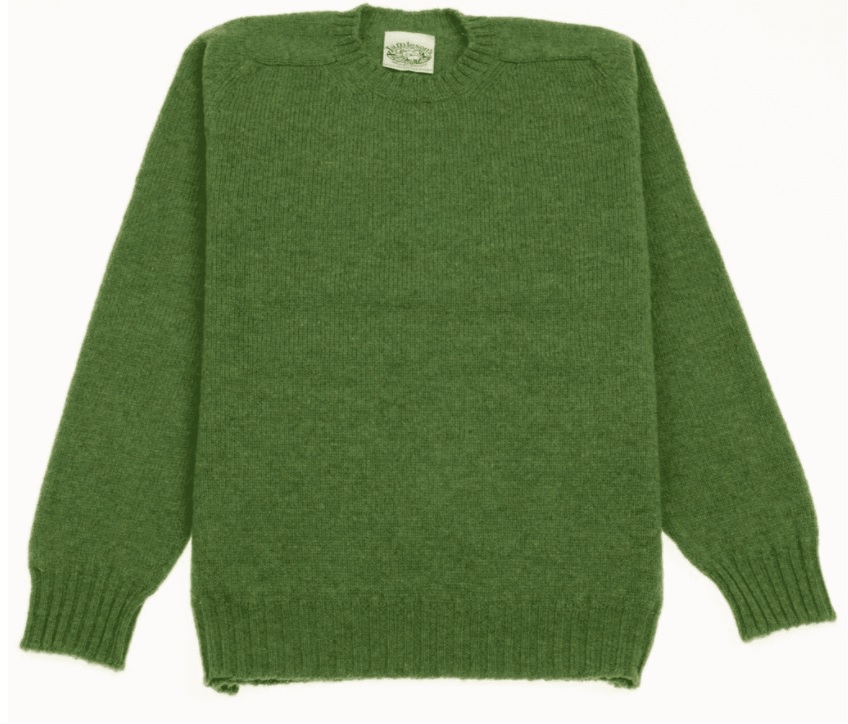
Were I to describe the Jamieson family as woolly-headed I can assure you it wouldn’t be intended as an insult. For five generations, their family business has revolved around Shetland wool and today they are highly unusual in both spinning their own yarn and making their own knitwear.

The Jamieson’s Knitwear website has a good selection of saddle shoulder crew necks and Fair Isle knits that are available direct to consumer. Unlike Harley’s (which is a similar price point – see above) the Jamieson’s jumpers are not seamless, which makes them a little more structured and straighter through the body. As a part-time and pitifully slow knitter, I also love that you can purchase balls of yarn from them should you be skilled in the way of the needle.

Dick’s Edinburgh (who won the Permanent Style award for Best Menswear Shop in 2020) also stock a great range of Jamieson’s Shetland and Fair Isle jumpers alongside knitwear from Harley’s and Laurence J. Smith (see below). This makes Dick’s the only place to experience the differences between the three fine Scottish knitters we have included in this guide.

You can also find a wide variety of Jamieson’s knitwear in traditional and more fashionable styles and colours on End Clothing.
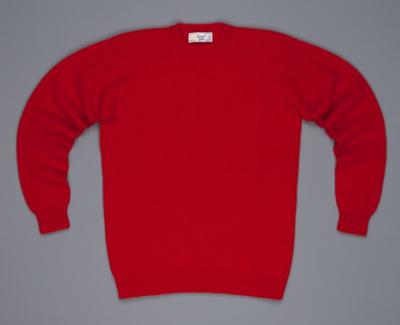
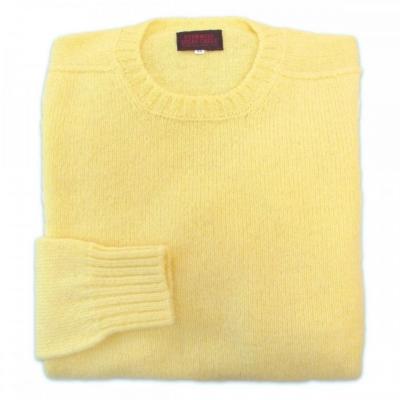
Laurence J Smith

€220

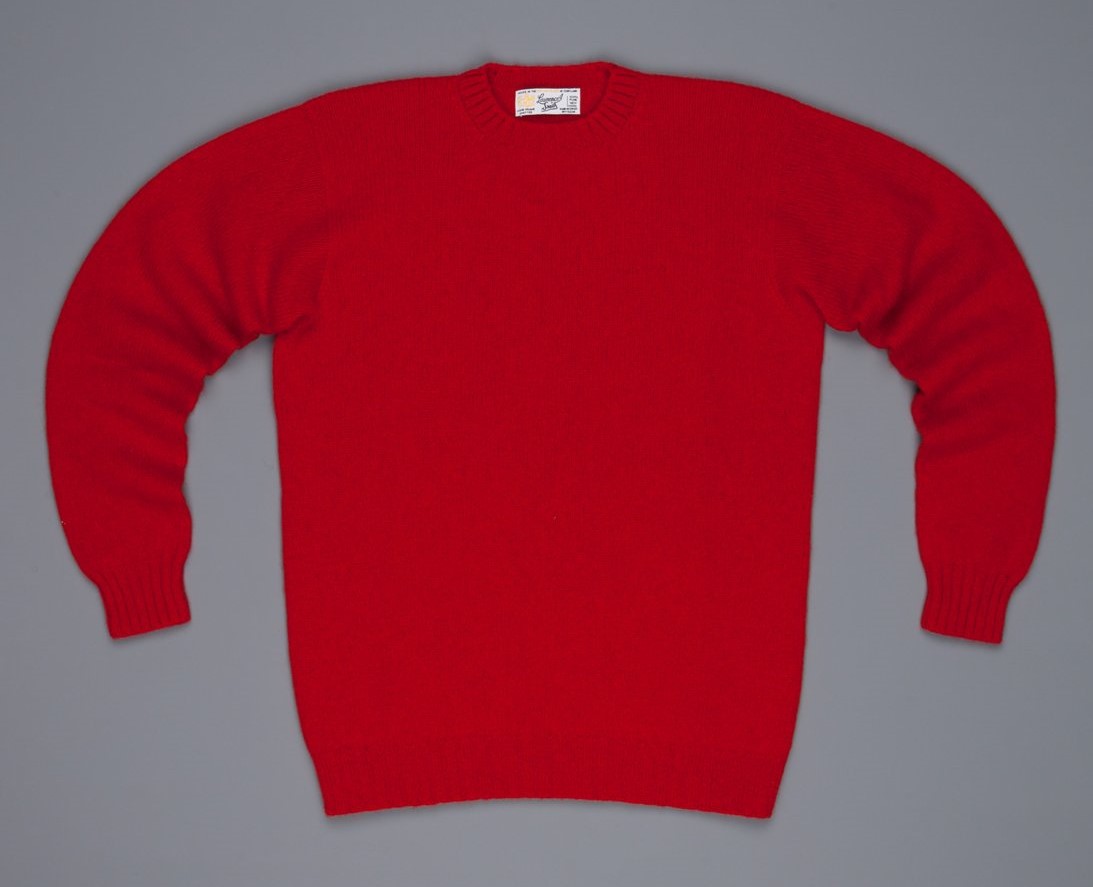
Laurence J Smith, a small Hoswick-based knitter employing around 14 people, is little known in their domestic market because most of its product ends up in Japan. Fortunately, there is one European retailer, Frans Boone, which has their seamless knits in a vibrant array of colours. However, stock is limited, and so indecision is seldom rewarded (as I’ve found to my chagrin).

Dick’s Edinburgh and John Simons in London have both stocked Laurence J. Smith in recent years and hope to carry them again this winter, but at the time of writing were awaiting delivery. The pandemic has brought further challenges to an area of the world where it was never straightforward to manufacture in the first place.

The Laurence J. Smith jumpers are made using hand-framed knitting machines - a slower knitting process that results in a finish that feels closer to a hand-knitted garment. The knits themselves are a little heavier and hardier than most of the jumpers in this guide, which means they take a lot longer to make.

Owning one myself now, I can say that unlike the neat uniformity of a machine knit, the stiches on a hand-frame piece gently fizz with expression – some slightly raised, some flatter, some running like train tracks and some just slipping off the straight and narrow. Of course, this is barely perceptible at a casual (and even a formal) glance but it’s a characteristic that marries well with the textured nature of the wool. A piece for the purist.
O’Connell’s

$175 - $235

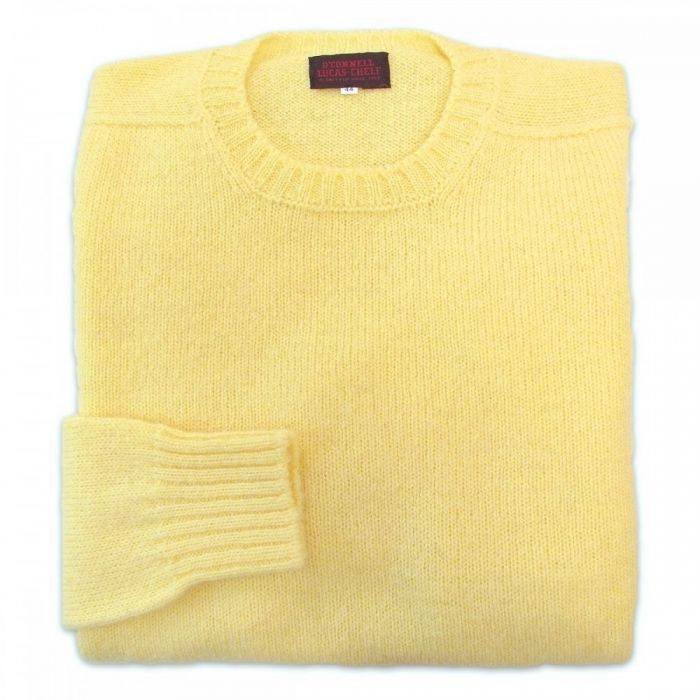
Based in upstate New York, O’Connell’s are one of the few independent trad retailers left in the US and they carry a dizzying range of Shetland sweaters. Across their range, O’Connell’s advice is to take a size up from your standard jacket size.

Their classic saddle shoulder crewneck comes in every imaginable colour in both plain ($195) and cable knit ($225). Like Bosie, O’Connell’s also have a range of undyed Voe True jumpers in plain ($225) and ribbed knit ($235) which highlight the natural beauty and colouring of Shetland fleece. For weightwatchers, O’Connell’s carry a heavier chunky knit ($225) and a lighter, airier seed-stitch knit ($175) – ‘Row 1: Knit 1, purl 1, repeat and Row 2: Purl 1, knit 1, repeat’ for all my fellow knitters out there.

For US readers, O’Connell’s offers the widest range of crew neck jumpers of the brands we’ve looked at. They are also the only retailer that has three different weights of knit – standard, chunky and seed-stitch. If you already have a couple of Shetland jumpers then considering a different weight might be a nice way to introduce some variety.
Trunk

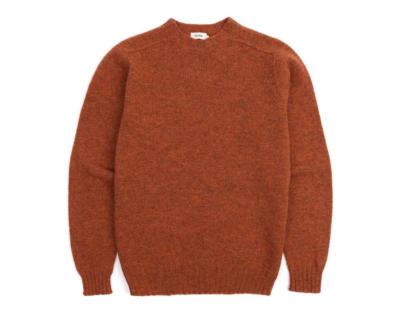
£160

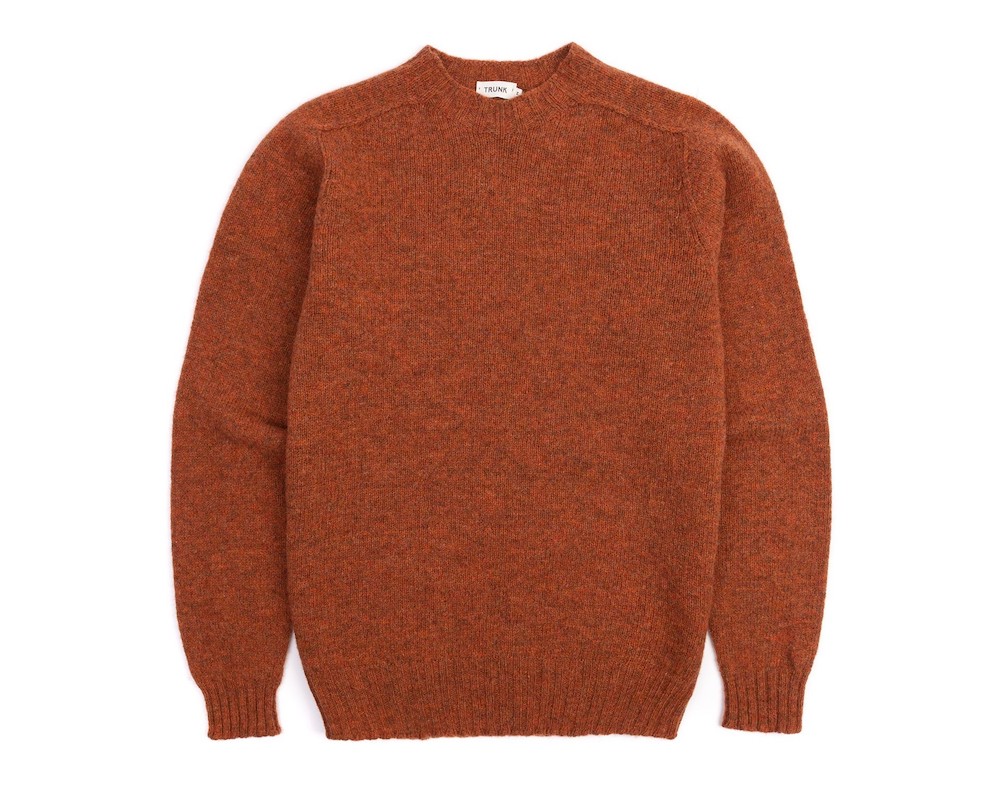
Trunk’s in-house Shetland model (the Berwick) has proved to be one of their most successful lines in recent years. Their popularity is, I think, largely due to the consistently on-point colour selections – I often like to look really closely at the dark orange (shown above) and pretend I’m in a helicopter above New England in September.

The Berwick features a comfortable seamless construction, is trim (but not tight) through the body and has a higher neckline than standard, which helps to keep your shirt collar closer to the body. The saddle shoulder seams are a little more pronounced than similar knits which is a nice point of detail that helps draw the eyes toward the face.
William Crabtree & Sons

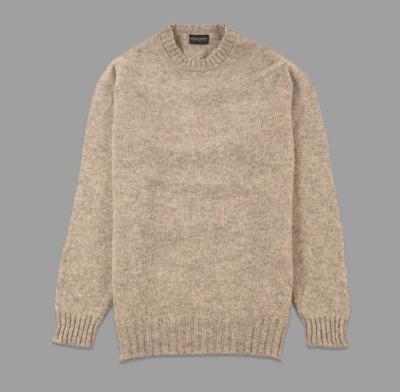
£125

A five-minute northerly walk from the mania of London’s Oxford Street will bring you to the charming oasis of New Quebec Street, where James Priestley has chosen to resurrect his great, great, great grandfather’s business William Crabtree & Sons.

James has lived and worked in the textile industry his entire life, with more incarnations than Lord Vishnu – working with Yorkshire Mills, Savile Row and as an agent for knitwear maker William Lockie.

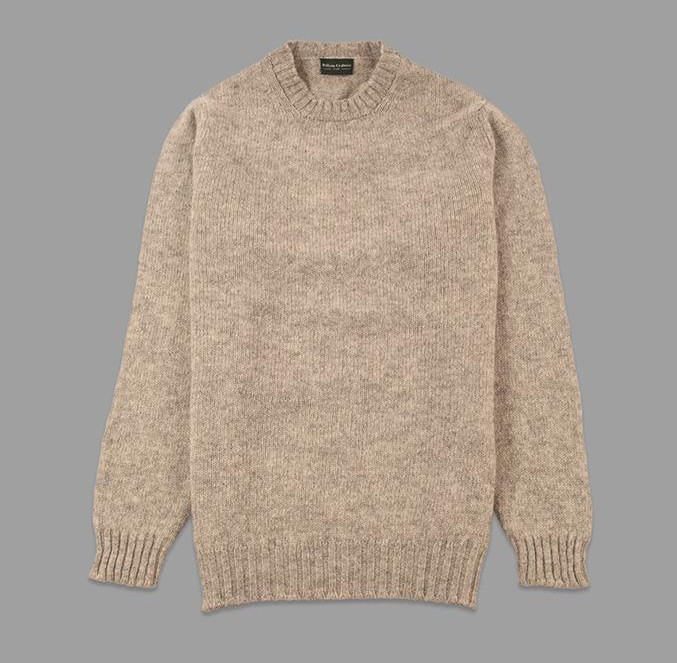
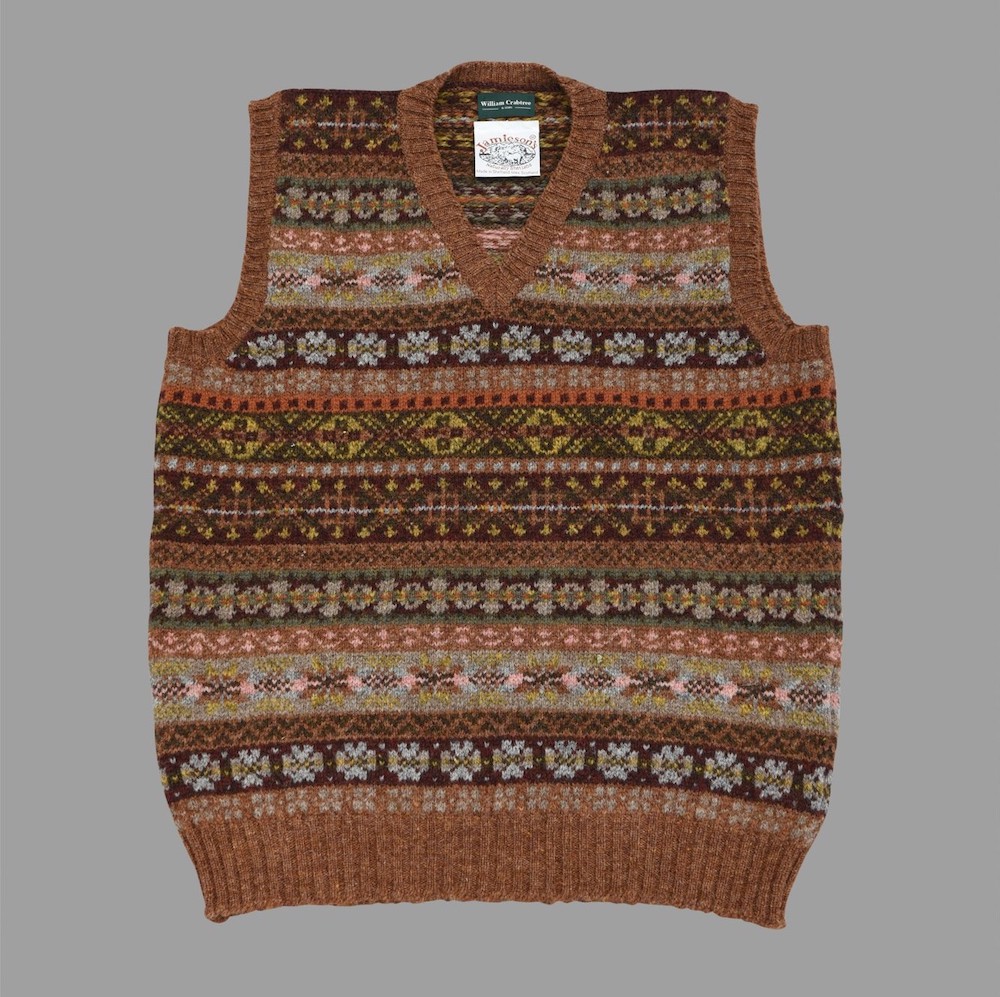
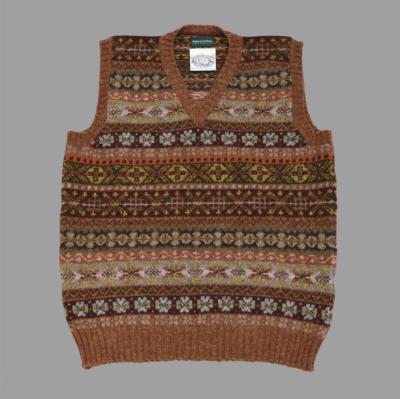
William Crabtree’s Shetland jumper comes in seven colours – I particularly love the blue, brown and grey marls – with set-in sleeves and a high neck. I found the body length ideal for readers who like their trousers to be low to medium rise or like their jumpers to have a little plume over the waistband. They also stock a beautiful selection of Jamieson’s Fair Isle knits in crewneck, waistcoat, and slipover V-neck.

One thing to watch out for when buying from William Crabtree is they use traditional jumper measurements which are on-the-flat. In other words, the measurements don’t correspond to chest size but to twice the pit-to-pit measurement. For example, a size 42 William Crabtree jumper will have a pit-to-pit of around 21”, which is closest in fit to most of the mediums that we’ve looked at. However, the best advice is to measure a jumper you own and start from there.
The Shetland Index

The Shetland index is designed to collect the key information of each of the standard, plain crewnecks featured.

To aid comparison we’ve shown the chest and body length measurements for the Medium (or equivalent) with measurements taken from the brands – we began to compile sleeve length but there are so many different ways to measure this that the comparison quickly became meaningless.

One thing to note with a fibre like this, and with small production, is that dozens of factors (including annual rainfall!) can have a small effect on size from one year to the next. So if you’re unsure about sizing, it’s particularly worth speaking to brands about it.

Prices are correct as of time of writing."

Brand Model/size Price Shoulder Brushing Chest  Length  Neckline Other models
Anderson & Sheppard Standard (M) £225 Saddle Unbrushed 53.5cm 70cm Standard N/A
Super soft Geelong (M) £265 Saddle Light brush 55 67 High
Anglo Italian Standard (M) £150 Set-in Unbrushed 54 65 High N/A
Bosie Harley (M) £92 Saddle Unbrushed or brushed 52 69 Low Roll/polo neck, luxury yarn, one and two ply Voe True
Connolly Standard (M) £195 Saddle Light brush 56 69 High N/A
Drake’s Standard (M) £195 Raglan Medium brush 55 62 Standard N/A
J. Press


Classic Fit (M) $265 Set-in Heavy brush 53 67 Standard Regimental stripes, cardigan, or vest
Trim Fit (M) $245 Raglan Heavy brush 51 66 Standard University stripes
Jamieson’s Standard (40) £112 Saddle Unbrushed 51.5 64 Standard Fair Isle, shawl collar cardigan, V-neck cardigan, cable, roll neck and stripe. (See Dick’s and End)
Laurence J. Smith Standard (40) €220 Raglan Unbrushed 52 64 Standard N/A
O’Connell’s Standard (40) $195 Saddle Unbrushed 51 66 Standard Plain, cable and ribbed knit.

Voe True yarn.

Chunky and seed-stitch knit.

Trunk Berwick (M) £160 Saddle Unbrushed 53 67 High N/A
William Crabtree & Sons Standard (42) £125 Set-in Unbrushed 54 67.5 High Fair Isle waistcoat, crew neck and V-neck slipover.

Roll neck.

I would like to extend special thanks to James Priestley of William Crabtree & Sons and Andrew Dick and Uli Schade of Dick’s Edinburgh for their time and help in writing this guide.


The guide to Shetland sweaters: Part one

The guide to Shetland sweaters: Part one

Monday, December 13th 2021
||- Begin Content -||

By Manish Puri

"With winter finally here, one of the items I’m most enjoying getting reacquainted with is the Shetland jumper - ceaselessly stylish, resolutely practical, and keenly priced.

For those reasons, many of the brands on Permanent Style routinely make the Shetland a cornerstone of their winter collections. It is the intention of this guide to help readers sort through the myriad options available.

Part one, today, focuses on general differences in style and construction, which I hope will provide context to help decide which jumper is right for you and why.

Part two - which will be published on Wednesday – details the Shetland offerings from 11 different brands, along with an index that compares the key features.

The history of the wool

“Shetland Wool, taking all its properties together, is perhaps the completest article of the kind in the universe, possessing at the same time, the gloss and softness of silk, the strength of cotton, the whiteness of linen, and the warmth of wool.”

So said Sir John Sinclair, politician, and Shetland wool’s original hype man, in a letter dated September 22, 1790 to his friend and renowned botanist, Sir Joseph Banks.

Banks had been charged by King George III to restore England’s pre-eminence in the wool trade. For centuries wool had been the bedrock of the English economy. However, Spain had seized dominance of the market through the successful growth of their merino flocks - which had gained a reputation throughout Europe as the softest and finest. And they weren’t about to relinquish that grip easily – export of merino sheep was prohibited, on pain of death, through the early 1700s.

Even when Spain did begin to offer gifts of breeding stock to European royal courts in the mid-1700s, the English were most certainly not on the Christmas card list. And Banks, despite Sinclair’s best efforts, was never fully convinced by Shetland wool, complaining that “it does not spring out forcibly when compressed, as the Spanish does” and resorting to smuggling four merino rams and two ewes out of Spain through Portugal.

The arrival of the smuggled merino marked the beginning of using inter-breeding in Britain to improve wool quality and the purebred Shetland, like many other British sheep from that time, began to dwindle in numbers. (It remained on the Rare Breed Survival Trust’s endangered list until 1985.)

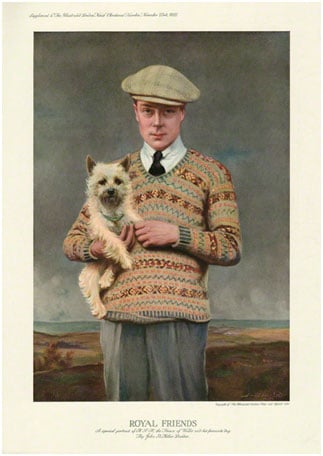
Ironically, given their historical lust for merino, it was the royal family that helped revive the fortunes of the Shetland sheep in the 1920s, with Edward VIII (above) championing Fair Isle sweaters in the yarn. In 1927, The Shetland Flock Book Society was formed and was successful in lobbying for subsidies from the Department of Agriculture to support breeding programmes.

By 2011, the importance and value of Shetland wool had improved to such an extent that “Native Shetland Wool” became the first non-food and drink to be awarded Protected Designation of Origin (PDO) status by the European Union.

Shetland’s features

The majority of the knitwear we’ve featured in this guide is made from Shetland wool. But what can one expect from it?

Although it has a reputation for harshness, the yarn produced remains the finest of all British sheep (ranging in thickness from 10 and 35 microns) and is airy and light. So even if you find the wool too coarse to wear against the skin (and require, for example, a shirt rather than T-shirt underneath), it is highly insulating and feels lightweight.

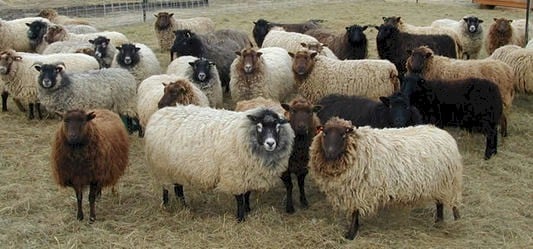
Whilst a lot of Shetland wool is dyed to make the gorgeous kaleidoscope of Fair Isle patterns, the fleeces of Shetland sheep come in 11 natural colours, so there is a terrific array of undyed jumpers available. And often these can be softer than dyed versions.

For those that do find Shetland a little itchy when close to the skin, part two of this guide includes a couple of wool/cashmere blends, and a Shetland-style jumper made from New Zealand geelong - a fine type of merino wool.

Shoulder constructions

My research revealed there are as many as 16 different types of sleeves that could be found on a garment. Mercifully the majority of Shetland jumpers have either raglan sleeves or set-in sleeves – although, given the raw material, surely it would be an apt tribute for someone to knit a Shetland with Leg of Mutton sleeves.

Of those two designs, the raglan sleeve is the one that extends in one piece from cuff to collar, resulting in a diagonal seam from the underarm to the neckline. It was first developed by Aquascutum in the 1850s (when they were still operating as a bespoke and military tailor) for Field Marshal Fitzroy Somerset – who was later raised to the peerage as Baron Raglan.

Somerset fought in the Battle of Waterloo to help defeat Napoleon’s army but sustained an injury to his right arm that necessitated amputation. Channelling the bravery and stubbornness of Monty Python’s Black Knight, Somerset (a lifelong military man) insisted on using his weaker left arm to fight on. Unfortunately, he found his military tunics too restrictive until Aquascutum perfected the ingenious raglan construction with a wider underarm area, affording the wearer greater movement and flexibility.

If you’re off to battle the Russians in Crimea with one arm, as Baron Raglan did in 1854, it is invaluable. If you’re off to battle the crowds on Columbia Road Flower Market with one arm, as the other is busy holding a newly purchased cactus, it’s less critical but still nice to have.

The set-in sleeve is attached to the armhole with a circular seam looping over the shoulder and under the arm. The construction offers a little more shape than the raglan and is thus considered by some to be more formal and better suited for tailored looks.

A third sleeve type which features prominently in the Shetland jumpers we’ve covered is the saddle shoulder (above). The saddle is technically a type of raglan sleeve, where the seam initially follows the same diagonal line of the raglan and then takes a sharp turn at the collarbone and runs parallel to the shoulder until it hits the collar.

Neckline (and height)

The classic style of Shetland knit remains a crew neck, but in part two of this guide we list brands that offer V-necks, roll necks, cardigans, and vests.

Regular readers will be familiar with Simon’s article on the effect of different heights of a neckline and how that affects both style and proportion. Most of the Shetland crewnecks we’ve considered either have necklines with ribbing around 2.25cm/1” that lie flat up to the base of the neck (above - we’ve called this a standard neck) or have chunkier and reinforced necklines with ribbing of around 3cm/1.25” that sit higher on the neck and hold the shirt collar closer to the body.

Unlike say a tailored jacket, there is limited scope for designers to change a crew neck year on year. However, the neckline is one area that does change over time. The standard, lower and looser neck offers room and a glimpse of a tie. The higher and tighter neck is geared to more casual, tie-less ensembles. It’s perhaps unsurprising that there are more higher necklines available today than there were five years ago.

Ply, or thickness

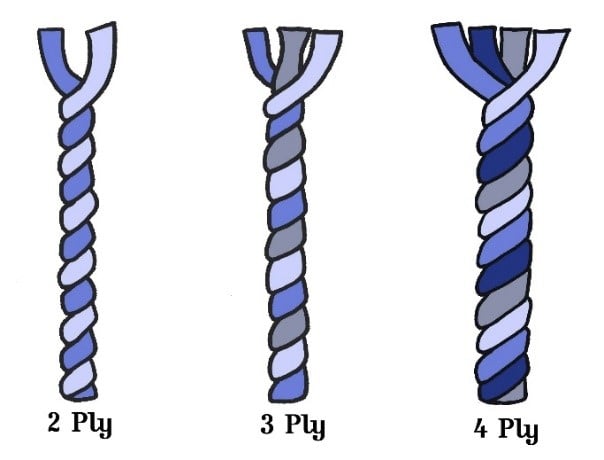
Ply is often used as a shorthand for how thick and heavy a sweater is. The overwhelming majority of the jumpers we’ve featured will be two ply, which means that two threads have been twisted together to make the yarn that has been used to knit the jumper.

As part of Permanent Style’s Guide to Knitwear you can find  a detailed article that covers the different ways of categorising knits by gauge, end and ply here.

Knitting in the round

The jumpers that we have featured in our guide are either fully fashioned or knitted in-the-round.

‘Fully fashioned’ is the normal way a jumper is put together, where each panel of a garment is knitted separately and then linked together at the seams.

Shetland jumpers are known for the rarer technique of being knitted in-the-round, however, where small circular knitting machines (above) produce body-sized tubes of fabric. The jumpers produced by this technique are often referred to as seamless, as there are no seams on the body.

What does this mean for the customer? Well, some find seamless construction more comfortable, and because there are fewer ‘weak spots’ from seams, more durable. The downside is that a seamless jumper cannot be tapered in the body, and so often has a boxier fit. It also has a tendency to lose shape more easily, if pulled around or not taken care of.

Finish: pattern and brushing

The focus of this guide is on plain knit jumpers – and this is what the bulk of the market is offering. However, we have recognised where brands are selling other types of knit, so there are also Shetland jumpers using cable, ribbed, striped and Fair Isle techniques.

The other aesthetic aspect Shetland jumpers are famous for is brushing.

Since the Middle Ages woollen fabrics have been brushed by the dried seed heads of the teasel plant (dipsacus sativus). The spikes on this thistle-like plant (which help to protect the seeds) are supreme at loosening and teasing out some of the fibres of the yarn. By raising the nap, the brushing process creates small air pockets that improve the insulation of the yarn whilst also softening the handle and the colour.

We’ve categorised the Shetland jumpers on the market as unbrushed or light brush (brushed 0-1 times), medium brush (2-3 times) and heavy brush (3 or more times). I prefer my (slightly more whimsical) brushing index of peach fuzz, candy floss and Don King, but I suspect this won’t catch on.

A paucity of teasel brushing machines in the market often means the brushed variety of jumpers are a little more expensive than the unbrushed. As part of my commitment to delivering a comprehensive survey to the Permanent Style reader I did stumble upon a Reddit forum where some users claim to have had success in hand brushing their Shetland sweaters using cat brushes. Do not try this at home."

I would like to extend special thanks to James Priestley of William Crabtree & Sons and Uli Schade of Dick’s Edinburgh for their time and help whilst I was writing this guide.

Part two in this series, running through and comparing 11 different brands on the market, will be published on Wednesday. 

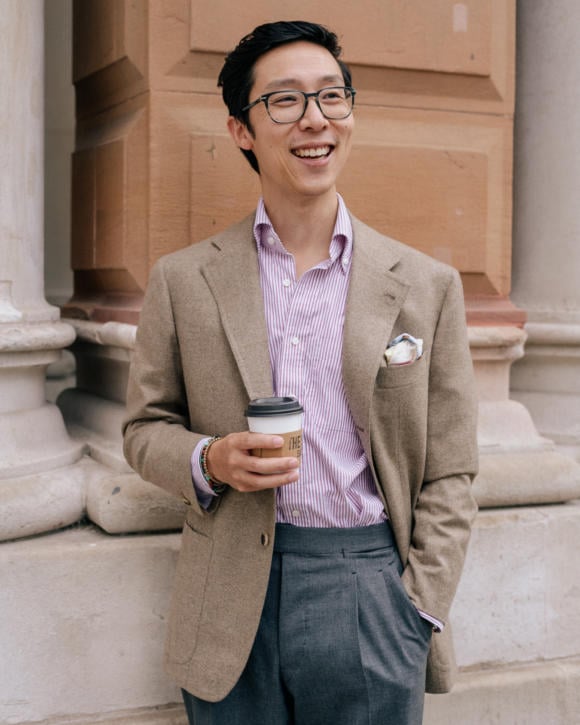
Reader profile: Ben C

||- Begin Content -||

I’ve known Ben for a long time now. He worked round the corner from me during my journalism days, and we were both customers of visiting artisans like Elia Caliendo and Simone Abbarchi. We even did a shoot together for Elia years ago.

Ben and I haven’t seen each other regularly since I started full-time in menswear, and no longer work around Blackfriars. But we still bump into each other, and I think Ben is a great example of someone who wears his clothes lightly - he wears quality tailoring which clearly elevates his appearance, and looks good without having anything a colleague would pick out or point a finger at. 

It’s also nice to bring in to this Reader Profile series, someone who lived and worked in Hong Kong for a long time, with its density of classic menswear over the past 10 years.

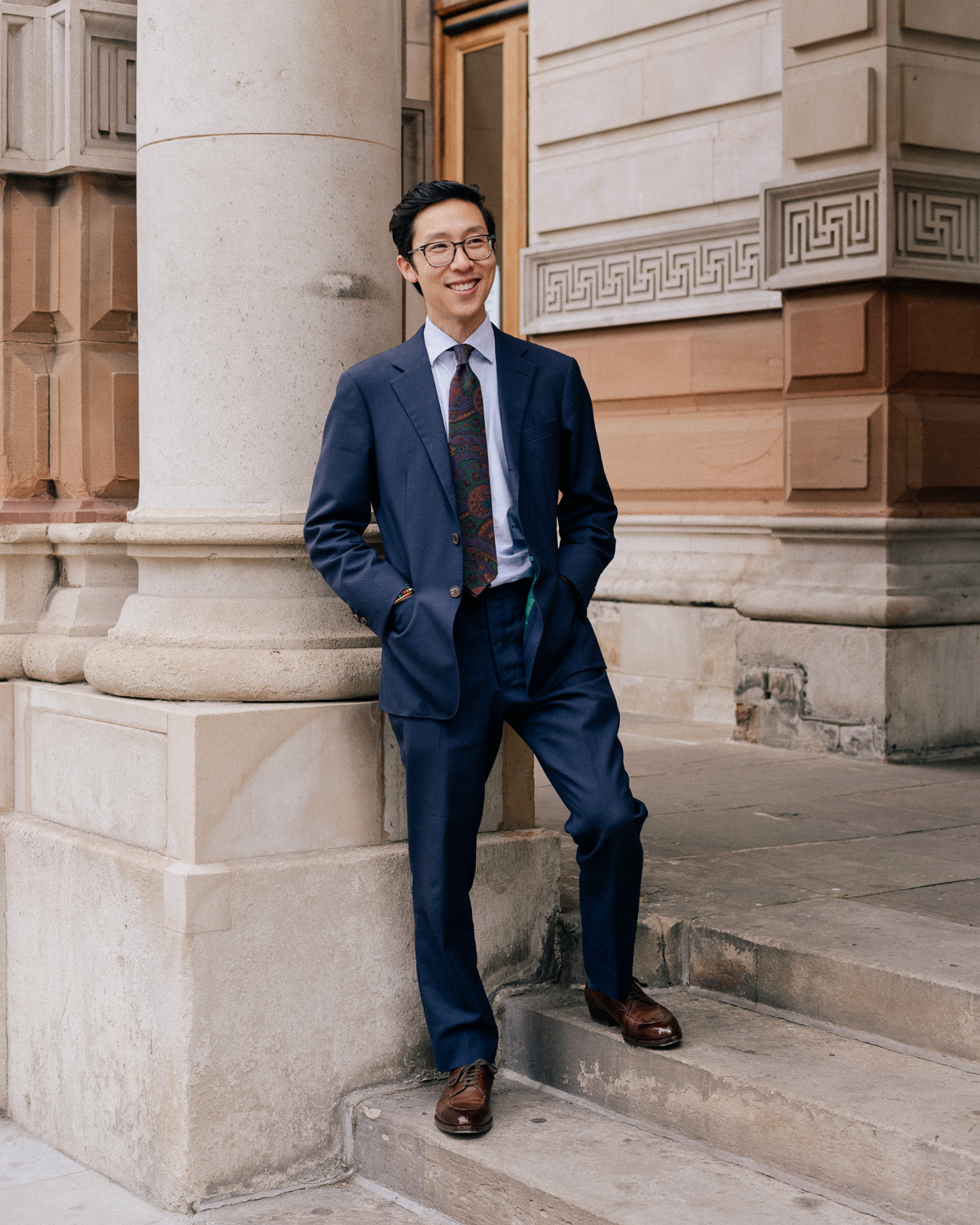
Outfit 1: Formal

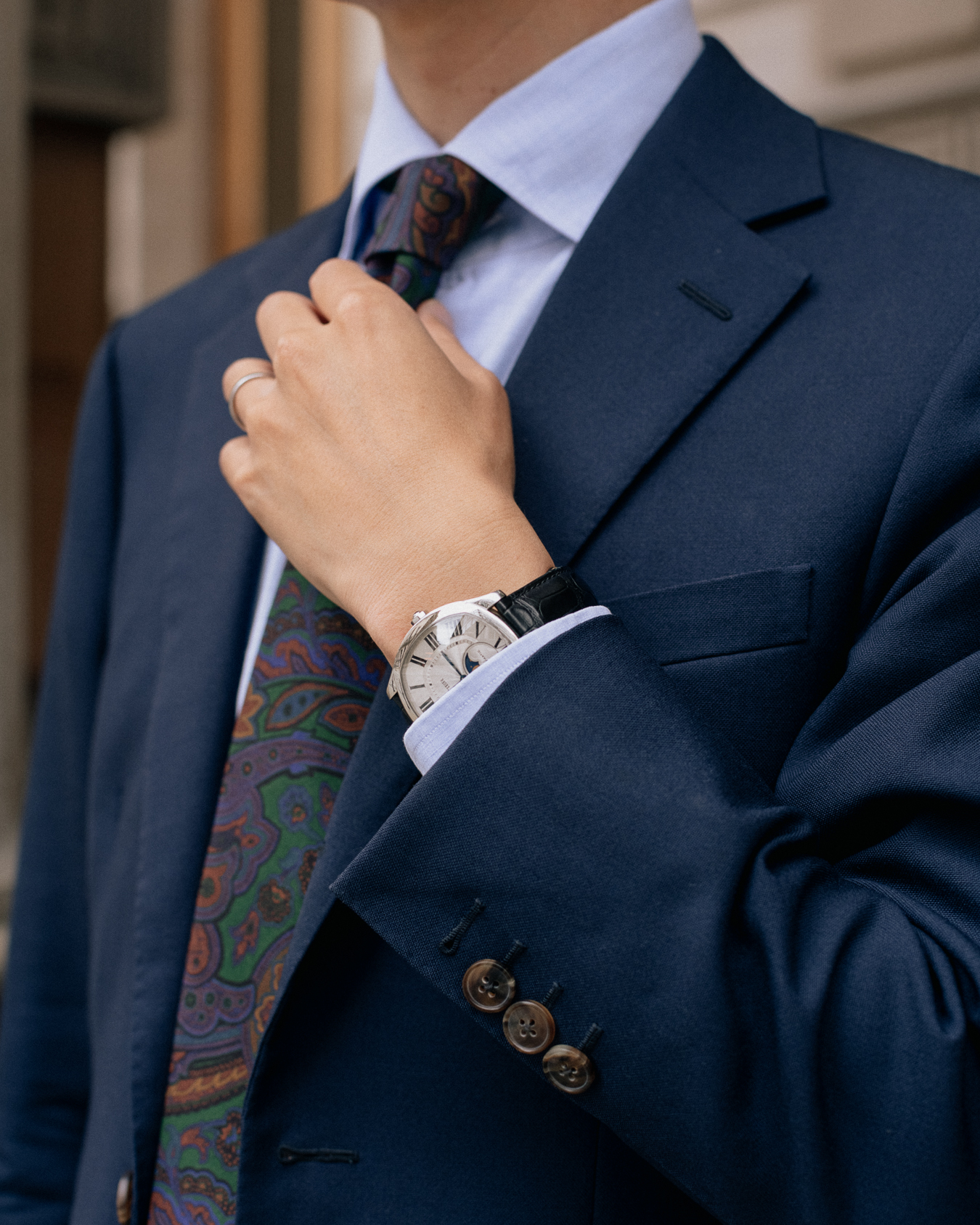
“This suit is Holland & Sherry Crispaire from WW Chan, via the Armoury in Hong Kong. It was made in 2012, my first serious bespoke suit - it seemed like a lot of money back then, but considering it's lasted me nearly 10 years (and still going!), it's a ringing endorsement for the concept of always having this simple, classic suit in your wardrobe. 

The shirt is from Luca Avitabile, the tie from Drake’s, and the chocolate split-toes are from Saint Crispin's. Not a 'traditional' combination, but as dress standards evolve post-pandemic (and my office has no strict dress-code), I feel like these 'adjacent' options (linen rather than poplin, dark paisley rather than a solid colour, derbies rather than oxfords) allow for a more relaxed way to dress for work, but are still appropriate for most offices and situations.

What job do you do, and how does that interact with what you wear?

I work in Government Affairs and Regulation, so while I tend to dress smartly, there is no real dress code. I prefer to wear a suit and tie most days - it's part of my ritual of preparing for work, which I admit I've missed since the pandemic began. 

How do you travel to work?

It's a combination of walking and the Tube, but thankfully it's not too long a commute. I wouldn't say it affects what I wear to a huge extent besides layering, especially in London winters. A suit and an overcoat can quickly become an oven when you're on a packed tube carriage and unable to take either off! 

What's your favourite PS article?

I really like reading the articles on PS about 'How Things Age'; the patina of time that turns something valuable into something unique to you. 

I know it sounds all a bit too 'menswear romantic', but when I look at a cotton jacket that has been faded from the sun, a watch that has its share of dings, or a pair of shoes that has been well-worn (and well kept), this to me is another layer of appreciation of craft and quality. 

Another great example of this is the Stefano Bemer Instagram posts that show shoes that have been worn into the ground and then been refurbished to such a high level - not new, but in some ways even better.  

Outfit 2: Semi-formal

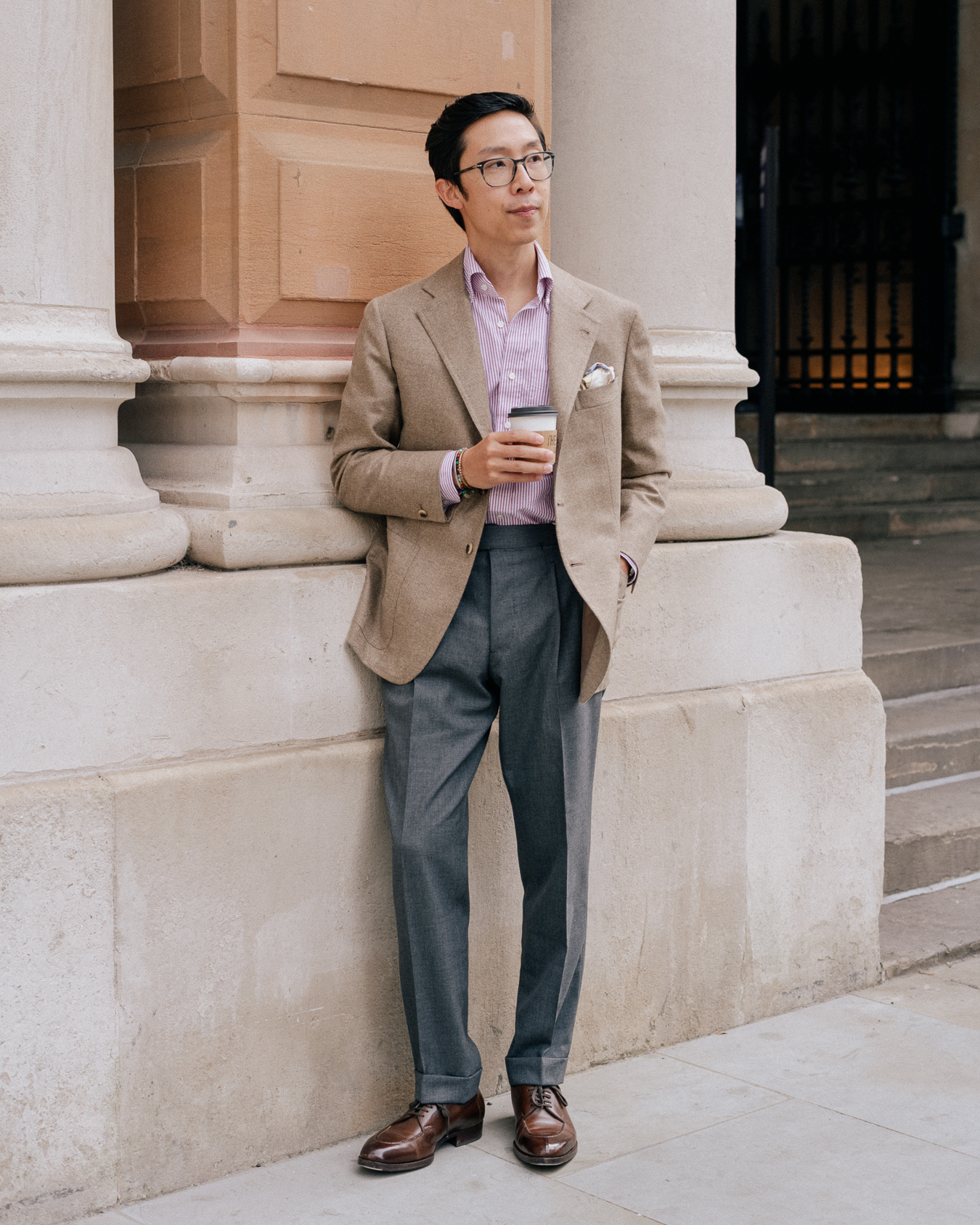
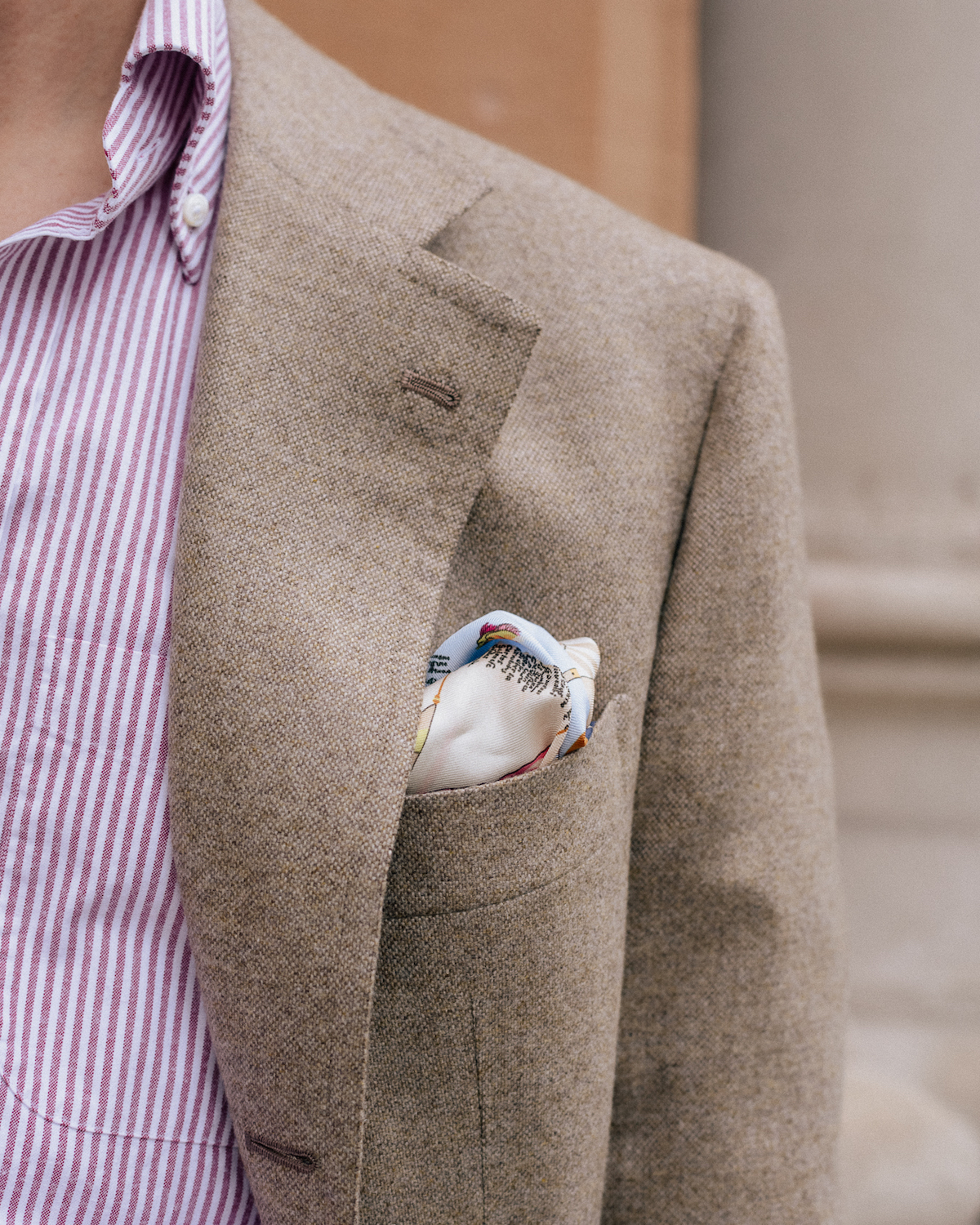
For me, semi-formal is still mostly formal elements (sports coat from Elia Caliendo, button-down shirt from The Anthology, trousers from Cerrato), but worn in a more relaxed way. 

The coat is my latest commission from Elia, and having been working with him for a few years now, I feel like the fit and finish have been honed to just the way I like it. I really like the thoughtful approach that The Anthology takes towards its fabric choices for all its garments, while the Fresco trousers from Cerrato in Naples are a real treat - a crisp classic that fits like a glove.   

What's your biggest tip for other readers?

I'm sure it's been said before, but having the basic elements of a wardrobe in place before experimenting is really key. 

Yes, it's not very exciting to buy suits in navy and charcoal, dark-brown oxfords and white and blue shirts - but trust me, if you start out building a wardrobe with a double-breasted seersucker jacket and acid-yellow chinos, even if you can pull them off, they are likely to be for very specific occasions. 

Getting value from a wardrobe is as much how often you wear it as the price you paid - the idea of 'cost-per-wear'. Having an expensive item that is used once a quarter is a bit of a waste, but having an expensive item you use several times a week is an investment.   

What’s your money-saving tip?

The one I'm sure most people will know is to buy as good quality as you can afford (as this will save money in the long-run). 

But I find that buying wardrobe basics on sale is also an effective way to save money. Do a bit of research and understand when sale times are and make sure you know your size for things such as sweaters, shirts and socks. For those who are blessed with more time, outlet sales or travelling to outlets as part of a holiday can also be quite good value. 

Outfit 3: Casual

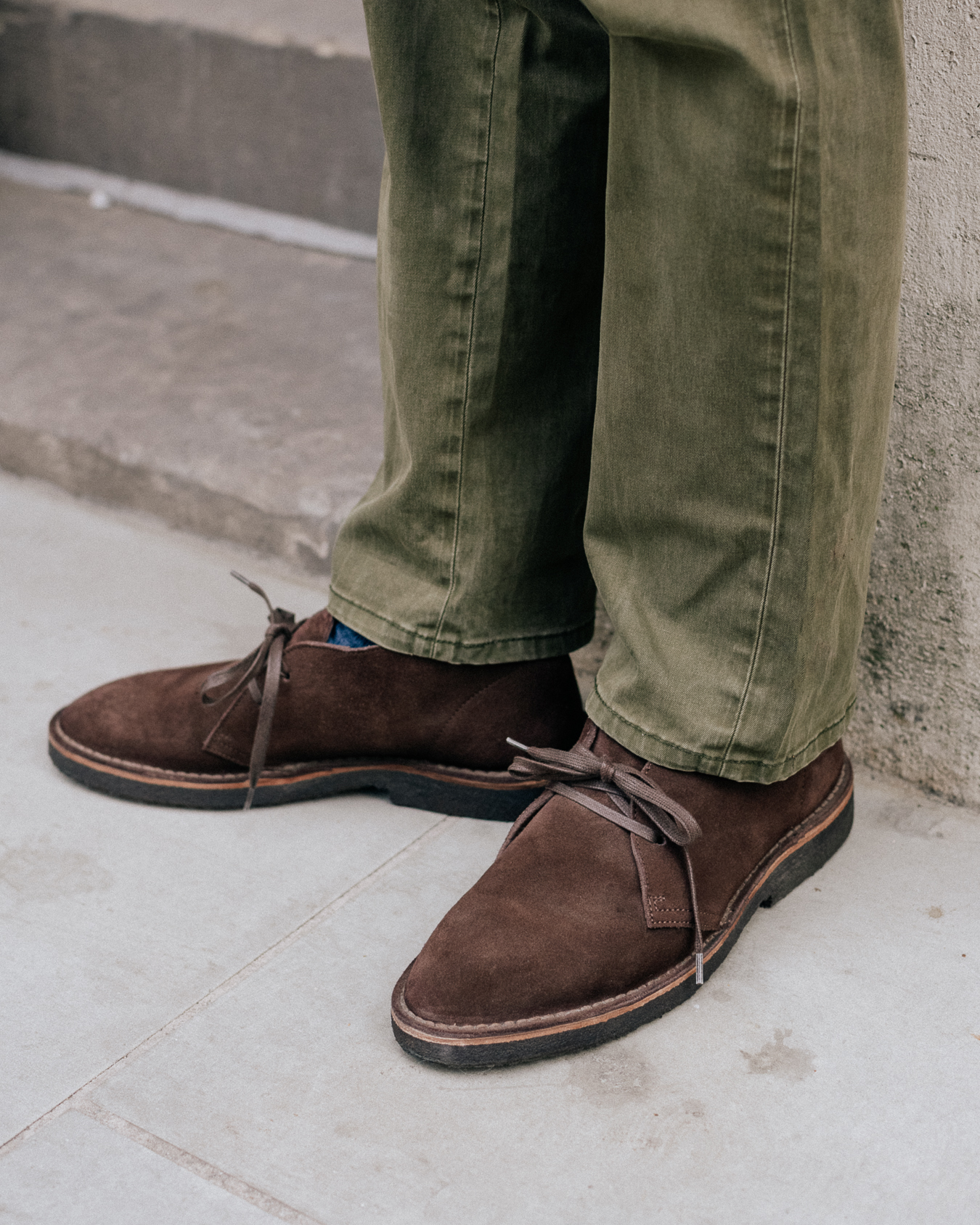
This is a simple casual outfit that I love because it's made up of solid, hard-wearing basics: a denim popover from Simone Abarchi, chinos from Incotex, and suede chukkas from Anglo-Italian. 

Having a 2.5 year old and another one on the way, I need outfits I can easily put together, not worry if they get hit by stains, yet have some elements of classic menswear style to them. 

Comfort is also key, but a tip for those looking to have a MTM popover made - always go with fabric that has a bit of stretch or specify a looser fit. I mistakenly asked for one as fitted as my shirts, and ended up with a popover that looks great but is extremely difficult to 'pop over'!       

Which brands do you identify most with? 

Rather than brands, I think I value stores that have been able to give me great advice, and that I feel a more personal connection with. 

A great example of this is the navy suit I'm wearing; the colour, cloth, style, even the deep green lining were all recommendations from Ethan Newton while he was working at the Armoury. Now that he has his own endeavour at Bryceland's, I specifically went to see him in Tokyo when I was last there - not just to shop, but also to pick his brain on style questions and keep that little connection alive.  

While it's generally true that you can build longer-lasting relationships with a brand if you deal with the artisan directly, rather than sales staff, that doesn't always hold. Any store/brand looking to create long-term customers should be investing in great people, and whenever I've spoken to Martin at Anglo-Italian or Aiden at Trunk for example, not only do I get thoughtful advice, but these interactions, even if I don't end up buying something, build that connection with the store.  

I know that not everyone has the ability to physically see some artisans/stores in person, but when you are lucky enough to, I’d say you should spend both time (and money) there!

Do you think you spend a lot of money on clothes?

Yes, I do! However, I think I've reached a point where I have the clothes I want for a wardrobe foundation, so these days it's definitely more about want than need. I spend much less than I used to on clothes per year, both because of that and having children.

What do you spend most, and least, money on?

In the past I spent most on suits, sports coats and trousers. Having been lucky to have access to some great tailors both in Hong Kong and now in London, I spent most of my money there first, but now it's shifting more towards shoes and watches (not to mention that my small wardrobe can't really hold much more!) The size of London apartments and lack of storage space have a natural way of making you evaluate your purchases more thoroughly.

Introducing: The Cashmere Rugby

Introducing: The Cashmere Rugby

||- Begin Content -||

*UPDATE: We have confirmed a re-stock for January - including the XL that has sold out. So do use the form on the Shop site to be added to the waiting list for that*

In our article a couple of weeks ago about the new shearling colour, there was a really nice discussion in the comments about PS products, their role within Permanent Style and in the wider world. 

It was lovely to hear how much readers understand and like the clothes. The thing that hit home for me though, was that people appreciate the way they fill a niche, yet can be versatile. They’re clothes most readers could wear, but are offered (usually exclusively) for very specific reasons. 

Today’s launch (the last for a while!) fits that brief particularly well. 

It is a collared, cashmere sweater made by William Lockie in Scotland, but in a 4-ply that they no longer do because it’s usually not considered commercial enough.

Most collared knits of this type are 2-ply. They’re great, and I own ones from both Colhay’s and William Crabtree

But a 4-ply feels surprisingly different. Having double the amount of cashmere makes it really warm and lovely in colder weather, like now. But it also gives it an almost jersey-like bounce, and sponginess.

Collared knits are often referred to as ‘sports shirts’ by factories, which I always think is charmingly antiquated. But actually this weight feels more like a jacket substitute than a shirt. It’s great in winter, but in milder weather it’s heavy enough to wear on its own, or just with a gilet over the top.

The jersey-like feeling, meanwhile, comes from the combination of that weight, the 15-gauge density, and the tension Lockie work with. It’s why I’ve referenced a rugby shirt in the name - it has a similar easy feeling to cotton jersey, plus the collar which makes it just as easy to pull on at the weekend. 

Four-ply collared knits like this used to be quite popular, and Lockie and others sold them widely. But over time they have been phased out because the price makes them hard to sell online. 

It’s difficult to explain to someone - if they haven’t felt it in person - why they should pay over £400 for a sweater, even though it has almost twice as much cashmere in it as the more standard Scottish two-ply, which will already be £300. 

(Of course, as we’ve discussed recently, Scottish sweaters are also knitted more densely, meaning there’s even more cashmere in there - often 40% more than in an equivalent Italian knit.) 

So you’ll see two-ply styles from Lockie sold widely: in a crewneck, V-neck, cardigan and so on. But no four ply. 

James Priestley - long an agent for Lockie, among others - brought back the four ply when he opened his store in Marylebone, called William Crabtree & Sons. He currently sells it as a crewneck*. 

But I fell in love with an old collared version he had, and it was James who helped us bring back this style. 

He also helped with some technical points around re-designing the collar. I wanted it a little higher in the back, because like the Dartmoor and Finest Polo, I find this more flattering on most people. 

So while not as high as those other models (which are specifically designed with a jacket in mind) the Rugby does have a slightly higher collar than most - as illustrated below. 

In the six months I’ve had my version, it’s become my easy default - the thing I reach for first, and pull on with both jeans and tailored trousers.

It’s just so easy. The collar means you don’t need to wear a shirt underneath, and yet it looks very put-together. The thickness means it goes just as well with jeans as with smart trousers (unlike the smarter Dartmoor) and as a result it’s good going to the park or for a nice lunch.

As ever, I’ve tried to show this in the photography. The casual outfit at top - with jeans, boots, shearling overshirt and red watch cap - is as casual as it gets for me. Yet the other outfit, below - with cream twill trousers and brown-suede loafers - is as smart as many people ever need. 

We chose a classic grey-flannel for this first iteration because it also works with the greatest range of colours. While the cream trousers I’m wearing will be too showy for some, the flannel colour also goes with navy, beige, green, brown, black and so on. Basically everything except the same colour as itself.

I think the only other PS piece I find as useful is the blue oxford, and even then it’s not quite as good with smart clothes (I’d switch to the white oxford there). 

Yet the Rugby is still, in some ways, niche. It’s not intended to replace the more widely available two-ply knit, which can be worn for more of the year and is available in more colours. 

Rather, it’s nice to resurrect an old style that - I’ve found - I really love wearing. And I’m sure there will be readers out there that will love doing so too. 

Details on the Cashmere Rugby:

  • Made by William Lockie in Scotland
  • Sold in collaboration with William Crabtree & Sons
  • 100% four-ply cashmere (two ends of 2x28s)
  • 15-gauge
  • Grey mother-of-pearl buttons
  • Price £355 plus VAT
  • Available only on the PS Shop here

Sizing: 

  • The Cashmere Rugby has a classic shape, rather than slim
  • Simon wears a Large in the images here, but could also wear a Medium
  • "I sized up because I wanted a more generous, comfy fit, but a Medium would have fitted too, it would just be neater"
  • Simon  is six foot tall and has 39-inch chest
  • Measurements, in inches, are below
  • Chest is pit to pit, length is on the back from the bottom of the collar, sleeve is the under-sleeve seam
  • Please note, garments are marked by measure size of the chest itself, from 36 to 44. This is a Lockie convention and does not relate to the chest sizing usually used on tailoring
X-Small Small Medium Large X-Large
Chest 19 20 21 22 23
Length 25.5 26 26.5 27 27.5
Under arm 19.25 19.5 19.5 19.75 19.75

Other clothes shown:

Photography: Milad Abedi

*The William Crabtree website describes this style as two ply, and the two ply as one. This is the less standard way of counting - just the ply rather than the ply and the ends together. Most sellers use the way of counting we do

Chester Mox hand-sewn leather folio: Review

Chester Mox hand-sewn leather folio: Review

Monday, December 6th 2021
||- Begin Content -||

Chester Mox is Bellanie Salcedo, a leatherworker making saddle-stitched goods in Los Angeles, California.

I’ve known Bellanie for several years, having first covered her on PS back in 2013. Since then, however, her work has improved, following an apprenticeship programme with former Hermes artisan Beatrice Amblard in San Francisco.

If you look at the pieces featured in the original PS article, and then compare them to the ones on the Chester Mox site today, you can see how much finer the stitching is. Other areas like inking have also improved. 

The product is now pretty much on a par with the other hand-sewing leatherworkers we cover, such as Equus in the UK, Serge Amoruso in France, and perhaps even Ortus in Japan. 

Like those craftspeople, Chester Mox is cheaper than anything from a big brand such as Hermes. Which is the first reason readers should take notice. 

The second is that, unlike them, Bellanie is based in the US. This makes her more of a rarity, and more accessible for the 46% of PS readers that in the States. 

In order to try the work, and talk about her first hand on Permanent Style, I asked Bellanie to make a leather folio for me - what she calls the Monterey model

As most Chester Mox products are made to order, there’s lots of opportunity for small changes and personalisation. On the folio, as standard, you can select leather, lining, lock and thread, and add a pen holder or phone pouch inside. 

The last three mean a price uplift ($150 for the extra pouch) but it’s still excellent value for money. The basic folio starts at $900, and big brands would be four or five times that. 

Bellanie also offers a bespoke service, creating original designs in collaboration with the client, which is rather more expensive. Prices are on request there, as the projects vary so much.

With my folio, I went for the same mid-brown leather (‘mocha’) that is shown by default on the website. I opted for a lining in that too, and iPad-sized and phone-sized interior pockets. Alcantara (artificial suede) would have been nice inside, but that precludes internal  pockets, which I know I’ll find useful. 

I also upgraded to linen thread, and requested my initials stamped inside using matte-gold foil (black, clear and silver are also available, as well as the Chester Mox logo).

With the hardware, I made a special request. 

I’ve always liked uncoated metals which tarnish naturally over time. It gives you the option of keeping them polished (perhaps every few weeks) to create contrast with the ageing leather, or letting them gain a patina. 

Bellanie hadn’t used raw brass like this before, but after talking to her suppliers, she found something suitable, and it’s now a standard option on the Chester Mox website. 

I also experienced a little of the bespoke process, as I wanted slightly tweaked internal pockets. This was done very professionally, with Bellanie sending me a PDF layout of the internal sections each time. 

There were some delays forced on us by Covid, but after that unavoidable gap, I had the folio. You can see it in the pictures around this article - in the shoot that featured this jacket, and in images Bellanie took of it before sending.

I was impressed by the feel of the veg-tan leather, which is satisfyingly thick but also has a pleasing suppleness. It’s lovely in the hand. And also by that fine stitching. The two together are just beautiful. 

The lock looked excellent too. In the images here you can already see that the lock looks more natural than with the same model online. Since then it has only aged more. 

The inking on the edges was faultless too, and the initials inside were precise and strong. Surprisingly often foil work like this simply rubs off after a few weeks.

The only issue was with the top part of the lock, on the folio’s flap. Its two brass plates, on the inside and outside, were not aligned exactly. 

Bellanie explained how difficult this part of the procedure is, with solid brass nails having to be trimmed down by eye, and then put in with a ‘perloir’ setter (a tool that creates a domed finish on the nailhead). 

She also thought the issue might have been caused by the holes on the front and backplate being misaligned, which was something to bring up with the hardware supplier. 

Either way, Bellanie said she wanted to take it back and remake it. She also wanted to tweak a couple of points on the execution of the pockets. 

Again, a few delays, but after the summer I received the second folio. The pockets were now perfect, but there was still a small misalignment of the front and backplate (above). It had been reduced - with the first version, the misalignment was about double this - but it was noticeable.

Bellanie said that this time she had checked and there was nothing wrong with the hardware. It was simply a matter of the manual way the two plates were attached. 

Historically, she had used plates with pre-drilled holes that screwed together. These always aligned perfectly, but over time the screws could work loose, and need replacing. So she switched to this more traditional and manual technique, which requires holes to be hand punched in the metal and the leather, before the hand-cut nail is hammered through. 

This is much stronger apparently, but also often doesn’t align perfectly, because the nail moves around as it is punched through. The latter isn’t helped by the fact you have to hammer in circular motions, in order to create the domed finish on the top. This is shown briefly in the video below. 

The misalignment is small, and Bellanie says it’s something she was told Hermes actually stopped doing because customers didn’t appreciate it was a result of artisanal work. 

I have to say, if I bought an Hermes folio with that issue, I would assume it was a mistake too. It looks wrong. And just as importantly, I don’t think the staff would be able to explain why it was there. 

And while this method may be stronger, I would also return a folio where the screws came out after a year or two, as that would definitely be a fault. 

Still, the misalignment doesn’t bother me that much, and I have really enjoyed using the folio. It is beautiful and luxurious in just the ways I love - simple and subtle. Those things easily outweigh that little point of execution. 

But at the same time, I’d understand if a reader thought this wasn’t acceptable. As with many things, the personal connection with the craftsperson, and appreciating everything that’s gone into the product, makes a big difference. 

www.chestermox.com

Clothes shown detailed in this previous article

Photography: Alex Natt @adnatt and Chester Mox

How I wear a black leather jacket

How I wear a black leather jacket

||- Begin Content -||

I’ve had this vintage leather jacket for about four years and it hasn’t been worn often - perhaps a handful of times a year. 

If I’m honest, it was because I felt a little self-conscious in it. I didn’t want to look like I was pretending to be a biker, or going through some kind of mid-life crisis. 

That might seem silly, but as we’ve discussed in the past, a lot of what people think of as style is about the associations we have with clothes - the people, the places, eras, ages, attitudes. 

And if any piece of clothing feels risky in that way - feels like something a guy wants to wear, but might say he can’t ‘pull off’, it’s a black leather jacket. 

Perhaps a better way to put it is to say that I wasn’t sure the jacket was ‘me’. 

The reason an old, bald guy in an open-top sports car might traditionally come in for ridicule is it can look as if he’s trying to be something he’s not. 

Trying too hard is a style-killer generally, but it’s particularly bad when trying to be someone much younger. (Because, of course, it’s something a lot of people identify with.) 

So was the jacket ‘me’? Well, bear in mind that my main aim with clothing remains to look well dressed without standing out. It’s what feels most comfortable for me, and gives me most pleasure. 

A black leather jacket is riskier in that regard, and that was what I was afraid of.

But, over the past year I’ve come to think that this horsehide jacket - aged and styled as it is, and worn in this manner - is something I’m comfortable in, and now enjoy wearing immensely. 

The most important thing, I think, is that it’s vintage. 

The jacket already looks like an old favourite, rather than something bright or flash. It looks like I could already have owned it a long time - become part of me - even if I haven’t. 

This is often the problem with cheaper leather jackets. Because they are often plastic, or plastic-coated, they never age well. It looks wrong - like jeans that don't age because they're full of elastane.

The fact it’s old also means it is literally less flashy. The leather is dull, not shiny, and so is the hardware. 

Second most important is the styling. 

The simple turn-down collar and three pockets is the simplest style you’ll find - there aren’t even pleats in the back, or contrast stitching. Just a sewn-on half belt and two adjusters. 

I love the fact that the label describes it as sportswear. This is not a flight jacket or a bike jacket or anything else functionally specific. It's just for being, generally, active. 

That label also identifies it as being from M Bogen & Co in Lowell, Massachusetts. I can find references online to staff at such a shop in 1950s, but if anyone else knows anything about them, please do let me know. 

Then there’s how it’s worn. Not with a white T-shirt and blue jeans, let alone a bandana and biker boots. 

I like a charcoal knit underneath, like the old Drake’s lambswool one here; and pale beige chinos, from The Real McCoy’s. Both are suitably understated, while still being, of course, wonderful pieces of clothing.

The boots are the Cranleigh from Edward Green I wear a lot, in mink-brown suede. The storm welt and split toe give them enough ruggedness, and I prefer this to either a Galway in the same material (smarter) or a work boot like my Viberg (more casual/chunky). 

A grey sweatshirt underneath is also great, as are darker chinos or really dark denim. Both pretty easy and obvious combinations. 

The only unusual style I’ve found I like is wearing the jacket with charcoal flannel trousers, the same boots, and a casual shirt like denim or chambray. It’s a pleasing mix of tailoring and workwear. 

The jacket is from RRL in New York, again bought several years ago. 

As with most vintage they carry, it was expensive but perfect. Great size (only the arms are a touch short on me), great condition, and great details. Beautifully worn in but nowhere worn out; original hardware but still functioning perfectly; fantastic original blanket lining. 

The only change I made to it was to replace the moleskin-like sleeve lining with a synthetic. The former was nothing special, just warmer, and a real barrier to getting the jacket on and off easily. 

When Sarah and Pauline at Cromford examined the jacket, they of course pored all over it - appreciating old leather as only leather specialists can. But they particularly picked up on the way the front panels have aged. 

The panel on my right, below, is a lot smoother than the one on the left, which is more wrinkled. For Pauline, this showed its age. No modern jacket would be made with such different parts of horsehide, as customers would complain it was a mistake. I love the difference. 
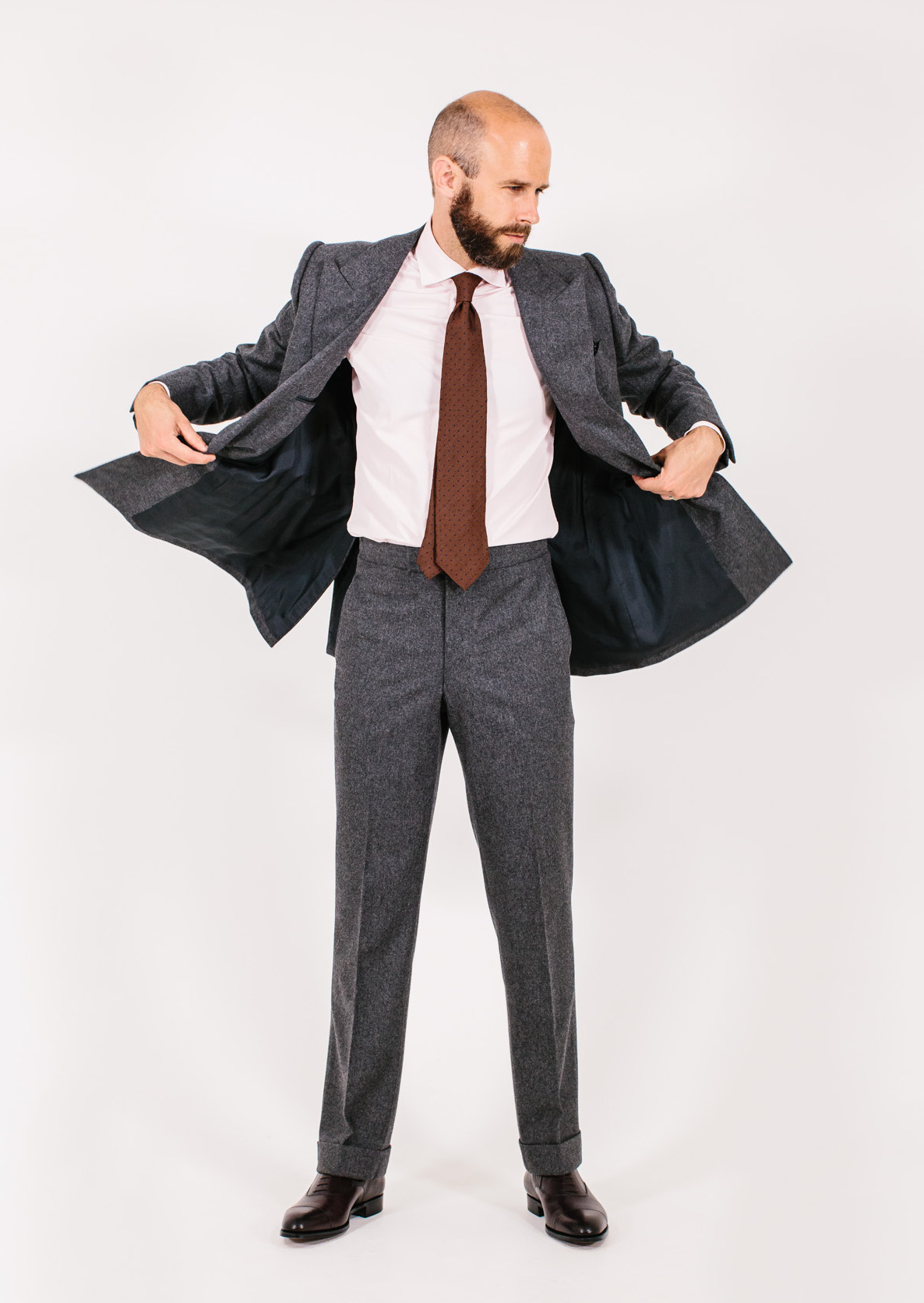
When we were running the pop-up shop in The Service recently, two young guys came in on different days, both wearing black Perfecto jackets (or imitations of). 

They both looked great. But they were young, skinny, tall, good looking, and had some swagger to match. 

The jackets suited them, worn like that, at that point in their life. I will not say that no one older or larger or more timid couldn’t look great in a Perfecto. I’m sure they could. But at the same time, I suspect those guys won’t dress like that when they’re 40. 

There’s no need, really, to unpack the reasons why. The only thing that matters is that those jackets looked very ‘them’ and this old horsehide feels very me. And that’s as important as anything when it comes to dressing well.

Photography: Mohan Singh @mohansinghphoto

Hat: Red PS Watch Cap

Above, pictured chatting to reader Andrew, during his shoot

If you had five coats: A versatile selection

As with our previous article in this series – on bags – five coats might seem like a lot, but actually chances are many readers already have that in their wardrobe, if they account for smart and casual coats, for warmth and for rain. 

And given the number of questions I’ve had about buying a coat this winter, clearly readers are looking to see what they should add, upgrade or replace in order to have a small but high-quality collection. 

Below are the five categories I’d suggest, followed by one or two particular recommendations in each. We’re not including anything short – whether suede blouson or horsehide leather – and nothing that reaches into warmer months. These are coats, not jackets.

1 A double-breasted overcoat

The double-breasted overcoat might be my favourite piece of menswear. It’s so dramatic, yet classic; so functional, yet indulgent. It never looks too dressed up and out of place, and yet it’s an absolute joy to commission and wear. 

There’s an argument that you need a bespoke coat less than a bespoke jacket. A good argument. But I still recommend an overcoat as the second or third thing anyone has made bespoke, because it can usually be worn more often.

As to colours, navy will probably be the best choice unless you never wear a suit to work. If you don’t, look at more casual colours like dark brown wools and tweeds, or a mid-grey herringbone. 

2 A raglan coat

I’m doing these in order of how important they seem likely to be, for most readers – rather than formality or anything else. 

There will be some that dislike the sloping shoulders on a raglan, or its lack of shape in the body. In many ways it is the opposite aesthetic of a tailored overcoat. 

But if you don’t, a raglan can be a perfect bridge between formal and casual. In a dark and fairly classic colour, it can still be suitable for work. Yet it’s much more likely to complement jeans or chinos than an overcoat. 

Two good examples, which I’m referring to in the suggestions above, are the Permanent Style Donegal coat, in a grey herringbone this season, or something more like my Saman Amel coat. The latter is only a raglan at the back, but the spirit is the same. It’s easier to belt something lighter like that too. 

The traditional Loden coat also falls squarely into this category, even if it’s not one I’ve ever liked so much as tweed raglans or balmacaans. 

A pea coat is of course not a raglan, but I’ve included it in this section as it can do a similar job of bridging casual and formal. Particularly something long enough to go over a suit jacket, like the Bridge Coat

3 A rain coat with removable liner

  • Navy, olive or beige cotton, long and belted
  • Waxed cotton, shorter, easier for movement if not as good for the legs

I’m always banging on about the fact that we don’t need rainproof coats most of the time. Wool is perfectly fine to get wet, even drenched. You just need to look after it. 

But still, everyone will probably want a rain coat for when it’s really chucking it down, and an umbrella is not an option. Ideally in Ventile, wax or some kind of treated cotton, rather a crinkly synthetic. 

A removable lining is crucial, even if it makes the piece more expensive. It makes the coat something you can wear into winter, rather than just for spring or autumn showers. 

And waxed cotton is a great option for anyone that is more active in their coat – perhaps walking the countryside, or looking after a dog – or for any other reason just wants something shorter. 

4  A casual coat

This is a broad section, encompassing everything you’re always going to wear with jeans or other casual trousers. 

A duffle coat, of course, is the smartest of these, and can look nice with tailoring too. Though really the appeal there is the contrast between the nice jacket and the thick frumpy duffle. 

A down parka is a necessity for people that have very cold winters, whether in Scandinavia or North America. I’ve never found one I think works with tailoring, but I love my Nigel Cabourn Everest Parka (in navy), and it’s been worn with casual clothing in snow in both those places. 

There are also military parkas, vintage examples of which I think can look nice as a high/low combination not too far from a duffle coat. 

Shearling coats, though often shorter, are worn for the same reasons of warmth, and usually look more elegant. But still I wouldn’t really wear one over a jacket. 

5 A top coat, or polo, or one more from the top

When we reach number five, it gets more and more likely that the choice will depend on lifestyle. 

A top coat would be a great choice for anyone that dresses smartly for work. Whether a navy wool/cashmere or a velvet-collared covert coat, it will be worn as soon as it gets chilly, and until the cold makes a longer double-breasted absolutely necessary. 

We haven’t mentioned polo coats so far, and as mentioned in the article here, the great thing about a camel polo is how it looks great with jeans, despite its more formal cut and style. It might be too showy for a lot of guys to wear to work, but if you love DB overcoats and don’t dress smartly, it’s a great choice. 

Or, double down on something from the list above. Have both a waxed and a cotton raincoat, because you like that practicality. Have a duffle and a parka, if that’s your style. Personally I’d get two DB overcoats – such as my Ciardi ‘British Warm’ as well as my Liverano tweed

Whatever suits you the most, a set of four or five coats like this should cover any eventuality. Any additions can be upgrades justified by a period of saving, and by finding a good home for the coat that’s to be replaced. 

All images taken from previous PS articles. If you don’t recognise something, ask and I’ll provide the source

Clutch chinos review: Soundman, Pherrows, Warehouse…


This is the latest in a series of articles we are doing on well-made chinos. You can see the previous articles on a contents page here, and listed on the right of this article (on a desktop). 

Rather than look at one pair that I own, today’s piece rounds up all several Japanese options in one shop. 

This has the disadvantage that I can’t report on wearing and washing a pair myself. But it does mean I can cover a wider range, which might appeal to more readers. We can do the same with other shops in the future if it proves popular. 

As I’ve talked about before, Clutch has a dizzying array of brands and models, and chinos are no exception. I counted nine brands, often with more than one model each. They vary from fairly slim, modern styles to very wide, high-waisted repros. 

I’ll summarise all of them below, but focus on two in particular – from Soundman and Pherrows – because they fit my personal criteria for a good chino. This has also driven the other inclusions in this series. 

Those criteria are: 

  • Mid-rise (not low on the hips, like most modern trousers; nor real high rise, on the natural waist)
  • A moderate straight leg (not skinny, which is often why brands include elastane; nor super-wide, like those US Army reproductions)

Soundman

The quality of Soundman is always very good, but the designs can be a little quirky. With these Clarke chinos, the quirks are kept to a minimum but the quality and fit remains very good. 

The rise is fairly high on me – as the pictures illustrate – without going right above the hip bones onto my natural waist. (The kind of rise where, when you sit down, the waistband  digs into your stomach – more on defining rises here.)

There’s also a gentle slope between back and front, which works particularly well on my body shape, and while the leg is fairly wide (all measurements on the Clutch site) it has a nice taper. 

This last point is what saves them from becoming too vintage, too repro. Other brands at Clutch have lovely chinos in many ways – Cushman and Belafonte for example – but they are wide and straight. It’s much more of a look. 

The only thing I dislike about the Soundman chinos is the double forward-facing pleats, though I know some readers will like those.

The waistband is a touch broader than normal, and has a wide hook fastening at the front. But I don’t mind either of these things, and the wider, bias-cut waistband aids with the great fit. 

The material is a right-hand twill, which as we covered on the Real McCoy’s review, means the cotton is denser and wears better. It’s also more expensive, which is why you tend to find it on the more expensive lines at Clutch and elsewhere. 

That extends to the design details as well, such as the lovely corozo buttons. Other quality things to watch out for are the precision of stitching on the buttonholes, which was something that was surprisingly lacking on a pair I recently tried from 3Sixteen for example. 

Also available in navy, and there are various other styles such as gurkha-tops and shorts. 

Pherrow’s

The Pherrow’s P41M chino is a good example of the lower end of this specialist Japanese market. Still high quality, but more affordable than the Soundman and most other brands. 

It’s also a very accessible style. Flat front, slim leg (by Clutch standards), and quite straight. There are no extraneous design details, and it will both fit most guys and be firmly within their comfort zone. 

For the rather lower price you sacrifice the right-hand twill, but it’s still a nice and hard-wearing cotton. You also lose the corozo buttons in favour of a button fly, and those buttons feel a tiny bit cheap to me. 

But the finishing is still good, and aspects like strong pocket bags that high-street brands usually forego but quality makers have are all there. 

It’s a good introductory chino, and the kind of thing I’d point readers towards if they’re trading up from Gap or something similar. They’re also available in navy and olive. 

In fact, I should have mentioned at the start that with the chino selections in this series, I’m also interested in finding pale colours that are the most versatile and easy to wear. Not a strong khaki or a really yellow beige, but something pale and muted.

I’ve done quite a few consultation sessions with readers recently, and this comes up time and again – they want one pair of really easy, classic but high-quality chinos in this shade. More than navy, olive or anything else. 

Jelado, Warehouse, Burgos, Cushman

Among the repro style of chinos (as in, more like a straight reproduction of US Army models), the Jelado ‘41 was probably my favourite. A true high rise and wide leg, but with lovely details and a great slubby cotton that’s intended to look like a vintage style. 

The Warehouse 1216 chino is based off the same US Army officer model as the Jelado, but uses a more conventional cotton in a nice right-hand twill (often called a Westpoint cloth). Aside from the wide leg, the only downside to these is they shrink a lot (1.5 inches on the length) so are hard to fit. 

The Burgus Plus 401Z-60 is nice but has a very slim leg. Too slim for me. Perhaps worth a look if you want quality like this but really have a fondness for a close leg line. 

And finally Cushman – which along with Warehouse is another brand to look at for slightly more affordable Japanese makes – does a great ‘41 model, just with that traditional high waist and wide leg. 

All these chinos could be good options for different readers, depending on what style they like, as well as their budget. But for those that have the same priorities as me, I’d recommend looking at Soundman and Pherrow’s first. 

In the images I am wearing a size 34 from Pherrow’s and a size 42 from Soundman. In both cases I sized up a little to get a nice fit on me in the seat and things, and would then alter the waist or use a belt. 

Clothes pictured: Alden full-strap loafers on Aberdeen last, and Bryceland’s Sawtooth, size 40. 

The Sale Shop: Permanent Style, Marrkt and J.Girdwood

The Sale Shop: Permanent Style, Marrkt and J.Girdwood

Sunday, November 28th 2021
||- Begin Content -||

Some readers will probably already have seen the Instagram announcement of a 'Sale Shop' in a couple of weeks, in the same space in The Service where we held the recent pop-up.

It's a collaboration between myself, Marrkt and J.Girdwood. We will be selling a mix of deadstock and our personal pre-owned pieces, for two days only - Friday December 10th, and Saturday December 11th.

From my point of view, the idea is two-fold: to sell in person some of the clothing I would normally put on Marrkt, just because it's nicer; and then to sell some personal pieces, including bespoke tailoring, that I think is better done face-to-face. Sizing on those bespoke commissions can also be a little trickier.

So I will be bringing over 100 items, including tailoring and shoes, shirts and ties, knitwear and trousers. Sometimes they're being sold because I bought the wrong size, other times because they proved not to be my style.

As with the clothes that normally go on Marrkt, most reductions will be in the region of 40%-70%. With expensive bespoke pieces, however, they are rather larger - around £150 for a jacket. Because you're obviously not getting the fit benefits of bespoke.

In terms of sizing, the clothes will fit between a 38 and 40-inch chest, shoes are between size 8 and 9, and everything else is mostly Small or Medium.

James Girdwood, however, has a size 42 chest, and of course the Marrkt pieces cover the whole range, from XS to XXL. So there will be something for everyone.

From Marrkt's point of view, they're looking forward to meeting customers in person, given everything's otherwise online.

Two staff will be there both days, and the stock will deliberately be brands PS readers will like: Real McCoy's, RRL, Nigel Cabourn, Bennett Winch, Bryceland's, Orslow and Alden, as well as a variety of tailoring.

Marrkt have quite a lot of samples and deadstock from brands too, and will be bringing a lot of new Viberg boots (all sizes), Red Rabbit jewellery and some other bits.

If any PS readers have anything they'd like Marrkt to sell, by the way, they can contact the team through Marrkt.com.

James Girdwood - whom readers will probably recognise from our previous pop-up shops - is also selling a mix of old and new.

He has a good selection of his personal pre-owned clothing, including pieces from Coherence, Real McCoy's, Muller & Bros, TCB, Pommella, Alden, Prologue, Edward Sexton, Dunhill, Nackymade and Crockett & Jones.

And then he has stock from his brand, J.Girdwood. These are 7-fold and 3-fold ties from Bigi and Francesco Marino, cordovan accessories, Codis Maya jewellery and Justo Gimeno Tebas. Those of course in more of a range of sizes.

Other details about the Sale Shop:

  • Discounts will be similar on all brands
  • Opening times for the shop will be Friday 10am-7pm, Saturday 10am-6pm
  • The dates again are December 10th and 11th
  • The location is The Service, 32 Savile Row
  • Unlike the previous pop-up, this is all stock to buy and take away
  • Payment is by card, although cash also accepted (it might just require a little fiddling around for change!)
  • Most of my stock that is not sold in the shop will then go on Marrkt, though I'm not sure how much of that there will be

Thank you all, and I hope you all find something wonderful to give a new home to.

The new Permanent Style x Cromford shearling coat

The new Permanent Style x Cromford shearling coat

||- Begin Content -||

*Note: The brown of this jacket is perhaps a little browner and lighter than the pictures suggest. A picture of the skin itself has been added at the bottom of this piece to demonstrate. Thanks*

During the recent pop-up shop on Savile Row, the most asked-about item was the Donegal Overcoat. The one most readers came in with (perhaps surprisingly) was the Nubuck Tote. But by far the most popular - to try on, stroke and generally touch - was the PS Shearling

Everyone tried on their size in the end I think - Ethan, Tony, Lucas, and a host of readers. It was simply the most luxurious thing on display, and it made a big difference that people could feel it as well as see it. 

That’s the biggest problem with selling online. It’s hard to communicate how good something feels, let alone the specific ways in which it does so. 

I guess most PS readers will have tried on luxury shearling before, so that’s a good start. It has that same light-suede softness on the surface, but unlike suede also has a pliancy, body and bounce, because there’s curly wool underneath. Like wearing a fine suede overshirt on top of cashmere knitwear, perhaps. 

Let me know if that was a vivid evocation or, alternatively, gibberish. If it’s the latter I’ll try again. 

In the meantime, here’s another angle. If most readers have felt luxury shearling, then this is the same - possibly better - and much cheaper. 

I never make price a big selling point with our collaborations. In fact I think readers should be inherently suspicious of any brand that does so. But it is nonetheless true that Cromford uses the best shearling there is, and at any designer brand it would be almost twice as much. 

The PS x Cromford shearling coat costs £2700, which is an awful lot of money. But the same Spanish merino is used to make pieces that cost over £5000 elsewhere, and there are many in between that are nowhere near the same quality. (Look out for larger skins and seams in odd places.)

The design points I ran through in our first article on this coat are more important, but it’s good to remind everyone of the value as well. 

Those design points include the sweep of buttons that are all functional, fastening up under the chin. The double thickness of the shearling on the lapel and collar, which makes them sit better but stops the whole coat from being too heavy. And the pockets that work equally well for hands and accessories, whether you like to use the top or bottom set. 

All the details are on the original launch article here.

This year we decided to do a different colour of the shearling for the second run. But there are still some coats and skins (for made to measure) available in the olive too. See bottom of this article for details. 

This year’s colour is a very dark, greyed brown on the outside, and black on the inside. As described last year, this double dyeing is expensive, but I think creates a lot more character. Having a dark inner layer also makes the coat look less bulky. 

The colours of the shearling are actually quite similar to the ones we used on the Wax Walker, and the same clothes look good with it. 

So it looks particularly nice with grey, charcoal, taupe, cream and dark denim. But it’s also good with beige, mid-blue denim and navy. 

The colour could seem quite striking when worn with off-white jeans, as I am in the image above. But actually it’s just a dark brown like any other, as you’d have in a core suede blouson or tweed jacket, and I find it just as versatile. 

I’ve also deliberately shown it with different types of clothing to last time. 

Last winter the olive version was shown with jeans and crewneck, and flannels and a roll neck. This time I’ve added a cream hoodie (above, from The Real McCoy’s) and a denim shirt (below, from Bryceland’s). 

The combination below, in particular, demonstrates how nice this new colour is with dark indigo, which is not necessarily what I think most you’d expect. 

That image above also shows how the coat looks with the collar down. I didn’t include an image of this last time, but not because I dislike it that way. 

I am more likely to wear the collar up, but when down it has a nice roll through the front, and the curly wool  on that leading edge is broken up by the hand-worked buttonholes. 

Something else I didn’t show last time was actually my favourite way to button the coat, which is to fasten one lapel under the chin (there is a jigger button on the other side for the purpose) but leave the other lapel rolling open. 

The shot below illustrates this. It’s nice because you still get a lot of protection across the chest, but you also have that long, flattering lapel line. And it only requires two or three buttons to be fastened (the other jigger button, at the waist, is the third).

The coat is sold by Cromford, not us, and so you should head to the Cromford website for details about sizing, product queries, and questions about made to measure. 

The following is currently available:

  • 20 brown coats ready-made in sizes Small to XXLarge
  • Enough skins for 5 brown made-to-measure coats
  • 3 olive coats (shown below) remaining from last year: Medium, Large, XXLarge
  • Enough skins for 1 olive made-to-measure 

The coats cost £2250 plus VAT for RTW, and £2812 plus VAT for MTM.

  • MTM takes roughly eight weeks. The extra time is consultation, shipping and making toile fittings
  • The MTM must be in the same style as this coat, but otherwise there are no  limitations
  • If you want a different style, this is a bespoke service, which should be discussed separately with Cromford
  • I have a 39-inch chest, am 6 foot tall, and wear a Medium in both sets of pictures. I could happily size up to a Large too, though, if I wanted to wear more thick roll necks underneath. The difference between sizes is not Large. Again, though, Cromford are best for advice here.

Photography above, Milad Abedi; below, Jamie Ferguson.

*The new brown, as a skin and in more natural colouring:

Turnbull & Asser: The Sustainability Framework

Turnbull & Asser: The Sustainability Framework

Wednesday, November 24th 2021
||- Begin Content -||

This is the first article using our Sustainability Framework, which we set out on PS a couple of months ago. Its aim was to create a definition of environmental sustainability that could be used to talk to companies we cover, about their efforts to become more sustainable. 

What we’re finding is that every company is on a journey. Some aspects of sustainability are easy to change, or have more impact, and so are tackled first. Others are almost impossible, or require innovation from suppliers. 

None of it is simple, and everyone is different. Which is why a lot of companies don’t talk about it, and why an advert shouting that a brand has cut water waste by 67% is virtually meaningless. That kind of advertising can also make people understandably cynical.

By actually talking to companies about what they’re doing, we hope to have a more open and productive conversation. Both to improve understanding among consumers, and share advice with other small companies. 

Our first conversation was with Becky French, creative director of Turnbull & Asser. 

Turnbull is a nice example to kick off with, because it is neither a small company of two or three staff - as many are on PS - nor a large fashion brand. 

A small company has the advantage of flexibility, and starting from scratch with suppliers. They can start with sustainability built in from the start. A big brand, on the other hand, often has dedicated sustainability staff, plus the budget to bring in consultants. 

T&A has two shops in London and one in New York. It has a separate office, and both shirt and tie production in Gloucestershire. The business is still largely shirts, but it sells everything from trousers to cufflinks. 

“The complexity of the product offer really makes things harder,” Becky told me, when we sat down in the Mayfair office. “It means for example that we have a huge range of packaging, all required for different sizes of product, for sale in store and online.”

However, shirts account for almost 80% of the business, so it made sense to start there. 

“The first thing we did, three years ago, was switch all the external giftbox and bag packaging so that it was recycled and recyclable,” says Becky. “I think there are customer expectations about how a luxury product should look - Mr Porter probably set the benchmark - so we didn’t feel we could get away from that. But we wanted to make sure that that packaging could be re-used by customers, and it was as sustainable as possible.”

The next challenge was all the plastic inside. “Shirts have to be shipped without being damaged or the collars being crushed, and anyone who’s bought a good shirt knows how many plastic packaging accessories that requires,” Becky says.
Customers coming into Jermyn Street and buying just one shirt could perhaps do without so much packaging. But not when shipping them in bulk, for example from the factory to New York. 

T&A has been around for almost 150 years, so the first thought was they must have used something before plastic. They did apparently, cardboard, but collars also got squashed. 

That started a search for a replacement material - asking suppliers, asking peers, and the factory management doing the same. “The thing is, nothing exists out there in the market at the moment,” says Becky. “No one is making something we can use. So while we can talk to suppliers and let them know there is the demand, we are very dependent on them.”
One resource that was useful was Walpole, the British luxury association. It has discussion groups for members, such as T&A, and over the past six months Becky and the team have been asking everyone for suggestions.

“People were so open and happy to share, which isn’t necessarily what you would expect,” says Becky. “Someone will have a supplier they recommend; someone else will have an experience that was helpful. Everyone is trying to improve here, so there’s no shortage of searching.”

There’s also no snobbery. For example, on plastic packaging one of the most helpful Walpole members was a dry cleaning company that was trying to cut down its plastic use, as it goes through a huge volume. 

“We’ve looked at so many options,” says Becky. “For a while we were talking to Flexi-Hex, which originally came up with a cardboard packaging to use on surfboards, but is now used by lots of industries.”

T&A hoped a version of the corrugated cardboard could be used to support shirt collars, but that didn’t pan out. Part of the issue is that every company is trying to become sustainable at the same time, and small companies like Flexi-Hex can’t innovate in every direction at once.

Another option being considered is replacing the collar stays with a material like bamboo. “We’re doing trials on that at the moment,” says Becky, “but I’m not sure whether it will be as reliable or, again, have that luxury finish people expect.”

There’s also a project to encourage customers to return their plastic packaging, so it can be re-used at the factory. “With a lot of these solutions, half the challenge is communication,” says Becky. “Such as encouraging people to re-use those plastic collar stays, or give them one metal set that they can use on all their shirts.”

A similar push is underway to get customers to return shirts they don’t wear any more - to be recycled or (if still wearable) given to charity.

In many areas, T&A has a bit of a head start. 

“For example, encouraging people to buy less is contradictory to the interests of a lot of businesses,” says Becky. 

“But we’ve always encouraged customers to bring back their shirts to be repaired, or to have collars and cuffs replaced. The team love this - there’s something very satisfying for a maker about keeping a great product going.”

Turnbull also has a lot of loyal customers around the world, and some bring in shirts that are 20 or 30 years old, to offer them for the archive. “Touring the archive as a designer is inspiring,” says Becky. “It reminds you of how great shirts can last well and, in that way, be quite sustainable.”

It should also be mentioned that Becky was wearing an archive piece herself, when we met: a boldly striped blue-and-white shirt with the collar cut off and therefore frayed. It looked very chic, at least on her.

Having its own factory helps T&A keep travel miles down. And while its raw materials come from around the world, shirting mils are among the most innovative when it comes to sustainability. Whenever I see Albini or Alumo at trade shows it feels like they talk about nothing else. 

T&A is also planning to offer a range of shirts in organic cotton - which brings up an interesting question: Why not make everything in that cotton, if you want to be more sustainable?

“We could take a position on that as a business,” says Becky, “but it would make the end product more expensive for the customer. I think it’s another area where the customer can drive things - if everyone just buys the organic range, then that encourages us to make more of the product that way. We’ll see the response when we launch the range in 2022.”

It also works further down the supply chain: as more companies have asked for organic cottons, mills like Albini have increased their range, and made them available as part of their standard stock service, rather than special order.

Turnbull & Asser Stores by Pip

Interestingly, the original spur for all this work was T&A’s Royal Warrant from HRH Prince Charles. The Royal Warrant is a stamp of approval for quality, yet perhaps customers aren’t familiar with anything further,” says Becky. “The criteria to retain a warrant are quite detailed in some ways.”

I didn’t know this either: the Royal Warrant has to be renewed every five years, and part of the process for those given by Prince Charles is that the company answers a set of questions on sustainability - and shows that they are constantly improving. 

“In response to that we initially looked at B Corps certification. Their process is very impressive, and not easy to go through, but it is widely recognised. In the end we decided we weren’t ready for it, but it’s something that’s still on the table when team capacity allows,” says Becky

The pandemic also delayed much of the work. “Supply chains have been under so much stress in the past two years that it’s not surprising a lot got put on hold. But it was frustrating. Now we’re back on it again, sampling and actually making decisions.”

That currently includes making some shirts out of Lyocell (wood pulp) and talking more about linen, which is one of the more sustainable fibres. Both require more communication work than production. 

They’re also experimenting with how shirts are stocked and stored. And looking at sourcing for other areas of the business, such as suits. “We generally use British fabrics, but the suits are made in Italy. There was a discussion of whether we should use Italian fabrics instead, to cut down on the mileage,” says Becky. 

“In the end we decided not to, and that was probably right for our brand, but I think if one thing has really changed in the past few years it’s that sustainability is part of every one of those conversations.”

For me, that last statement of Becky’s is the most important of all. No one is perfect - but many companies are genuinely striving every day to be better. Hopefully this first article has given you some insight into how this actually happens - the challenges and the achievements - at one company in particular. 

Read the Sustainability Framework, its definitions and aims, here

Why does good knitwear pill?

Nobody wants pilling, so if your jumper pills it must be a sign of poor quality, right?

Not necessarily.

Finer, more luxurious knitwear is more delicate and takes more looking after. If you don’t care for it, it might pill more than the cheap, coarse stuff.

And, cheaper knitwear – from big high-street brands – is often given an artificial coating to make it pill less. Because consumers notice pilling, but they don’t necessarily notice the slightly greasy feel of those coatings.

If you want good knitwear that doesn’t pill, you should buy quality, buy denser knits, and look after it (basically, not squashing it into drawers and washing it regularly).

That’s the short version of the advice.

Below, in this latest chapter in our Guide to Knitwear, is the long version. For people like PS readers that want to know why.

Over finishing

Pilling is created when fibres that stick out of the surface of knitwear rub together. They twist up, often with the help of moisture from the body, and form knots.

When there are more of these fibres sticking up, you get more pilling.

There are various reasons for having more, but one is that the sweater has been more intensely finished – washed, with softeners, and brushed – to make if feel more fluffy when you pick it up in a shop.

In general, Italian knitwear has more finishing than Scottish knitwear. This means it feels fluffier to start with, but can pill more and sometimes not last as long.

So that’s one reason luxurious-feeling knitwear might pill a surprising amount. It’s a difference we’ve covered before here. But there are others.

Washing

Knitwear that has less finishing will soften during the first few wears, and washes.

The washing is crucial. A good, delicate wash will remove some stray hairs, align the rest, and generally prevent things that can cause pilling.

With Scottish knitwear, it’s important to do this after the first few wears. But with any knitwear, it’s important to do it some time – and few people do.

If knits get a little dirty, a little rubbed, a little damp, then the fibres are more likely to knit together. A simple wash will clean and smooth that out.

Washing can seem scary, but all it needs is five minutes of soaking in warm water, with a small amount of non-bio detergent, and a little squeezing (not rubbing). It’s easy and rewarding. More tips on this video.  

There are also great services that will clean, repair and de-pill knits for you, if this is too challenging.

Caring

Rubbing is bad with wearing as well as washing.

So don’t wear a backpack over the top of a nice cashmere. Don’t shove all your knits into a tiny shelf. Fold it, and generally treat it well.

There’s actually an interesting tendency for people to expect expensive clothing to do everything – both feel amazing and be tough as hell.

You see it particularly with socks, where people often complain that expensive socks don’t last that long.

But fine things are often literally finer – thinner fibres, which is a big contributor to softness – and can never be as tough as something much thicker. So they need looking after.

Longevity

This tendency also has negative repercussions. Because people demand cashmere that feels great and doesn’t pill, brands come up with ways to add an artificial ‘anti-pill’ coating to it.

This then has side-effects. It can give a slightly greasy feeling to the knit, as we’ve covered in a piece on Uniqlo here. And the softness has to be achieved with more washing/softening plus knitting more loosely. The integrity of the garment itself is being undermined, all in the search for perfect cashmere under £100.

That lack of integrity will be felt in the long term. And this, perhaps, is the rub.

Great knitwear is designed to last many years – even decades. Those that know and value cashmere can proudly show pieces handed down from their parents, which still look virtually brand new.

Most knitwear will not last a lifetime, and most people don’t want if too. But if looked after well, there’s no reason it shouldn’t last – and look good – for year and years. And of course that makes it great value in the long term too.

Types of knit

A final trend worth noting is that all knitwear – cheap and expensive – is increasingly knitted more openly, making it more delicate.

There are many reasons for this, including that need to feel soft at the point of sale, expectations around comfort and lightness, and an attempt to communicate luxury.

There’s nothing necessarily bad about this knitwear like this. It’s just different. Historically it’s the kind of quality that was made for womenswear rather than men’s. But it is more delicate and will pill more readily.

If you buy a hand-knitted cashmere that feels wonderfully soft and open, then consider that it is more delicate and needs to be treated as such. The same goes for some chunky shawl-collar cardigans (above), if you can see the knitting is open and spongy.

Both of these might be very expensive, yet pill more than anything else you own.

Conclusion

Pilling indicates many things, but quality isn’t necessarily one of them.

Indeed, it actually used to be said that pilling suggested good knitwear – because it meant longer fibres were being used, that would rise above the surface and bind. Little stubby fibres were less likely to do so.

If you want to avoid pilling, it’s less about what price of knitwear you buy and more about what type. But just as important is how much you wash and care for it.

Good things need – and deserve – looking after.

How jeans can be repaired (and when they can’t)

How jeans can be repaired (and when they can’t)

Friday, November 19th 2021
||- Begin Content -||

I recently had my vintage Levi’s repaired a couple of times by the team at Blackhorse Lane. The first time for a rip in the knee, and the second to reinforce the crotch seams.

It’s wonderful to be able to do that. The jeans are just as strong, despite being over 50 years old, and I have no need of anything new. 

This is more sustainable, of course. But just as important is that it makes the jeans more personal and precious. 

When I bought them they had already been repaired several times. Now I’ve added my own repairs - my own steps on their journey - and as a result there is a lot of emotional investment. I think that’s one reason they’ve become one of my favourite pieces of clothing. They are unique, irreplaceable. 

Still, they won’t last forever. Jeans can be repaired many times, and look better doing so than any other type of clothing. But there is a limit. 

The most common repair on jeans is reinforcing the crotch (above). You might not want to imagine this, but there’s more sweat and bacteria down there, and (depending on your activities and body type) much more friction. 

If the problem is caught when the denim is wearing thin, rather than actually blown through, then darning on the inside of the material can be enough. 

This is not darning as you know from knitwear, where hand sewing is used to recreate the weave in a small area of the material. (And which we’ve covered before, here.)

Instead, a sewing machine is used to sew repeatedly back and forth on the back of the denim (shown below). This is done again and again, so much that you’re effectively creating new cloth. 

The sewer will generally follow the direction of the twill, and use a thread that’s as similar to the colour of the jeans in that area as possible. It does do the same thing as darning knitwear, but rather more intensely, roughly and mechanically. 

Sometimes, a piece of spare material is also needed behind the repair, to reinforce it. 

On my jeans, I’d noticed that the seams on either side of the crotch were thinning significantly. There was still thread there, connecting the two sides, but you could almost see through it. 

In this case darning on the back of the seam was sufficient (below).

Where the denim on the knee had ripped, however, a new piece of material was also needed on the back. This can be another piece of denim or a piece of softer cotton: the former is stronger but stiffer, the latter softer but not necessarily as strong. 

When I had my first pair of bespoke Levi’s repaired, they used denim. Blackhorse Lane, who repaired my vintage ones, preferred to use softer cotton. Either way, the material is then darned on the back in the same way. 

“My advice is to bring in jeans before they actually rip through - when they’re just thinning,” says Lilly at Blackhorse Lane. “If you do that, chances are we won’t need to put any backing on, and the result won’t be as thick.”

This is particularly good advice in the crotch because the material needs to shape to your legs and seat, and you’re more likely to notice any extra thickness. 

Pictured above is a large repair on the knee of a pair of jeans. Lilly and the team have also put patches on the outside of knees for issues like this, but only in exceptional circumstances. 

“If someone is on their knees a lot, through their work, then it can be good to have an extra layer of denim,” says Lilly. “But it’s not normally required. The only other time we’ve done it was when a gentleman had spilt bleach on his jeans, and a patch over the top was more attractive than the stains.”

Another common job is repairing the buttonholes on the fly and waistband. Perhaps surprisingly, this has to be done by hand, so you effectively end up with hand-sewn buttonholes like on bespoke trousers. 

That’s necessary because the particular machine can only sew an entire buttonhole, and then cut the material in the middle. Trying to do that over the top of an existing buttonhole would be pretty messy. 

Entire waistbands can also be replaced, if needed, and pocket bags replaced too. 

“This happens quite a lot with other jeans because they use light pocket bags,” says Lilly (above). “This makes them more comfortable at the start, but they’re often the first things to go.”

A small hole or rip can be seen closed, but often the whole bag has fallen apart. Apparently, men rarely bring these in to be replaced until there’s almost nothing left. 

So what can’t be repaired? 

“Basically, when the material everywhere just gets too thin,” says Lilly. “When you can hold it up to the light and virtually see through it.”

At that point, the rips are going to come everywhere fast. So you’re effectively making an entire new pair jeans inside; it’s better to start again. 

I think my jeans still have a good few years left. Particularly as I don’t wear them every day - and not for anything as manual as they were probably originally used. 

So I’ll go on patching and darning for a good while yet. 

For details on how much jeans can be altered, rather than repaired, see previous article here

Blackhorse Lane repair any jeans, from them or any other maker. Take them to the Coal Drops Yard shop to discuss details. 

Prices range from £20 for a small hole to £35 for a large one and £60 for replacing a pocket bag. 

Other places that do repairs in London, and I would recommend are:

  • Soldier Blue: linked to Son Of a Stag and Rudie’s repair and alteration offshoot.
  • The Denim Doctor, been doing the alterations for a long time.
  • Hang Up Vintage - Ben, a vintage dealer who makes and re-engineers vintage clothing

Pictured above, the pile of repairs waiting at Blackhorse Lane; below, their Singer darning machine. All photography, courtesy of Blackhorse Lane.

Christmas gift list 2021: Shawls, soap and Swan Songs

Christmas gift list 2021: Shawls, soap and Swan Songs

||- Begin Content -||

It’s that time of the year again. So, with both apologies and thanks to readers that bemoaned the lack of this list last year, these are just a few of my favourite things...

In these lists we try to go beyond menswear into other beautiful, crafted things. There also tends to be less clothing because we want things that can easily be gifted, so less personal, unsized, but still precious. 

1. Buly moisturiser, perfumes, combs

€29 and up

If anyone you know appreciates both effective and attractive beauty products, it’s worth looking at Officine Universelle Buly, the French brand that was relaunched in 2014.

I’ve tried moisturisers, soaps and perfume, and they’re certainly effective (the scents are impressively original). But just as much of the appeal is the detailed designs and packaging, which of course makes them great gifts. 

If you can, it’s also worth trying to get to one of the stores, or the concession at Selfridge’s. It means you appreciate the full range of products - including the world’s biggest comb selection - but can also more easily have presents personalised or wrapped. 

2. Emma Willis dressing gown

£1,300

I have a real weakness of paisley - always have, ever since I was obsessed with Etro in my twenties. I’ve restrained myself from most paisley since, particularly ties and handkerchiefs, but this dressing gown might push me over the edge. 

The material is a hand-woven wool/cotton mix, with an unusual texture that sucks up a lot of the bright colours. There are subtler versions too - if you visit the Willis shop you can browse through all the swatches, and they’ll send samples to you at home too. 

3. Pentreath & Hall matches

£9.50

Pentreath & Hall, just off Lamb’s Conduit Street in London, is a treasure trove for gifts. The mix of homewares, antiques and decorative items always manages to be tasteful yet a little eccentric, and very British. 

I'd recommend a host of things, including the stationery and the tableware, but there’s something pleasingly indulgent about the matches, particularly if they're used for lighting long table candles or incense. And that also means they make a high-impact but inexpensive present.

4. Swan Songs

£27

I'm thoroughly enjoying this book, a tribute to Parisian menswear by (pen name) Réginald-Jérôme de Mans.

It is eloquent, evocative, and succeeds wonderfully in communicating the beauty of the fine clothing the author has experienced over the years. The detail and enthusiasm makes you appreciate a drapey Arnys jacket, or wonky tie, even if it’s not your really style. And there’s a lot of knowledge and research on show. 

If there was any criticism, it would only be that the author’s verbosity and digressions sometimes obscure these points. And it is a budget production, which means the photography is not great. If only there were the money, or the backing, to pair these words with the photography of the blander and  commercialised coffee-table books that normally cover the subject. The wealth of information certainly deserves it. 

5. Aran blanket, Anderson & Sheppard

£795

A&S has a few beautiful blankets in the store at the moment (not online) and the hand-knitted Aran ones are sublime.

Last time I was in there was one in cream and one in dark olive, both with the distinctive Aran patterning, but heavy and spongey. They're wonderful across the knees or around the shoulders. I've got into the habit of doing the latter recently at my desk, when the heating is off in the middle of the day.

There are also two Fair Isle designs (one mostly navy, one most green), a lambswool and a cashmere cable knit, the first two being slightly less expensive and the latter slightly more.

6. Kinto travel tumbler

£35

This is just wonderful Japanese design. Trunk sells a range of these bottles for hot or cold drinks, and every time I use mine I appreciate the way the two caps keep the liquid contained, while also creating a measured flow of water (or coffee). 

There’s a good case that too many of these now exist in the world for them to have any positive effect on sustainability, but if you do know someone that would use one, and doesn’t have one already, this is the best I’ve used. 

7. Midori notebook

£14

Belongs in the same category as the Kinto tumbler. A deceptively simple notebook, you notice its key difference as soon as you open it: the binding is thread-stitched, which means it sits flat on the table. This is more expensive to do, but it makes the notebook very practical and satisfying to use. 

The paper is also fine but holds fountain-pen ink well, and isn’t transparent, while the cover looks like delicate tissue paper, with pleasing labels that can be added to divide sections. 

8. Bryceland’s Grecian slippers

£250

I was a little sceptical about this style of slipper previously. I wasn’t sure whether it would stay on the back of my heel, and thought it might look a little too unusual for my taste. But I was converted during the recent pop-up we organised with Bryceland’s, where I saw and tried those of Ethan and Kenji. 

The Bryceland’s ones are made with Bowhill & Elliott, but in the UK they don’t offer the style with a leather sole, which enables them to be worn outside (if only briefly). For that style, the other British maker, Broadland, is better. 

9. District Vision Keiichi running sunglasses

£205

I was gifted a pair of these back in 2016. At the time I thought I would never pay that amount for sports sunglasses, but I used them multiple times every week for running and cycling, and they performed better than any I’d had before (as well as, obviously, looking good). 

Last year they were broken in an unfortunate toddler-related incident, and I’m seriously considering paying that amount again. Even just for the nose pad, which was adjustable and, once adjusted, never moved no matter how fast I went. An indulgent but still practical purchase.

End, not Mr Porter, has the best selection in the UK.

10. Adret scarves and bandanas

Various prices

This is necessarily a niche recommendation, as Adret still don't sell online and so access is restricted mostly to the shop in London. However, the bandanas and scarves I enjoy most today are the the wax-resist ones Adam sells.

They are hand-dyed, which makes each one a little different, and more importantly the colours feel more modern than the bright silks most menswear brands still offer. I have a soft, buttery yellow handkerchief (unfortunately the hanks are no longer sold) and an indigo bandana, which uses a hand-cut copper Batik stamp to create its herringbone pattern. A dusty pink above is next on my wish list.

The Willy Wonka wool room

The Willy Wonka wool room

Monday, November 15th 2021
||- Begin Content -||

OK, so when I wrote last week about how Donegal yarn is spun, I left out the best bit. 

It was deliberate, as I thought this process deserved a post on its own.

When Maureen at Donegal Yarns started our tour of the factory, she said she had taken a school party around recently. And one of the children had been so impressed, that they said it was like Willy Wonka’s chocolate factory. 

We smiled politely of course. But in my head I was thinking, there’s no way this is going to be that impressive. I’ve seen factories before. Those kids were too impressionable. 

Then we went to the mixing room (below). Even the name sounds like something out of Willy Wonka. In fact, it was probably called something else, but that’s what I remember. 

It looked like a fairly ordinary room, with a pile of coloured fleeces at the bottom. To be honest it looked a little bit grubby. My expectations were not raised. 

Then it started snowing wool. 

Slowly at first. Pieces of the coloured fleece started drifting down lazily from the ceiling. We looked inside, and saw there was a rotating double-ended pipe up there, spinning gently, with pieces of the wool coming out from either end. Well this is nice, we thought. Beautiful even. 

Then it span faster, emitting larger clumps of wool. Then faster still. And again faster, until from the outside all you could see was a blizzard of red, white, ochre and black. 

At this point, Maureen said I could go in. Like Augustus Gloop being told he could swim in the chocolate river. OK, not quite as good; but still, slightly surreal. 

Apparently you can’t really contaminate the wool, as it will be washed thoroughly later. In fact after it’s been mixed together here, it's sucked through pipes in the floor, and spat out into a baling machine on the other side side of the corridor. 

More echoes of Willy Wonka. I wonder if misbehaving staff ever get sucked down the tube as punishment, and sent back to their parents, never to inherit the factory. 

After I had danced like an idiot in the blizzard of wool, and Jamie had taken enough photos of me doing so, I was hosed down outside. 

Not, I was pleased to find, with water. That would not be a good idea in a building covered with wisps of animal fibre. Everything would get stuck to it. 

Instead an air hose is used to blow all the wool off - and indeed is used on machinery to do the same. 

We then asked the questions we should have done at the start, like how this process works and why it is used.

Apparently it’s a pretty efficient way to mix all the wool together. There are often large volumes, and as we covered in our previous piece on Donegal Yarns, there are both lots of colours and two distinct types - one that makes up the body of the fabric, and another that creates the flecks. 

Those have to be thoroughly mixed, otherwise you’ll end up with cloth that has noticeably more of one colour in one part of the material than another. 

It has to look random, but not be random. Like a random-number generator, which never feels random if numbers repeat. Or early iPods, which were apparently changed so the shuffle function didn’t play songs that were near each other. Because that felt more random. 

That’s probably one tangent too many. Let’s just quickly round off the production process. 

The mixed wool gets stuffed into bales, like the ones above. Those are then used to feed the carding machines, before that's washed and spun. Those stages are all spelt out in our previous article on Donegal Yarns.

I never actually saw what that mix of black, ochre, red and white got turned into. But going on what I’ve seen before from Donegal tweed, it will probably be surprisingly subtle. I’ll see if I can track down a picture of the cloth for a future article. 

Photography: Jamie Ferguson @jkf_man

DonegalYarns.com

How my jacket style has changed

How my jacket style has changed

Friday, November 12th 2021
||- Begin Content -||

In recent weeks we’ve been talking a lot about reflections on bespoke over time; the lessons I draw from commissioning tailoring for 13 years or so.

We did an article on how dramatically tailoring can be altered, using my Chittleborough & Morgan suit as an example. I’m planning one (following reader requests) on the pieces that, despite alterations, I’ve grown out of. And there was also our recent article on how my winter wardrobe has changed

These articles are satisfying to write, as I feel they offer more informed and objective advice. Bespoke has to be a long-term investment if it’s going to be worth it, and these pieces assess that from personal experience.

Today’s article is in that same vein. 

I commissioned the suit below from Whitcomb & Shaftesbury in 2015. Six years later, I commissioned a jacket, but with changes to the style to reflect my changing preferences. 

So what were those changes, what do they say about fashions, and how much do they undermine the argument for bespoke that is meant to last a lifetime?

Bigger

The most significant change was for the jacket to both look and feel bigger. 

Now some of this was because I had put on weight (both muscle and fat, mind you) in the intervening years. According to the measurements, about 1.5 inches on the chest and 1 inch on the waist. 

But this didn’t actually affect too many of the style choices. These were mostly about shoulder width, waist button and lapel shape, and weight changes mostly affect the size in the chest and waist - even the shoulder width is relatively unaffected. 

The desire for size was more about wanting a jacket that looked shaped - elegant and flattering - but also very comfortable. I think a lot of us have felt this desire for comfort in the past 18 months, and the fashion has decidedly tipped towards larger silhouettes at the same time. 

It was this I had in mind when I asked for the shoulders of my new jacket to be wider (⅜ of an inch in the end) and for the larger chest and waist to tend towards roomy. 

Wider

The fashion aspect of wanting a larger-looking jacket also drove other changes. 

We know from analysing the cuts of suits that the front of a jacket can be thought of as an ‘X’ shape, with the top half being the line of the lapels, the bottom the open fronts, and the crossover the buttoning point. 

If you want to look larger in the upper body, you increase the top of that X by widening the lapels (and the shoulders) and lowering the buttoning point. With my Whitcomb jacket, the lapels were widened from 3 inches to 3¾, and the buttoning point was lowered by half an inch. 

Requesting wider lapels was also a pure style point, unrelated to how it makes the body look. It’s something I’ve favoured for a while on any style of jacket, and the original Whitcomb lapels were unusually narrow in that respect. 

Longer 

Only a little longer. A half inch at most. 

The problem with any changes to proportion is that you have to keep the jacket in balance. I’ve seen newcomers dramatically alter proportions on a bespoke commission, only for the buttoning point to look like it’s over the groin, and the skirt little more than a frill. 

So always err on the side of caution. Look at the jacket as a whole, and consider that it must remain balanced. We’re not actually aiming for a piece of fashion here - the test of that being, perhaps, whether anyone unversed in bespoke notices the choices you’ve made. They shouldn’t; they should just think it looks good.  

So with this Whitcomb jacket, it wasn’t that I wanted it longer necessarily. Just that it looked much more harmonious when it was. 

A good way to test that is considering where you’d place a second button, below the waist button. If it would look comically low, then you’ve done something wrong. 

Even with my jacket here, I decided to leave off a second button because it would have strayed too far down the curved openings below. But that was more about that curved shape than about the length.

Rounder

Which brings us onto the last point, which is that I wanted the jacket to be more casual - which often means rounder. 

Those open fronts below the waist button were a little more curved. The lapel was cut straighter, so it curves slightly outwards as it runs up the jacket, rather than inwards (as the previous suit had done). And the shoulders were more natural. 

Whitcomb, like a few other English tailors, has started doing an ‘inset’ shoulder as an option on its jackets. This means that the sleeve looks like it runs underneath the shoulder where the two meet, and is what the Italians refer to as ‘spalla camicia’. 

More importantly, there is also less roping at the top of the sleeve, so the shoulder runs down naturally into it, without the little ridge you can see on my previous blue-flannel suit. 

There is also no gathering at the top of that sleeve - sometimes called ‘shirring’ - and I’d still emphasise that this is not a Neapolitan style, not one I’d wear with such casual things as jeans or chinos. Rather, it is a softer, rounder English jacket. 

More transient?

So those are the changes I made, six years later. Does that mean I now dislike my previous suit?

No. I still wear it and I still like it. It’s not perfect, but then few things are if you have and wear them for long periods of time. And there’s an emotional connection to a loved piece of clothing that’s just as important as anything else. (Worth reading Bruce Boyer on that topic, here.)

The changes are also pretty minor. The thing that makes this a question of style really, not fashion, is that they’re a matter of a half inch here or there. (A half inch! Everyone else has switched from jeggings to voluminous sweatpants, and you’ve changed a half inch!)

This is helped by the fact that menswear changes less than womenswear, and smarter clothing changes less than casual clothing. If you favour elegant menswear, you have to change least of all.

It’s also easier as you get older. You become more settled in your style, and novelty is less attractive. I think an intelligent dresser still recognises fashions, rather than dismissing them out of hand. He likes to remain relevant, and takes pleasure in being just a bit better dressed than everyone else. 

But the changes he makes in the name of fashion, are small. Wearing one pattern of knitwear more than another; tweaking the shape of shirt collars. Savile Row tailors will happily tell you how, in the time they’ve been working, fashionable lapels went from 6 inches to 1, but their house style only moved from 4 to 3. 

This is the context in which I updated my preferred cut of jacket. I hope running through it has been interesting, even useful.

The jacket pictured is made in PS Plaid, a cashmere check that we created with the mill Joshua Ellis. This has recently been restocked, and is available on their website, here.  

Crockett & Jones ‘Harvard’ loafers: Review

Crockett & Jones ‘Harvard’ loafers: Review

Wednesday, November 10th 2021
||- Begin Content -||

I’ve always recommended Crockett & Jones to readers over the years, as a solid, good-value English shoe. But I’ve only briefly owned a pair.

I had some when I was in my twenties, but bought the wrong size - so sold them within a few weeks. This pair of Harvard loafers, which I’ll review today, is therefore my first proper experience of Crockett’s.

I bought the Harvard model because I was interested in trying a more Ivy style of loafer, with its longer apron and higher ‘wall’ at the front of the toe.

The classic American penny, basically, which Crockett’s was the first to introduce into the UK, back in the 1940s (1952 catalogue below - blue suede!).

I have Alden LHS loafers in this style already, but only in suede.

I wear those very casually – with chinos, with jeans, even with shorts – and hadn’t thought that I’d wear a leather version, as I usually prefer a slimmer shoe for that (like my Aberdeen-last full-straps).

It’s early days, but I’m finding that I like this Ivy style most with casual chinos, like my old Armoury ones shown in these images. This is very much the ‘workwear’ style of chino. With a smarter chino like those from Rubato, I usually prefer my slimmer loafers.

Basically, I like to smarten up casual clothing.

That usually means wearing slim shoes like a suede Belgravia, even with white jeans. But when everything else is very casual, like beaten-up chinos and an oxford, a cordovan penny loafer is a stylish way to do it.

(And of course, finding ways to smarten up casual clothing is very much the order of the day. When others are in a hoodie, wear a shawl cardigan; when they’re in Converse, wear pennies.)

But onto the shoes themselves.

I’ve been very pleased with the quality here, although it turns out that might be because the Harvard is more similar to the Hand Grade line of Crockett’s shoes than the main line.

Chatting to James Fox from Crockett’s, he explained that they use oak-bark tanned soles from Rendenbach on their cordovan shoes, because they find they’re a better partner for that tough upper material. And otherwise those soles are only used in the Handgrade line.

A loafer style like this also has a hand-sewn apron – one of the few jobs that Crockett’s still outsources workers at home (“I know some like doing it in front of Strictly,” James said with a laugh) - so there’s an extra level of craft.

The only remaining difference between these and a Hand Grade shoe is the lack of a channelled sole (shown above).

So this is perhaps best seen as a review of the Hand Grade and cordovan Crocketts shoes, rather than the range in general.

The other point worth making on quality is that cordovan from Horween doesn’t really vary, unlike grades of calf leather from a single tannery. So the quality of the upper here is the same as you’d get from a more expensive brand, or indeed from a bespoke maker.

That doesn’t mean there’s no reason for a John Lobb or Edward Green shoe to be pricier – as a reader put to me recently – because there’s a lot more to a shoe than the upper. But it’s one point that’s consistent.

On cordovan generally, makers I speak to always say that Horween is the best, consistently. I haven’t tried other producers myself, but brands have many times, and that’s always their conclusion.

Among shoes in Horween cordovan, the only difference worth noting is that Alden recolours some of its supply before using it. That’s why Color 8 often looks darker from Alden.

If the Harvard had been in Color 8, it would have made me think twice, because I really like that Alden shade. But there’s less of a difference with other colours, like my mid-brown.

The only thing you do get with lighter colours of cordovan, is natural variation between skins. (Not surprising really, given the very hands-on way that Horween stains them.)

My pair is lighter than the ones shown on the Crockett’s website. Which I prefer, and was a reason I chose them, but is also an argument for buying in person if you can.

I’ve found my Harvards very comfortable, which I think is partly down to the fact they’re unlined, unlike my Aldens. (The LHS is half lined, just in the back, and the full-strap loafer is fully lined.)

Cordovan is always a tough material to wear in, and being unlined helps that happen more quickly and easily.

A downside, though, is that the uppers lose shape more easily, turning up at the toes after wearing. This is absolutely fine if you use shoe trees in them, and also isn’t a problem if you forget to do so for a few days (as I did on holiday recently). But I heavily recommend using trees when you can.

The other reason the Harvards are particularly comfortable is that I sized up – from the 8.5E I usually wear to a 9E.

This was for two reasons. One, I wear more casual, thicker socks in general these days, but particularly with these loafers. They’ll often be worn with off-white Ivy-style socks or something similar.

And two, I think over the years I’ve tended to prioritise fit at the back of the shoe too much, rather than the front.

As readers will be tired of hearing, I have a slightly ‘spade-shaped’ foot, with a narrow ankle and wide toes. This makes loafers difficult to fit: a shoe that is wide enough at the front is too big at the heel, causing it to slip when I walk.

On balance, I’ve tended to get the right fit for the heel, and put up with closeness at the front. But I think that might have been wrong, because it’s easier to put a half sock in the back of the shoe, or use a tongue pad, than it is to try and stretch the front of the shoe.

It’s not a big issue, and doesn’t make any of my older shoes less wearable. But when combined with the use of thicker socks, it was a good reason to size up here.

Interestingly, James also said that 2019 was the first year in Crockett’s history that a loafer was the top seller.

As mentioned earlier, they've been selling American-style loafers since the 40s - above is the earliest catalogue they have showing the style, from 1952. But the oxford has always been the most popular.

In 2019 it was overtaken the Sydney, which is an elongated penny loafer. And the Boston loafer in brown suede was number three. That’s perhaps not surprising, given how more casual things have become more generally, but it does mean this article has particular relevance.

I’ve historically always preferred Alden cordovan, and Edward Green for my calf loafers. But for this colour (not Color 8) and style (classic American penny), I’m very happy with Crockett’s instead.

The Harvard loafer is made in dark-brown cordovan, on the 314 last, which is known for being generous in its fitting. The Harvard is unlined and costs £640. 

The Harvard 2 is on a different last, the 376, which has a slimmer heel, and is made in dark-brown suede. Fortunately I didn't need the slimmer heel, though it could have been helpful for my foot shape. It has a rubber sole and costs £370, reflecting the cost of both cordovan and the oak-bark sole. 

Both are evolutions of the more famous Boston model, which is also made on the 314 last, in a range of calf leathers and suedes. It costs £375.

Photography: Jamie Ferguson. Shirt shown is a white PS Oxford

Repair, recycle and de-pill knitwear: Cashmere Circle

Repair, recycle and de-pill knitwear: Cashmere Circle

Monday, November 8th 2021
||- Begin Content -||

One of the good things about writing about caring for clothes, is that it spurs me to be better at it myself. 

I’m not too bad at most things, by the standards of Permanent Style. I brush and put cream on my shoes; I steam and brush my suits (rather than dry cleaning them); I am assiduous about moths. And of course all this makes me much better than the average guy. 

But I’ve never been as good with knitwear. I don’t allow it enough room in the wardrobe, which leads to pilling, and I don’t wash as much of it as I should - even though it’s easy. 

Whenever I write about caring for knitwear, it spurs me to improve. That might be why I’ve written about it so much - see video on care here, an article on darning, and a previous piece on repairs.   

Today I’m doing it again; I hope it has a similar effect on you. 

It’s good to wash knitwear regularly if not frequently. Certainly a couple of times a year. A simple, short soak in warm water and soap, and a little agitation is enough. 

However, a really good refurbish and repair is also really worth it, and cannot be done yourself. 

This includes a thorough depilling, a repair of any small moth holes, and perhaps some alterations. 

It’s something I’ve done before with the company Love Cashmere in Scotland - but I tried another recently, Cashmere Circle, and wanted to add them to people’s lists. 

It’s also worth having more than one because these companies use a network of people at Scottish mills, who use their downtime to take on extra work. There are few full-time employees, particularly for repairs, and so sometimes communications and lead times can be unreliable. 

Good refurbishing of knitwear can make it look as good as new. It’s hard to believe that some people maintain great-looking knitwear for 20 years or more, until you see what good care like this can do.

My charcoal hoodie pictured is from Ralph Lauren Purple Label. I bought it in the sale about eight years ago, and I love it. 

The neckhole is perfect - a little high, a little small. The hood is quite closed at the front, so it sits close to the back of the neck, rather than dropping down your back. And I like how the two sides of the hood overlap at the front.

It is also, as you’d expect, in a lovely soft and thick cashmere. It’s been worn so much, though, that it has pilled under the arms, and a little on the belly. (For more on why good things pill, look out for our upcoming article in the Guide to Knitwear series.)

I’ve tried a little de-pilling, with an emery board and with a razor, but neither are perfect. The emery board has a habit of pulling up fibres as it removes pills, while the razor misses quite a lot. 

I still think this is worth doing occasionally yourself, but it makes a difference sending it to a professional. My charcoal hoodie came back from Cashmere Circle looking and feeling as good as new. Washed, pressed, de-pilled and with a small hole fixed too. (The photos seem to make it look a little pilled still, but that’s just the fluffiness.)

And of course, it’s not new. I haven’t used any more of the world’s cashmere to buy a new sweater, and I’ve spent a lot less money than a new piece. It’s a cheaper and a more sustainable retail high. 

“The most sustainable clothes are the ones you already own,” as Ross Powell at Cashmere Circle puts it. 

I spoke to Ross over Zoom to learn a little bit about the company. 

“There’s two of us, me and my partner, in London. Then we use an office in Edinburgh to help share the work out among local people,” he says. 

“We’ve seen a steady increase in demand, mostly around the theme of sustainability. And we can do any type of knitwear - anything knitted basically. Cashmere is just the most valuable and the most popular. Plus the name sounds better.”

Ross points out that fewer mills do refurbishing services these days, because it’s often not seen as worth the hassle. Also, while good shops might repair a piece of knitwear for you - sending it back to the mill they use - they’re unlikely to want to simply wash and refurbish it.

Just as important is the fact I can send all my knitwear to one place. I also gave Ross and his team a cardigan from Connolly to alter, so a different brand and indeed from Italy rather than Scotland. If everything had to go back to different places, I’d be much less likely to do it. 

A few readers have asked about knitwear alterations recently, so it’s worth explaining how limited this usually is. 

Knits normally need to be altered by a factory, which has fashioning machinery, rather than a tailor using a regular sewing machine. 

They also have no inlay, no spare material inside the seams, so things can be taken in but not taken out. 

Lastly, my experience has been that it’s worth keeping any alterations very simple. Pretty much the only thing I change is slimming the body of a piece. And even there, a miscommunication led to Love Cashmere slimming something too much for me in the past, making it unwearable. 

With this Cashmere Circle alteration, I pinned the cardigan up the side seams, and then tried it on, to make sure I was happy with that shape. I then sent photos to them, to make sure it was understood where the new seam should be. Fortunately, the result was spot on. 

When I put my results on Instagram recently, one reader asked whether I used Cashmere Circle to wash all my knitwear. No, absolutely not. That would be very indulgent, and perhaps a little lazy. 

Still, if I did then it would be more responsible and sustainable than buying something new. So if you find you just never wash your knitwear, it might be worth considering. 

And if you are going to get rid of knitwear, please don’t just throw it away. Give it to a friend, give it to charity, and as a last resort use something like Cashmere Circle’s recycling service.  

Another reader commented recently that their knits looked good for about two years, then wearable for up to five, before being thrown away. That isn’t quite disposable fashion, but it’s not far off. 

I think we can all do better than that. 

www.cashmere-circle.co.uk. The laundry service costs £35, full revive and repair is £45, and elbow patches are £65